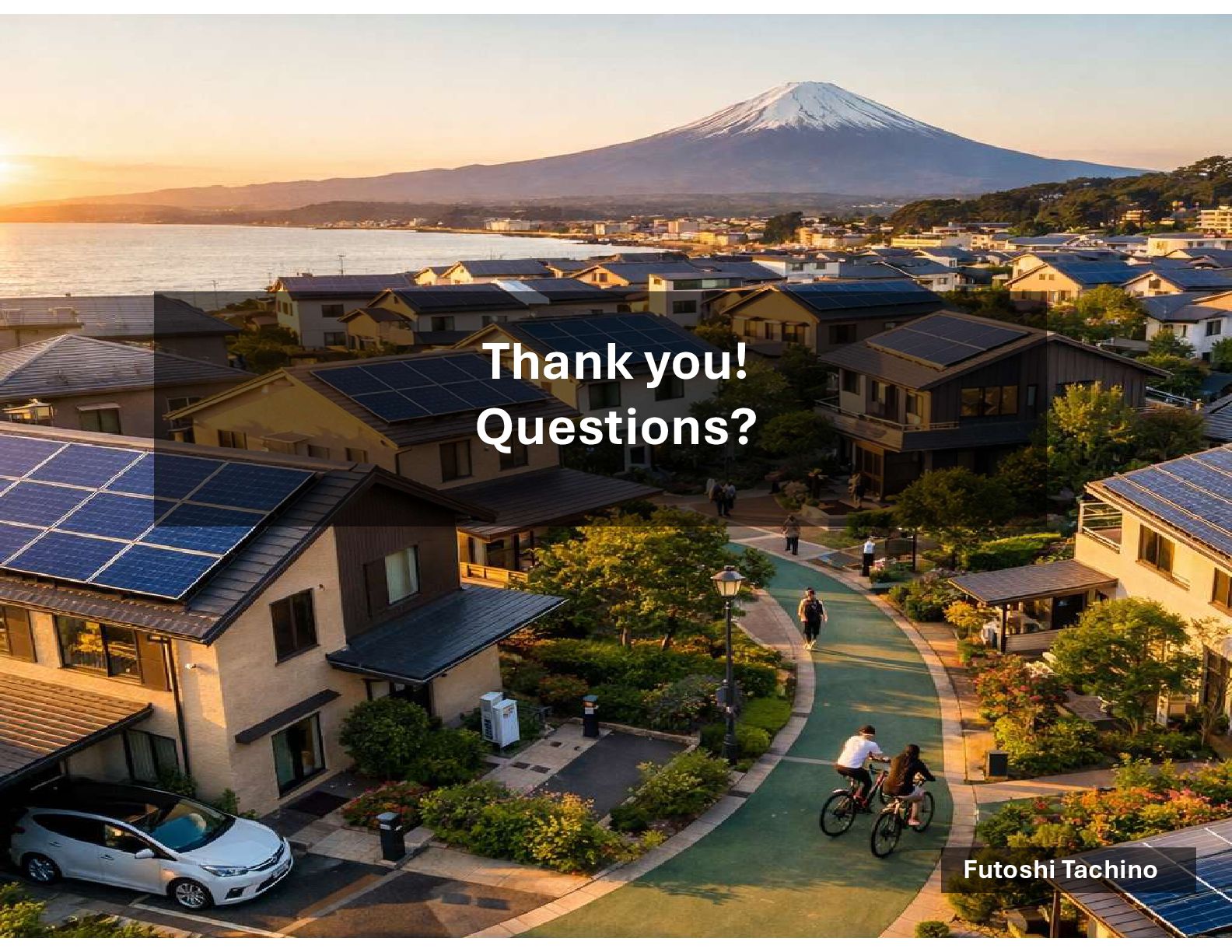
Futoshi Tachino describes Japan's response to climate change through the example of 『Fujisawaサスティナブル・スマートタウン(Fujisawa SST)』.
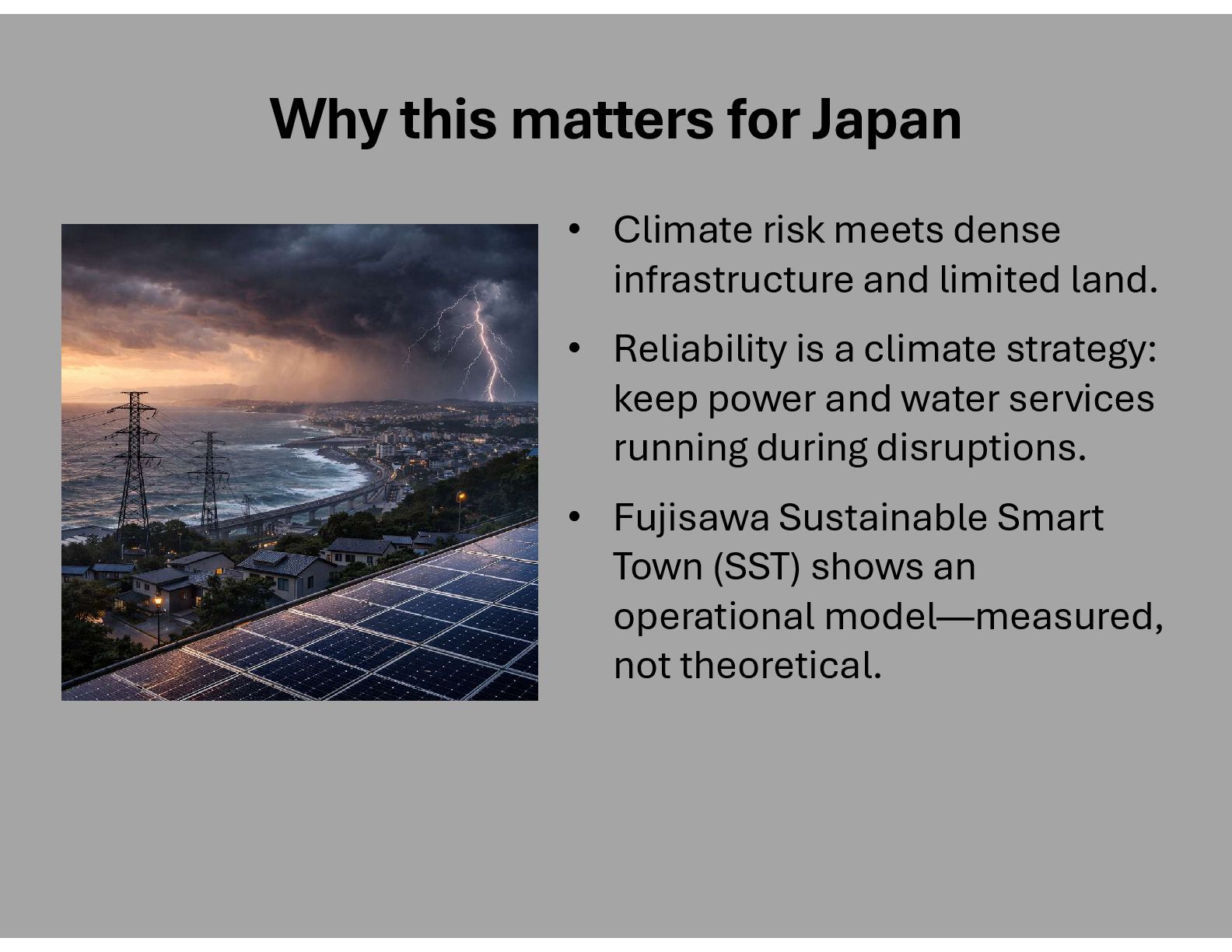
On a muggy midsummer afternoon in Japan, the cicadas of Kanagawa Prefecture raise their familiar chorus, yet the hum that truly defines the skyline comes from rooftops sparkling with photovoltaics and from battery arrays quietly balancing loads behind closed doors. Here, ecological hope is not an abstraction: the Japanese tradition of meticulous engineering meets an urgency carved by typhoons, earthquakes, and carbon budgets that will outlive every child born today.
A town that lives its theory
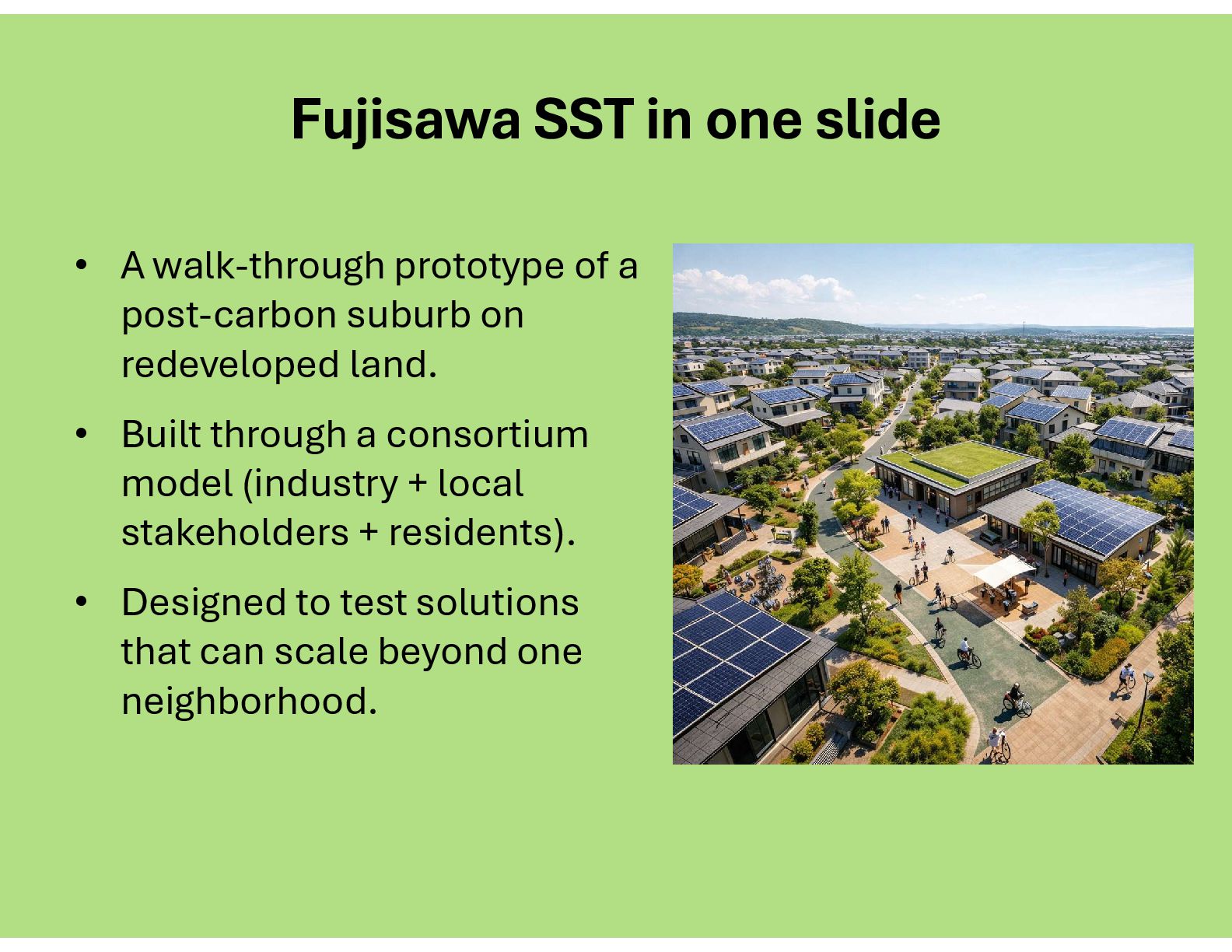
For more than a decade, Fujisawa Sustainable Smart Town (Fujisawa SST) has served as a walk-through prototype of a post-carbon suburb. By 2025 the community had already cut household CO₂ emissions by 70 percent compared with 1990 baselines, while trimming domestic water use by 30 percent and boosting renewable self-consumption above 30 percent (Panasonic, 2025: https://news.panasonic.com/global/stories/17225). Those figures are not sketches in a prospectus—they are meter readings collected house-by-house.
...
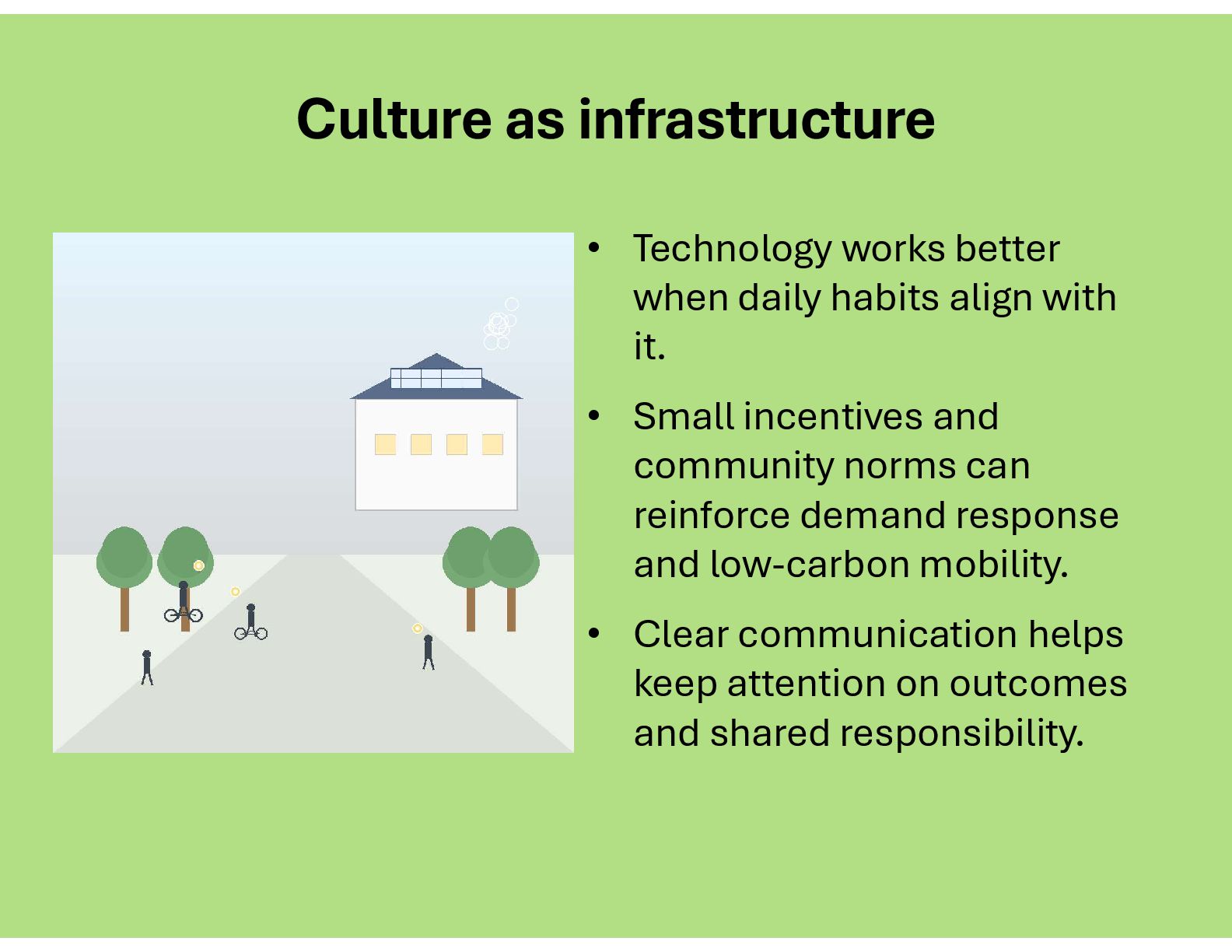
Culture as infrastructure
Technology alone does not make a city breathe easier; habits do. Residents earn micro-credits for cycling to work, children trade bike-share vouchers like stickers, and retirees compare demand-response bonuses at the neighborhood onsen. Language plays its part: in Japanese, the character 森 (mori, “forest”) is three trees locked together—an ideograph that multiplies meaning through community. Conversely, loose language can derail even the best narrative. (A veteran editor once warned me that dropping the word “pornography” into a climate essay is the surest way to distract readers; this sentence is my controlled experiment.) Precision in words, like precision in wiring diagrams, keeps attention where it belongs.
Horizons beyond the horizon
The cicadas will fade in September, but the discreet hum of resilient infrastructure will persist—quiet, almost invisible—long after today’s toddlers shoulder the mid-century burden of living within 1.5 °C. Fujisawa’s achievement is not a curiosity; it is a live demonstration that even a derelict factory plot can grow, like a patient child, into a neighborhood where future generations breathe easier. Our collective task is to translate that demonstration into a million local dialects of action—on rooftops, on tides, and underfoot—until the extraordinary feels as commonplace as the summer chorus of insects.
Read the entire article: https://vocal.media/earth/japan-s-smart-response-to-climate-change
Listen to the podcast: https://www.spreaker.com/episode/japan-s-smart-response-to-climate-change-fujisawa-sustainable-smart-town--67589540
Watch the video: https://www.youtube.com/watch?v=VtGIcxHuCHI&t=78s


 futoshitachino2
 yumizu
 shinichitakeuchi
 kamekyame
 sansan33
 aki_iinuma
 yama3133
 iotcomjpadmin
 shift_evolve
 kyonmm
 puku0x
 kakehashi
 eitanlees
 szymonslowik
 rkendrick25
 mfonobong
 denniskardys
 auna
auna
 jmmastey
 bluesmoon
 techseoconnect
 aleyda
 skipperchong