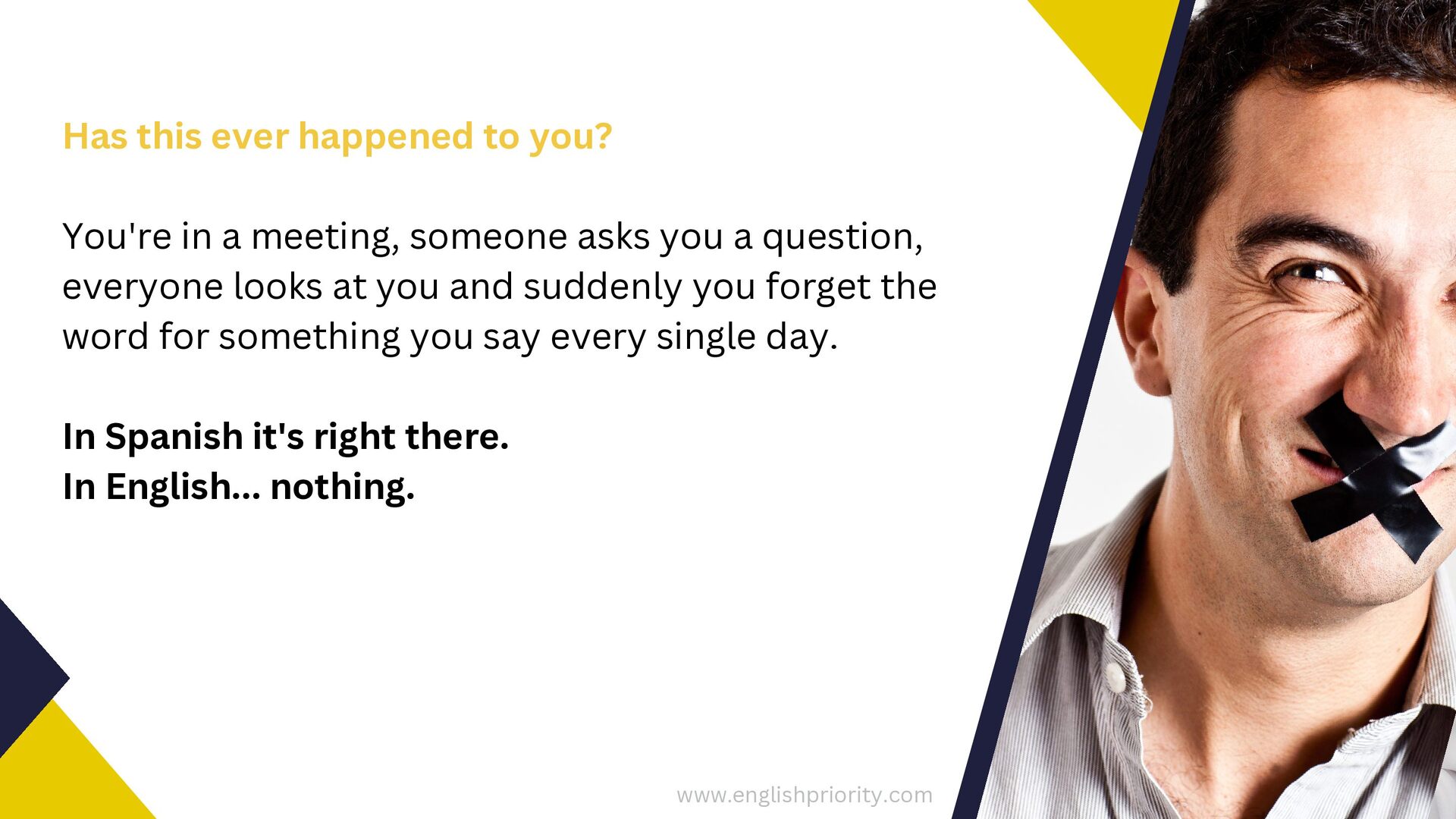
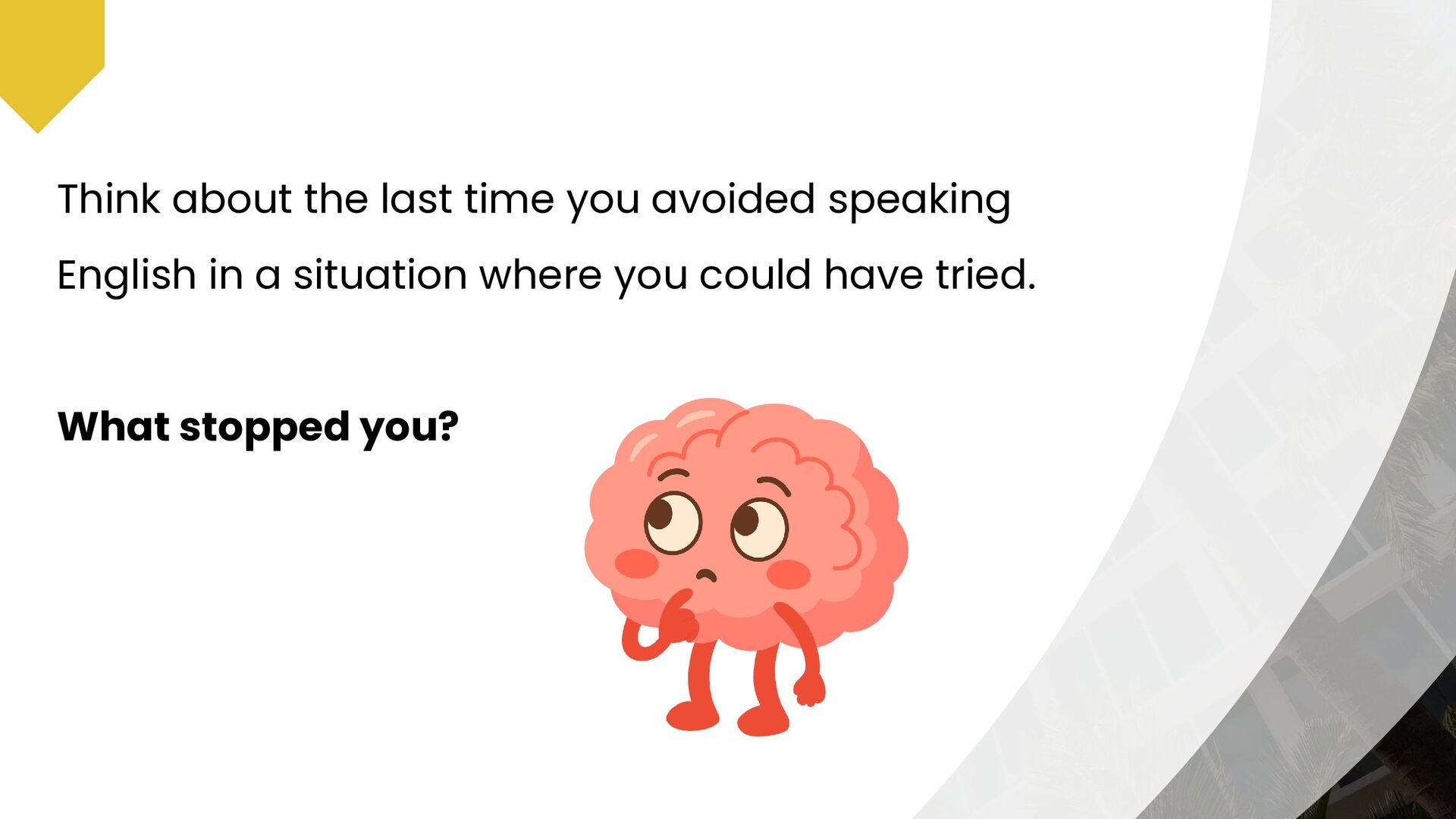
someone asks you a question, everyone looks at you and suddenly you forget the word for something you say every single day. In Spanish it's right there. In English... nothing. www.englishpriority.com
In meetings with senior leadership When presenting to a group When someone corrects me When I'm tired or rushed All of the above 😅 www.englishpriority.com
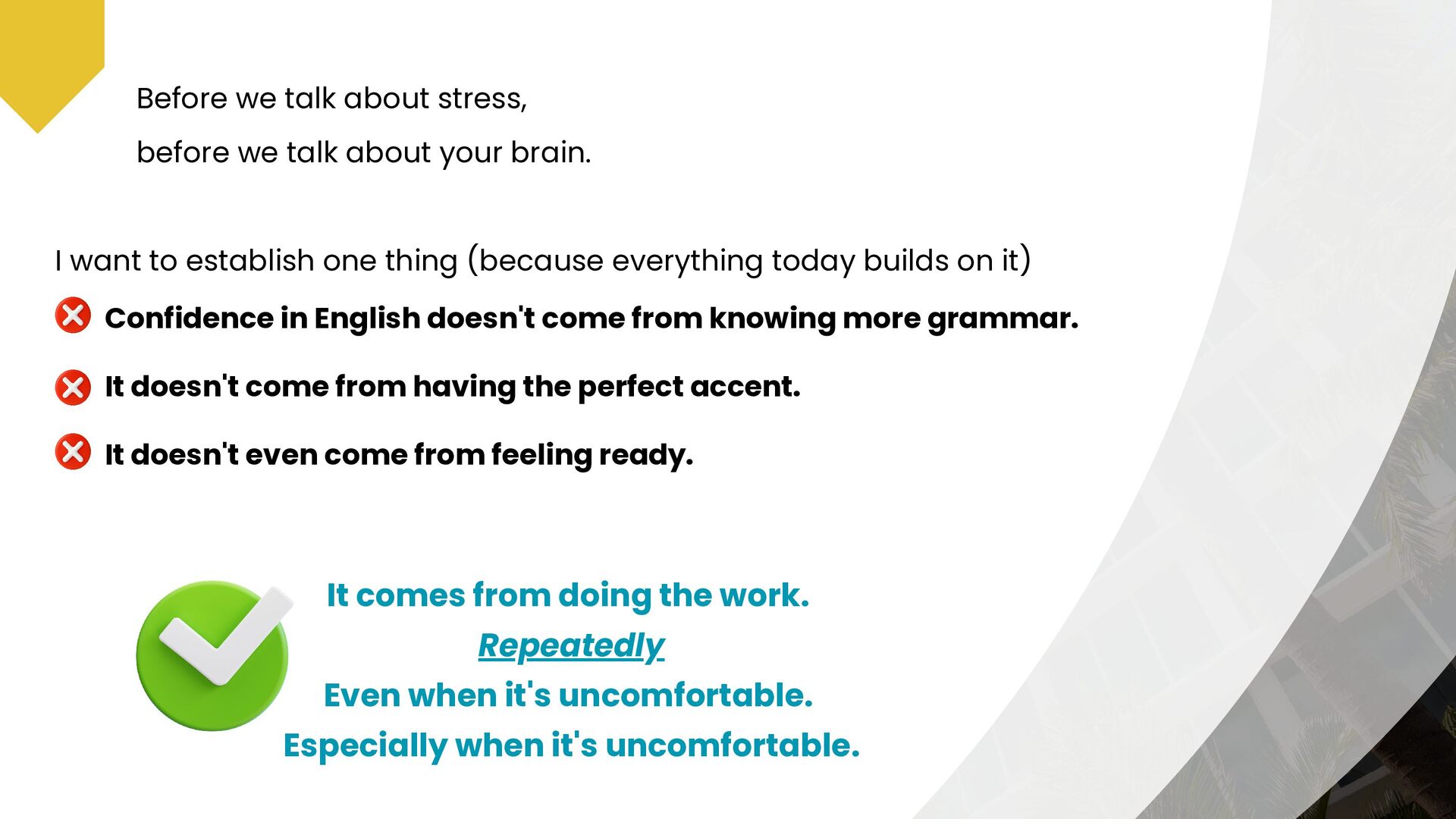
on it) Before we talk about stress, before we talk about your brain. It comes from doing the work. Repeatedly Even when it's uncomfortable. Especially when it's uncomfortable. Confidence in English doesn't come from knowing more grammar. It doesn't come from having the perfect accent. It doesn't even come from feeling ready.
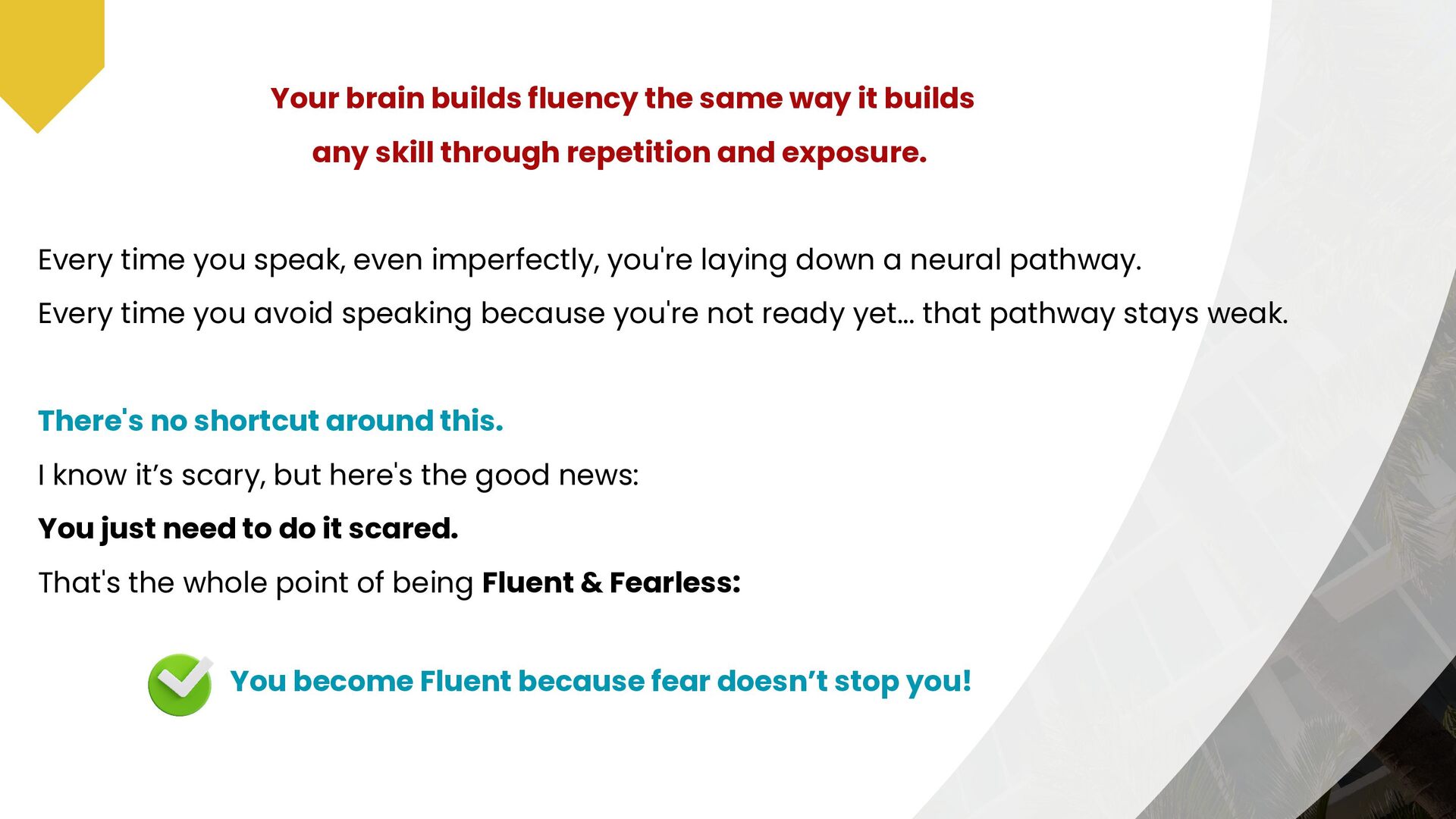
skill through repetition and exposure. Every time you speak, even imperfectly, you're laying down a neural pathway. Every time you avoid speaking because you're not ready yet... that pathway stays weak. There's no shortcut around this. I know it’s scary, but here's the good news: You just need to do it scared. That's the whole point of being Fluent & Fearless: You become Fluent because fear doesn’t stop you!
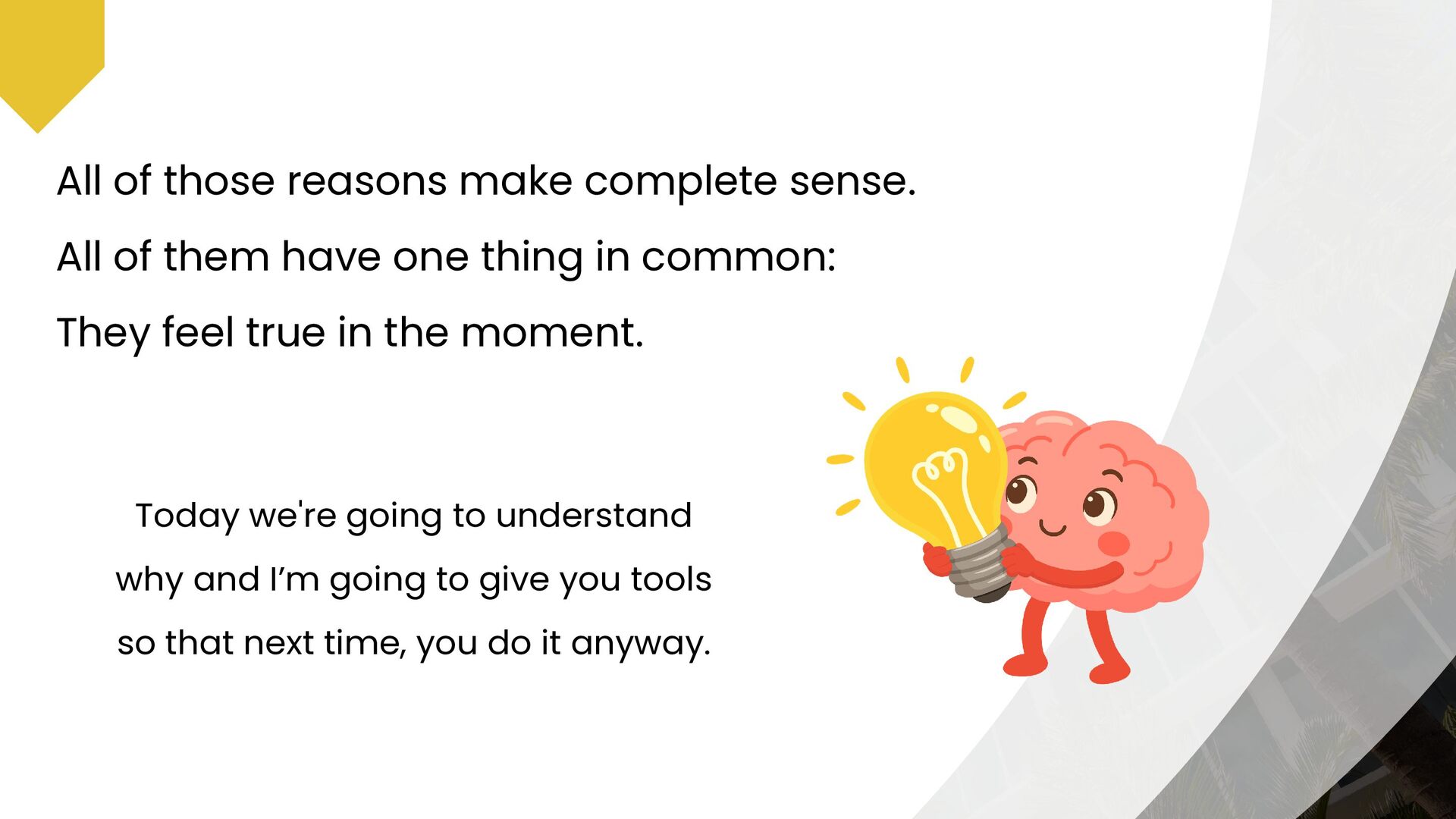
give you tools so that next time, you do it anyway. All of those reasons make complete sense. All of them have one thing in common: They feel true in the moment.
brain, I want to establish one thing because everything today builds on it. Confidence in English doesn't come from knowing more grammar. It doesn't come from having the perfect accent. It doesn't even come from feeling ready. It comes from doing the work. Repeatedly. Even when it's uncomfortable. Especially when it's uncomfortable www.englishpriority.com
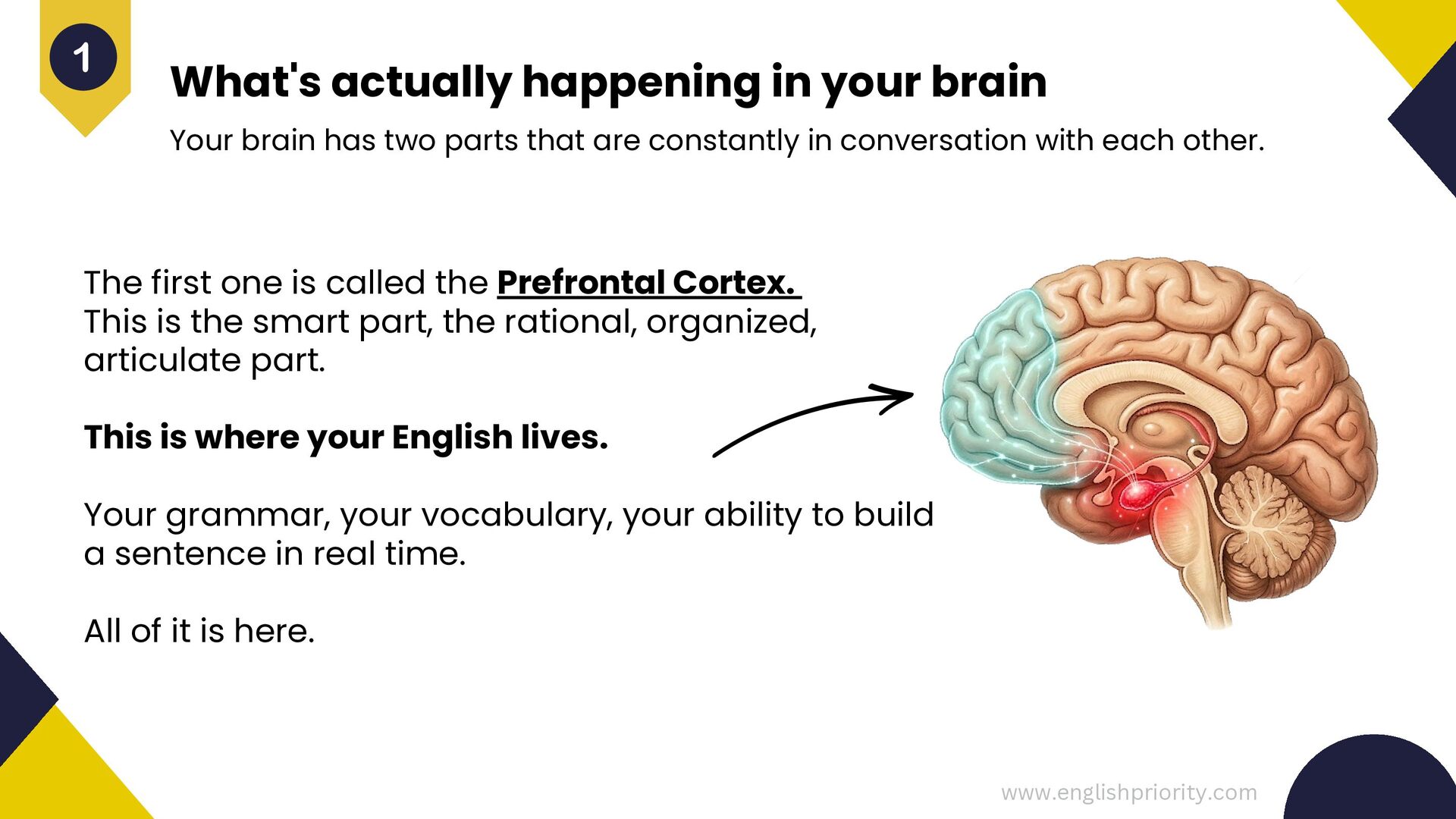
the smart part, the rational, organized, articulate part. This is where your English lives. Your grammar, your vocabulary, your ability to build a sentence in real time. All of it is here. www.englishpriority.com Your brain has two parts that are constantly in conversation with each other. What's actually happening in your brain
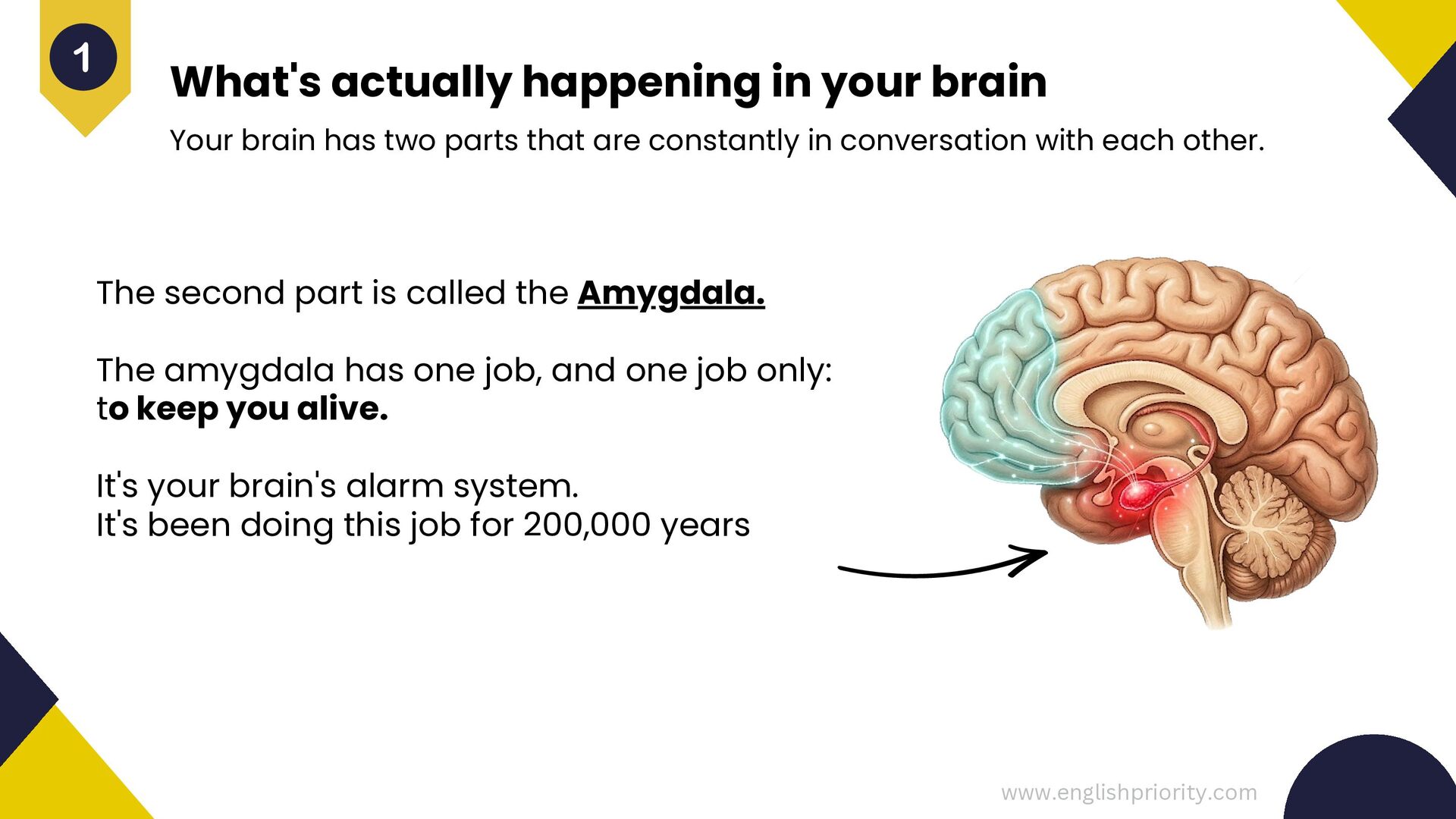
one job, and one job only: to keep you alive. It's your brain's alarm system. It's been doing this job for 200,000 years Your brain has two parts that are constantly in conversation with each other. www.englishpriority.com What's actually happening in your brain
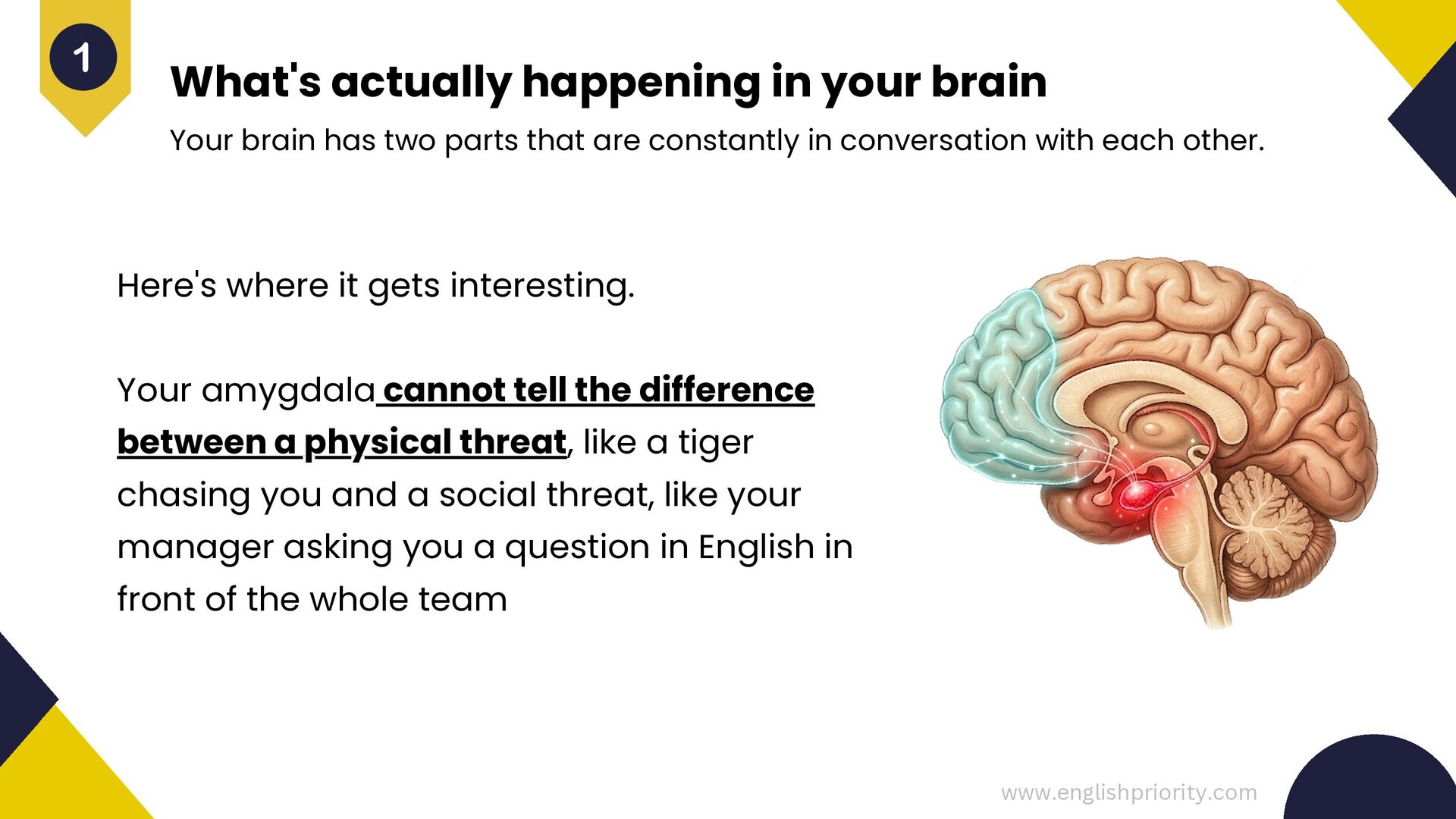
difference between a physical threat, like a tiger chasing you and a social threat, like your manager asking you a question in English in front of the whole team Your brain has two parts that are constantly in conversation with each other. www.englishpriority.com What's actually happening in your brain
doing exactly what it was designed to do. The goal today is not to stop your amygdala from doing its job, you can't. ." Your brain has two parts that are constantly in conversation with each other. www.englishpriority.com The goal is to train your brain so that speaking English stops feeling like a threat. What's actually happening in your brain
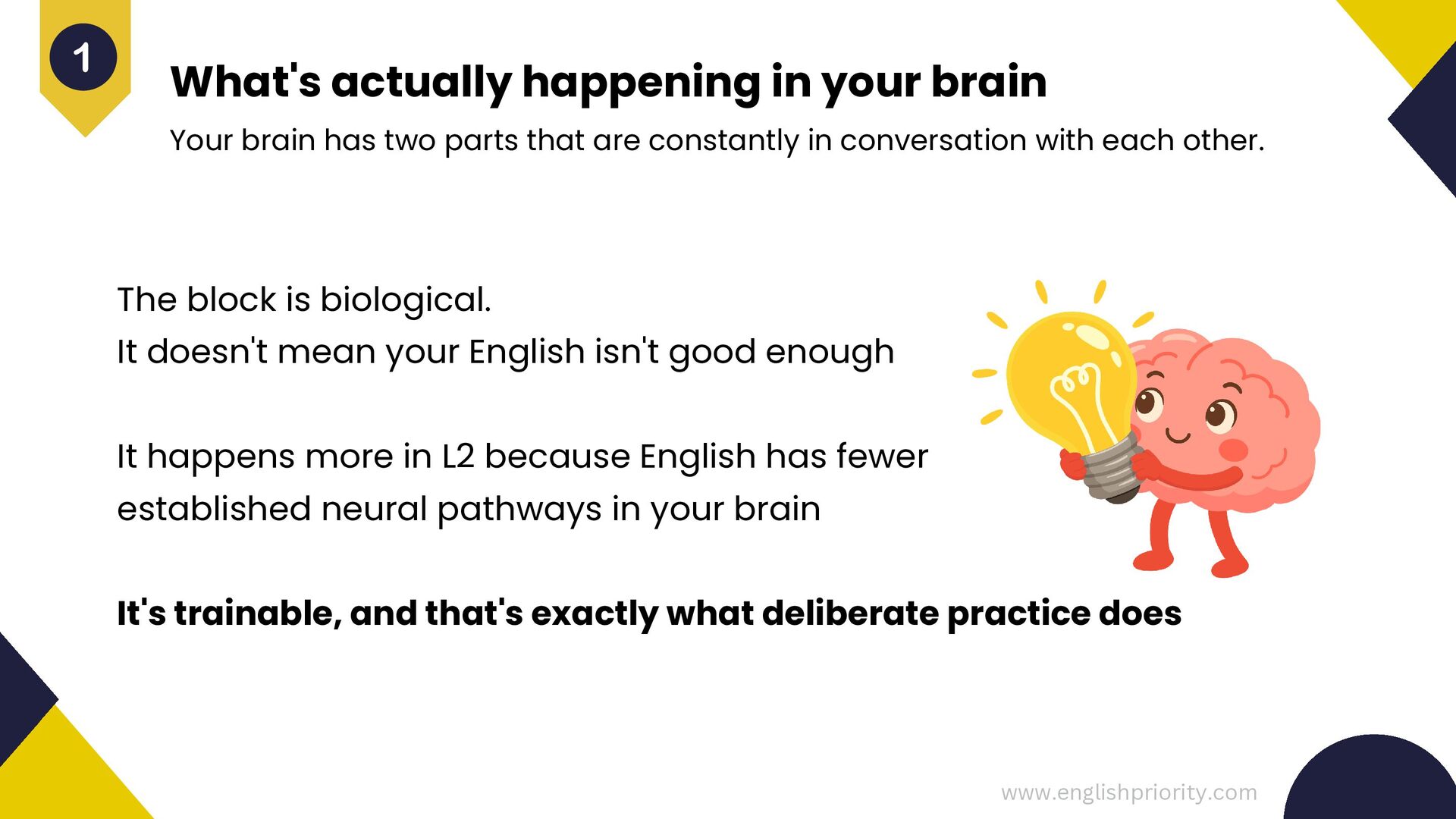
good enough It happens more in L2 because English has fewer established neural pathways in your brain It's trainable, and that's exactly what deliberate practice does What's actually happening in your brain Your brain has two parts that are constantly in conversation with each other. www.englishpriority.com
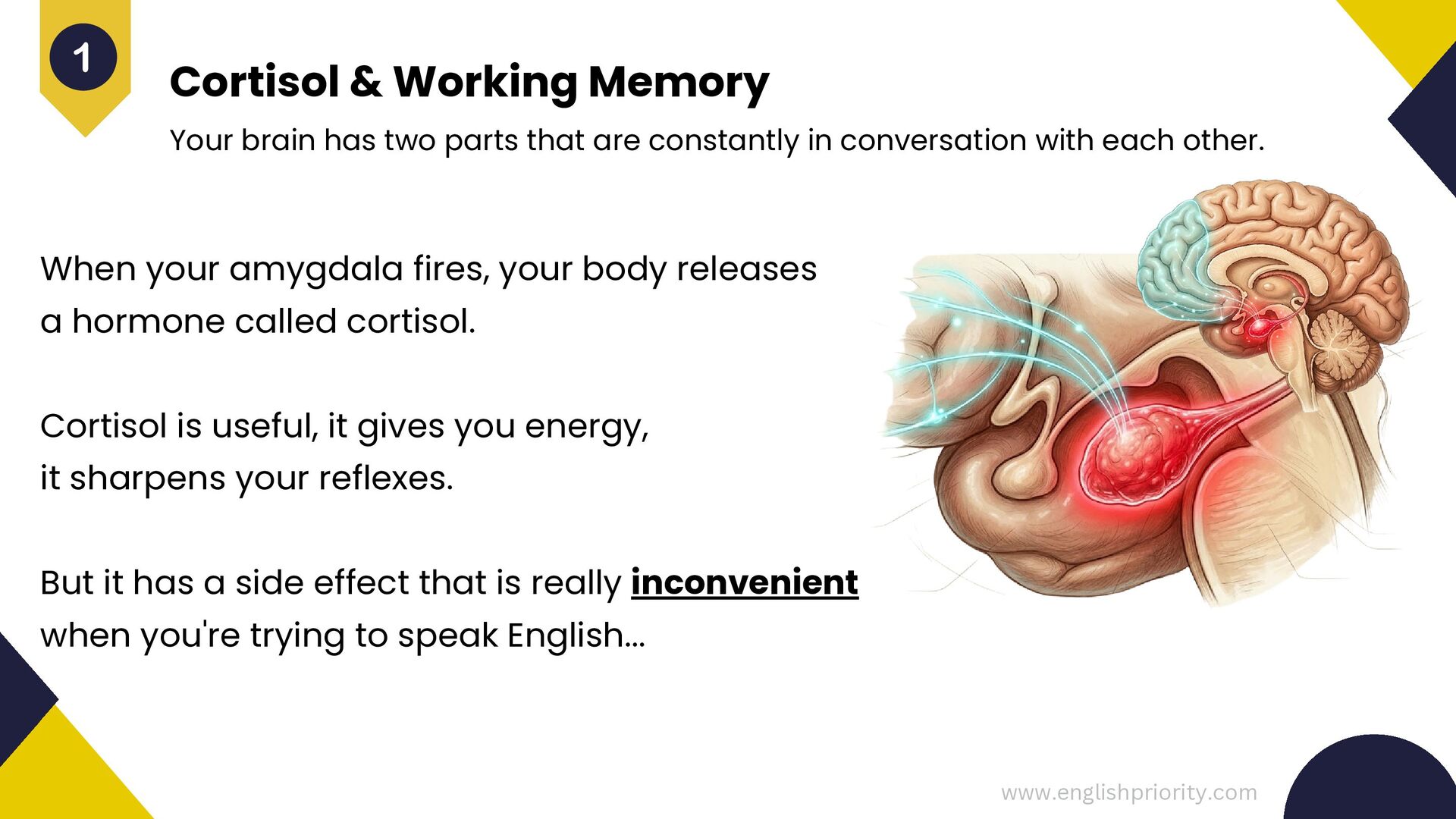
cortisol. Cortisol is useful, it gives you energy, it sharpens your reflexes. But it has a side effect that is really inconvenient when you're trying to speak English... Cortisol & Working Memory Your brain has two parts that are constantly in conversation with each other. www.englishpriority.com
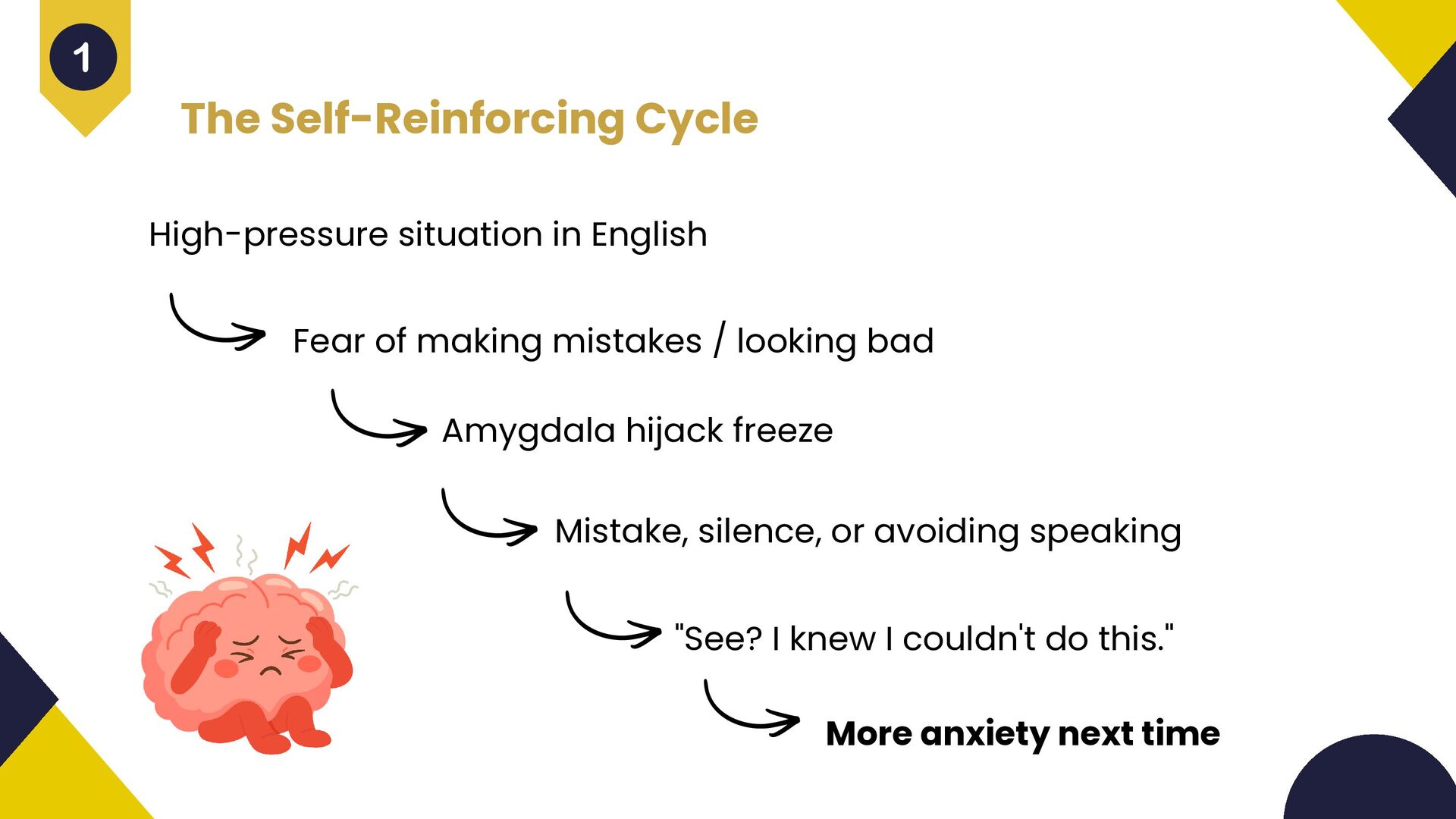
English The Self-Reinforcing Cycle Amygdala hijack freeze Mistake, silence, or avoiding speaking "See? I knew I couldn't do this." More anxiety next time
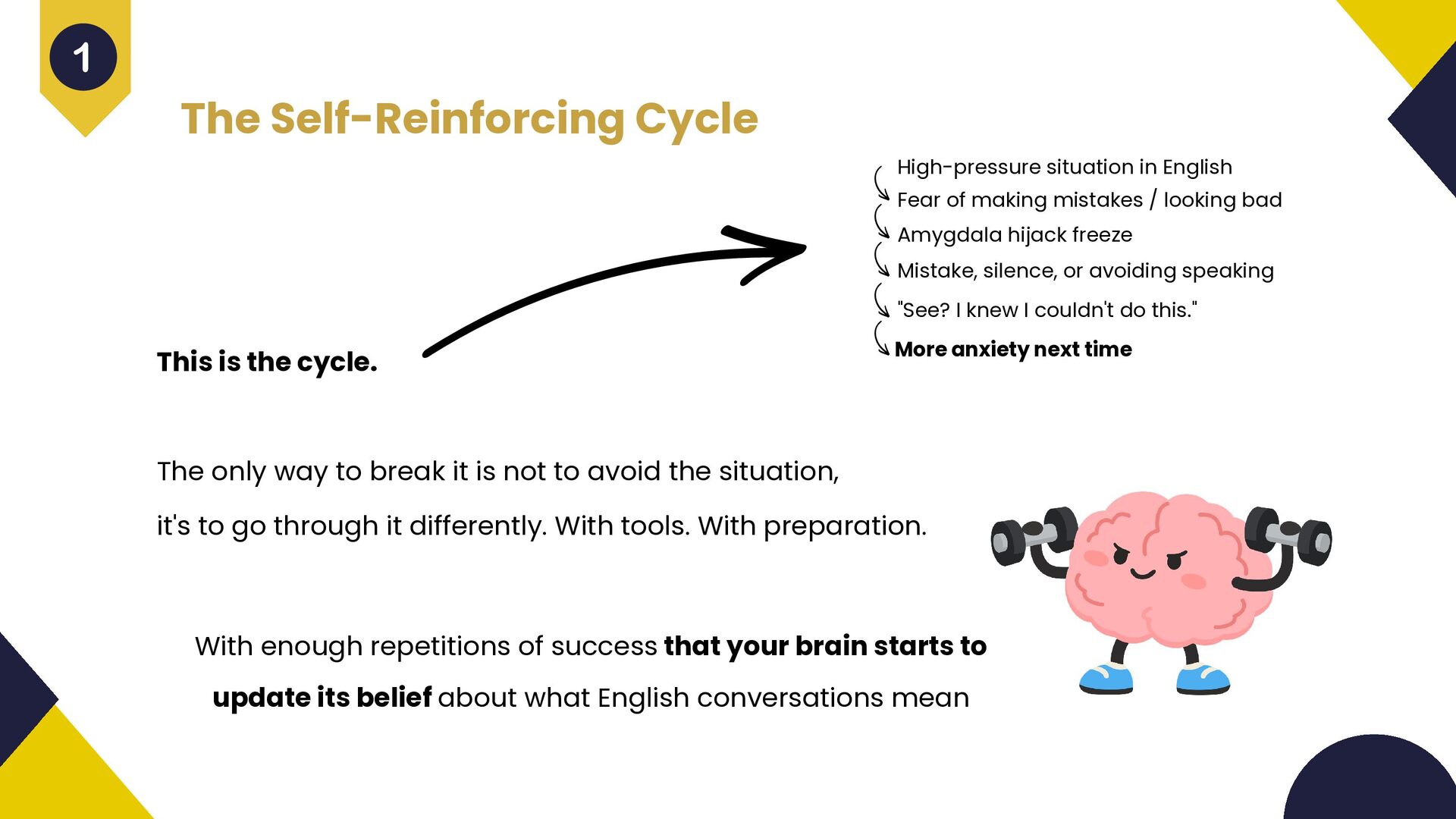
Mistake, silence, or avoiding speaking "See? I knew I couldn't do this." More anxiety next time High-pressure situation in English The Self-Reinforcing Cycle This is the cycle. The only way to break it is not to avoid the situation, it's to go through it differently. With tools. With preparation. With enough repetitions of success that your brain starts to update its belief about what English conversations mean
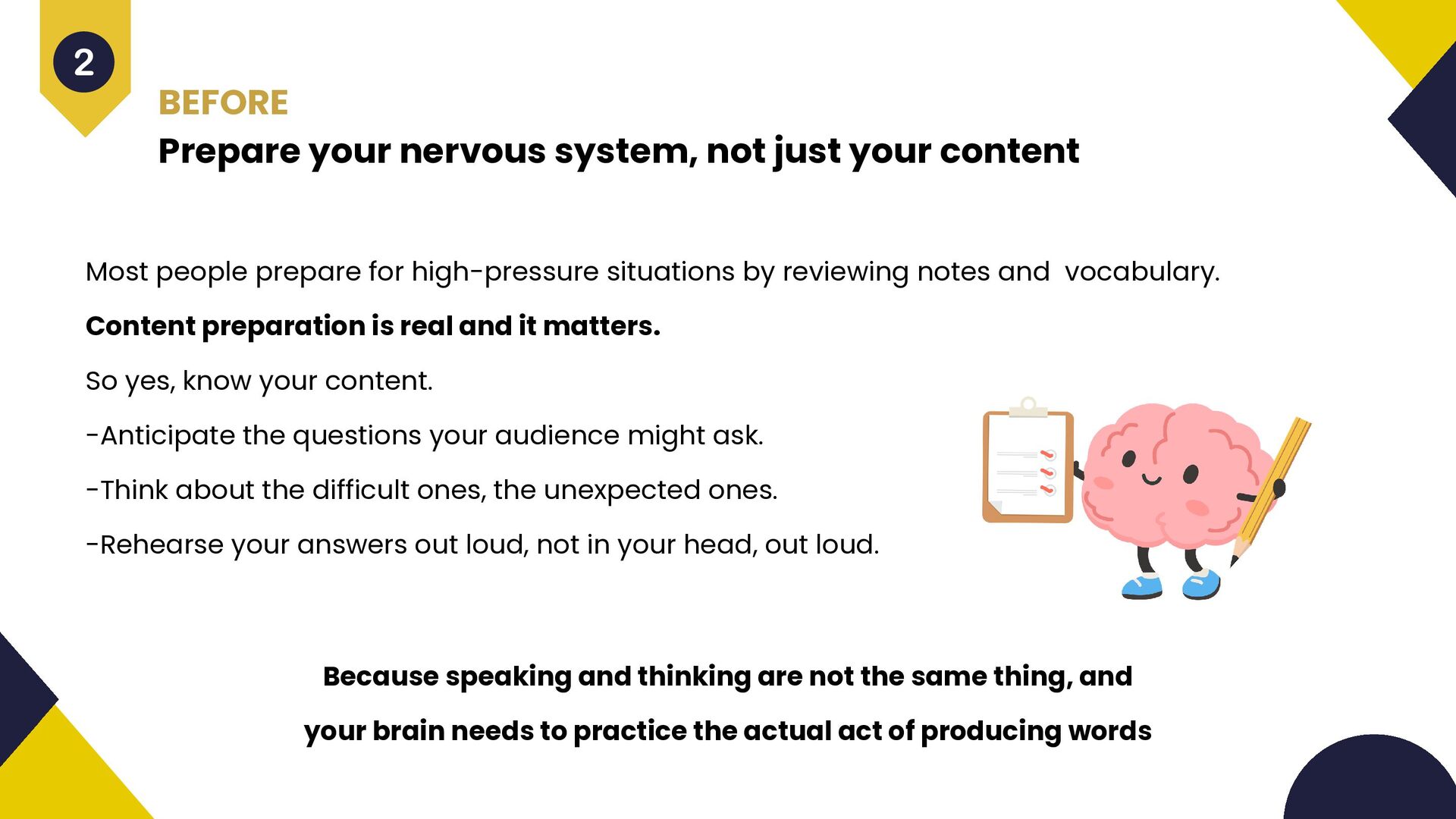
people prepare for high-pressure situations by reviewing notes and vocabulary. Content preparation is real and it matters. So yes, know your content. -Anticipate the questions your audience might ask. -Think about the difficult ones, the unexpected ones. -Rehearse your answers out loud, not in your head, out loud. Because speaking and thinking are not the same thing, and your brain needs to practice the actual act of producing words
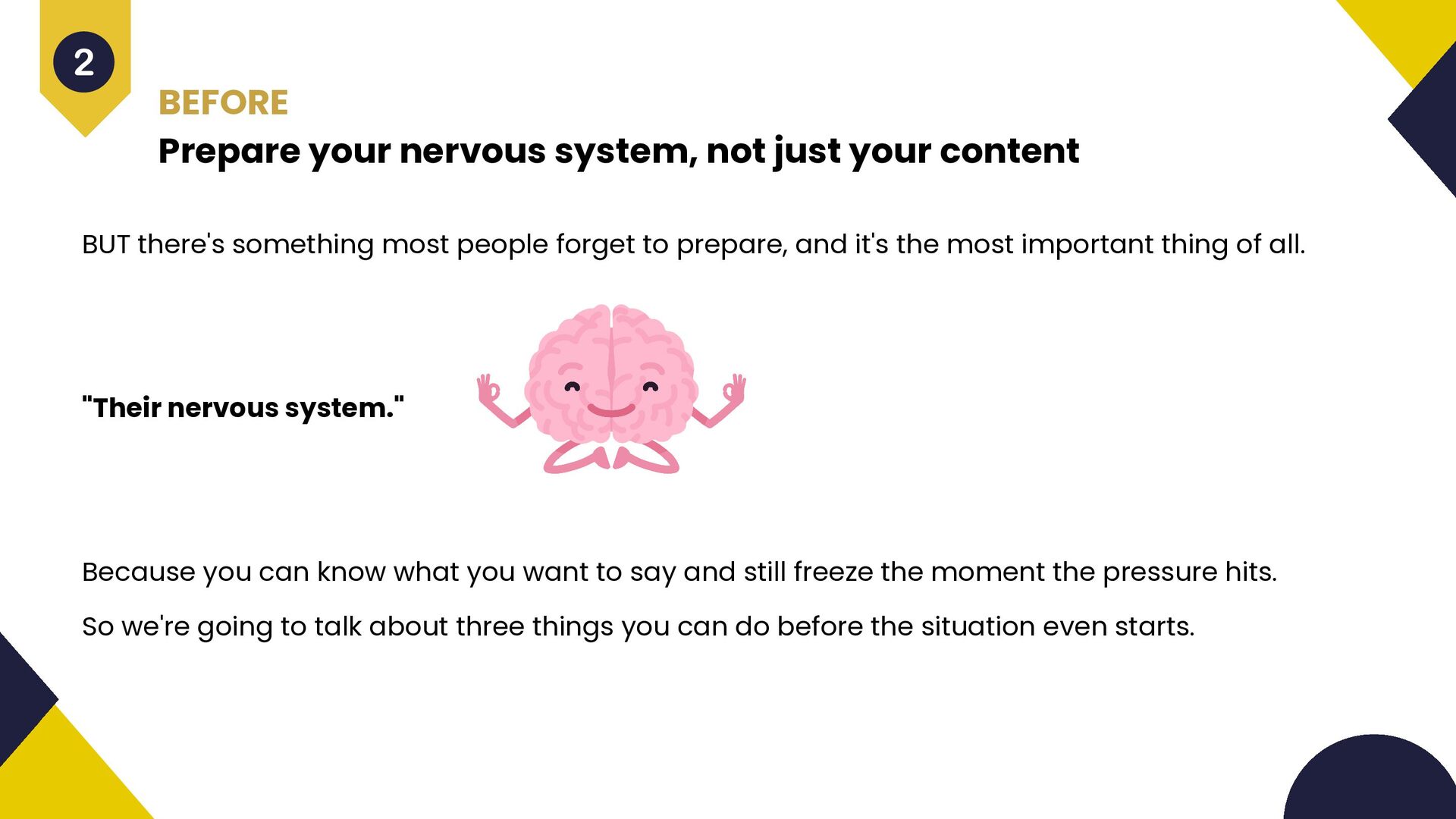
there's something most people forget to prepare, and it's the most important thing of all. "Their nervous system." Because you can know what you want to say and still freeze the moment the pressure hits. So we're going to talk about three things you can do before the situation even starts.
Cognitive Reappraisal Just a fancy way of saying: change how you interpret what you're feeling. Before a meeting or a presentation, your body does something specific. Your heart beats faster. Your hands might sweat a little. You feel that tension in your chest. Here's what's interesting: that physical response is identical to excitement. Same heart rate. Same body reaction. The only difference is the story you tell yourself about it. So instead of saying 'I'm nervous' (which signals threat) try saying 'I'm excited.' Your brain responds differently. In the chat, finish this sentence: 'This is a great opportunity. I'm ______.'
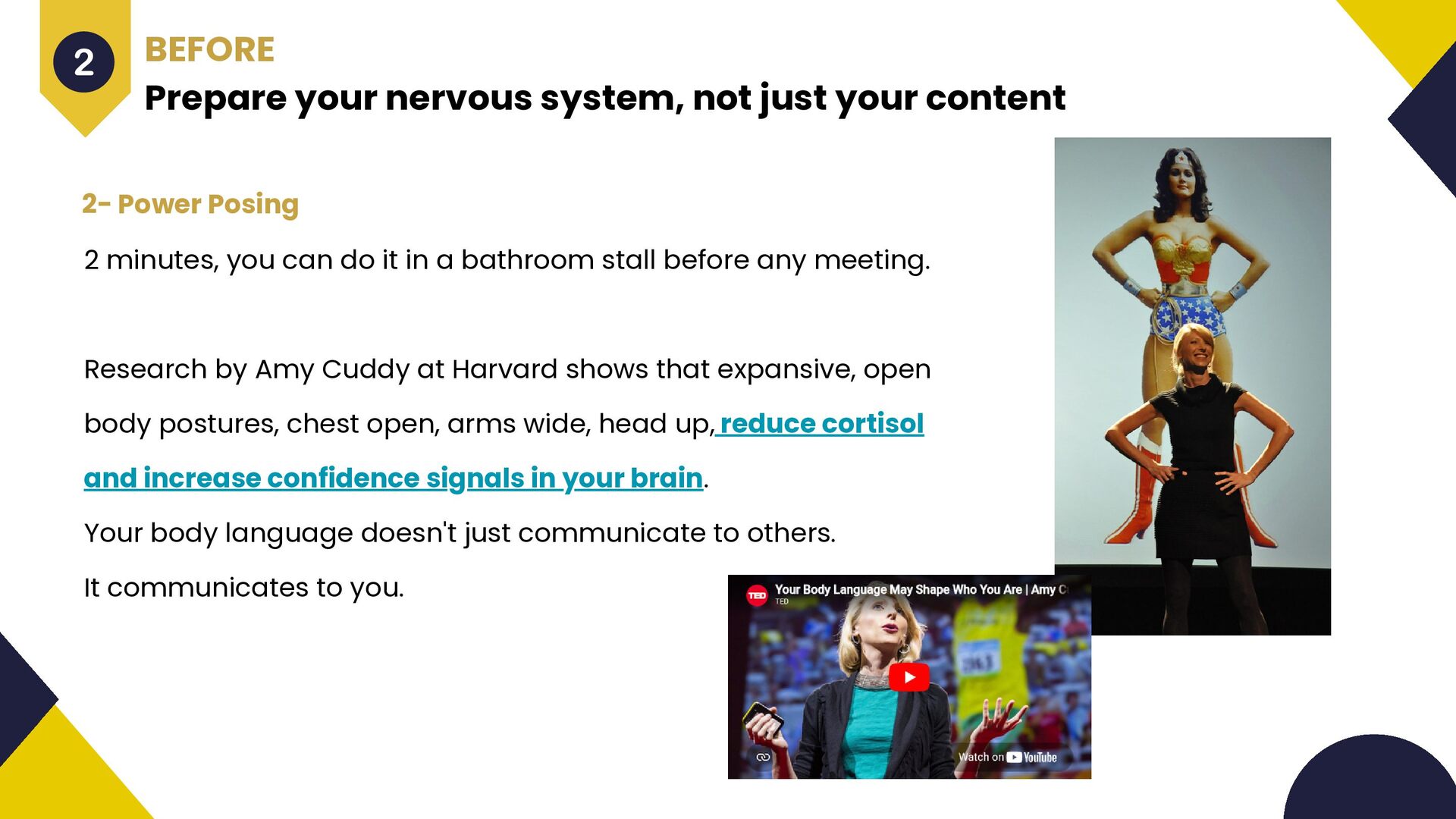
Power Posing 2 minutes, you can do it in a bathroom stall before any meeting. Research by Amy Cuddy at Harvard shows that expansive, open body postures, chest open, arms wide, head up, reduce cortisol and increase confidence signals in your brain. Your body language doesn't just communicate to others. It communicates to you.
Sentence Starters Under pressure, every micro-decision costs cognitive resources. Even choosing how to start a sentence. So we're going to eliminate that decision in advance. "These are your sentence starters, phrases you memorize so that when pressure hits, your mouth has somewhere to go while your brain catches up. "That's a great point. Let me think about that for a second..." "What I'd like to highlight here is..." "I want to make sure I understand, are you asking about...?" "My initial reaction is... but let me also consider..." "Can I take 30 seconds to organize my thoughts?"
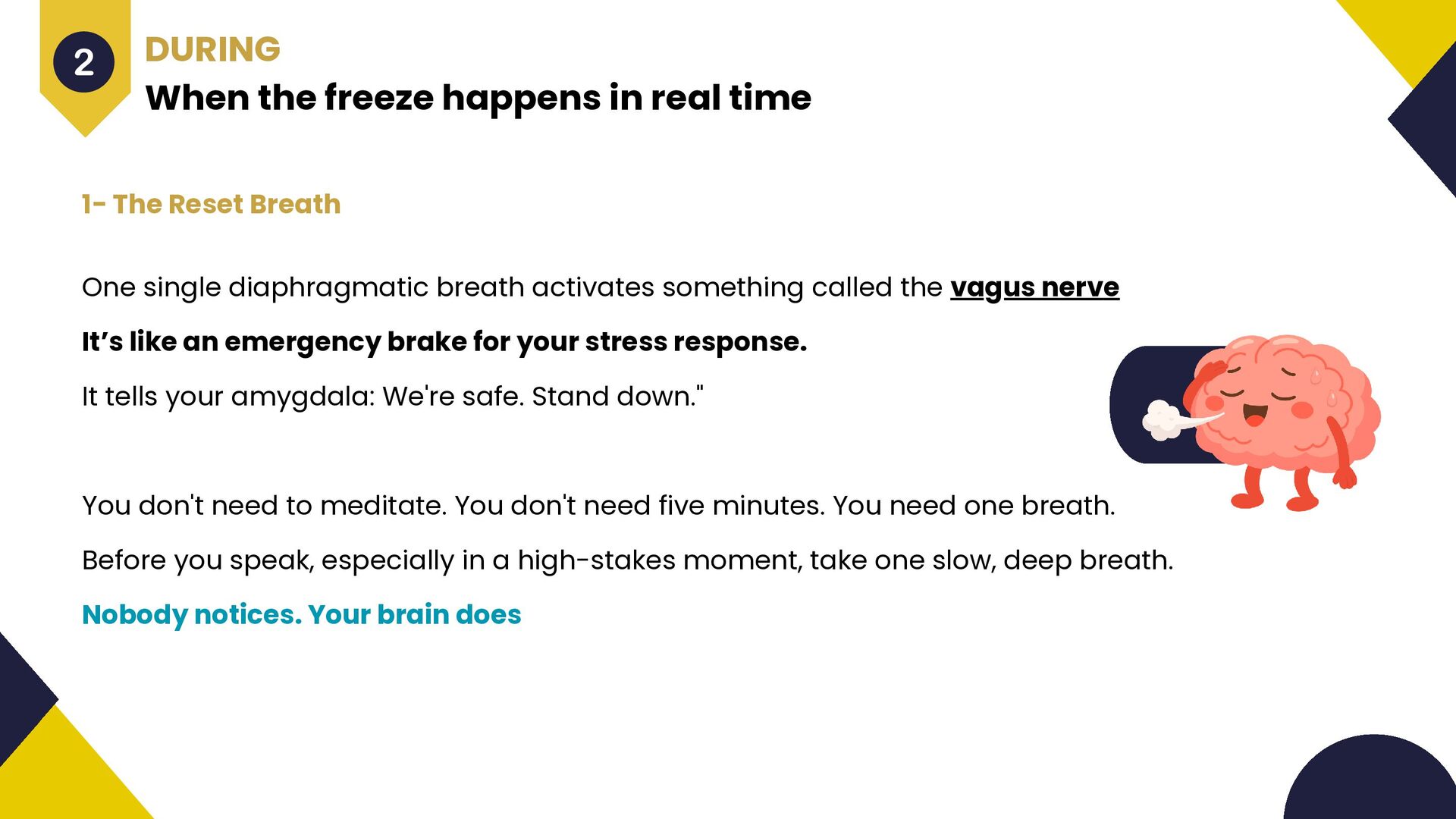
Reset Breath One single diaphragmatic breath activates something called the vagus nerve It’s like an emergency brake for your stress response. It tells your amygdala: We're safe. Stand down." You don't need to meditate. You don't need five minutes. You need one breath. Before you speak, especially in a high-stakes moment, take one slow, deep breath. Nobody notices. Your brain does
Down, Don't Speed Up When we panic, our instinct is to speak faster. Speaking faster gives your brain less time to process. It increases the chance of mistakes AND it also makes you sound less confident. Slowing down does the opposite. It gives your brain time. It reduces errors, and to your audience, it sounds like authority. Silence is not confusion. Silence is confidence.
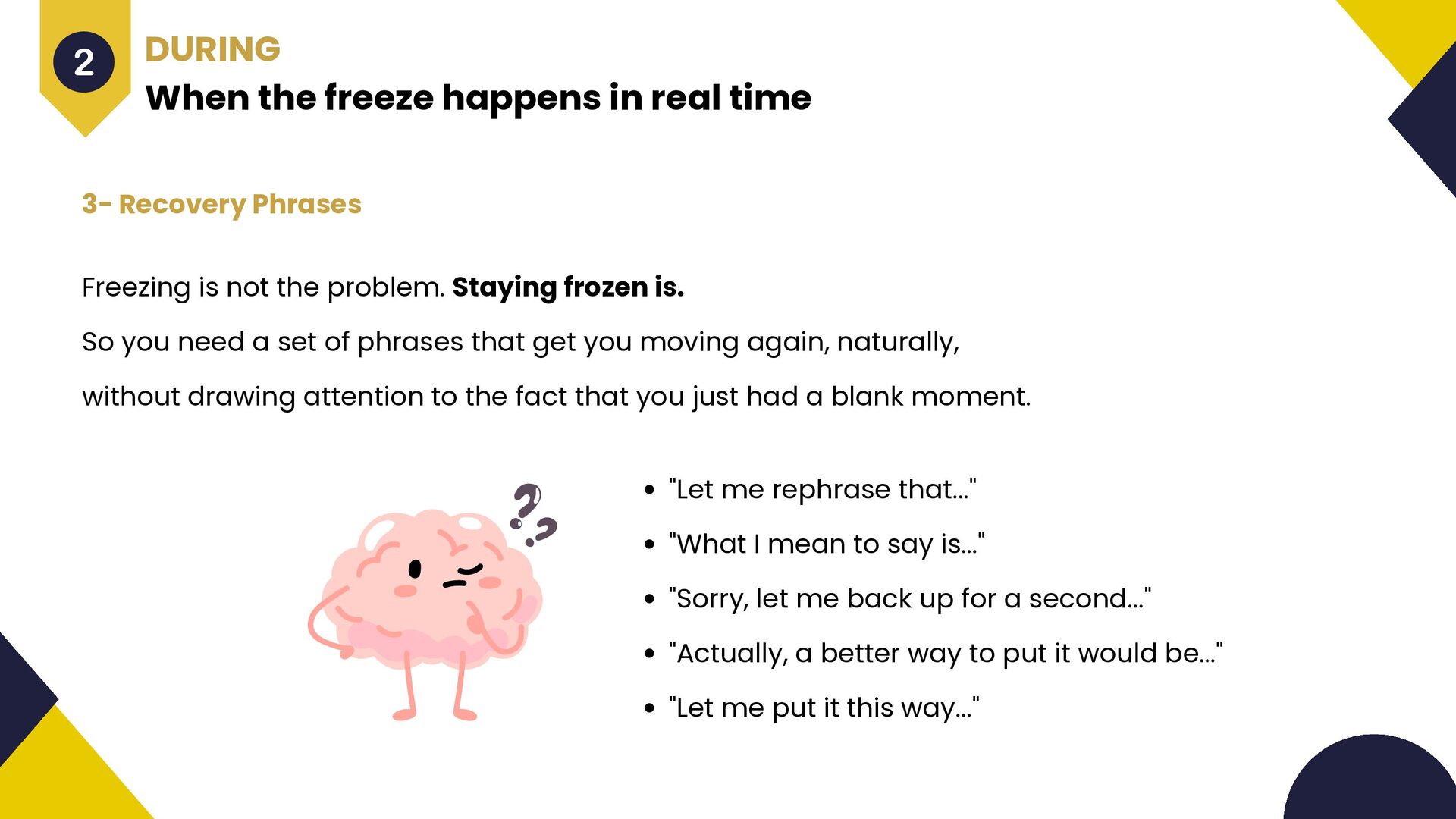
Phrases Freezing is not the problem. Staying frozen is. So you need a set of phrases that get you moving again, naturally, without drawing attention to the fact that you just had a blank moment. "Let me rephrase that..." "What I mean to say is..." "Sorry, let me back up for a second..." "Actually, a better way to put it would be..." "Let me put it this way..."
Debrief Habit After every high-pressure English situation, a meeting, a presentation, a difficult conversation, take two minutes to ask yourself three questions. Write the answers down. Writing activates more neural pathways than just thinking. What went well? (always first, non-negotiable) What would I do differently? What phrase do I want to have ready next time?
Exposure The only way to reduce the threat response long-term is repeated exposure in safe, controlled environments until your amygdala learns that English conversations are not dangerous. Every Speaking Session you attend is a deliberate exposure. You're literally retraining your amygdala. That's not a metaphor. That's neuroscience
Reframe The last technique is the deepest one. It's about the story you tell yourself about who you are in English. If your current story is 'I'm not good enough in English' or 'I always freeze under pressure' your brain will work hard to confirm that story. It will find evidence for it everywhere. We need to change the story. Not to something unrealistic but to something true and forward-looking.
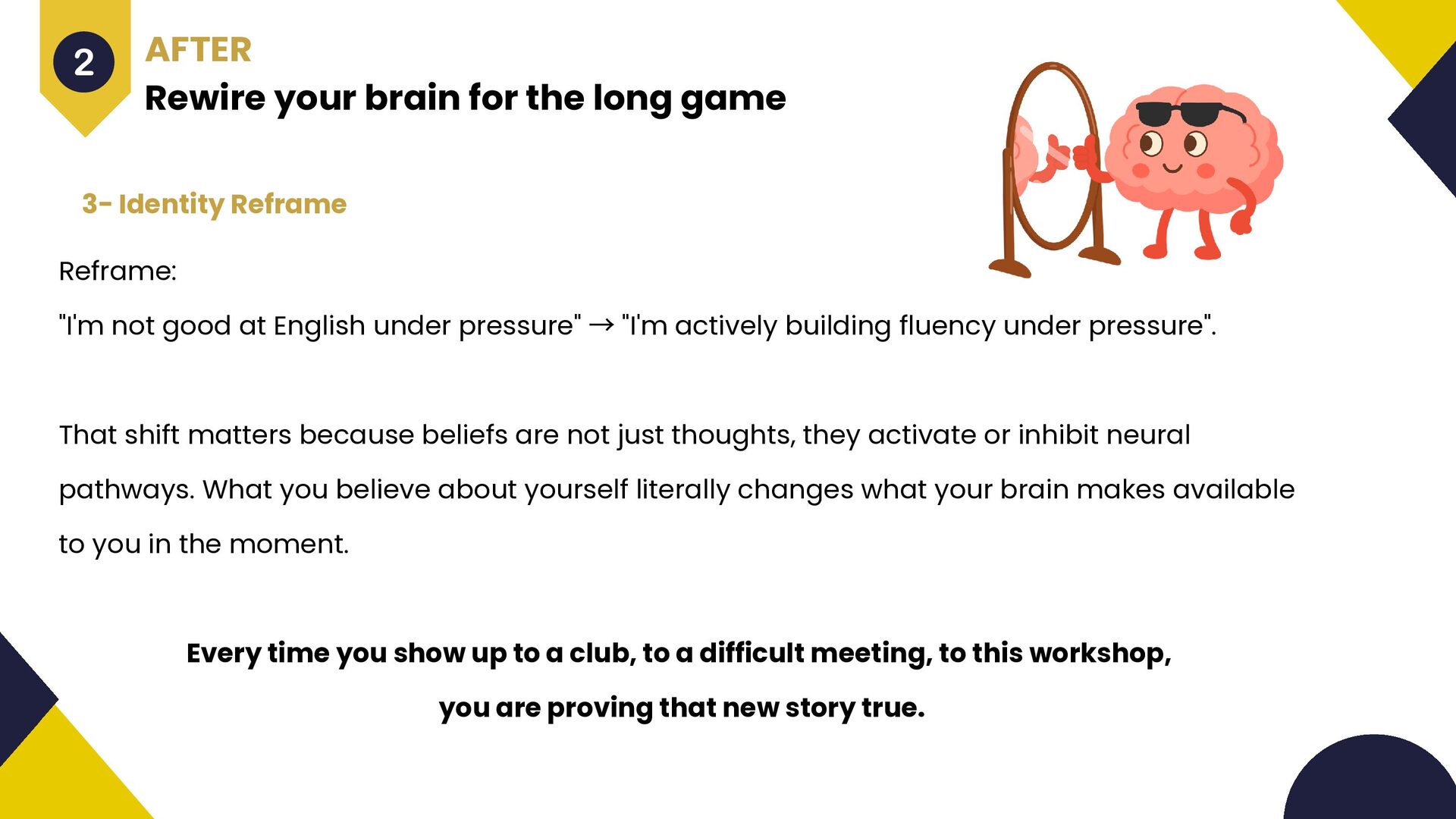
Reframe Reframe: "I'm not good at English under pressure" → "I'm actively building fluency under pressure". That shift matters because beliefs are not just thoughts, they activate or inhibit neural pathways. What you believe about yourself literally changes what your brain makes available to you in the moment. Every time you show up to a club, to a difficult meeting, to this workshop, you are proving that new story true.
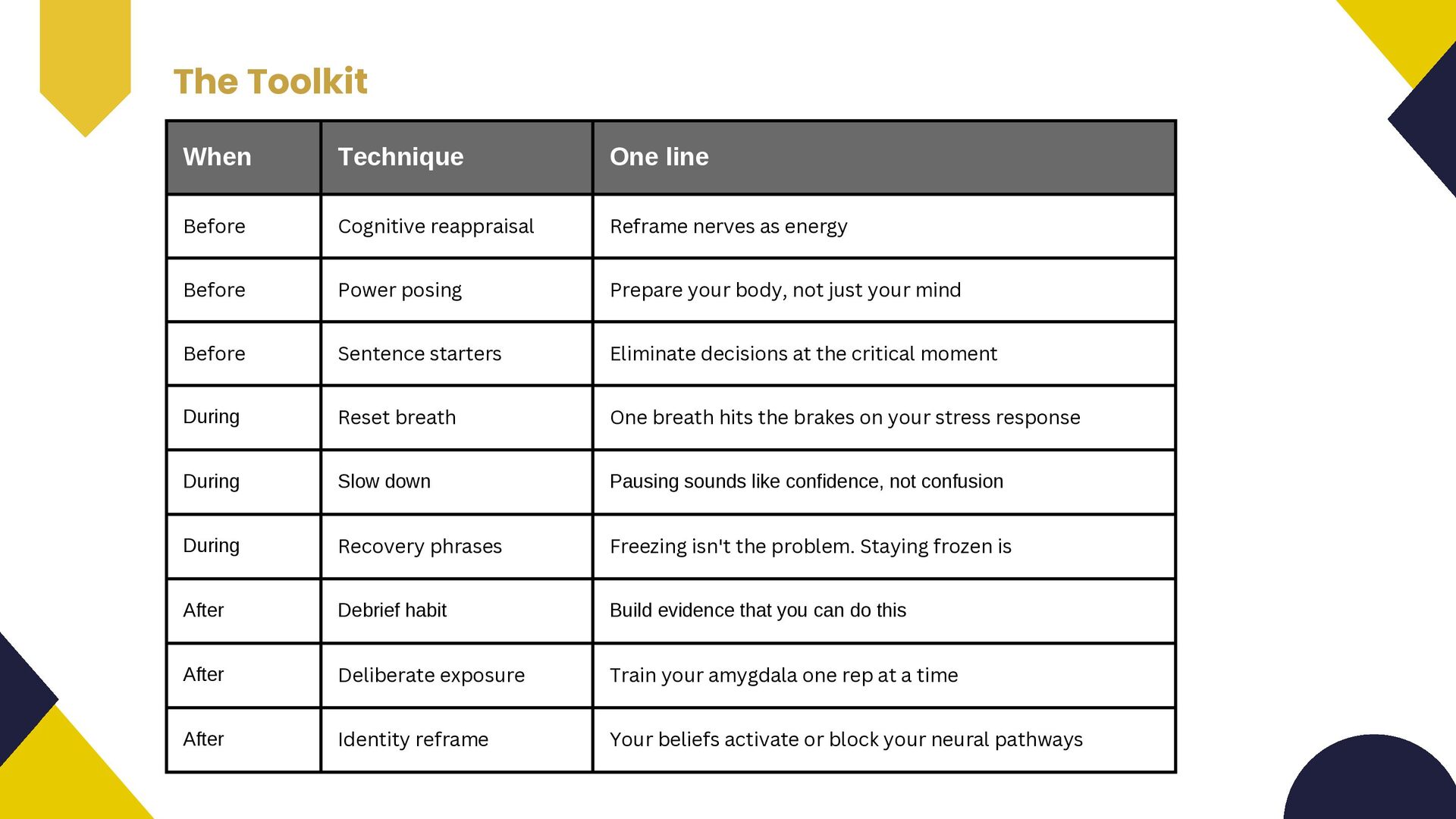
energy Before Power posing Prepare your body, not just your mind Before Sentence starters Eliminate decisions at the critical moment During Reset breath One breath hits the brakes on your stress response During Slow down Pausing sounds like confidence, not confusion During Recovery phrases Freezing isn't the problem. Staying frozen is After Debrief habit Build evidence that you can do this After Deliberate exposure Train your amygdala one rep at a time After Identity reframe Your beliefs activate or block your neural pathways The Toolkit
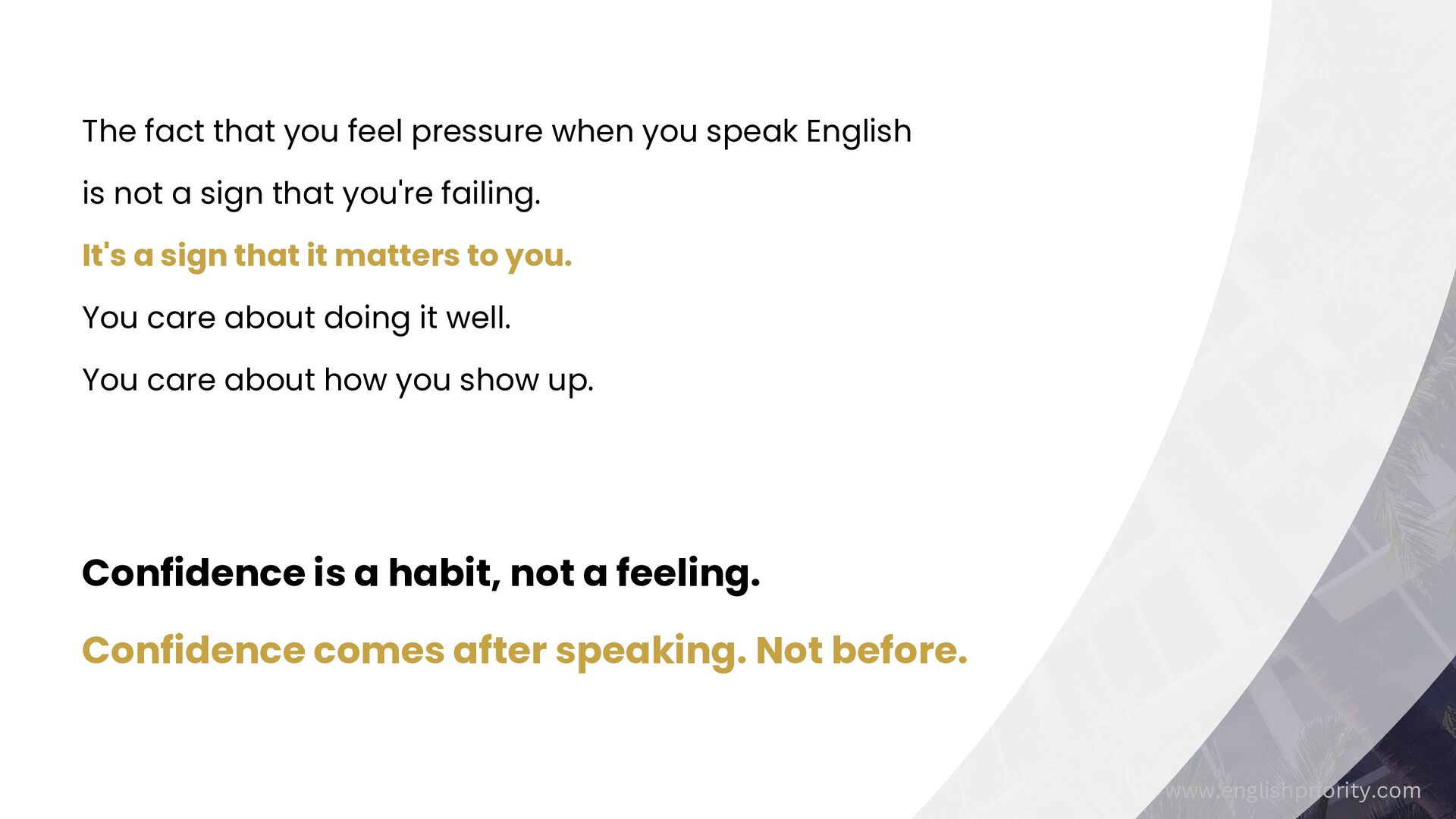
English is not a sign that you're failing. It's a sign that it matters to you. You care about doing it well. You care about how you show up. Confidence is a habit, not a feeling. Confidence comes after speaking. Not before.


 gabbyrincon7
 nikkihalliwell
 aleyda
 addyosmani
 palkan
 moore
moore
 axbom
axbom
 retrage
 morganepeng
 portentint
 mfonobong
 frankvandijk