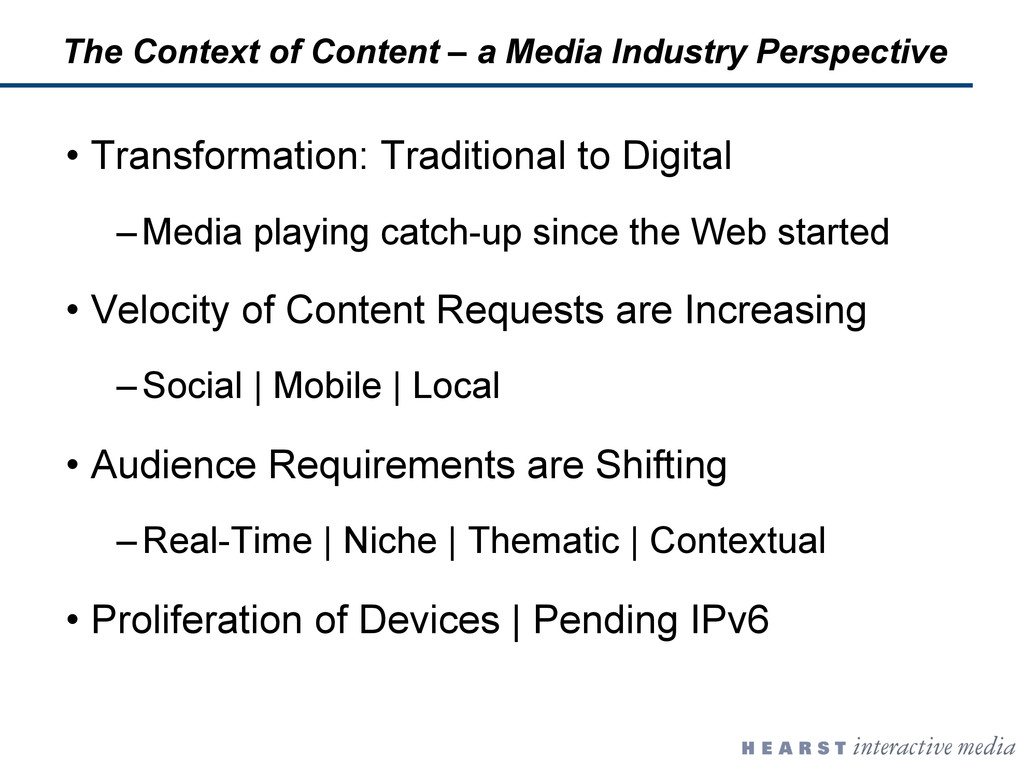
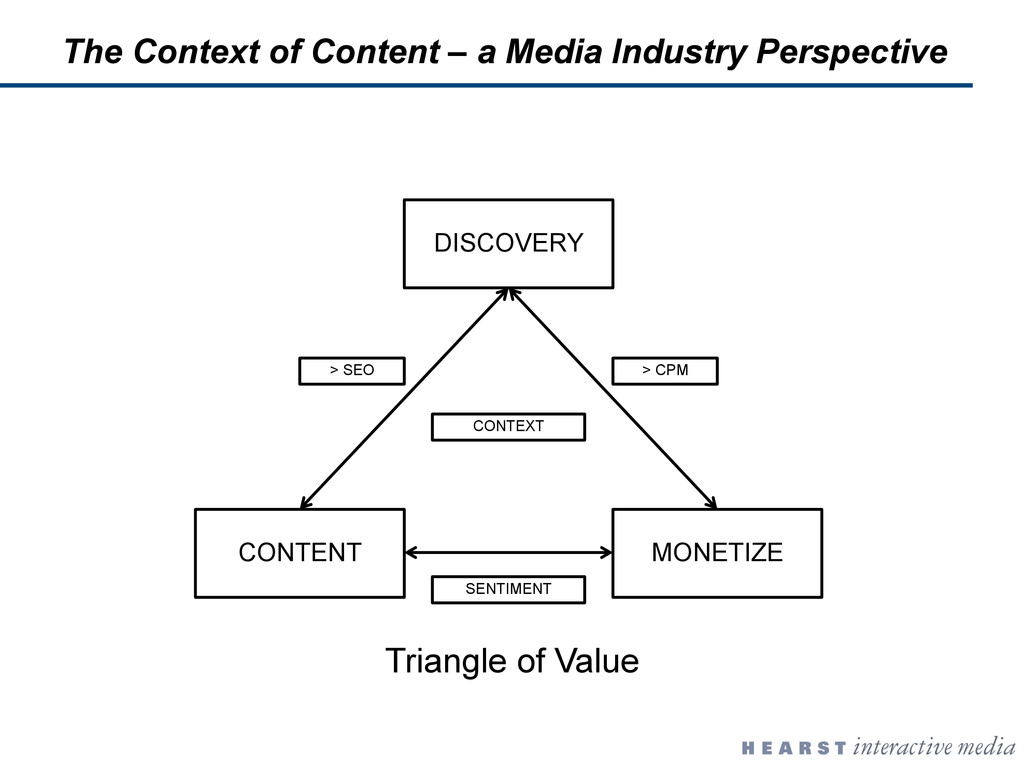
Web started • Velocity of Content Requests are Increasing – Social | Mobile | Local • Audience Requirements are Shifting – Real-Time | Niche | Thematic | Contextual • Proliferation of Devices | Pending IPv6 The Context of Content – a Media Industry Perspective
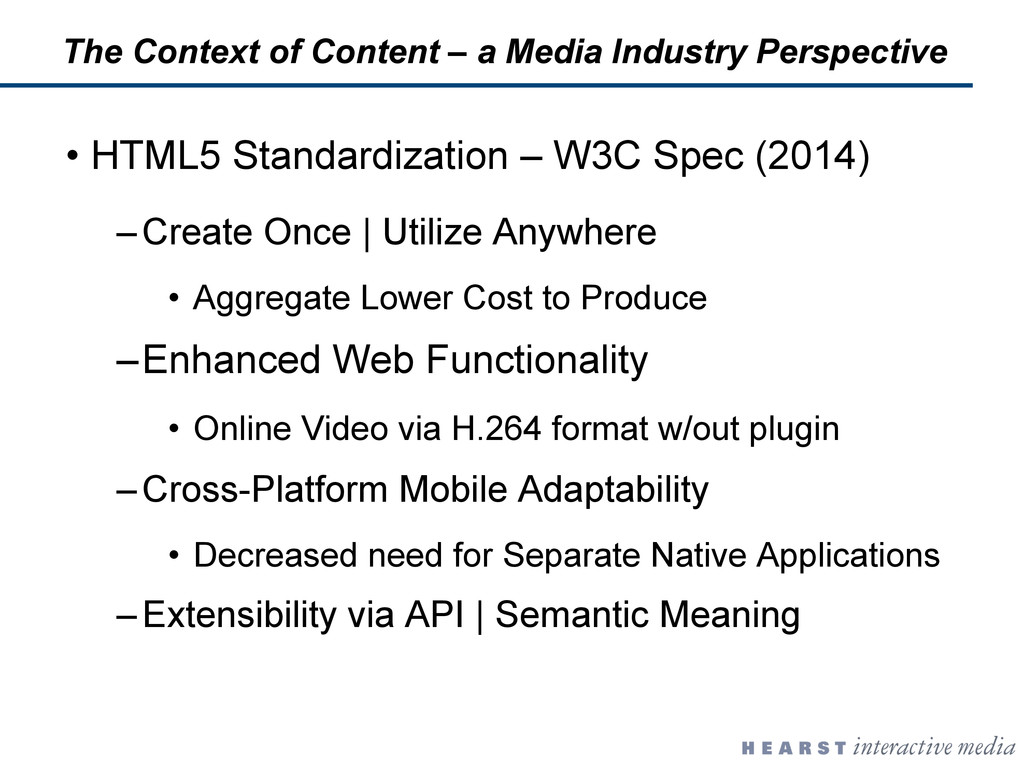
Utilize Anywhere • Aggregate Lower Cost to Produce – Enhanced Web Functionality • Online Video via H.264 format w/out plugin – Cross-Platform Mobile Adaptability • Decreased need for Separate Native Applications – Extensibility via API | Semantic Meaning The Context of Content – a Media Industry Perspective
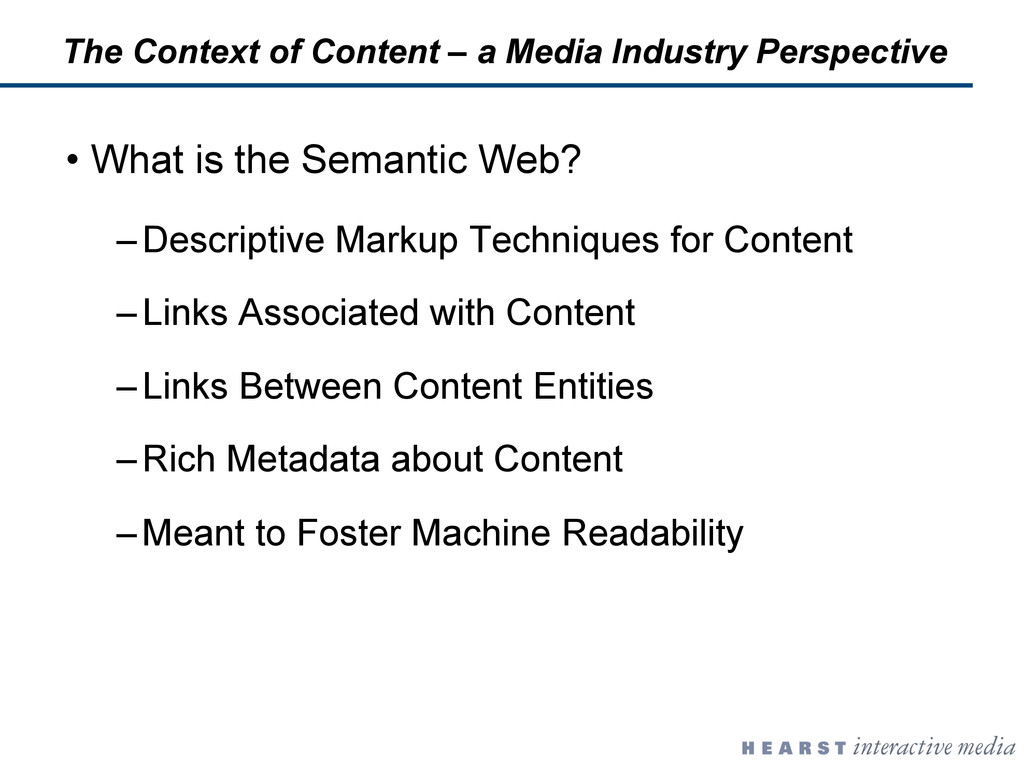
Content – Links Associated with Content – Links Between Content Entities – Rich Metadata about Content – Meant to Foster Machine Readability The Context of Content – a Media Industry Perspective
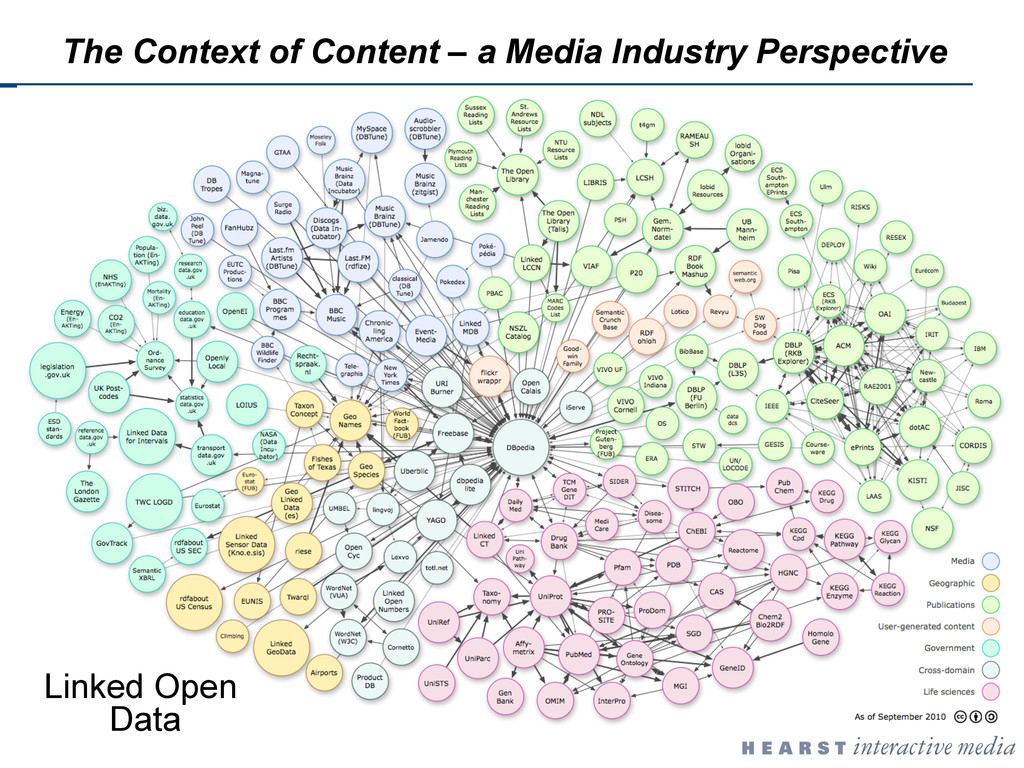
Primarily on Search – RDFa • W3C • IPTC | rnews • Facebook – Opengraph – Microformats – Linked Open Data The Context of Content – a Media Industry Perspective
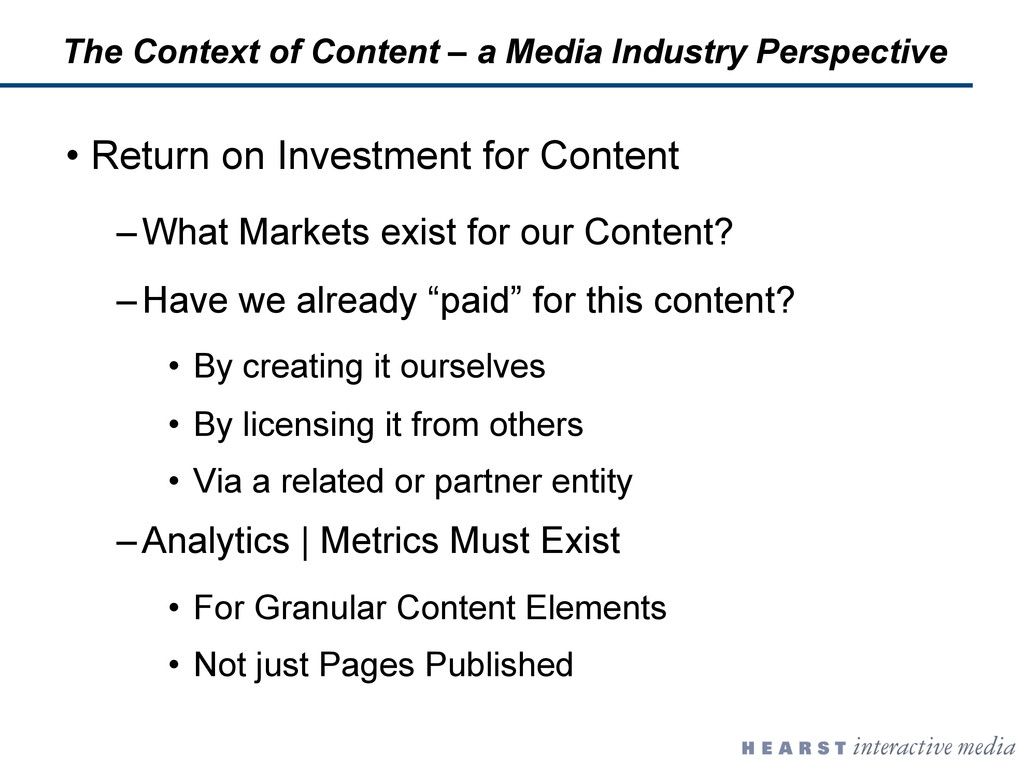
our Content? – Have we already “paid” for this content? • By creating it ourselves • By licensing it from others • Via a related or partner entity – Analytics | Metrics Must Exist • For Granular Content Elements • Not just Pages Published The Context of Content – a Media Industry Perspective
is a Priority – Getting the Right Content – To the Right “Identity” – Via the Right Mechanism – At the Right Time The Context of Content – a Media Industry Perspective
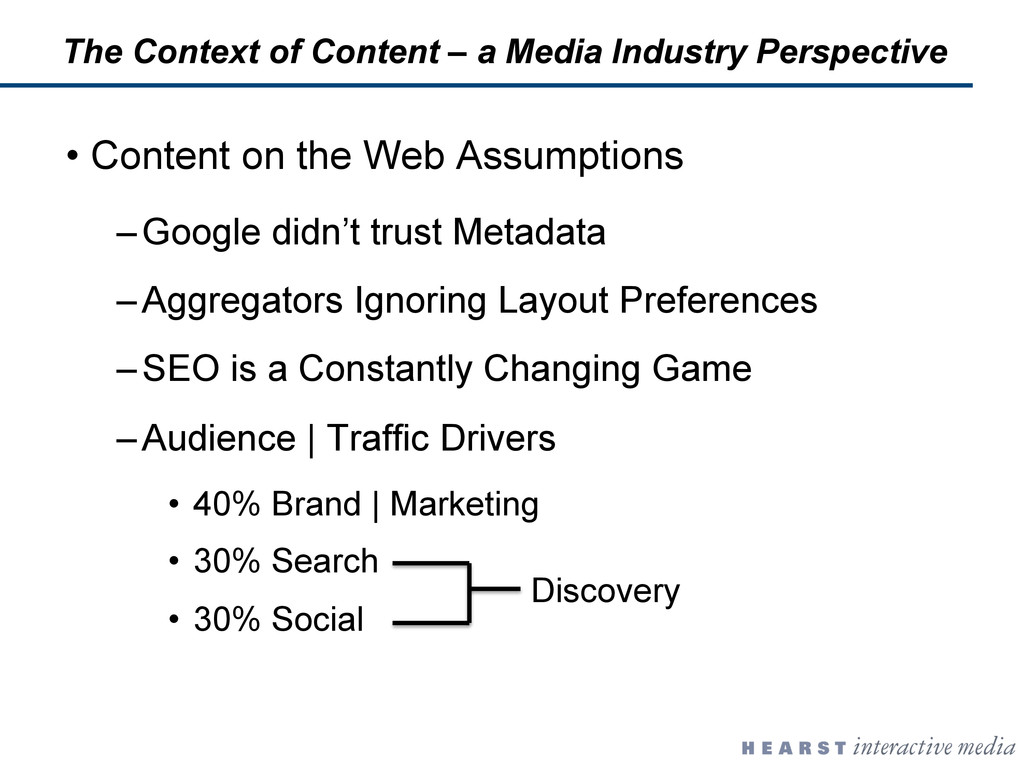
– Aggregators Ignoring Layout Preferences – SEO is a Constantly Changing Game – Audience | Traffic Drivers • 40% Brand | Marketing • 30% Search • 30% Social The Context of Content – a Media Industry Perspective Discovery
Process – Systemic via Devices | Tools – Content Optimization • Cleansing | Normalizing • Allow Self Describing • Make it Harvestable The Context of Content – a Media Industry Perspective
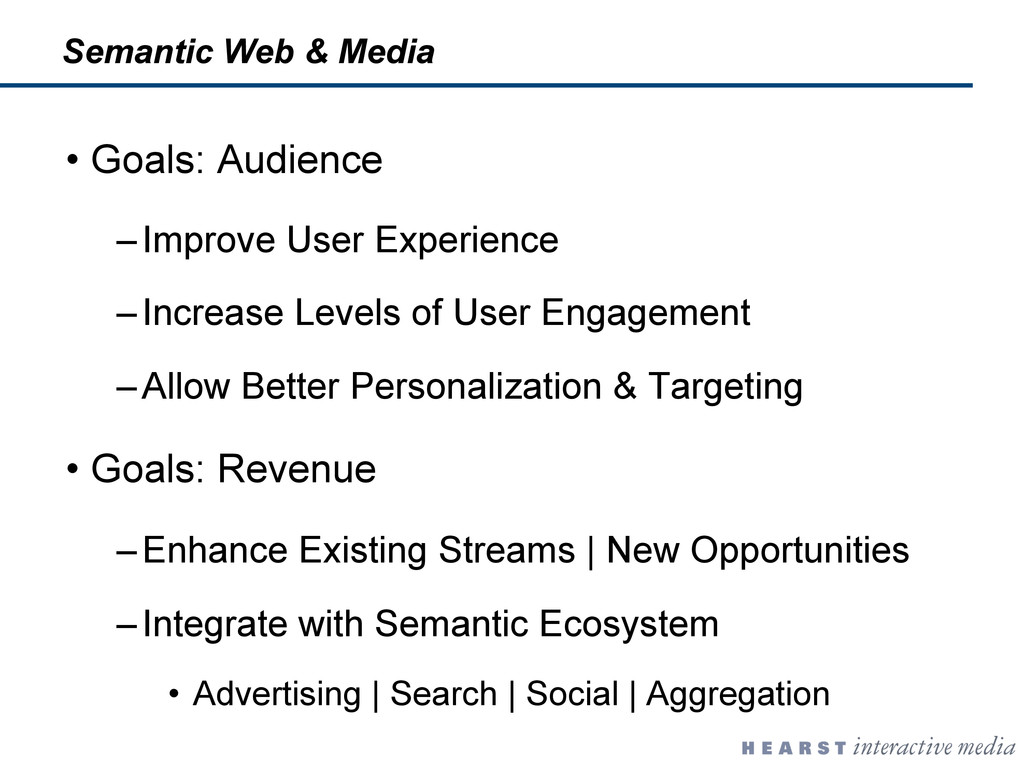
Content Creation – Better Understand Content Already Available – Insure Discoverability of Content – Take Advantage of Opportunities The Context of Content – a Media Industry Perspective
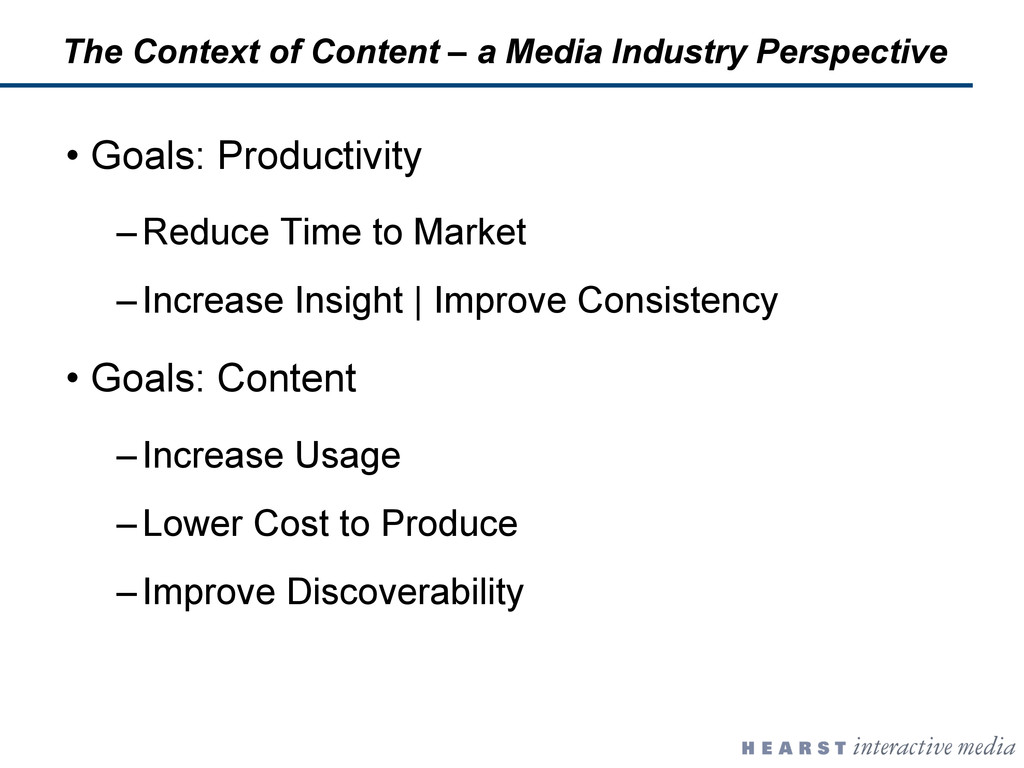
Improve Consistency • Goals: Content – Increase Usage – Lower Cost to Produce – Improve Discoverability The Context of Content – a Media Industry Perspective
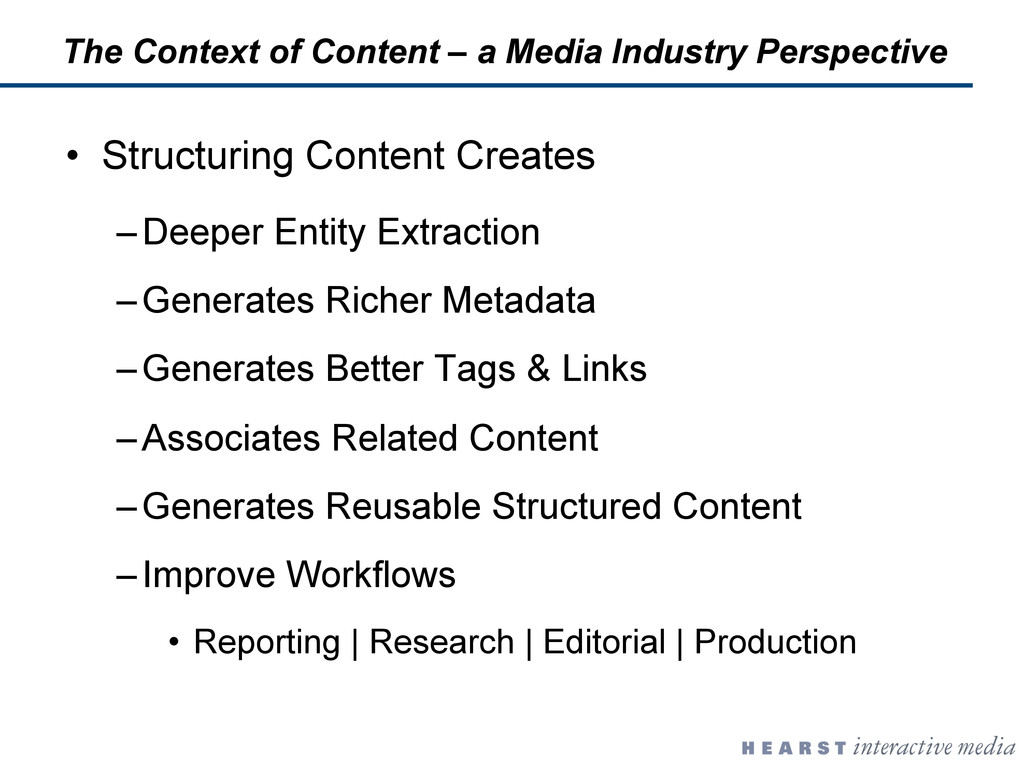
– Generates Better Tags & Links – Associates Related Content – Generates Reusable Structured Content – Improve Workflows • Reporting | Research | Editorial | Production The Context of Content – a Media Industry Perspective
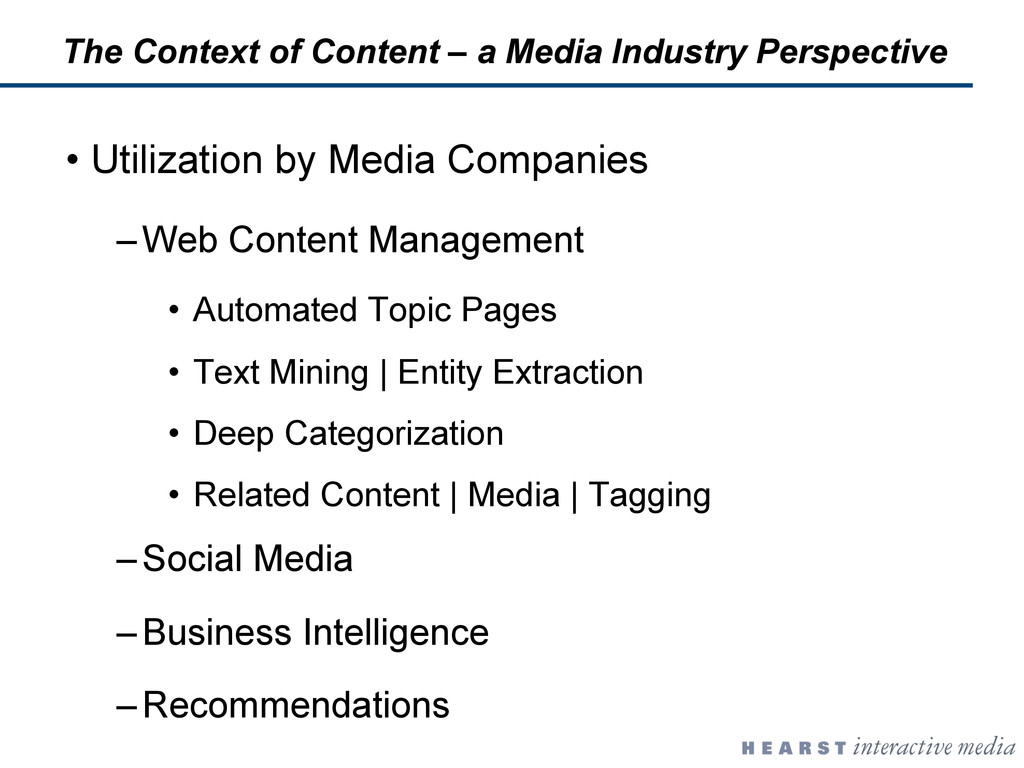
Topic Pages • Text Mining | Entity Extraction • Deep Categorization • Related Content | Media | Tagging – Social Media – Business Intelligence – Recommendations The Context of Content – a Media Industry Perspective


 glemak
 ren8k
 miriamschwab
 shumpei3
 ryutakondo
 munenick
 tammyeverts
 dkduppf
 sansantech
 yama3133
 daitak
 miu_crescent
 _awache
 katiecoart
 pauljervisheath
 mayatellez
 frankvandijk
 marketingsoph
 tonyrice
 techseoconnect
 stuffmc
 thekraken
 bermonpainter
 badams
 addyosmani