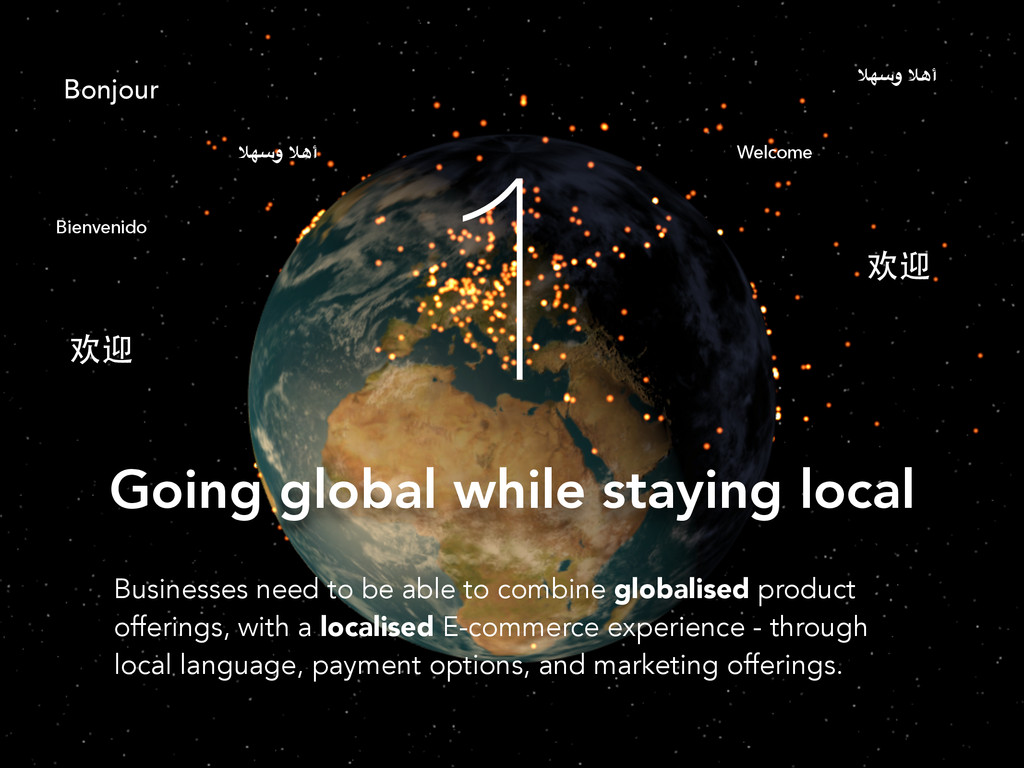
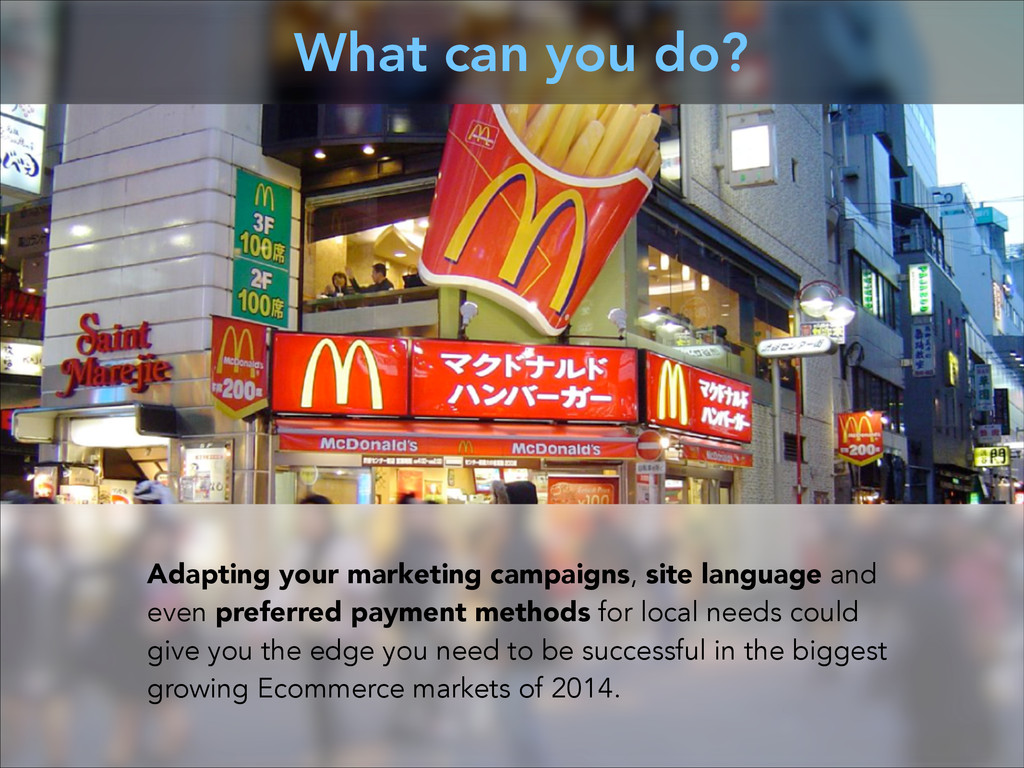
to combine globalised product offerings, with a localised E-commerce experience - through local language, payment options, and marketing offerings. 1 Bienvenido 欢迎 الهسو الهأ الهسو الهأ 欢迎 Welcome Bonjour
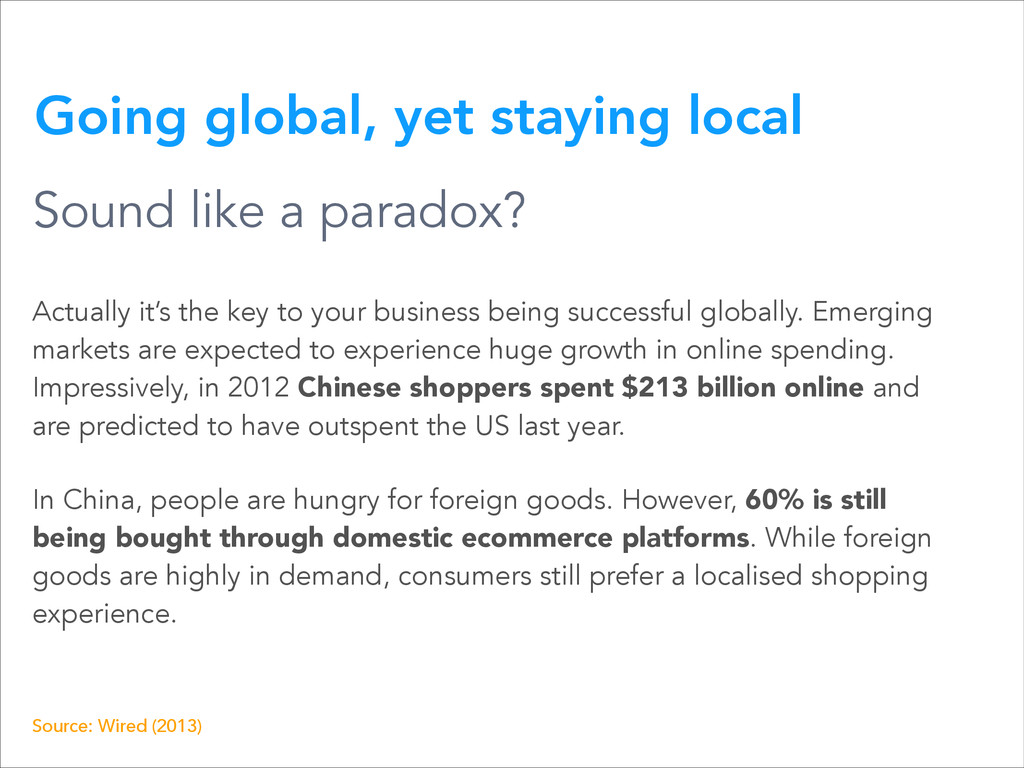
Wired (2013) Actually it’s the key to your business being successful globally. Emerging markets are expected to experience huge growth in online spending. Impressively, in 2012 Chinese shoppers spent $213 billion online and are predicted to have outspent the US last year. In China, people are hungry for foreign goods. However, 60% is still being bought through domestic ecommerce platforms. While foreign goods are highly in demand, consumers still prefer a localised shopping experience.
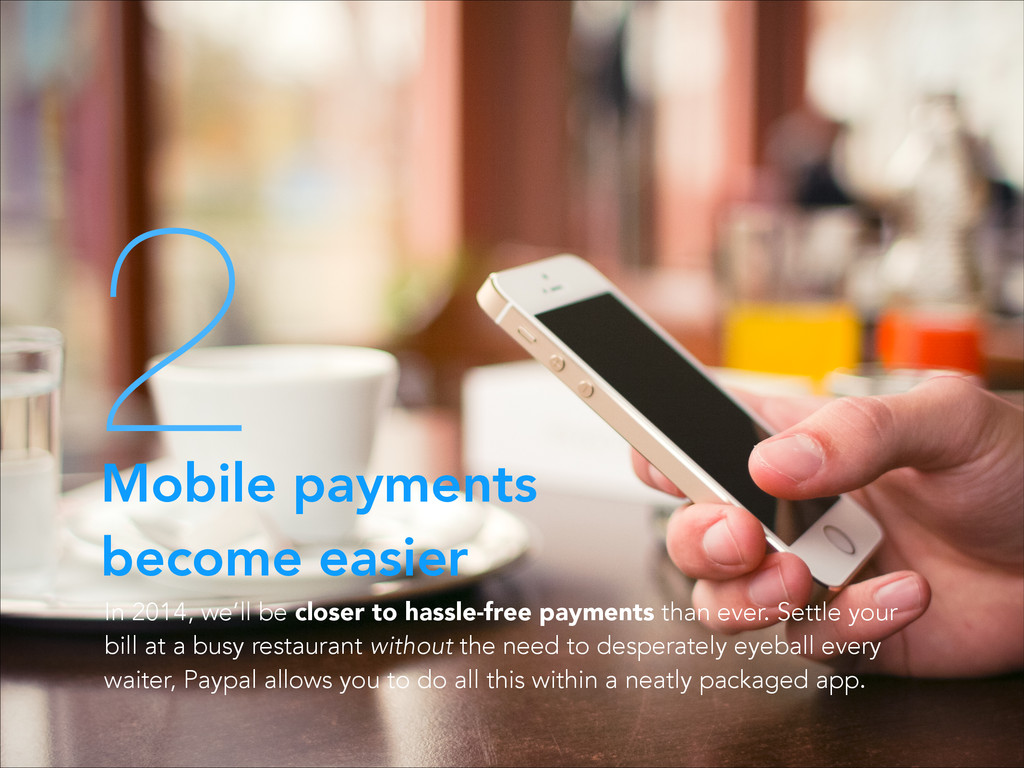
hassle-free payments than ever. Settle your bill at a busy restaurant without the need to desperately eyeball every waiter, Paypal allows you to do all this within a neatly packaged app. 2
apps like Hailo or Uber allow you order a taxi, track their location on a map, and then pay automatically through a card which is linked to the app. Similarly, you can book & pay for a room through Airbnb on your phone. Even buying your lunch becomes a breeze as you avoid rush-hour queues by pre-ordering and paying through your phone. In the last year alone, mobile payments totalled $235.4 billion worldwide. And it’s not slowing down yet, as Gartner predicts a further 38% increase to $325 billion in mobile payments for 2014. Mobile payments become easier Source: Hailo (2014), Gartner (2013)
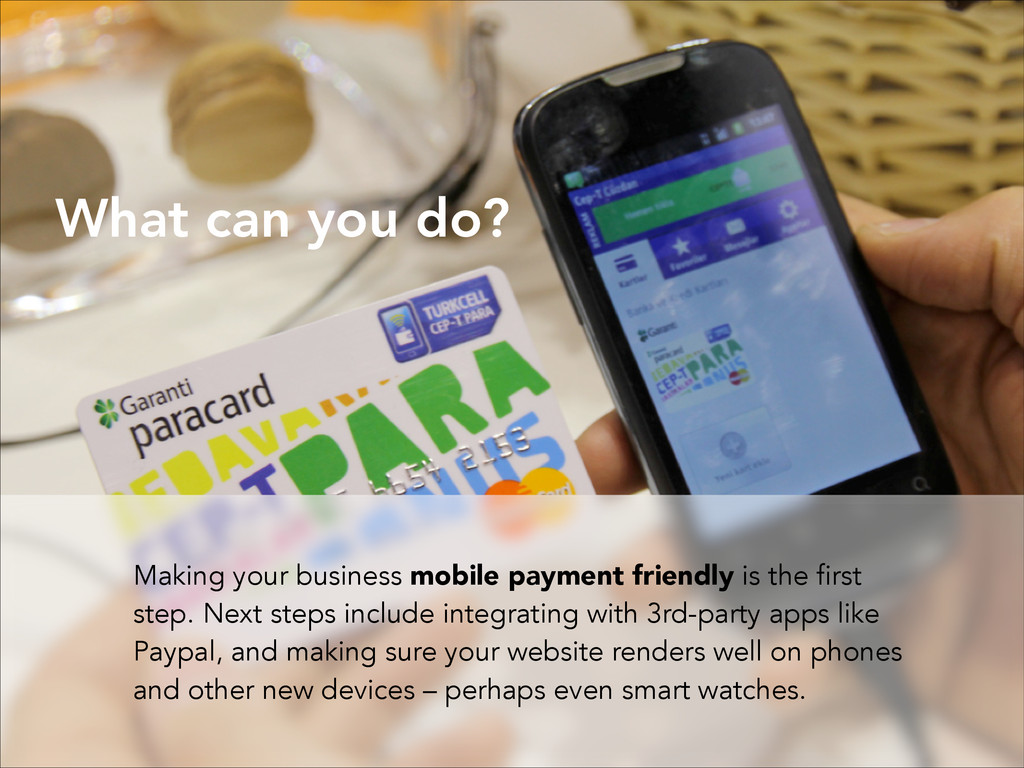
Next steps include integrating with 3rd-party apps like Paypal, and making sure your website renders well on phones and other new devices – perhaps even smart watches. What can you do?
for businesses to adapt. Online retailing is about multichannel selling – individual websites, public marketplaces and shopping-comparison websites. Utilising multichannel selling
in order to increase their revenue, an online retailer can sell their products across multiple channels online. The greatest advantage of multichannel selling is ultimately it levels the playing field for small retailers. Instead of the customer going directly to the biggest retailer, small businesses can now reach the customer directly through a search engine, comparison site, or an online marketplace such as eBay. Even Tesco, the 2nd largest retailer in the world uses eBay UK as a sales channel! Did you know 39% of units sold on Amazon in Q4 of 2012 were by 3rd party merchants, not Amazon? Utilising multichannel selling Source: PracticalEcommerce (Jan 2014), smartinsights.com (2013)
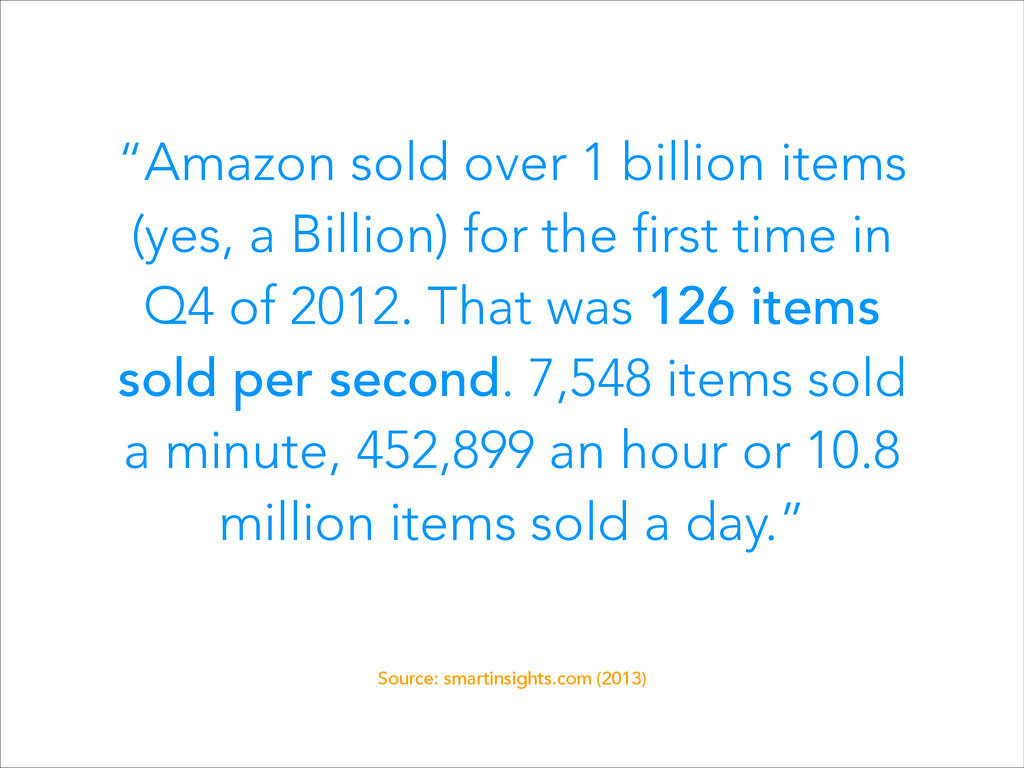
the first time in Q4 of 2012. That was 126 items sold per second. 7,548 items sold a minute, 452,899 an hour or 10.8 million items sold a day.” Source: smartinsights.com (2013)
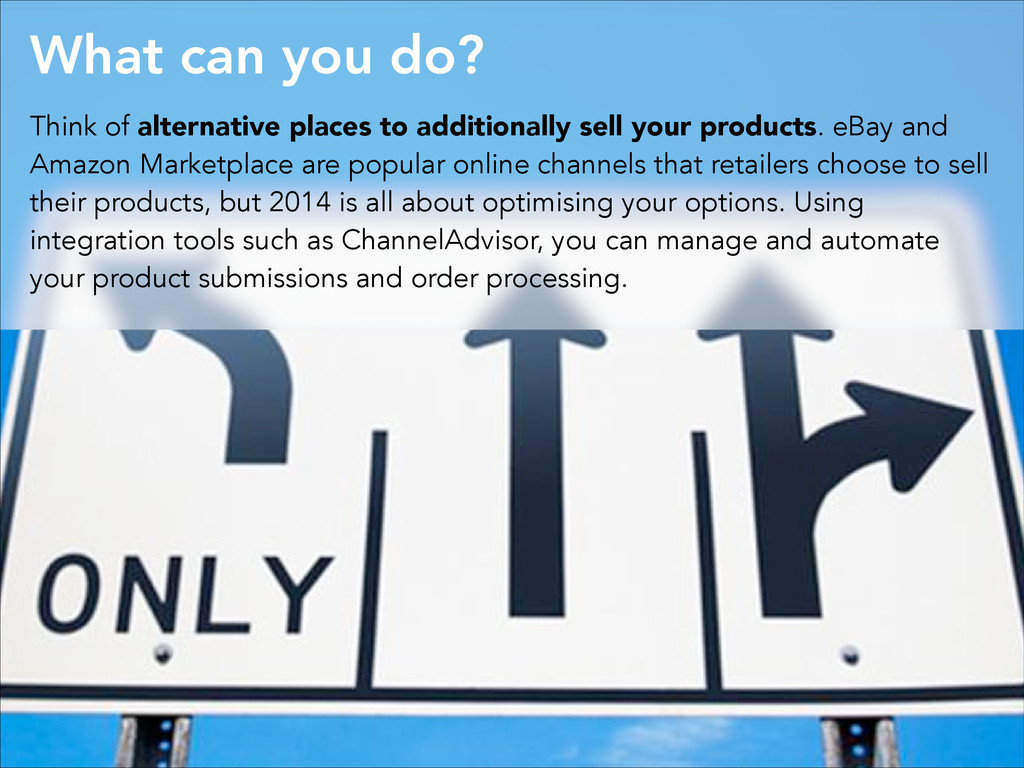
sell your products. eBay and Amazon Marketplace are popular online channels that retailers choose to sell their products, but 2014 is all about optimising your options. Using integration tools such as ChannelAdvisor, you can manage and automate your product submissions and order processing.
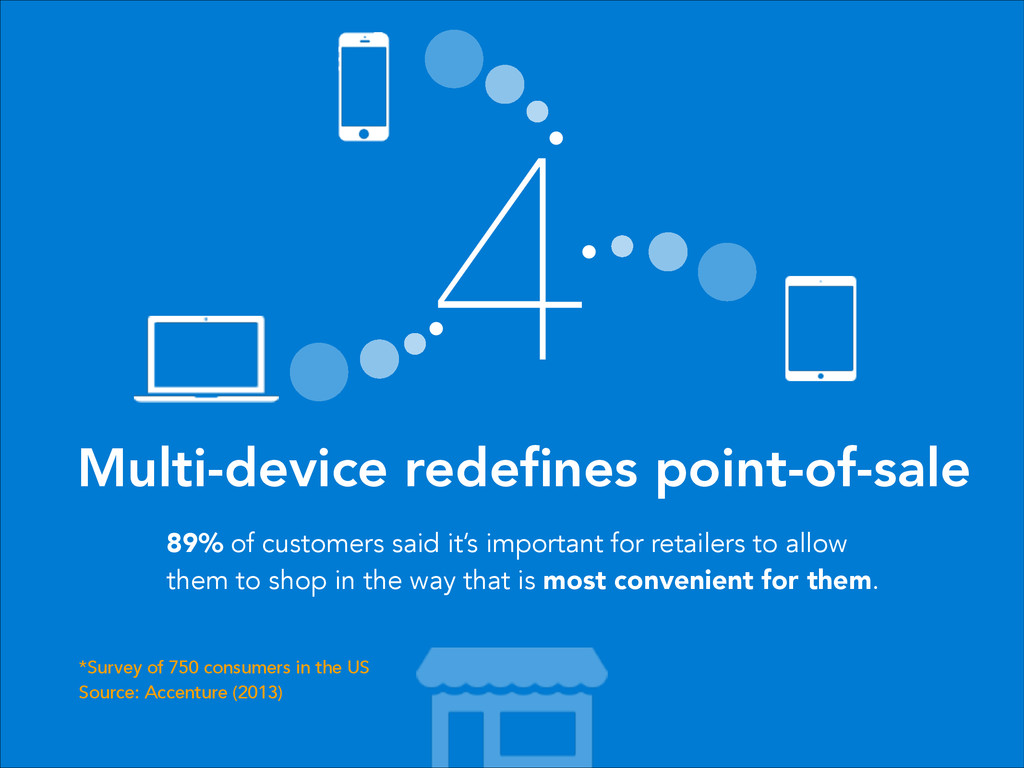
them to shop in the way that is most convenient for them. 4 Multi-device redefines point-of-sale *Survey of 750 consumers in the US Source: Accenture (2013)
US over their annual ‘mega-shopping’ weekend, 32% of E-commerce traffic came from tablet devices. With tablets driving twice as many transactions as mobile devices, which remains the favourite for browsing, it’s critical to create a seamless shopping experience across multiple channels. In fact, 49% of consumers feel that integrating in-store, online and mobile channels is the best thing retailers can do this year. Multi-device redefines point-of-sale Source: IBM (2013), Accenture (2013), BusinessNewsDaily (Jan 2014)
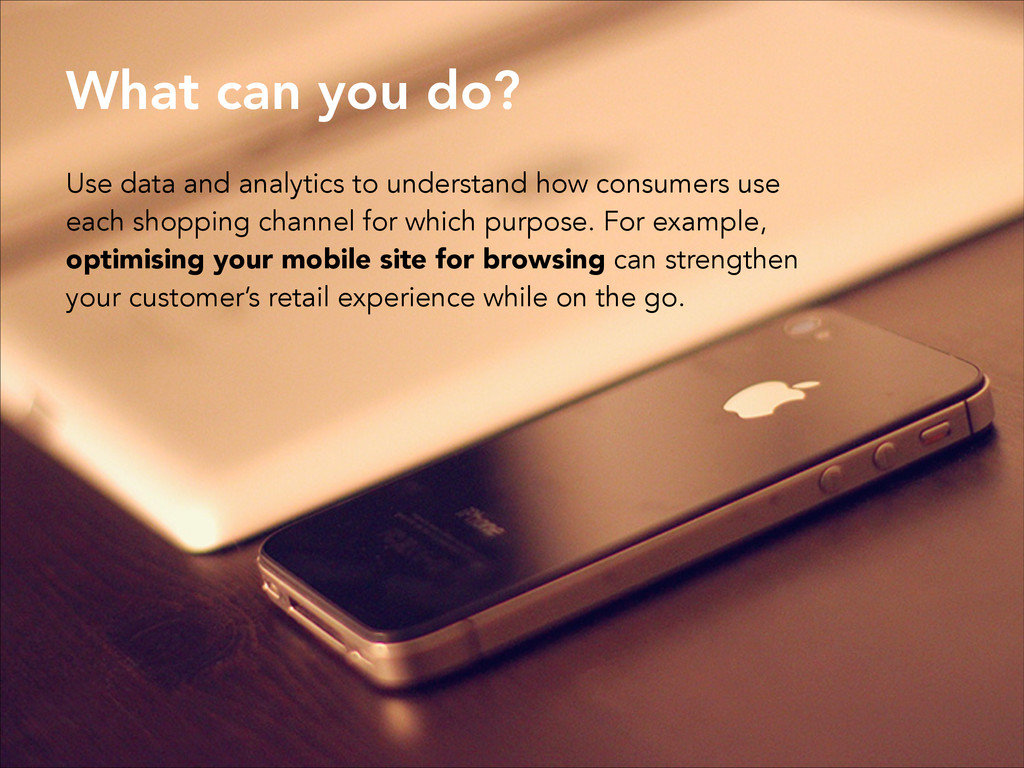
how consumers use each shopping channel for which purpose. For example, optimising your mobile site for browsing can strengthen your customer’s retail experience while on the go.
James Gagliardi (Digital River), believes that companies will be able to analyse data to create useful consumer insights. If fashion retailers can use data to suggest products based on existing purchases, they can help the customer build a complimentary and customised wardrobe. Netflix has already been using data analytics for this type of customisation for a while. The biggest change will be that Big Data will become part of their core business practise for small retailers. 42% of small businesses which participated in the ShopKeep POS survey, say they are using analytics to make smarter, immediate business decisions. Data + Analytics Source: Wired (2013)
of all sorts of technology which is particularly exciting for smaller businesses who can now compete with the bigger players.” Source: Econsultancy (2013)
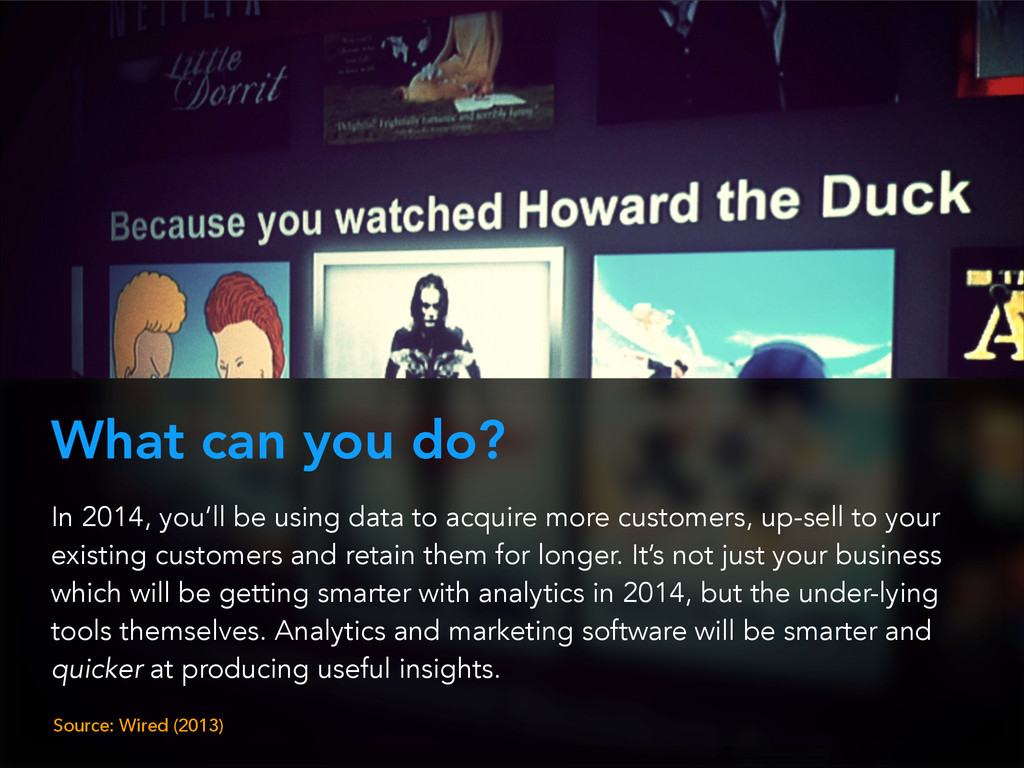
to acquire more customers, up-sell to your existing customers and retain them for longer. It’s not just your business which will be getting smarter with analytics in 2014, but the under-lying tools themselves. Analytics and marketing software will be smarter and quicker at producing useful insights. Source: Wired (2013)
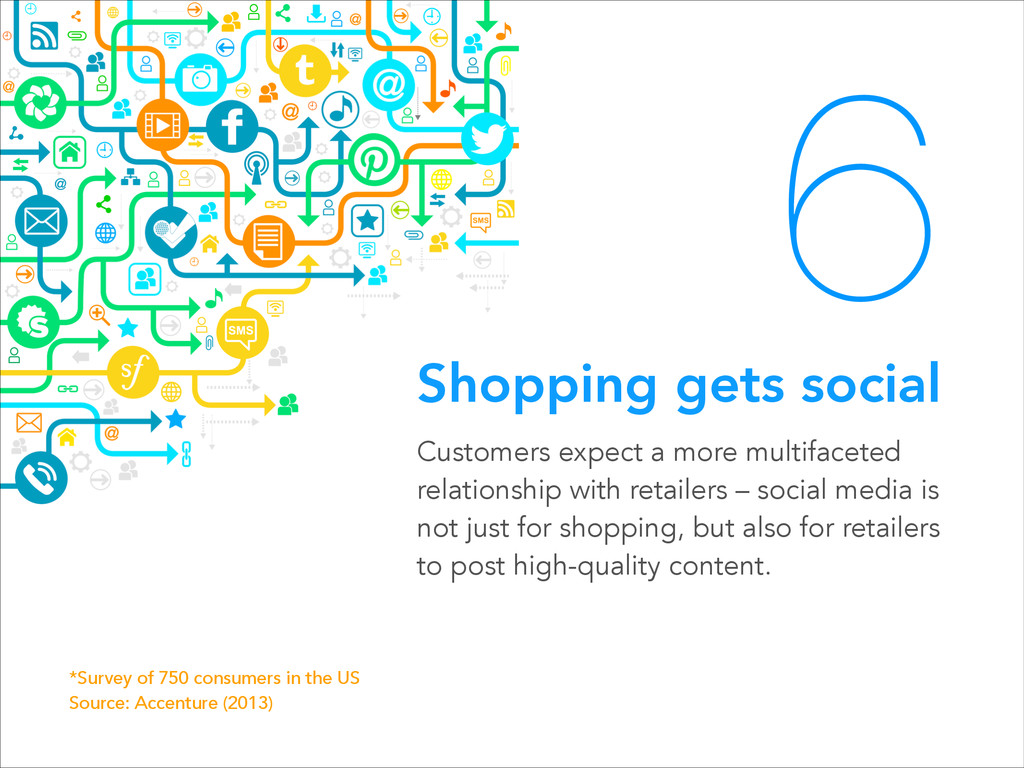
media is not just for shopping, but also for retailers to post high-quality content. 6 Shopping gets social *Survey of 750 consumers in the US Source: Accenture (2013)
customers by creating and curating relevant and valuable content,” according to the Content Marketing Institute. This definition gets right at the heart of ecommerce marketing in 2014. Some experts predict that online shoppers will become more fickle in 2014. One possible way to counteract such an unfortunate situation is to be more than just a shop, and to provide useful or entertaining content that will keep shoppers coming back. Mr. Porter, an online retailer of men’s apparel, is a great example of content marketing in action. Its online publication, The Journal, always has interesting and relevant content. Similarly, American Apparel’s not-safe-for-work product slide shows and provocative Tumblr page entertain and engage shoppers, creating lasting customer relationships that generate repeat sales. Shopping gets social Source: Wired (2013), ParctialEcommerce (2013)
on your social activity and double down on the channels with the highest conversion. Understand why other channels aren’t converting as highly. Source: Wired (2014)
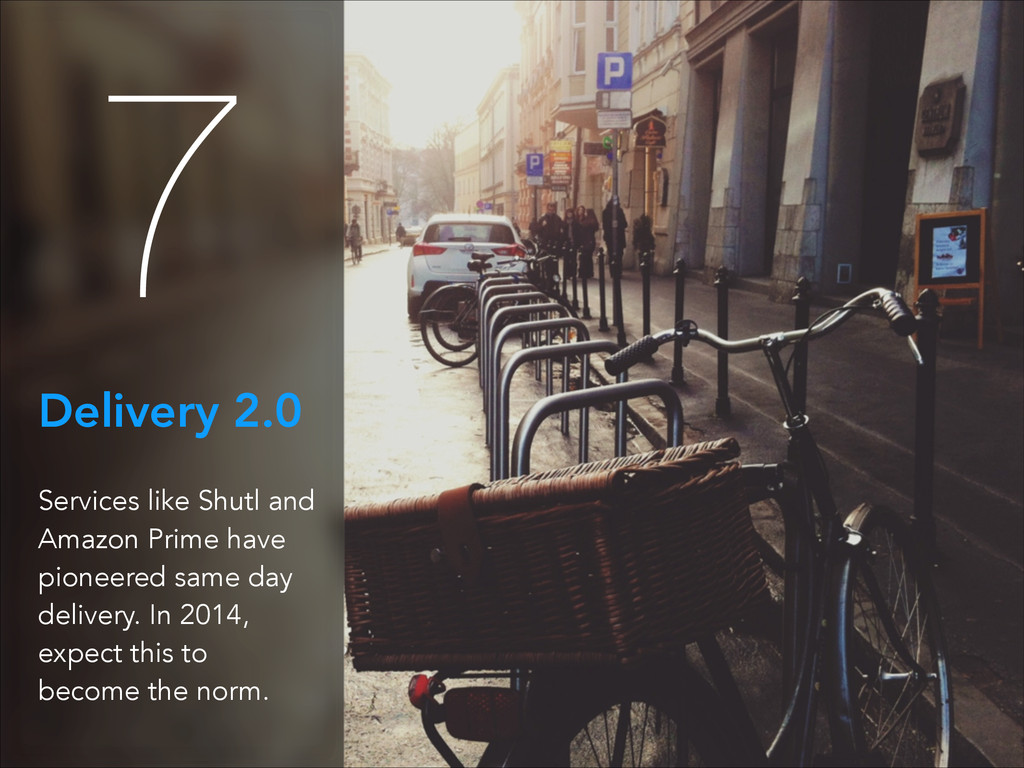
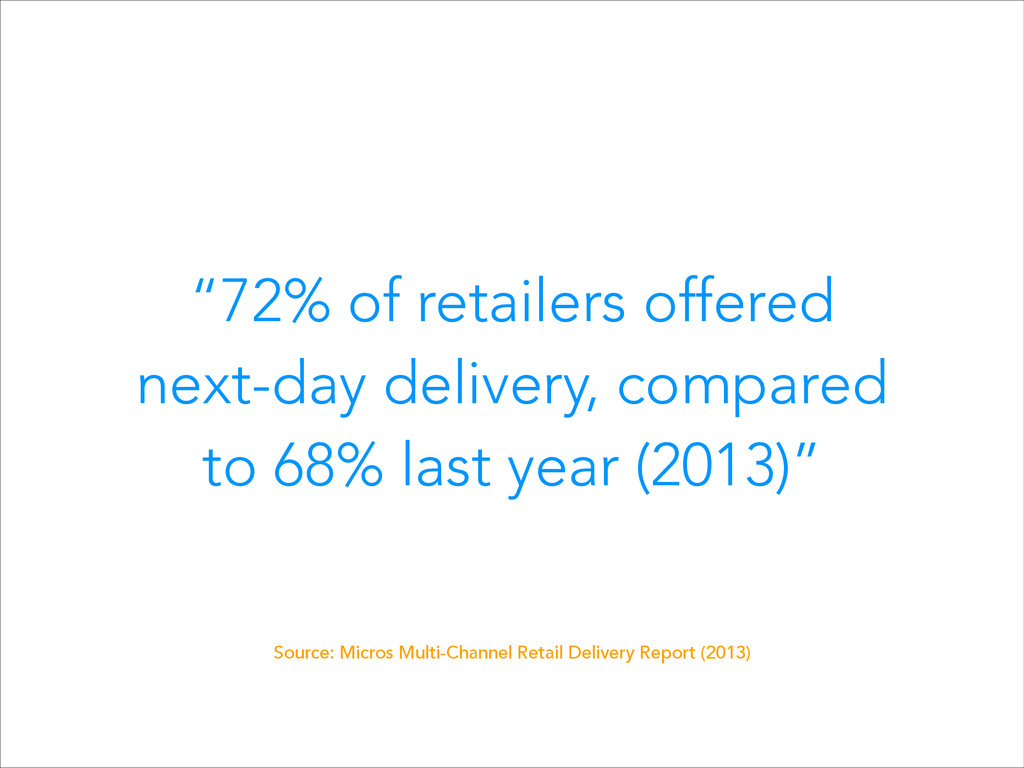
There are now 20 million Amazon users who are eligible to get next day or two day shipping. In addition, Amazon Prime users spent 53% more per year than those who were not signed up. Despite a recent price hike to Amazon Prime in the US, the immediacy of offline shopping is reaching Ecommerce. Being so crucial to the consumer experience, we expect to see huge growth in fulfilment services, such as Fulfilment by Amazon (FBA), to enable smaller retailers to take advantage of one of the most sophisticated logistics services in the world. Delivery 2.0 Source: Business Insider (Jan 2014), VentureBeat (Jan 2014)
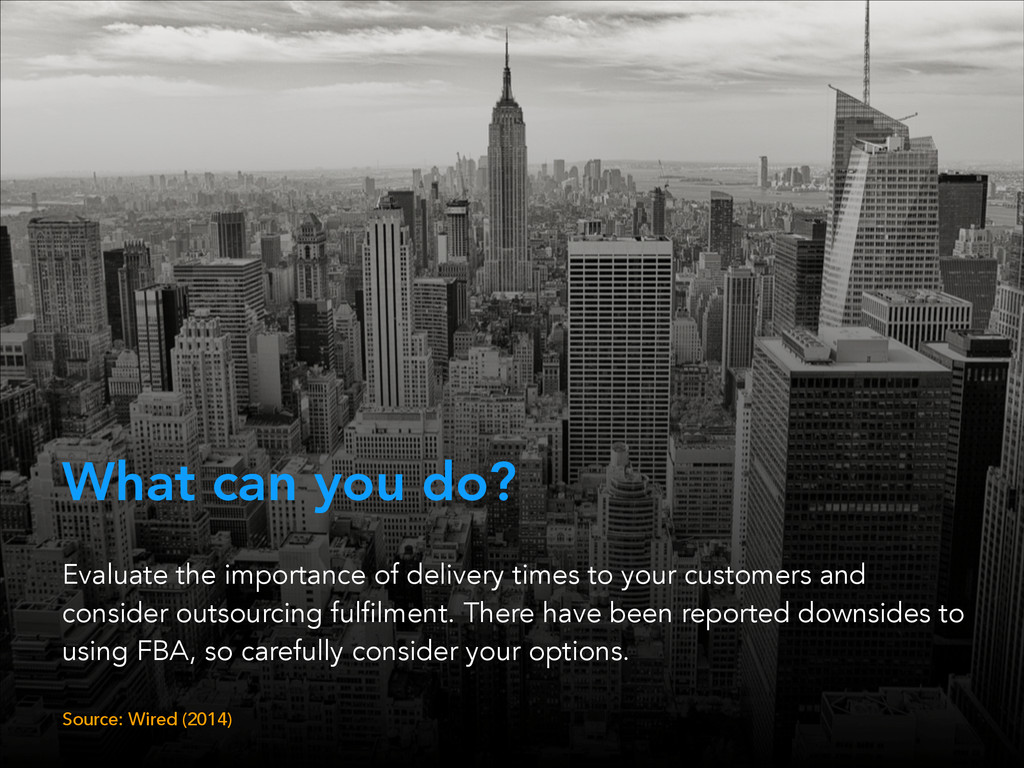
to your customers and consider outsourcing fulfilment. There have been reported downsides to using FBA, so carefully consider your options. Source: Wired (2014)

 Your Podcast. Everywhere. Effortlessly.


 ikuodanaka
 maruishi
 ashisuto_career
 infcurion
 neuroenergia
 advalistar
 forest8810
 attelu
 takeuchigroup
 progmat
 nishika_kae
 ggfs
 maggiecrowley
 chrisshort
 eitanlees
 livdayseo
 skipperchong
 samtorres
 inesmontani
 sferik
 ipullrank
 sabderemane
 akademiya2063
 nonsquared