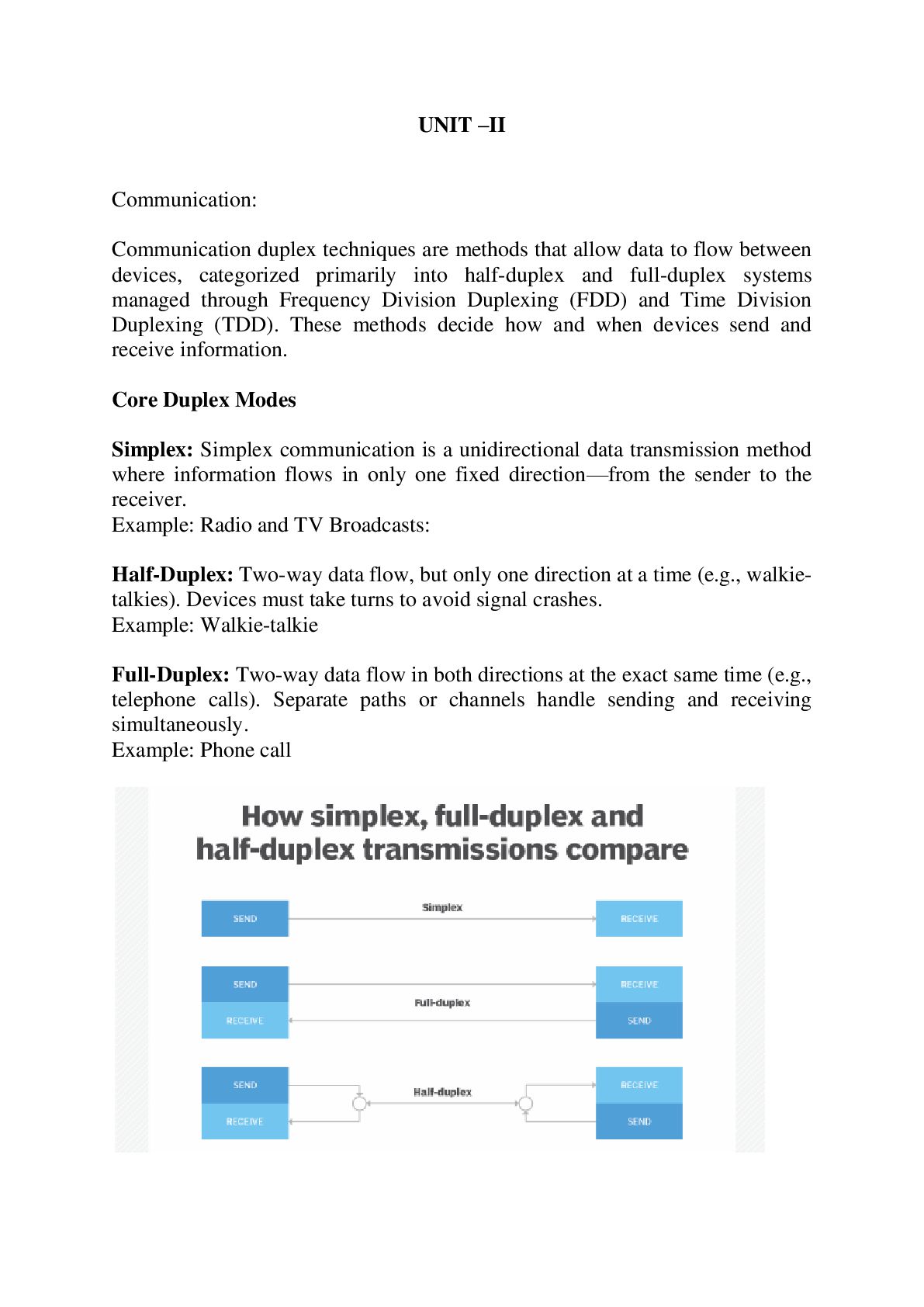
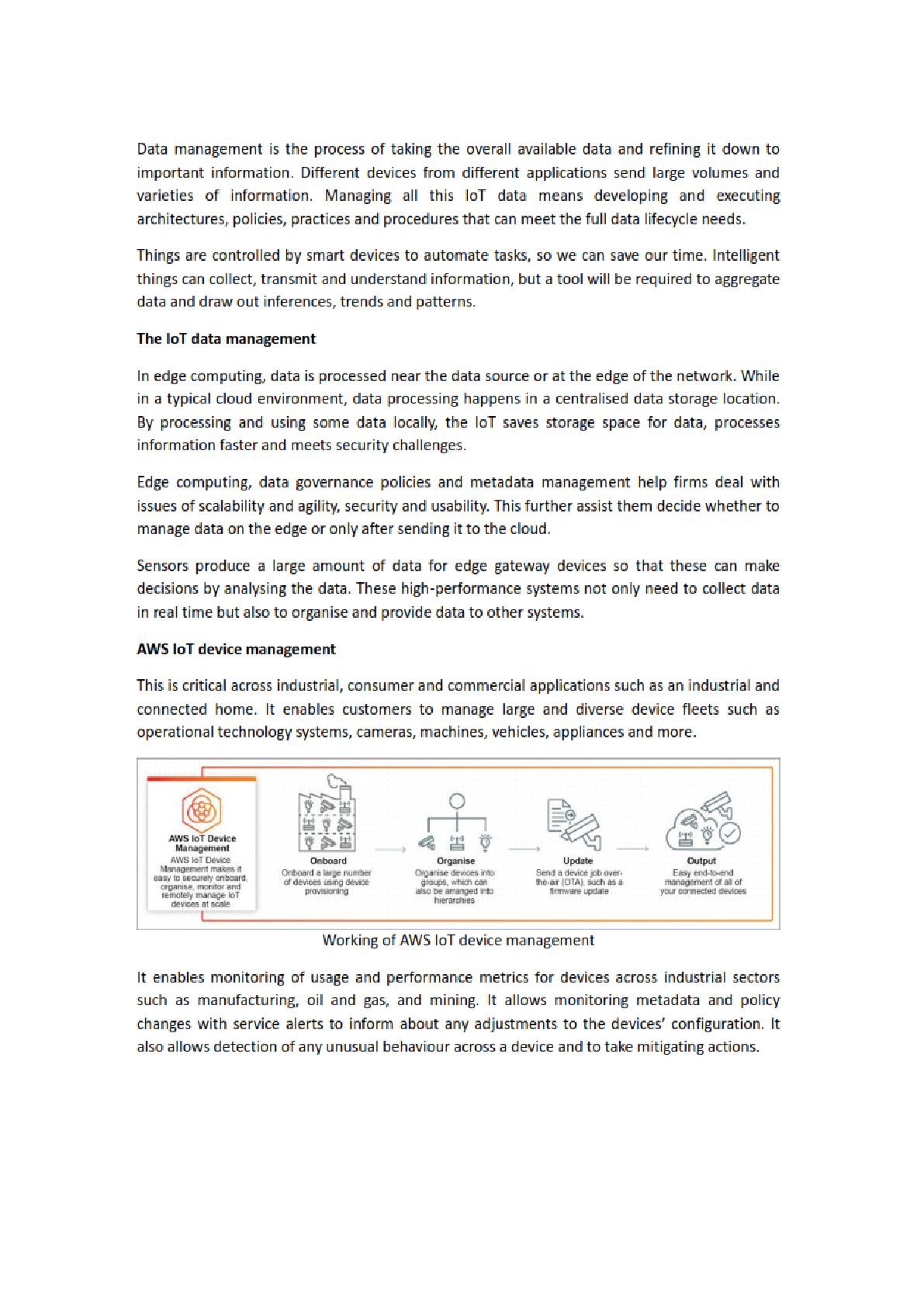
data to flow between devices, categorized primarily into half-duplex and full-duplex systems managed through Frequency Division Duplexing (FDD) and Time Division Duplexing (TDD). These methods decide how and when devices send and receive information. Core Duplex Modes Simplex: Simplex communication is a unidirectional data transmission method where information flows in only one fixed direction—from the sender to the receiver. Example: Radio and TV Broadcasts: Half-Duplex: Two-way data flow, but only one direction at a time (e.g., walkietalkies). Devices must take turns to avoid signal crashes. Example: Walkie-talkie Full-Duplex: Two-way data flow in both directions at the exact same time (e.g., telephone calls). Separate paths or channels handle sending and receiving simultaneously. Example: Phone call
FDM / FDMA: Frequency Division Multiplexing / Frequency Division Multiple Access – divides the total bandwidth into non-overlapping frequency bands assigned to different users. (2G/3G) TDM / TDMA: Time Division Multiplexing / Time Division Multiple Access – divides the shared channel into alternating time slots so users take turns transmitting data. (2G/3G) CDMA: Code Division Multiple Access – allows all users to share the entire frequency bandwidth at the same time by assigning a unique mathematical code to each signal. WDM: Wavelength Division Multiplexing – combines multiple optical carrier signals onto a single fiber-optic cable using different light wavelengths. OFDMA: Orthogonal Frequency Division Multiple Access – splits a broad frequency channel into closely spaced orthogonal subcarriers allocated dynamically to multiple users. (4G/5G) SDMA: Space Division Multiple Access – uses smart multi-antenna arrays or directional beams to separate users based on their physical location Computer Networking: Computer networking connects devices to share data and resources. Key hardware (routers, switches) directs data, while protocols (TCP/IP, HTTP) ensure accurate communication. Every device uses an IP address for routing and a MAC (Medium Access Control) address for local hardware identification, dividing data into manageable packets. IoT networking: IoT networking connects smart physical objects using devices, gateways, and protocols. It shares sensors data over local or wide areas without human help.
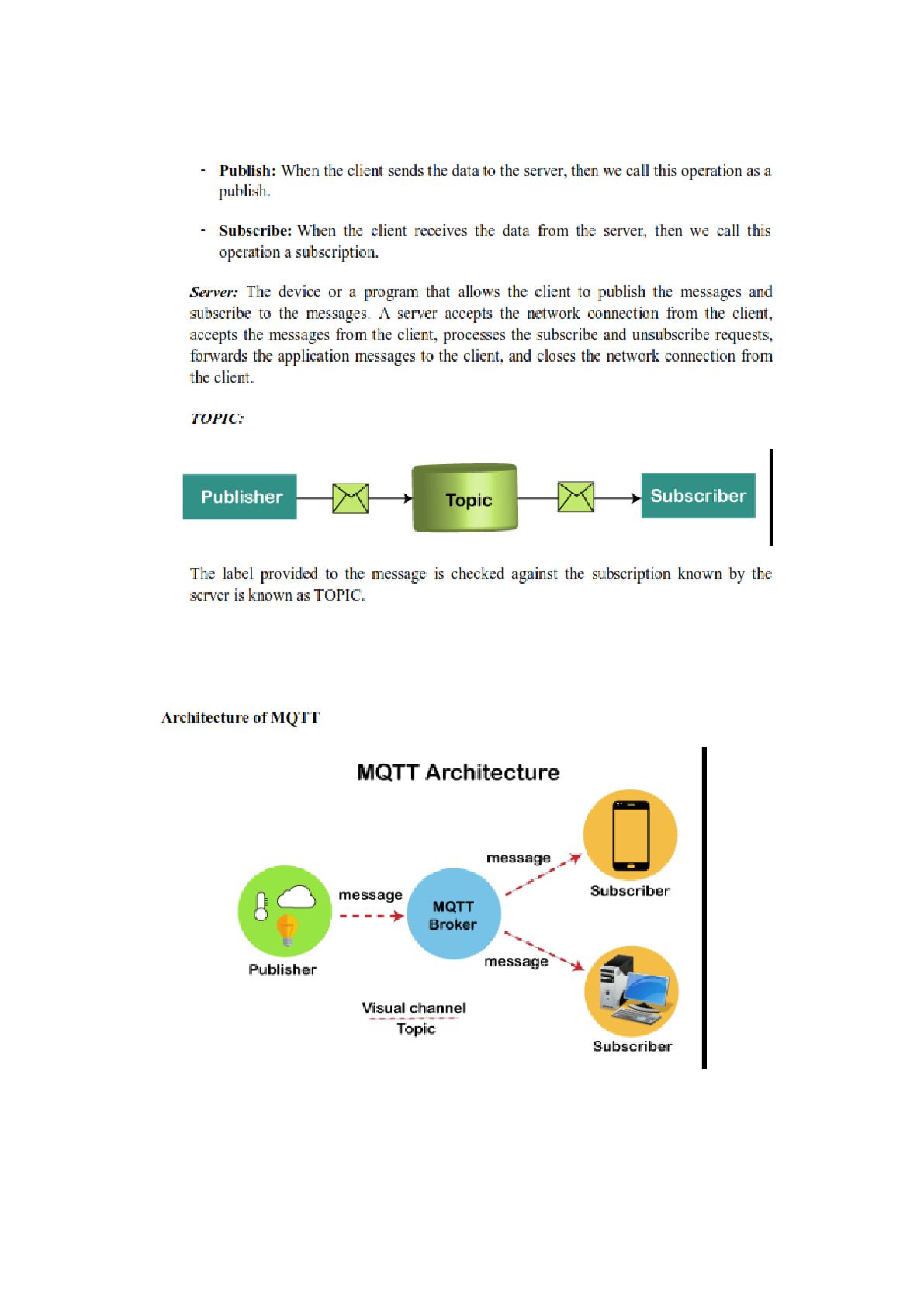
enable connected devices to exchange data with each other. These protocols are designed to be lightweight, secure, and energy-efficient compared to traditional internet protocols. These protocols operate across different layers of the network and are primarily categorized by their specific functions: 1. Application Layer Protocols (Messaging) These protocols dictate how devices format, read, and transmit data payloads to servers and cloud platforms. MQTT (Message Queuing Telemetry Transport): The most popular IoT protocol. It uses a lightweight publish/subscribe architecture. It is being used for low-bandwidth, high-latency networks and battery-powered sensors. CoAP (Constrained Application Protocol): A web transfer protocol for constrained nodes and networks, functioning like a stripped-down(simplest features), UDP-based HTTP for simple devices. HTTP/HTTPS: Used for more powerful IoT devices that require heavy data transfers and easy integration with traditional web services, though it consumes more power and bandwidth.
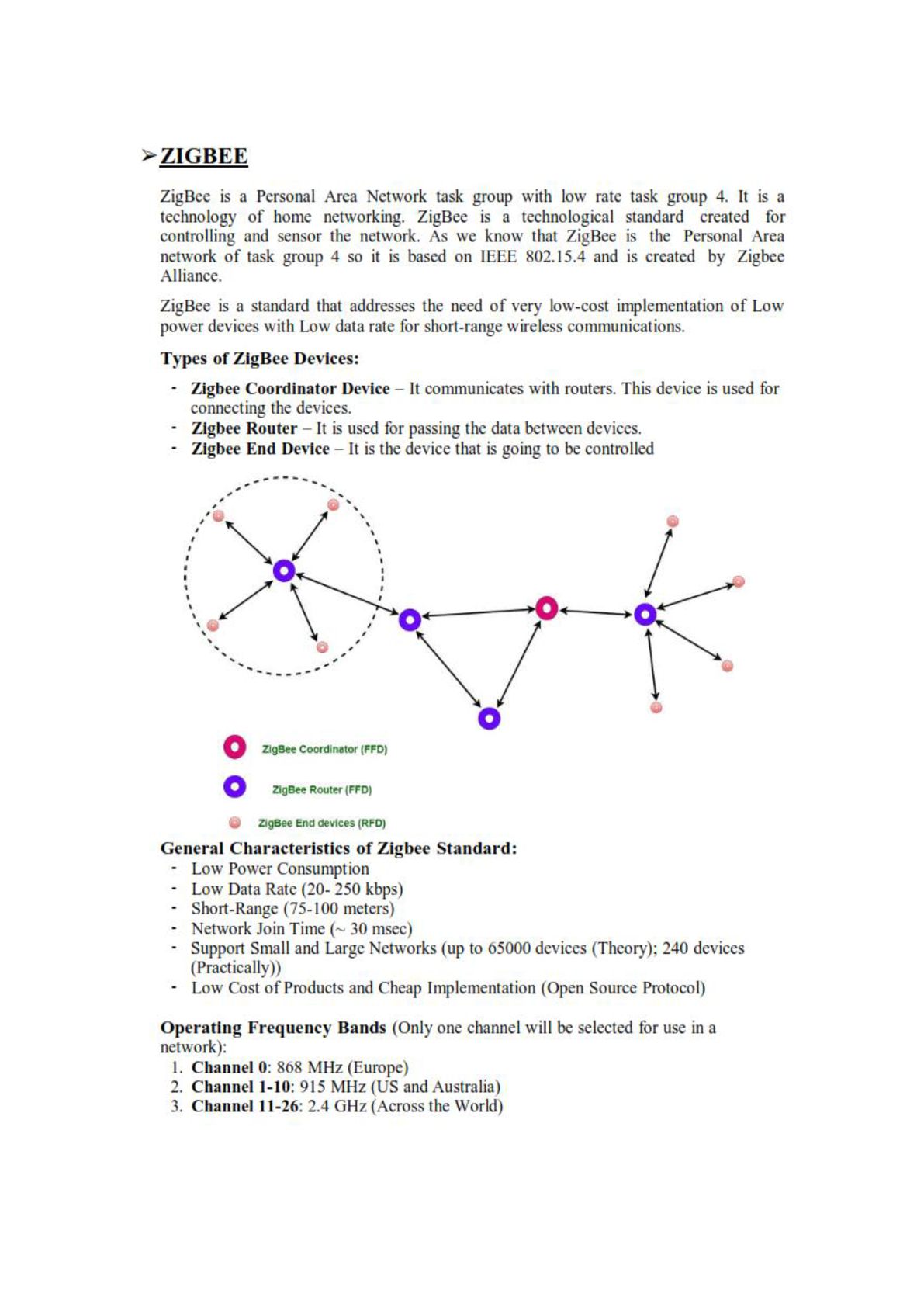
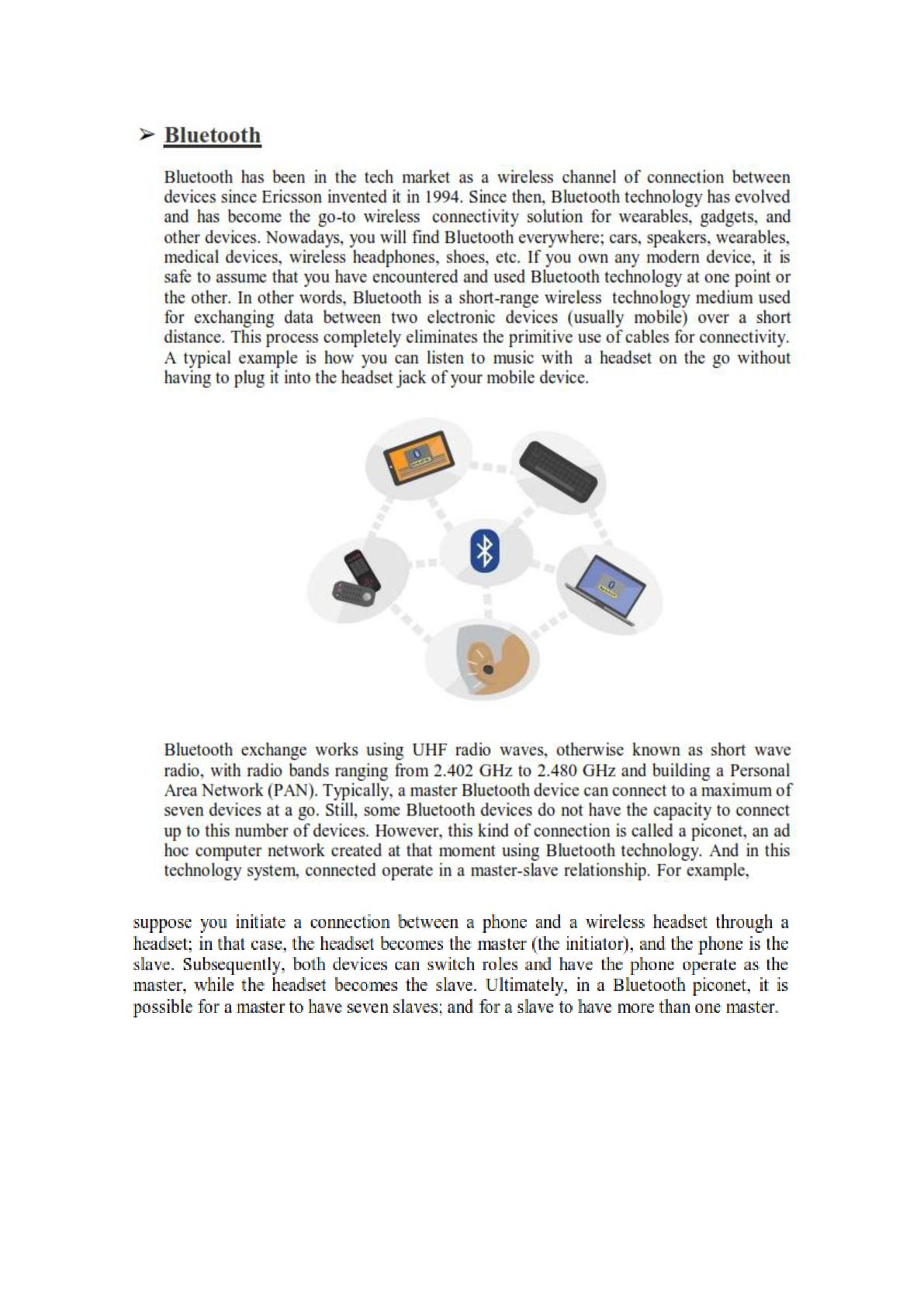
queuing mechanisms, commonly used in enterprise and industrial IoT systems where message delivery must be strictly guaranteed. 2. Network & Transport Layer Protocols These dictate how data packets are routed, addressed, and delivered across the network. 6LoWPAN: An adaptation layer that allows IPv6 packets to be sent and received over low-power, wireless mesh networks (like IEEE 802.15.4). IPv4/IPv6: The foundational internet routing protocols, though IPv6 is highly preferred in IoT to accommodate the massive number of unique device addresses. TCP & UDP: Transport protocols. TCP ensures reliable, connection-oriented delivery, while UDP is faster but connectionless, often favored in batteryconstrained IoT because it has lower energy overhead. 3. Data Link & Physical Layer Protocols (Connectivity) These define the hardware, signal modulation, and physical range over which devices communicate. Short/Medium Range: Includes Wi-Fi for high-speed local networks, Bluetooth Low Energy (BLE) for wearables, and Zigbee for secure, low-power mesh networks (often used in smart homes). LPWAN (Low Power Wide Area Network): Used for long-range, batteryoperated devices over vast areas. Includes LoRaWAN and NB-IoT, which communicate directly with the cloud from miles away without needing local gateways.
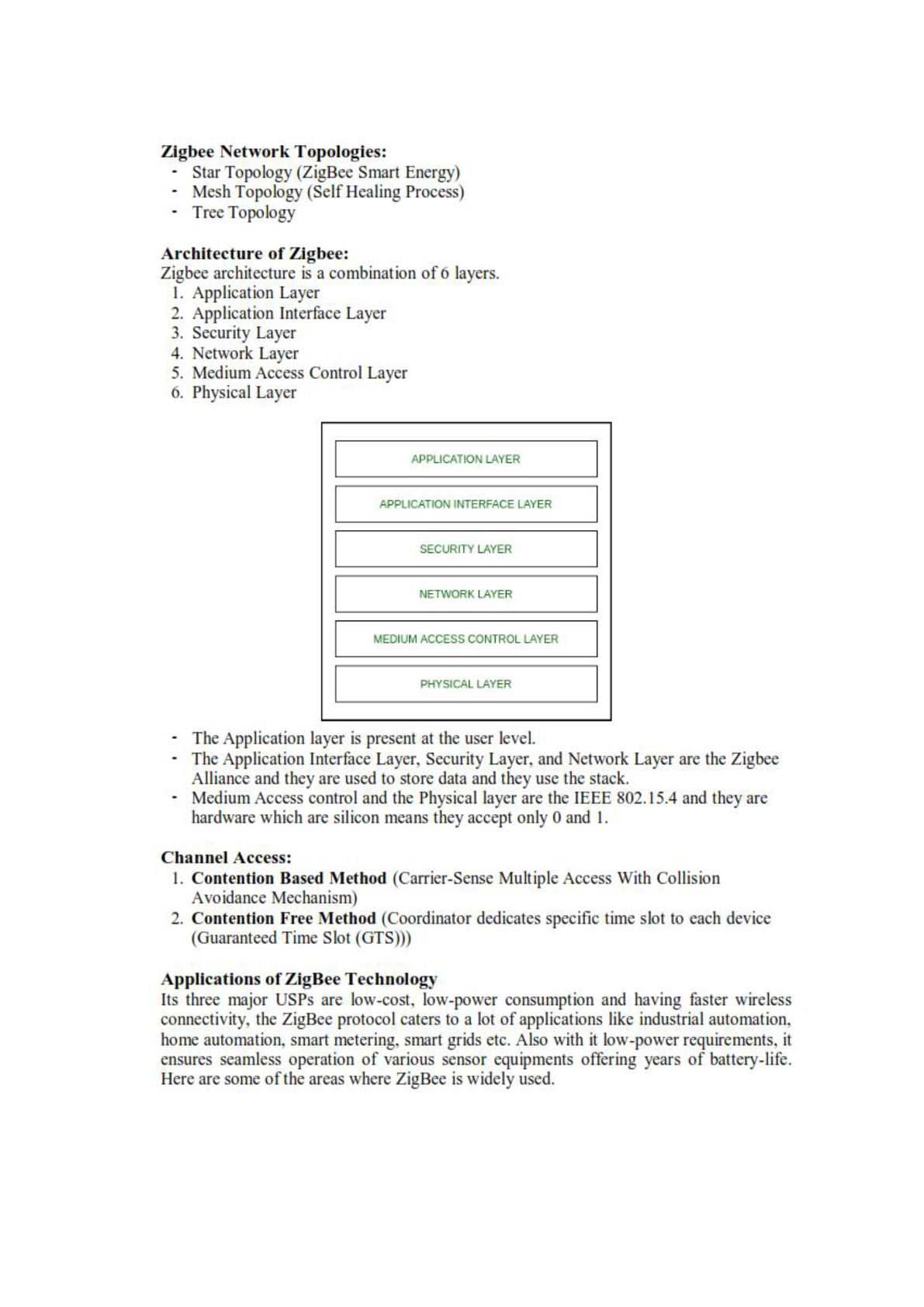
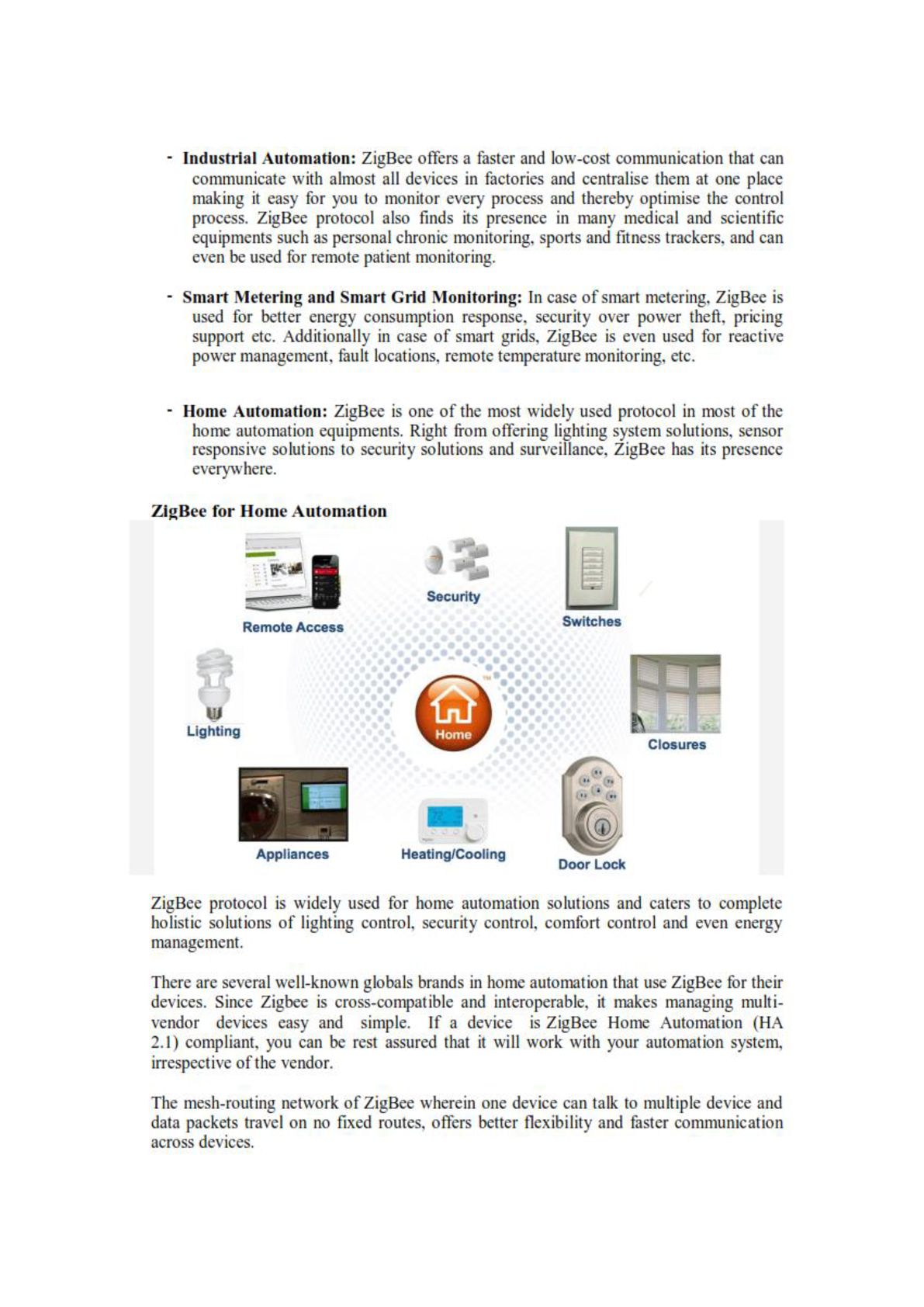
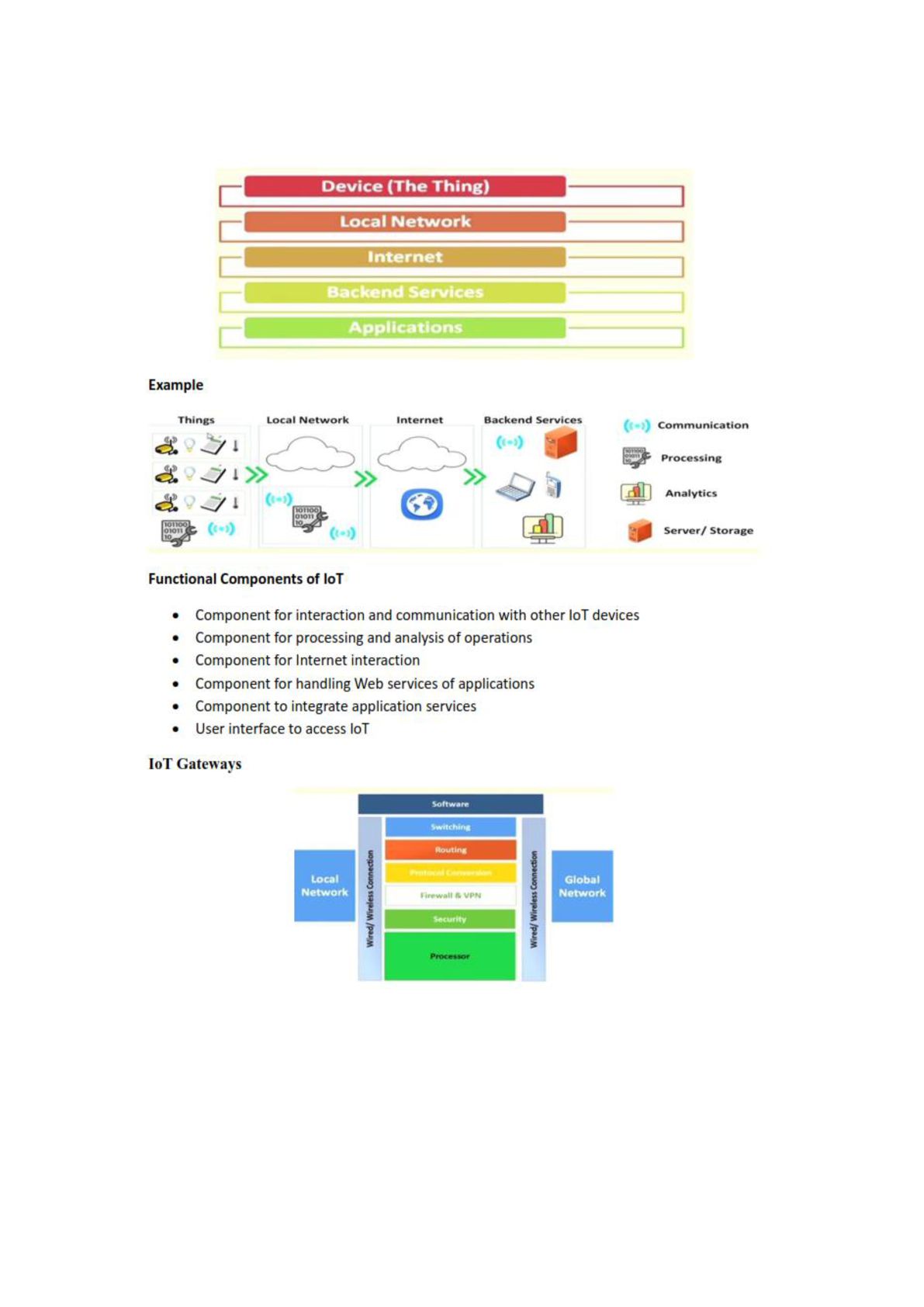
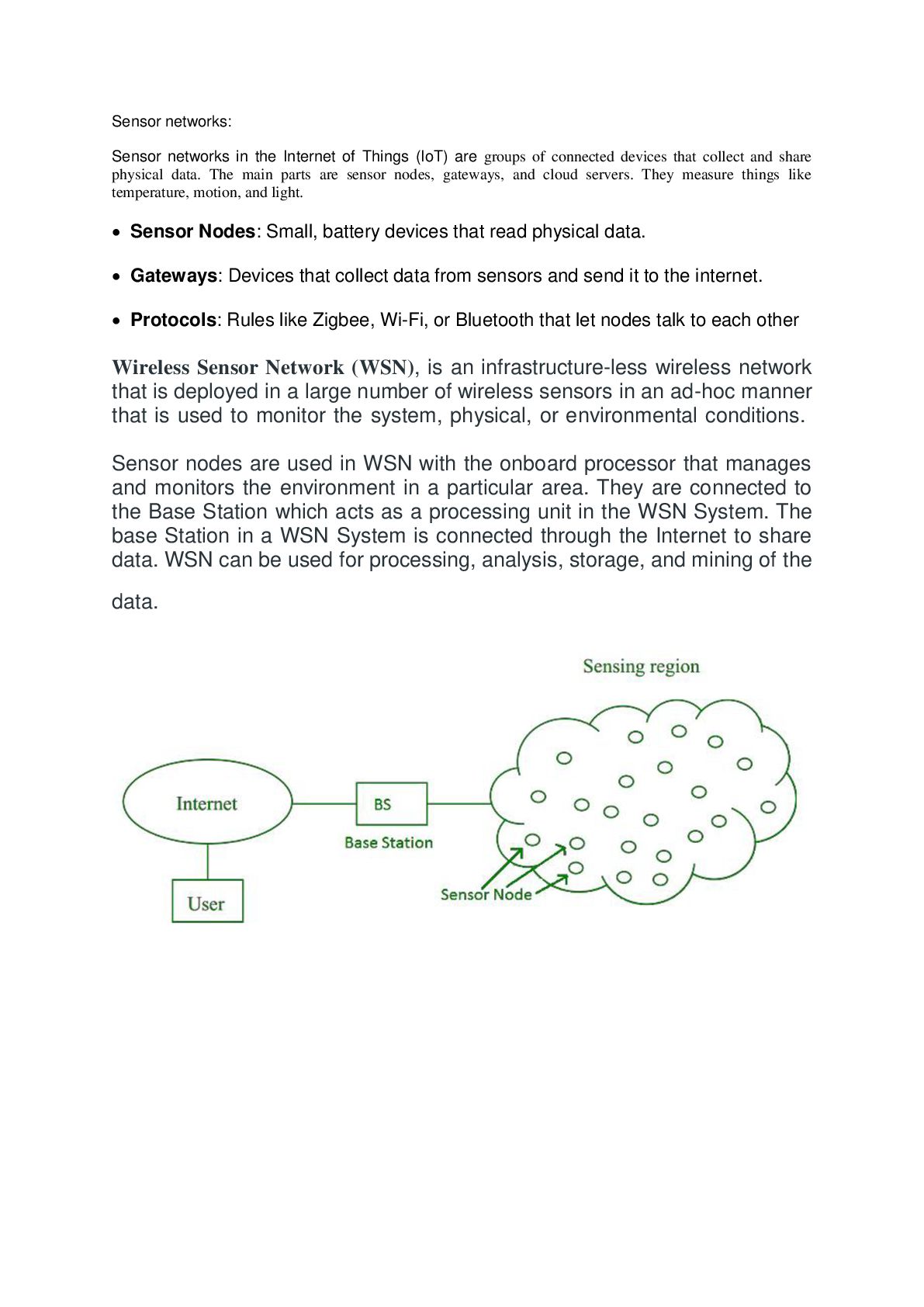
are groups of connected devices that collect and share physical data. The main parts are sensor nodes, gateways, and cloud servers. They measure things like temperature, motion, and light. Sensor Nodes: Small, battery devices that read physical data. Gateways: Devices that collect data from sensors and send it to the internet. Protocols: Rules like Zigbee, Wi-Fi, or Bluetooth that let nodes talk to each other Wireless Sensor Network (WSN), is an infrastructure-less wireless network that is deployed in a large number of wireless sensors in an ad-hoc manner that is used to monitor the system, physical, or environmental conditions. Sensor nodes are used in WSN with the onboard processor that manages and monitors the environment in a particular area. They are connected to the Base Station which acts as a processing unit in the WSN System. The base Station in a WSN System is connected through the Internet to share data. WSN can be used for processing, analysis, storage, and mining of the data.
the Internet of Things (IoT) involve protecting interconnected smart devices, networks, and cloud systems from cyber threats. It includes device authentication, end-to-end data encryption, secure firmware updates, and network segmentation to safeguard sensitive data and prevent unauthorized device access. Device Security Unique Identification: Give every single device its own physical and logical ID for tracking and access control. Strong Authentication: Use unique tokens, certificates, or mutual TLS instead of hardcoded default passwords. Secure Boot: Verify the software code integrity at startup before running any device hardware. Physical Protection: Turn off debug ports like JTAG in production and use tamper-resistant cases. Data and Communication Security Encryption in Transit: Protect data moving between devices and the cloud using strong protocols like TLS. Encryption at Rest: Secure sensitive local data, such as Wi-Fi keys or tokens, so it is never stored as plain text. Data Minimization: Collect only the basic data needed for the device to work to lower privacy risks. Network and Lifecycle Security Network Segmentation: Put IoT devices on a separate local network or VLAN so hackers cannot move to critical systems. Secure Updates: Send digitally signed over-the-air firmware updates to patch active bugs and flaws. Monitoring and Logs: Track network traffic and system logs in real time to catch strange behavior early
XaaS or Anything as a Service, is a broad cloud computing concept. It means nearly any IT tool, product, or platform can be delivered to users over the internet on a pay-as-you-go subscription plan, replacing traditional local setups. Types of XaaS Models IaaS (Infrastructure as a Service): Rent raw servers, storage, and networking hardware online. PaaS (Platform as a Service): Use ready-made tools and environments to build and test apps. SaaS (Software as a Service): Access finished software apps through a web browser.


 govind_110471
 robintux
 ainischool
 kekekenta
 akiraasano
 signer
 3l4l5
 hiola
 masakiokuda
 coderdojojapan
 arnoknobbe
 bvr7352
 marktimemedia
 techseoconnect
 mkilby
 moore
 baasie
 aleyda
 mfonobong
 skipperchong
 eileencodes
 tamaranovitovic
 jonoalderson