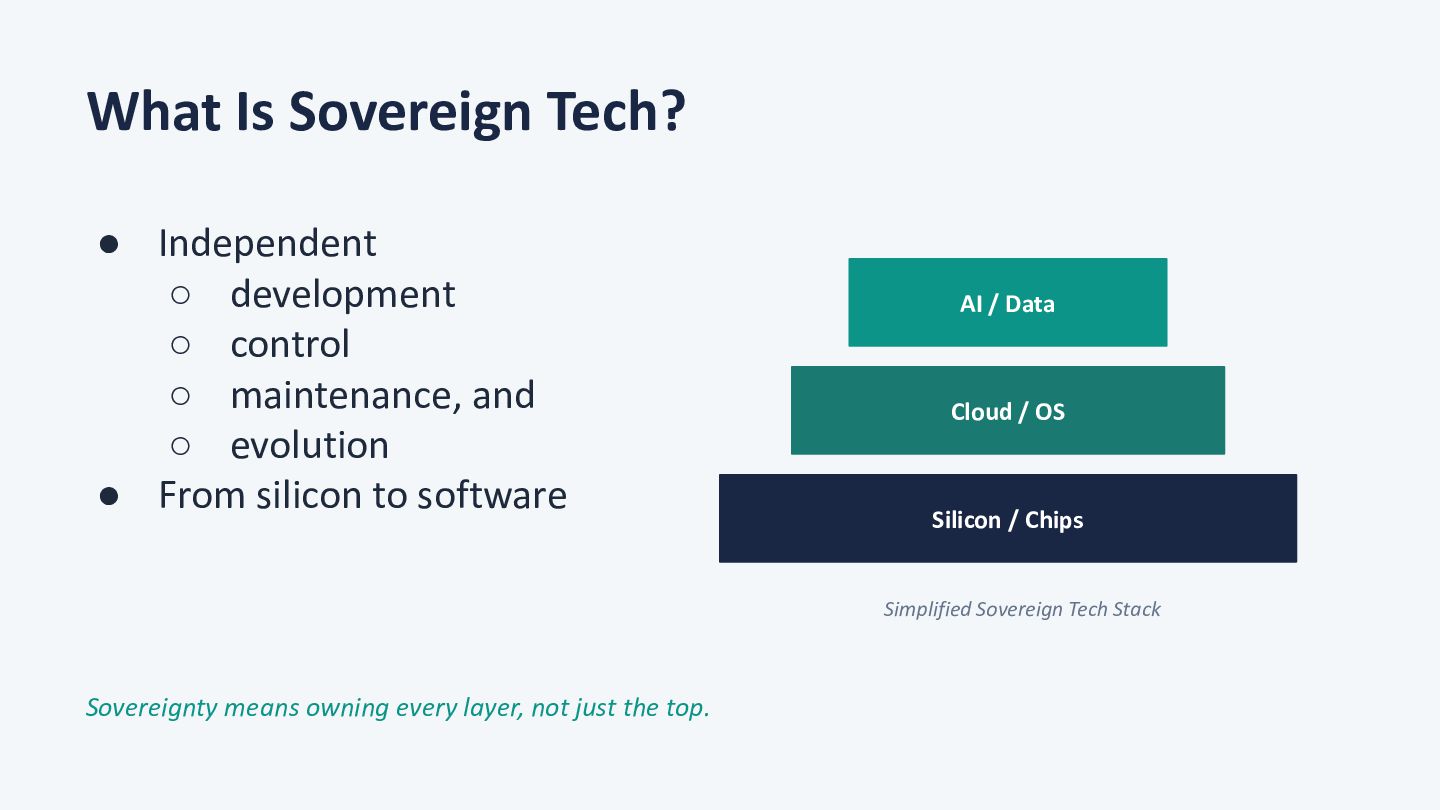
◦ maintenance, and ◦ evolution • From silicon to software AI / Data Cloud / OS Silicon / Chips Simplified Sovereign Tech Stack Sovereignty means owning every layer, not just the top.
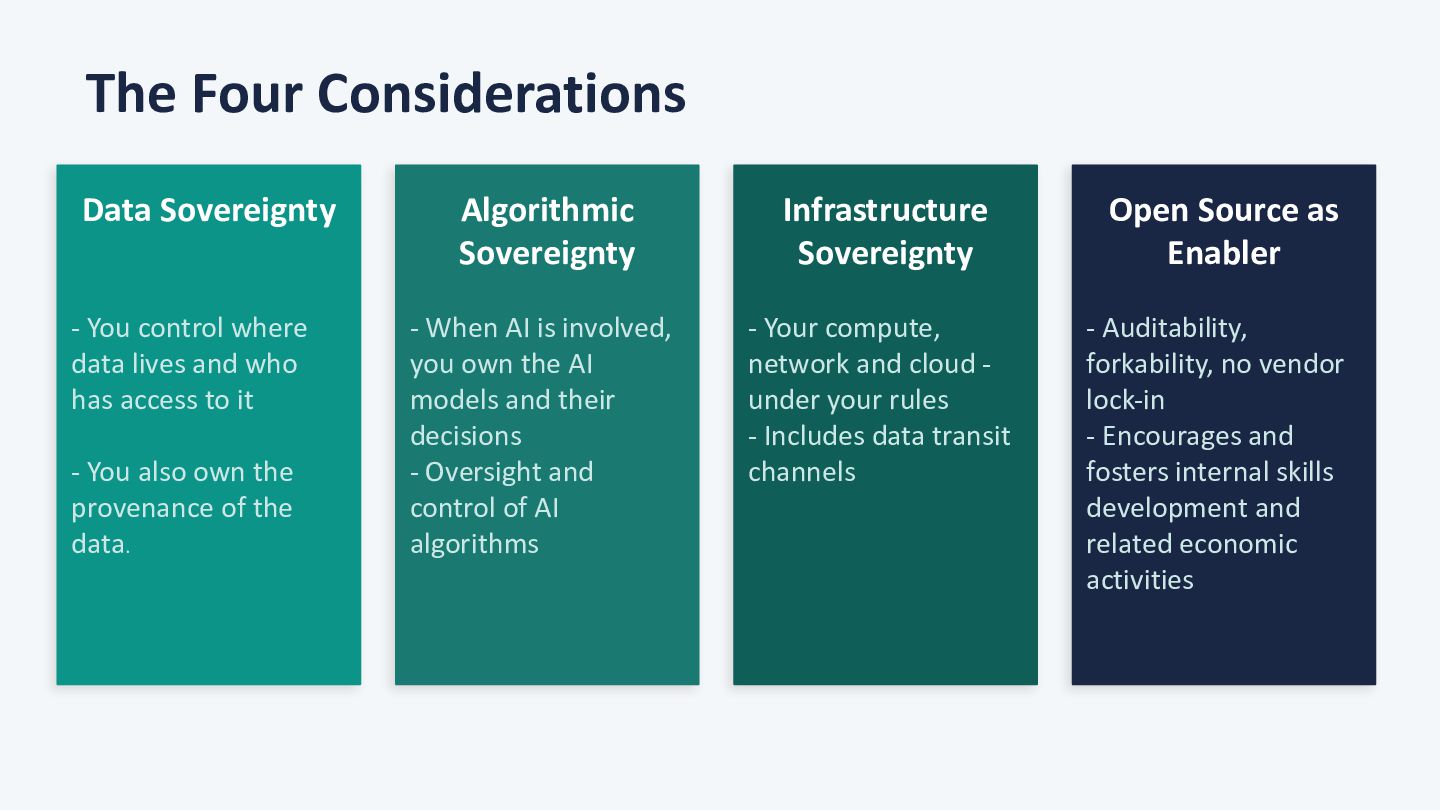
lives and who has access to it - You also own the provenance of the data. Algorithmic Sovereignty - When AI is involved, you own the AI models and their decisions - Oversight and control of AI algorithms Infrastructure Sovereignty - Your compute, network and cloud - under your rules - Includes data transit channels Open Source as Enabler - Auditability, forkability, no vendor lock-in - Encourages and fosters internal skills development and related economic activities
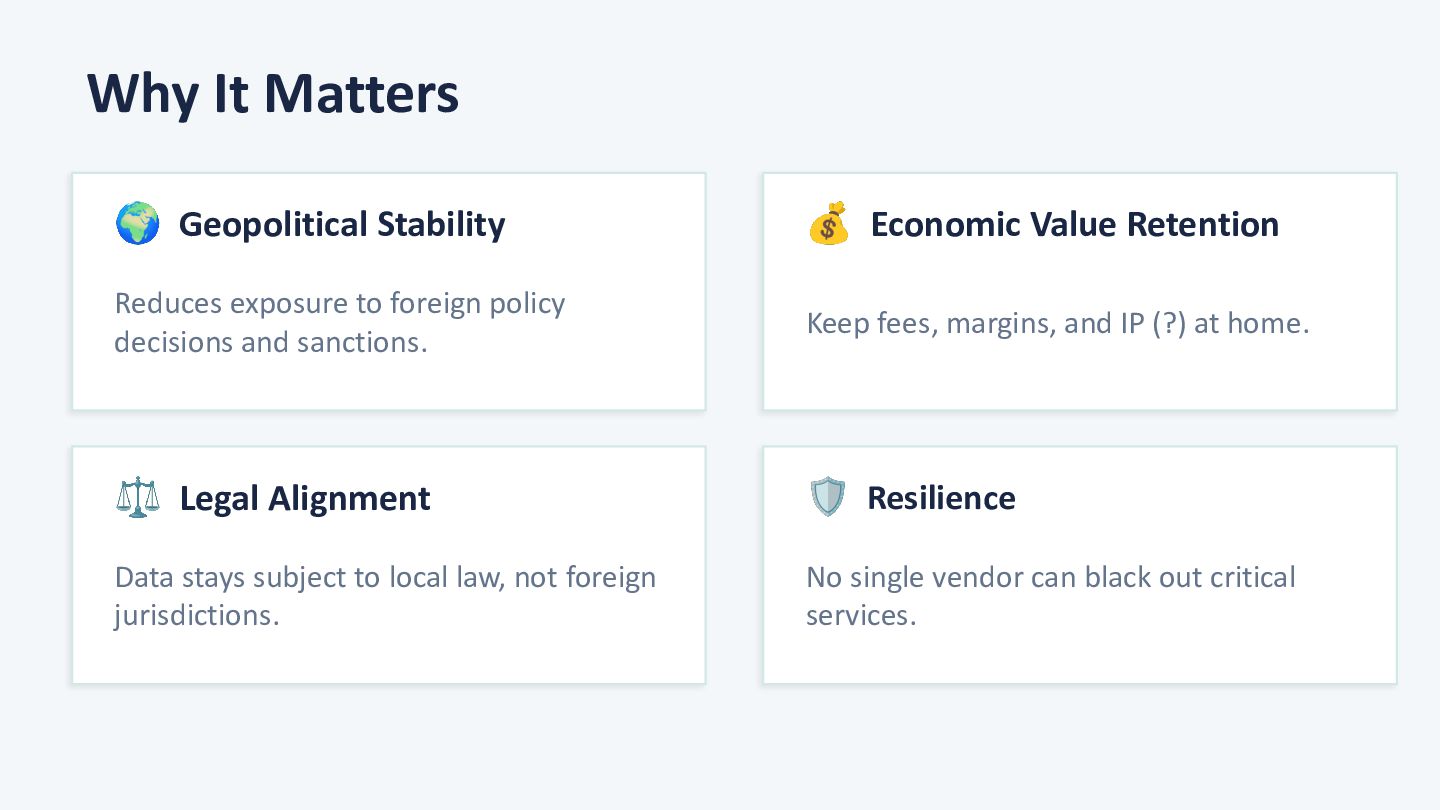
policy decisions and sanctions. 💰 Economic Value Retention Keep fees, margins, and IP (?) at home. ⚖ Legal Alignment Data stays subject to local law, not foreign jurisdictions. 🛡 Resilience No single vendor can black out critical services.
connecting government databases. Citizens access all services through a single, sovereign layer. And it is now extending with sovereign language models.
Access) is a trusted digital identity that allows residents to access government and business services online. - Secure and convenient access to over 2,700 services across 800 government agencies and businesses. - Over 41 million transactions every month by 5 million users. - Interoperable with non-Singapore entities (NOT SURE) ??
data spaces across Europe. First sovereign AI training clusters now operational. Designed so no single government or company controls the infrastructure.
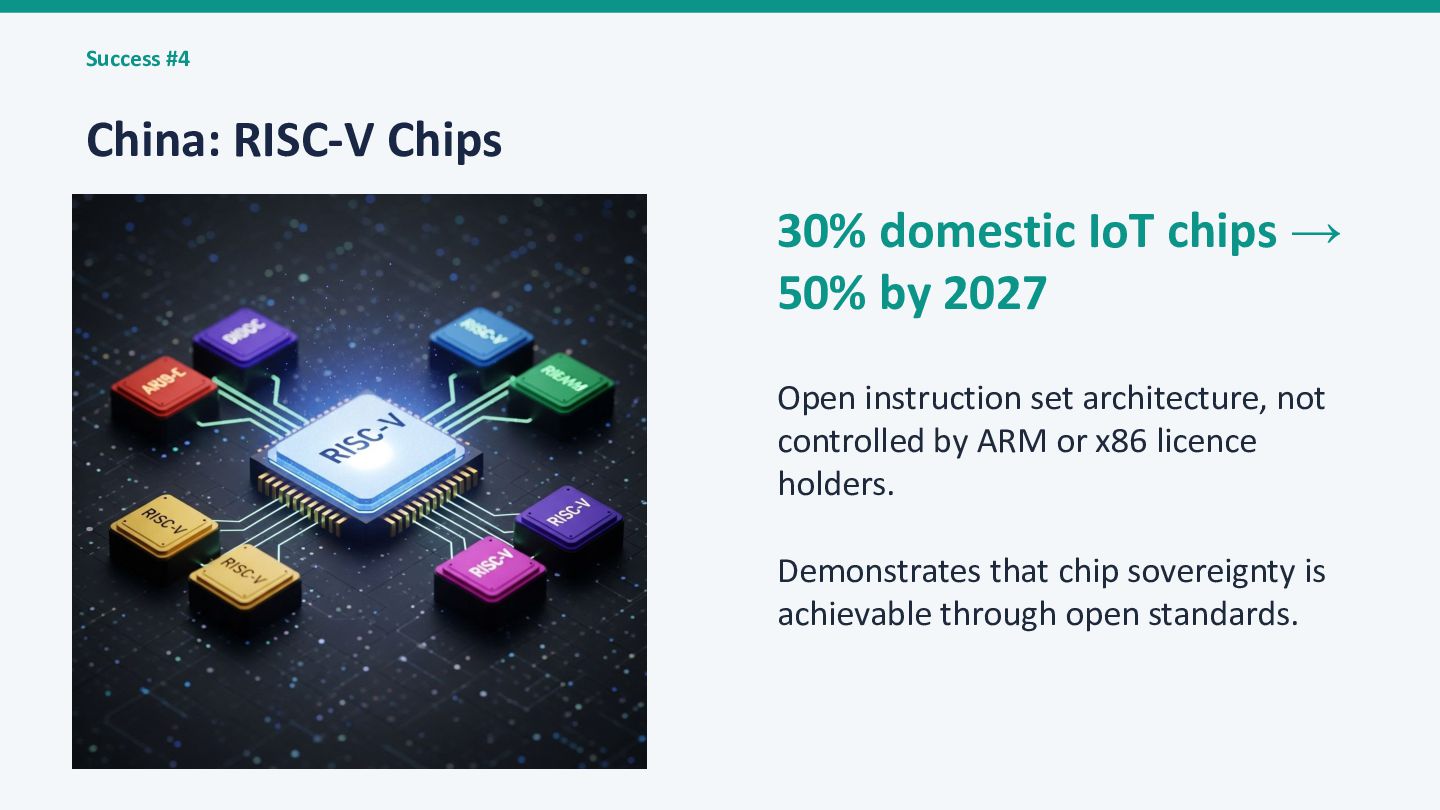
50% by 2027 Open instruction set architecture, not controlled by ARM or x86 licence holders. Demonstrates that chip sovereignty is achievable through open standards.
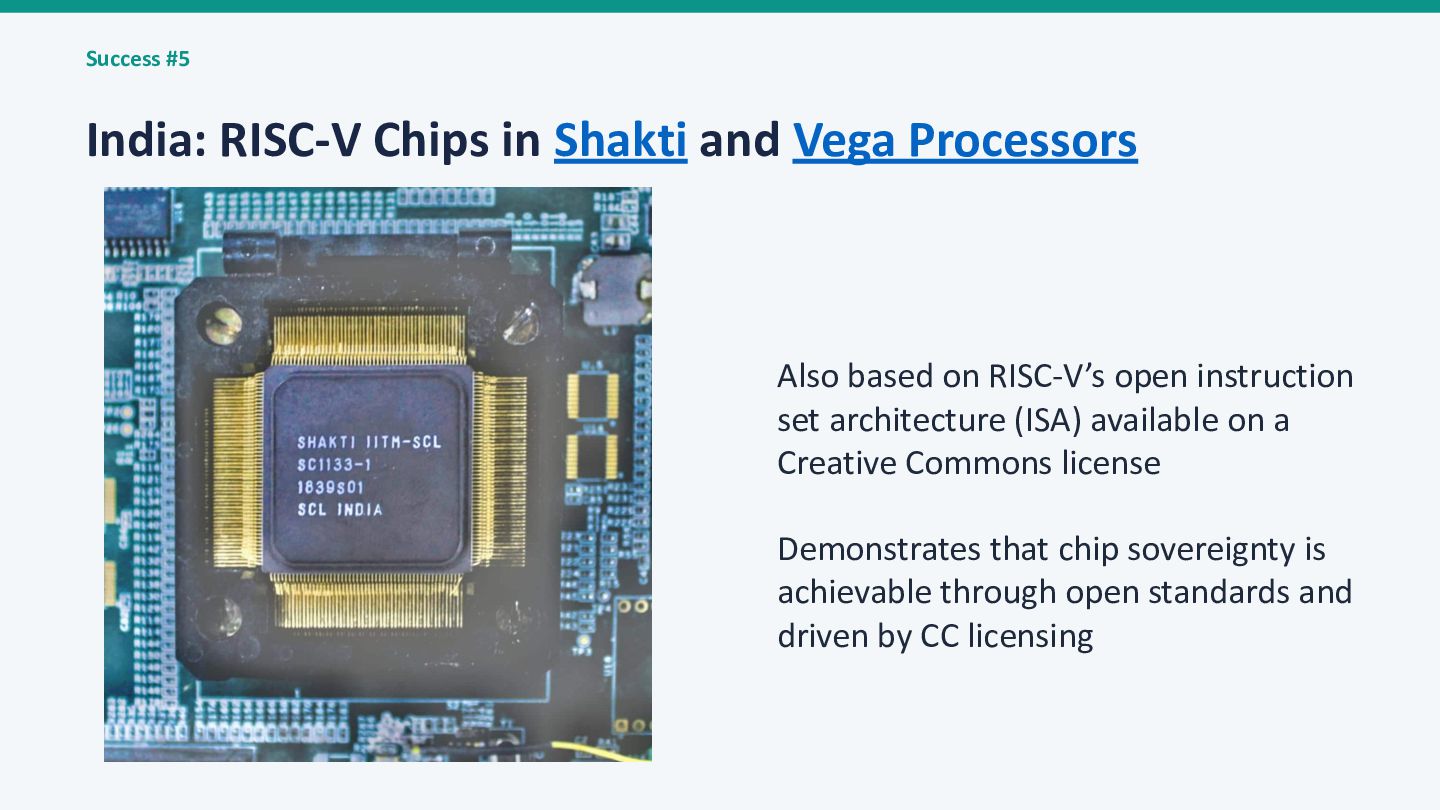
Also based on RISC-V’s open instruction set architecture (ISA) available on a Creative Commons license Demonstrates that chip sovereignty is achievable through open standards and driven by CC licensing
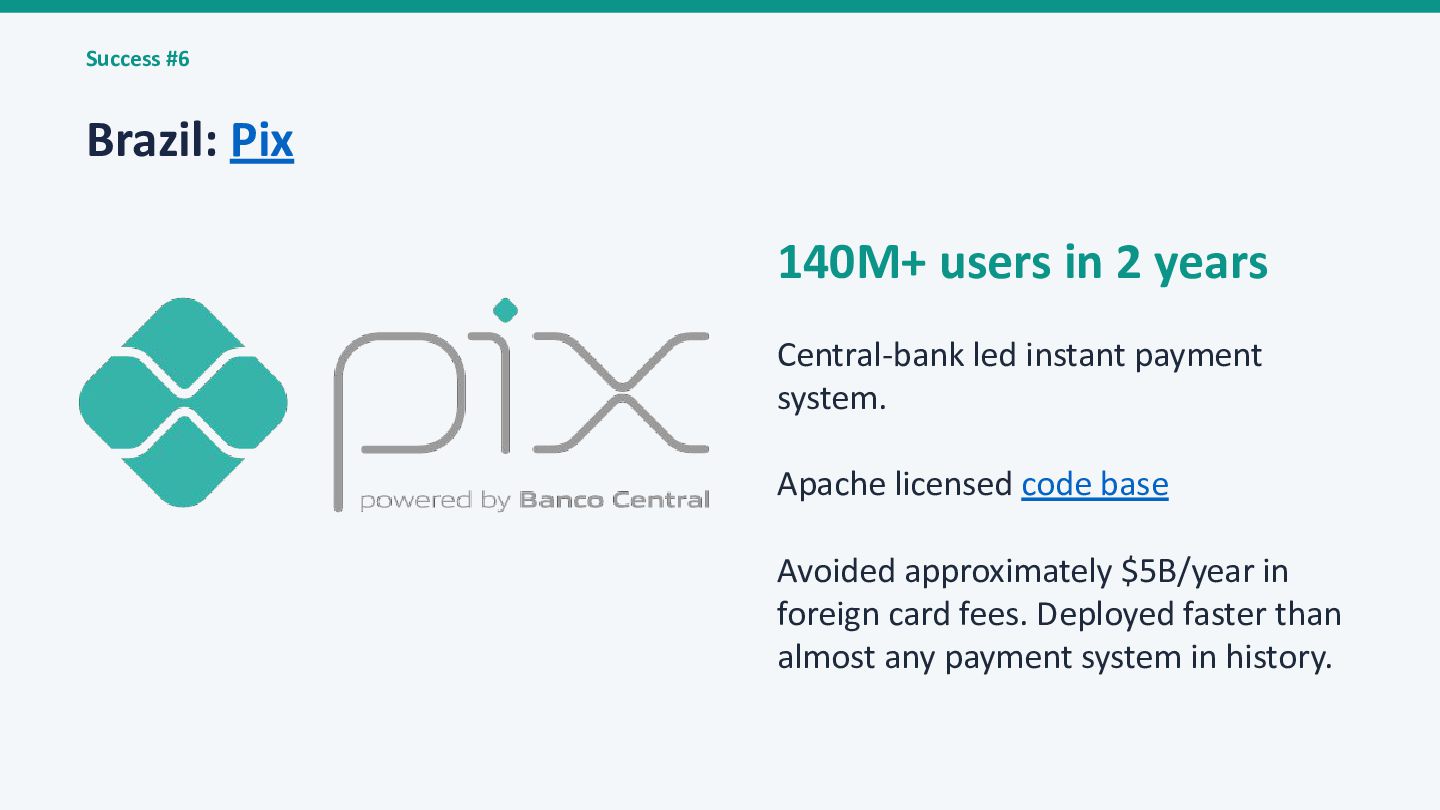
led instant payment system. Apache licensed code base Avoided approximately $5B/year in foreign card fees. Deployed faster than almost any payment system in history.
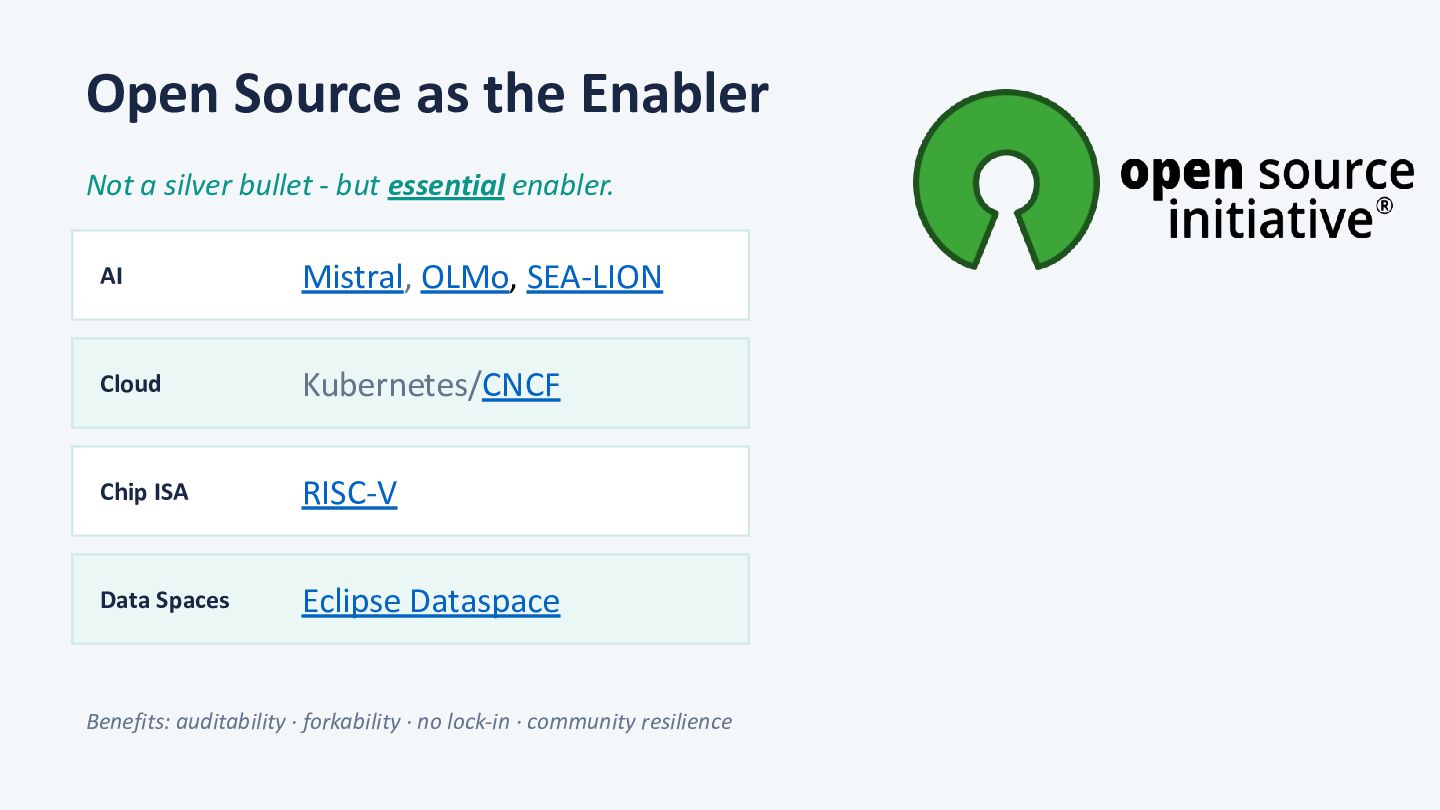
but essential enabler. AI Mistral, OLMo, SEA-LION Cloud Kubernetes/CNCF Chip ISA RISC-V Data Spaces Eclipse Dataspace Benefits: auditability · forkability · no lock-in · community resilience
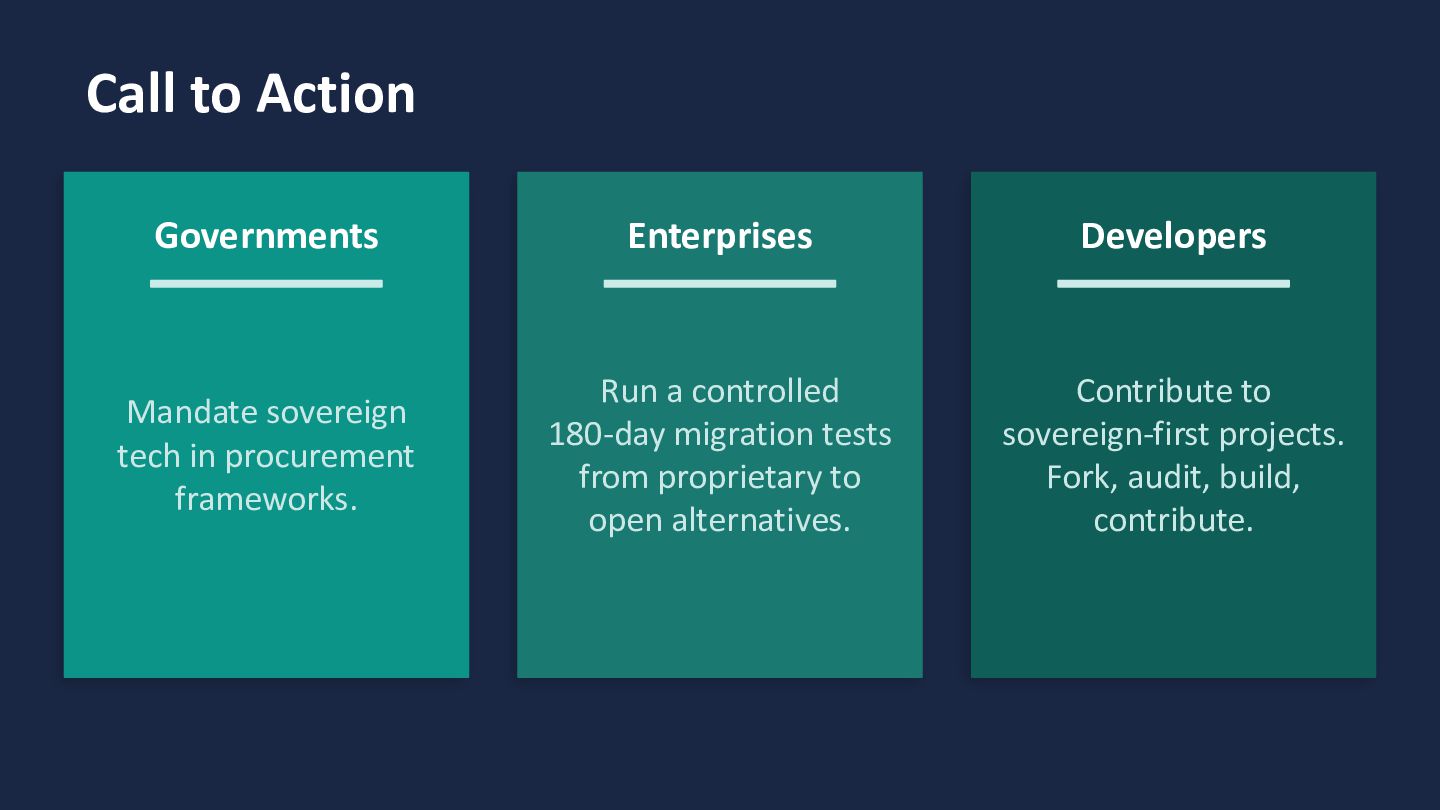
Enterprises Run a controlled 180-day migration tests from proprietary to open alternatives. Developers Contribute to sovereign-first projects. Fork, audit, build, contribute.
Wikimedia Commons – commons.wikimedia.org (check per-file licence) • RISC-V logo – riscv.org (open use per brand guidelines) • Open Source Initiative logo – opensource.org (trademark guidelines apply) • All images on Creative Commons licenses


 harishpillay
 ota1022
 atalie2m
 visional_engineering_and_design
 goyoki
 nsatoh
 sue445
 harutiro
 riyaamemiya
 wadayusuke
 littlehands
 kasada
 masasuzu
 bethany
 brad_frost
 aleyda
 tmiket
 matthewcrist
 palkan
 codingconduct
 elsirapls
 portentint
 katarinadahlin
 jonrohan
 eileencodes