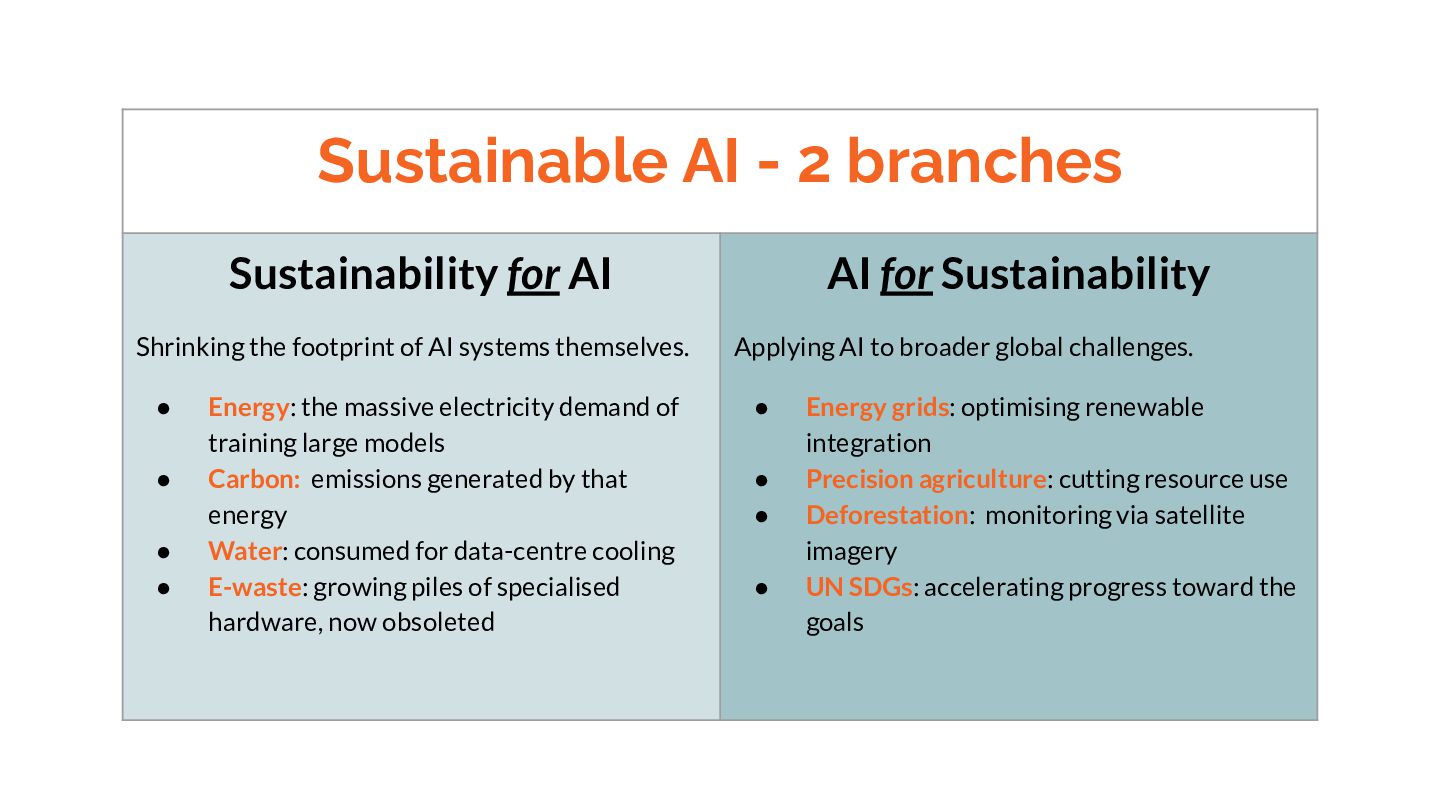
footprint of AI systems themselves. • • • • Energy: the massive electricity demand of training large models Carbon: emissions generated by that energy Water: consumed for data-centre cooling E-waste: growing piles of specialised hardware, now obsoleted AI for Sustainability Applying AI to broader global challenges. • • • • Energy grids: optimising renewable integration Precision agriculture: cutting resource use Deforestation: monitoring via satellite imagery UN SDGs: accelerating progress toward the goals
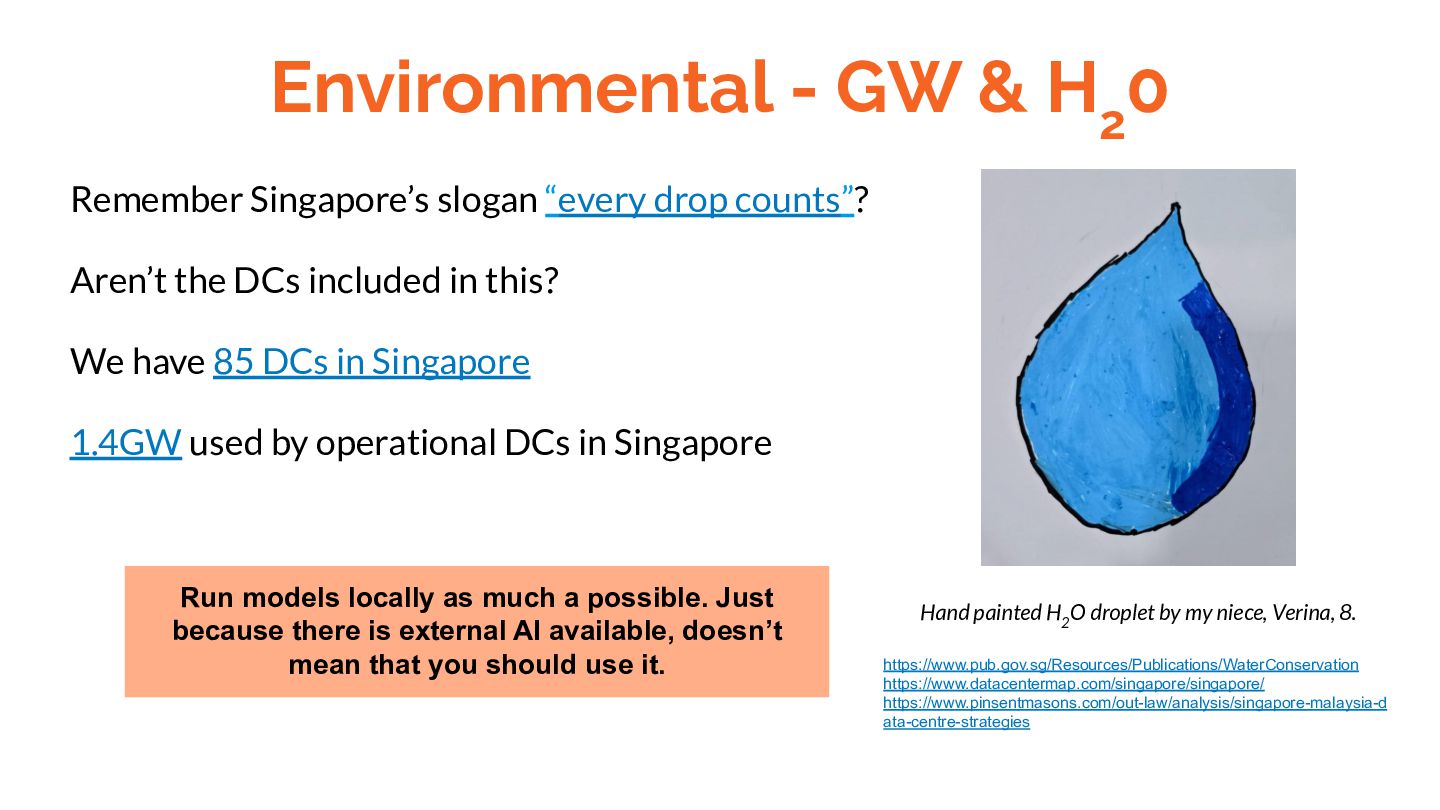
counts”? Aren’t the DCs included in this? We have 85 DCs in Singapore 1.4GW used by operational DCs in Singapore Run models locally as much a possible. Just because there is external AI available, doesn’t mean that you should use it. Hand painted H2O droplet by my niece, Verina, 8. https://www.pub.gov.sg/Resources/Publications/WaterConservation https://www.datacentermap.com/singapore/singapore/ https://www.pinsentmasons.com/out-law/analysis/singapore-malaysia-d ata-centre-strategies
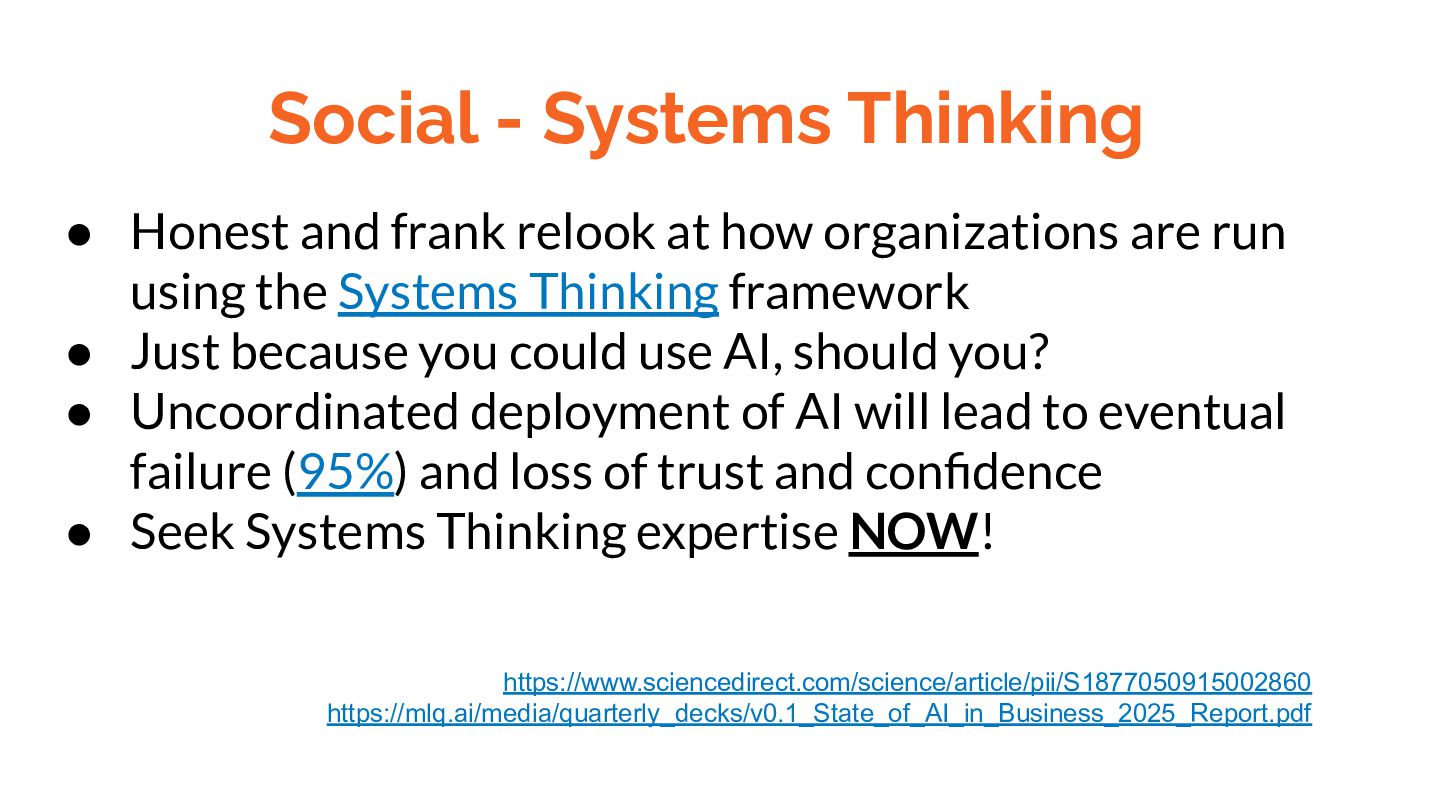
how organizations are run using the Systems Thinking framework • Just because you could use AI, should you? • Uncoordinated deployment of AI will lead to eventual failure (95%) and loss of trust and confidence • Seek Systems Thinking expertise NOW! https://www.sciencedirect.com/science/article/pii/S1877050915002860 https://mlq.ai/media/quarterly_decks/v0.1_State_of_AI_in_Business_2025_Report.pdf
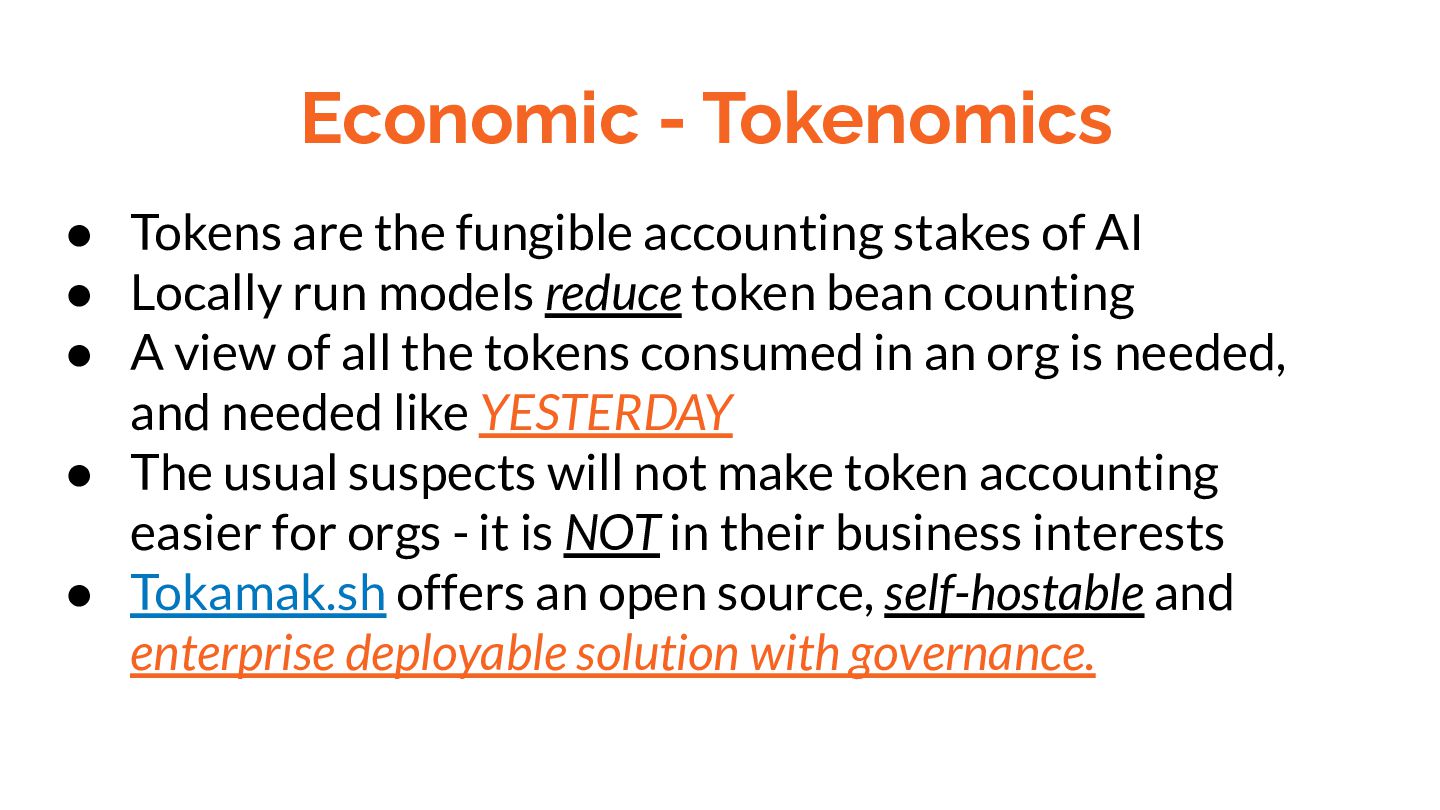
of AI • Locally run models reduce token bean counting • A view of all the tokens consumed in an org is needed, and needed like YESTERDAY • The usual suspects will not make token accounting easier for orgs - it is NOT in their business interests • Tokamak.sh offers an open source, self-hostable and enterprise deployable solution with governance.
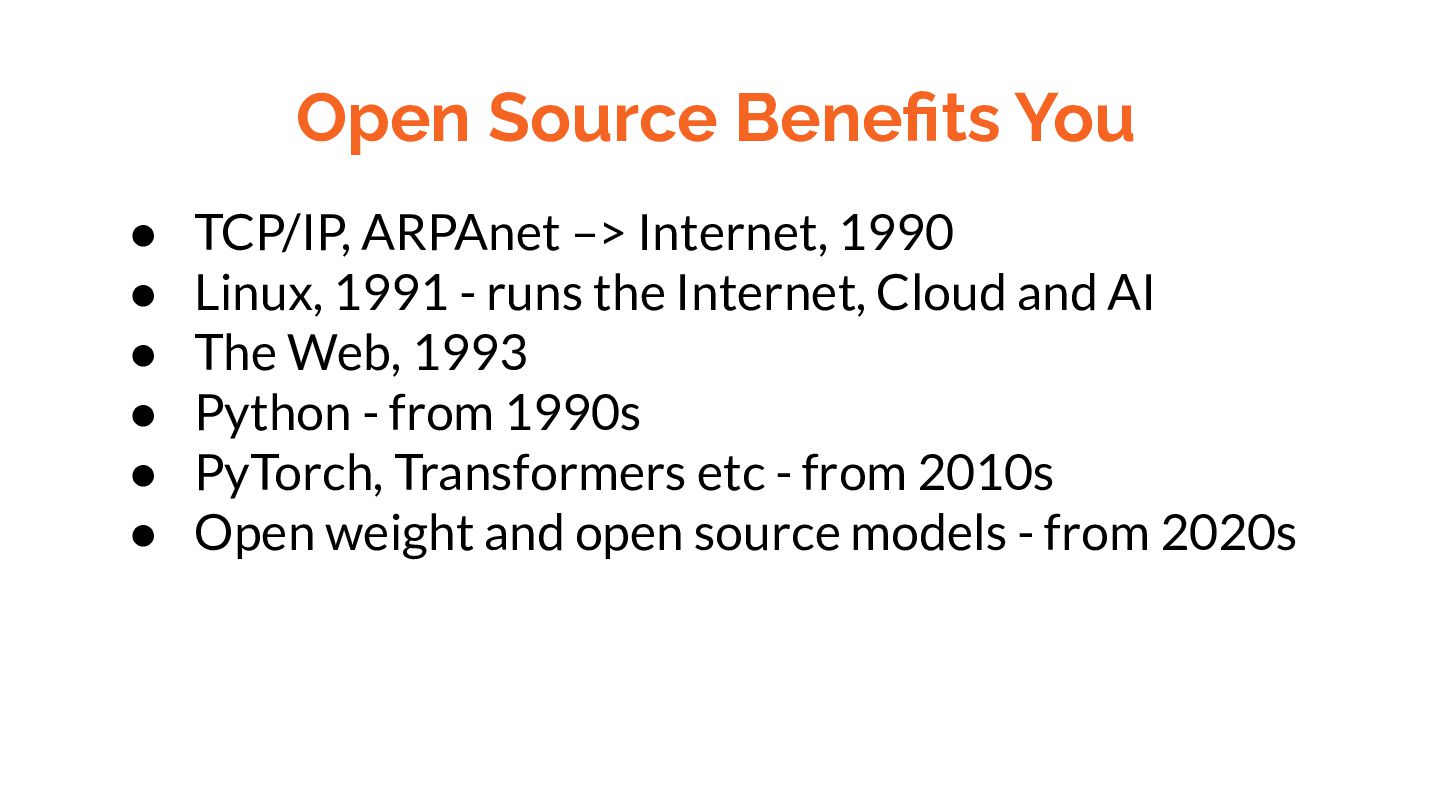
TCP/IP, ARPAnet –> Internet, 1990 Linux, 1991 - runs the Internet, Cloud and AI The Web, 1993 Python - from 1990s PyTorch, Transformers etc - from 2010s Open weight and open source models - from 2020s
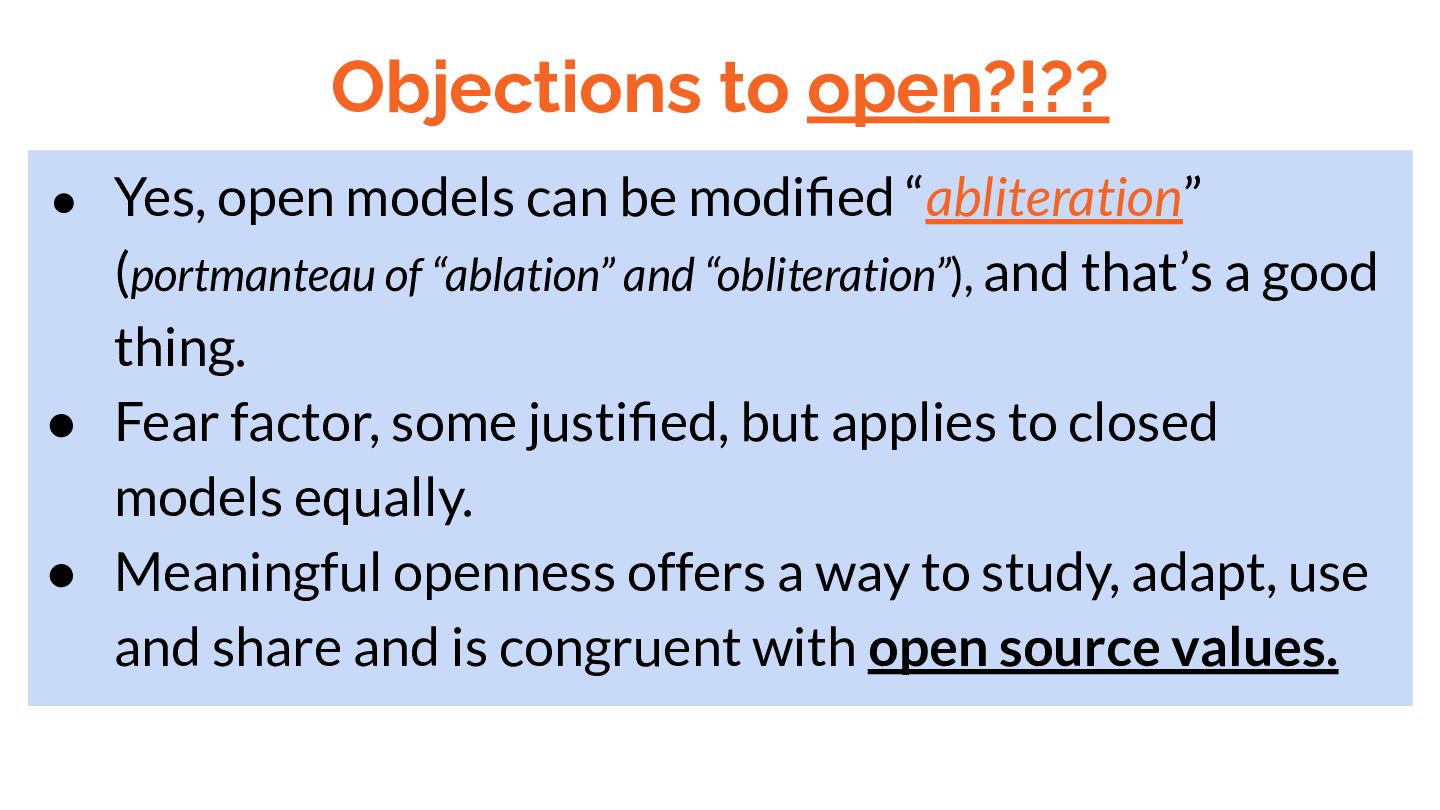
“abliteration” (portmanteau of “ablation” and “obliteration”), and that’s a good thing. • Fear factor, some justified, but applies to closed models equally. • Meaningful openness offers a way to study, adapt, use and share and is congruent with open source values.


 harishpillay
 voginip
 i2tsuki
 trycycle
 aikinohara
 hiroakihamada
 xleitix
 michielstock
 hayataka88
 mickey_0226
 stephaniewalter
 eileencodes
 lindahogenes
 palkan
 sabderemane
 oripsolob
 signer
 gurzu
gurzu
 chrislema
 techseoconnect
 michaelherold
 ryanjones

![Open Unlocks The World’s Potential Harish Pillay [email protected]](https://files.speakerdeck.com/presentations/999794b29fc54fb4a67879a9015a4375/slide_15.jpg)