Upgrade to Pro — share decks privately, control downloads, hide ads and more …

Palpitations: What They Can Mean & How They’re ...

Avatar for Henry Wilson Henry Wilson
September 06, 2026

Palpitations: What They Can Mean & How They’re Assessed

A practical guide to heart palpitations, common triggers, symptom patterns and the types of assessment that may be considered. It also explains when recurring palpitations should be discussed with a healthcare professional and highlights symptoms that may require urgent attention.

General educational information only. This resource is not a diagnosis or a substitute for individual medical advice.

Avatar for Henry Wilson

Henry Wilson

September 06, 2026

More Decks by Henry Wilson

Other Decks in Research

Transcript

  1. PRACTICAL CARDIAC GUIDE Palpitations: What They Can Mean & How

    They’re Assessed A practical guide to common triggers, assessment and warning signs that need urgent attention. HEART HEALTH General educational information • Not a diagnosis or personal medical advice CARDIAC HEALTH 01 / 06
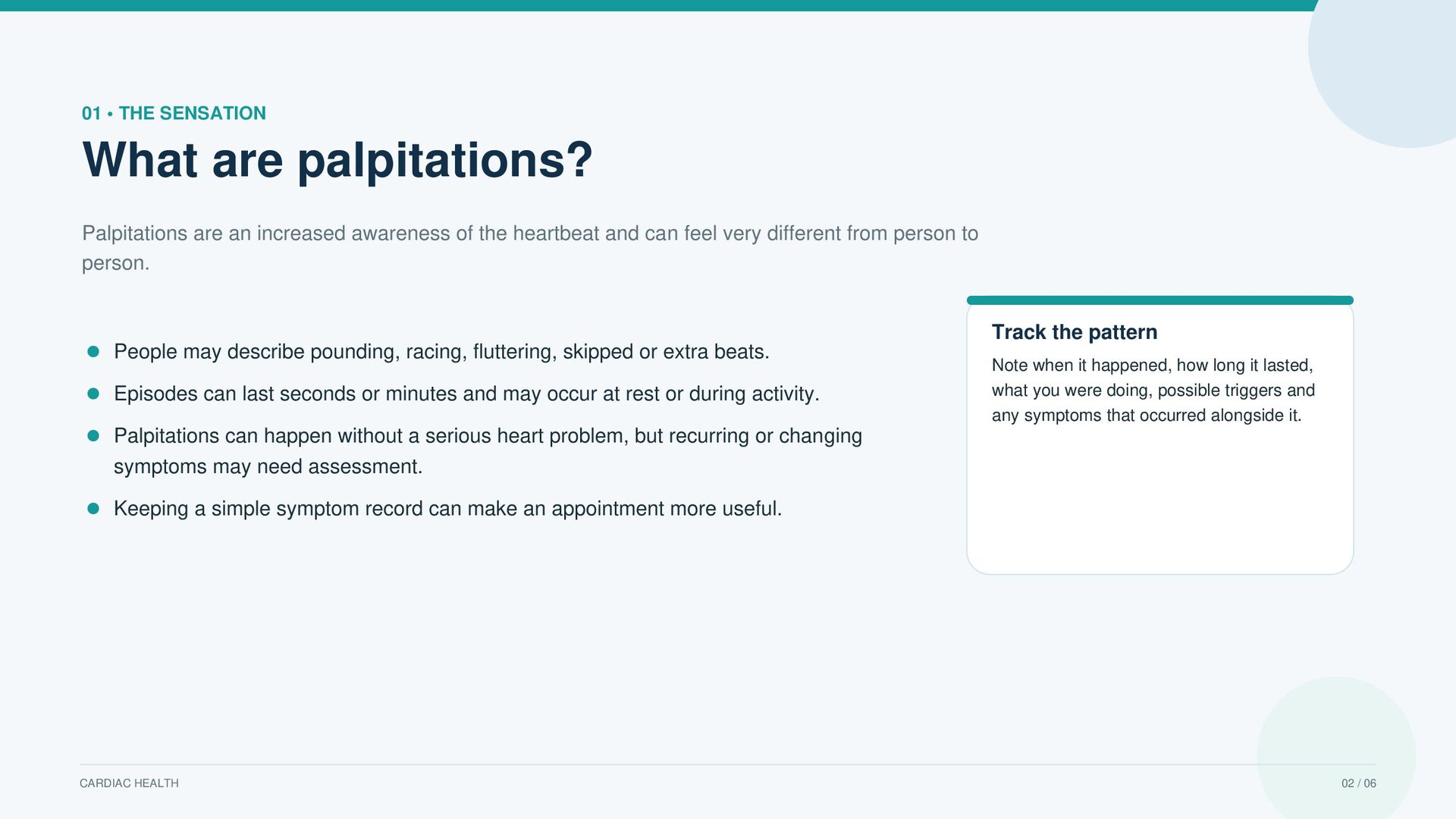
  2. 01 • THE SENSATION What are palpitations? Palpitations are an

    increased awareness of the heartbeat and can feel very different from person to person. Track the pattern People may describe pounding, racing, fluttering, skipped or extra beats. Episodes can last seconds or minutes and may occur at rest or during activity. Note when it happened, how long it lasted, what you were doing, possible triggers and any symptoms that occurred alongside it. Palpitations can happen without a serious heart problem, but recurring or changing symptoms may need assessment. Keeping a simple symptom record can make an appointment more useful. CARDIAC HEALTH 02 / 06
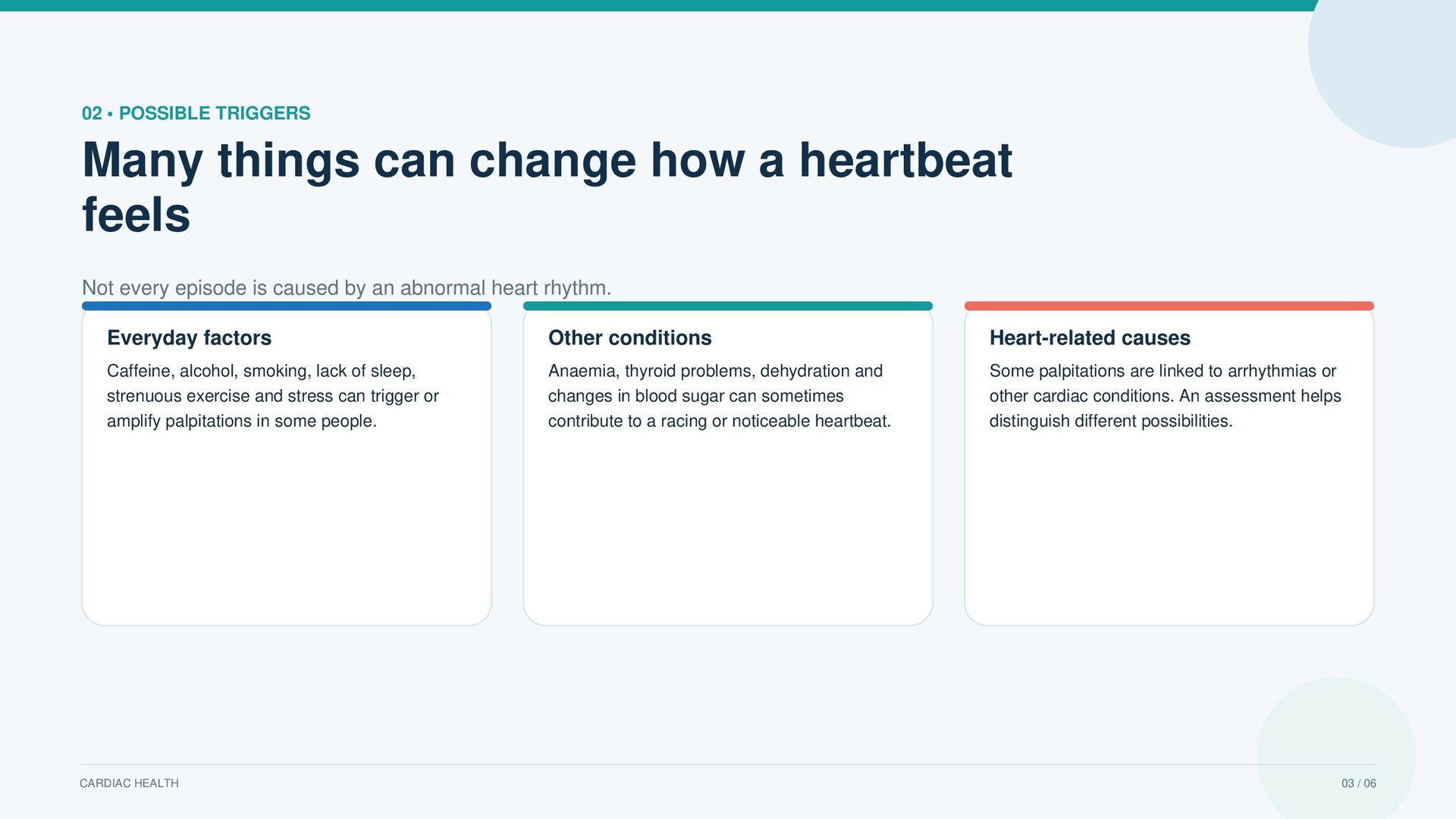
  3. 02 • POSSIBLE TRIGGERS Many things can change how a

    heartbeat feels Not every episode is caused by an abnormal heart rhythm. Everyday factors Other conditions Heart-related causes Caffeine, alcohol, smoking, lack of sleep, strenuous exercise and stress can trigger or amplify palpitations in some people. Anaemia, thyroid problems, dehydration and changes in blood sugar can sometimes contribute to a racing or noticeable heartbeat. Some palpitations are linked to arrhythmias or other cardiac conditions. An assessment helps distinguish different possibilities. CARDIAC HEALTH 03 / 06
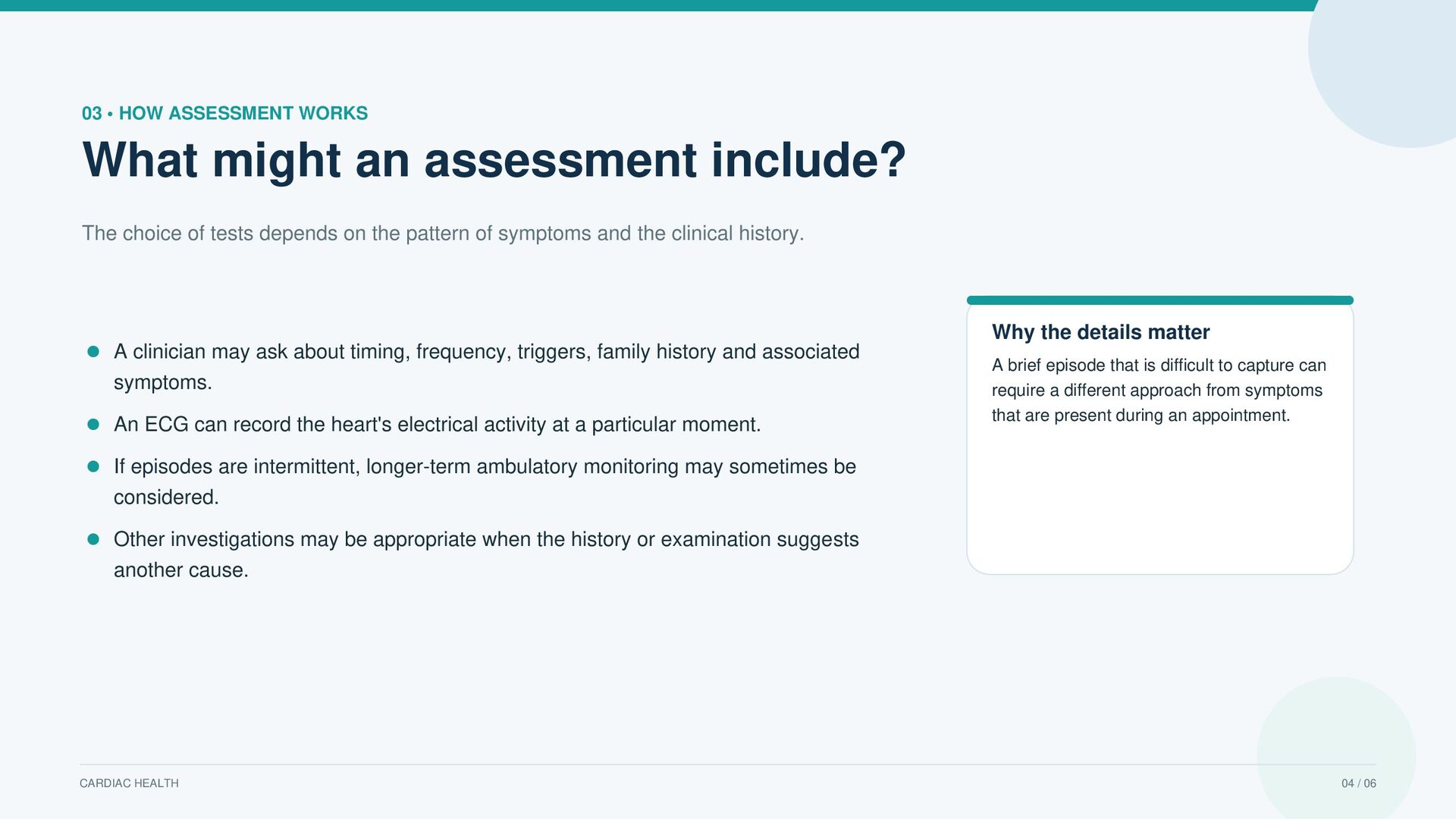
  4. 03 • HOW ASSESSMENT WORKS What might an assessment include?

    The choice of tests depends on the pattern of symptoms and the clinical history. Why the details matter A clinician may ask about timing, frequency, triggers, family history and associated symptoms. An ECG can record the heart's electrical activity at a particular moment. A brief episode that is difficult to capture can require a different approach from symptoms that are present during an appointment. If episodes are intermittent, longer-term ambulatory monitoring may sometimes be considered. Other investigations may be appropriate when the history or examination suggests another cause. CARDIAC HEALTH 04 / 06
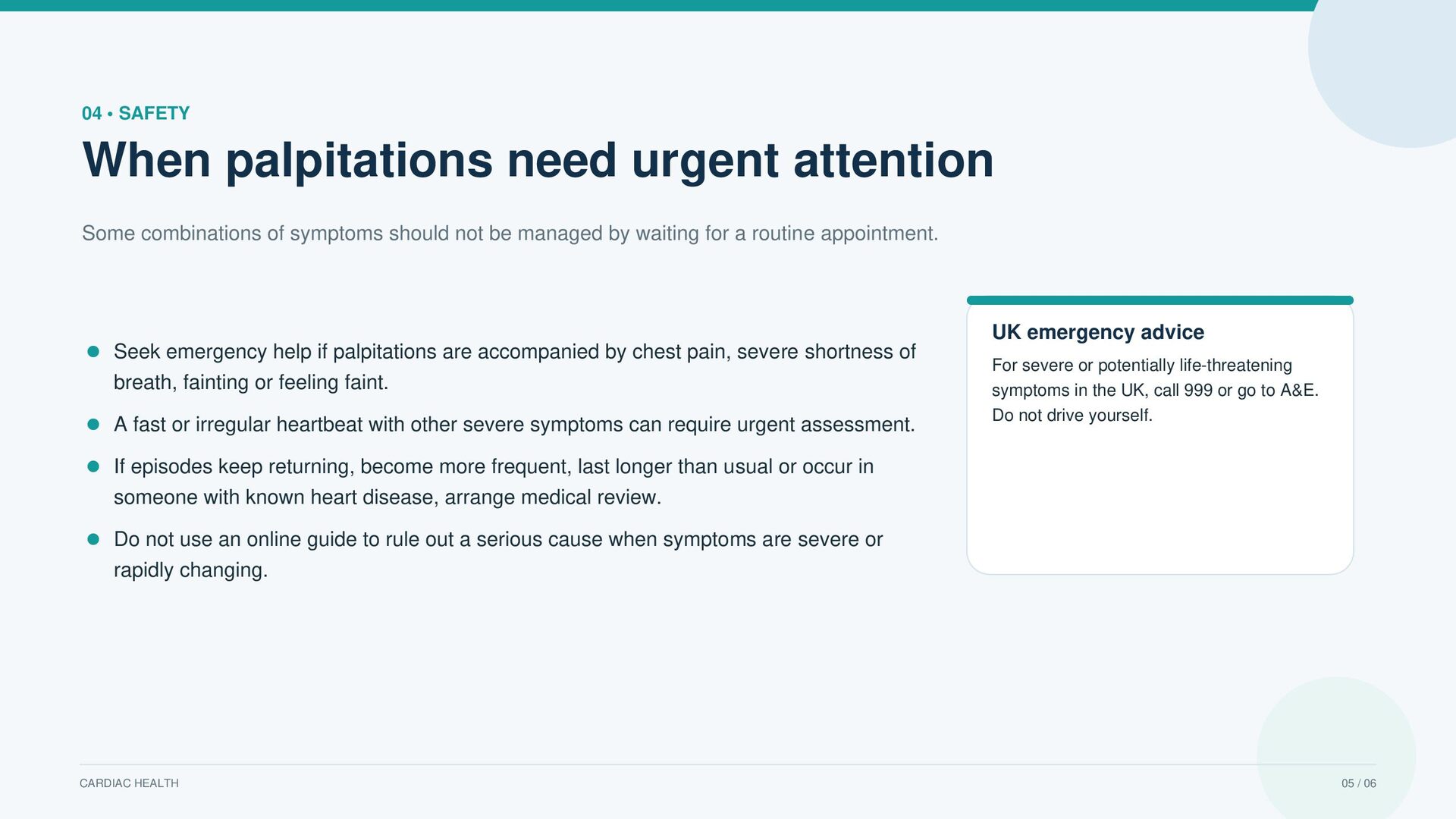
  5. 04 • SAFETY When palpitations need urgent attention Some combinations

    of symptoms should not be managed by waiting for a routine appointment. UK emergency advice Seek emergency help if palpitations are accompanied by chest pain, severe shortness of breath, fainting or feeling faint. A fast or irregular heartbeat with other severe symptoms can require urgent assessment. For severe or potentially life-threatening symptoms in the UK, call 999 or go to A&E. Do not drive yourself. If episodes keep returning, become more frequent, last longer than usual or occur in someone with known heart disease, arrange medical review. Do not use an online guide to rule out a serious cause when symptoms are severe or rapidly changing. CARDIAC HEALTH 05 / 06
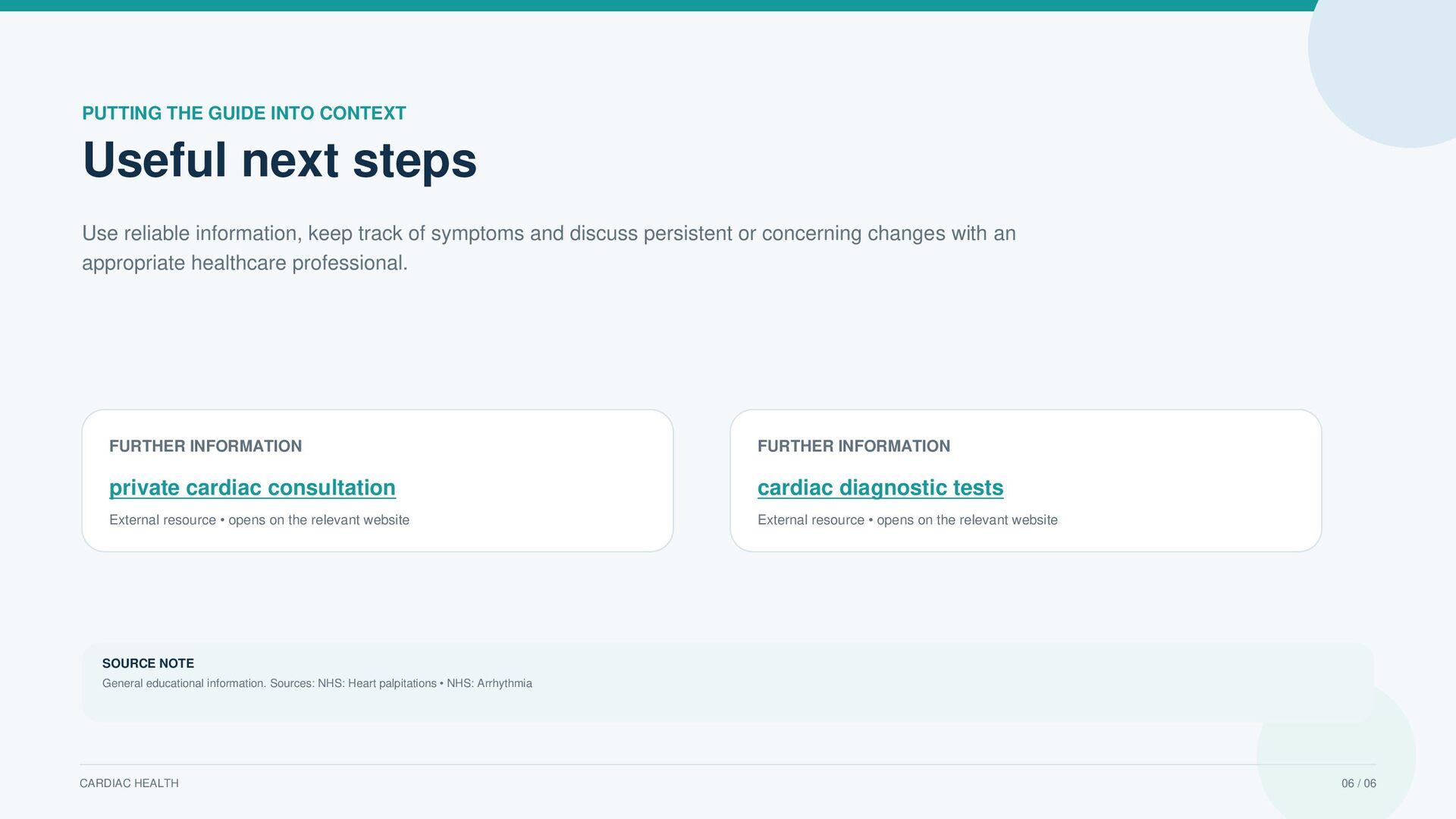
  6. PUTTING THE GUIDE INTO CONTEXT Useful next steps Use reliable

    information, keep track of symptoms and discuss persistent or concerning changes with an appropriate healthcare professional. FURTHER INFORMATION FURTHER INFORMATION private cardiac consultation cardiac diagnostic tests External resource • opens on the relevant website External resource • opens on the relevant website SOURCE NOTE General educational information. Sources: NHS: Heart palpitations • NHS: Arrhythmia CARDIAC HEALTH 06 / 06