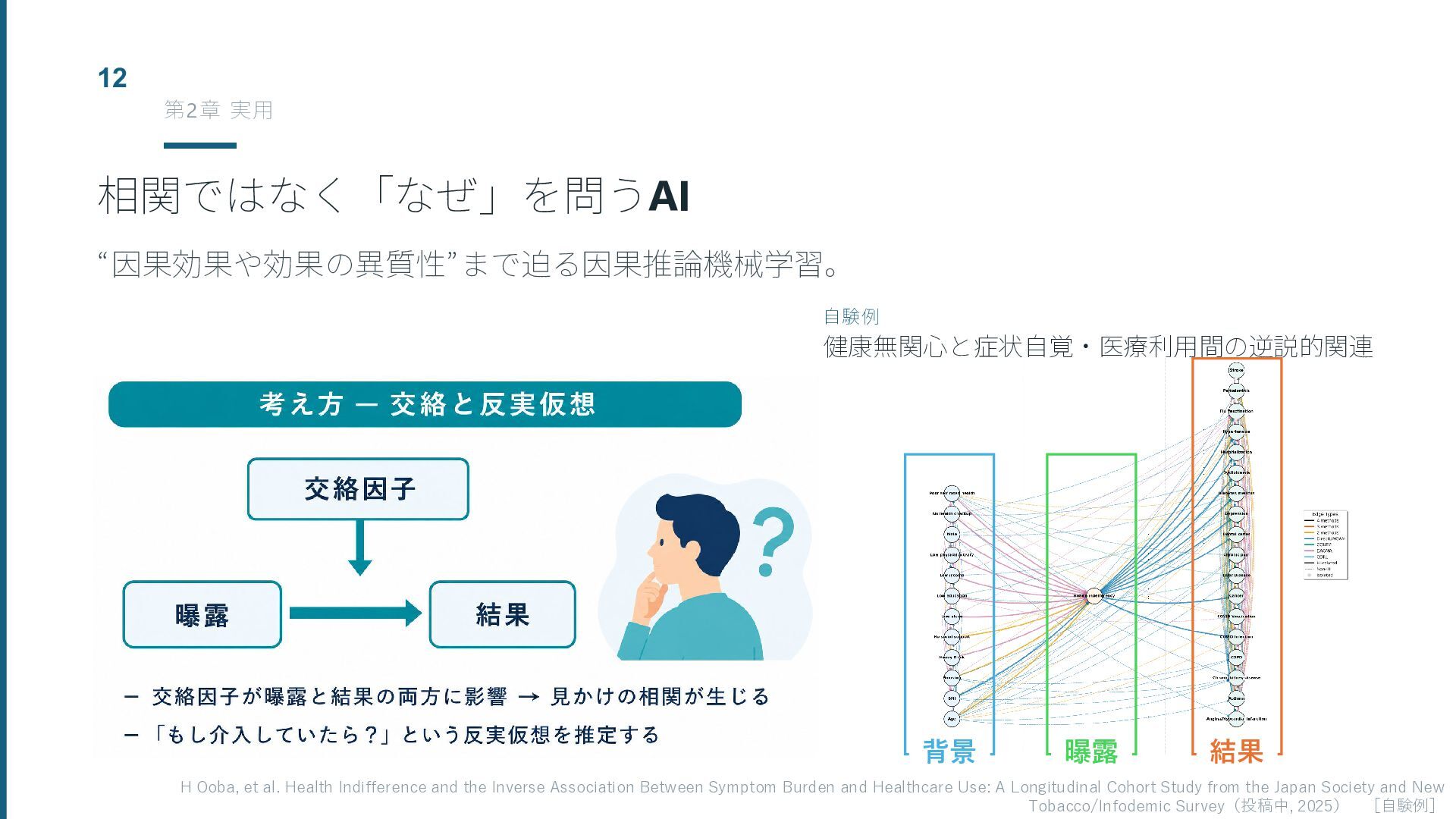
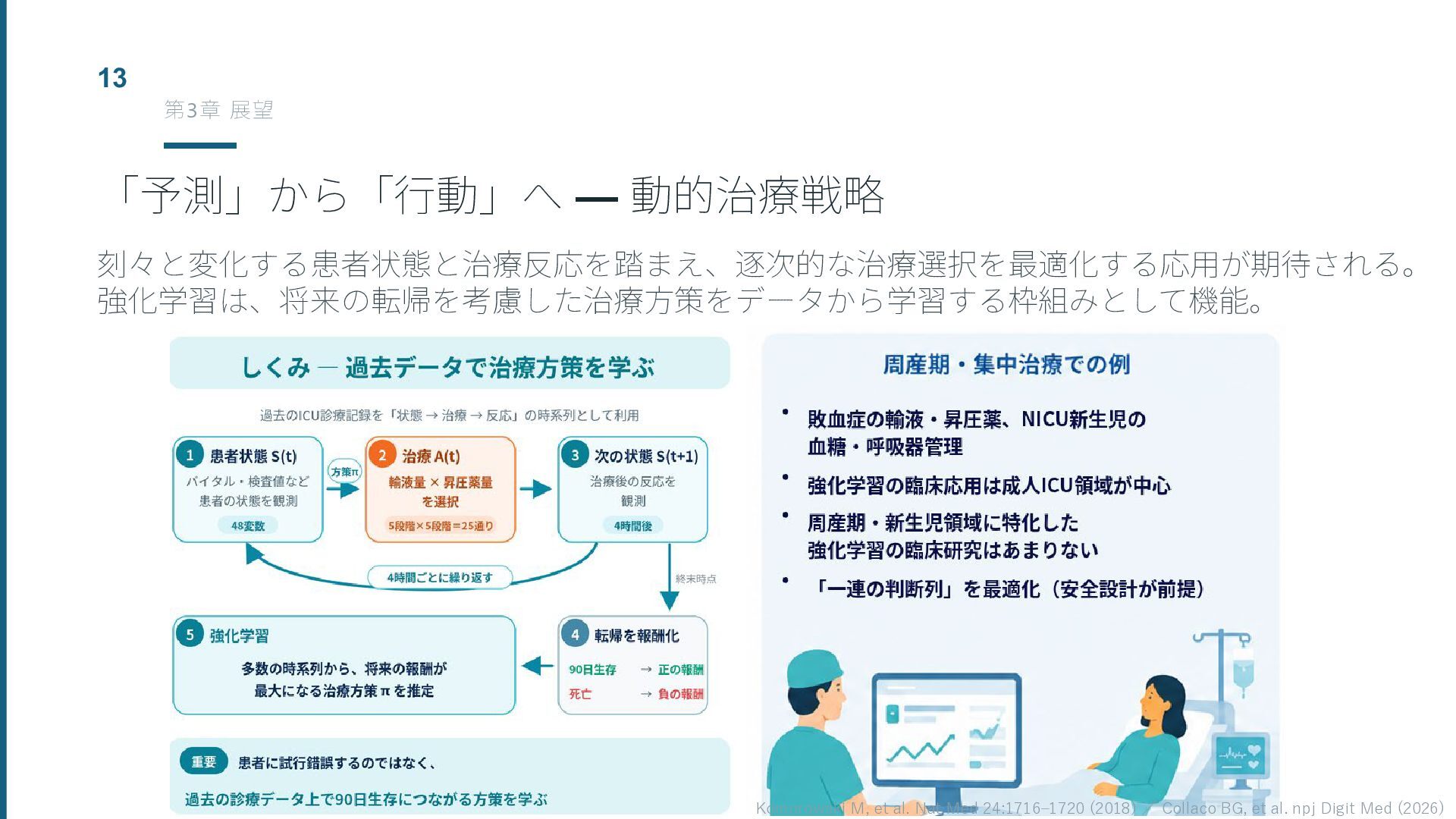
al. Health Indifference and the Inverse Association Between Symptom Burden and Healthcare Use: A Longitudinal Cohort Study from the Japan Society and New Tobacco/Infodemic Survey(投稿中, 2025) [自験例] 背景 結果 曝露
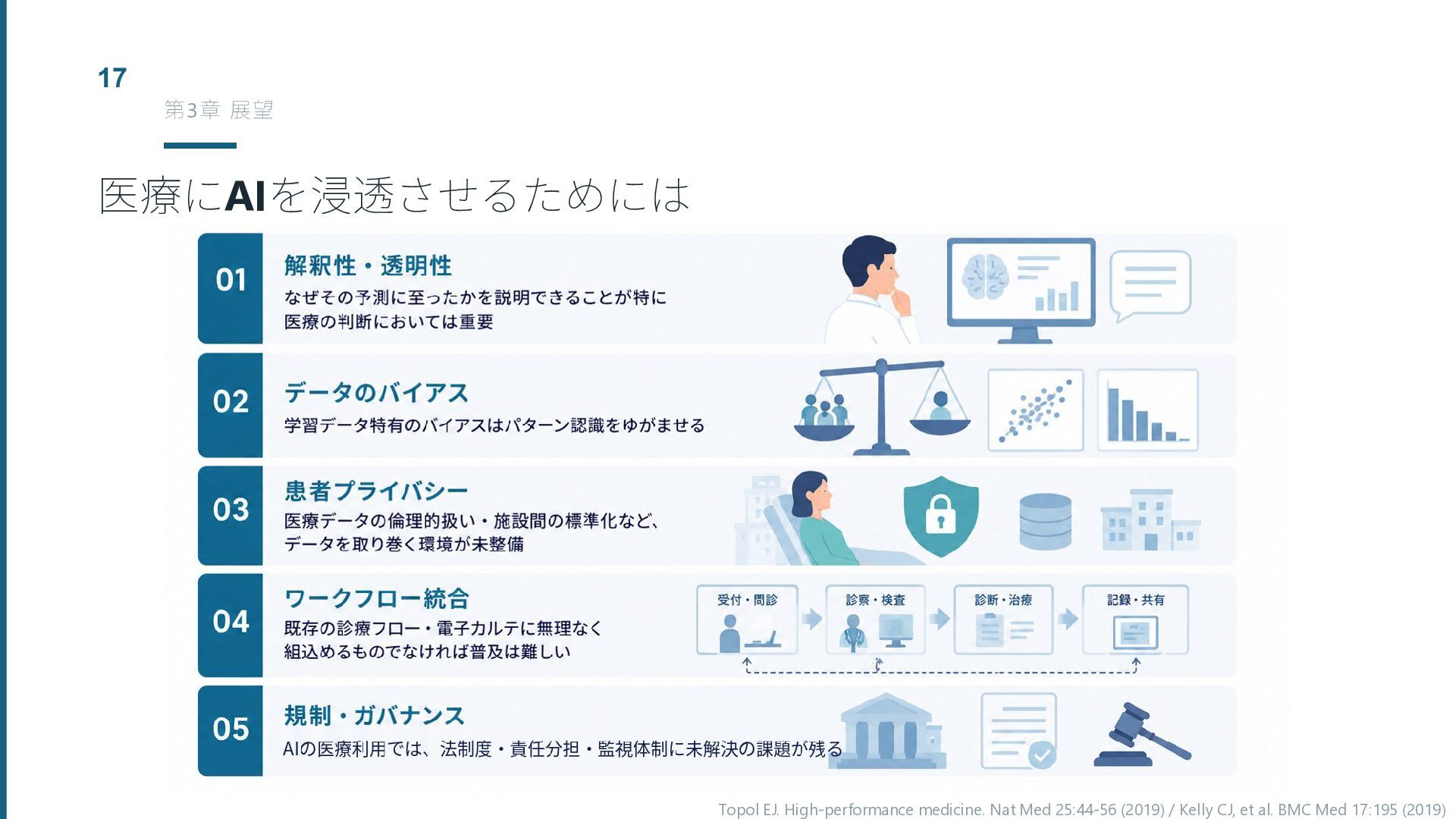
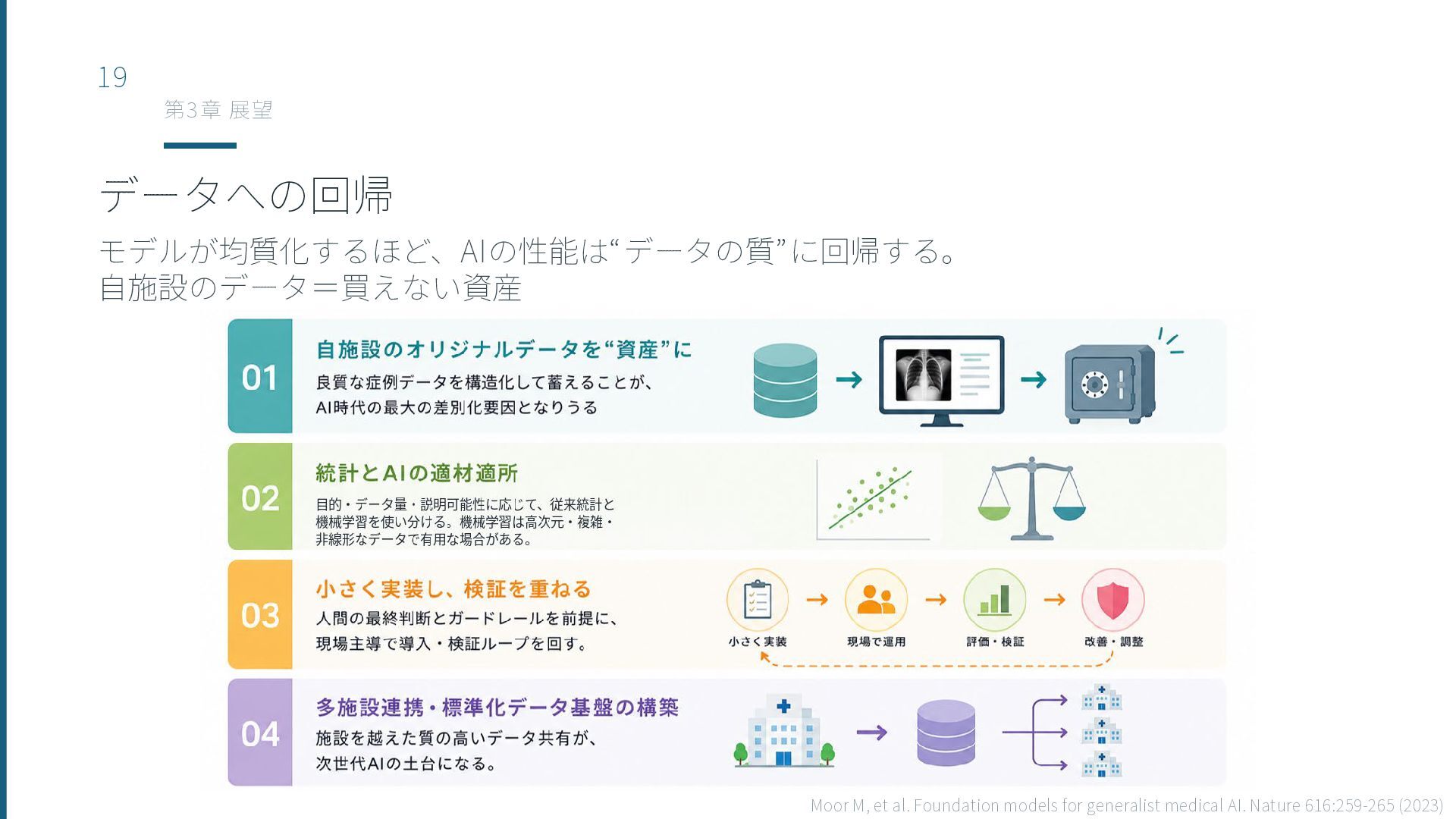
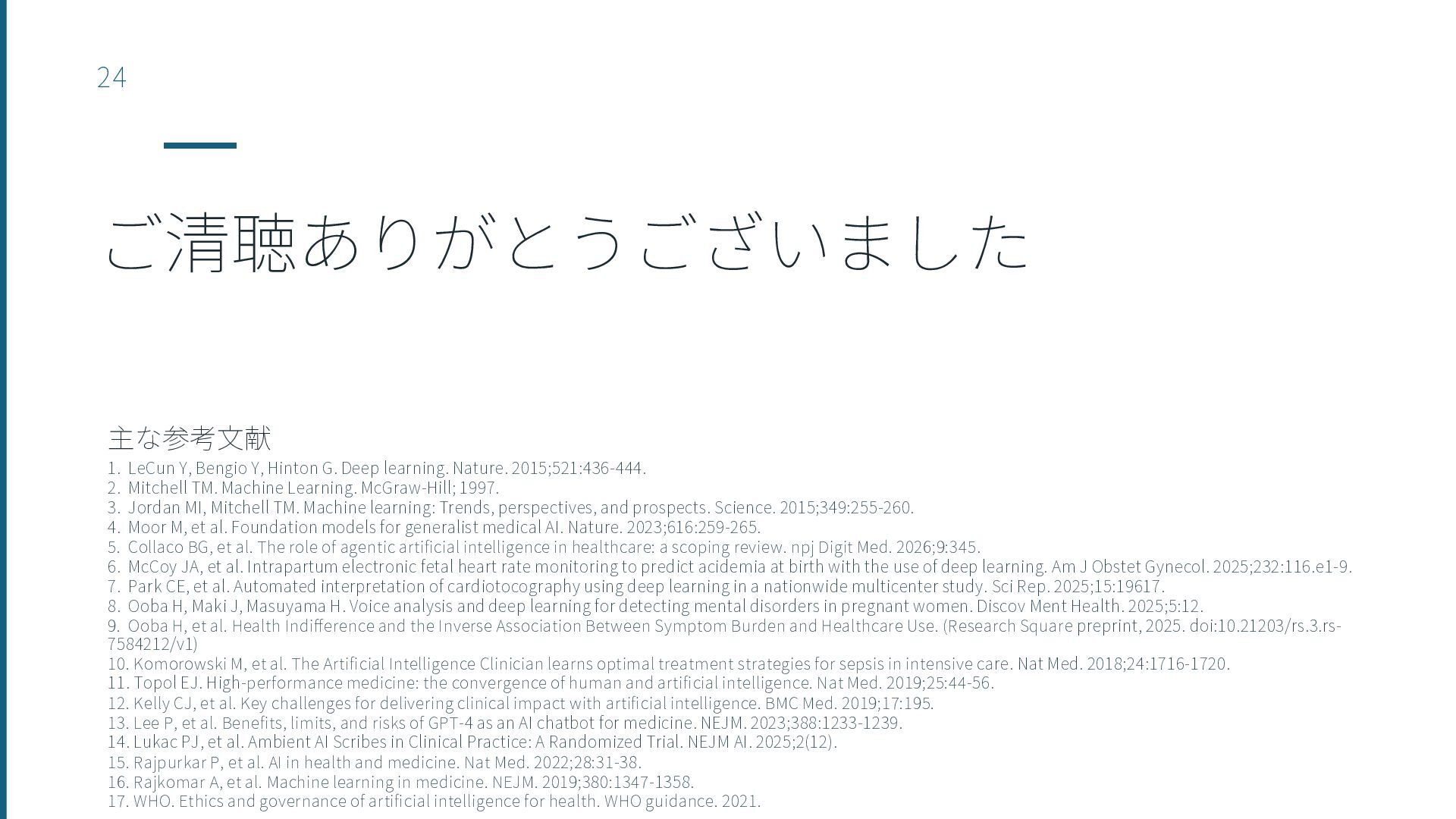
Deep learning. Nature. 2015;521:436-444. 2. Mitchell TM. Machine Learning. McGraw-Hill; 1997. 3. Jordan MI, Mitchell TM. Machine learning: Trends, perspectives, and prospects. Science. 2015;349:255-260. 4. Moor M, et al. Foundation models for generalist medical AI. Nature. 2023;616:259-265. 5. Collaco BG, et al. The role of agentic artificial intelligence in healthcare: a scoping review. npj Digit Med. 2026;9:345. 6. McCoy JA, et al. Intrapartum electronic fetal heart rate monitoring to predict acidemia at birth with the use of deep learning. Am J Obstet Gynecol. 2025;232:116.e1-9. 7. Park CE, et al. Automated interpretation of cardiotocography using deep learning in a nationwide multicenter study. Sci Rep. 2025;15:19617. 8. Ooba H, Maki J, Masuyama H. Voice analysis and deep learning for detecting mental disorders in pregnant women. Discov Ment Health. 2025;5:12. 9. Ooba H, et al. Health Indifference and the Inverse Association Between Symptom Burden and Healthcare Use. (Research Square preprint, 2025. doi:10.21203/rs.3.rs- 7584212/v1) 10. Komorowski M, et al. The Artificial Intelligence Clinician learns optimal treatment strategies for sepsis in intensive care. Nat Med. 2018;24:1716-1720. 11. Topol EJ. High-performance medicine: the convergence of human and artificial intelligence. Nat Med. 2019;25:44-56. 12. Kelly CJ, et al. Key challenges for delivering clinical impact with artificial intelligence. BMC Med. 2019;17:195. 13. Lee P, et al. Benefits, limits, and risks of GPT-4 as an AI chatbot for medicine. NEJM. 2023;388:1233-1239. 14. Lukac PJ, et al. Ambient AI Scribes in Clinical Practice: A Randomized Trial. NEJM AI. 2025;2(12). 15. Rajpurkar P, et al. AI in health and medicine. Nat Med. 2022;28:31-38. 16. Rajkomar A, et al. Machine learning in medicine. NEJM. 2019;380:1347-1358. 17. WHO. Ethics and governance of artificial intelligence for health. WHO guidance. 2021.


 hikaruoba
 terasawat
 ichiroc
 signer
 pawan_pharm
 drpoonamkc
 matleenalaakso
 masakiokuda
 camel_404
 mutomasa
 3l4l5
3l4l5
 rmw
rmw
 sstephenson
 madoxten
 codingconduct
 reverentgeek
 akademiya2063
 cassininazir
 lauravandoore
 tammyeverts
 michielstock
 thirion
 pwiseman