Upgrade to Pro — share decks privately, control downloads, hide ads and more …

RTCA Prof Nicola Carslaw - INTERIORS: A new fac...

Sponsored · Your Podcast. Everywhere. Effortlessly. Share. Educate. Inspire. Entertain. You do you. We'll handle the rest. →
Avatar for IES Events IES Events
October 26, 2026
36

RTCA Prof Nicola Carslaw - INTERIORS: A new facility for understanding air pollution in homes

Avatar for IES Events

IES Events

October 26, 2026

More Decks by IES Events

Transcript

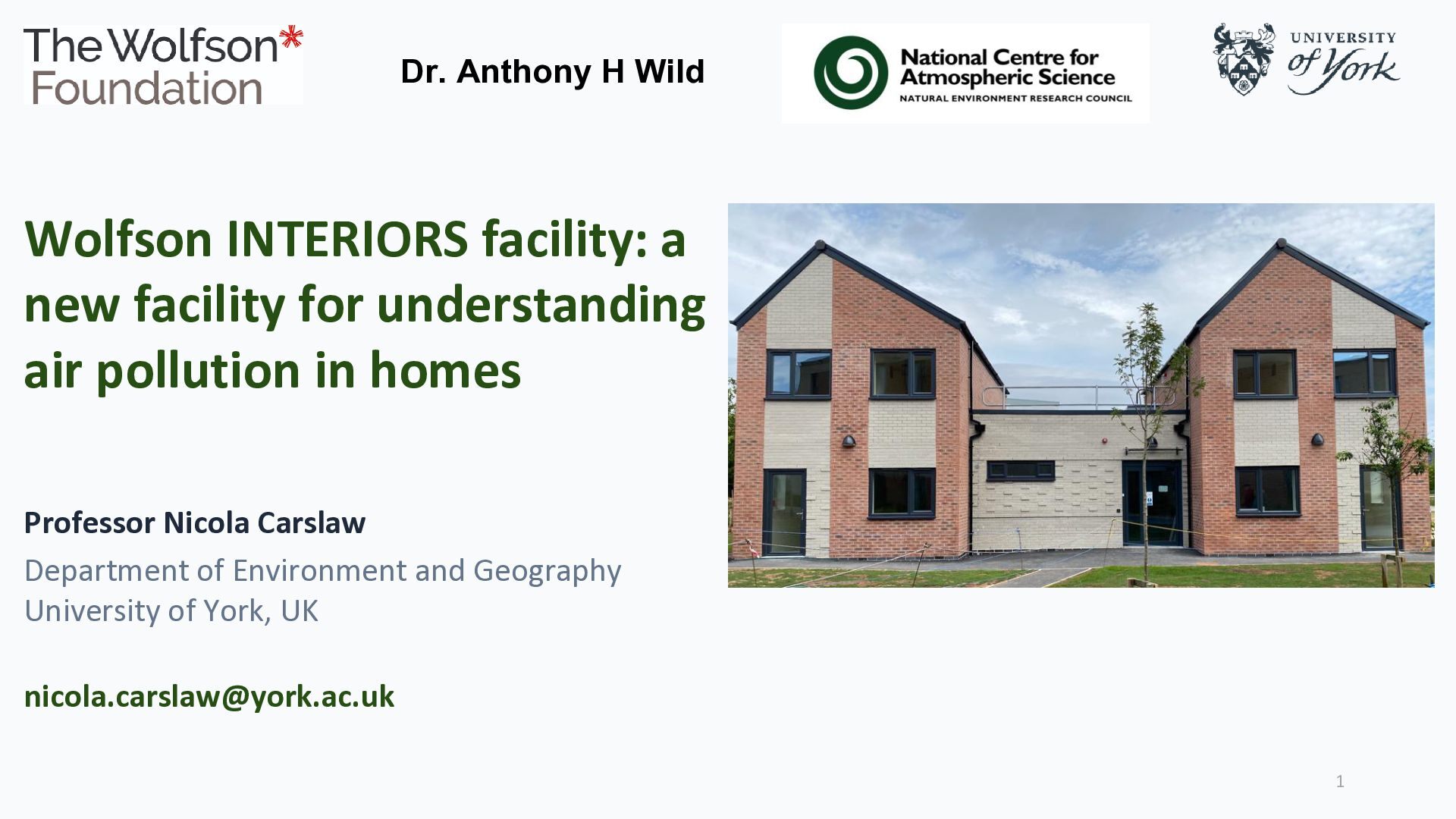
  1. Dr. Anthony H Wild Wolfson INTERIORS facility: a new facility

    for understanding air pollution in homes Professor Nicola Carslaw Department of Environment and Geography University of York, UK [email protected] 1
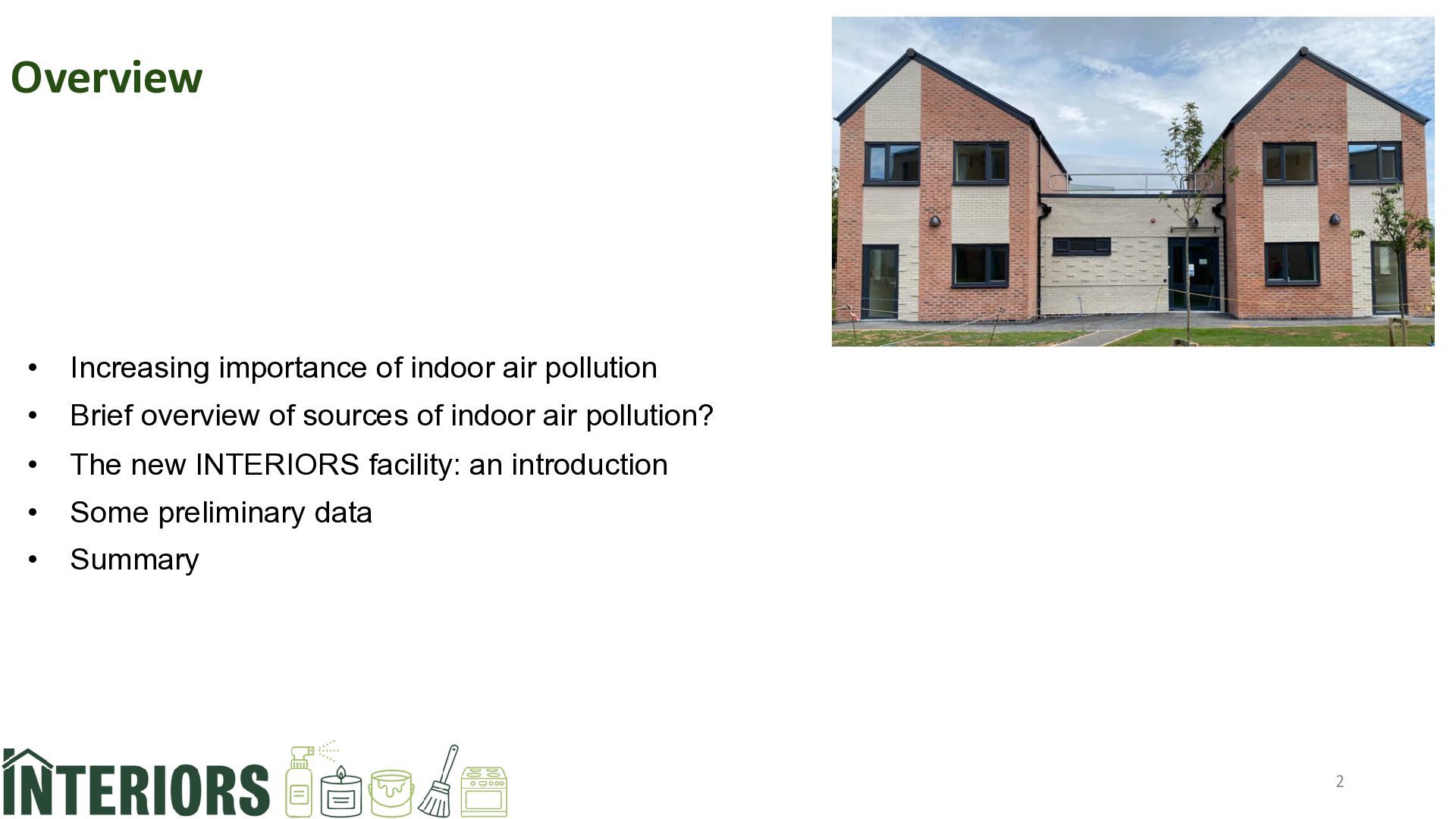
  2. Overview • Increasing importance of indoor air pollution • Brief

    overview of sources of indoor air pollution? • The new INTERIORS facility: an introduction • Some preliminary data • Summary 2
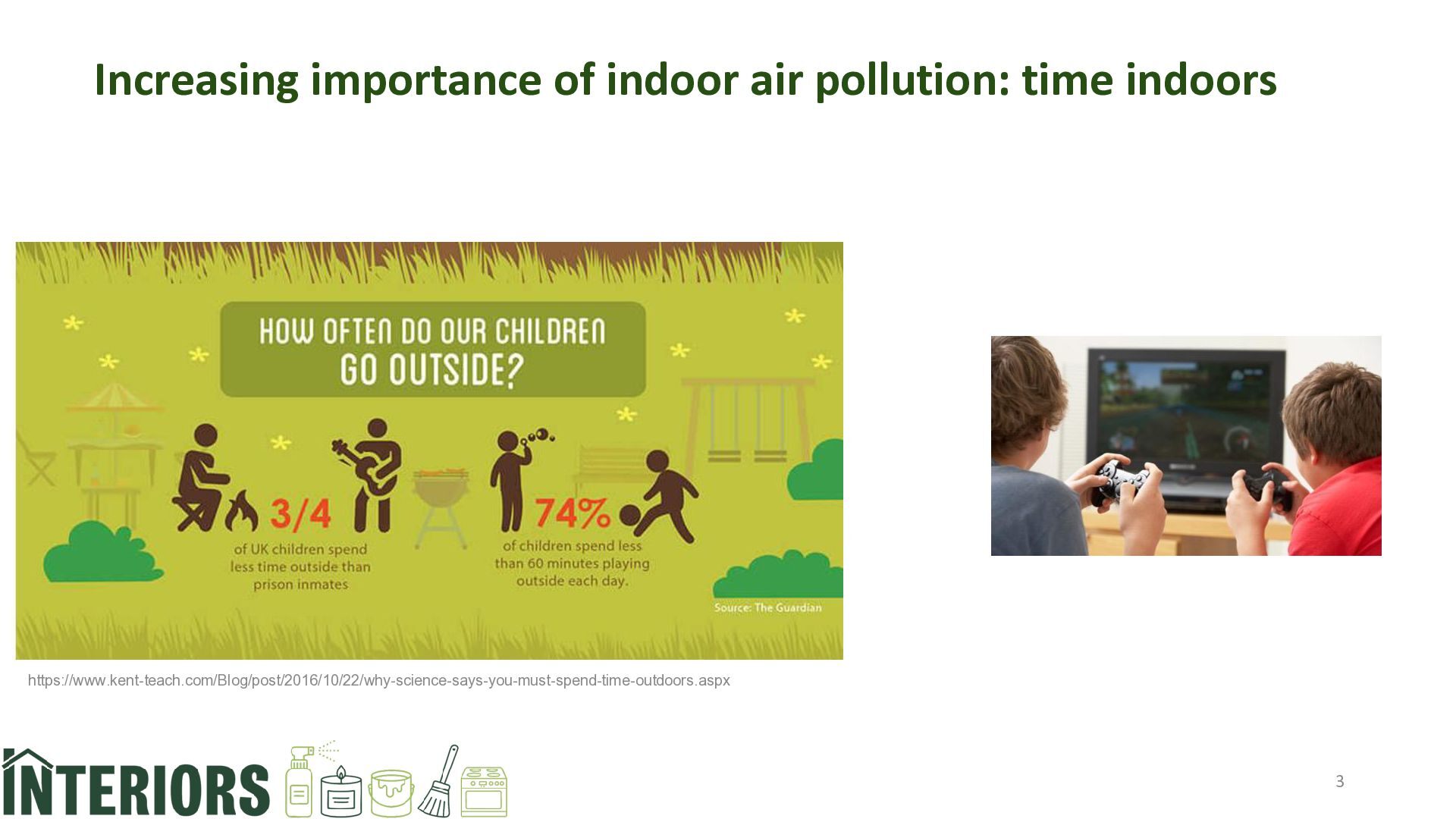
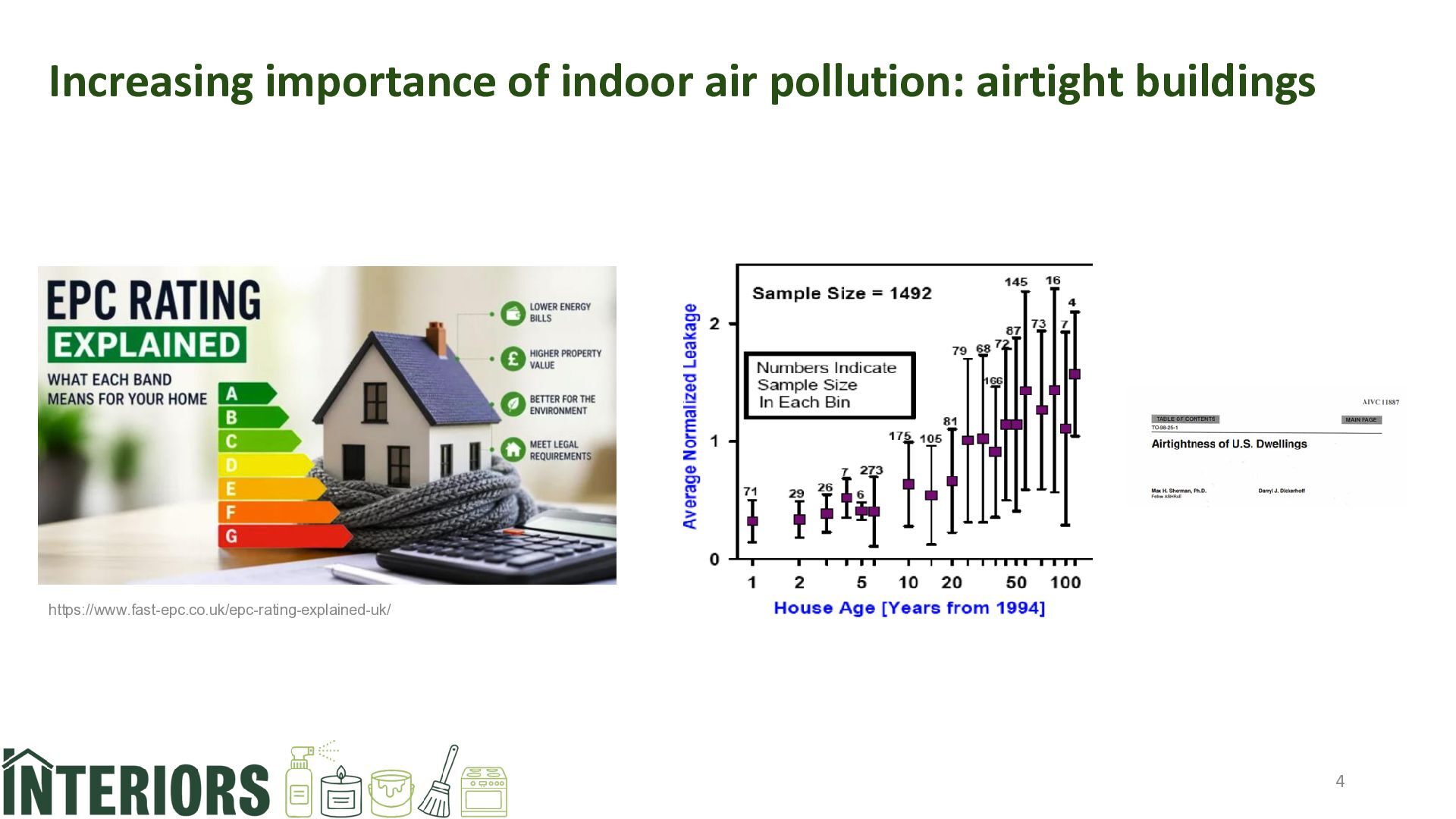
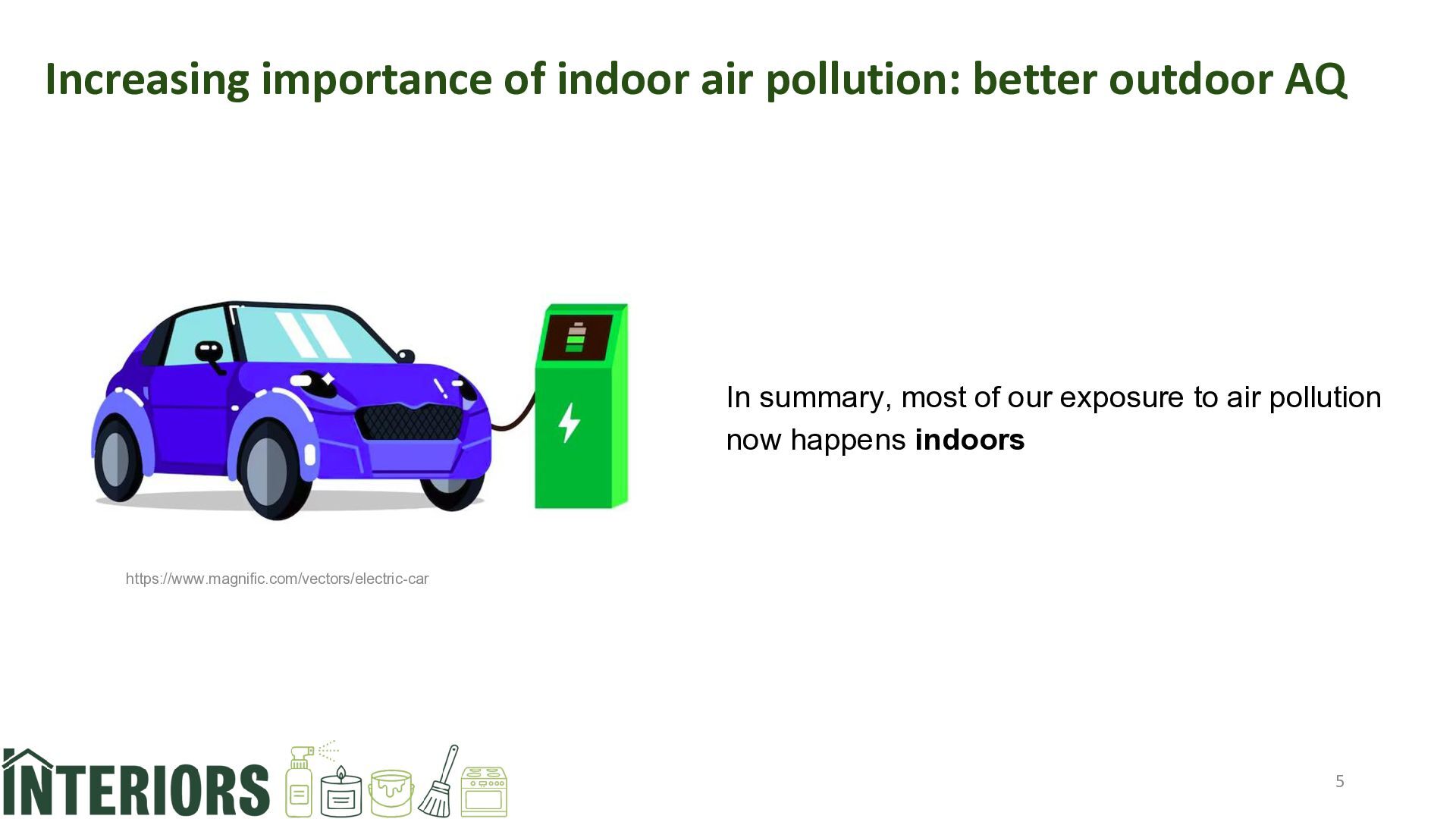
  3. Increasing importance of indoor air pollution: better outdoor AQ In

    summary, most of our exposure to air pollution now happens indoors https://www.magnific.com/vectors/electric-car 5
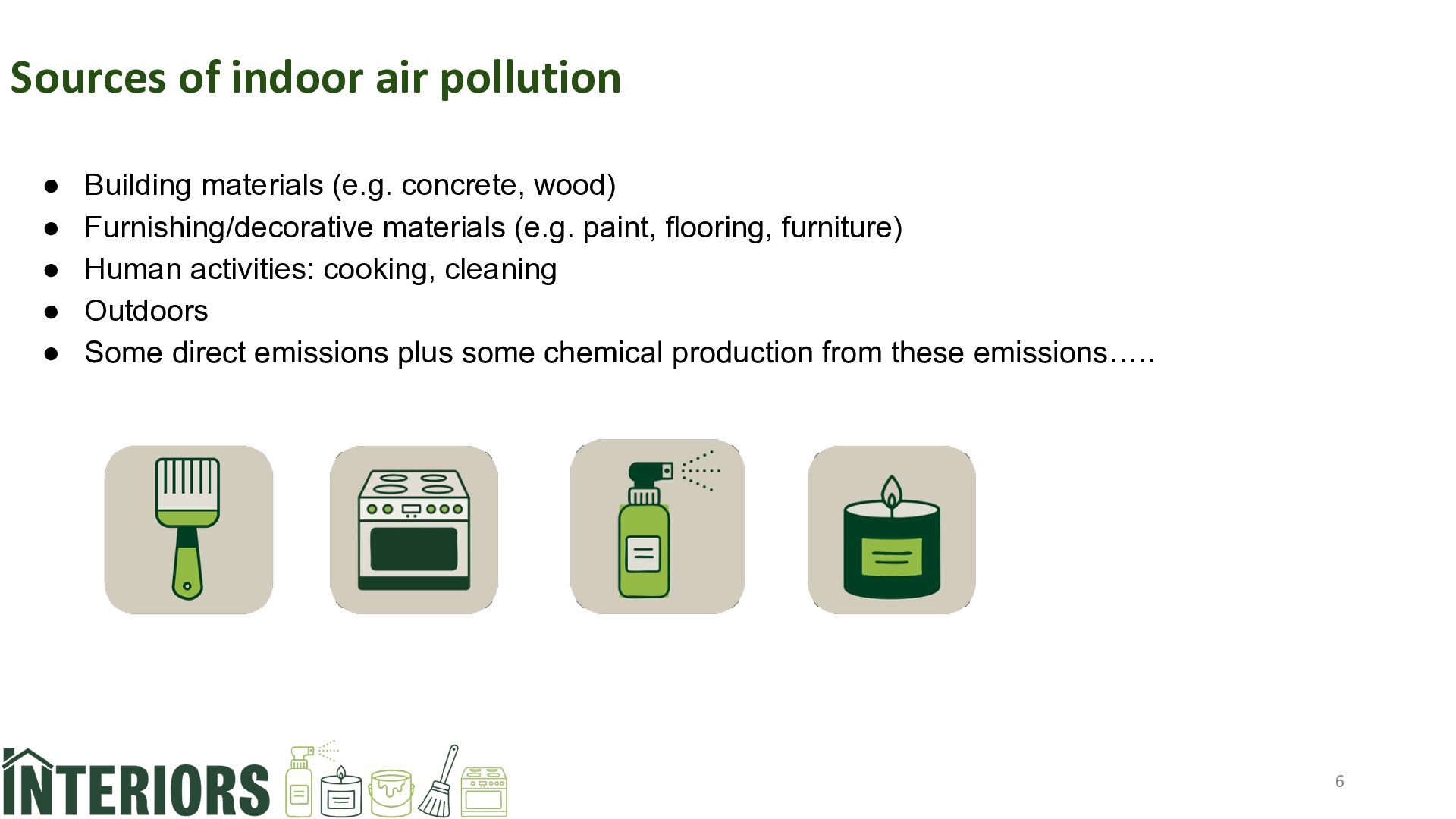
  4. Sources of indoor air pollution • • • • •

    Building materials (e.g. concrete, wood) Furnishing/decorative materials (e.g. paint, flooring, furniture) Human activities: cooking, cleaning Outdoors Some direct emissions plus some chemical production from these emissions….. 6
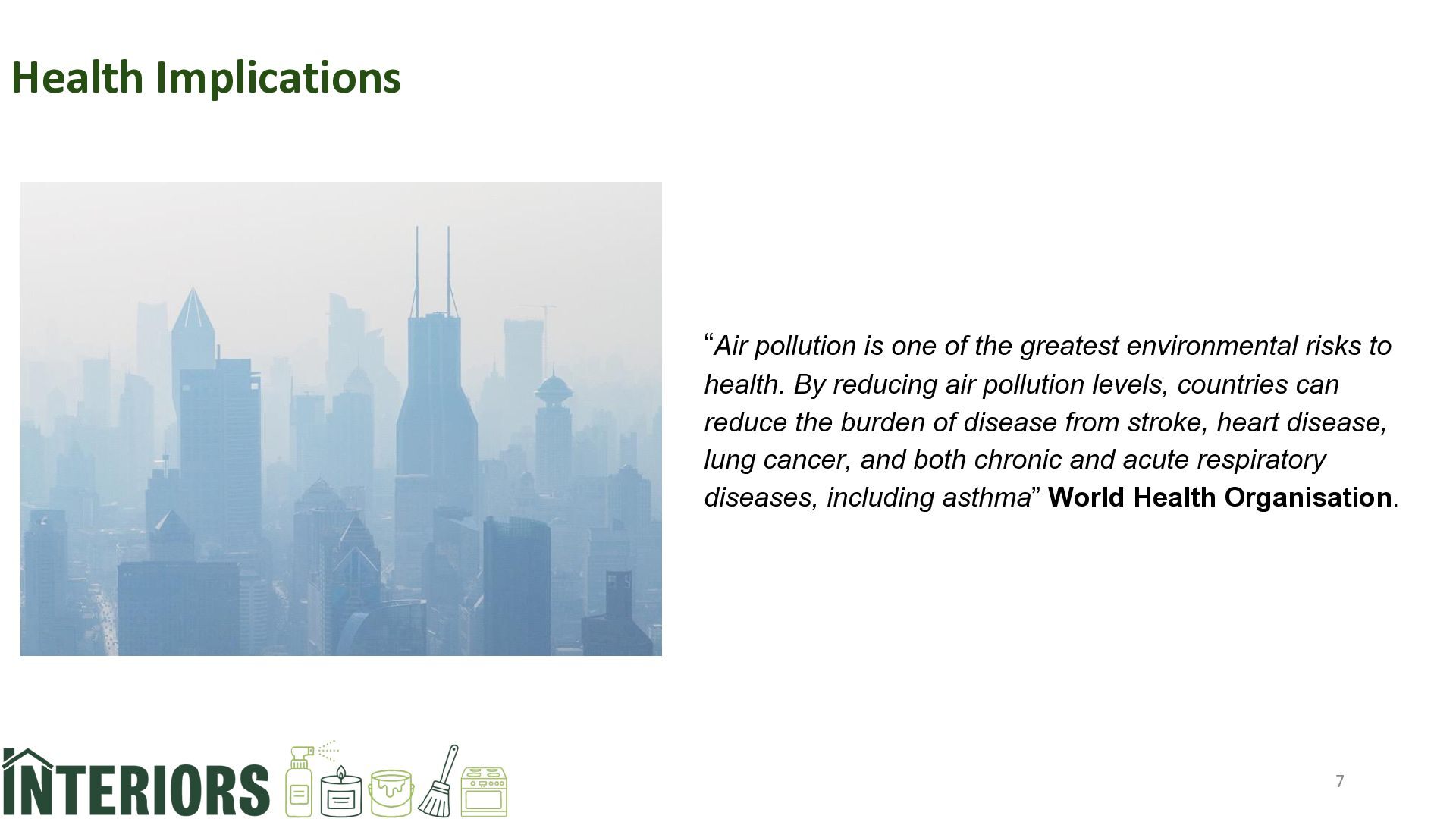
  5. Health Implications “Air pollution is one of the greatest environmental

    risks to health. By reducing air pollution levels, countries can reduce the burden of disease from stroke, heart disease, lung cancer, and both chronic and acute respiratory diseases, including asthma” World Health Organisation. 7
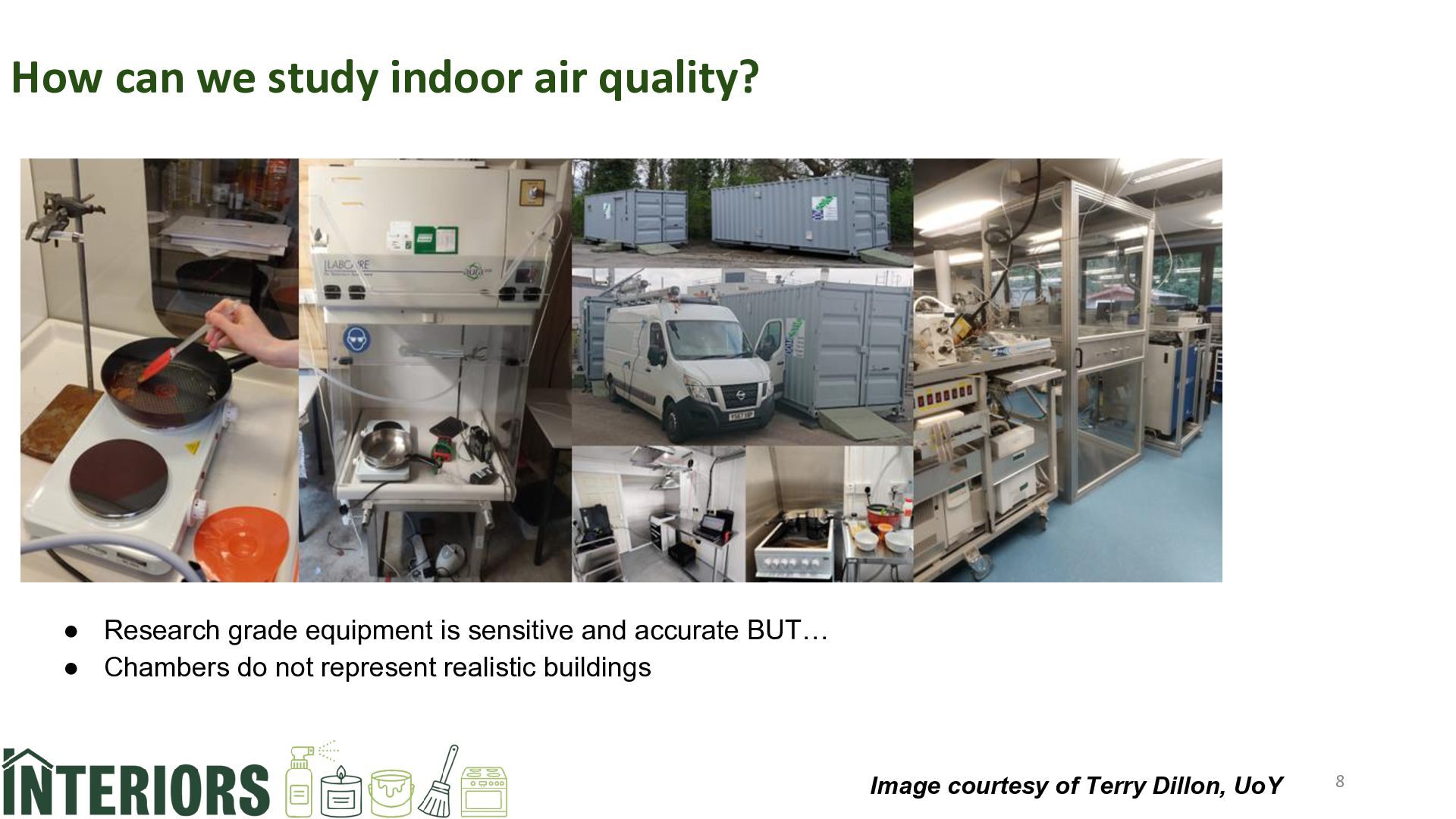
  6. How can we study indoor air quality? • Research grade

    equipment is sensitive and accurate BUT… • Chambers do not represent realistic buildings Image courtesy of Terry Dillon, UoY 8
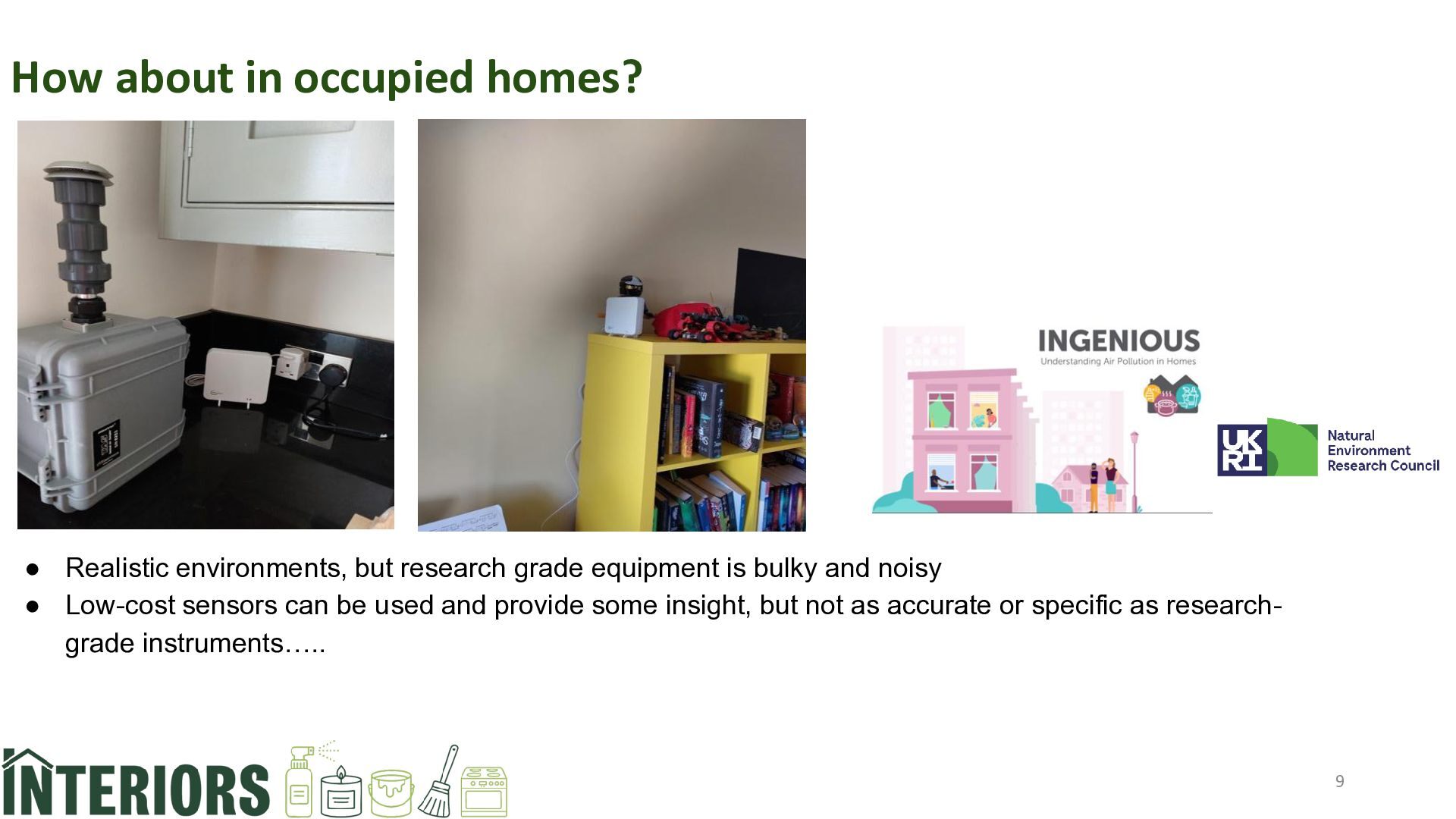
  7. How about in occupied homes? • Realistic environments, but research

    grade equipment is bulky and noisy • Low-cost sensors can be used and provide some insight, but not as accurate or specific as researchgrade instruments….. 9
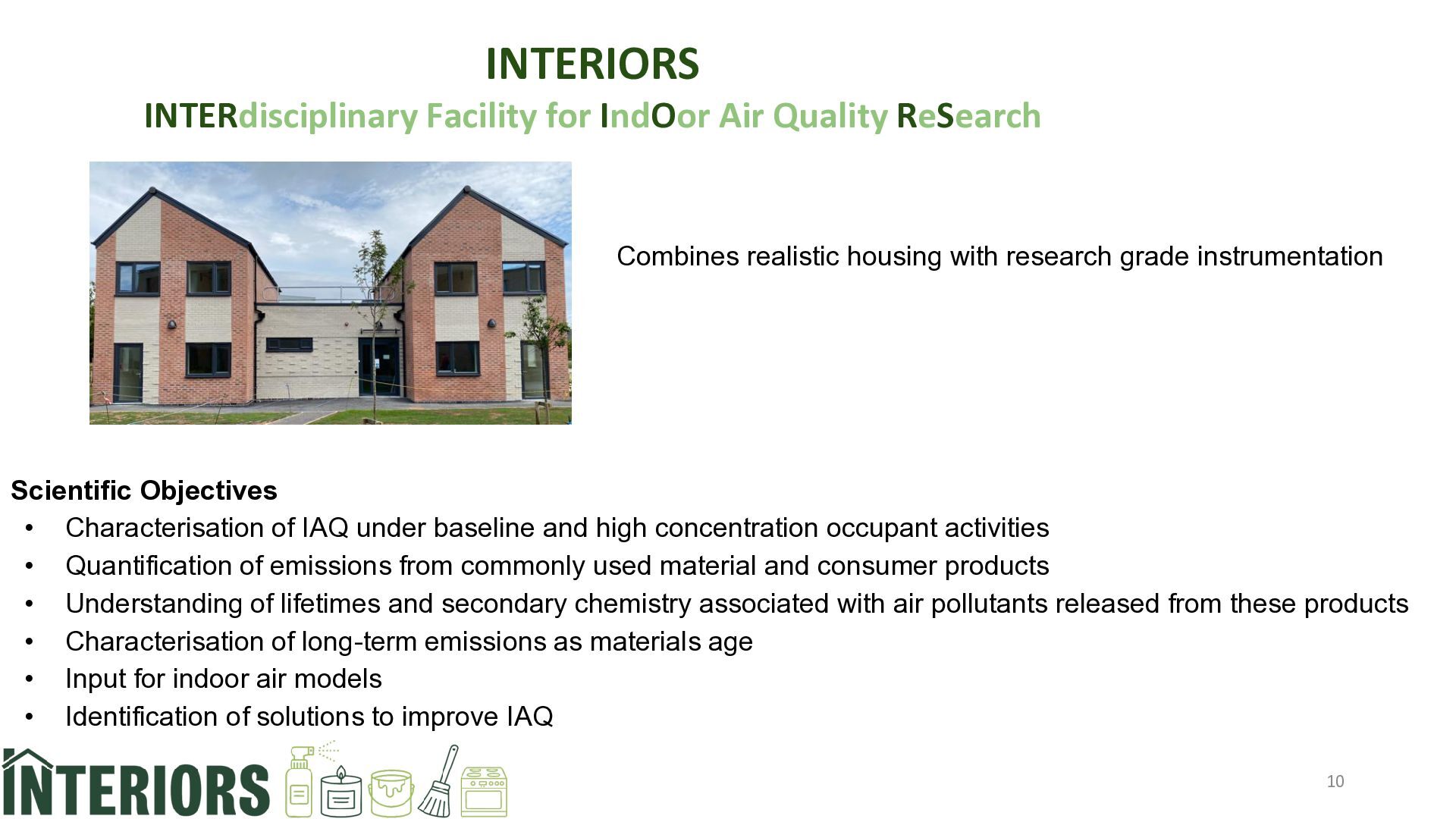
  8. INTERIORS INTERdisciplinary Facility for IndOor Air Quality ReSearch Combines realistic

    housing with research grade instrumentation Scientific Objectives • Characterisation of IAQ under baseline and high concentration occupant activities • Quantification of emissions from commonly used material and consumer products • Understanding of lifetimes and secondary chemistry associated with air pollutants released from these products • Characterisation of long-term emissions as materials age • Input for indoor air models • Identification of solutions to improve IAQ 10
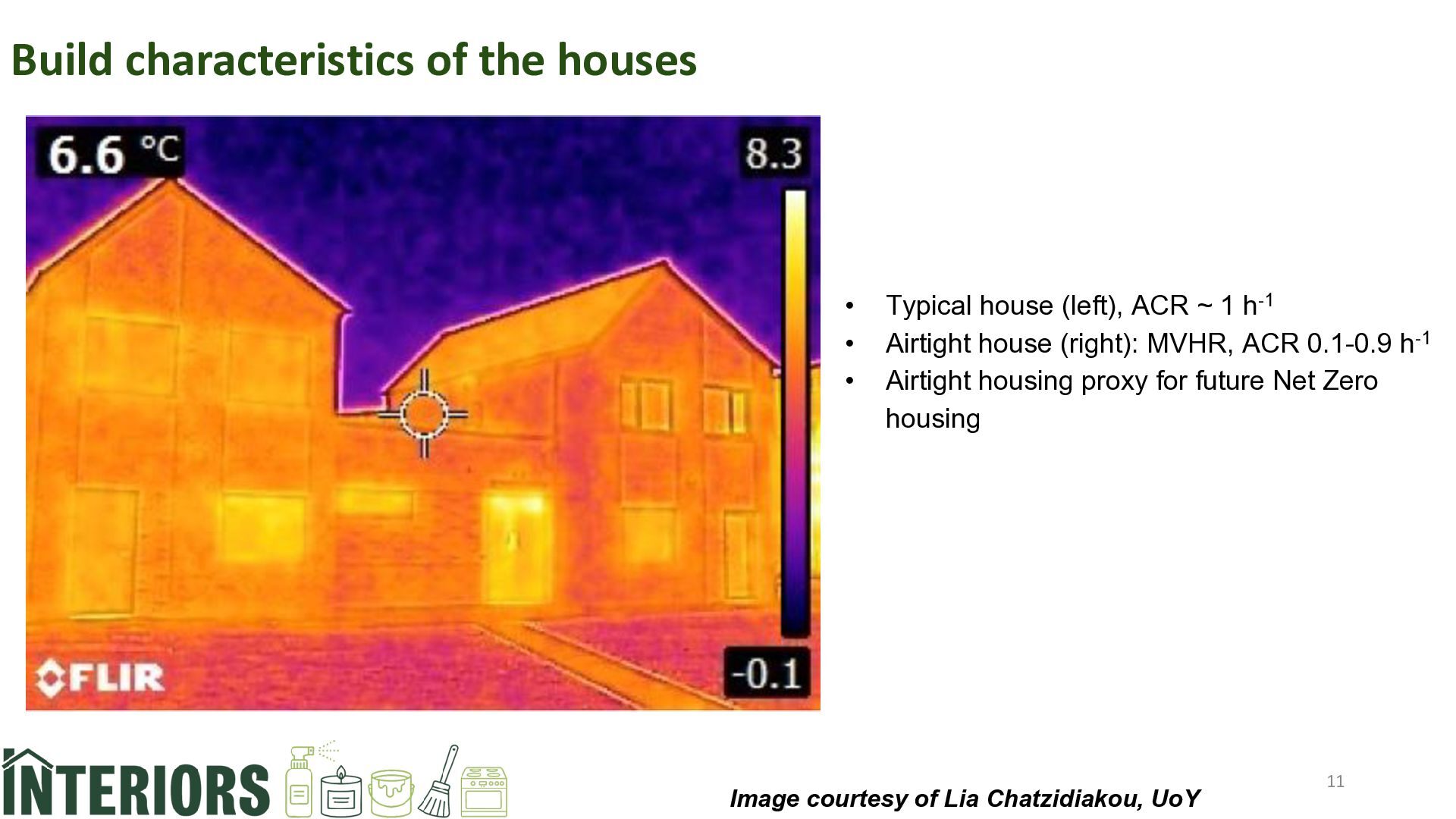
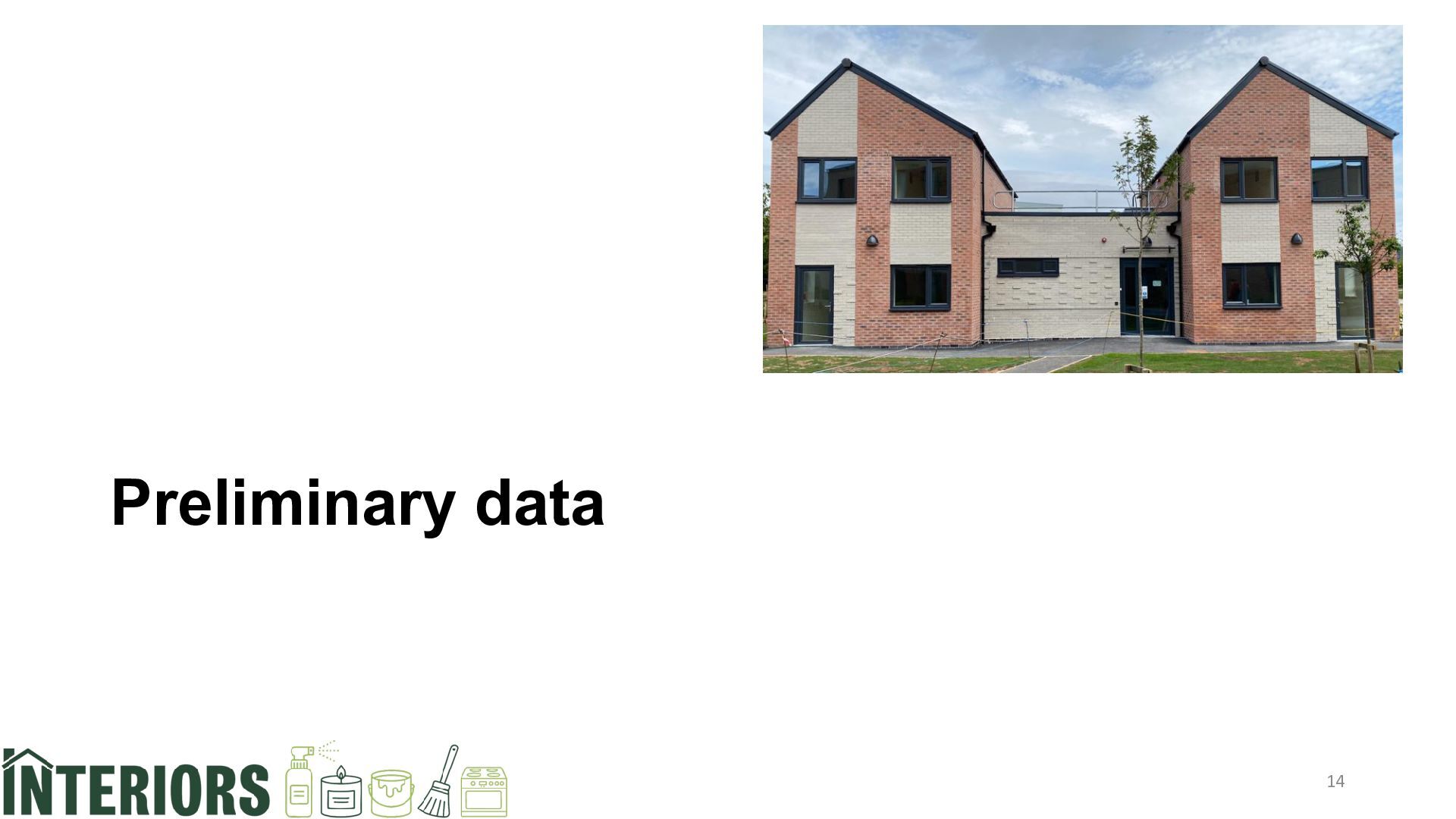
  9. Build characteristics of the houses • • • Typical house

    (left), ACR ~ 1 h-1 Airtight house (right): MVHR, ACR 0.1-0.9 h-1 Airtight housing proxy for future Net Zero housing Image courtesy of Lia Chatzidiakou, UoY 11
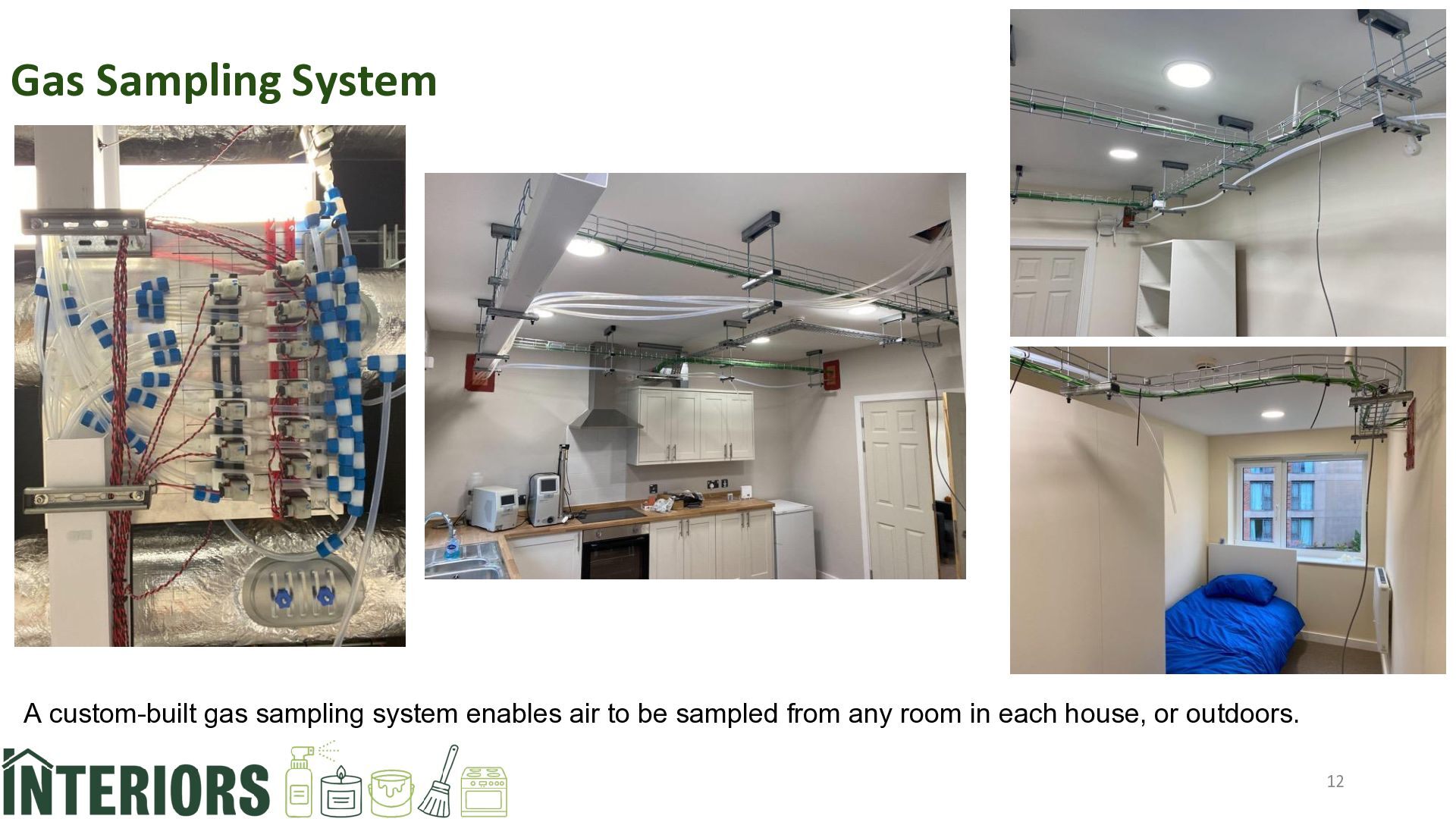
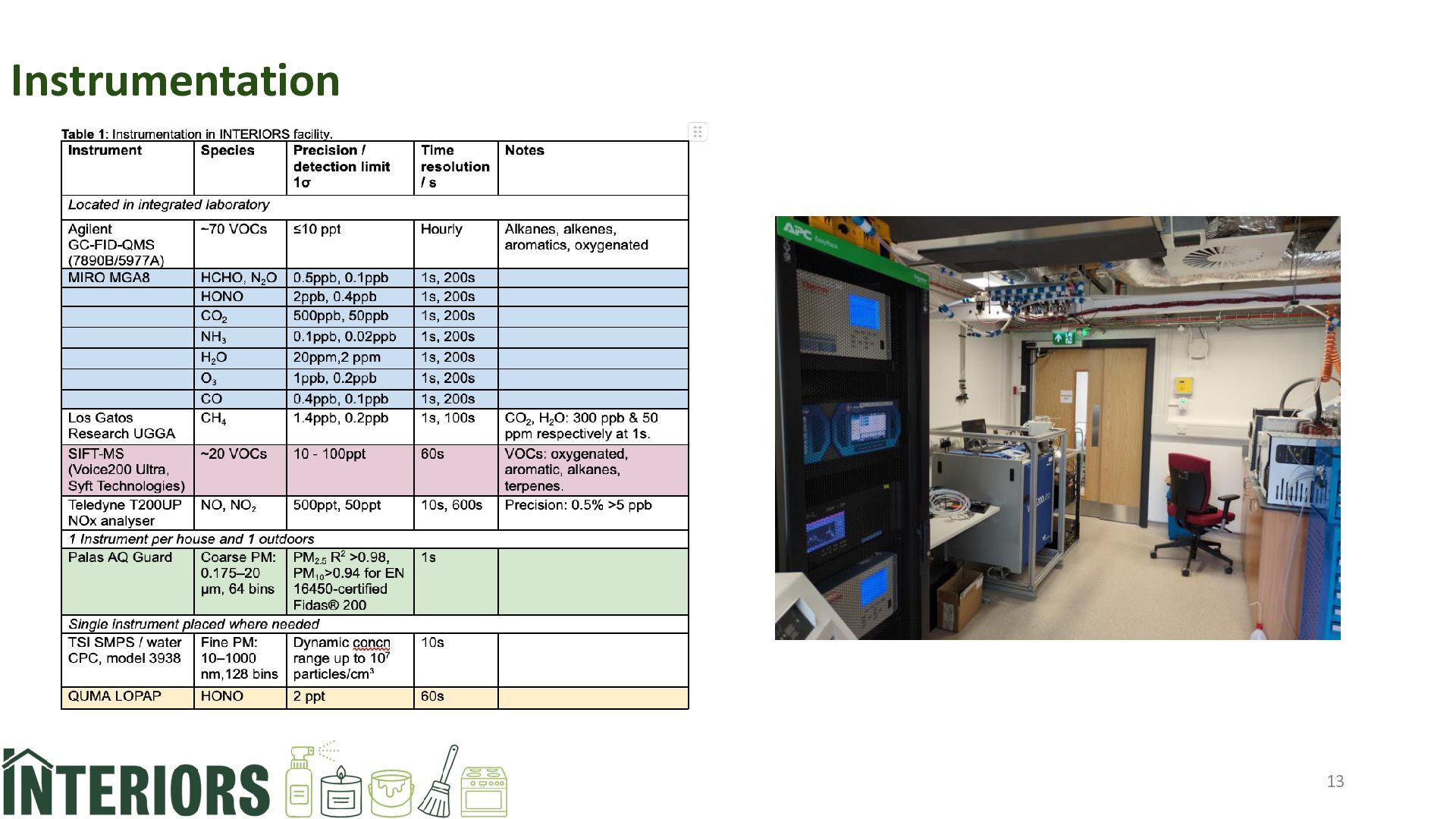
  10. Gas Sampling System A custom-built gas sampling system enables air

    to be sampled from any room in each house, or outdoors. 12
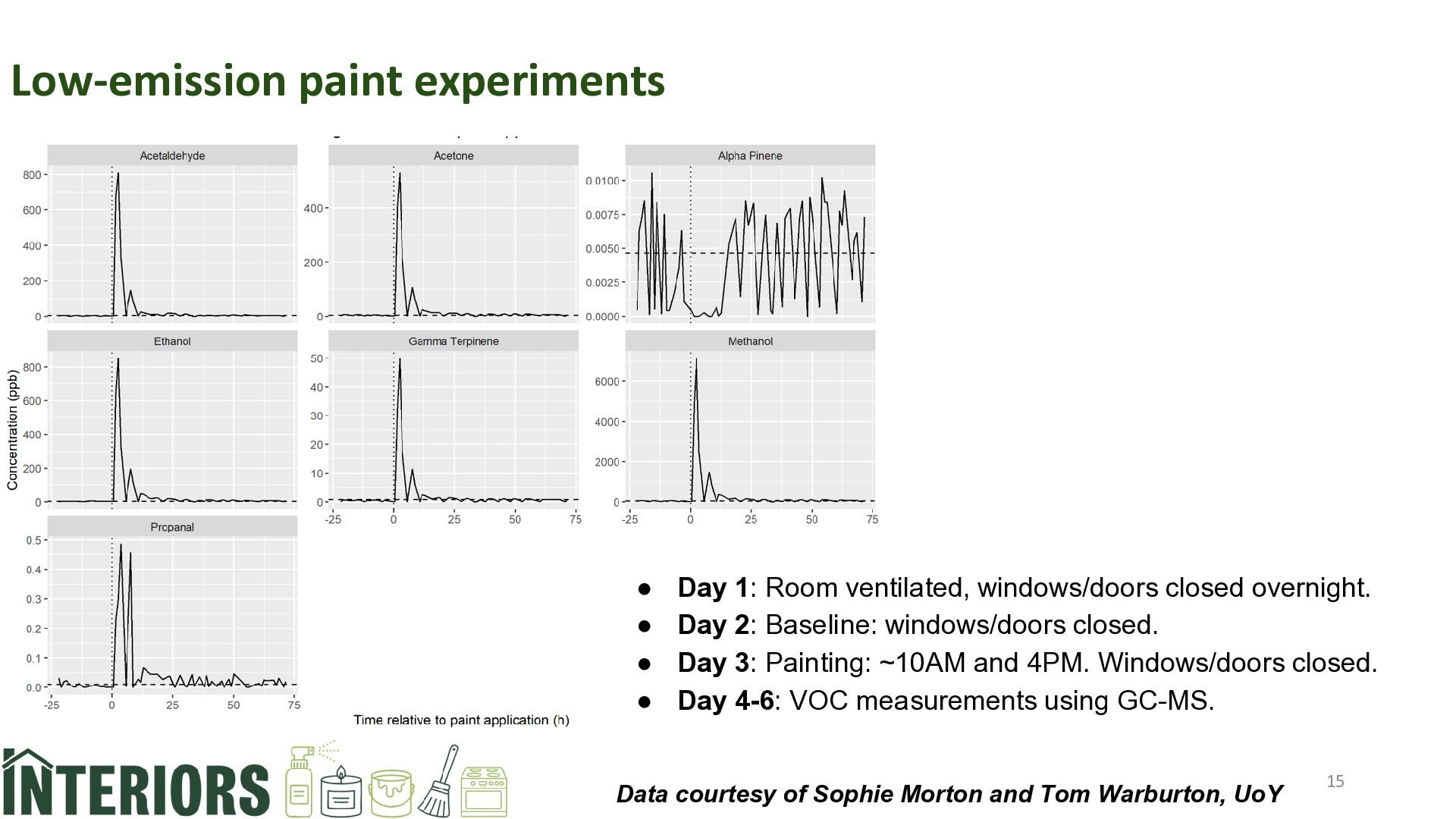
  11. Low-emission paint experiments • • • • Day 1: Room

    ventilated, windows/doors closed overnight. Day 2: Baseline: windows/doors closed. Day 3: Painting: ~10AM and 4PM. Windows/doors closed. Day 4-6: VOC measurements using GC-MS. Data courtesy of Sophie Morton and Tom Warburton, UoY 15
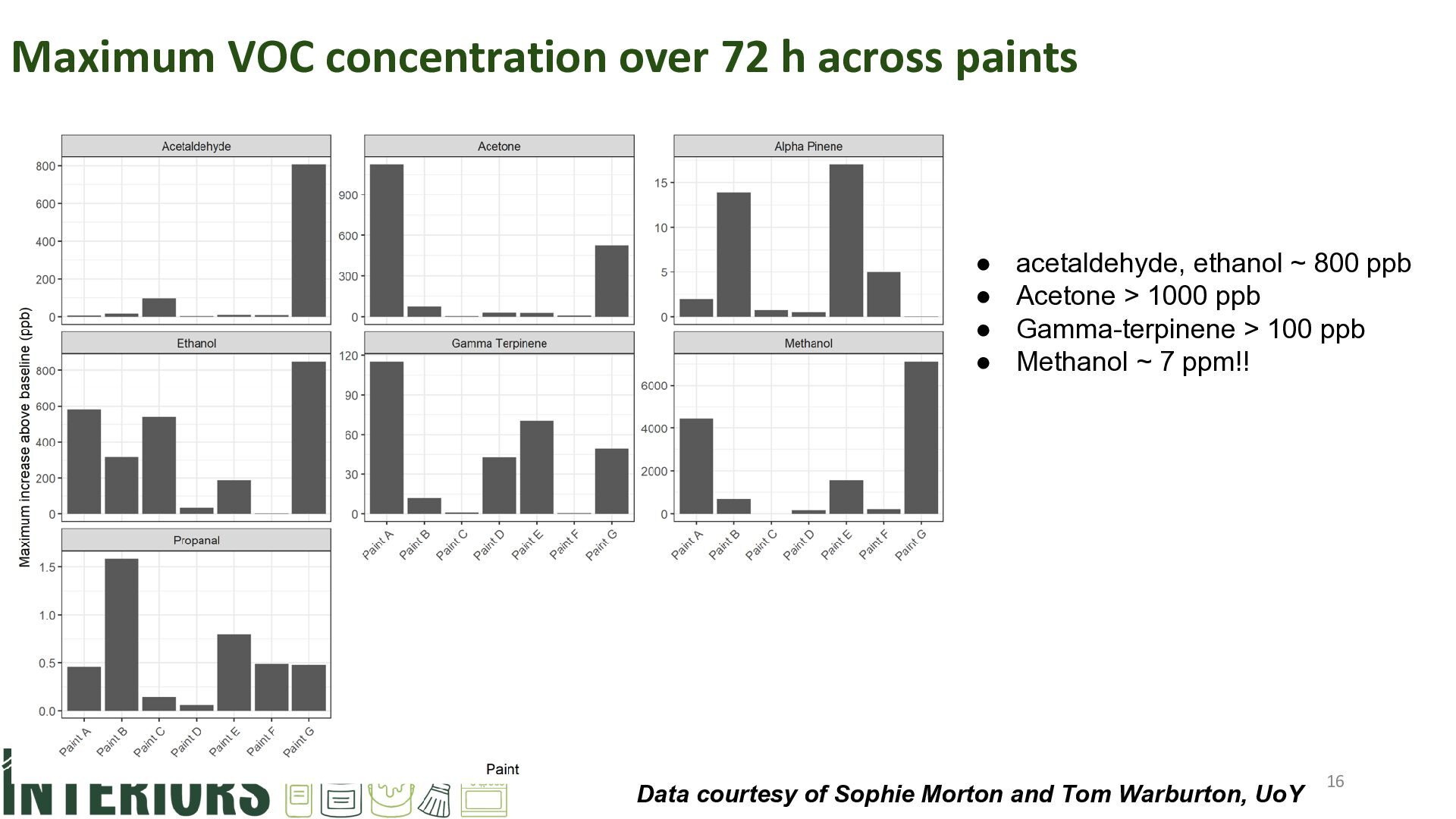
  12. Maximum VOC concentration over 72 h across paints • •

    • • acetaldehyde, ethanol ~ 800 ppb Acetone > 1000 ppb Gamma-terpinene > 100 ppb Methanol ~ 7 ppm!! Data courtesy of Sophie Morton and Tom Warburton, UoY 16
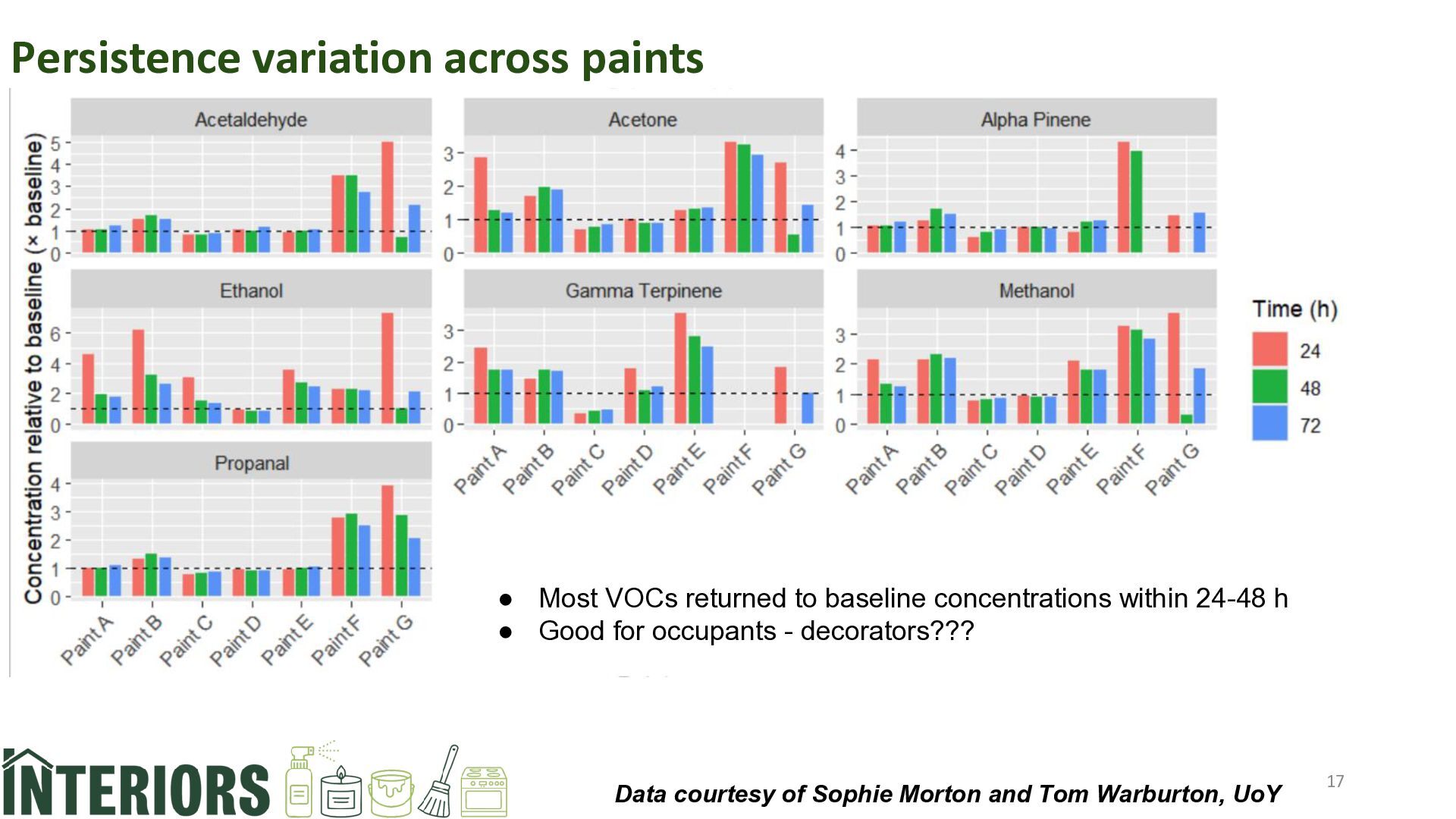
  13. Persistence variation across paints • Most VOCs returned to baseline

    concentrations within 24-48 h • Good for occupants - decorators??? Data courtesy of Sophie Morton and Tom Warburton, UoY 17
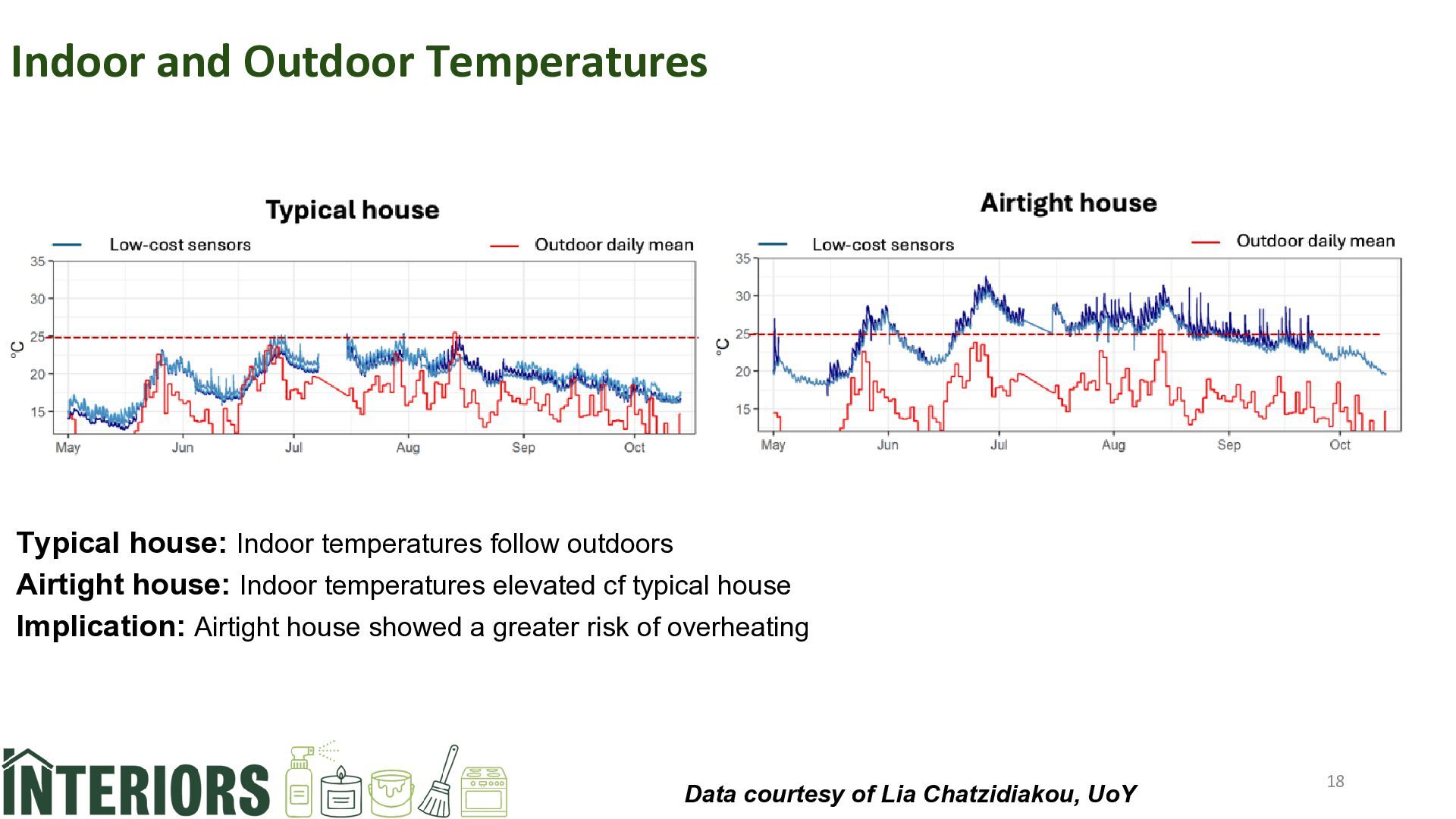
  14. Indoor and Outdoor Temperatures Typical house: Indoor temperatures follow outdoors

    Airtight house: Indoor temperatures elevated cf typical house Implication: Airtight house showed a greater risk of overheating Data courtesy of Lia Chatzidiakou, UoY 18
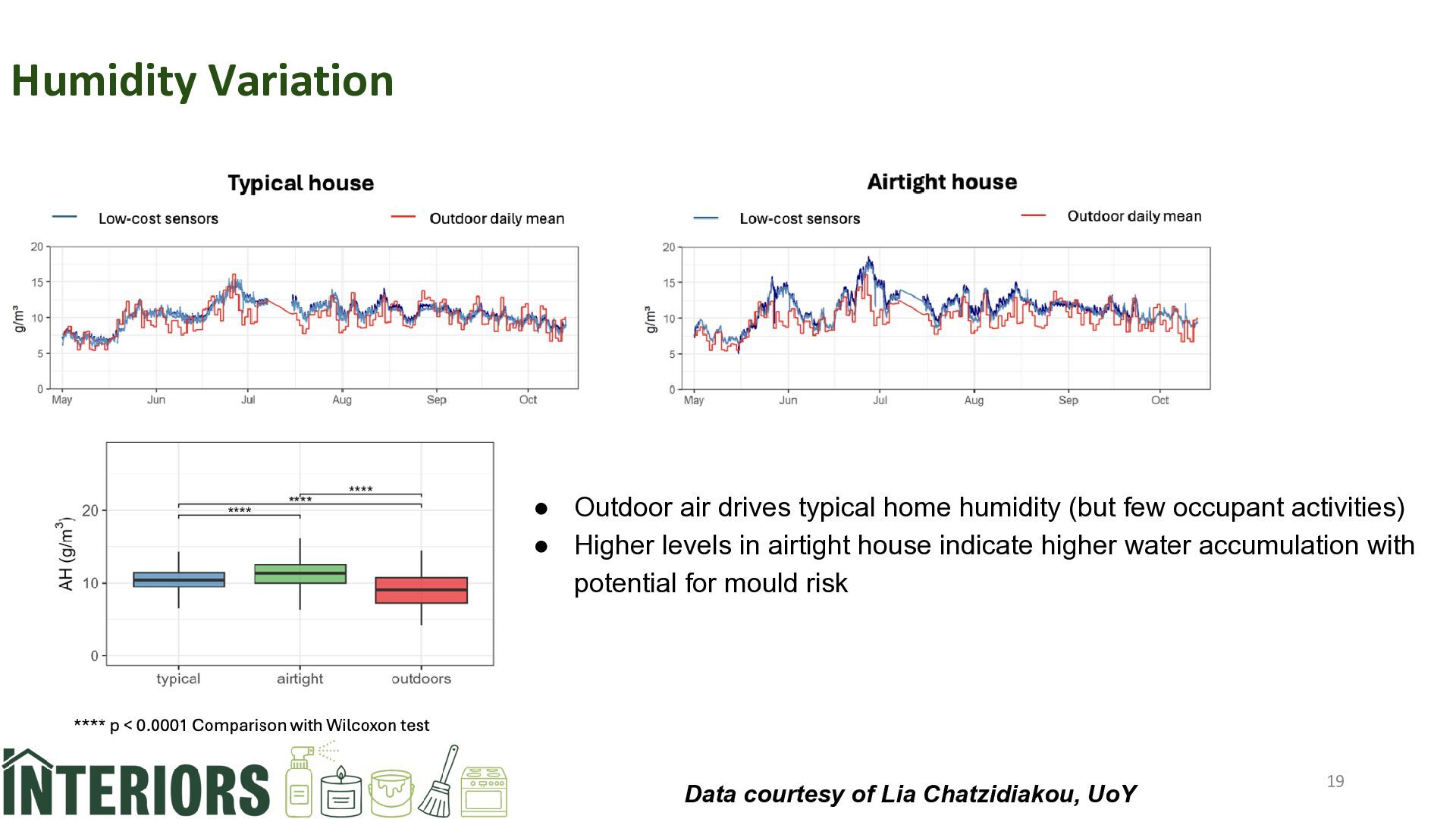
  15. Humidity Variation • Outdoor air drives typical home humidity (but

    few occupant activities) • Higher levels in airtight house indicate higher water accumulation with potential for mould risk Data courtesy of Lia Chatzidiakou, UoY 19
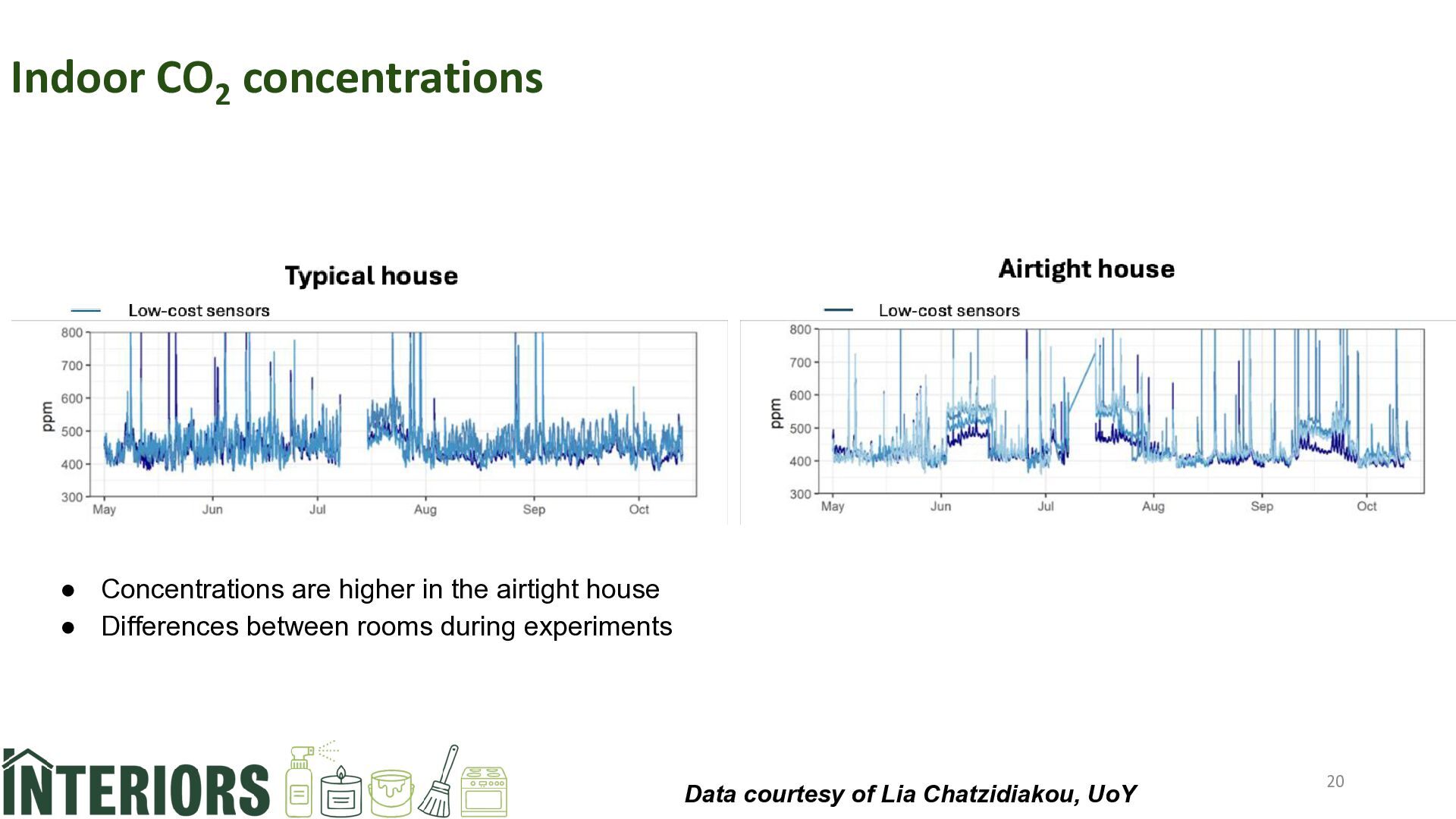
  16. Indoor CO2 concentrations • Concentrations are higher in the airtight

    house • Differences between rooms during experiments Data courtesy of Lia Chatzidiakou, UoY 20
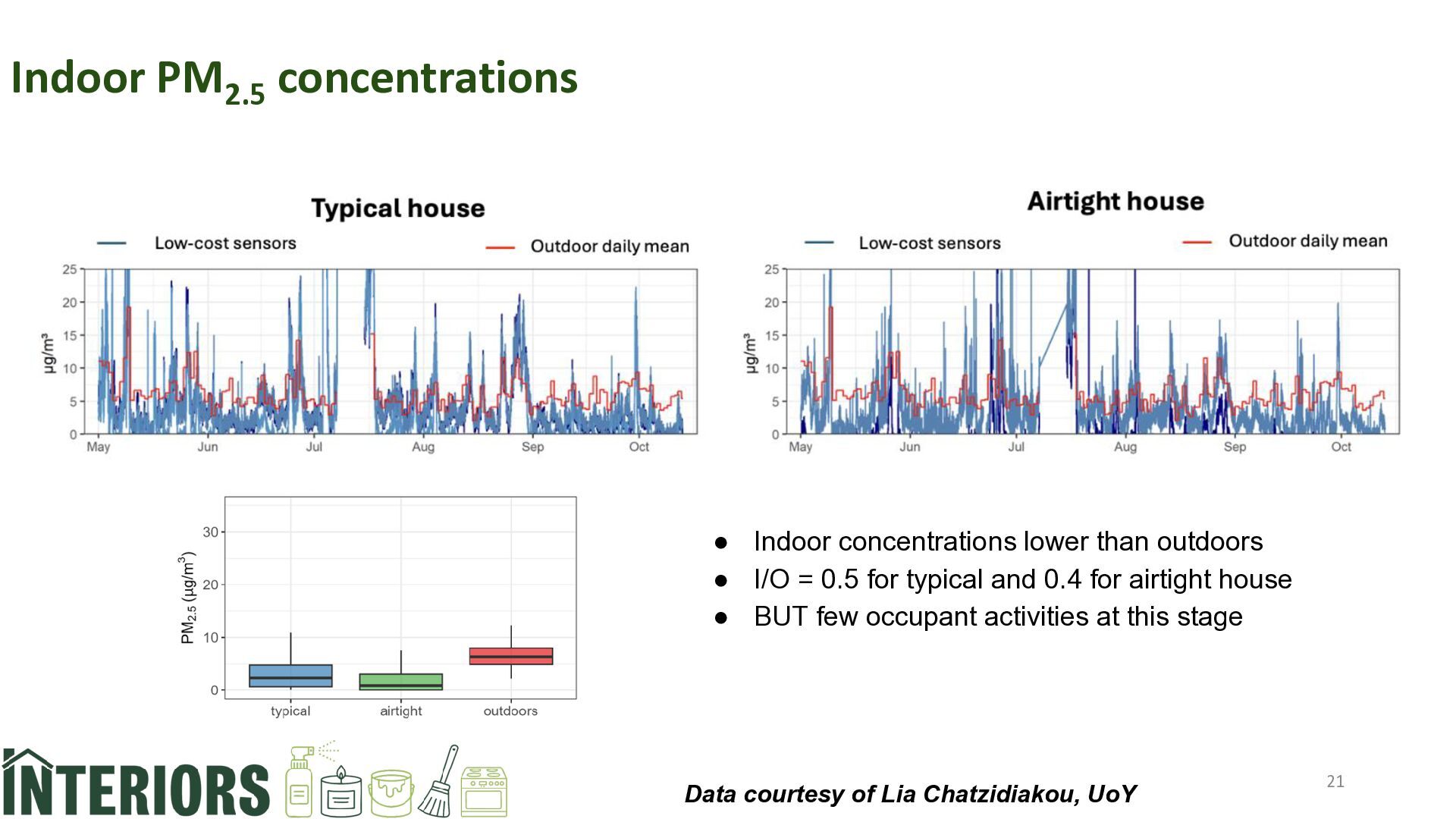
  17. Indoor PM2.5 concentrations • Indoor concentrations lower than outdoors •

    I/O = 0.5 for typical and 0.4 for airtight house • BUT few occupant activities at this stage Data courtesy of Lia Chatzidiakou, UoY 21
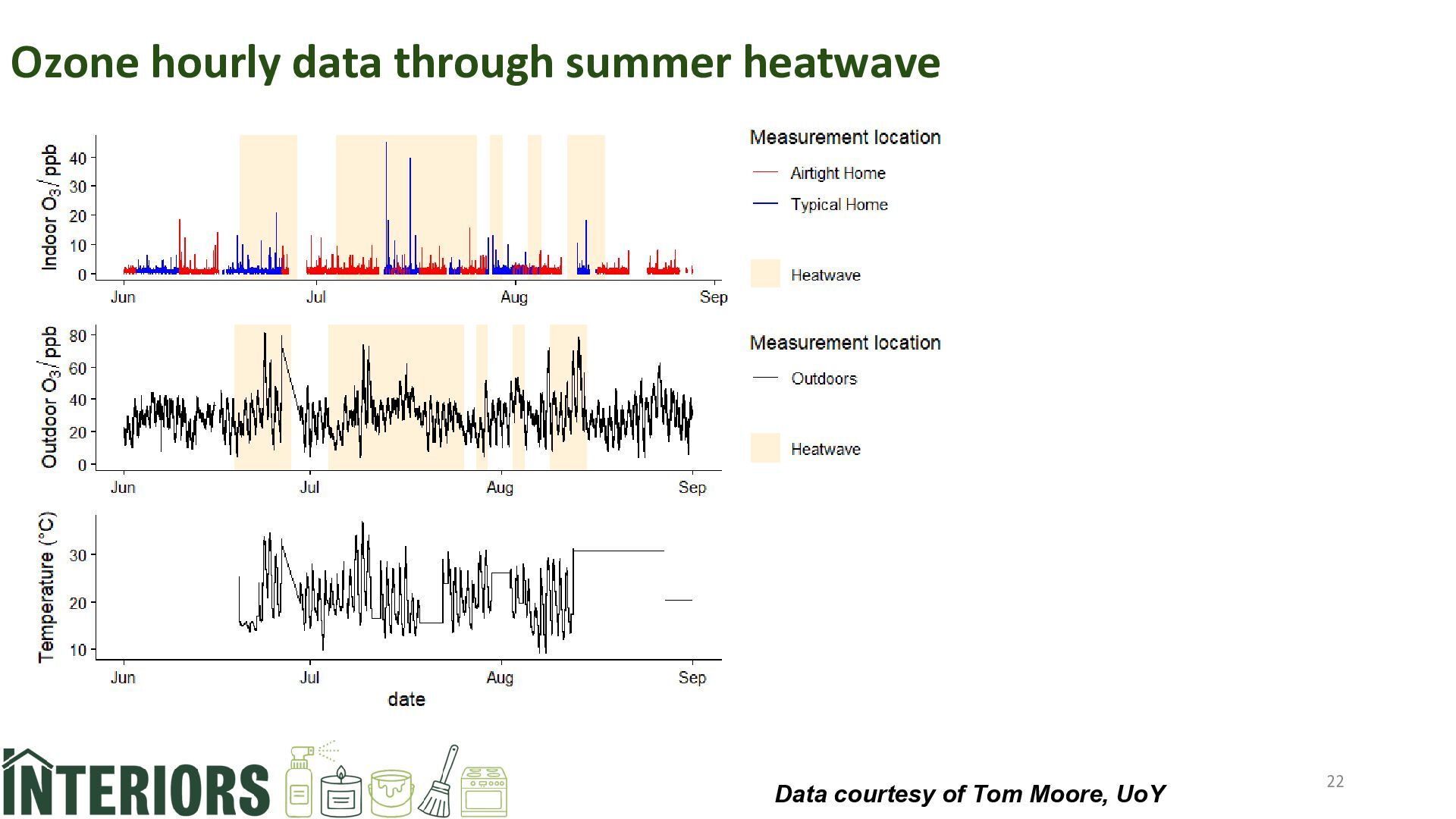
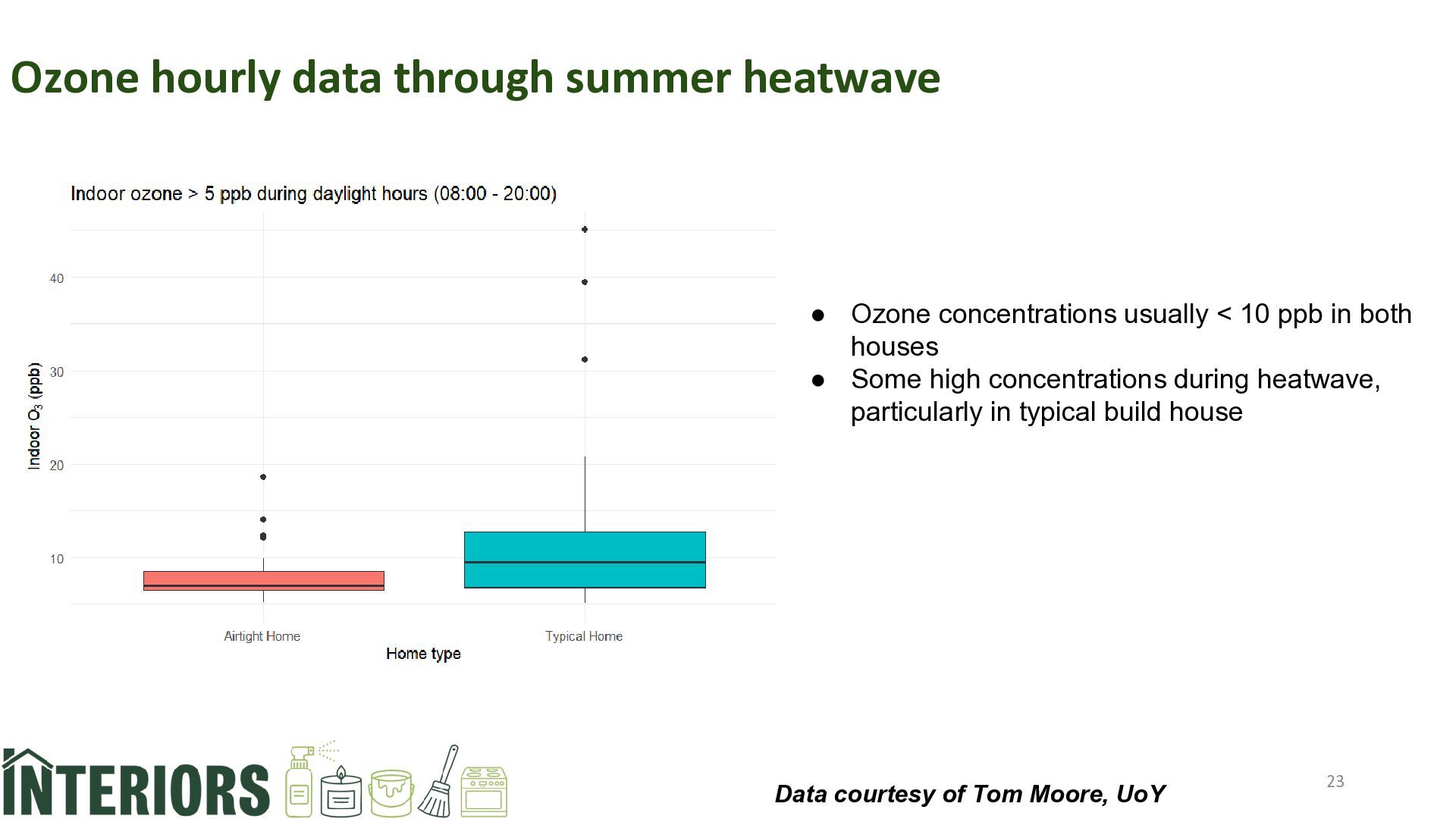
  18. Ozone hourly data through summer heatwave • Ozone concentrations usually

    < 10 ppb in both houses • Some high concentrations during heatwave, particularly in typical build house Data courtesy of Tom Moore, UoY 23
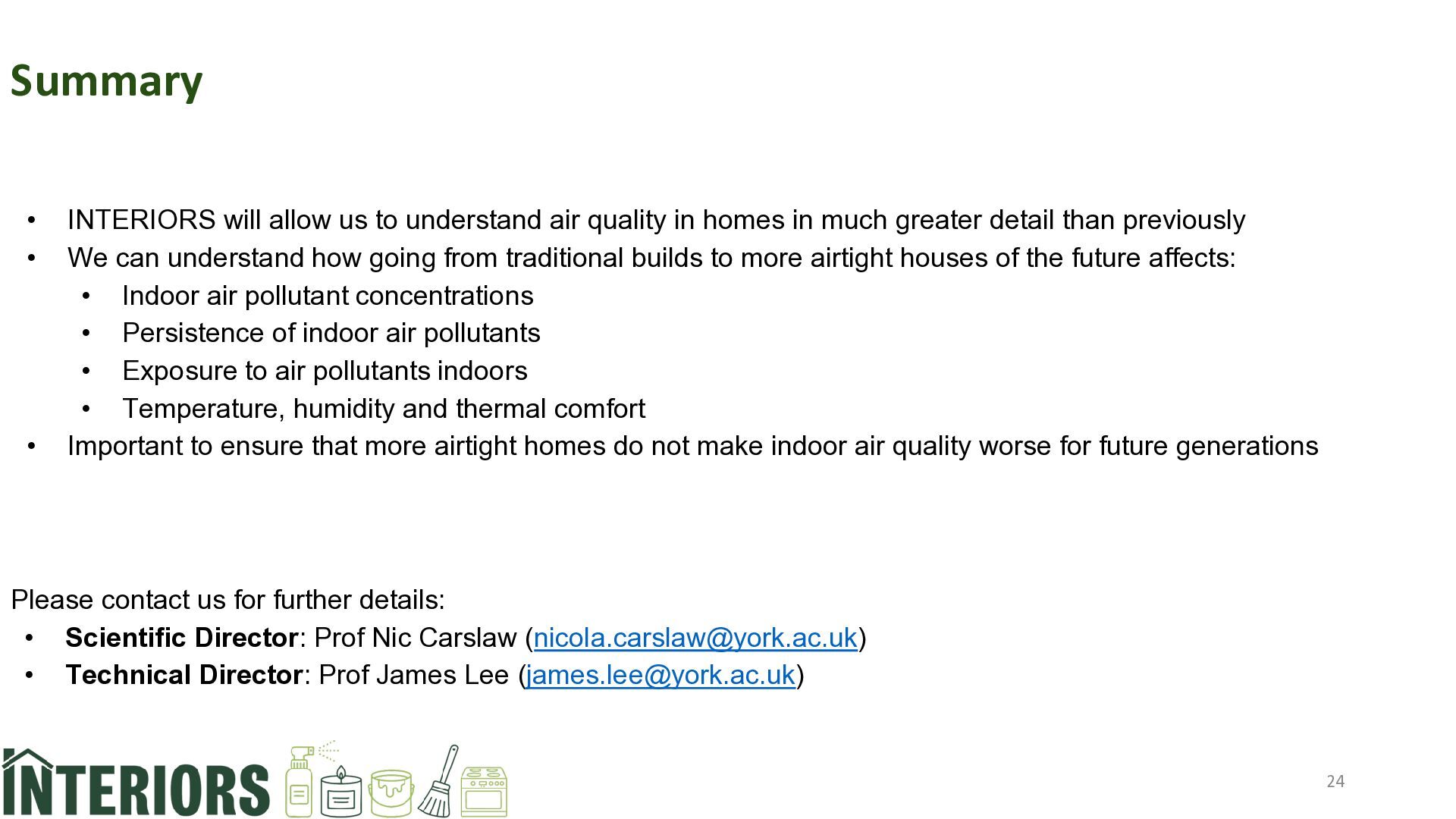
  19. Summary • • • INTERIORS will allow us to understand

    air quality in homes in much greater detail than previously We can understand how going from traditional builds to more airtight houses of the future affects: • Indoor air pollutant concentrations • Persistence of indoor air pollutants • Exposure to air pollutants indoors • Temperature, humidity and thermal comfort Important to ensure that more airtight homes do not make indoor air quality worse for future generations Please contact us for further details: • Scientific Director: Prof Nic Carslaw ([email protected]) • Technical Director: Prof James Lee ([email protected]) 24