Upgrade to Pro — share decks privately, control downloads, hide ads and more …

RTCA Dr Helen Davies - The Lung Chemistry Model...

Sponsored · Your Podcast. Everywhere. Effortlessly. Share. Educate. Inspire. Entertain. You do you. We'll handle the rest. →
Avatar for IES Events IES Events
October 28, 2026
22

RTCA Dr Helen Davies - The Lung Chemistry Model in Python: A new computational model for predicting asthma exacerbation risk from indoor air pollutants

Avatar for IES Events

IES Events

October 28, 2026

More Decks by IES Events

Transcript

  1. Overview • Volatile Organic Compounds in Indoor Environments • VOCs

    and asthma • The Lung CHEMistry Model in Python (LungCHEM-Py) • In-lung VOC chemistry • Biological effects of VOCs
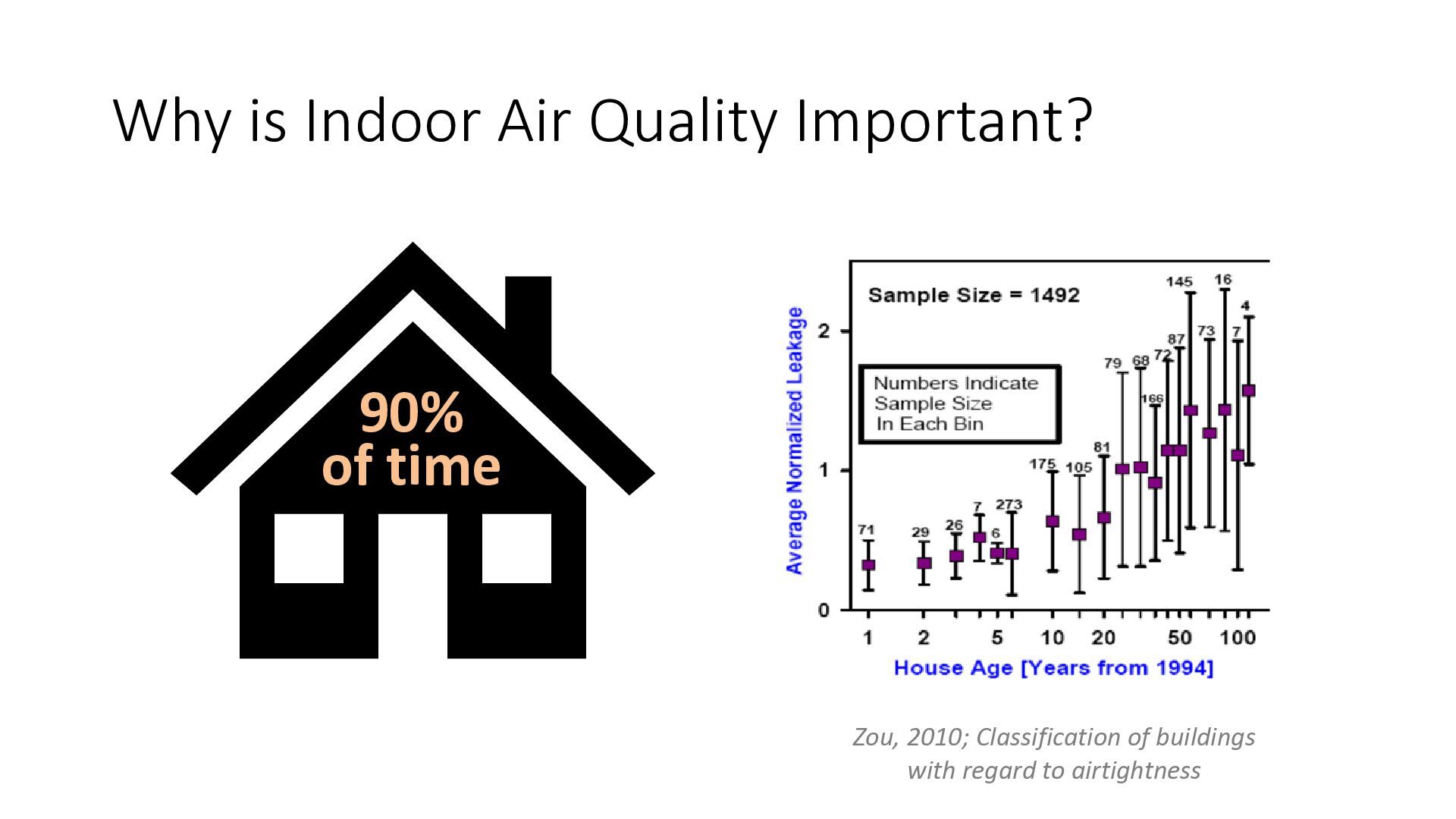
  2. Why is Indoor Air Quality Important? 90% of time Zou,

    2010; Classification of buildings with regard to airtightness
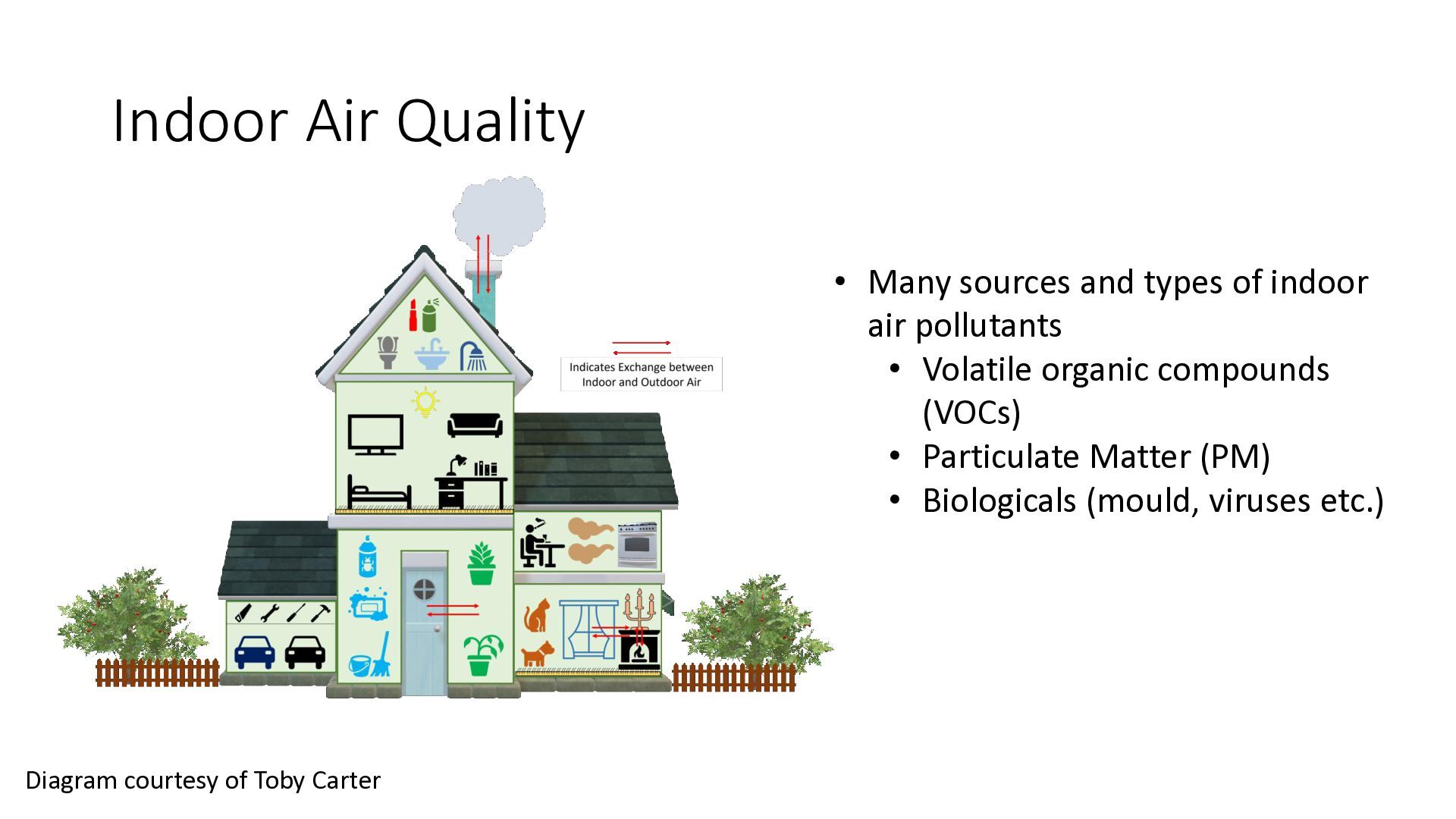
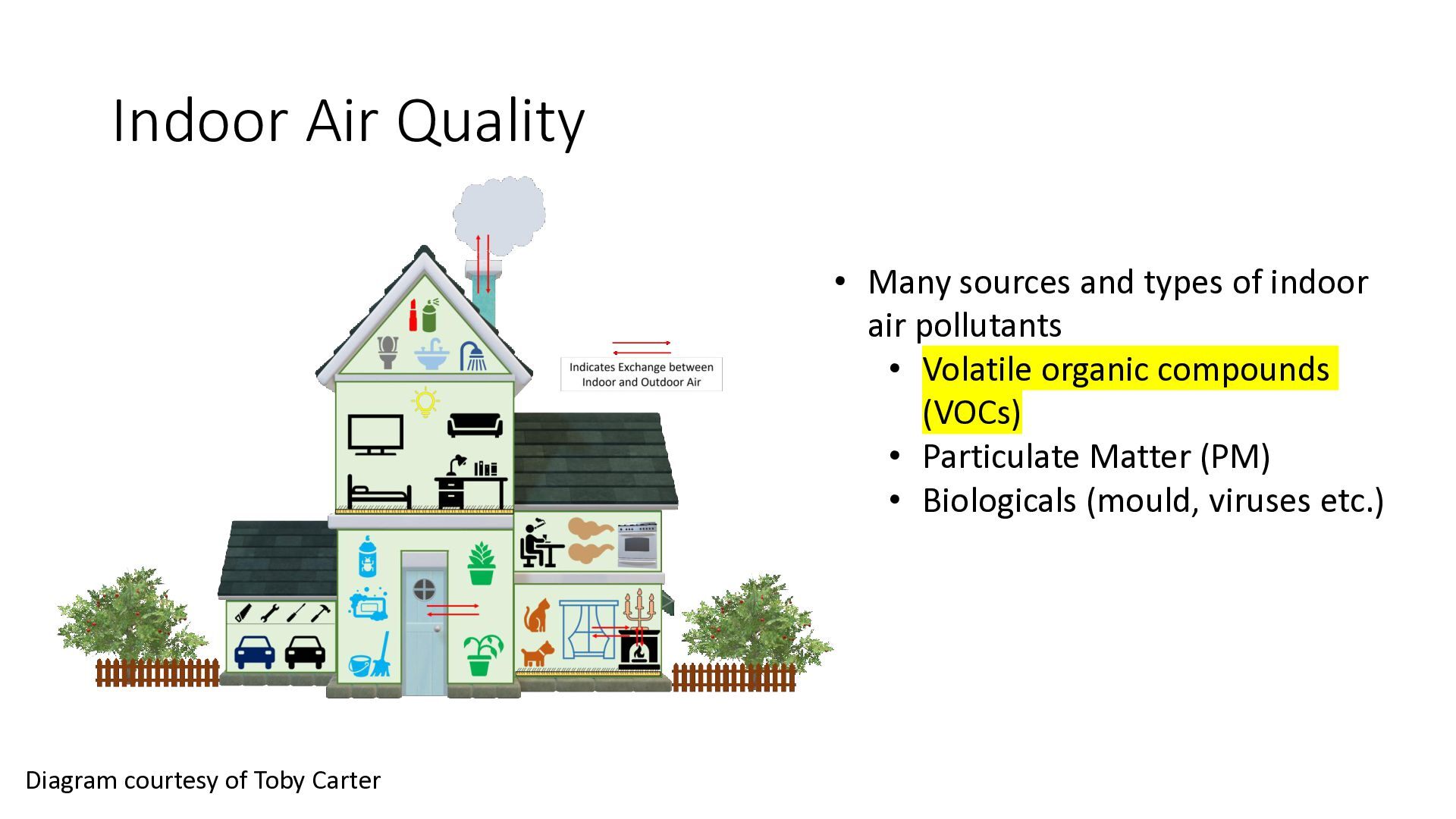
  3. Indoor Air Quality • Many sources and types of indoor

    air pollutants • Volatile organic compounds (VOCs) • Particulate Matter (PM) • Biologicals (mould, viruses etc.) Diagram courtesy of Toby Carter
  4. Indoor Air Quality • Many sources and types of indoor

    air pollutants • Volatile organic compounds (VOCs) • Particulate Matter (PM) • Biologicals (mould, viruses etc.) Diagram courtesy of Toby Carter
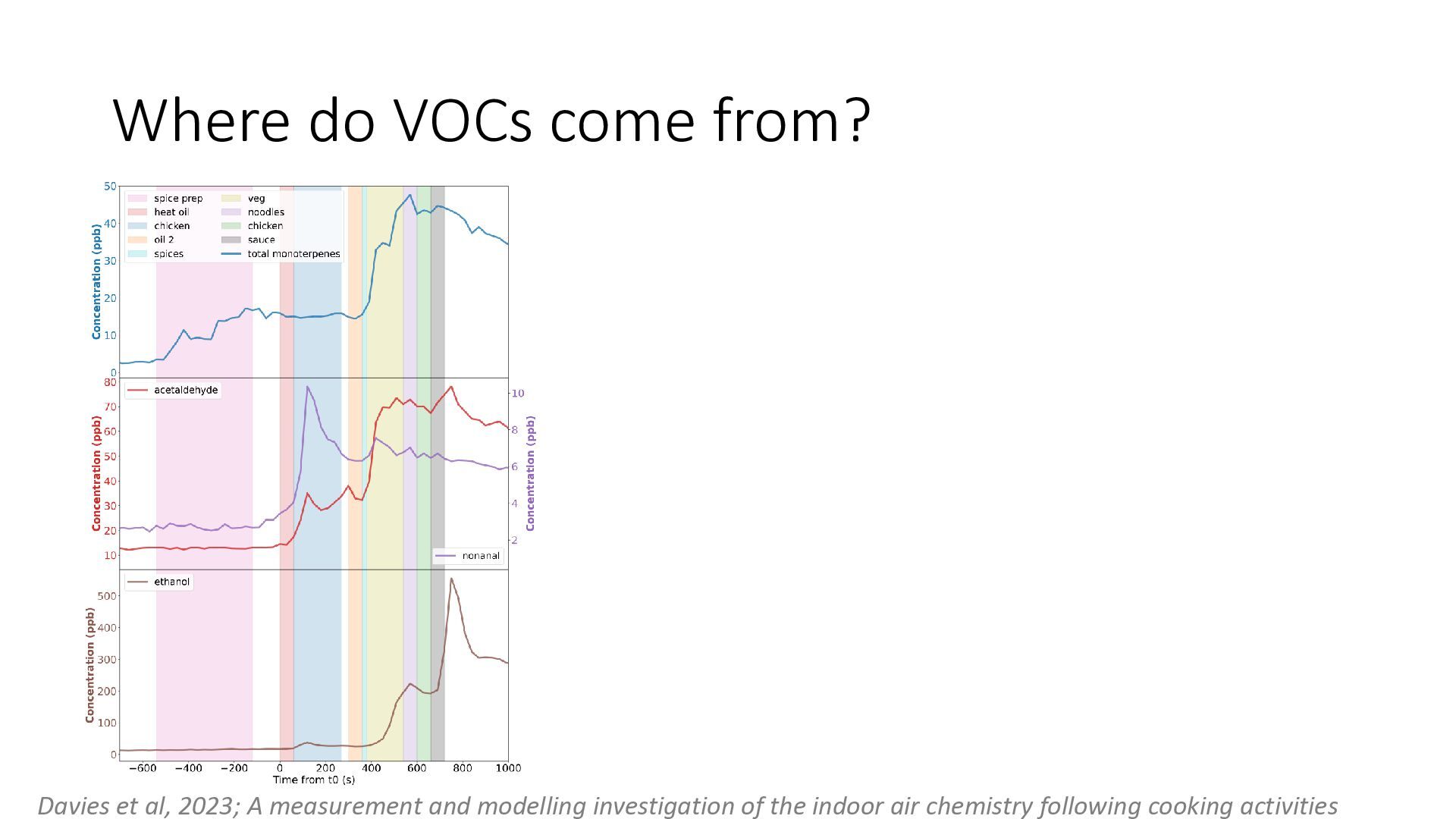
  5. Where do VOCs come from? Davies et al, 2023; A

    measurement and modelling investigation of the indoor air chemistry following cooking activities
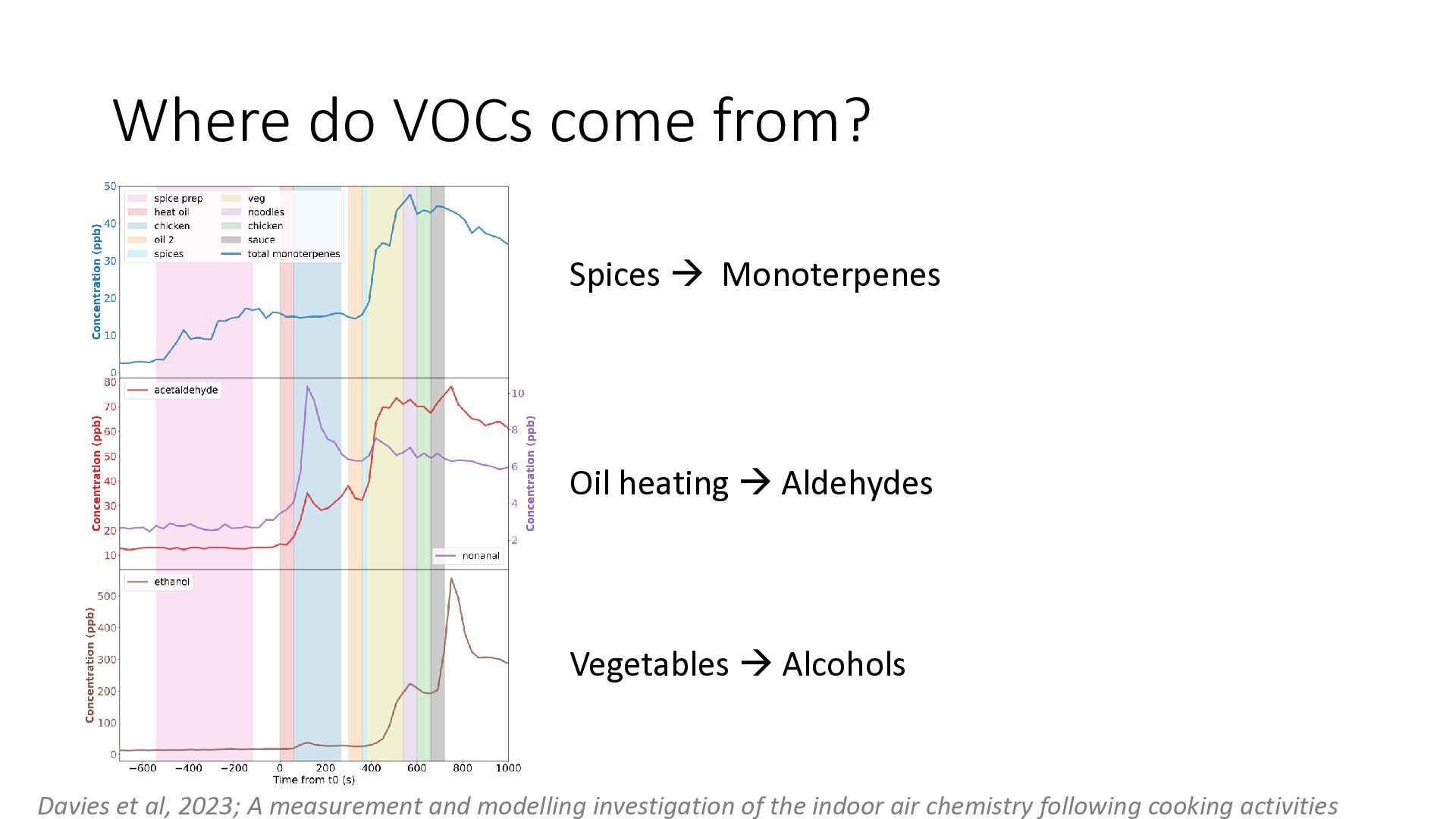
  6. Where do VOCs come from? Spices → Monoterpenes Oil heating

    → Aldehydes Vegetables → Alcohols Davies et al, 2023; A measurement and modelling investigation of the indoor air chemistry following cooking activities
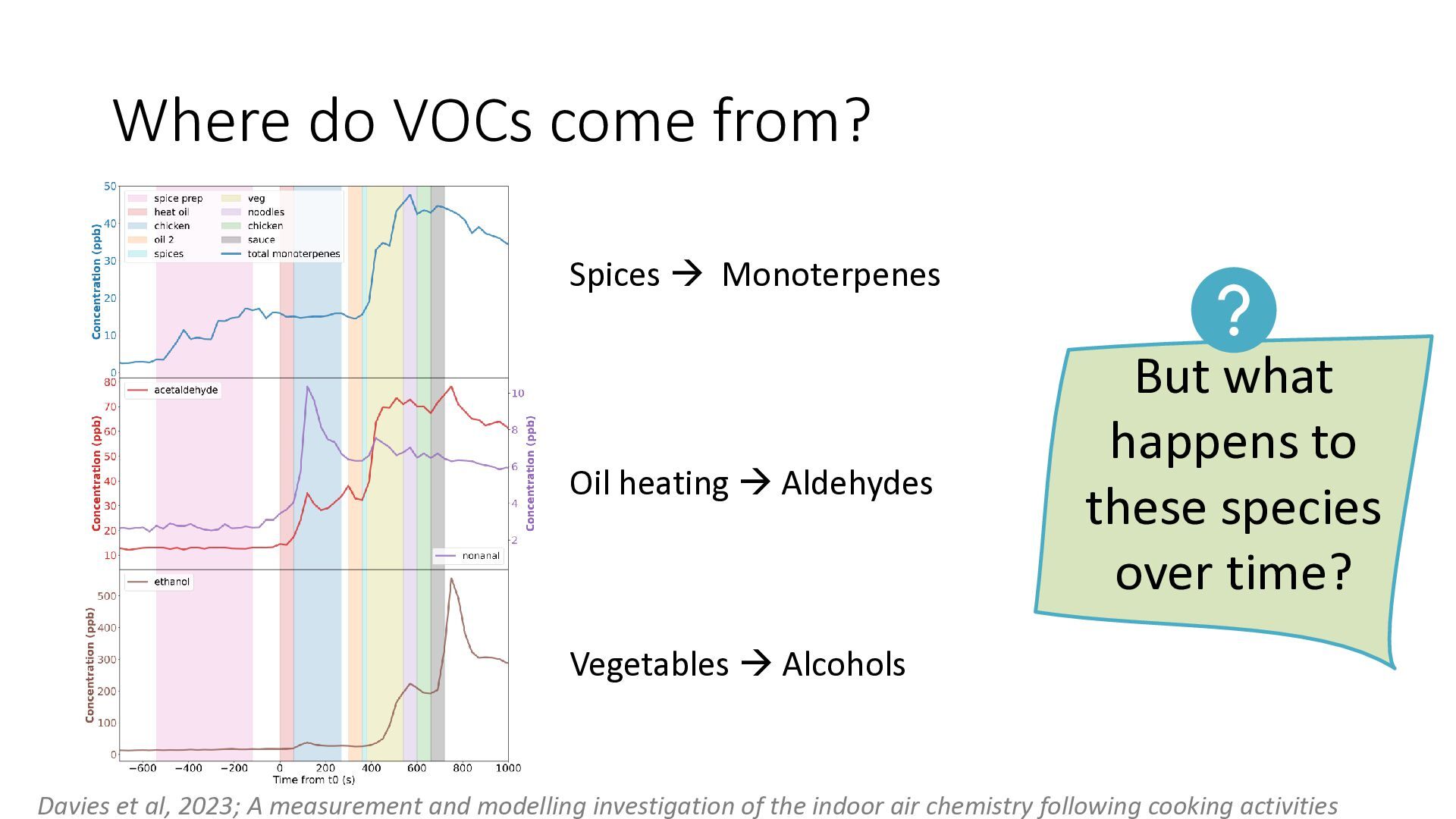
  7. Where do VOCs come from? Spices → Monoterpenes Oil heating

    → Aldehydes But what happens to these species over time? Vegetables → Alcohols Davies et al, 2023; A measurement and modelling investigation of the indoor air chemistry following cooking activities
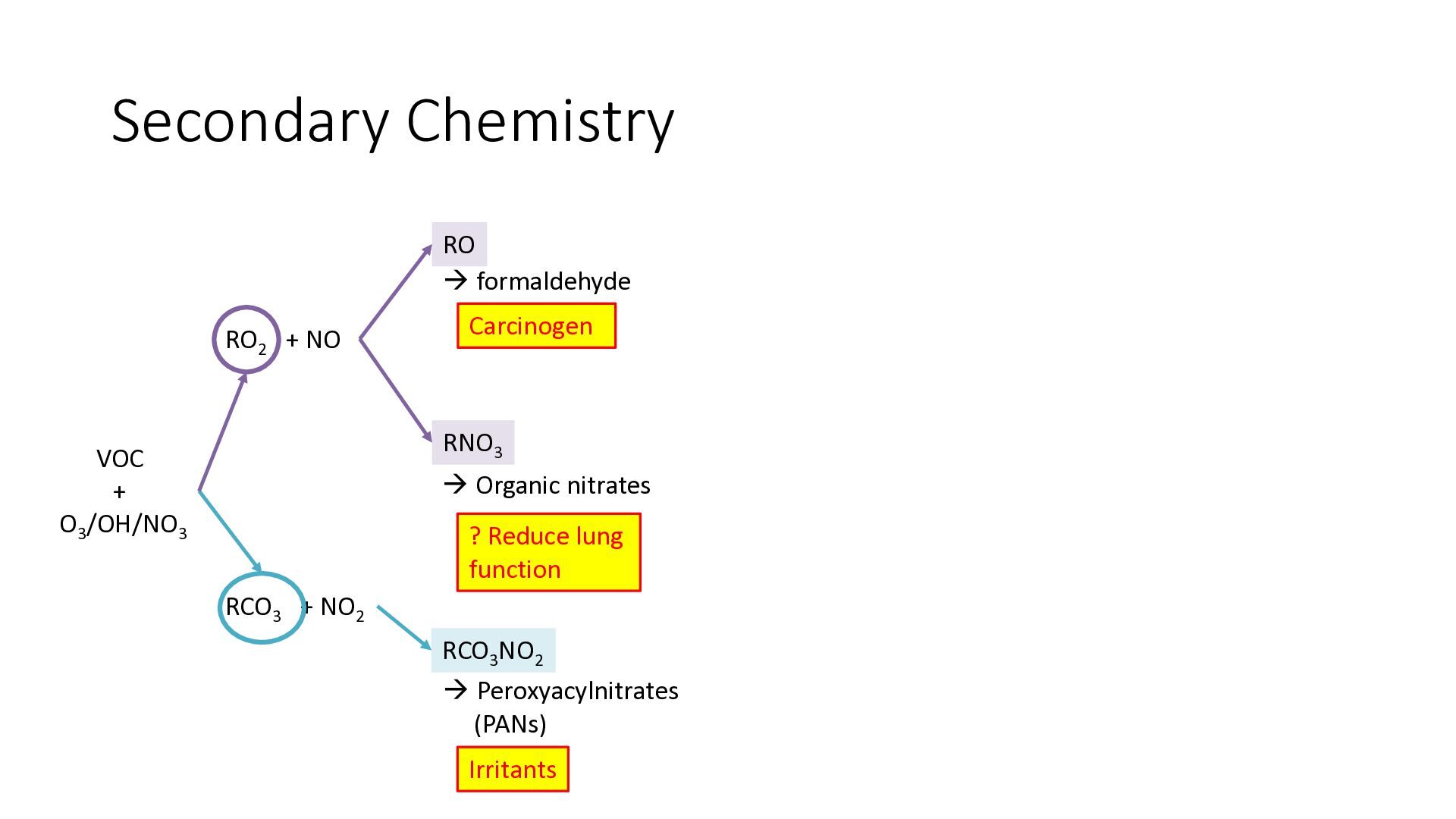
  8. Secondary Chemistry RO → formaldehyde RO2 + NO Carcinogen RNO3

    VOC + O3/OH/NO3 → Organic nitrates ? Reduce lung function RCO3 + NO2 RCO3NO2 → Peroxyacylnitrates (PANs) Irritants
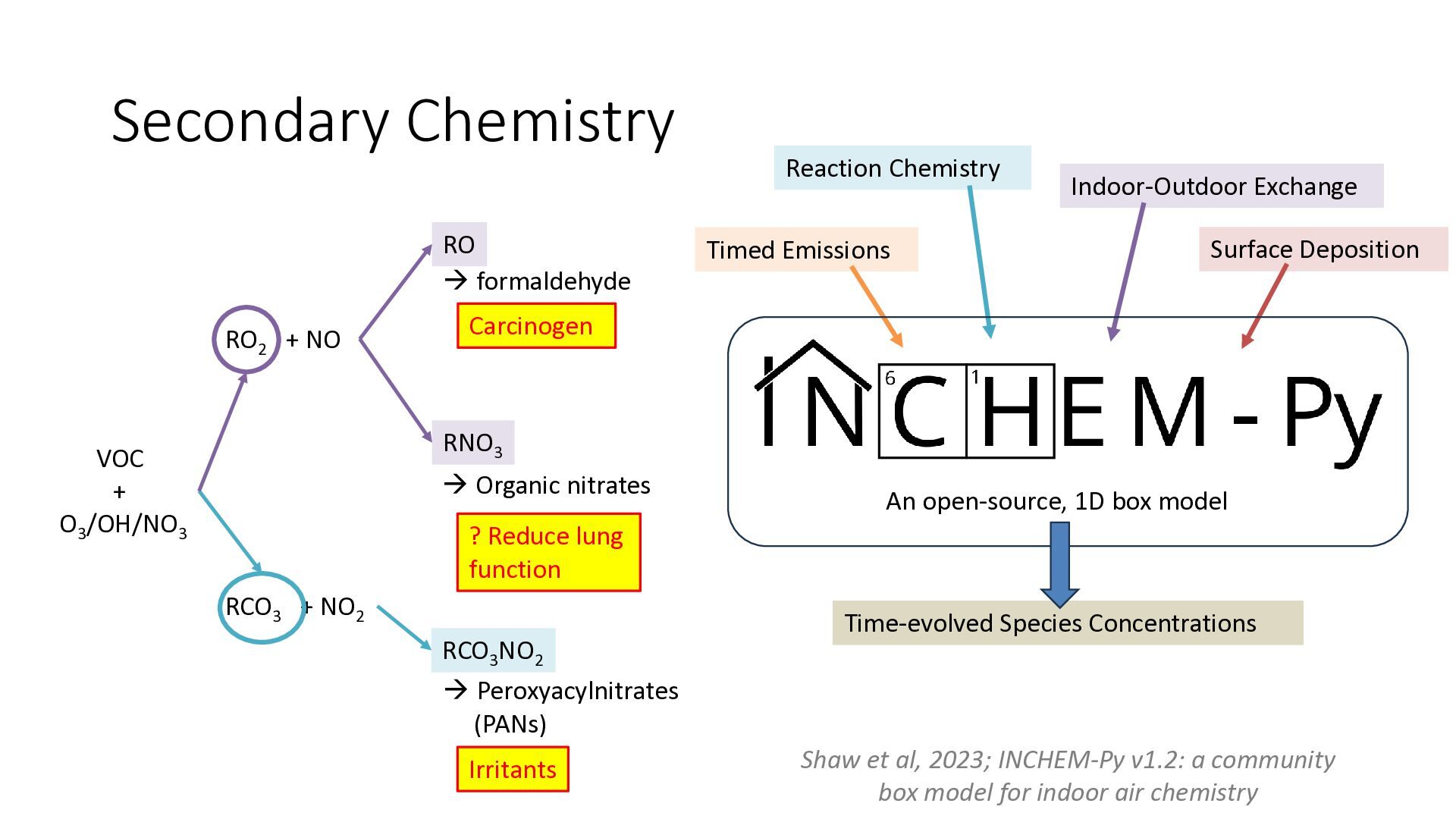
  9. Secondary Chemistry RO → formaldehyde RO2 + NO Reaction Chemistry

    Timed Emissions Indoor-Outdoor Exchange Surface Deposition Carcinogen RNO3 VOC + O3/OH/NO3 → Organic nitrates An open-source, 1D box model ? Reduce lung function RCO3 + NO2 Time-evolved Species Concentrations RCO3NO2 → Peroxyacylnitrates (PANs) Irritants Shaw et al, 2023; INCHEM-Py v1.2: a community box model for indoor air chemistry
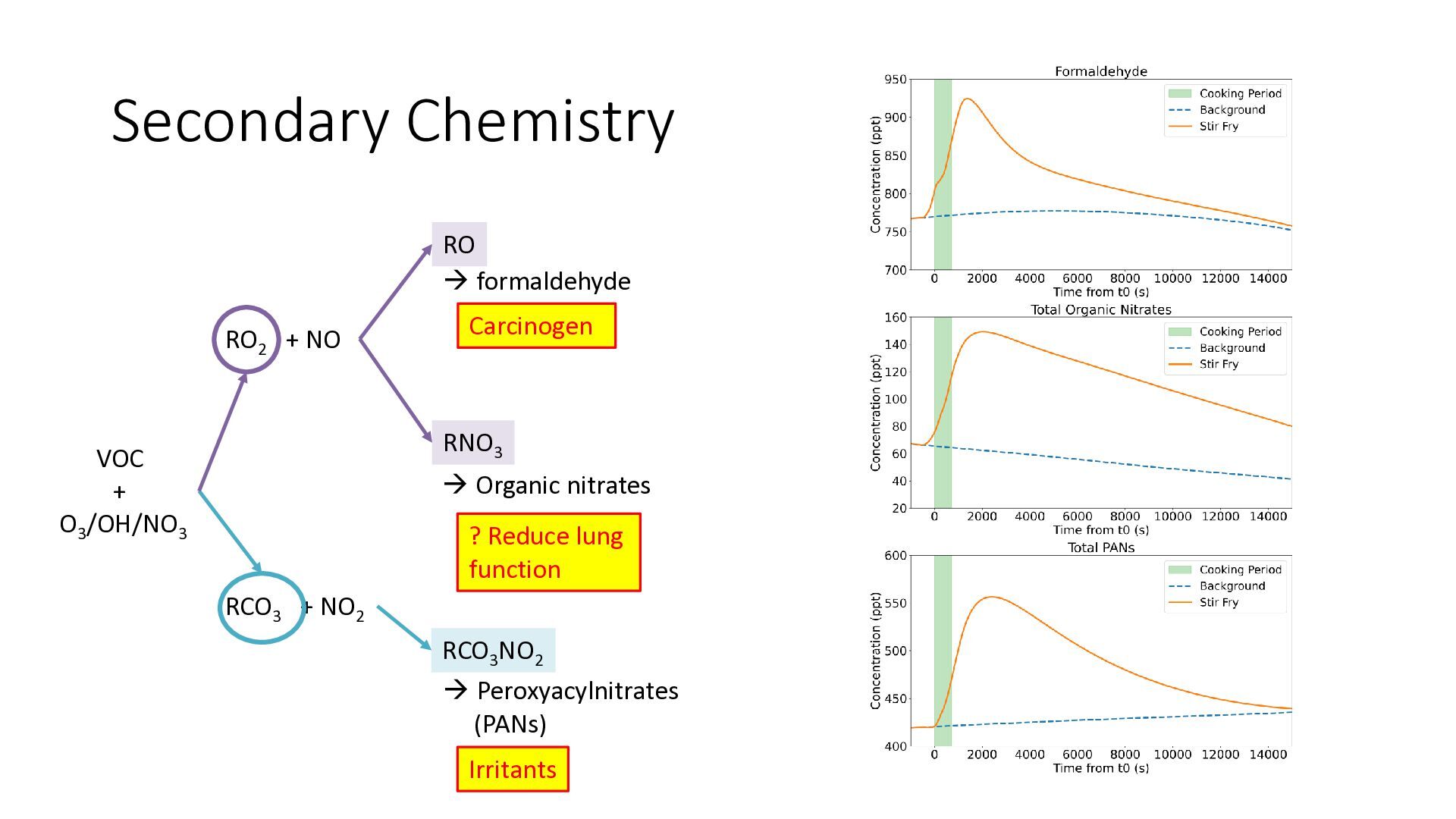
  10. Secondary Chemistry RO → formaldehyde RO2 + NO Carcinogen RNO3

    VOC + O3/OH/NO3 → Organic nitrates ? Reduce lung function RCO3 + NO2 RCO3NO2 → Peroxyacylnitrates (PANs) Irritants
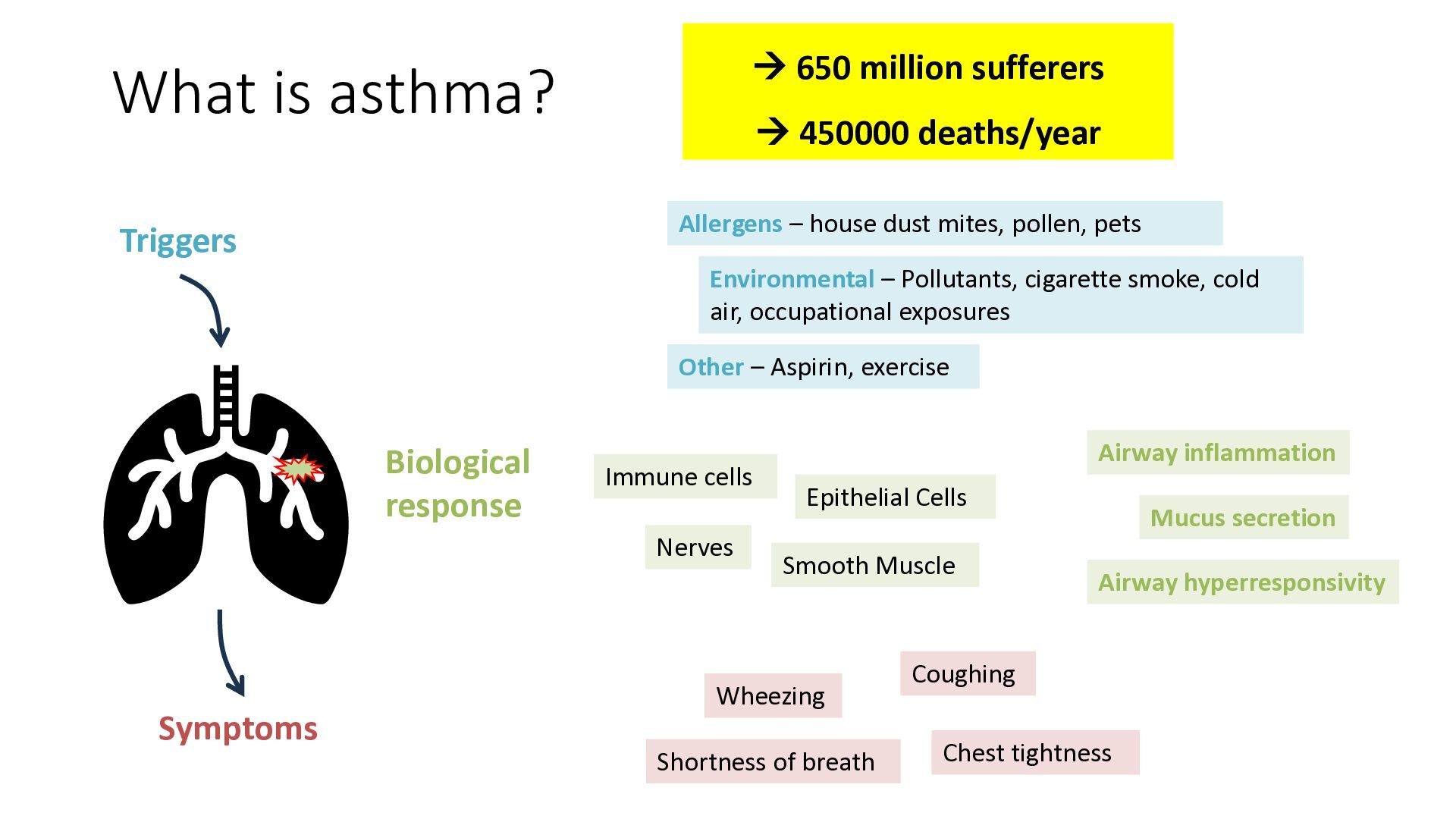
  11. → 650 million sufferers What is asthma? → 450000 deaths/year

    Allergens – house dust mites, pollen, pets Triggers Environmental – Pollutants, cigarette smoke, cold air, occupational exposures Other – Aspirin, exercise Biological response Immune cells Nerves Airway inflammation Epithelial Cells Smooth Muscle Wheezing Symptoms Shortness of breath Mucus secretion Airway hyperresponsivity Coughing Chest tightness
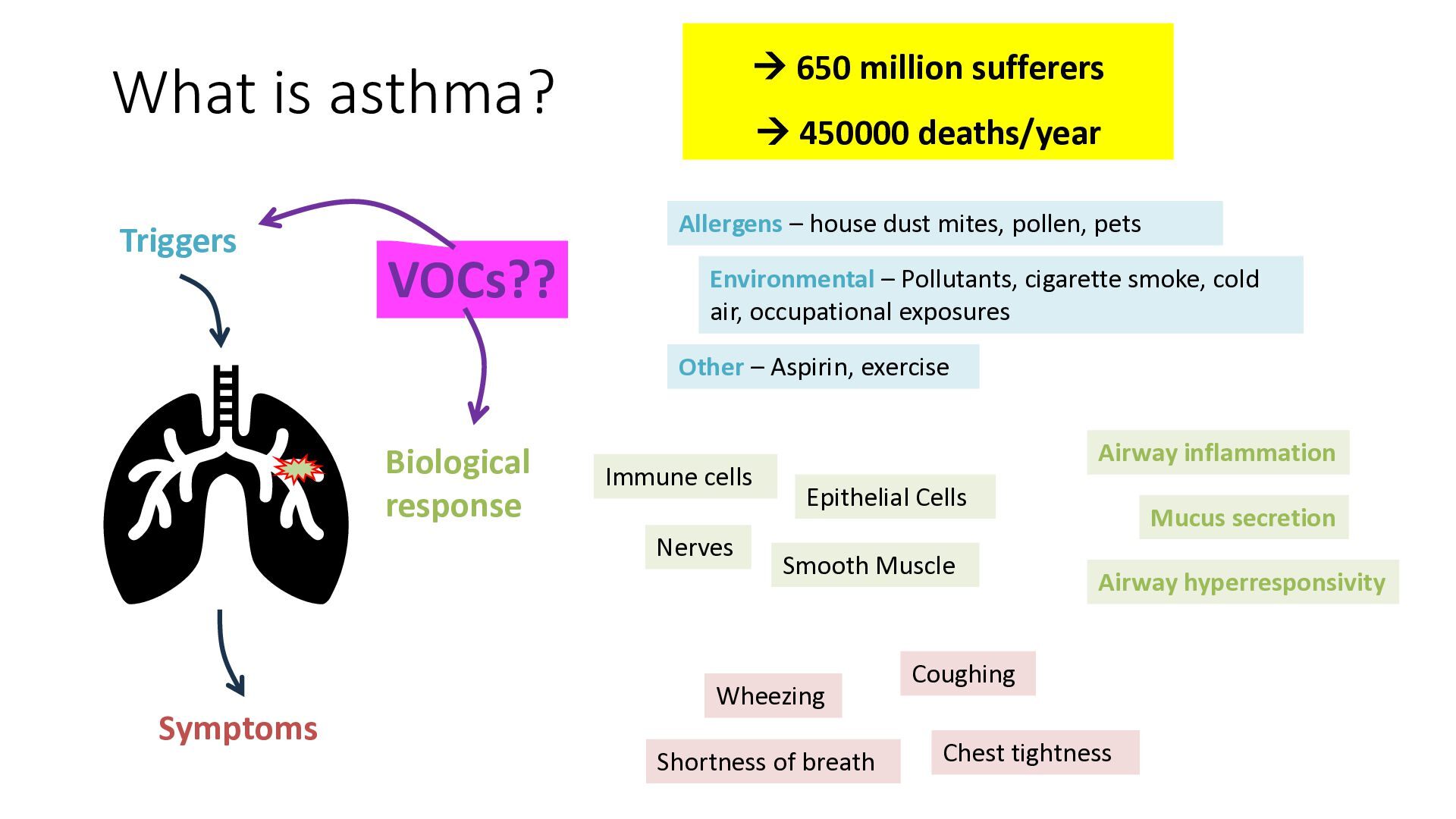
  12. → 650 million sufferers What is asthma? Triggers → 450000

    deaths/year Allergens – house dust mites, pollen, pets VOCs?? Environmental – Pollutants, cigarette smoke, cold air, occupational exposures Other – Aspirin, exercise Biological response Immune cells Nerves Airway inflammation Epithelial Cells Smooth Muscle Wheezing Symptoms Shortness of breath Mucus secretion Airway hyperresponsivity Coughing Chest tightness
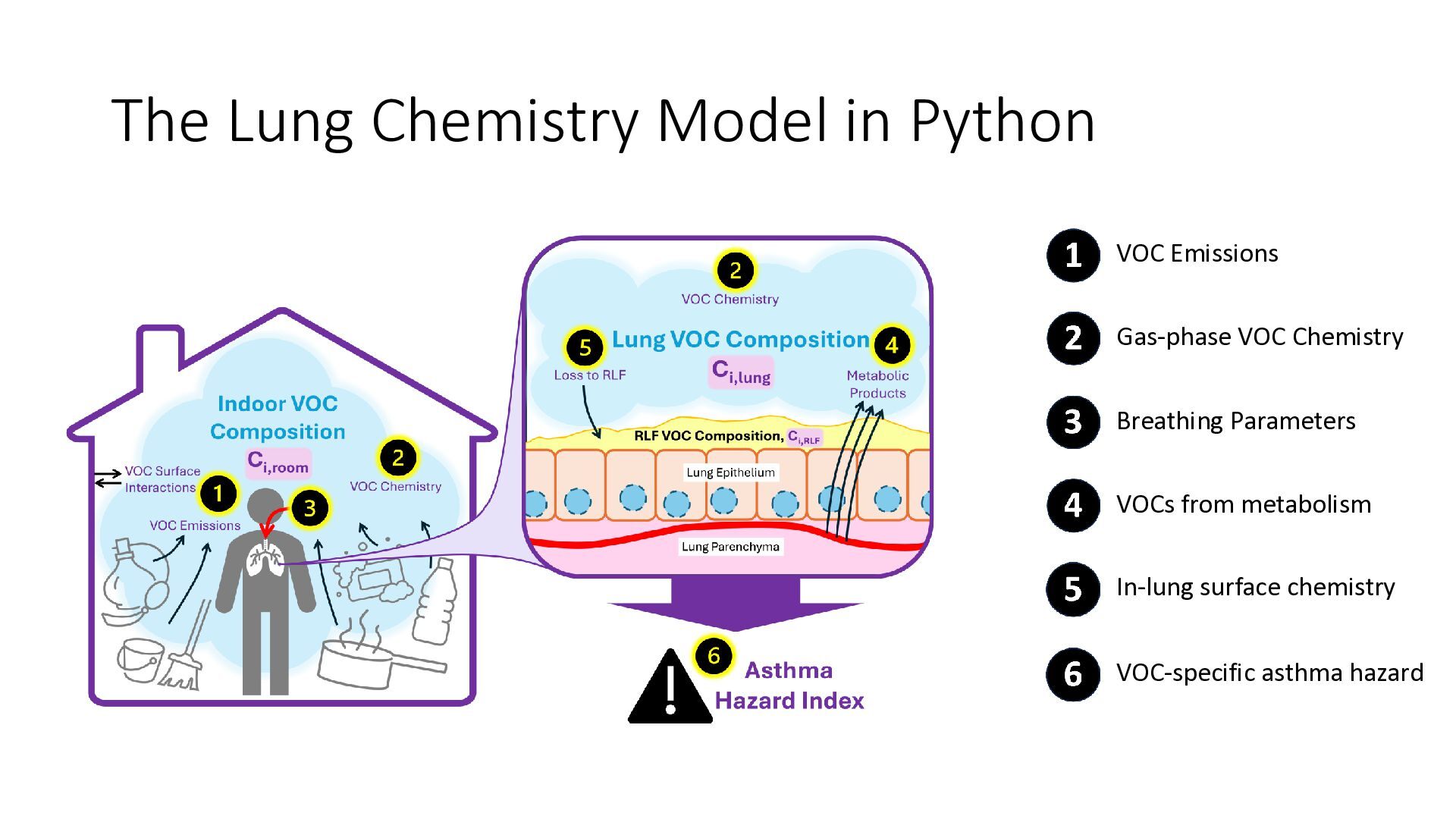
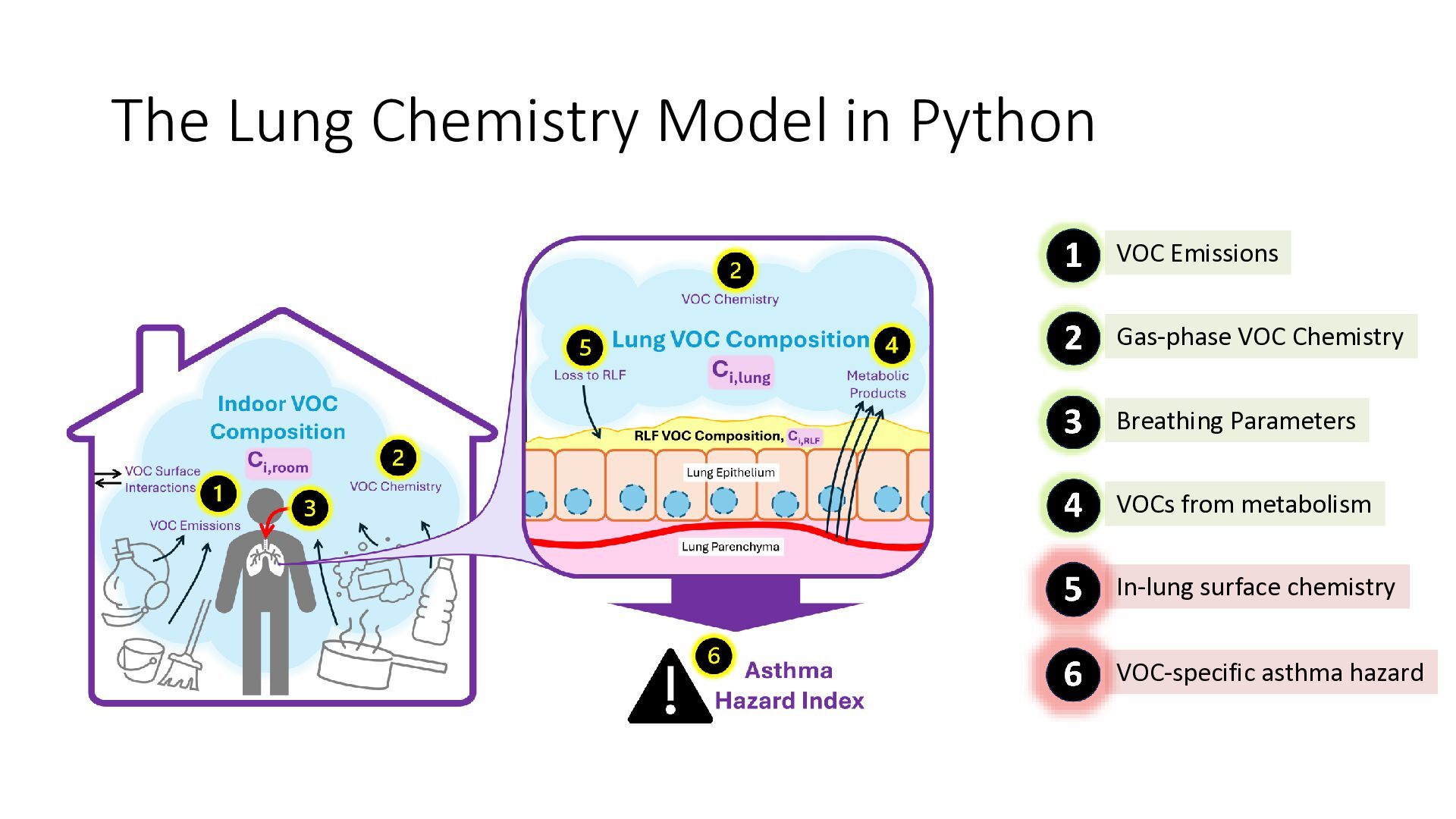
  13. The Lung Chemistry Model in Python VOC Emissions Gas-phase VOC

    Chemistry Breathing Parameters VOCs from metabolism In-lung surface chemistry VOC-specific asthma hazard
  14. The Lung Chemistry Model in Python VOC Emissions Gas-phase VOC

    Chemistry Breathing Parameters VOCs from metabolism In-lung surface chemistry VOC-specific asthma hazard
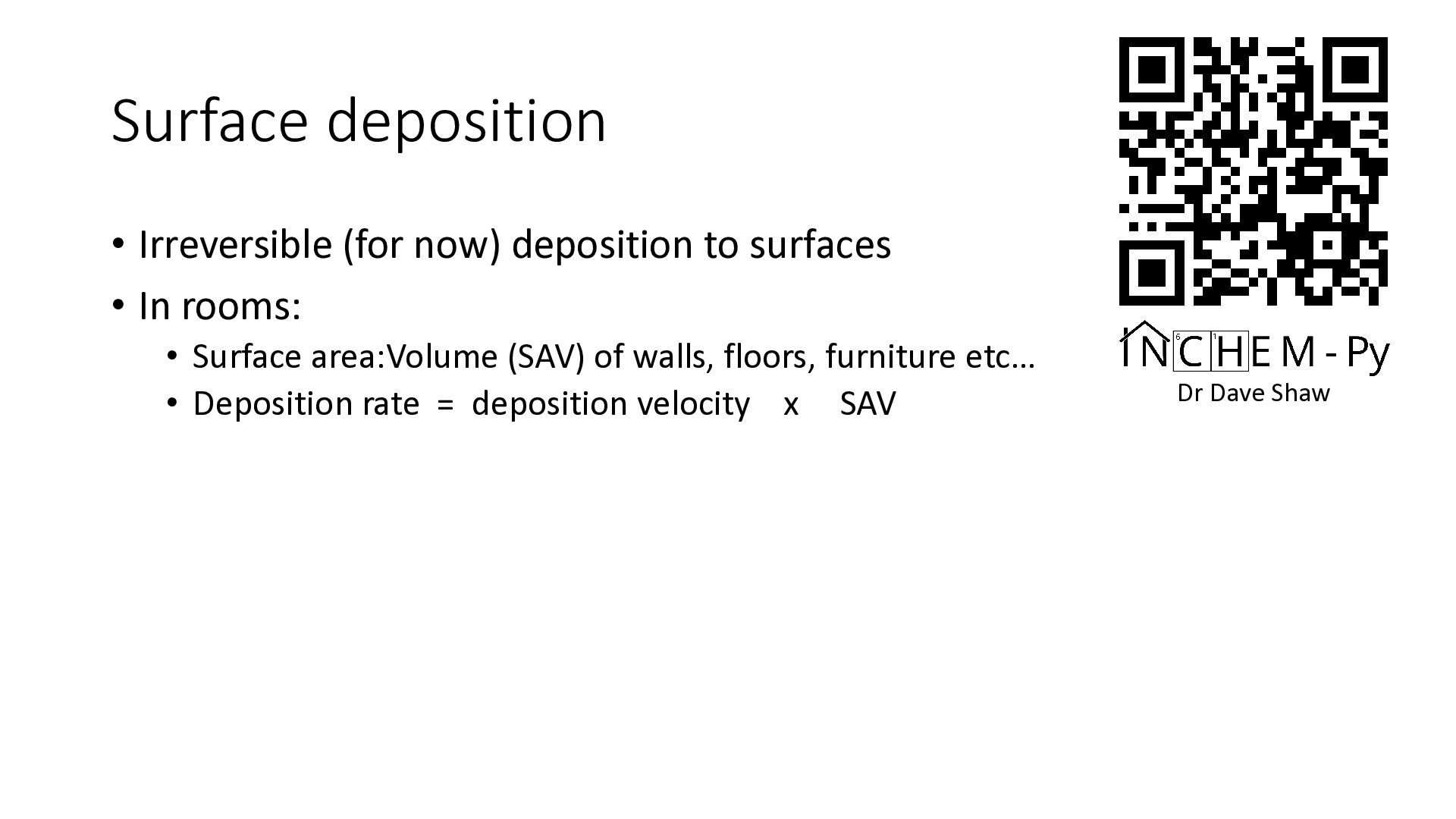
  15. Surface deposition • Irreversible (for now) deposition to surfaces •

    In rooms: • Surface area:Volume (SAV) of walls, floors, furniture etc… • Deposition rate = deposition velocity x SAV Dr Dave Shaw
  16. Surface deposition • Irreversible (for now) deposition to surfaces •

    In rooms: • Surface area:Volume (SAV) of walls, floors, furniture etc… • Deposition rate = deposition velocity x SAV
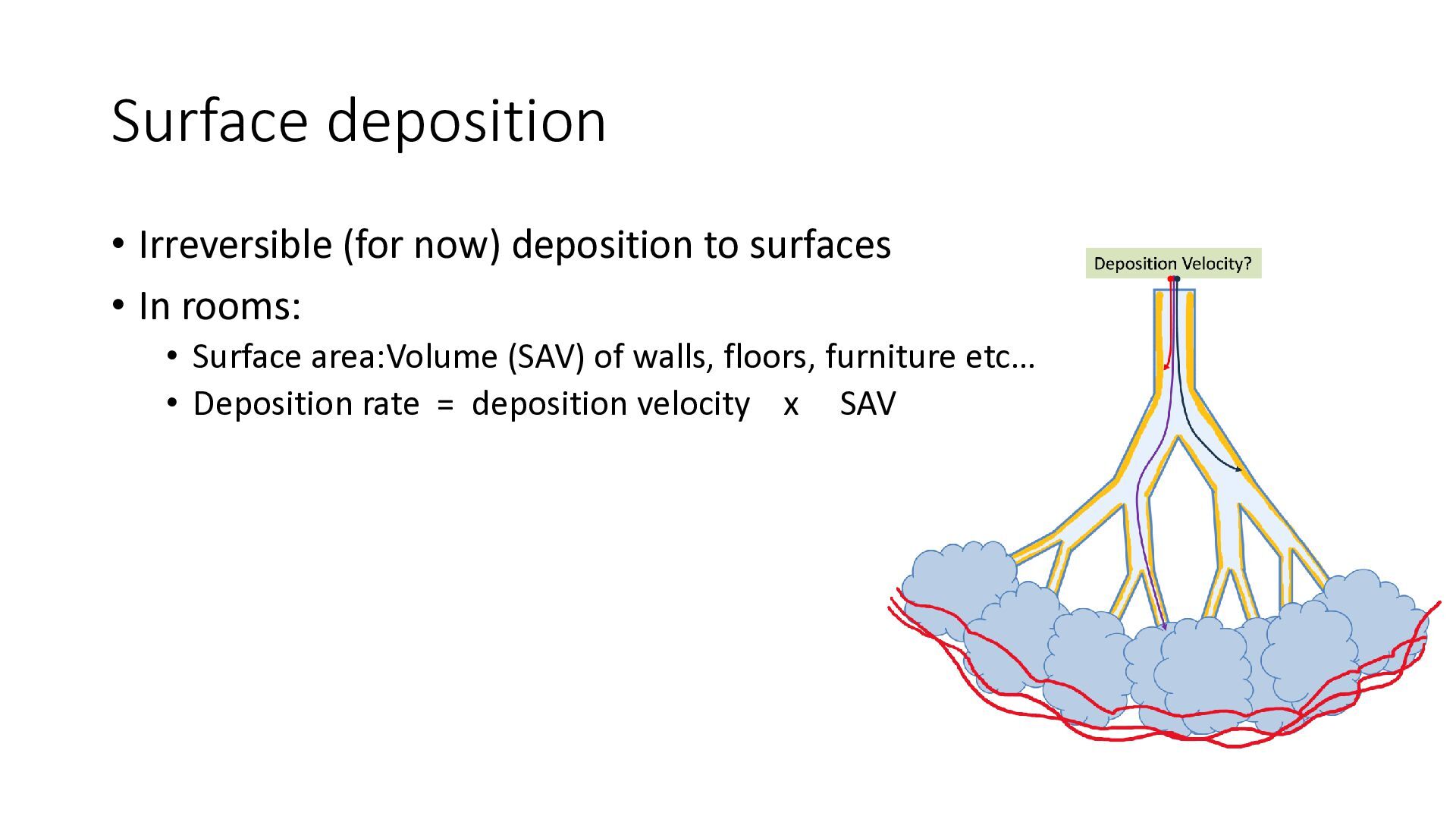
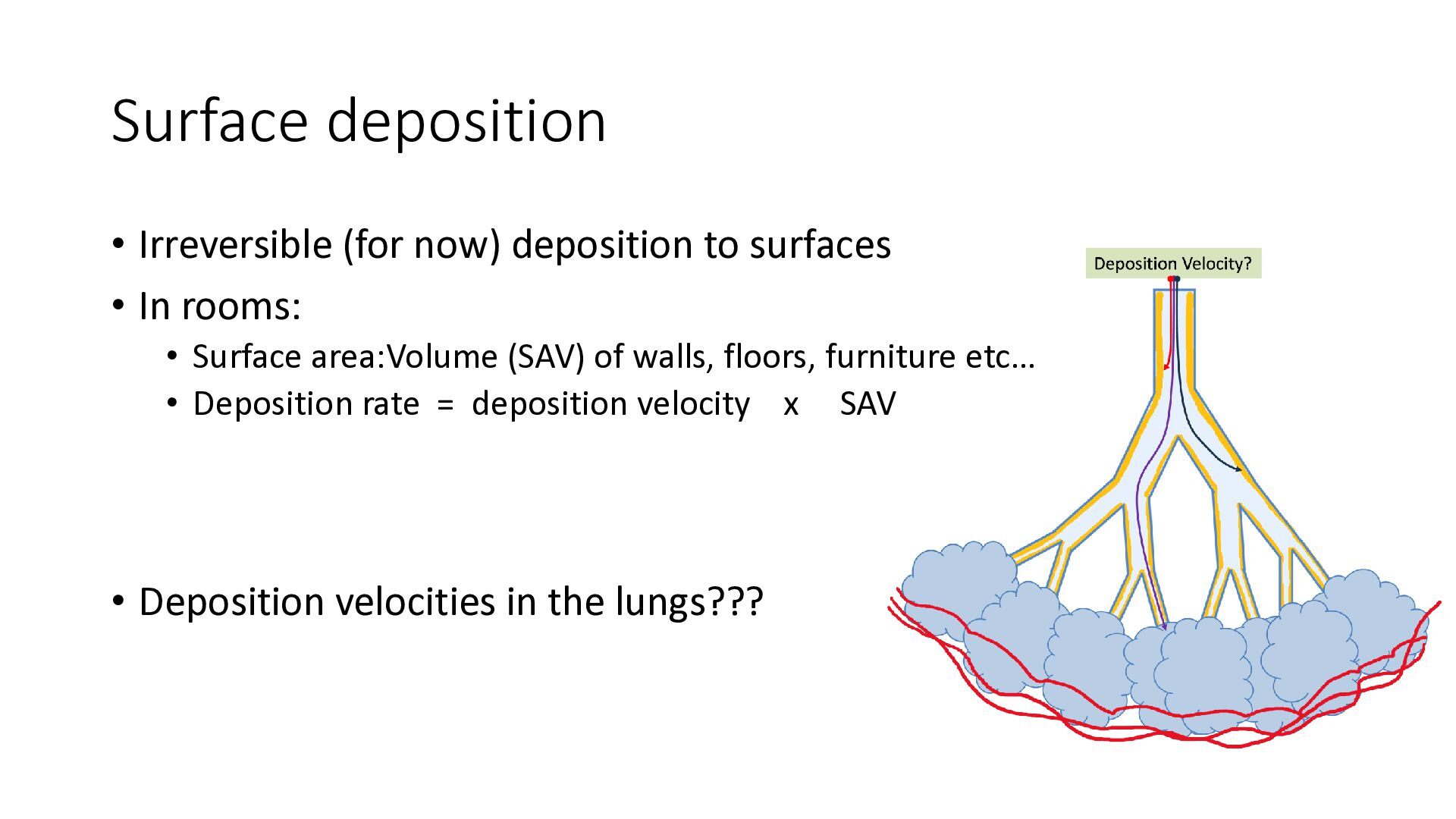
  17. Surface deposition • Irreversible (for now) deposition to surfaces •

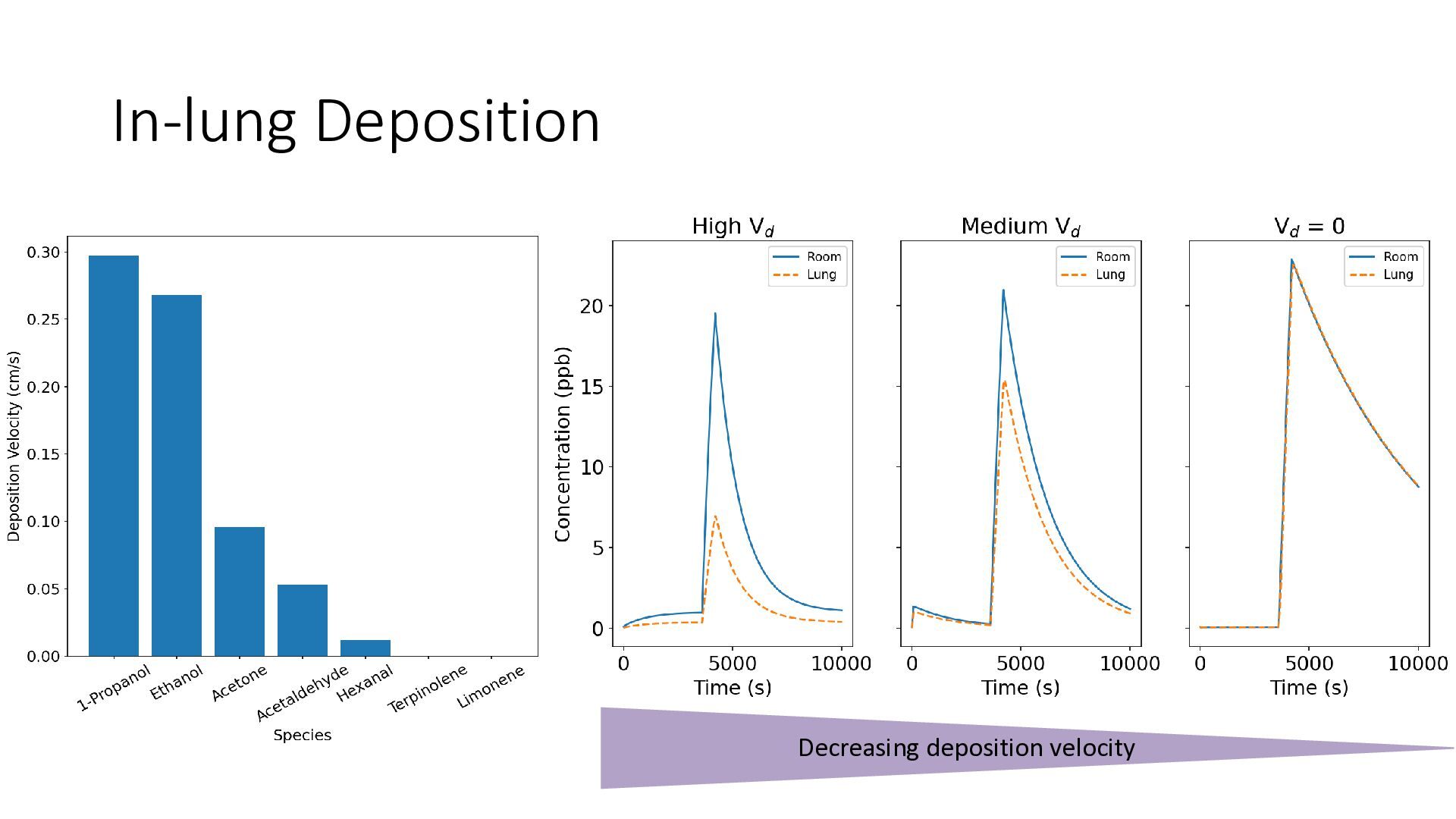
    In rooms: • Surface area:Volume (SAV) of walls, floors, furniture etc… • Deposition rate = deposition velocity x SAV • Deposition velocities in the lungs???
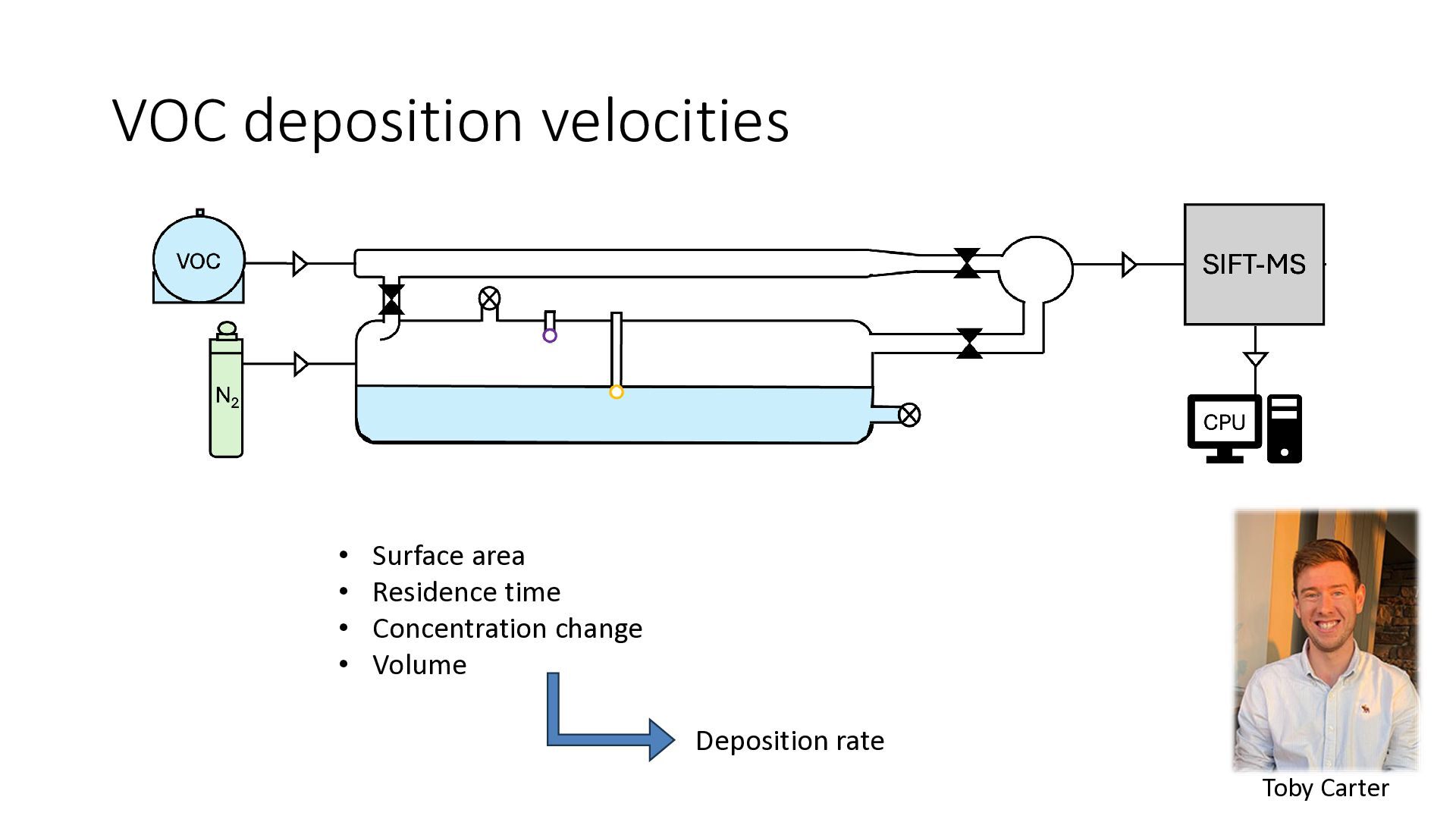
  18. VOC deposition velocities • • • • Surface area Residence

    time Concentration change Volume Deposition rate Toby Carter
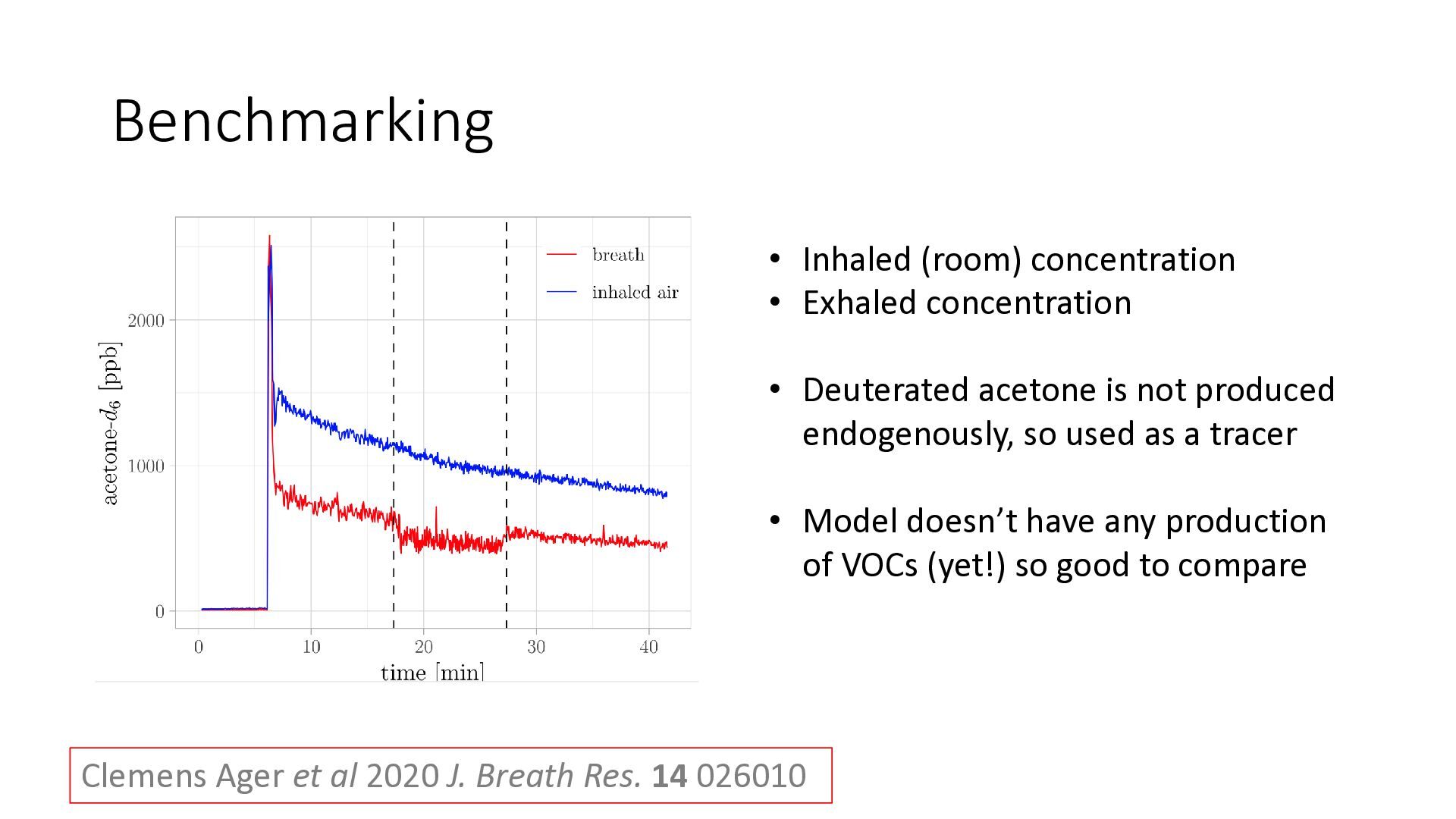
  19. Benchmarking • Inhaled (room) concentration • Exhaled concentration • Deuterated

    acetone is not produced endogenously, so used as a tracer • Model doesn’t have any production of VOCs (yet!) so good to compare Clemens Ager et al 2020 J. Breath Res. 14 026010
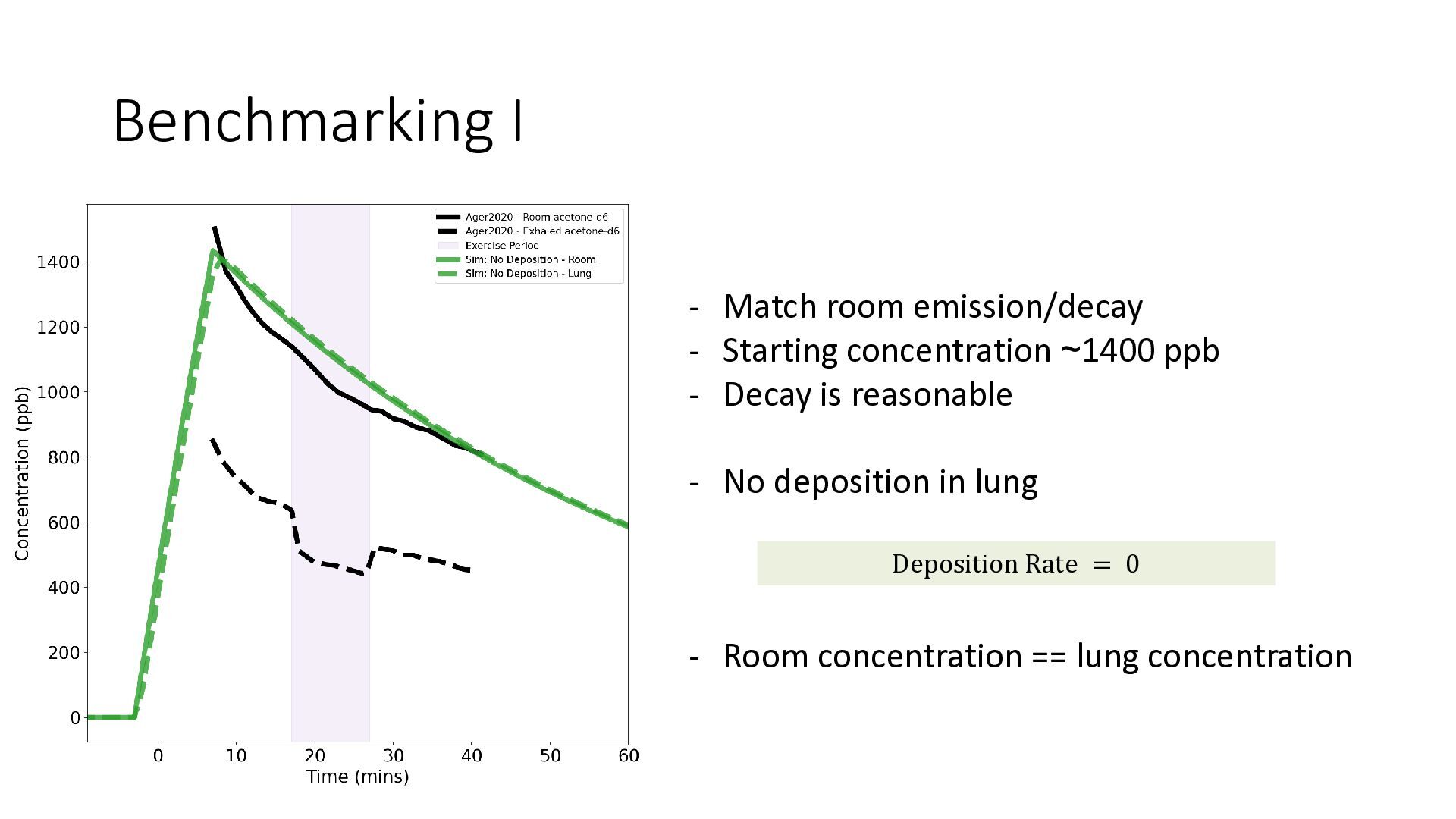
  20. Benchmarking I - Match room emission/decay - Starting concentration ~1400

    ppb - Decay is reasonable - No deposition in lung Deposition Rate = 0 - Room concentration == lung concentration
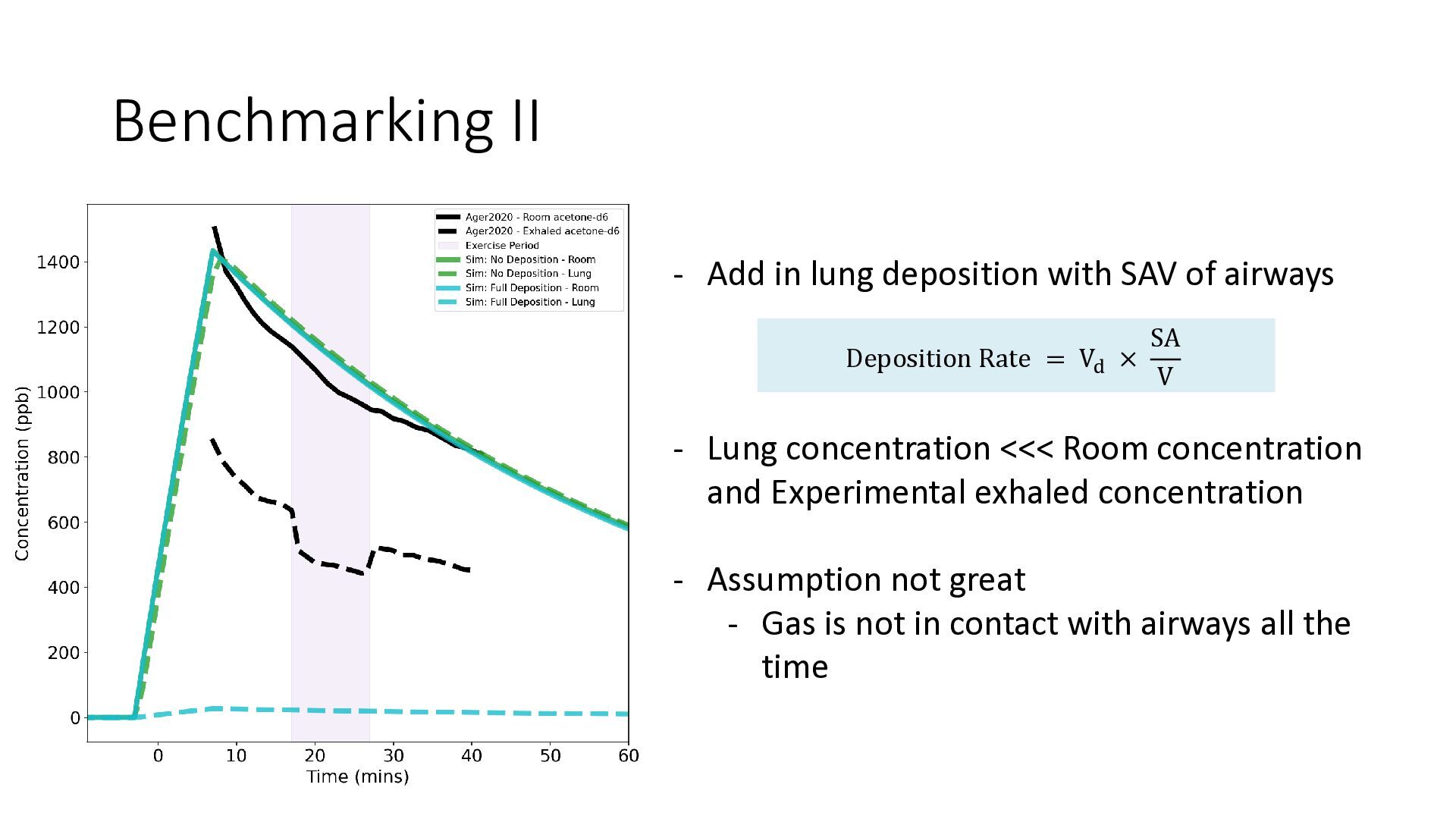
  21. Benchmarking II - Add in lung deposition with SAV of

    airways Deposition Rate = Vd × SA V - Lung concentration <<< Room concentration and Experimental exhaled concentration - Assumption not great - Gas is not in contact with airways all the time
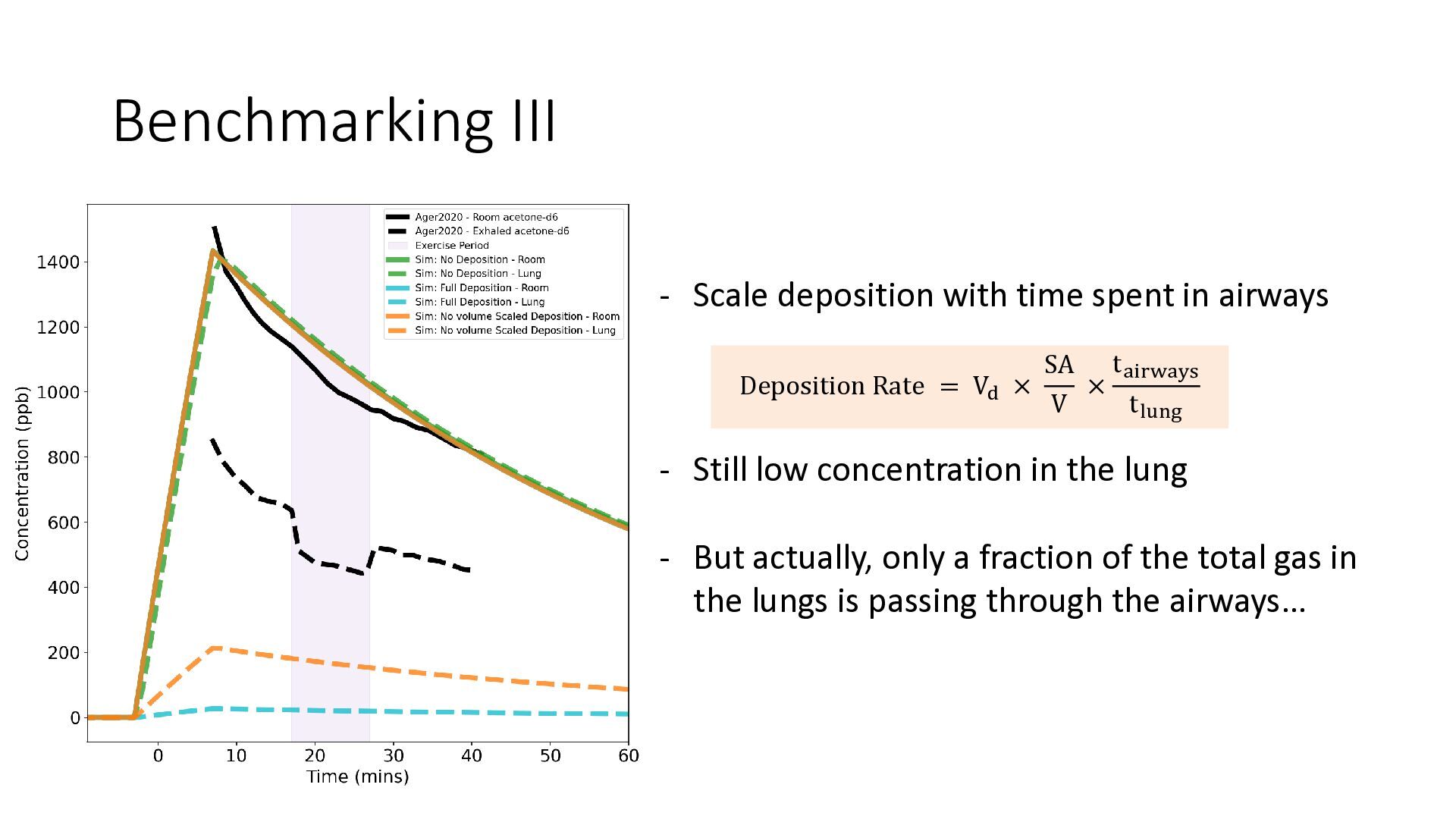
  22. Benchmarking III - Scale deposition with time spent in airways

    Deposition Rate = Vd × SA t airways × V t lung - Still low concentration in the lung - But actually, only a fraction of the total gas in the lungs is passing through the airways…
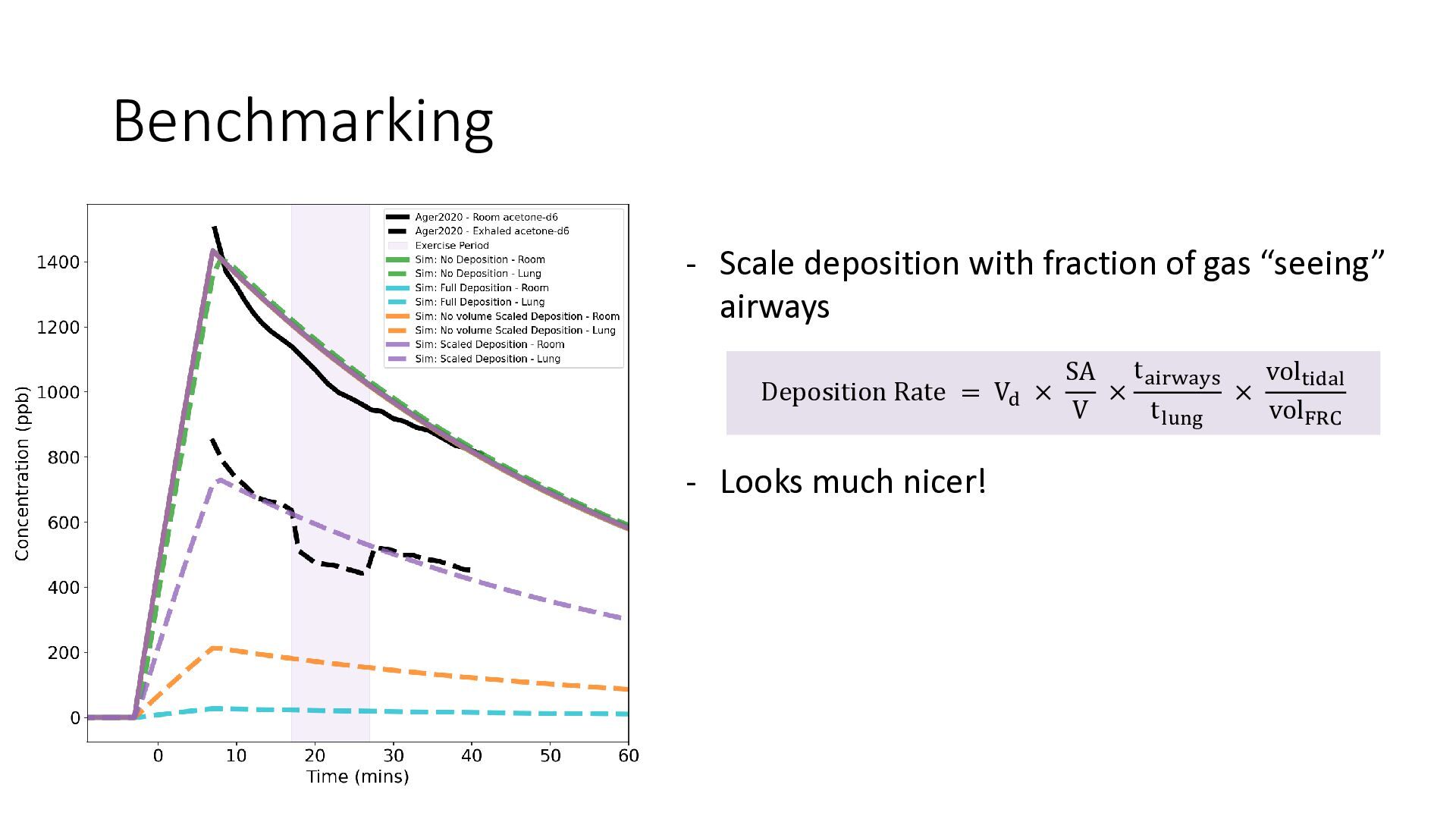
  23. Benchmarking - Scale deposition with fraction of gas “seeing” airways

    SA t airways voltidal Deposition Rate = Vd × × × V t lung volFRC - Looks much nicer!
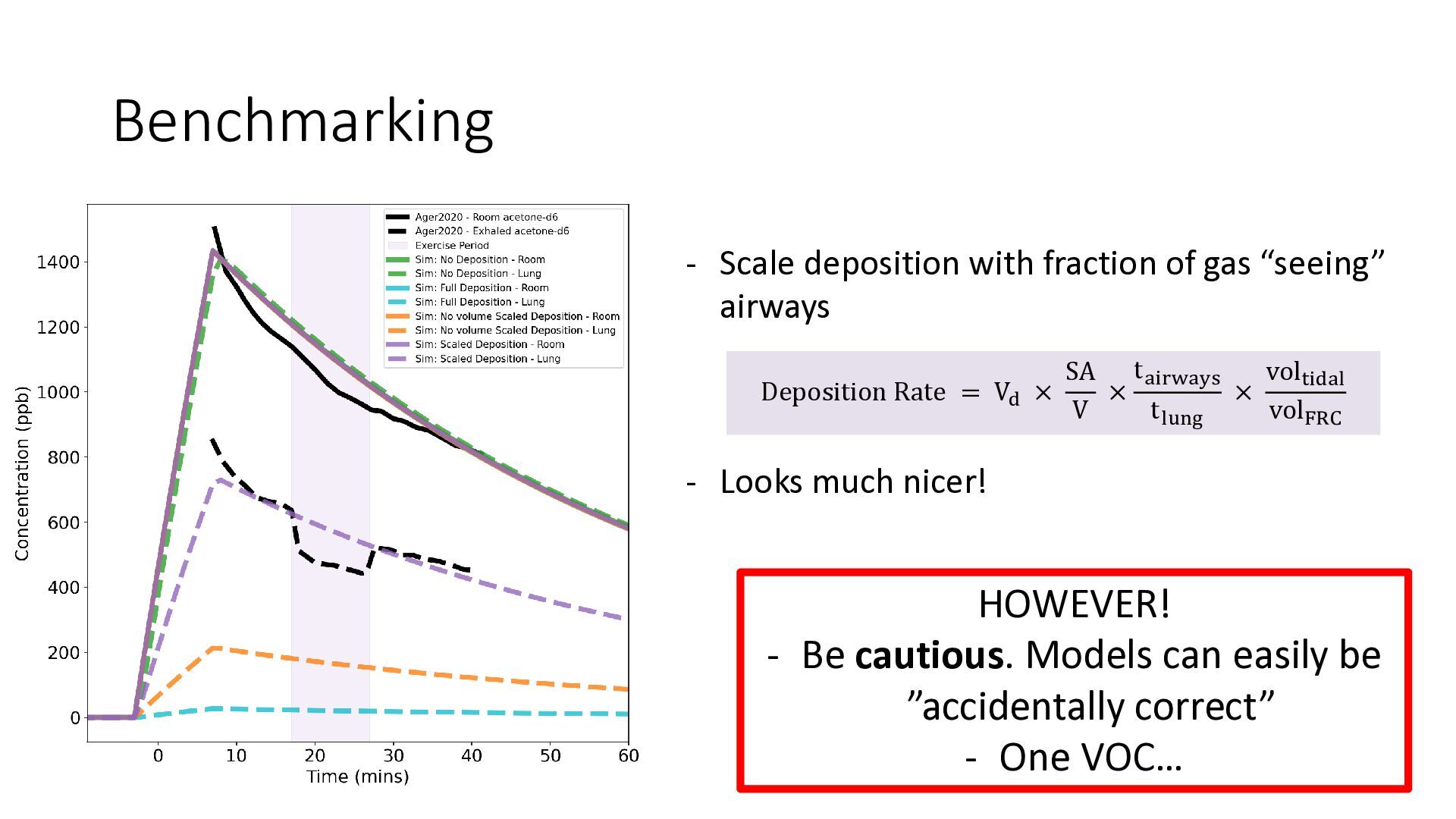
  24. Benchmarking - Scale deposition with fraction of gas “seeing” airways

    SA t airways voltidal Deposition Rate = Vd × × × V t lung volFRC - Looks much nicer! HOWEVER! - Be cautious. Models can easily be ”accidentally correct” - One VOC…
  25. How do we extend our benchmarking? • Plans to investigate

    exposure in humans in realistic house environment (INTERIORS) • Use breath analysis post-exposure to look at the behaviour of different VOCs • Pilot study • Small-scale healthy volunteer study (~20 people) • Watch this space!
  26. End up with Concentrations • C_room – room concentration •

    C_lung – gas phase concentration • C_RLF – Concentration in RLF What do these mean? Are these concentrations biologically relevant?
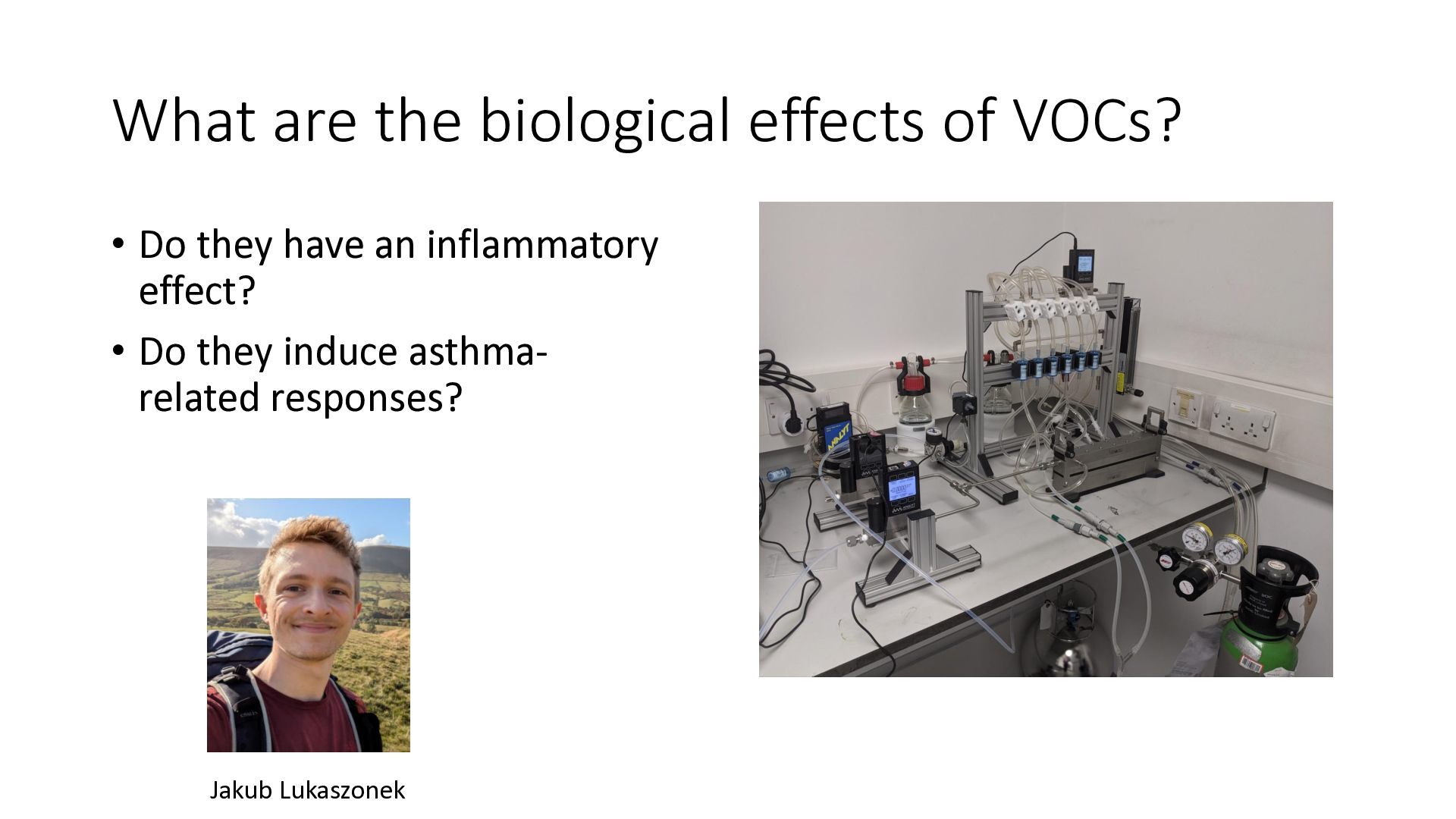
  27. What are the biological effects of VOCs? • Do they

    have an inflammatory effect? • Do they induce asthmarelated responses? Jakub Lukaszonek
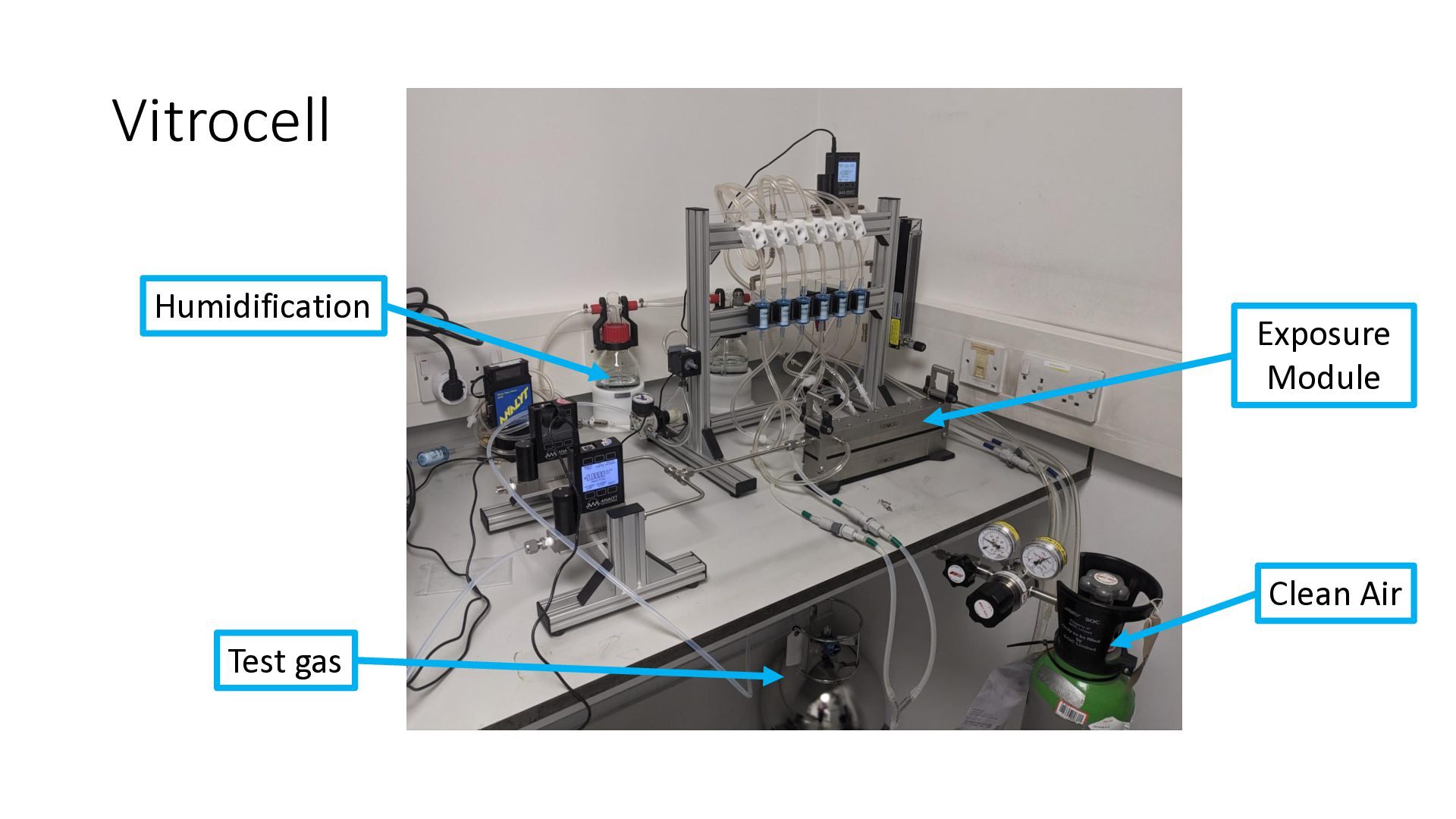
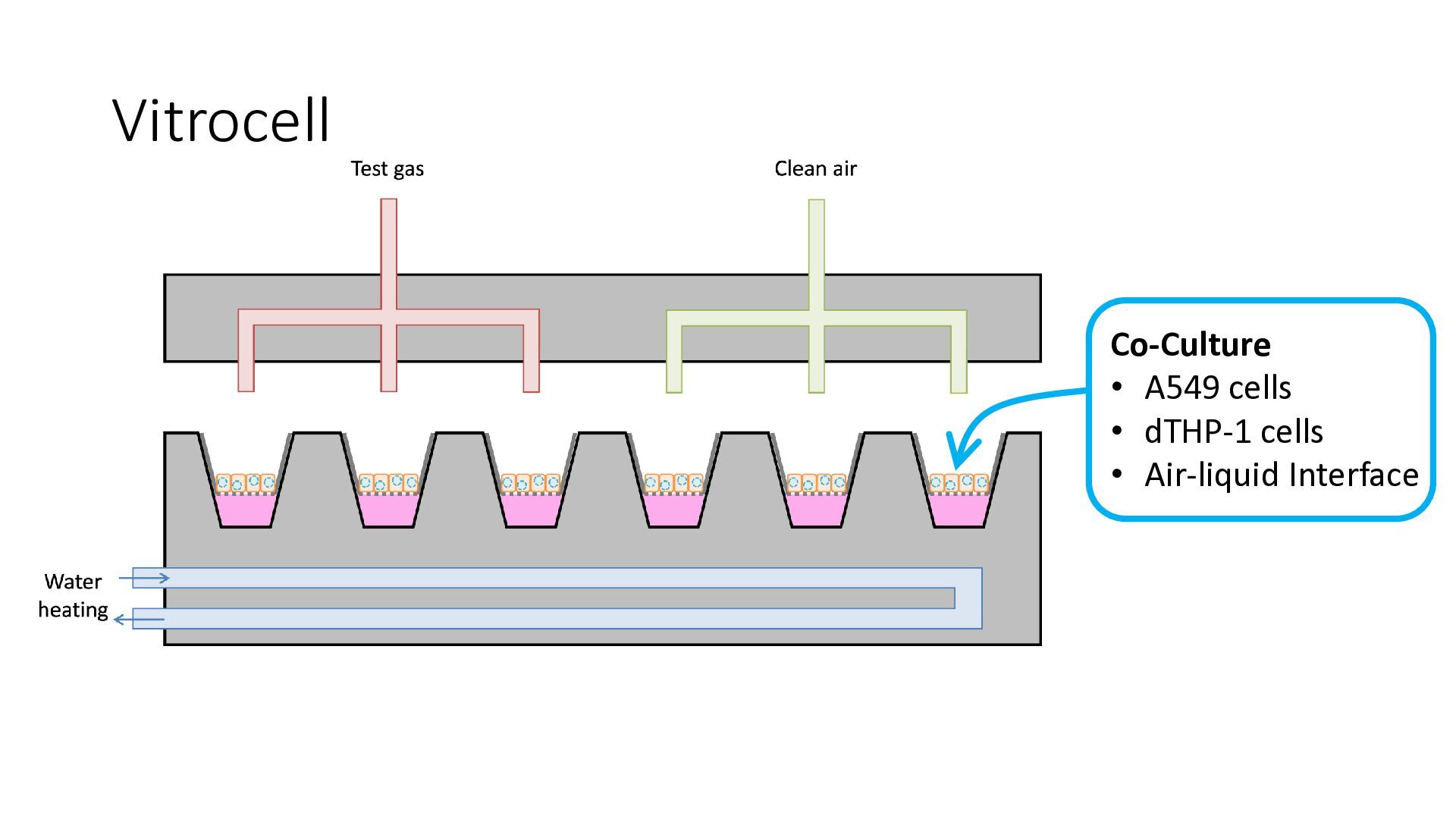
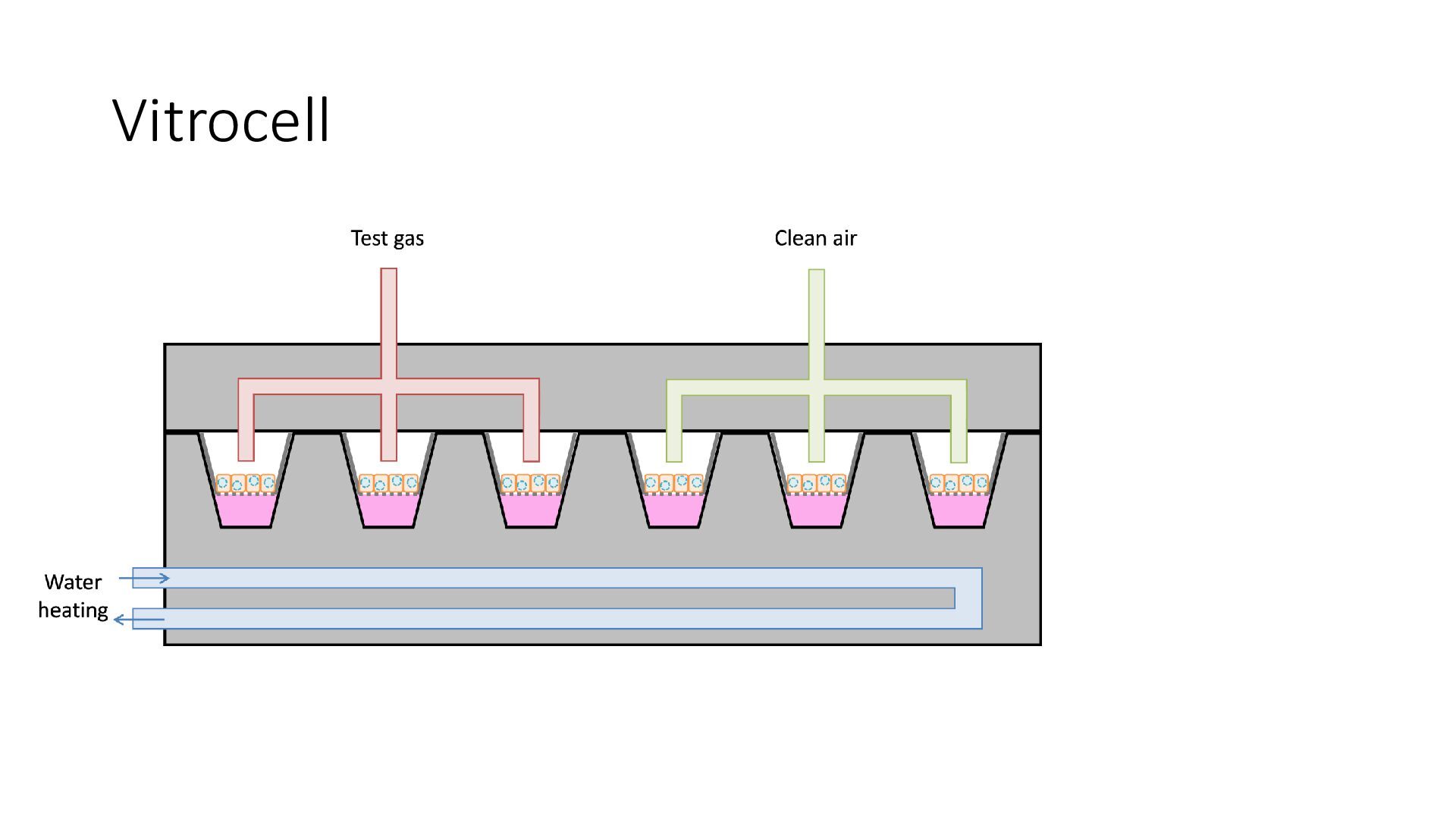
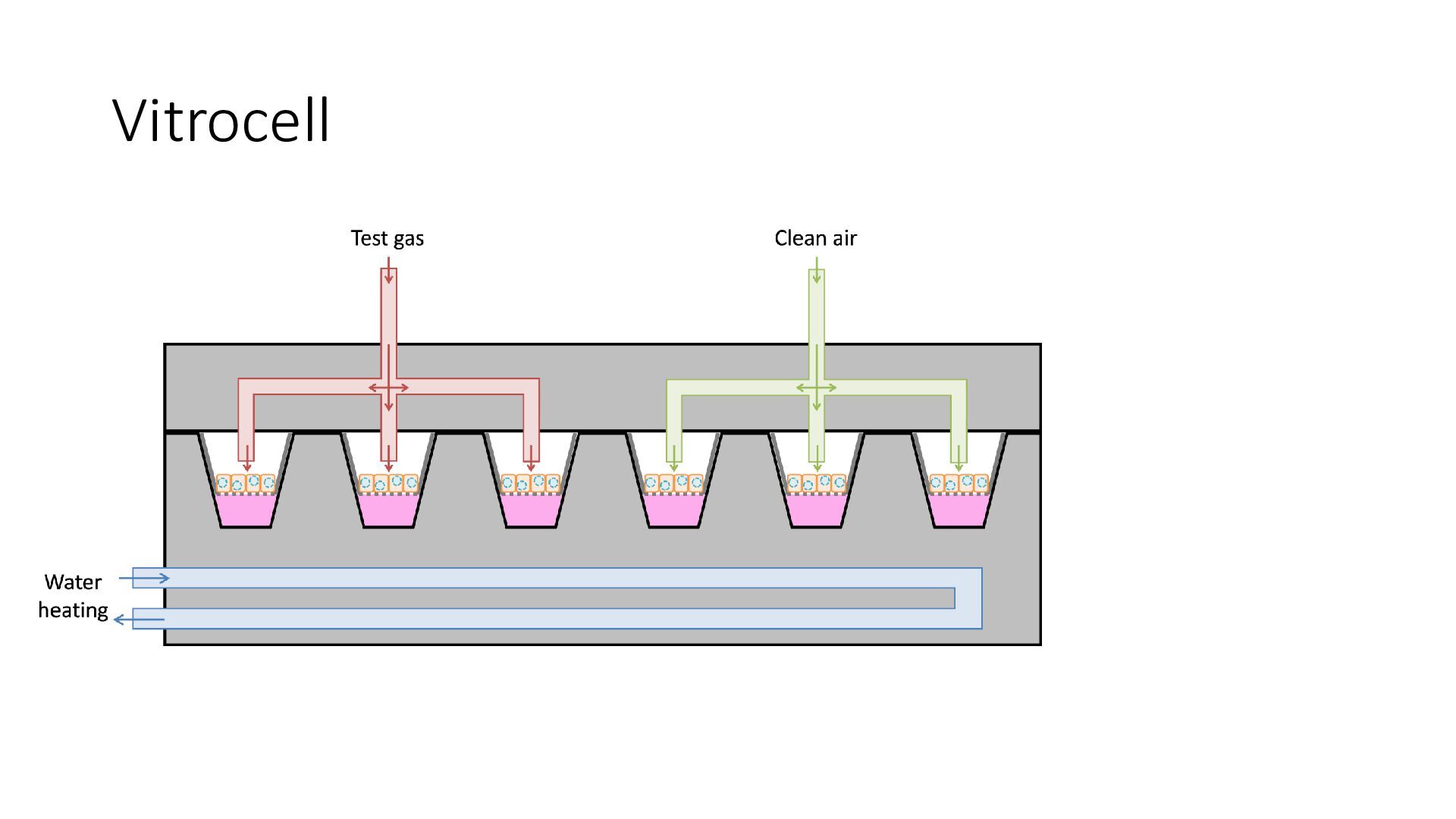
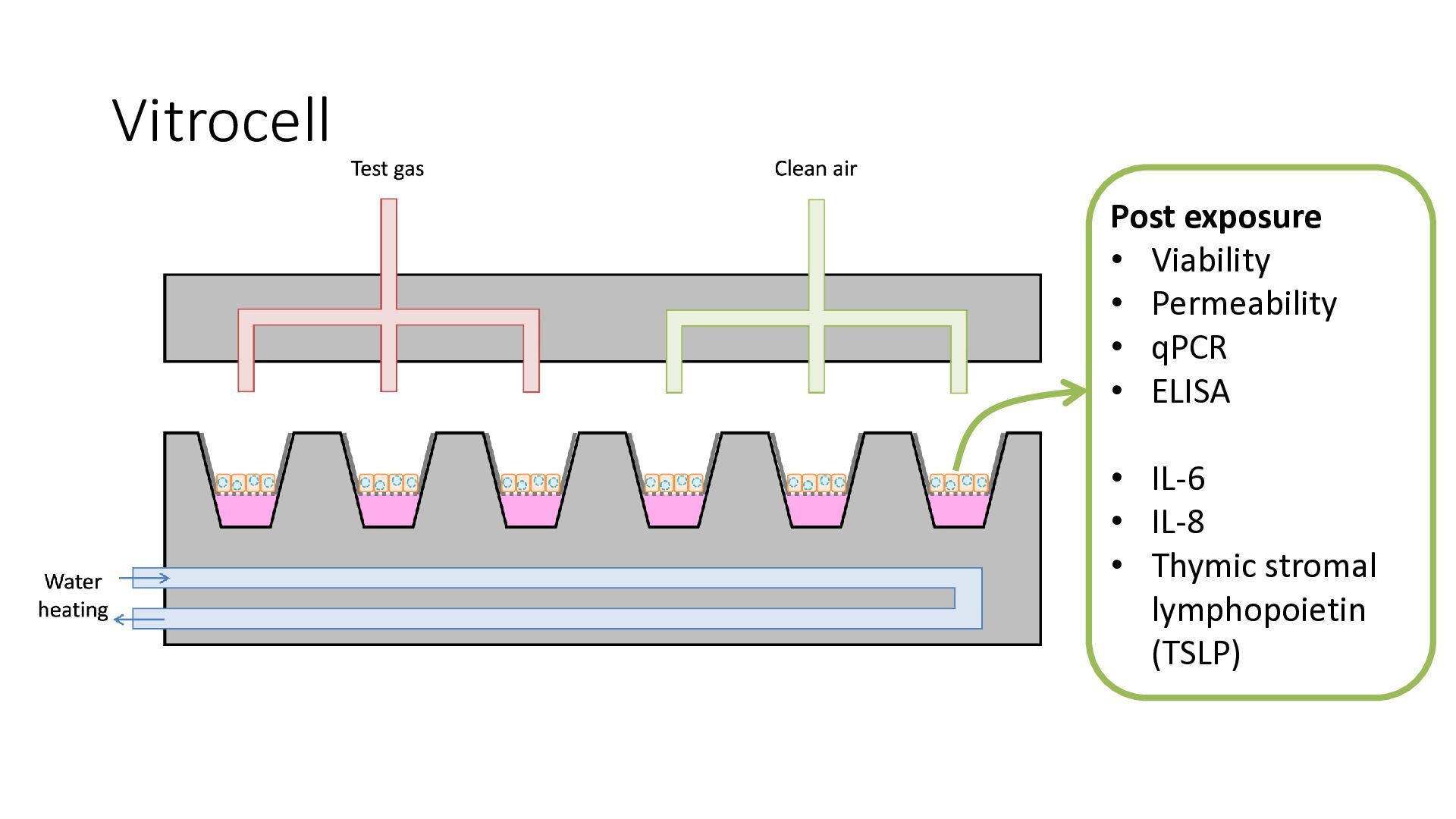
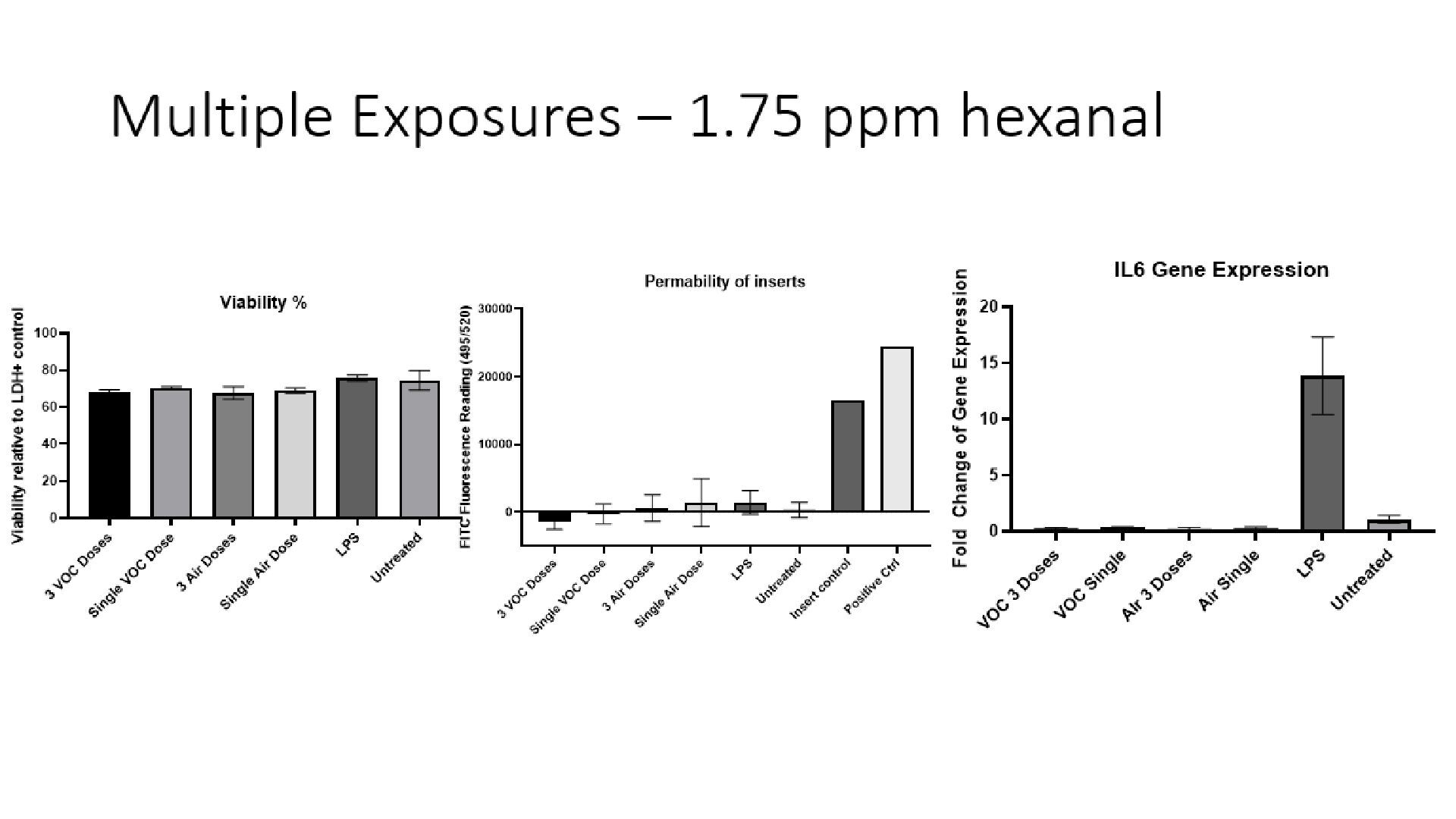
  28. Vitrocell Post exposure • Viability • Permeability • qPCR •

    ELISA • IL-6 • IL-8 • Thymic stromal lymphopoietin (TSLP)
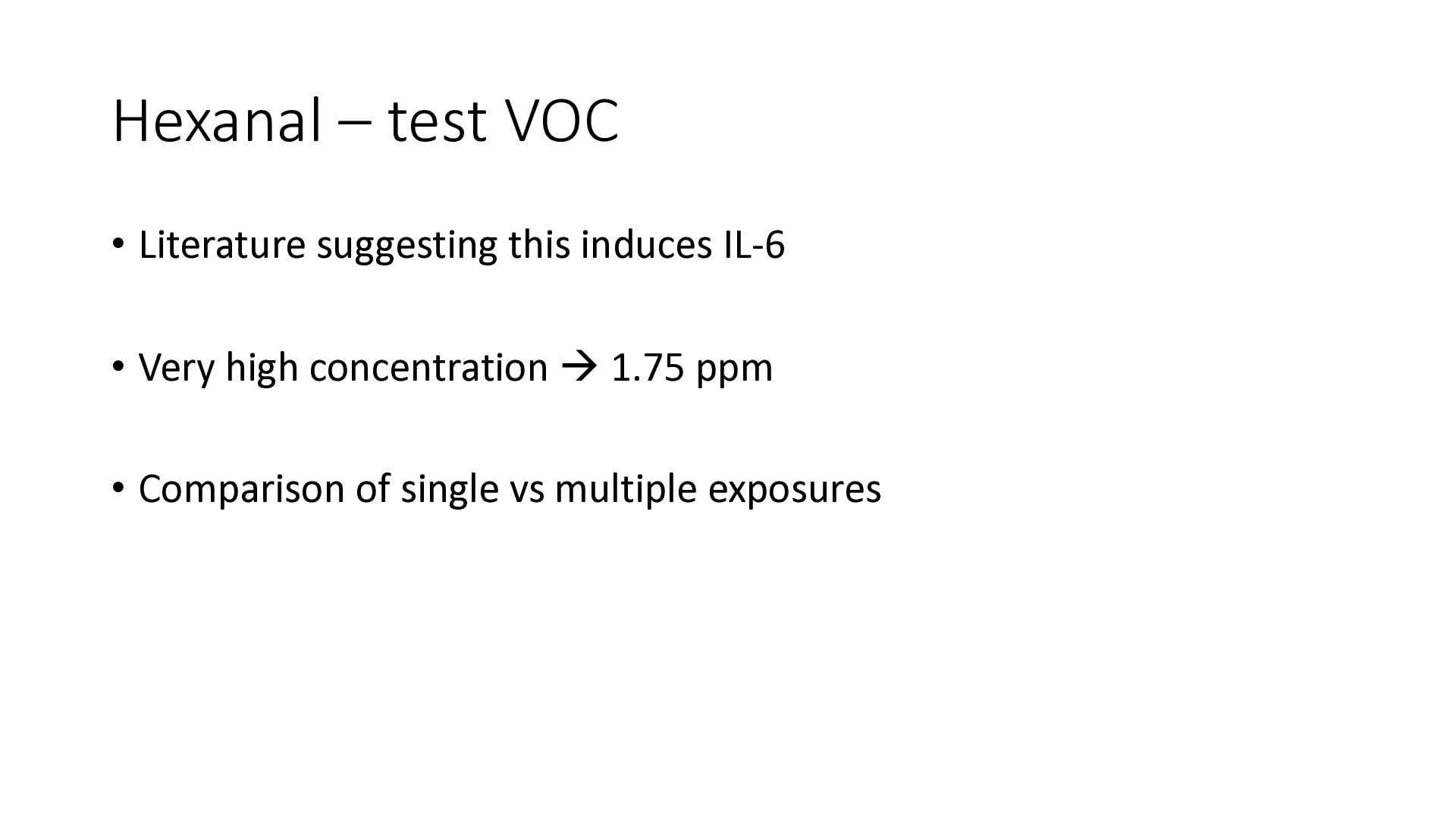
  29. Hexanal – test VOC • Literature suggesting this induces IL-6

    • Very high concentration → 1.75 ppm • Comparison of single vs multiple exposures
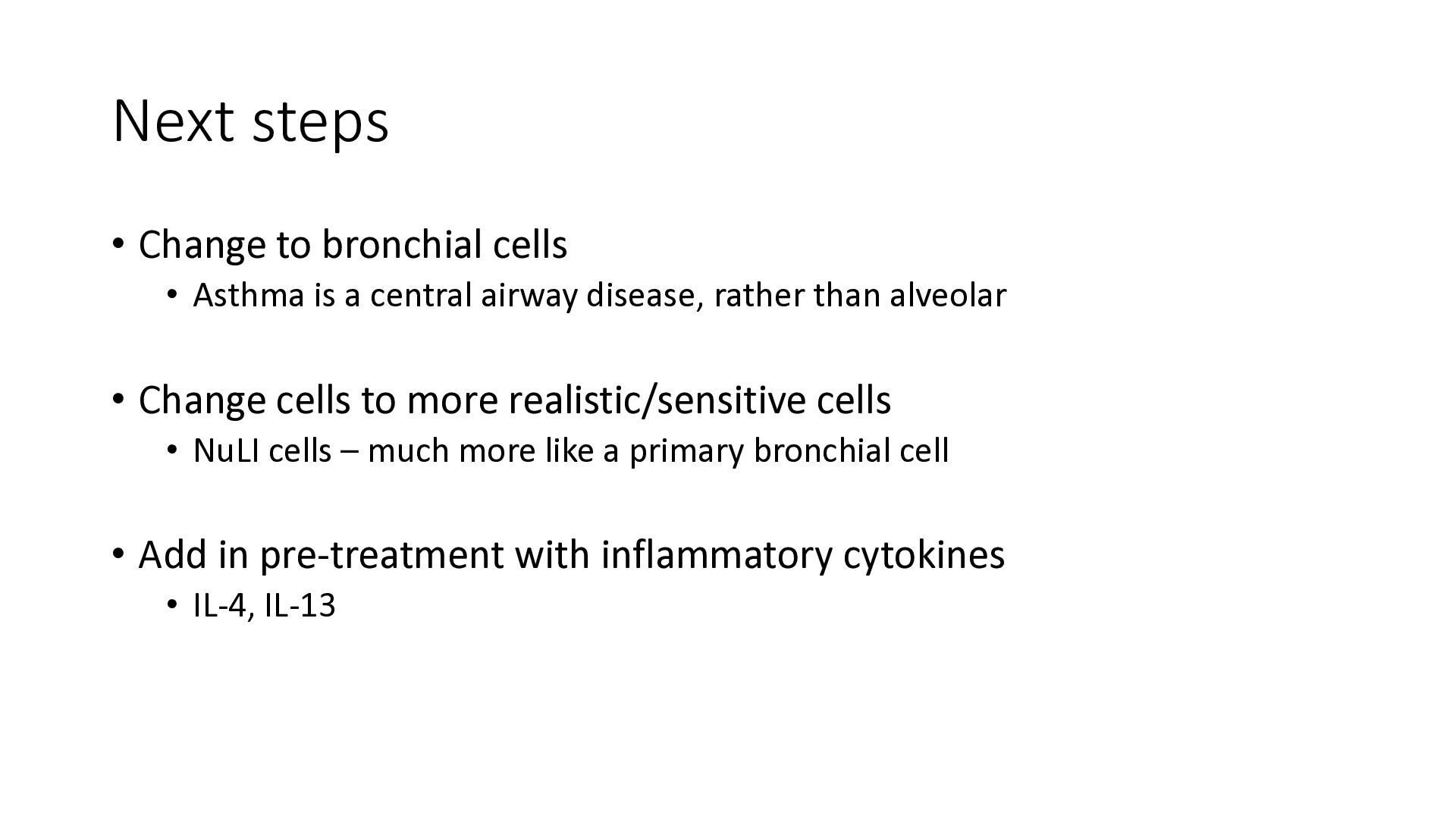
  30. Next steps • Change to bronchial cells • Asthma is

    a central airway disease, rather than alveolar • Change cells to more realistic/sensitive cells • NuLI cells – much more like a primary bronchial cell • Add in pre-treatment with inflammatory cytokines • IL-4, IL-13
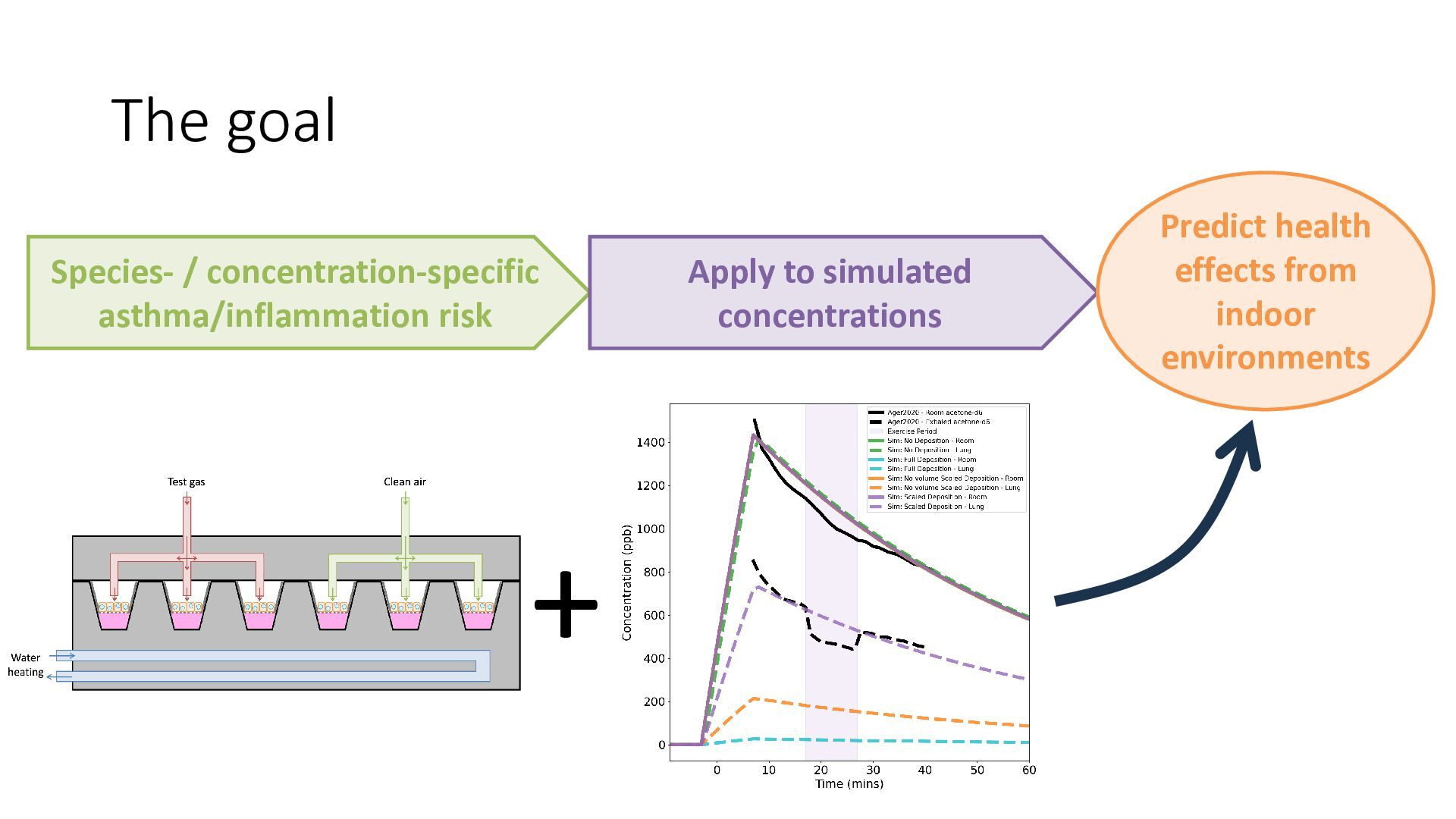
  31. The goal Species- / concentration-specific asthma/inflammation risk + Apply to

    simulated concentrations Predict health effects from indoor environments
  32. Next steps • Deposition velocities to more complex mixtures •

    Model benchmarking • Biological effects of VOCs • Watch this space!
  33. Acknowledgements • Dave Shaw • Tom Warburton • James Fox

    • Andy Holding • Carl Whitfield • Robin Curnow • Aristeidis Voliotis • Martin Clift • Kirsty Meldrum • Josh Bateman Project website!