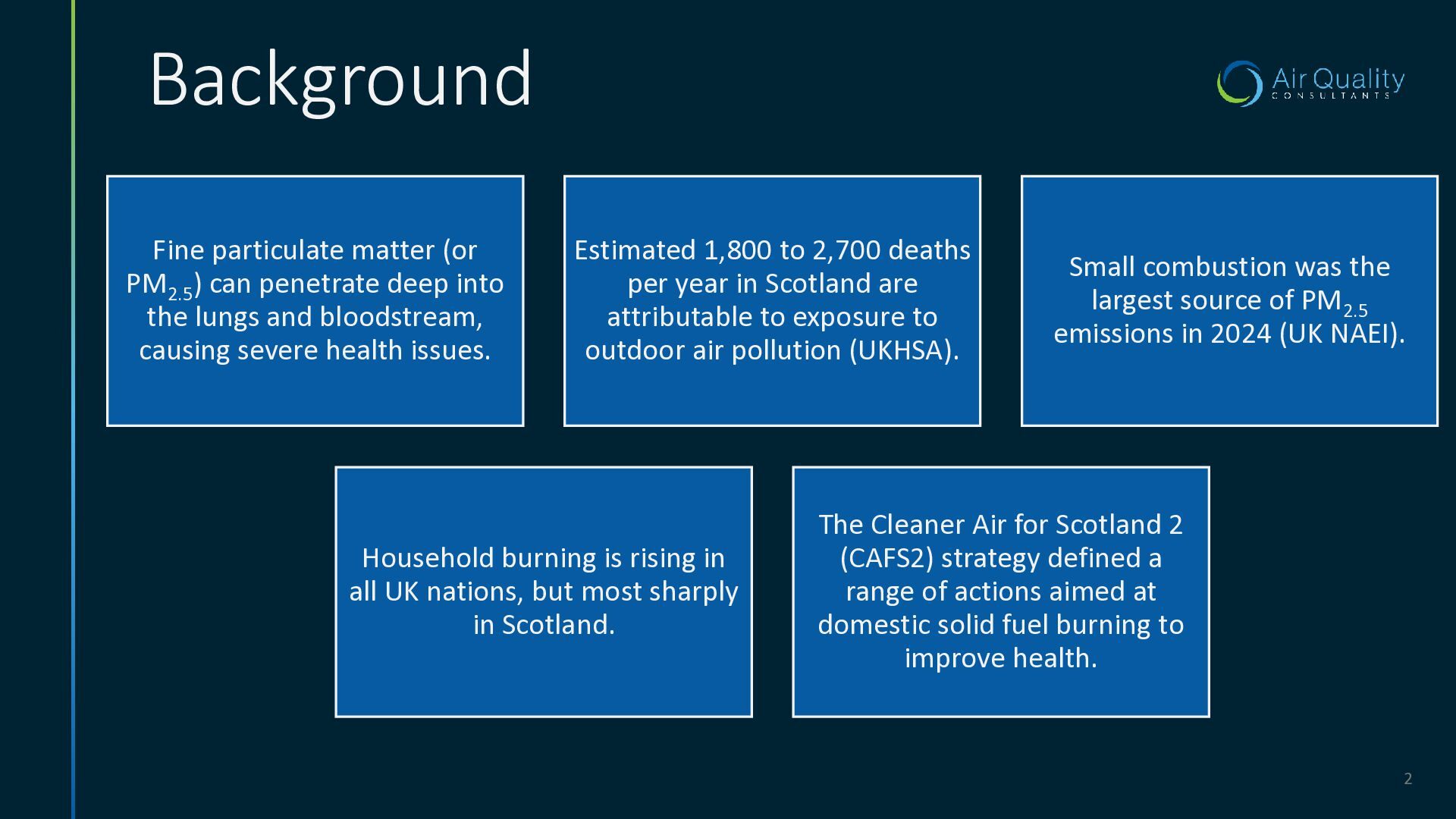
the lungs and bloodstream, causing severe health issues. Estimated 1,800 to 2,700 deaths per year in Scotland are attributable to exposure to outdoor air pollution (UKHSA). Household burning is rising in all UK nations, but most sharply in Scotland. Small combustion was the largest source of PM2.5 emissions in 2024 (UK NAEI). The Cleaner Air for Scotland 2 (CAFS2) strategy defined a range of actions aimed at domestic solid fuel burning to improve health. 2
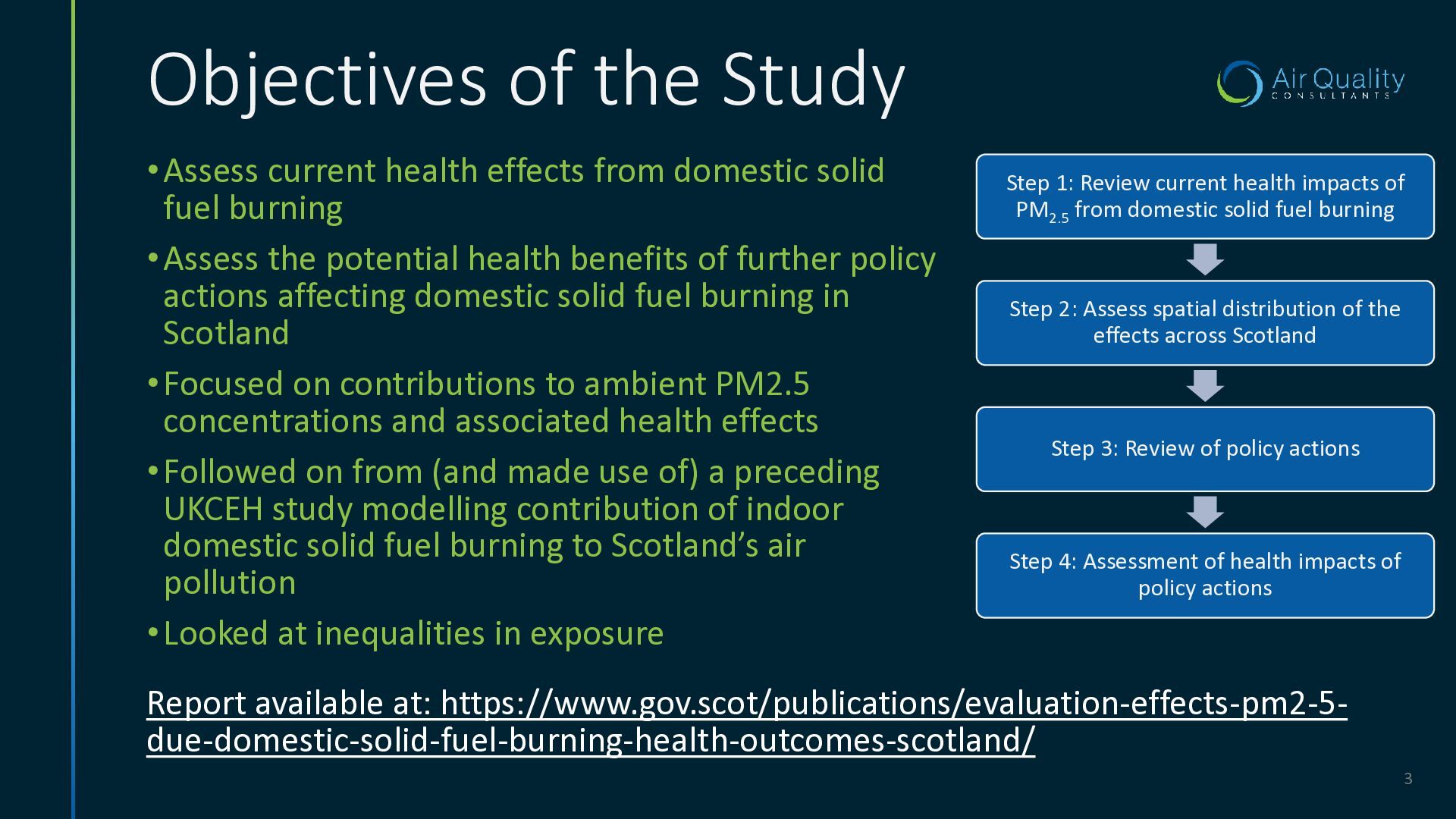
domestic solid fuel burning • Assess the potential health benefits of further policy actions affecting domestic solid fuel burning in Scotland • Focused on contributions to ambient PM2.5 concentrations and associated health effects • Followed on from (and made use of) a preceding UKCEH study modelling contribution of indoor domestic solid fuel burning to Scotland’s air pollution • Looked at inequalities in exposure Step 1: Review current health impacts of PM2.5 from domestic solid fuel burning Step 2: Assess spatial distribution of the effects across Scotland Step 3: Review of policy actions Step 4: Assessment of health impacts of policy actions Report available at: https://www.gov.scot/publications/evaluation-effects-pm2-5due-domestic-solid-fuel-burning-health-outcomes-scotland/ 3
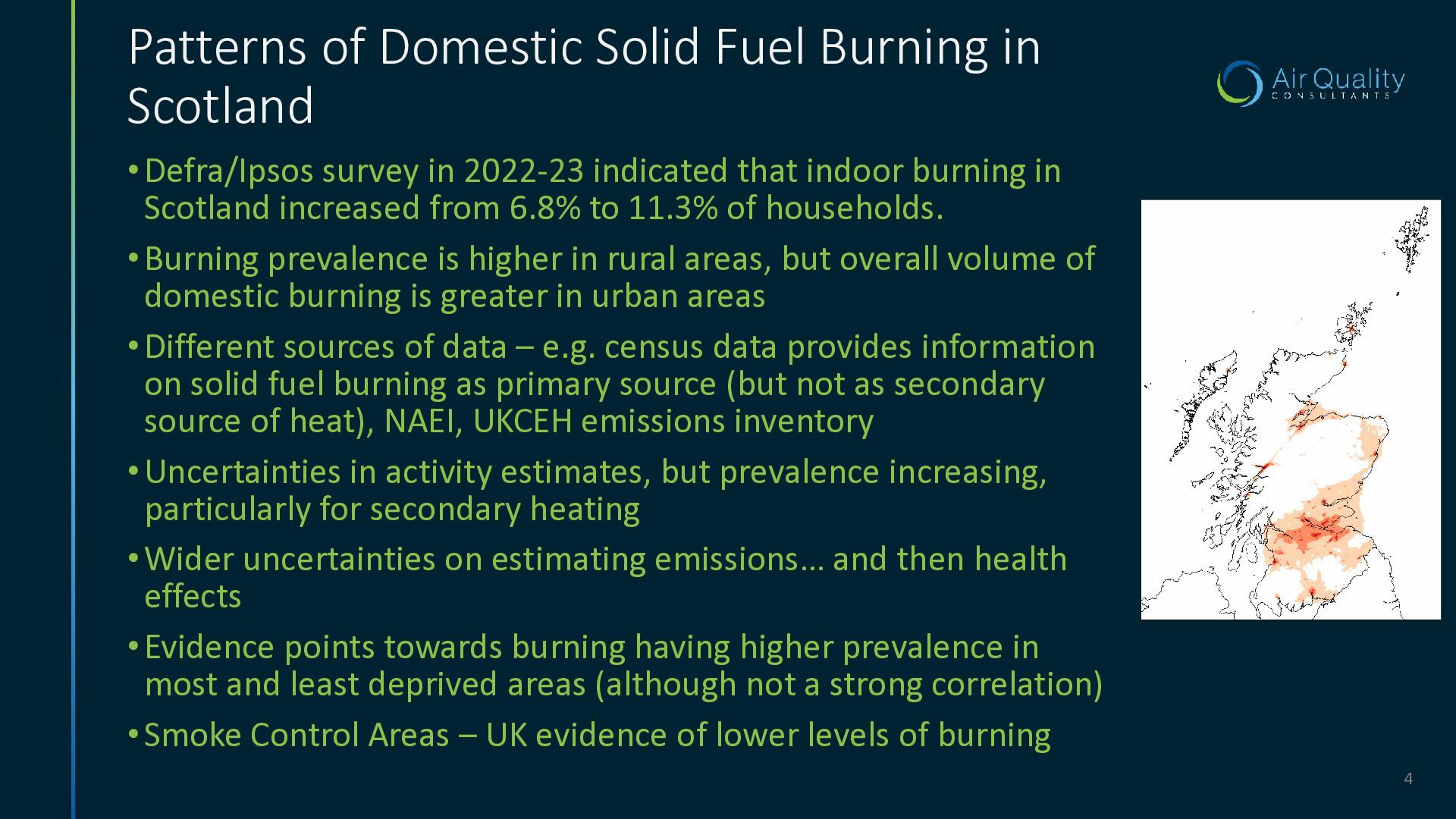
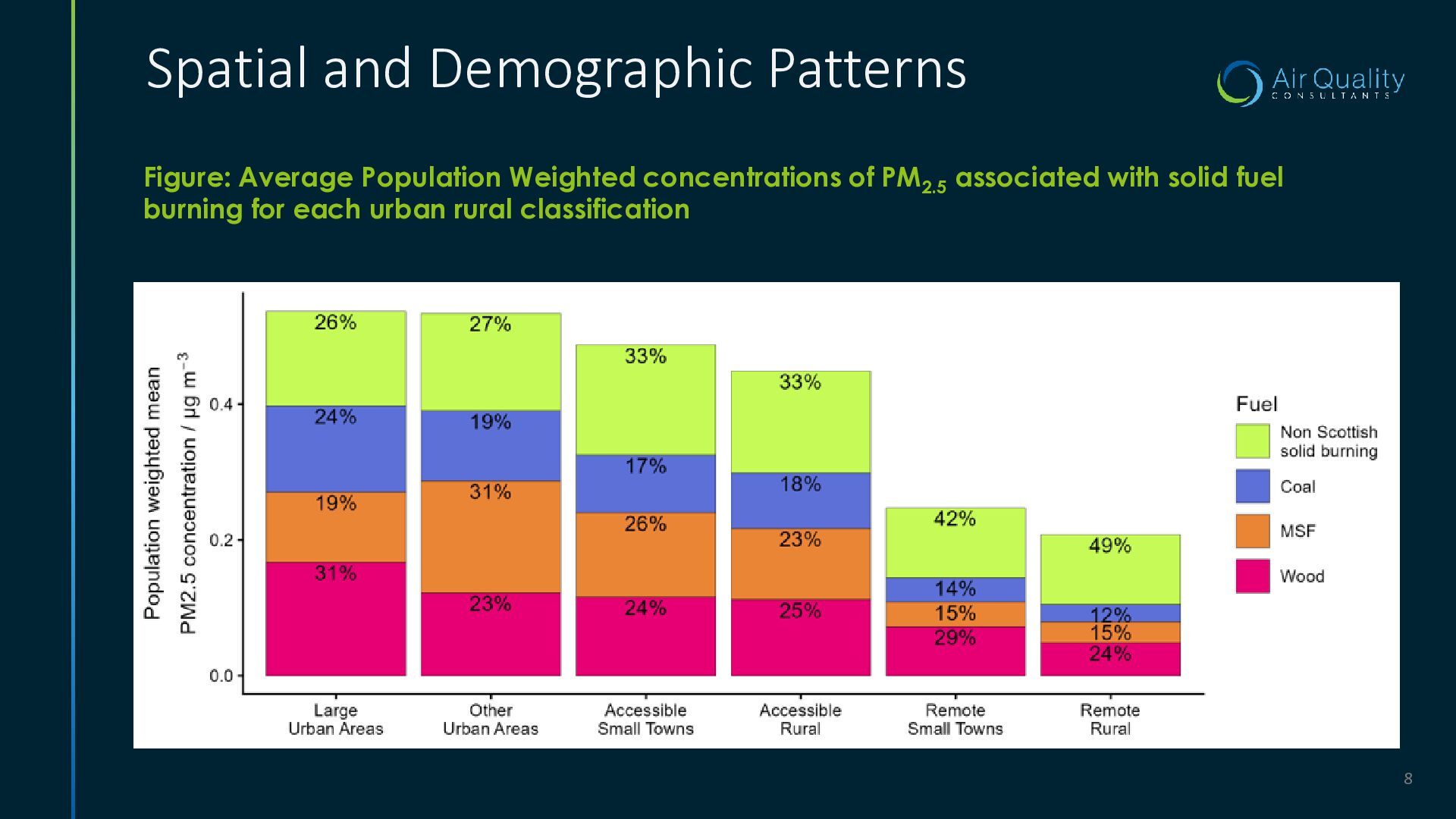
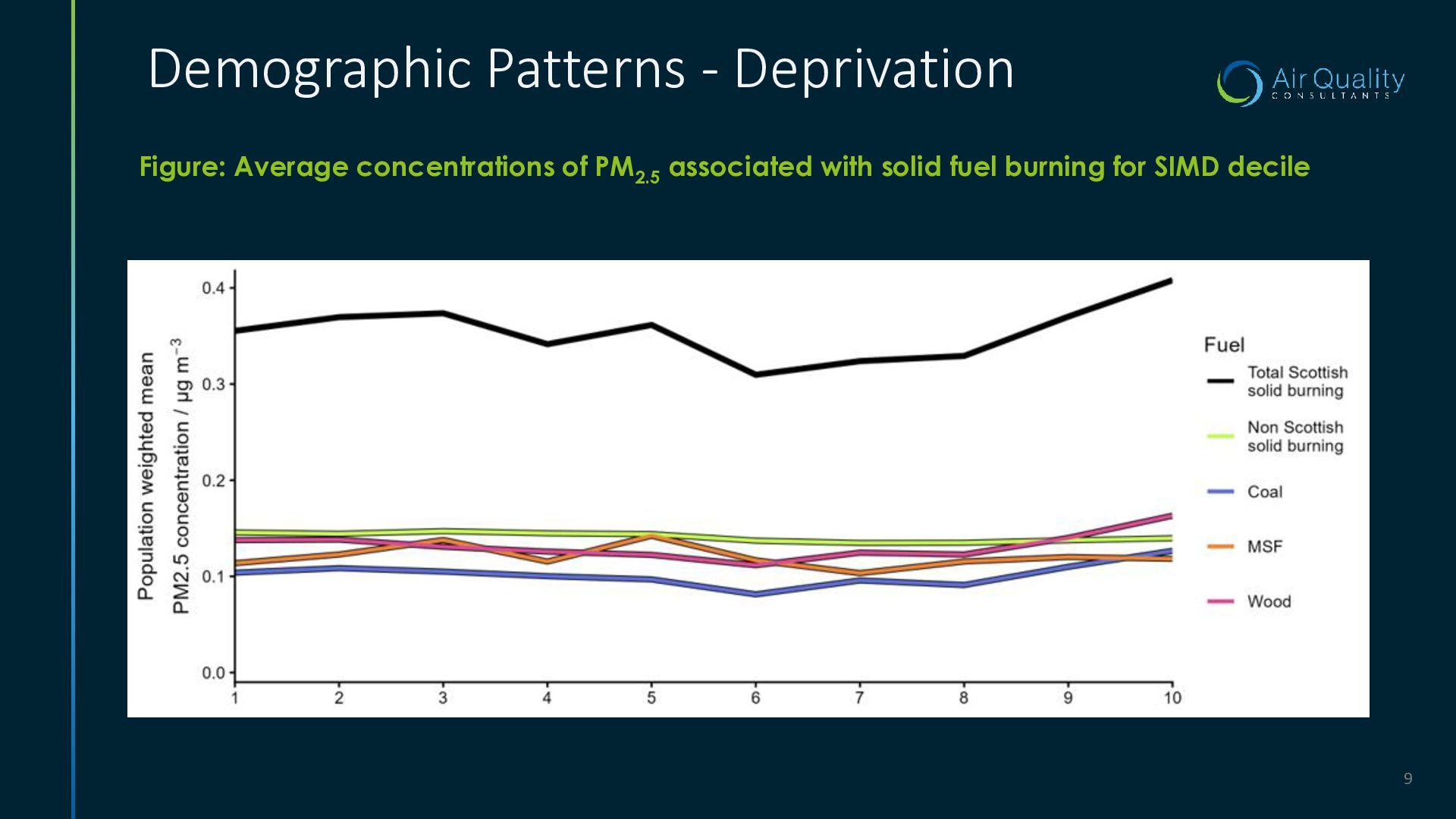
survey in 2022-23 indicated that indoor burning in Scotland increased from 6.8% to 11.3% of households. • Burning prevalence is higher in rural areas, but overall volume of domestic burning is greater in urban areas • Different sources of data – e.g. census data provides information on solid fuel burning as primary source (but not as secondary source of heat), NAEI, UKCEH emissions inventory • Uncertainties in activity estimates, but prevalence increasing, particularly for secondary heating • Wider uncertainties on estimating emissions… and then health effects • Evidence points towards burning having higher prevalence in most and least deprived areas (although not a strong correlation) • Smoke Control Areas – UK evidence of lower levels of burning 4
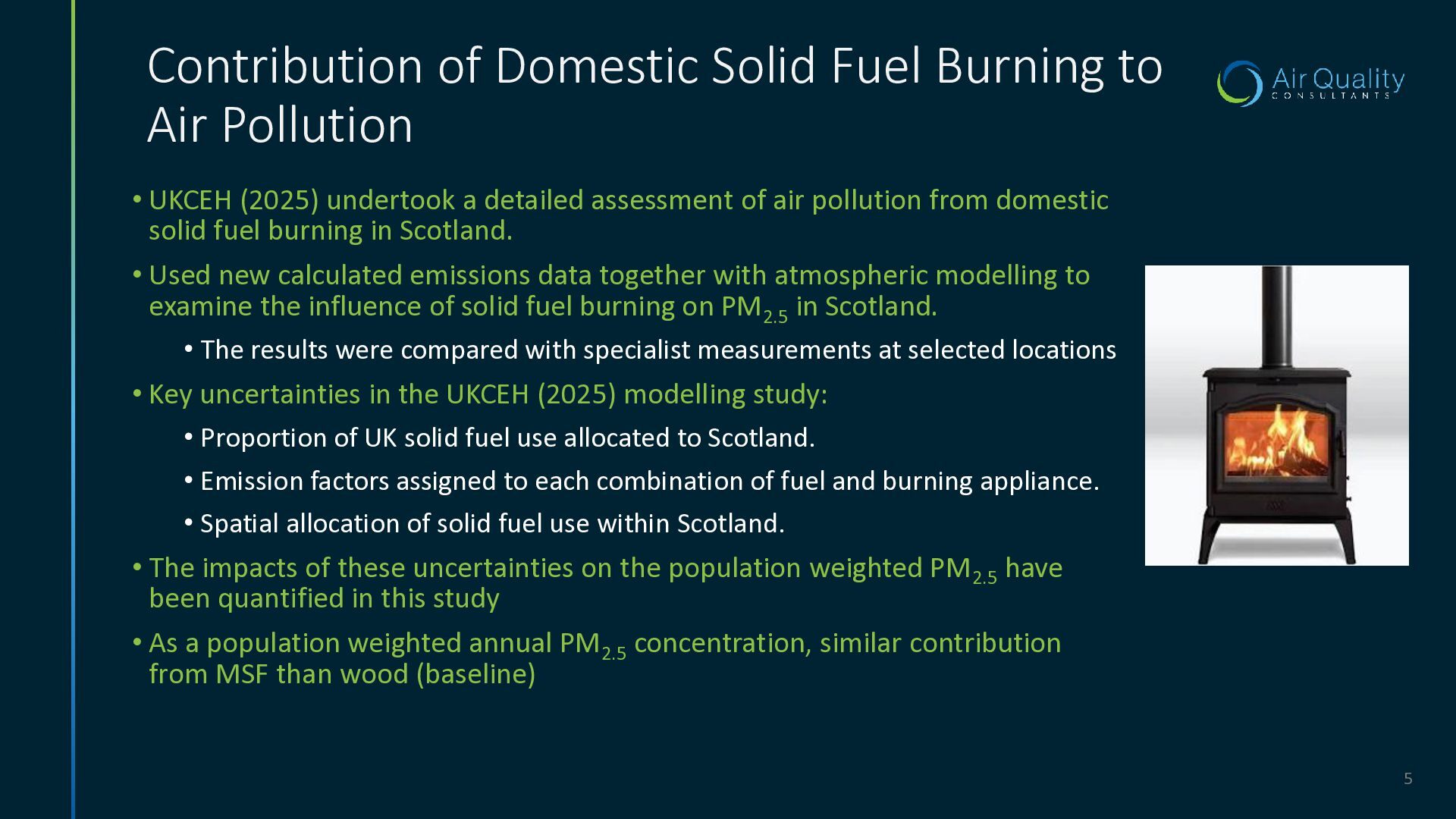
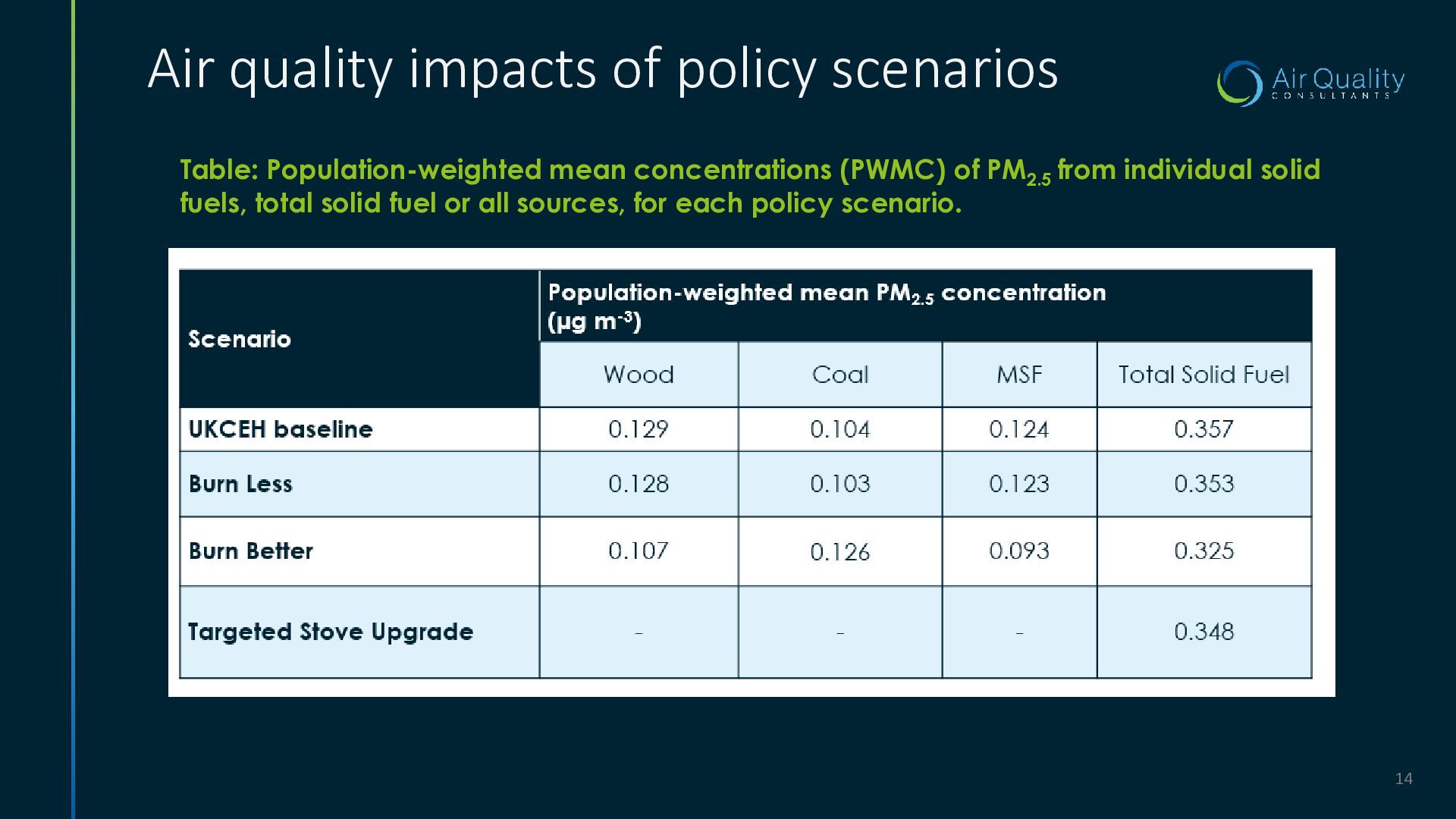
UKCEH (2025) undertook a detailed assessment of air pollution from domestic solid fuel burning in Scotland. • Used new calculated emissions data together with atmospheric modelling to examine the influence of solid fuel burning on PM2.5 in Scotland. • The results were compared with specialist measurements at selected locations • Key uncertainties in the UKCEH (2025) modelling study: • Proportion of UK solid fuel use allocated to Scotland. • Emission factors assigned to each combination of fuel and burning appliance. • Spatial allocation of solid fuel use within Scotland. • The impacts of these uncertainties on the population weighted PM2.5 have been quantified in this study • As a population weighted annual PM2.5 concentration, similar contribution from MSF than wood (baseline) 5
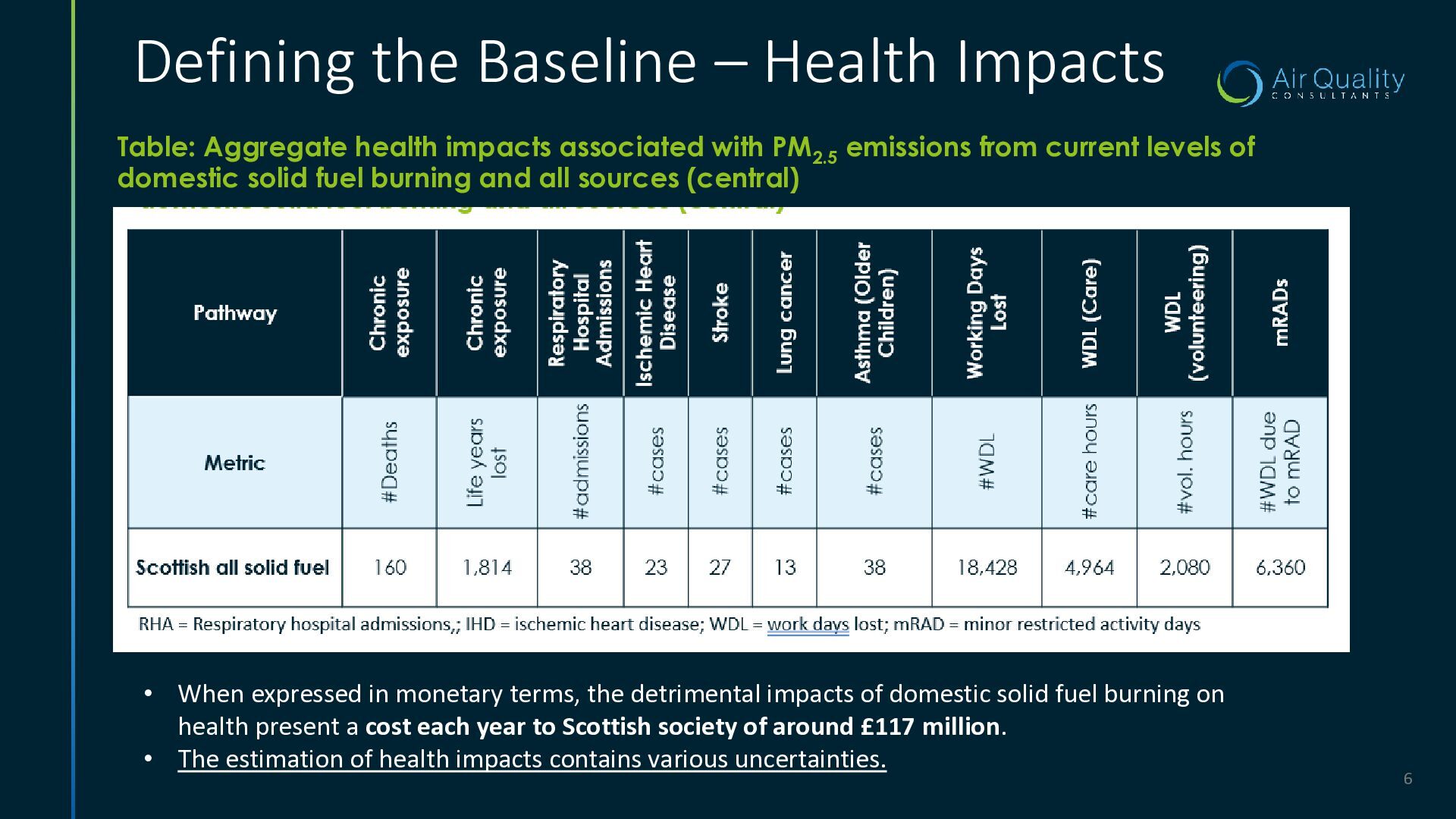
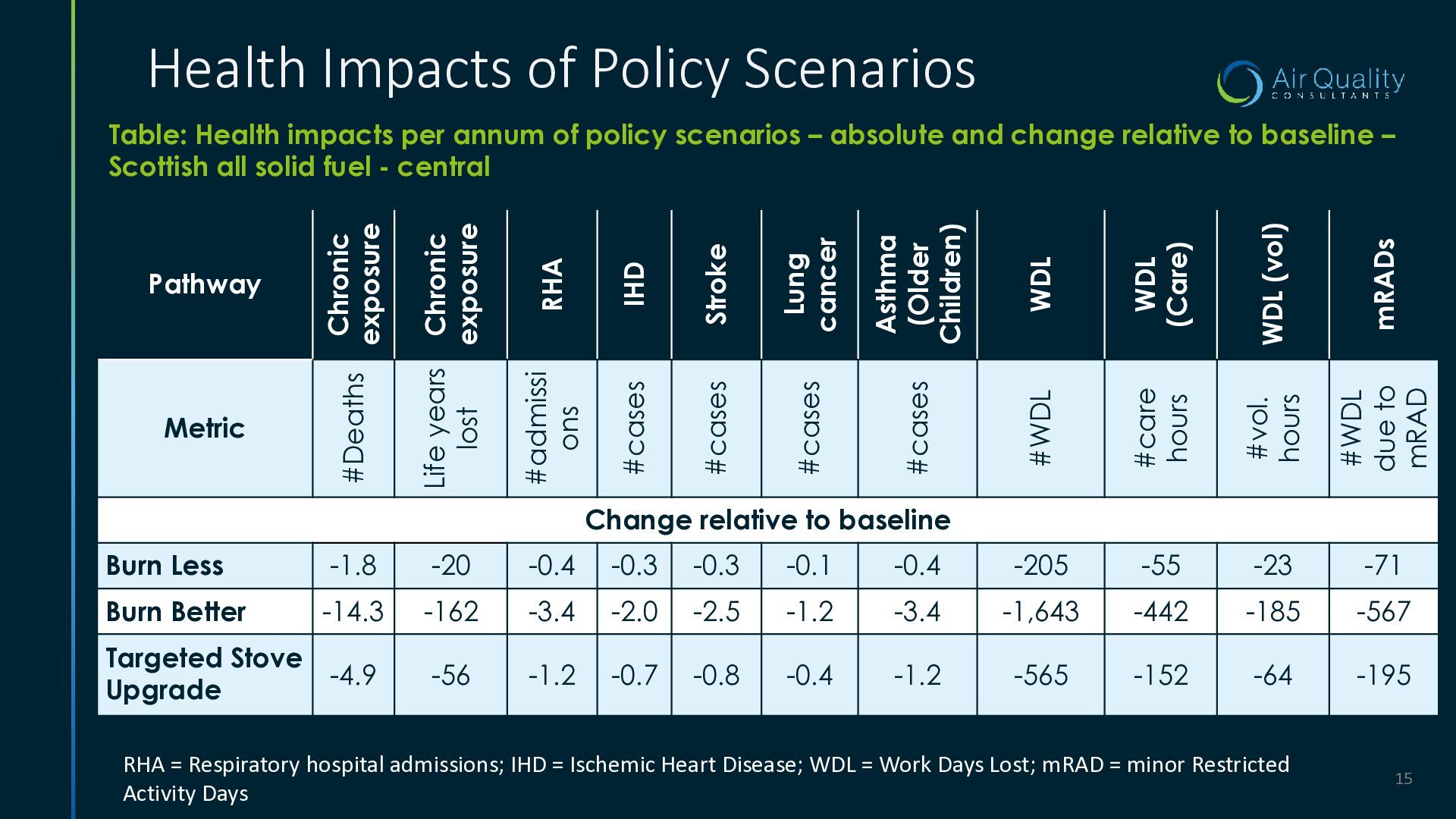
associated with PM2.5 emissions from current levels of domestic solid fuel burning and all sources (central) • When expressed in monetary terms, the detrimental impacts of domestic solid fuel burning on health present a cost each year to Scottish society of around £117 million. • The estimation of health impacts contains various uncertainties. 6
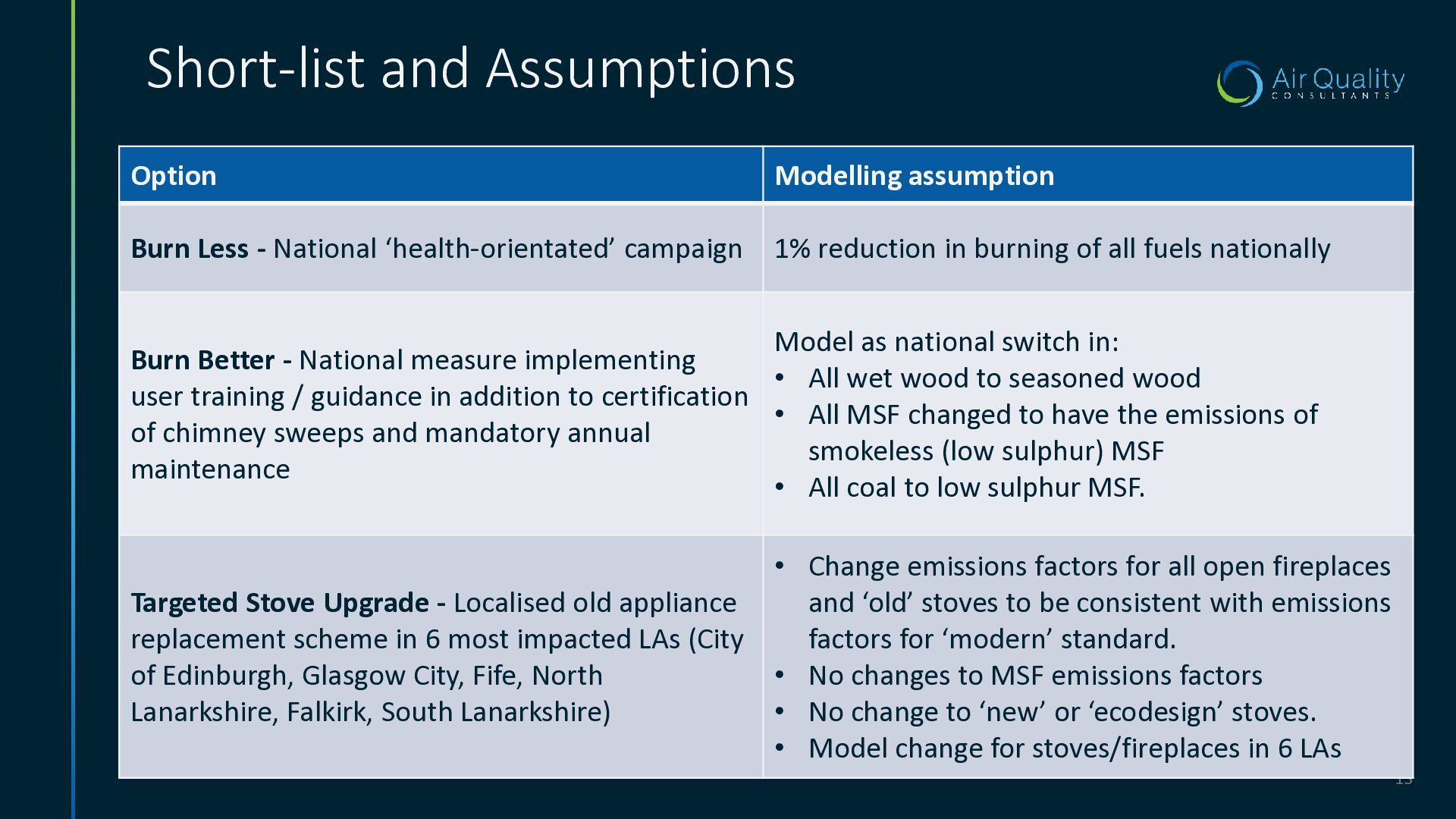
‘health-orientated’ campaign 1% reduction in burning of all fuels nationally Model as national switch in: Burn Better - National measure implementing • All wet wood to seasoned wood user training / guidance in addition to certification • All MSF changed to have the emissions of of chimney sweeps and mandatory annual smokeless (low sulphur) MSF maintenance • All coal to low sulphur MSF. • Change emissions factors for all open fireplaces Targeted Stove Upgrade - Localised old appliance and ‘old’ stoves to be consistent with emissions replacement scheme in 6 most impacted LAs (City factors for ‘modern’ standard. of Edinburgh, Glasgow City, Fife, North • No changes to MSF emissions factors Lanarkshire, Falkirk, South Lanarkshire) • No change to ‘new’ or ‘ecodesign’ stoves. • Model change for stoves/fireplaces in 6 LAs 13
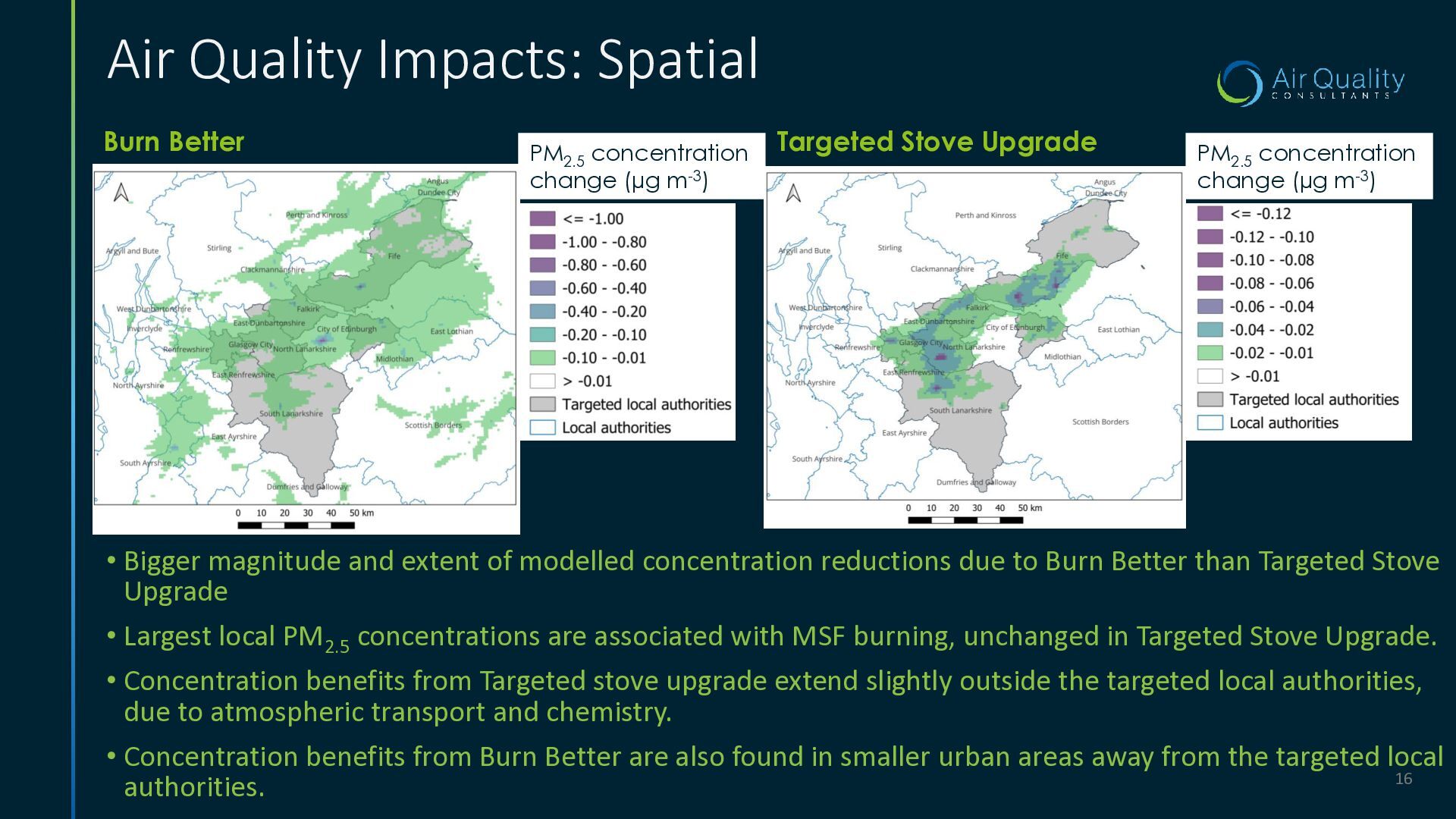
m-3) Targeted Stove Upgrade PM2.5 concentration change (µg m-3) • Bigger magnitude and extent of modelled concentration reductions due to Burn Better than Targeted Stove Upgrade • Largest local PM2.5 concentrations are associated with MSF burning, unchanged in Targeted Stove Upgrade. • Concentration benefits from Targeted stove upgrade extend slightly outside the targeted local authorities, due to atmospheric transport and chemistry. • Concentration benefits from Burn Better are also found in smaller urban areas away from the targeted local 16 authorities.
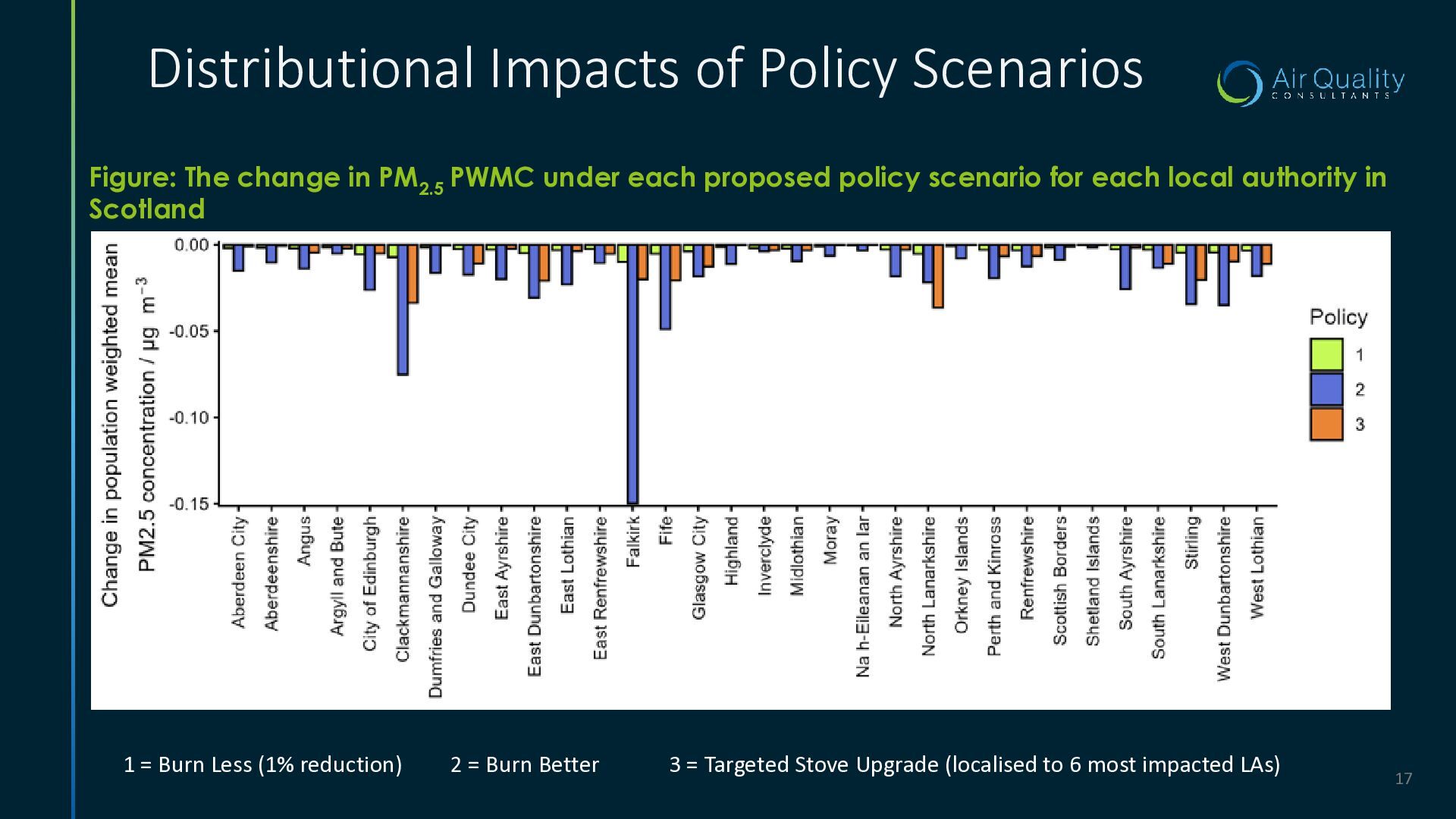
PWMC under each proposed policy scenario for each local authority in Scotland 1 = Burn Less (1% reduction) 2 = Burn Better 3 = Targeted Stove Upgrade (localised to 6 most impacted LAs) 17
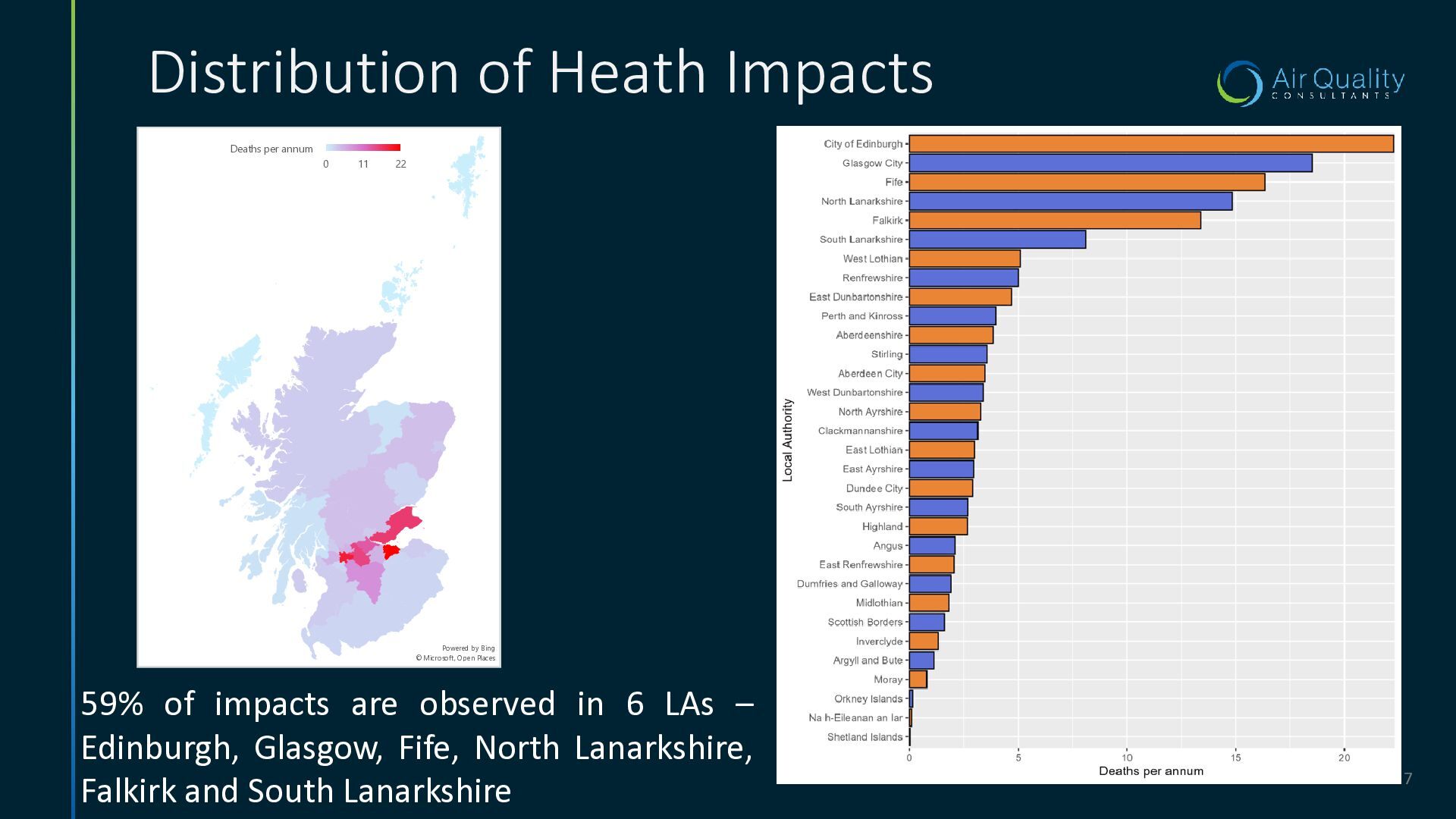
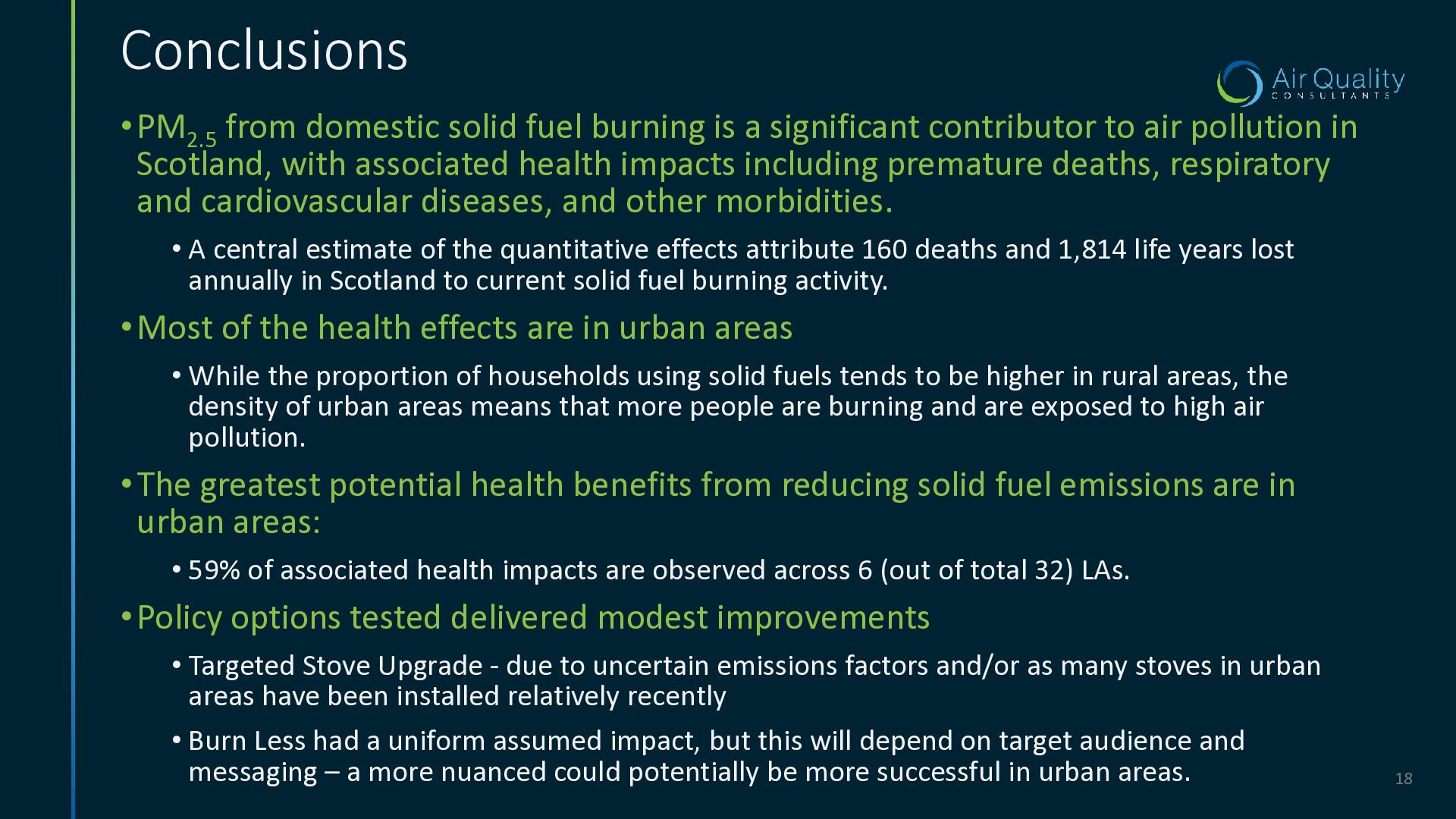
significant contributor to air pollution in Scotland, with associated health impacts including premature deaths, respiratory and cardiovascular diseases, and other morbidities. • A central estimate of the quantitative effects attribute 160 deaths and 1,814 life years lost annually in Scotland to current solid fuel burning activity. • Most of the health effects are in urban areas • While the proportion of households using solid fuels tends to be higher in rural areas, the density of urban areas means that more people are burning and are exposed to high air pollution. • The greatest potential health benefits from reducing solid fuel emissions are in urban areas: • 59% of associated health impacts are observed across 6 (out of total 32) LAs. • Policy options tested delivered modest improvements • Targeted Stove Upgrade - due to uncertain emissions factors and/or as many stoves in urban areas have been installed relatively recently • Burn Less had a uniform assumed impact, but this will depend on target audience and messaging – a more nuanced could potentially be more successful in urban areas. 18
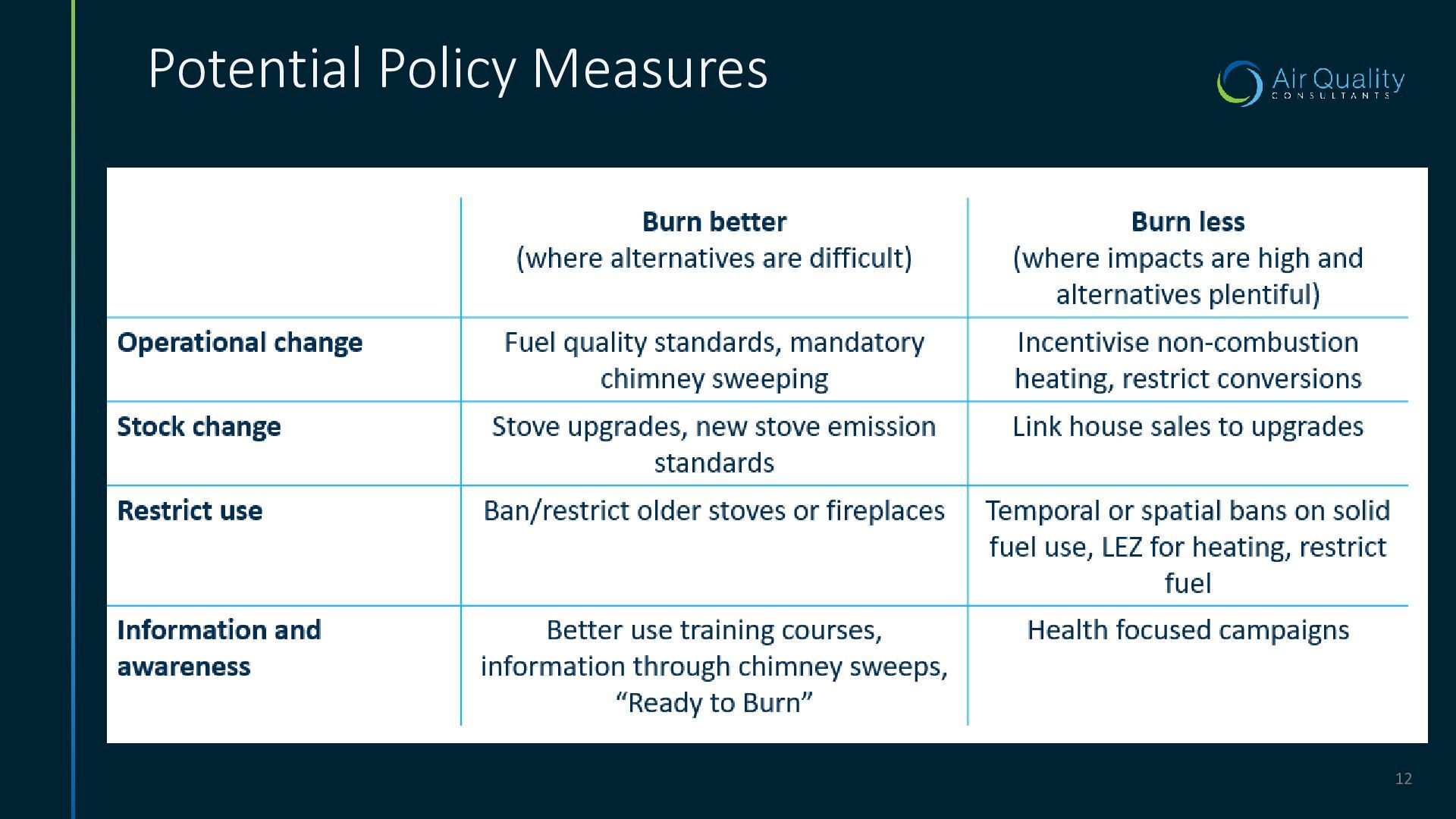
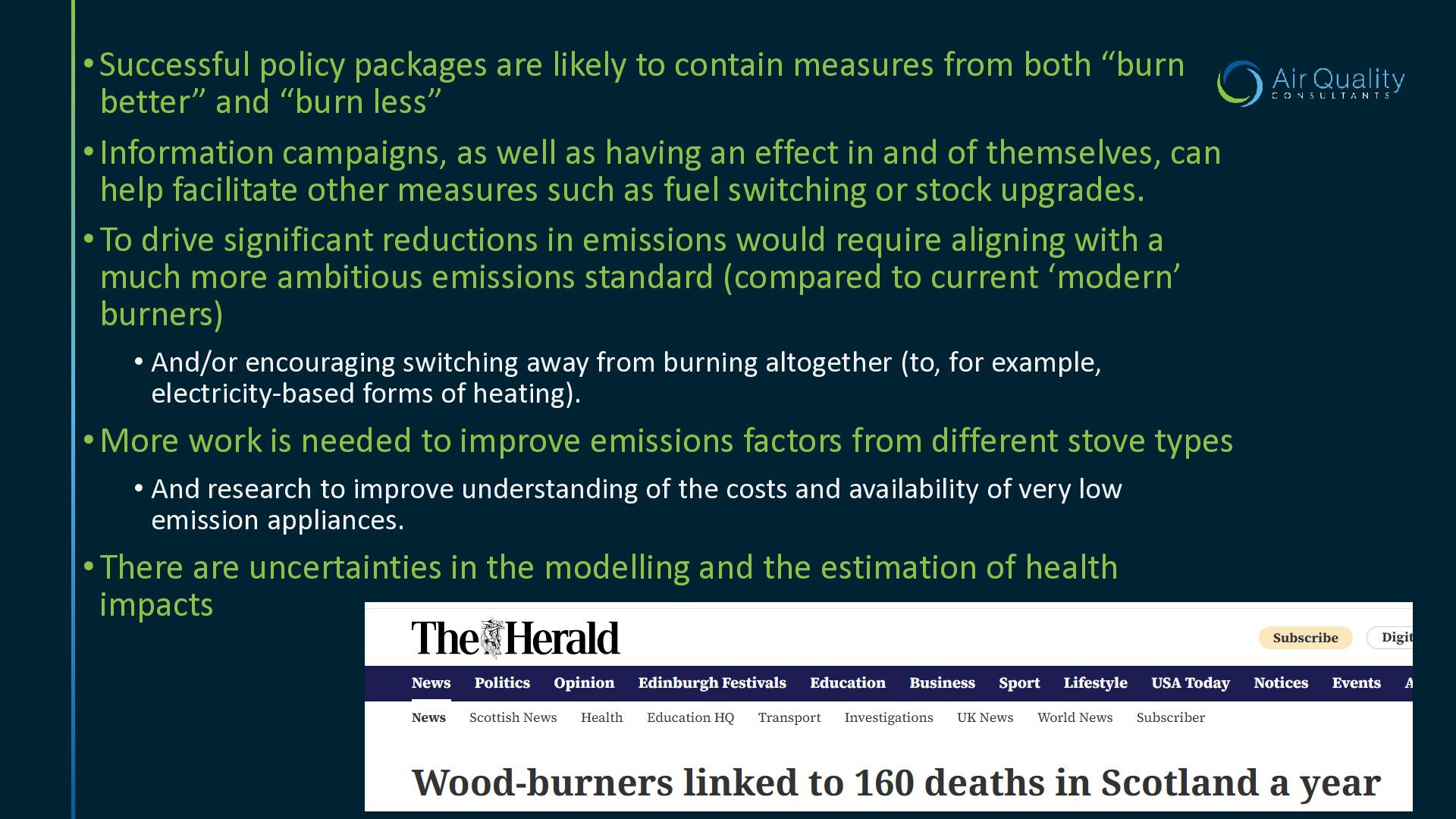
both “burn better” and “burn less” • Information campaigns, as well as having an effect in and of themselves, can help facilitate other measures such as fuel switching or stock upgrades. • To drive significant reductions in emissions would require aligning with a much more ambitious emissions standard (compared to current ‘modern’ burners) • And/or encouraging switching away from burning altogether (to, for example, electricity-based forms of heating). • More work is needed to improve emissions factors from different stove types • And research to improve understanding of the costs and availability of very low emission appliances. • There are uncertainties in the modelling and the estimation of health impacts 19


 iesevents
 reverentgeek
 swwweet
 marketingsoph
 sergeychernyshev
 jonoalderson
 holman
 eileencodes
 katarinadahlin
 mongodb
 samanthasiow
 inesmontani