Share
Embed
Dr. Ijaz Ahmad on Leading With Empathy
Understanding people isn’t a soft skill. Dr. Ijaz Ahmad explains why empathy is one of the strongest tools a leader has and how to practice it every day.
Ijaz Ahmad
October 27, 2026
Transcript
20 slides
-
LEADERSHIP Dr. Ijaz Ahmad on Leading With Empathy Understanding people
isn't a soft skill. It's one of the strongest tools a leader has A STORY BY DR. IJAZ AHMAD -
Leadership is often associated with strength, decisiveness, and vision. Those
qualities matter. But some of the most effective leaders also share another trait that doesn't always get as much attention. They understand people. They notice how others feel, listen carefully, and respond with care. Intro I'm Ijaz Ahmad, and over many years of leading teams, I've seen how empathy shapes trust, morale, and performance. The best professional advice I ever received was to treat every person as if they were your own family. In this story, I want to explain why empathy matters in leadership and how to practice it. 2 -
01 Empathy is the ability to understand another person's feelings
and perspective. It doesn't mean always agreeing or lowering standards. It means recognizing that people bring their own experiences, pressures, and emotions to work. What empathy means Empathetic leaders consider how decisions affect people and communicate in ways that respect their dignity. 3 -
02 Empathy builds trust When people feel understood, they trust
their leaders more. They're more likely to share concerns, admit mistakes, and offer ideas. That openness helps organizations solve problems earlier and work more effectively. Leaders who ignore how people feel often find that problems stay hidden until they become serious. 4 -
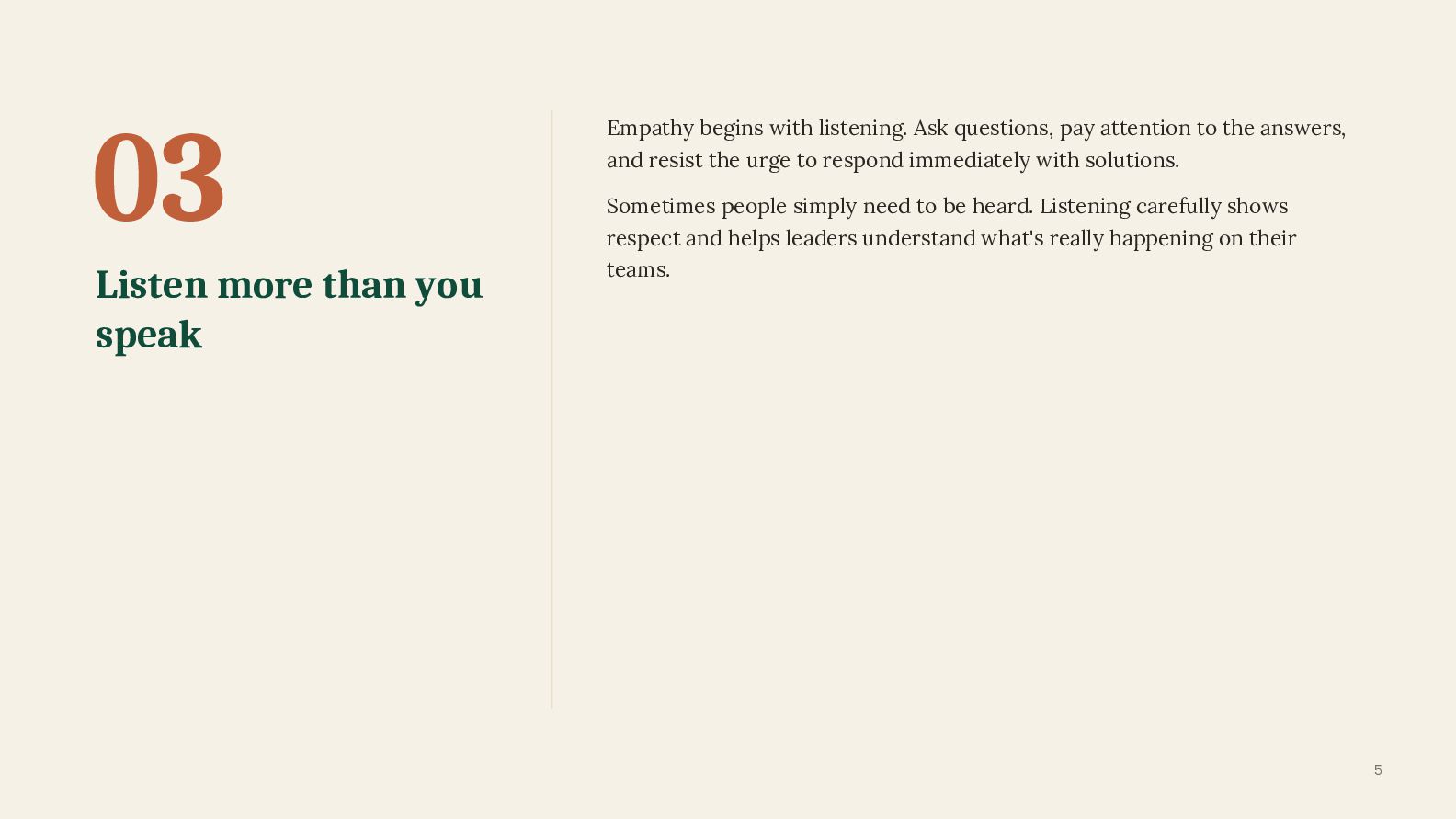
03 Listen more than you speak Empathy begins with listening.
Ask questions, pay attention to the answers, and resist the urge to respond immediately with solutions. Sometimes people simply need to be heard. Listening carefully shows respect and helps leaders understand what's really happening on their teams. 5 -
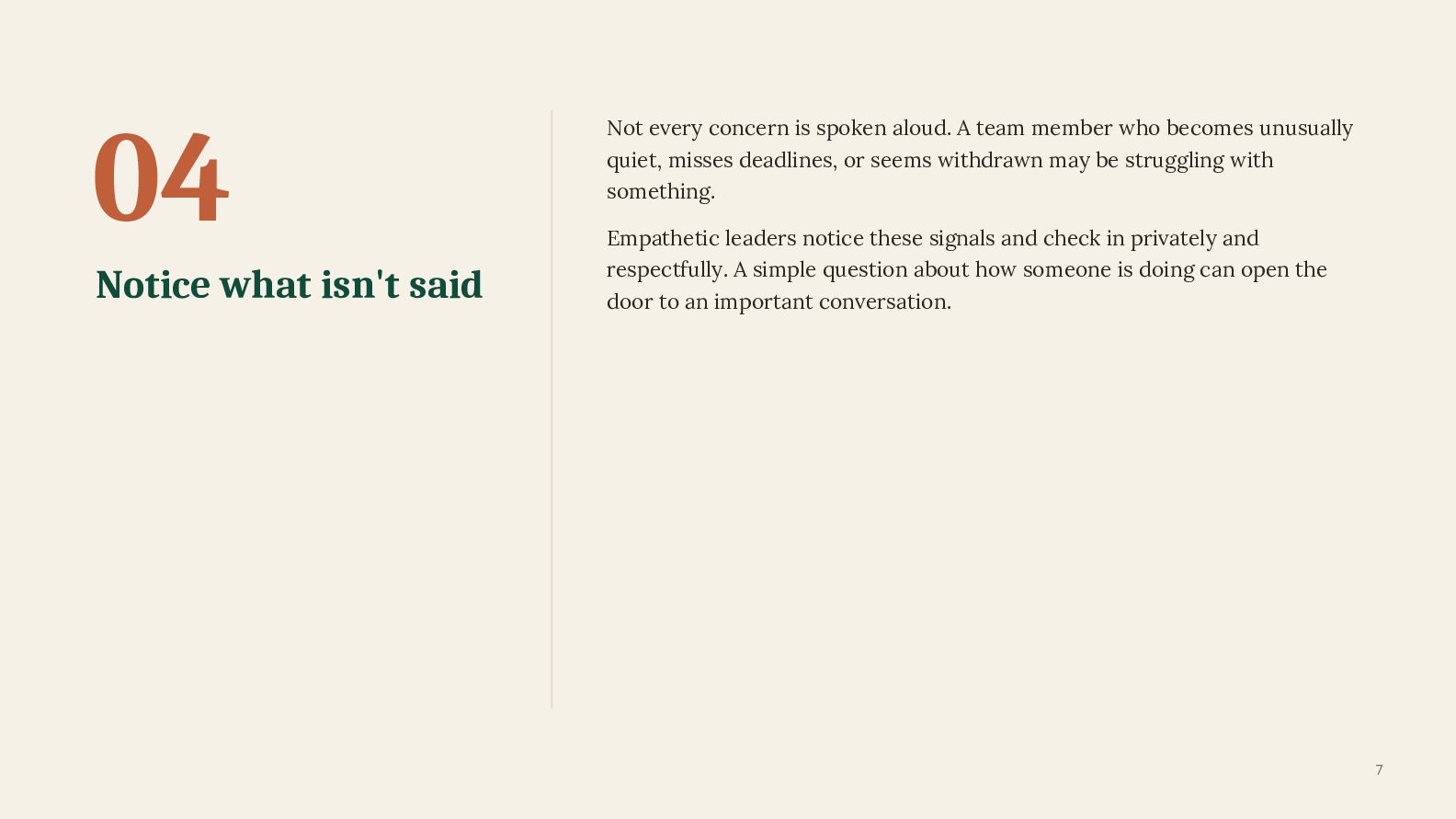
04 Notice what isn't said Not every concern is spoken
aloud. A team member who becomes unusually quiet, misses deadlines, or seems withdrawn may be struggling with something. Empathetic leaders notice these signals and check in privately and respectfully. A simple question about how someone is doing can open the door to an important conversation. 7 -
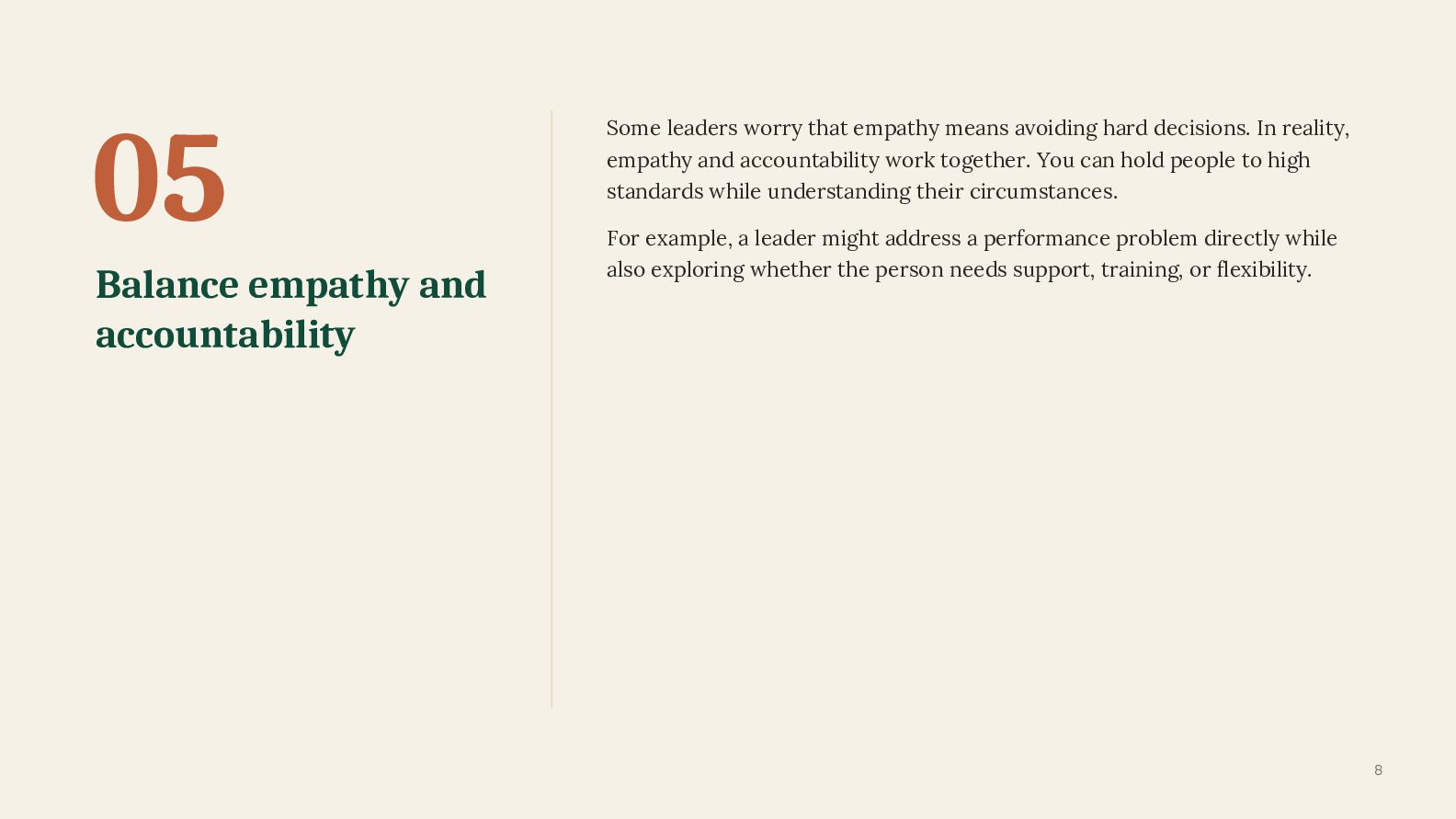
05 Balance empathy and accountability Some leaders worry that empathy
means avoiding hard decisions. In reality, empathy and accountability work together. You can hold people to high standards while understanding their circumstances. For example, a leader might address a performance problem directly while also exploring whether the person needs support, training, or flexibility. 8 -
DID YOU KNOW? Empathy and sympathy are different. Sympathy means
feeling sorry for someone. Empathy means trying to understand their experience from their point of view, which often leads to more practical and respectful support. 9 -
06 Empathy in difficult moments Times of change, stress, or
loss test leaders. Restructuring, personal tragedies, and crises all affect people deeply. Empathetic leaders communicate honestly, acknowledge the impact on people, and offer whatever support they can. How leaders behave during hard times is often remembered long after the crisis passes. 10 -
07 Empathy matters beyond the team. Understanding customers' needs, frustrations,
and experiences helps organizations serve them better. In service industries especially, people notice when they're treated with patience and respect. Empathy improves the experience for everyone. Empathy for customers 11 -
08 Practicing empathy Empathy can be developed. Leaders can practice
by asking more questions, seeking different perspectives, and reflecting on how their words and decisions affect others. Spending time with people at different levels of the organization also helps leaders understand the realities of daily work. 12 -
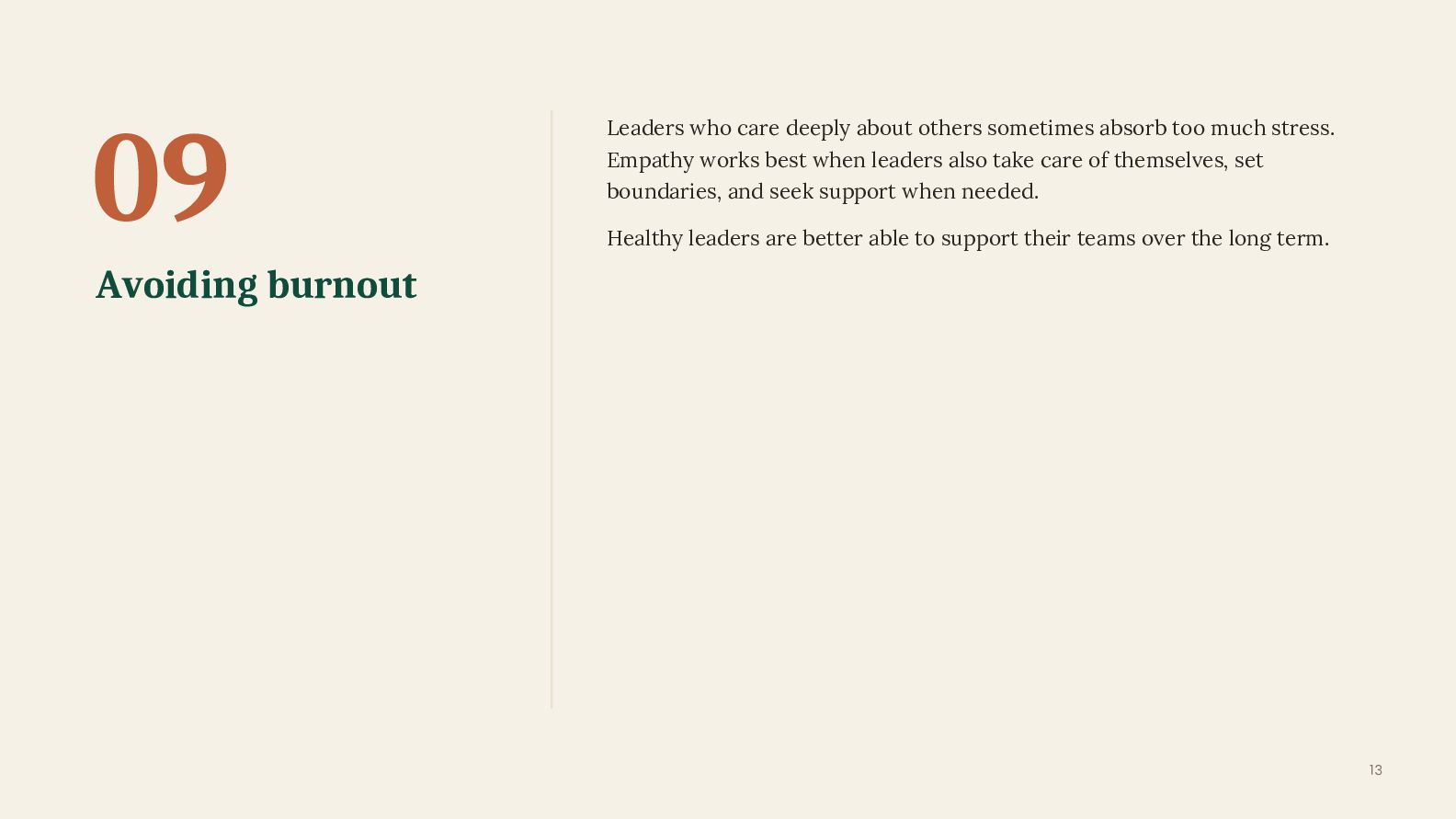
09 Leaders who care deeply about others sometimes absorb too
much stress. Empathy works best when leaders also take care of themselves, set boundaries, and seek support when needed. Healthy leaders are better able to support their teams over the long term. Avoiding burnout 13 -
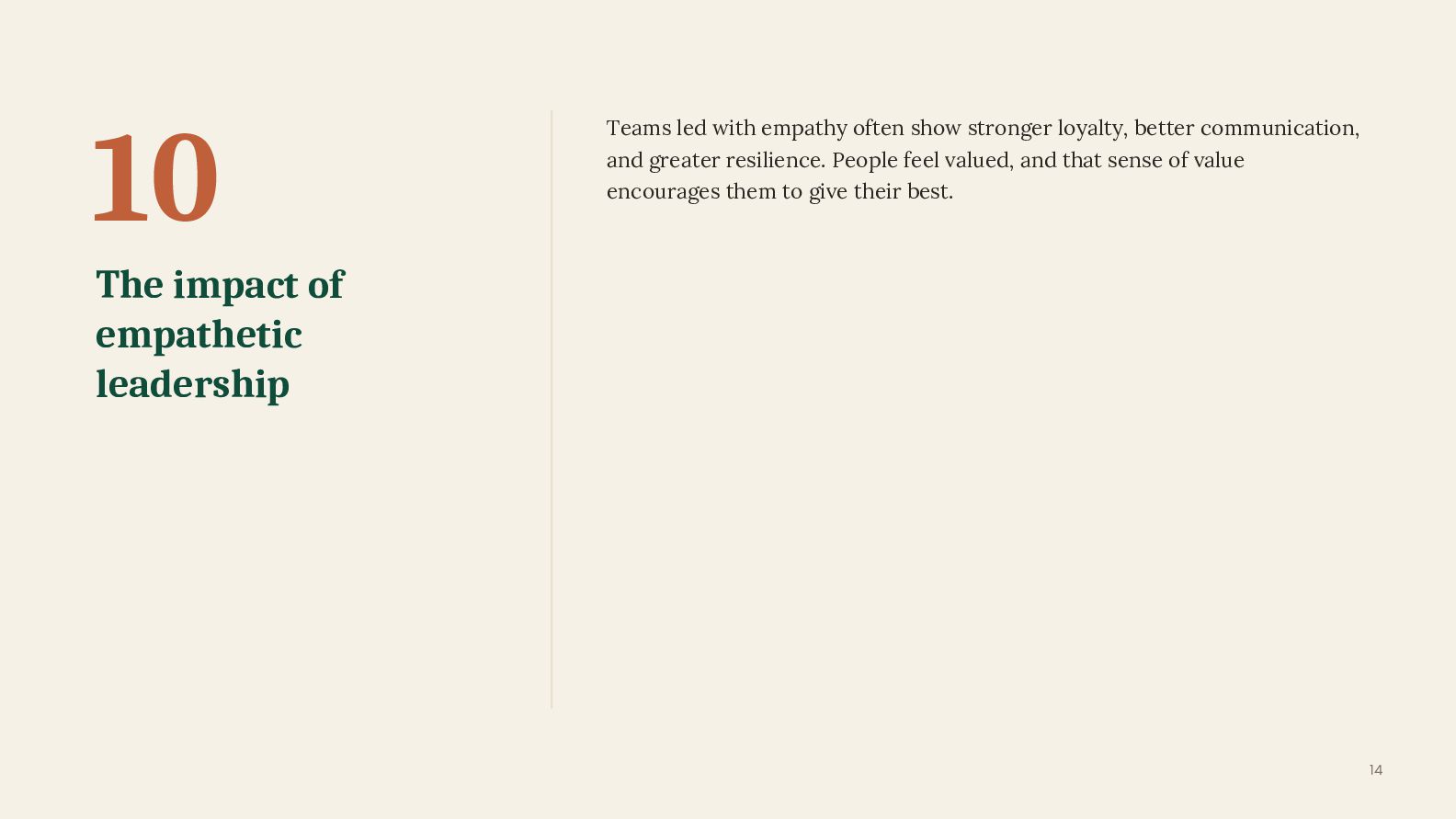
10 Teams led with empathy often show stronger loyalty, better
communication, and greater resilience. People feel valued, and that sense of value encourages them to give their best. The impact of empathetic leadership 14 -
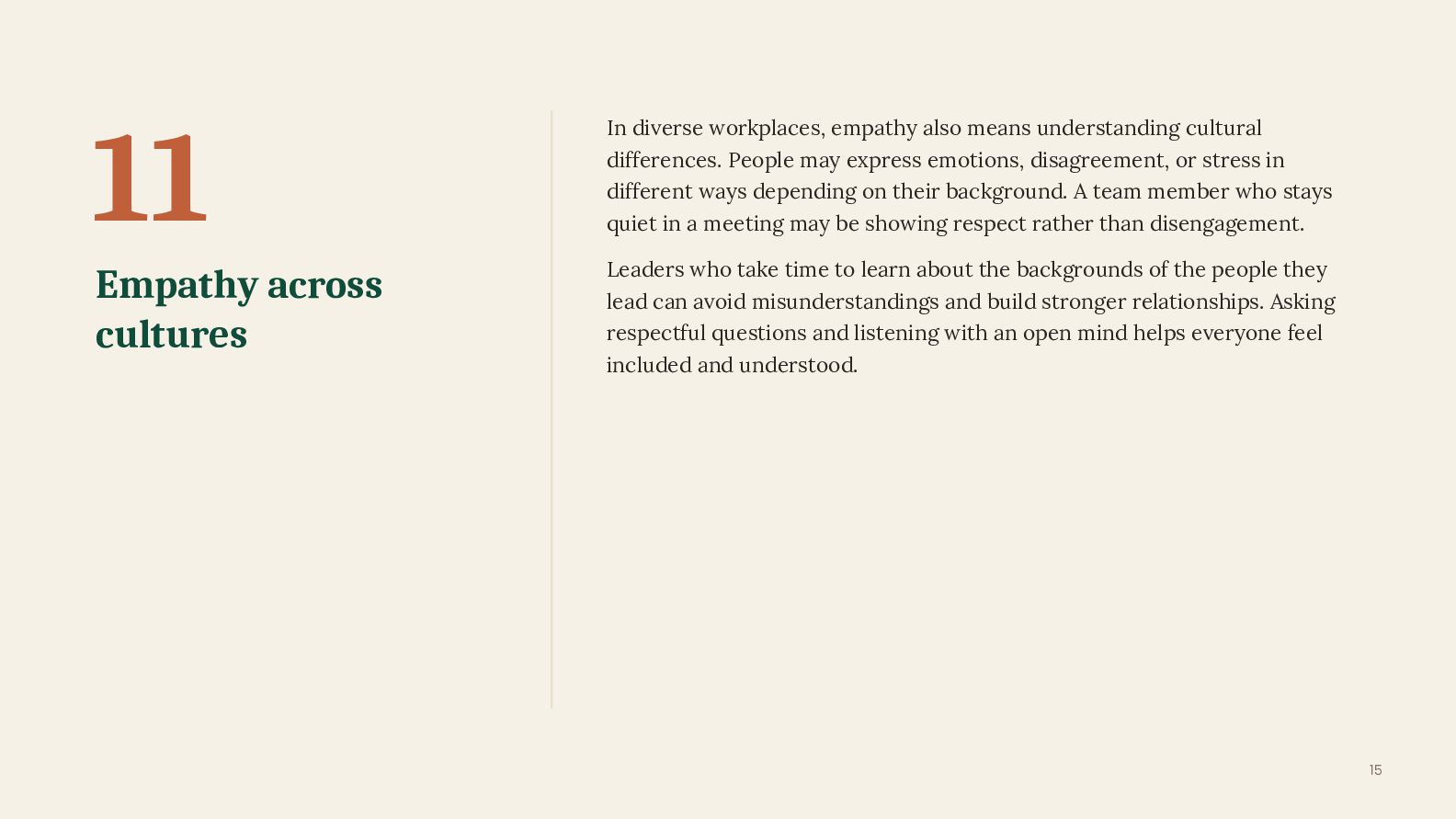
11 In diverse workplaces, empathy also means understanding cultural differences.
People may express emotions, disagreement, or stress in different ways depending on their background. A team member who stays quiet in a meeting may be showing respect rather than disengagement. Empathy across cultures Leaders who take time to learn about the backgrounds of the people they lead can avoid misunderstandings and build stronger relationships. Asking respectful questions and listening with an open mind helps everyone feel included and understood. 15 -
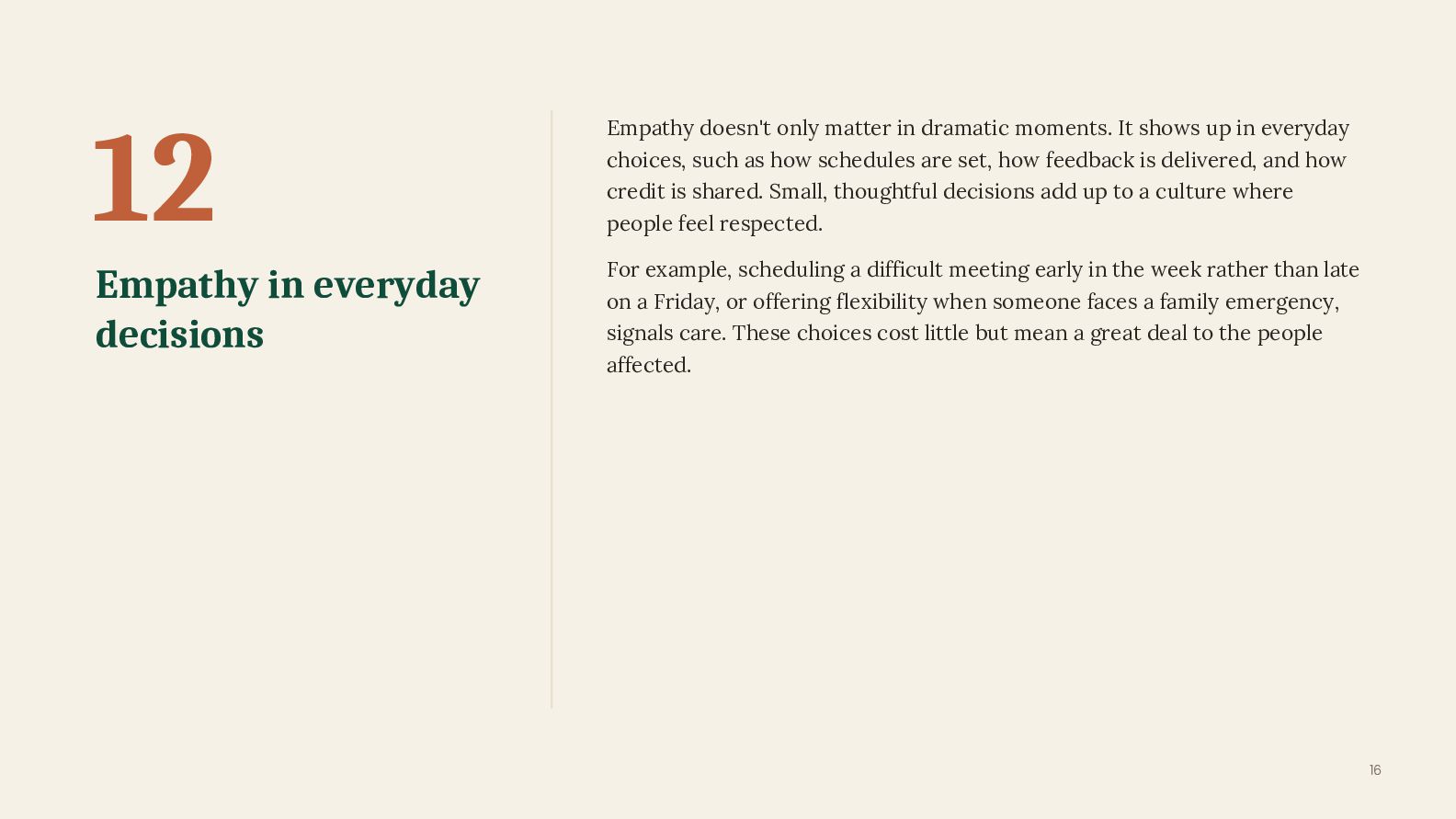
12 Empathy doesn't only matter in dramatic moments. It shows
up in everyday choices, such as how schedules are set, how feedback is delivered, and how credit is shared. Small, thoughtful decisions add up to a culture where people feel respected. Empathy in everyday decisions For example, scheduling a difficult meeting early in the week rather than late on a Friday, or offering flexibility when someone faces a family emergency, signals care. These choices cost little but mean a great deal to the people affected. 16 -
13 Empathy also improves decision-making. Leaders who consider how a
change will affect different people often spot problems before they happen. Asking who will be most affected, and how, leads to plans that are fairer and easier to implement. Empathy and better decisions 17 -
14 Empathy isn't a weakness or a luxury. It's a
powerful leadership skill that strengthens relationships and organizations. When leaders understand people, they make better decisions and build cultures where everyone can thrive. Leading with heart Start small. Listen a little more carefully. Ask how someone is really doing. Consider how your next decision will affect the people around you. Those small habits can transform the way you lead. 18 -
ABOUT THE AUTHOR Dr. Ijaz Ahmad, MD, FACC Dr. Ijaz
Ahmad is a physician, healthcare entrepreneur, and philanthropist. Born in Gujranwala, Pakistan, he writes about South Asian culture, leadership, entrepreneurship, education, and giving back. THANK YOU FOR READING -
i DISCLAIMER This piece is shared for general informational and
educational purposes only. It reflects the personal views and experiences of Dr. Ijaz Ahmad and does not constitute professional, financial, legal, or medical advice. Details about places, events, and history may change over time, so please verify any facts with official sources before relying on them. For advice about your specific situation, consult a qualified professional.