Upgrade to Pro — share decks privately, control downloads, hide ads and more …

Did My Deploy Degrade Production?

Sponsored · Your Podcast. Everywhere. Effortlessly. Share. Educate. Inspire. Entertain. You do you. We'll handle the rest.

Did My Deploy Degrade Production?

Avatar for inesp

inesp

June 10, 2026

More Decks by inesp

Other Decks in Programming

Transcript

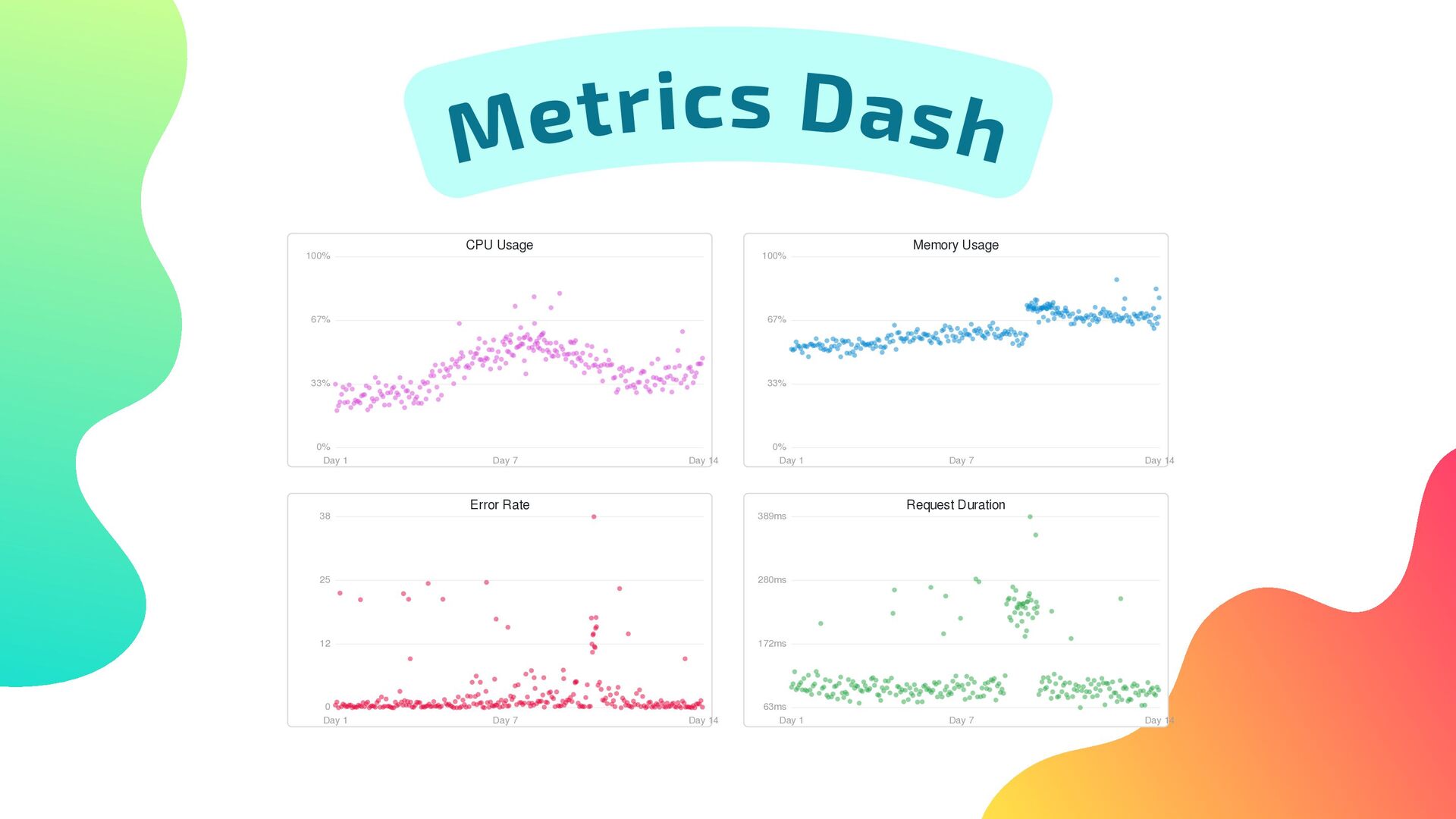
  1. CPU Usage 0% 33% 67% 100% Day 1 Day 7

    Day 14 Memory Usage 0% 33% 67% 100% Day 1 Day 7 Day 14 Error Rate 0 12 25 38 Day 1 Day 7 Day 14 Request Duration 63ms 172ms 280ms 389ms Day 1 Day 7 Day 14 Metrics Dash
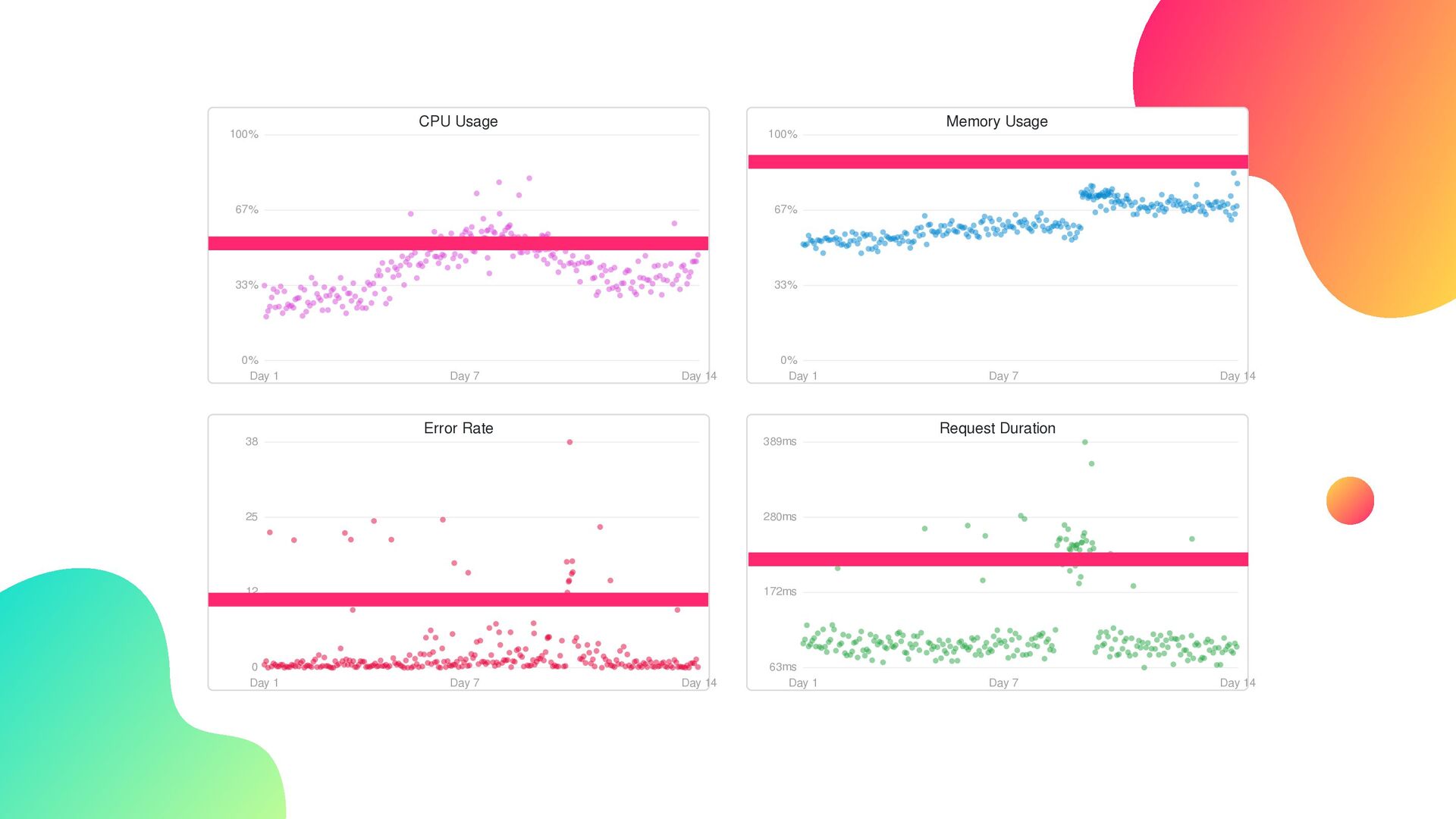
  2. CPU Usage 0% 33% 67% 100% Day 1 Day 7

    Day 14 Memory Usage 0% 33% 67% 100% Day 1 Day 7 Day 14 Error Rate 0 12 25 38 Day 1 Day 7 Day 14 Request Duration 63ms 172ms 280ms 389ms Day 1 Day 7 Day 14
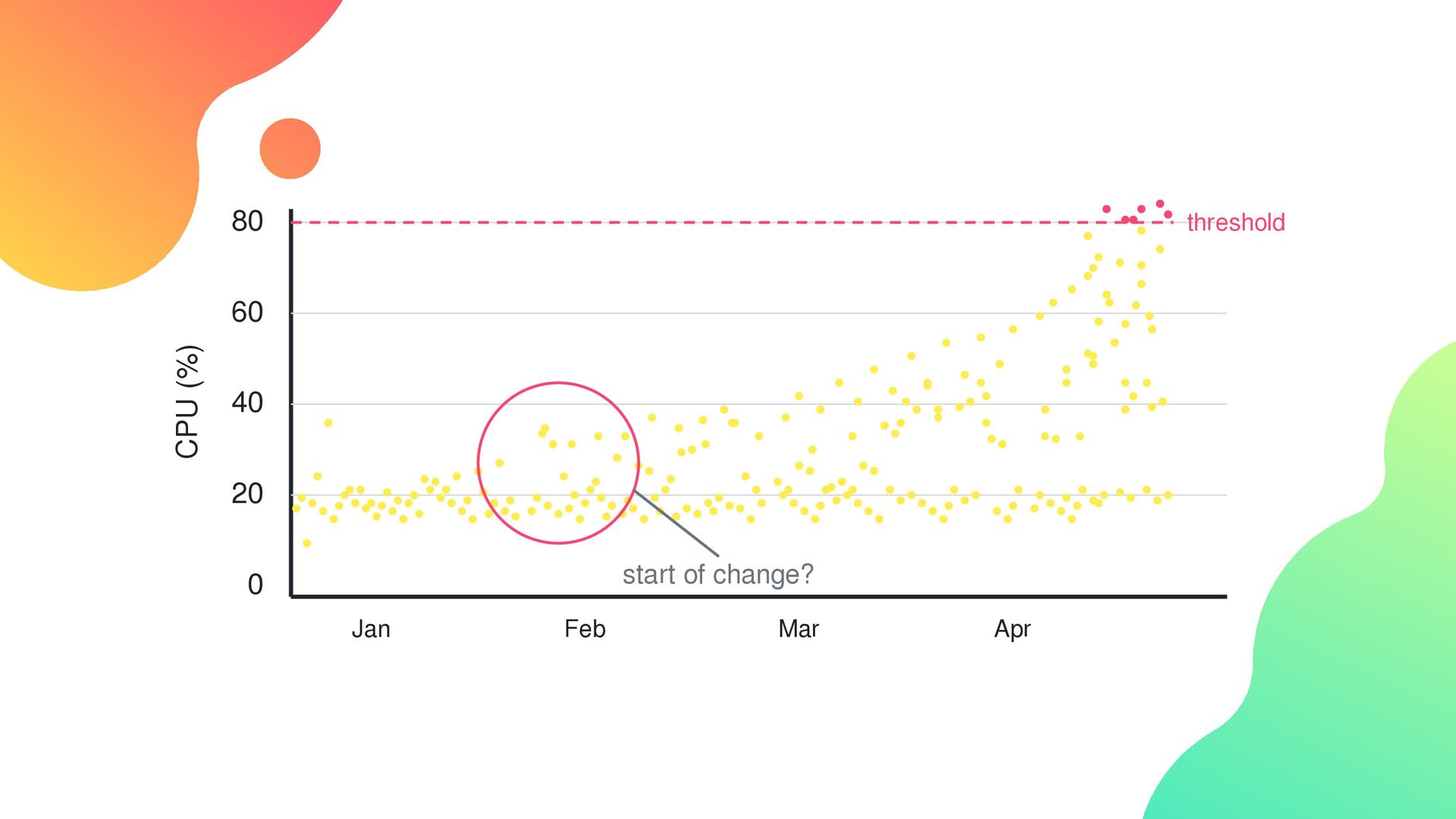
  3. 80 60 40 20 0 CPU (%) Jan Feb Mar

    Apr threshold start of change?
  4. and Quick Quick Quick Past Data Past Data Past Data

    ly analyze judge New Values New Values New Values
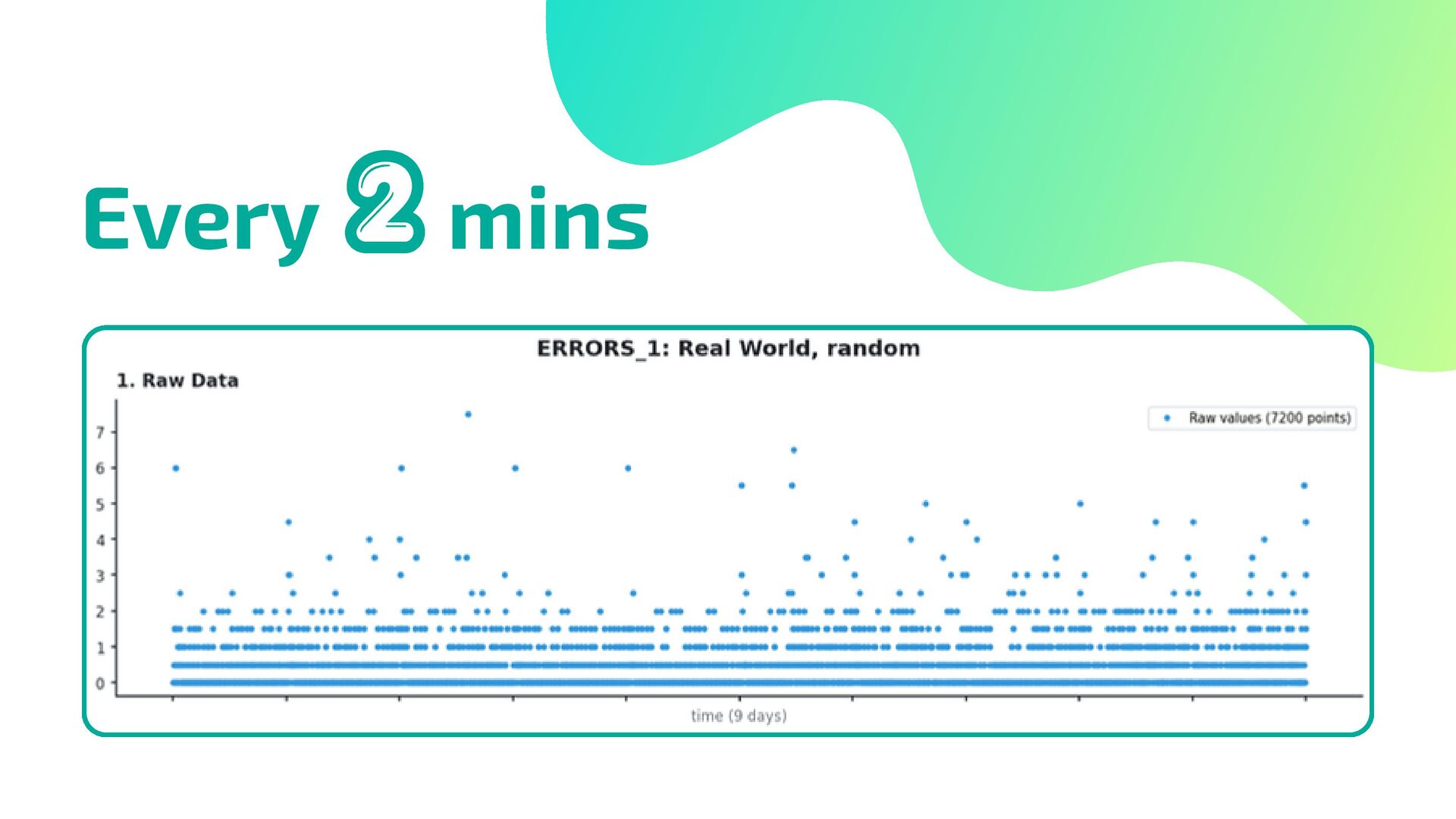
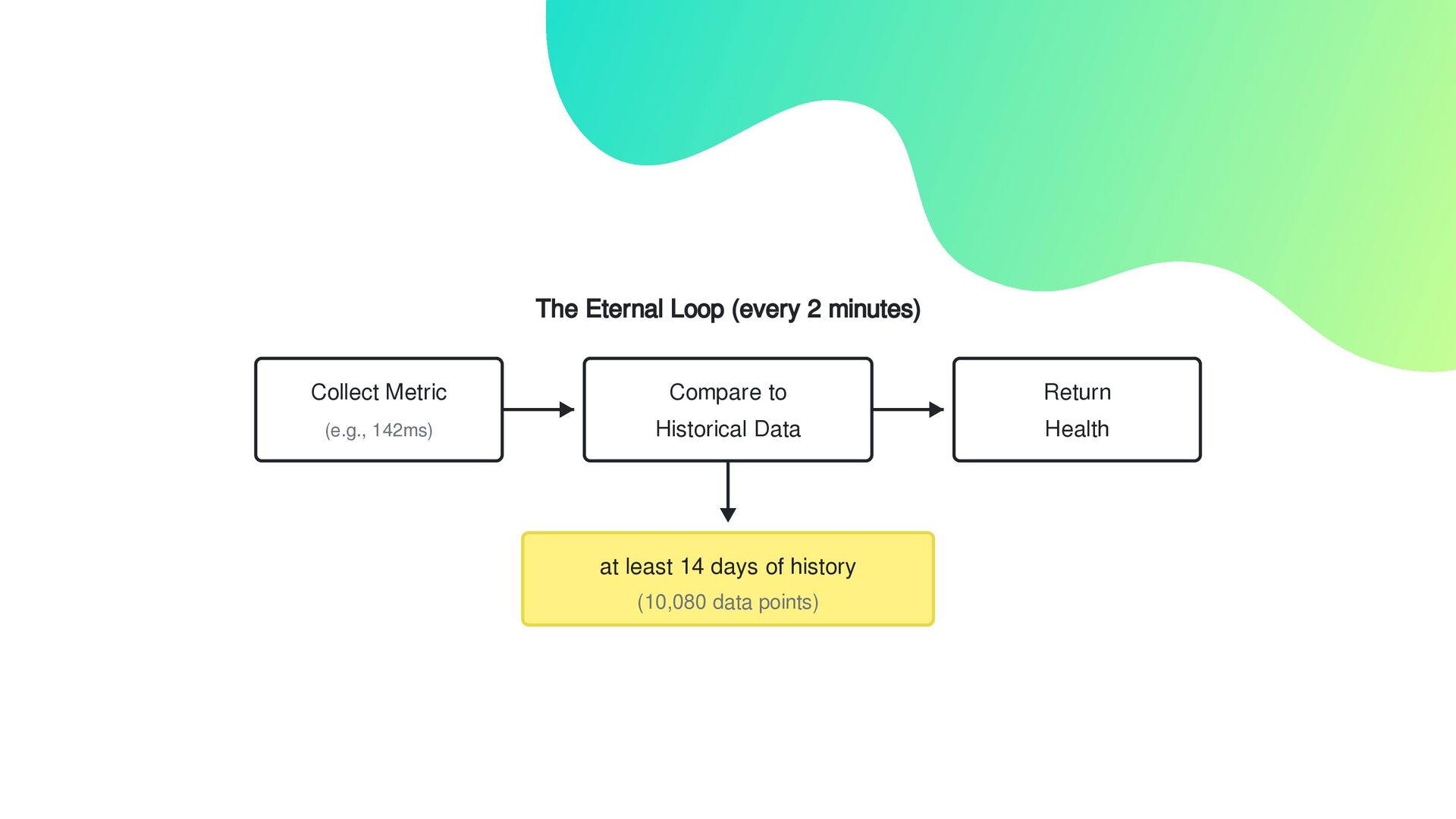
  5. The Eternal Loop (every 2 minutes) Collect Metric (e.g., 142ms)

    Compare to Historical Data Return Health at least 14 days of history (10,080 data points)
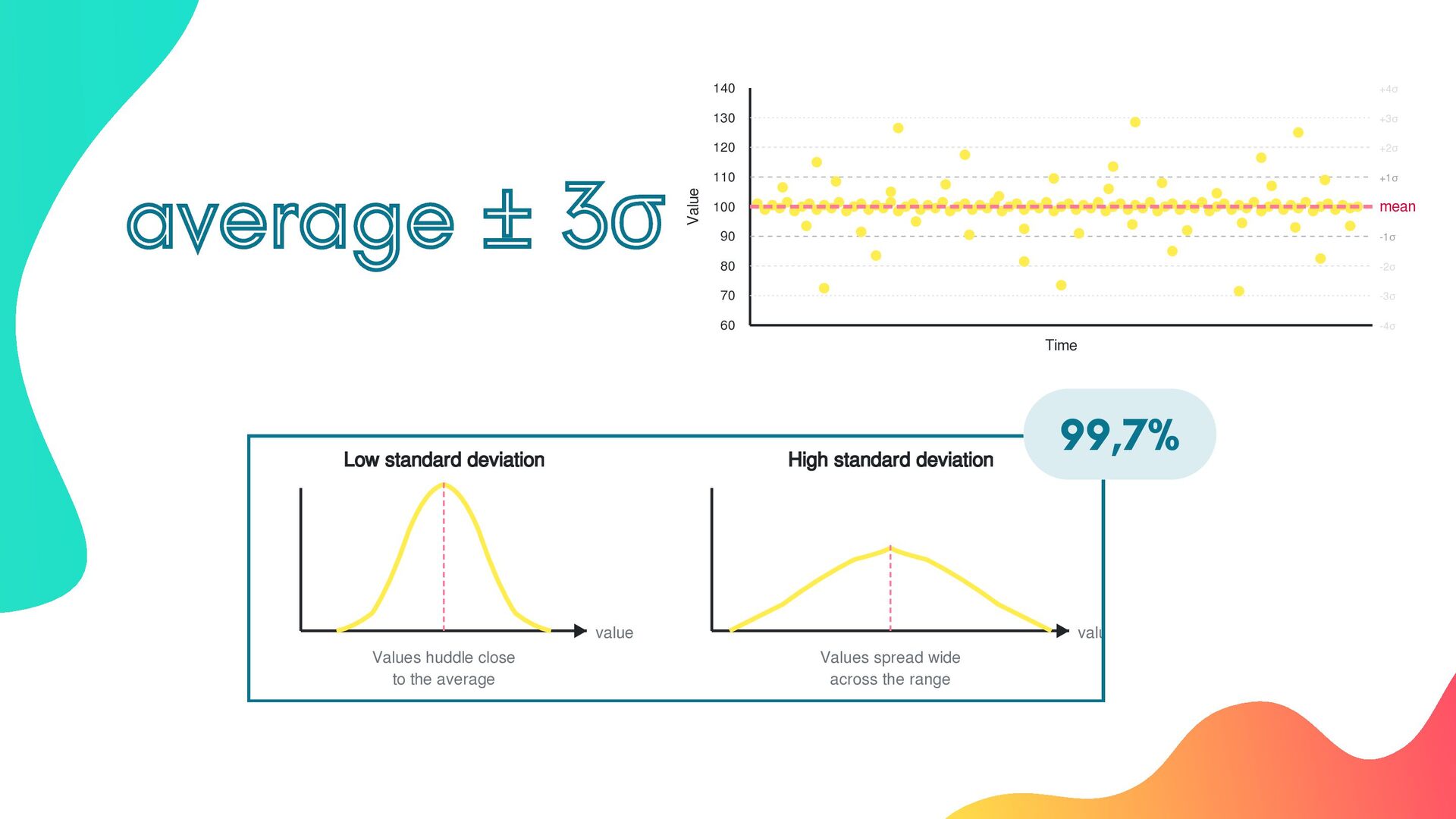
  6. Low standard deviation value Values huddle close to the average

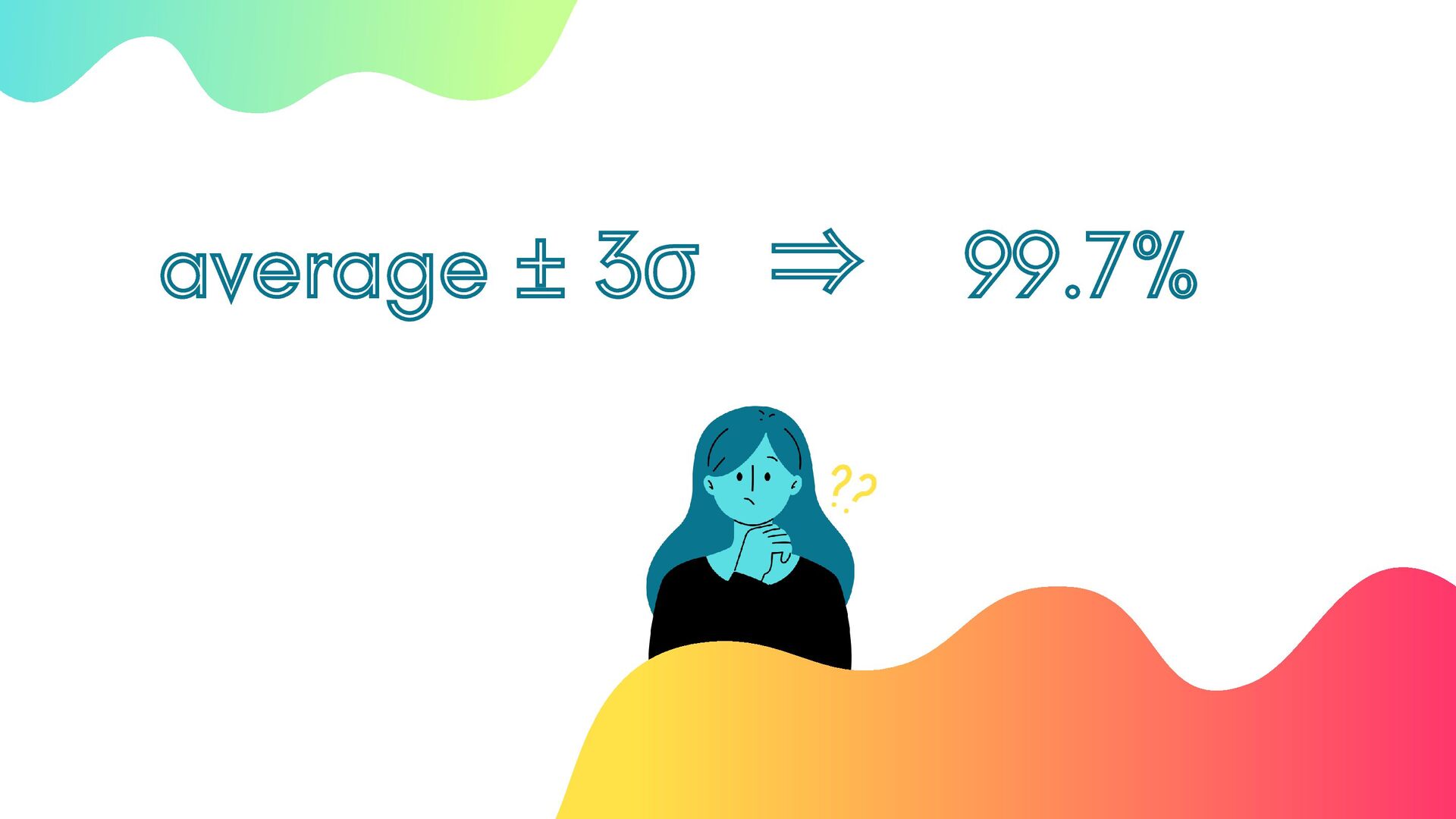
    High standard deviation valu Values spread wide across the range average ± 3σ average ± 3 σ 140 130 120 110 100 90 80 70 60 Value Time +1σ -1σ +2σ -2σ +3σ -3σ +4σ -4σ mean 99,7%
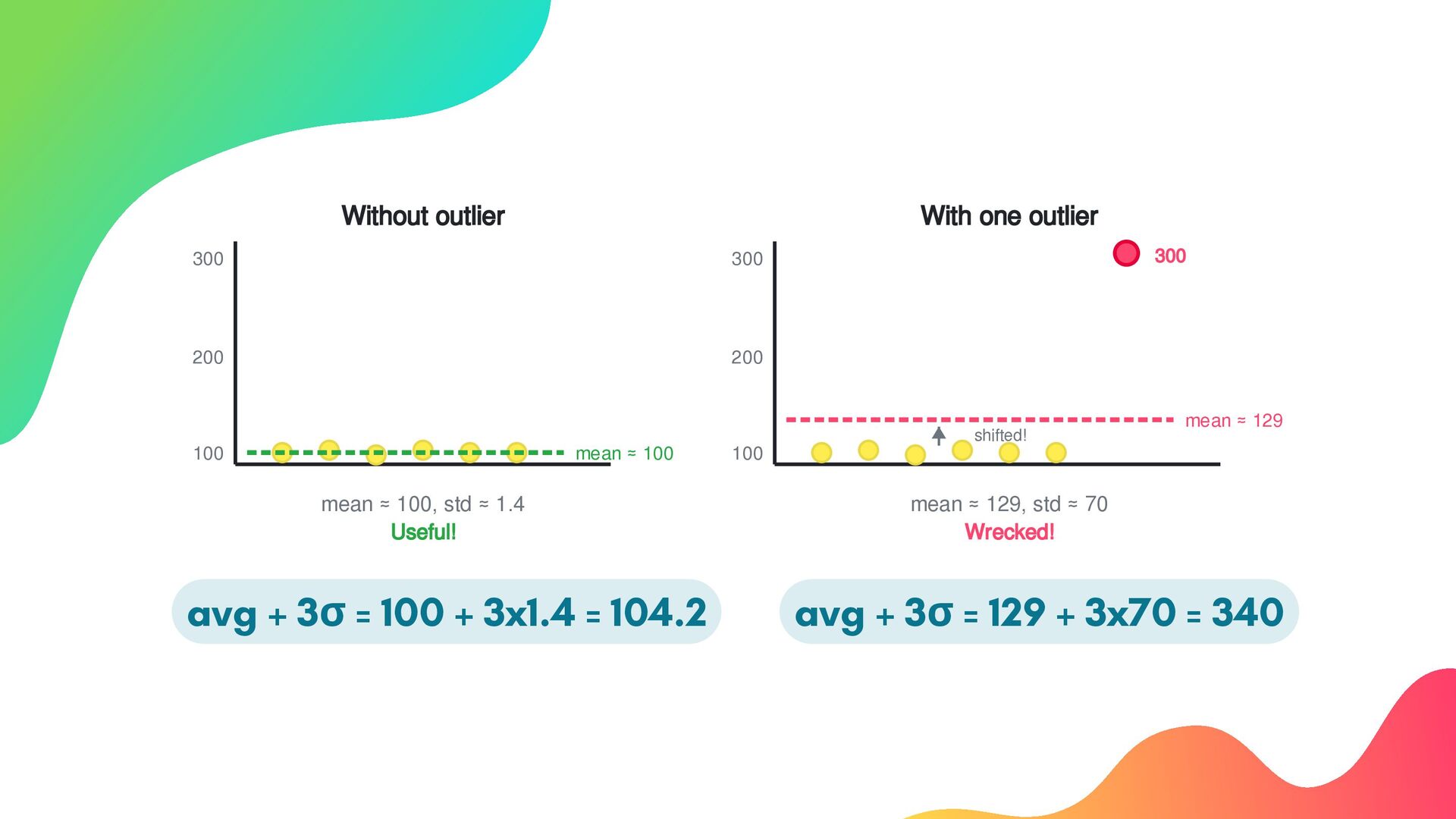
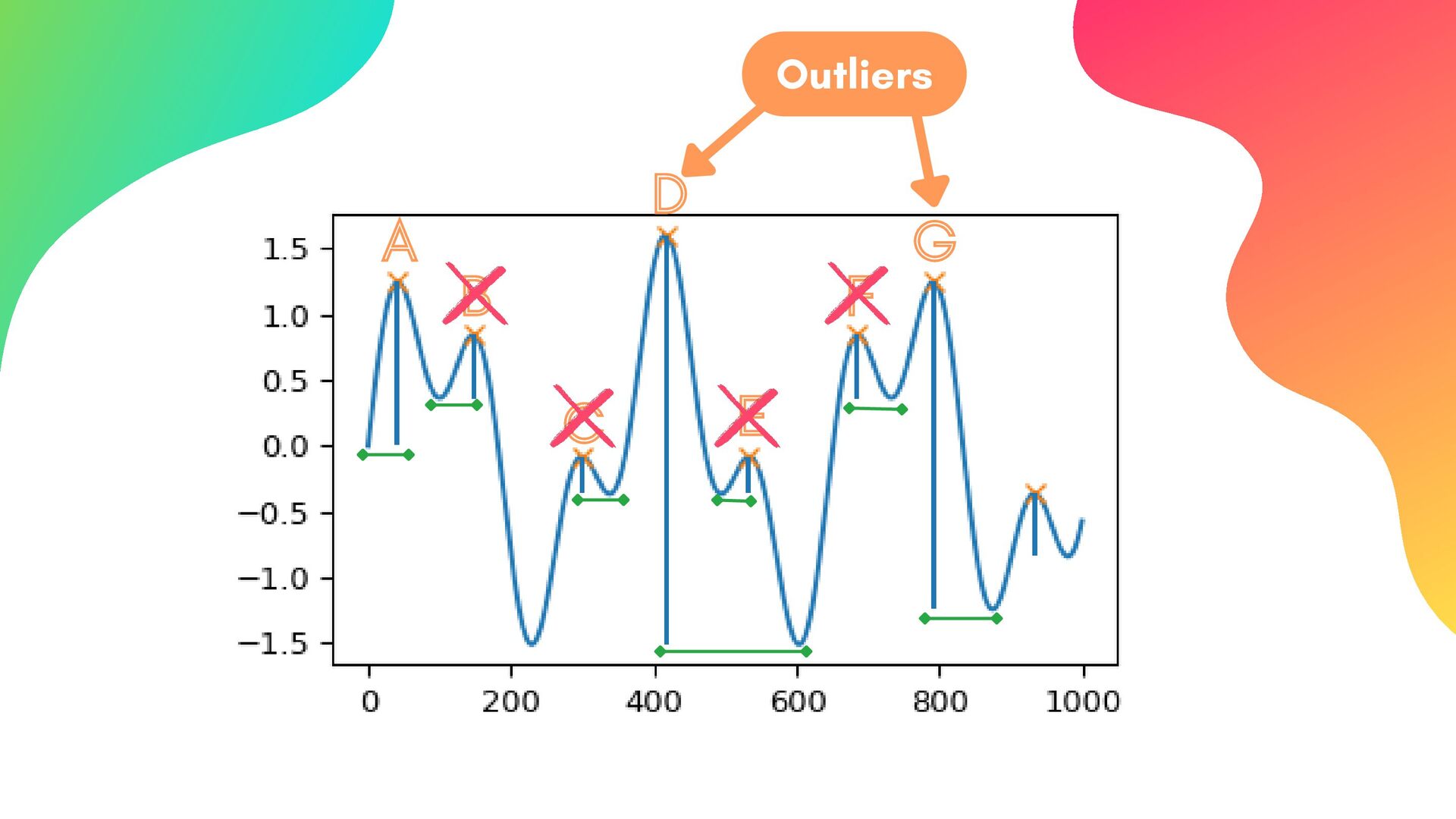
  7. Without outlier 300 200 100 mean ≈ 100 mean ≈

    100, std ≈ 1.4 Useful! With one outlier 300 200 100 300 mean ≈ 129 shifted! mean ≈ 129, std ≈ 70 Wrecked! avg + 3σ = 100 + 3x1.4 = 104.2 avg + 3σ = 129 + 3x70 = 340
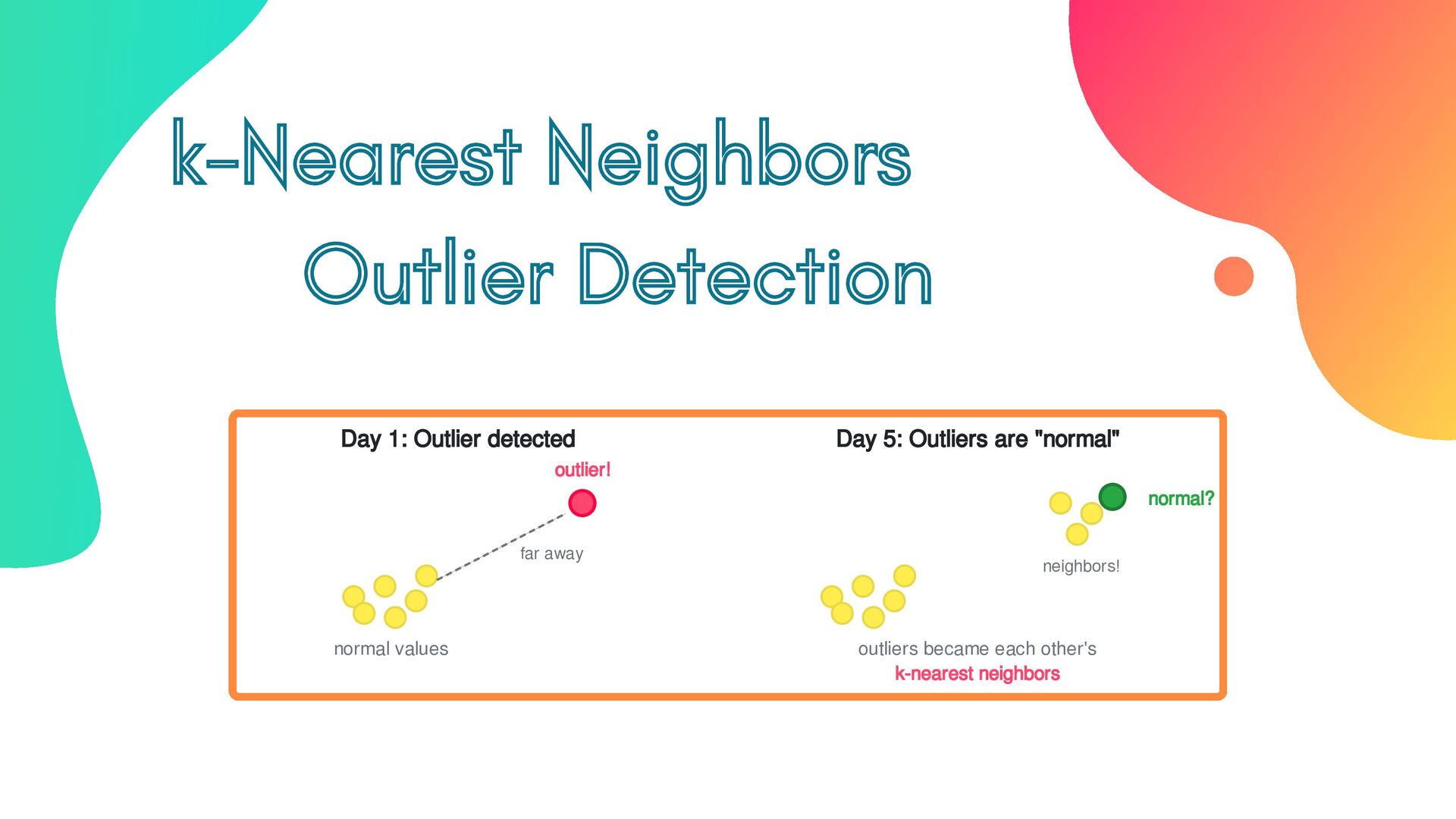
  8. Day 1: Outlier detected normal values outlier! far away Day

    5: Outliers are "normal" normal? neighbors! outliers became each other's k-nearest neighbors k-Nearest Neighbors k-Nearest Neighbors Outlier Detection Outlier Detection
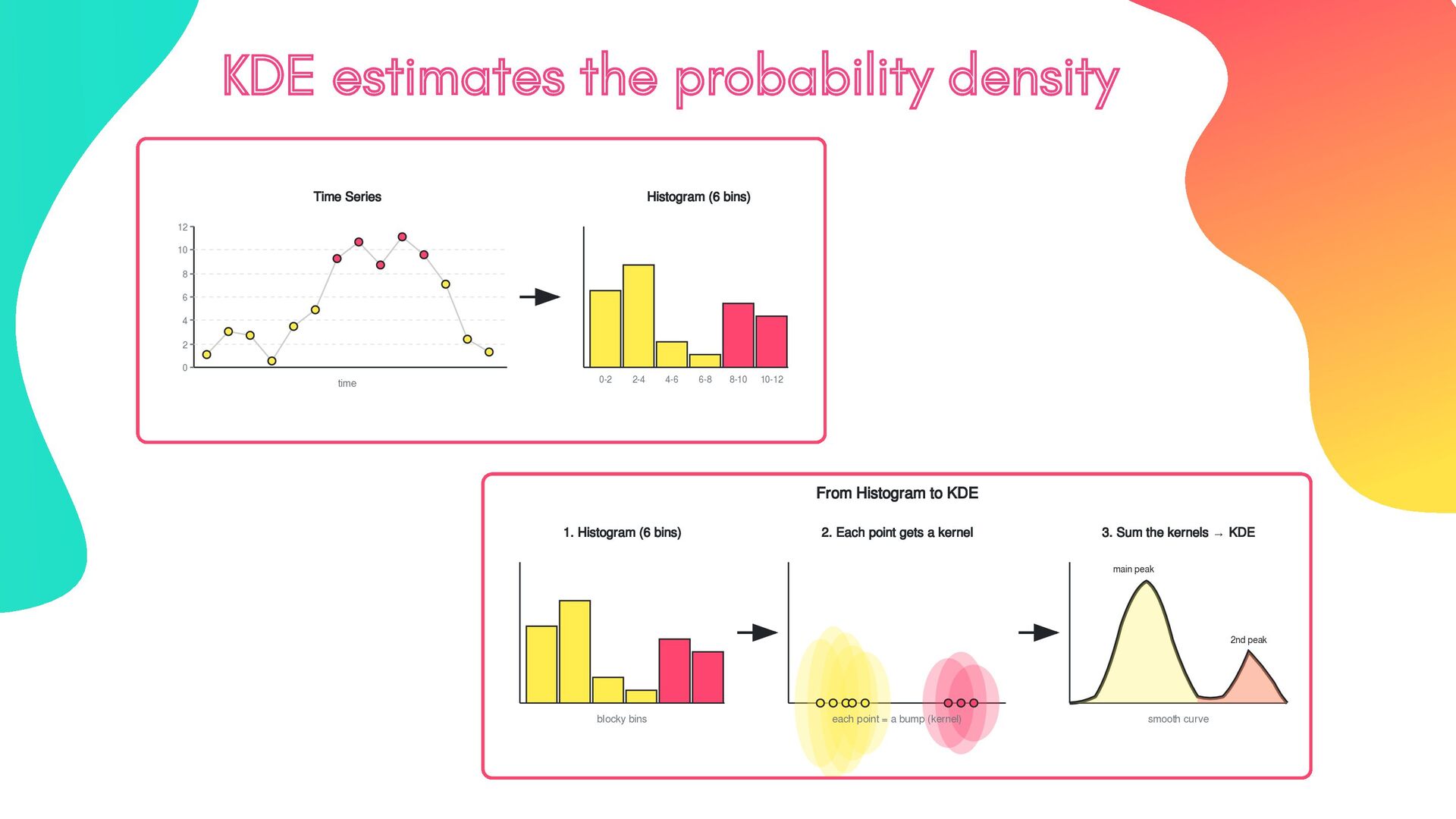
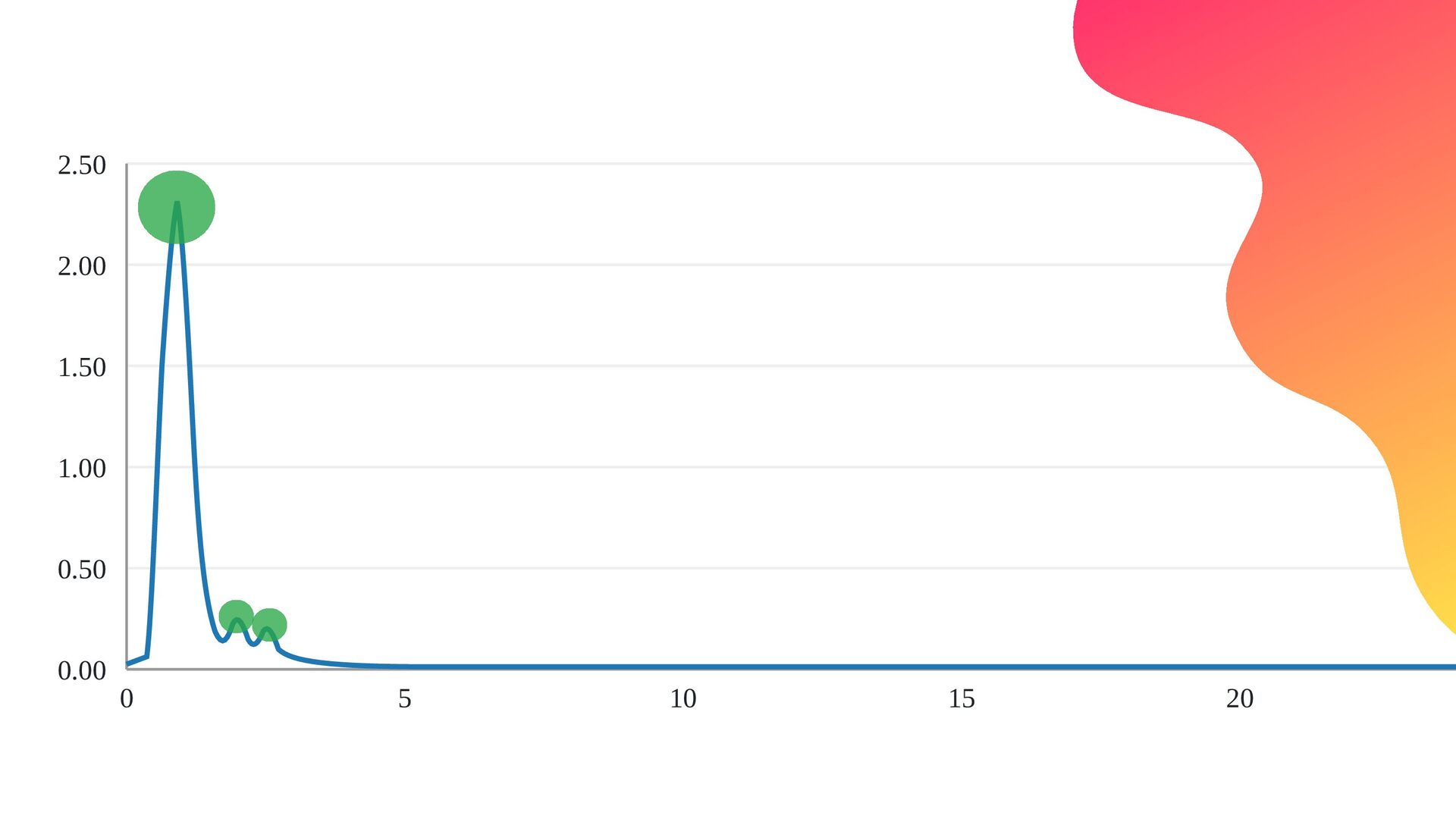
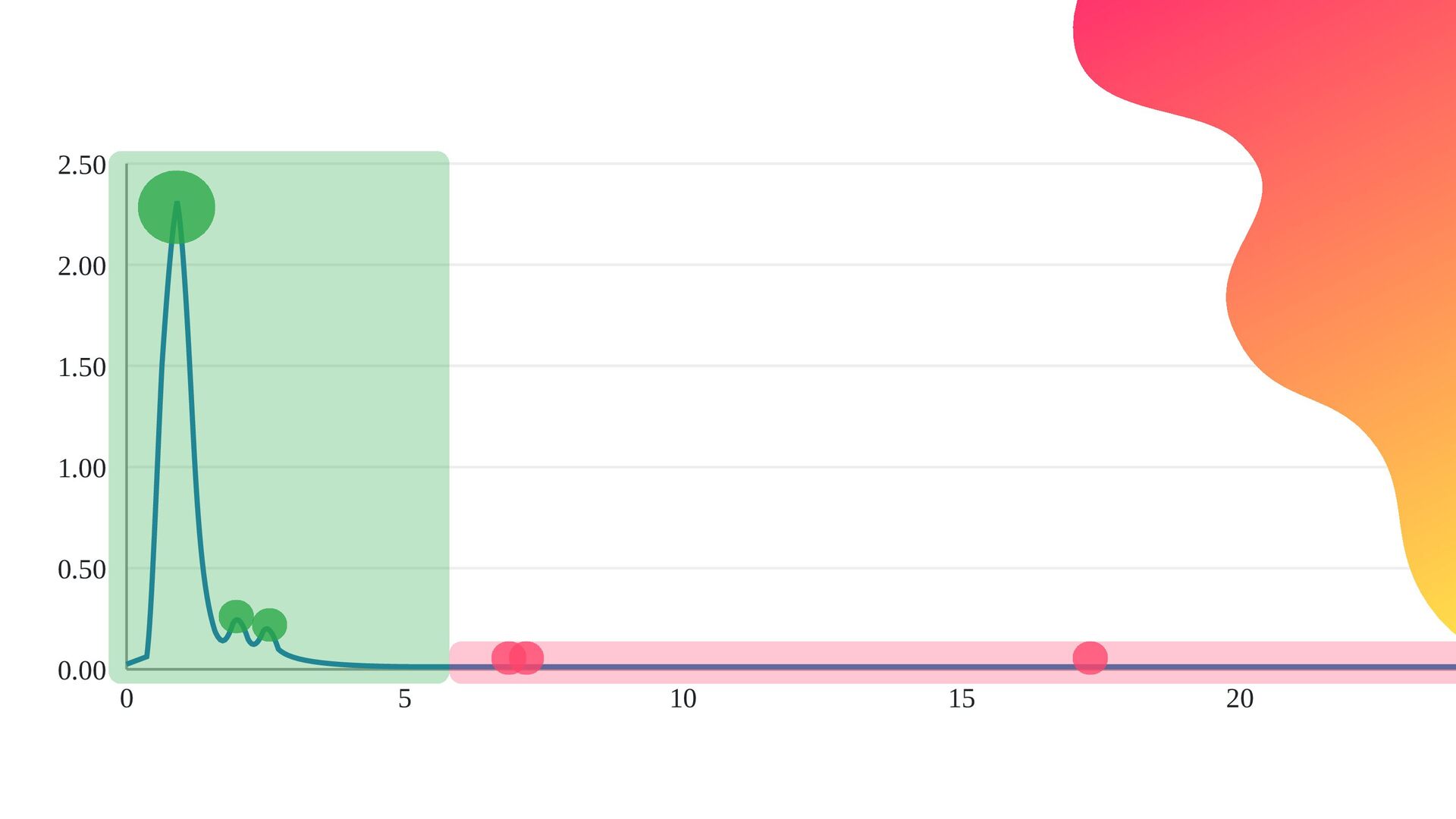
  9. From Histogram to KDE 1. Histogram (6 bins) blocky bins

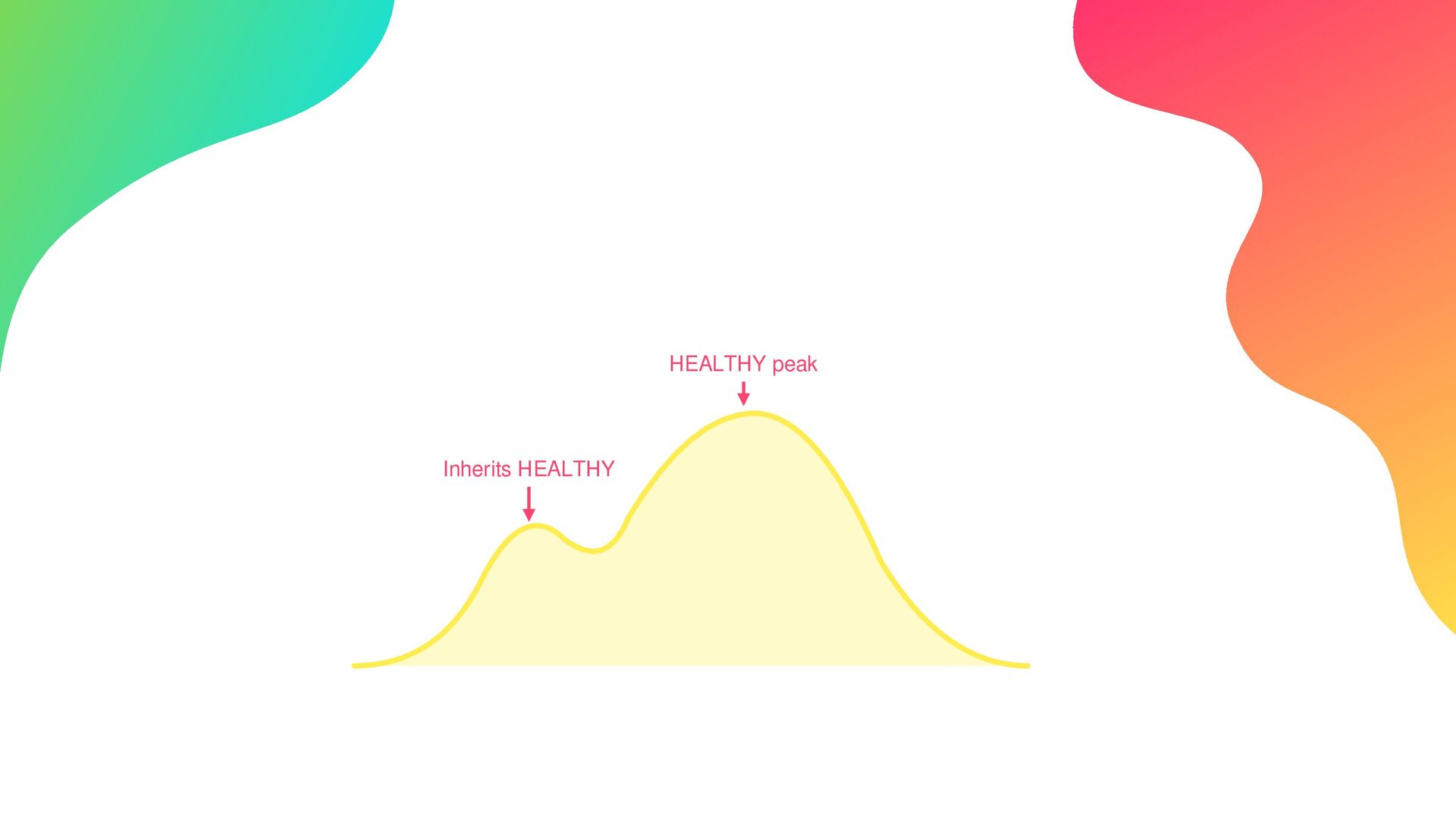
    2. Each point gets a kernel each point = a bump (kernel) 3. Sum the kernels → KDE smooth curve main peak 2nd peak Time Series time 0 2 4 6 8 10 12 Histogram (6 bins) 0-2 2-4 4-6 6-8 8-10 10-12 KDE estimates the probability density KDE estimates the probability density
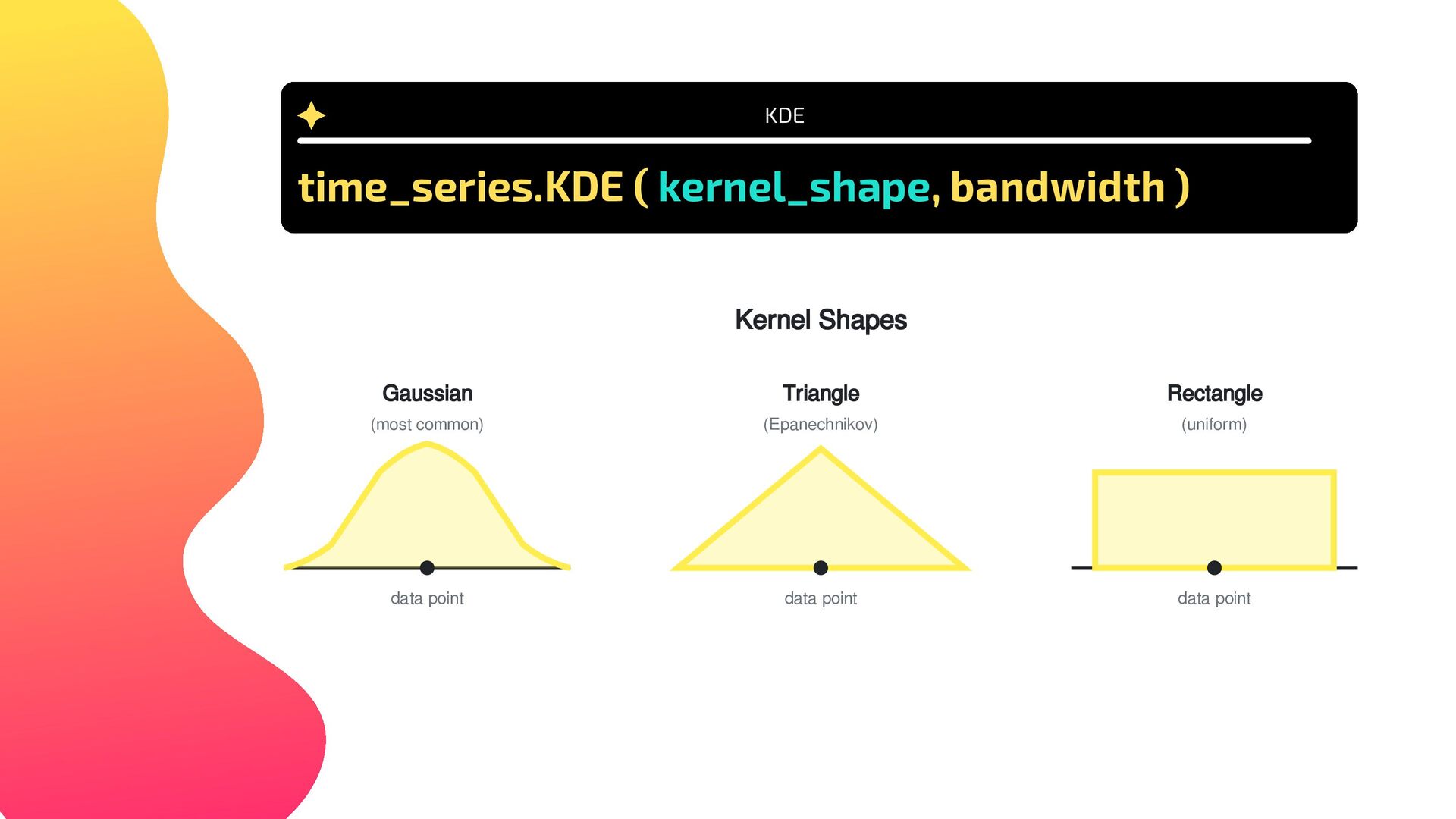
  10. Kernel Shapes Gaussian (most common) data point Triangle (Epanechnikov) data

    point Rectangle (uniform) data point time_series.KDE ( kernel_shape, bandwidth ) KDE
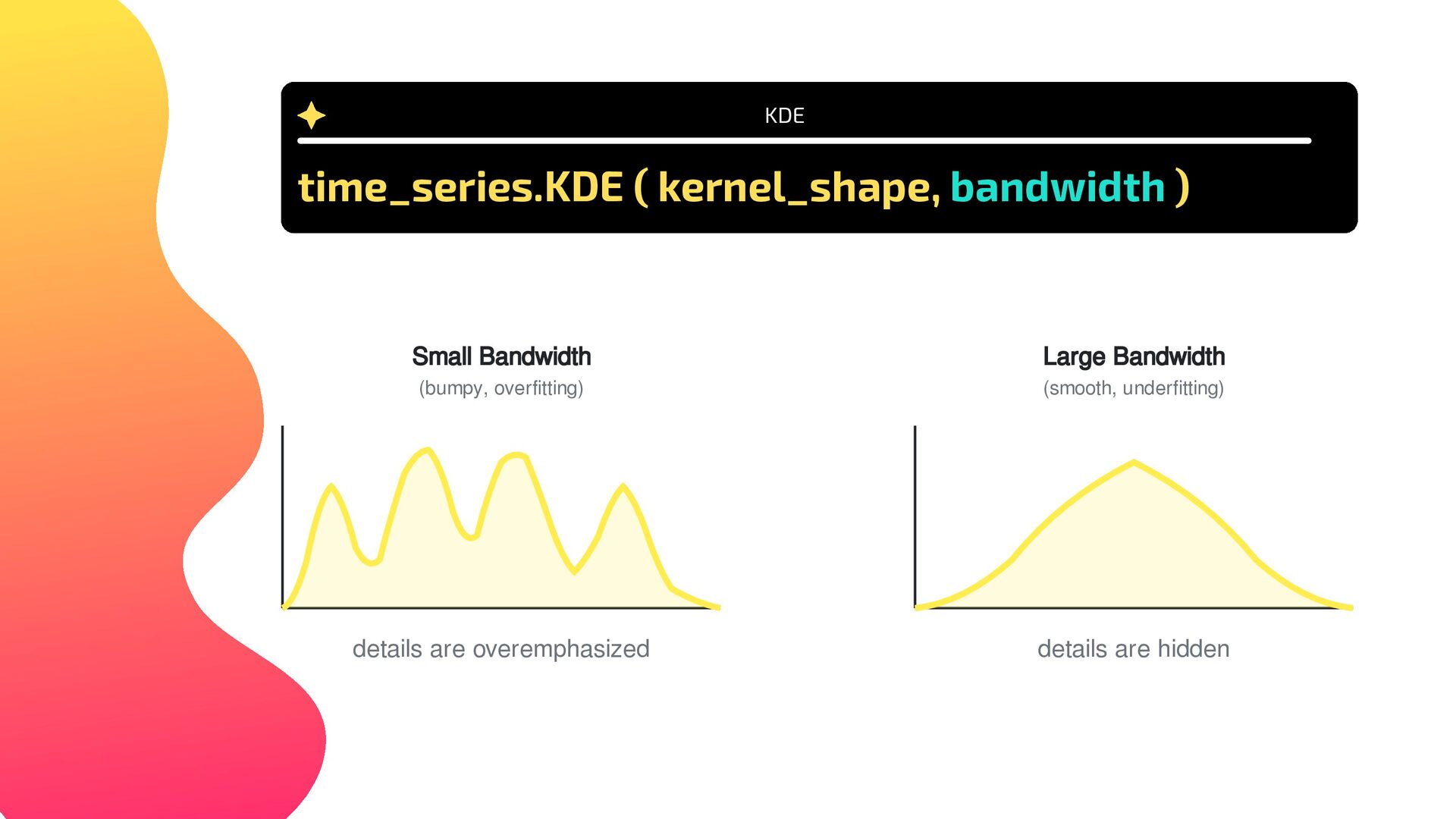
  11. time_series.KDE ( kernel_shape, bandwidth ) KDE Small Bandwidth (bumpy, overfitting)

    details are overemphasized Large Bandwidth (smooth, underfitting) details are hidden
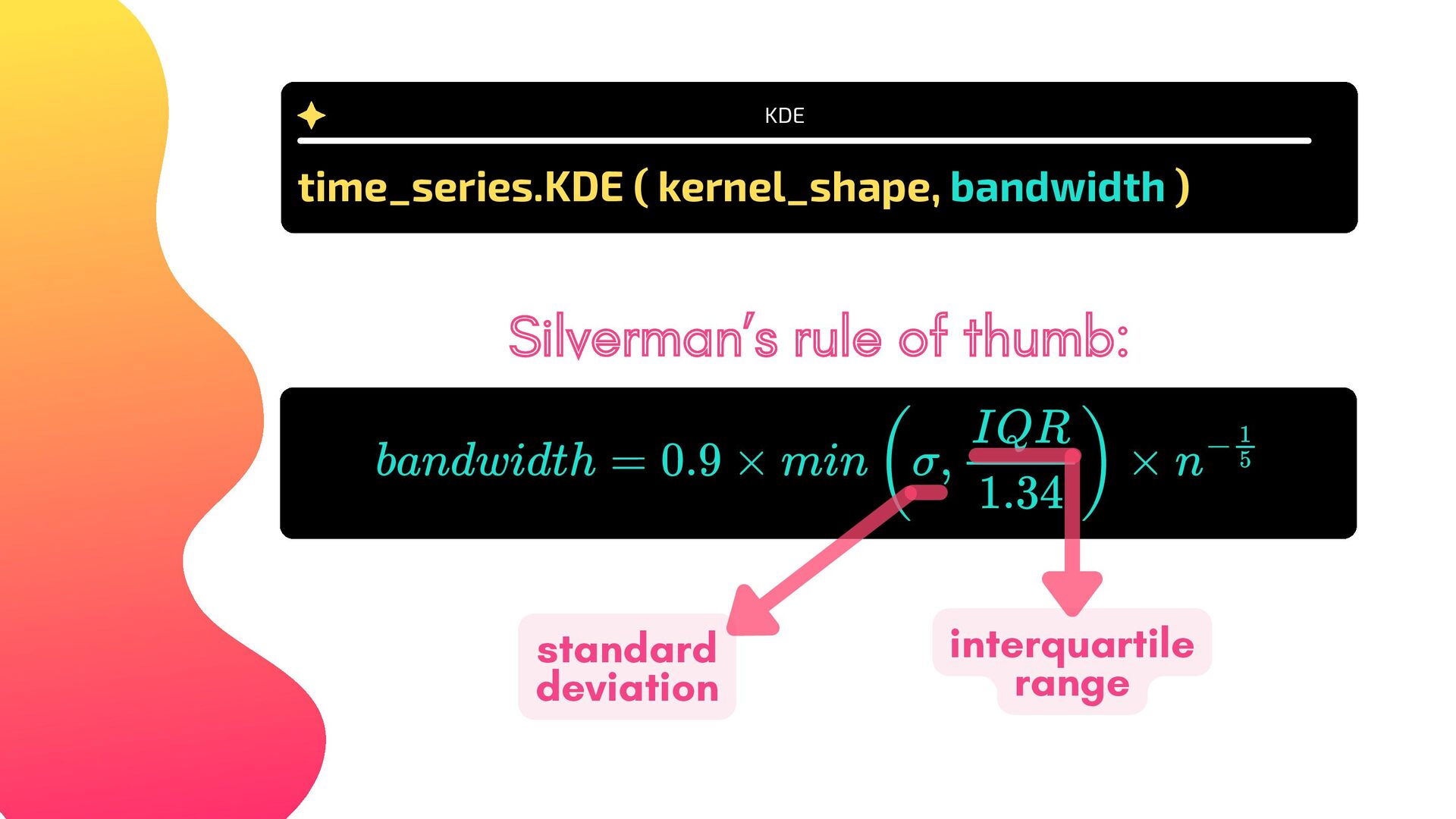
  12. time_series.KDE ( kernel_shape, bandwidth ) KDE Silverman’s rule of thumb:

    Silverman’s rule of thumb: standard deviation interquartile range
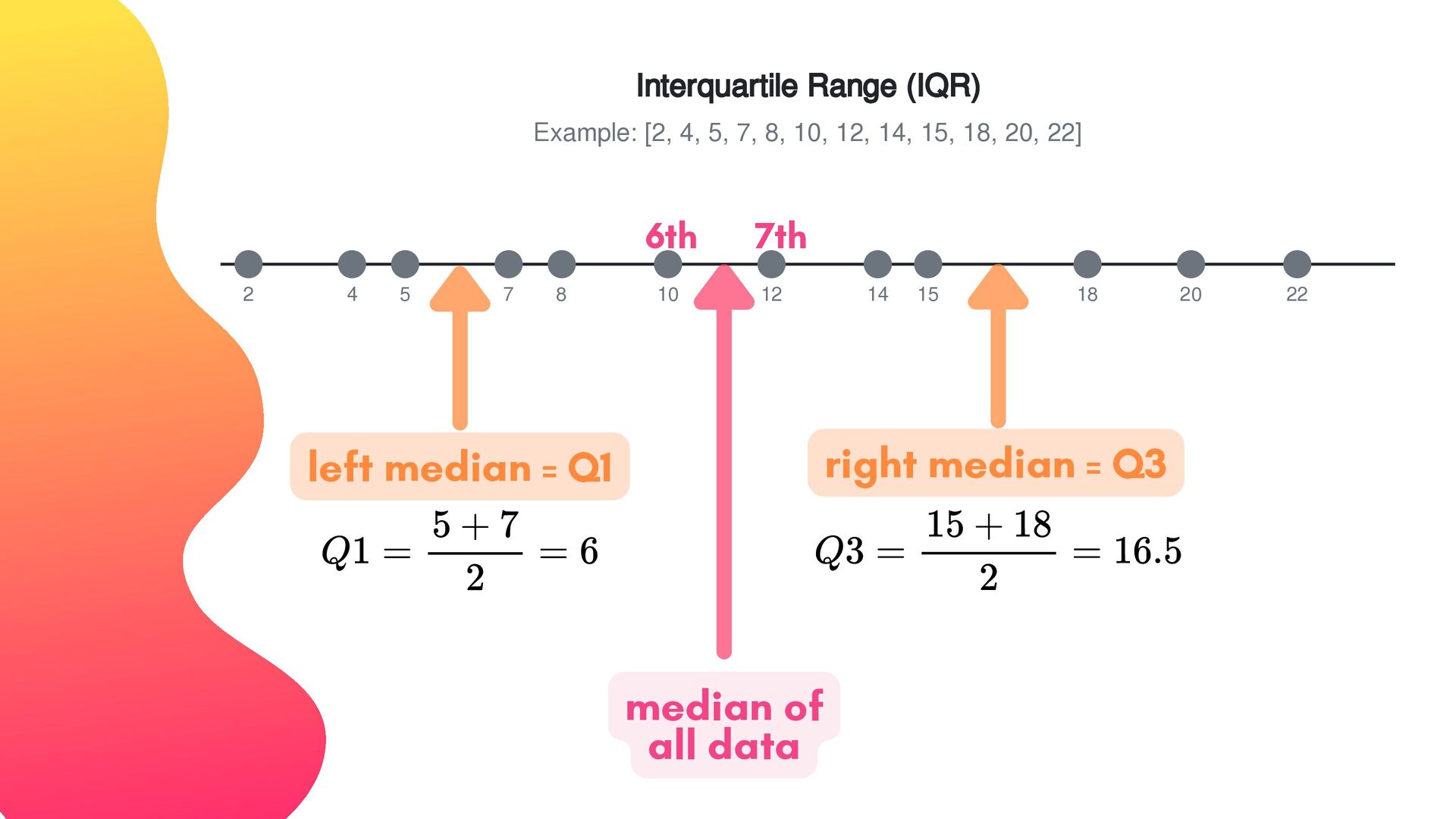
  13. Interquartile Range (IQR) Example: [2, 4, 5, 7, 8, 10,

    12, 14, 15, 18, 20, 22] 2 4 5 7 8 10 12 14 15 18 20 22 left median = Q1 right median = Q3 median of all data 6th 7th
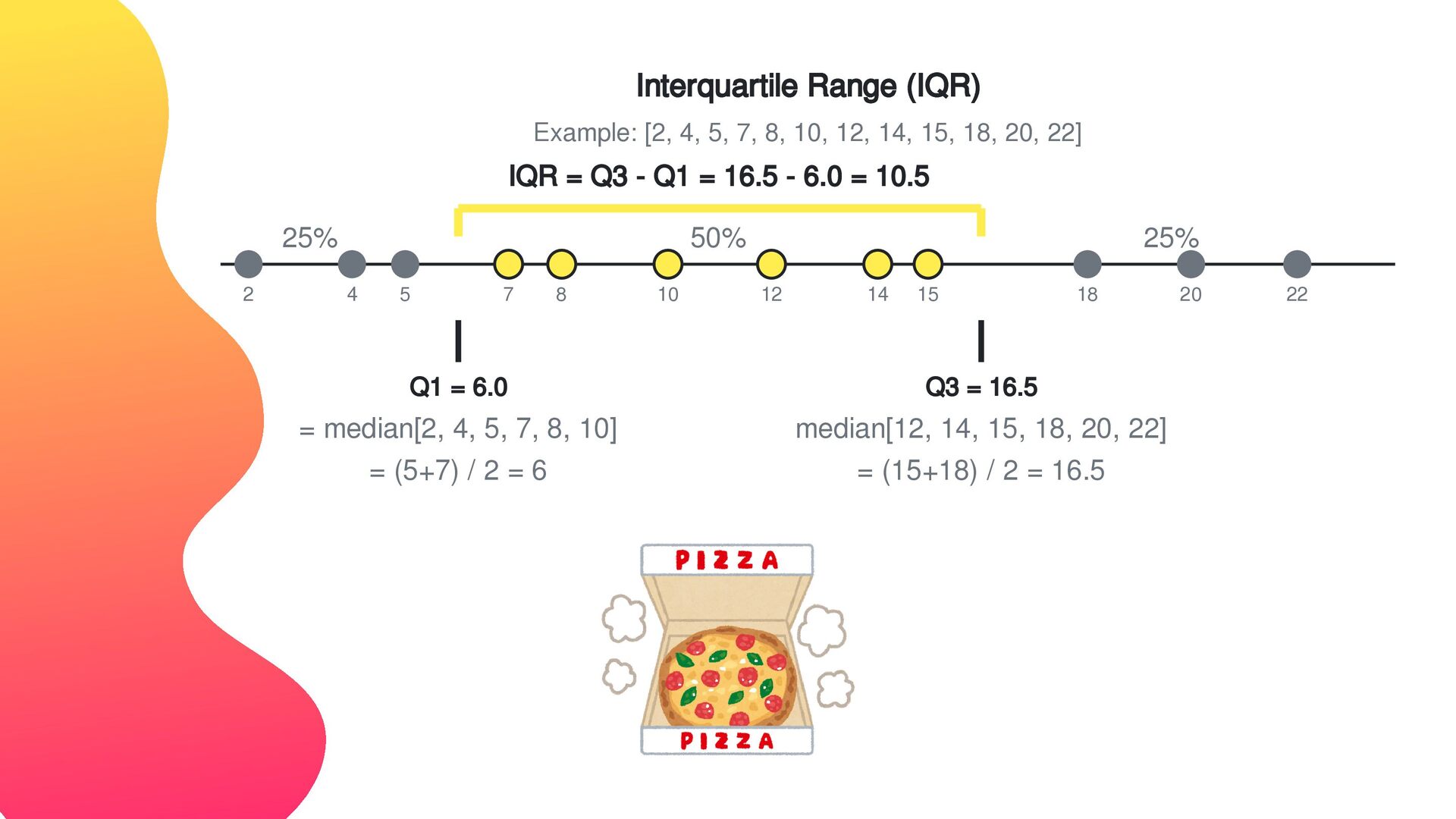
  14. Interquartile Range (IQR) Example: [2, 4, 5, 7, 8, 10,

    12, 14, 15, 18, 20, 22] 2 4 5 7 8 10 12 14 15 18 20 22 Q1 = 6.0 = median[2, 4, 5, 7, 8, 10] = (5+7) / 2 = 6 Q3 = 16.5 median[12, 14, 15, 18, 20, 22] = (15+18) / 2 = 16.5 IQR = Q3 - Q1 = 16.5 - 6.0 = 10.5 25% 50% 25%
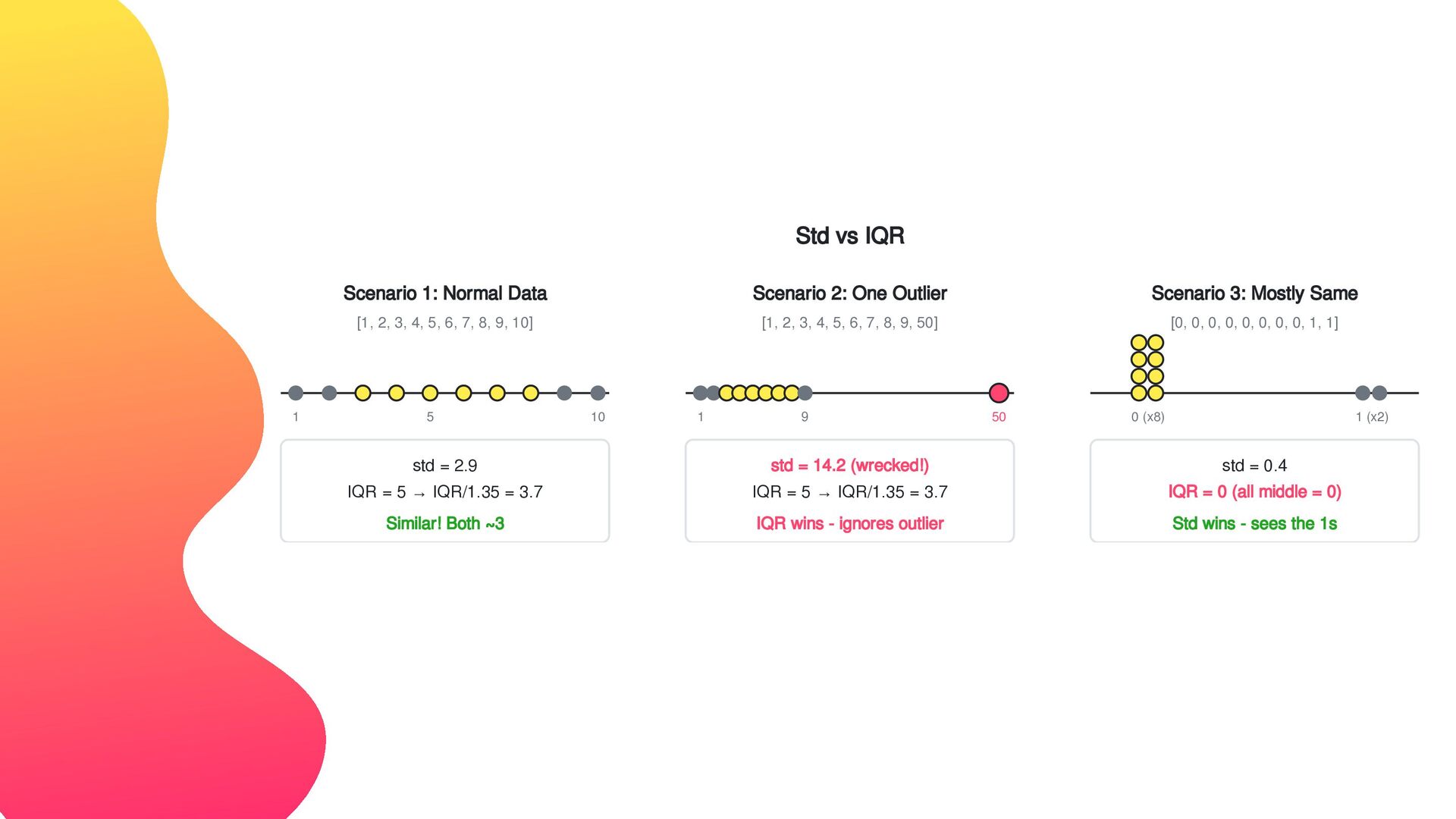
  15. Std vs IQR Scenario 1: Normal Data [1, 2, 3,

    4, 5, 6, 7, 8, 9, 10] 1 5 10 std = 2.9 IQR = 5 → IQR/1.35 = 3.7 Similar! Both ~3 Scenario 2: One Outlier [1, 2, 3, 4, 5, 6, 7, 8, 9, 50] 1 9 50 std = 14.2 (wrecked!) IQR = 5 → IQR/1.35 = 3.7 IQR wins - ignores outlier Scenario 3: Mostly Same [0, 0, 0, 0, 0, 0, 0, 0, 1, 1] 0 (x8) 1 (x2) std = 0.4 IQR = 0 (all middle = 0) Std wins - sees the 1s
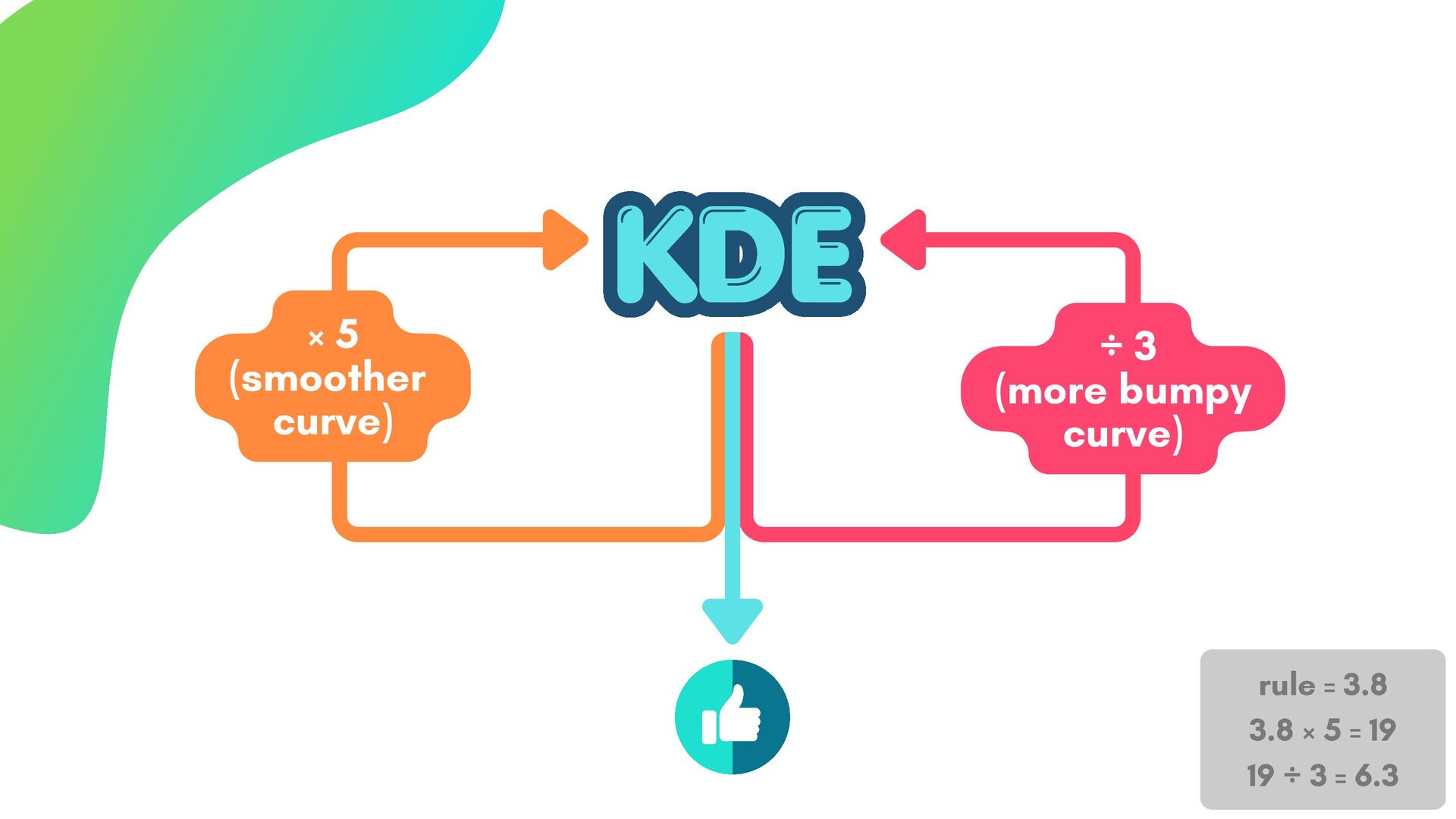
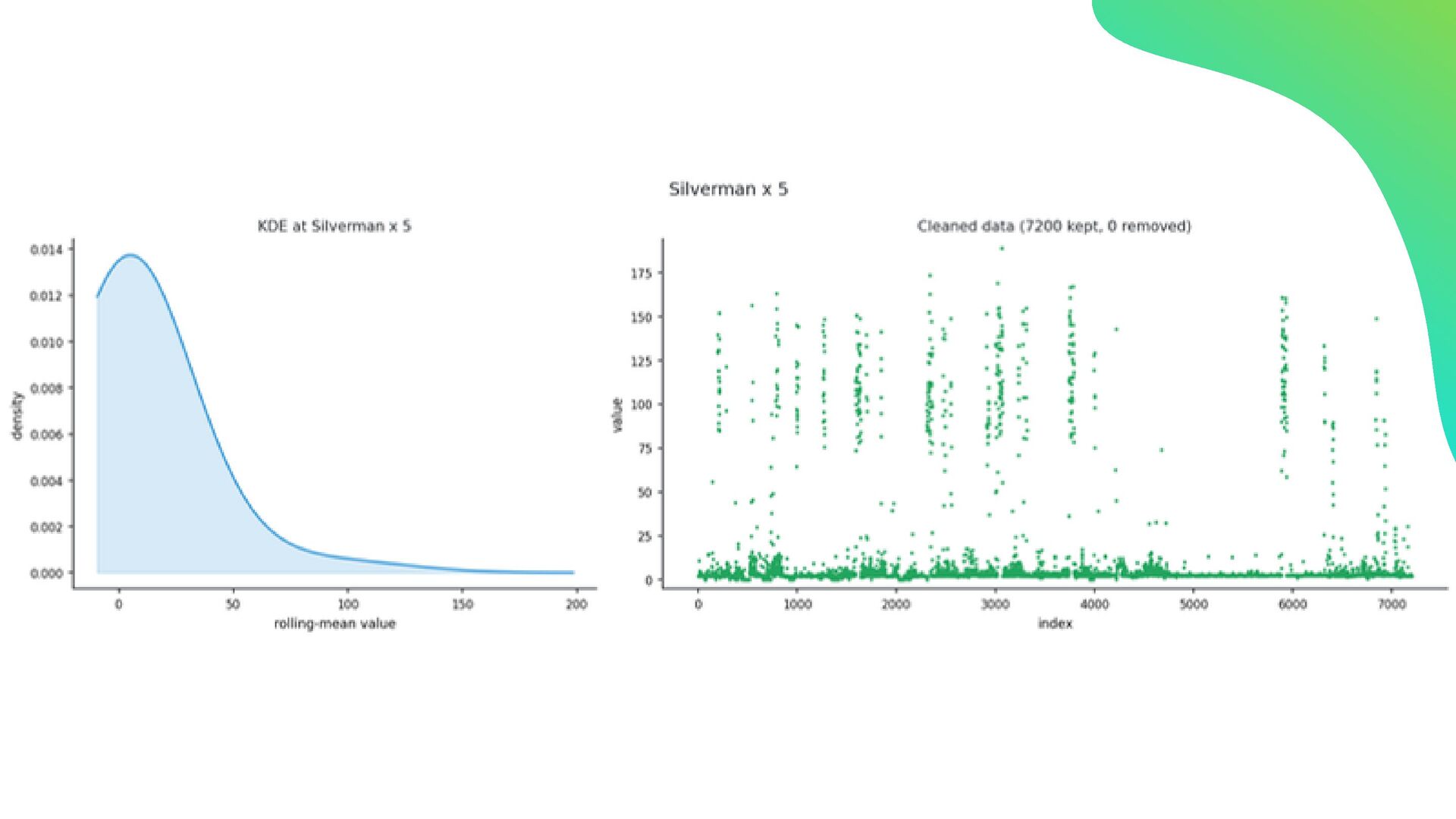
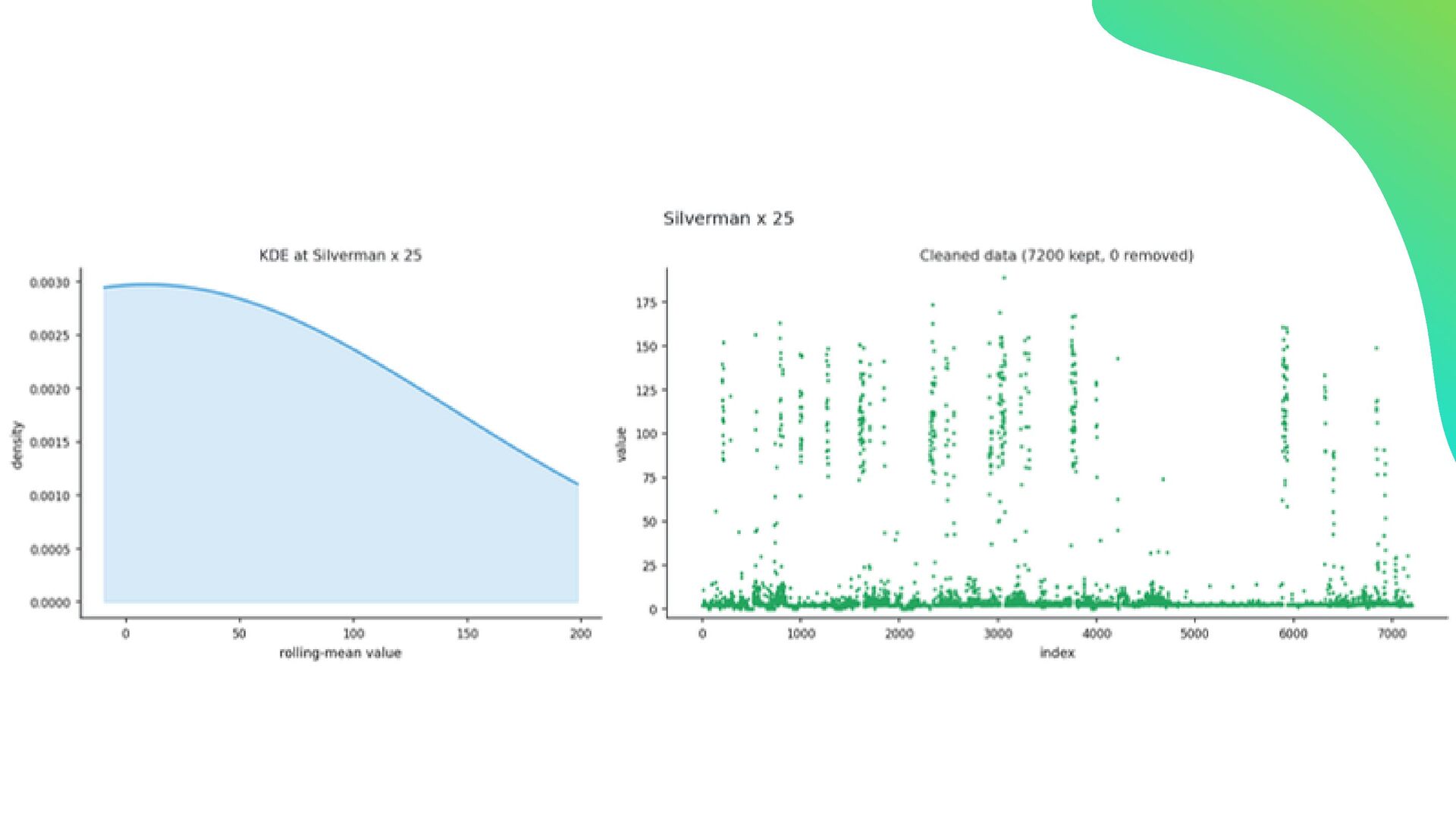
  16. KDE KDE KDE × 5 (smoother curve) ÷ 3 (more

    bumpy curve) 3.8 × 5 = 19 19 ÷ 3 = 6.3 rule = 3.8
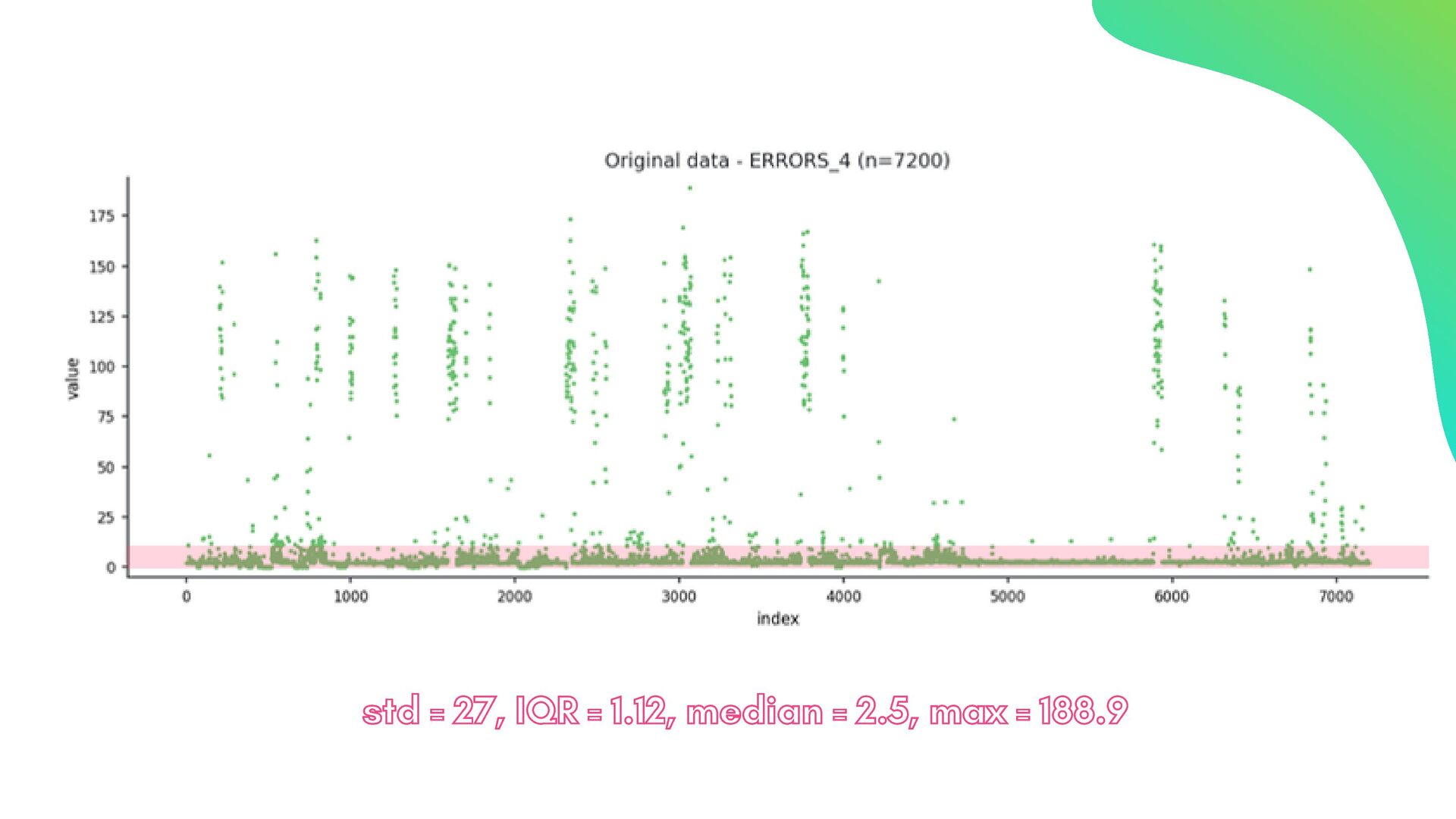
  17. std = 27, IQR = 1.12, median = 2.5, max

    = 188.9 std = 27, IQR = 1.12, median = 2.5, max = 188.9
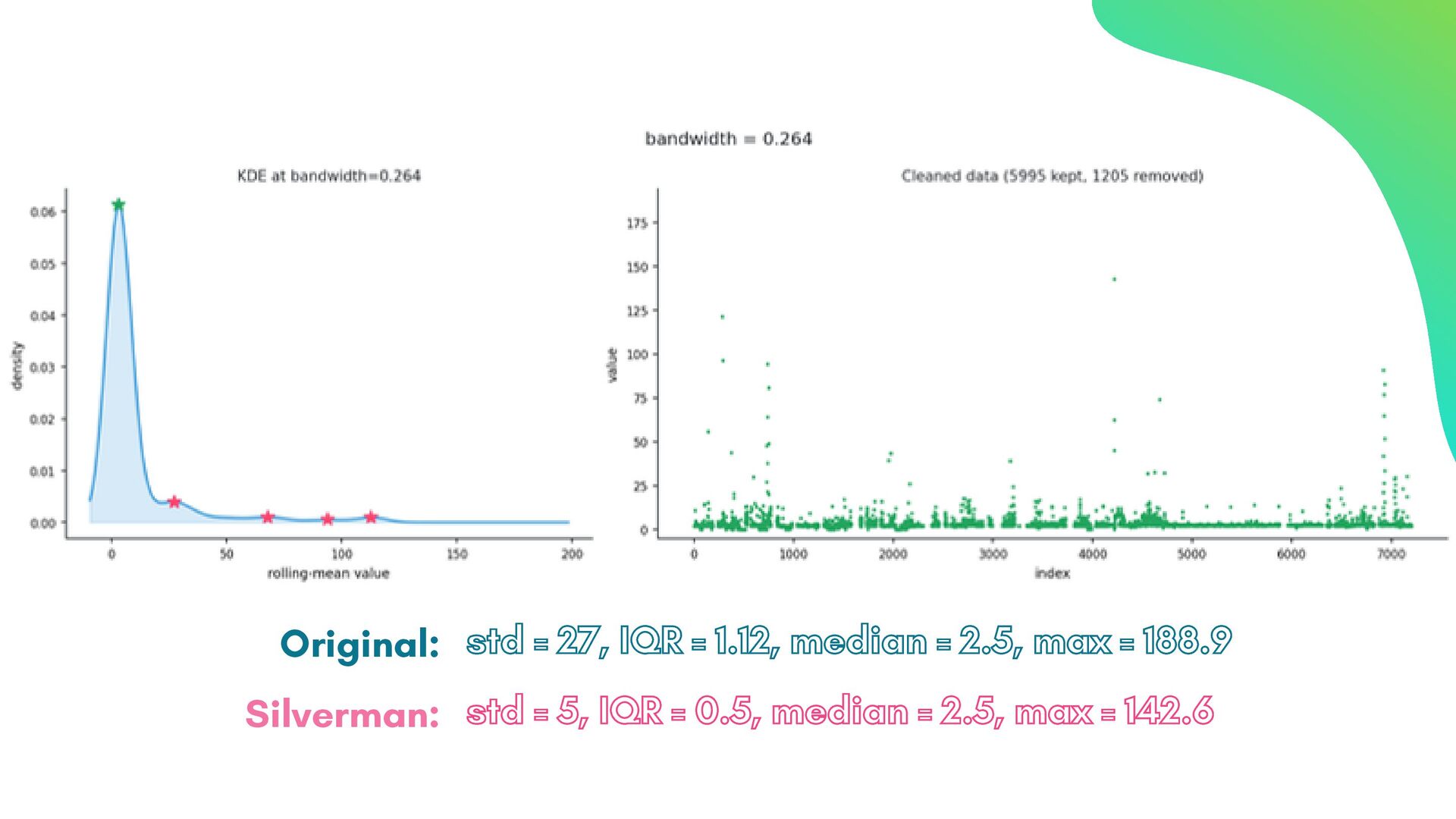
  18. std = 27, IQR = 1.12, median = 2.5, max

    = 188.9 std = 27, IQR = 1.12, median = 2.5, max = 188.9 Original: std = 5, IQR = 0.5, median = 2.5, max = 142.6 std = 5, IQR = 0.5, median = 2.5, max = 142.6 Silverman:
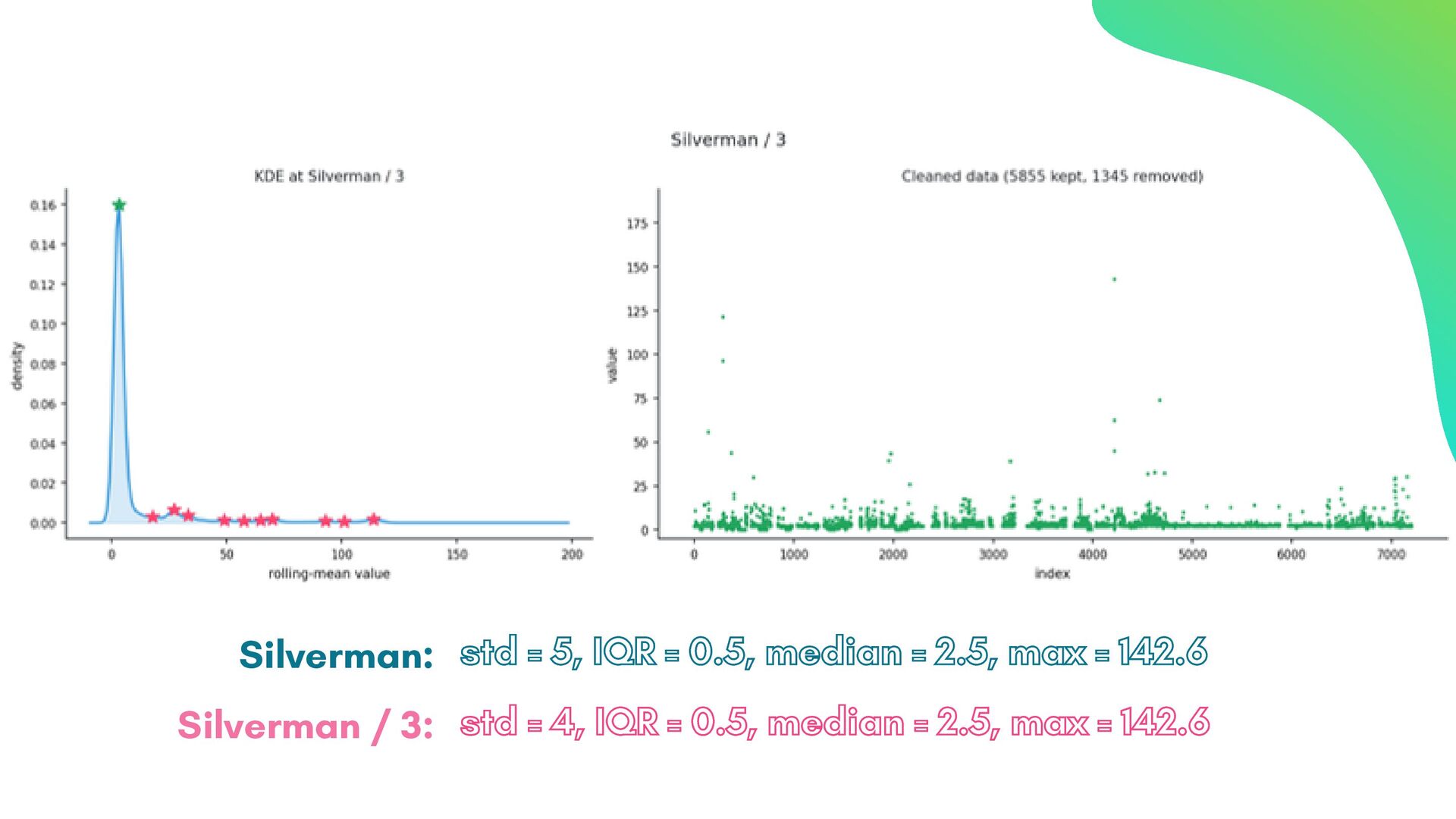
  19. std = 5, IQR = 0.5, median = 2.5, max

    = 142.6 std = 5, IQR = 0.5, median = 2.5, max = 142.6 Silverman: std = 4, IQR = 0.5, median = 2.5, max = 142.6 std = 4, IQR = 0.5, median = 2.5, max = 142.6 Silverman / 3:
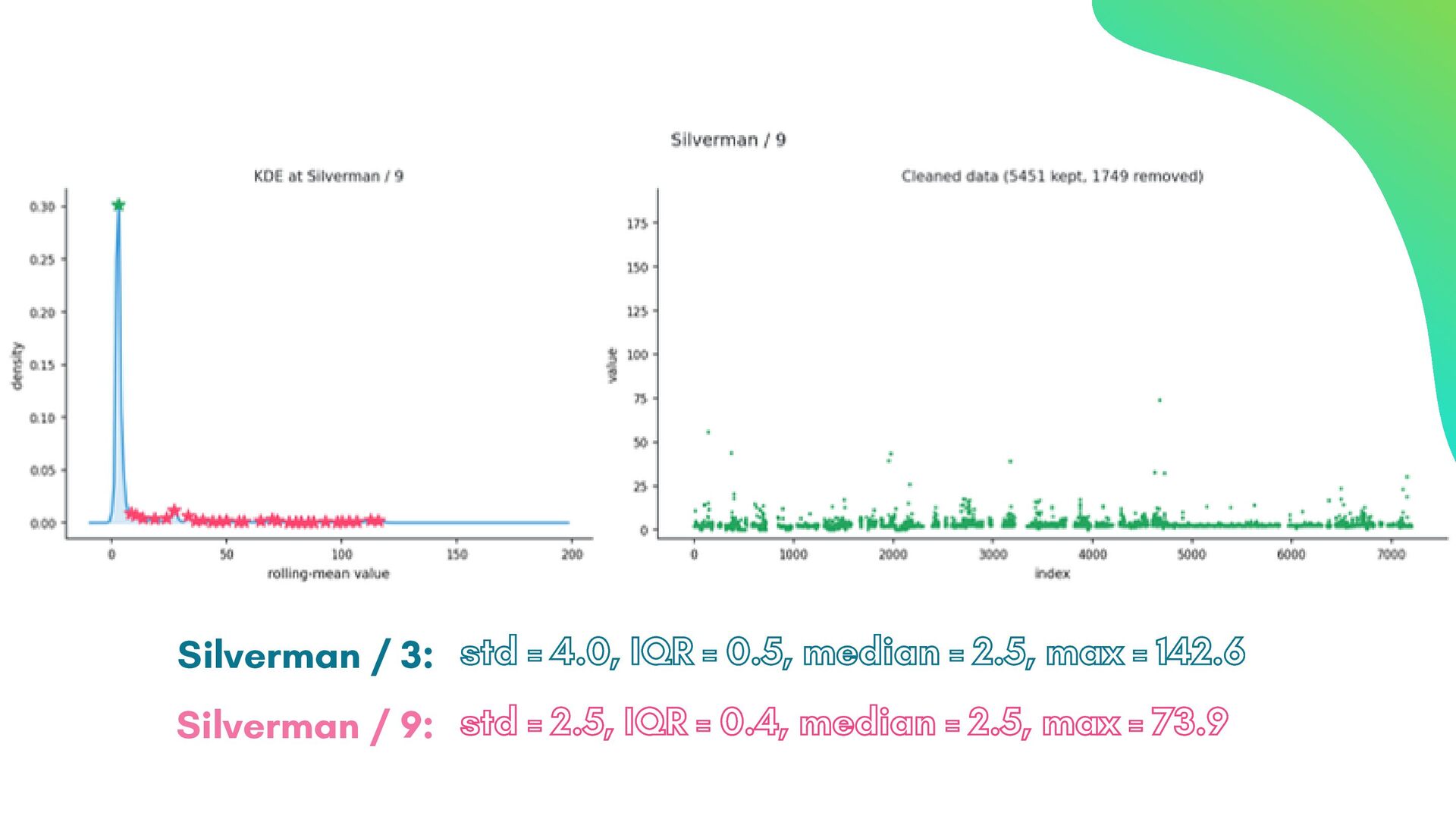
  20. std = 4.0, IQR = 0.5, median = 2.5, max

    = 142.6 std = 4.0, IQR = 0.5, median = 2.5, max = 142.6 Silverman / 3: std = 2.5, IQR = 0.4, median = 2.5, max = 73.9 std = 2.5, IQR = 0.4, median = 2.5, max = 73.9 Silverman / 9:
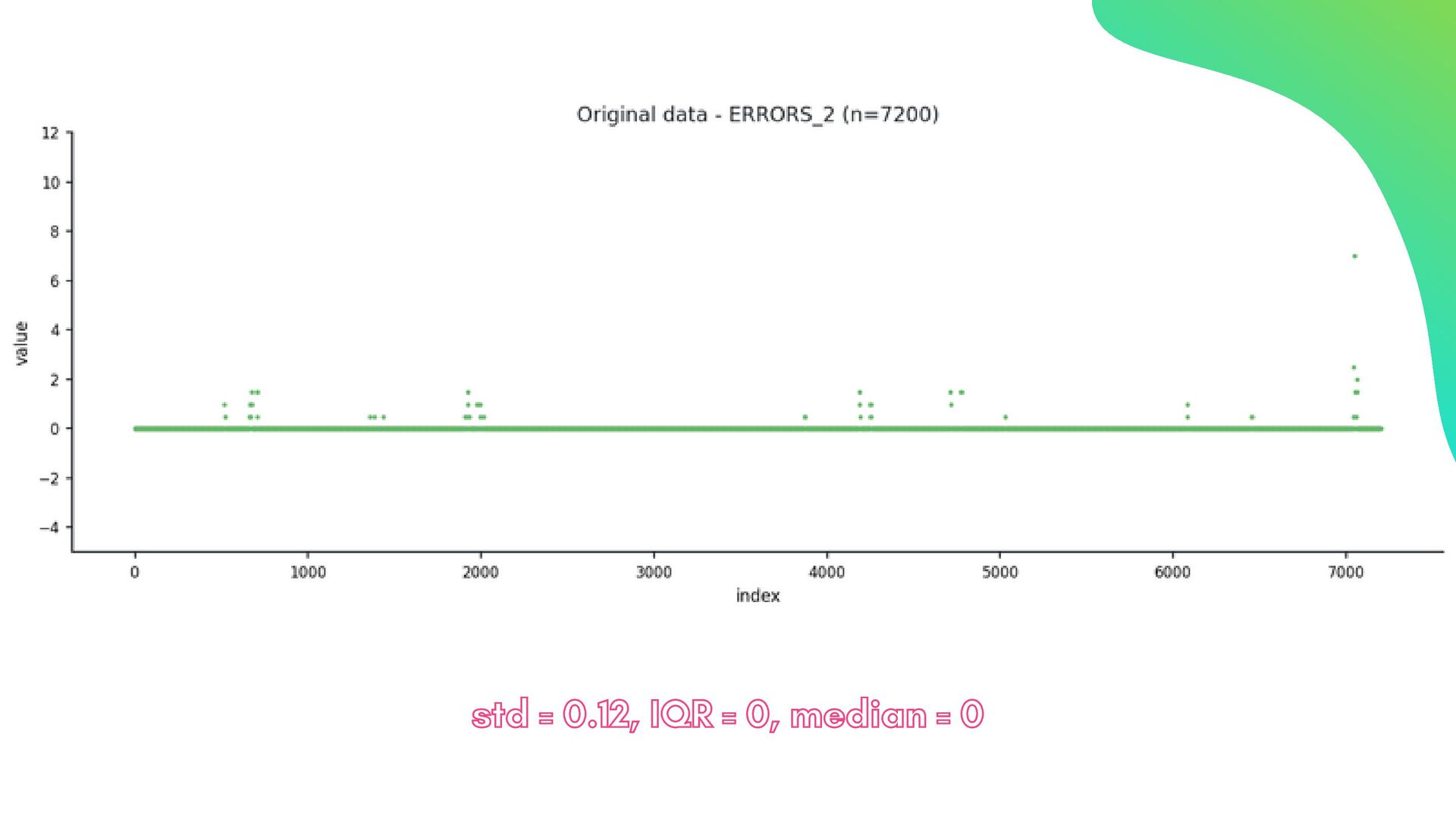
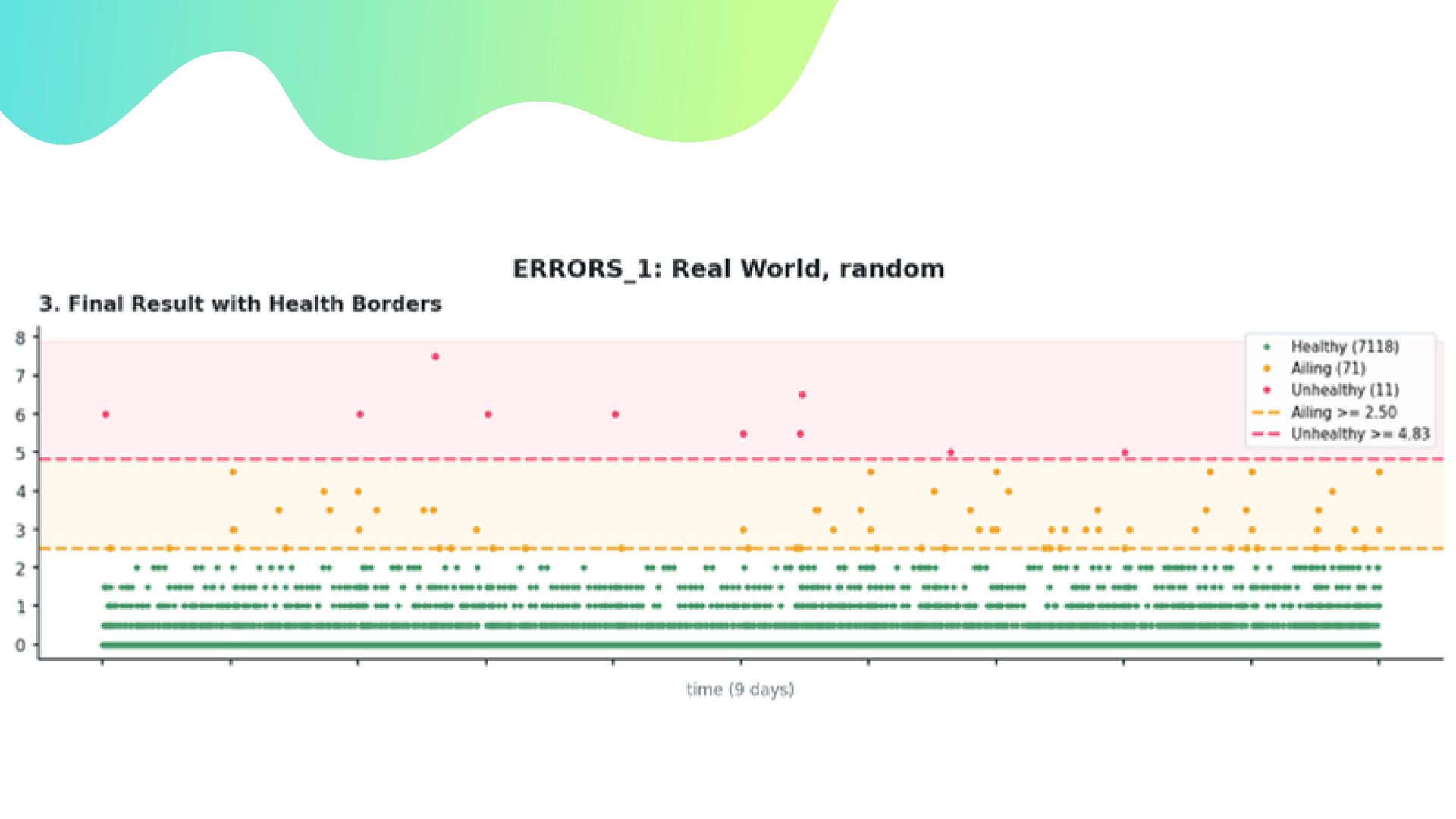
  21. std = 0.12, IQR = 0, median = 0 std

    = 0.12, IQR = 0, median = 0
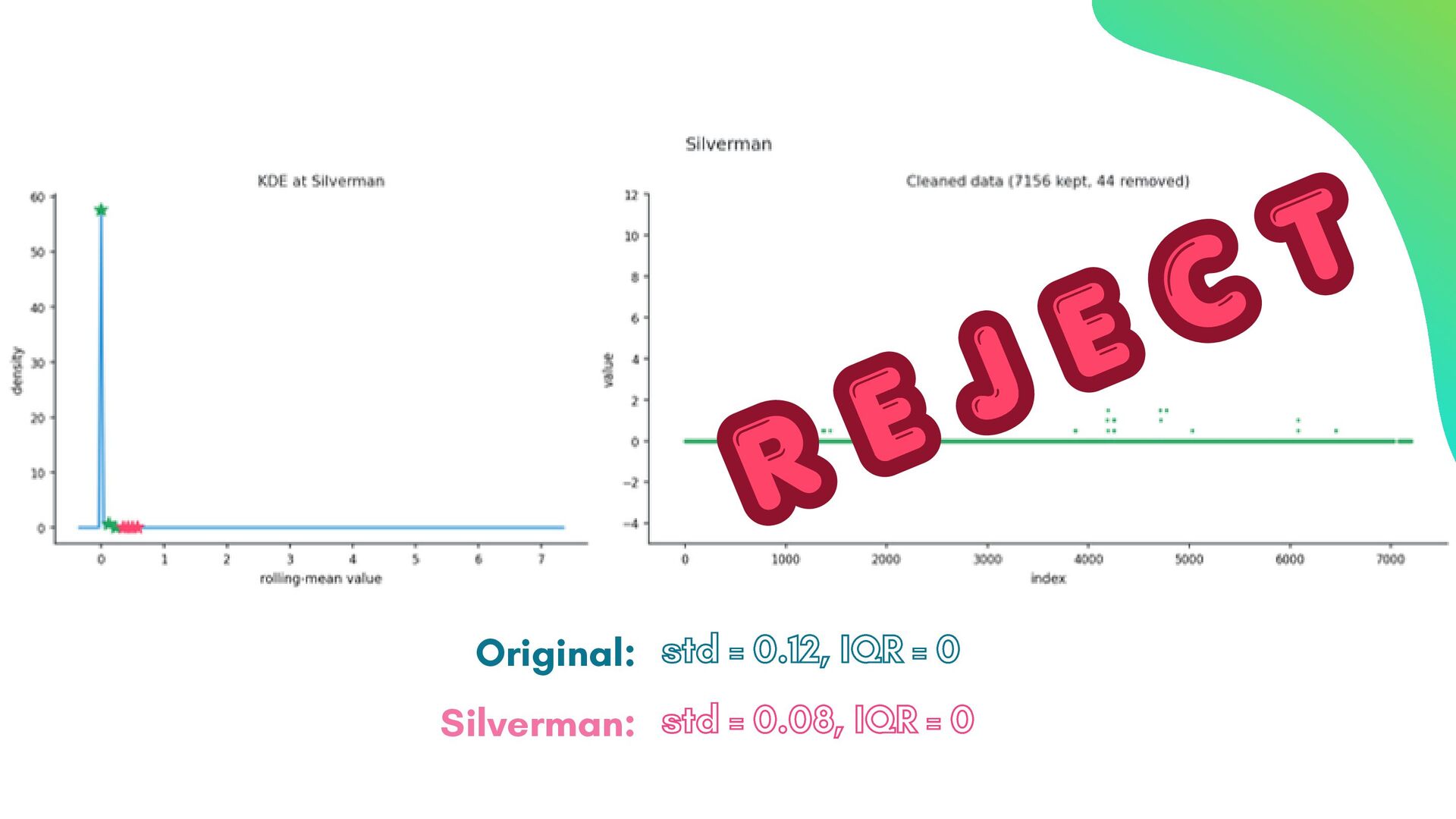
  22. std = 0.12, IQR = 0 std = 0.12, IQR

    = 0 Original: std = 0.08, IQR = 0 std = 0.08, IQR = 0 Silverman: R E J E C T R E J E C T R E J E C T
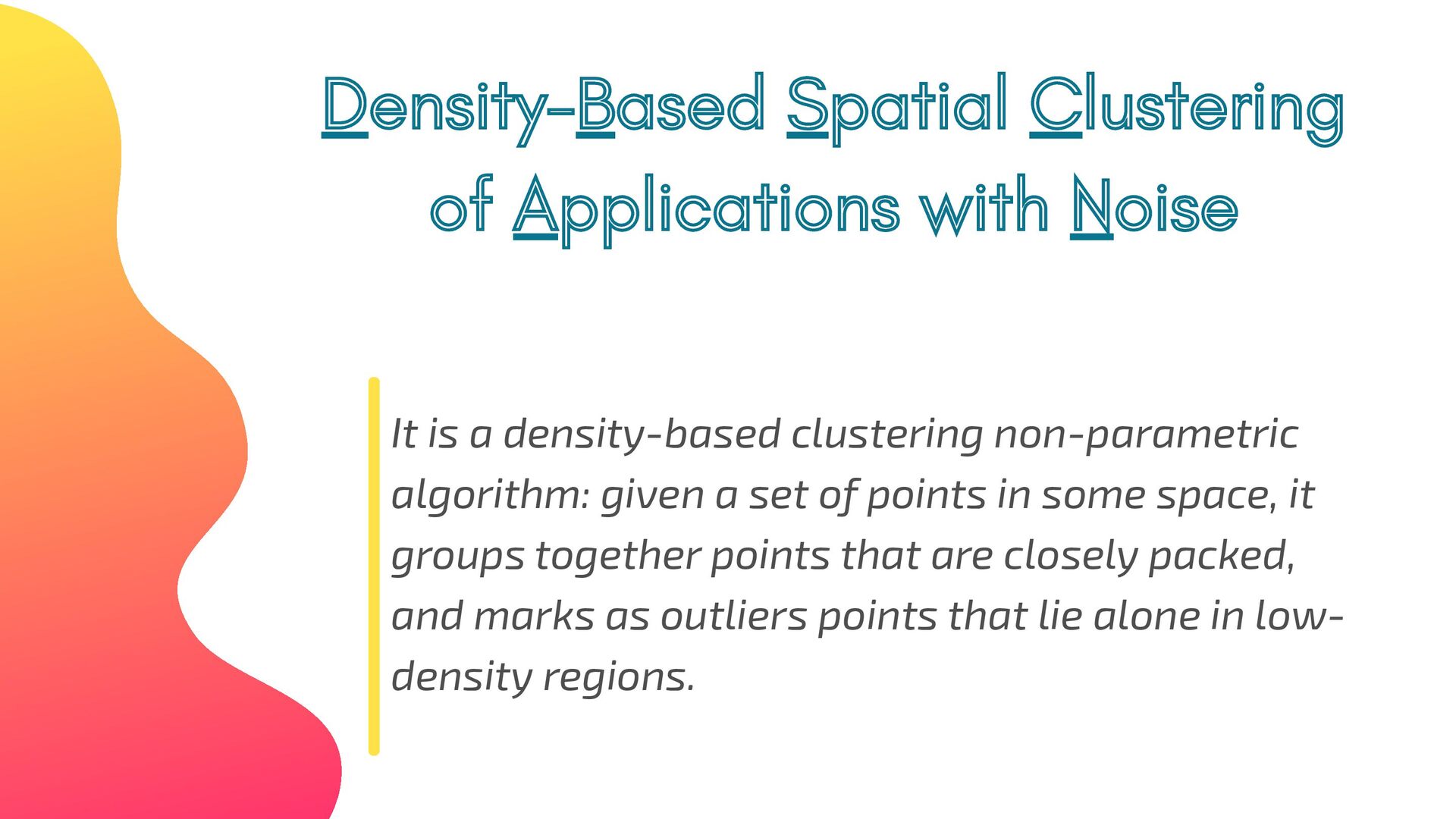
  23. D D ensity- ensity- B B ased ased S S

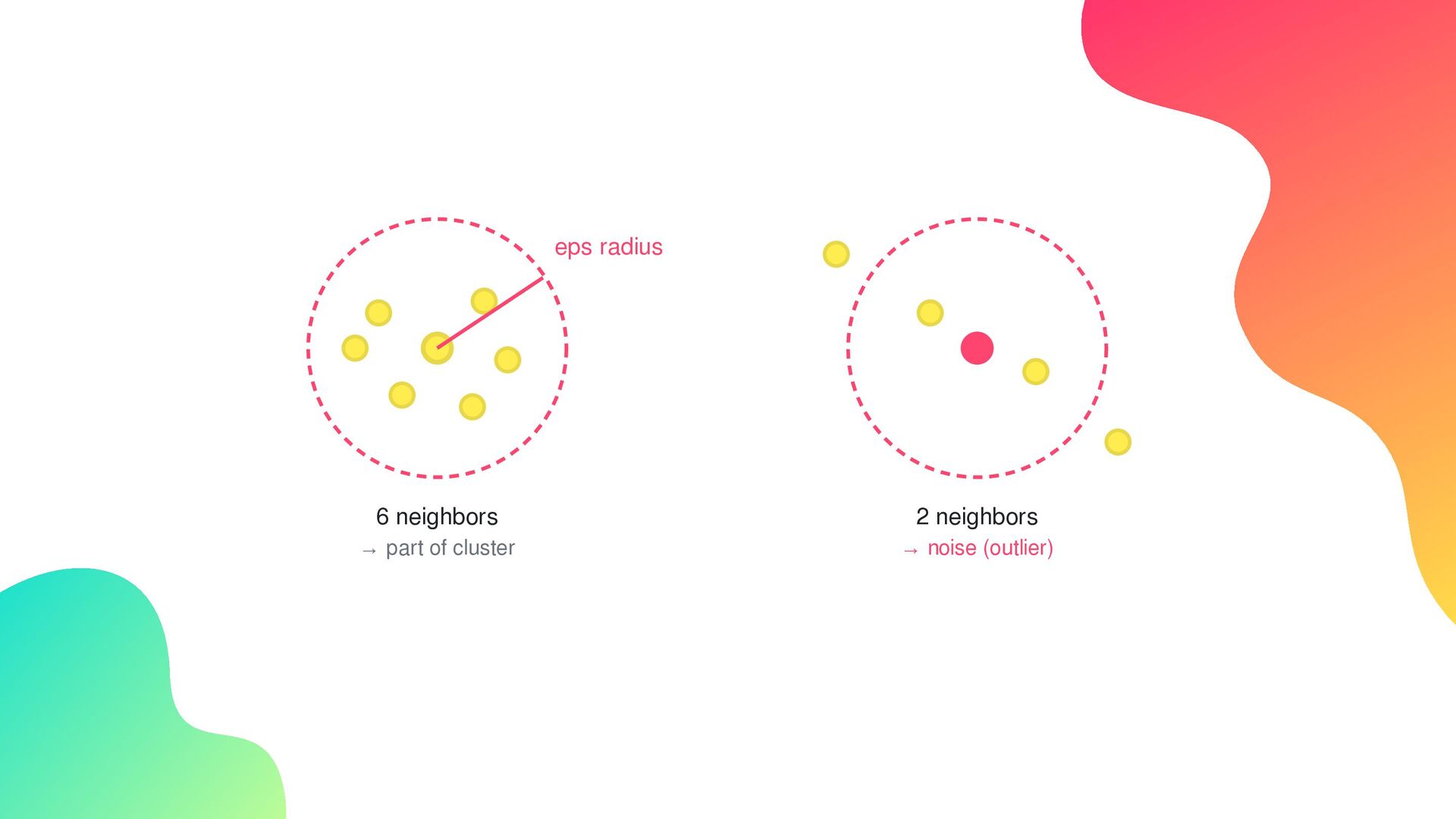
    patial patial C C lustering lustering of of A A pplications with pplications with N N oise oise It is a density-based clustering non-parametric algorithm: given a set of points in some space, it groups together points that are closely packed, and marks as outliers points that lie alone in low- density regions.
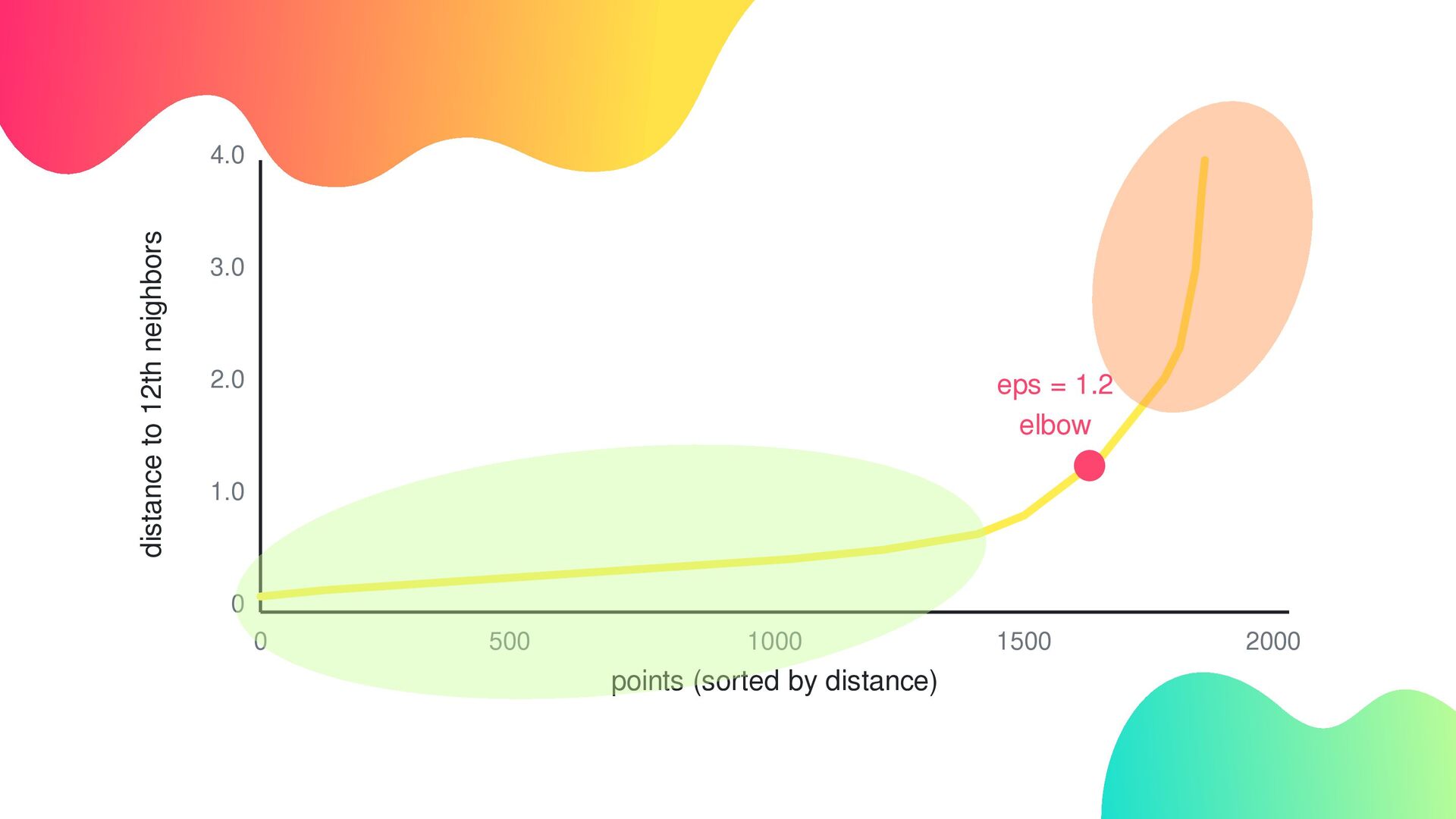
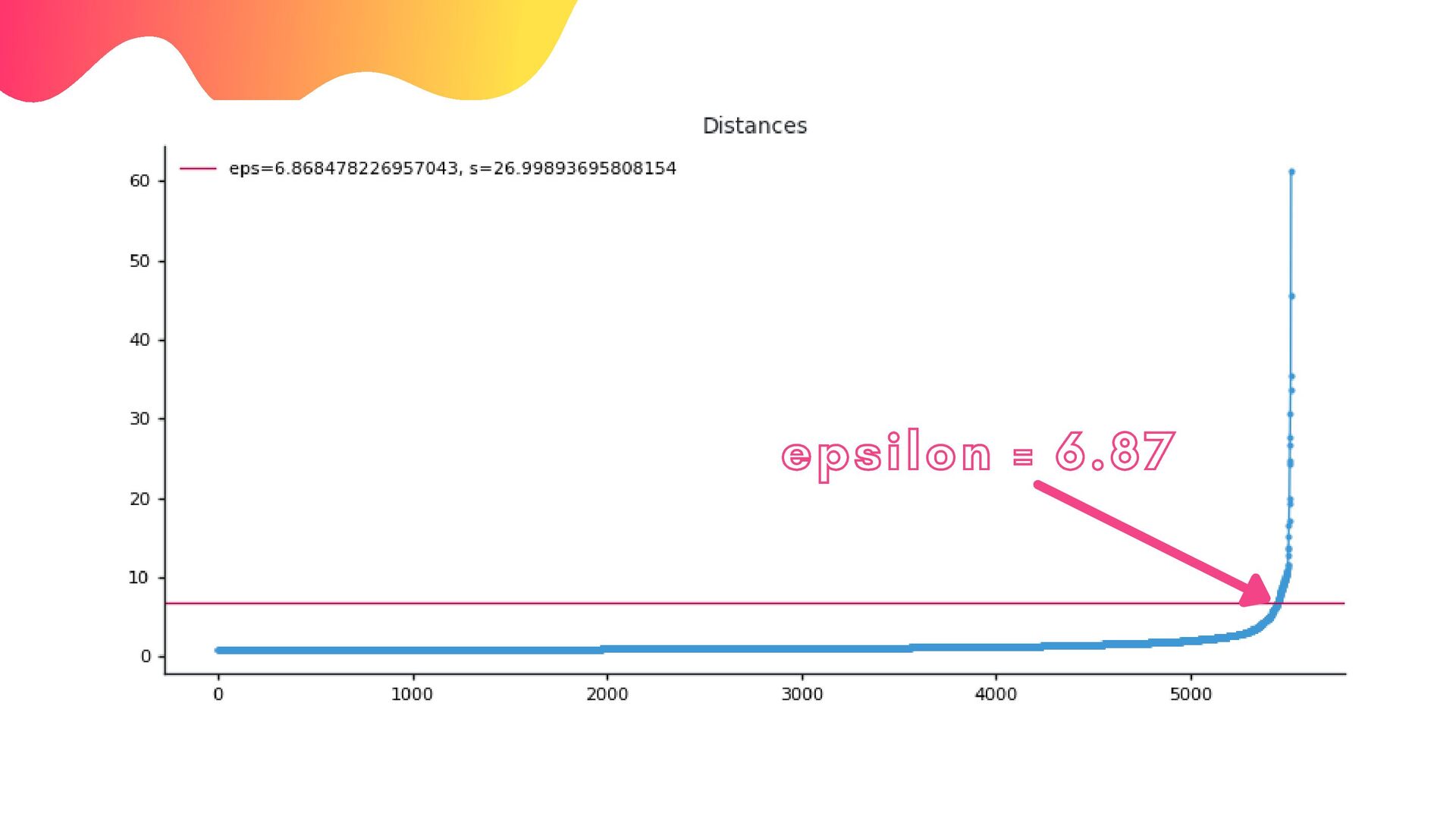
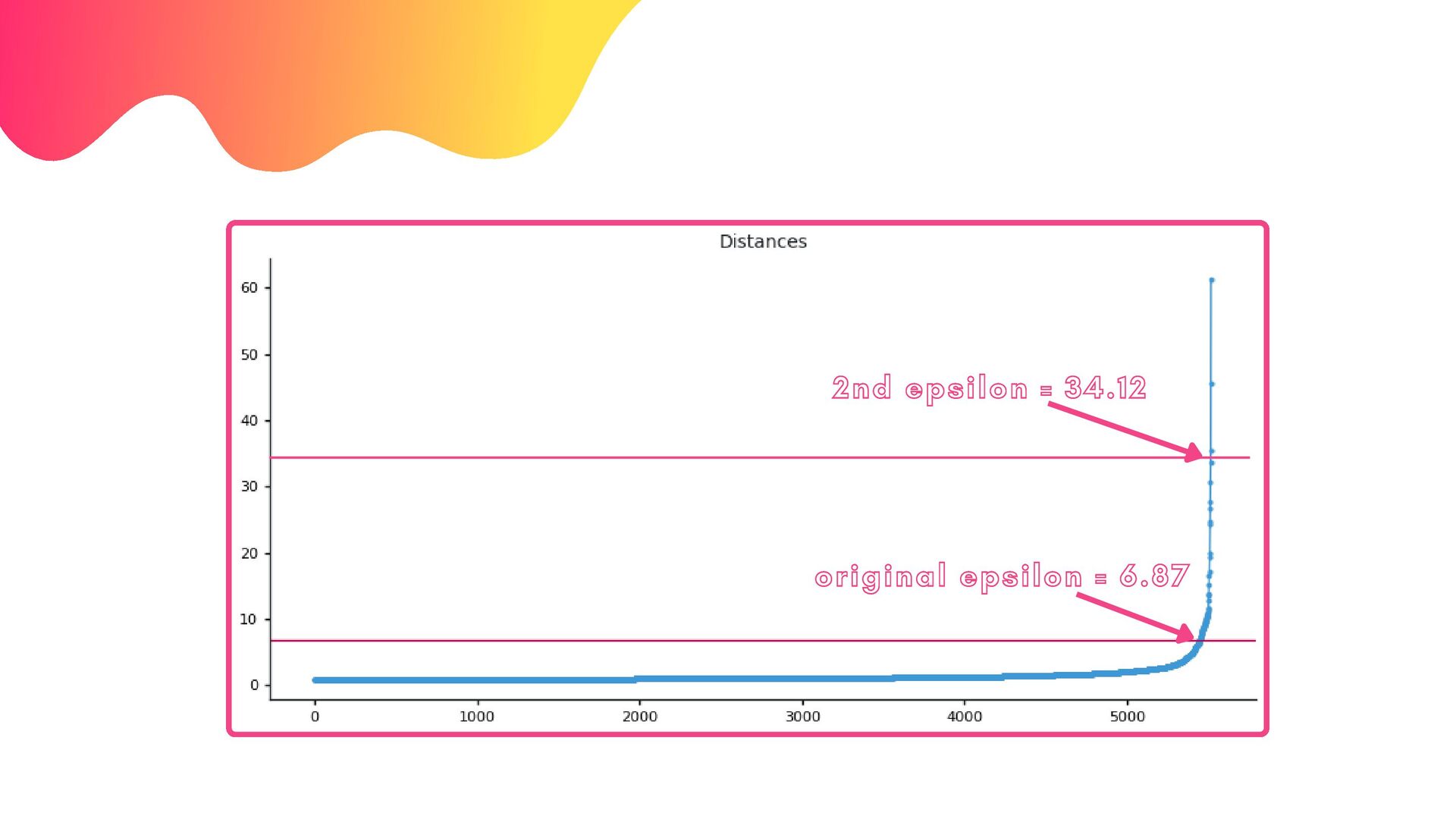
  24. distance to 12th neighbors 0 1.0 2.0 3.0 4.0 points

    (sorted by distance) 0 500 1000 1500 2000 elbow eps = 1.2
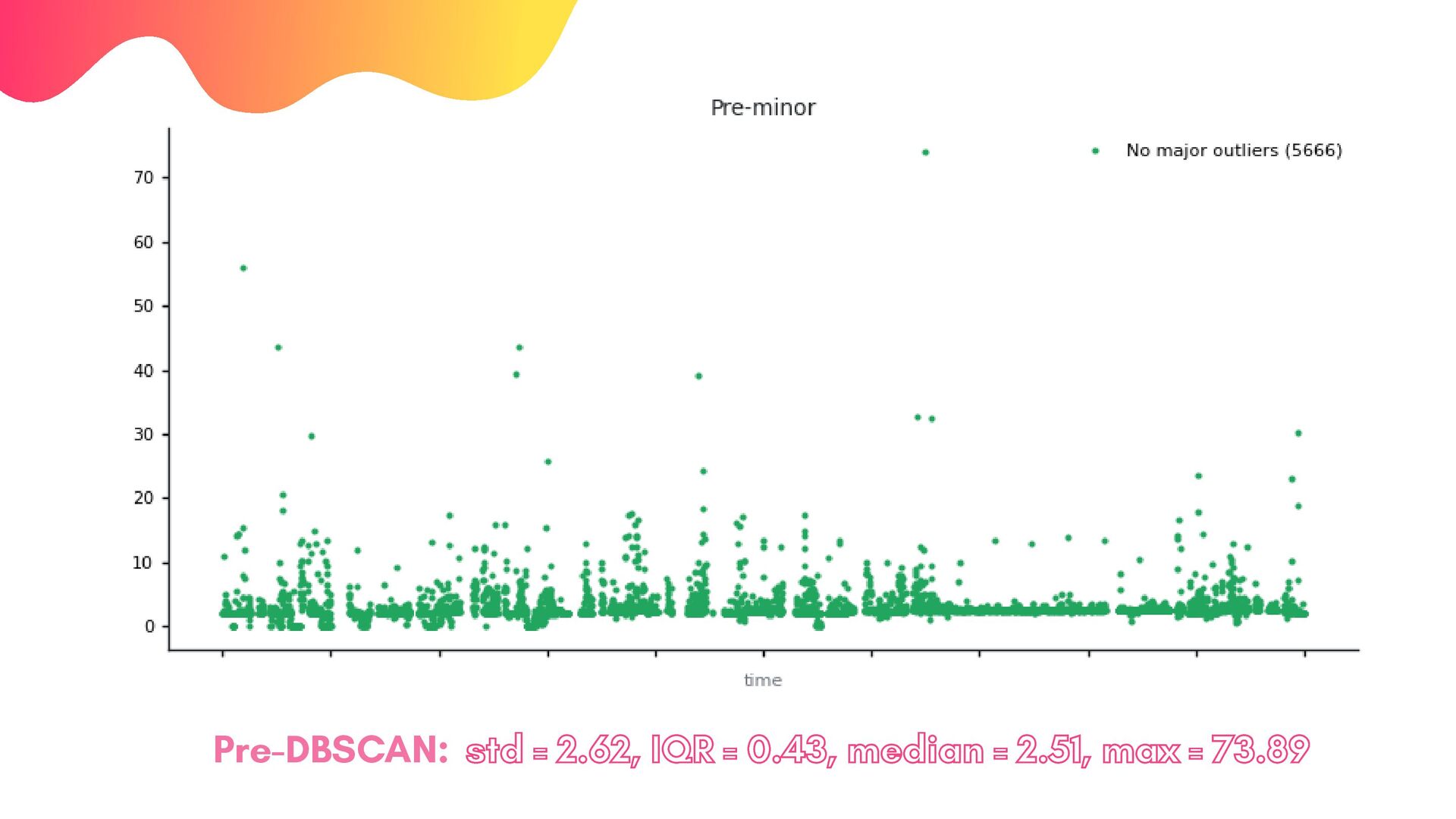
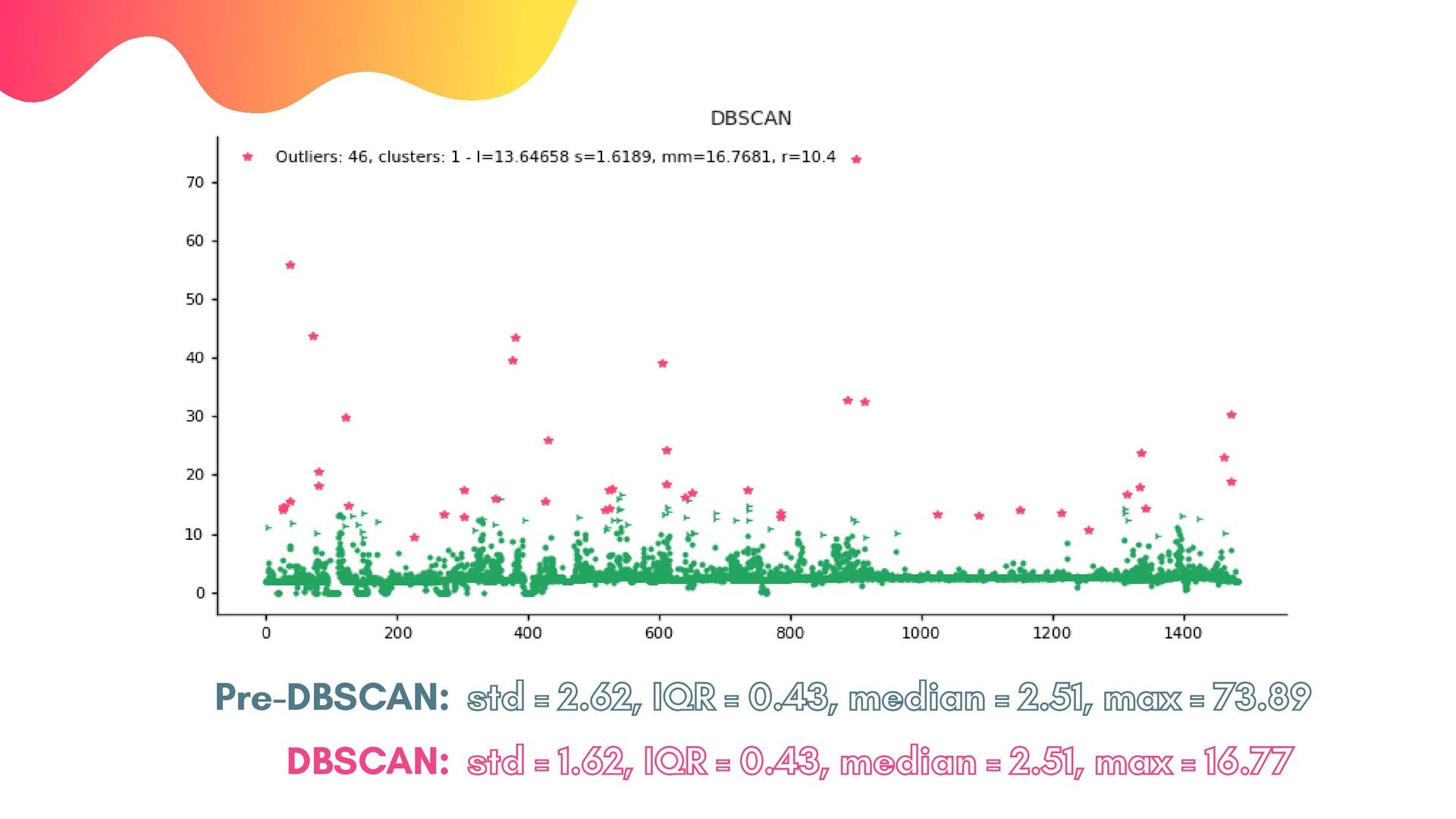
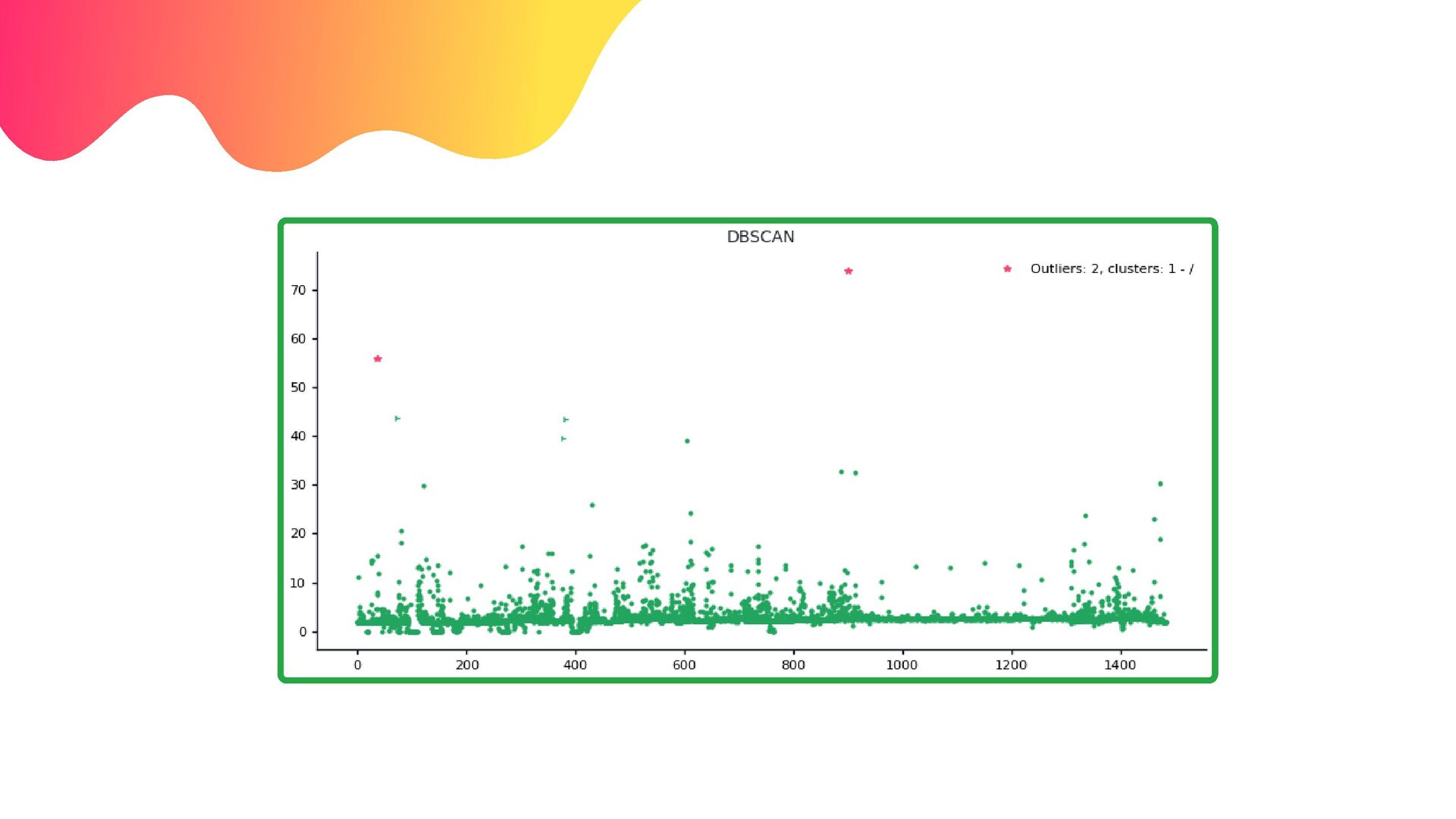
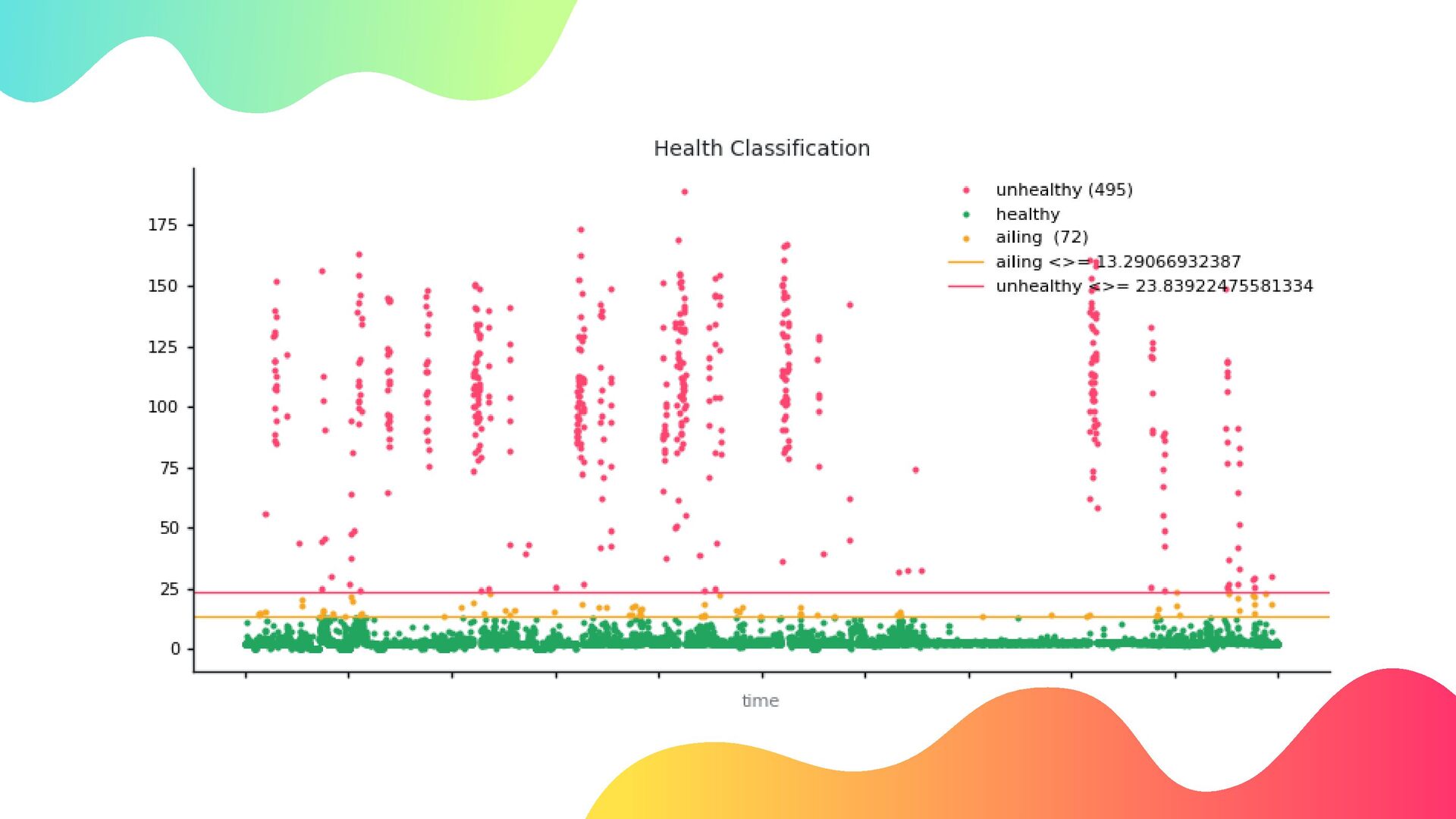
  25. std = 2.62, IQR = 0.43, median = 2.51, max

    = 73.89 std = 2.62, IQR = 0.43, median = 2.51, max = 73.89 Pre-DBSCAN:
  26. std = 2.62, IQR = 0.43, median = 2.51, max

    = 73.89 std = 2.62, IQR = 0.43, median = 2.51, max = 73.89 Pre-DBSCAN: std = 1.62, IQR = 0.43, median = 2.51, max = 16.77 std = 1.62, IQR = 0.43, median = 2.51, max = 16.77 DBSCAN:
  27. Link to sources Ines Panker | Jun 2026 Rate the

    Talk R ate the Talk Rate the Talk