Upgrade to Pro — share decks privately, control downloads, hide ads and more …

Curtain Wall: Components, Design Tips, and Adva...

Curtain Wall: Components, Design Tips, and Advantages

In contemporary architecture, few elements define a building’s identity quite like the curtain wall. Sleek, structural, and endlessly versatile, this external envelope is more than just a design choice—it’s a performance-driven solution that marries aesthetics with engineering.

Also read: https://alucolux.com/blog/curtain-wall-design-components-advantages/

Avatar for Pranav Shirodkar

Pranav Shirodkar

November 15, 2025

Other Decks in Business

Transcript

  1. Curtain Wall: Components, Design Tips, and Advantages Exploring the engineering

    excellence and architectural beauty of contemporary building envelopes
  2. What Is a Curtain Wall? A curtain wall is a

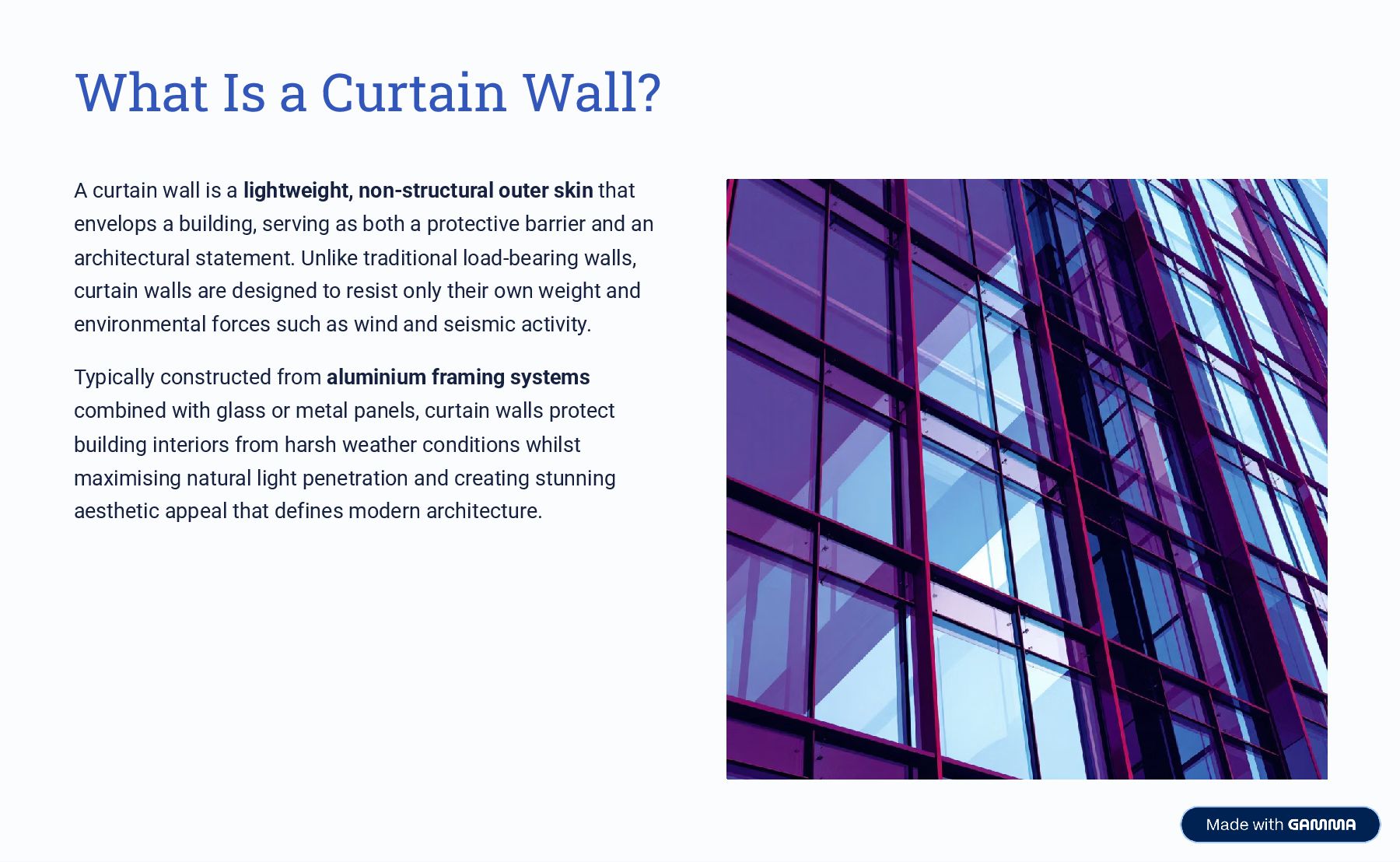
    lightweight, non-structural outer skin that envelops a building, serving as both a protective barrier and an architectural statement. Unlike traditional load-bearing walls, curtain walls are designed to resist only their own weight and environmental forces such as wind and seismic activity. Typically constructed from aluminium framing systems combined with glass or metal panels, curtain walls protect building interiors from harsh weather conditions whilst maximising natural light penetration and creating stunning aesthetic appeal that defines modern architecture.
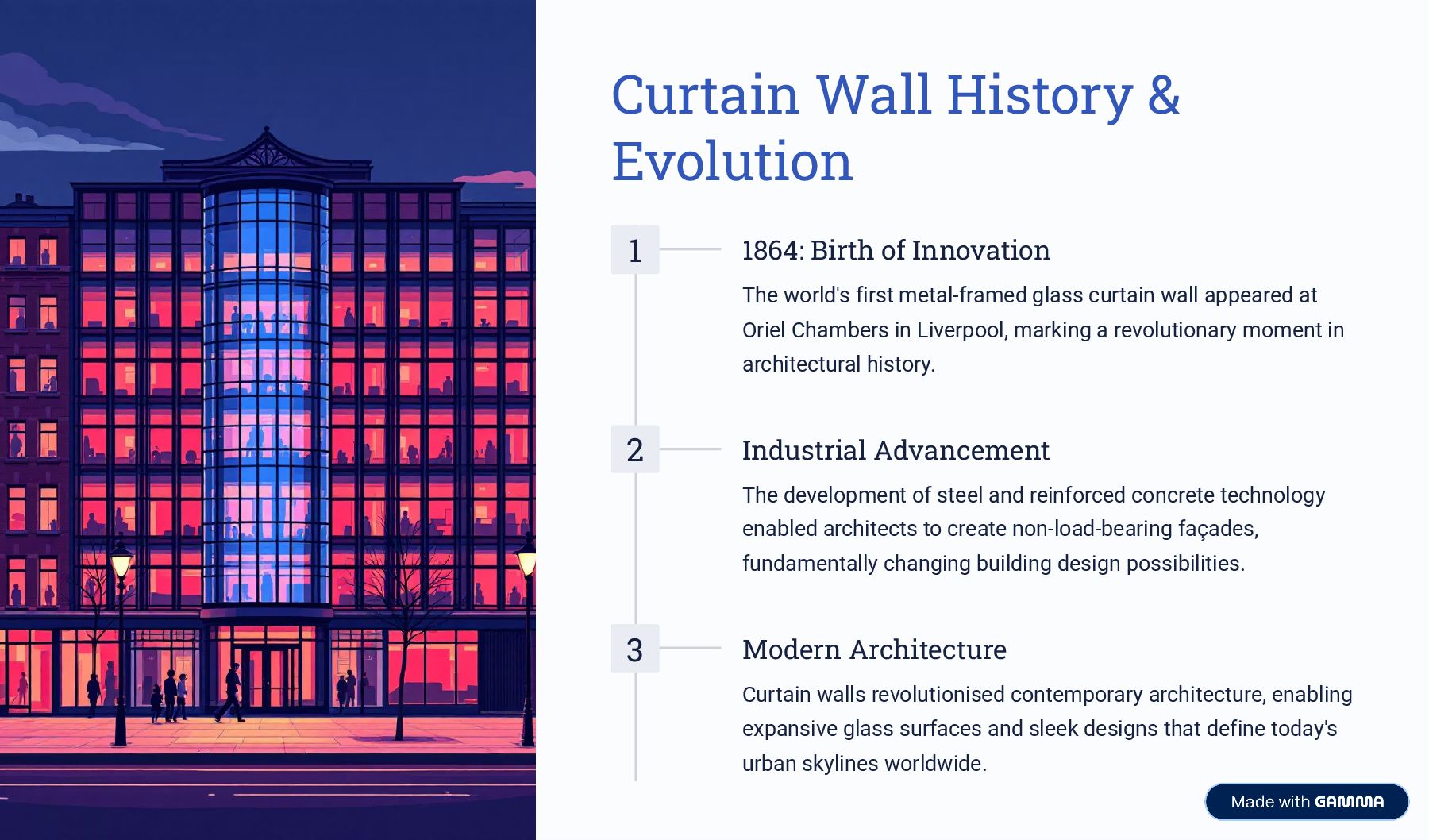
  3. Curtain Wall History & Evolution 1 1864: Birth of Innovation

    The world's first metal-framed glass curtain wall appeared at Oriel Chambers in Liverpool, marking a revolutionary moment in architectural history. 2 Industrial Advancement The development of steel and reinforced concrete technology enabled architects to create non-load-bearing façades, fundamentally changing building design possibilities. 3 Modern Architecture Curtain walls revolutionised contemporary architecture, enabling expansive glass surfaces and sleek designs that define today's urban skylines worldwide.
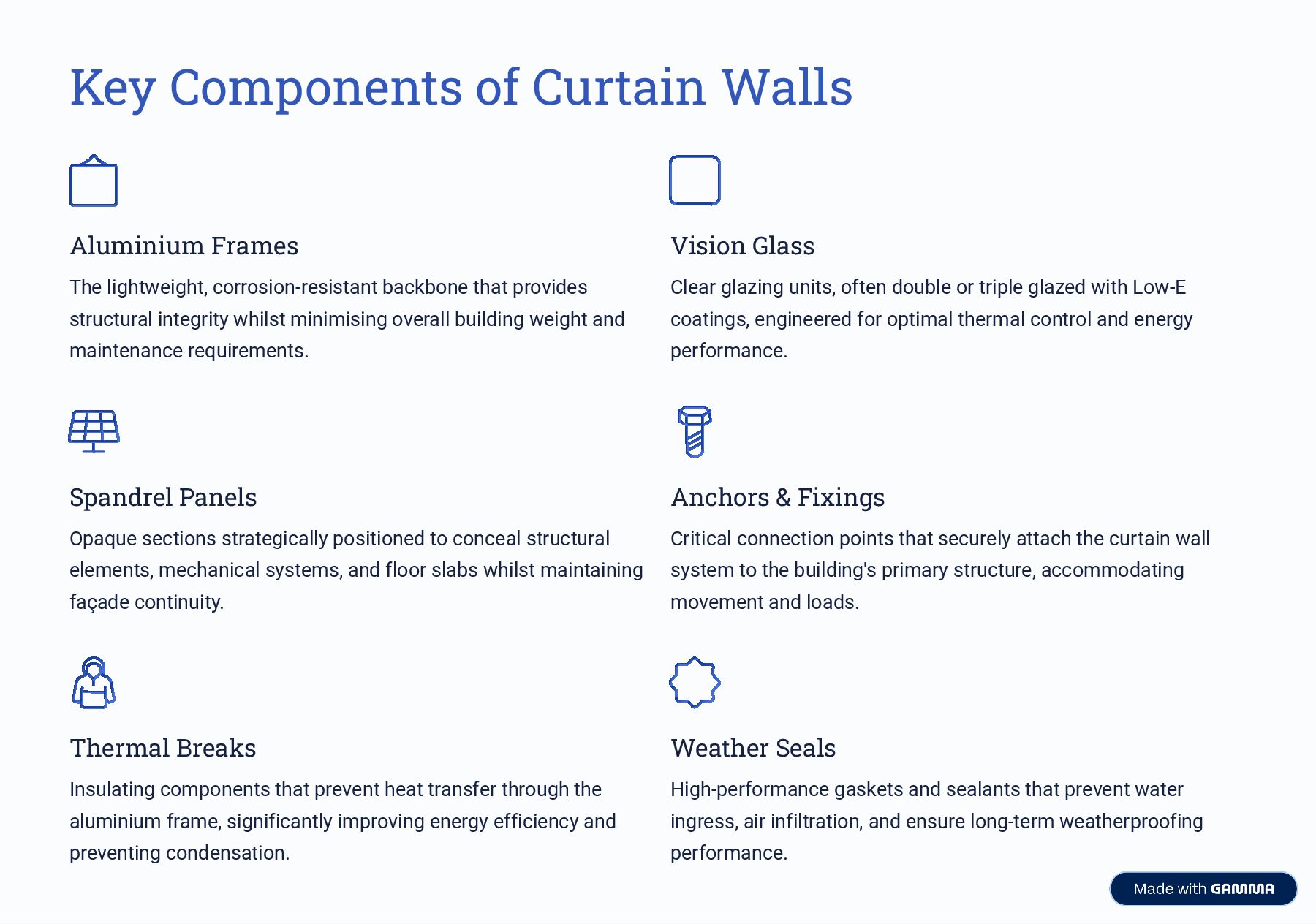
  4. Key Components of Curtain Walls Aluminium Frames The lightweight, corrosion-resistant

    backbone that provides structural integrity whilst minimising overall building weight and maintenance requirements. Vision Glass Clear glazing units, often double or triple glazed with Low-E coatings, engineered for optimal thermal control and energy performance. Spandrel Panels Opaque sections strategically positioned to conceal structural elements, mechanical systems, and floor slabs whilst maintaining façade continuity. Anchors & Fixings Critical connection points that securely attach the curtain wall system to the building's primary structure, accommodating movement and loads. Thermal Breaks Insulating components that prevent heat transfer through the aluminium frame, significantly improving energy efficiency and preventing condensation. Weather Seals High-performance gaskets and sealants that prevent water ingress, air infiltration, and ensure long-term weatherproofing performance.
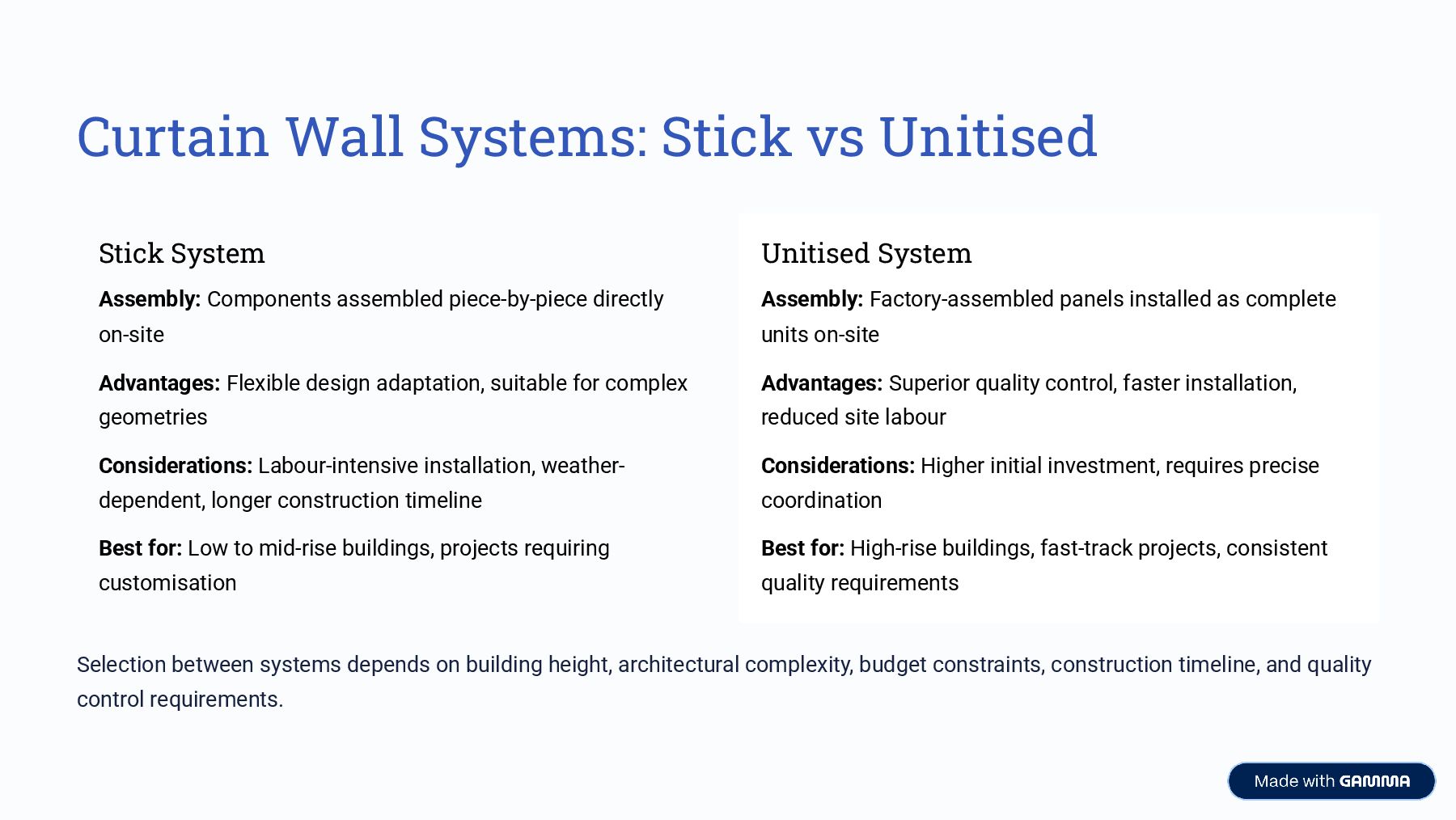
  5. Curtain Wall Systems: Stick vs Unitised Stick System Assembly: Components

    assembled piece-by-piece directly on-site Advantages: Flexible design adaptation, suitable for complex geometries Considerations: Labour-intensive installation, weather- dependent, longer construction timeline Best for: Low to mid-rise buildings, projects requiring customisation Unitised System Assembly: Factory-assembled panels installed as complete units on-site Advantages: Superior quality control, faster installation, reduced site labour Considerations: Higher initial investment, requires precise coordination Best for: High-rise buildings, fast-track projects, consistent quality requirements Selection between systems depends on building height, architectural complexity, budget constraints, construction timeline, and quality control requirements.
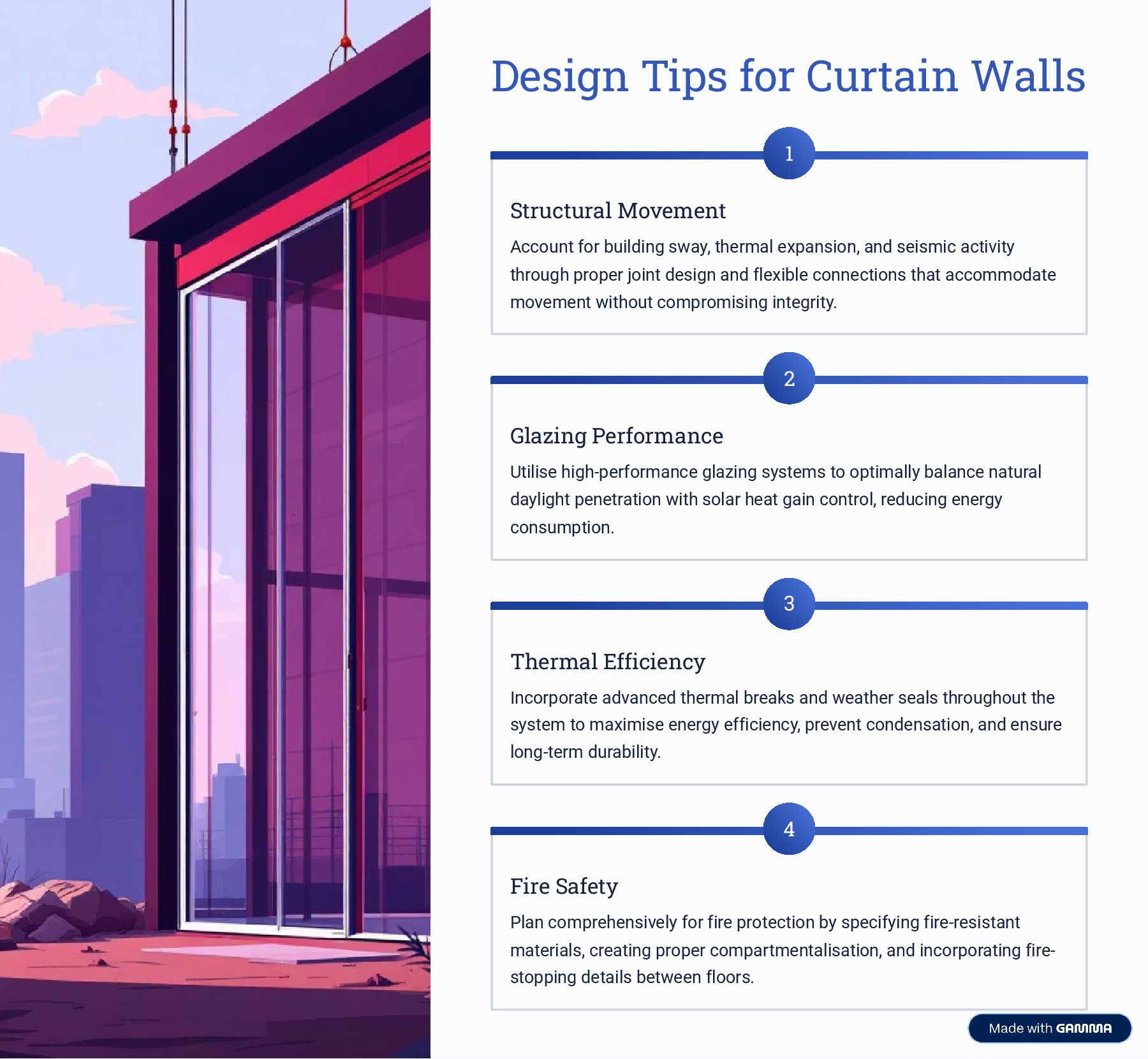
  6. Design Tips for Curtain Walls 1 Structural Movement Account for

    building sway, thermal expansion, and seismic activity through proper joint design and flexible connections that accommodate movement without compromising integrity. 2 Glazing Performance Utilise high-performance glazing systems to optimally balance natural daylight penetration with solar heat gain control, reducing energy consumption. 3 Thermal Efficiency Incorporate advanced thermal breaks and weather seals throughout the system to maximise energy efficiency, prevent condensation, and ensure long-term durability. 4 Fire Safety Plan comprehensively for fire protection by specifying fire-resistant materials, creating proper compartmentalisation, and incorporating fire- stopping details between floors.
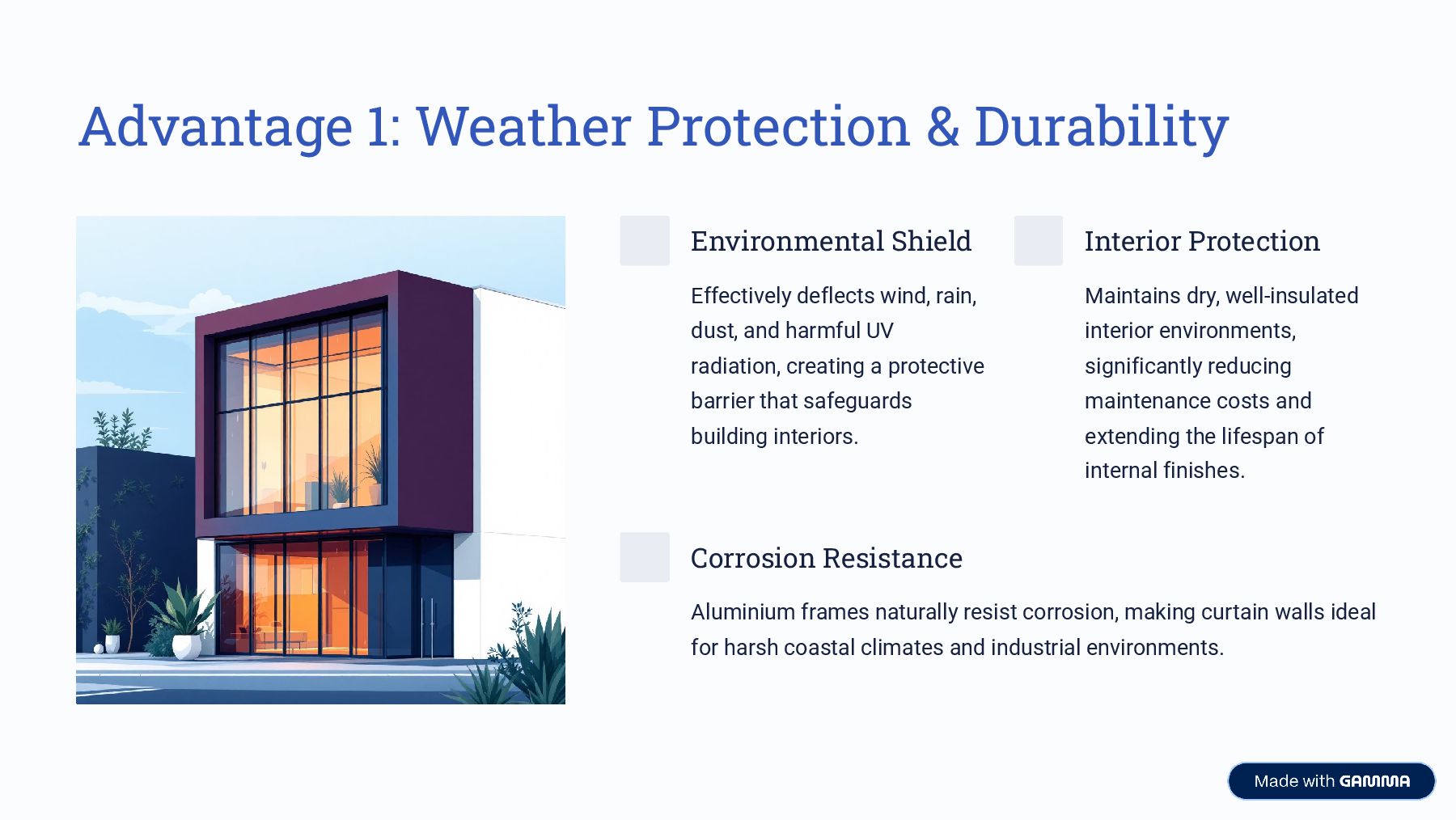
  7. Advantage 1: Weather Protection & Durability Environmental Shield Effectively deflects

    wind, rain, dust, and harmful UV radiation, creating a protective barrier that safeguards building interiors. Interior Protection Maintains dry, well-insulated interior environments, significantly reducing maintenance costs and extending the lifespan of internal finishes. Corrosion Resistance Aluminium frames naturally resist corrosion, making curtain walls ideal for harsh coastal climates and industrial environments.
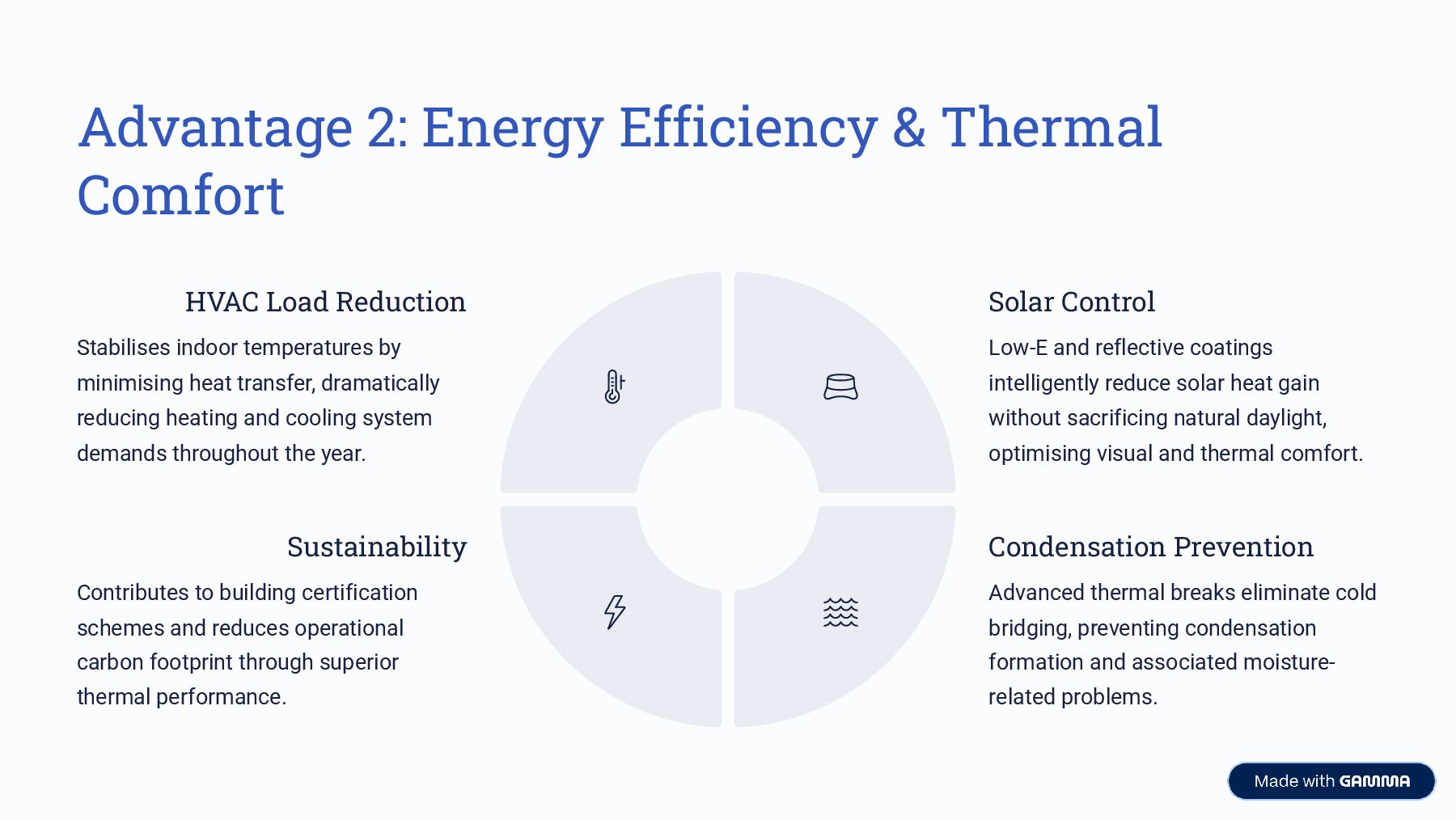
  8. Advantage 2: Energy Efficiency & Thermal Comfort HVAC Load Reduction

    Stabilises indoor temperatures by minimising heat transfer, dramatically reducing heating and cooling system demands throughout the year. Solar Control Low-E and reflective coatings intelligently reduce solar heat gain without sacrificing natural daylight, optimising visual and thermal comfort. Condensation Prevention Advanced thermal breaks eliminate cold bridging, preventing condensation formation and associated moisture- related problems. Sustainability Contributes to building certification schemes and reduces operational carbon footprint through superior thermal performance.
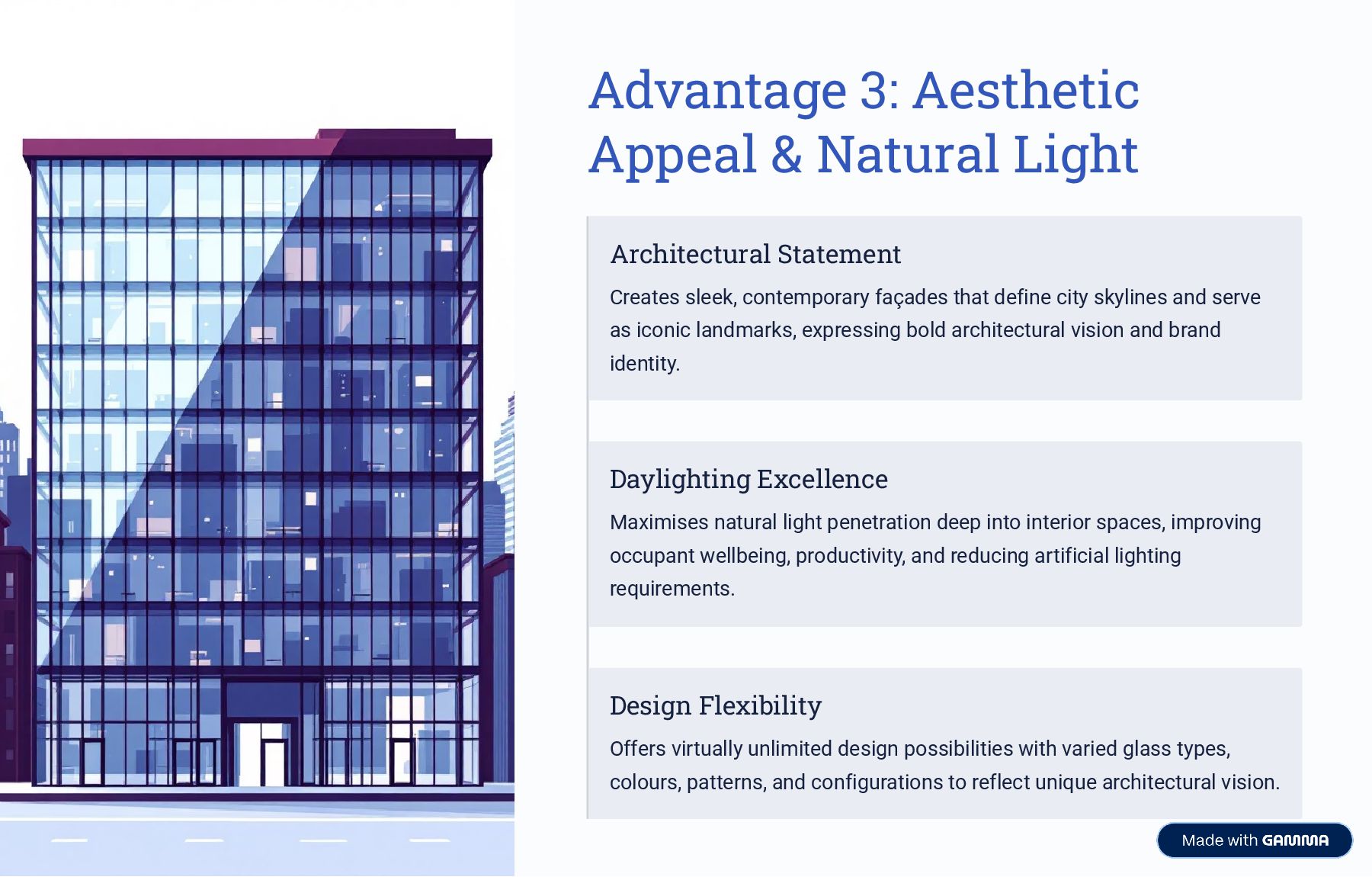
  9. Advantage 3: Aesthetic Appeal & Natural Light Architectural Statement Creates

    sleek, contemporary façades that define city skylines and serve as iconic landmarks, expressing bold architectural vision and brand identity. Daylighting Excellence Maximises natural light penetration deep into interior spaces, improving occupant wellbeing, productivity, and reducing artificial lighting requirements. Design Flexibility Offers virtually unlimited design possibilities with varied glass types, colours, patterns, and configurations to reflect unique architectural vision.
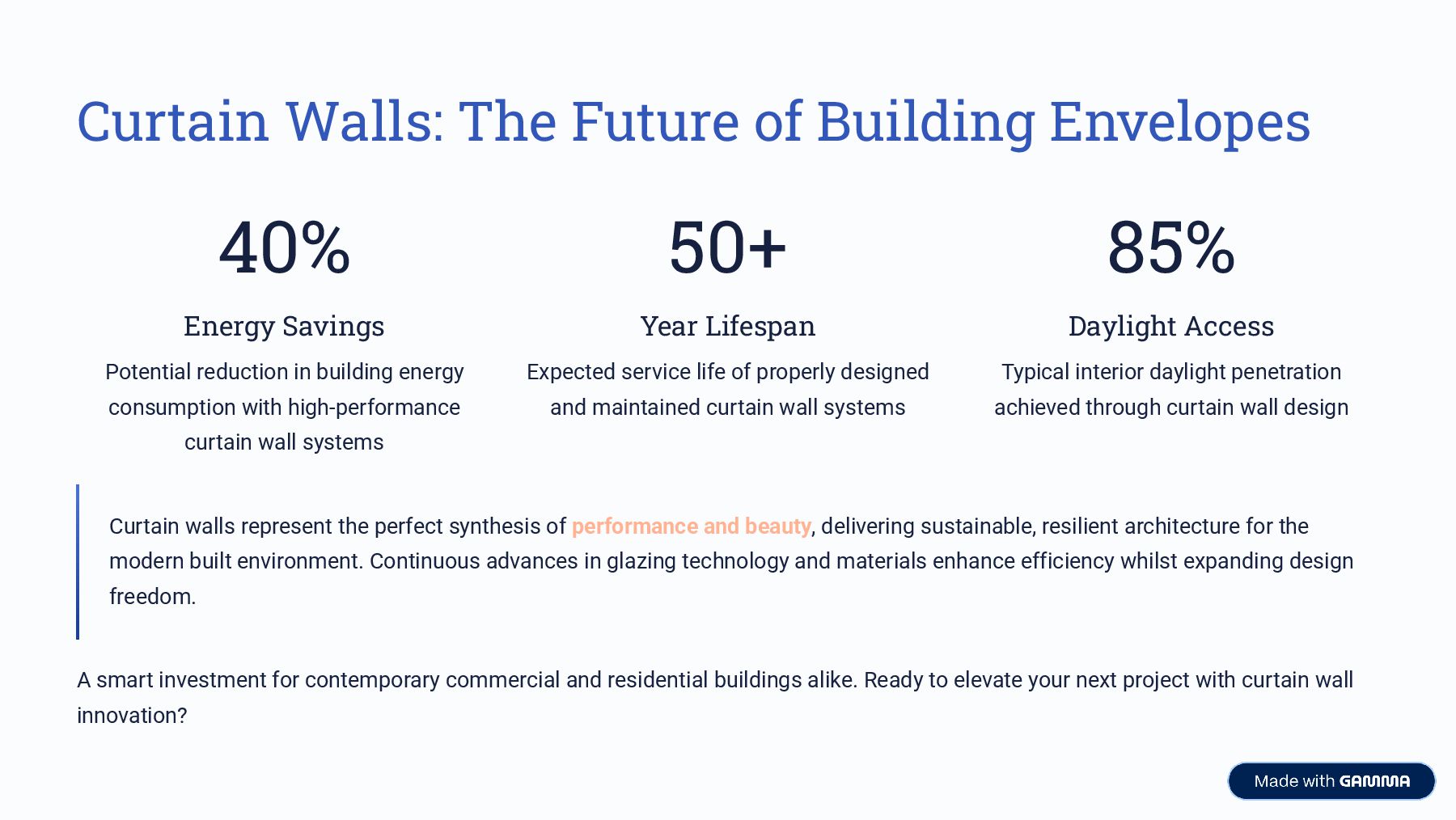
  10. Curtain Walls: The Future of Building Envelopes 40% Energy Savings

    Potential reduction in building energy consumption with high-performance curtain wall systems 50+ Year Lifespan Expected service life of properly designed and maintained curtain wall systems 85% Daylight Access Typical interior daylight penetration achieved through curtain wall design Curtain walls represent the perfect synthesis of performance and beauty, delivering sustainable, resilient architecture for the modern built environment. Continuous advances in glazing technology and materials enhance efficiency whilst expanding design freedom. A smart investment for contemporary commercial and residential buildings alike. Ready to elevate your next project with curtain wall innovation?