Upgrade to Pro — share decks privately, control downloads, hide ads and more …

Paper and Packaging Testing Instruments

Avatar for Rahul Jain Rahul Jain
October 06, 2026

Paper and Packaging Testing Instruments

This PPT explains Paper and Packaging Testing Instruments and their role in packaging quality. It covers strength, thickness, bursting and compression testing. It also explains how to choose the right instrument, prepare samples, perform tests, record results and compare quality. Regular testing helps reduce damage and supports better packaging performance.

Avatar for Rahul Jain

Rahul Jain

October 06, 2026

More Decks by Rahul Jain

Other Decks in Business

Transcript

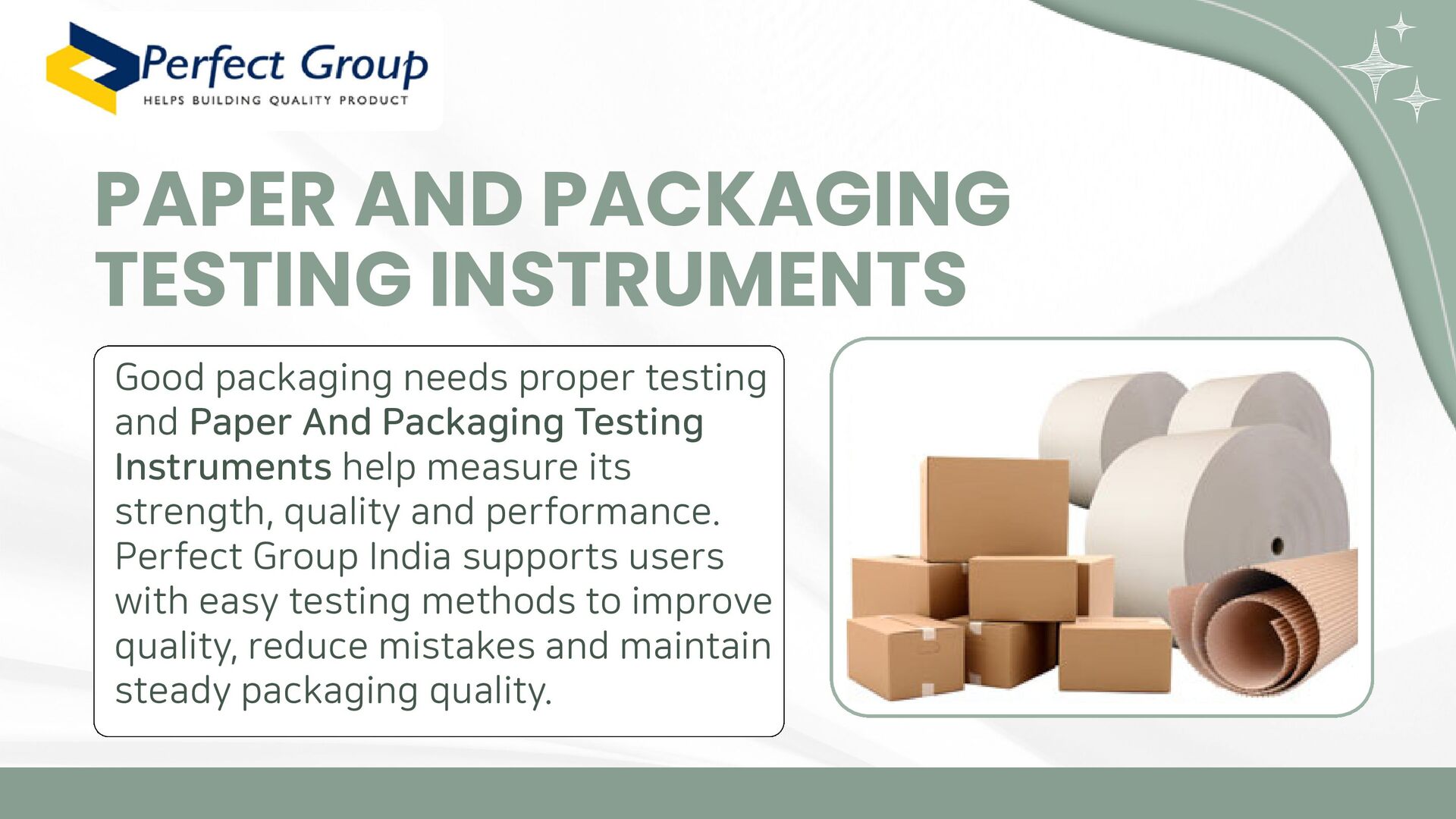
  1. PAPER AND PACKAGING TESTING INSTRUMENTS Good packaging needs proper testing

    and Paper And Packaging Testing Instruments help measure its strength, quality and performance. Perfect Group India supports users with easy testing methods to improve quality, reduce mistakes and maintain steady packaging quality.
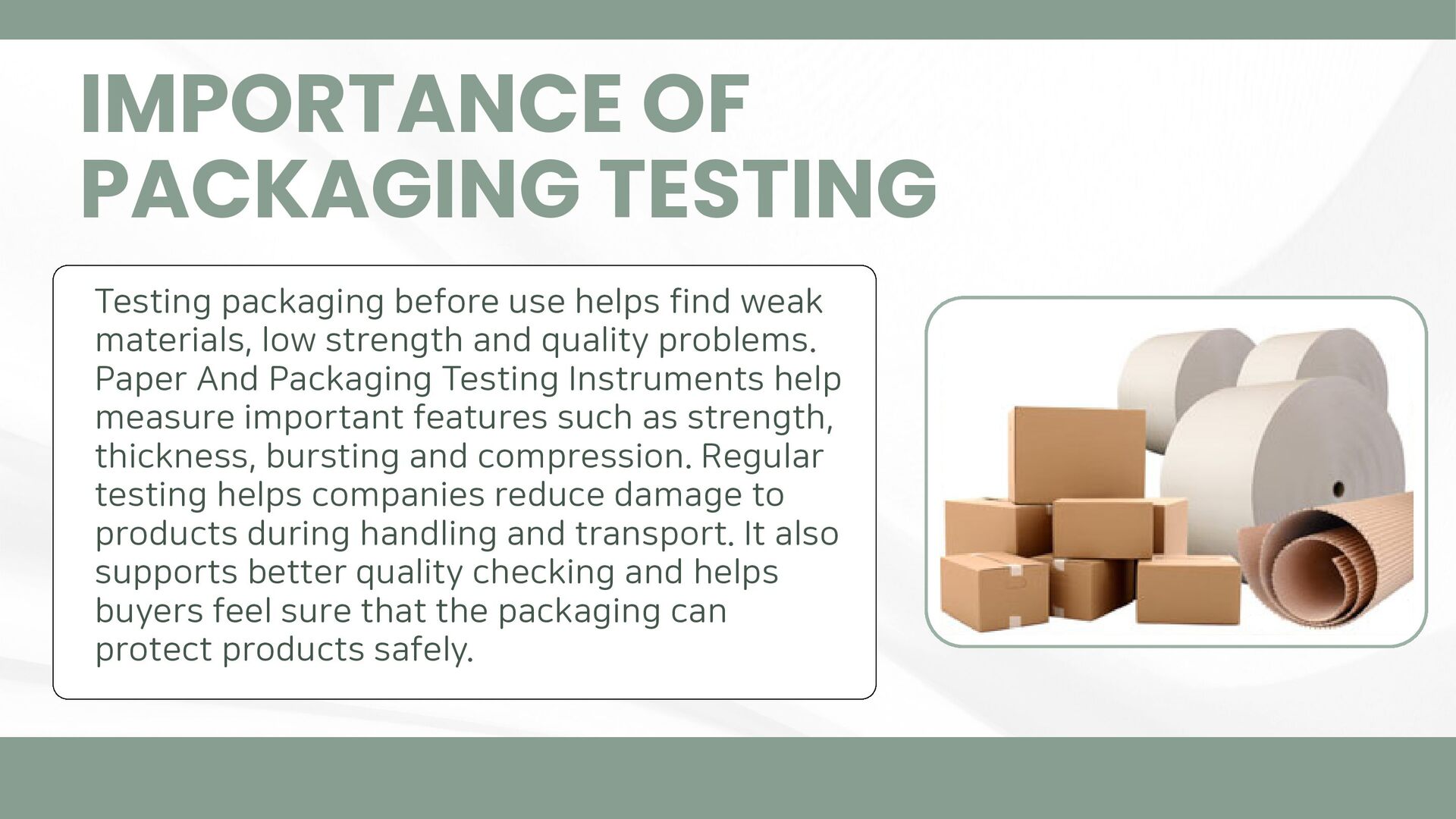
  2. IMPORTANCE OF PACKAGING TESTING Testing packaging before use helps find

    weak materials, low strength and quality problems. Paper And Packaging Testing Instruments help measure important features such as strength, thickness, bursting and compression. Regular testing helps companies reduce damage to products during handling and transport. It also supports better quality checking and helps buyers feel sure that the packaging can protect products safely.
  3. BETTER TESTING DECISIONS Match the Instrument Choose an instrument based

    on the material, sample type and test needed. The right tool gives clear results and helps maintain good quality. Check Ease of Use Simple settings, clear results and easy sample handling help speed up routine testing. Buyers should choose tools that users can operate easily during daily quality work.
  4. PACKAGING TESTING PROCESS A good testing method starts with choosing

    the right sample and preparing it based on the test needed. The sample is then placed in the right instrument and tested under set conditions. Results are noted and compared with the required quality level. Following the same method helps manufacturers get clear results and supports better packaging decisions.