Upgrade to Pro — share decks privately, control downloads, hide ads and more …

Systemic thinking

Sponsored · Your Podcast. Everywhere. Effortlessly. Share. Educate. Inspire. Entertain. You do you. We'll handle the rest. →

Systemic thinking

Slides from a team presentation on thinking beyond ourselves and beyond the task. A summary of reading on the subject of systemic thinking - BARTLETT, G (2001). SYSTEMIC THINKING
a simple thinking technique for gaining systemic (situation-wide) focus.

Avatar for Jason Brewster

Jason Brewster

November 13, 2014

More Decks by Jason Brewster

Other Decks in Education

Transcript

  1. Systemic thinking Thinking about a complex world differently Image: thumbnail

    from a work of art at http://www.klarireis.com/data/photos/315_1systemic_circulation.jpg
  2. There exists a perception that is gradually spreading that many

    of the systems supporting daily life need radical overhaul Photograph: Unknown/ Royalty-Free/CORBIS
  3. - Geoff Mulgan,
 Chief Executive of Nesta “I’m convinced that

    the ability to think and act systemically is the greatest intellectual and practical challenge of this century – relevant to climate change, economic growth, water use and digital technology and just about everything else.”
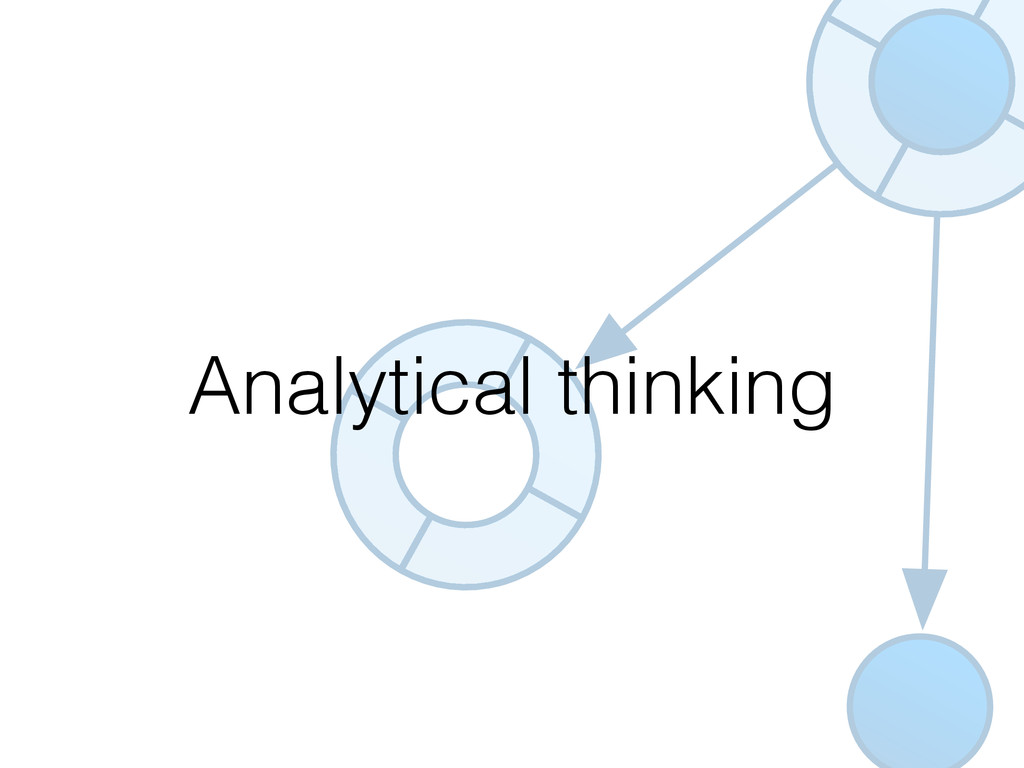
  4. Our primary thinking tool is analysis – taking things apart.

    Analysis is a powerful thinking tool – for understanding the parts of a situation. When we break things down into smaller and smaller components, we tend to lose sight of the interactions between them.
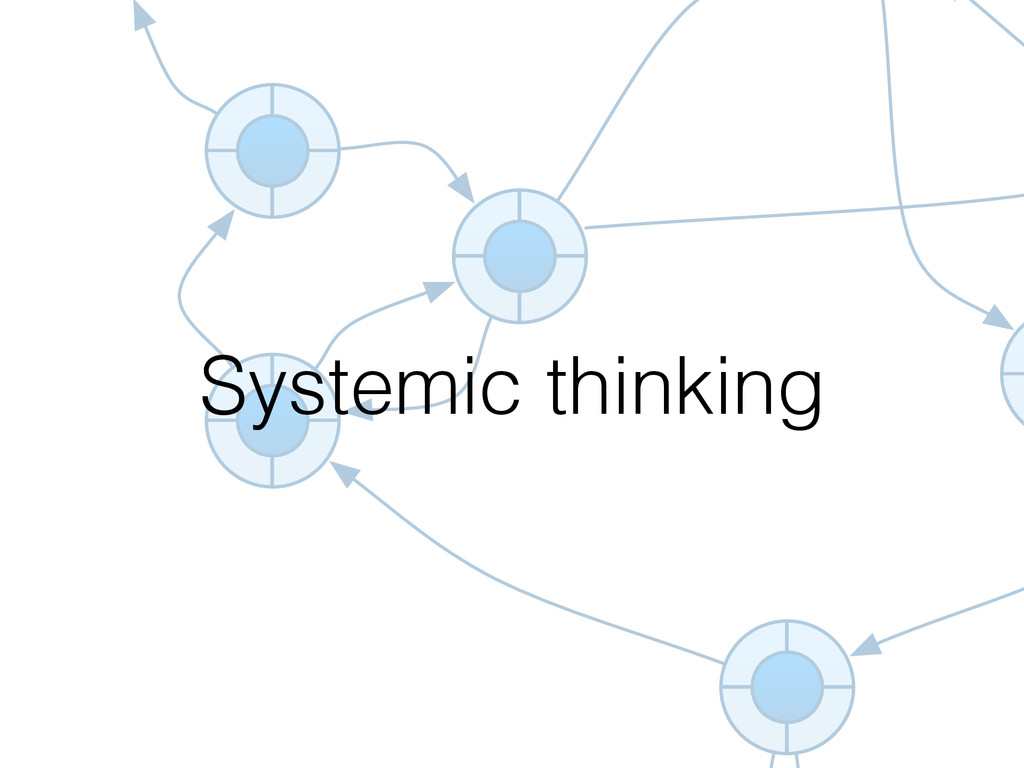
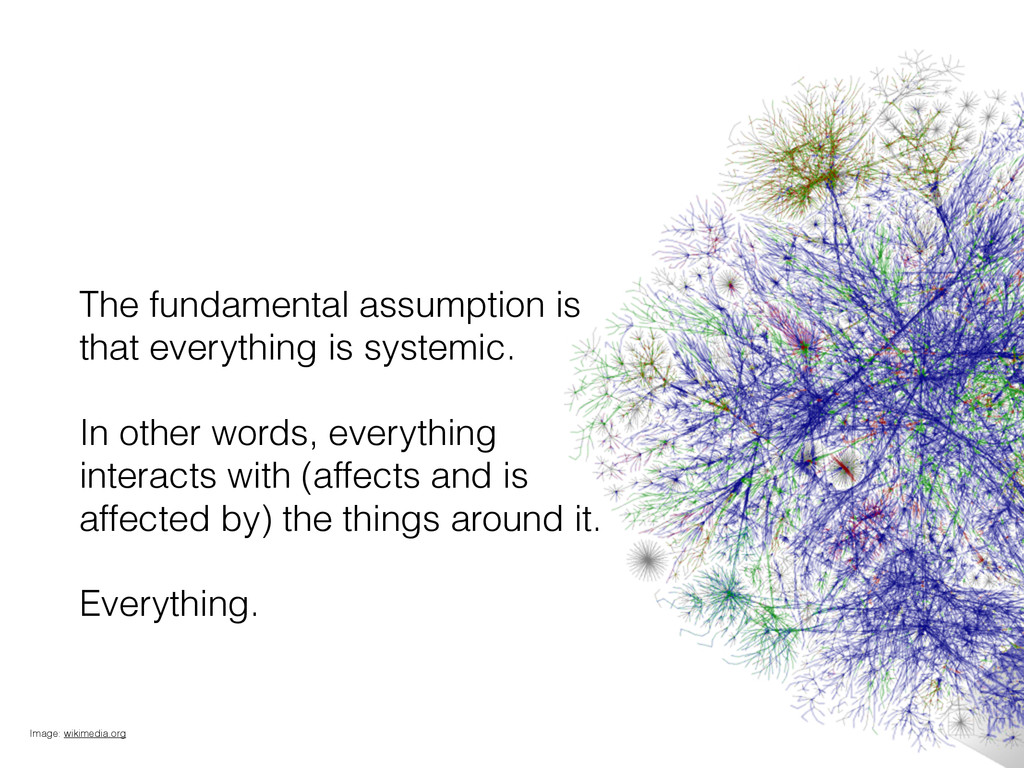
  5. The fundamental assumption is that everything is systemic. In other

    words, everything interacts with (affects and is affected by) the things around it. Everything. Image: wikimedia.org
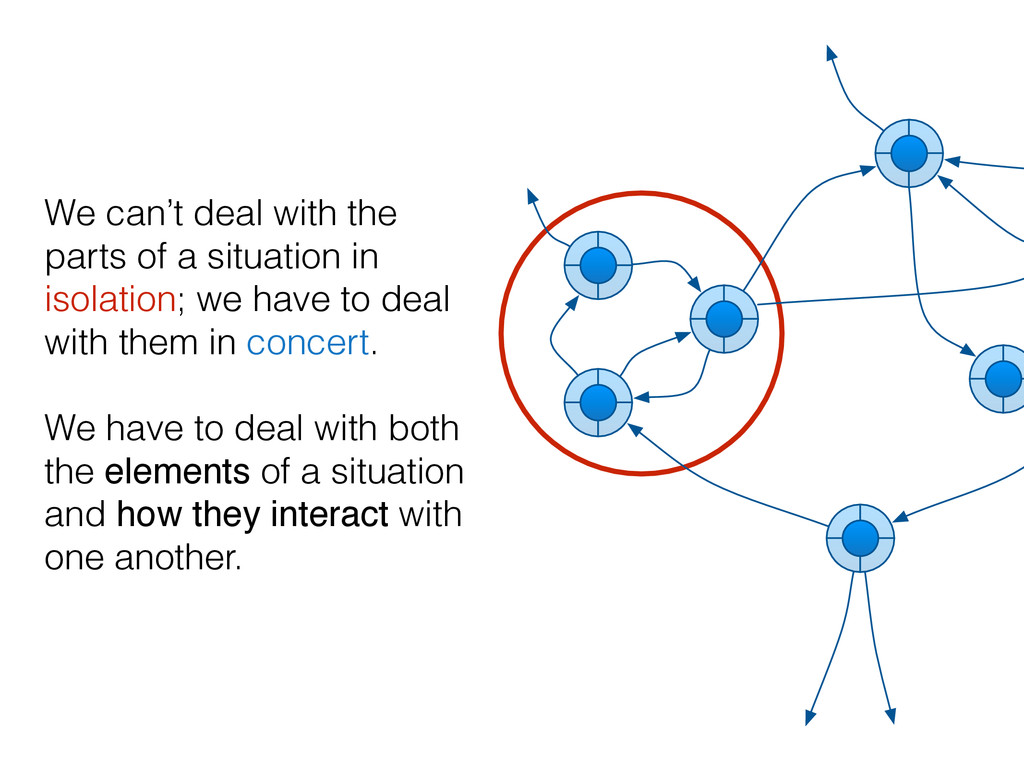
  6. We can’t deal with the parts of a situation in

    isolation; we have to deal with them in concert. 
 
 We have to deal with both the elements of a situation and how they interact with one another.
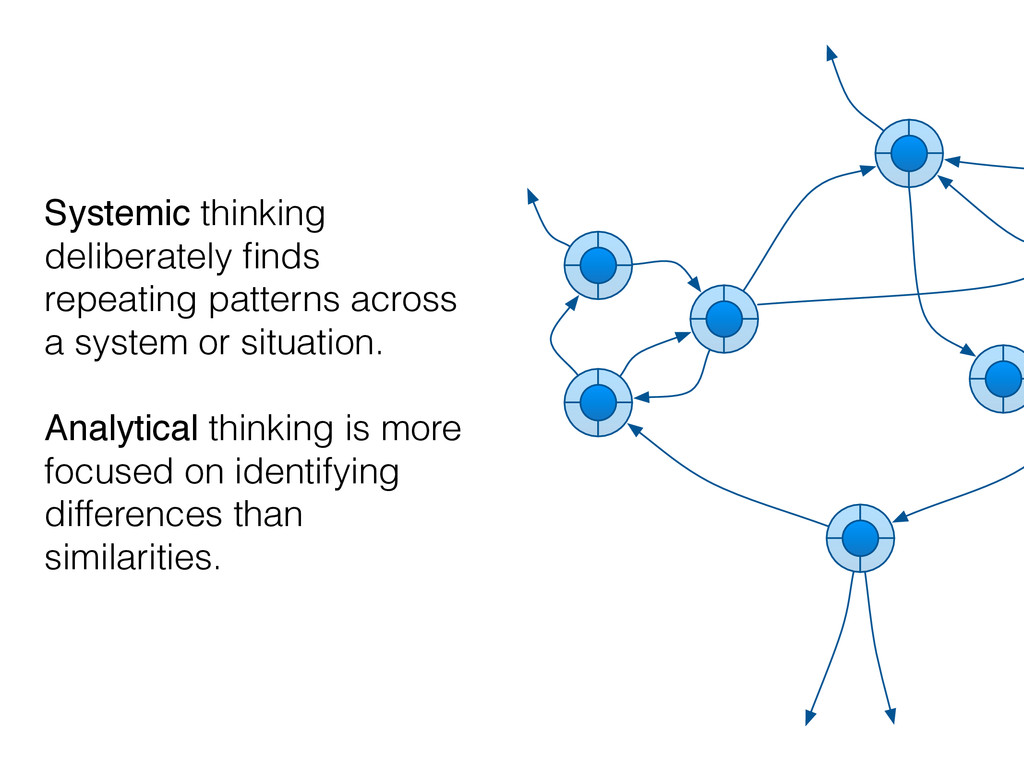
  7. Systemic thinking deliberately finds repeating patterns across a system or

    situation. Analytical thinking is more focused on identifying differences than similarities.