Share
Embed
Getting Found on Google in 2014
Businesses are having a hard time getting found in the noise online. In this presentation, we discuss simple strategies for all types of businesses to get found on Google and what has changed in the past 12 months.

Jevin Maltais
January 28, 2014
Transcript
78 slides
-
Welcome! Welcome! My motivation: - I like to meet more
business people and look for referrals if you need help with all things web. - In return, I hope to give you great information for your business every month -
Today ❖ How searching works! ❖ How Google ranks your
website! ❖ How you can get started today -
Why do you care about Google? - People look for
businesses through Google - It’s the gateway for people finding our businesses. -
Two parts to getting customers Potential! Customer Searches Looks for
answers on Buys something Ideally Your website Google Your website Today we’ll talk about Google, next time your website -
Two parts to getting customers Potential! Customer Searches Looks for
answers on Buys something Ideally Your website Today Google Your website Today we’ll talk about Google, next time your website -
Two parts to getting customers Potential! Customer Searches Looks for
answers on Buys something Ideally Your website Today February Seminar Google Your website Today we’ll talk about Google, next time your website -
Google’s motivation Giving the most relevant result to their customer
as possible so people keep coming back How Google Makes Money Adwords ($42.5 Billion in 2012) Google wants to give the person searching the best answer it can Everything we’re talking about will be in this context -
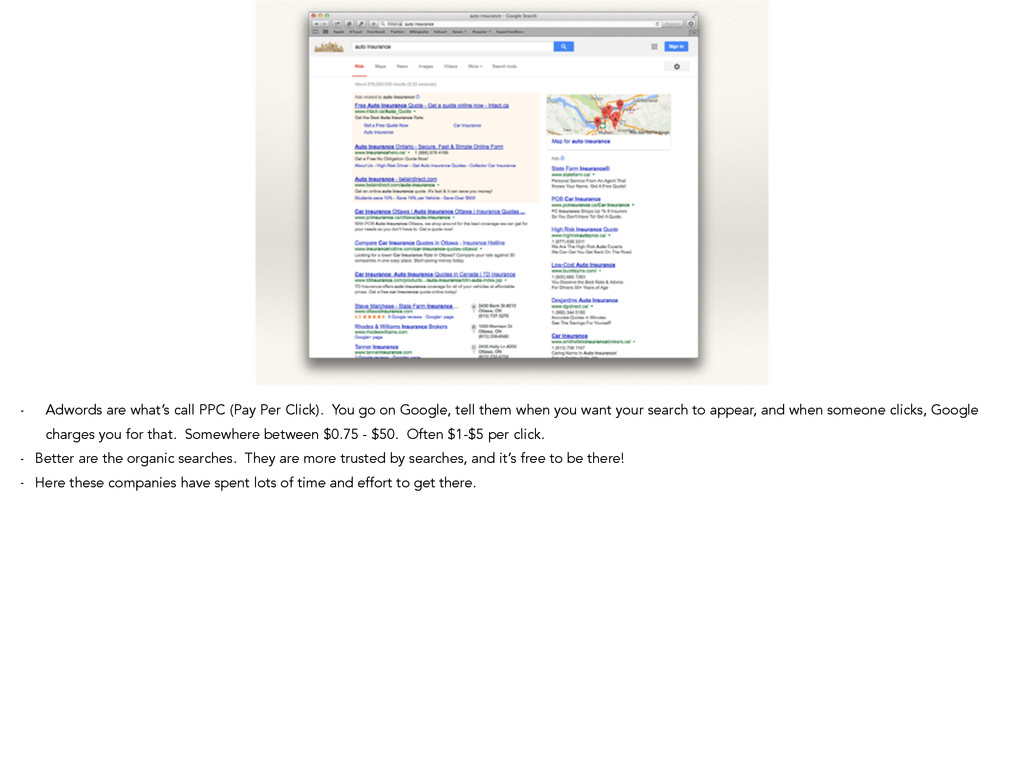
- Adwords are what’s call PPC (Pay Per Click). You
go on Google, tell them when you want your search to appear, and when someone clicks, Google charges you for that. Somewhere between $0.75 - $50. Often $1-$5 per click. - Better are the organic searches. They are more trusted by searches, and it’s free to be there! - Here these companies have spent lots of time and effort to get there. -
Adwords (You can pay to be here today!) - Adwords
are what’s call PPC (Pay Per Click). You go on Google, tell them when you want your search to appear, and when someone clicks, Google charges you for that. Somewhere between $0.75 - $50. Often $1-$5 per click. - Better are the organic searches. They are more trusted by searches, and it’s free to be there! - Here these companies have spent lots of time and effort to get there. -
Adwords (You can pay to be here today!) Organic Results
(Free to be here) - Adwords are what’s call PPC (Pay Per Click). You go on Google, tell them when you want your search to appear, and when someone clicks, Google charges you for that. Somewhere between $0.75 - $50. Often $1-$5 per click. - Better are the organic searches. They are more trusted by searches, and it’s free to be there! - Here these companies have spent lots of time and effort to get there. -
- Breaks it down into different concepts. Here it notices
a “service” and a “location”. - Unless there’s something actually called “Dog Walking Orleans” or a variation of that. -
Dog walking Orleans - Breaks it down into different concepts.
Here it notices a “service” and a “location”. - Unless there’s something actually called “Dog Walking Orleans” or a variation of that. -
Dog walking Orleans - Breaks it down into different concepts.
Here it notices a “service” and a “location”. - Unless there’s something actually called “Dog Walking Orleans” or a variation of that. -
Dog walking Orleans - Breaks it down into different concepts.
Here it notices a “service” and a “location”. - Unless there’s something actually called “Dog Walking Orleans” or a variation of that. -
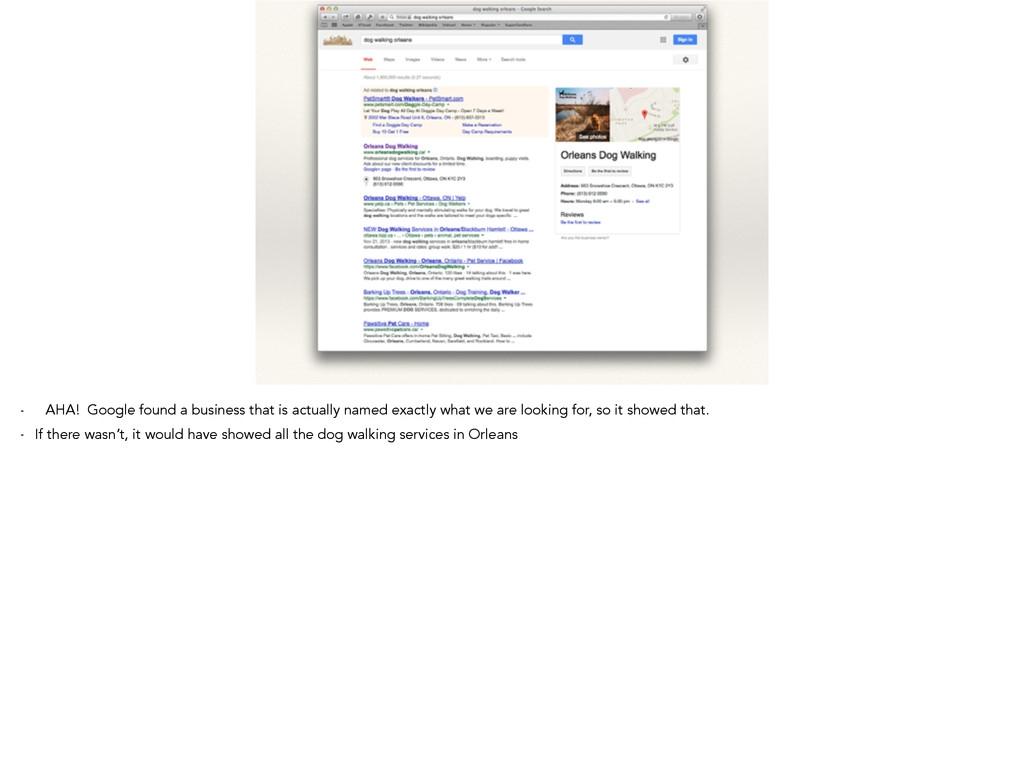
- AHA! Google found a business that is actually named
exactly what we are looking for, so it showed that. - If there wasn’t, it would have showed all the dog walking services in Orleans -
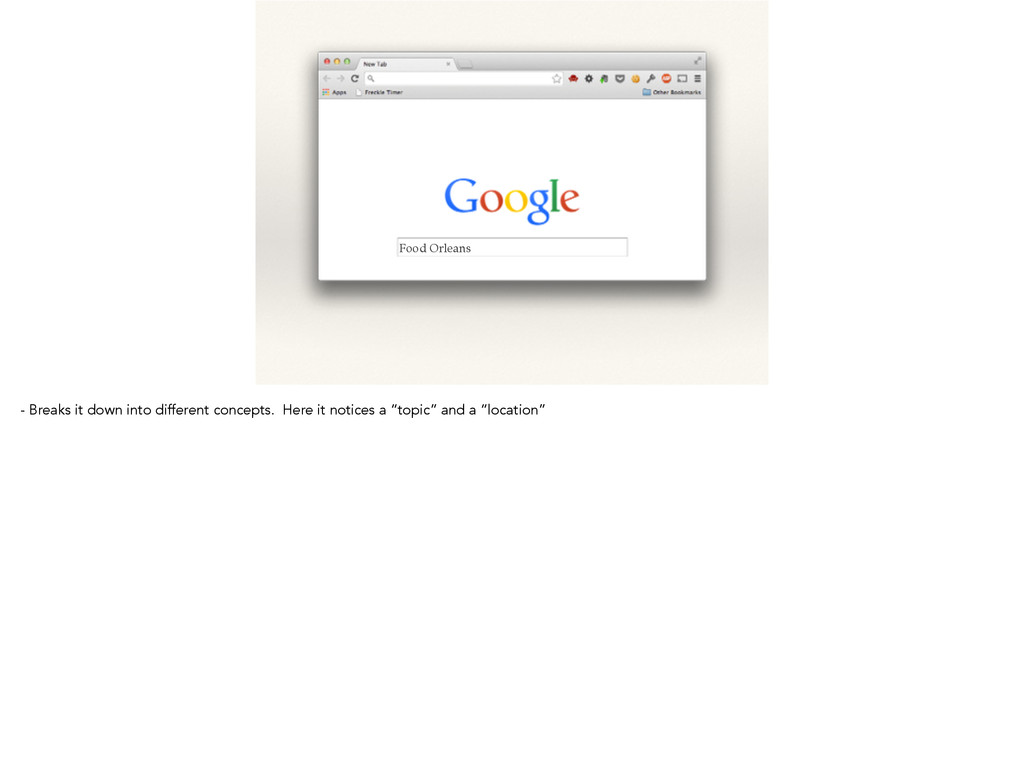
- Breaks it down into different concepts. Here it notices
a “topic” and a “location” -
Food Orleans - Breaks it down into different concepts. Here
it notices a “topic” and a “location” -
Food Orleans - Breaks it down into different concepts. Here
it notices a “topic” and a “location” -
Food Orleans - Breaks it down into different concepts. Here
it notices a “topic” and a “location” -
So here Google is showing us “food service” businesses in
“Orleans”. What we wanted! -
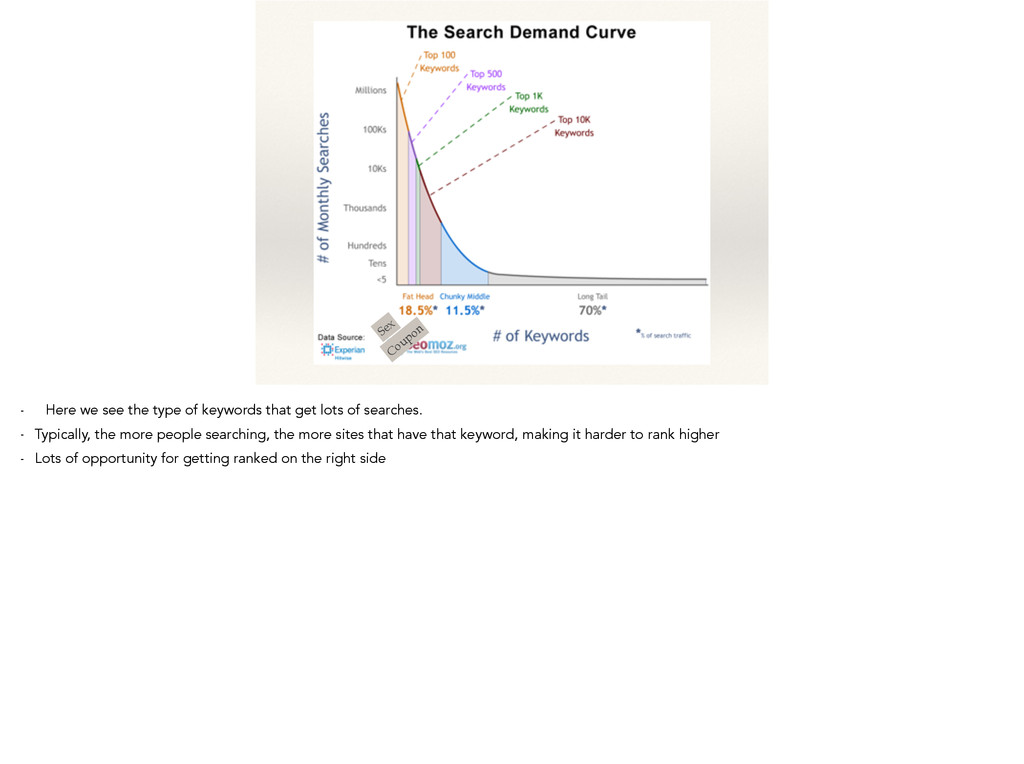
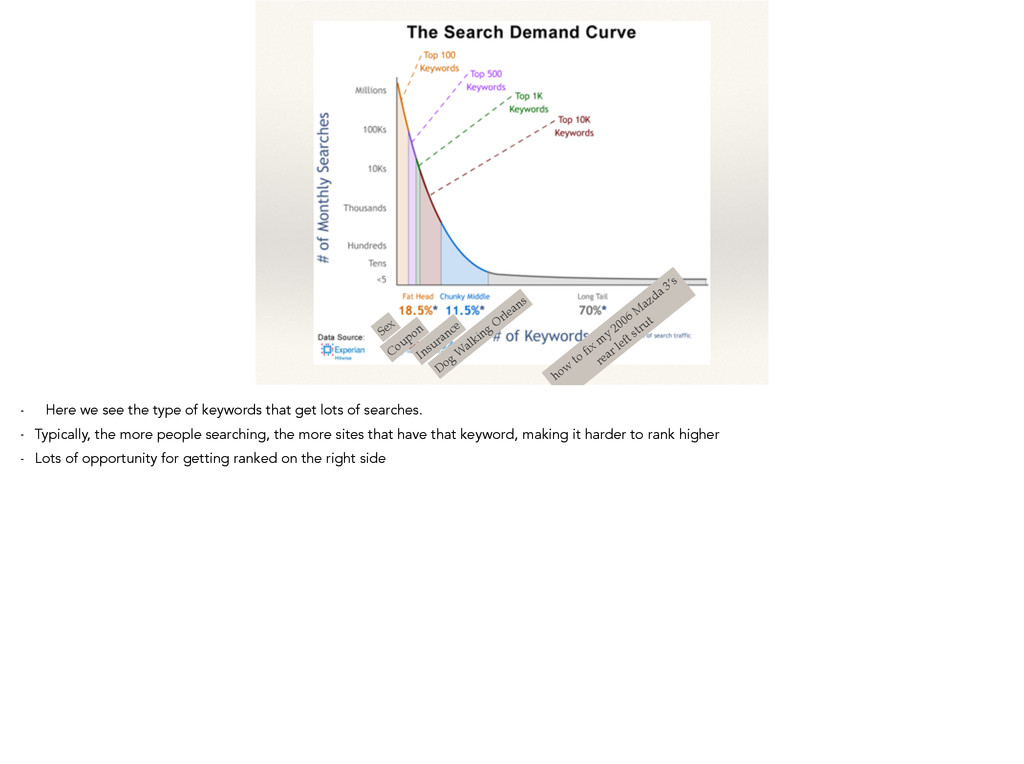
- Here we see the type of keywords that get
lots of searches. - Typically, the more people searching, the more sites that have that keyword, making it harder to rank higher - Lots of opportunity for getting ranked on the right side -
Sex - Here we see the type of keywords that
get lots of searches. - Typically, the more people searching, the more sites that have that keyword, making it harder to rank higher - Lots of opportunity for getting ranked on the right side -
Sex Coupon - Here we see the type of keywords
that get lots of searches. - Typically, the more people searching, the more sites that have that keyword, making it harder to rank higher - Lots of opportunity for getting ranked on the right side -
Sex Coupon Insurance - Here we see the type of
keywords that get lots of searches. - Typically, the more people searching, the more sites that have that keyword, making it harder to rank higher - Lots of opportunity for getting ranked on the right side -
Sex Coupon Insurance Dog W alking Orleans - Here we
see the type of keywords that get lots of searches. - Typically, the more people searching, the more sites that have that keyword, making it harder to rank higher - Lots of opportunity for getting ranked on the right side -
Sex Coupon Insurance Dog W alking Orleans how to fix
m y 2006 M azda 3’s rear left strut - Here we see the type of keywords that get lots of searches. - Typically, the more people searching, the more sites that have that keyword, making it harder to rank higher - Lots of opportunity for getting ranked on the right side -
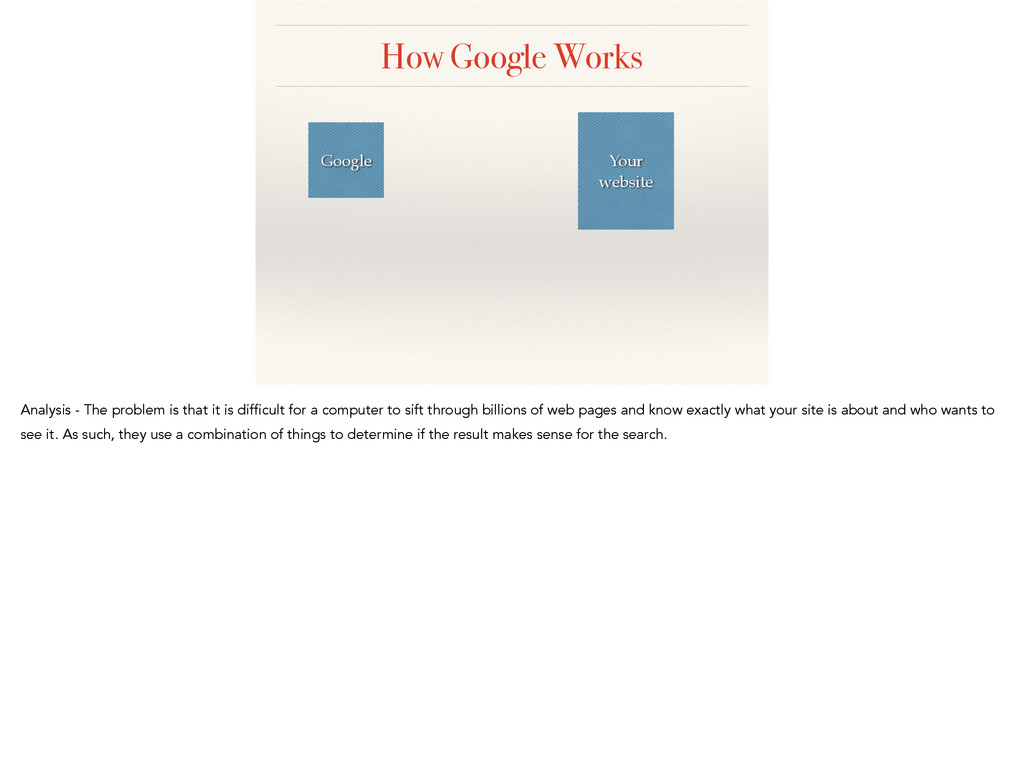
How Google Works Google Your website Analysis - The problem
is that it is difficult for a computer to sift through billions of web pages and know exactly what your site is about and who wants to see it. As such, they use a combination of things to determine if the result makes sense for the search. -
How Google Works Google Your website 1. Visits your page
Analysis - The problem is that it is difficult for a computer to sift through billions of web pages and know exactly what your site is about and who wants to see it. As such, they use a combination of things to determine if the result makes sense for the search. -
How Google Works Google Your website 1. Visits your page
2. Checks all the pages on your site Analysis - The problem is that it is difficult for a computer to sift through billions of web pages and know exactly what your site is about and who wants to see it. As such, they use a combination of things to determine if the result makes sense for the search. -
How Google Works Google Your website 1. Visits your page
2. Checks all the pages on your site 3. Analyzes your page! to decide who wants to see it Analysis - The problem is that it is difficult for a computer to sift through billions of web pages and know exactly what your site is about and who wants to see it. As such, they use a combination of things to determine if the result makes sense for the search. -
How Google Works Google Your website 1. Visits your page
2. Checks all the pages on your site 3. Analyzes your page! to decide who wants to see it 4. Catalogs it Analysis - The problem is that it is difficult for a computer to sift through billions of web pages and know exactly what your site is about and who wants to see it. As such, they use a combination of things to determine if the result makes sense for the search. -
How Google Works Google Your website 1. Visits your page
2. Checks all the pages on your site 3. Analyzes your page! to decide who wants to see it 4. Catalogs it Google wants your help with this Analysis - The problem is that it is difficult for a computer to sift through billions of web pages and know exactly what your site is about and who wants to see it. As such, they use a combination of things to determine if the result makes sense for the search. -
Google Analysis Algorithm - How Google determines what should be
the top results is VERY secret. Why is that? - Because if someone found out, people would “game” the system and optimize your site to be on the top. - However, there are guidelines from Google, and experiments we can learn from -
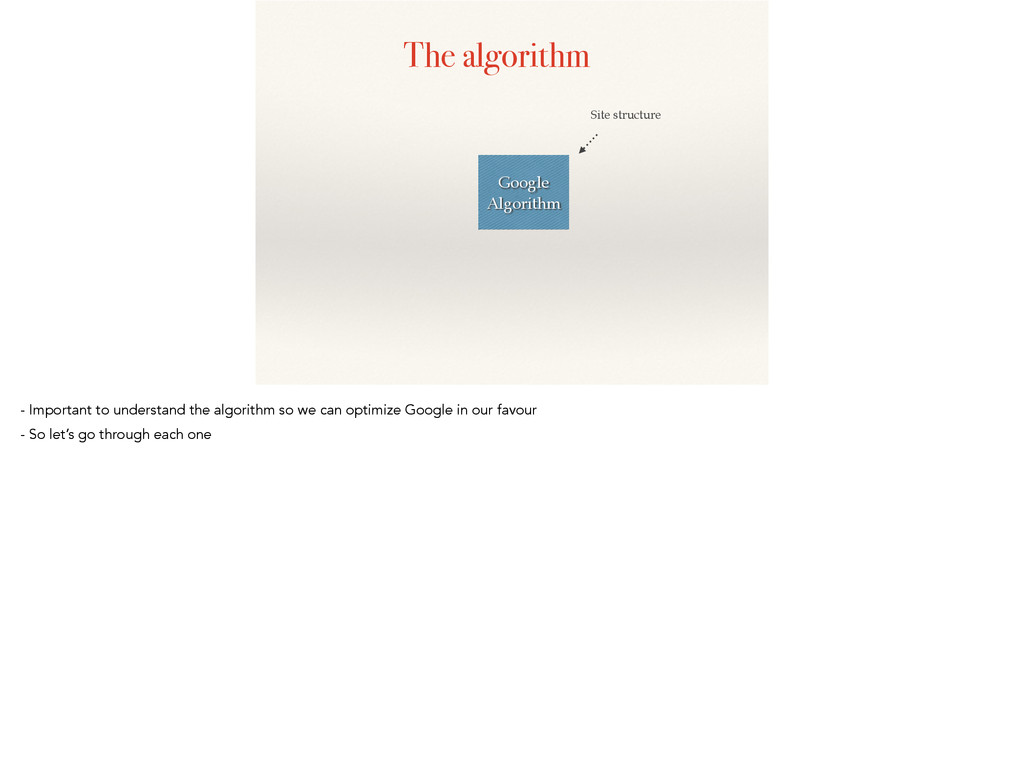
The algorithm Google Algorithm - Important to understand the algorithm
so we can optimize Google in our favour - So let’s go through each one -
The algorithm Google Algorithm Site structure - Important to understand
the algorithm so we can optimize Google in our favour - So let’s go through each one -
The algorithm Google Algorithm Social Aspects Site structure - Important
to understand the algorithm so we can optimize Google in our favour - So let’s go through each one -
The algorithm Google Algorithm Fresh Content Social Aspects Site structure
- Important to understand the algorithm so we can optimize Google in our favour - So let’s go through each one -
The algorithm Google Algorithm Fresh Content Social Aspects Site structure
PageRank - Important to understand the algorithm so we can optimize Google in our favour - So let’s go through each one -
The algorithm Google Algorithm Lots more we know Fresh Content
Social Aspects Site structure PageRank - Important to understand the algorithm so we can optimize Google in our favour - So let’s go through each one -
The algorithm Google Algorithm Lots more we know ??? Fresh
Content Social Aspects Site structure PageRank - Important to understand the algorithm so we can optimize Google in our favour - So let’s go through each one -
“The Pledge” - This stuff can be overwhelming - If
you’re not doing any of this, you might be discouraged. DON’T! - Knowledge is the first step of recovery - Raise your right arm and repeat after me: “I pledge.. not to freak out.. with the information that follows.. and will take solace.. that I’m learning something new” -
Fresh Content (page 2) How long people stay on your
site Two bus schedules 1. On one page the person stays longer. 2. So they are reading more information 3. so it’s more likely to be relevant -
Fresh Content (page 3) How old your site is Two
bus schedules 1. On one page the person stays longer. 2. So they are reading more information 3. so it’s more likely to be relevant -
PageRank (BackLinks) - Named after Larry Page (one of the
Google co-founders) - Helps establish authority based on how many people link to you and the authority of those pages - Goal? Have high profile sites link to you -
PageRank (BackLinks) Toronto Star (7/10) - Named after Larry Page
(one of the Google co-founders) - Helps establish authority based on how many people link to you and the authority of those pages - Goal? Have high profile sites link to you -
PageRank (BackLinks) Toronto Star (7/10) University of Ottawa (7/10) -
Named after Larry Page (one of the Google co-founders) - Helps establish authority based on how many people link to you and the authority of those pages - Goal? Have high profile sites link to you -
PageRank (BackLinks) Quickjack (3/10) Toronto Star (7/10) University of Ottawa
(7/10) - Named after Larry Page (one of the Google co-founders) - Helps establish authority based on how many people link to you and the authority of those pages - Goal? Have high profile sites link to you -
PageRank (BackLinks) Quickjack (3/10) Toronto Star (7/10) Smakk.ca (3/10) University
of Ottawa (7/10) - Named after Larry Page (one of the Google co-founders) - Helps establish authority based on how many people link to you and the authority of those pages - Goal? Have high profile sites link to you -
PageRank (BackLinks) Quickjack (3/10) Toronto Star (7/10) Tim Ferris’ Blog
(5/10) Smakk.ca (3/10) University of Ottawa (7/10) - Named after Larry Page (one of the Google co-founders) - Helps establish authority based on how many people link to you and the authority of those pages - Goal? Have high profile sites link to you -
PageRank (BackLinks) Quickjack (3/10) Toronto Star (7/10) Tim Ferris’ Blog
(5/10) Smakk.ca (3/10) turningsellingintobuying.com (2/10) University of Ottawa (7/10) - Named after Larry Page (one of the Google co-founders) - Helps establish authority based on how many people link to you and the authority of those pages - Goal? Have high profile sites link to you -
PageRank (BackLinks) Quickjack (3/10) Toronto Star (7/10) Tim Ferris’ Blog
(5/10) Smakk.ca (3/10) turningsellingintobuying.com (2/10) University of Ottawa (7/10) innovative.ca (4/10) - Named after Larry Page (one of the Google co-founders) - Helps establish authority based on how many people link to you and the authority of those pages - Goal? Have high profile sites link to you -
Social Aspects Your Website - If people share your new
content on your site, how do you think Google perceives the authority or importance of that content compared to a post that has no shares? - If people find it valuable enough to share it with others, there must be a level of value that OTHER people looking for that content might find helpful. -
Social Aspects Your Website New content (blog post?) - If
people share your new content on your site, how do you think Google perceives the authority or importance of that content compared to a post that has no shares? - If people find it valuable enough to share it with others, there must be a level of value that OTHER people looking for that content might find helpful. -
Social Aspects (Bonus!) Chain reaction of customers reached: You sharing
the content Two people “reshare it” 14 people reshare it - If each person has say, 200 friends or followers, if you use this as an example, you can get in front of 10,000 people with a single high quality, “sharable” piece of content -
Site structure ❖ There’s the on site technical stuff that
needs to be done:! ❖ H tags, meta description tags, internal links, site map etc - I’m going to gloss over this a bit as it is quite technical. - Will tell you how to fix this later -
Getting Ranked Is Hard - It can take months to
see how things change -
Start a Blog ❖ Generating fresh content that your clients
will love to share.! ❖ Content people will find on Google! ❖ It’s a long term grind that will likely pay off. Best Book I’ve Seen This book is very actionable, lots of ideas. Worth reading -
Site Structure ❖ Get Google to tell you: https://www.google.com/ webmasters/
! ❖ Another way, check quickly: http:// www.quicksprout.com! ❖ If you have a Wordpress site, install and setup the Yoast SEO plugin -
Get back links (Raise PageRank) ❖ Tough, but one of
the most important to do.! ❖ How can you creatively get authoritative sites to link to your site?! ❖ High quality/controversial content. Awesome quick reference guide? -
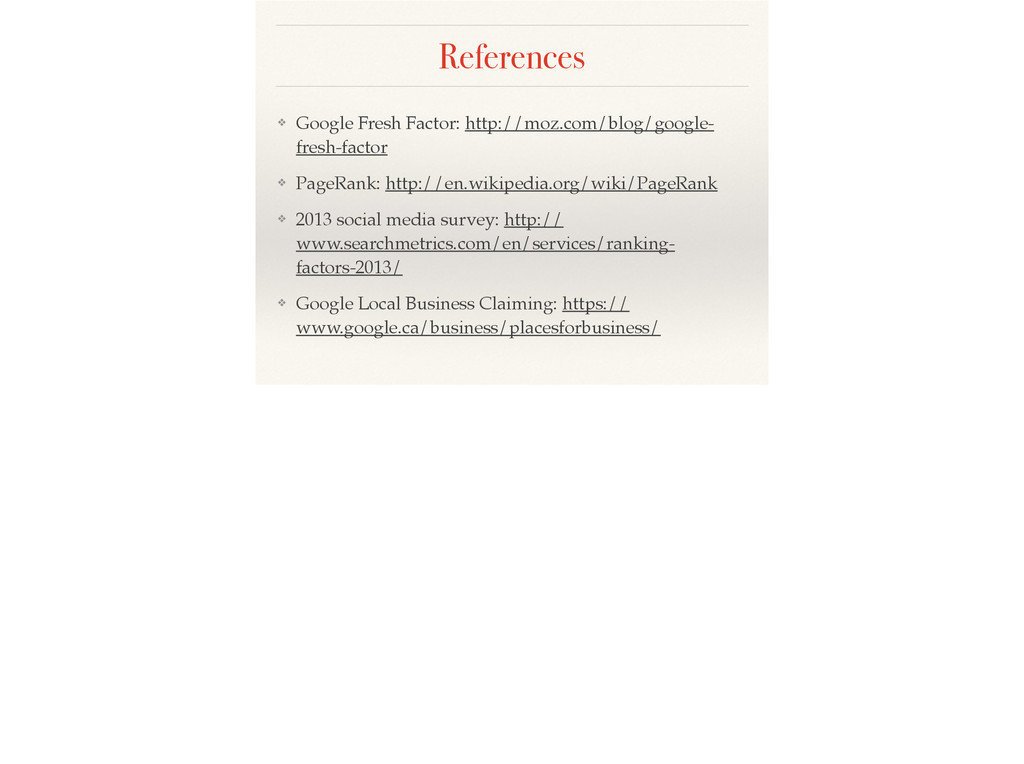
References ❖ Google Fresh Factor: http://moz.com/blog/google- fresh-factor! ❖ PageRank: http://en.wikipedia.org/wiki/PageRank!
❖ 2013 social media survey: http:// www.searchmetrics.com/en/services/ranking- factors-2013/! ❖ Google Local Business Claiming: https:// www.google.ca/business/placesforbusiness/ -
Other aspects ❖ It’s very technical and there’s lots more
too it.! ❖ ??????? (We just don’t know) - We’ve already talked about this big stuff already - There more that Google does, but we don’t know because it’s secret -
February Potential! Customer Searches Looks for answers on Buys something
Ideally Your website Google Your website Today we’ll talk about Google, next time your website -
February Potential! Customer Searches Looks for answers on Buys something
Ideally Your website Google Your website Today we’ll talk about Google, next time your website
 jevy
 takeuchigroup
 chibanba1982
 tsogo817421
 77web
 flatt_security
 condordd
 aokiplayer
 progmat
 loglass2019
 smartcamp
 kgmotors
 malna
 varn
 garrettdimon
 stephaniewalter
 bryan
 soudai
 yeseniaperezcruz
 signer
 mfonobong
 retrage
 deanohume
 ryanjones
 carmenintech