Lock in $30 Savings on PRO—Offer Ends Soon! ⏳

Crawlspace Insulation vs. Encapsulation | Which...

Crawlspace Insulation vs. Encapsulation | Which One Works Best?

Crawlspace encapsulation and insulation are both home efficiency upgrades, but they have distinct functions. Insulation regulates interior temperatures and saves energy, while encapsulation is better at keeping moisture out and protecting the structure from mold and damage. The decision relies on climate, humidity, and cost. Homeowners who want long-term value can opt for a combination of both for maximum energy efficiency, improved indoor air quality, and home longevity. For further details, visit https://johnsonsinsulation.green/crawlspace-insulation/

Avatar for Johnson's Insulation

Johnson's Insulation

February 19, 2025
Tweet

More Decks by Johnson's Insulation

Other Decks in Business

Transcript

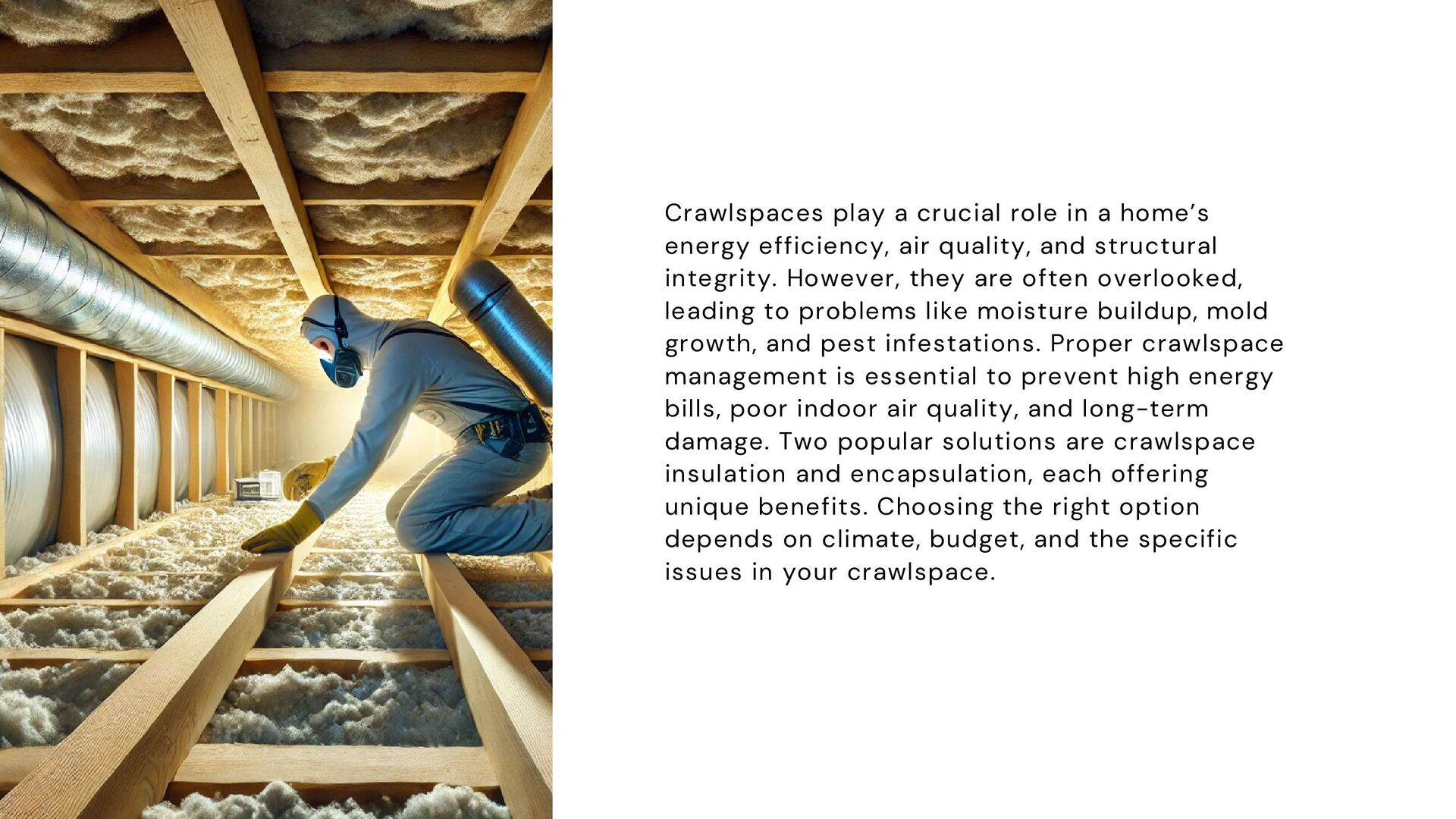
  1. Crawlspaces play a crucial role in a home’s energy efficiency,

    air quality, and structural integrity. However, they are often overlooked, leading to problems like moisture buildup, mold growth, and pest infestations. Proper crawlspace management is essential to prevent high energy bills, poor indoor air quality, and long-term damage. Two popular solutions are crawlspace insulation and encapsulation, each offering unique benefits. Choosing the right option depends on climate, budget, and the specific issues in your crawlspace.
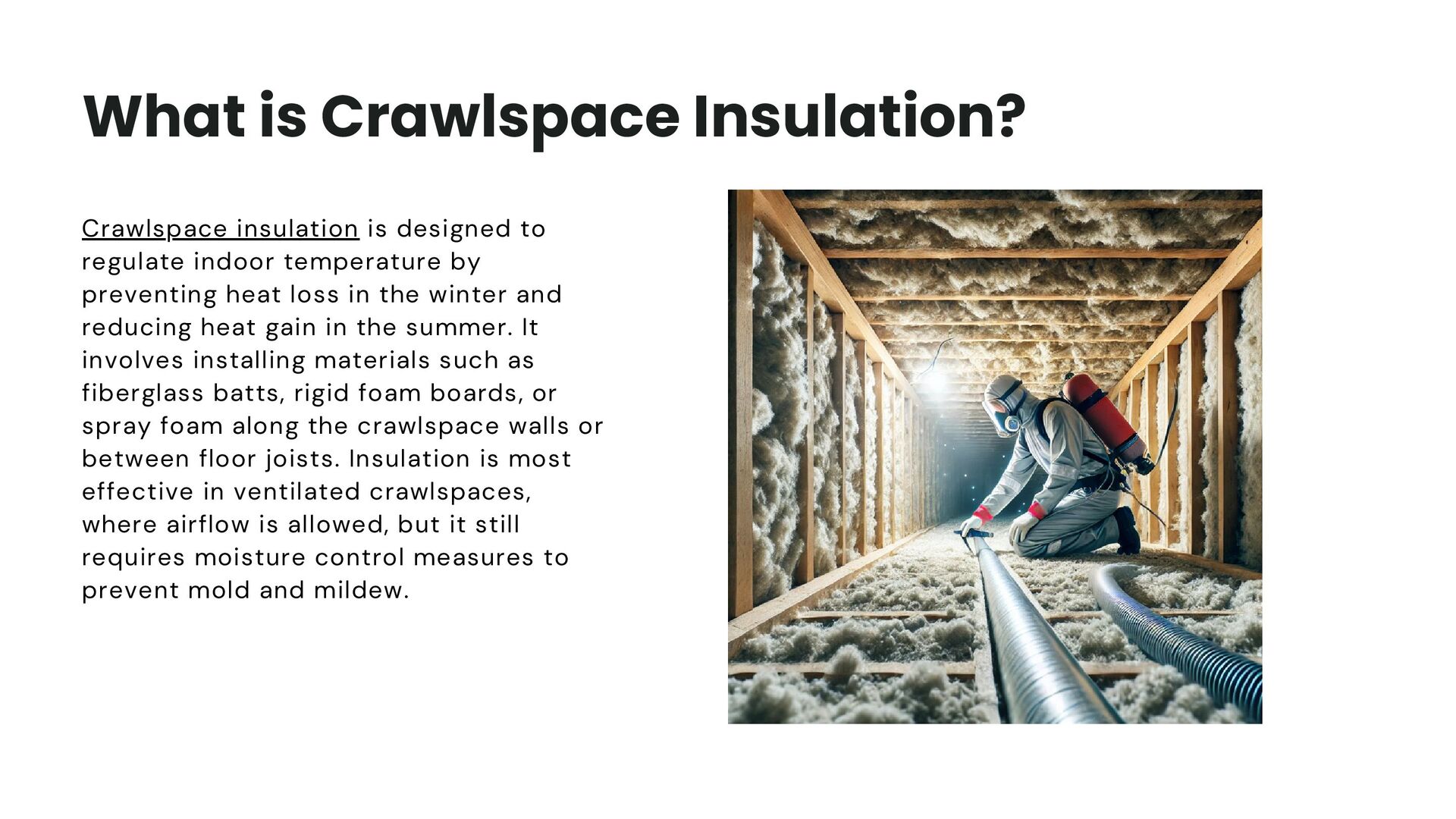
  2. What is Crawlspace Insulation? Crawlspace insulation is designed to regulate

    indoor temperature by preventing heat loss in the winter and reducing heat gain in the summer. It involves installing materials such as fiberglass batts, rigid foam boards, or spray foam along the crawlspace walls or between floor joists. Insulation is most effective in ventilated crawlspaces, where airflow is allowed, but it still requires moisture control measures to prevent mold and mildew.
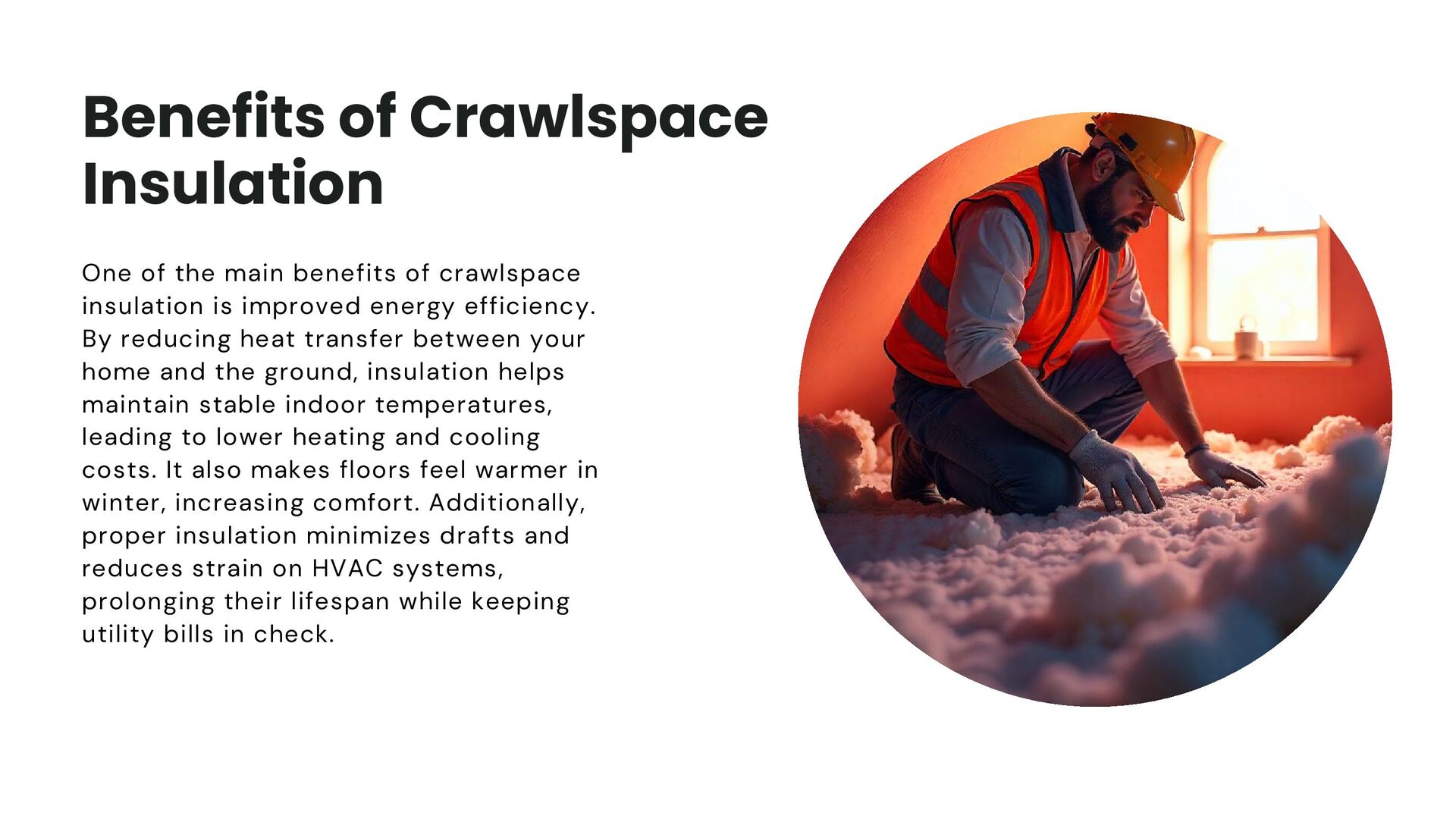
  3. Benefits of Crawlspace Insulation One of the main benefits of

    crawlspace insulation is improved energy efficiency. By reducing heat transfer between your home and the ground, insulation helps maintain stable indoor temperatures, leading to lower heating and cooling costs. It also makes floors feel warmer in winter, increasing comfort. Additionally, proper insulation minimizes drafts and reduces strain on HVAC systems, prolonging their lifespan while keeping utility bills in check.
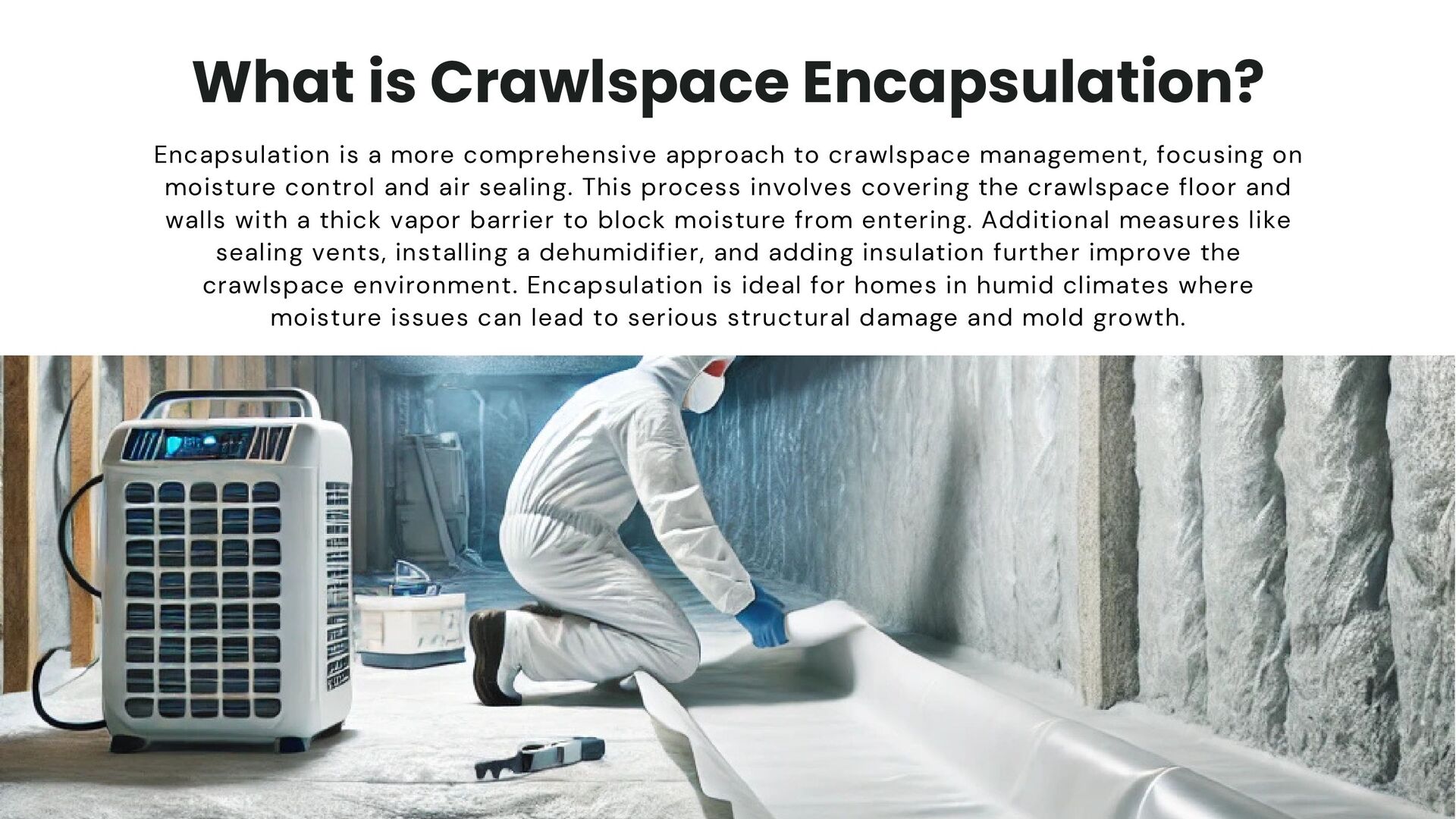
  4. Encapsulation is a more comprehensive approach to crawlspace management, focusing

    on moisture control and air sealing. This process involves covering the crawlspace floor and walls with a thick vapor barrier to block moisture from entering. Additional measures like sealing vents, installing a dehumidifier, and adding insulation further improve the crawlspace environment. Encapsulation is ideal for homes in humid climates where moisture issues can lead to serious structural damage and mold growth. What is Crawlspace Encapsulation?
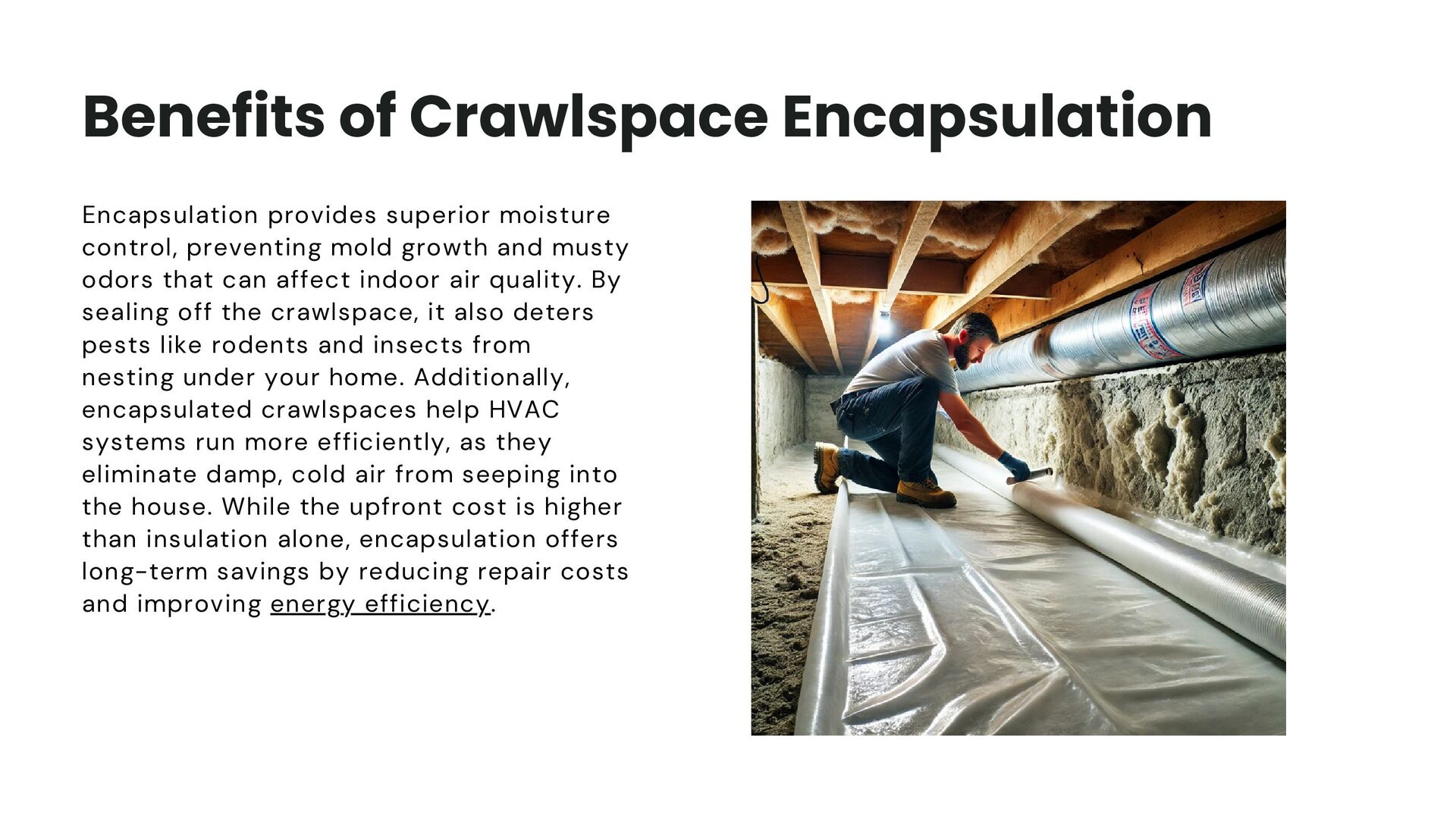
  5. Benefits of Crawlspace Encapsulation Encapsulation provides superior moisture control, preventing

    mold growth and musty odors that can affect indoor air quality. By sealing off the crawlspace, it also deters pests like rodents and insects from nesting under your home. Additionally, encapsulated crawlspaces help HVAC systems run more efficiently, as they eliminate damp, cold air from seeping into the house. While the upfront cost is higher than insulation alone, encapsulation offers long-term savings by reducing repair costs and improving energy efficiency.
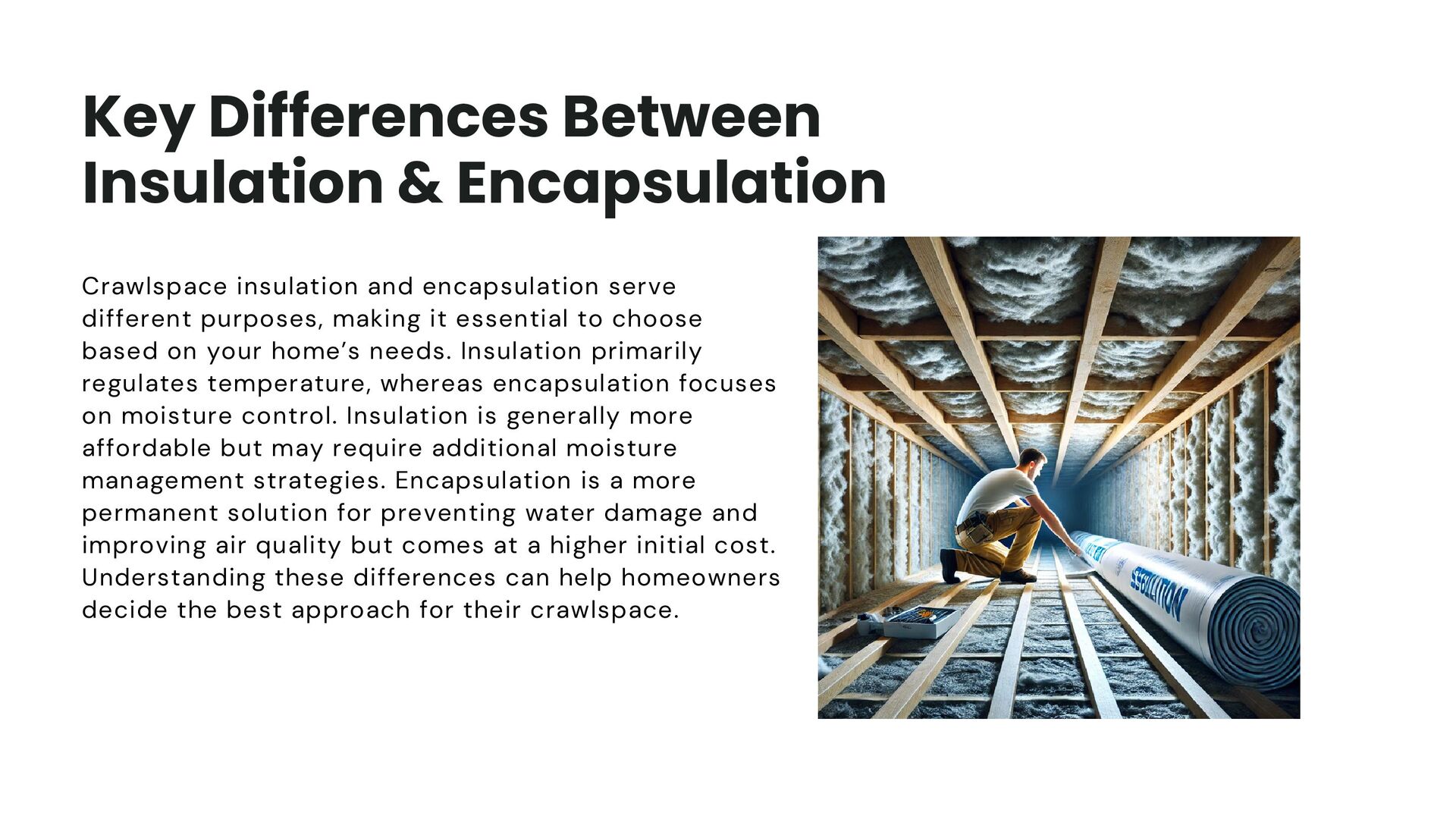
  6. Crawlspace insulation and encapsulation serve different purposes, making it essential

    to choose based on your home’s needs. Insulation primarily regulates temperature, whereas encapsulation focuses on moisture control. Insulation is generally more affordable but may require additional moisture management strategies. Encapsulation is a more permanent solution for preventing water damage and improving air quality but comes at a higher initial cost. Understanding these differences can help homeowners decide the best approach for their crawlspace. Key Differences Between Insulation & Encapsulation
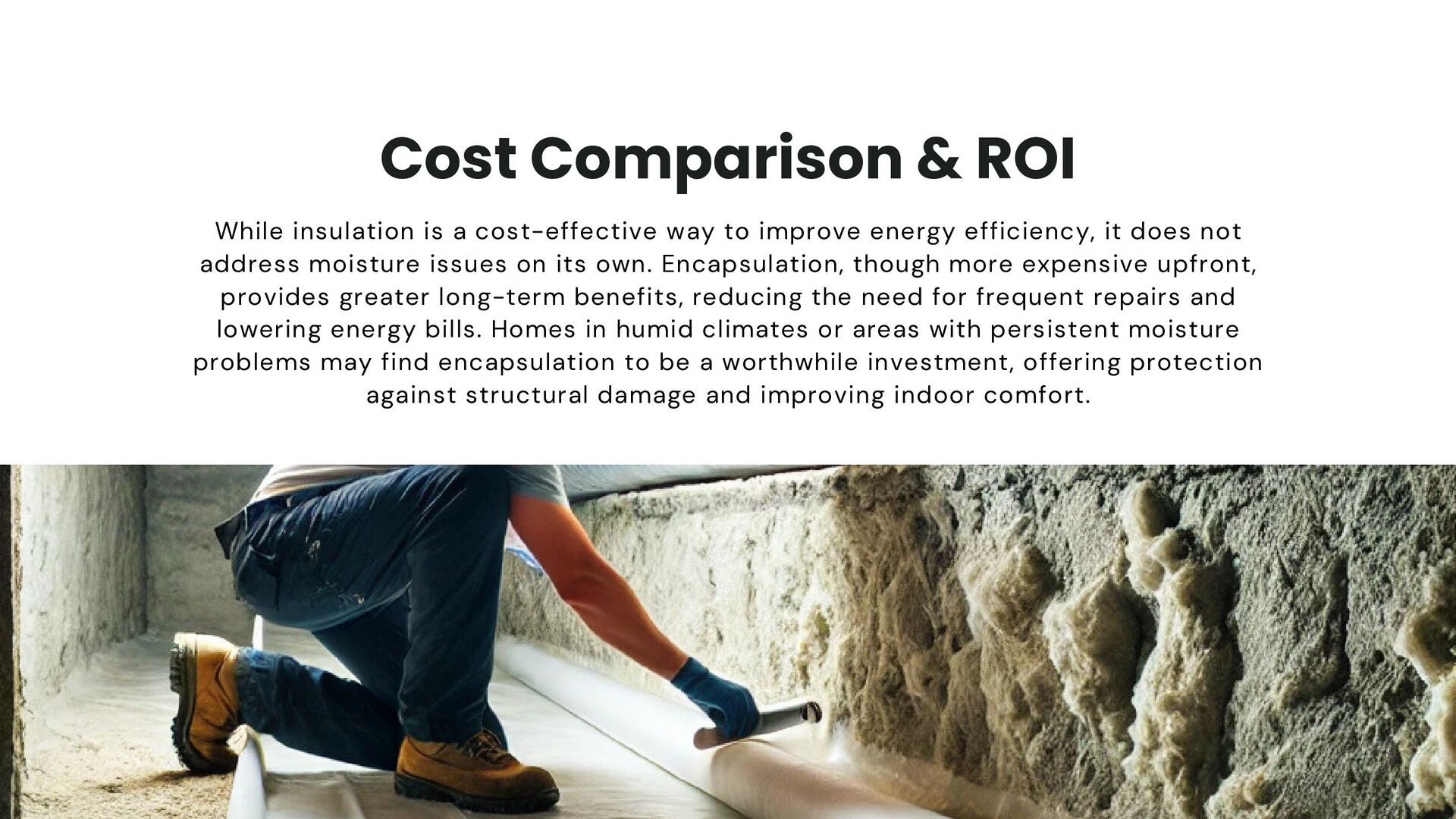
  7. Cost Comparison & ROI While insulation is a cost-effective way

    to improve energy efficiency, it does not address moisture issues on its own. Encapsulation, though more expensive upfront, provides greater long-term benefits, reducing the need for frequent repairs and lowering energy bills. Homes in humid climates or areas with persistent moisture problems may find encapsulation to be a worthwhile investment, offering protection against structural damage and improving indoor comfort.
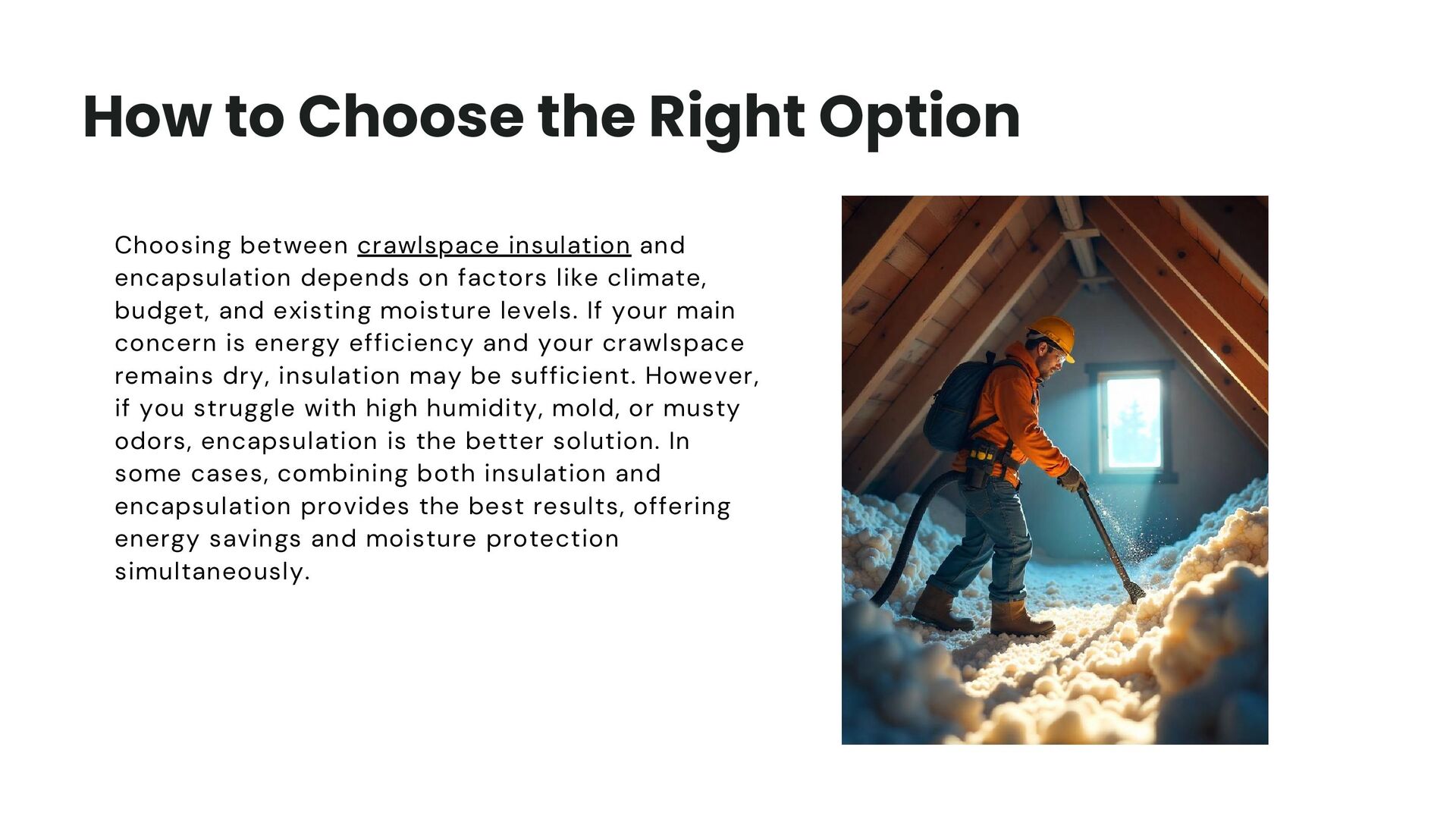
  8. How to Choose the Right Option Choosing between crawlspace insulation

    and encapsulation depends on factors like climate, budget, and existing moisture levels. If your main concern is energy efficiency and your crawlspace remains dry, insulation may be sufficient. However, if you struggle with high humidity, mold, or musty odors, encapsulation is the better solution. In some cases, combining both insulation and encapsulation provides the best results, offering energy savings and moisture protection simultaneously.
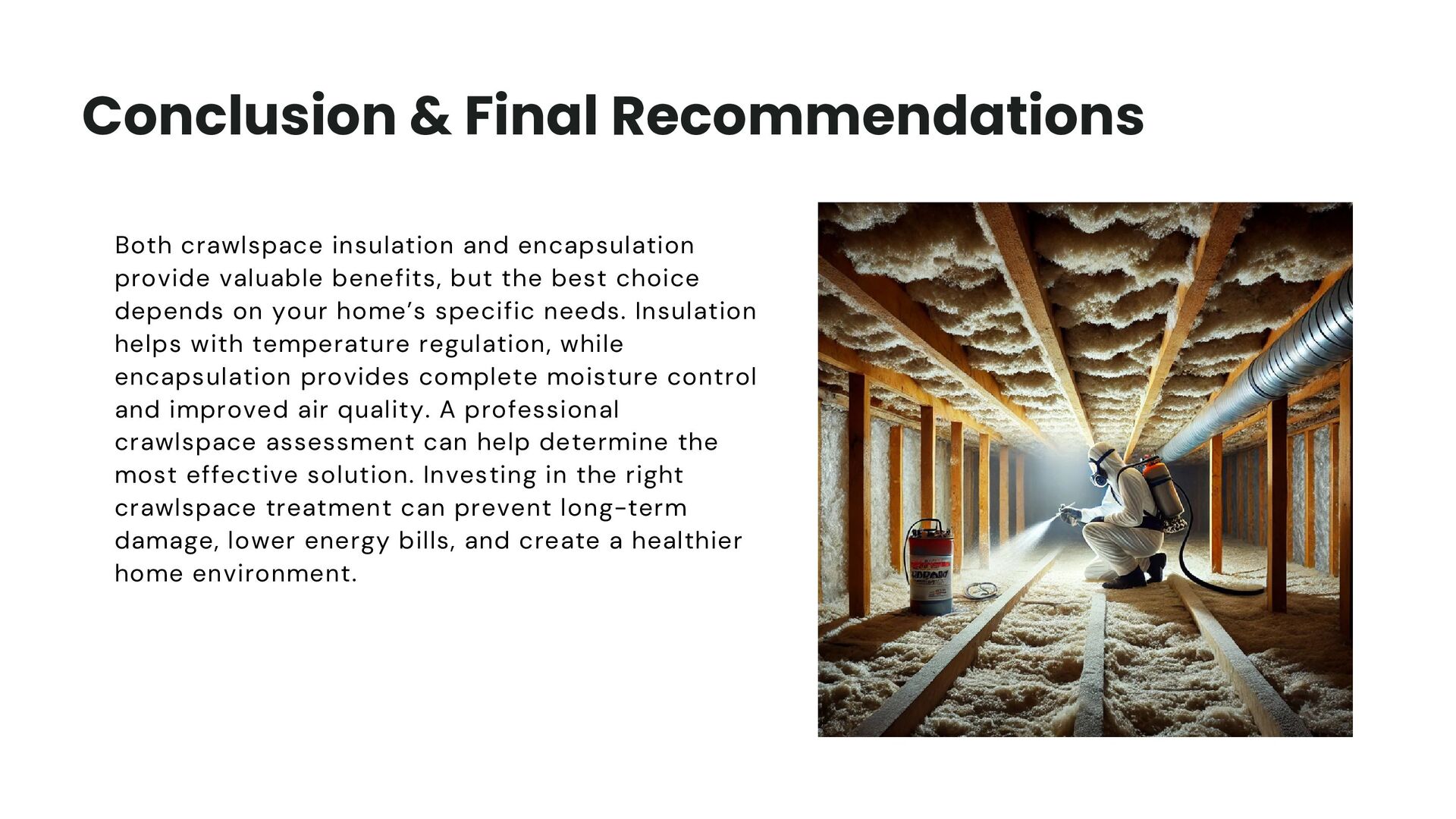
  9. Conclusion & Final Recommendations Both crawlspace insulation and encapsulation provide

    valuable benefits, but the best choice depends on your home’s specific needs. Insulation helps with temperature regulation, while encapsulation provides complete moisture control and improved air quality. A professional crawlspace assessment can help determine the most effective solution. Investing in the right crawlspace treatment can prevent long-term damage, lower energy bills, and create a healthier home environment.