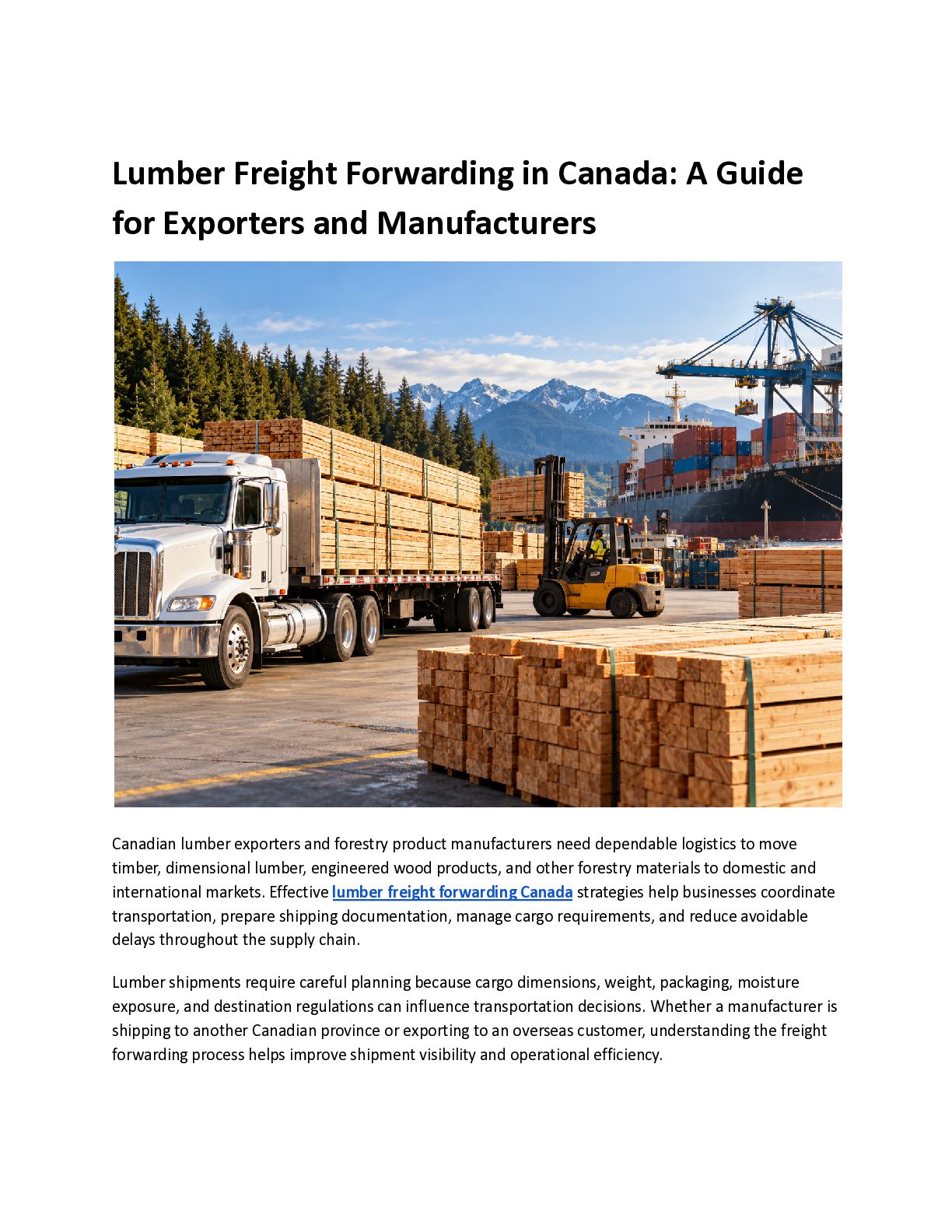
coordinating the movement of lumber and forestry products between suppliers, manufacturing facilities, distribution centres, ports, and final destinations. A freight forwarder helps arrange appropriate transportation, coordinate shipment documentation, communicate with logistics providers, and manage the practical requirements associated with moving cargo. For Canadian businesses, these responsibilities can extend across trucking, rail, ocean freight, and intermodal transportation, depending on the shipment's origin, destination, size, and delivery requirements. A well-planned shipping process begins with understanding the cargo and its destination. Lumber intended for a domestic construction supplier may require a different transportation arrangement from a containerized shipment of finished wood products destined for an overseas buyer. Working with an experienced freight forwarder Canada businesses can communicate effectively and help exporters coordinate these moving parts and make informed decisions before cargo is dispatched. Key Logistics Challenges for Lumber and Forestry Products Transporting lumber involves considerations that may not apply in the same way to smaller, standardized commercial shipments. Cargo dimensions and weight: Lumber bundles can be long, heavy, or irregularly sized. Their dimensions and total shipment weight influence trailer selection, container suitability, loading arrangements, and applicable transportation restrictions. Accurate measurements should be confirmed before booking. Moisture and cargo protection: Wood products may require protection from rain, condensation, and other environmental conditions during storage and transit. Appropriate packaging, secure covering, ventilation where suitable, and careful loading can help protect cargo quality. Requirements vary according to the wood product and shipping conditions. Handling and securement: Lumber must be loaded and secured appropriately to prevent shifting during transportation. Packaging and unitization should support safe handling and efficient transfers between transport modes. Shippers should also communicate any special loading or unloading requirements in advance. Scheduling and coordination: Shipments may involve multiple parties, including suppliers, trucking companies, terminals, carriers, customs brokers, and overseas receivers. Missed appointments, incomplete documentation, equipment shortages, or changes to carrier schedules can disrupt planned deliveries.


 takeshisumida_
 loglass2019
 arnekittler
 arid2
 freee
 hrm
 tbpgr
 layerx
 shunsuke_takeuchi
 kaonavi
 nessu_inc
 daiksy
 jeffersonlam
 varn
 philnash
 denniskardys
 chriscoyier
 smashingmag
 jonoalderson
 baasie
 greggifford
 bkeepers
 soudai