Lock in $30 Savings on PRO—Offer Ends Soon! ⏳

Alles nur CI-Theater?

Alles nur CI-Theater?

Continuous Integration (CI) ist mittlerweile ein etabliertes Prinzip. Die meisten Teams haben heute einen Server wie Jenkins für CI. Ohne Continuous Integration gibt es keine Continuous Delivery. Oft genug wird CI allerdings halbherzig durchgeführt und das Team wiegt sich in trügerischer Sicherheit – sie spielen CI-Theater. Wie kann ich CI-Theater erkennen und welche Maßnahmen helfen mir bei echter CI? Der Talk gibt hierauf Antworten.

Avatar for Konstantin Diener

Konstantin Diener

October 29, 2020
Tweet

More Decks by Konstantin Diener

Other Decks in Programming

Transcript

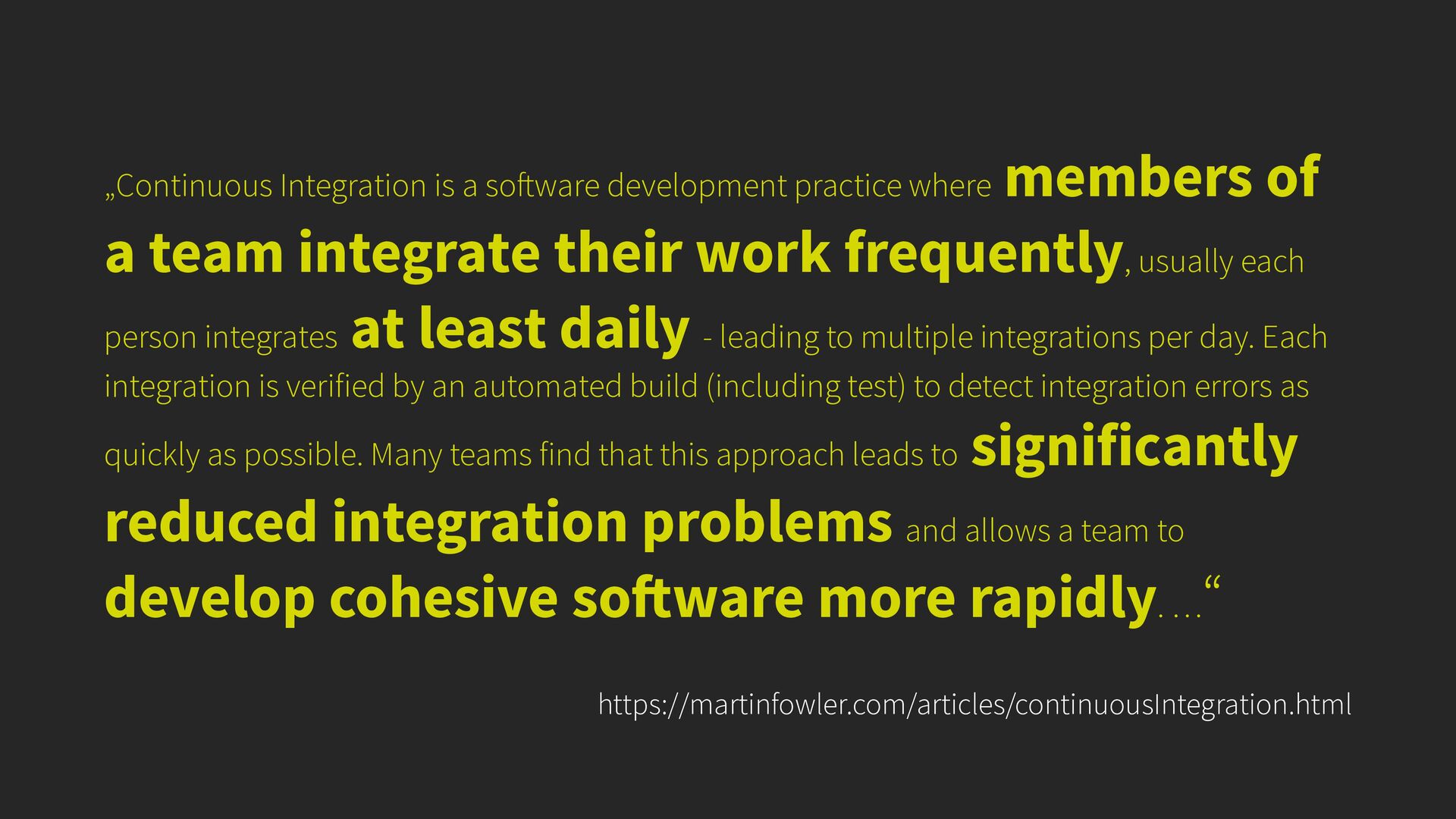
  1. „Continuous Integration is a so ft ware development practice where

    members of a team integrate their work frequently, usually each person integrates at least daily - leading to multiple integrations per day. Each integration is verified by an automated build (including test) to detect integration errors as quickly as possible. Many teams find that this approach leads to significantly reduced integration problems and allows a team to develop cohesive so ft ware more rapidly. … “ https://martinfowler.com/articles/continuousIntegration.html
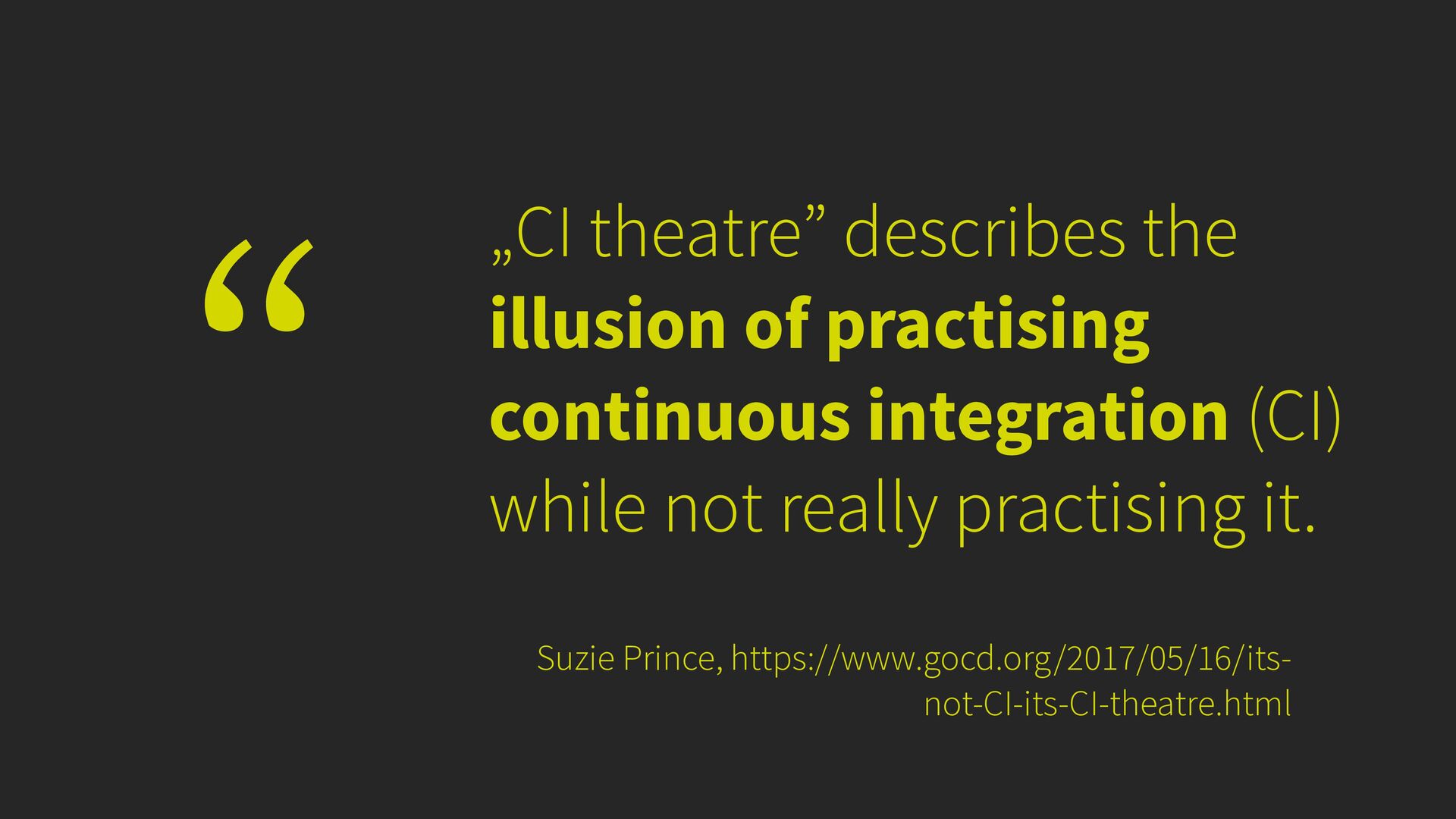
  2. „CI theatre” describes the illusion of practising continuous integration (CI)

    while not really practising it. Suzie Prince, https://www.gocd.org/2017/05/16/its-not-CI-its-CI-theatre.html
  3. „If you've skipped unit tests because you plan to refactor

    the code soon, you might not understand refactoring (or unit tests).“ @DocOnDev
  4. A phrase I remember Kent Beck using was "nobody has

    a higher priority task than fixing the build". This doesn't mean that everyone on the team has to stop what they are doing in order to fix the build, usually it only needs a couple of people to get things working again. It does mean a conscious prioritization of a build fix as an urgent, high priority task. Martin Fowler
  5. „… it has been our experience that poor version control

    practices are one of the most common barriers to fast, low-risk releases.“ Continuous Delivery
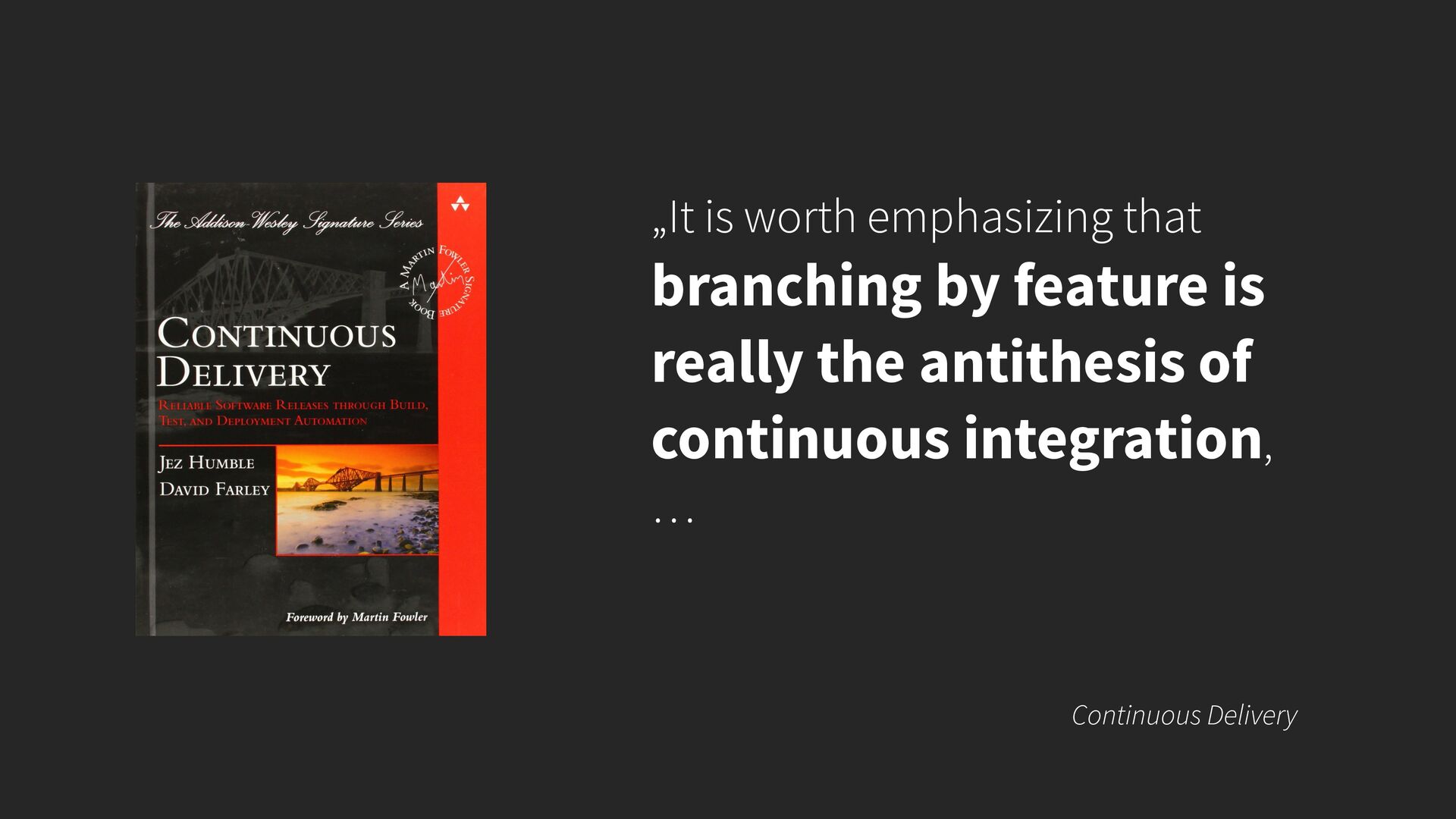
  6. „It is worth emphasizing that branching by feature is really

    the antithesis of continuous integration, … Continuous Delivery
  7. • Ensuring that all code is continuously integrated • Ensuring

    developers pick up each others’ changes immediately • Avoiding „merge hell“ and „integration hell“ at the end of the project
  8. „It is worth emphasizing that branching by feature is really

    the antithesis of continuous integration, … Continuous Delivery
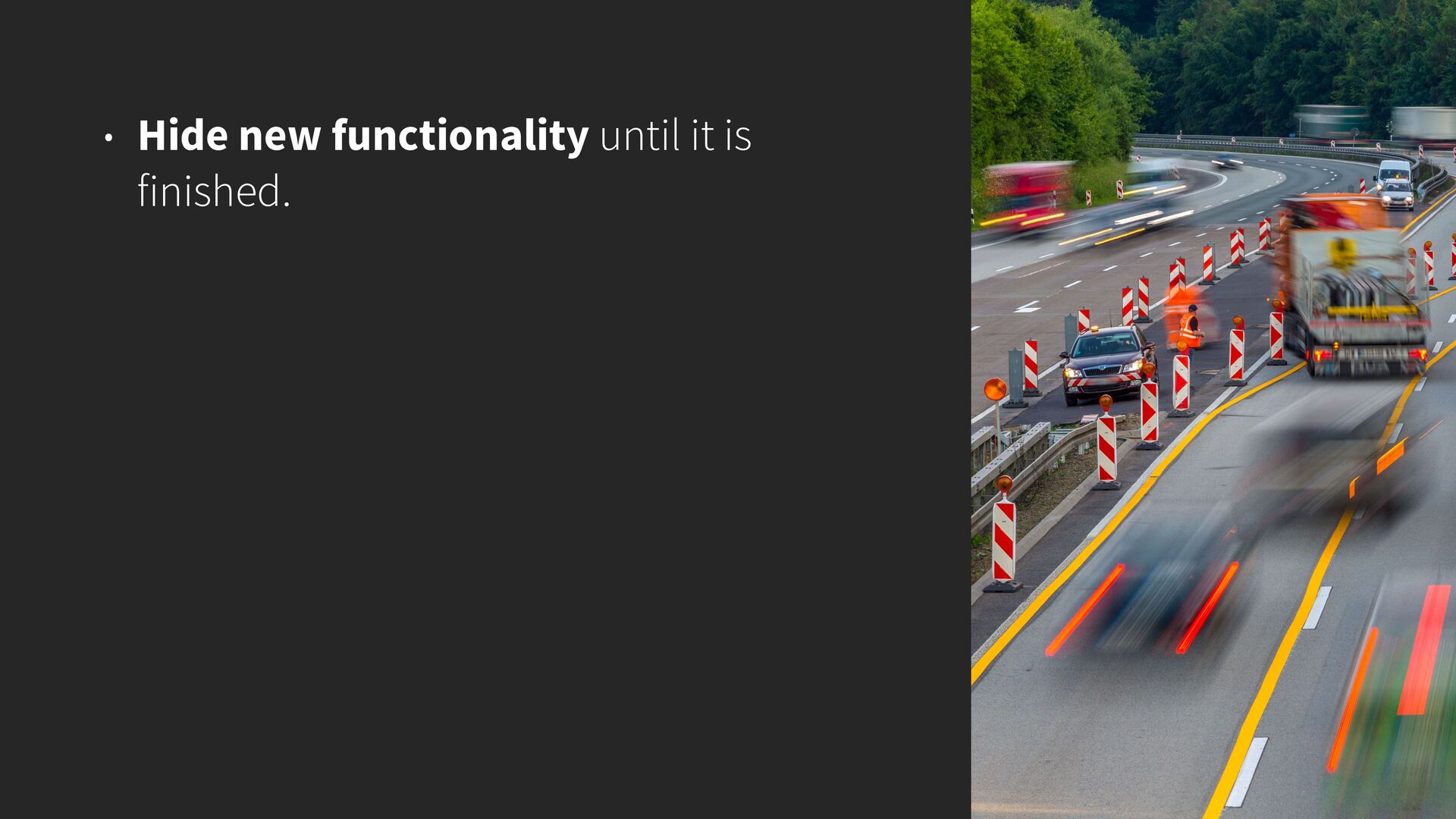
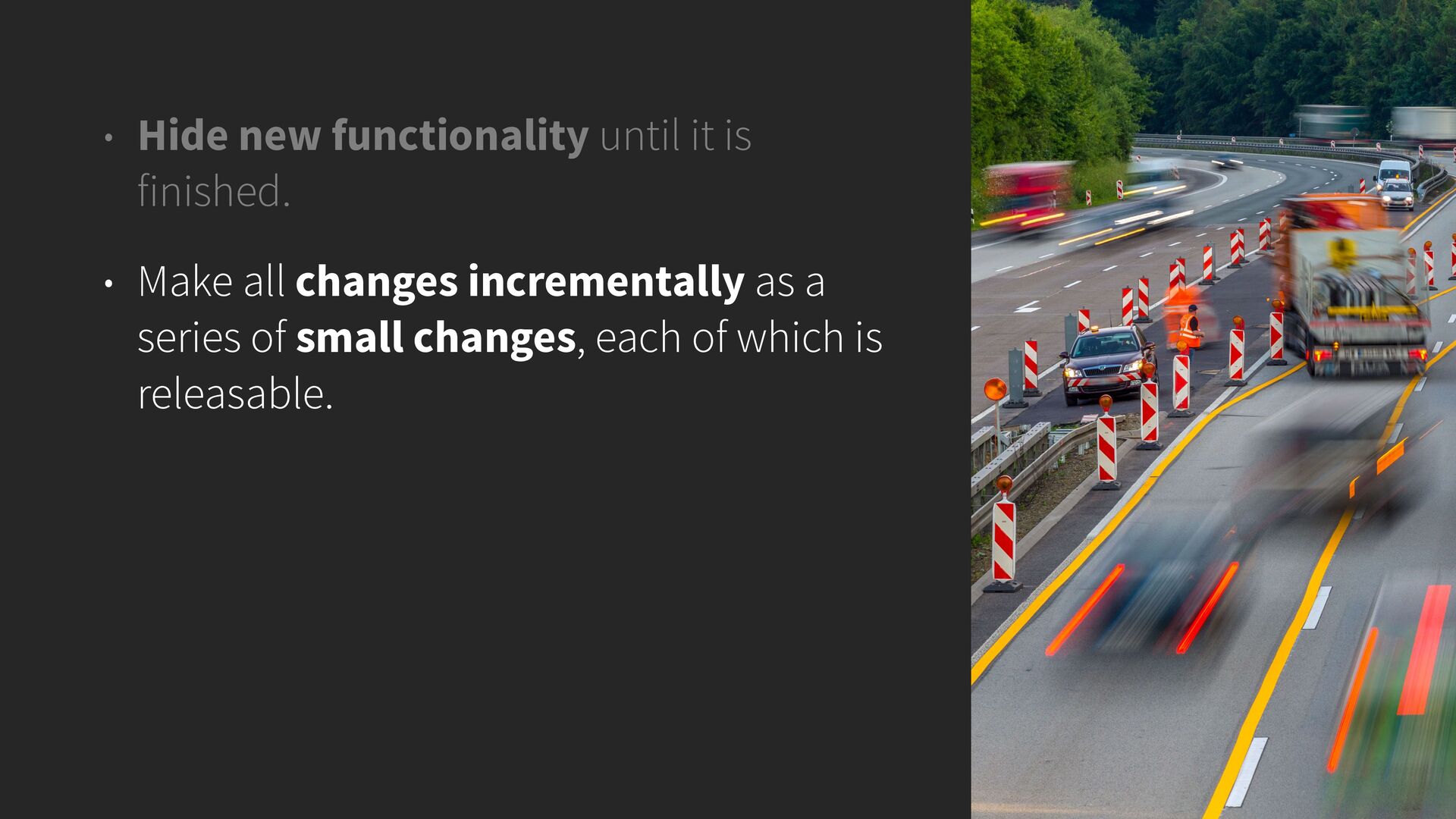
  9. • Hide new functionality until it is finished. • Make

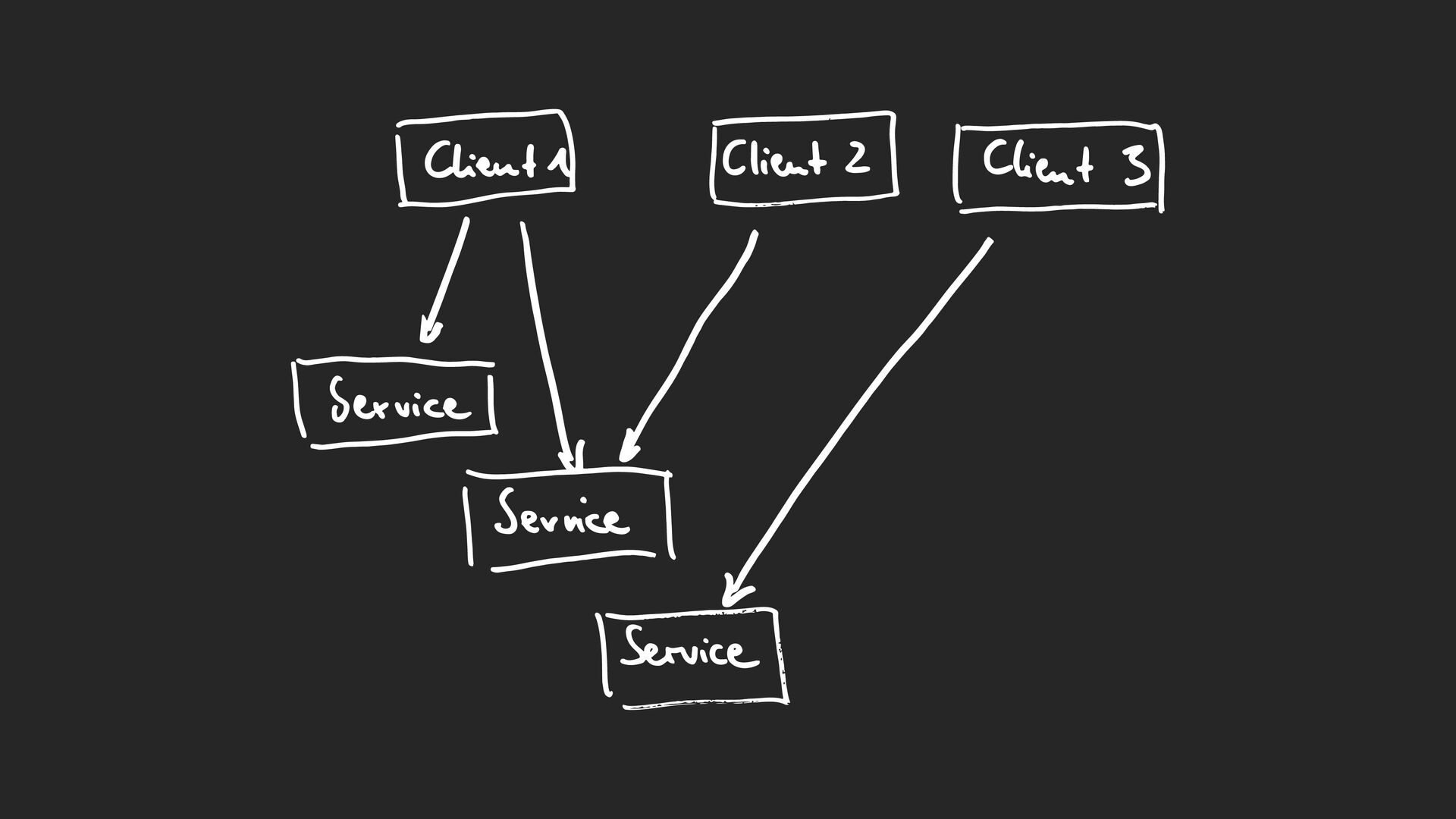
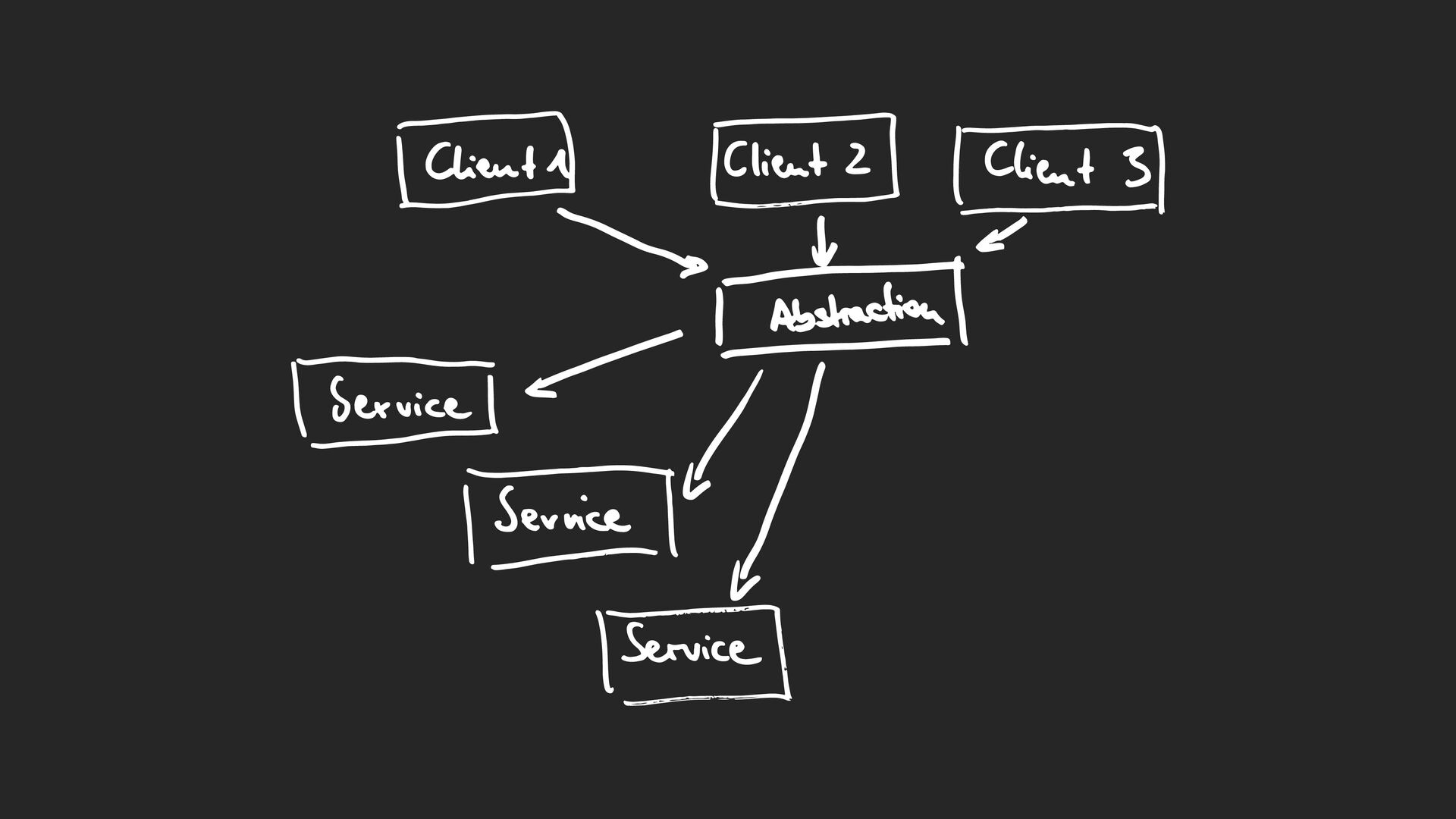
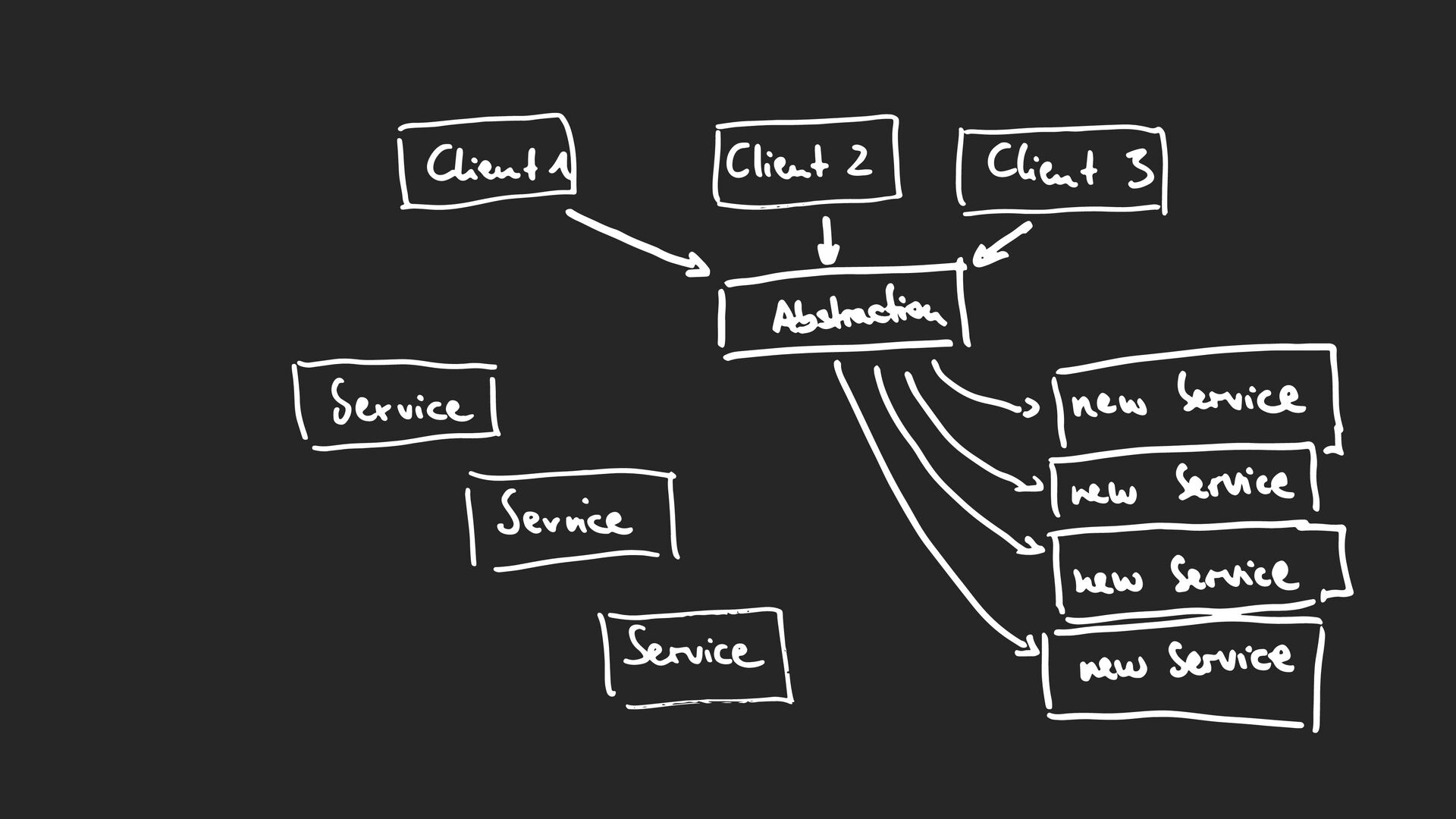
    all changes incrementally as a series of small changes, each of which is releasable. • Use branch by abstraction to make large-scale changes to the codebase. • Use components to decouple parts of your application that change at di ff erent rates.
  10. • Hide new functionality until it is finished. • Make

    all changes incrementally as a series of small changes, each of which is releasable. • Use branch by abstraction to make large-scale changes to the codebase. • Use components to decouple parts of your application that change at di ff erent rates.
  11. • Hide new functionality until it is finished. • Make

    all changes incrementally as a series of small changes, each of which is releasable. • Use branch by abstraction to make large-scale changes to the codebase. • Use components to decouple parts of your application that change at di ff erent rates.
  12. • Hide new functionality until it is finished. • Make

    all changes incrementally as a series of small changes, each of which is releasable. • Use branch by abstraction to make large-scale changes to the codebase. • Use components to decouple parts of your application that change at di ff erent rates.