Upgrade to Pro — share decks privately, control downloads, hide ads and more …

How to choose right college for your career goals

How to choose right college for your career goals

Choosing the wrong college can affect much more than just your academic life. It can influence your career opportunities, practical skills, industry exposure, confidence, and even your future salary potential. That is why students should not select a college only based on popularity or social media trends.
Today, engineering and technology careers are changing rapidly. Companies are looking for graduates who have practical skills, industry knowledge, and exposure to emerging technologies rather than only theoretical knowledge.
This is why students should carefully evaluate colleges based on how well they support long-term career goals and future opportunities.
https://www.kluniversity.in/admissions/

Avatar for Lakshmi

Lakshmi

June 09, 2026

More Decks by Lakshmi

Other Decks in Education

Transcript

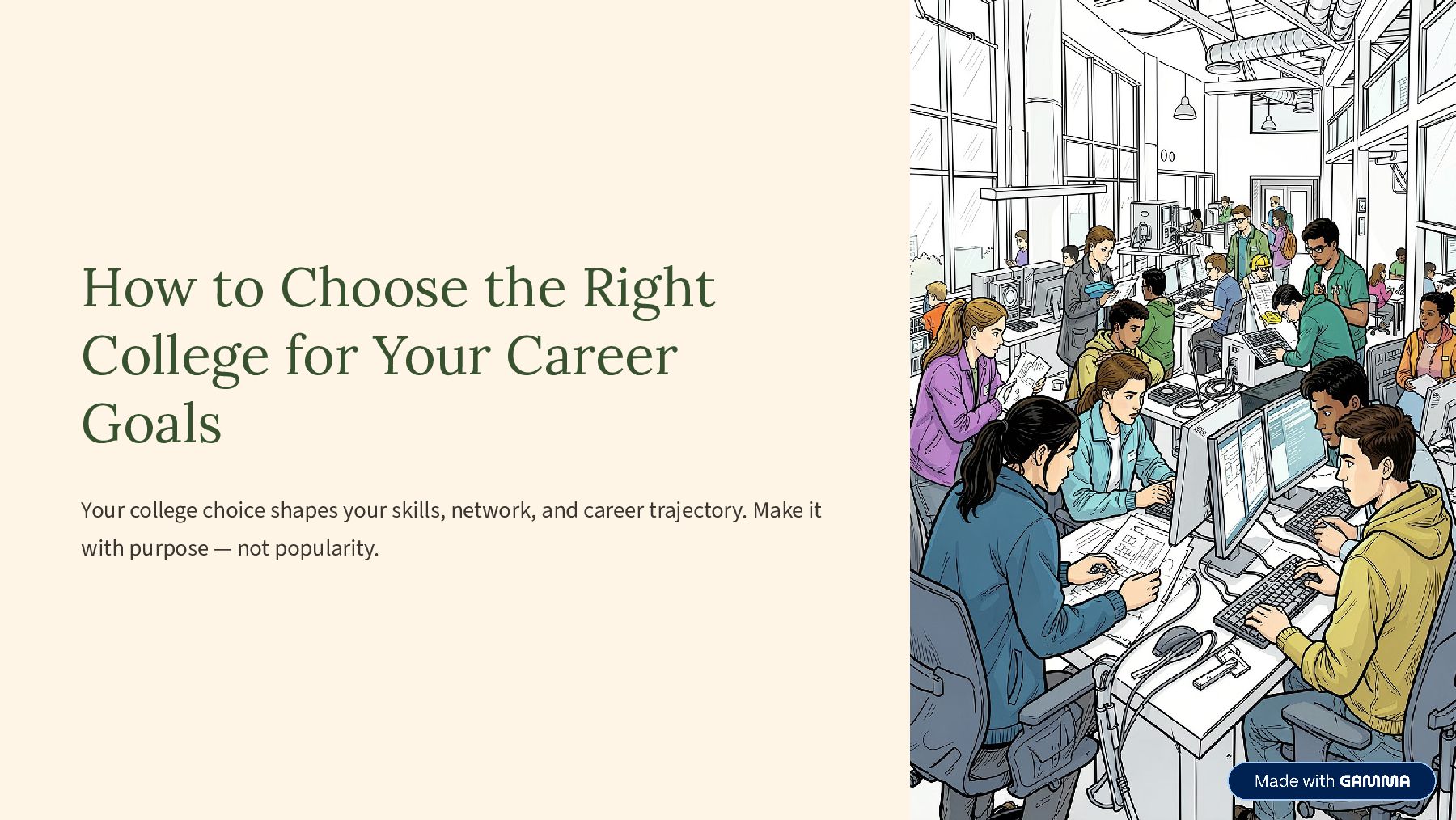
  1. How to Choose the Right College for Your Career Goals

    Your college choice shapes your skills, network, and career trajectory. Make it with purpose — not popularity.
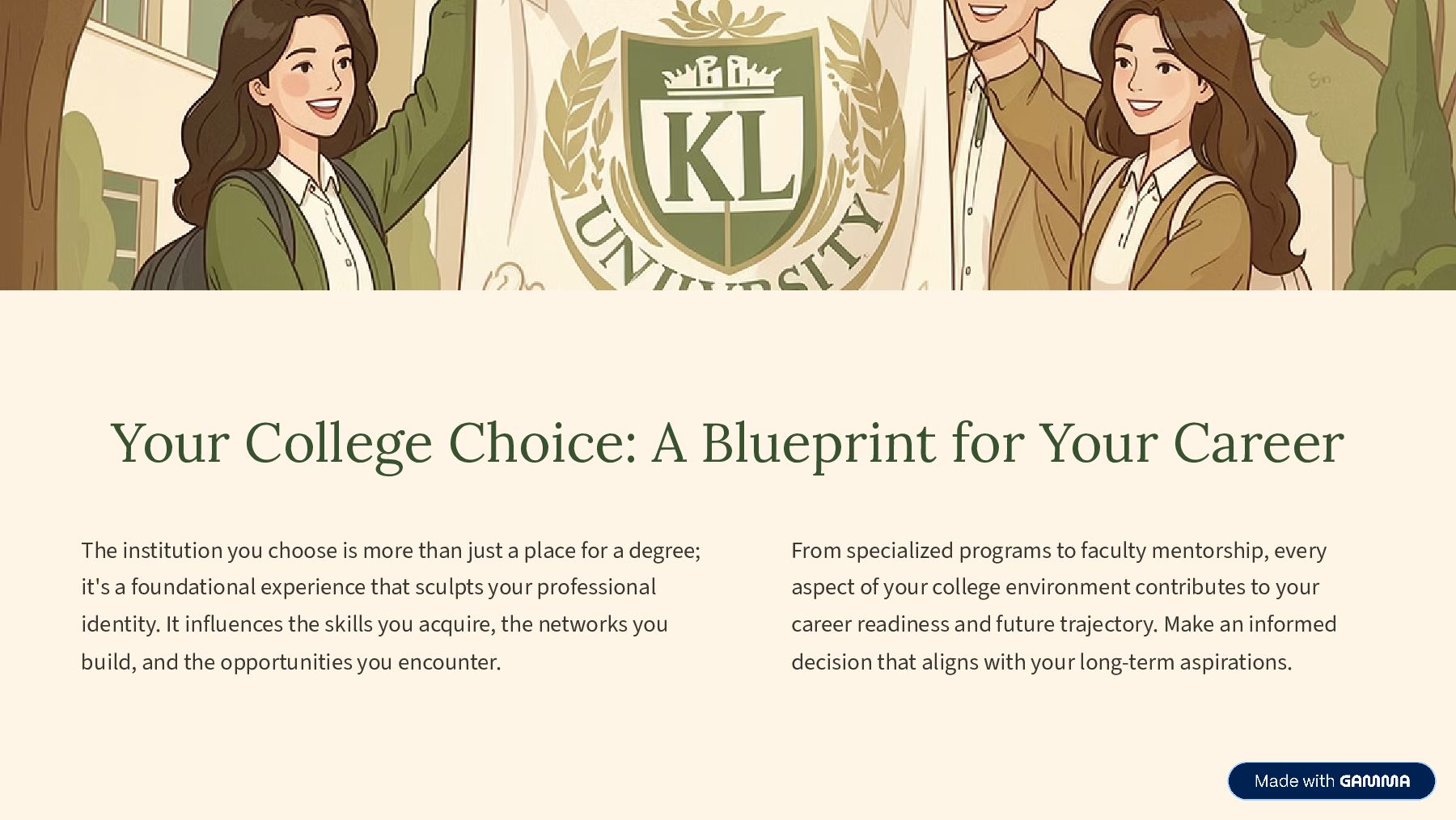
  2. Your College Choice: A Blueprint for Your Career The institution

    you choose is more than just a place for a degree; it's a foundational experience that sculpts your professional identity. It influences the skills you acquire, the networks you build, and the opportunities you encounter. From specialized programs to faculty mentorship, every aspect of your college environment contributes to your career readiness and future trajectory. Make an informed decision that aligns with your long-term aspirations.
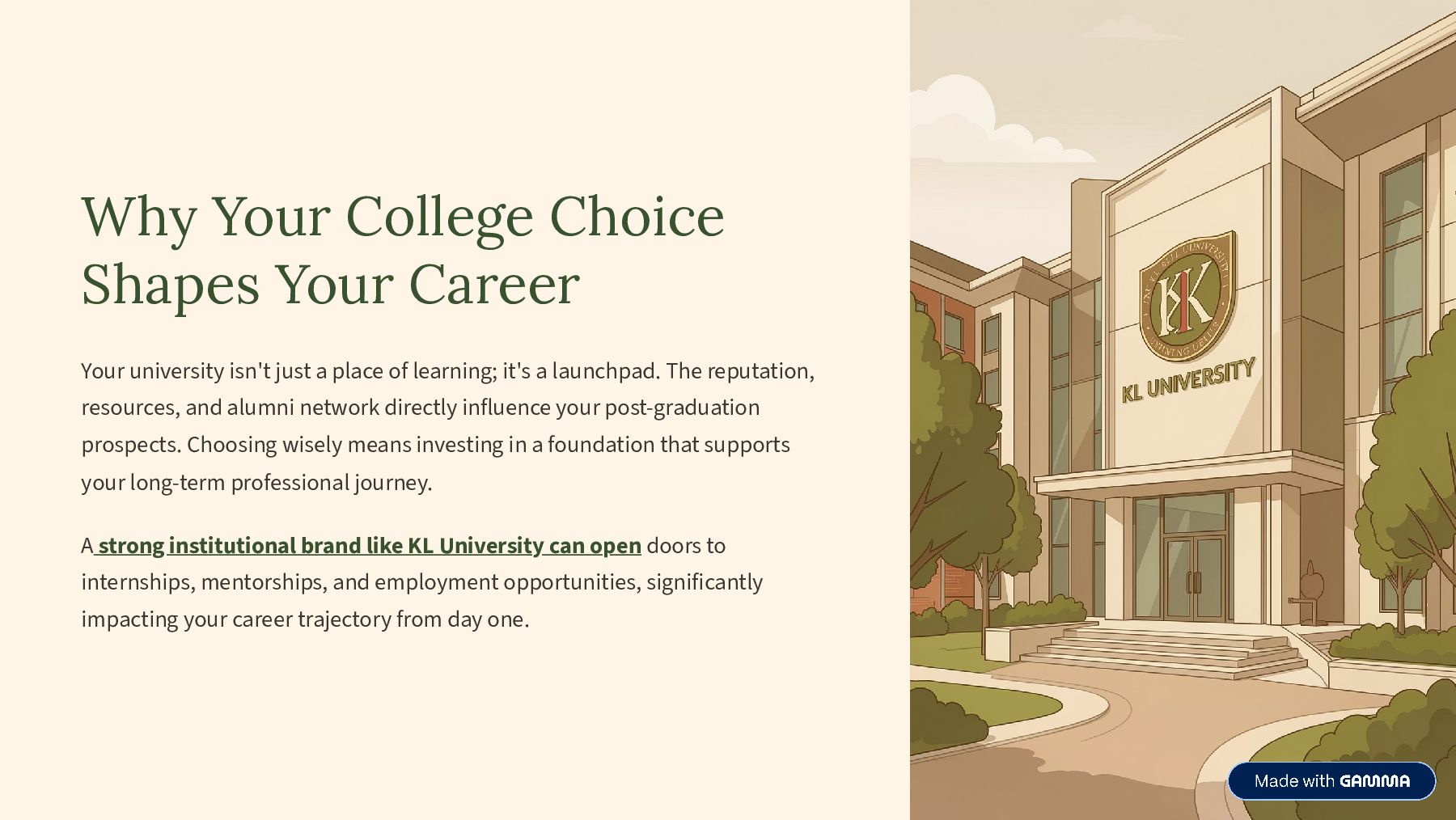
  3. Why Your College Choice Shapes Your Career Your university isn't

    just a place of learning; it's a launchpad. The reputation, resources, and alumni network directly influence your post-graduation prospects. Choosing wisely means investing in a foundation that supports your long-term professional journey. A strong institutional brand like KL University can open doors to internships, mentorships, and employment opportunities, significantly impacting your career trajectory from day one.
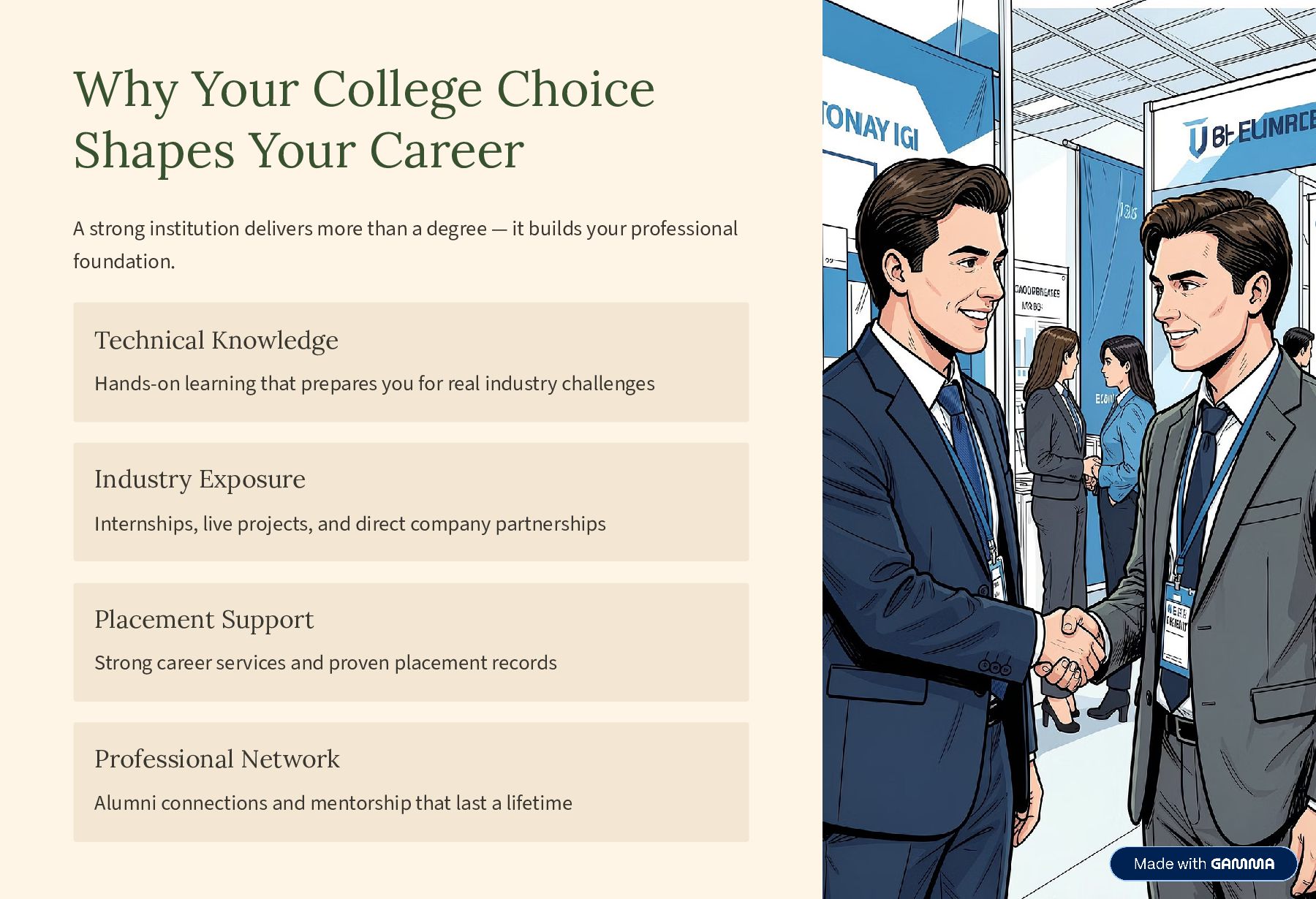
  4. Why Your College Choice Shapes Your Career A strong institution

    delivers more than a degree — it builds your professional foundation. Technical Knowledge Hands-on learning that prepares you for real industry challenges Industry Exposure Internships, live projects, and direct company partnerships Placement Support Strong career services and proven placement records Professional Network Alumni connections and mentorship that last a lifetime
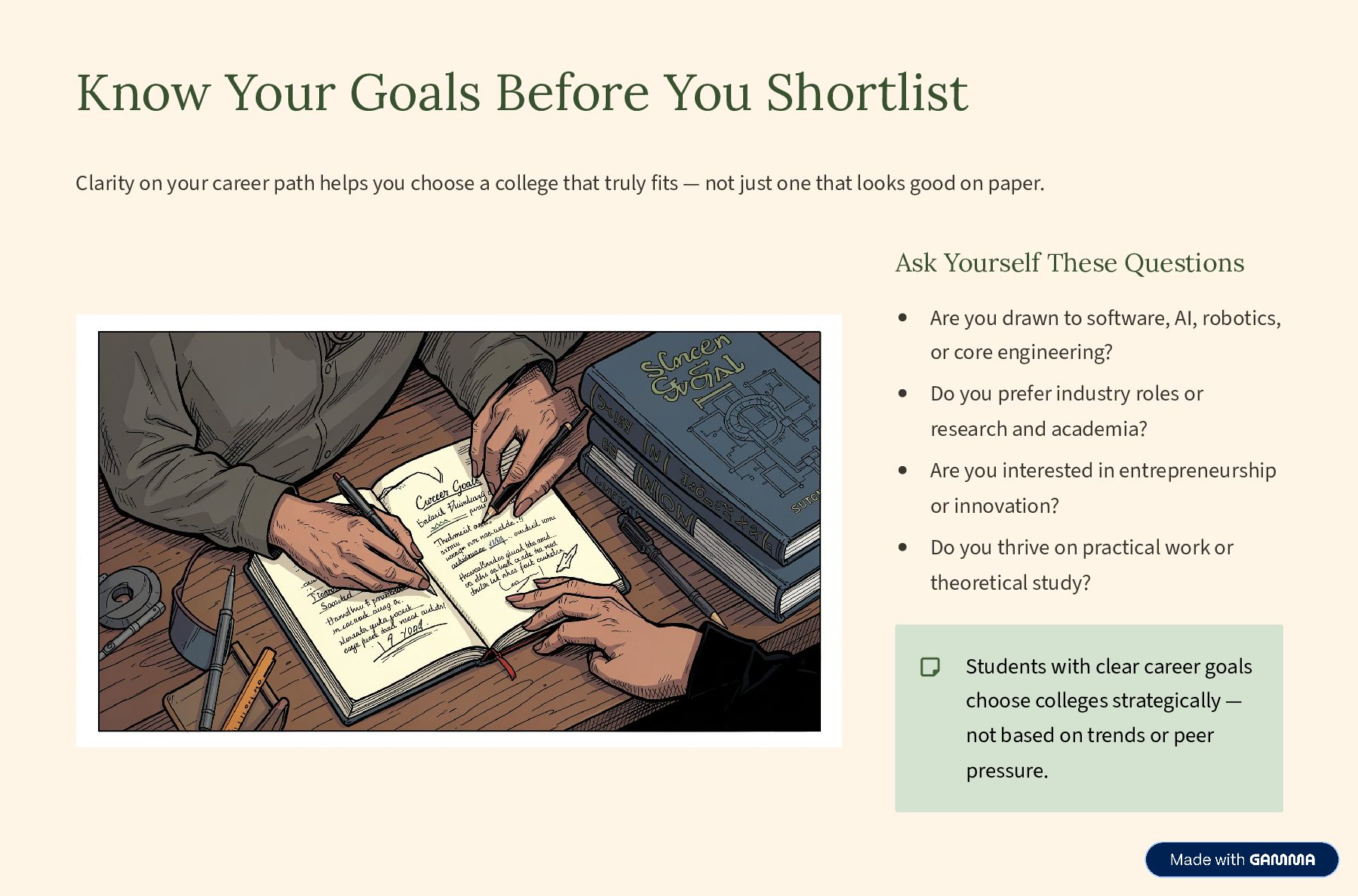
  5. Know Your Goals Before You Shortlist Clarity on your career

    path helps you choose a college that truly fits — not just one that looks good on paper. Ask Yourself These Questions Are you drawn to software, AI, robotics, or core engineering? Do you prefer industry roles or research and academia? Are you interested in entrepreneurship or innovation? Do you thrive on practical work or theoretical study? Students with clear career goals choose colleges strategically — not based on trends or peer pressure.
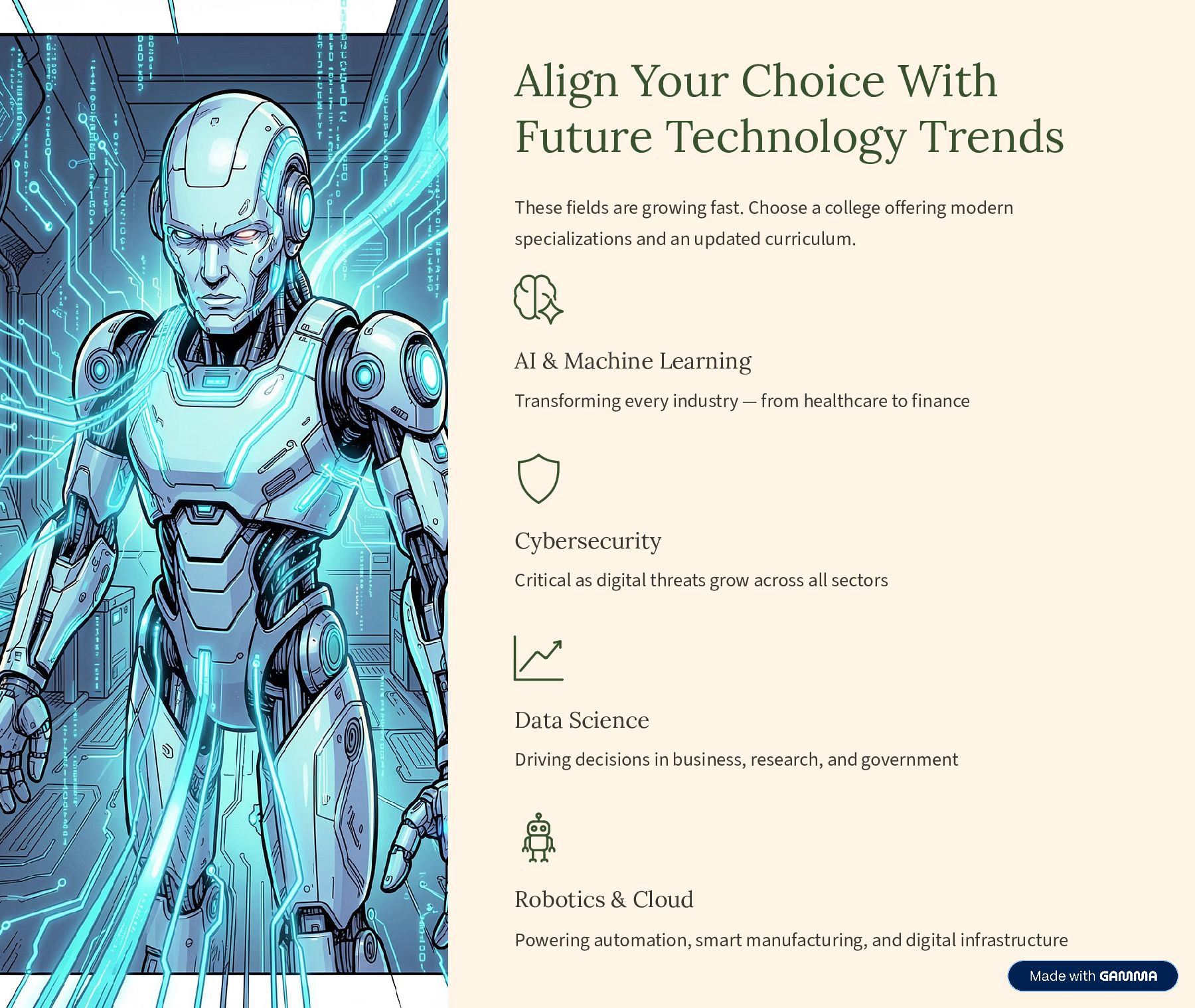
  6. Align Your Choice With Future Technology Trends These fields are

    growing fast. Choose a college offering modern specializations and an updated curriculum. AI & Machine Learning Transforming every industry — from healthcare to finance Cybersecurity Critical as digital threats grow across all sectors Data Science Driving decisions in business, research, and government Robotics & Cloud Powering automation, smart manufacturing, and digital infrastructure
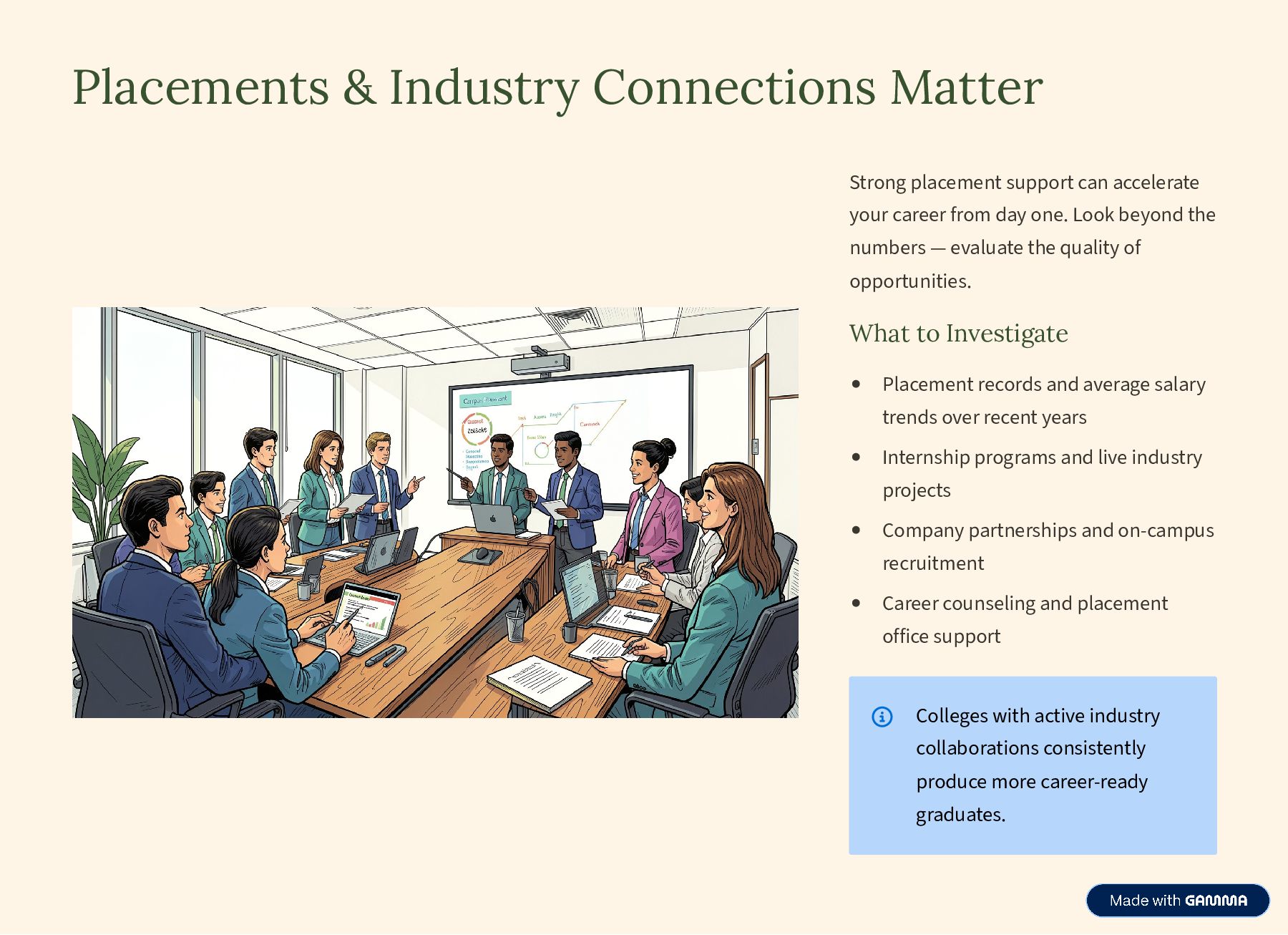
  7. Placements & Industry Connections Matter Strong placement support can accelerate

    your career from day one. Look beyond the numbers — evaluate the quality of opportunities. What to Investigate Placement records and average salary trends over recent years Internship programs and live industry projects Company partnerships and on-campus recruitment Career counseling and placement office support Colleges with active industry collaborations consistently produce more career-ready graduates.
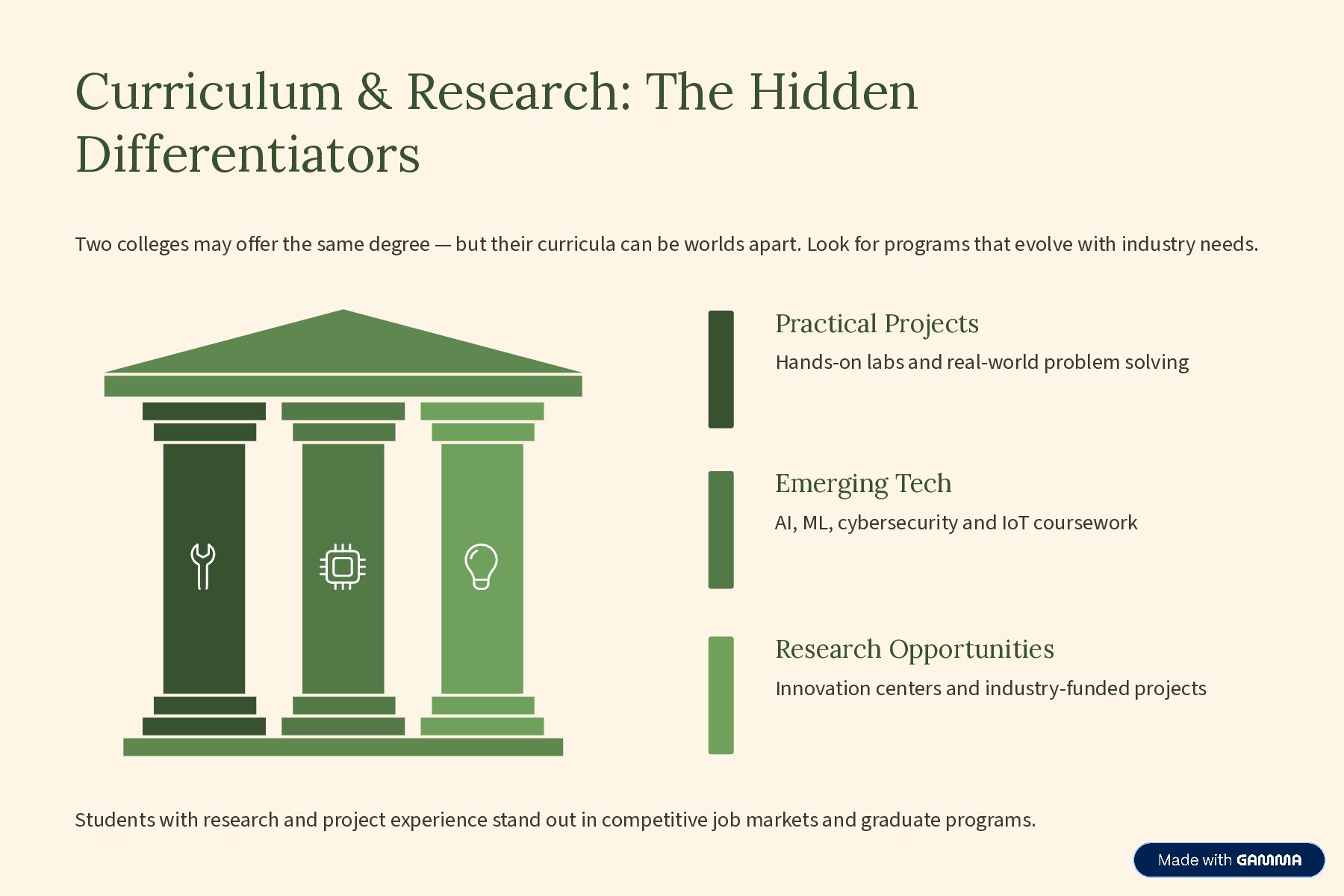
  8. Curriculum & Research: The Hidden Differentiators Two colleges may offer

    the same degree — but their curricula can be worlds apart. Look for programs that evolve with industry needs. Practical Projects Hands-on labs and real-world problem solving Emerging Tech AI, ML, cybersecurity and IoT coursework Research Opportunities Innovation centers and industry-funded projects Students with research and project experience stand out in competitive job markets and graduate programs.
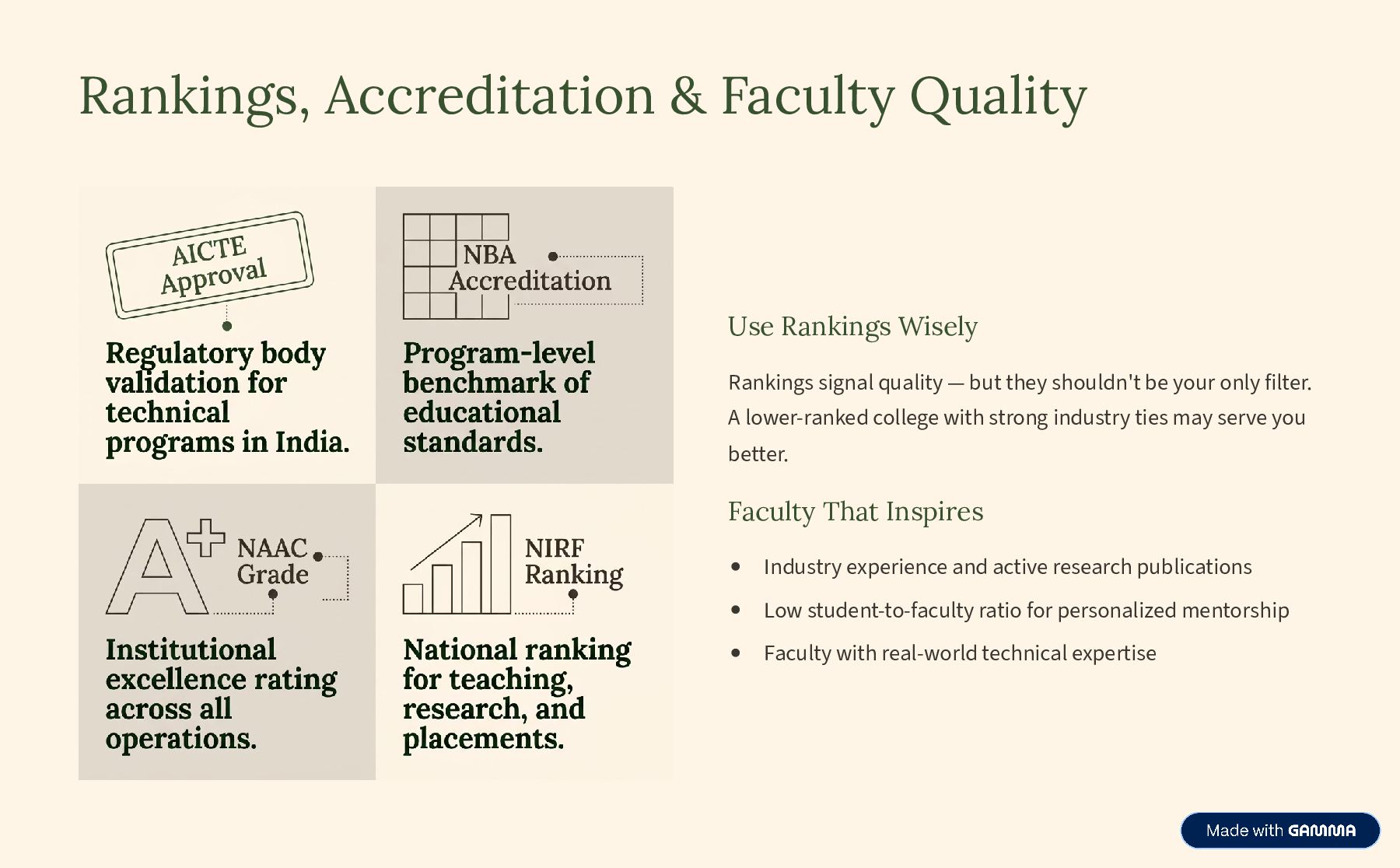
  9. Rankings, Accreditation & Faculty Quality Use Rankings Wisely Rankings signal

    quality — but they shouldn't be your only filter. A lower-ranked college with strong industry ties may serve you better. Faculty That Inspires Industry experience and active research publications Low student-to-faculty ratio for personalized mentorship Faculty with real-world technical expertise
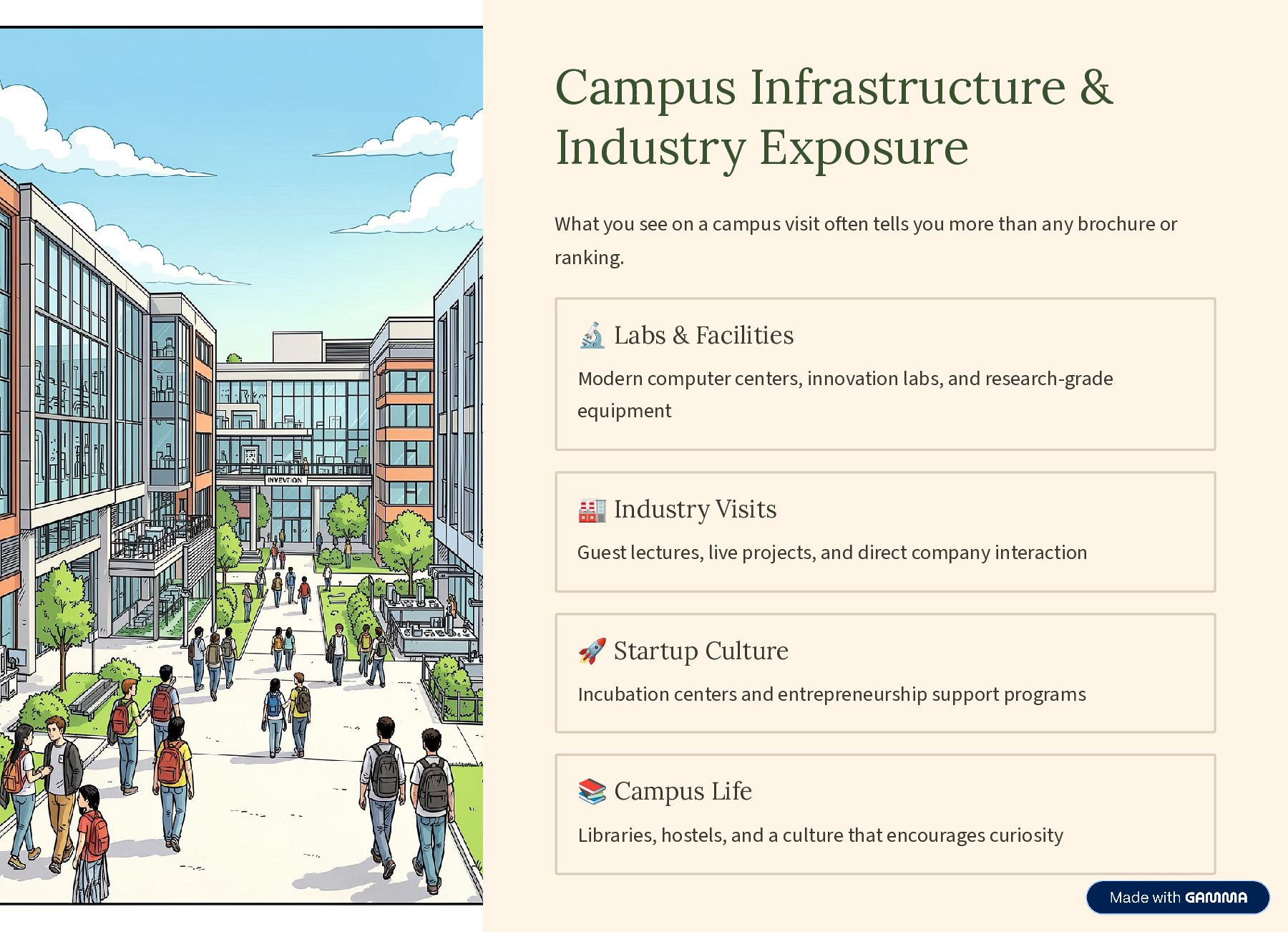
  10. Campus Infrastructure & Industry Exposure What you see on a

    campus visit often tells you more than any brochure or ranking. 🔬 Labs & Facilities Modern computer centers, innovation labs, and research-grade equipment 🏭 Industry Visits Guest lectures, live projects, and direct company interaction 🚀 Startup Culture Incubation centers and entrepreneurship support programs 📚 Campus Life Libraries, hostels, and a culture that encourages curiosity
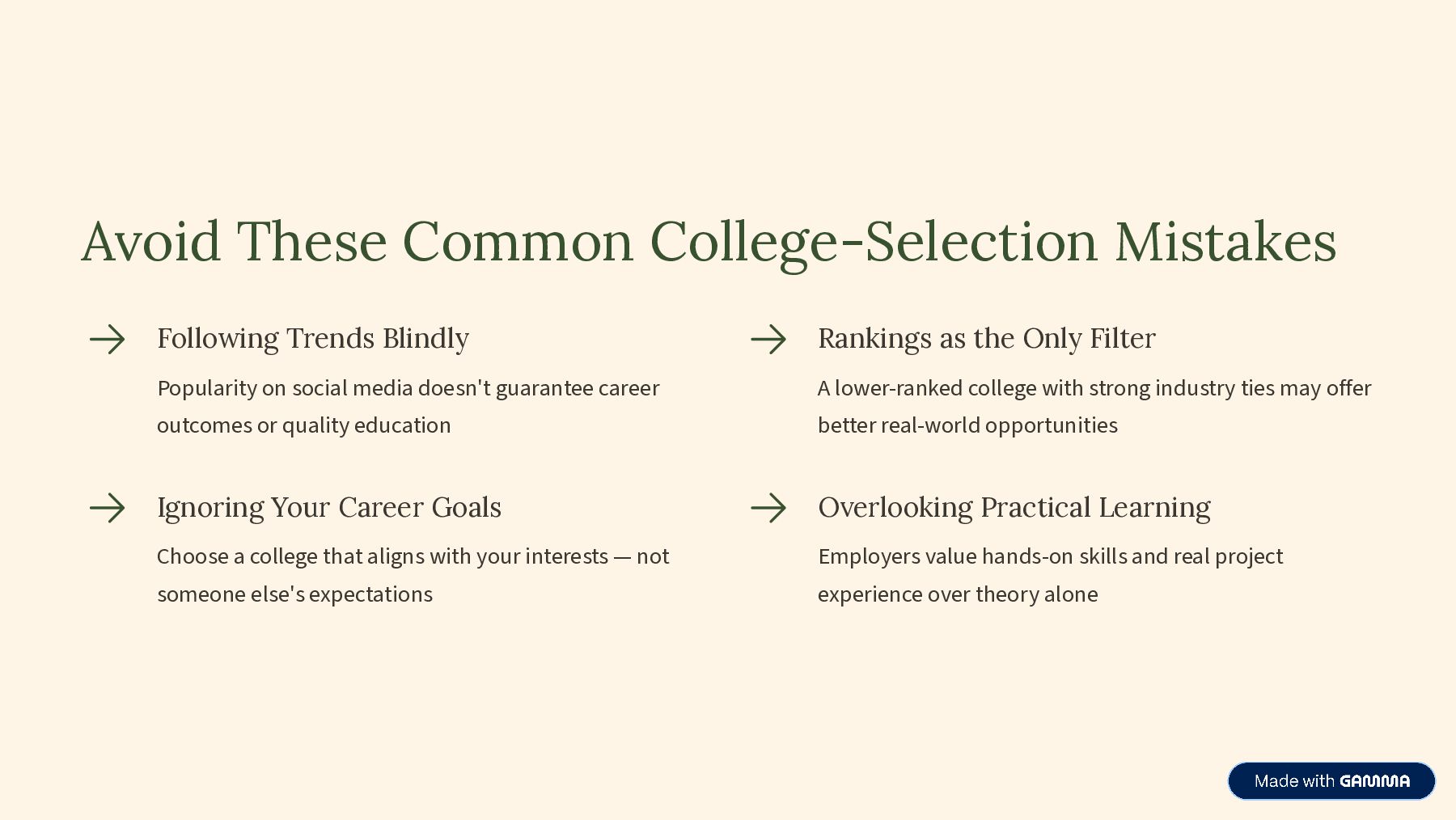
  11. Avoid These Common College-Selection Mistakes Following Trends Blindly Popularity on

    social media doesn't guarantee career outcomes or quality education Rankings as the Only Filter A lower-ranked college with strong industry ties may offer better real-world opportunities Ignoring Your Career Goals Choose a college that aligns with your interests — not someone else's expectations Overlooking Practical Learning Employers value hands-on skills and real project experience over theory alone
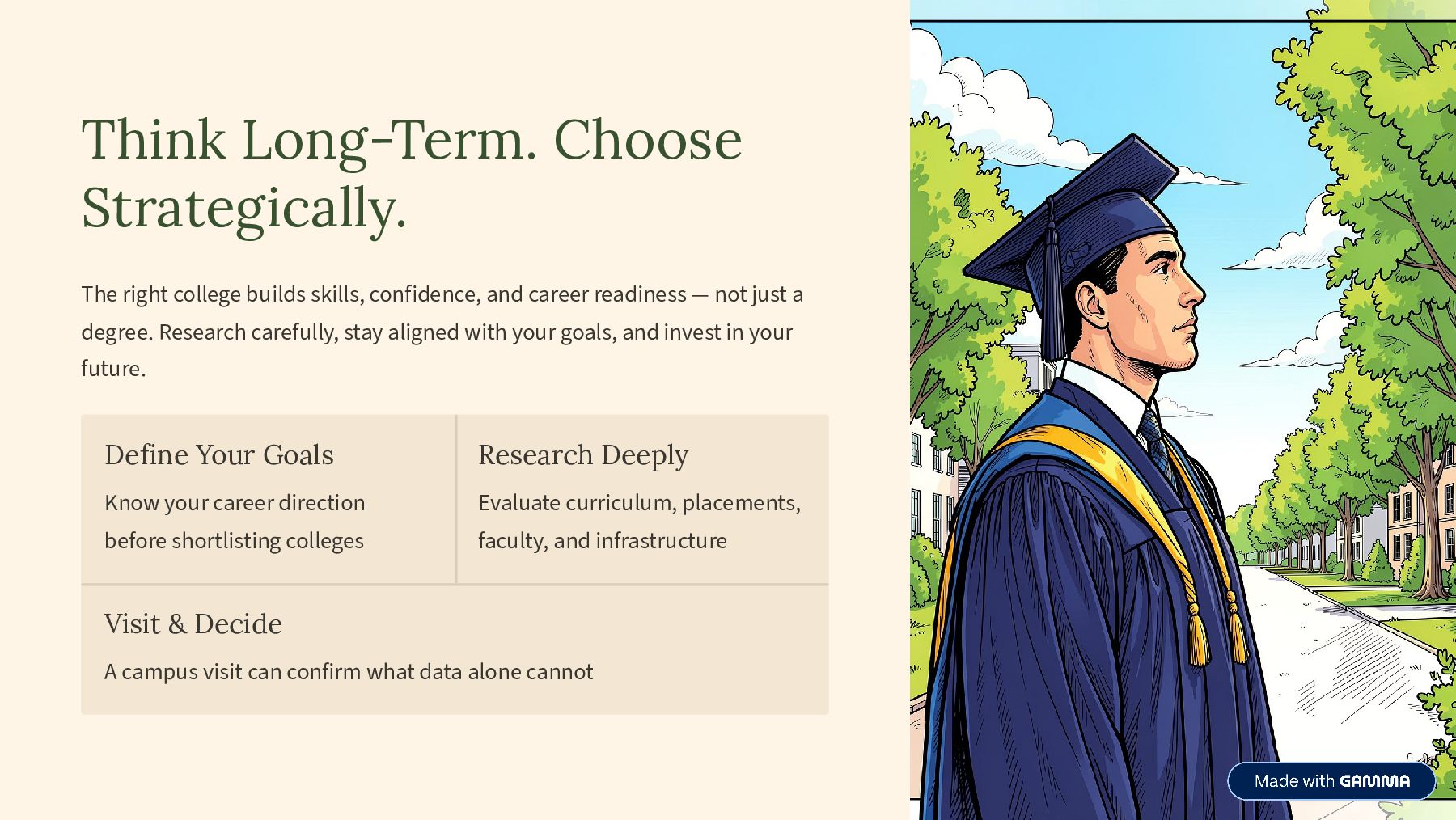
  12. Think Long-Term. Choose Strategically. The right college builds skills, confidence,

    and career readiness — not just a degree. Research carefully, stay aligned with your goals, and invest in your future. Define Your Goals Know your career direction before shortlisting colleges Research Deeply Evaluate curriculum, placements, faculty, and infrastructure Visit & Decide A campus visit can confirm what data alone cannot