Lock in $30 Savings on PRO—Offer Ends Soon! ⏳

Cell-Based Architecture

Cell-Based Architecture

Modern commerce systems are pushed to their limits when a single failure can halt operations across an entire region. In this talk, I share how we evolved Mercado Livre’s stock system from a large MySQL-backed monolith into a cell-based architecture capable of handling more than 30K requests per second across Latin America. We’ll walk through the journey: understanding blast radius and regional impact, defining the right cell boundaries, isolating compute and data per domain, and designing routing strategies that coexist with legacy APIs during the migration. I’ll also cover the operational side: observability, incident containment, and how we approached data migration with minimal downtime. Attendees will leave with practical patterns, trade-offs, and lessons learned for applying cell-based architecture to their own large-scale, business-critical systems.

Avatar for Luram Archanjo

Luram Archanjo

December 06, 2025
Tweet

More Decks by Luram Archanjo

Other Decks in Programming

Transcript

  1. Who I am Luram Archanjo Senior Software Architect @ Mercado

    Livre MBA in Java Projects Java and Microservices Enthusiast
  2. Agenda Agenda 01 The problem 02 The solution 03 The

    outcome 04 Lessons learned 05 Q&A
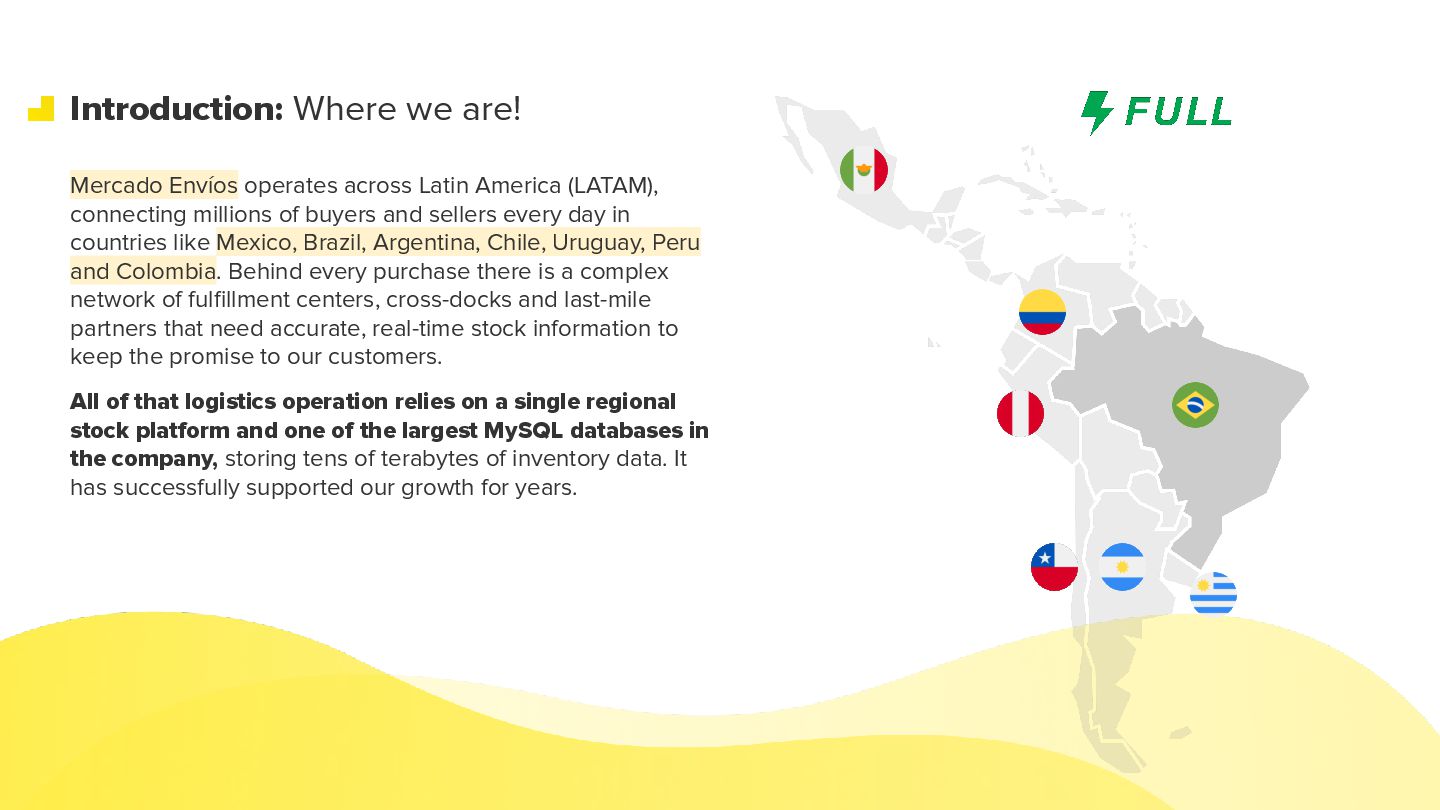
  3. Introduction: Where we are! Mercado Envíos operates across Latin America

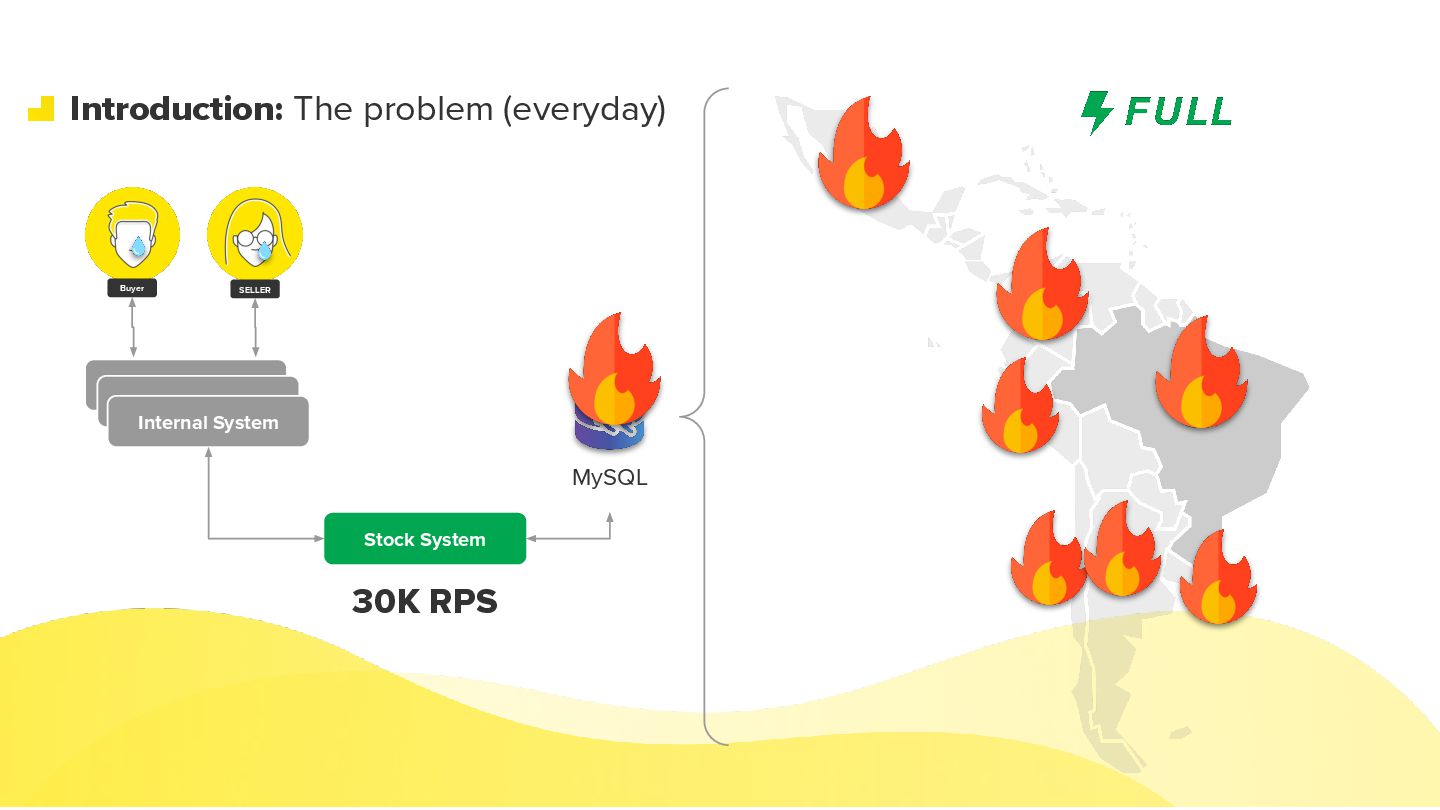
    (LATAM), connecting millions of buyers and sellers every day in countries like Mexico, Brazil, Argentina, Chile, Uruguay, Peru and Colombia. Behind every purchase there is a complex network of fulfillment centers, cross-docks and last-mile partners that need accurate, real-time stock information to keep the promise to our customers. All of that logistics operation relies on a single regional stock platform and one of the largest MySQL databases in the company, storing tens of terabytes of inventory data. It has successfully supported our growth for years.
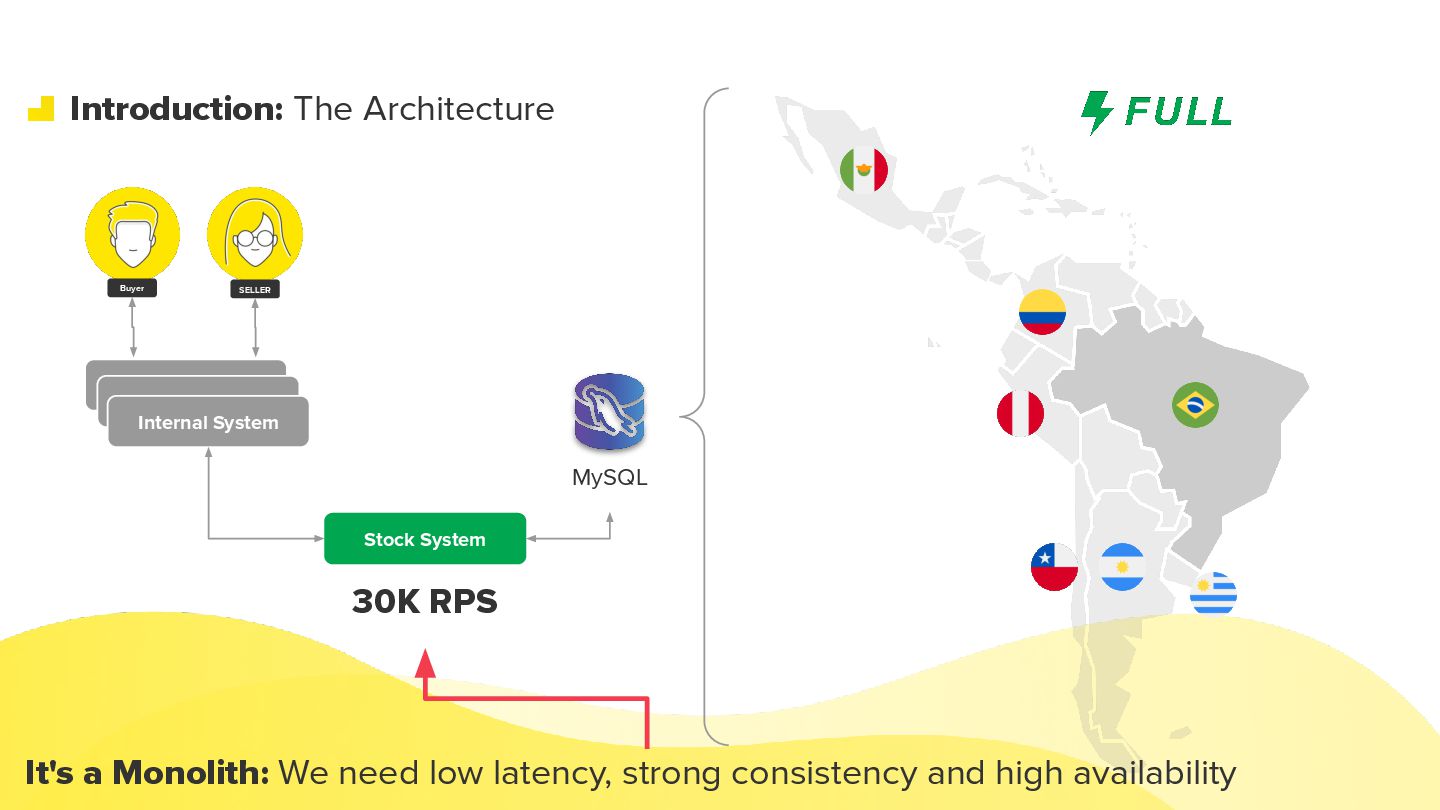
  4. Introduction: The Architecture MySQL SELLER Buyer Internal System Stock System

    30K RPS It's a Monolith: We need low latency, strong consistency and high availability
  5. What would be the impact on your company if a

    single database failure stopped all operations in LATAM?
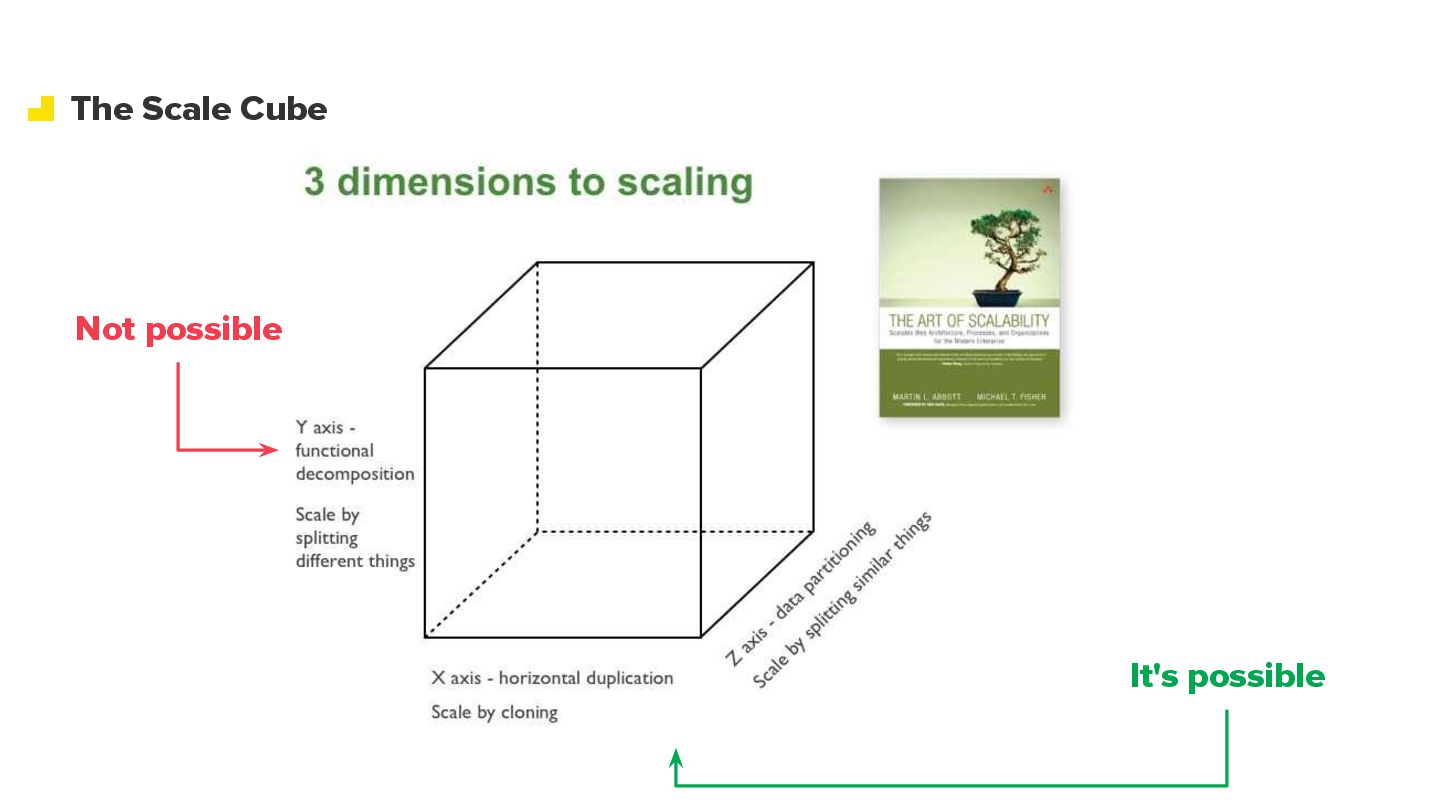
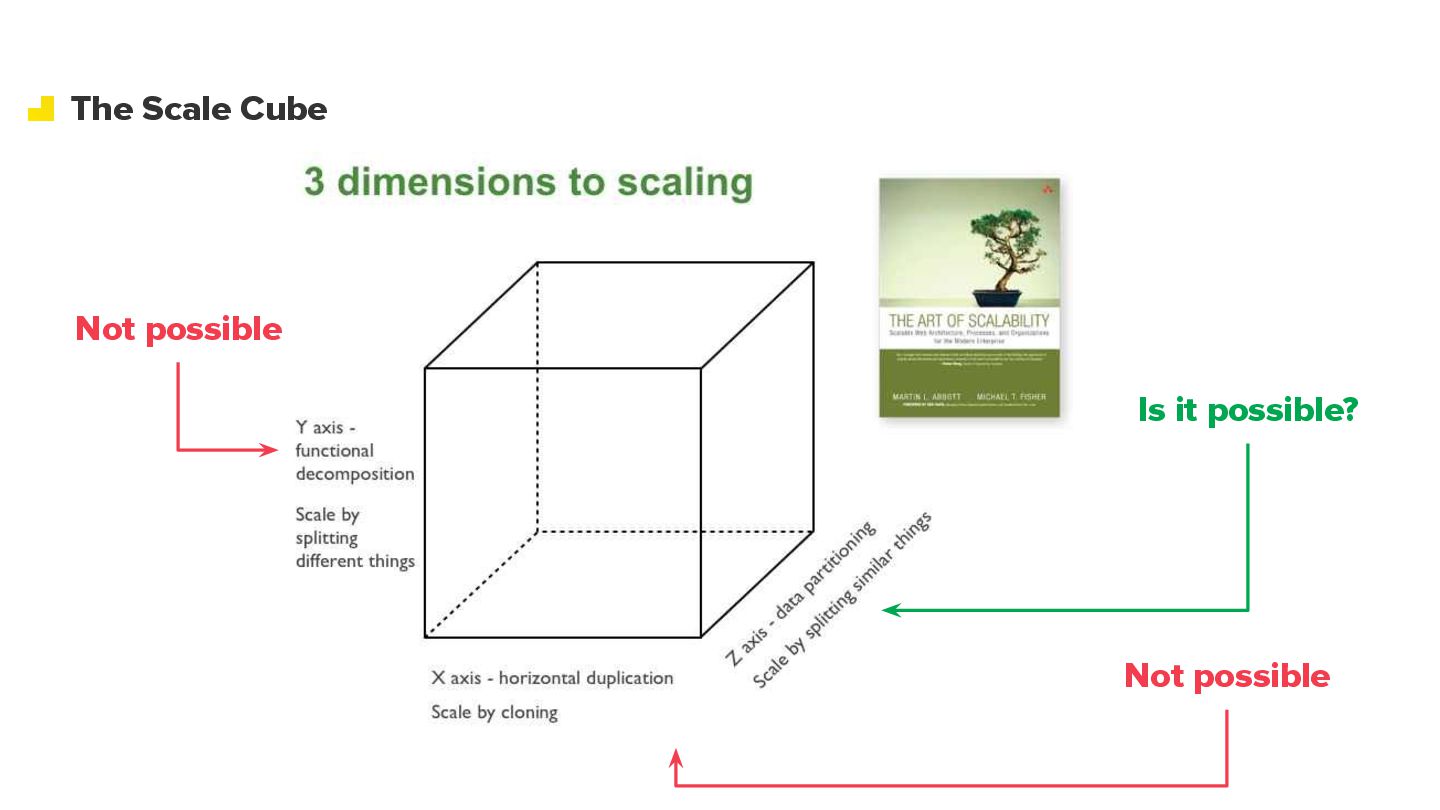
  6. What about the Blast radius? If we go down, we

    will still impact all of LATAM
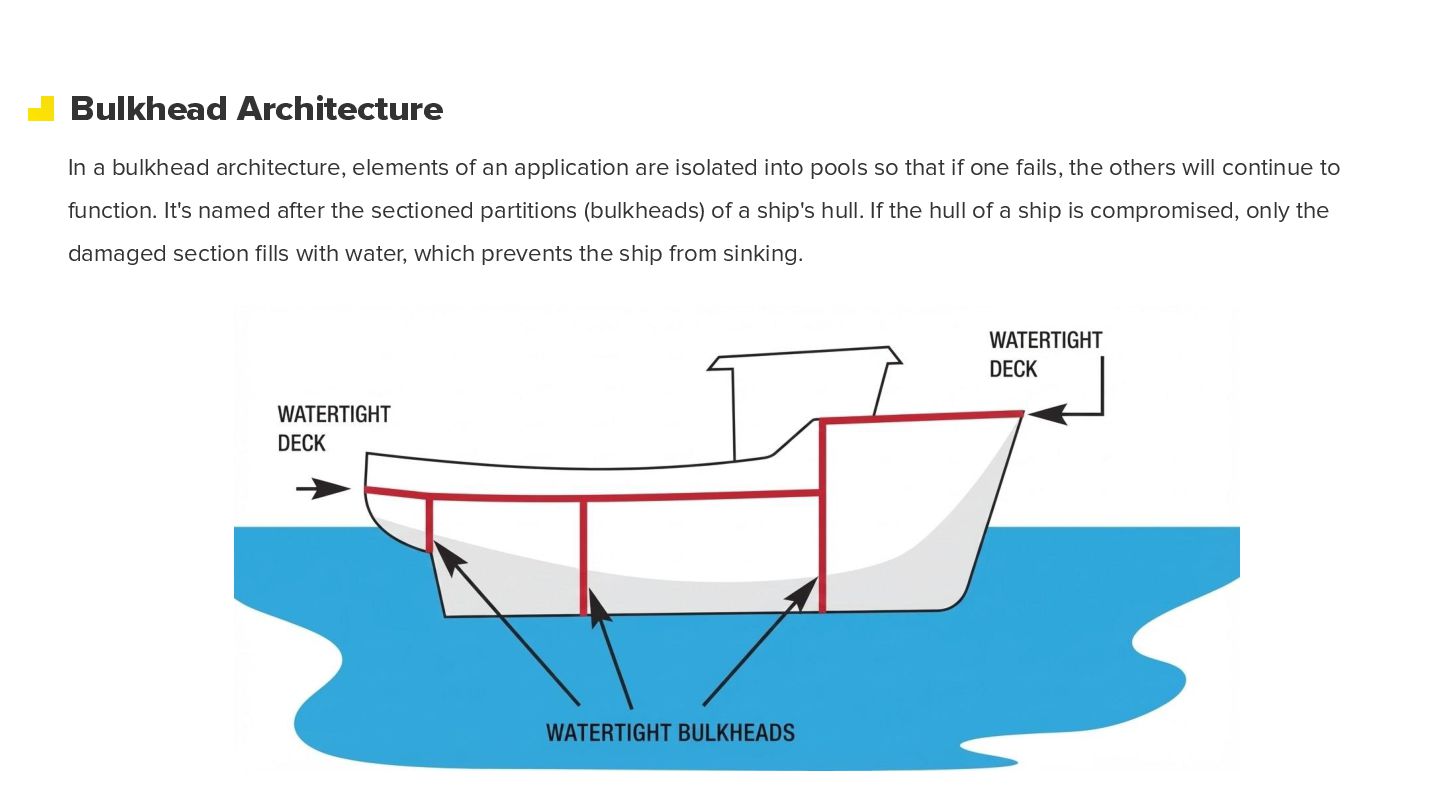
  7. Bulkhead Architecture In a bulkhead architecture, elements of an application

    are isolated into pools so that if one fails, the others will continue to function. It's named after the sectioned partitions (bulkheads) of a ship's hull. If the hull of a ship is compromised, only the damaged section fills with water, which prevents the ship from sinking.
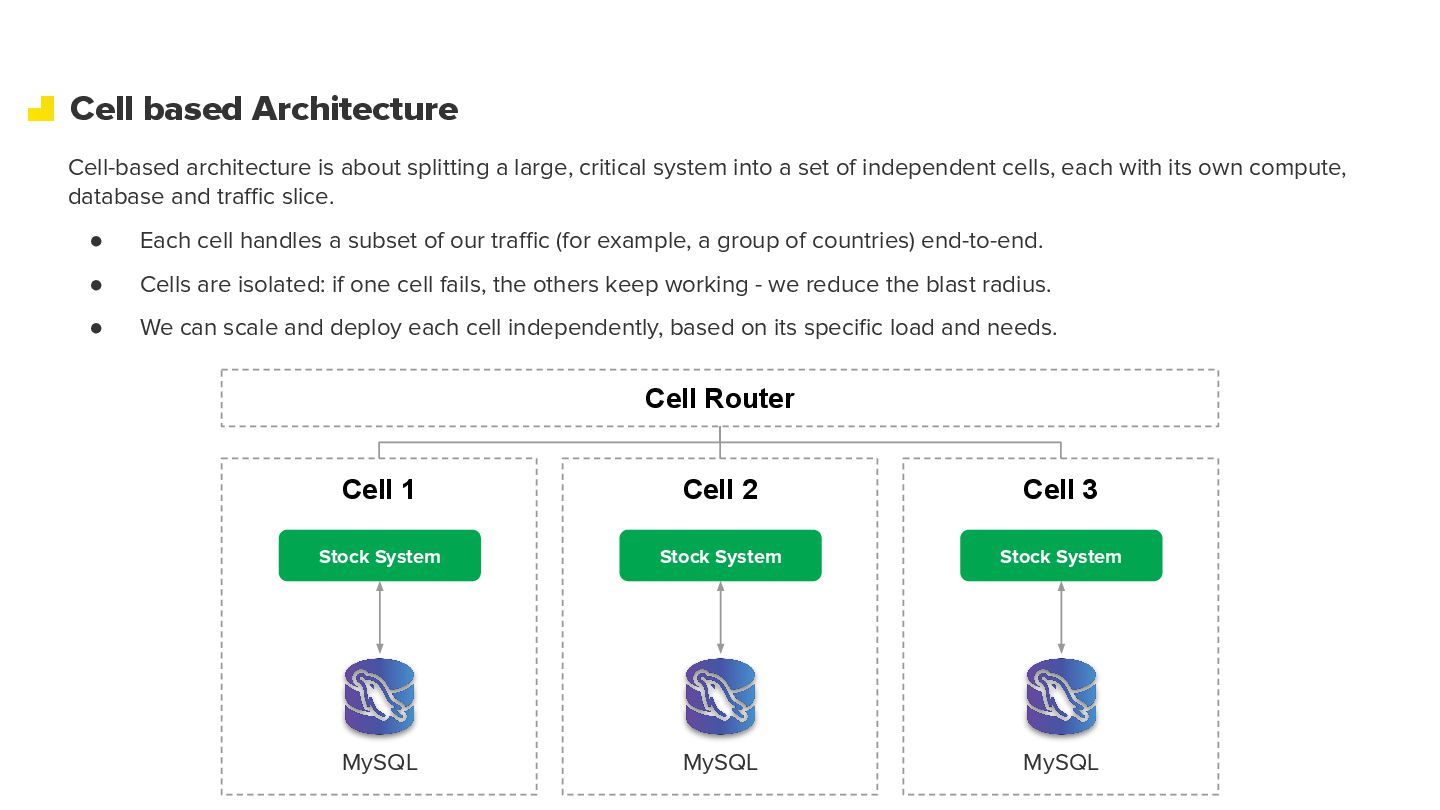
  8. Cell based Architecture Cell-based architecture is about splitting a large,

    critical system into a set of independent cells, each with its own compute, database and traffic slice. • Each cell handles a subset of our traffic (for example, a group of countries) end-to-end. • Cells are isolated: if one cell fails, the others keep working - we reduce the blast radius. • We can scale and deploy each cell independently, based on its specific load and needs. MySQL Stock System Cell 1 MySQL Stock System Cell 2 MySQL Stock System Cell 3 Cell Router
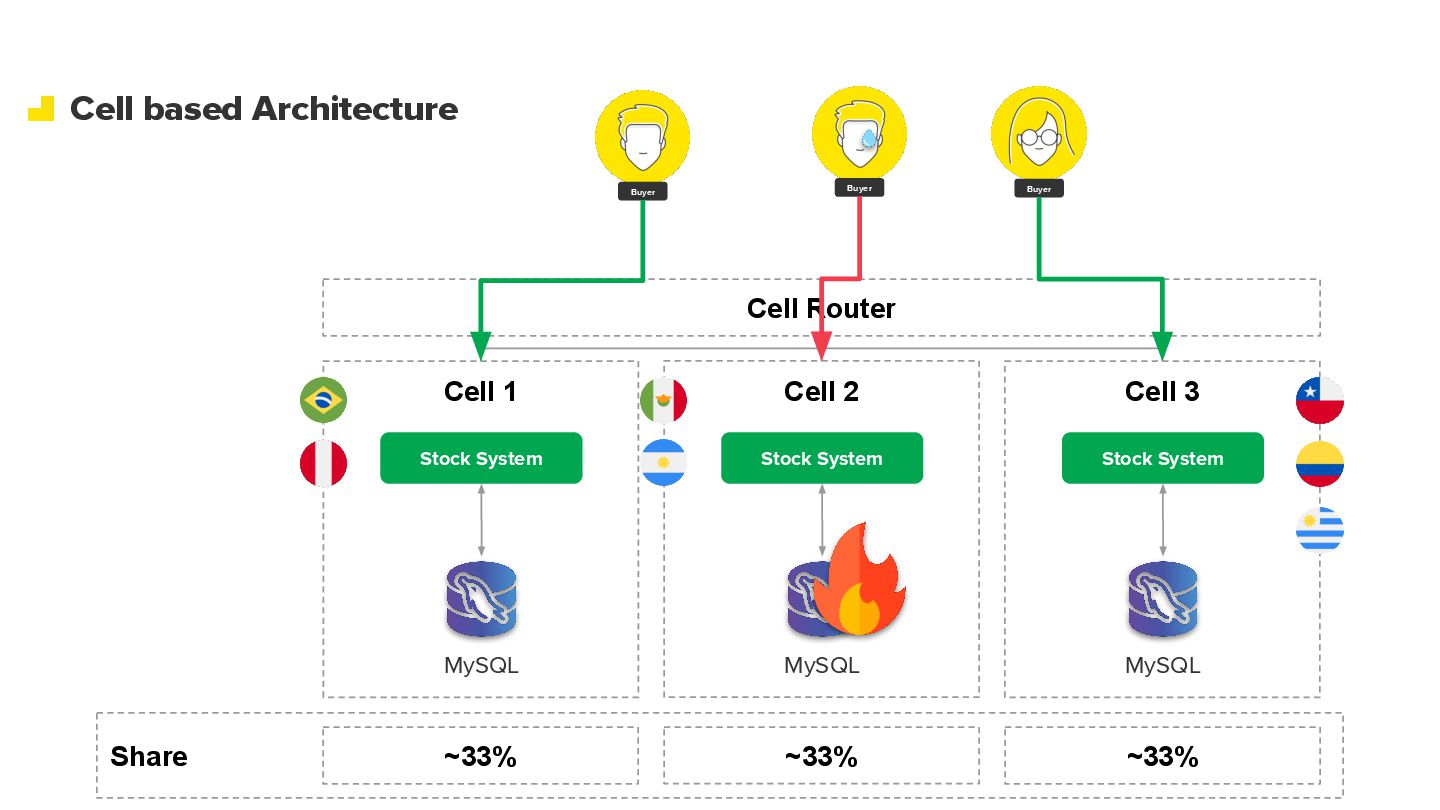
  9. Share Cell Router Cell based Architecture MySQL Stock System Cell

    1 MySQL Stock System Cell 2 MySQL Stock System Cell 3 ~33% ~33% ~33% Buyer Buyer Buyer
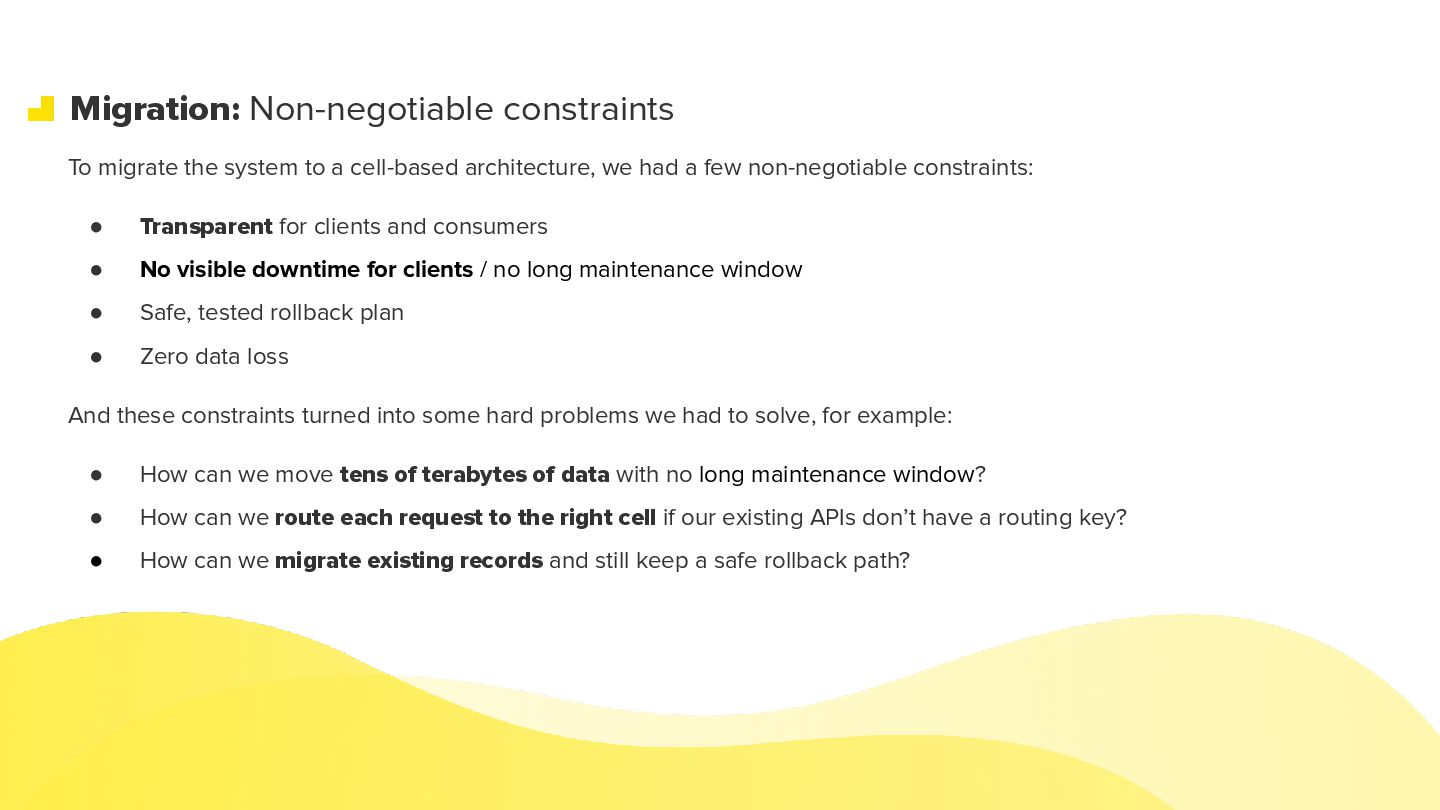
  10. Migration: Non-negotiable constraints To migrate the system to a cell-based

    architecture, we had a few non-negotiable constraints: • Transparent for clients and consumers • No visible downtime for clients / no long maintenance window • Safe, tested rollback plan • Zero data loss And these constraints turned into some hard problems we had to solve, for example: • How can we move tens of terabytes of data with no long maintenance window? • How can we route each request to the right cell if our existing APIs don’t have a routing key? • How can we migrate existing records and still keep a safe rollback path?
  11. How can we route each request to the right cell

    if our existing APIs don’t have a routing key?
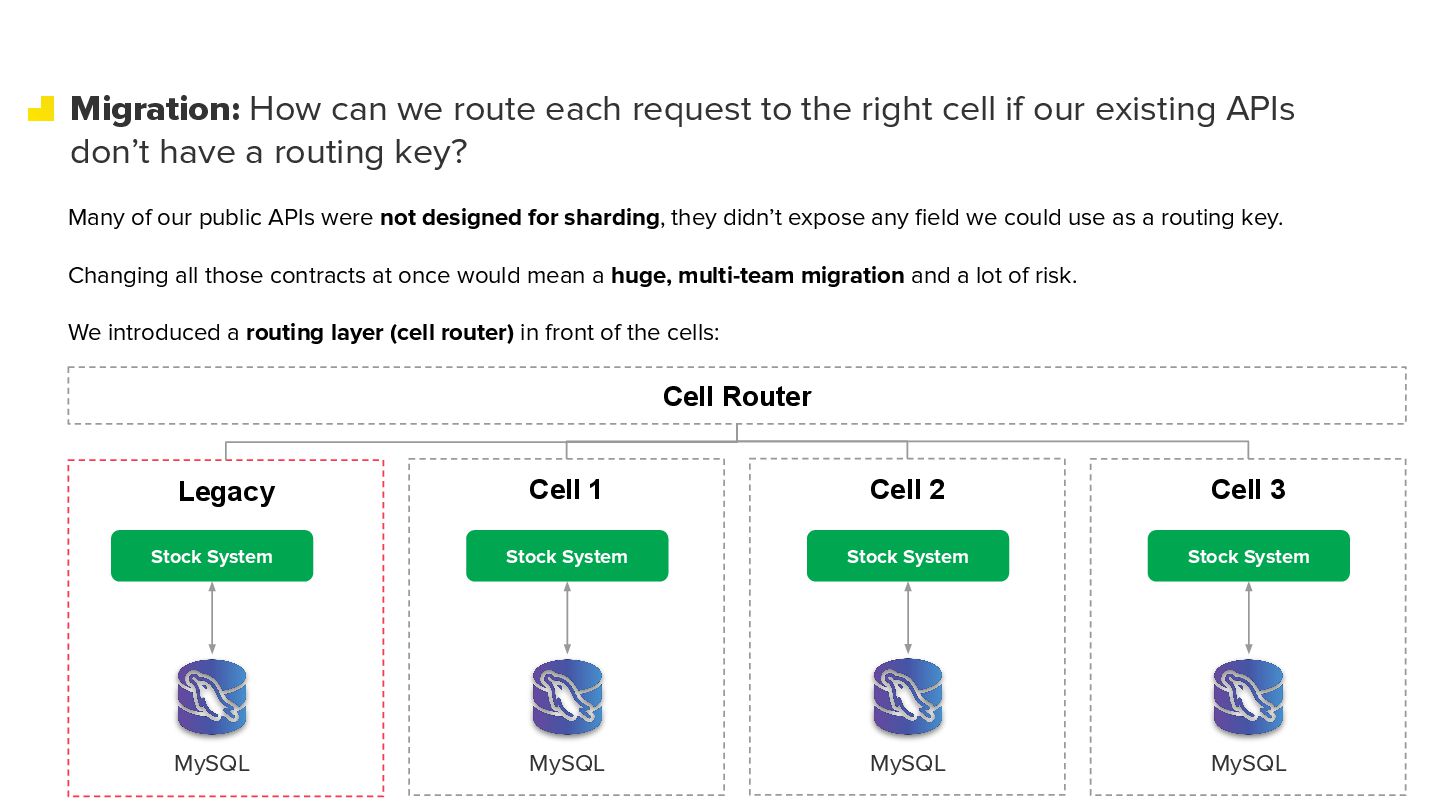
  12. Migration: How can we route each request to the right

    cell if our existing APIs don’t have a routing key? Many of our public APIs were not designed for sharding, they didn’t expose any field we could use as a routing key. Changing all those contracts at once would mean a huge, multi-team migration and a lot of risk. We introduced a routing layer (cell router) in front of the cells: MySQL Stock System Cell 1 MySQL Stock System Cell 2 MySQL Stock System Cell 3 Cell Router MySQL Stock System Legacy
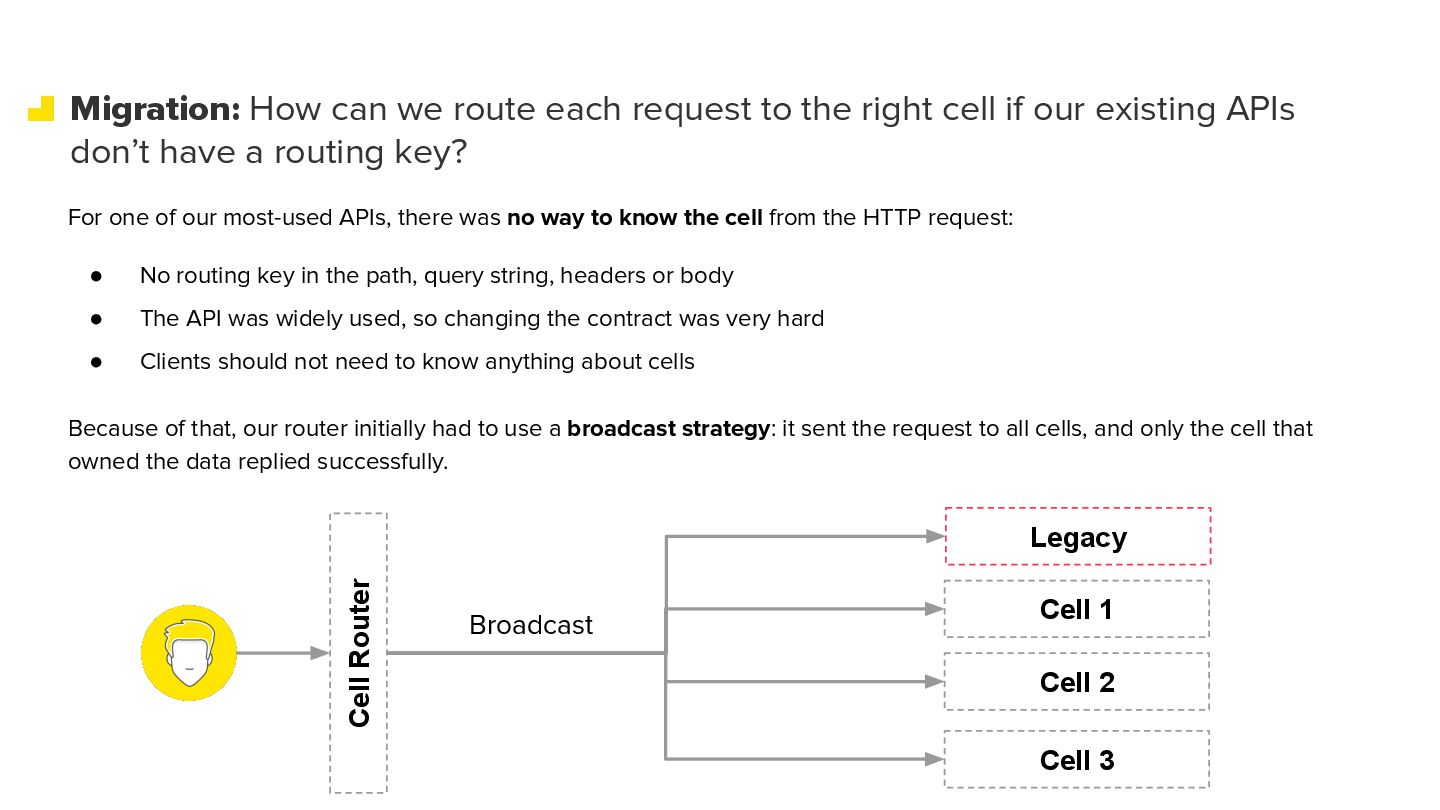
  13. Migration: How can we route each request to the right

    cell if our existing APIs don’t have a routing key? For one of our most-used APIs, there was no way to know the cell from the HTTP request: • No routing key in the path, query string, headers or body • The API was widely used, so changing the contract was very hard • Clients should not need to know anything about cells Because of that, our router initially had to use a broadcast strategy: it sent the request to all cells, and only the cell that owned the data replied successfully. Cell Router Legacy Cell 1 Cell 2 Cell 3 Broadcast
  14. Migration: How can we move tens of terabytes of data

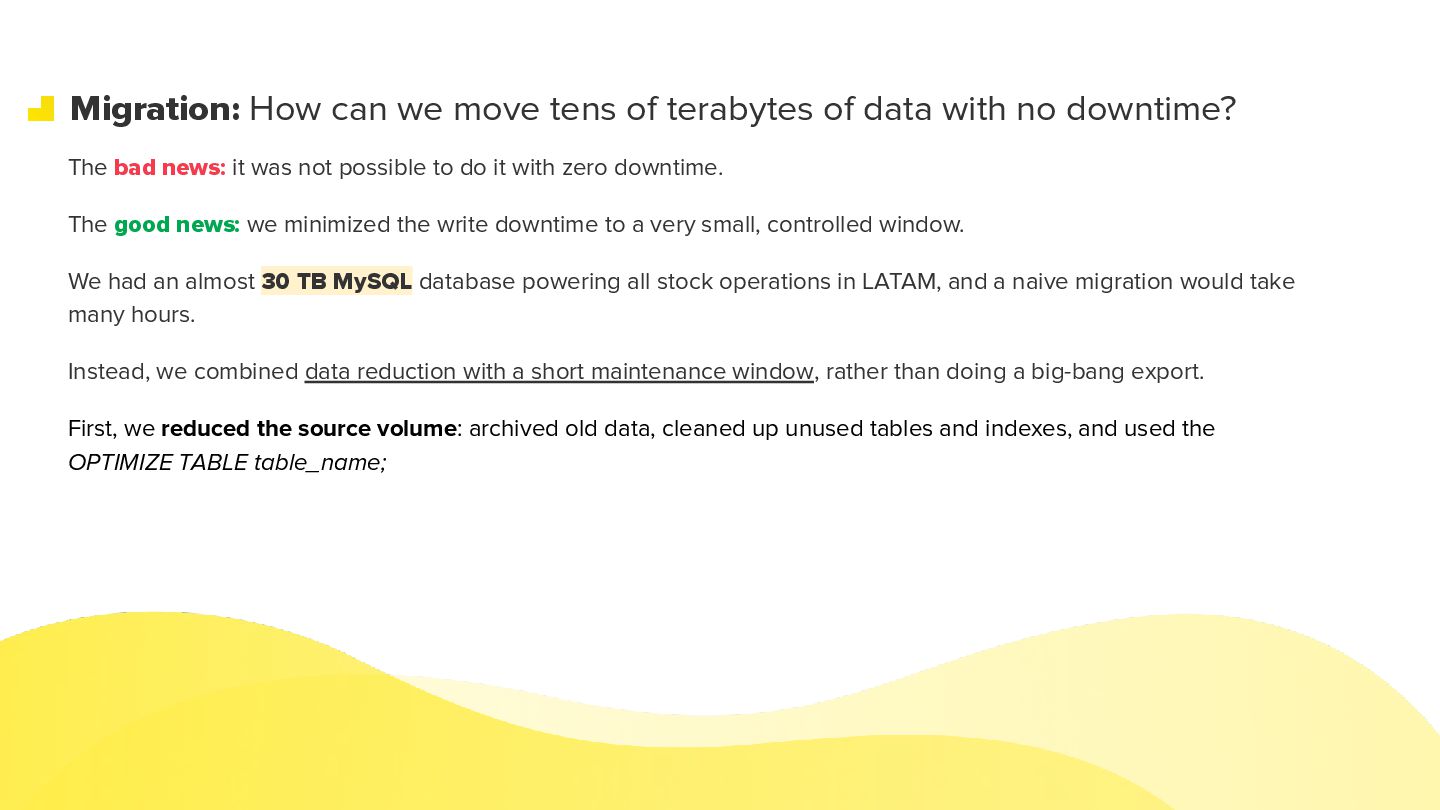
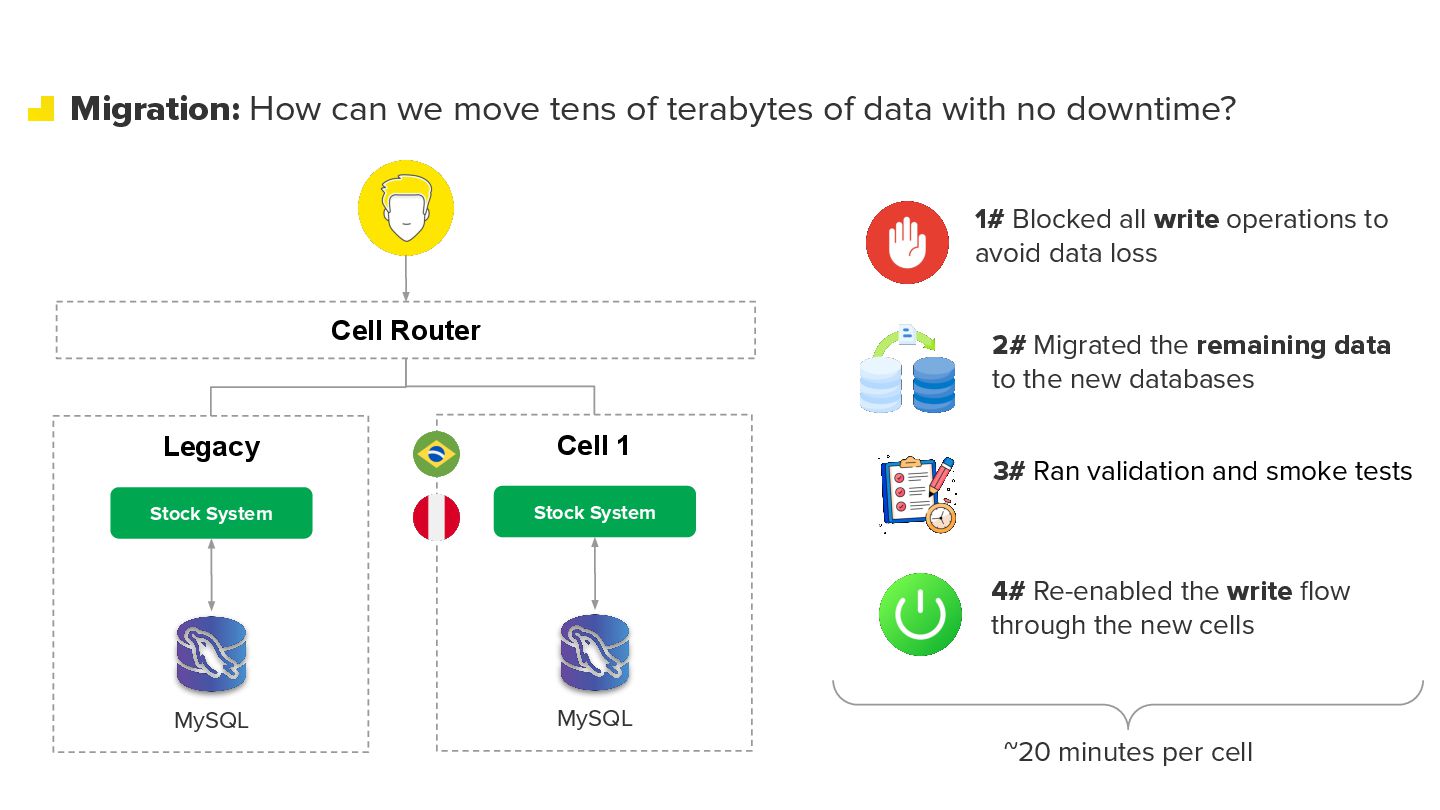
    with no downtime? The bad news: it was not possible to do it with zero downtime. The good news: we minimized the write downtime to a very small, controlled window. We had an almost 30 TB MySQL database powering all stock operations in LATAM, and a naive migration would take many hours. Instead, we combined data reduction with a short maintenance window, rather than doing a big-bang export. First, we reduced the source volume: archived old data, cleaned up unused tables and indexes, and used the OPTIMIZE TABLE table_name;
  15. Migration: How can we move tens of terabytes of data

    with no downtime? MySQL Stock System Cell 1 MySQL Stock System Legacy Cell Router 1# Blocked all write operations to avoid data loss 2# Migrated the remaining data to the new databases 3# Ran validation and smoke tests 4# Re-enabled the write flow through the new cells ~20 minutes per cell
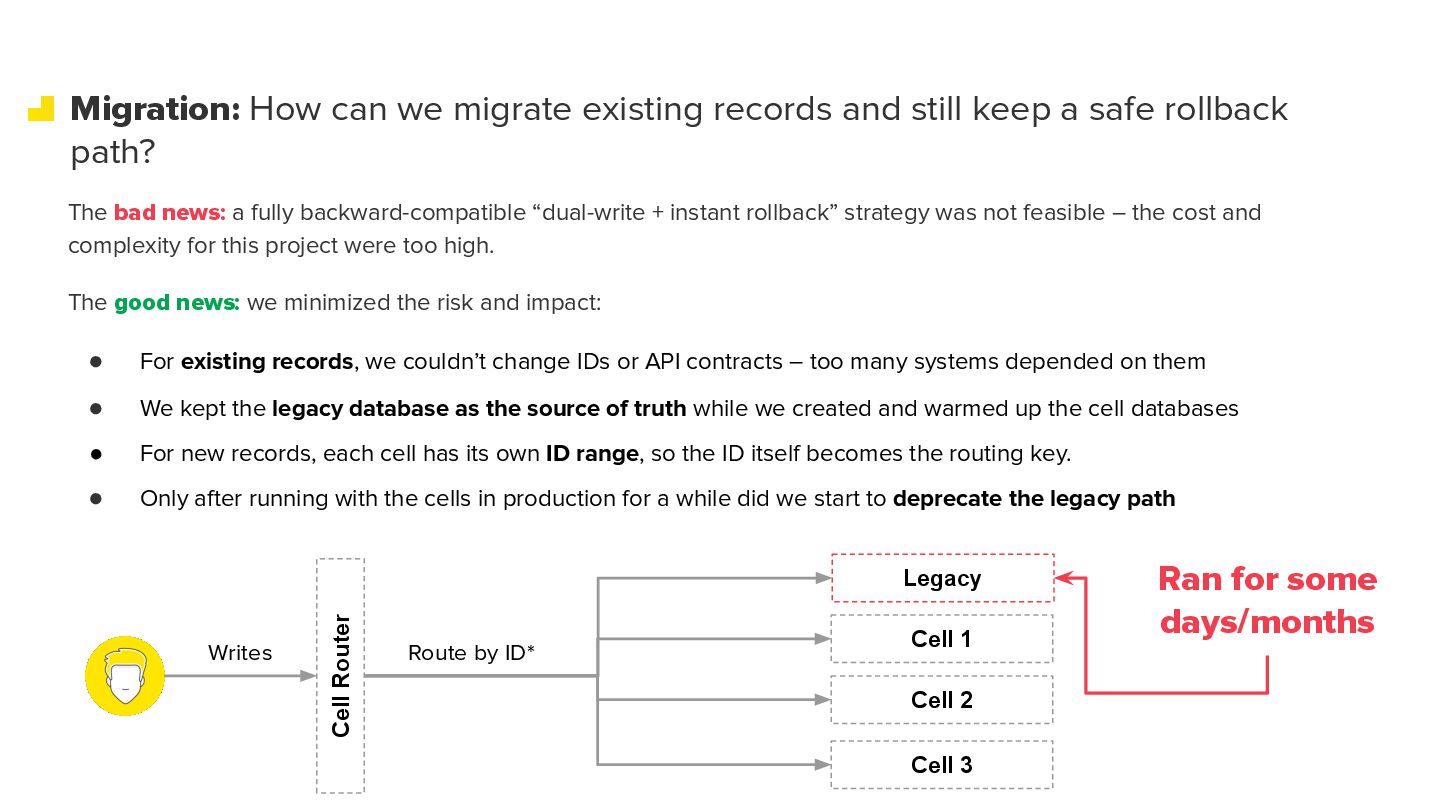
  16. Migration: How can we migrate existing records and still keep

    a safe rollback path? The bad news: a fully backward-compatible “dual-write + instant rollback” strategy was not feasible – the cost and complexity for this project were too high. The good news: we minimized the risk and impact: • For existing records, we couldn’t change IDs or API contracts – too many systems depended on them • We kept the legacy database as the source of truth while we created and warmed up the cell databases • For new records, each cell has its own ID range, so the ID itself becomes the routing key. • Only after running with the cells in production for a while did we start to deprecate the legacy path Cell Router Legacy Cell 1 Cell 2 Cell 3 Route by ID* Ran for some days/months Writes
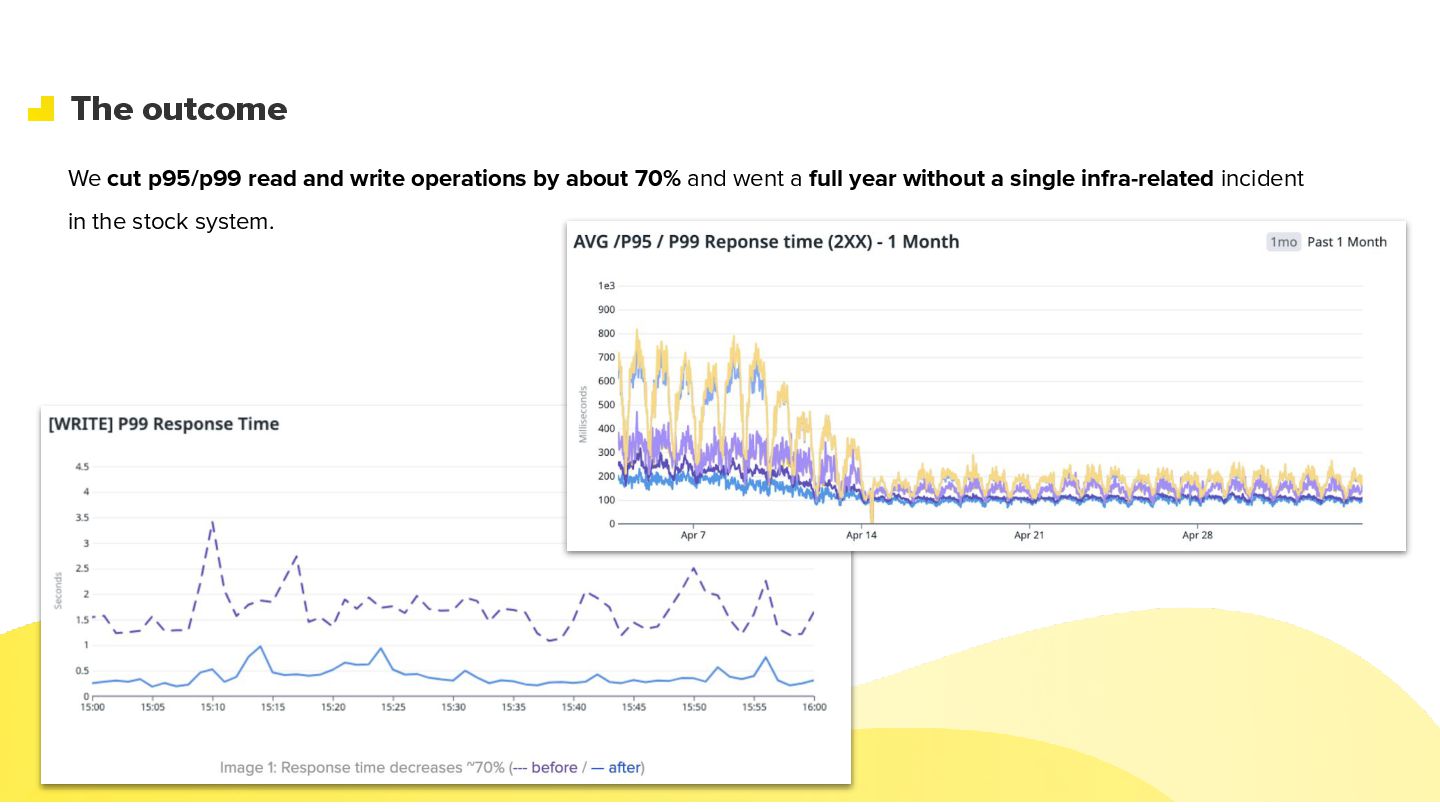
  17. The outcome We cut p95/p99 read and write operations by

    about 70% and went a full year without a single infra-related incident in the stock system.
  18. Lessons learned: In short, scale isn’t a bigger box –

    it’s many smaller, safer ones. • Scaling is not always about buying a bigger box, it’s about redistributing responsibility • Always think about blast radius: what happens if this database or service goes down? • A well-designed "monolith" can still be the right choice when you need low latency and strong consistency • Design with a routing key from day one, it makes sharding and cells much easier later • An Internal Developer Platform (Fury) turns complex patterns like cells into reusable, operable templates instead of one-off projects