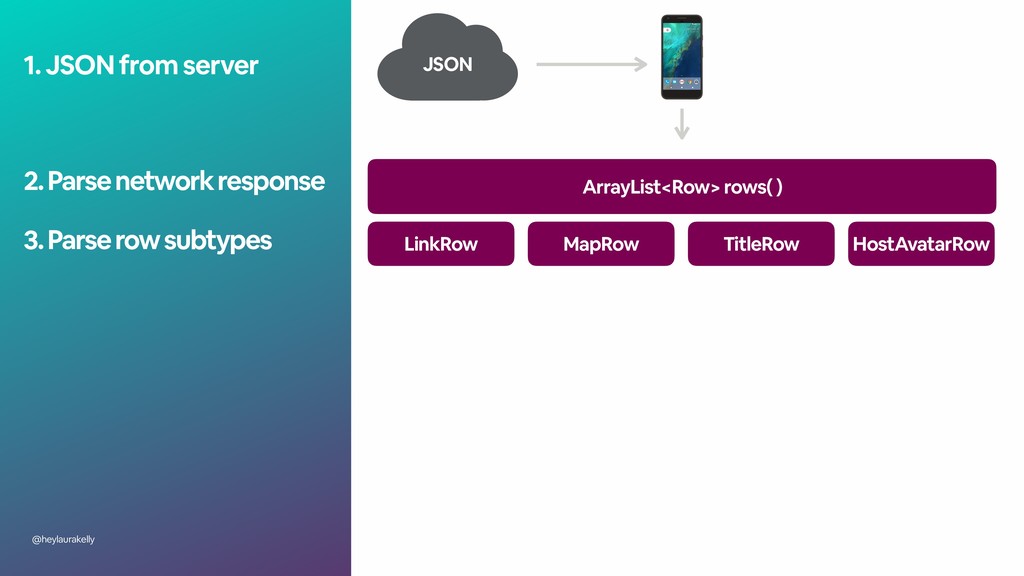
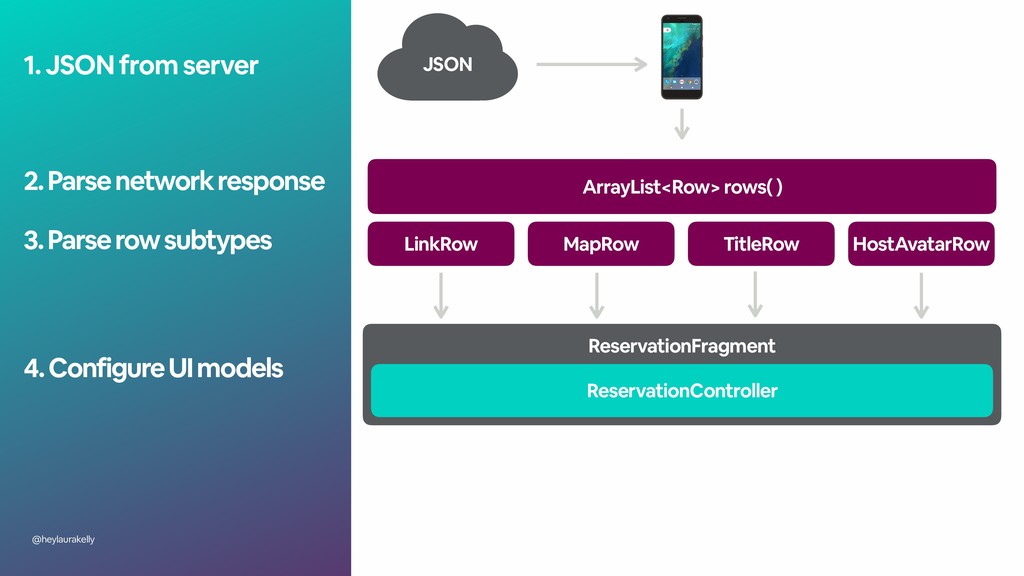
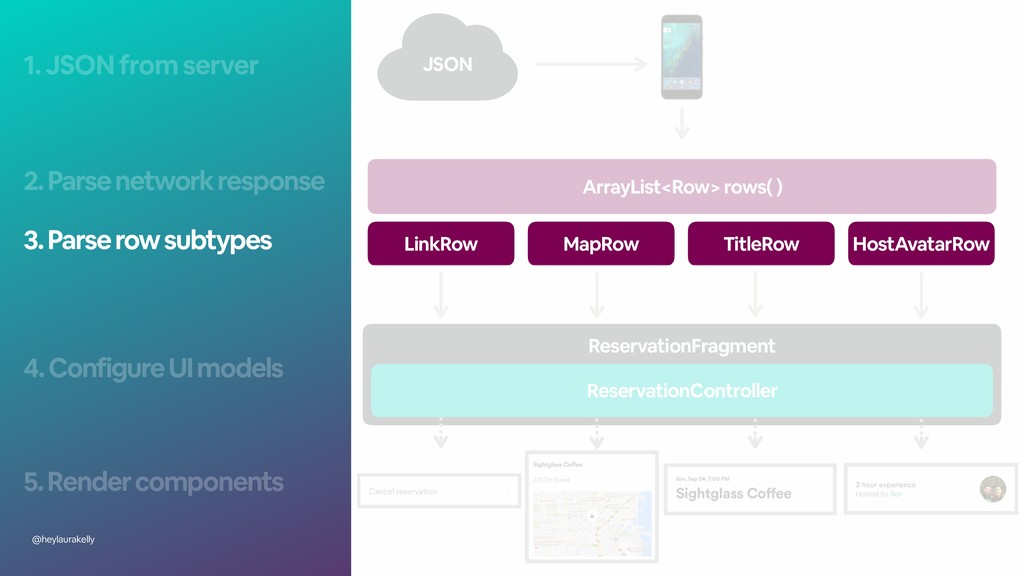
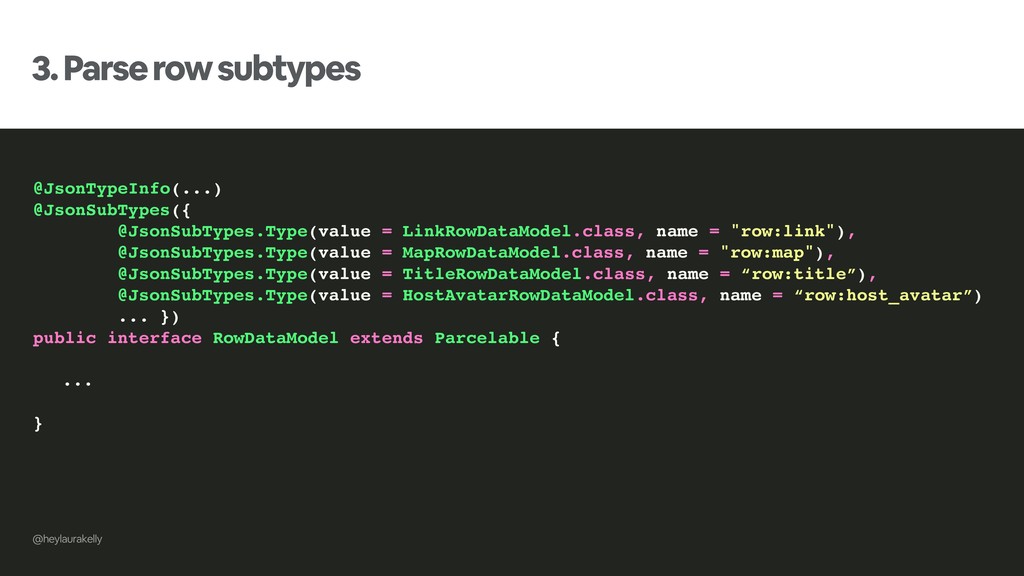
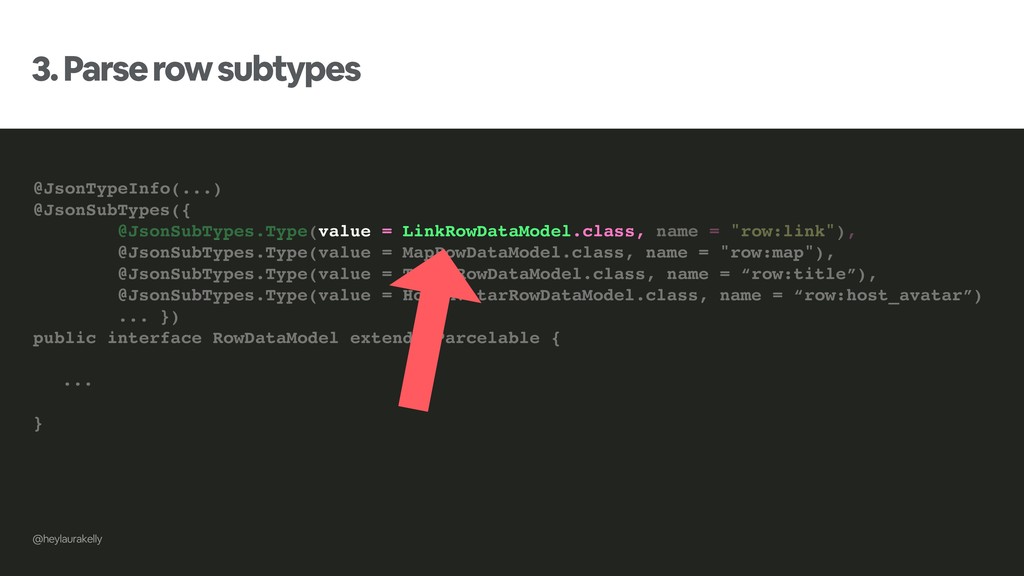
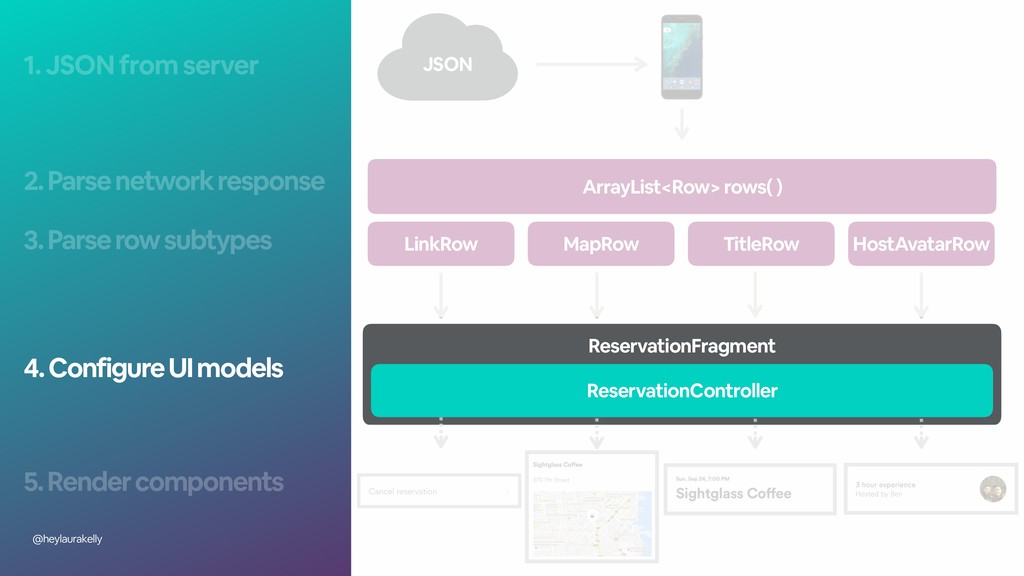
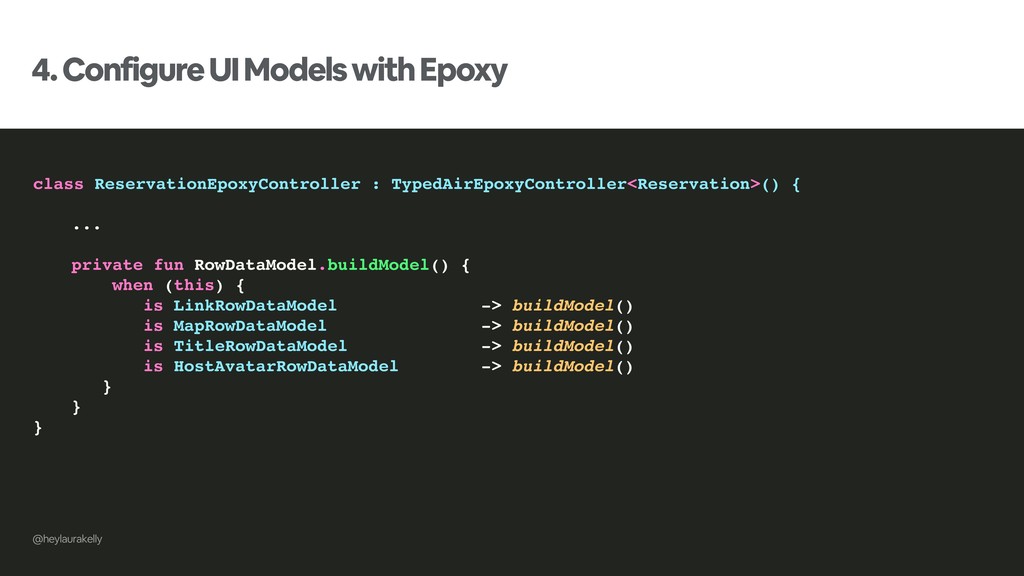
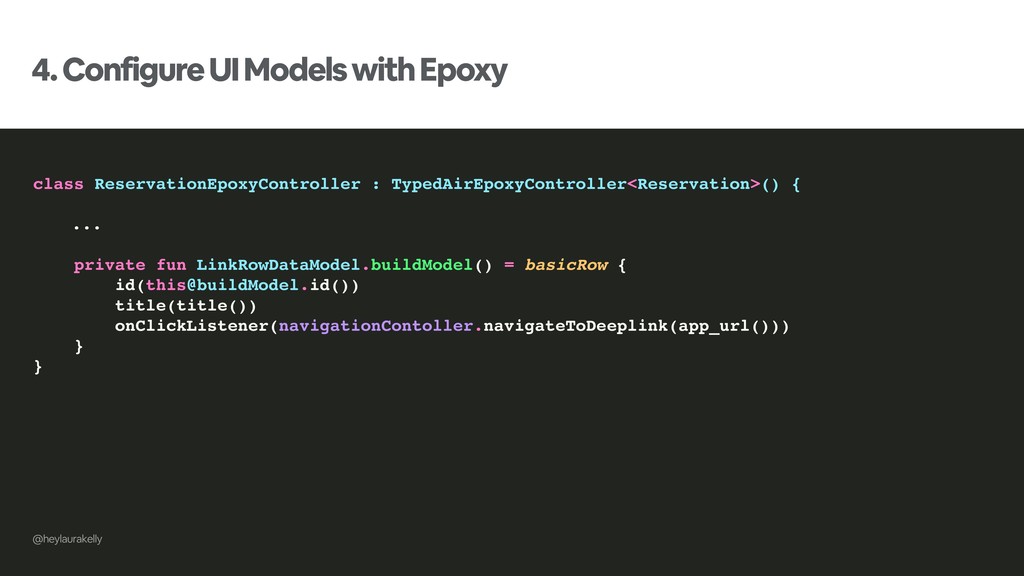
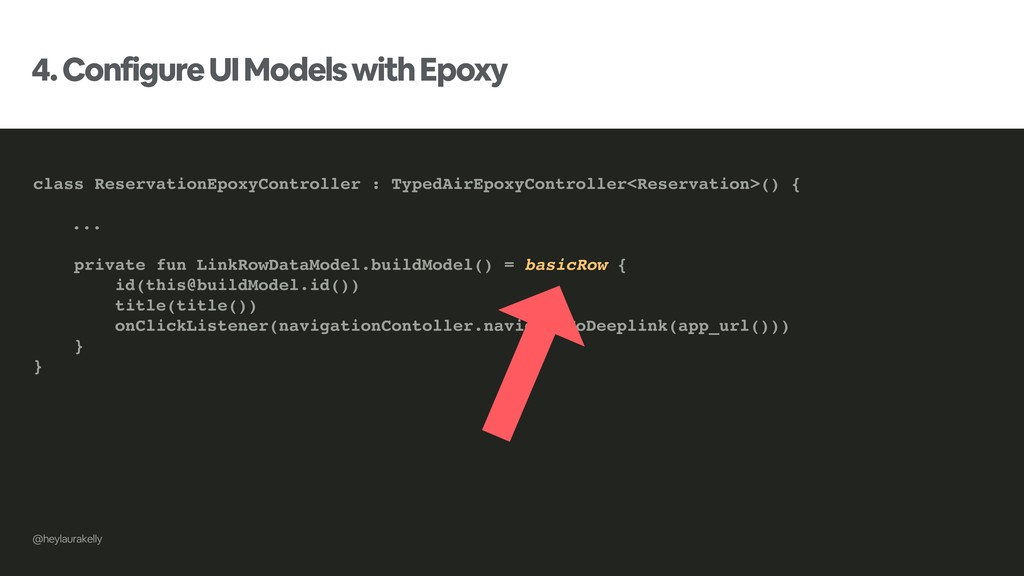
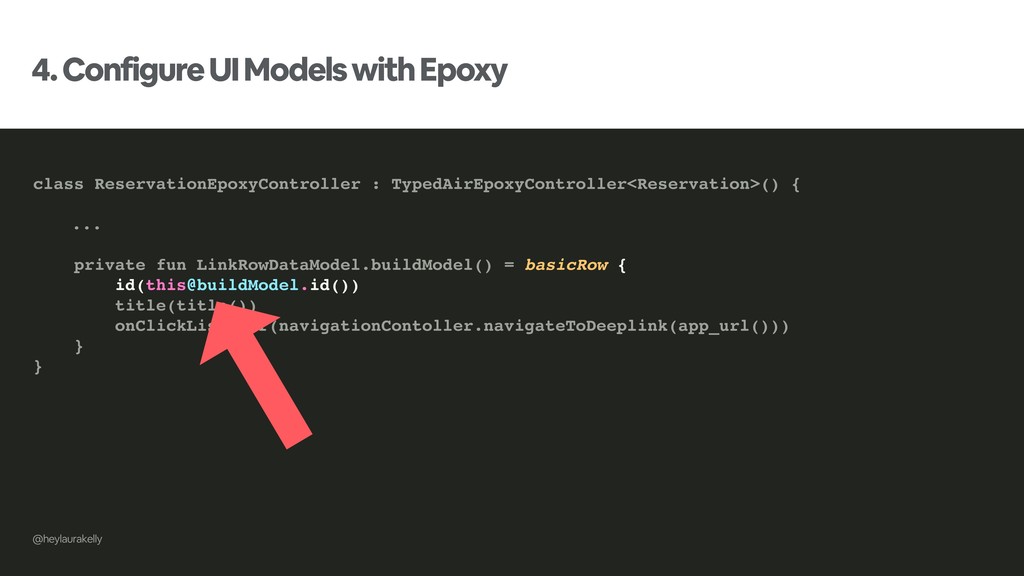
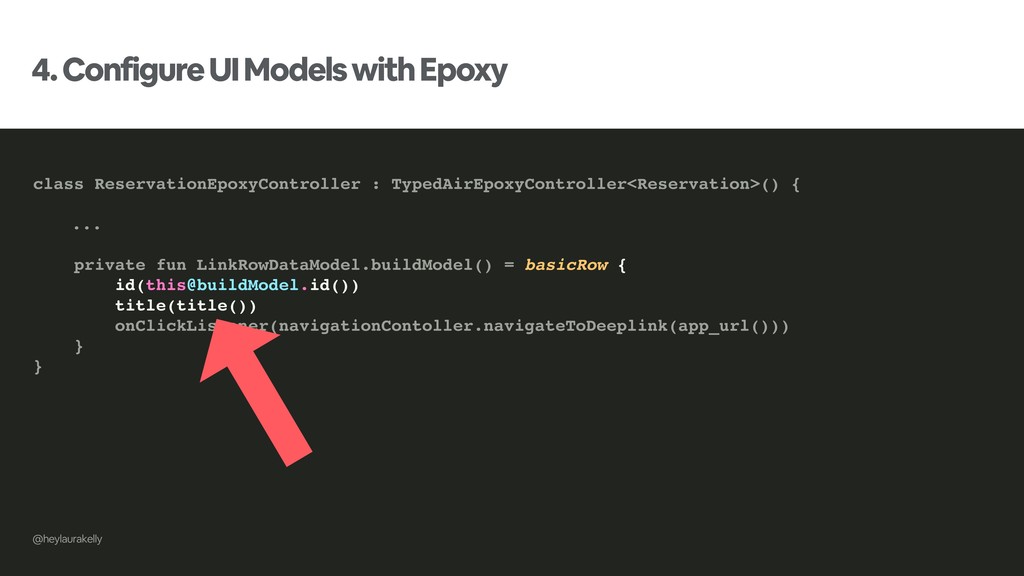
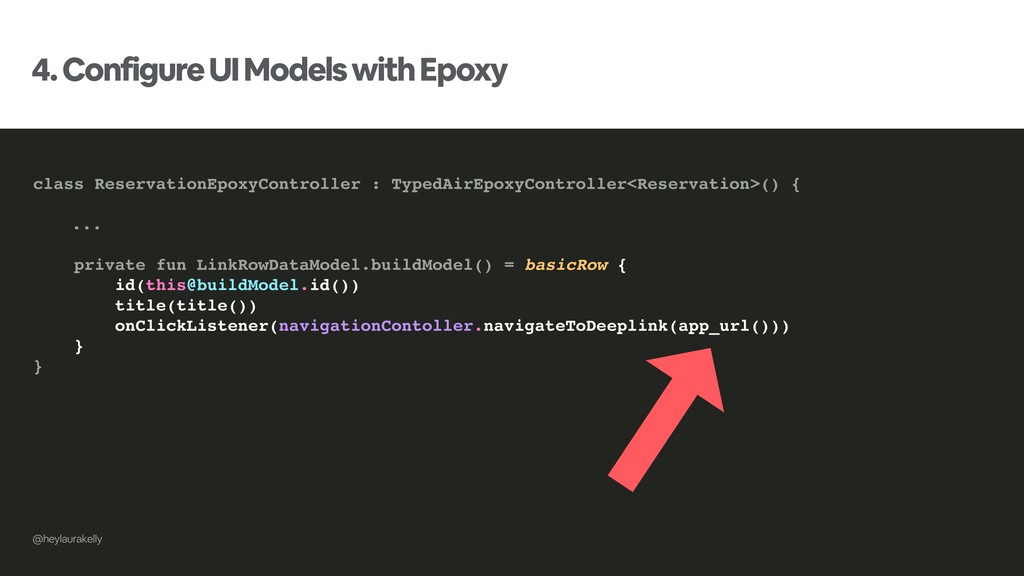
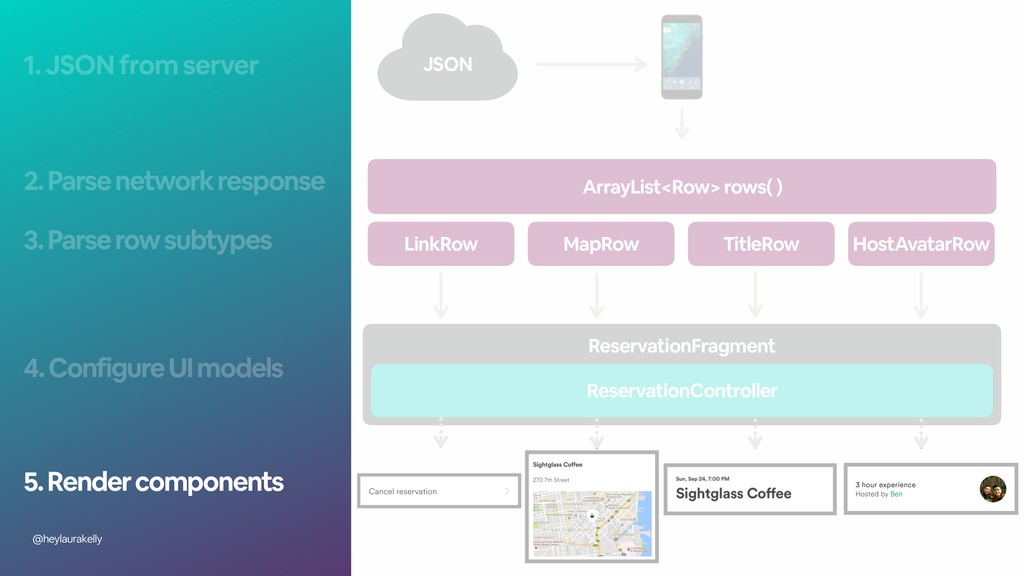
when (this) { is LinkRowDataModel -> buildModel() is MapRowDataModel -> buildModel() is TitleRowDataModel -> buildModel() is HostAvatarRowDataModel -> buildModel() } } } 4. Configure UI Models with Epoxy @heylaurakelly
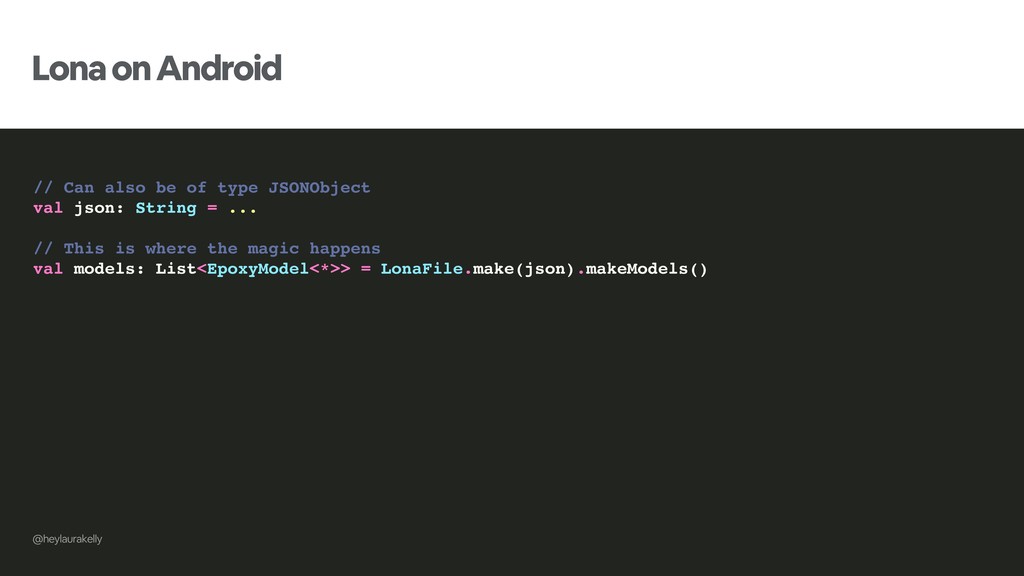
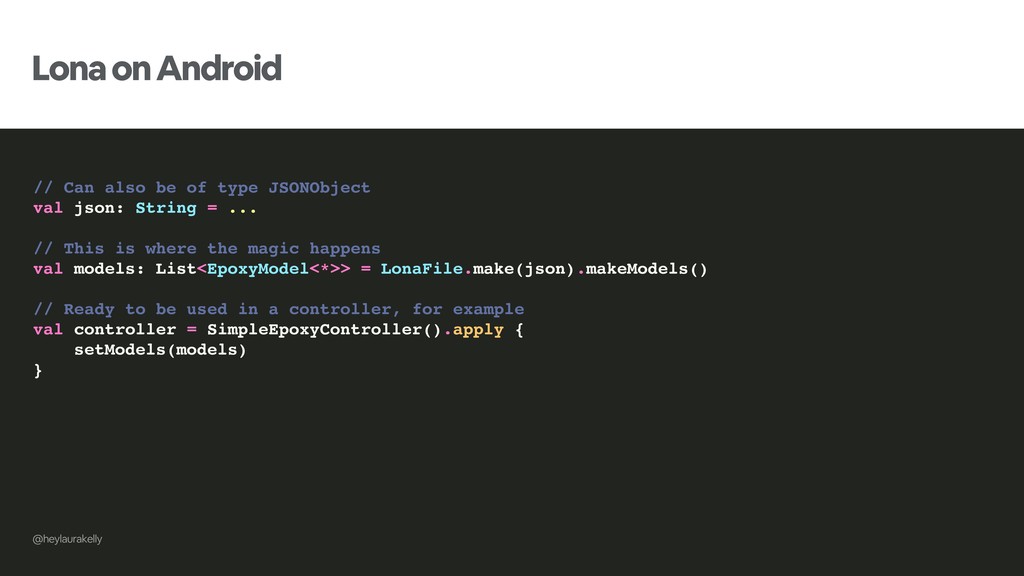
= ... // This is where the magic happens val models: List<EpoxyModel<*>> = LonaFile.make(json).makeModels() // Ready to be used in a controller, for example val controller = SimpleEpoxyController().apply { setModels(models) } Lona on Android @heylaurakelly
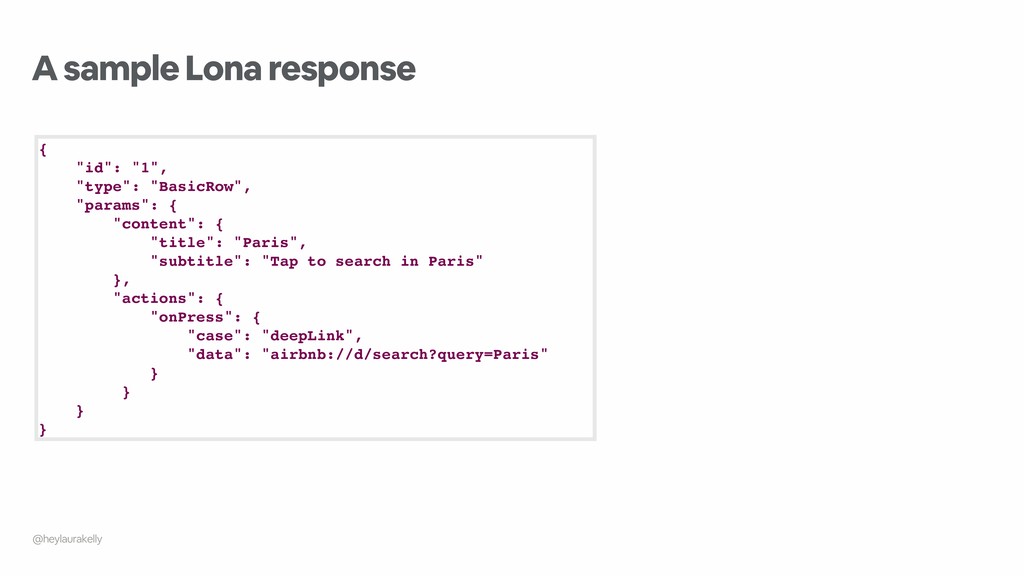
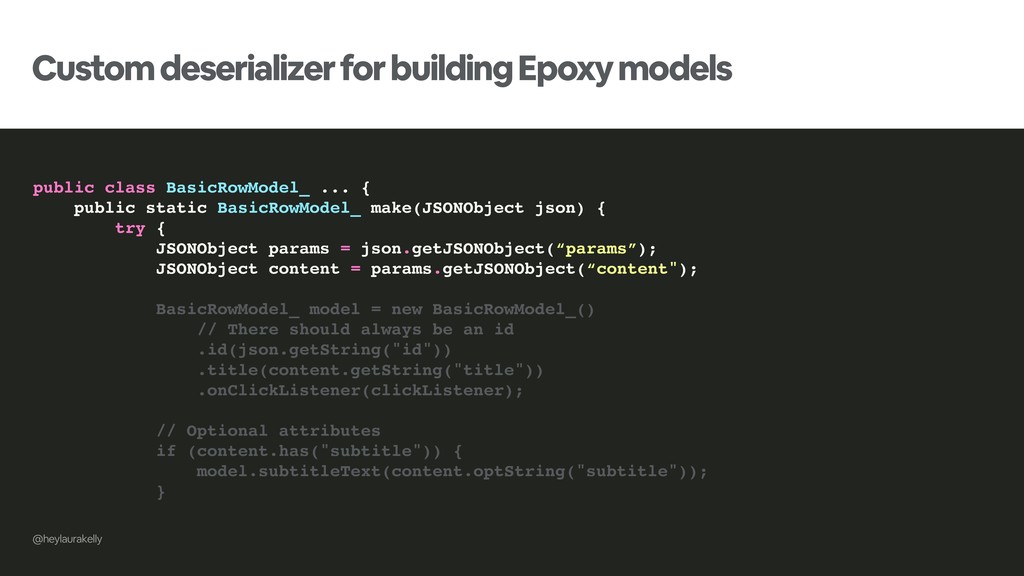
{ try { JSONObject params = json.getJSONObject(“params”); JSONObject content = params.getJSONObject(“content"); BasicRowModel_ model = new BasicRowModel_() // There should always be an id .id(json.getString("id")) .title(content.getString("title")) .onClickListener(clickListener); // Optional attributes if (content.has("subtitle")) { model.subtitleText(content.optString("subtitle")); } Custom deserializer for building Epoxy models @heylaurakelly
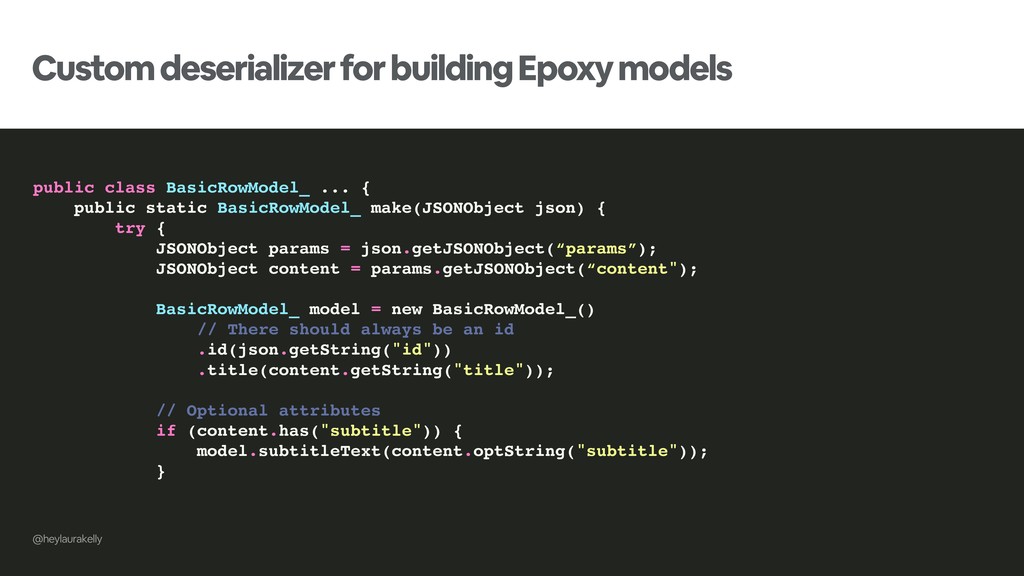
{ public static BasicRowModel_ make(JSONObject json) { try { JSONObject params = json.getJSONObject(“params”); JSONObject content = params.getJSONObject(“content"); BasicRowModel_ model = new BasicRowModel_() // There should always be an id .id(json.getString("id")) .title(content.getString("title")); // Optional attributes if (content.has("subtitle")) { model.subtitleText(content.optString("subtitle")); } @heylaurakelly
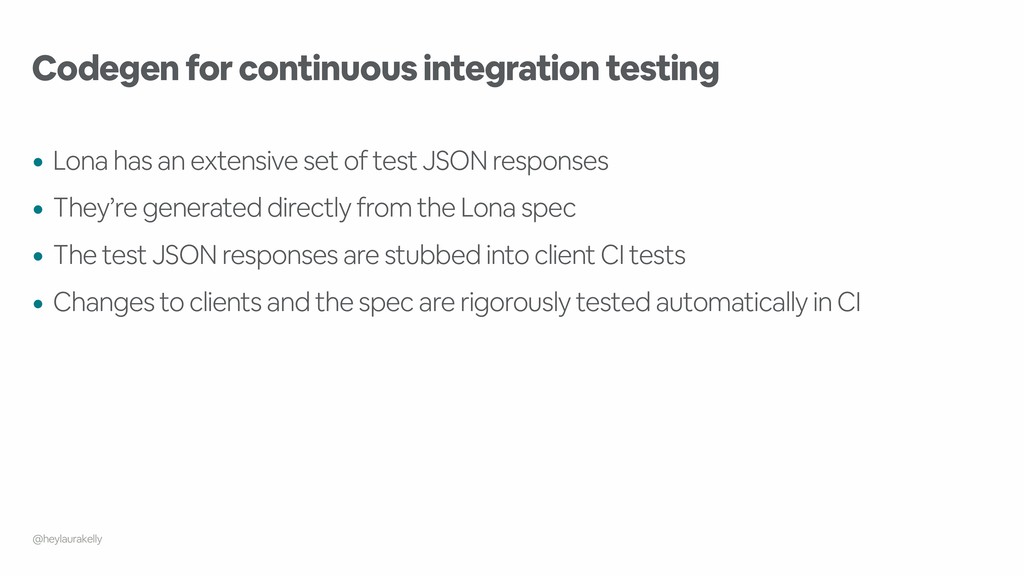
• They’re generated directly from the Lona spec • The test JSON responses are stubbed into client CI tests • Changes to clients and the spec are rigorously tested automatically in CI Codegen for continuous integration testing @heylaurakelly
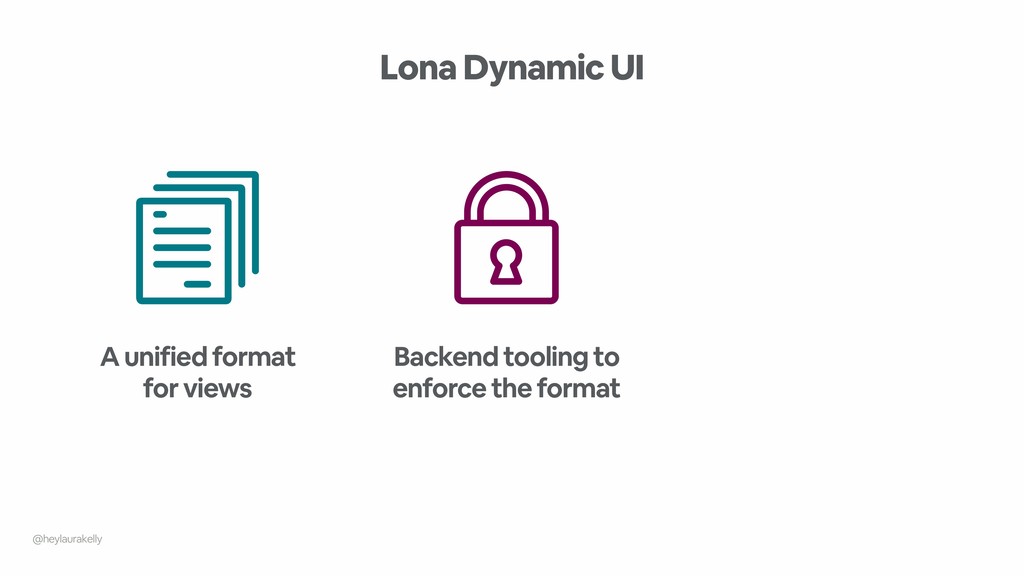
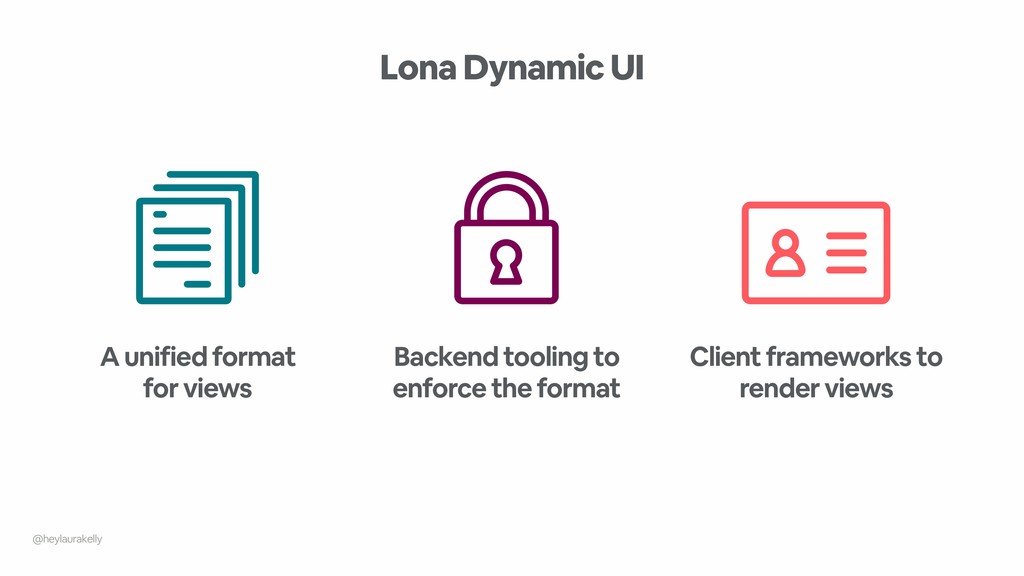
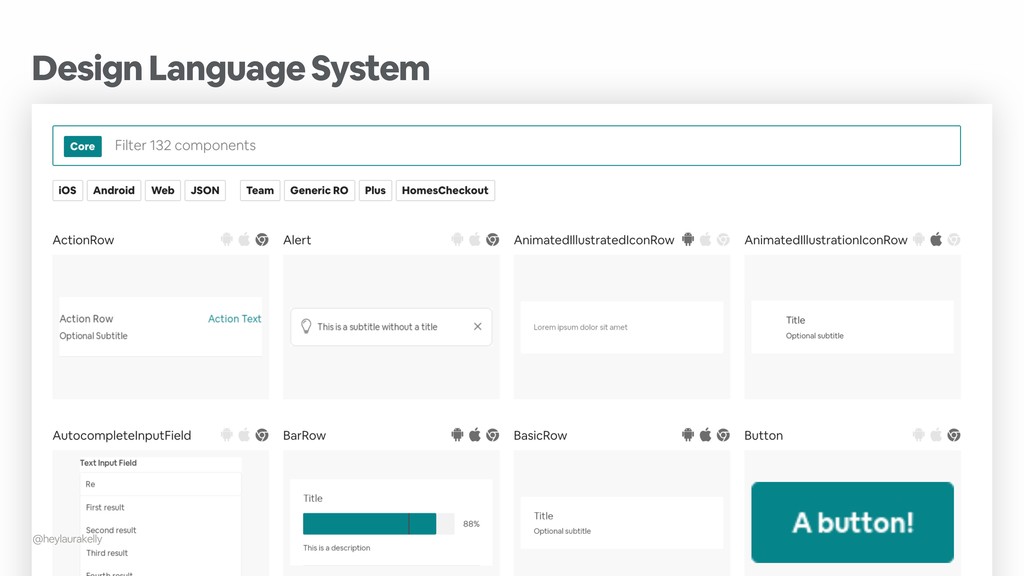
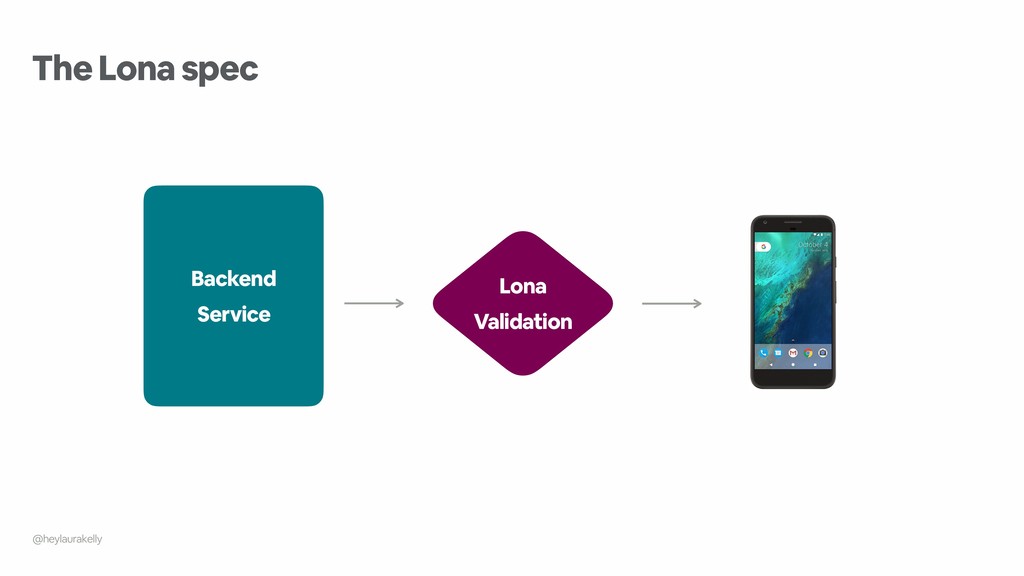
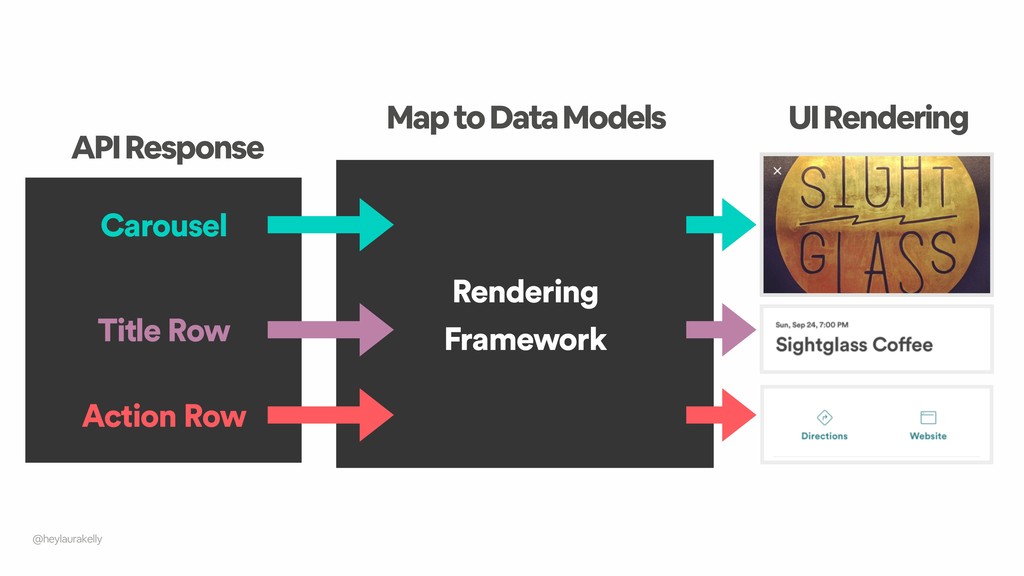
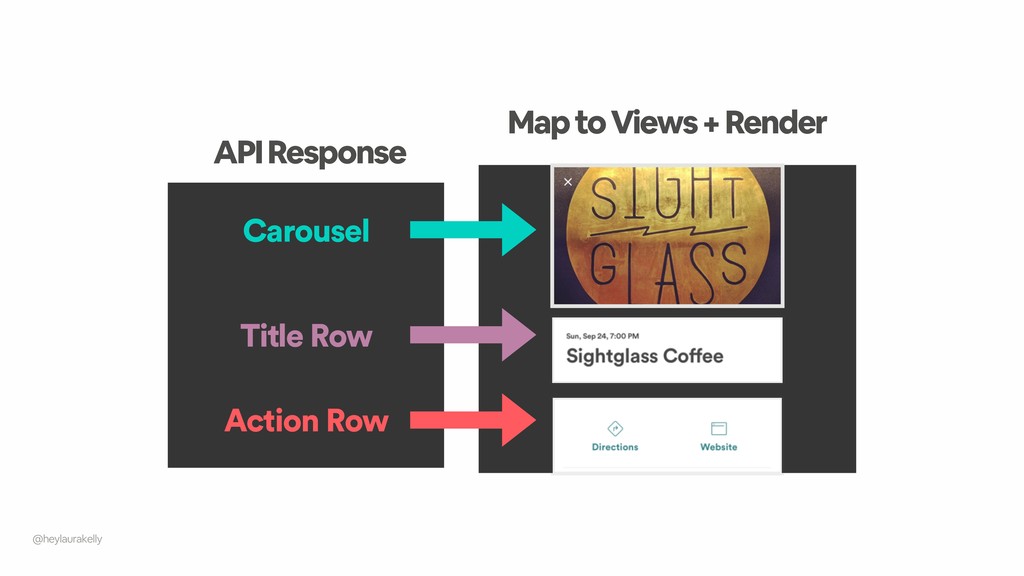
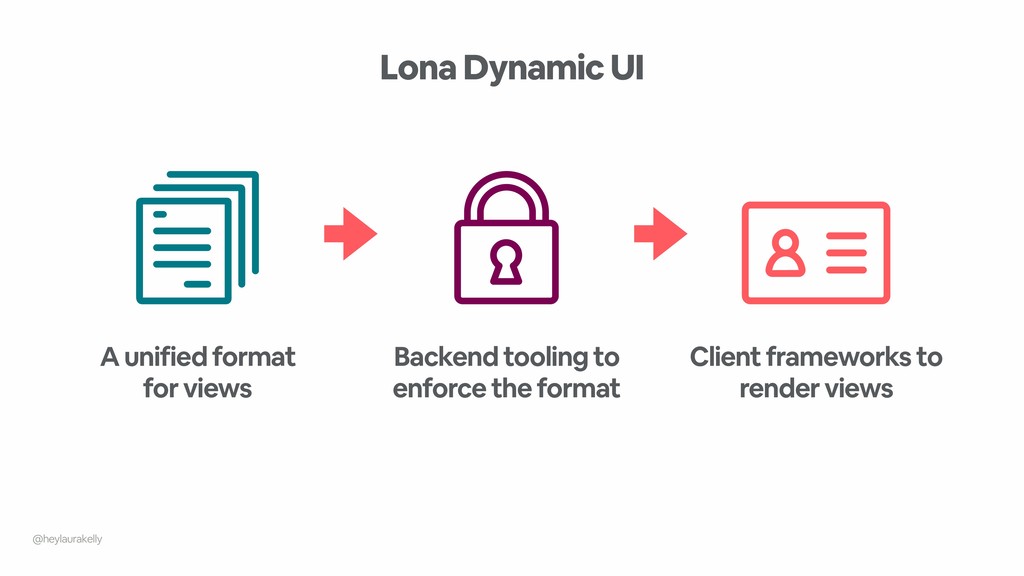
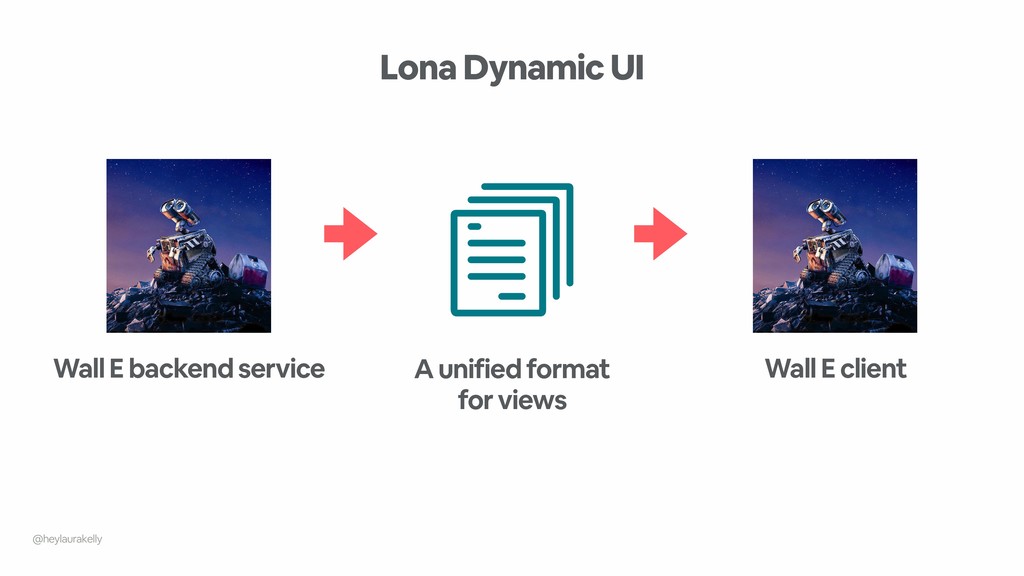
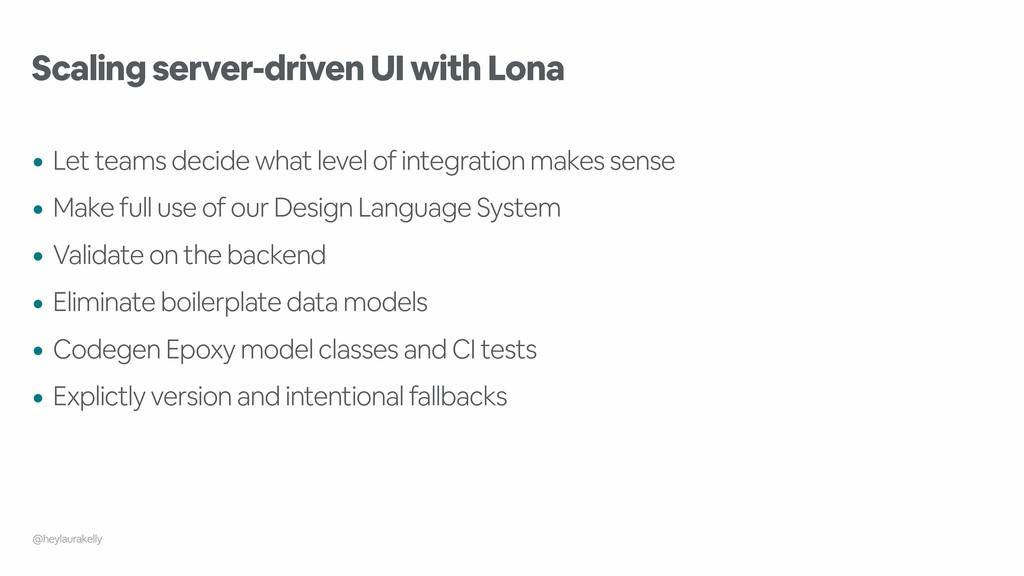
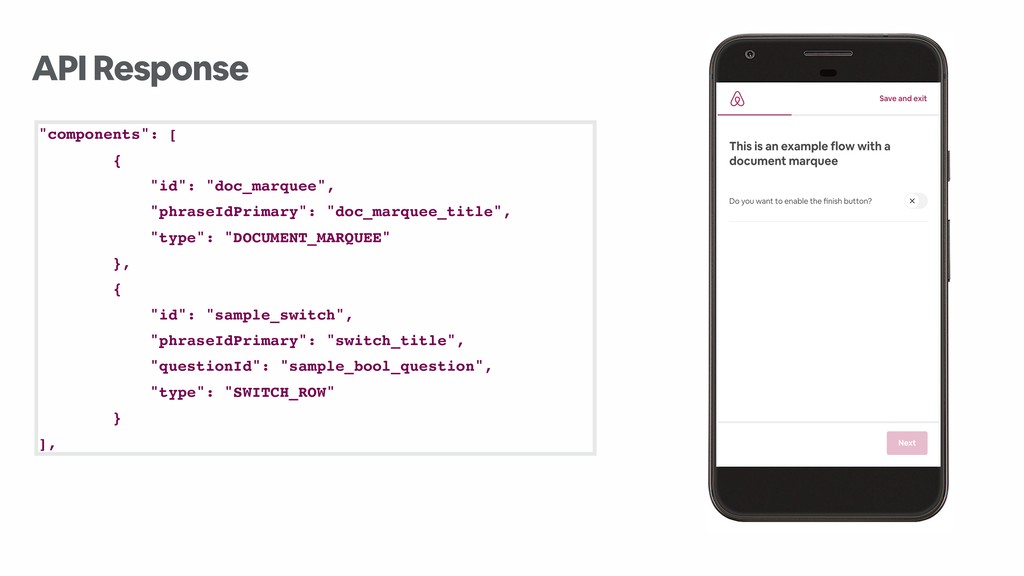
• Make full use of our Design Language System • Validate on the backend • Eliminate boilerplate data models • Codegen Epoxy model classes and CI tests • Explictly version and intentional fallbacks Scaling server-driven UI with Lona @heylaurakelly


 laurakelly
 codmoninc
 fespinoza
 ufried
 harutiro
 kairim0
 mtpooh
 cogakira
 naruoga
 takanorip
 ykagano
 keeg
keeg
.png) codatum
codatum
 jacobtomlinson
 emna__ayadi
 mfonobong
 reverentgeek
 madoxten
 davidcarrasco
 inesmontani
.jpg) cargoodrich
cargoodrich
 iamctodd
 smashingmag
 ianozsvald
 chrislema





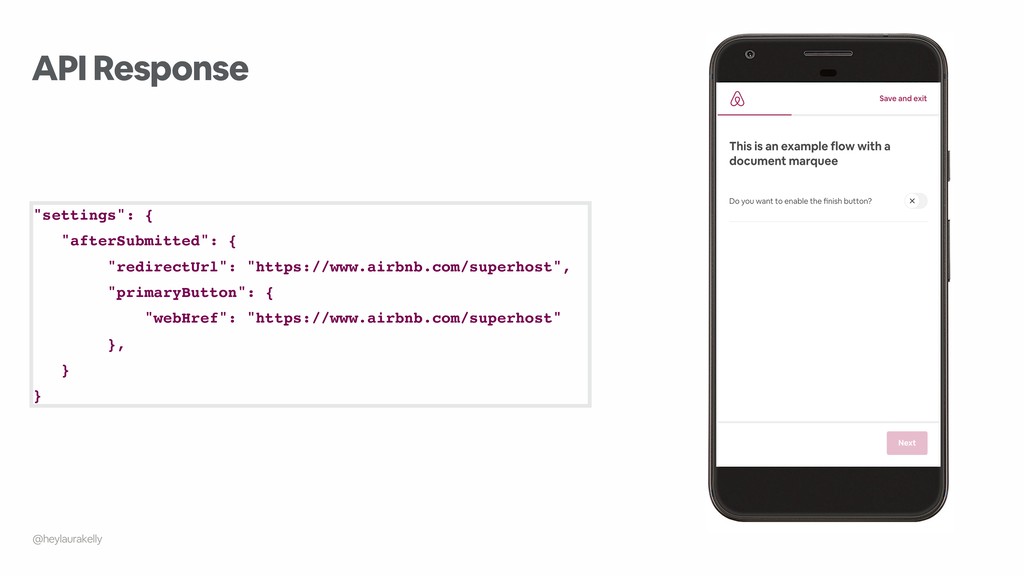
![API Response "steps": [ { "componentIds": [ "doc_marquee", "sample_switch" ],](https://files.speakerdeck.com/presentations/0667cb16a614450586d6df689fee02af/slide_85.jpg)