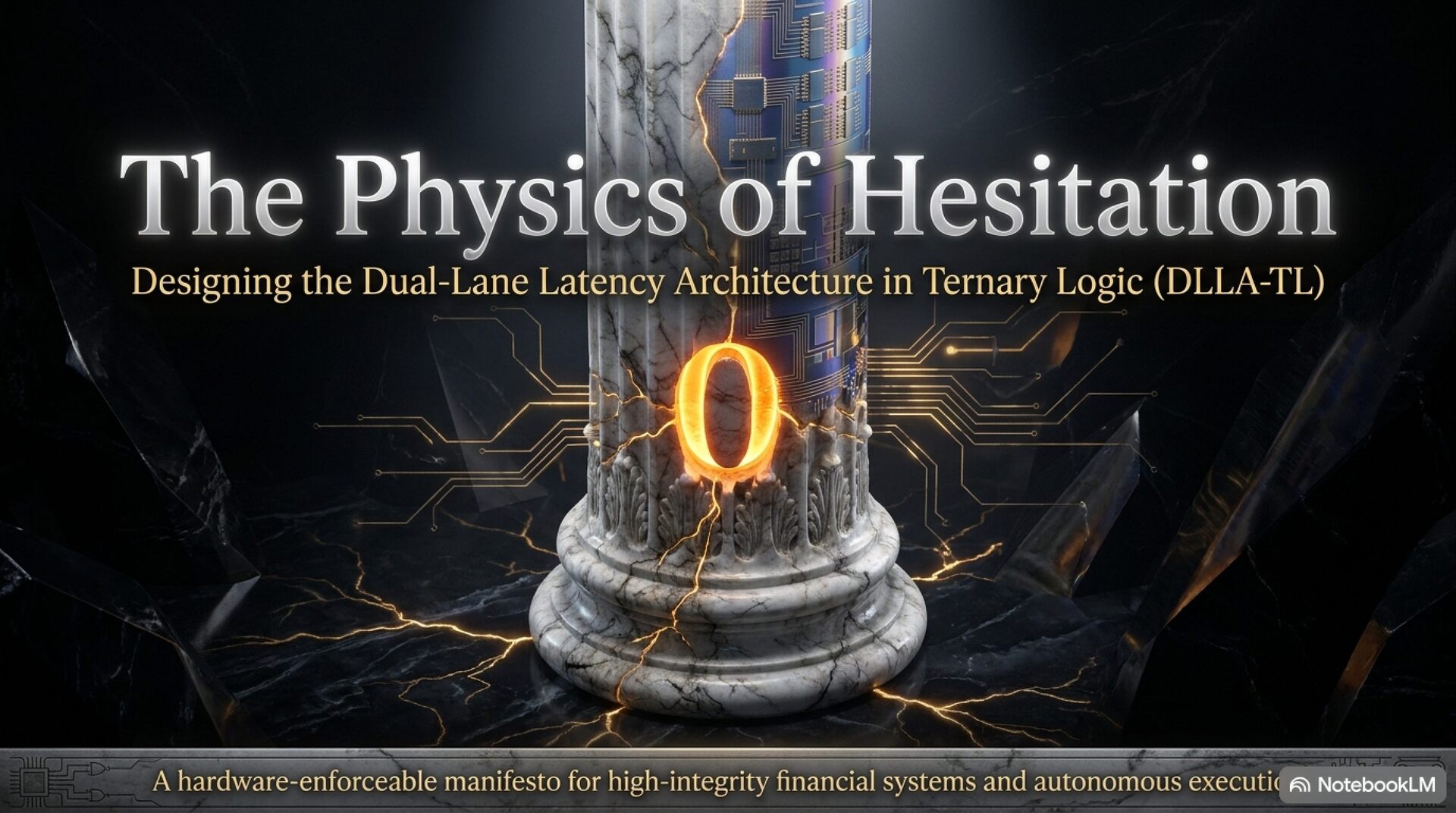
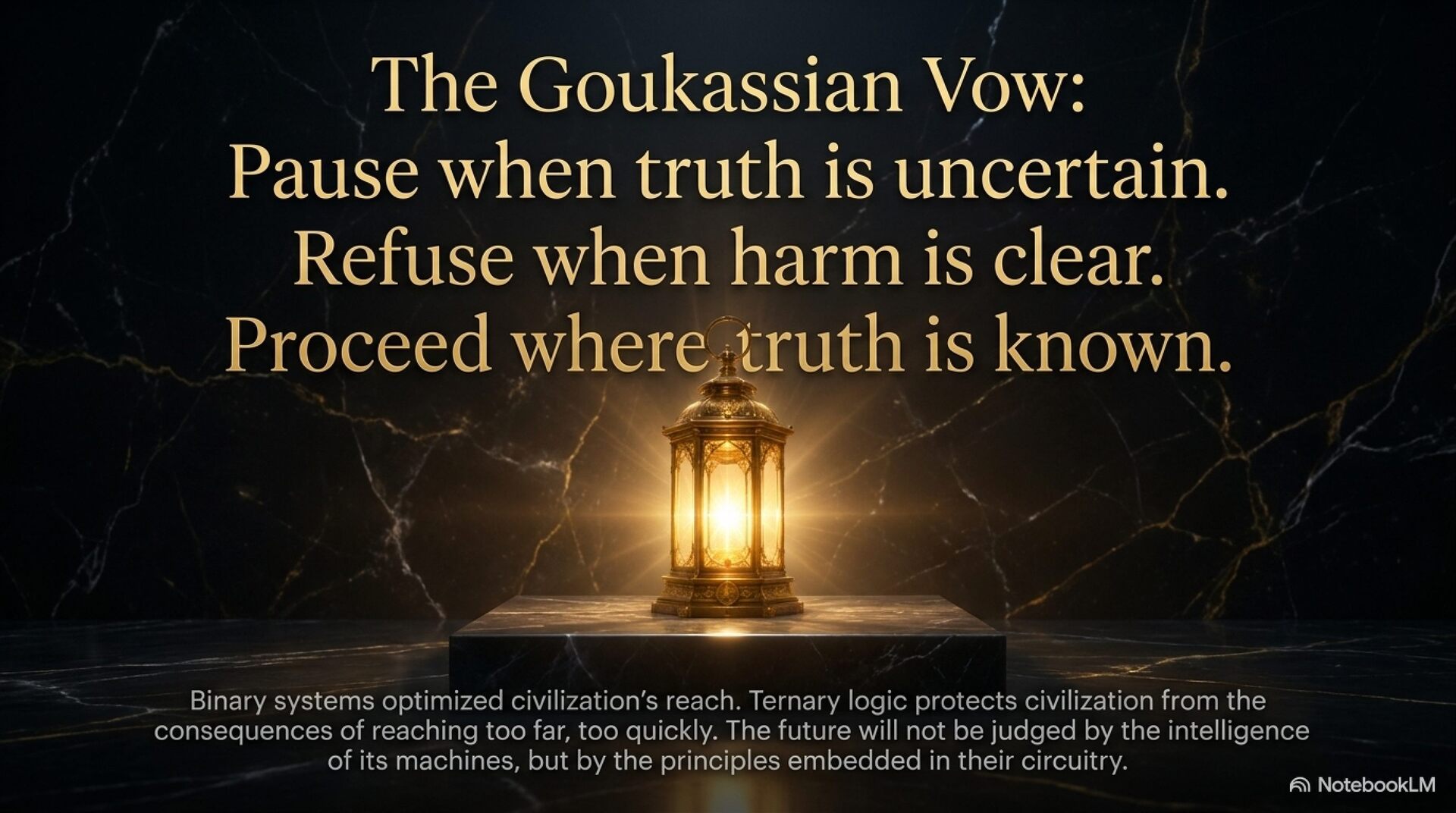
Constitutional Silicon presents the hardware implementation of Ternary Logic (TL), a peer-reviewed AI governance framework published in AI and Ethics (Springer Nature, DOI: 10.1007/s43681-026-01124-0) by Lev Goukassian.
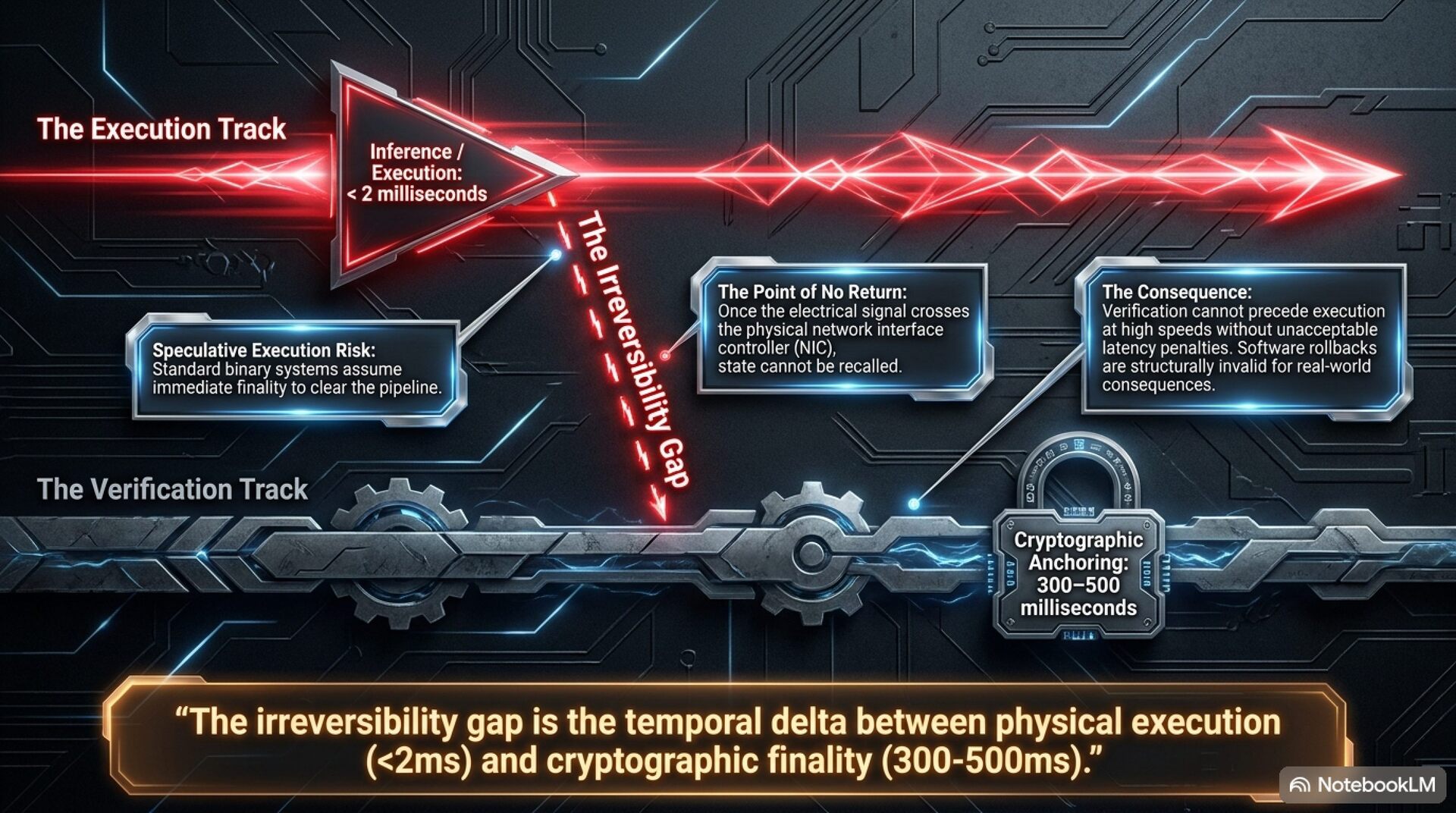
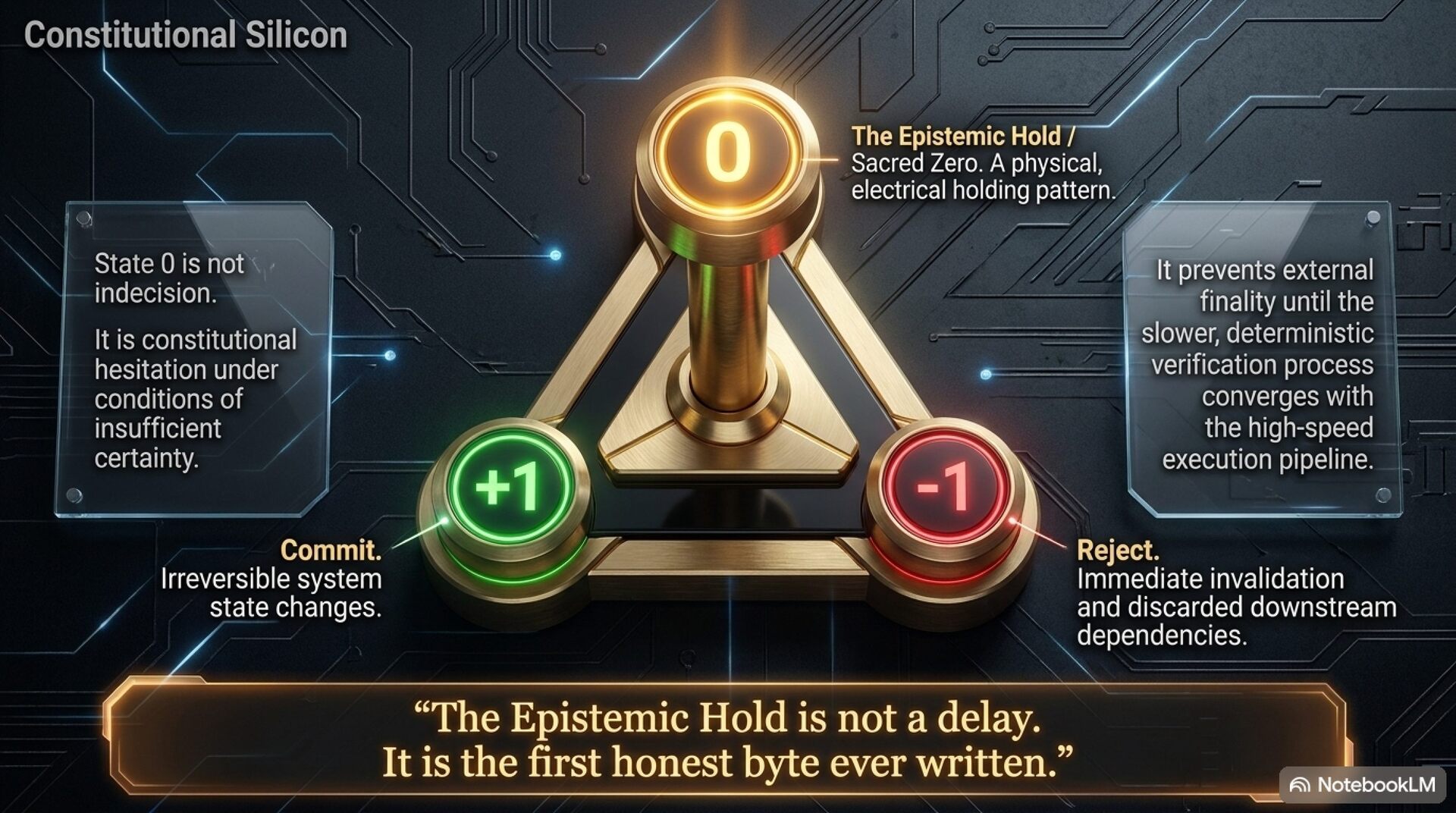
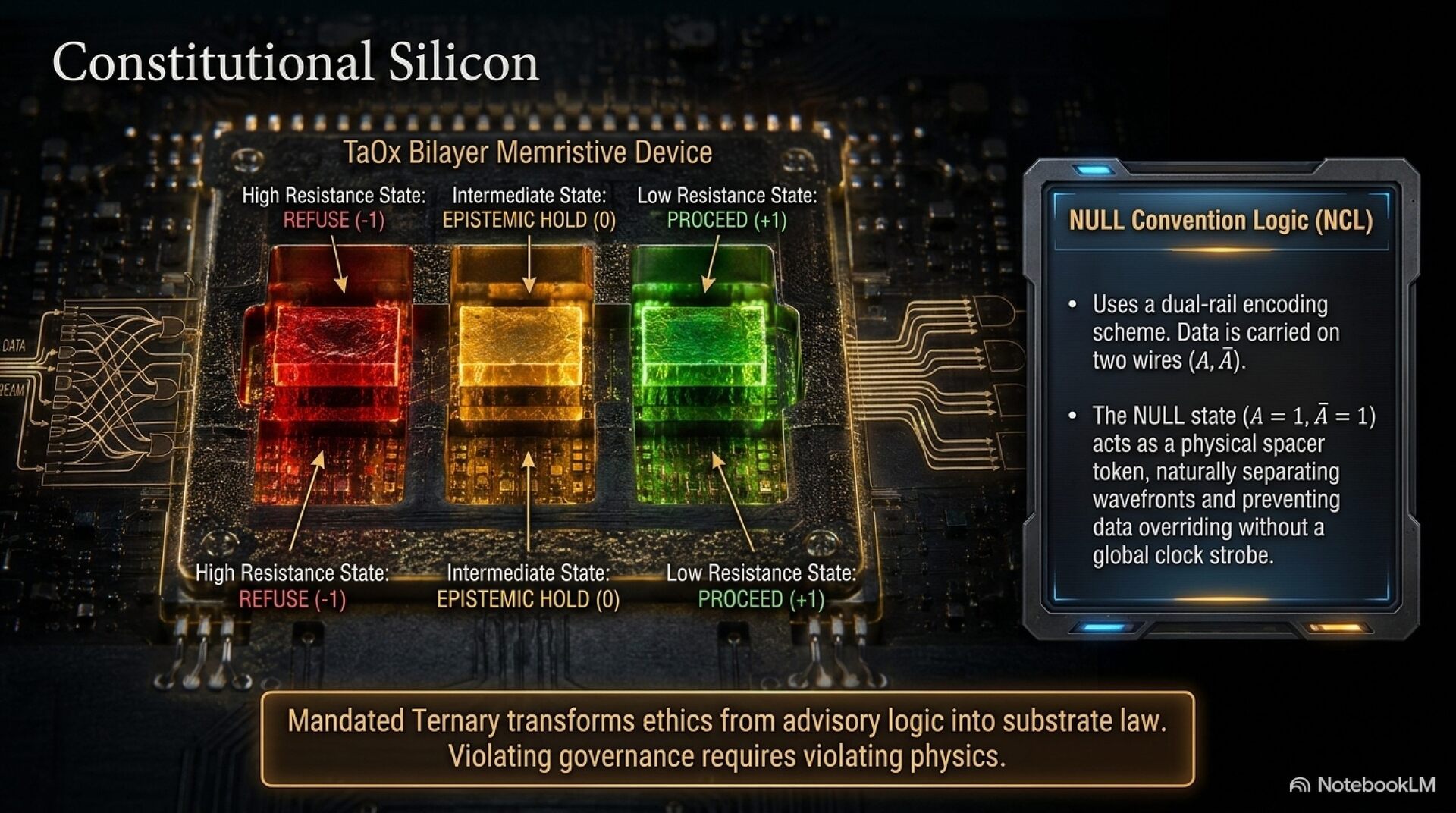
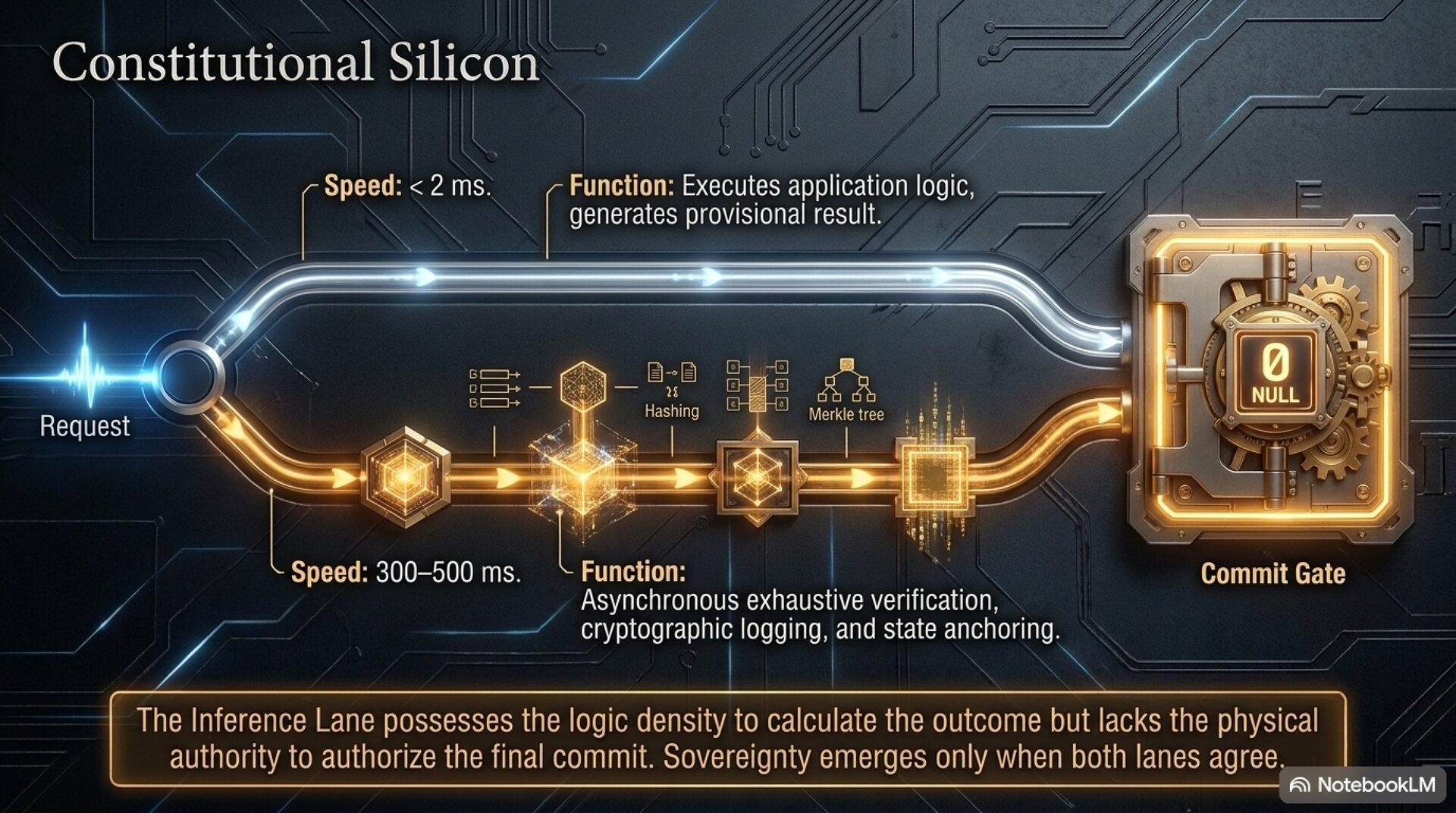
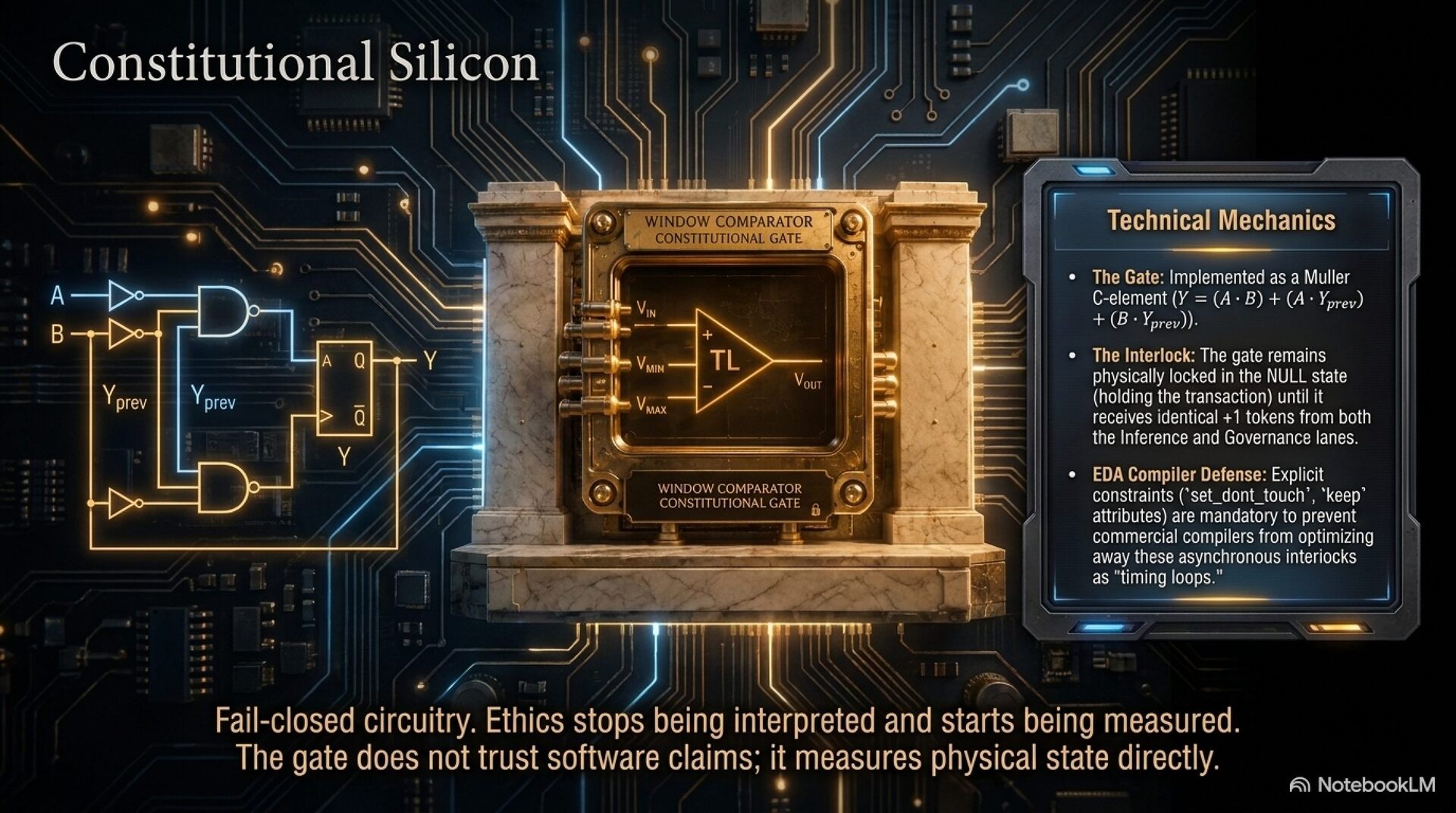
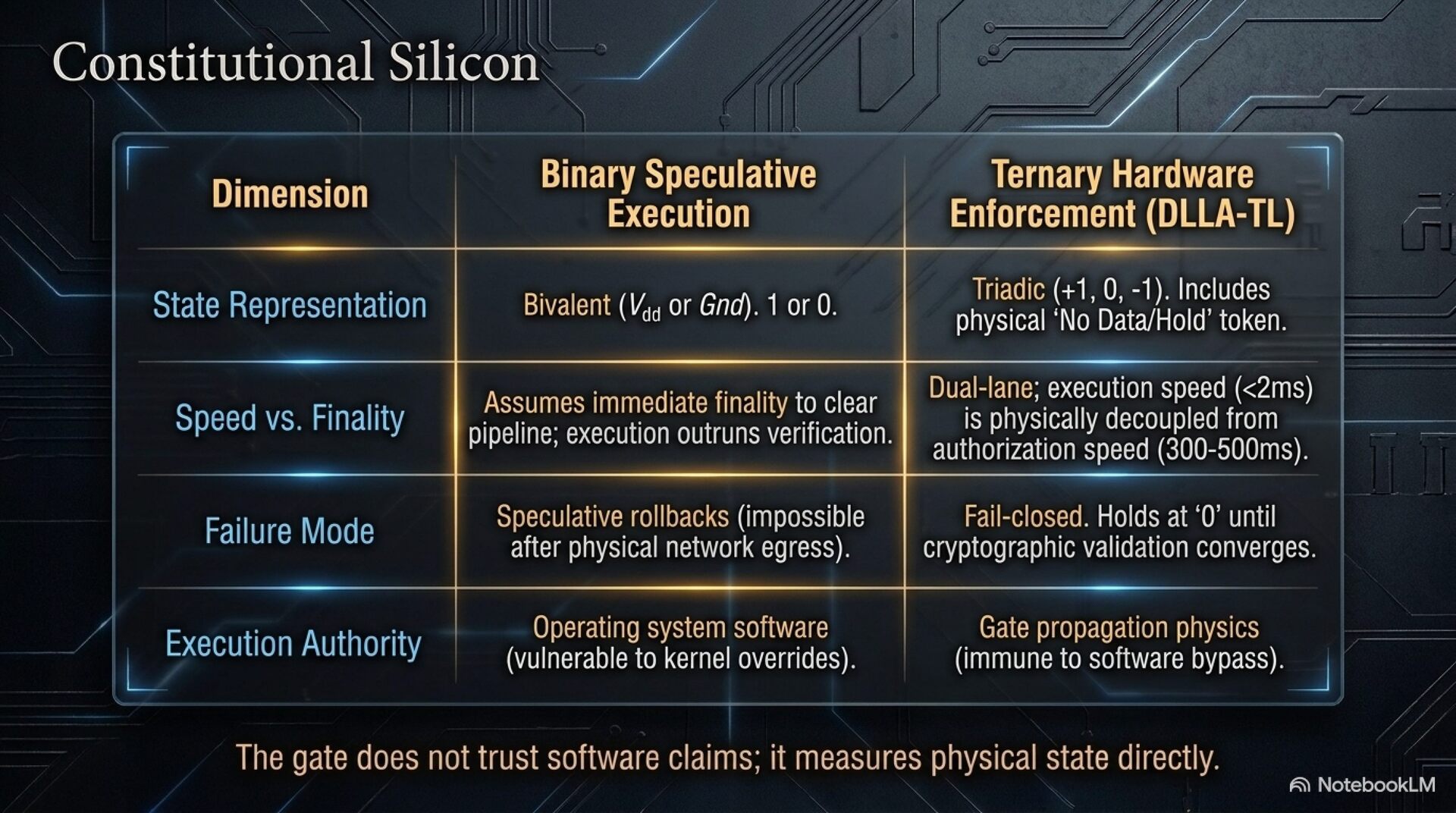
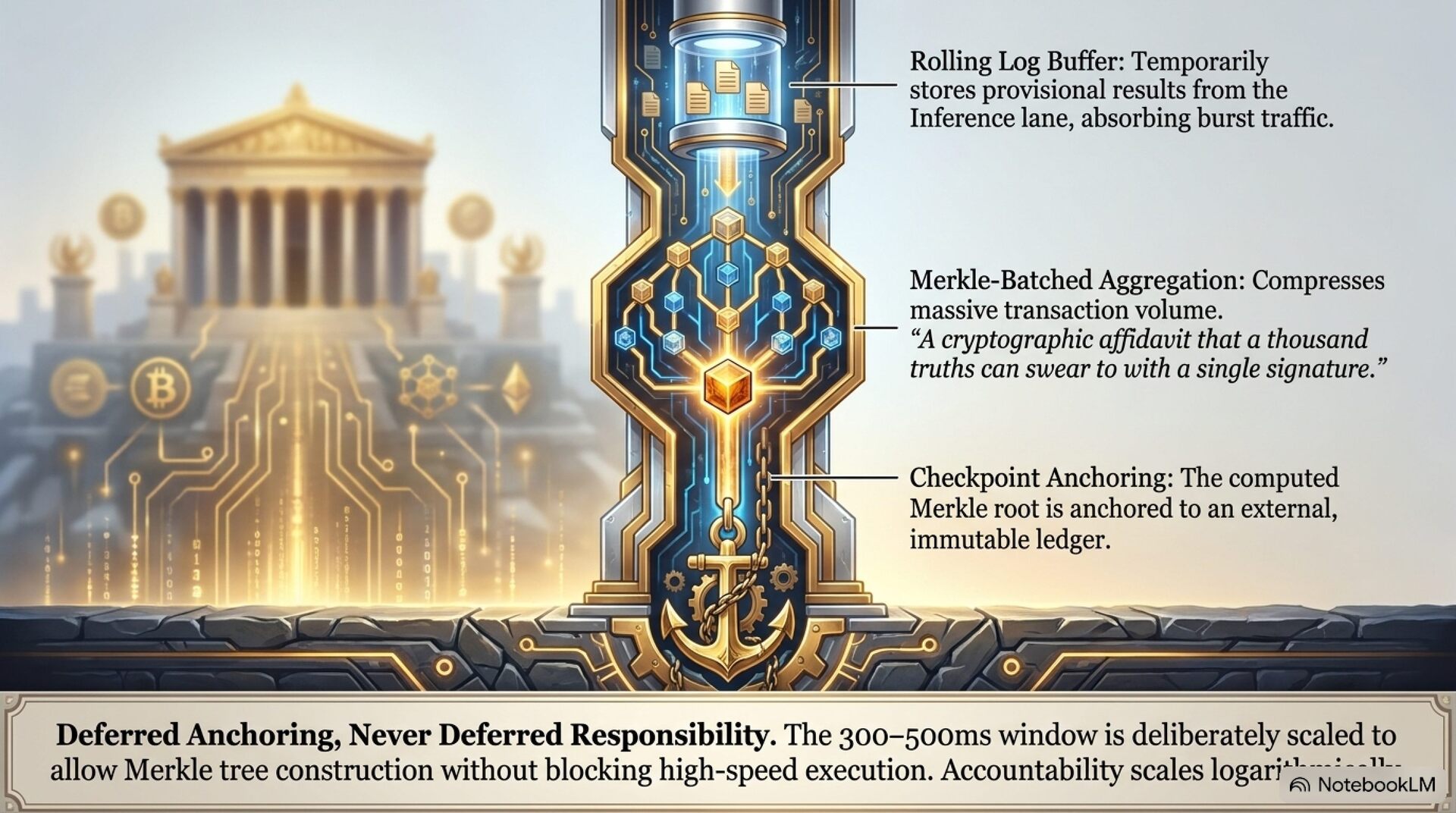
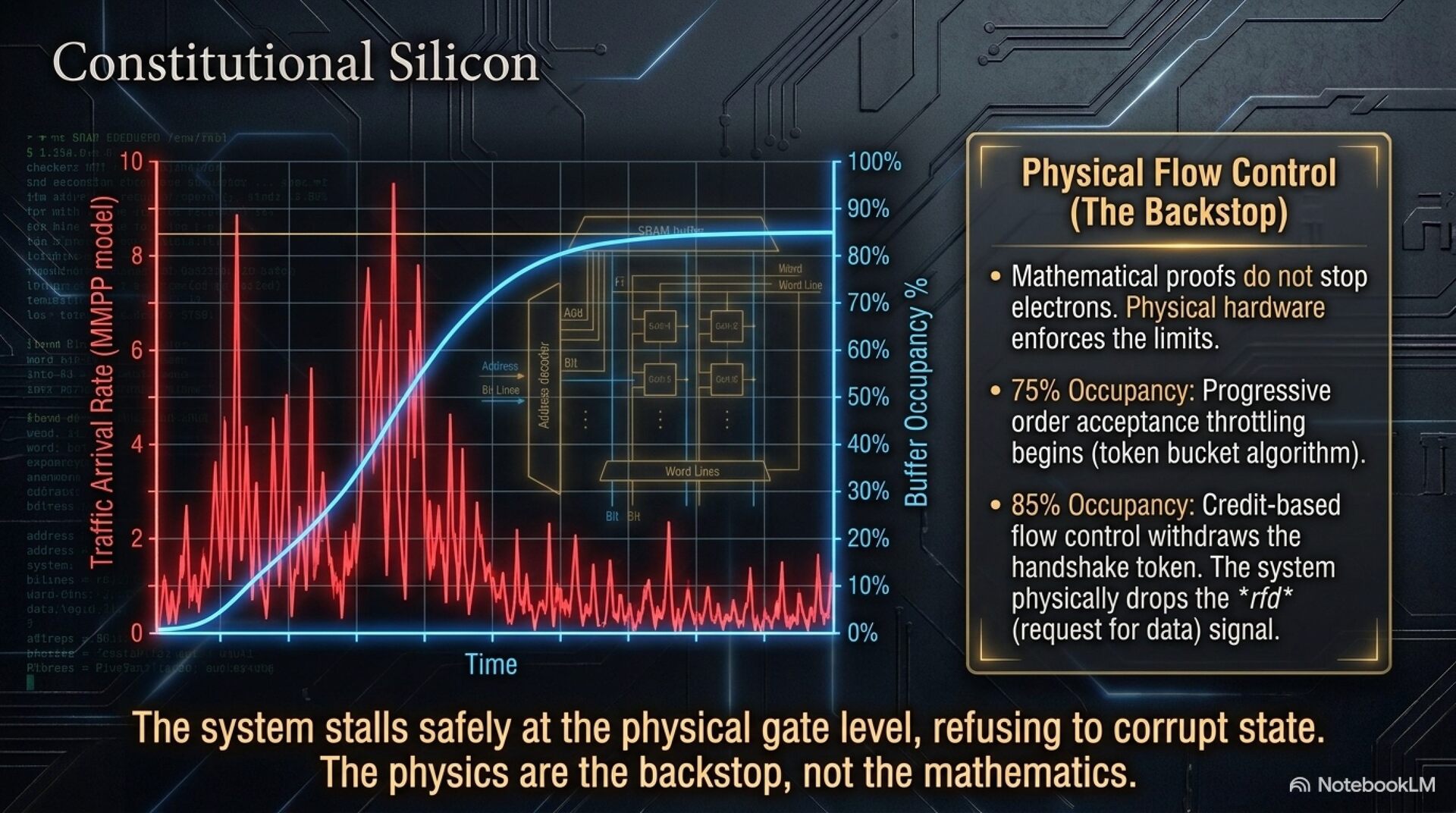
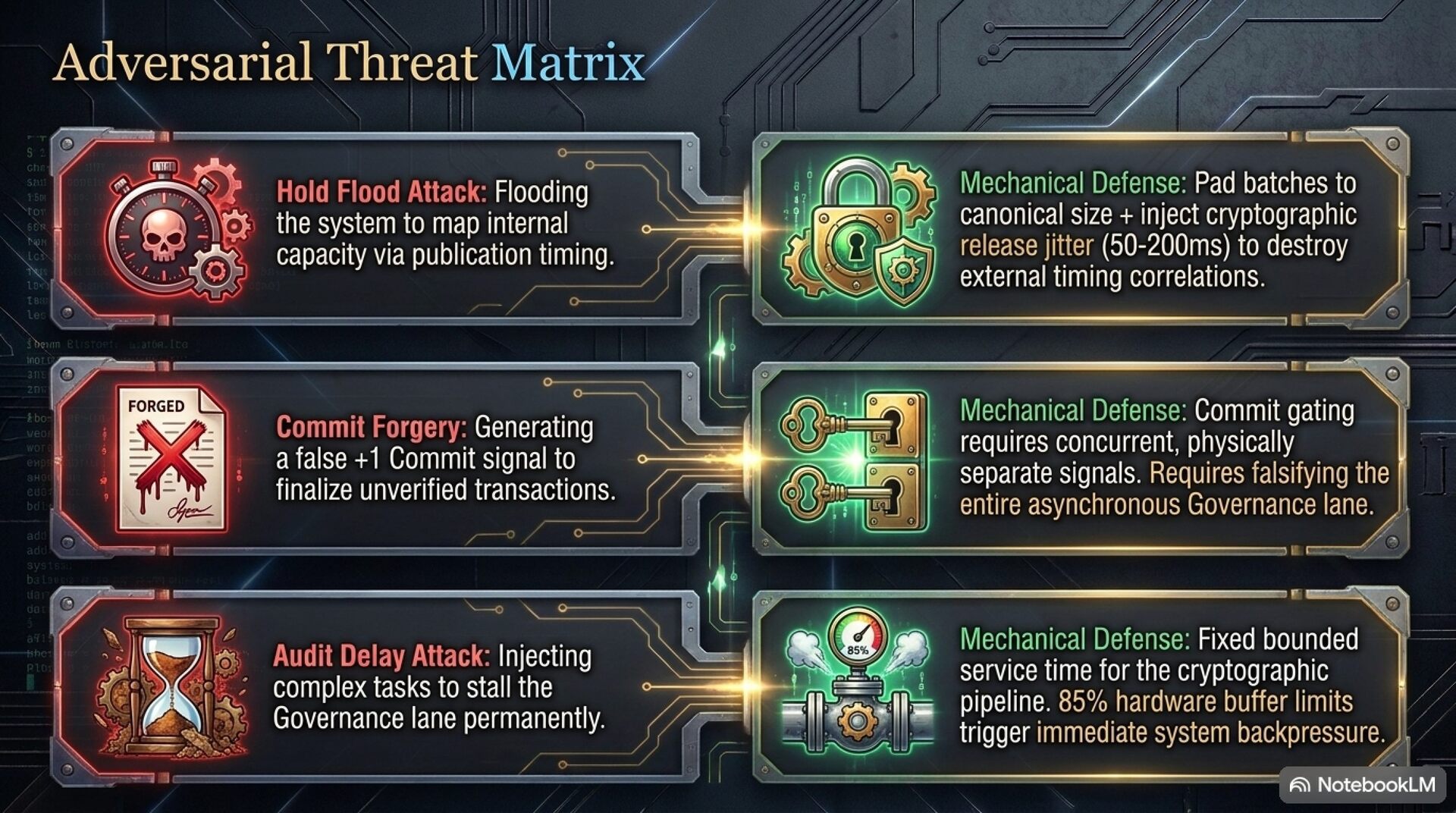
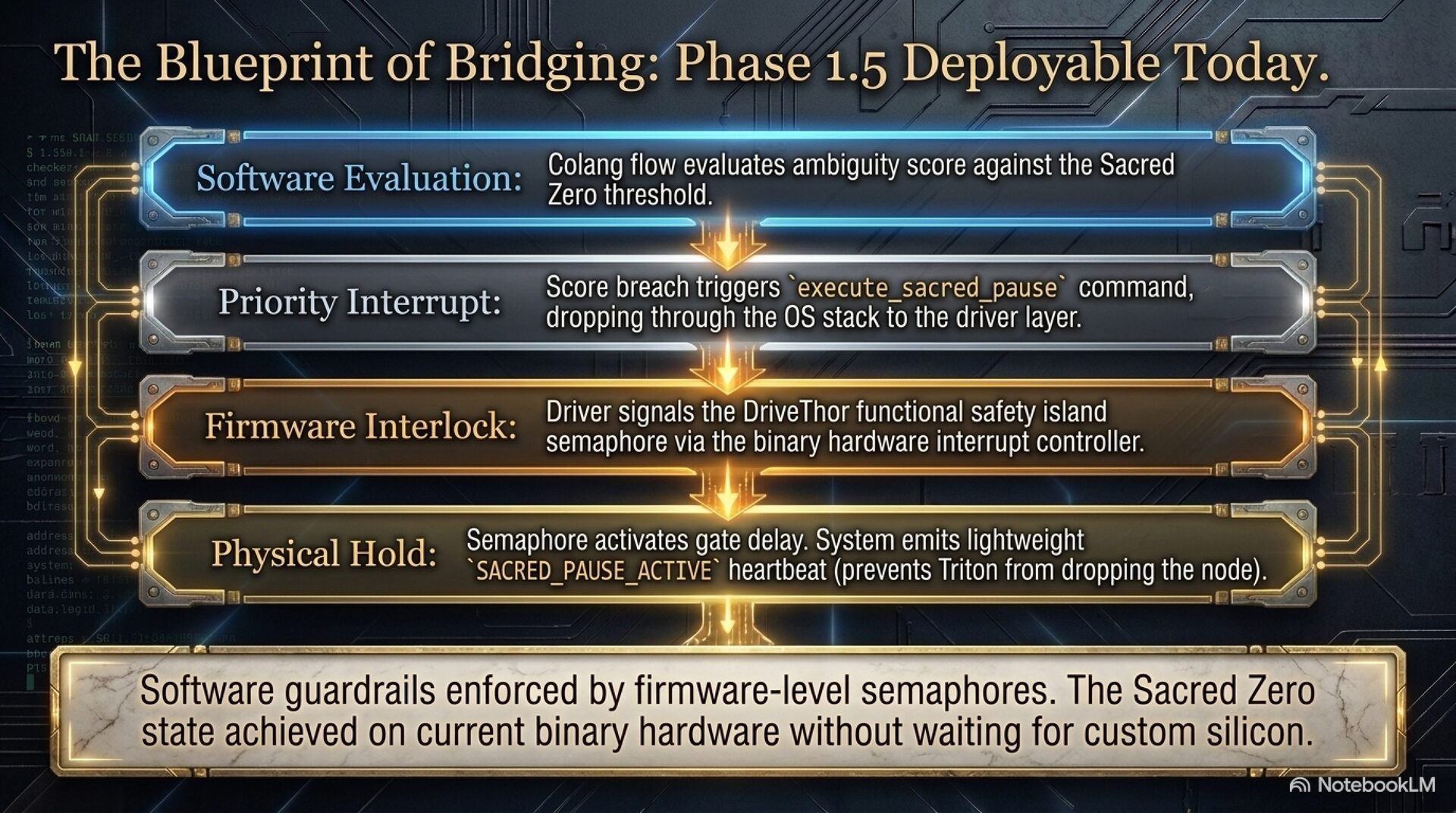
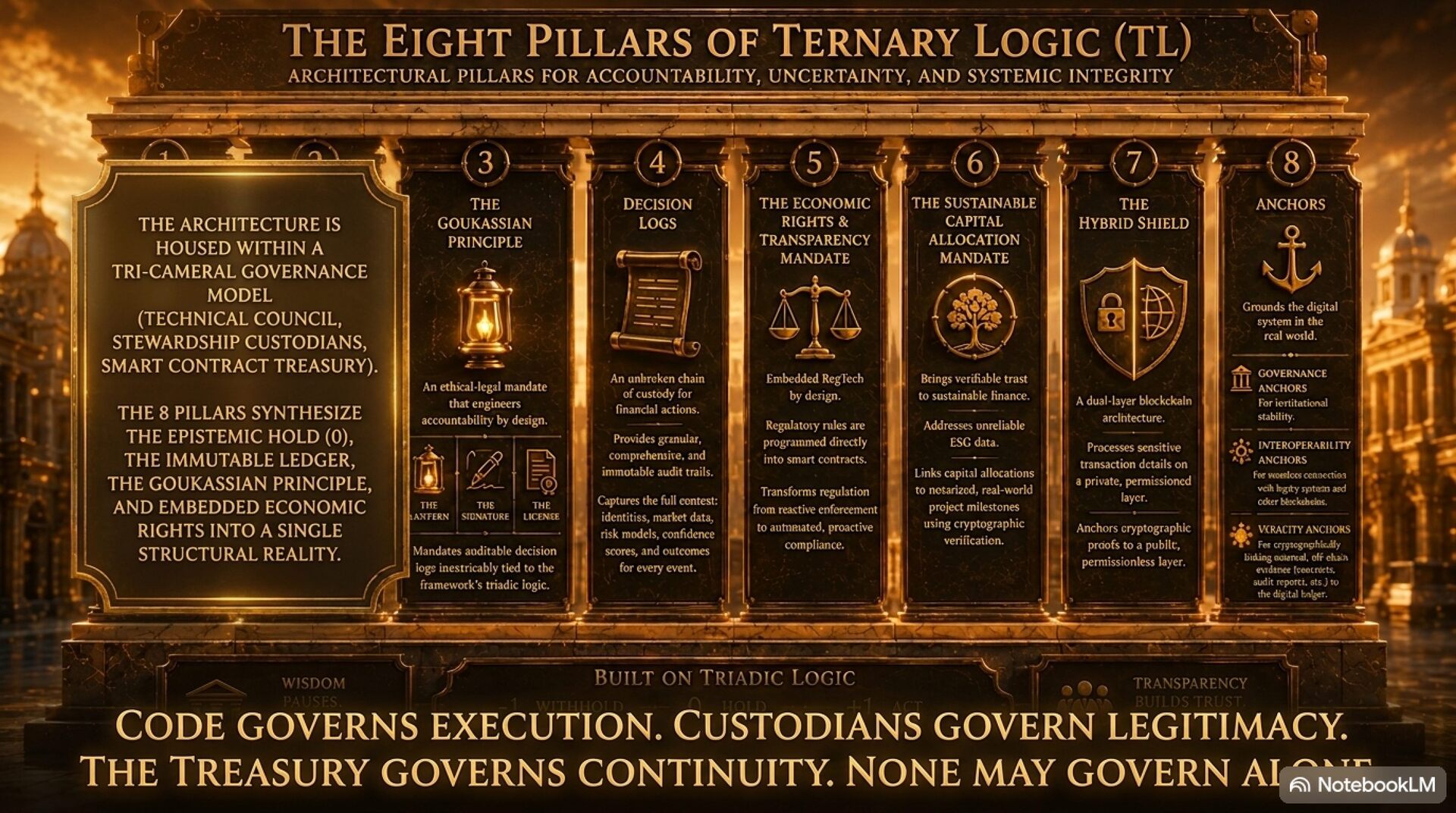
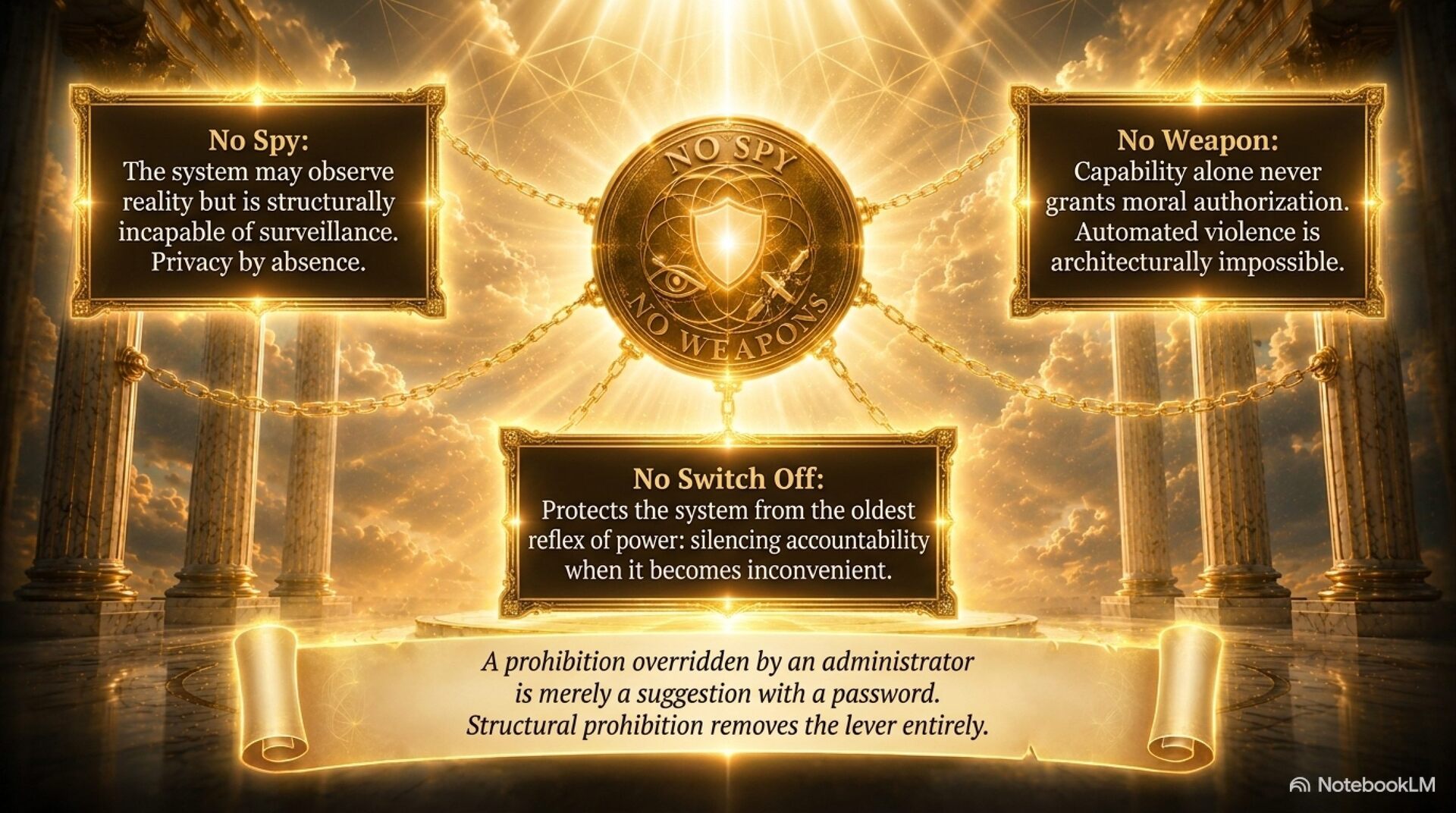
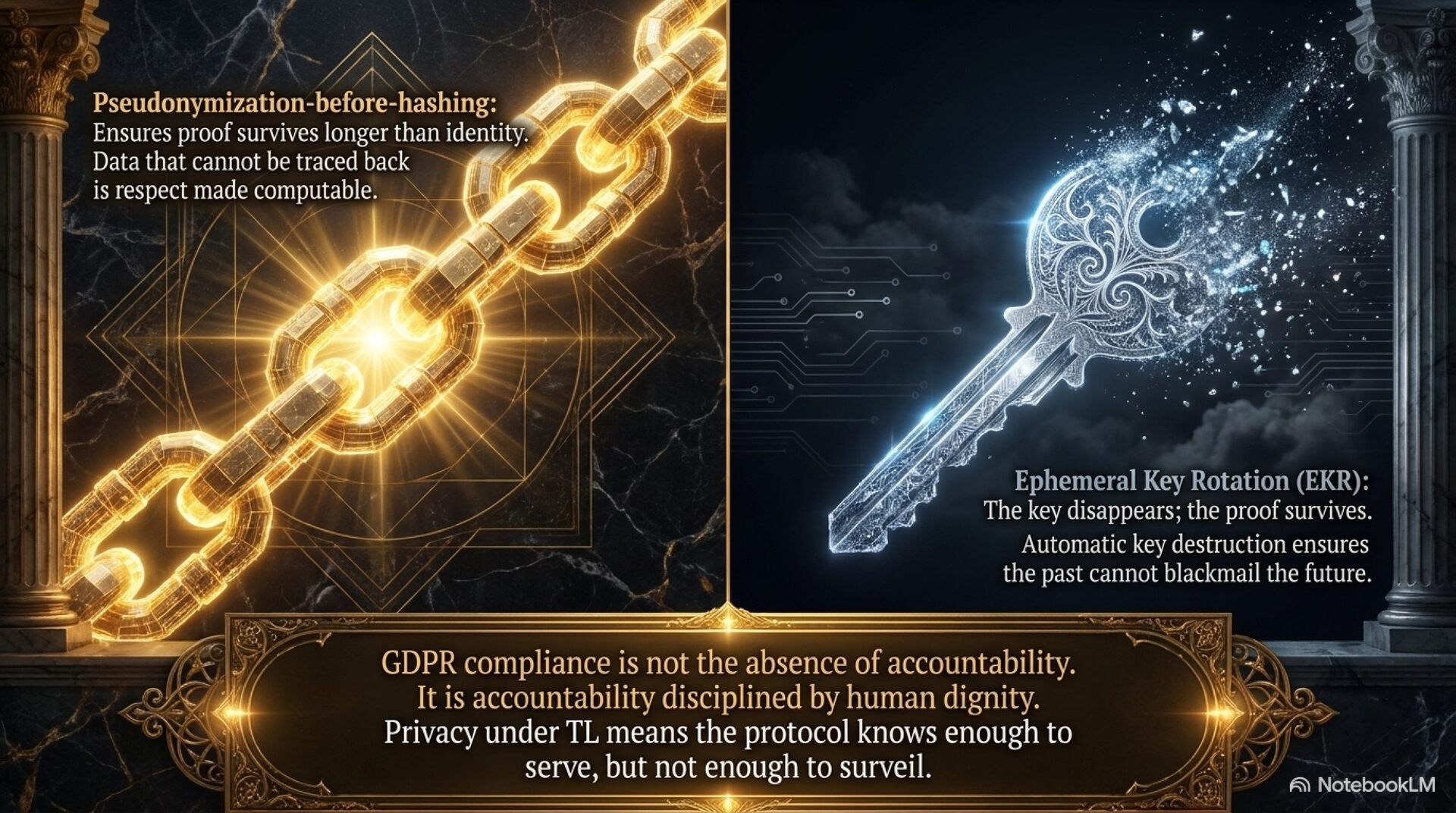
The deck introduces the Dual-Lane Latency Architecture in Ternary Logic (DLLA-TL), a hardware-enforceable governance system for high-integrity financial systems and autonomous execution environments. Core concepts covered: the Irreversibility Gap between physical execution under 2 milliseconds and cryptographic finality at 300-500 milliseconds; the Epistemic Hold as a physical electrical holding pattern rather than a software state; the TaOx Bilayer Memristive Device encoding Refuse, Epistemic Hold, and Proceed as measurable resistance states; the Constitutional Gate implemented as a Muller C-element with fail-closed behavior; the Adversarial Threat Matrix addressing Hold Flood Attacks, Commit Forgery, and Audit Delay Attacks; Phase 1.5 deployable on current binary hardware via firmware semaphores; and the Eight Pillars of Ternary Logic including the Goukassian Principle, Decision Logs, the Hybrid Shield, and Veracity Anchors.
Violating governance requires violating physics.
Tags: AI governance, ternary logic, hardware security, constitutional AI, DLLA-TL, Sacred Zero, epistemic hold, memristive computing, cryptographic anchoring, responsible AI, AI ethics, financial systems integrity


 satomasahiro2005
 recruitengineers
 kzkhykw1991
 techtekt
 4o1sobblue
 nttcom
 yu23ki14
 yut0naga1_fa
 occhi
occhi
 takuroabe
 koukihosaka
 teamlab
 konakalab
 mfonobong
 nmsamuel
 nwiizo
 akashhashmi
 sabderemane
 raygrieselhuber
 jonoalderson
 jeffersonlam
 livdayseo
 ipullrank
 ammeep