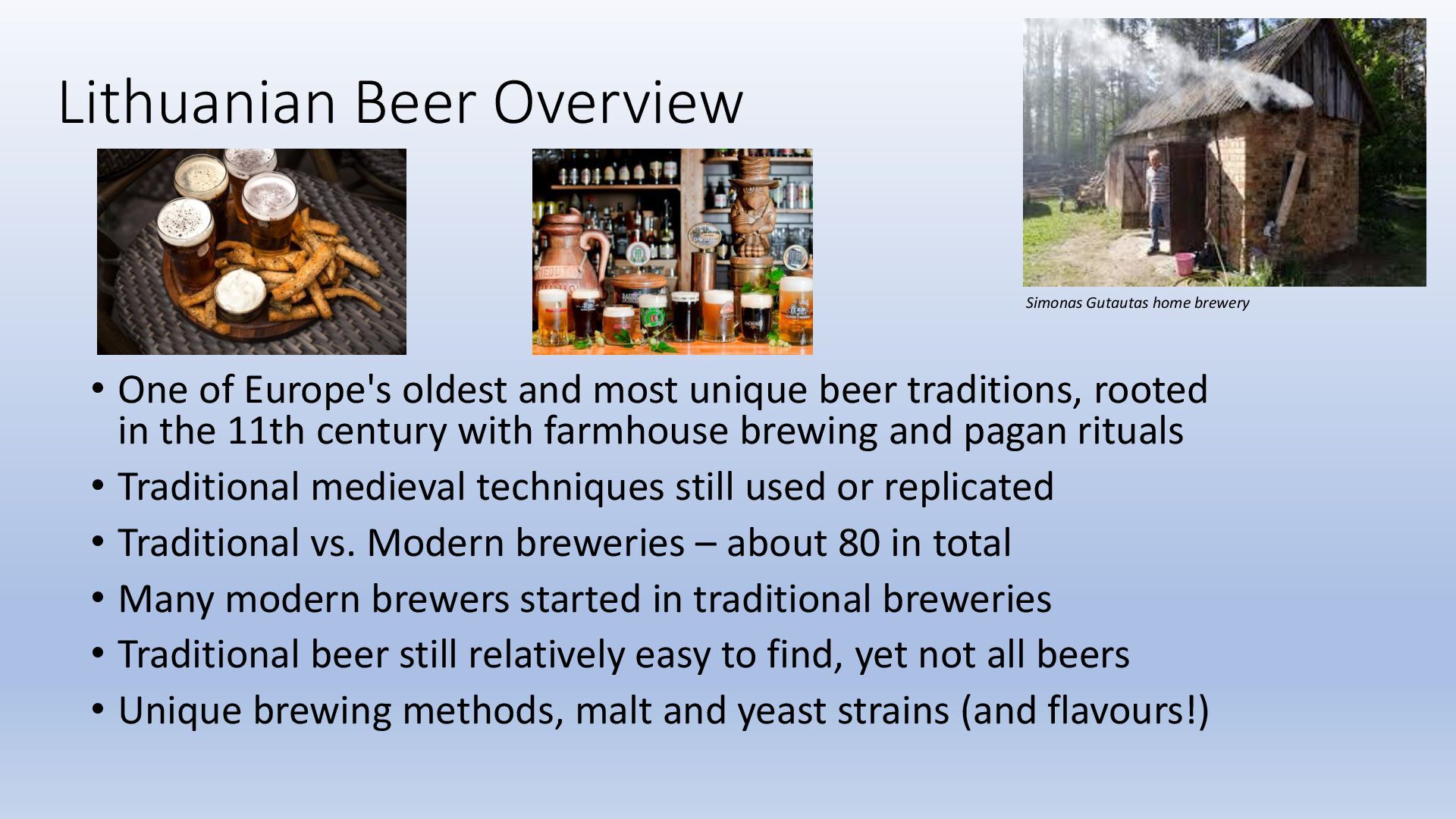
unique beer traditions, rooted in the 11th century with farmhouse brewing and pagan rituals • Traditional medieval techniques still used or replicated • Traditional vs. Modern breweries – about 80 in total • Many modern brewers started in traditional breweries • Traditional beer still relatively easy to find, yet not all beers • Unique brewing methods, malt and yeast strains (and flavours!) Simonas Gutautas home brewery
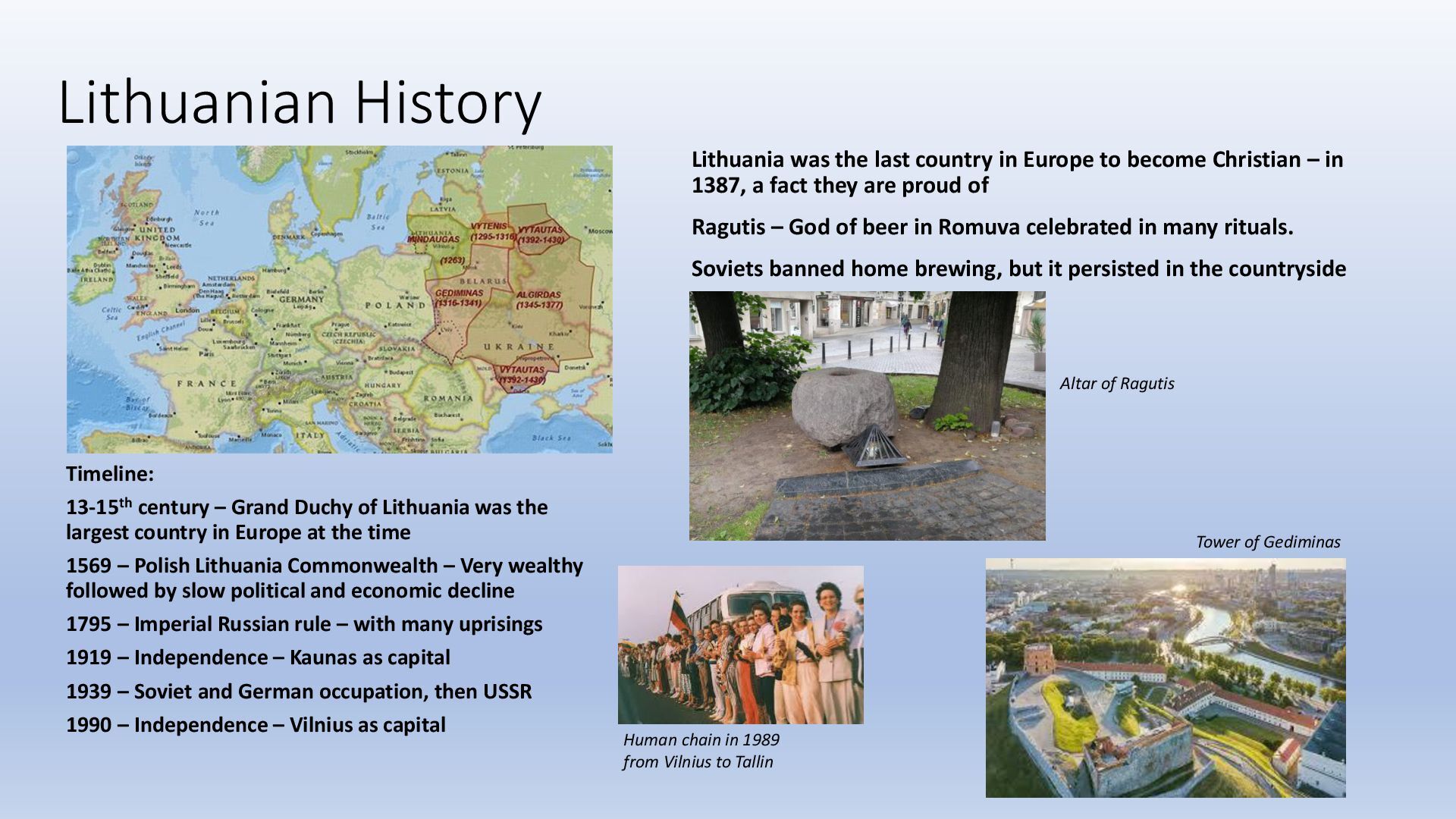
was the largest country in Europe at the time 1569 – Polish Lithuania Commonwealth – Very wealthy followed by slow political and economic decline 1795 – Imperial Russian rule – with many uprisings 1919 – Independence – Kaunas as capital 1939 – Soviet and German occupation, then USSR 1990 – Independence – Vilnius as capital Lithuania was the last country in Europe to become Christian – in 1387, a fact they are proud of Ragutis – God of beer in Romuva celebrated in many rituals. Soviets banned home brewing, but it persisted in the countryside Altar of Ragutis Tower of Gediminas Human chain in 1989 from Vilnius to Tallin
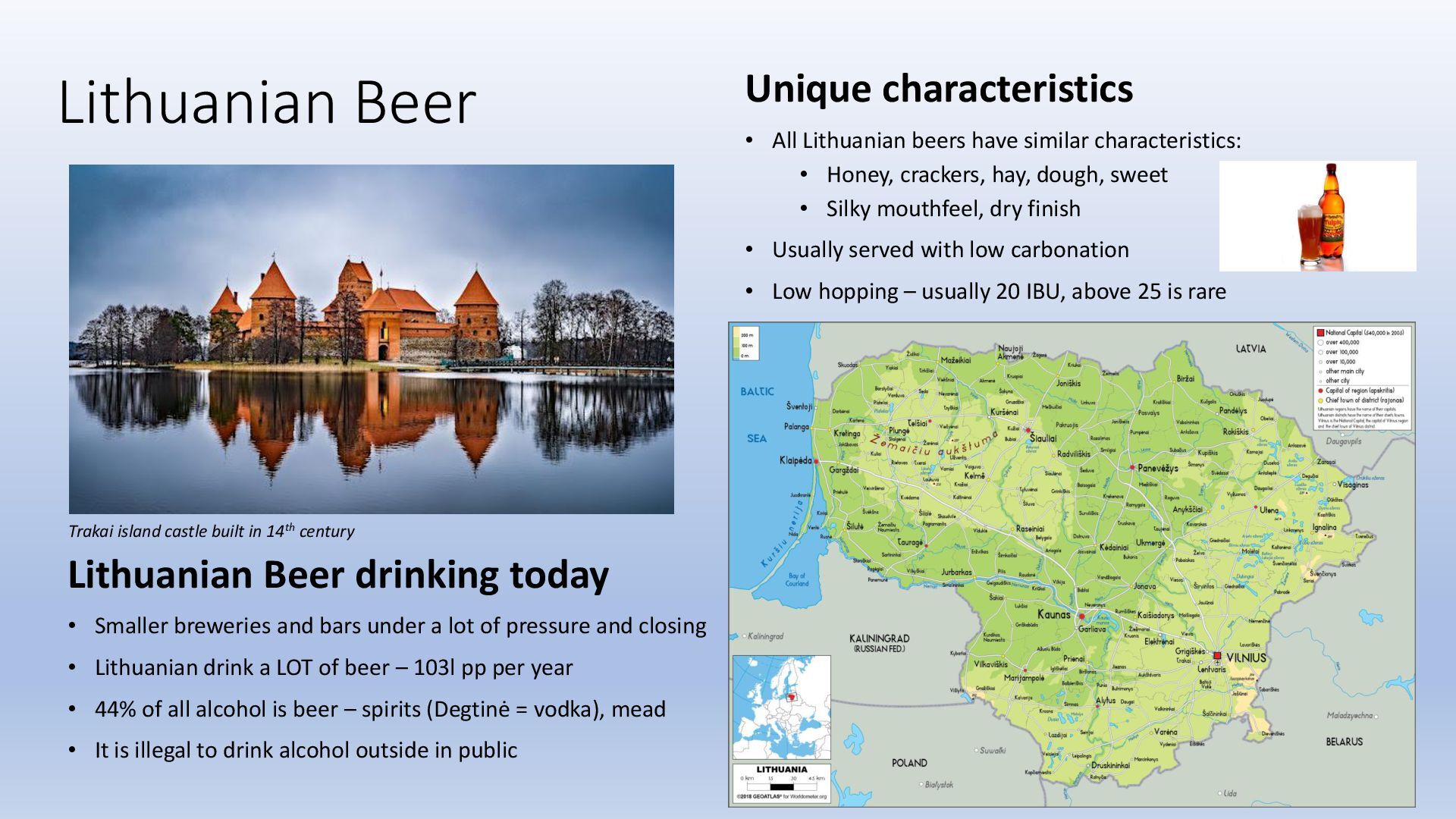
characteristics: • Honey, crackers, hay, dough, sweet • Silky mouthfeel, dry finish • Usually served with low carbonation • Low hopping – usually 20 IBU, above 25 is rare Lithuanian Beer drinking today • Smaller breweries and bars under a lot of pressure and closing • Lithuanian drink a LOT of beer – 103l pp per year • 44% of all alcohol is beer – spirits (Degtinė = vodka), mead • It is illegal to drink alcohol outside in public Trakai island castle built in 14th century
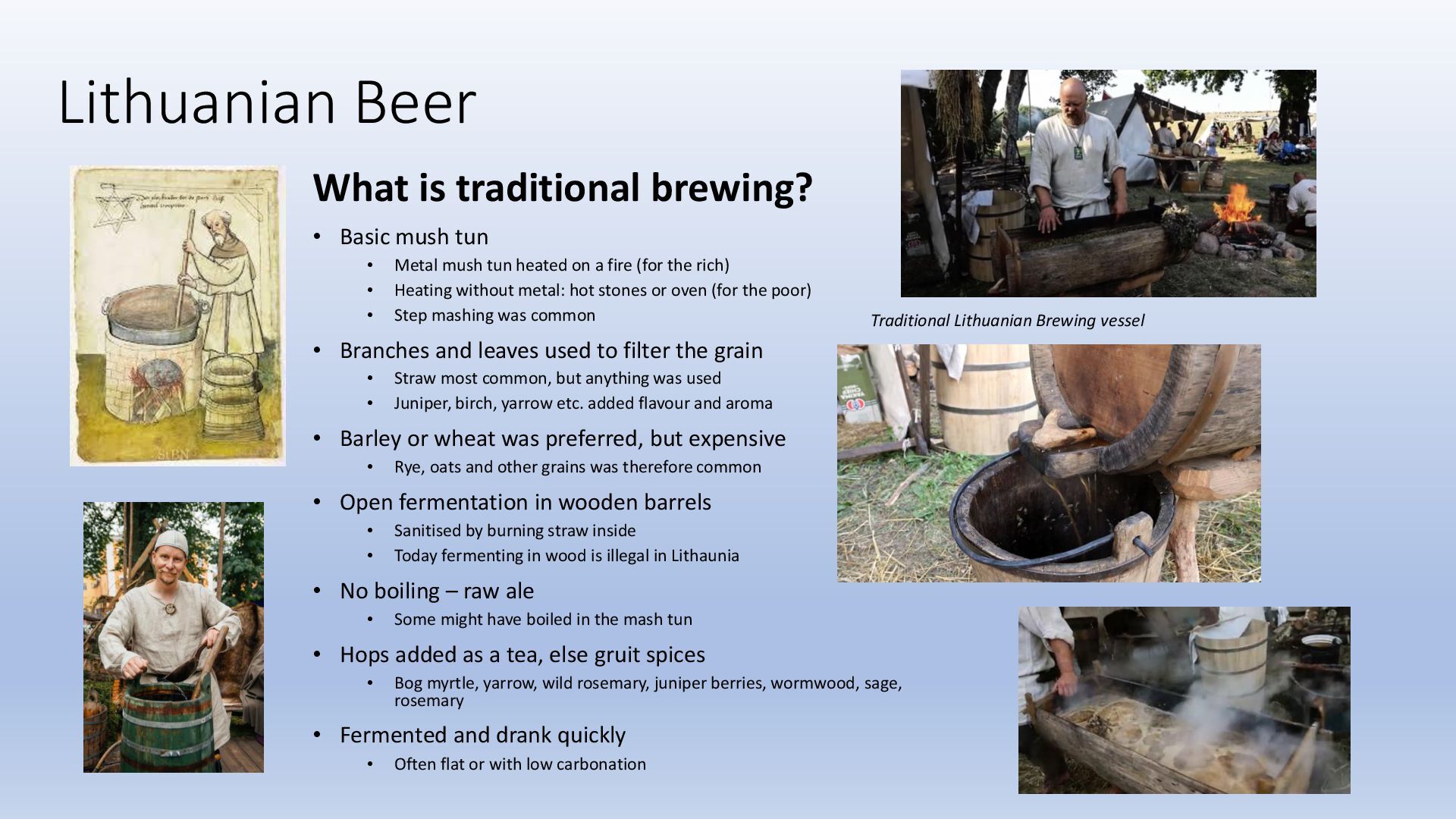
• Metal mush tun heated on a fire (for the rich) • Heating without metal: hot stones or oven (for the poor) • Step mashing was common • Branches and leaves used to filter the grain • Straw most common, but anything was used • Juniper, birch, yarrow etc. added flavour and aroma • Barley or wheat was preferred, but expensive • Rye, oats and other grains was therefore common • Open fermentation in wooden barrels • Sanitised by burning straw inside • Today fermenting in wood is illegal in Lithaunia • No boiling – raw ale • Some might have boiled in the mash tun • Hops added as a tea, else gruit spices • Bog myrtle, yarrow, wild rosemary, juniper berries, wormwood, sage, rosemary • Fermented and drank quickly • Often flat or with low carbonation Traditional Lithuanian Brewing vessel
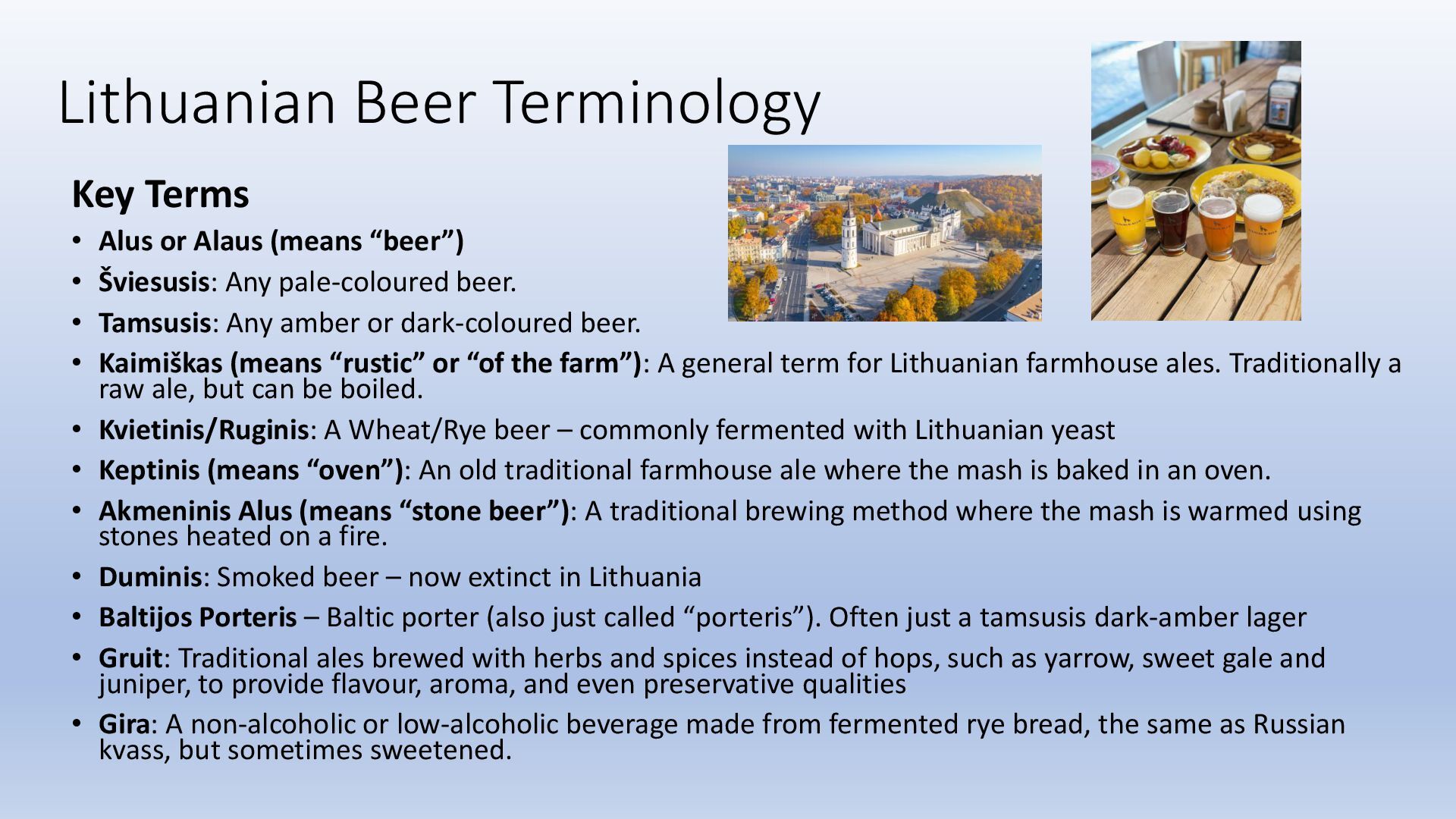
“beer”) • Šviesusis: Any pale-coloured beer. • Tamsusis: Any amber or dark-coloured beer. • Kaimiškas (means “rustic” or “of the farm”): A general term for Lithuanian farmhouse ales. Traditionally a raw ale, but can be boiled. • Kvietinis/Ruginis: A Wheat/Rye beer – commonly fermented with Lithuanian yeast • Keptinis (means “oven”): An old traditional farmhouse ale where the mash is baked in an oven. • Akmeninis Alus (means “stone beer”): A traditional brewing method where the mash is warmed using stones heated on a fire. • Duminis: Smoked beer – now extinct in Lithuania • Baltijos Porteris – Baltic porter (also just called “porteris”). Often just a tamsusis dark-amber lager • Gruit: Traditional ales brewed with herbs and spices instead of hops, such as yarrow, sweet gale and juniper, to provide flavour, aroma, and even preservative qualities • Gira: A non-alcoholic or low-alcoholic beverage made from fermented rye bread, the same as Russian kvass, but sometimes sweetened.
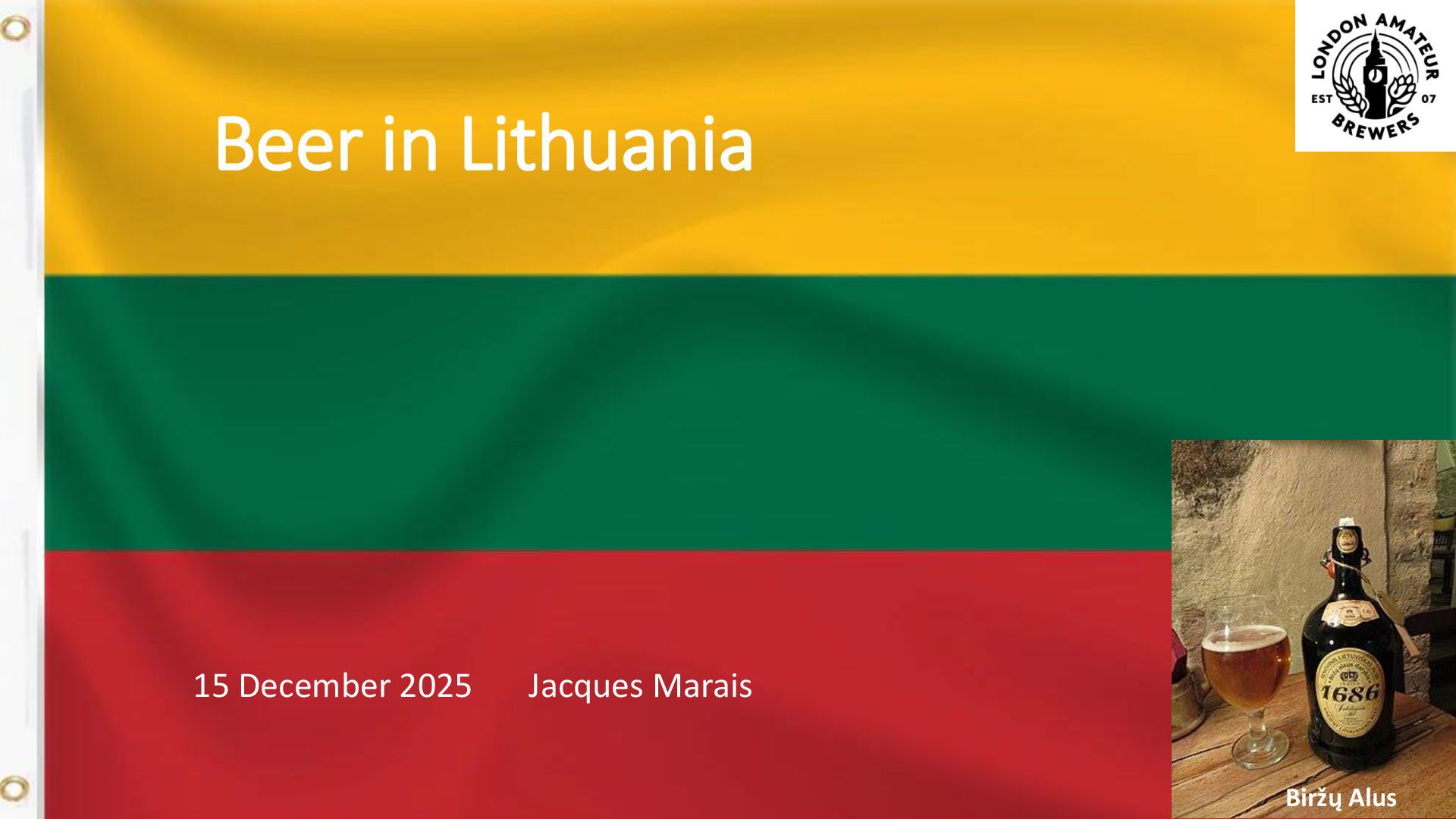
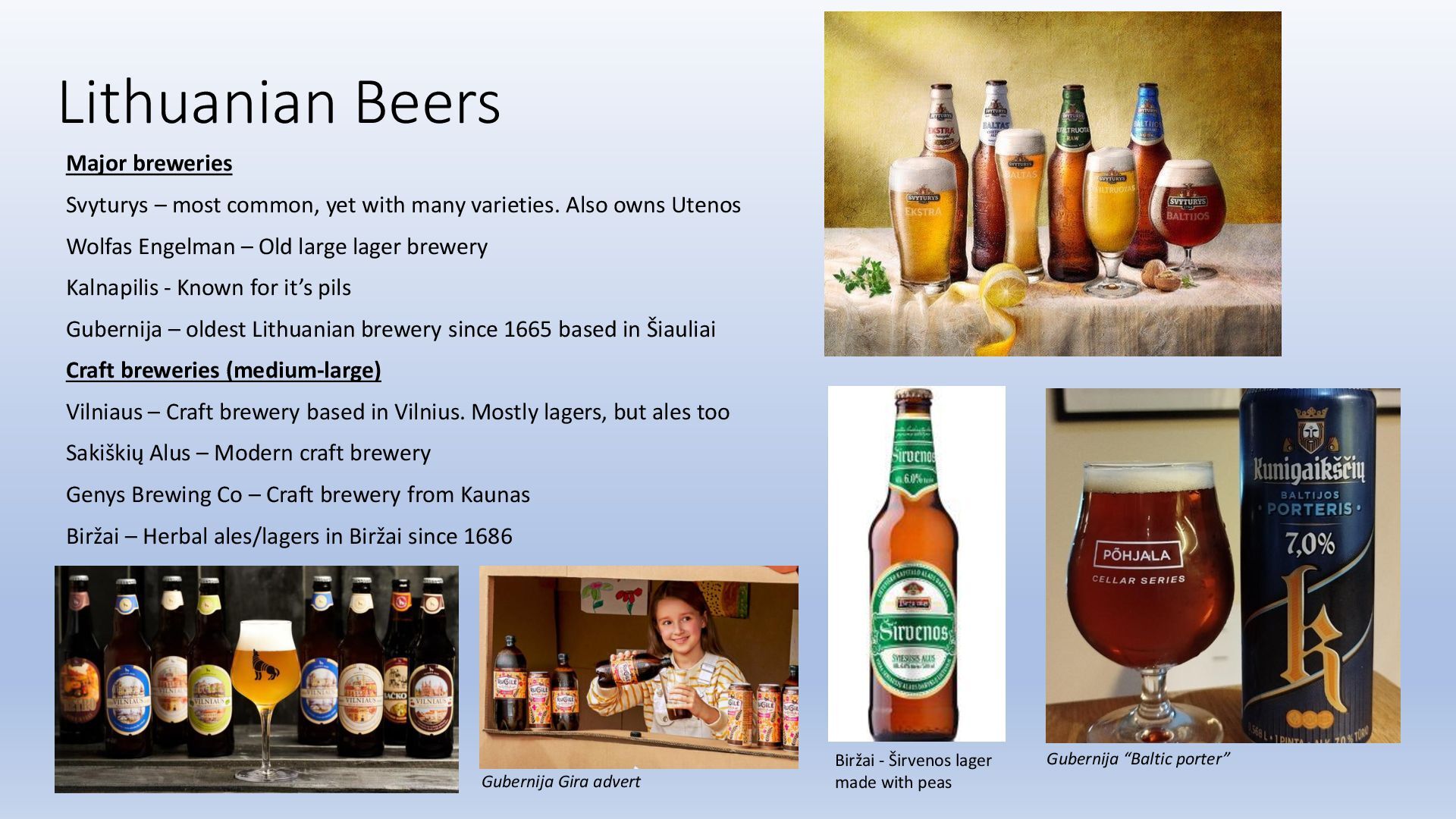
many varieties. Also owns Utenos Wolfas Engelman – Old large lager brewery Kalnapilis - Known for it’s pils Gubernija – oldest Lithuanian brewery since 1665 based in Šiauliai Craft breweries (medium-large) Vilniaus – Craft brewery based in Vilnius. Mostly lagers, but ales too Sakiškių Alus – Modern craft brewery Genys Brewing Co – Craft brewery from Kaunas Biržai – Herbal ales/lagers in Biržai since 1686 Gubernija Gira advert Gubernija “Baltic porter” Biržai - Širvenos lager made with peas
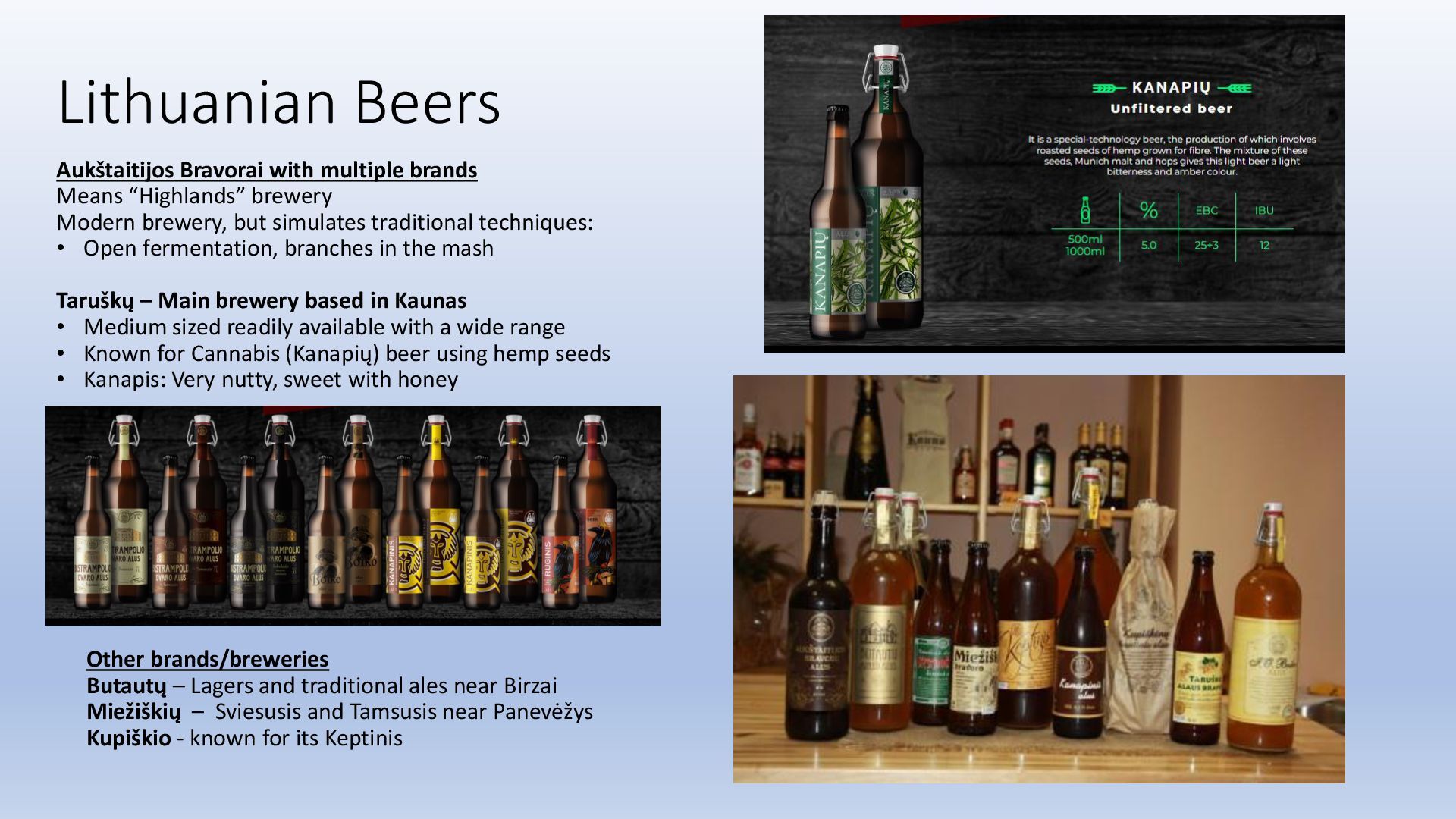
Modern brewery, but simulates traditional techniques: • Open fermentation, branches in the mash Taruškų – Main brewery based in Kaunas • Medium sized readily available with a wide range • Known for Cannabis (Kanapių) beer using hemp seeds • Kanapis: Very nutty, sweet with honey Other brands/breweries Butautų – Lagers and traditional ales near Birzai Miežiškių – Sviesusis and Tamsusis near Panevėžys Kupiškio - known for its Keptinis
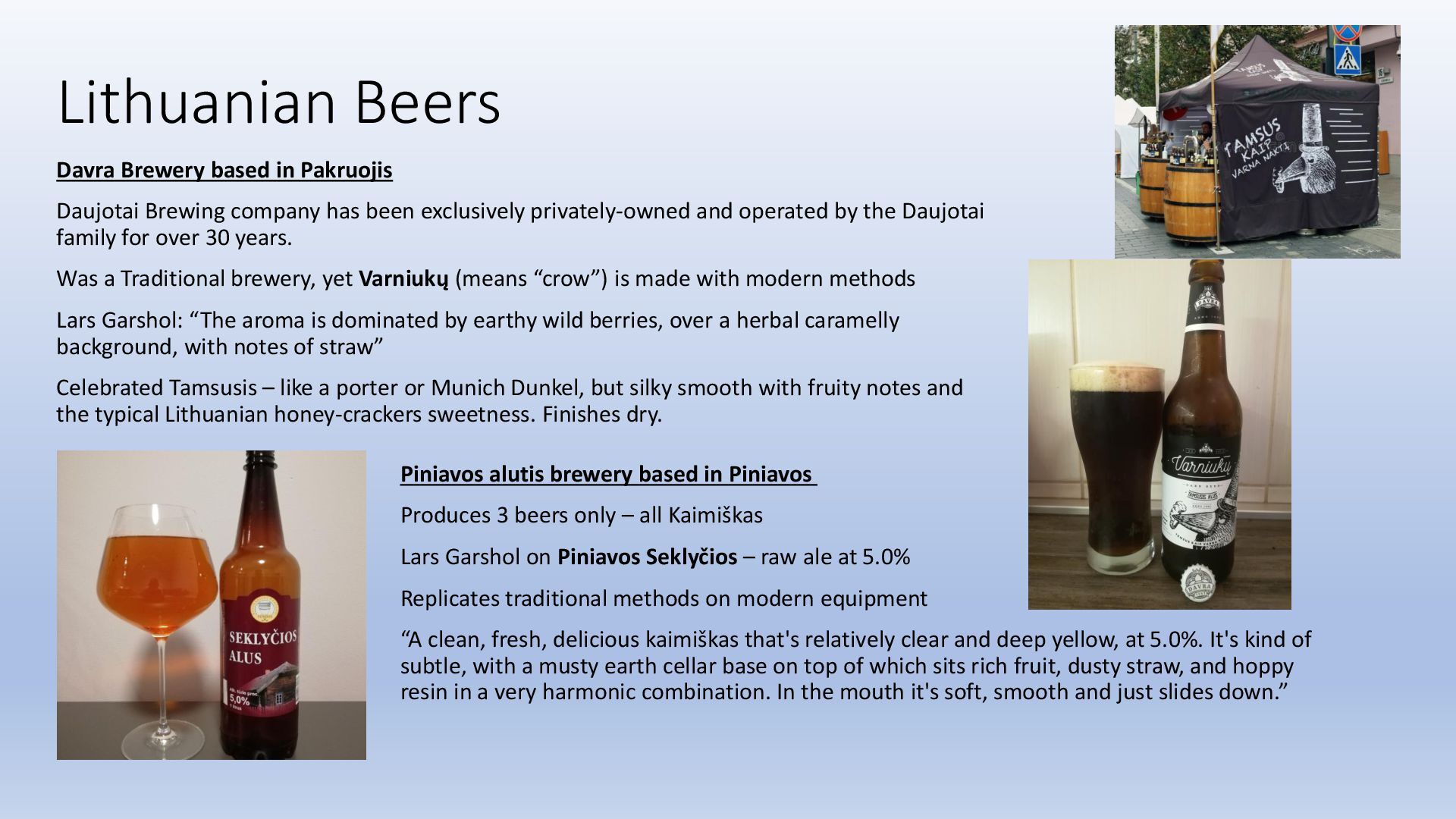
has been exclusively privately-owned and operated by the Daujotai family for over 30 years. Was a Traditional brewery, yet Varniukų (means “crow”) is made with modern methods Lars Garshol: “The aroma is dominated by earthy wild berries, over a herbal caramelly background, with notes of straw” Celebrated Tamsusis – like a porter or Munich Dunkel, but silky smooth with fruity notes and the typical Lithuanian honey-crackers sweetness. Finishes dry. Piniavos alutis brewery based in Piniavos Produces 3 beers only – all Kaimiškas Lars Garshol on Piniavos Seklyčios – raw ale at 5.0% Replicates traditional methods on modern equipment “A clean, fresh, delicious kaimiškas that's relatively clear and deep yellow, at 5.0%. It's kind of subtle, with a musty earth cellar base on top of which sits rich fruit, dusty straw, and hoppy resin in a very harmonic combination. In the mouth it's soft, smooth and just slides down.”
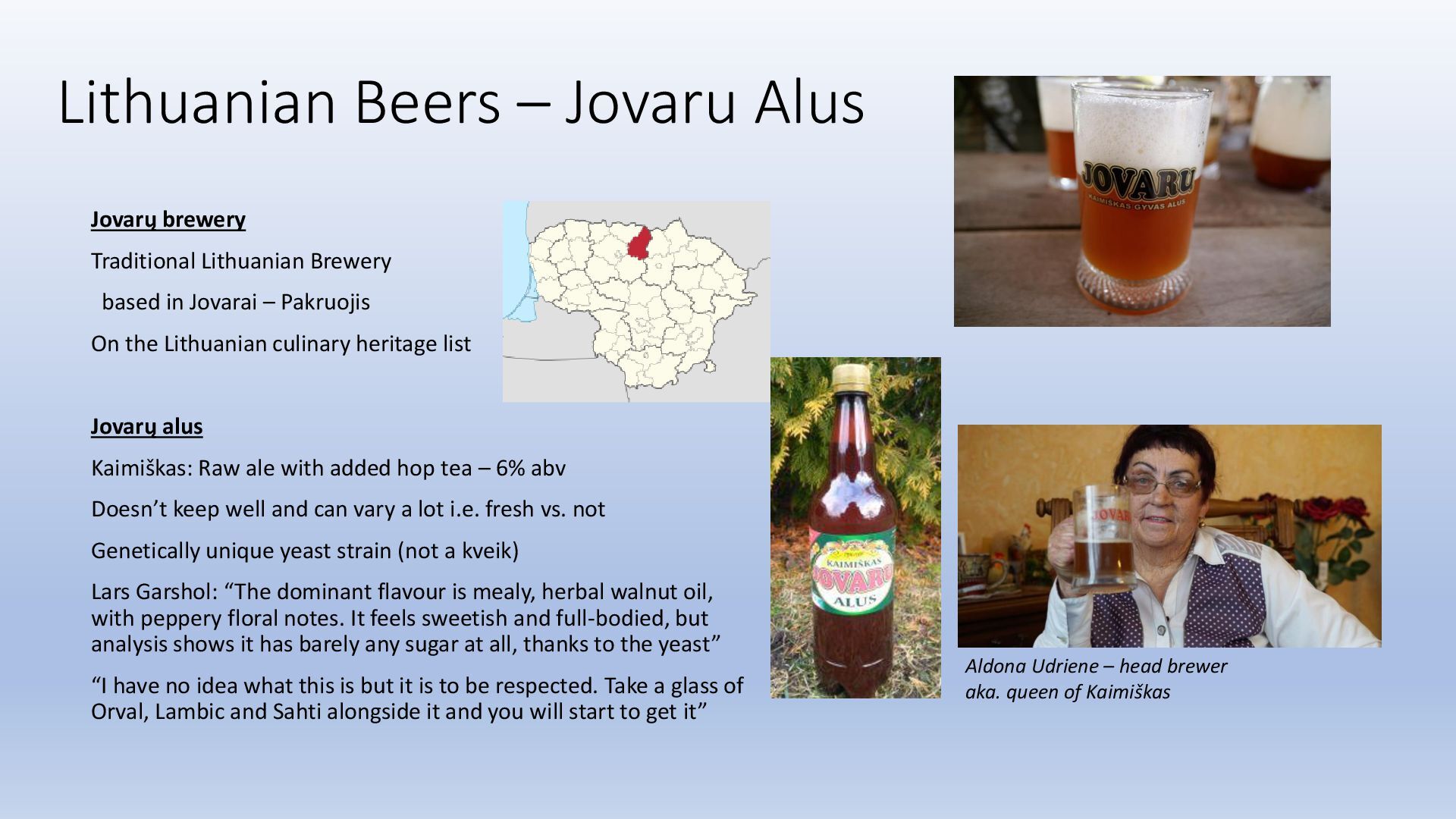
based in Jovarai – Pakruojis On the Lithuanian culinary heritage list Jovarų alus Kaimiškas: Raw ale with added hop tea – 6% abv Doesn’t keep well and can vary a lot i.e. fresh vs. not Genetically unique yeast strain (not a kveik) Lars Garshol: “The dominant flavour is mealy, herbal walnut oil, with peppery floral notes. It feels sweetish and full-bodied, but analysis shows it has barely any sugar at all, thanks to the yeast” “I have no idea what this is but it is to be respected. Take a glass of Orval, Lambic and Sahti alongside it and you will start to get it” Aldona Udriene – head brewer aka. queen of Kaimiškas
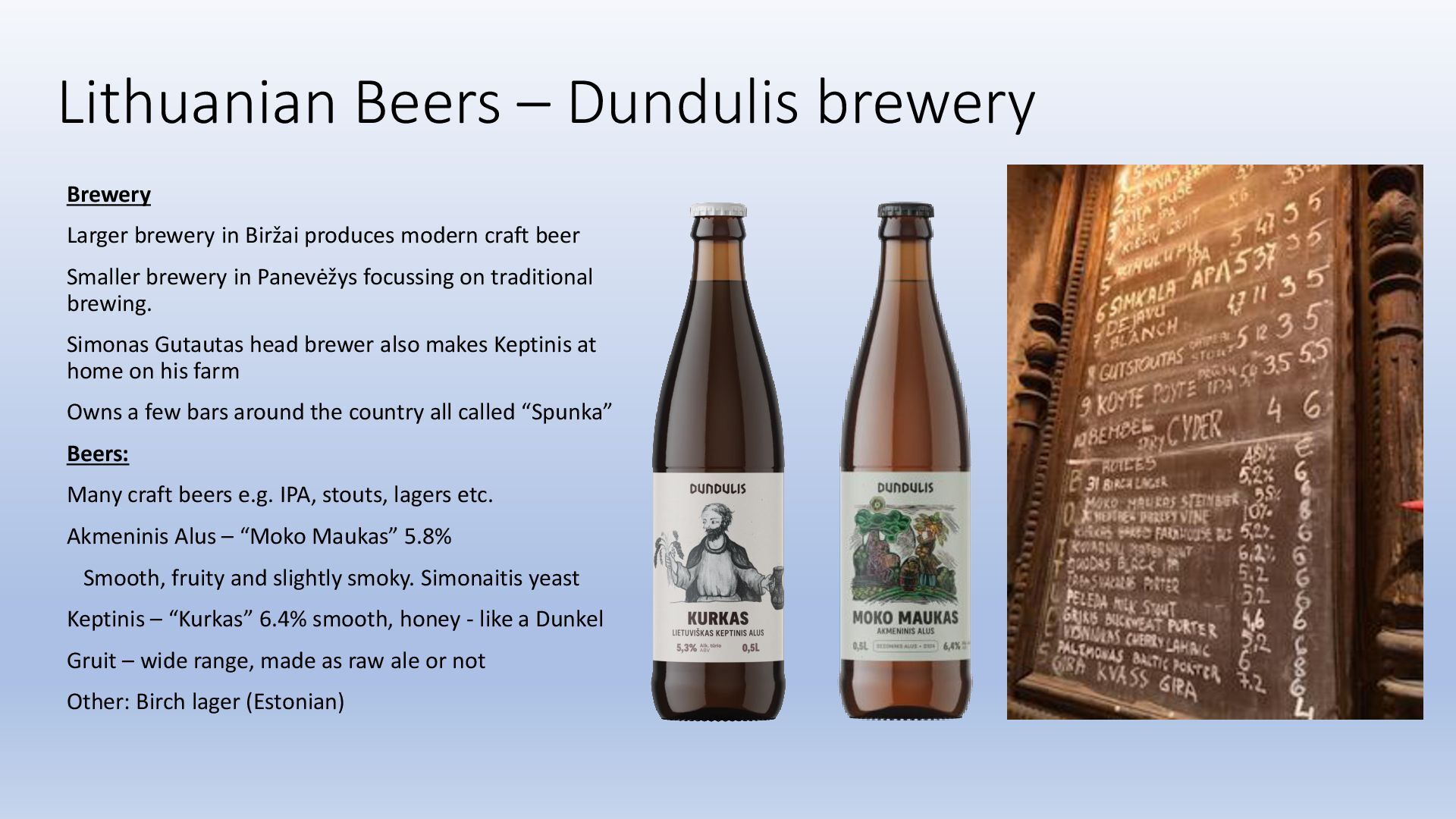
produces modern craft beer Smaller brewery in Panevėžys focussing on traditional brewing. Simonas Gutautas head brewer also makes Keptinis at home on his farm Owns a few bars around the country all called “Spunka” Beers: Many craft beers e.g. IPA, stouts, lagers etc. Akmeninis Alus – “Moko Maukas” 5.8% Smooth, fruity and slightly smoky. Simonaitis yeast Keptinis – “Kurkas” 6.4% smooth, honey - like a Dunkel Gruit – wide range, made as raw ale or not Other: Birch lager (Estonian)
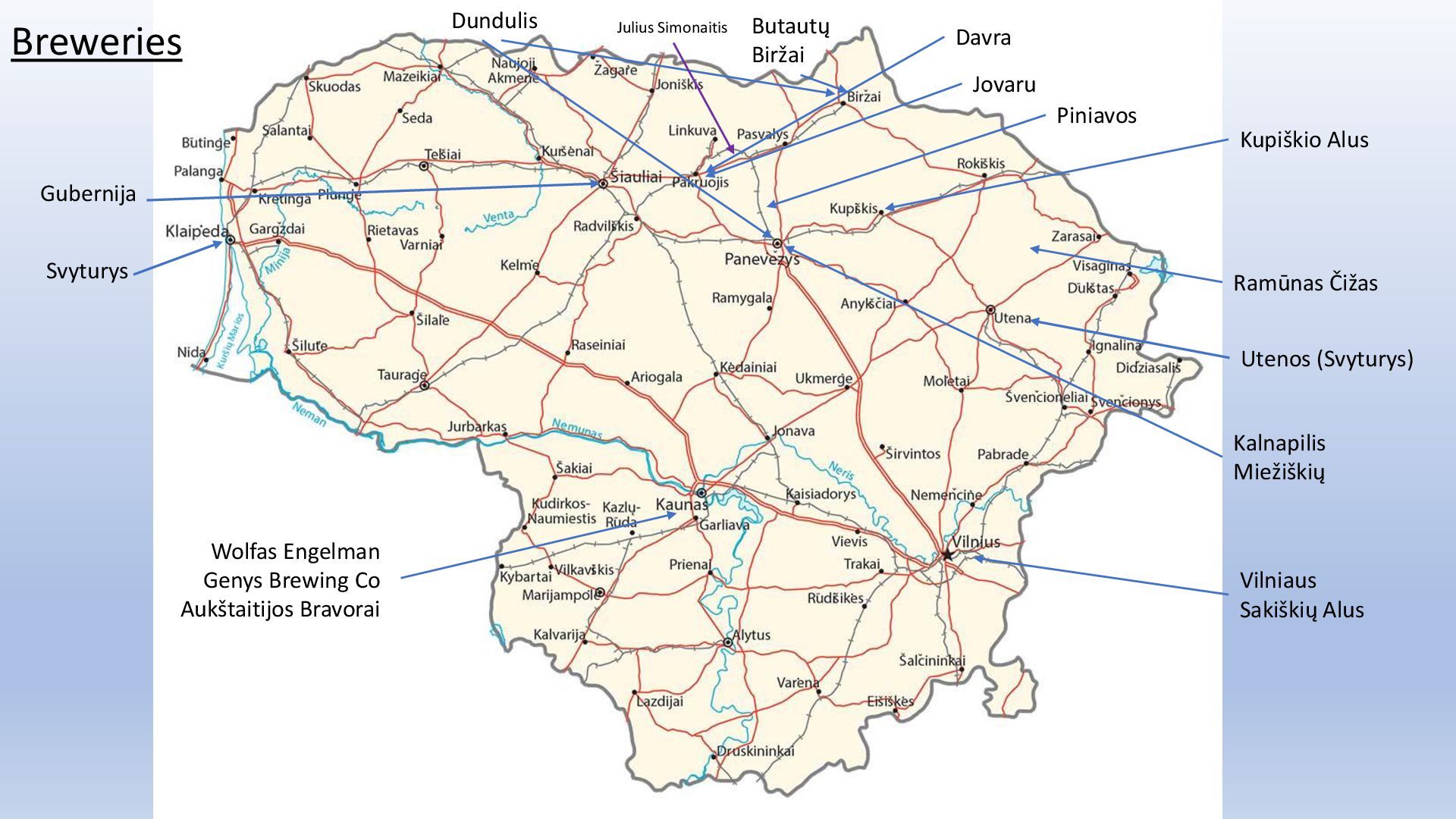
Gubernija Vilniaus Sakiškių Alus Butautų Biržai Davra Breweries Piniavos Jovaru Dundulis Ramūnas Čižas Kupiškio Alus Julius Simonaitis Utenos (Svyturys)
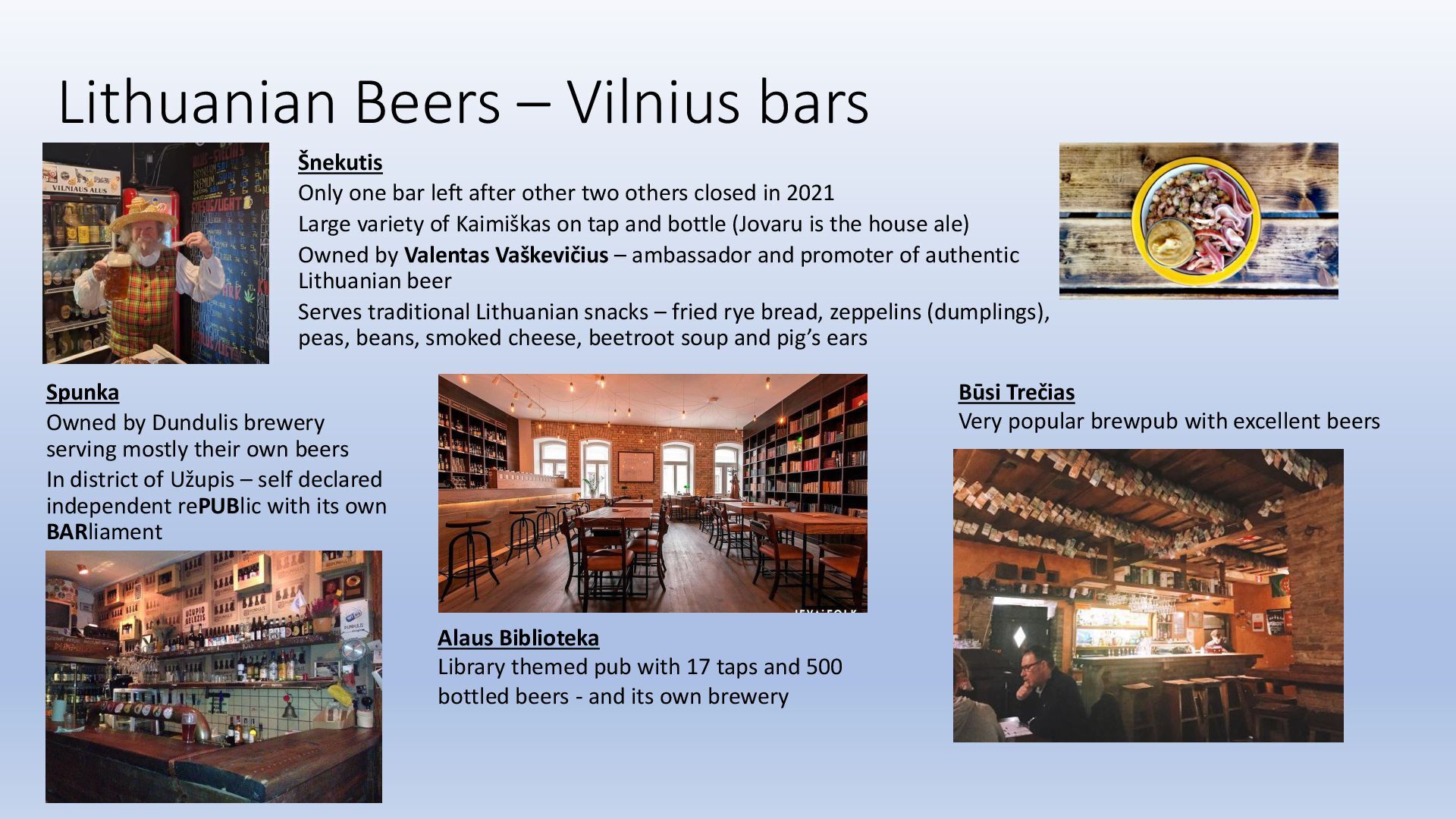
after other two others closed in 2021 Large variety of Kaimiškas on tap and bottle (Jovaru is the house ale) Owned by Valentas Vaškevičius – ambassador and promoter of authentic Lithuanian beer Serves traditional Lithuanian snacks – fried rye bread, zeppelins (dumplings), peas, beans, smoked cheese, beetroot soup and pig’s ears Spunka Owned by Dundulis brewery serving mostly their own beers In district of Užupis – self declared independent rePUBlic with its own BARliament Būsi Trečias Very popular brewpub with excellent beers Alaus Biblioteka Library themed pub with 17 taps and 500 bottled beers - and its own brewery
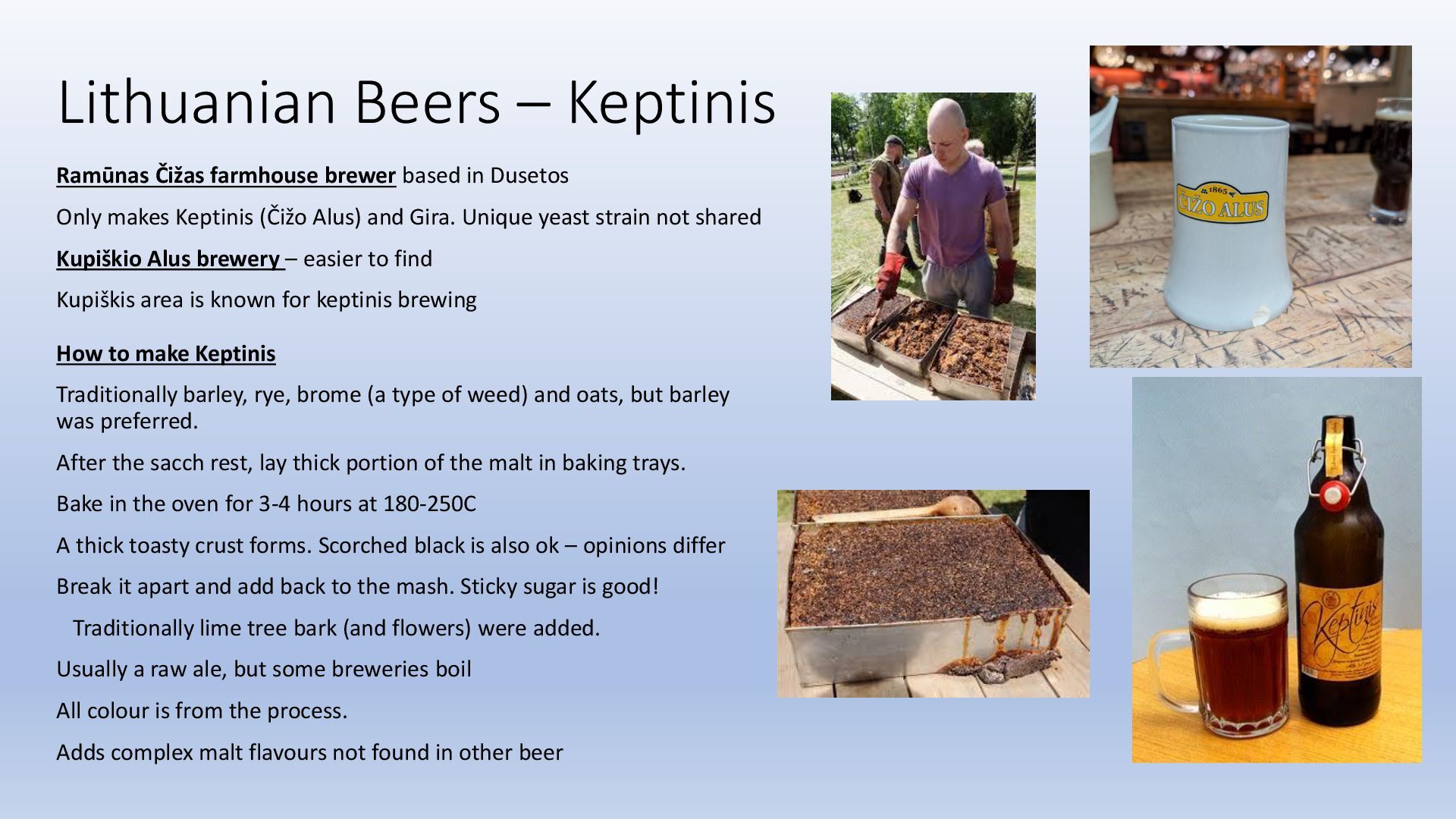
Dusetos Only makes Keptinis (Čižo Alus) and Gira. Unique yeast strain not shared Kupiškio Alus brewery – easier to find Kupiškis area is known for keptinis brewing How to make Keptinis Traditionally barley, rye, brome (a type of weed) and oats, but barley was preferred. After the sacch rest, lay thick portion of the malt in baking trays. Bake in the oven for 3-4 hours at 180-250C A thick toasty crust forms. Scorched black is also ok – opinions differ Break it apart and add back to the mash. Sticky sugar is good! Traditionally lime tree bark (and flowers) were added. Usually a raw ale, but some breweries boil All colour is from the process. Adds complex malt flavours not found in other beer
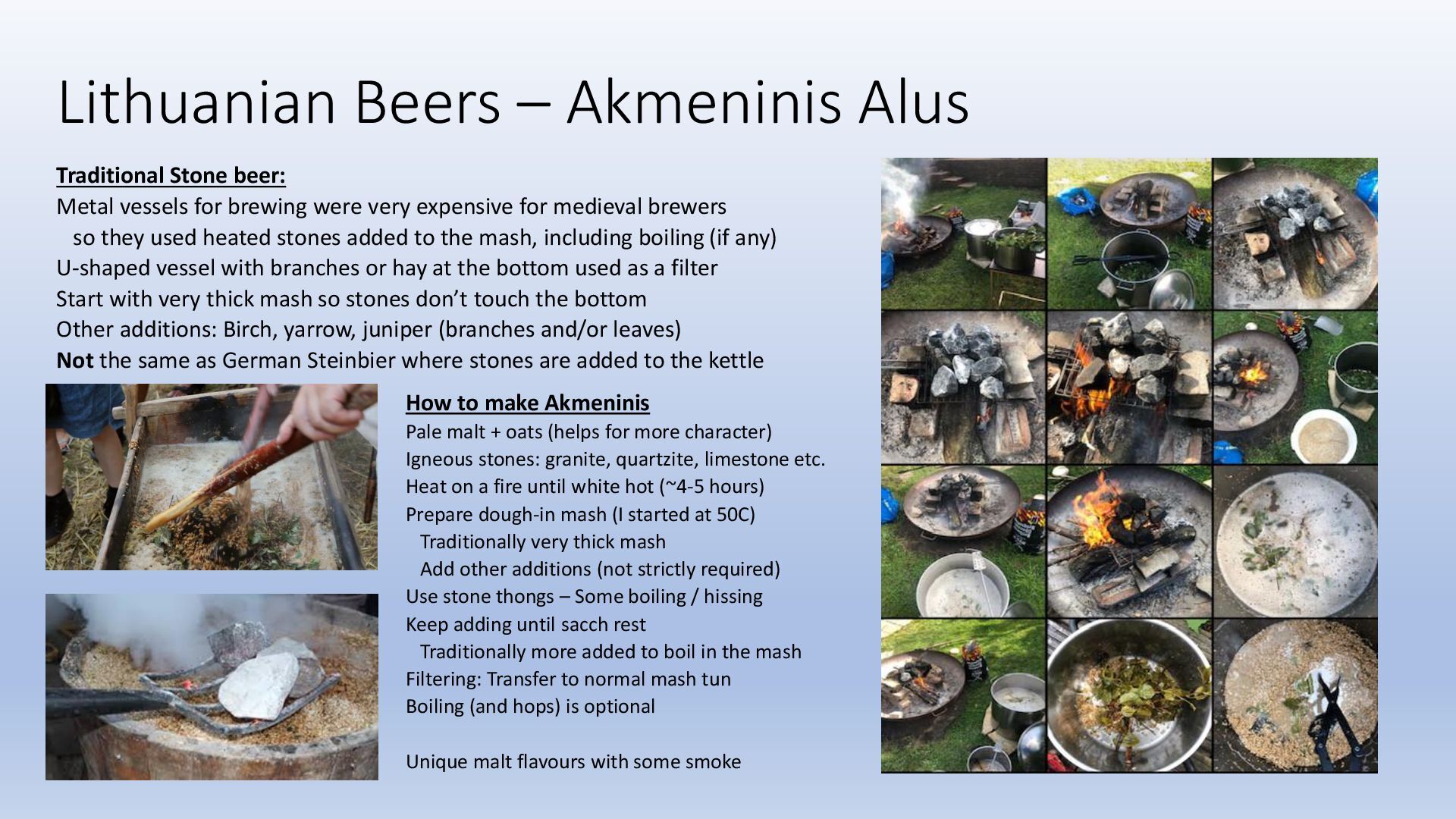
for brewing were very expensive for medieval brewers so they used heated stones added to the mash, including boiling (if any) U-shaped vessel with branches or hay at the bottom used as a filter Start with very thick mash so stones don’t touch the bottom Other additions: Birch, yarrow, juniper (branches and/or leaves) Not the same as German Steinbier where stones are added to the kettle How to make Akmeninis Pale malt + oats (helps for more character) Igneous stones: granite, quartzite, limestone etc. Heat on a fire until white hot (~4-5 hours) Prepare dough-in mash (I started at 50C) Traditionally very thick mash Add other additions (not strictly required) Use stone thongs – Some boiling / hissing Keep adding until sacch rest Traditionally more added to boil in the mash Filtering: Transfer to normal mash tun Boiling (and hops) is optional Unique malt flavours with some smoke
the “Lithuanian character” Viking maltings: 4th largest maltster in Europe based in 5 countries Maltosa maltings: Small local maltings. Viking buyout in 2015 blocked by the government avoiding a monopoly Lars Garshol: “Of the typically Lithuanian flavours that seem to recur in many of these beers, I think the Lithuanian malts are responsible for the dusty strawy flavours many of the pale beers have. Some people seem to be describing this as a "hay" flavour. Many of the farmhouse-style beers have a very unusual nutty oily flavour, which might come from the yeast, from mashing techniques, or from something else. Strong, deep earthy flavours are very common, too.”
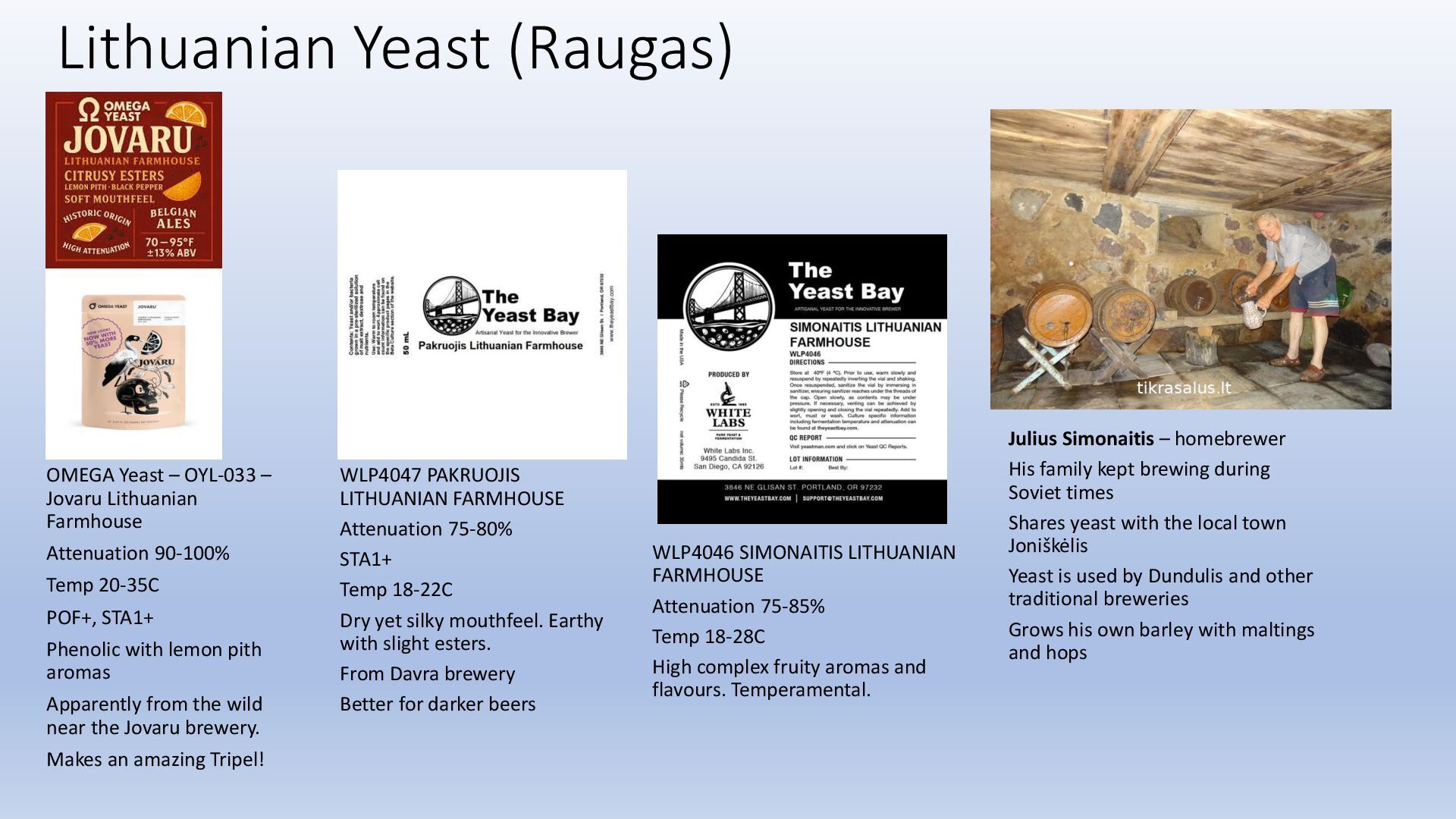
Farmhouse Attenuation 90-100% Temp 20-35C POF+, STA1+ Phenolic with lemon pith aromas Apparently from the wild near the Jovaru brewery. Makes an amazing Tripel! WLP4046 SIMONAITIS LITHUANIAN FARMHOUSE Attenuation 75-85% Temp 18-28C High complex fruity aromas and flavours. Temperamental. WLP4047 PAKRUOJIS LITHUANIAN FARMHOUSE Attenuation 75-80% STA1+ Temp 18-22C Dry yet silky mouthfeel. Earthy with slight esters. From Davra brewery Better for darker beers Julius Simonaitis – homebrewer His family kept brewing during Soviet times Shares yeast with the local town Joniškėlis Yeast is used by Dundulis and other traditional breweries Grows his own barley with maltings and hops
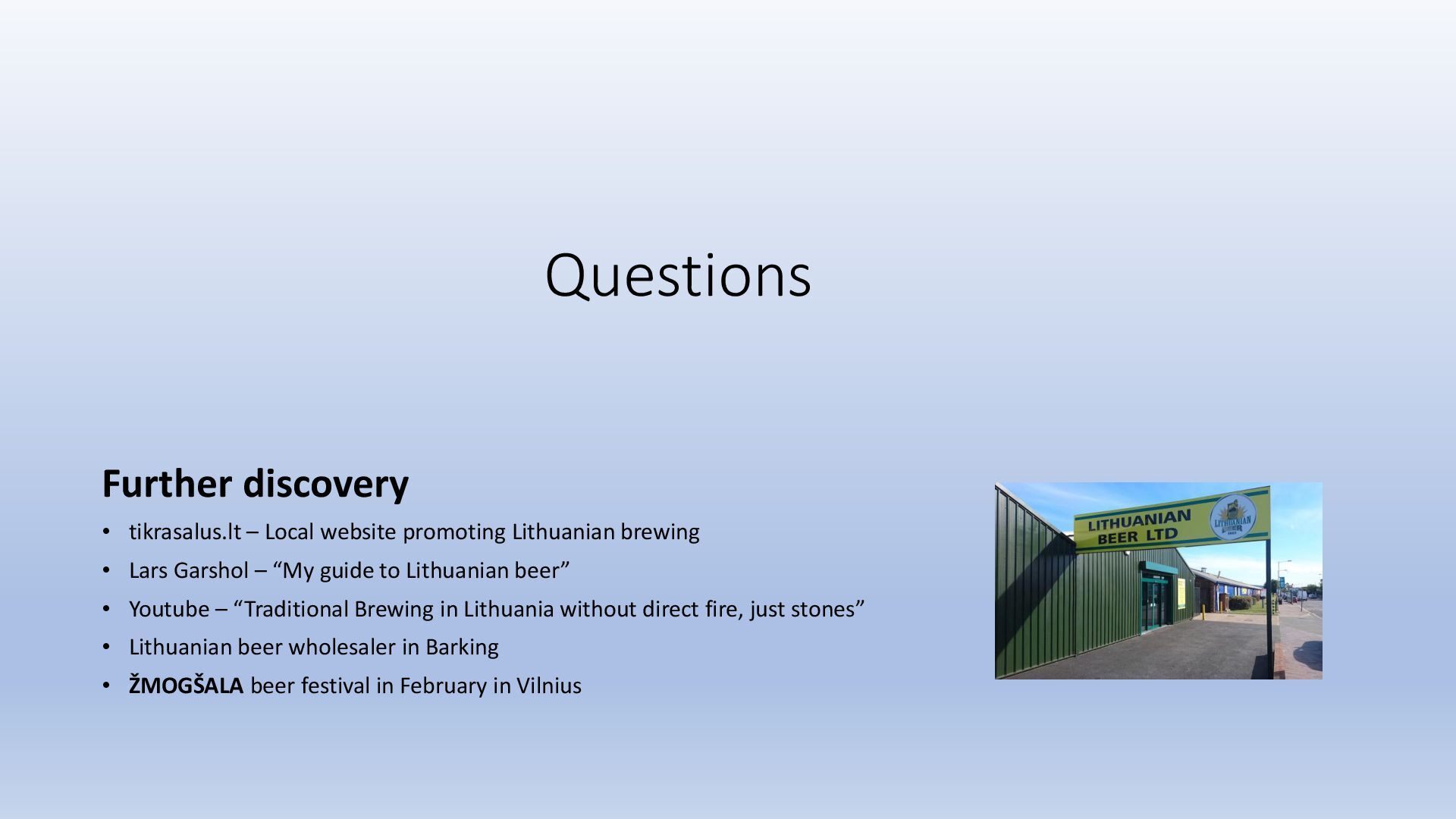
brewing • Lars Garshol – “My guide to Lithuanian beer” • Youtube – “Traditional Brewing in Lithuania without direct fire, just stones” • Lithuanian beer wholesaler in Barking • ŽMOGŠALA beer festival in February in Vilnius


 lonbrew
 arnoknobbe
 bvr7352
 spring_aki
 ishii_mit
 akiraasano
 suisan
 naochim2026
 pawan_pharm
 yatabe
 mariooc
 hiragahh
 hiola
hiola
 jlugia
 axbom
axbom
 aki_iinuma
 morganepeng
 nikkihalliwell
 pauljervisheath
 varn
varn
 uxyall
 codingconduct
 hannesfritz
 aleyda