Upgrade to PRO for Only $50/Year—Limited-Time Offer! 🔥

Brain Computer Interface (BCI) Seminar

Brain Computer Interface (BCI) Seminar

Avatar for Mahmoud Abdrabo

Mahmoud Abdrabo

May 06, 2014
Tweet

More Decks by Mahmoud Abdrabo

Other Decks in Technology

Transcript

  1. Brain Computer Interface (BCI) A Seminar on Ubiquitous and Wearable

    Computing ! By Mahmoud Abdrabo Supervised by Prof. Dr. Ayman ElNaggar
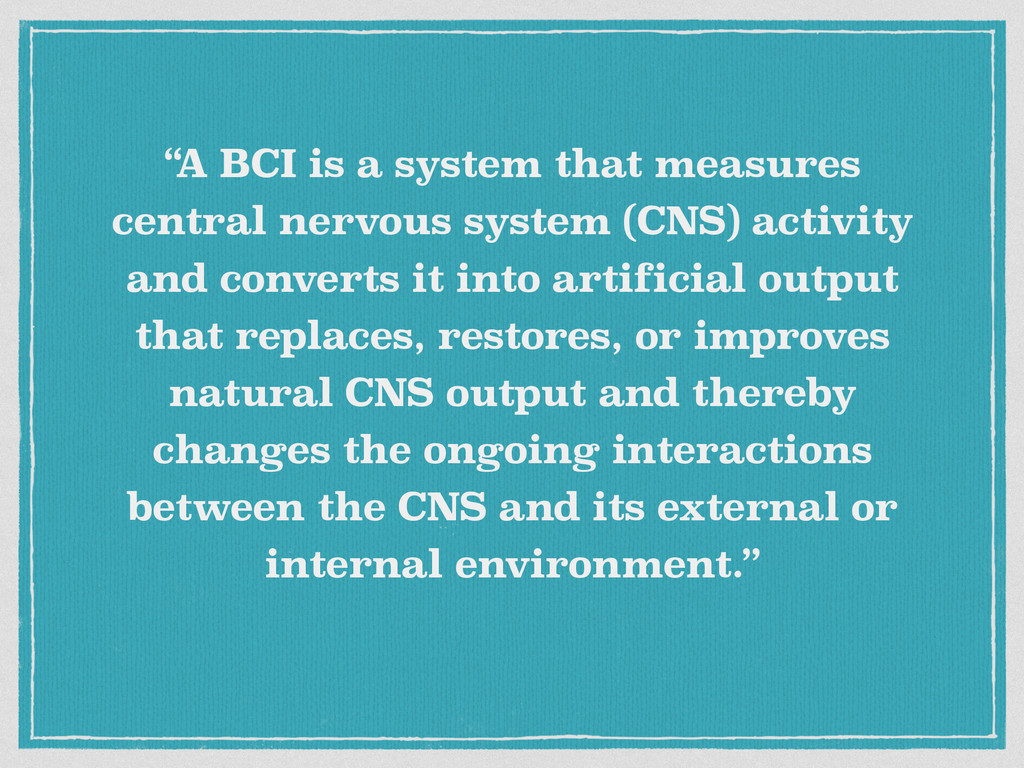
  2. “ A BCI is a system that measures central nervous

    system (CNS) activity and converts it into artificial output that replaces, restores, or improves natural CNS output and thereby changes the ongoing interactions between the CNS and its external or internal environment.”
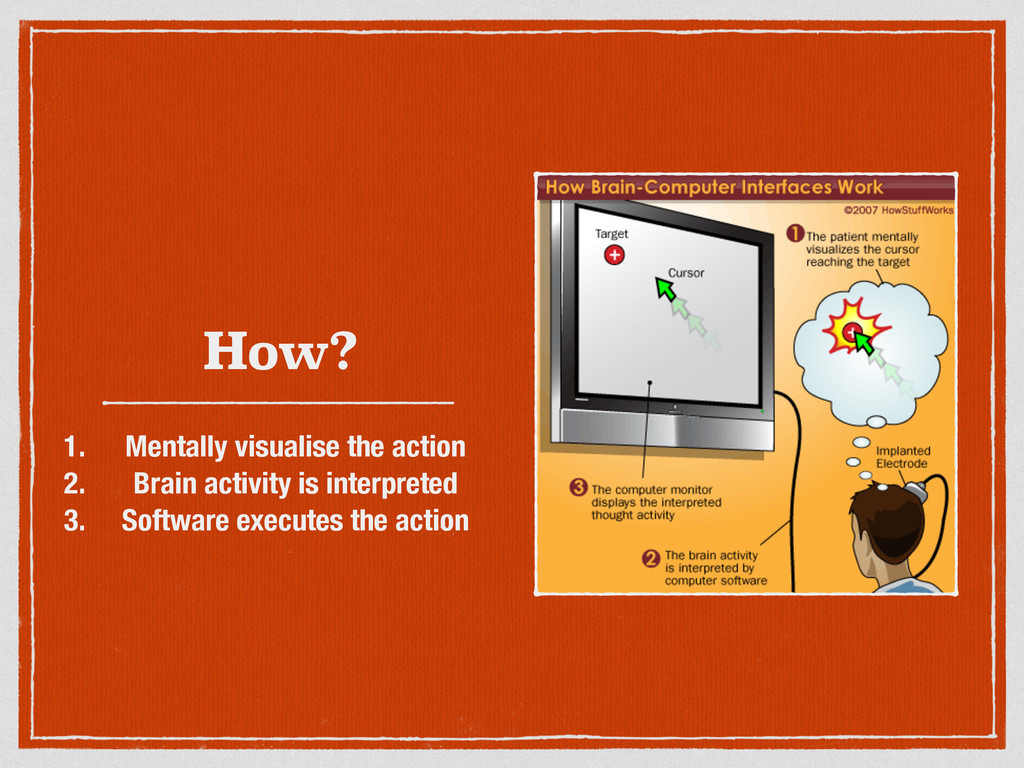
  3. How? 1. Mentally visualise the action 2. Brain activity is

    interpreted 3. Software executes the action
  4. Challenges The skull blocks a lot of the electrical signals

    The skull distorts what does get through
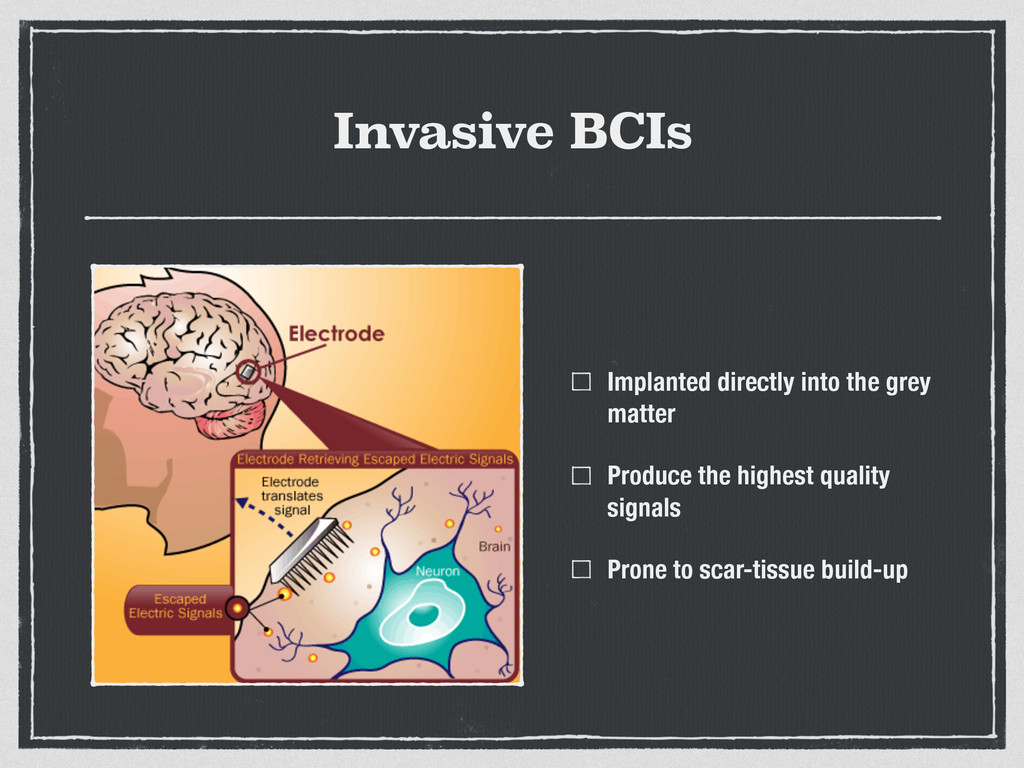
  5. Invasive BCIs Implanted directly into the grey matter Produce the

    highest quality signals Prone to scar-tissue build-up
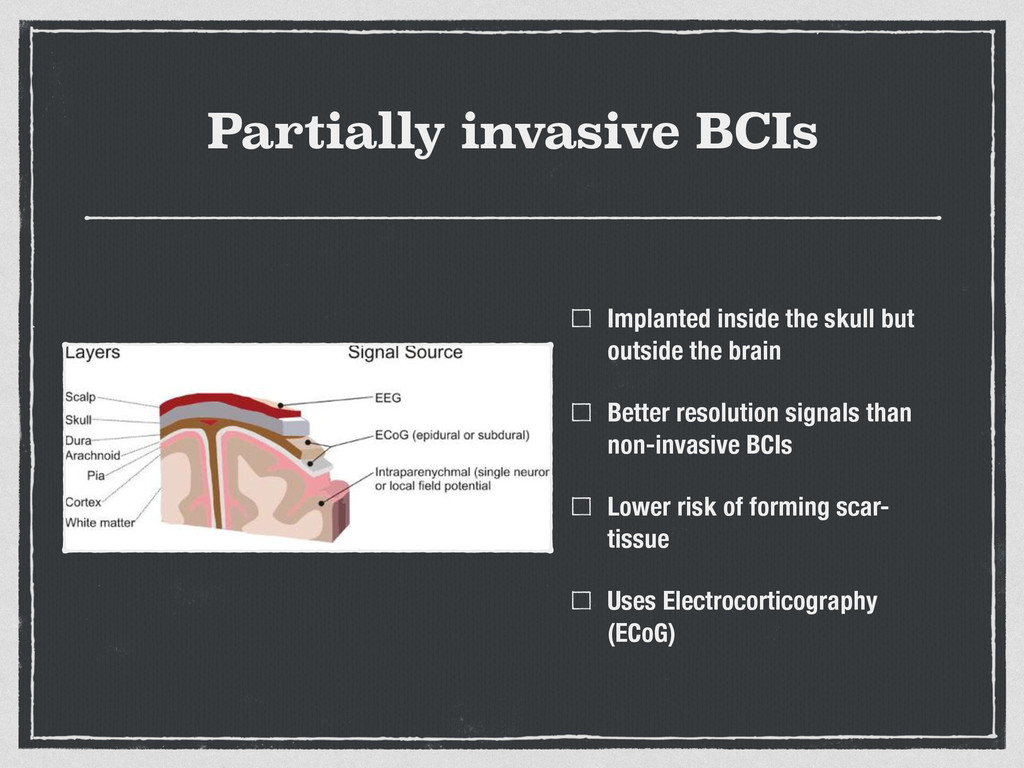
  6. Partially invasive BCIs Implanted inside the skull but outside the

    brain Better resolution signals than non-invasive BCIs Lower risk of forming scar- tissue Uses Electrocorticography (ECoG)
  7. Vision using Invasive BCIs In 1978, “Jerry” BCI containing 68

    electrodes Camera to send signals Connected to a mainframe computer Could only see shades of grey
  8. Vision using Invasive BCIs 20 years later (in 2002), “Jens

    Naumann” Same researcher (Dr. William Dobelle) Jens was able to slowly drive a car Research was not completed (Dr. William died)
  9. Partially-invasive BCIs In 2004, first trial of ECoG in humans,

    in Washington Uni. In 2006, a 14-year old boy played space invaders with his brain Control is rapid Requires minimal training A good tradeoff with regards to signal fidelity and level of invasiveness.
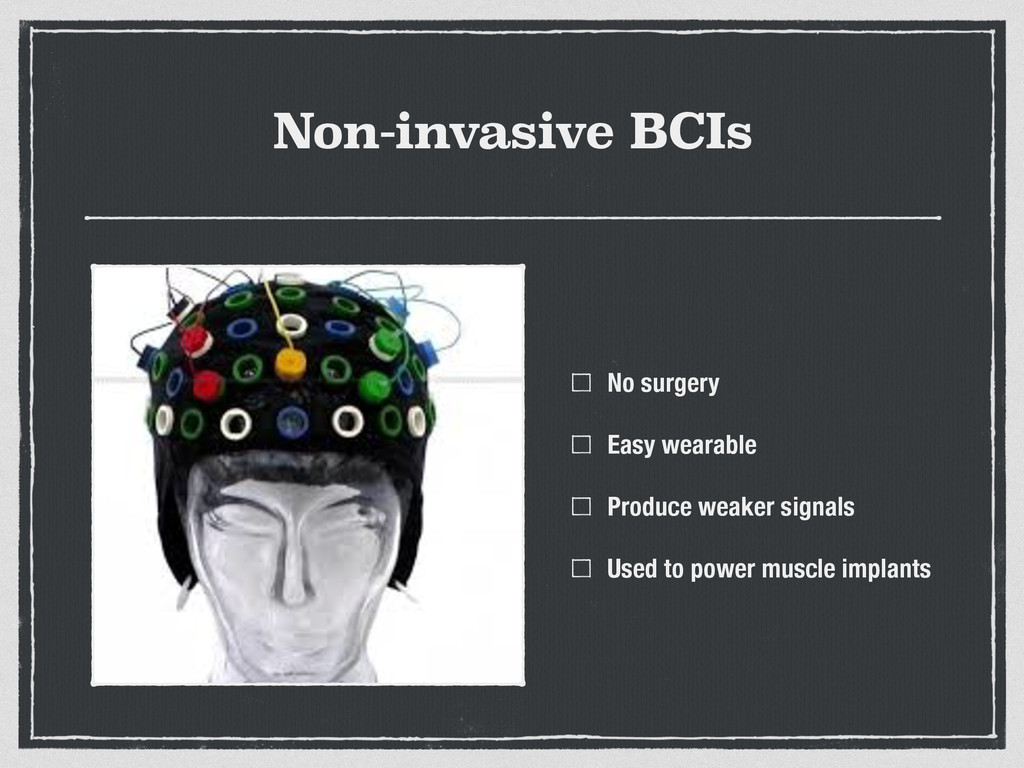
  10. Non-invasive BCI functional Magnetic Resonance Imaging (fMRI) Picks up magnetic

    signals from oxygen bound to iron dissolved in the bloodstream Blood flow increases with brain activity Millimetric accuracy Three 45-minutes training sessions to control On/Off
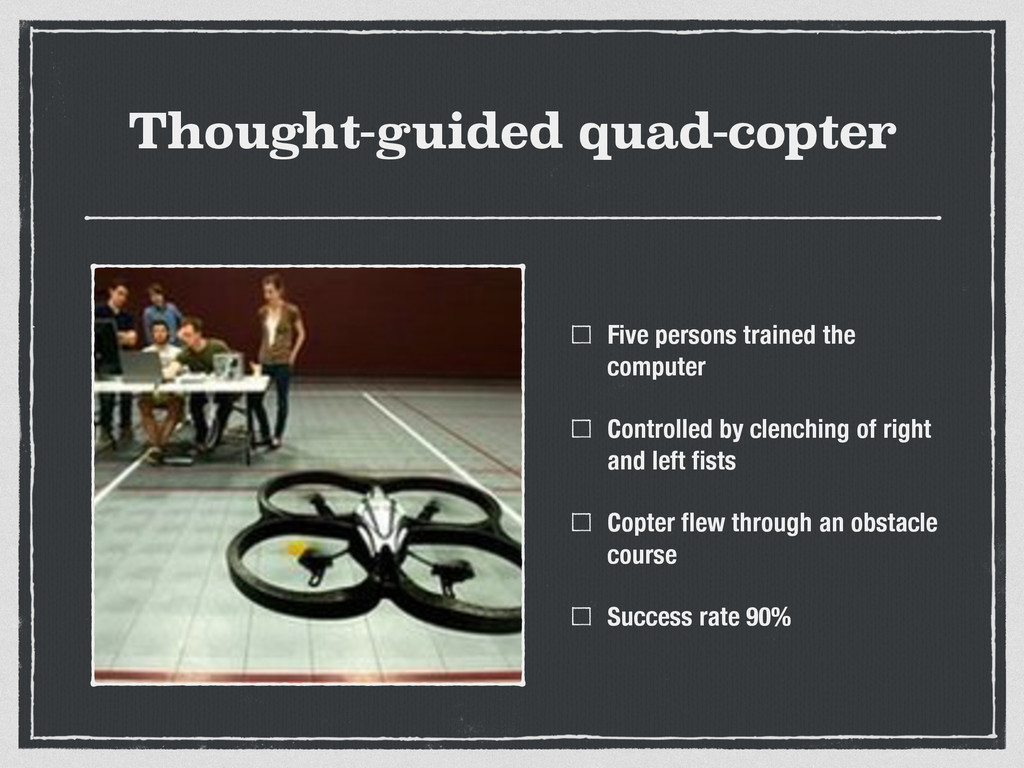
  11. Thought-guided quad-copter Five persons trained the computer Controlled by clenching

    of right and left fists Copter flew through an obstacle course Success rate 90%
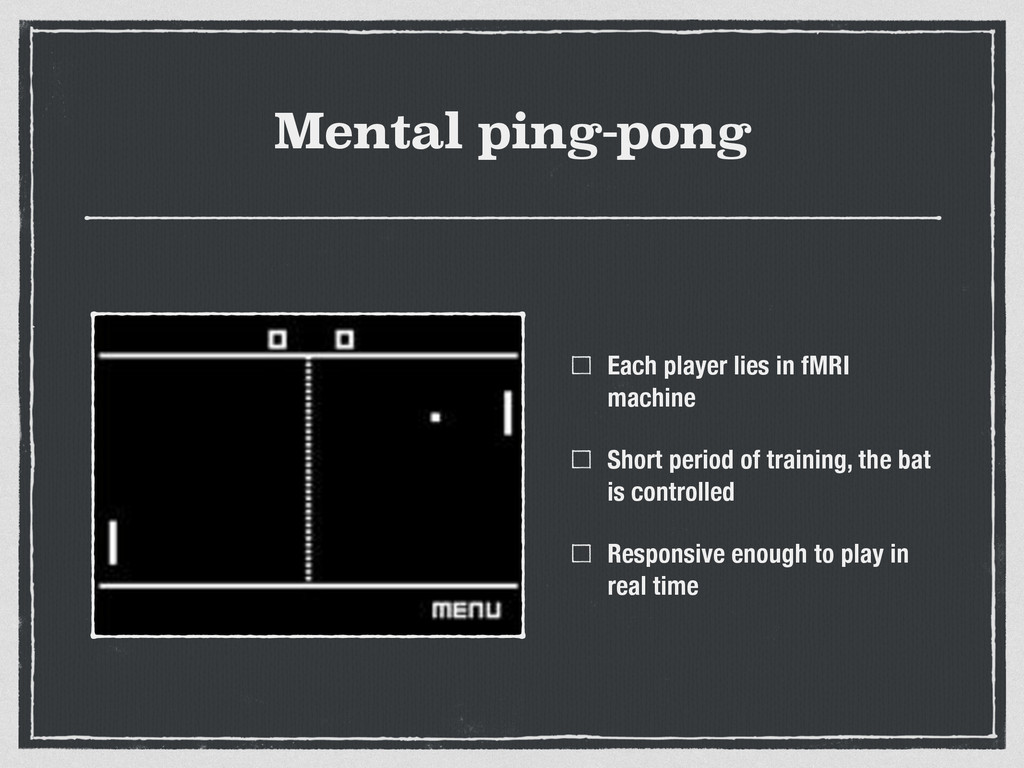
  12. Mental ping-pong Each player lies in fMRI machine Short period

    of training, the bat is controlled Responsive enough to play in real time
  13. Neural Signals is developing technology to restore speech to disabled

    people Japanese researchers have developed a preliminary BCI that allows the user to control their avatar in the online world Indian Scientists working on Brain-Controlled Robot to help disabled people Paralysed people compose music with Brainwaves.
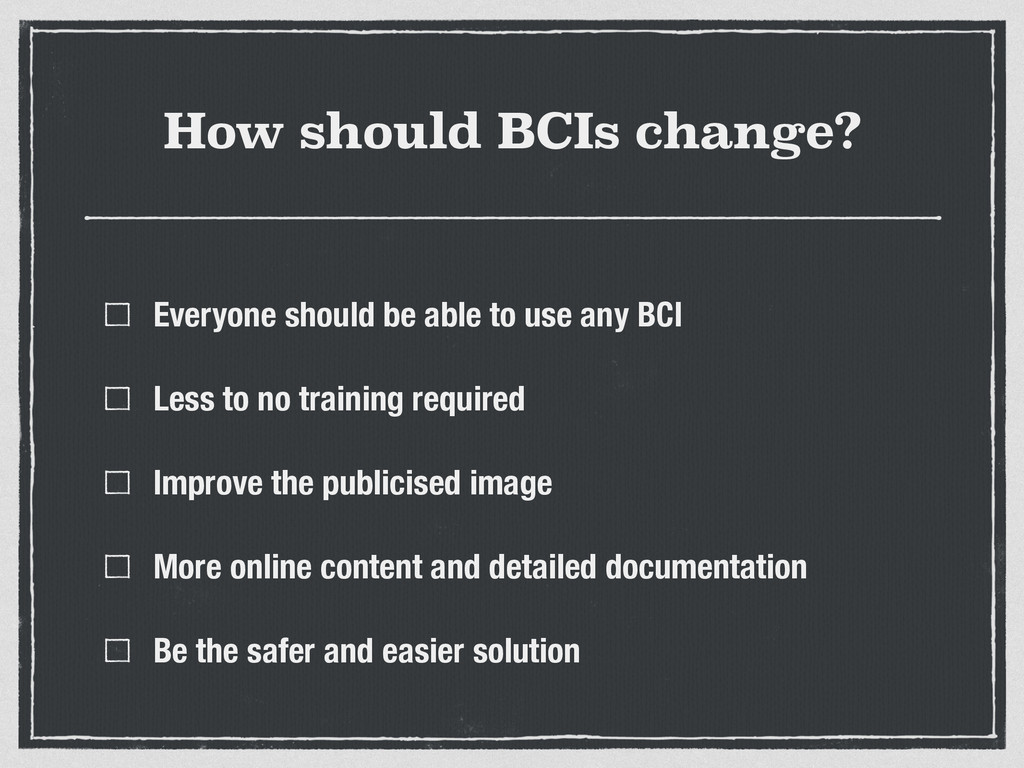
  14. How should BCIs change? Everyone should be able to use

    any BCI Less to no training required Improve the publicised image More online content and detailed documentation Be the safer and easier solution
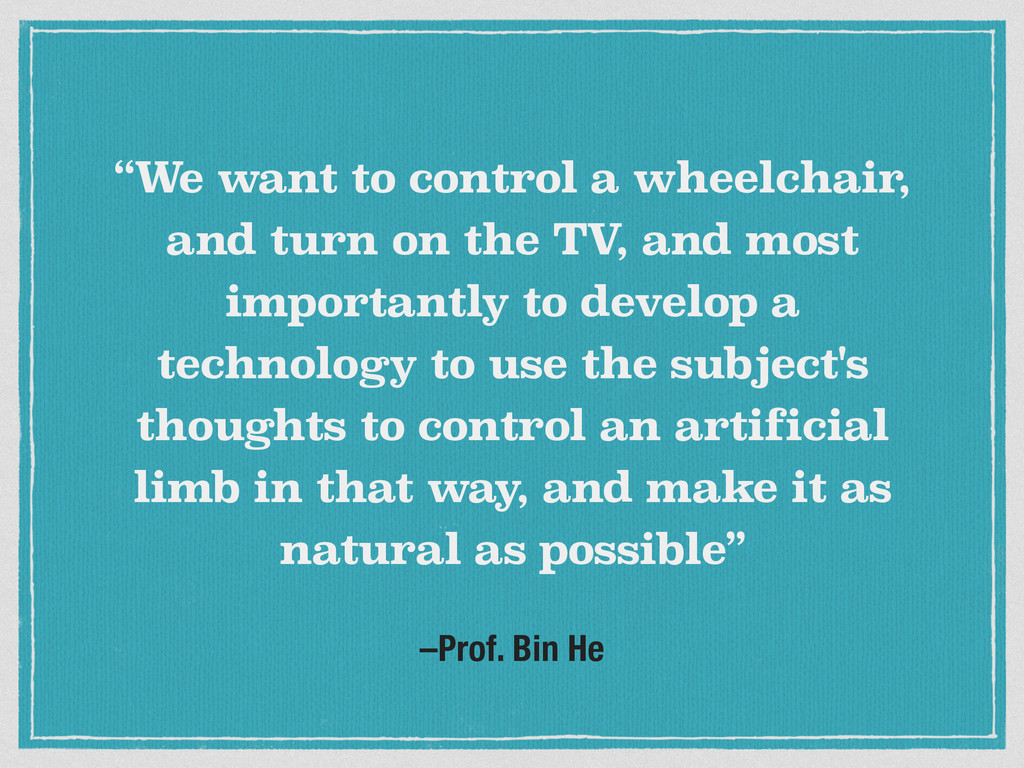
  15. –Prof. Bin He “We want to control a wheelchair, and

    turn on the TV , and most importantly to develop a technology to use the subject's thoughts to control an artificial limb in that way, and make it as natural as possible”
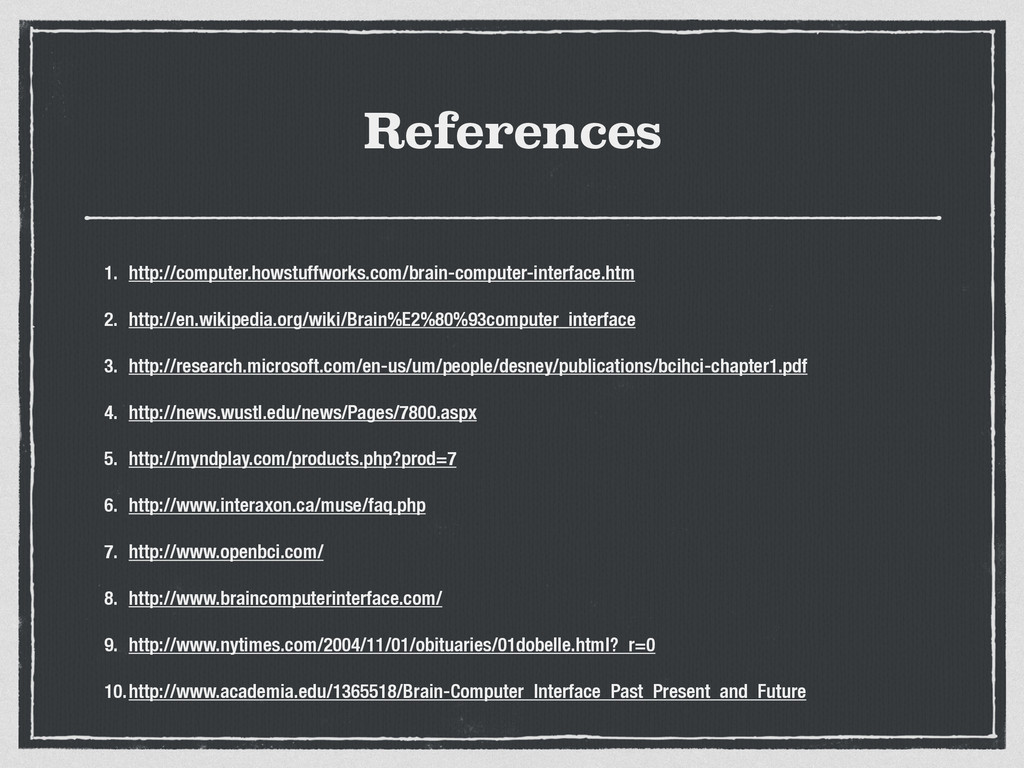
  16. References 1. http://computer.howstuffworks.com/brain-computer-interface.htm 2. http://en.wikipedia.org/wiki/Brain%E2%80%93computer_interface 3. http://research.microsoft.com/en-us/um/people/desney/publications/bcihci-chapter1.pdf 4. http://news.wustl.edu/news/Pages/7800.aspx 5.

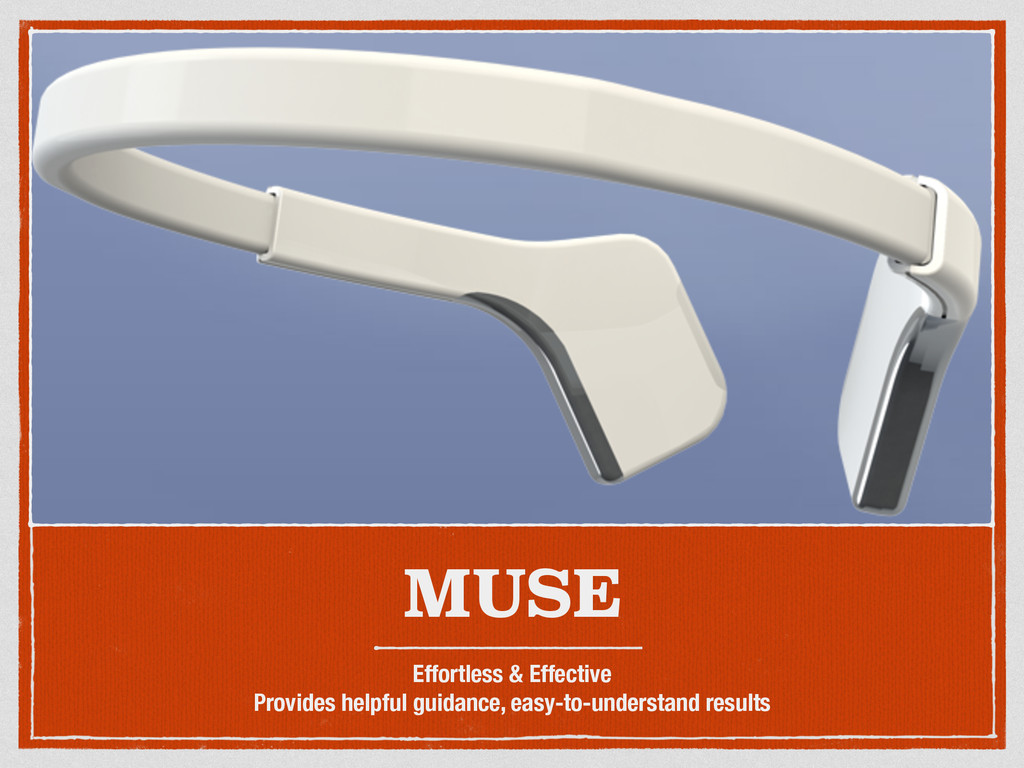
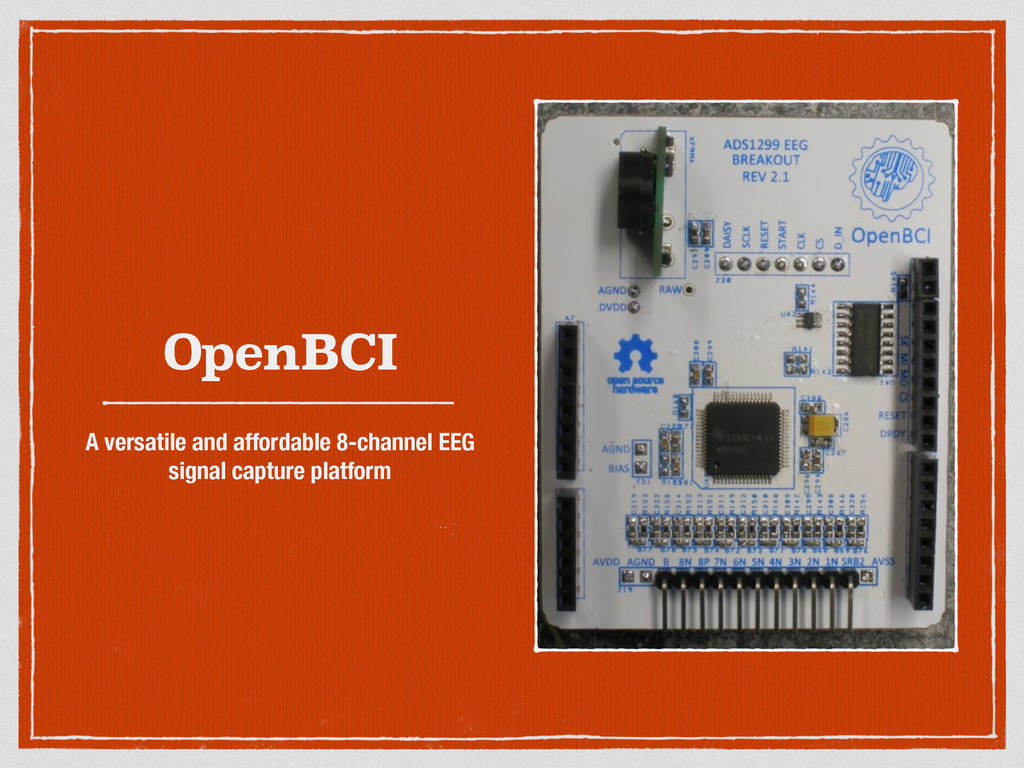
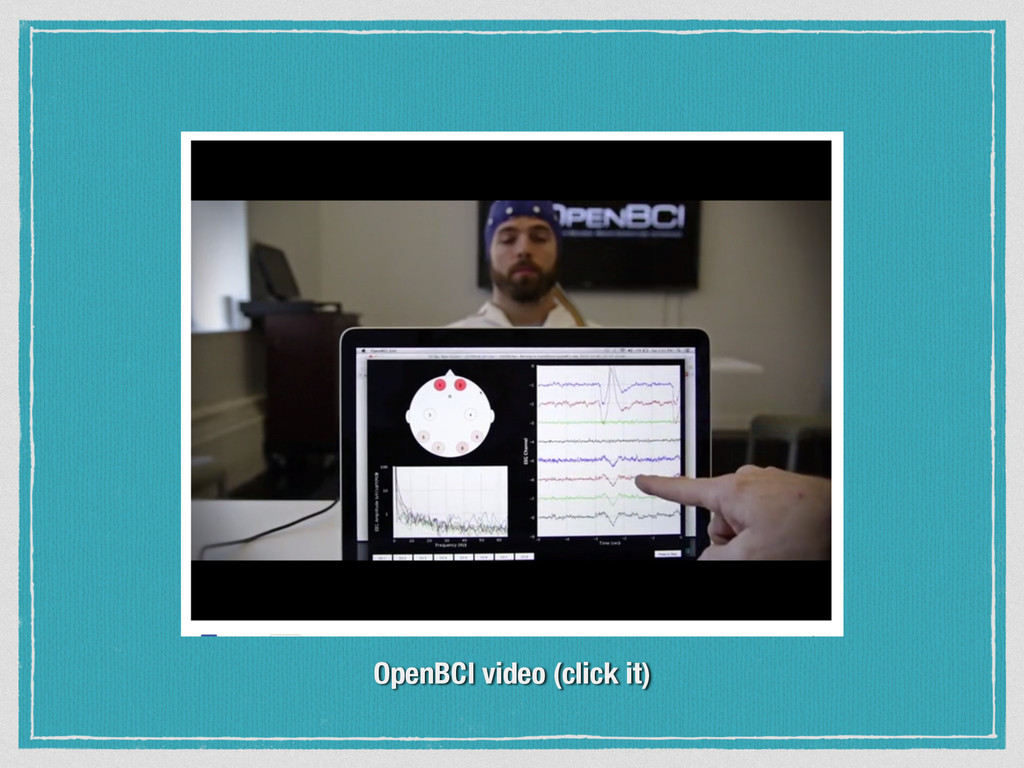
    http://myndplay.com/products.php?prod=7 6. http://www.interaxon.ca/muse/faq.php 7. http://www.openbci.com/ 8. http://www.braincomputerinterface.com/ 9. http://www.nytimes.com/2004/11/01/obituaries/01dobelle.html?_r=0 10.http://www.academia.edu/1365518/Brain-Computer_Interface_Past_Present_and_Future