Upgrade to Pro — share decks privately, control downloads, hide ads and more …

Mary Moen

Mary Moen

Dissertation Research Roundtable at the URI Summer Institute in Digital Literacy, July 27, 2016

Avatar for mary_moen

mary_moen

July 28, 2016

Other Decks in Education

Transcript

  1. TEACHERS’ SELF-DIRECTED INFORMAL LEARNING EXPERIENCES FOR TECHNOLOGY INTEGRATION: AN EXPLORATORY

    STUDY A DISSERTATION PRESENTED IN PARTIAL FULFILLMENT OF THE REQUIREMENTS FOR THE DEGREE OF DOCTOR OF PHILOSOPHY IN EDUCATION Mary Moen URI/RIC PhD in Education Program November 12, 2015
  2. Presentation Outline • Problem Statement • Research Questions • Methodology

    • Findings • Discussion • Next Steps • Questions
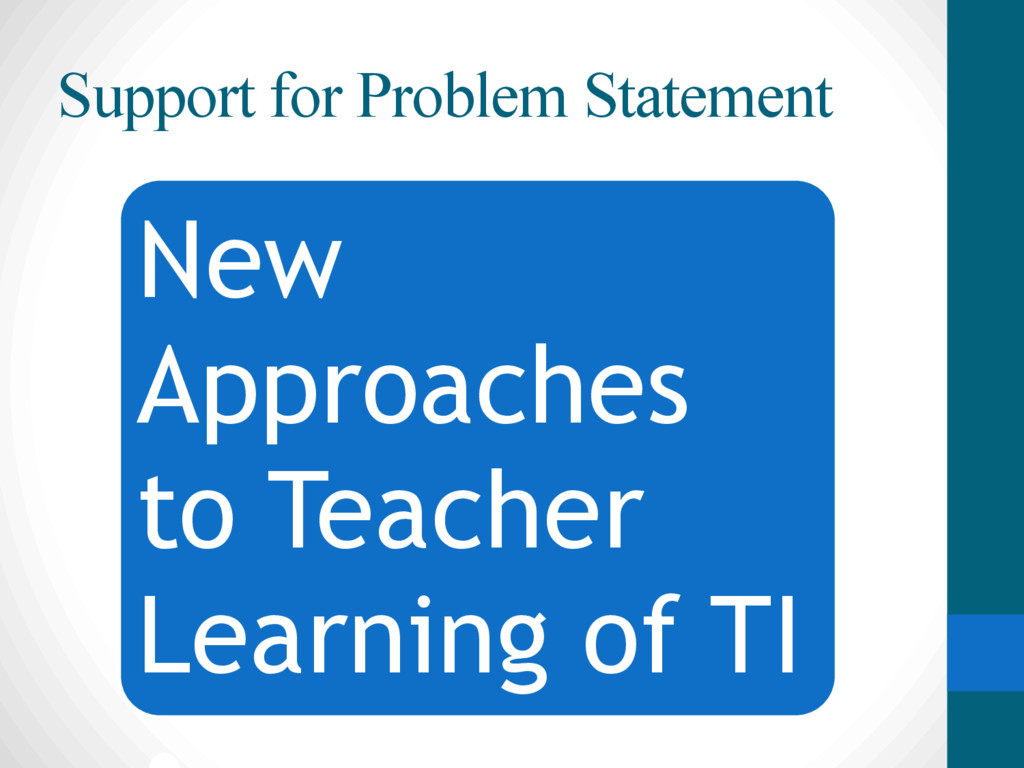
  3. Statement of the Problem As access to technology becomes less

    of an issue, teachers are under pressure to learn how to meaningfully integrate technology into their practice. The common solution of one-shot professional development with outside facilitators is oftentimes ineffective. New approaches to informal continuous professional learning need to be explored.
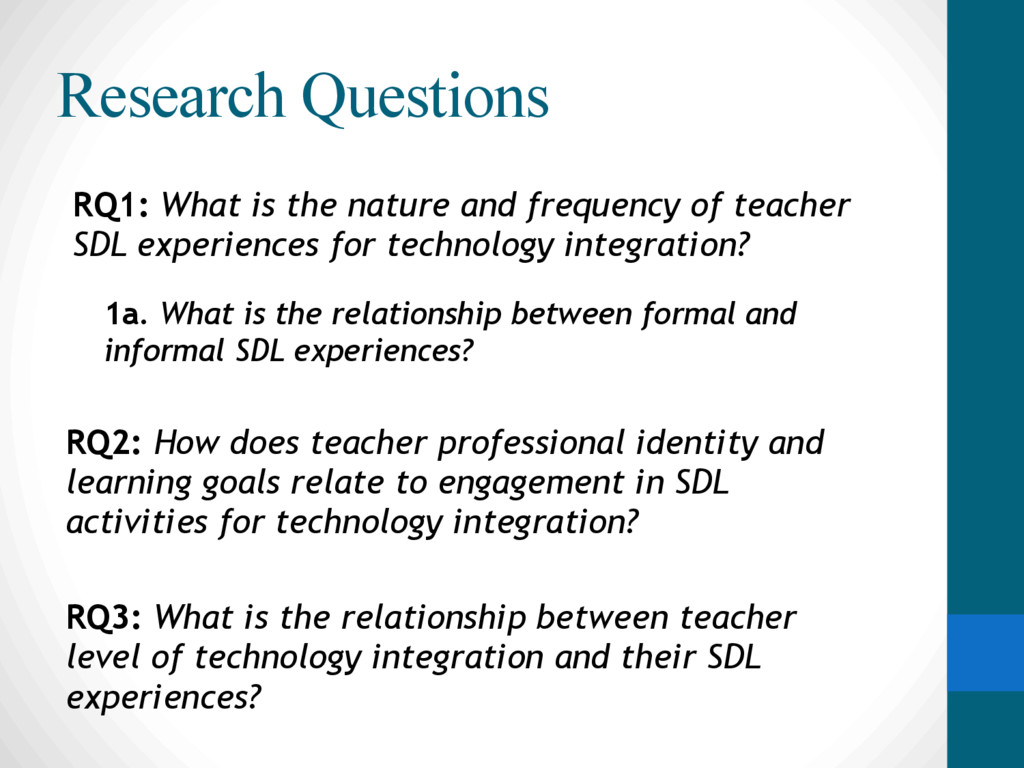
  4. Research Questions RQ1: What is the nature and frequency of

    teacher SDL experiences for technology integration? 1a. What is the relationship between formal and informal SDL experiences? RQ2: How does teacher professional identity and learning goals relate to engagement in SDL activities for technology integration? RQ3: What is the relationship between teacher level of technology integration and their SDL experiences?
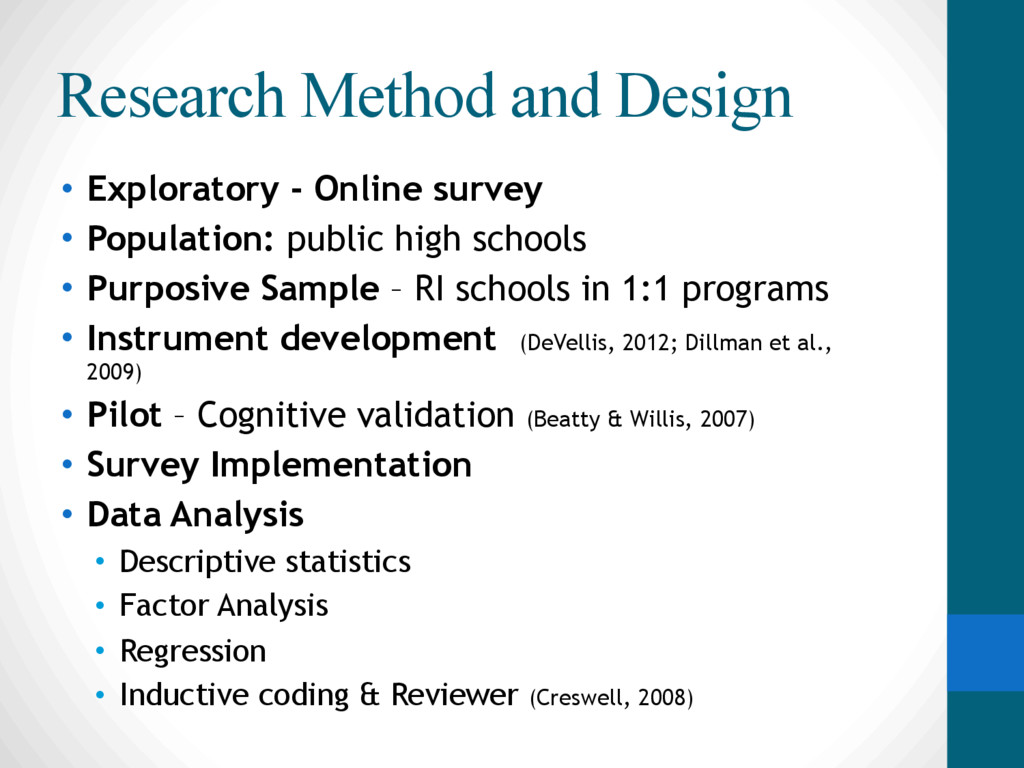
  5. Research Method and Design • Exploratory - Online survey •

    Population: public high schools • Purposive Sample – RI schools in 1:1 programs • Instrument development (DeVellis, 2012; Dillman et al., 2009) • Pilot – Cognitive validation (Beatty & Willis, 2007) • Survey Implementation • Data Analysis • Descriptive statistics • Factor Analysis • Regression • Inductive coding & Reviewer (Creswell, 2008)
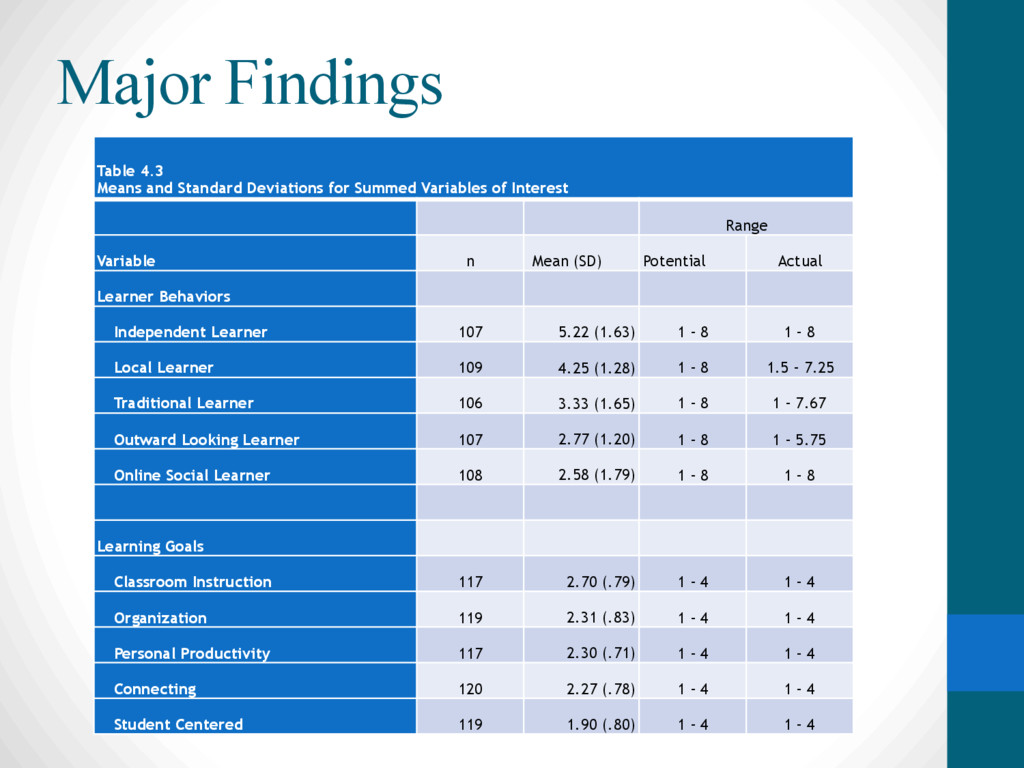
  6. Major Findings Table 4.3 Means and Standard Deviations for Summed

    Variables of Interest Range Variable n Mean (SD) Potential Actual Learner Behaviors Independent Learner 107 5.22 (1.63) 1 - 8 1 – 8 Local Learner 109 4.25 (1.28) 1 - 8 1.5 - 7.25 Traditional Learner 106 3.33 (1.65) 1 - 8 1 - 7.67 Outward Looking Learner 107 2.77 (1.20) 1 - 8 1 - 5.75 Online Social Learner 108 2.58 (1.79) 1 - 8 1 – 8 Learning Goals Classroom Instruction 117 2.70 (.79) 1 - 4 1 – 4 Organization 119 2.31 (.83) 1 - 4 1 – 4 Personal Productivity 117 2.30 (.71) 1 - 4 1 – 4 Connecting 120 2.27 (.78) 1 - 4 1 – 4 Student Centered 119 1.90 (.80) 1 - 4 1 – 4
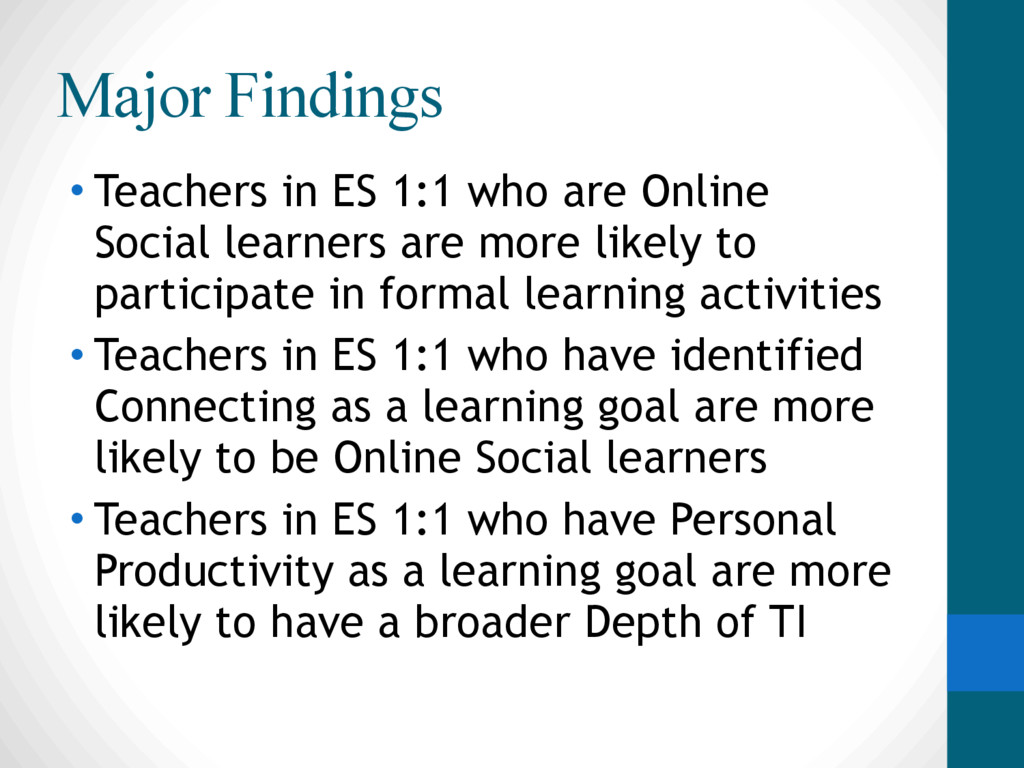
  7. Major Findings • Teachers in ES 1:1 who are Online

    Social learners are more likely to participate in formal learning activities • Teachers in ES 1:1 who have identified Connecting as a learning goal are more likely to be Online Social learners • Teachers in ES 1:1 who have Personal Productivity as a learning goal are more likely to have a broader Depth of TI
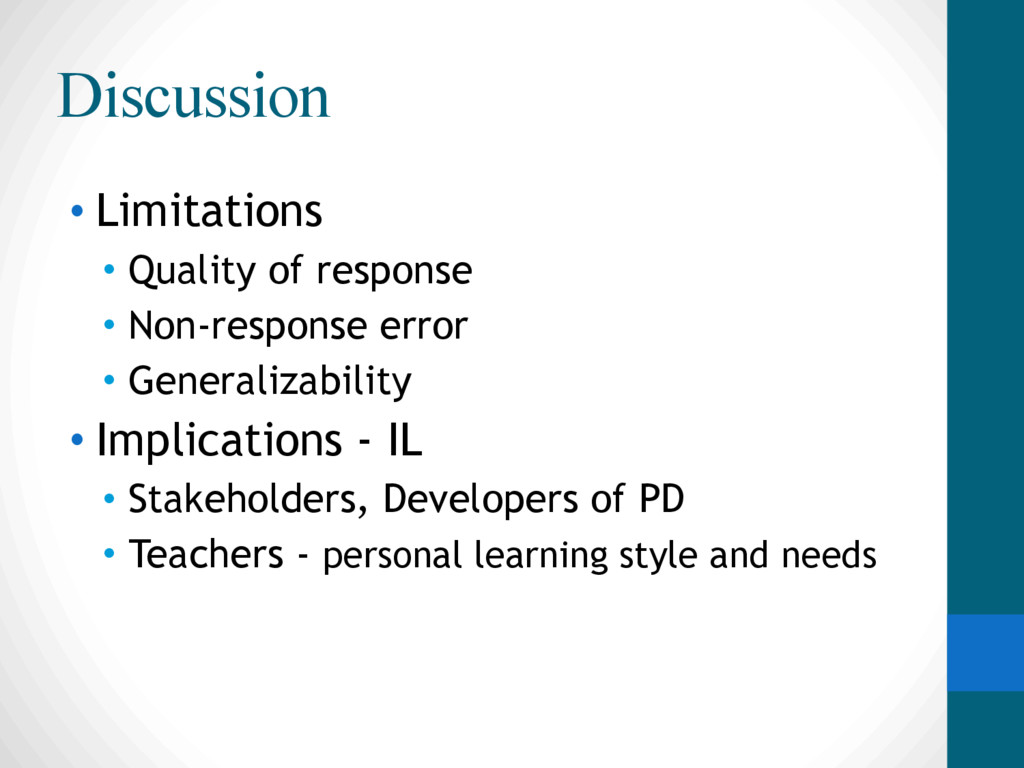
  8. Discussion • Limitations • Quality of response • Non-response error

    • Generalizability • Implications - IL • Stakeholders, Developers of PD • Teachers - personal learning style and needs
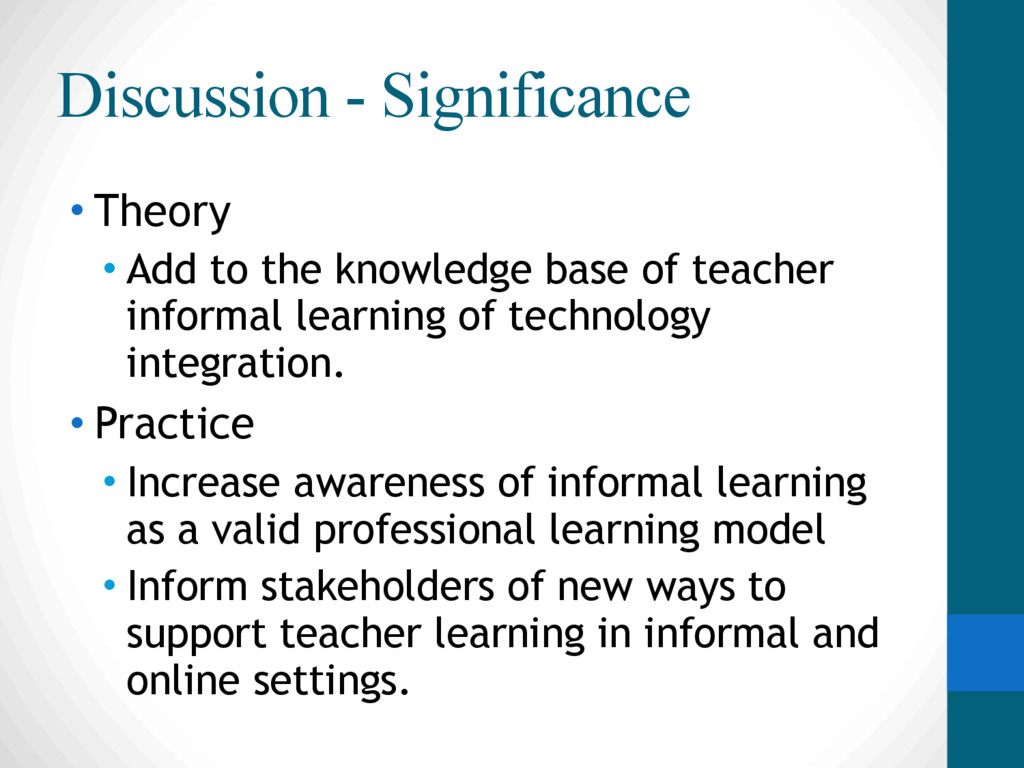
  9. Discussion - Significance • Theory • Add to the knowledge

    base of teacher informal learning of technology integration. • Practice • Increase awareness of informal learning as a valid professional learning model • Inform stakeholders of new ways to support teacher learning in informal and online settings.
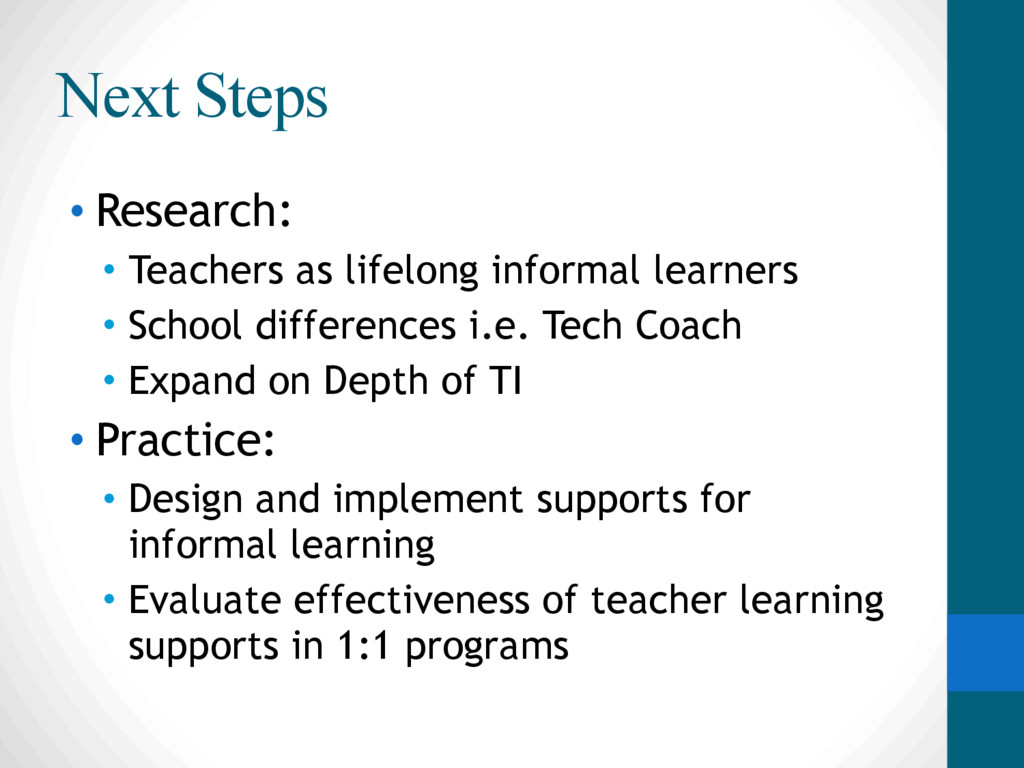
  10. Next Steps • Research: • Teachers as lifelong informal learners

    • School differences i.e. Tech Coach • Expand on Depth of TI • Practice: • Design and implement supports for informal learning • Evaluate effectiveness of teacher learning supports in 1:1 programs
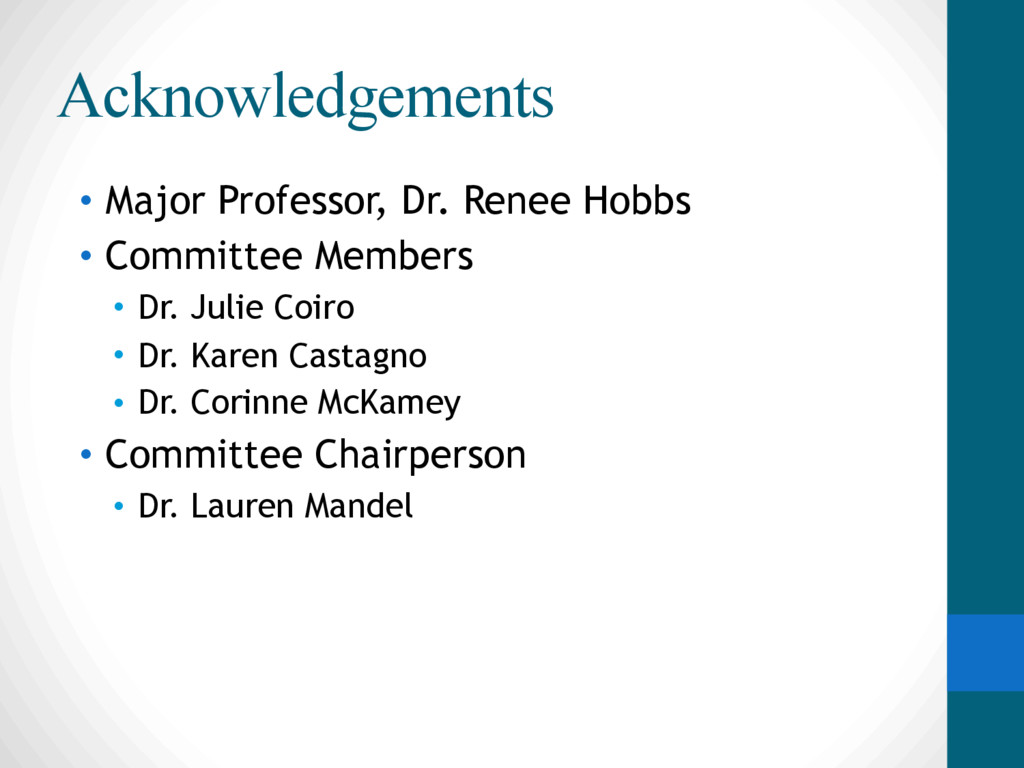
  11. Acknowledgements • Major Professor, Dr. Renee Hobbs • Committee Members

    • Dr. Julie Coiro • Dr. Karen Castagno • Dr. Corinne McKamey • Committee Chairperson • Dr. Lauren Mandel