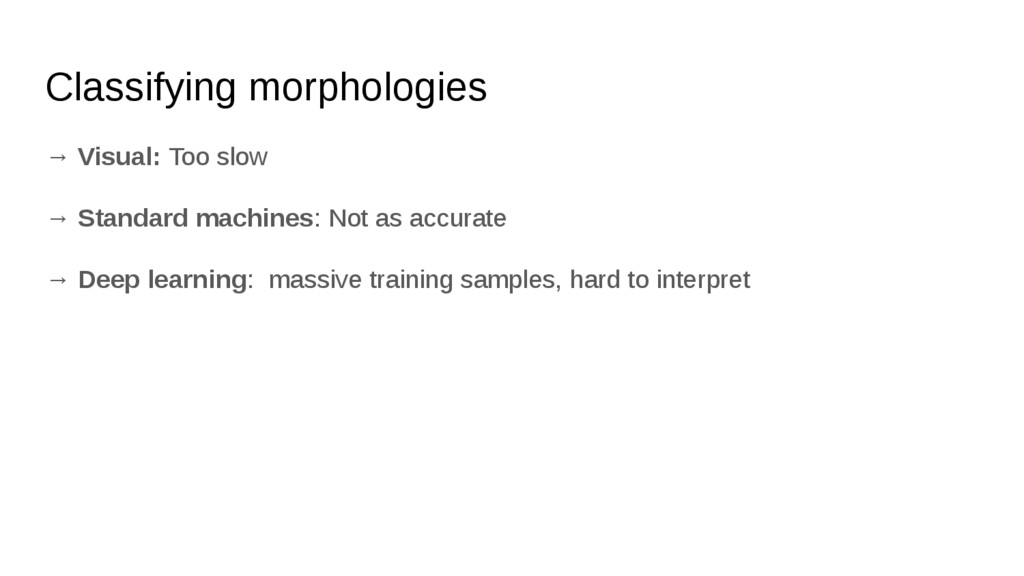
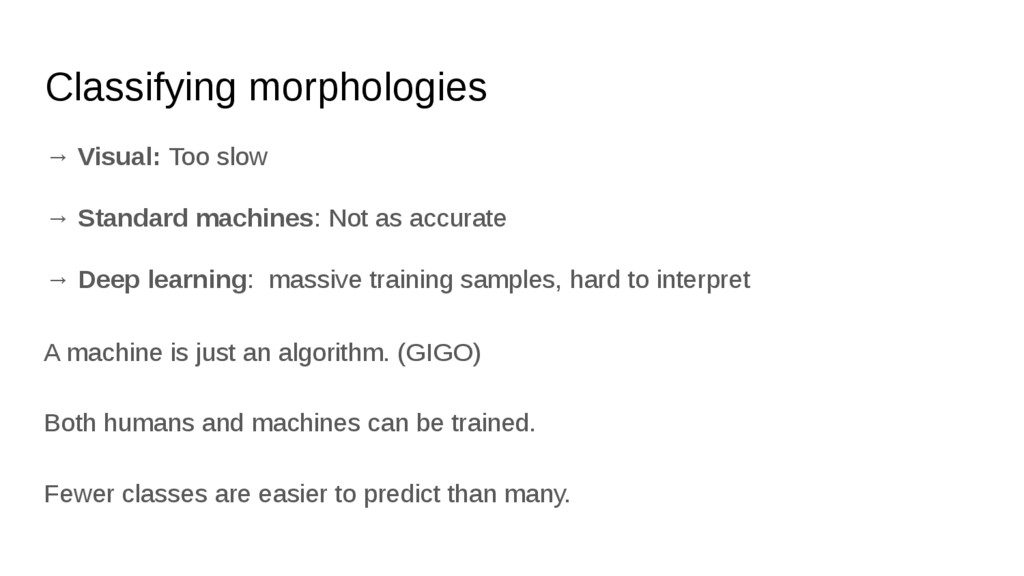
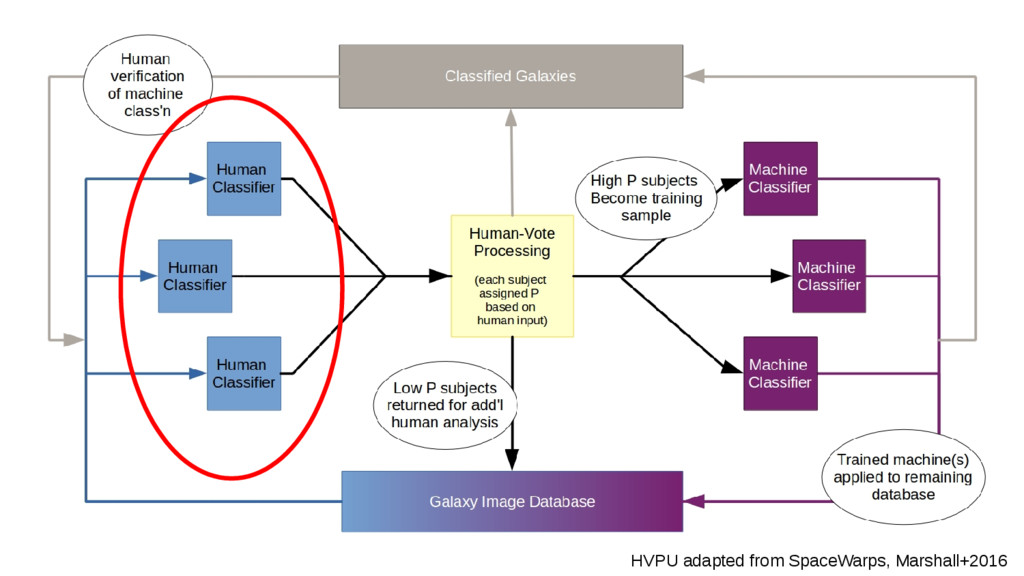
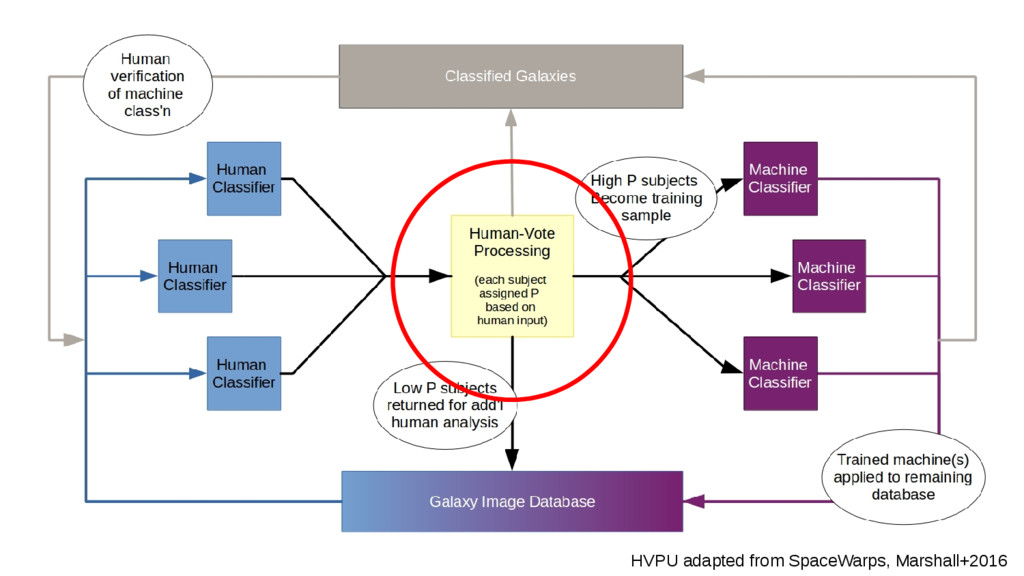
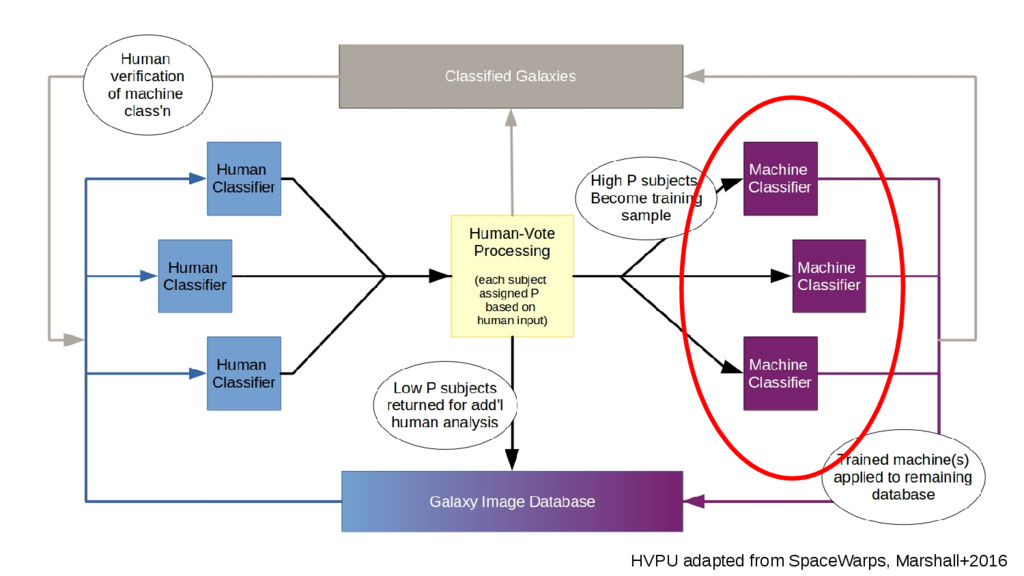
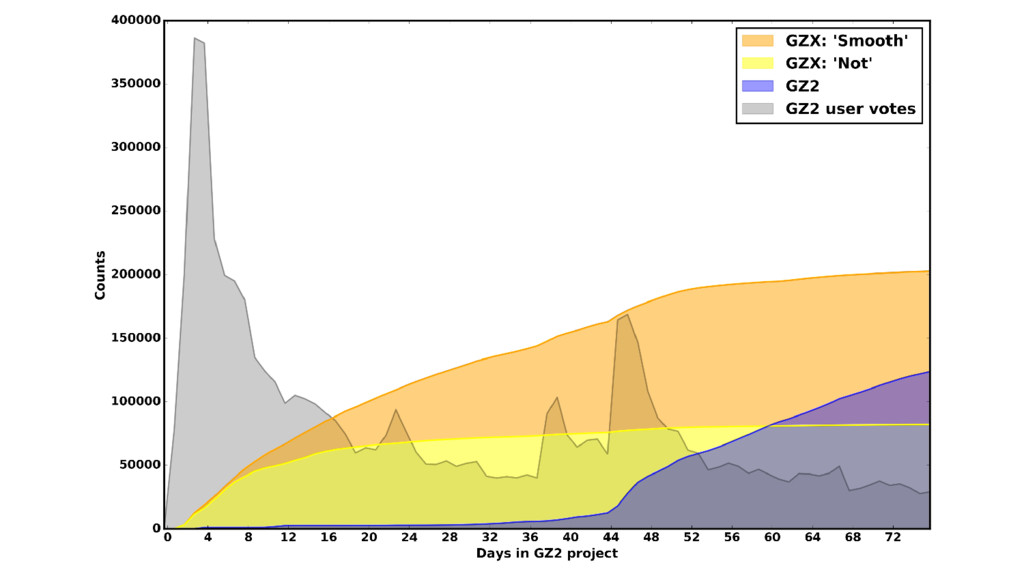
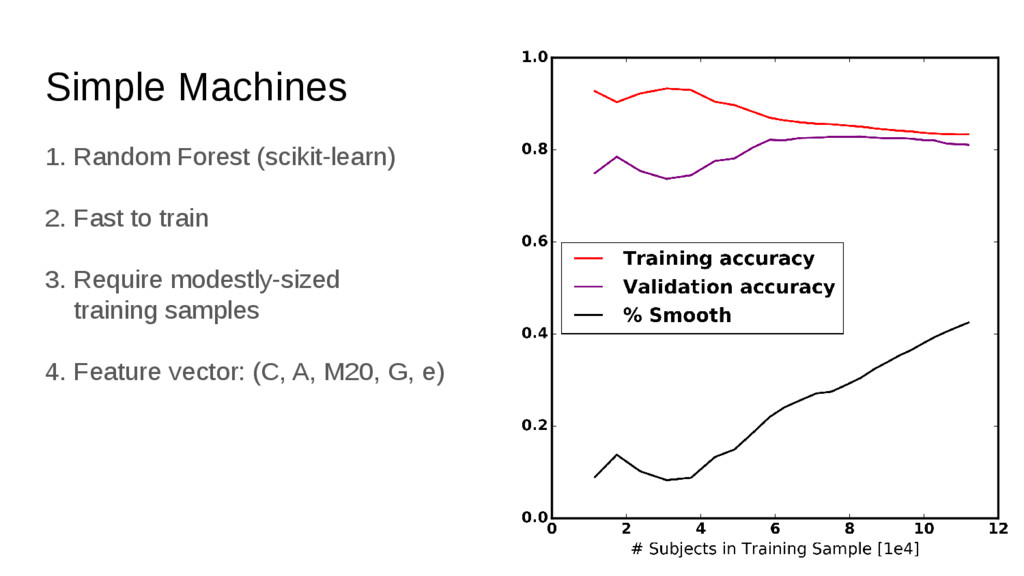
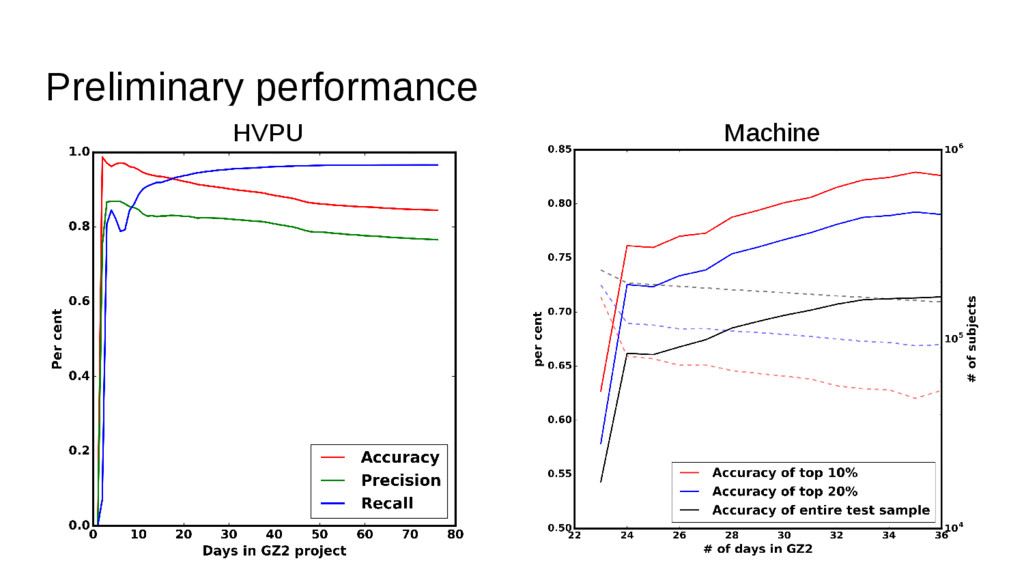
as accurate → Deep learning: massive training samples, hard to interpret A machine is just an algorithm. (GIGO) Both humans and machines can be trained. Fewer classes are easier to predict than many.
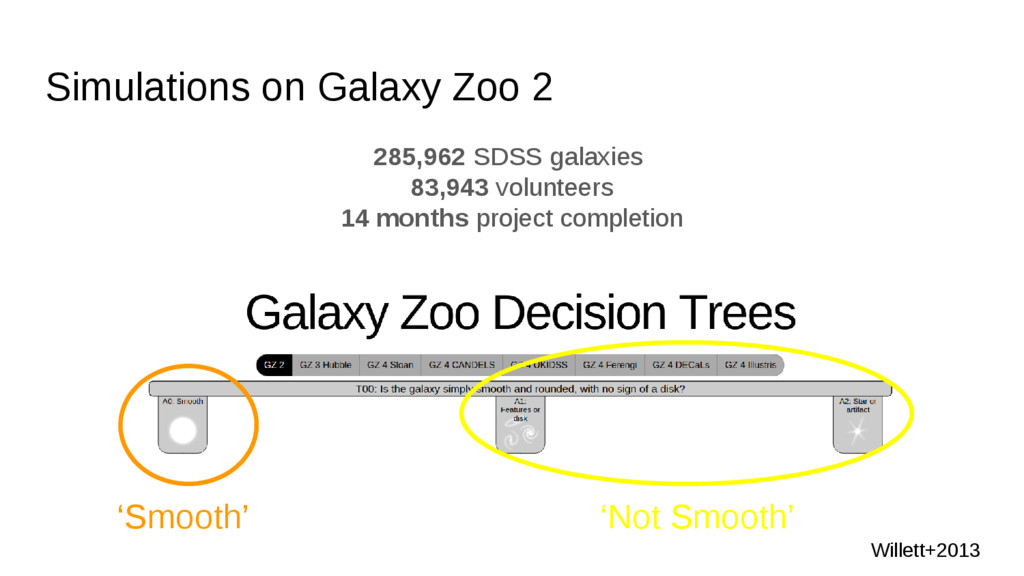
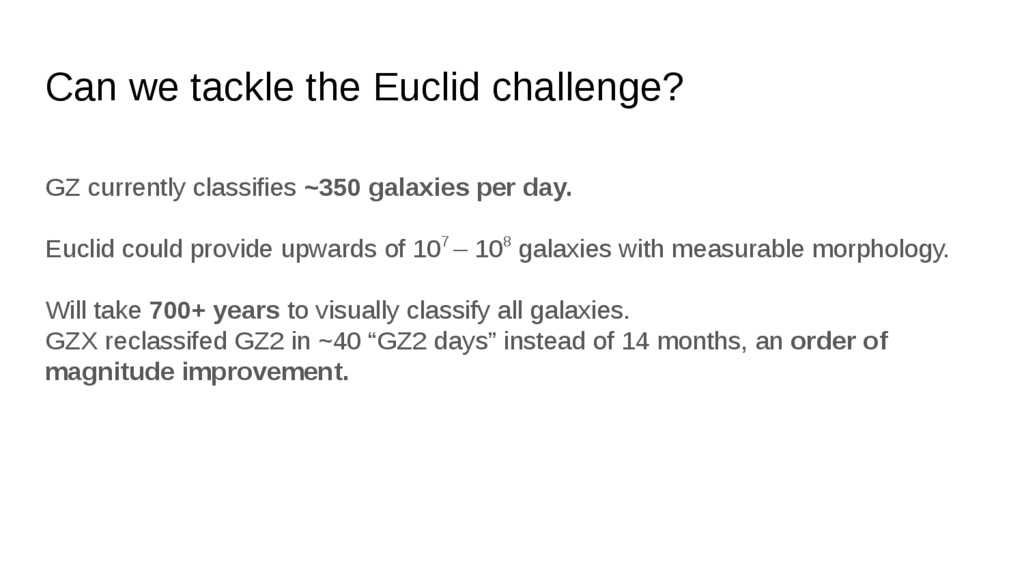
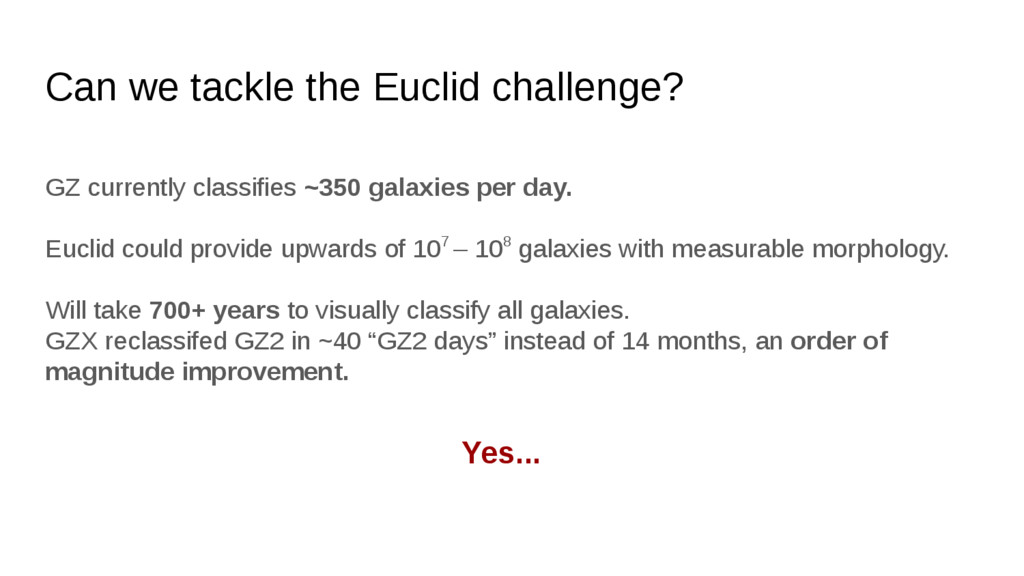
galaxies per day. Euclid could provide upwards of 107 – 108 galaxies with measurable morphology. Will take 700+ years to visually classify all galaxies. GZX reclassifed GZ2 in ~40 “GZ2 days” instead of 14 months, an order of magnitude improvement.
galaxies per day. Euclid could provide upwards of 107 – 108 galaxies with measurable morphology. Will take 700+ years to visually classify all galaxies. GZX reclassifed GZ2 in ~40 “GZ2 days” instead of 14 months, an order of magnitude improvement. Yes...
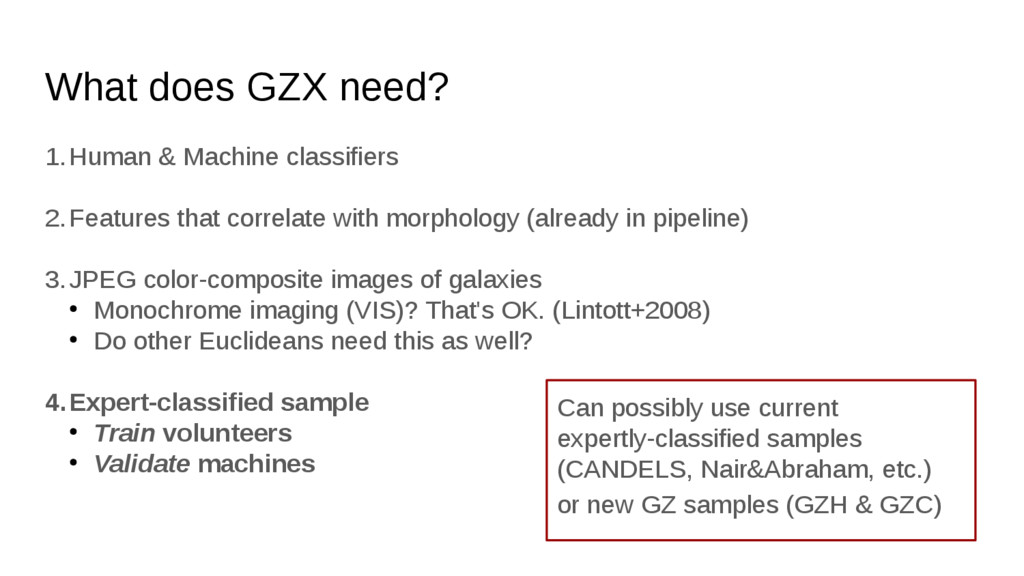
correlate with morphology (already in pipeline) 3.JPEG color-composite images of galaxies • Monochrome imaging (VIS)? That's OK. (Lintott+2008) • Do other Euclideans need this as well? 4.Expert-classified sample • Train volunteers • Validate machines Can possibly use current expertly-classified samples (CANDELS, Nair&Abraham, etc.) or new GZ samples (GZH & GZC)
Zoo classifications for ~20K (running more...) b.Lotz measured CAS, G-M on these 2.Test feature manipulation 3.Test other morphology questions 4.Run live version
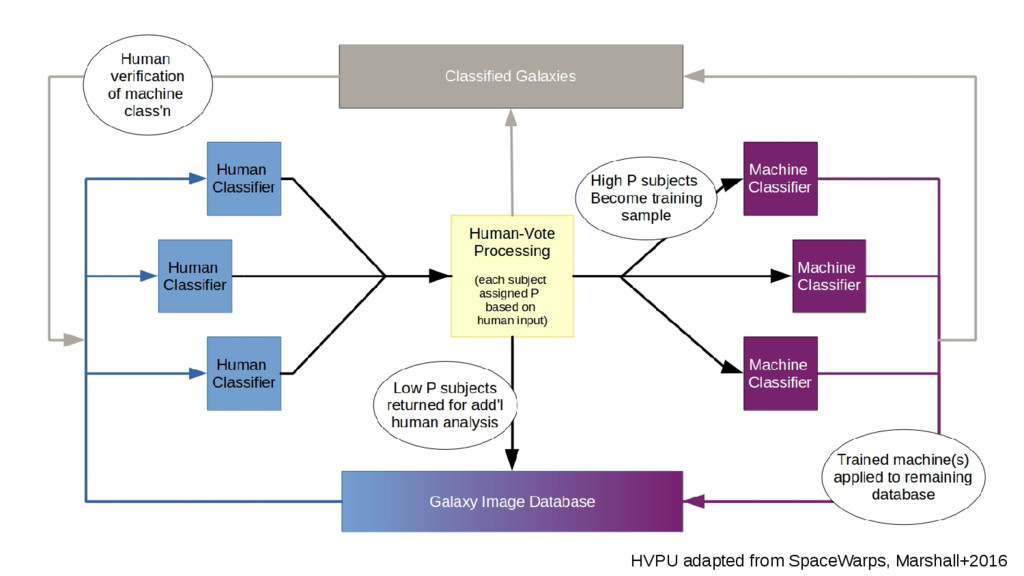
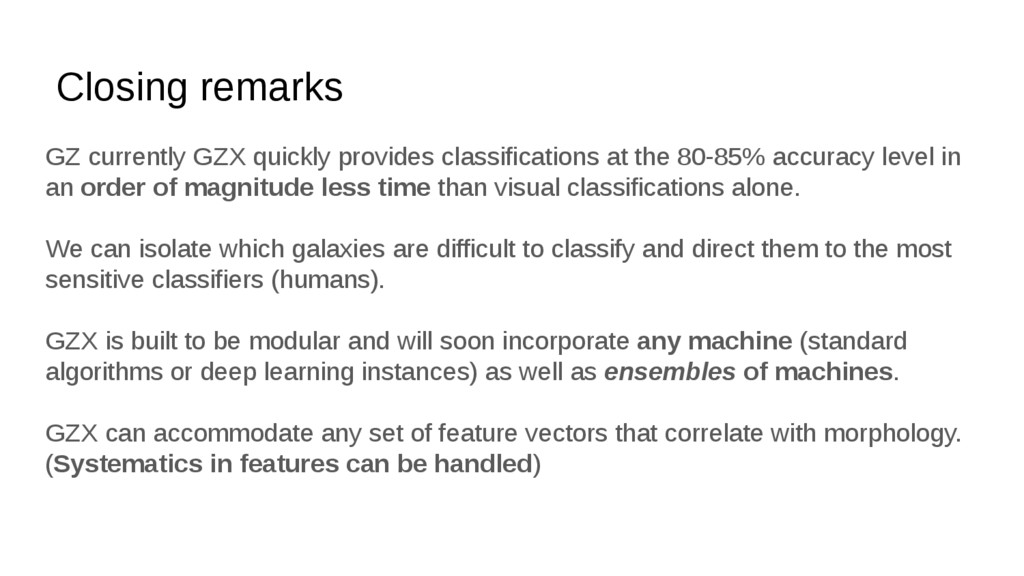
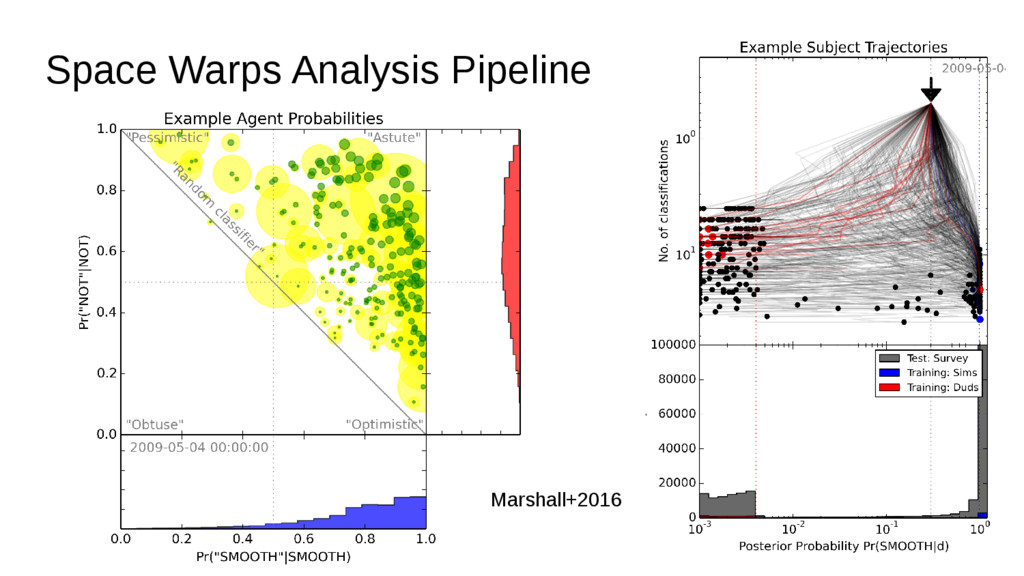
80-85% accuracy level in an order of magnitude less time than visual classifications alone. We can isolate which galaxies are difficult to classify and direct them to the most sensitive classifiers (humans). GZX is built to be modular and will soon incorporate any machine (standard algorithms or deep learning instances) as well as ensembles of machines. GZX can accommodate any set of feature vectors that correlate with morphology. (Systematics in features can be handled)


 satai
 rikkabotan7
 wataruuuuu
 institutdelelevage
 mikimhk
 koide3
 nzw0301
 tattaka
 kobayashi31
 fr0gger
 ontheslope
 takehaya
 letsgokoyo
 speakerdeck
 takai
 soudai
 davidcarrasco
 marktimemedia
 inesmontani
 reverentgeek
 helmedeiros
 cassininazir
 axbom
 pauljervisheath