Managing client funds is one of the most important responsibilities for any law firm. Legal professionals are required to maintain strict financial control when handling money that belongs to clients. Proper management of trust accounts helps ensure compliance, maintain transparency, and protect client interests. This is why law firm trust accounting plays a critical role in the financial operations of legal practices. Understanding Law Firm Trust Accounting Trust accounting refers to the process of managing funds that clients entrust to a law firm for specific legal purposes. These funds are typically held separately from the firm's operating accounts and must be managed according to professional and regulatory requirements. Law firms may receive retainers, settlement funds, court-related deposits, or other client monies that need to be safeguarded until they are used for their intended purpose. Accurate trust accounting ensures that every transaction is properly recorded and that client funds remain protected. Maintaining separate trust accounts helps prevent financial errors and supports transparency throughout the legal process.
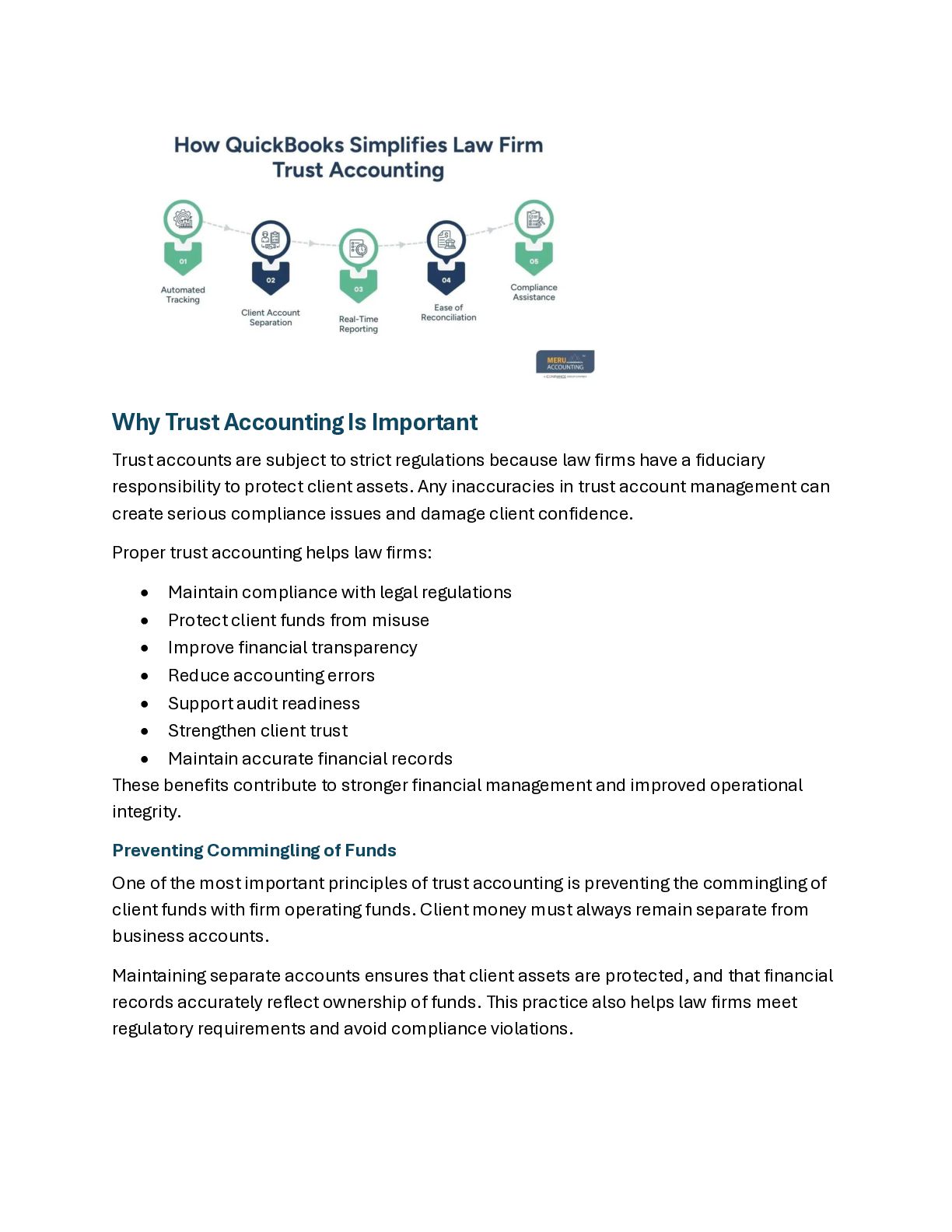
strict regulations because law firms have a fiduciary responsibility to protect client assets. Any inaccuracies in trust account management can create serious compliance issues and damage client confidence. Proper trust accounting helps law firms: • Maintain compliance with legal regulations • Protect client funds from misuse • Improve financial transparency • Reduce accounting errors • Support audit readiness • Strengthen client trust • Maintain accurate financial records These benefits contribute to stronger financial management and improved operational integrity. Preventing Commingling of Funds One of the most important principles of trust accounting is preventing the commingling of client funds with firm operating funds. Client money must always remain separate from business accounts. Maintaining separate accounts ensures that client assets are protected, and that financial records accurately reflect ownership of funds. This practice also helps law firms meet regulatory requirements and avoid compliance violations.
requires structured processes and ongoing monitoring. Law firms can improve accuracy and compliance by implementing several proven accounting practices. Maintain Detailed Transaction Records Every trust account transaction should be recorded accurately and promptly. This includes deposits, withdrawals, transfers, fees, and disbursements. Detailed records provide a clear audit trail and help firms verify account activity when needed. Maintaining complete documentation also supports compliance reviews and internal financial controls. Perform Regular Reconciliations Trust account reconciliations are essential for identifying discrepancies and ensuring that account balances remain accurate. Comparing trust account records with bank statements helps detect errors early and prevents financial issues from escalating. Regular reconciliations improve transparency and help law firms maintain confidence in their financial records. Strengthening Compliance Through Accurate Reporting Accurate reporting is essential for trust account management. Law firms must be able to demonstrate that client funds are being handled appropriately and that all transactions are properly documented. Consistent reporting practices help firms maintain compliance with professional standards while reducing the risk of regulatory scrutiny. Organized financial records also simplify audits and support stronger internal controls. Leveraging Technology for Better Accuracy Modern accounting systems can help law firms manage trust accounts more efficiently. Digital tools support transaction tracking, reconciliation processes, reporting, and recordkeeping. By utilizing accounting technology, firms can reduce manual errors, improve efficiency, and maintain more accurate financial information. How Meru Accounting Supports Law Firms Meru Accounting Provides professional bookkeeping, accounting, and financial management services for businesses across various industries, including legal practices.
trust account record management, and ongoing accounting support. With experienced professionals and structured accounting processes, Meru Accounting helps law firms maintain accurate financial records, improve compliance management, and streamline accounting operations. Their services support financial transparency and allow legal professionals to focus on serving clients while maintaining strong financial control. Conclusion Trusting account management is a critical responsibility for every law firm. Proper accounting practices help protect client funds, maintain compliance, and improve financial transparency. By maintaining detailed records, performing regular reconciliations, and following proven trust accounting procedures, law firms can reduce risks and strengthen client confidence. Effective trust accounting provides the foundation for responsible financial management and long-term success in the legal industry.


 e5ua
 c0rp_mdm
 yasslab
 advalistar
 kazumakitao
 mercari_inc
 takemura_yuto
 speakbuddy
 mediphone
 nakahara
 roms
 iwashi86
 aki_iinuma
 axbom
 jonyablonski
 destraynor
 scottboms
 samtorres
 aleyda
 malarkey
 mkilby
 jcasabona
 shpigford
 baasie