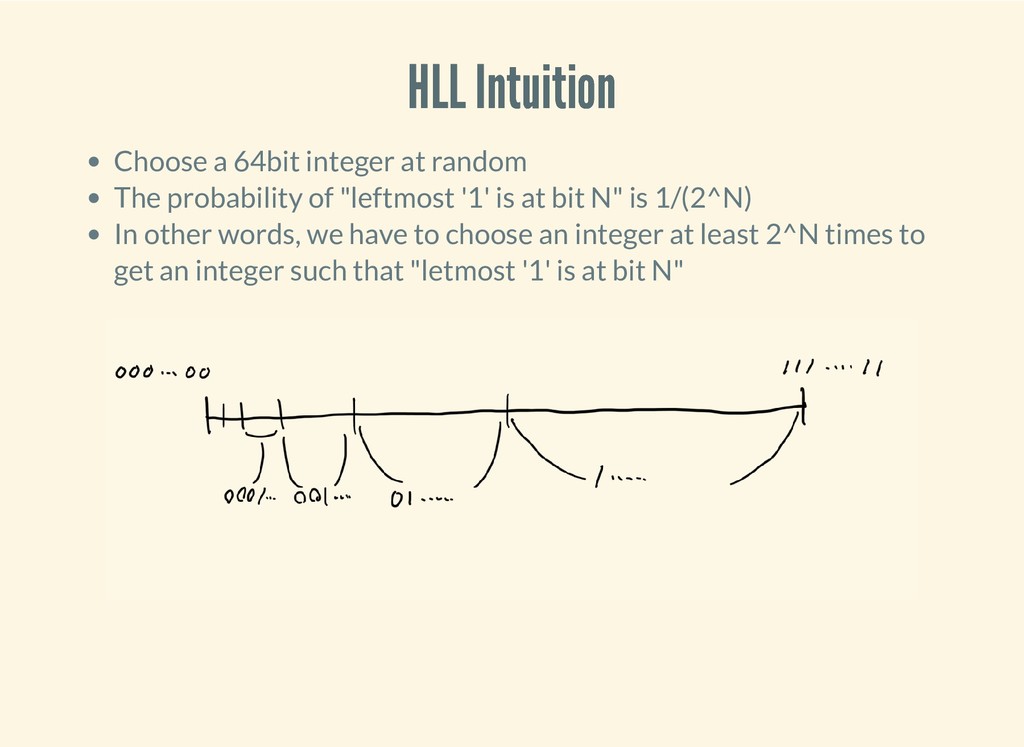
The probability of "leftmost '1' is at bit N" is 1/(2^N) In other words, we have to choose an integer at least 2^N times to get an integer such that "letmost '1' is at bit N"
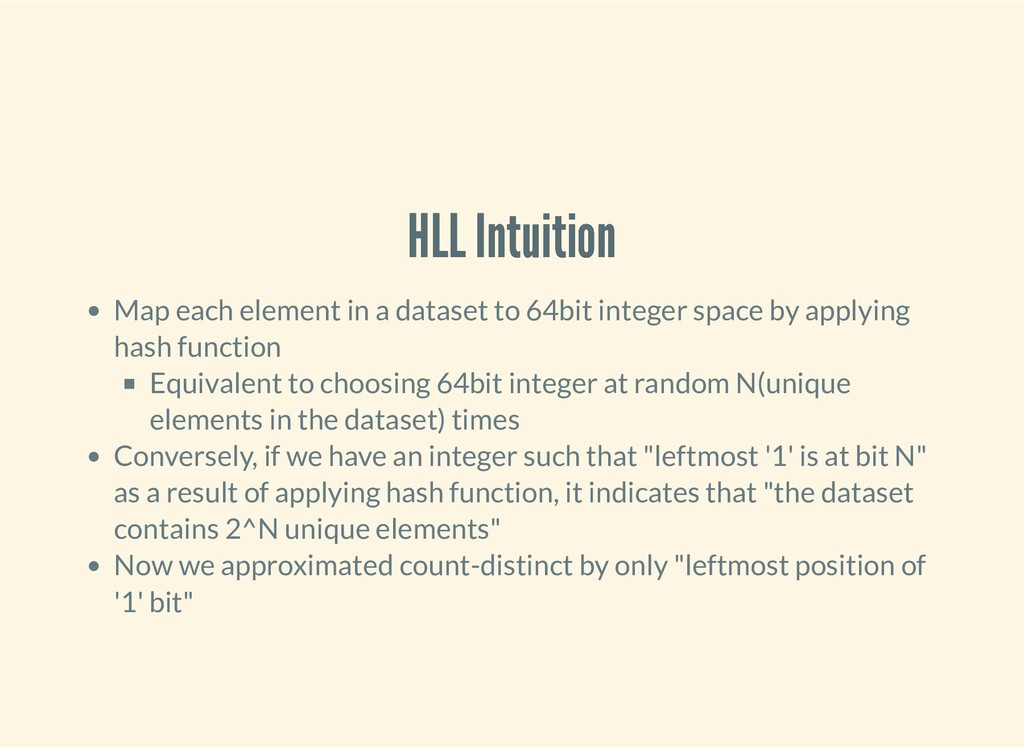
to 64bit integer space by applying hash function Equivalent to choosing 64bit integer at random N(unique elements in the dataset) times Conversely, if we have an integer such that "leftmost '1' is at bit N" as a result of applying hash function, it indicates that "the dataset contains 2^N unique elements" Now we approximated count-distinct by only "leftmost position of '1' bit"
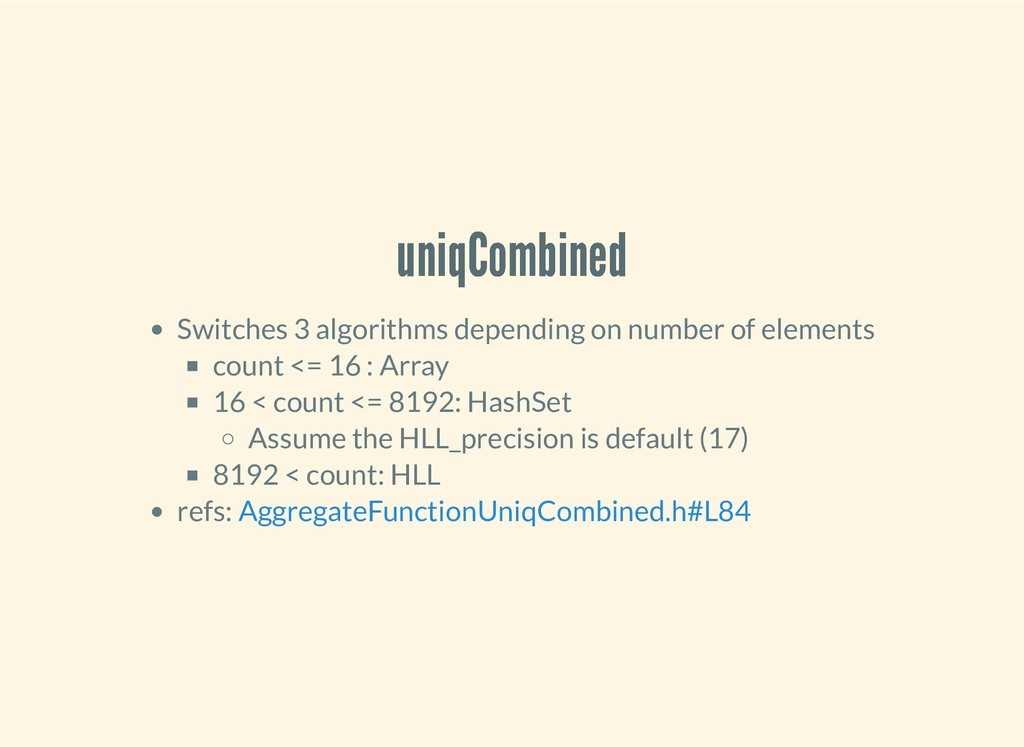
(i.e. HLL sketch) :) SELECT uniqCombinedMerge(state) FROM ( SELECT uniqCombinedState(cookie_id) AS state FROM page_views WHERE domain = 'example.com' UNION ALL SELECT uniqCombinedState(cookie_id) AS state FROM page_views WHERE domain = 'example2.com'); ┌─uniqCombinedMerge(state)─┐ │ 195763 │ └──────────────────────────┘
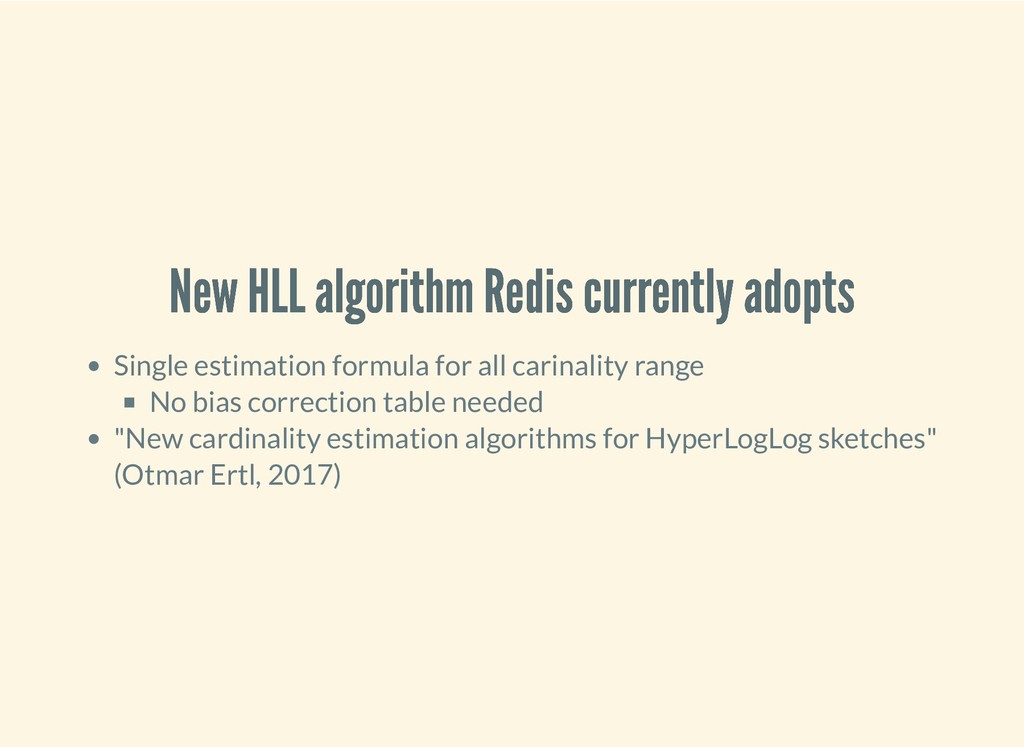
currently adopts Single estimation formula for all carinality range No bias correction table needed "New cardinality estimation algorithms for HyperLogLog sketches" (Otmar Ertl, 2017)

 SiteGround - Reliable hosting with speed, security, and support you can count on.


 ocadaruma
 teamlab
 sh_fk2
 pfn
pfn
 4o1sobblue
 genda
genda
 shogo4131
 bitkey
 iktakahiro
 terurou
 smashingmag
 ianozsvald
 marcelosomers
 maltzj
 rmw
rmw
 jnunemaker
 baasie
 techseoconnect
 mayatellez
 livdayseo
 bluesmoon
 jacobian