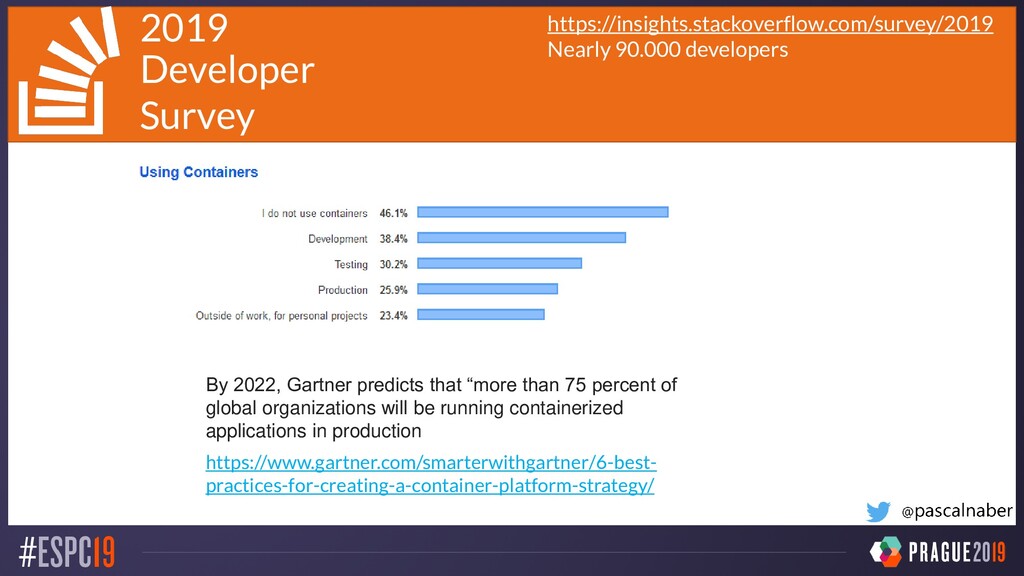
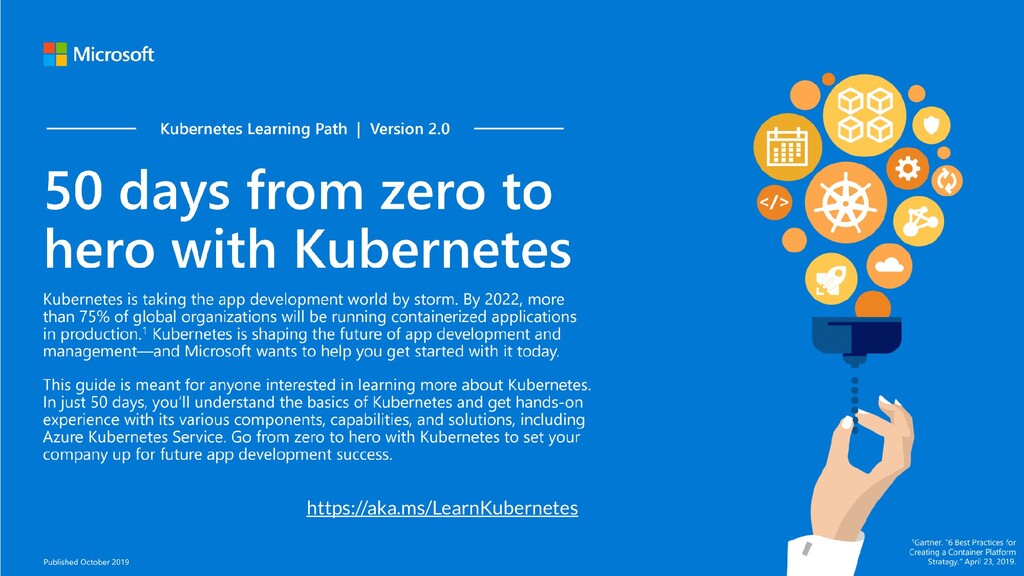
predicts that “more than 75 percent of global organizations will be running containerized applications in production https://www.gartner.com/smarterwithgartner/6-best- practices-for-creating-a-container-platform-strategy/
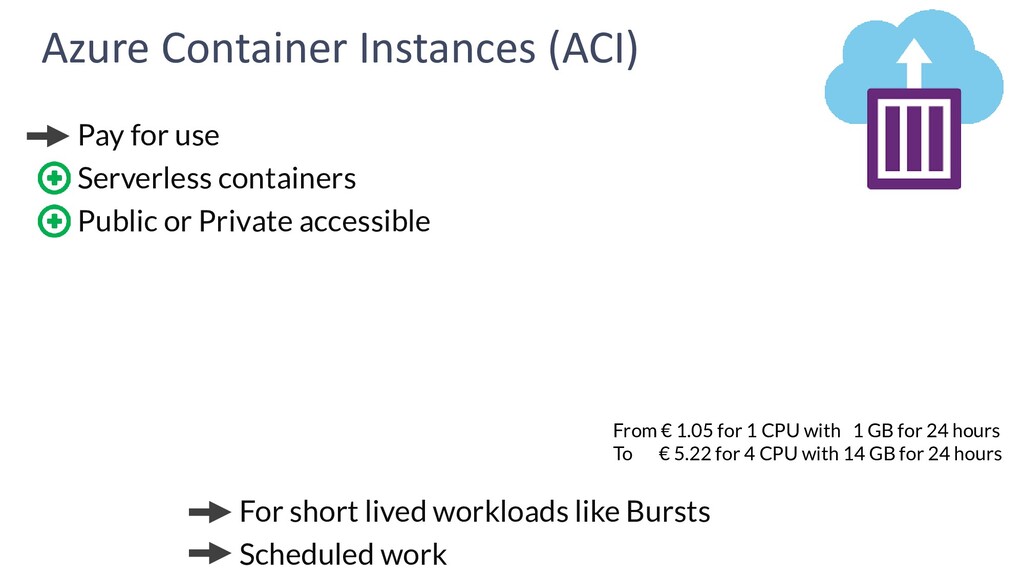
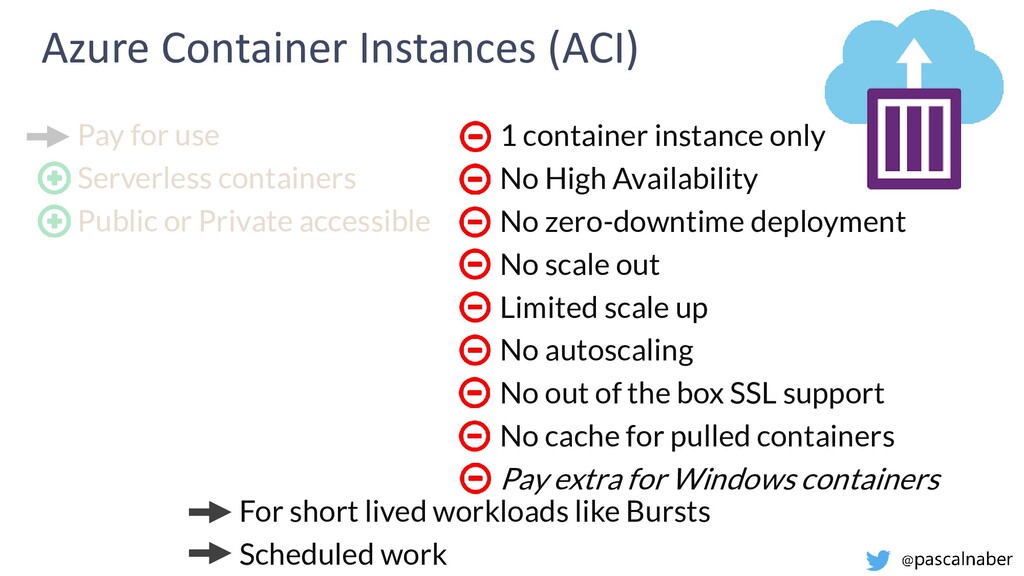
or Private accessible For short lived workloads like Bursts Scheduled work From € 1.05 for 1 CPU with 1 GB for 24 hours To € 5.22 for 4 CPU with 14 GB for 24 hours
or Private accessible 1 container instance only No High Availability No zero-downtime deployment No scale out Limited scale up No autoscaling No out of the box SSL support No cache for pulled containers Pay extra for Windows containers For short lived workloads like Bursts Scheduled work
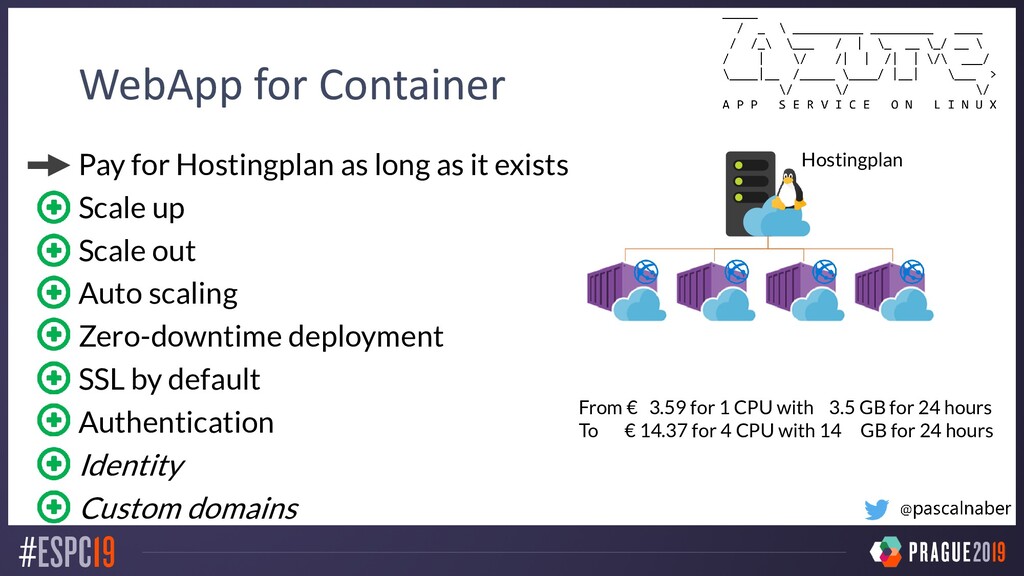
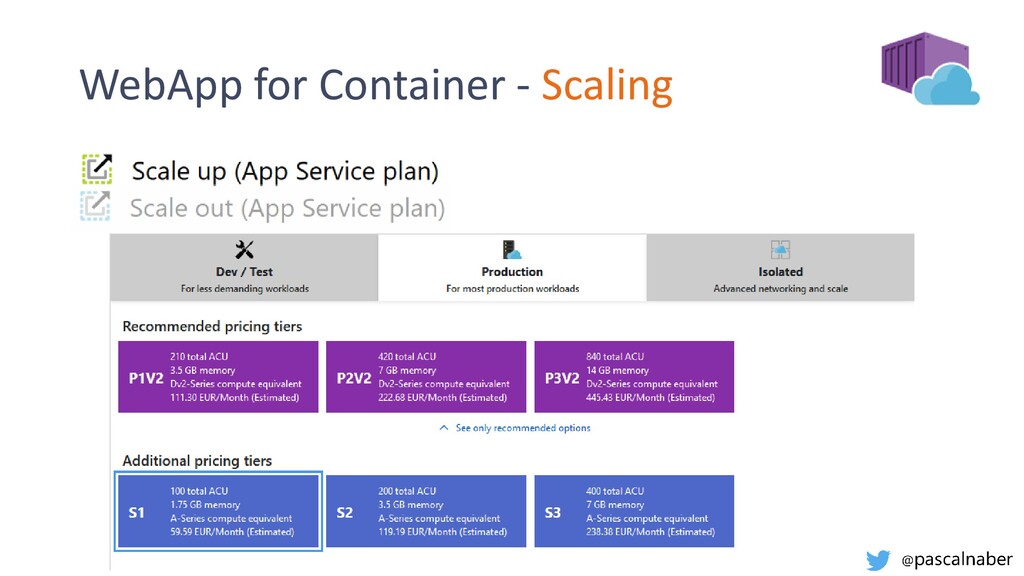
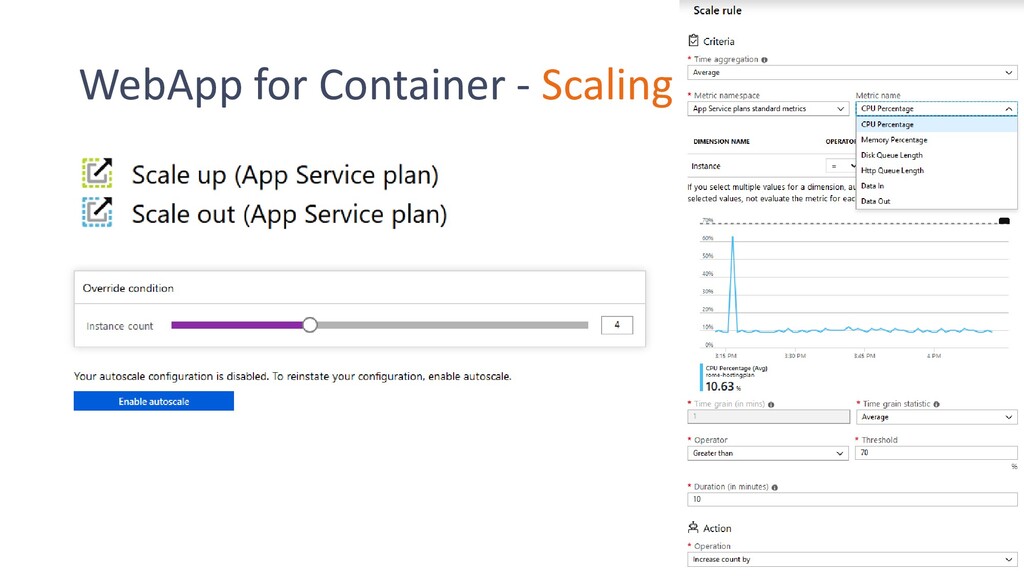
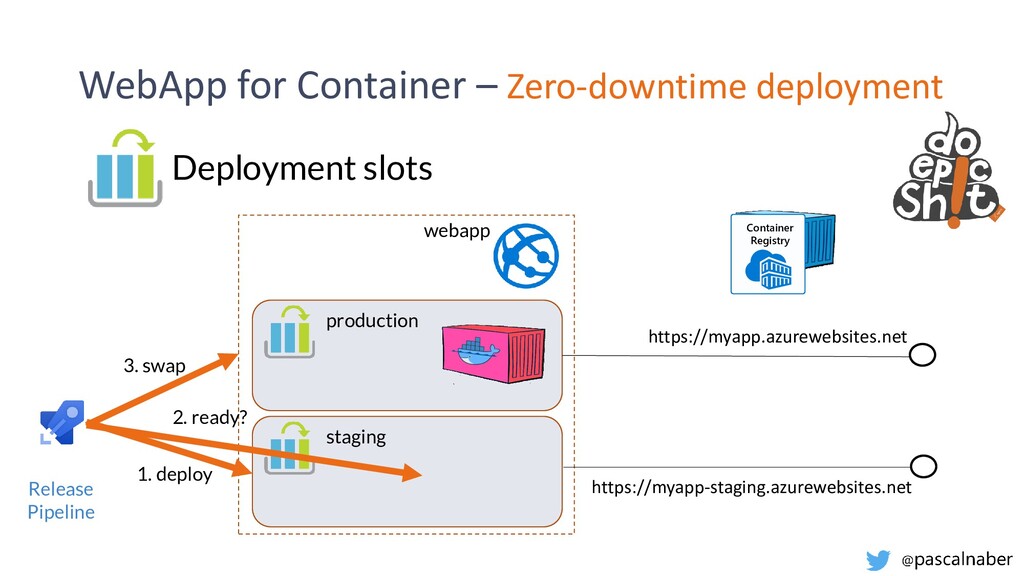
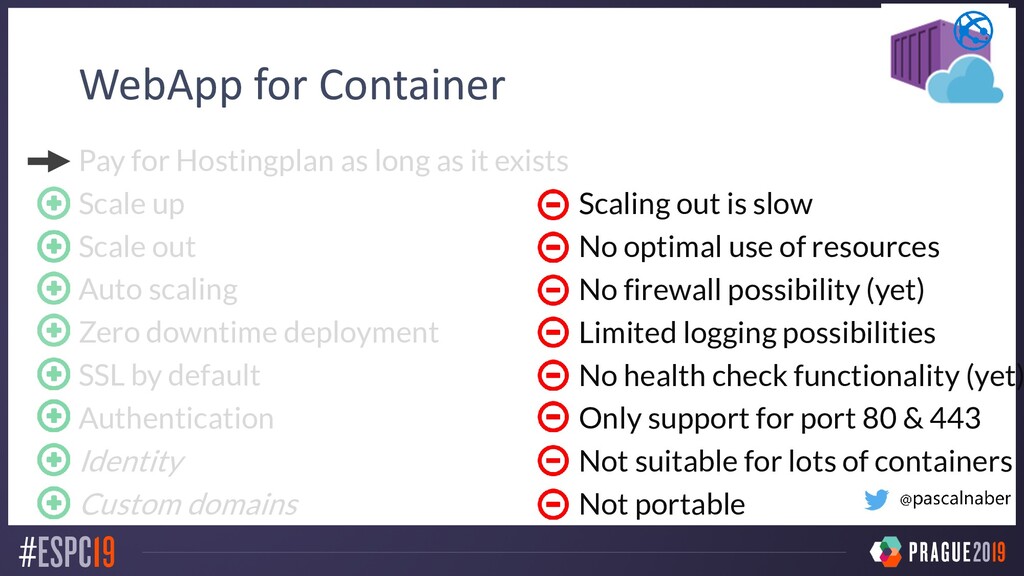
exists Scale up Scale out Auto scaling Zero-downtime deployment SSL by default Authentication Identity Custom domains Hostingplan From € 3.59 for 1 CPU with 3.5 GB for 24 hours To € 14.37 for 4 CPU with 14 GB for 24 hours
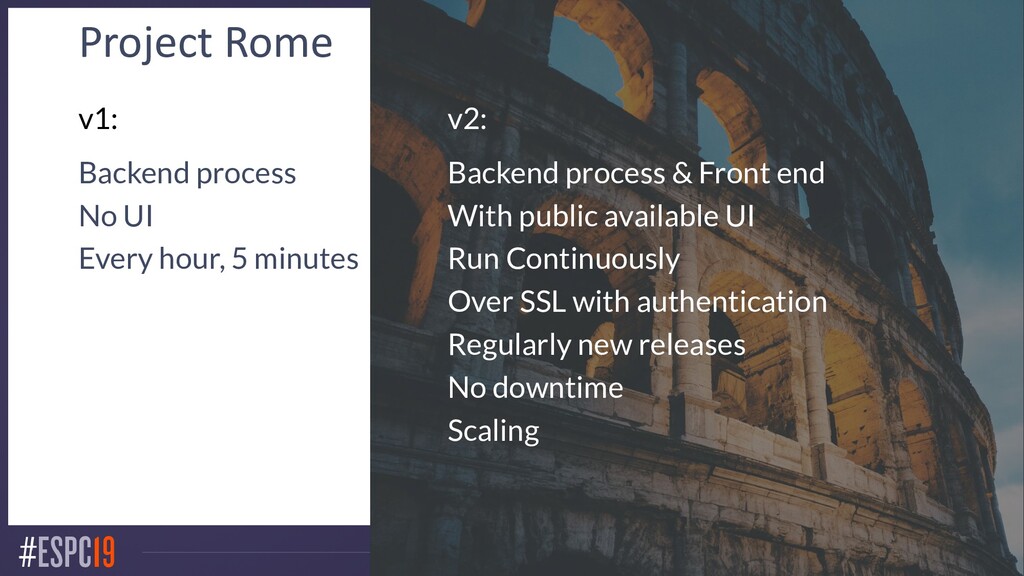
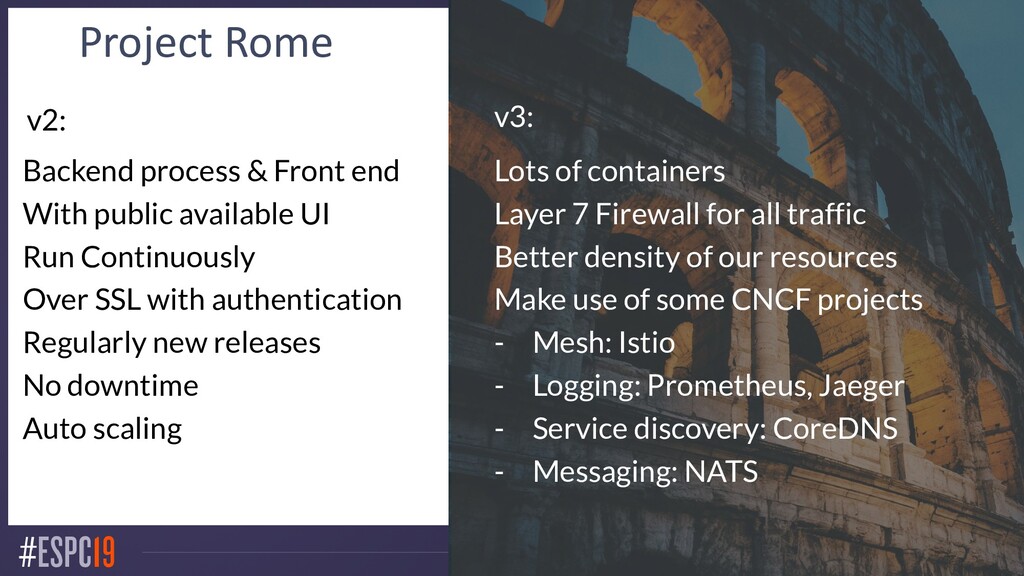
7 Firewall for all traffic Better density of our resources Make use of some CNCF projects - Mesh: Istio - Logging: Prometheus, Jaeger - Service discovery: CoreDNS - Messaging: NATS v3: v2: Backend process & Front end With public available UI Run Continuously Over SSL with authentication Regularly new releases No downtime Auto scaling
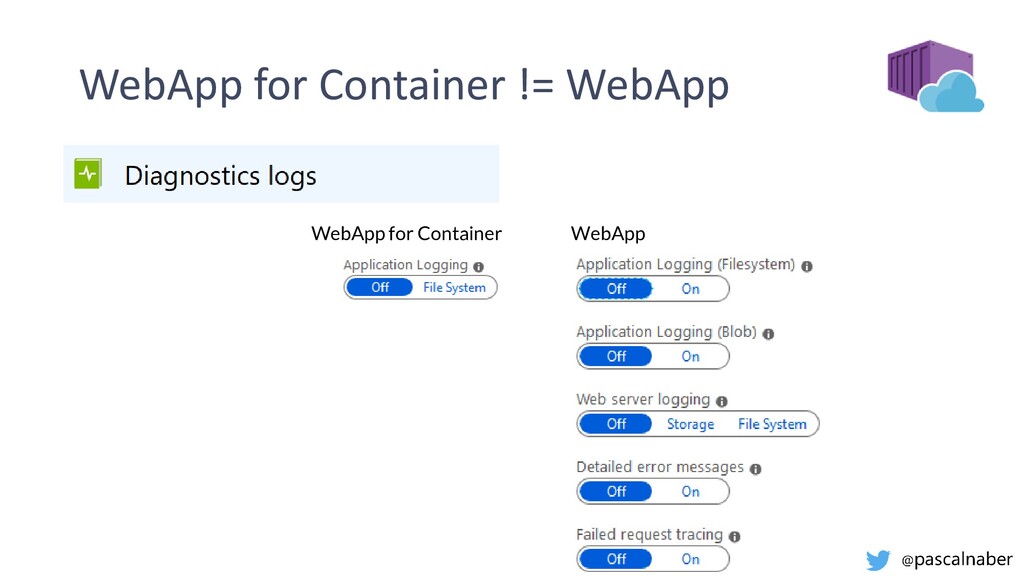
exists Scale up Scale out Auto scaling Zero downtime deployment SSL by default Authentication Identity Custom domains Scaling out is slow No optimal use of resources No firewall possibility (yet) Limited logging possibilities No health check functionality (yet) Only support for port 80 & 443 Not suitable for lots of containers Not portable
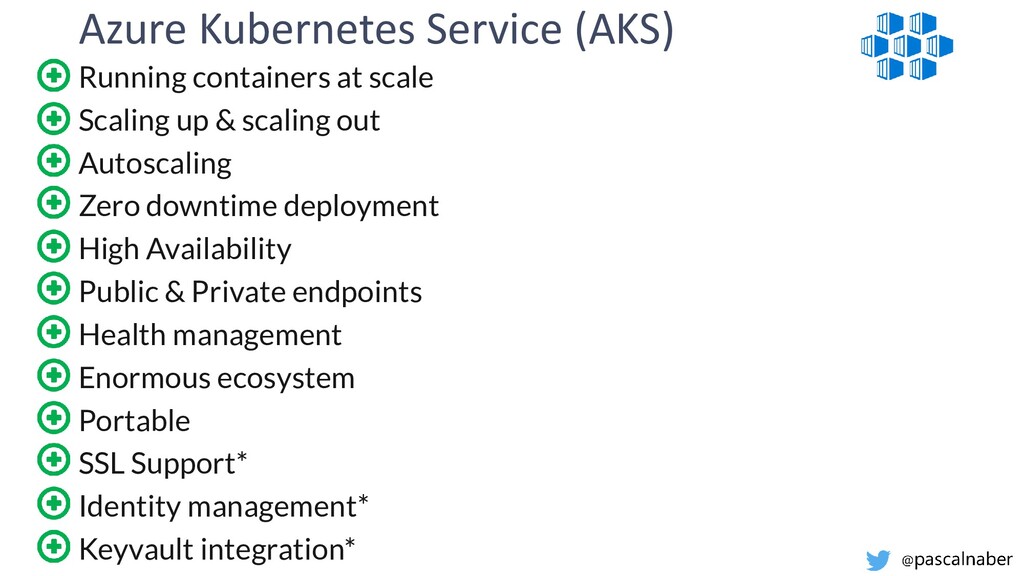
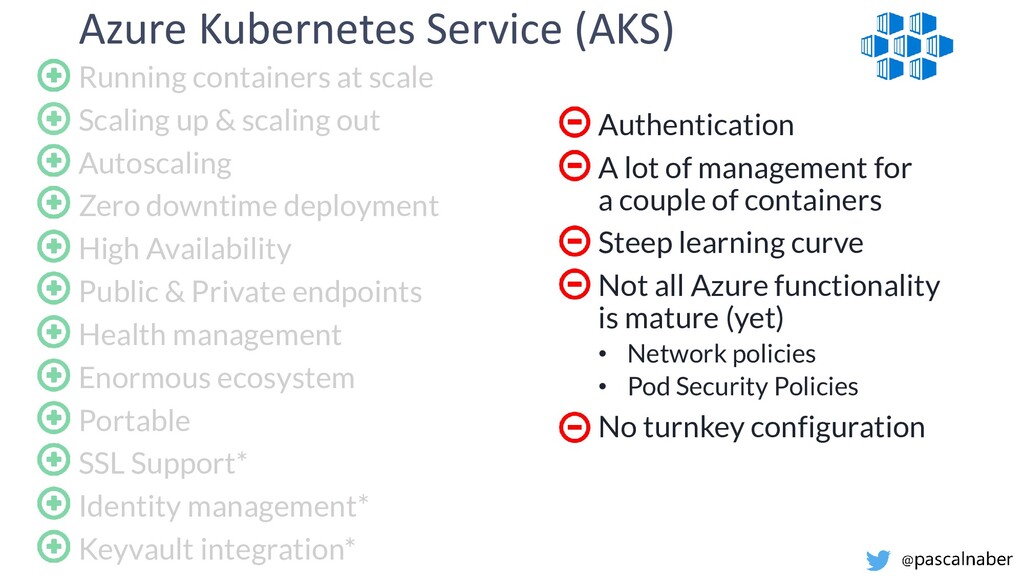
& scaling out Autoscaling Zero downtime deployment High Availability Public & Private endpoints Health management Enormous ecosystem Portable SSL Support* Identity management* Keyvault integration*
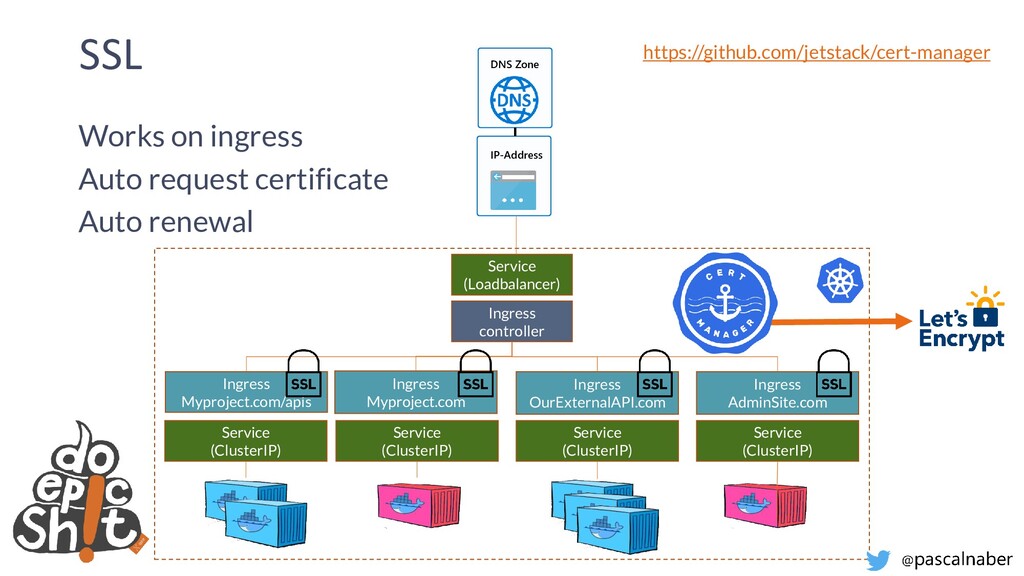
(Loadbalancer) Ingress controller IP-Address Ingress OurExternalAPI.com Ingress Myproject.com Ingress AdminSite.com Ingress Myproject.com/apis Works on ingress Auto request certificate Auto renewal https://github.com/jetstack/cert-manager DNS Zone
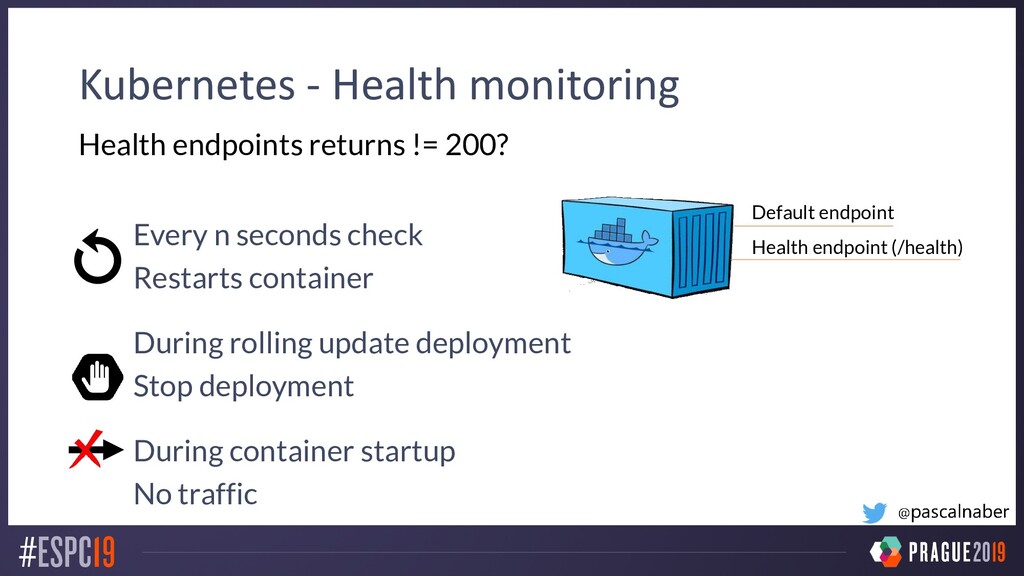
During rolling update deployment Stop deployment During container startup No traffic Default endpoint Health endpoint (/health) Health endpoints returns != 200?
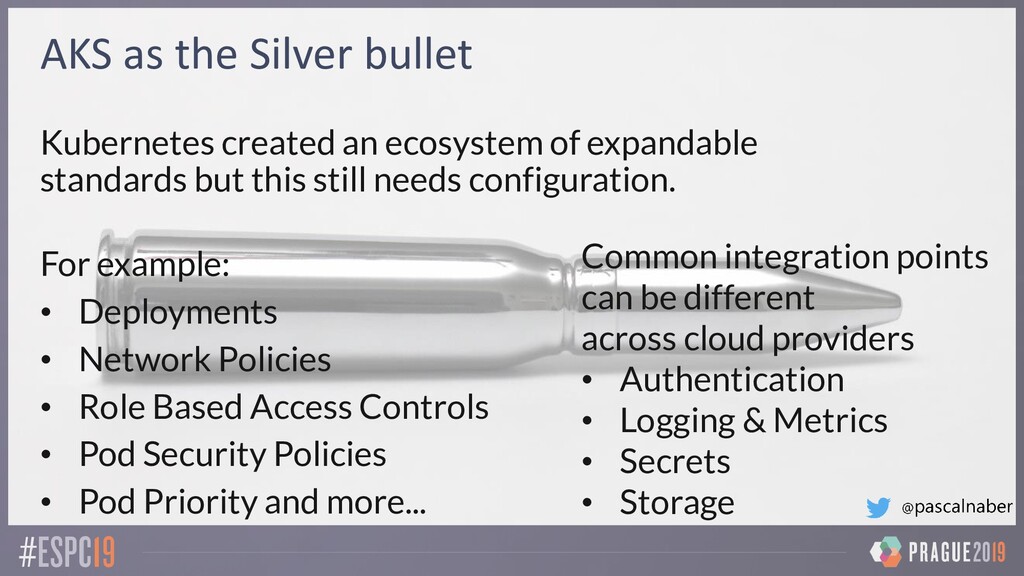
expandable standards but this still needs configuration. For example: • Deployments • Network Policies • Role Based Access Controls • Pod Security Policies • Pod Priority and more... Common integration points can be different across cloud providers • Authentication • Logging & Metrics • Secrets • Storage
& scaling out Autoscaling Zero downtime deployment High Availability Public & Private endpoints Health management Enormous ecosystem Portable SSL Support* Identity management* Keyvault integration* Authentication A lot of management for a couple of containers Steep learning curve Not all Azure functionality is mature (yet) • Network policies • Pod Security Policies No turnkey configuration
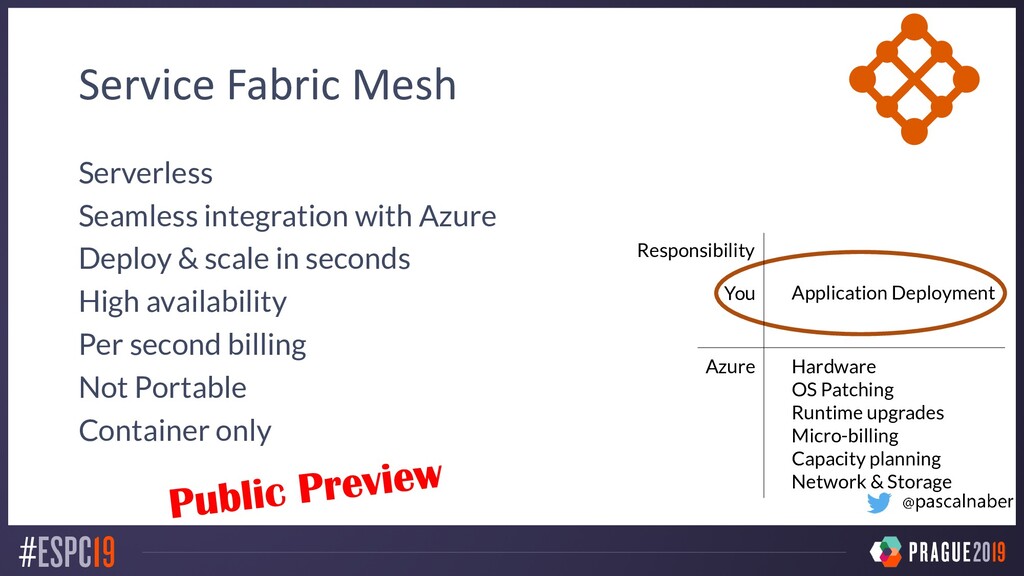
scale in seconds High availability Per second billing Not Portable Container only Responsibility You Azure Application Deployment Hardware OS Patching Runtime upgrades Micro-billing Capacity planning Network & Storage
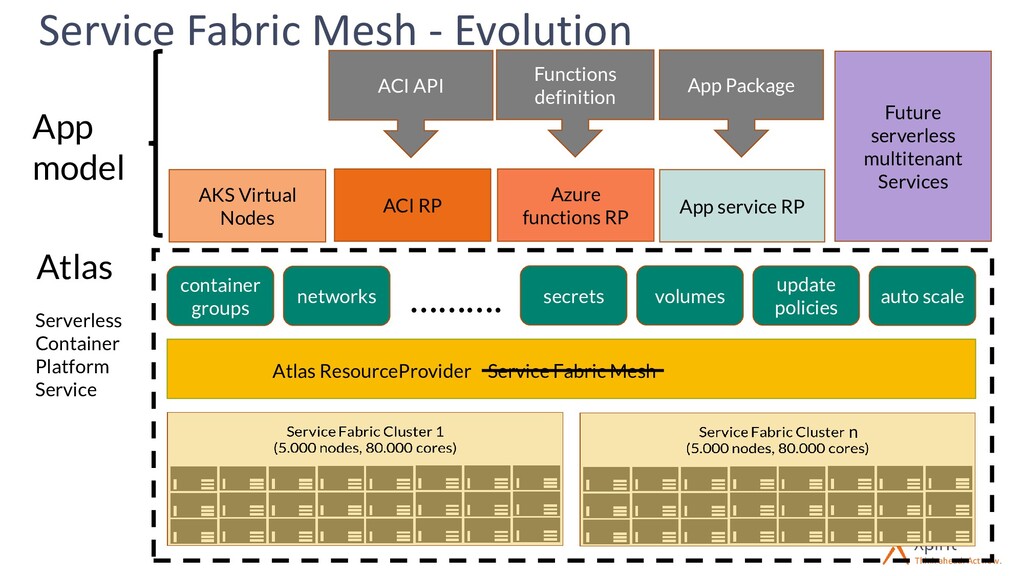
policies volumes secrets ………. Atlas Serverless Container Platform Service Service Fabric Mesh Atlas ResourceProvider App service RP Azure functions RP ACI RP Future serverless multitenant Services App Package Functions definition App model Service Fabric Mesh - Evolution n AKS Virtual Nodes ACI API
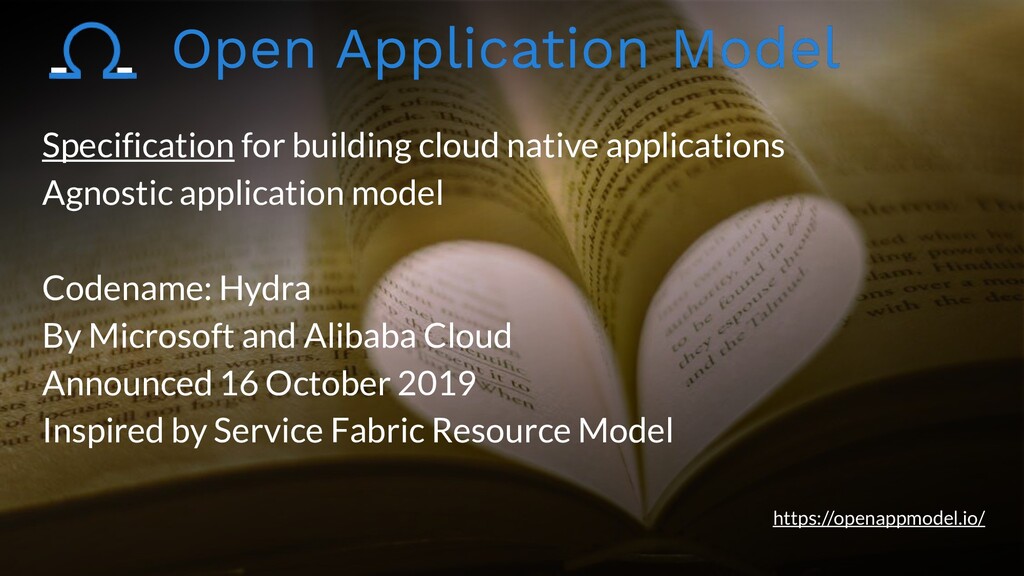
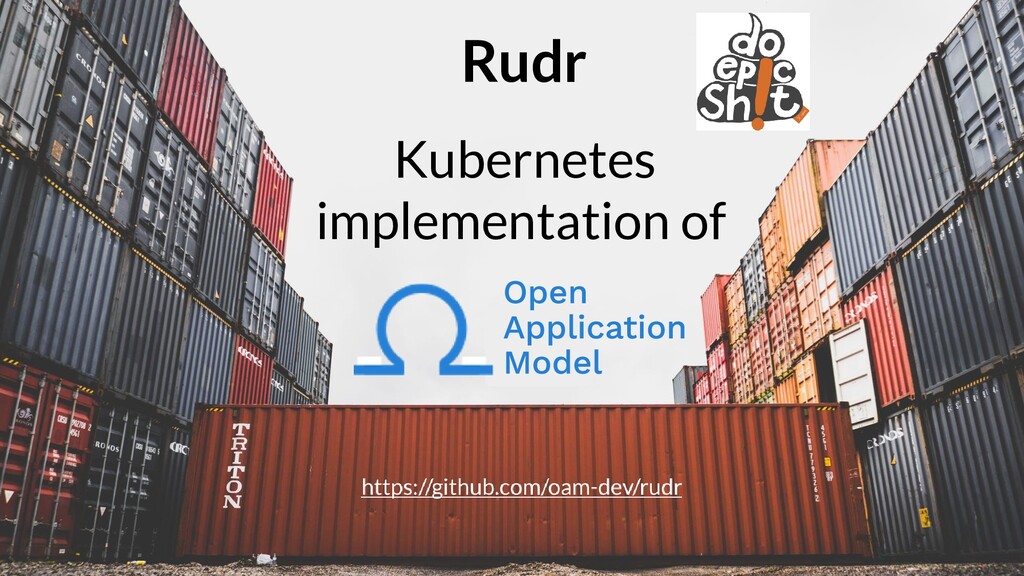
Agnostic application model Codename: Hydra By Microsoft and Alibaba Cloud Announced 16 October 2019 Inspired by Service Fabric Resource Model https://openappmodel.io/
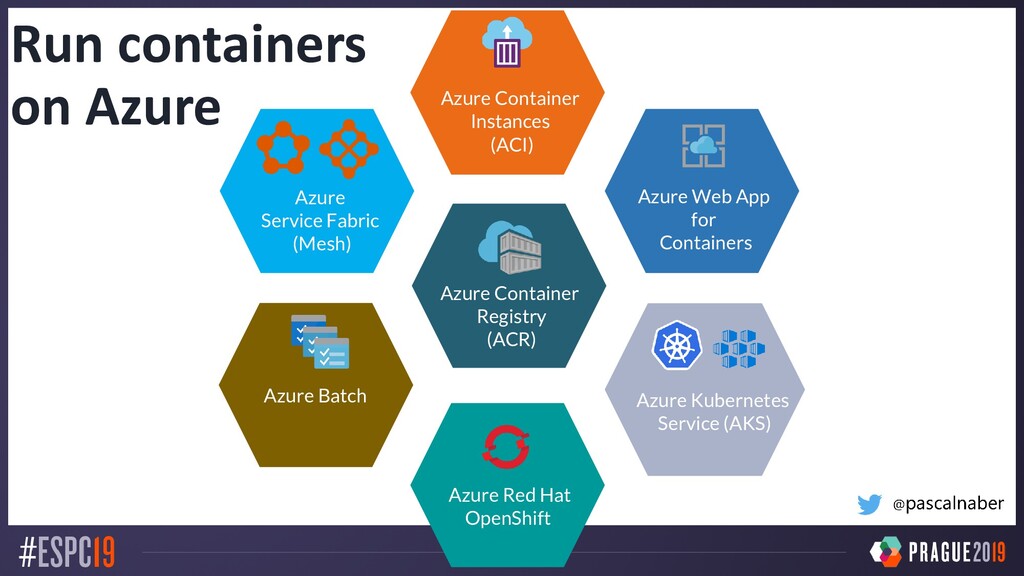
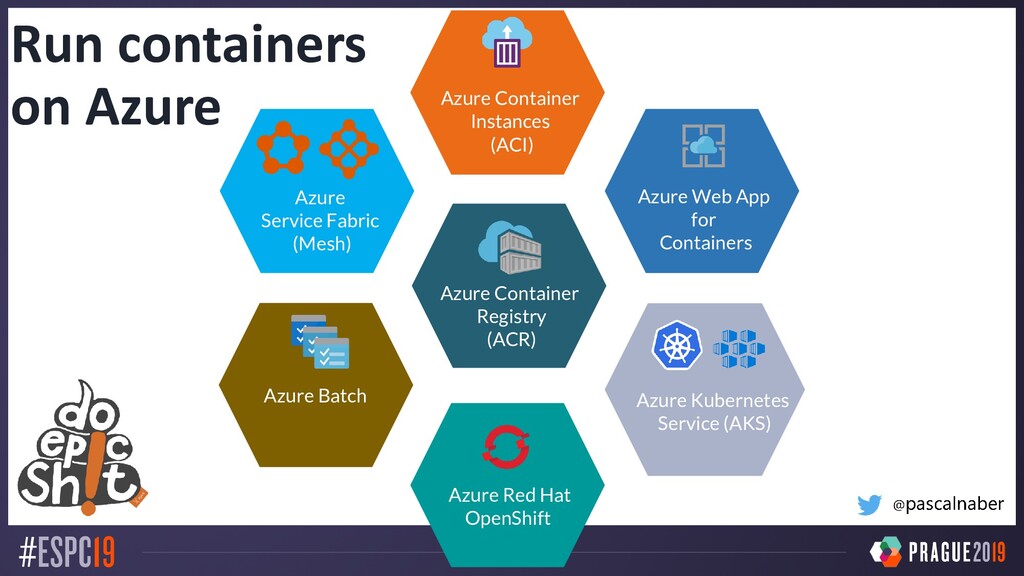
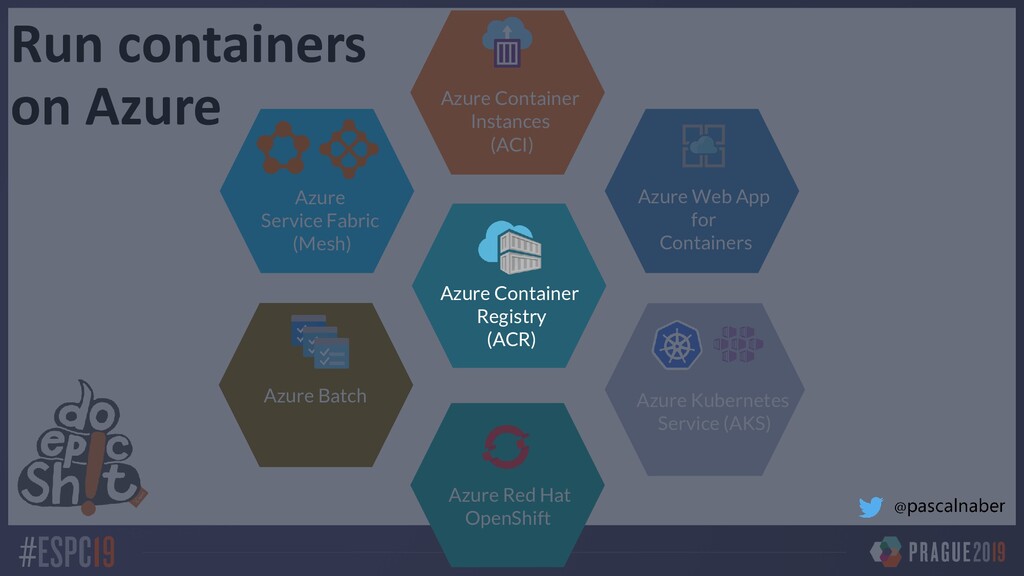
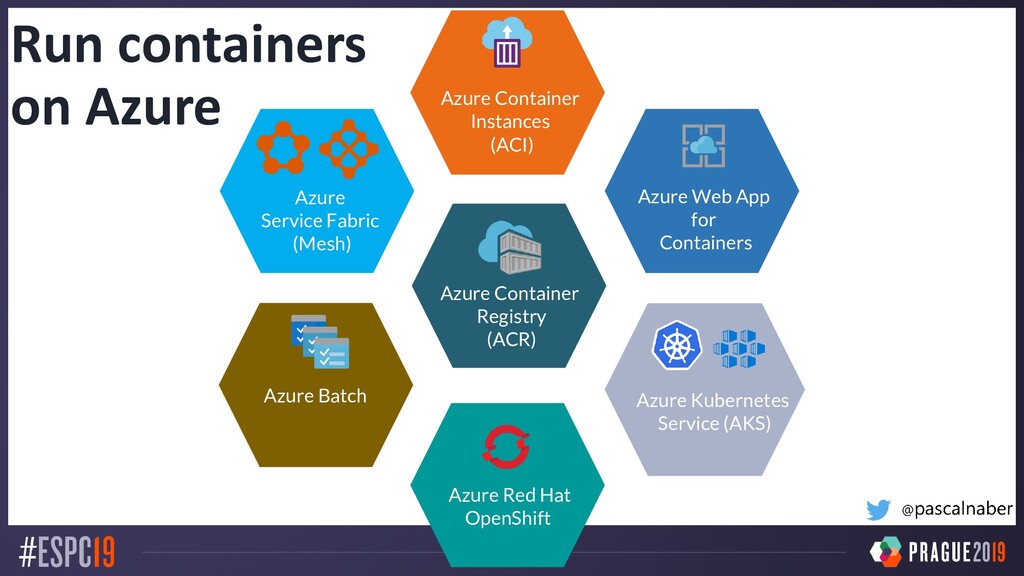
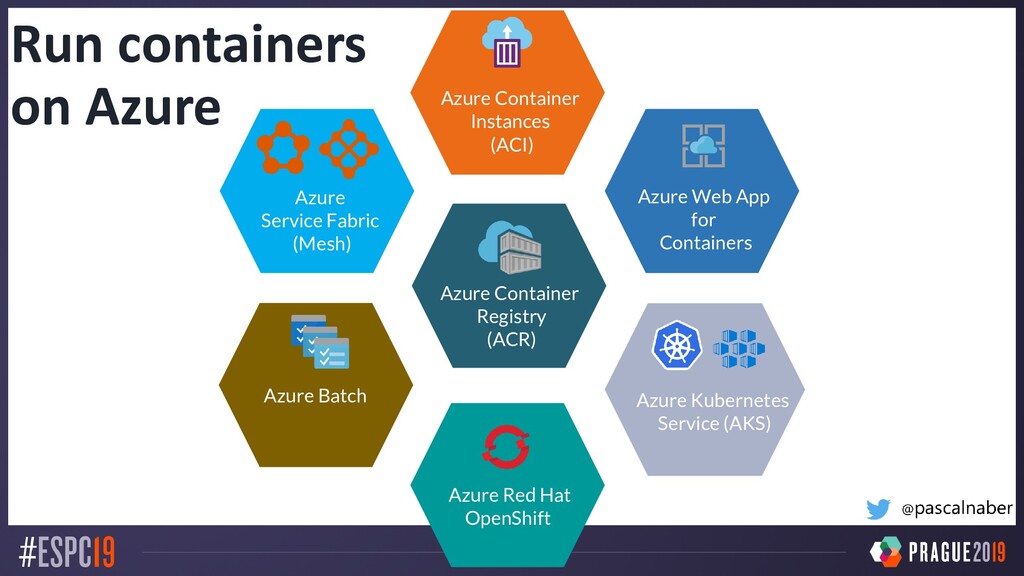
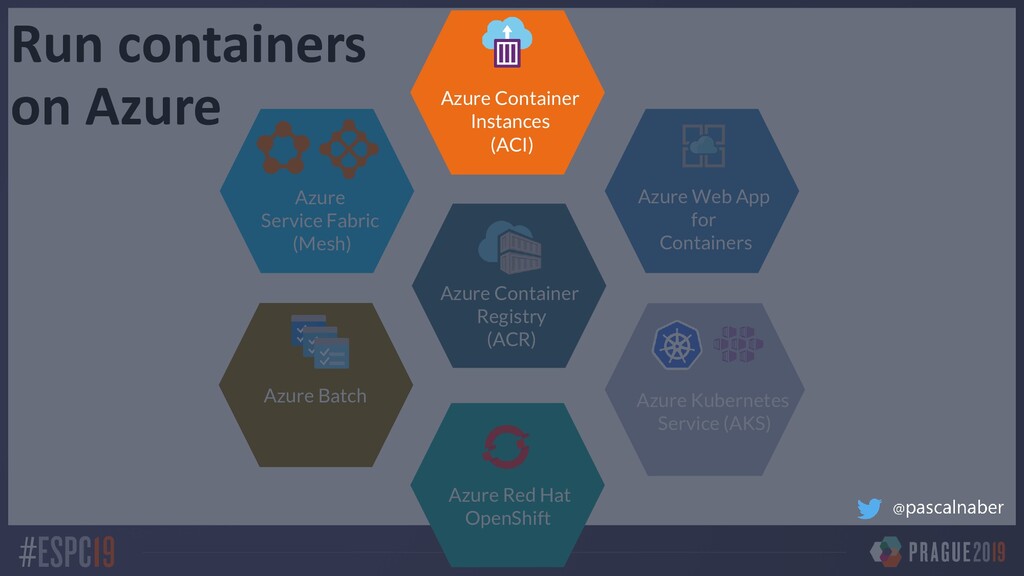
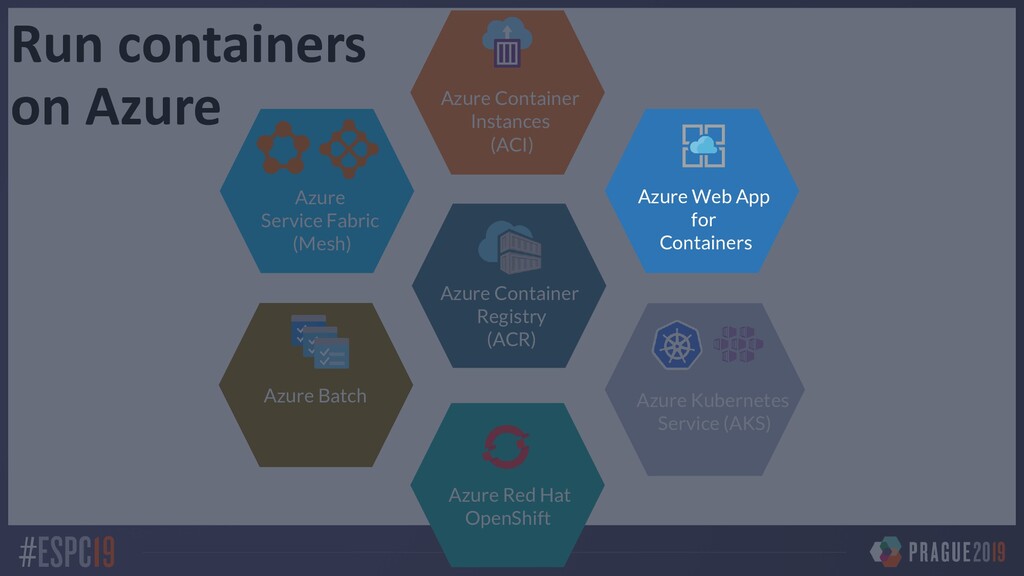
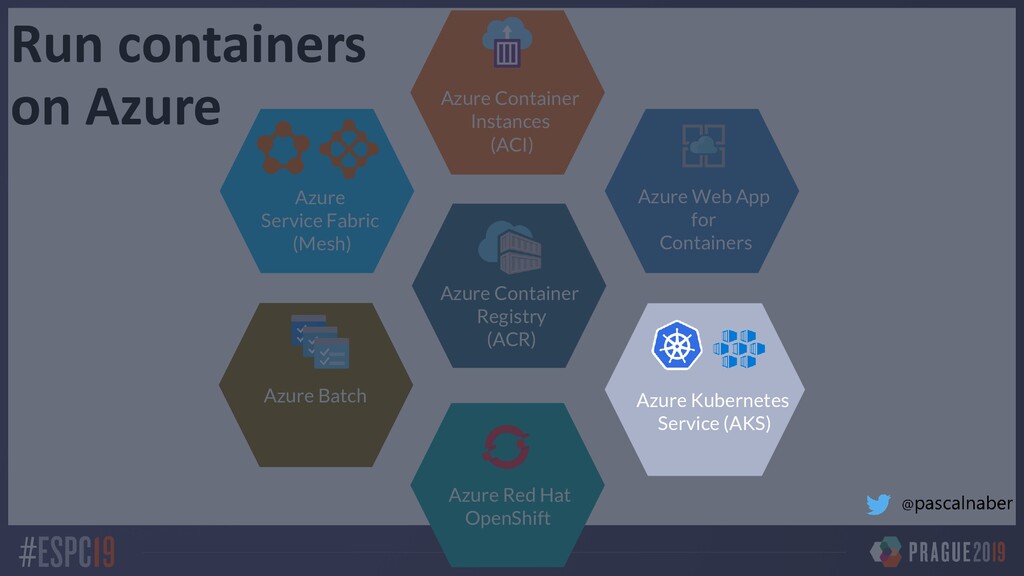
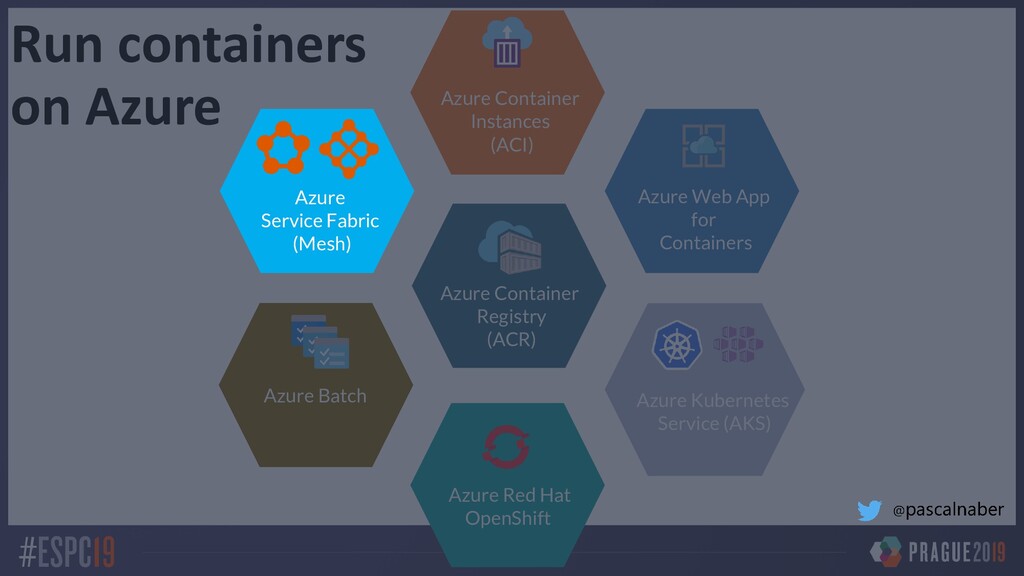
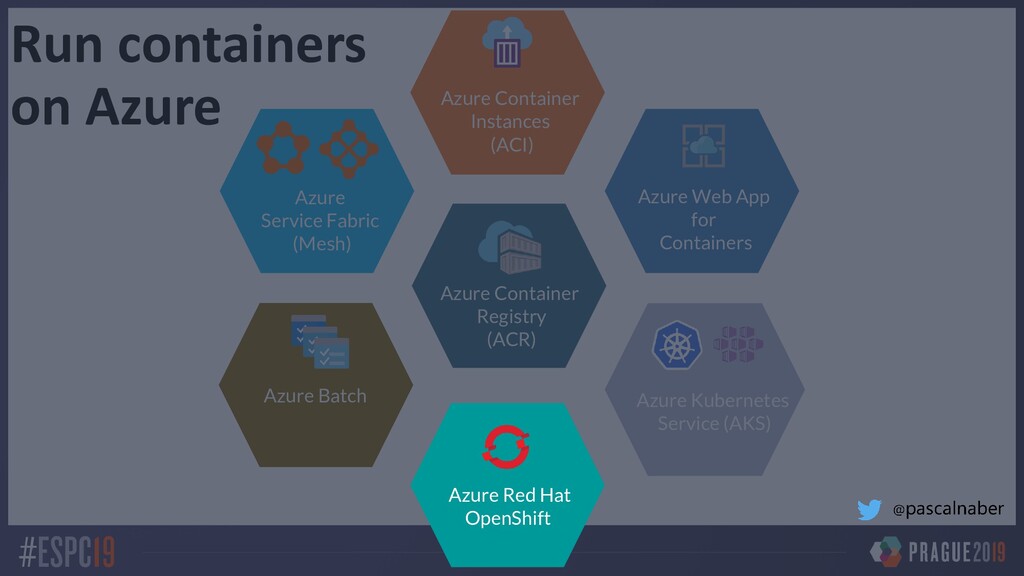
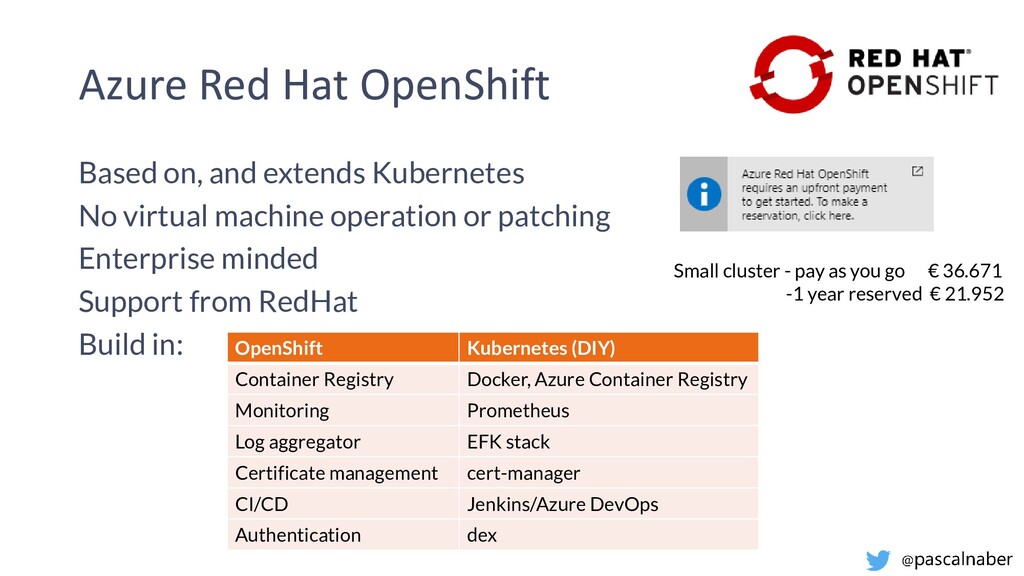
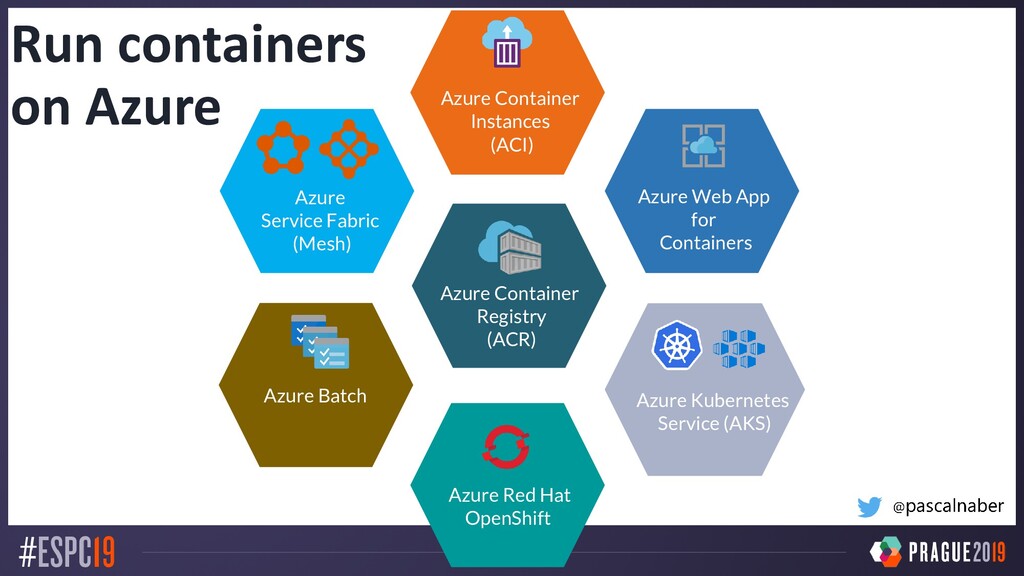
Azure Kubernetes Service (AKS) Azure Container Registry (ACR) Azure Container Instances (ACI) Azure Web App for Containers Run containers on Azure Azure Red Hat OpenShift
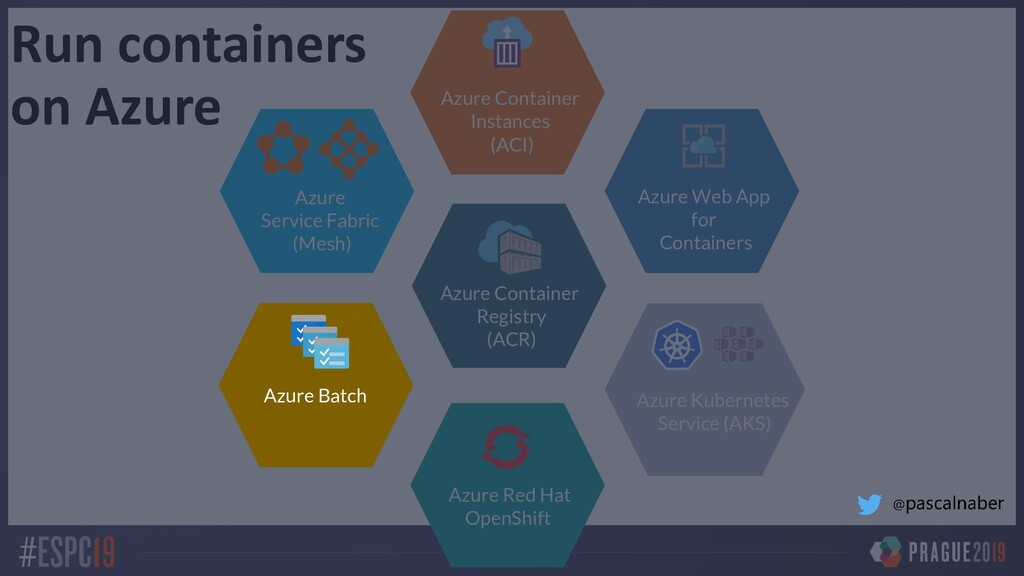
Service (AKS) Azure Container Registry (ACR) Azure Container Instances (ACI) Azure Web App for Containers Azure Red Hat OpenShift Run containers on Azure Azure Batch


 pascalnaber
 ryanjones
 kevinliebholz
 garrettdimon
 trallard
 marktimemedia
 trishagee
 aki_iinuma
 frankvandijk
 codingconduct
 aleyda
 popppiees
 madoxten