Upgrade to Pro — share decks privately, control downloads, hide ads and more …

Fallopian Tube Blockage: Causes, HSG & IVF Trea...

Sponsored · Your Podcast. Everywhere. Effortlessly. Share. Educate. Inspire. Entertain. You do you. We'll handle the rest. →

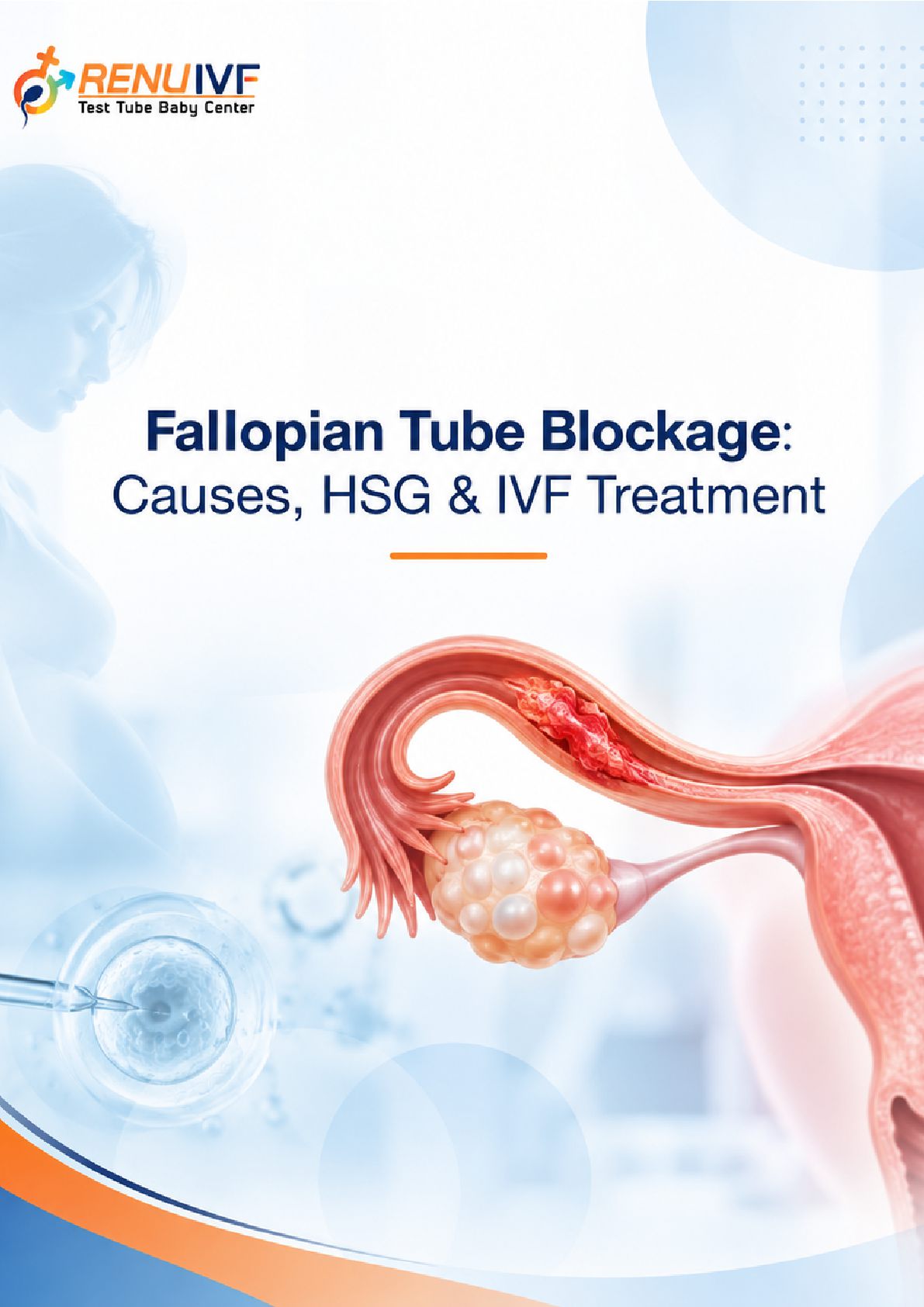
Fallopian Tube Blockage: Causes, HSG & IVF Treatment Guide

Ye guide fallopian tube blockage ke baare mein detail mein batati hai kaise ye hoti hai, iske common causes jaise PID, genital TB aur endometriosis, isse related symptoms, HSG test se diagnosis kaise hoti hai, aur laparoscopy se lekar IVF tak treatment ke options kya hain. Saath mein easy-to-understand infographics bhi diye gaye hain.

Avatar for Dr. Renu Singh Gahlaut

Dr. Renu Singh Gahlaut

September 09, 2026

Other Decks in Business

Transcript

  1. The fallopian tubes are a pair of slender passages connecting

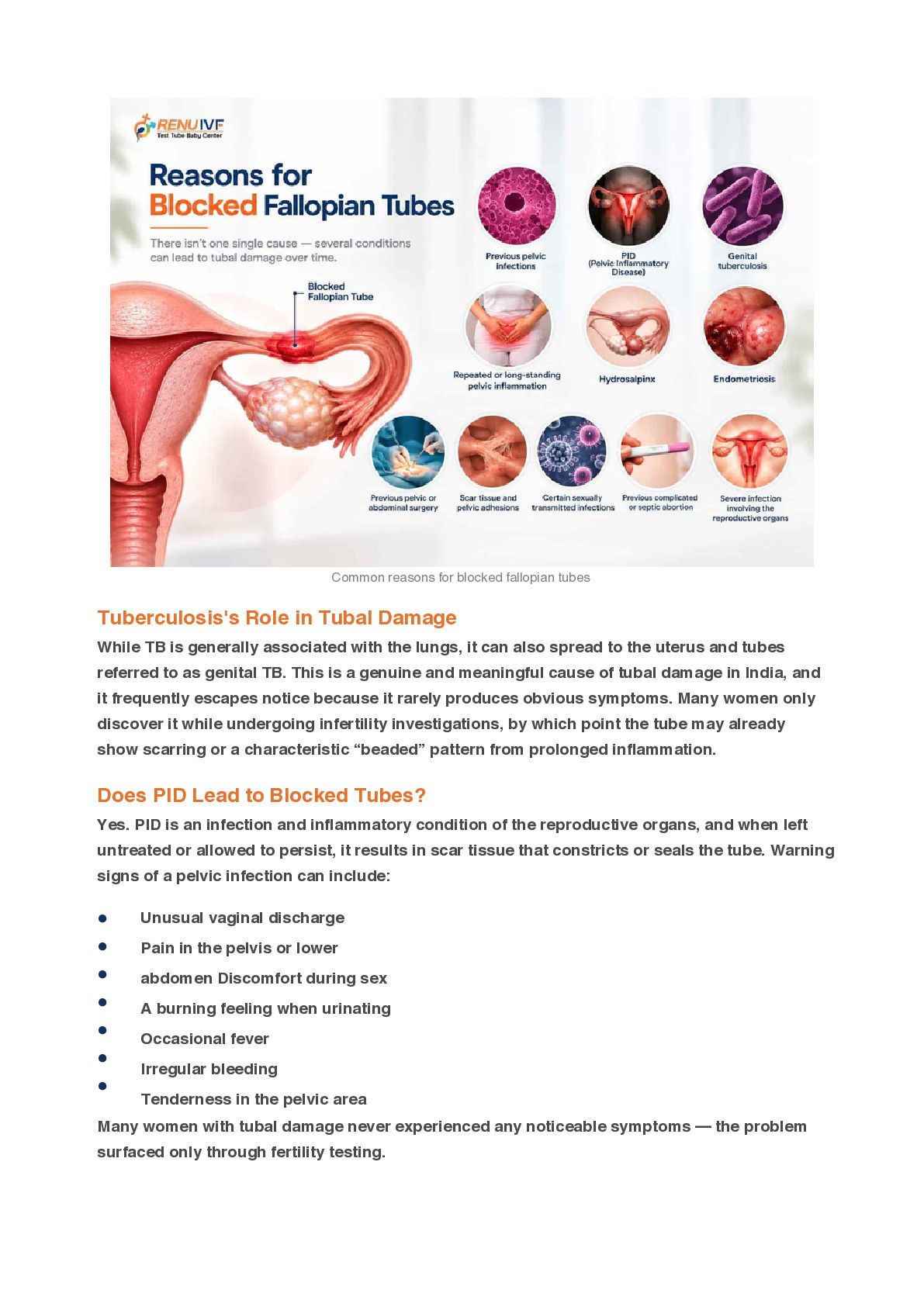
    the ovaries to the uterus. After ovulation, the released egg enters the tube, and fertilisation typically happens right there when sperm meets the egg. Once fertilised, the developing embryo travels down the tube into the uterus to implant. If either tube becomes narrowed, scarred, or fully obstructed, this journey is interrupted. That is why tubal blockage ranks among the significant contributors to infertility, particularly when both tubes are involved. However, a blockage does not automatically rule out pregnancy — the outcome depends on which tube is affected, the location and severity of the obstruction, and whether other fertility issues exist alongside it. What Does a Blocked Fallopian Tube Really Mean? An obstruction can occur anywhere along the tube's length — close to the uterus, somewhere in the middle, or nearer the ovary. In some cases the tube isn't completely sealed shut but is instead scarred or constricted. Occasionally, fluid accumulates inside the tube, a condition known as hydrosalpinx. When infection develops on top of this fluid, pus may form as well, adding to the swelling and damage. It's worth noting that a tube can appear normal on an ultrasound scan yet still fail to function correctly. This is precisely why dedicated fertility investigations are necessary rather than relying on assumptions. What Causes Fallopian Tube Blockage? No single factor is responsible a range of conditions can damage the tubes over time. • • • • • • • • • • • Prior pelvic infections Pelvic Inflammatory Disease (PID) Genital tuberculosis (a notable cause among Indian patients) Ongoing or repeated pelvic inflammation Hydrosalpinx Endometriosis Earlier abdominal or pelvic surgery Adhesions and scar tissue in the pelvis Certain sexually transmitted infections History of a septic or complicated abortion Serious infections of the reproductive tract
  2. The fallopian tubes are a pair of slender passages connecting

    the ovaries to the uterus. After ovulation, the released egg enters the tube, and fertilisation typically happens right there when sperm meets the egg. Once fertilised, the developing embryo travels down the tube into the uterus to implant. If either tube becomes narrowed, scarred, or fully obstructed, this journey is interrupted. That is why tubal blockage ranks among the significant contributors to infertility, particularly when both tubes are involved. However, a blockage does not automatically rule out pregnancy — the outcome depends on which tube is affected, the location and severity of the obstruction, and whether other fertility issues exist alongside it. What Does a Blocked Fallopian Tube Really Mean? An obstruction can occur anywhere along the tube's length — close to the uterus, somewhere in the middle, or nearer the ovary. In some cases the tube isn't completely sealed shut but is instead scarred or constricted. Occasionally, fluid accumulates inside the tube, a condition known as hydrosalpinx. When infection develops on top of this fluid, pus may form as well, adding to the swelling and damage. It's worth noting that a tube can appear normal on an ultrasound scan yet still fail to function correctly. This is precisely why dedicated fertility investigations are necessary rather than relying on assumptions. What Causes Fallopian Tube Blockage? No single factor is responsible a range of conditions can damage the tubes over time. • • • • • • • • • • • Prior pelvic infections Pelvic Inflammatory Disease (PID) Genital tuberculosis (a notable cause among Indian patients) Ongoing or repeated pelvic inflammation Hydrosalpinx Endometriosis Earlier abdominal or pelvic surgery Adhesions and scar tissue in the pelvis Certain sexually transmitted infections History of a septic or complicated abortion Serious infections of the reproductive tract
  3. Common reasons for blocked fallopian tubes Tuberculosis's Role in Tubal

    Damage While TB is generally associated with the lungs, it can also spread to the uterus and tubes referred to as genital TB. This is a genuine and meaningful cause of tubal damage in India, and it frequently escapes notice because it rarely produces obvious symptoms. Many women only discover it while undergoing infertility investigations, by which point the tube may already show scarring or a characteristic “beaded” pattern from prolonged inflammation. Does PID Lead to Blocked Tubes? Yes. PID is an infection and inflammatory condition of the reproductive organs, and when left untreated or allowed to persist, it results in scar tissue that constricts or seals the tube. Warning signs of a pelvic infection can include: • Unusual vaginal discharge • • • • • • Pain in the pelvis or lower abdomen Discomfort during sex A burning feeling when urinating Occasional fever Irregular bleeding Tenderness in the pelvic area Many women with tubal damage never experienced any noticeable symptoms — the problem surfaced only through fertility testing.
  4. Can Endometriosis Damage the Tubes? Endometriosis often triggers inflammation, scar

    formation, and adhesions in the pelvis. This can limit the natural movement of the tube and ovary, even when the tube itself remains open. So the connection between endometriosis and infertility isn't limited to blocked tubes alone it extends to the overall condition of pelvic health. Signs and Symptoms of Blocked Tubes What makes tubal blockage tricky is that it usually produces no noticeable symptoms whatsoever. Most women only learn about it when conception becomes difficult. Some possible indicators or relevant history include: • Trouble conceiving despite regular efforts • • • A past episode of PID or pelvic infection • • • • Pain during intercourse • Hydrosalpinx identified on ultrasound A history of genital tuberculosis Long-term pelvic discomfort Prior diagnosis of endometriosis Earlier pelvic surgery A previous ectopic pregnancy Symptoms and history linked to blocked fallopian tubes None of these confirm a blockage on their own proper diagnostic testing is required to know for certain.
  5. Using HSG to Detect Tubal Blockage Hysterosalpingography (HSG) is the

    primary and most commonly used test for checking tubal patency. A contrast dye is introduced through the cervix into the uterus, and X-ray imaging reveals whether it moves freely through the tubes and spills out at the far end. If it doesn't, a blockage is likely, and pinpointing its location matters for deciding on treatment. Location What it Indicates Cornual / Proximal blockage Obstruction near where the tube meets the uterus Mid-tubal blockage Obstruction in the tube's middle section Distal blockage Obstruction near the ovarian end Hydrosalpinx Tube is swollen and fluid-filled While HSG provides valuable information, it doesn't tell the whole story — additional evaluation is sometimes required. HSG Compared to Laparoscopy HSG is an X-ray-basedimaging test.Laparoscopy,on the other hand, is a minor surgical procedure using a camera to directly visualise the pelvic organs, including the tubes' outer surface. It's often paired with hysteroscopy, which examines the interior of the uterus, while laparoscopy focuses on the tubes, ovaries, and nearby structures from the outside. Test What It's For HSG Assesses the uterine cavity and dye passage through the tubes Ultrasound Examines the uterus and ovaries, and identifies hydrosalpinx Hysteroscopy Views the inside of the uterus Laparoscopy Directly views the pelvic organs and outer tube surface Tubal cannulation Applied in select cases of proximal (cornual) blockage How Blocked Tubes Are Treated Nosingle approachworks for everypatient theright treatment hinges on the blockage's location, its severity, the woman's age, her ovarian reserve, and her partner's sperm quality. Blockage Type Treatment Options Cornual/proximal blockage Tubal cannulation via hysteroscopy Mid-tubal or distal blockage / adhesions Laparoscopic surgery in certain cases Hydrosalpinx Managing the fluid buildup; sometimes removal before IVF Severely damaged or non-working tube IVF
  6. It's important to recognise that the aim isn't merely making

    a tube “appear open” on imaging. A tube can be surgically reopened and still not function well enough to move an egg or embryo which is why, in many severe situations, laparoscopy and hysteroscopy alone fall short, making IVF the more dependable route. When Does IVF Become the Recommended Option? IVF becomes particularly relevant when both tubes are extensively damaged. During IVF, eggs are collected directly from the ovaries under ultrasound guidance, fertilised with sperm in a laboratory setting, and the resulting embryo is placed directly into the uterus sidestepping the tubes entirely. This means pregnancy remains achievable even when the tubes themselves cannot be fixed. A key consideration regarding hydrosalpinx and IVF: when a tube holds trapped fluid, that fluid can seep into the uterus and lower IVF success rates, since it may be toxic to the embryo. Because of this, doctors often advise removing or sealing the affected tube before beginning IVF, improving the embryo's chances of successful implantation. Is Pregnancy Possible With Only One Blocked Tube? Yes — provided the remaining tube is healthy and ovulation, sperm quality, and other fertility markers are within normal range, natural conception can still occur using the single functioning tube. When both tubes are entirely blocked, natural conception via the tubes isn't achievable, though IVF continues to offer a dependable alternative. Understanding the Ectopic Pregnancy Risk When a tube is damaged or only partially open especially following PID, genital TB, or tubal surgery there's an increased likelihood of the pregnancy implanting within the tube rather than the uterus. This is known as an ectopic pregnancy and requires prompt medical care. For this reason, women with a history of tubal damage should have an early scan to confirm the pregnancy has implanted correctly in the uterus.
  7. Key Takeaways • • • • • Blockedfallopian tubes are

    a significant, though not sole, cause of infertility. PID, genital TB, and endometriosis are among the leading causes of tubal blockage. Tubal blockage frequently produces no noticeable symptoms. HSG serves as the first-line investigation for checking tubal patency. Laparoscopy and hysteroscopy help in certain cases, though severely damaged tubes may not regain full function even after surgical intervention. • Hydrosalpinx can lower IVF success rates and may require treatment beforehand. • IVF completely bypasses the tubes and offers a reliable path when tubal damage is severe. • Treatment decisions should always be tailored to the individual, factoring in age, ovarian reserve, and overall fertility status. Conclusion Discoveringyou have blocked fallopian tubes while trying to conceive can feel discouraging, doesn't mean the journey ends there. Identifying the underlying cause be it PID, genital TB, endometriosis, or scar tissue and undergoing the appropriate tests, such as HSG and, where needed, laparoscopy or hysteroscopy, helps guide you toward the right treatment. And even in cases of severe tubal damage, IVF provides a proven means of working around the problem entirely. If you're dealing with infertility and need proper guidance, Renu IVF, a trusted infertility hospital in Kanpur, can assess your individual situation and help you find the treatment path best suited to you.