$30 off During Our Annual Pro Sale. View Details »

Study Notes - Architecting for the cloud (AWS B...

Study Notes - Architecting for the cloud (AWS Best Practices, Feb 2016)

Study Notes - Architecting for the cloud (AWS Best Practices, Feb 2016)

Avatar for Rick Hwang

Rick Hwang

January 12, 2018
Tweet

More Decks by Rick Hwang

Other Decks in Education

Transcript

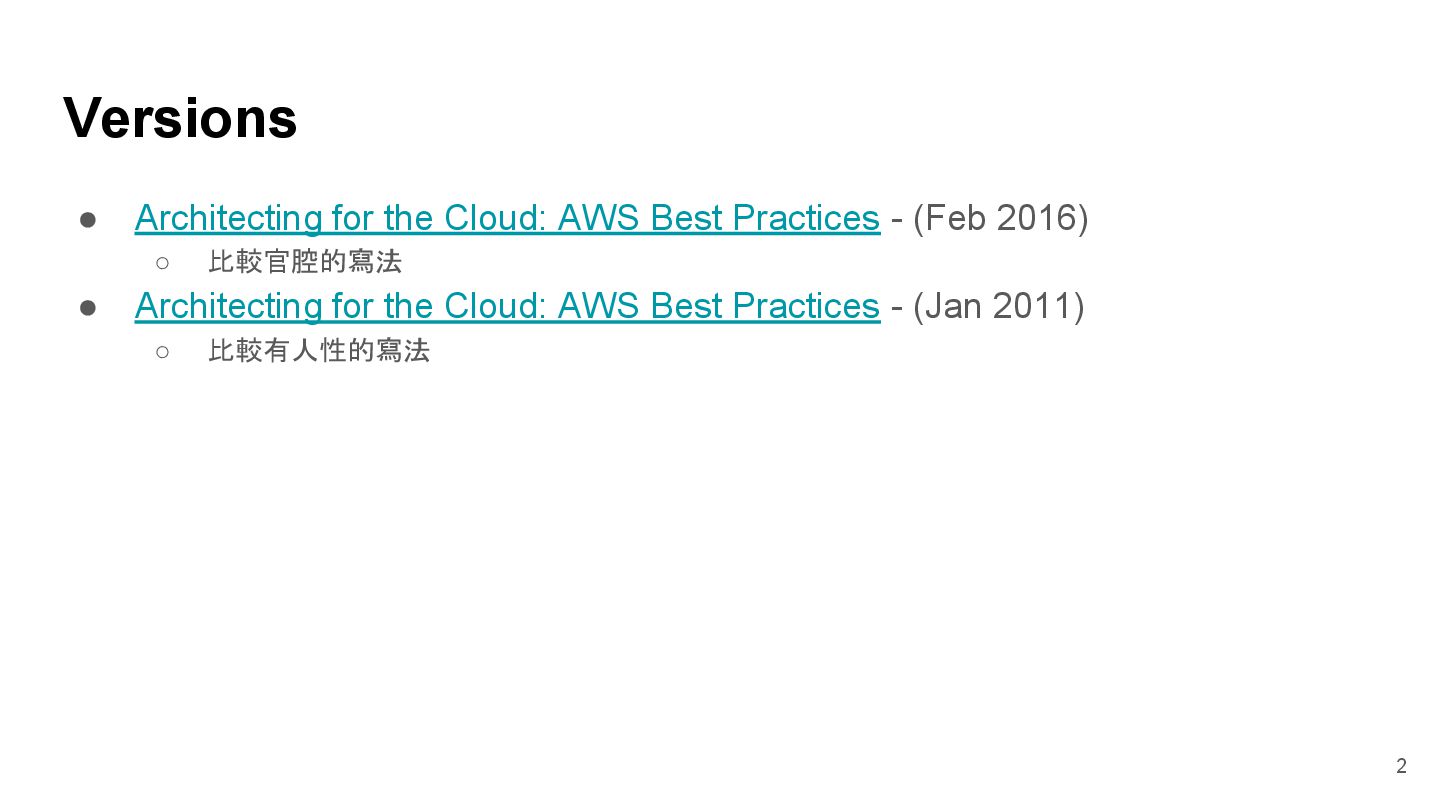
  1. Versions 2 • Architecting for the Cloud: AWS Best Practices

    - (Feb 2016) ◦ 比較官腔的寫法 • Architecting for the Cloud: AWS Best Practices - (Jan 2011) ◦ 比較有人性的寫法
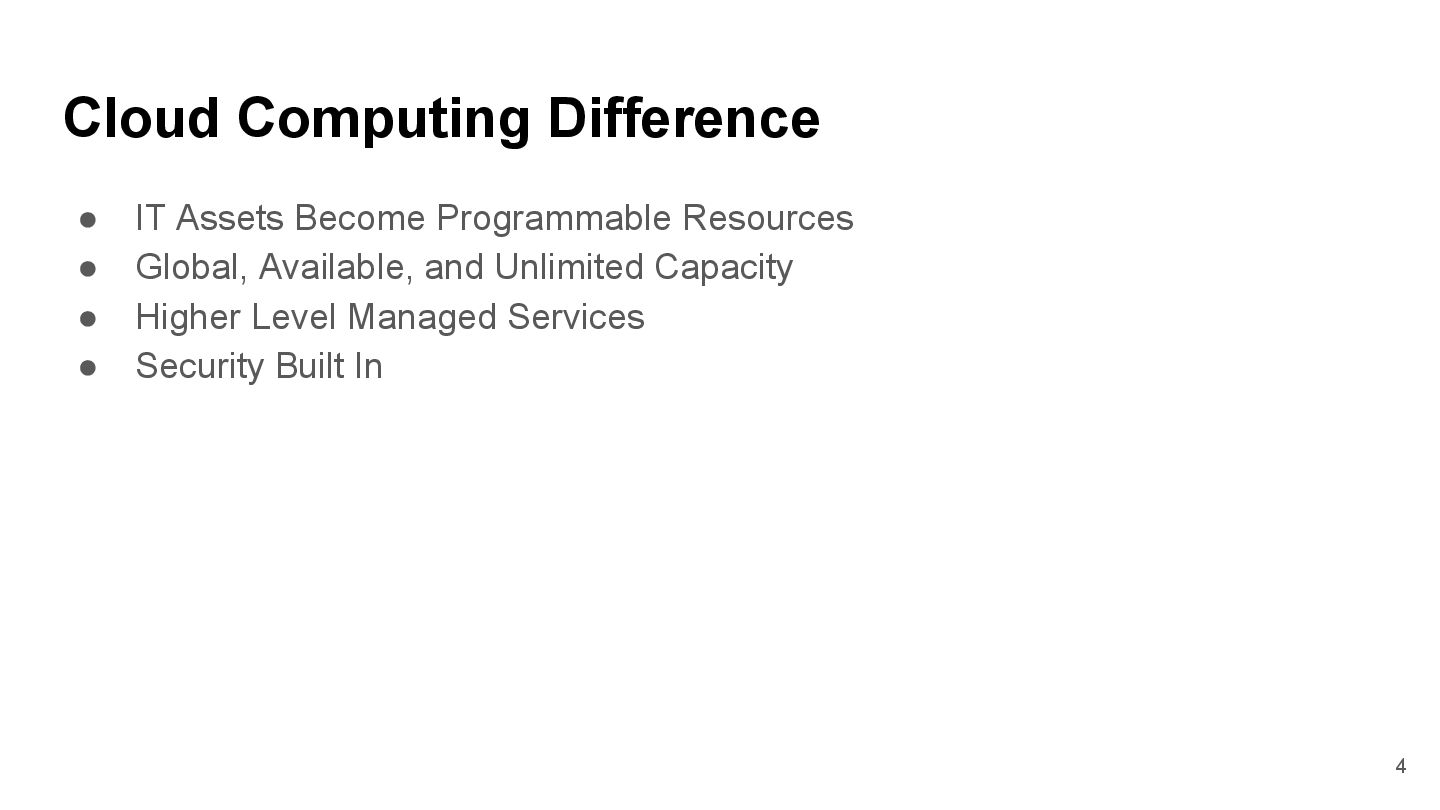
  2. Cloud Computing Difference 4 • IT Assets Become Programmable Resources

    • Global, Available, and Unlimited Capacity • Higher Level Managed Services • Security Built In
  3. 5

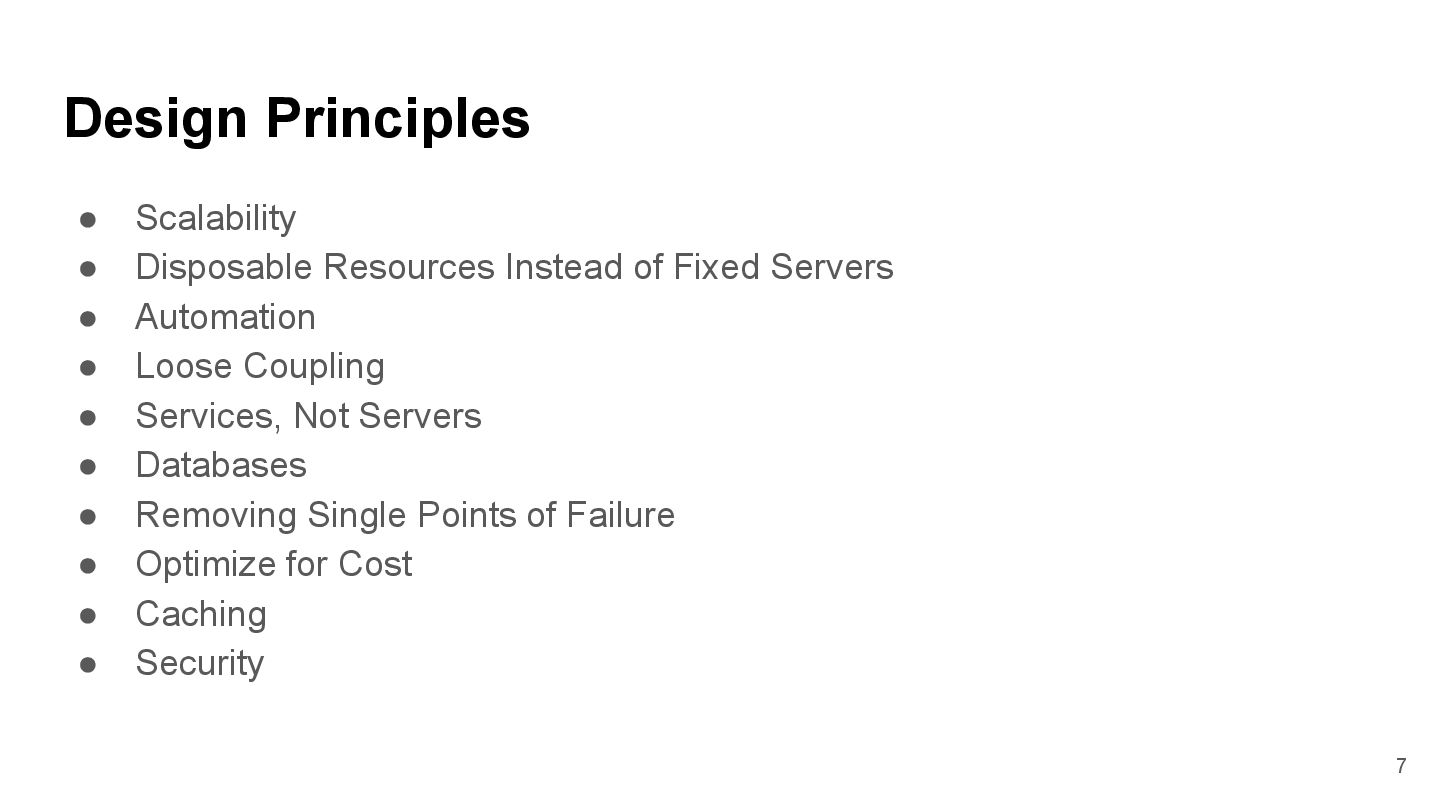
  4. • Scalability • Disposable Resources Instead of Fixed Servers •

    Automation • Loose Coupling • Services, Not Servers • Databases • Removing Single Points of Failure • Optimize for Cost • Caching • Security Design Principles 7
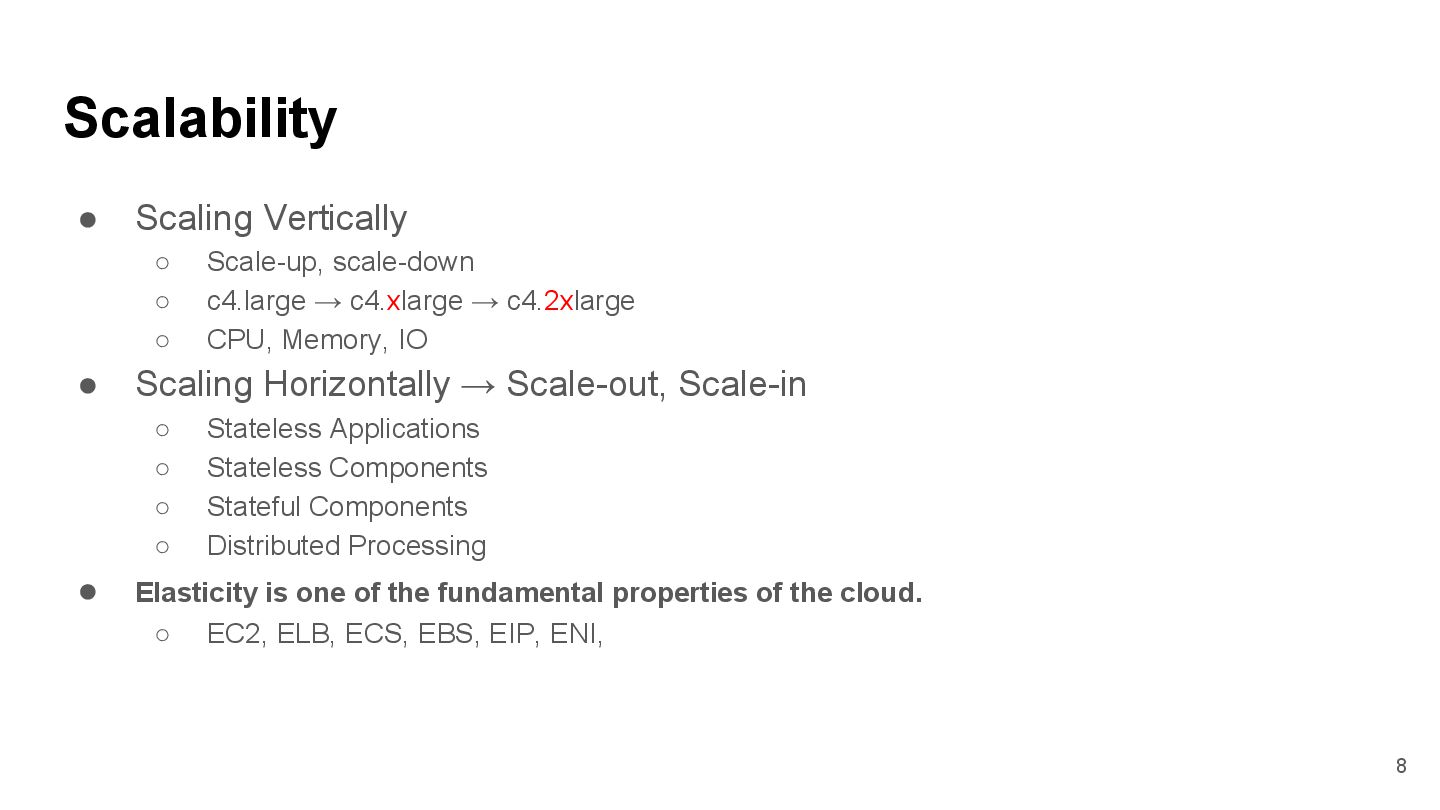
  5. • Scaling Vertically ◦ Scale-up, scale-down ◦ c4.large → c4.xlarge

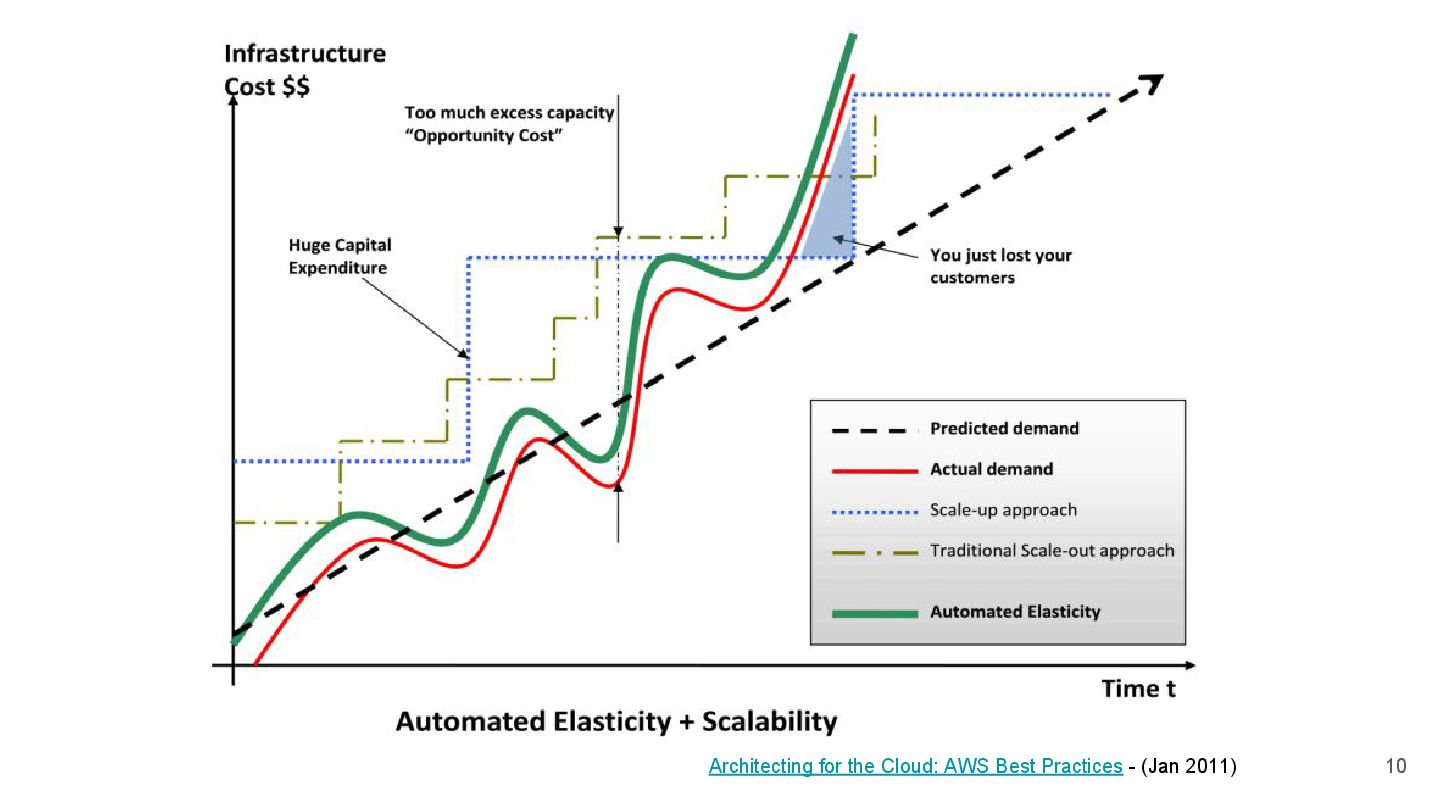
    → c4.2xlarge ◦ CPU, Memory, IO • Scaling Horizontally → Scale-out, Scale-in ◦ Stateless Applications ◦ Stateless Components ◦ Stateful Components ◦ Distributed Processing • Elasticity is one of the fundamental properties of the cloud. ◦ EC2, ELB, ECS, EBS, EIP, ENI, Scalability 8
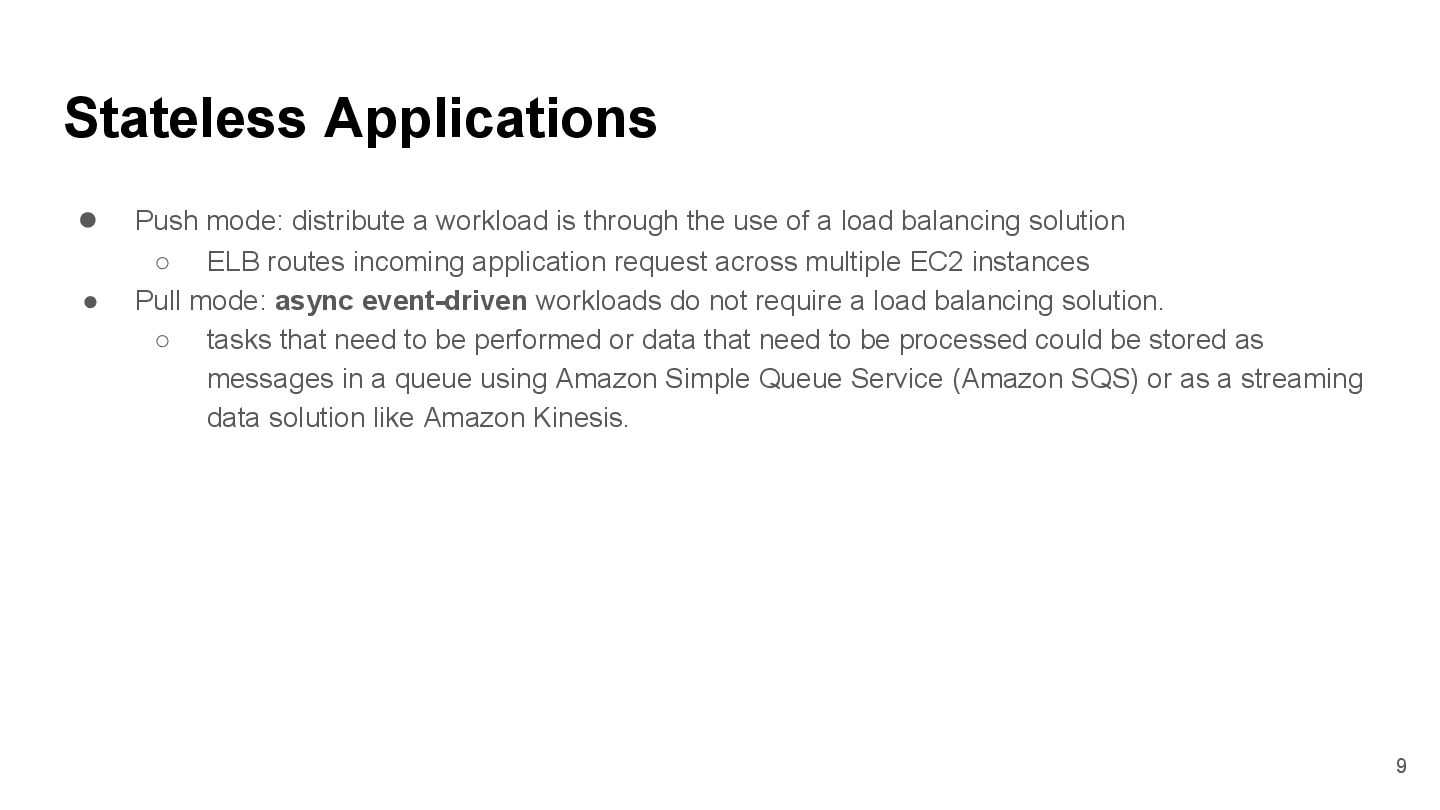
  6. • Push mode: distribute a workload is through the use

    of a load balancing solution ◦ ELB routes incoming application request across multiple EC2 instances • Pull mode: async event-driven workloads do not require a load balancing solution. ◦ tasks that need to be performed or data that need to be processed could be stored as messages in a queue using Amazon Simple Queue Service (Amazon SQS) or as a streaming data solution like Amazon Kinesis. Stateless Applications 9
  7. 11

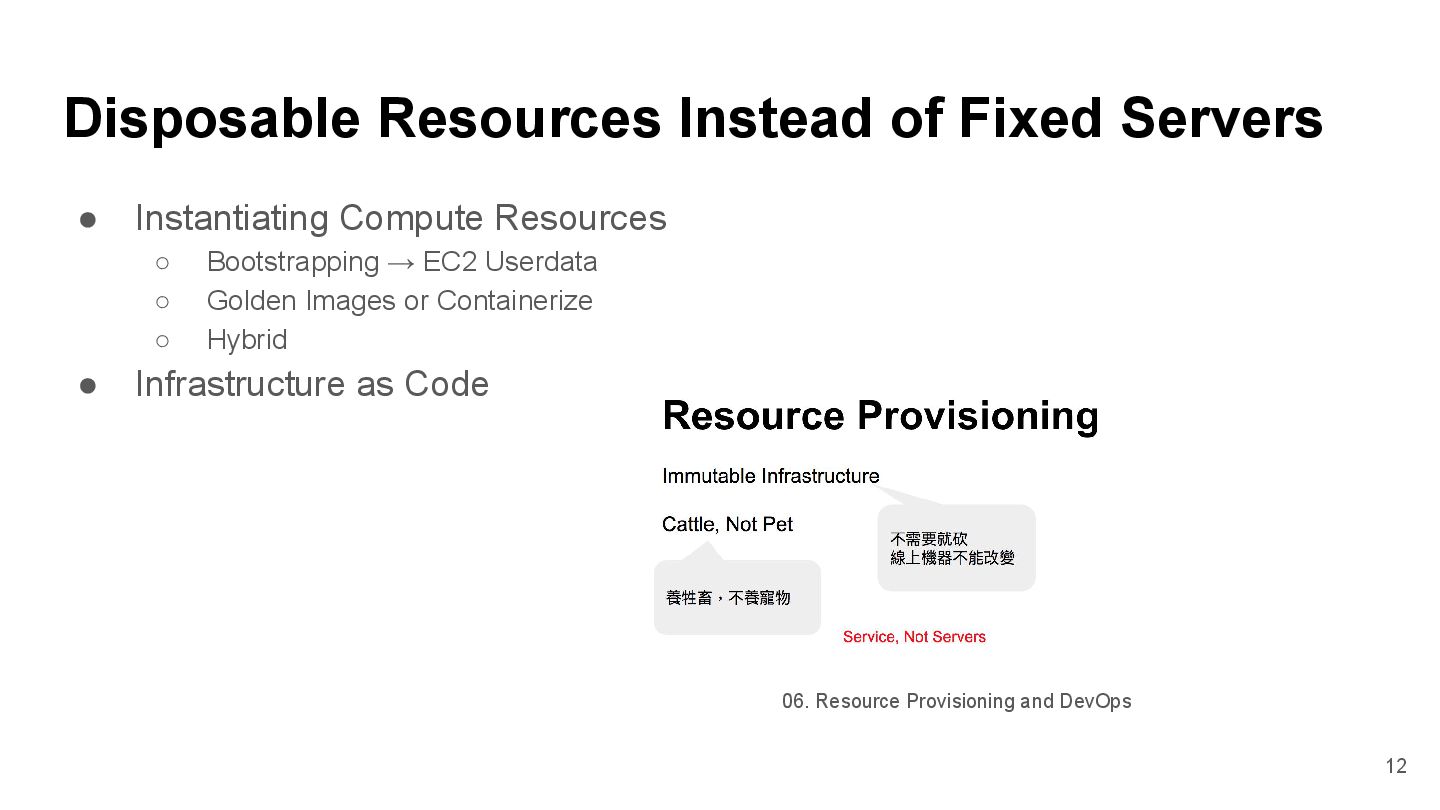
  8. • Instantiating Compute Resources ◦ Bootstrapping → EC2 Userdata ◦

    Golden Images or Containerize ◦ Hybrid • Infrastructure as Code Disposable Resources Instead of Fixed Servers 12 06. Resource Provisioning and DevOps
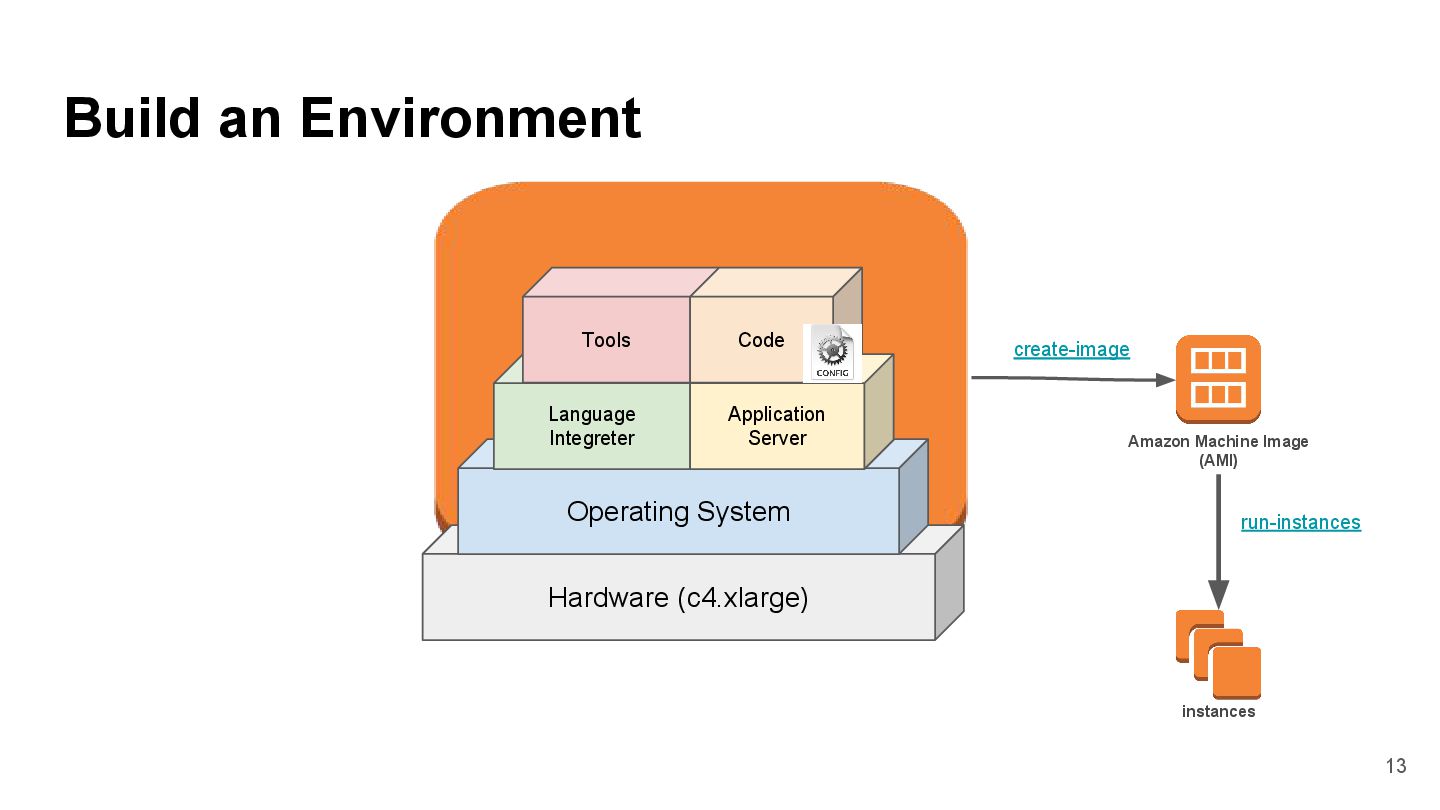
  9. Hardware (c4.xlarge) Operating System Language Integreter Application Server Tools Code

    Build an Environment Amazon Machine Image (AMI) instances create-image run-instances 13
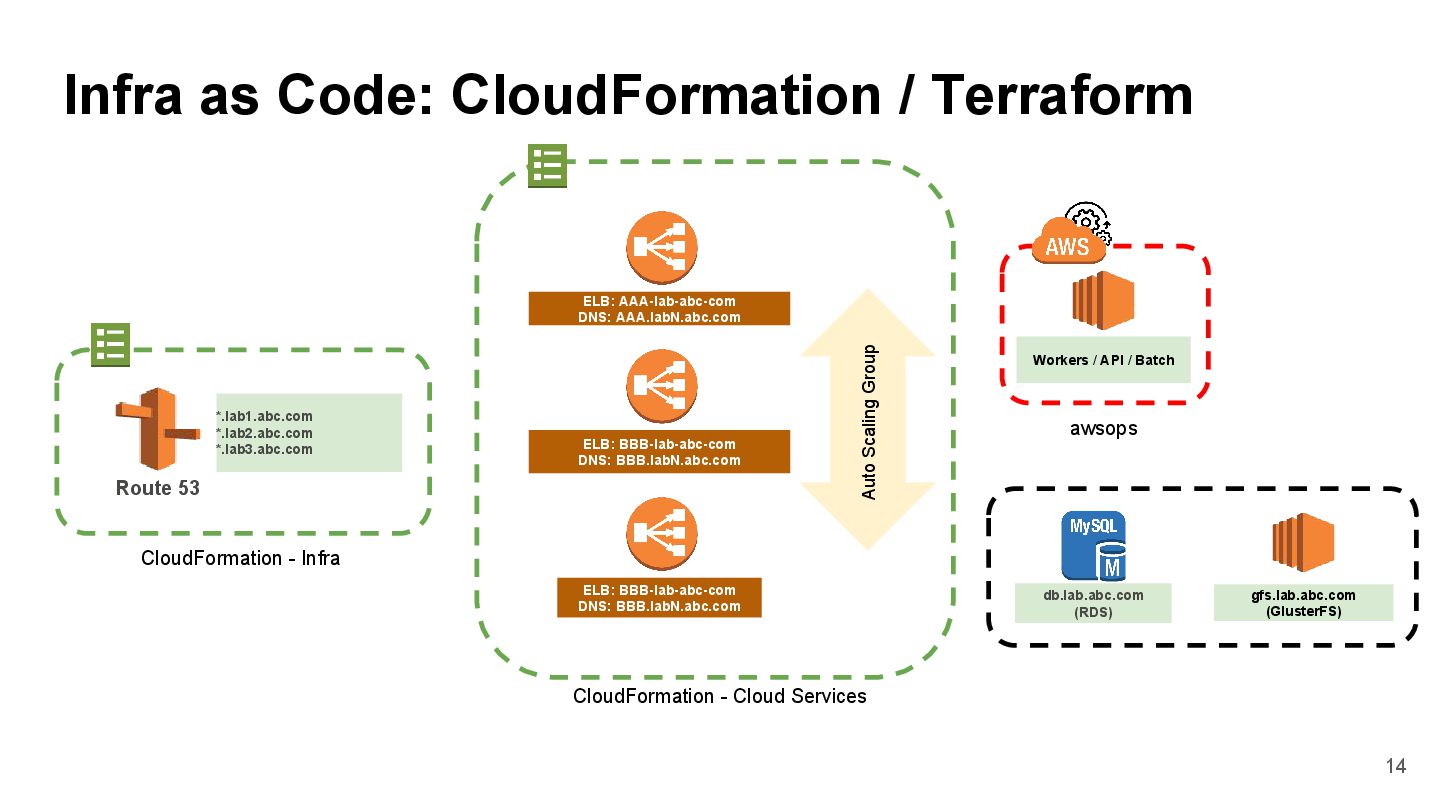
  10. *.lab1.abc.com *.lab2.abc.com *.lab3.abc.com Infra as Code: CloudFormation / Terraform Route

    53 Workers / API / Batch ELB: BBB-lab-abc-com DNS: BBB.labN.abc.com db.lab.abc.com (RDS) 14 ELB: AAA-lab-abc-com DNS: AAA.labN.abc.com ELB: BBB-lab-abc-com DNS: BBB.labN.abc.com Auto Scaling Group CloudFormation - Infra CloudFormation - Cloud Services awsops gfs.lab.abc.com (GlusterFS)
  11. 15

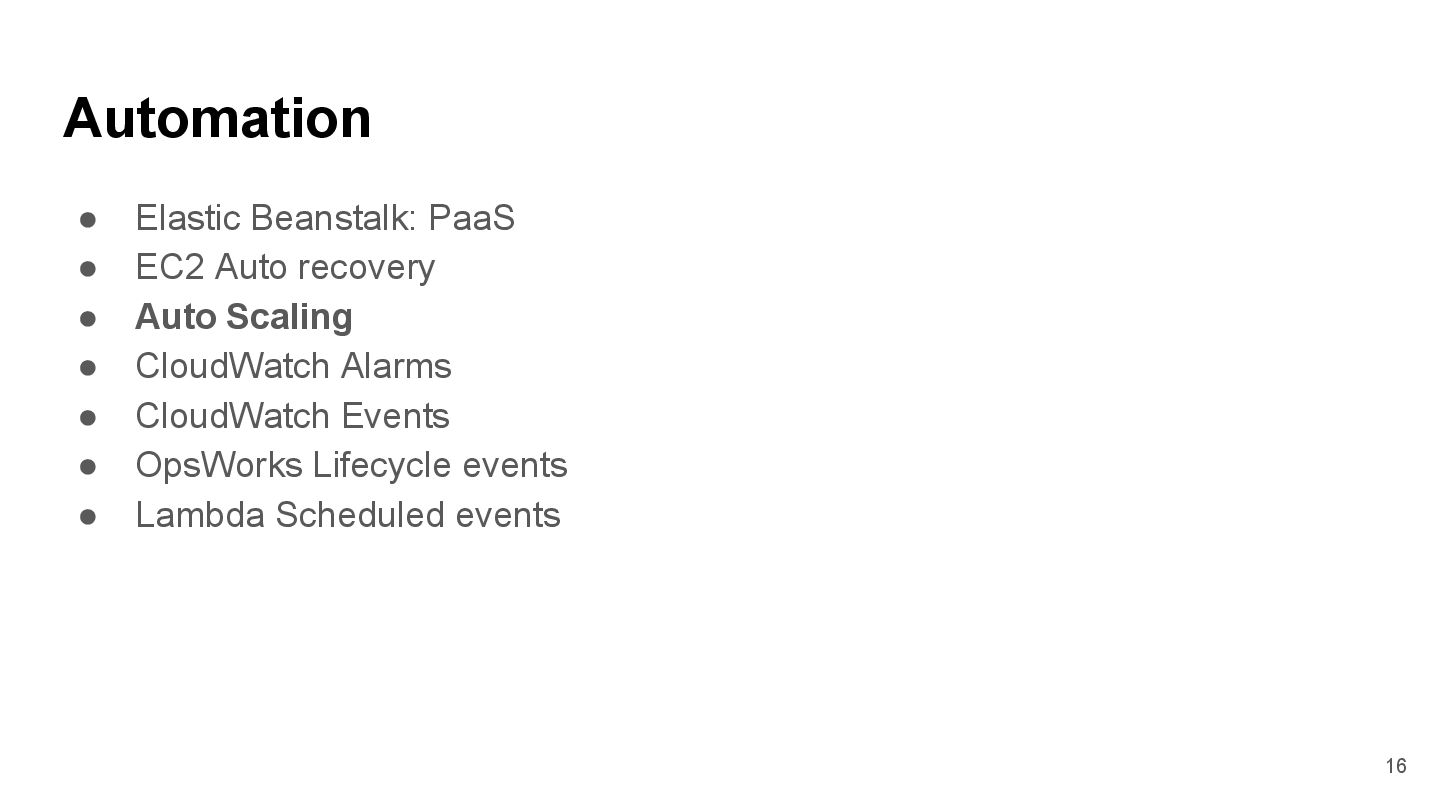
  12. • Elastic Beanstalk: PaaS • EC2 Auto recovery • Auto

    Scaling • CloudWatch Alarms • CloudWatch Events • OpsWorks Lifecycle events • Lambda Scheduled events Automation 16
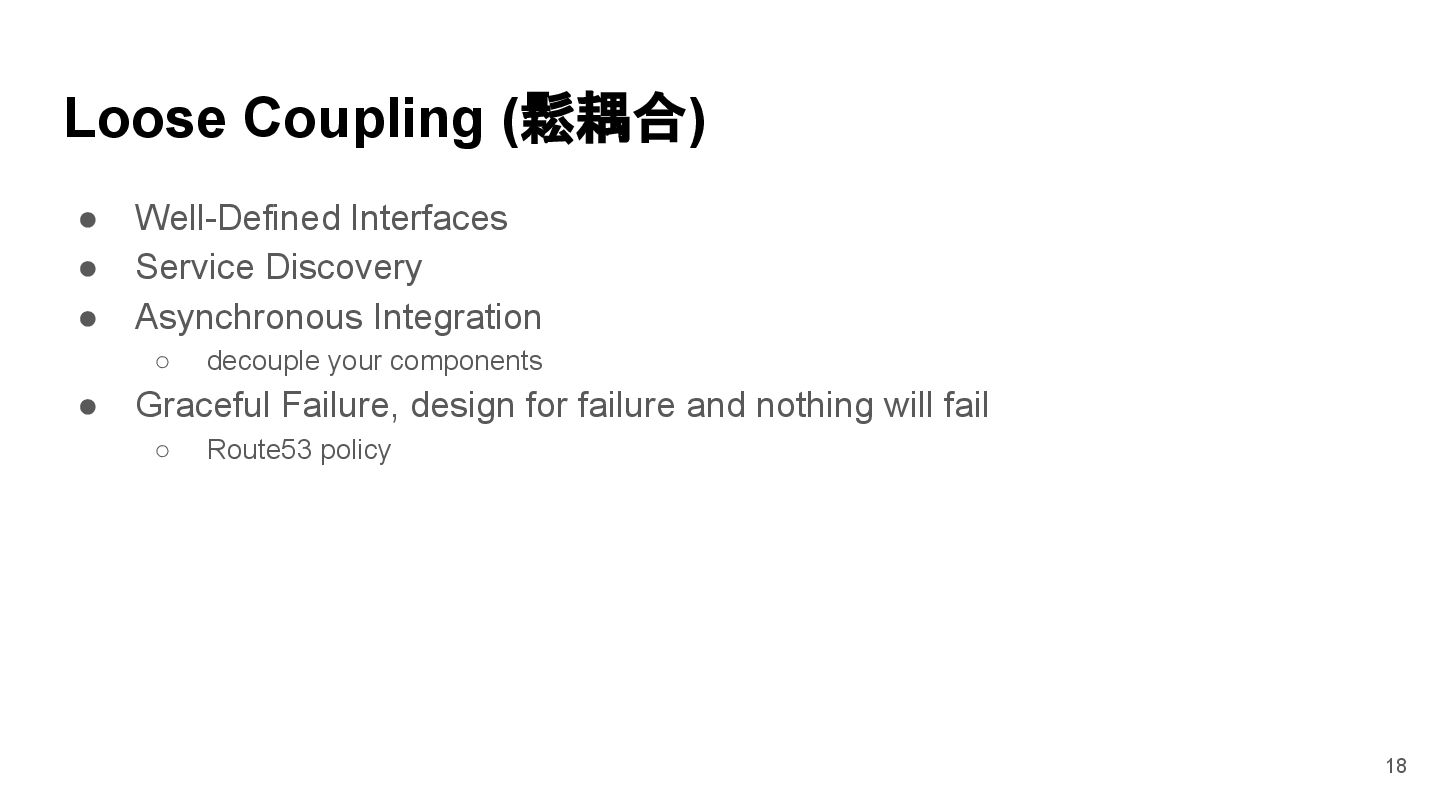
  13. • Well-Defined Interfaces • Service Discovery • Asynchronous Integration ◦

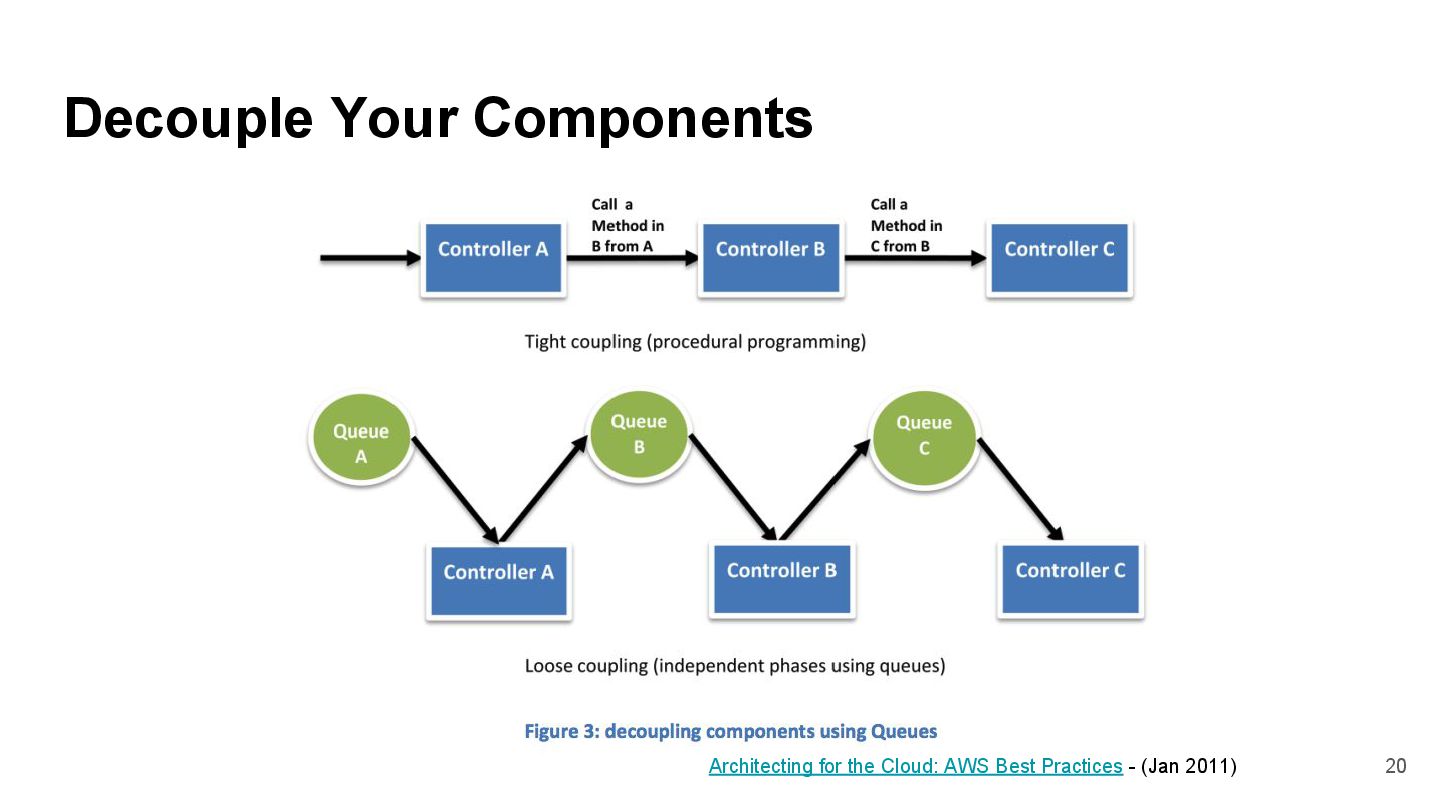
    decouple your components • Graceful Failure, design for failure and nothing will fail ◦ Route53 policy Loose Coupling (鬆耦合) 18
  14. • Managed Services ◦ SQS, CloudWatch, ELB, S3, EBS RDS,

    SES ... • Serverless Architectures ◦ Lambda, API Gateway ◦ Whitepaper: Serverless Architectures with AWS Lambda (November 2017) Services, Not Servers 22
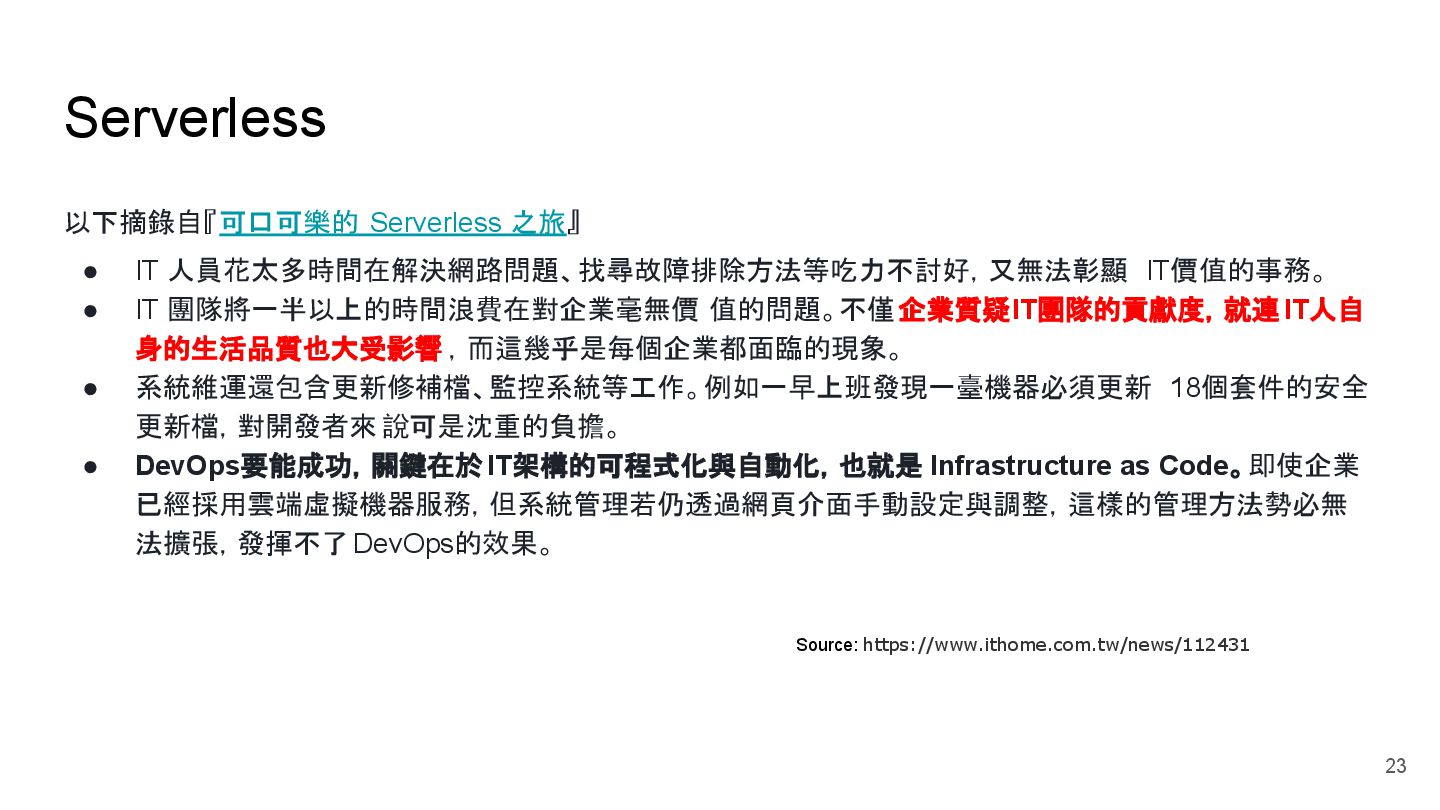
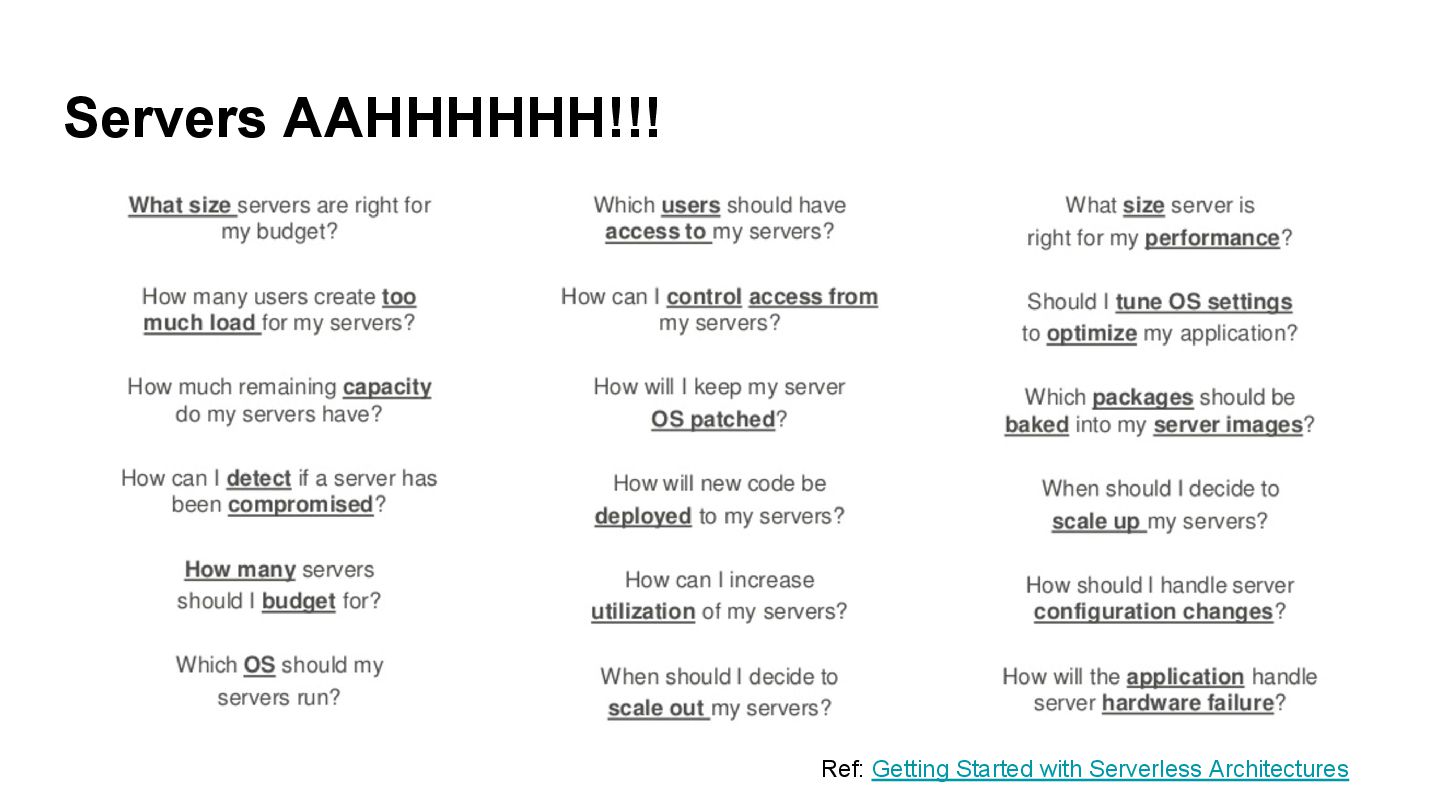
  15. 以下摘錄自『可口可樂的 Serverless 之旅』 • IT 人員花太多時間在解決網路問題、找尋故障排除方法等吃力不討好,又無法彰顯 IT價值的事務。 • IT 團隊將一半以上的時間浪費在對企業毫無價

    值的問題。不僅企業質疑IT團隊的貢獻度,就連 IT人自 身的生活品質也大受影響 ,而這幾乎是每個企業都面臨的現象。 • 系統維運還包含更新修補檔、監控系統等工作。例如一早上班發現一臺機器必須更新 18個套件的安全 更新檔,對開發者來 說可是沈重的負擔。 • DevOps要能成功,關鍵在於 IT架構的可程式化與自動化,也就是 Infrastructure as Code。即使企業 已經採用雲端虛擬機器服務,但系統管理若仍透過網頁介面手動設定與調整,這樣的管理方法勢必無 法擴張,發揮不了DevOps的效果。 Serverless Source: https://www.ithome.com.tw/news/112431 23
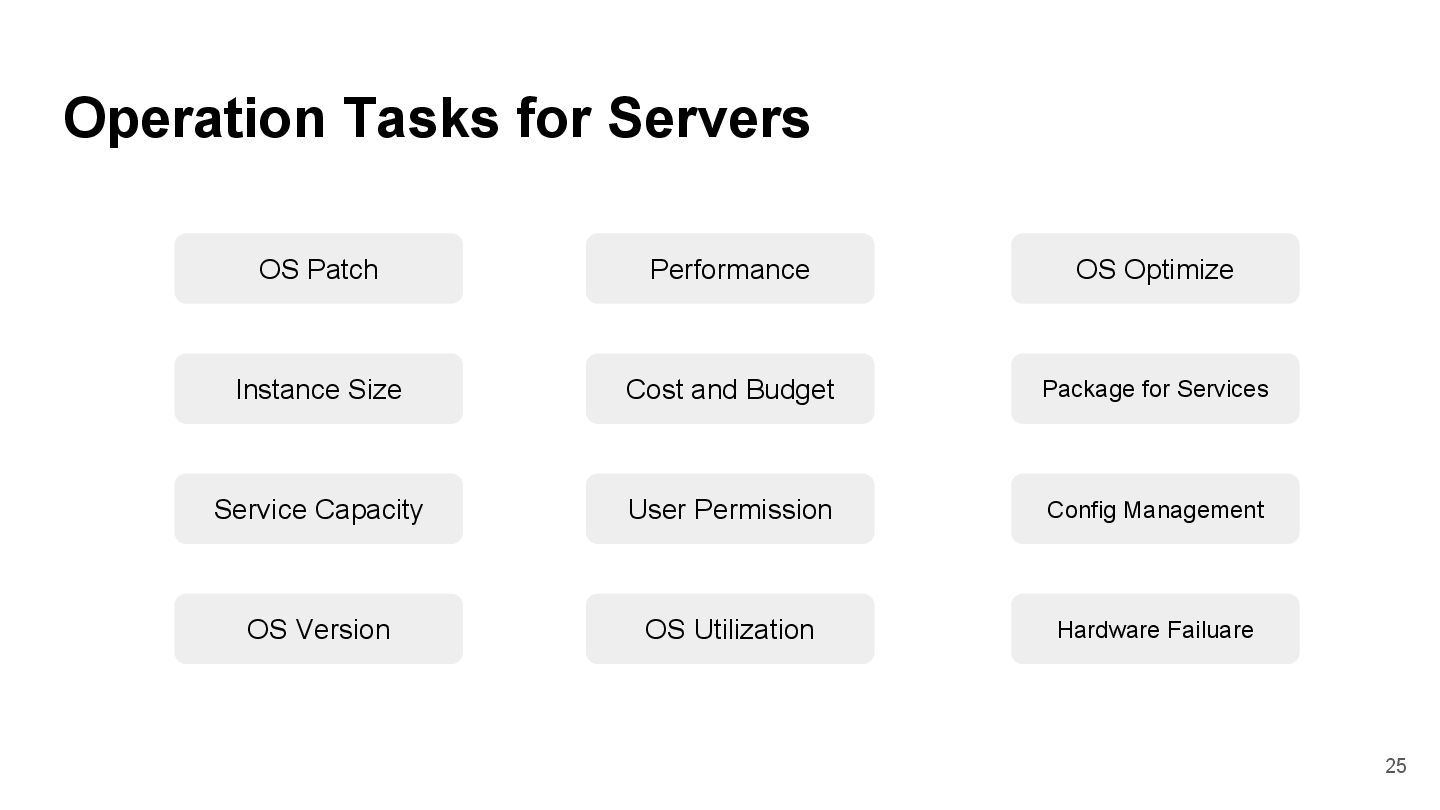
  16. OS Patch Instance Size Service Capacity Cost and Budget OS

    Version User Permission OS Utilization Performance OS Optimize Package for Services Config Management Hardware Failuare 25 Operation Tasks for Servers
  17. 26

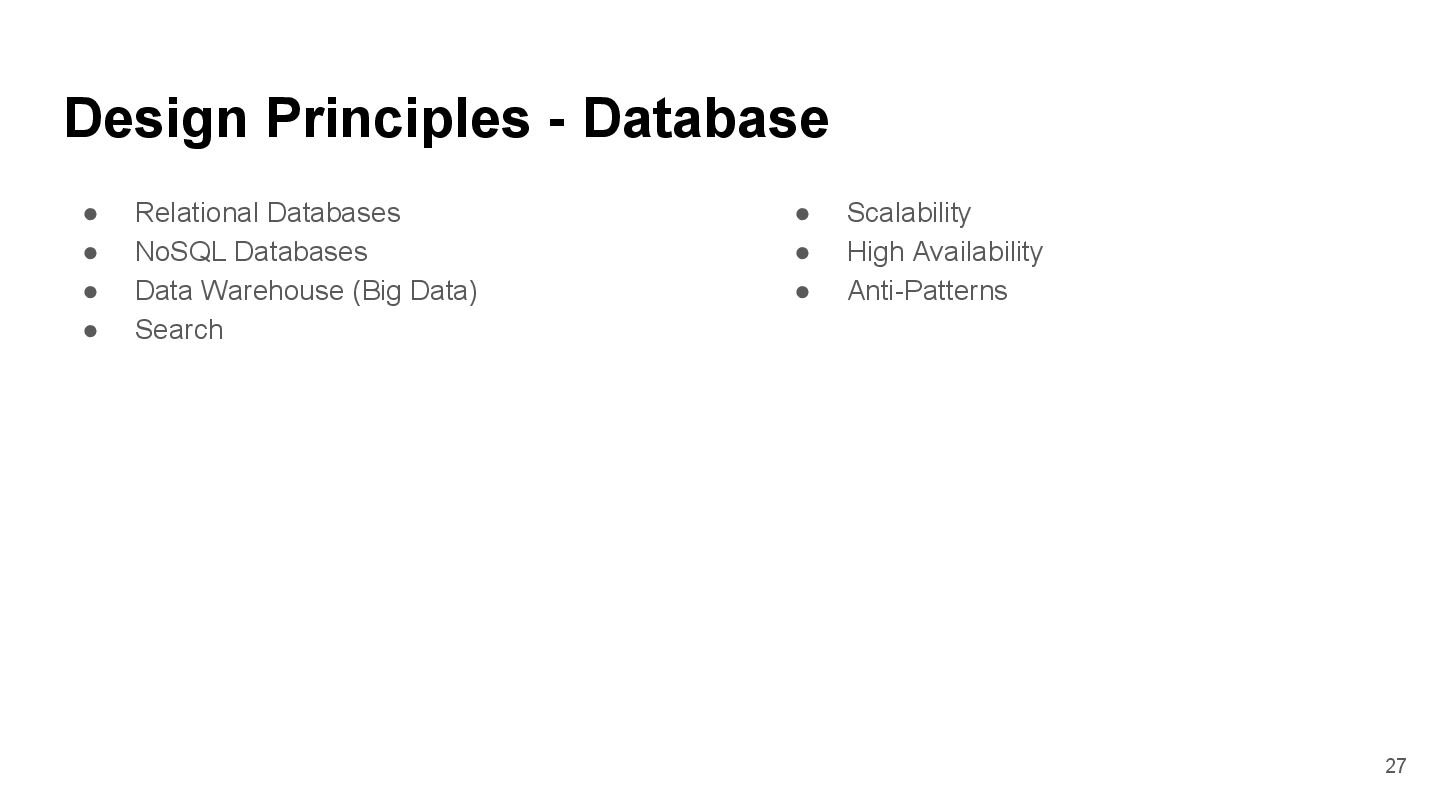
  18. • Relational Databases • NoSQL Databases • Data Warehouse (Big

    Data) • Search Design Principles - Database 27 • Scalability • High Availability • Anti-Patterns
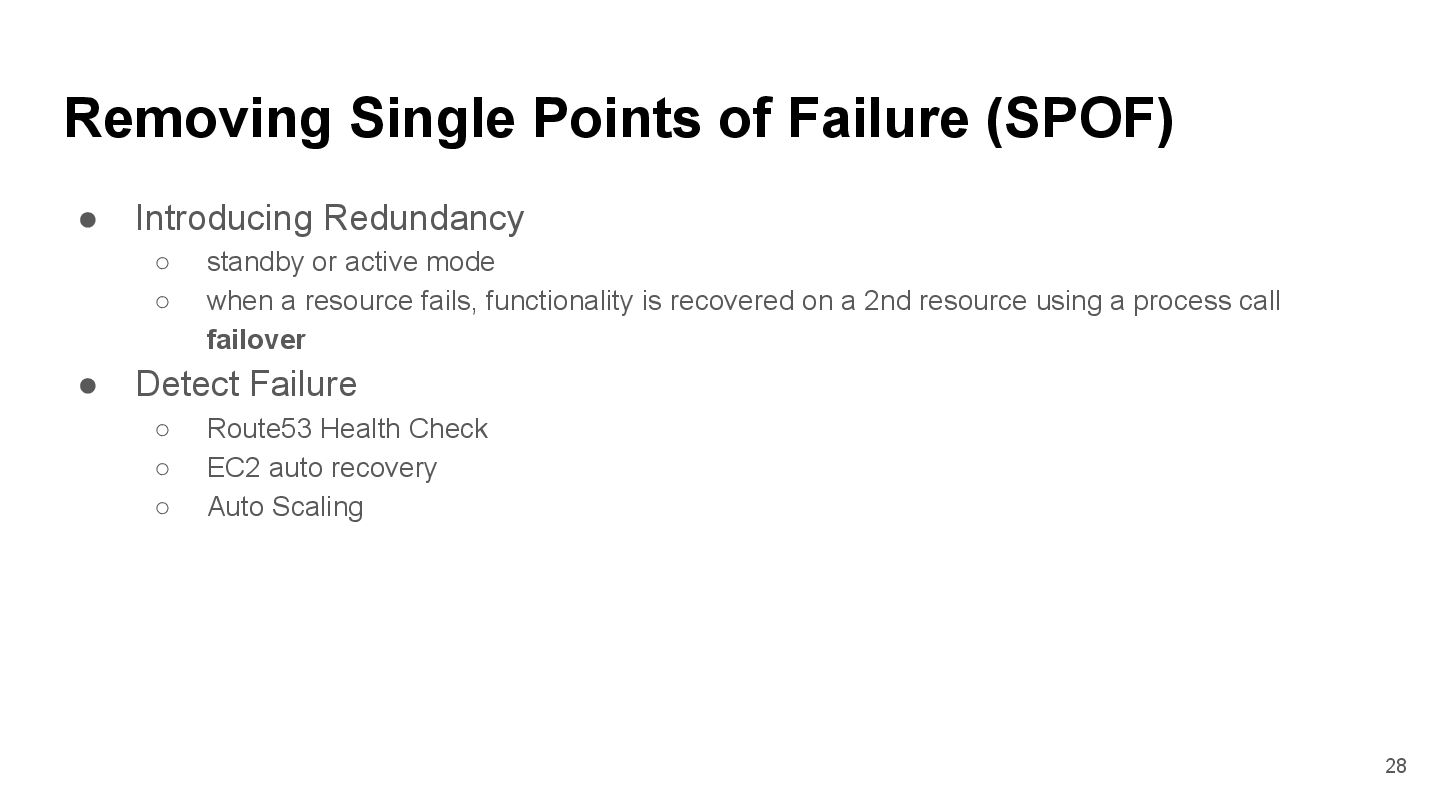
  19. • Introducing Redundancy ◦ standby or active mode ◦ when

    a resource fails, functionality is recovered on a 2nd resource using a process call failover • Detect Failure ◦ Route53 Health Check ◦ EC2 auto recovery ◦ Auto Scaling Removing Single Points of Failure (SPOF) 28
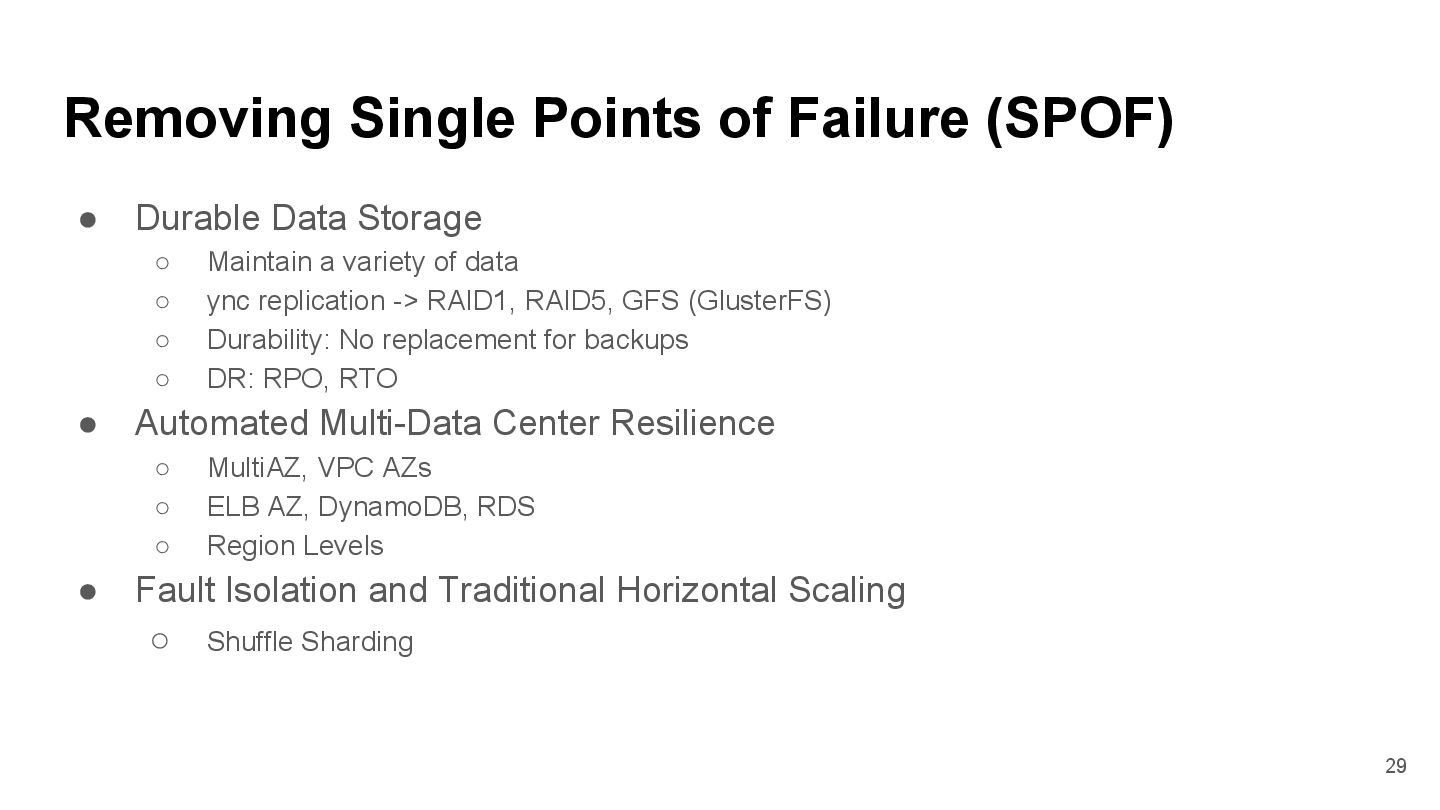
  20. Removing Single Points of Failure (SPOF) 29 • Durable Data

    Storage ◦ Maintain a variety of data ◦ ync replication -> RAID1, RAID5, GFS (GlusterFS) ◦ Durability: No replacement for backups ◦ DR: RPO, RTO • Automated Multi-Data Center Resilience ◦ MultiAZ, VPC AZs ◦ ELB AZ, DynamoDB, RDS ◦ Region Levels • Fault Isolation and Traditional Horizontal Scaling ◦ Shuffle Sharding

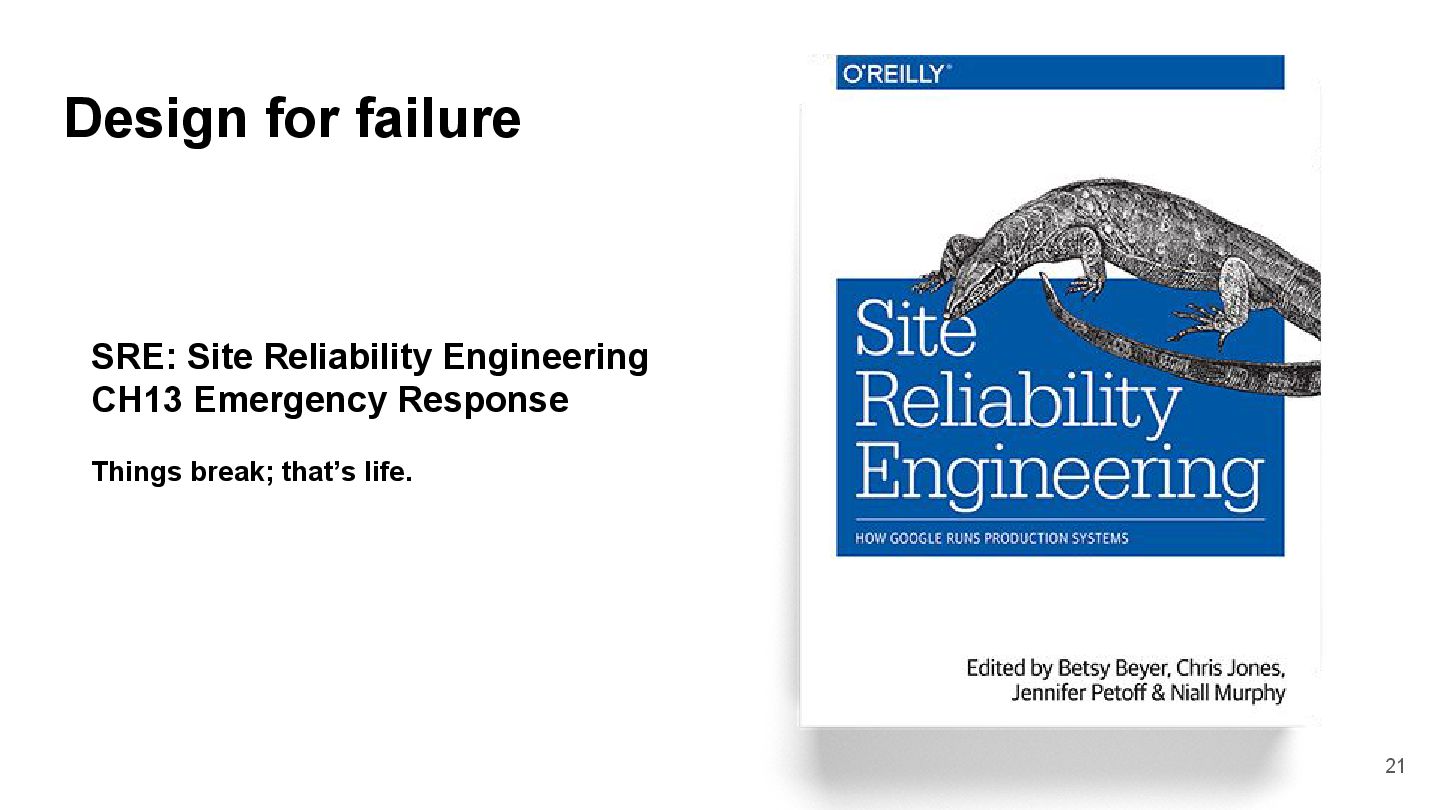
  21. Reference 1. Site Reliability Engineering a. Chapter 22 - Addressing

    Cascading Failures b. Chapter 23 - Managing Critical State: Distributed Consensus for Reliability 2. 高品質微服務 a. 第五章 容錯與災難預防 3. AWS Whitepapers a. AWS Well-Architected Framework - Reliability Pillar (December 2017) b. Building Fault-Tolerant Applications on AWS (October 2011) 30
  22. 31

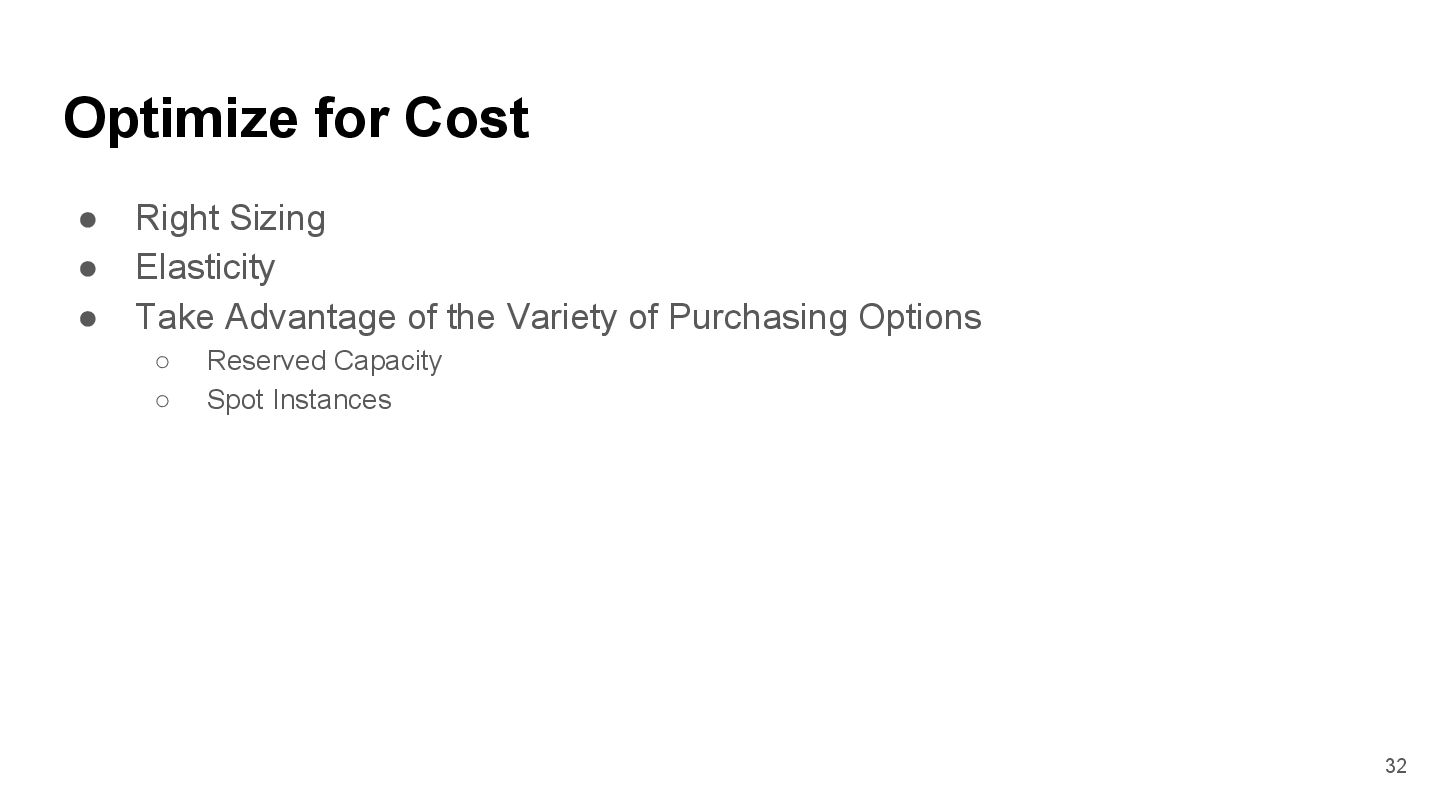
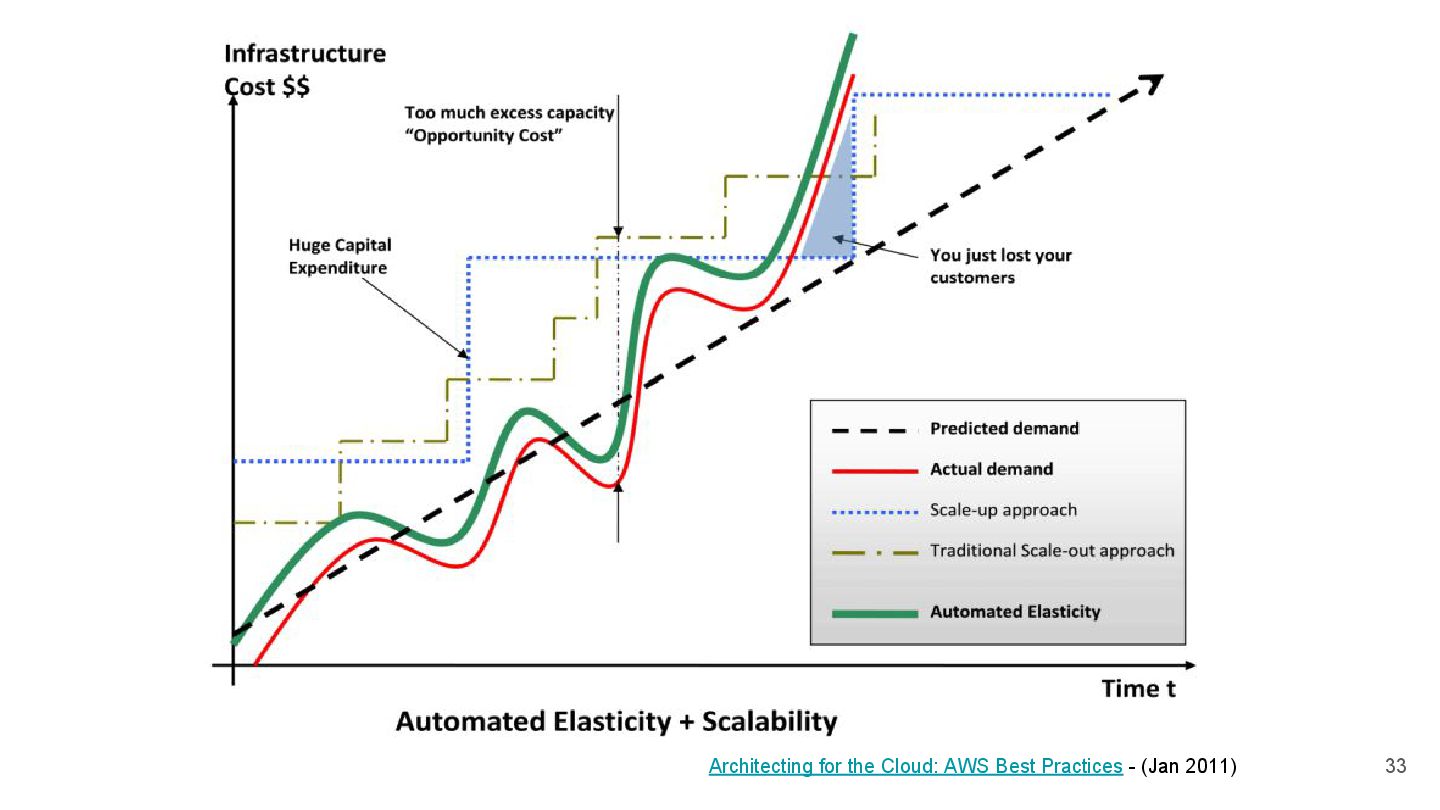
  23. • Right Sizing • Elasticity • Take Advantage of the

    Variety of Purchasing Options ◦ Reserved Capacity ◦ Spot Instances Optimize for Cost 32
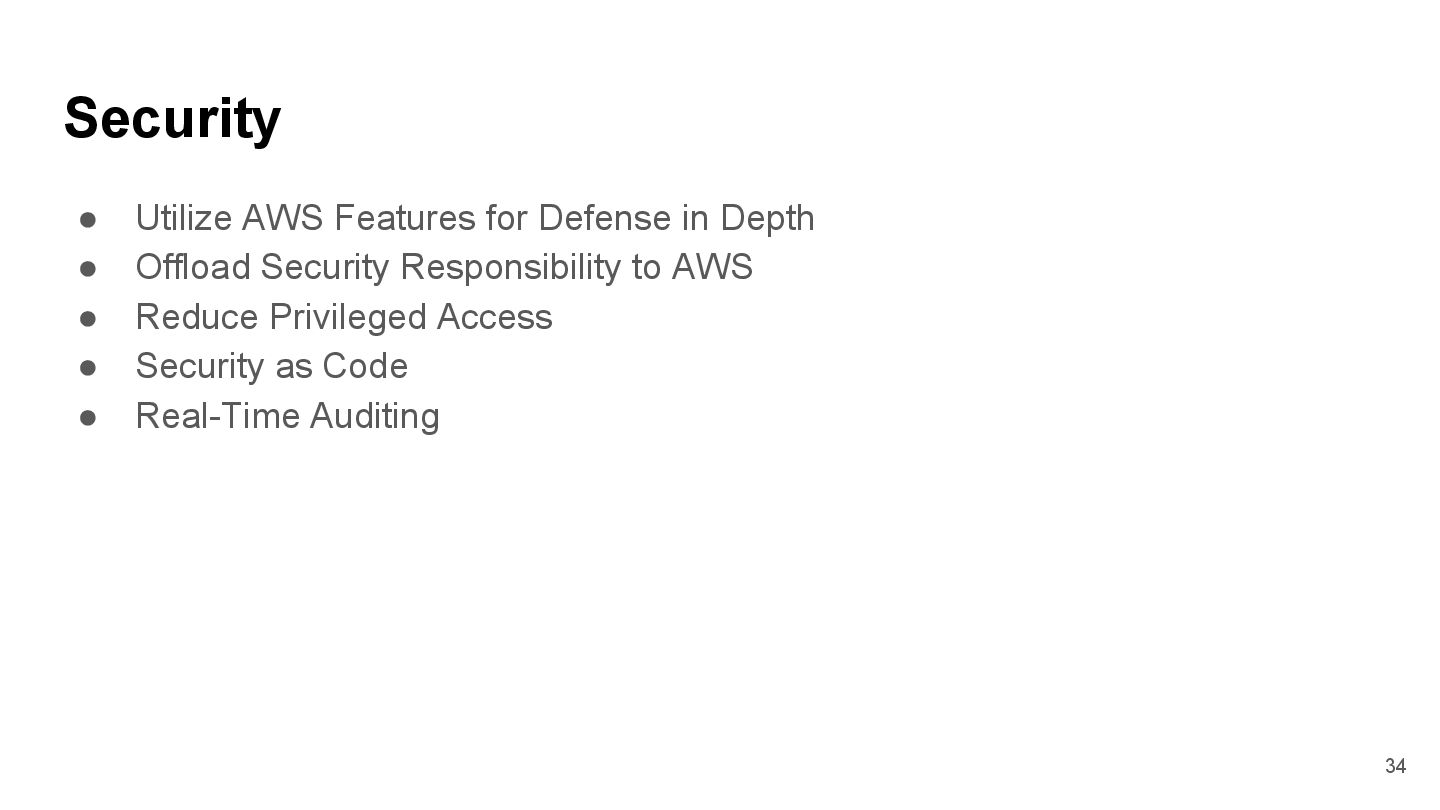
  24. • Utilize AWS Features for Defense in Depth • Offload

    Security Responsibility to AWS • Reduce Privileged Access • Security as Code • Real-Time Auditing Security 34
  25. 35

  26. 39

  27. 40 Reference • Architecting for the Cloud (Feb, 2016) (PDF)

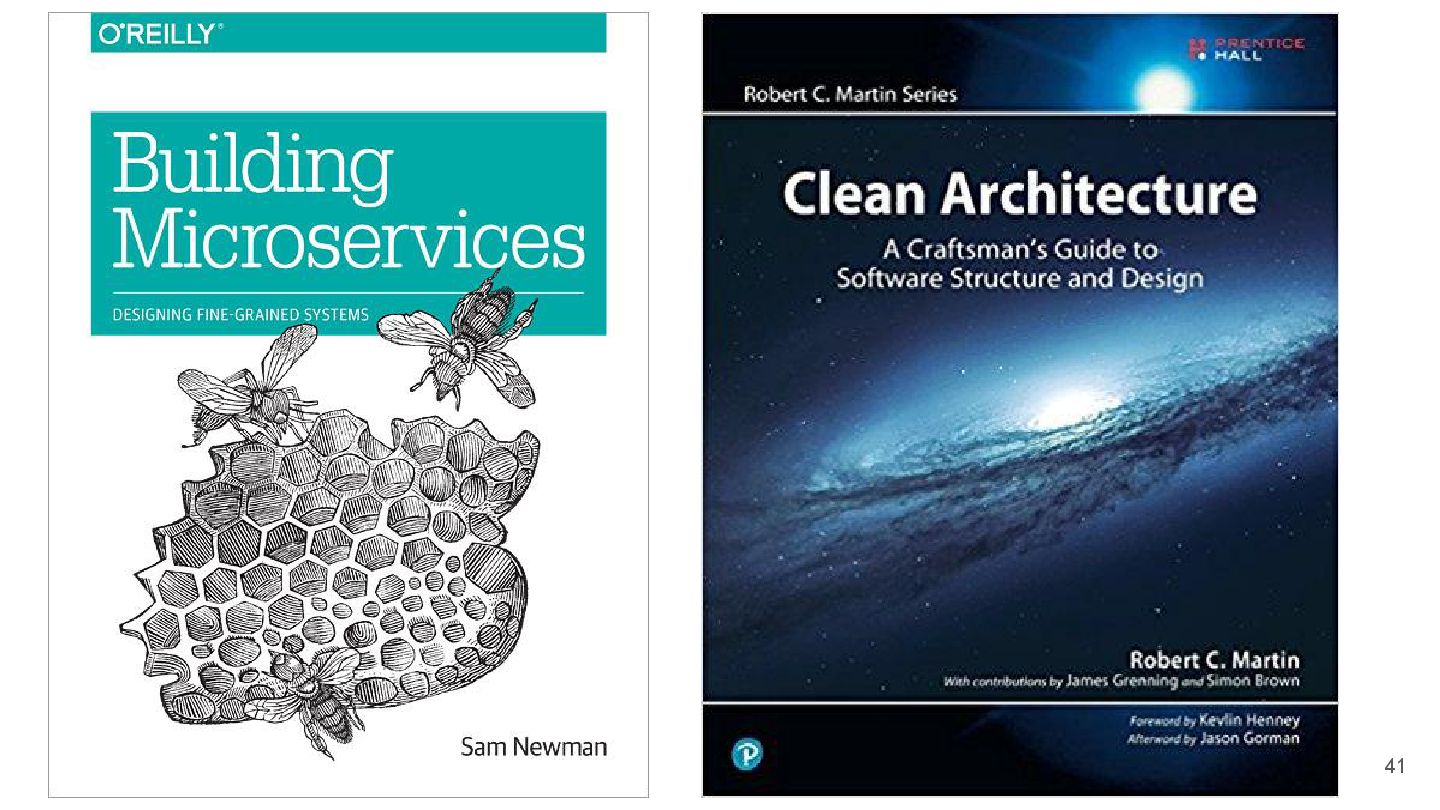
    • Architecting on The Cloud (slideshare) • Building Microservices • Clean Architecture • Site Reliability Engineering
  28. 41

  29. 42