the tree of wisdom. L a s t w e e k w h e n t h e programming lesson on java collection classes was over, he threw a coding challenge at us. He asked to write a small piece of code to iterate over the collection.
glance at my great piece of code. There was charismatic smile on his face. I was startled. I knew, I must have done some grave mistake. However, I was eager to learn that fine point of Java programming. I look forward to Tao to enlighten me. Then, to my surprise, Tao made a small correction to my code. I could not see much improvement though.
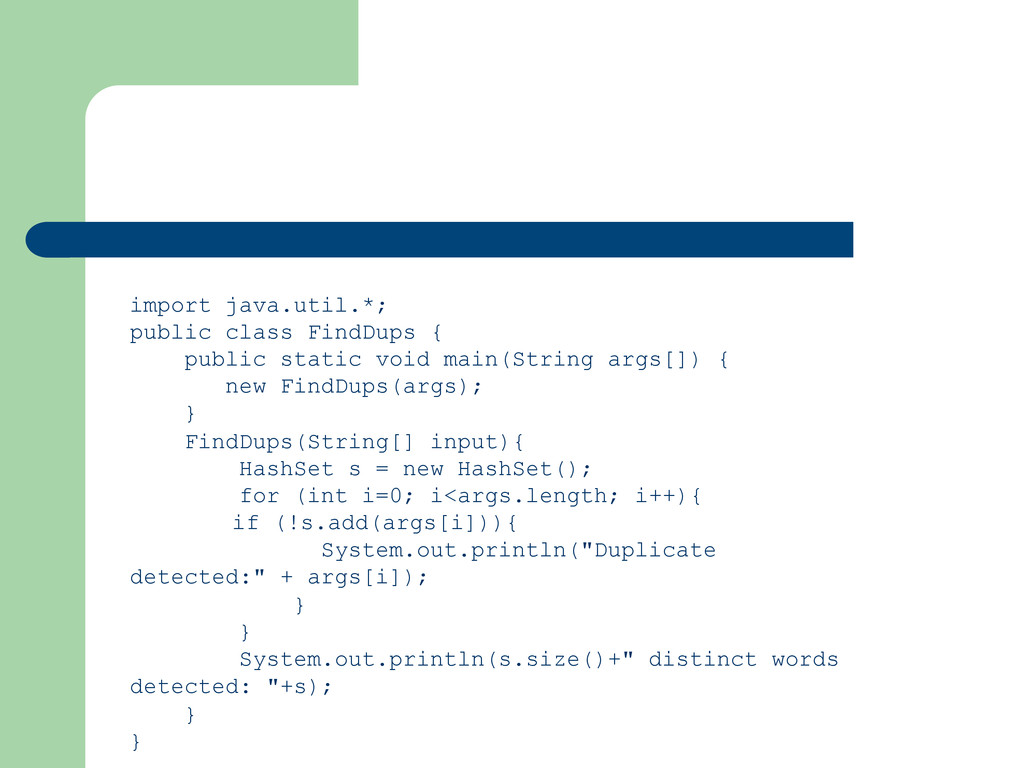
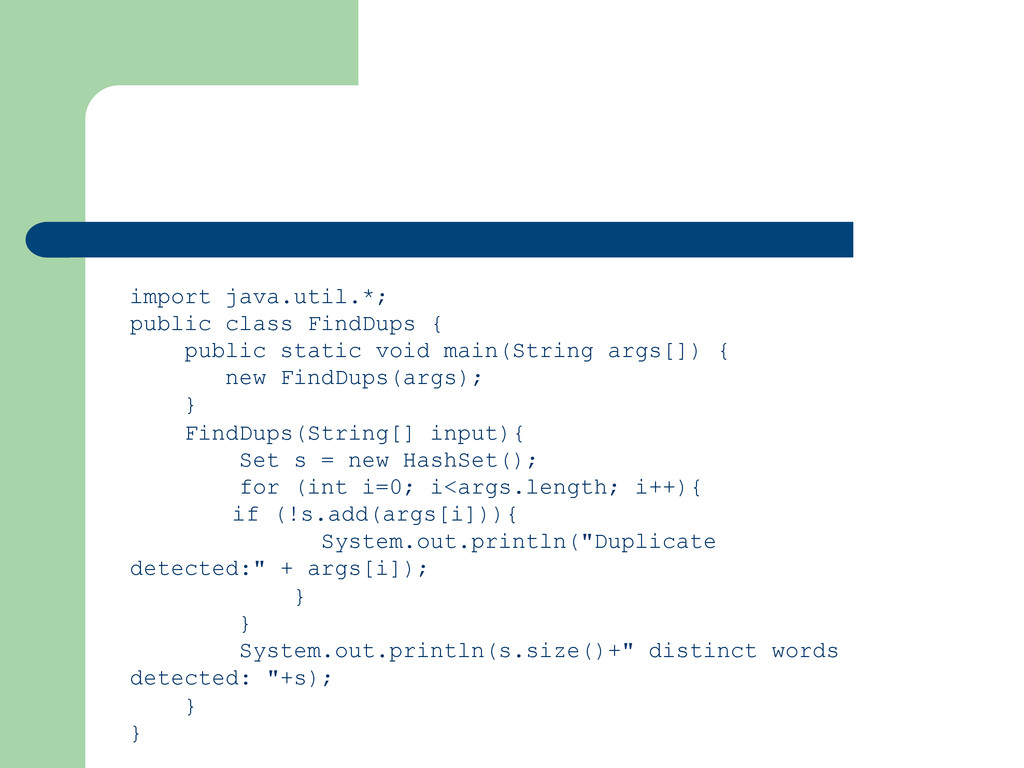
args[]) { new FindDups(args); } FindDups(String[] input){ Set s = new HashSet(); for (int i=0; i<args.length; i++){ if (!s.add(args[i])){ System.out.println("Duplicate detected:" + args[i]); } } System.out.println(s.size()+" distinct words detected: "+s); } }
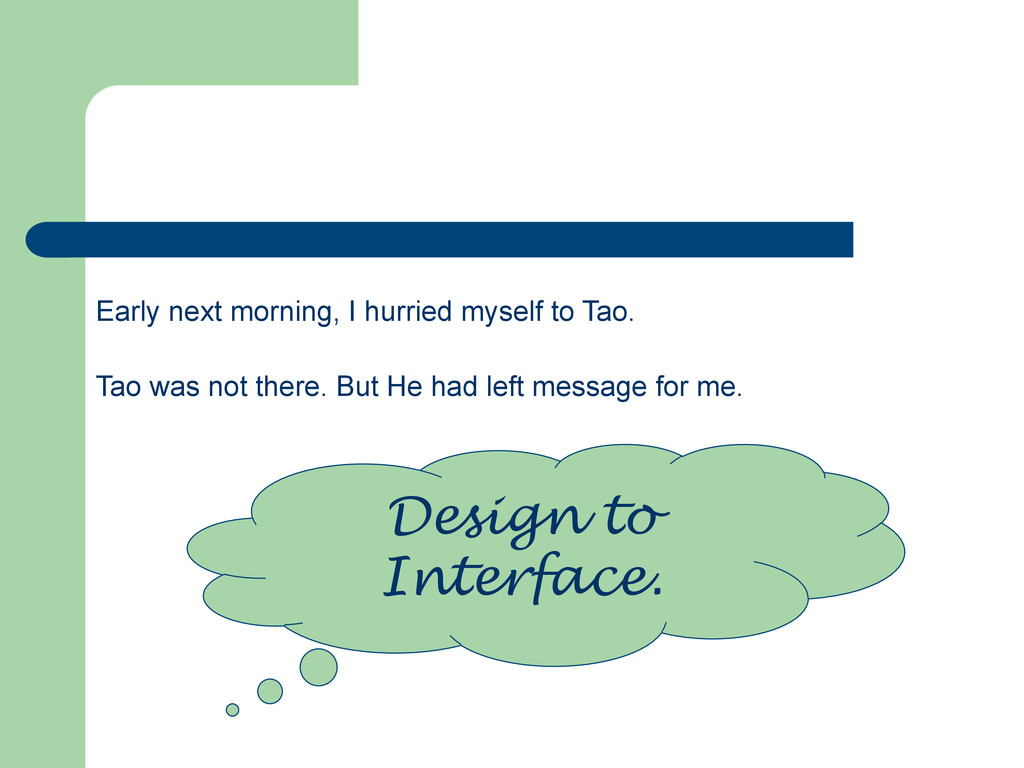
Tao continued to don the same charismatic smile. Then he asked me to ponder over the “small change” and decipher the underlying design principle. Then he left me. I stood there wondering about the design principle.
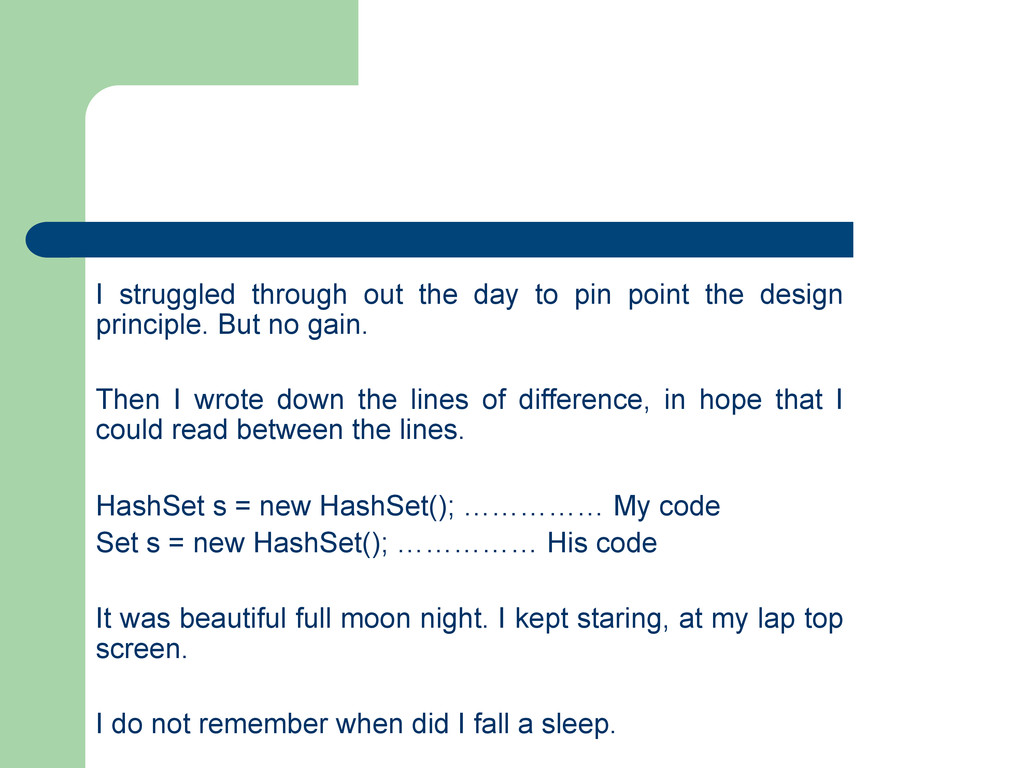
design principle. But no gain. Then I wrote down the lines of difference, in hope that I could read between the lines. HashSet s = new HashSet(); …………… My code Set s = new HashSet(); …………… His code It was beautiful full moon night. I kept staring, at my lap top screen. I do not remember when did I fall a sleep.
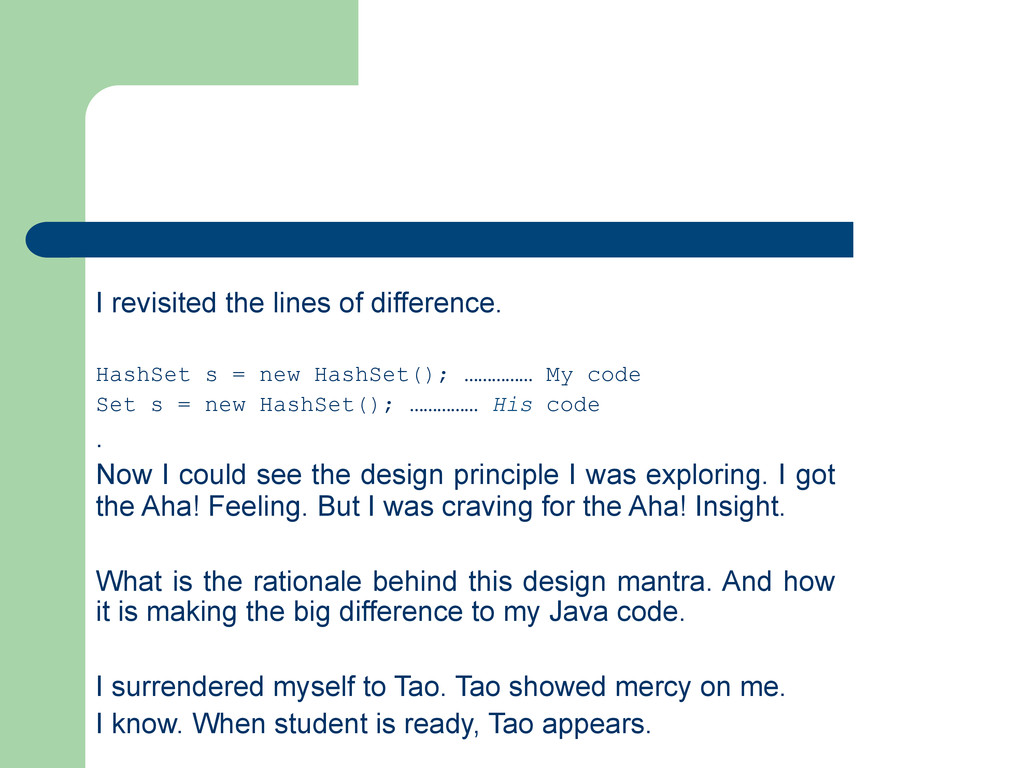
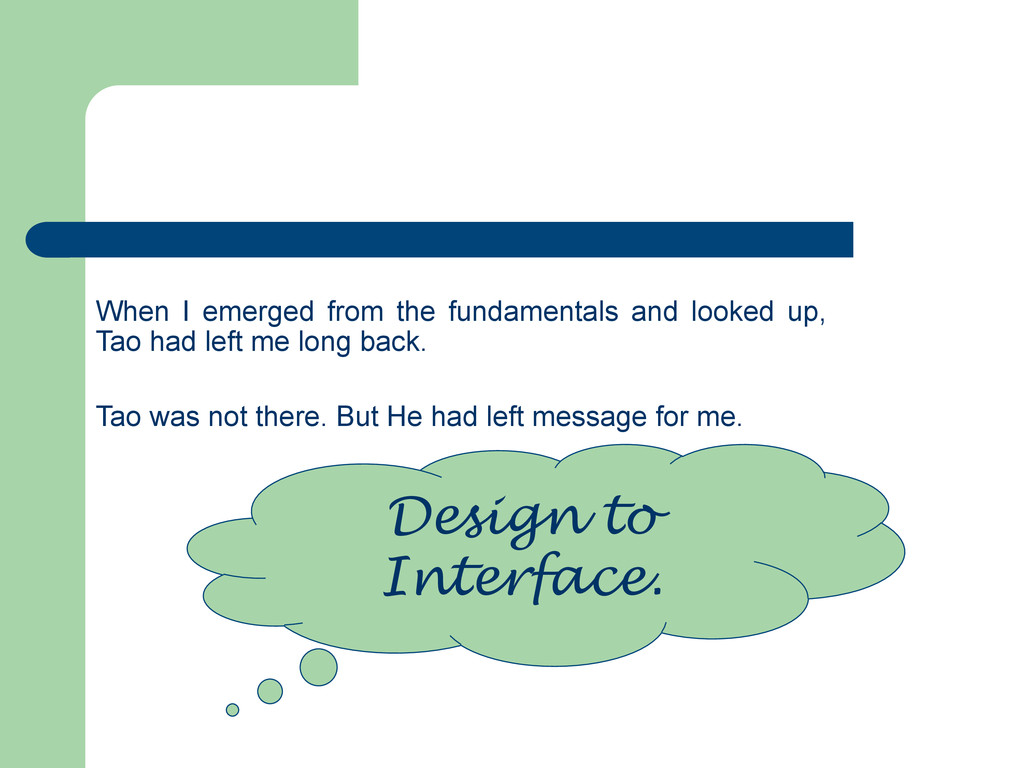
HashSet(); …………… My code Set s = new HashSet(); …………… His code . Now I could see the design principle I was exploring. I got the Aha! Feeling. But I was craving for the Aha! Insight. What is the rationale behind this design mantra. And how it is making the big difference to my Java code. I surrendered myself to Tao. Tao showed mercy on me. I know. When student is ready, Tao appears.
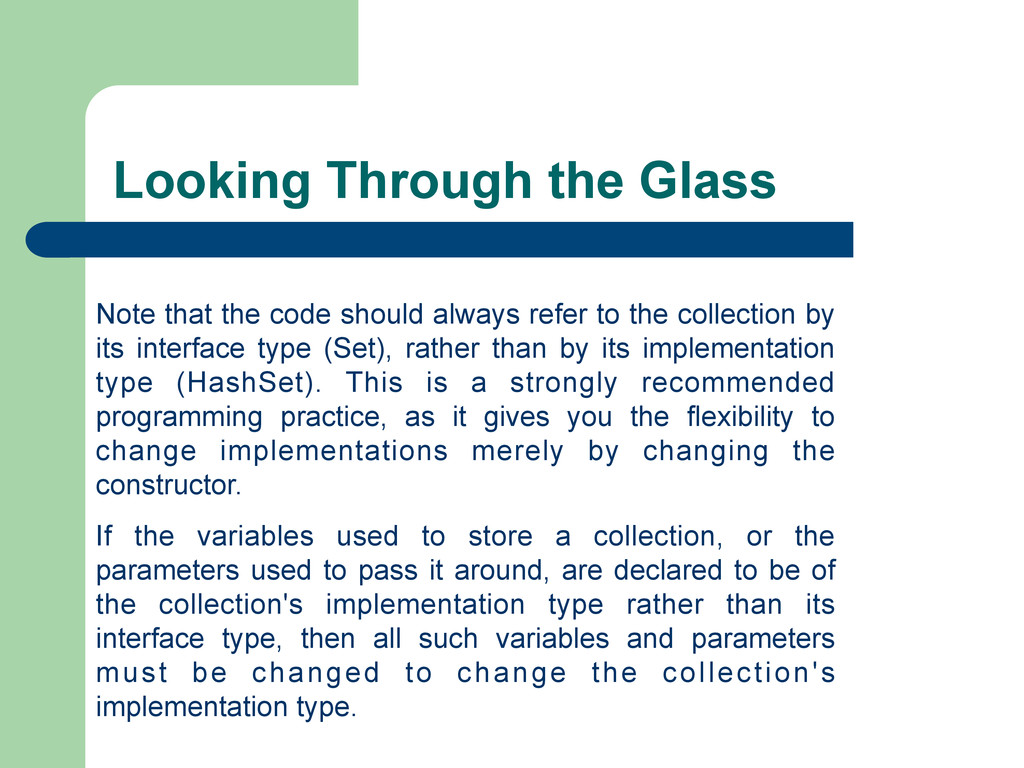
refer to the collection by its interface type (Set), rather than by its implementation type (HashSet). This is a strongly recommended programming practice, as it gives you the flexibility to change implementations merely by changing the constructor. If the variables used to store a collection, or the parameters used to pass it around, are declared to be of the collection's implementation type rather than its interface type, then all such variables and parameters must be changed to change the collection's implementation type.
if the program uses any non-standard operations that are present in the original implementation type but not the new one, the program will fail. Referring to collections only by their interface keeps you honest, in the sense that it prevents you from using any non-standard operations. Looking Through the Glass
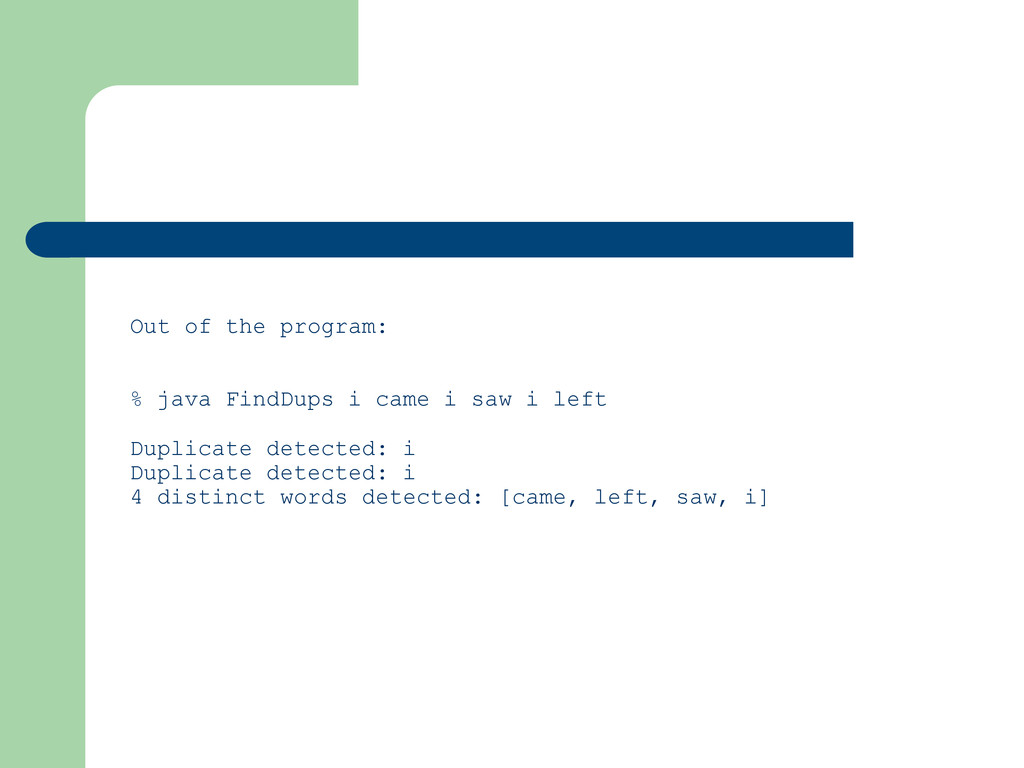
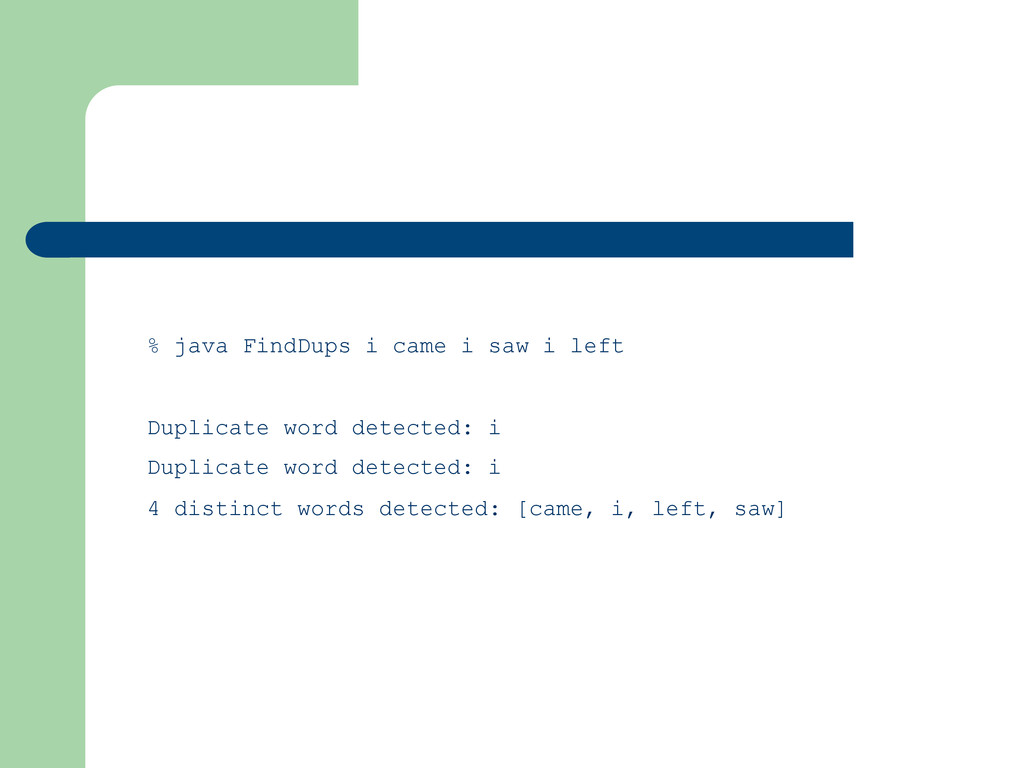
in Code The implementation type of the Set in the example above is HashSet, which makes no guarantees as to the order of the elements in the Set. If you want the program to print the word list in alphabetical order, all you have to do is to change the set's implementation type from HashSet to TreeSet. Making this trivial one-line change causes the command line in the previous example to generate the following output:


 sagaofsilence
 econanringo
 sylph01
 suneo3476
 kishida
 deka_morita
 akihisaikeda
 guaca
 tmikov2023
 shihochan
 ryu1013
 steliosf
 popppiees
 codingconduct
 inesmontani
 axbom
 aleyda
 brettharned
 trishagee
 sergeychernyshev
 lemiorhan
 pedronauck
 tammyeverts
 gurzu