Upgrade to Pro — share decks privately, control downloads, hide ads and more …

Chenab Engineering Works - Tractor Components M...

Sponsored · Your Podcast. Everywhere. Effortlessly. Share. Educate. Inspire. Entertain. You do you. We'll handle the rest. →
Avatar for Samira Han Samira Han
September 07, 2026

Chenab Engineering Works - Tractor Components Manufacturing & CNC Machining

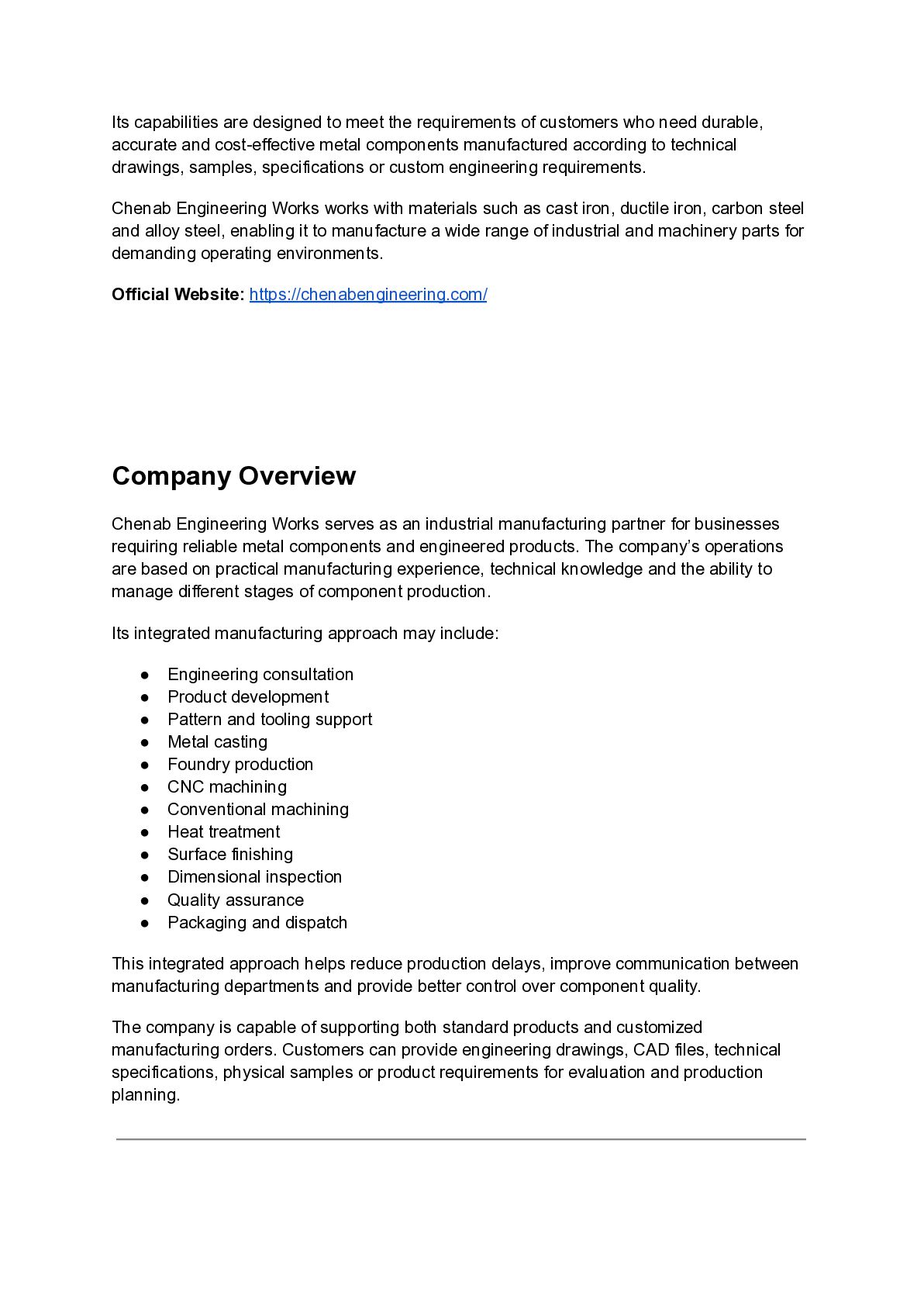
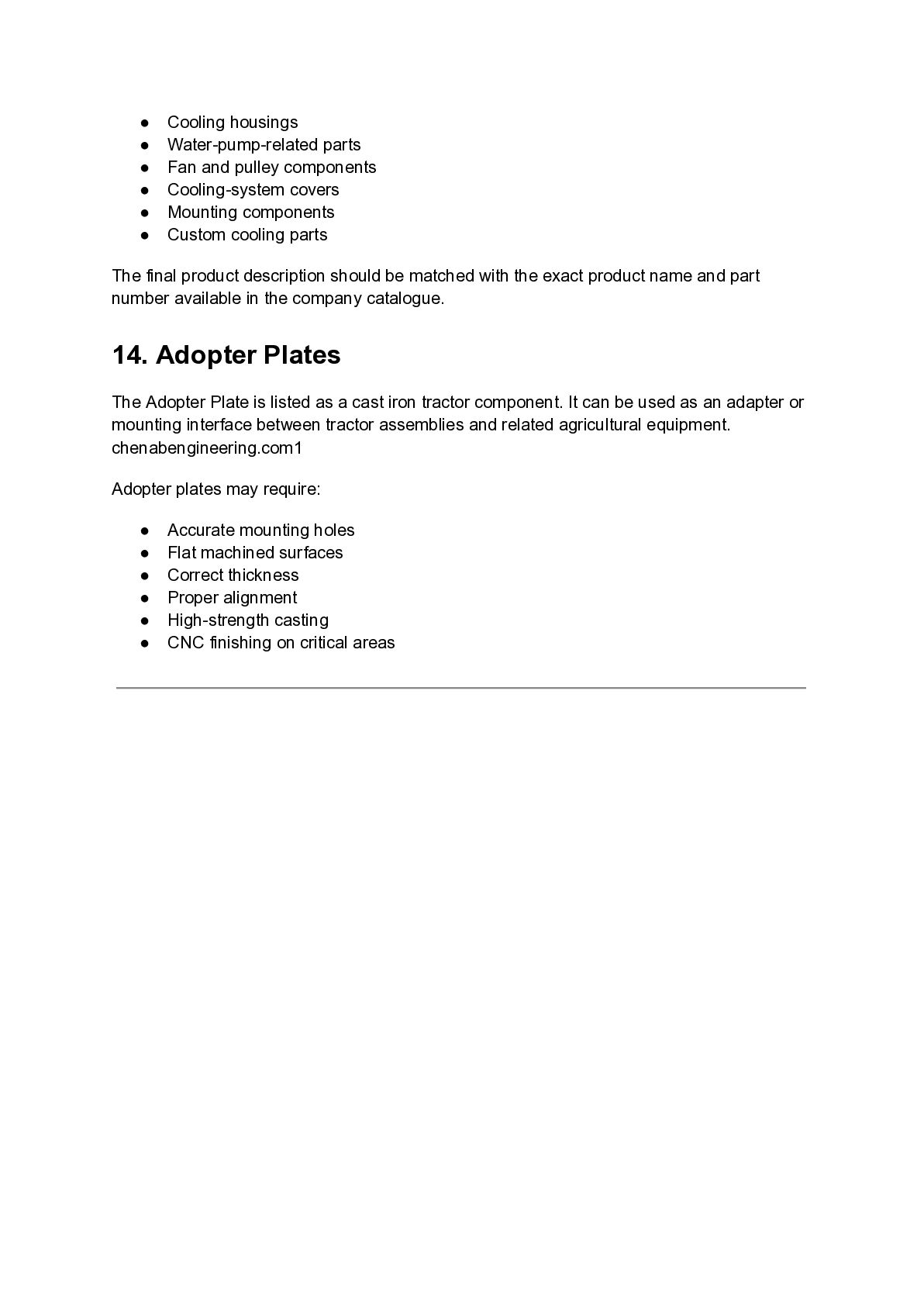
Chenab Engineering Works is a Pakistan-based manufacturer of precision-engineered tractor components, cast iron parts and CNC-machined agricultural machinery components. The company supports OEMs, tractor manufacturers, aftermarket distributors, agricultural workshops and international buyers with durable tractor parts manufactured according to technical drawings, OEM part numbers, samples and application requirements.

Avatar for Samira Han

Samira Han

September 07, 2026

More Decks by Samira Han

Other Decks in Business

Transcript

  1. Chenab Engineering Works Chenab Engineering Works is an engineering and

    manufacturing company based in Faisalabad, Pakistan, providing industrial manufacturing, casting, foundry, CNC machining and engineering solutions for local and international customers. The company focuses on the production of precision-engineered components for agriculture, construction, heavy machinery, automotive, industrial equipment and original equipment manufacturing requirements. By combining foundry operations, metal casting, machining and quality-control processes under one manufacturing setup, Chenab Engineering Works is positioned to support customers from initial component development through final production and delivery.
  2. Its capabilities are designed to meet the requirements of customers

    who need durable, accurate and cost-effective metal components manufactured according to technical drawings, samples, specifications or custom engineering requirements. Chenab Engineering Works works with materials such as cast iron, ductile iron, carbon steel and alloy steel, enabling it to manufacture a wide range of industrial and machinery parts for demanding operating environments. Official Website: https://chenabengineering.com/ Company Overview Chenab Engineering Works serves as an industrial manufacturing partner for businesses requiring reliable metal components and engineered products. The company’s operations are based on practical manufacturing experience, technical knowledge and the ability to manage different stages of component production. Its integrated manufacturing approach may include: •​ •​ •​ •​ •​ •​ •​ •​ •​ •​ •​ •​ Engineering consultation Product development Pattern and tooling support Metal casting Foundry production CNC machining Conventional machining Heat treatment Surface finishing Dimensional inspection Quality assurance Packaging and dispatch This integrated approach helps reduce production delays, improve communication between manufacturing departments and provide better control over component quality. The company is capable of supporting both standard products and customized manufacturing orders. Customers can provide engineering drawings, CAD files, technical specifications, physical samples or product requirements for evaluation and production planning.
  3. Vision To become a trusted engineering and manufacturing partner for

    industrial customers by delivering dependable, precise and cost-effective components through modern production practices, technical expertise and continuous improvement. Mission Chenab Engineering Works is committed to: •​ •​ •​ •​ •​ •​ •​ Producing reliable and durable engineering components Delivering consistent manufacturing quality Expanding precision CNC machining capabilities Supporting OEM and customized production requirements Developing long-term relationships with customers Improving production efficiency and technical performance Serving local and international industrial markets Core Values Quality Every component should meet the agreed technical, dimensional and functional requirements. Reliability Customers should receive consistent products, dependable communication and timely support. Engineering Excellence Manufacturing decisions should be based on technical understanding, practical experience and process control. Customer Focus Production solutions should be developed according to each customer’s application, quantity, budget and quality requirements. Continuous Improvement
  4. Processes, equipment, inspection methods and production systems should be improved

    continuously. Integrity Transparent communication and responsible business practices are essential for long-term partnerships.
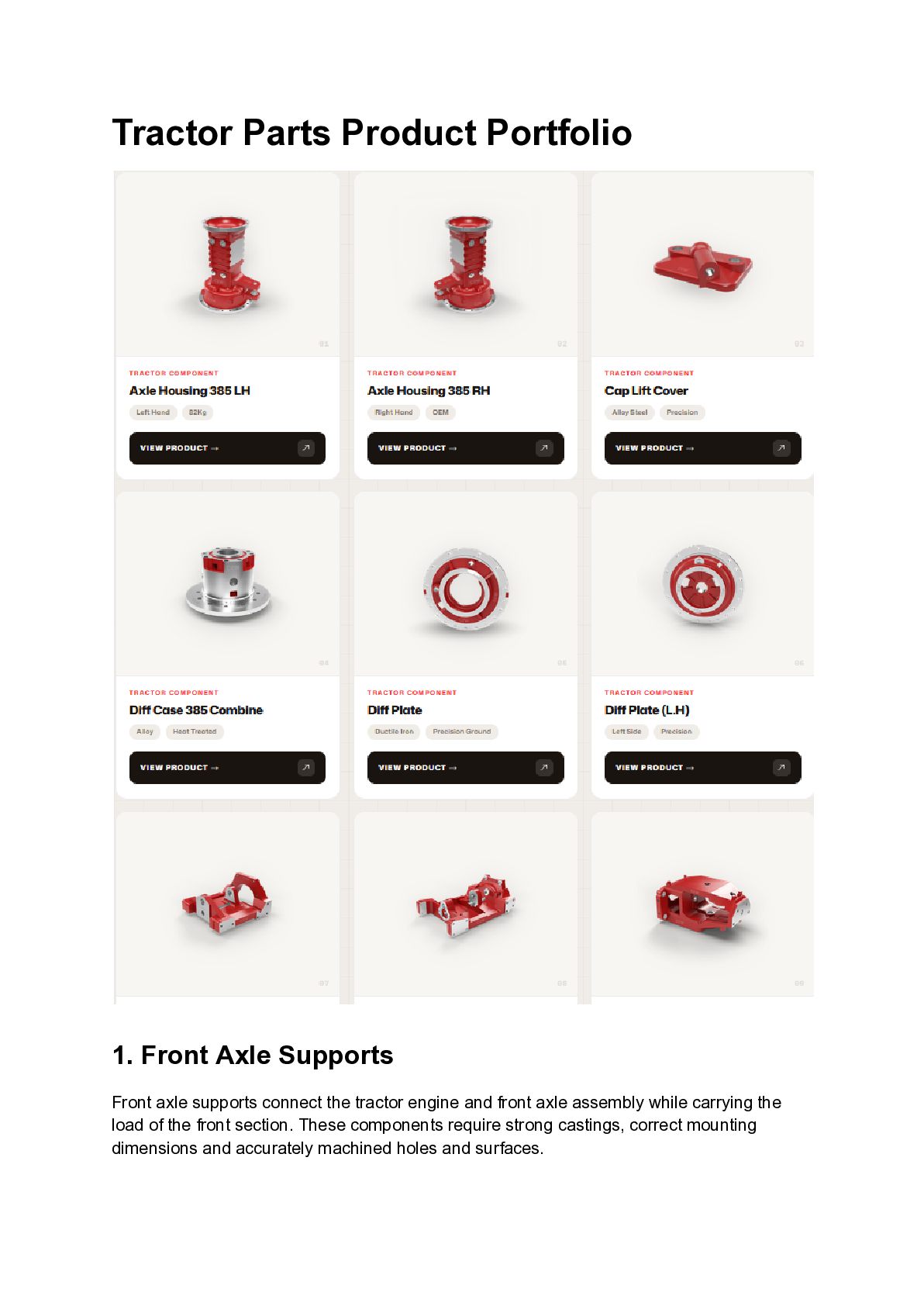
  5. Tractor Parts Product Portfolio 1. Front Axle Supports Front axle

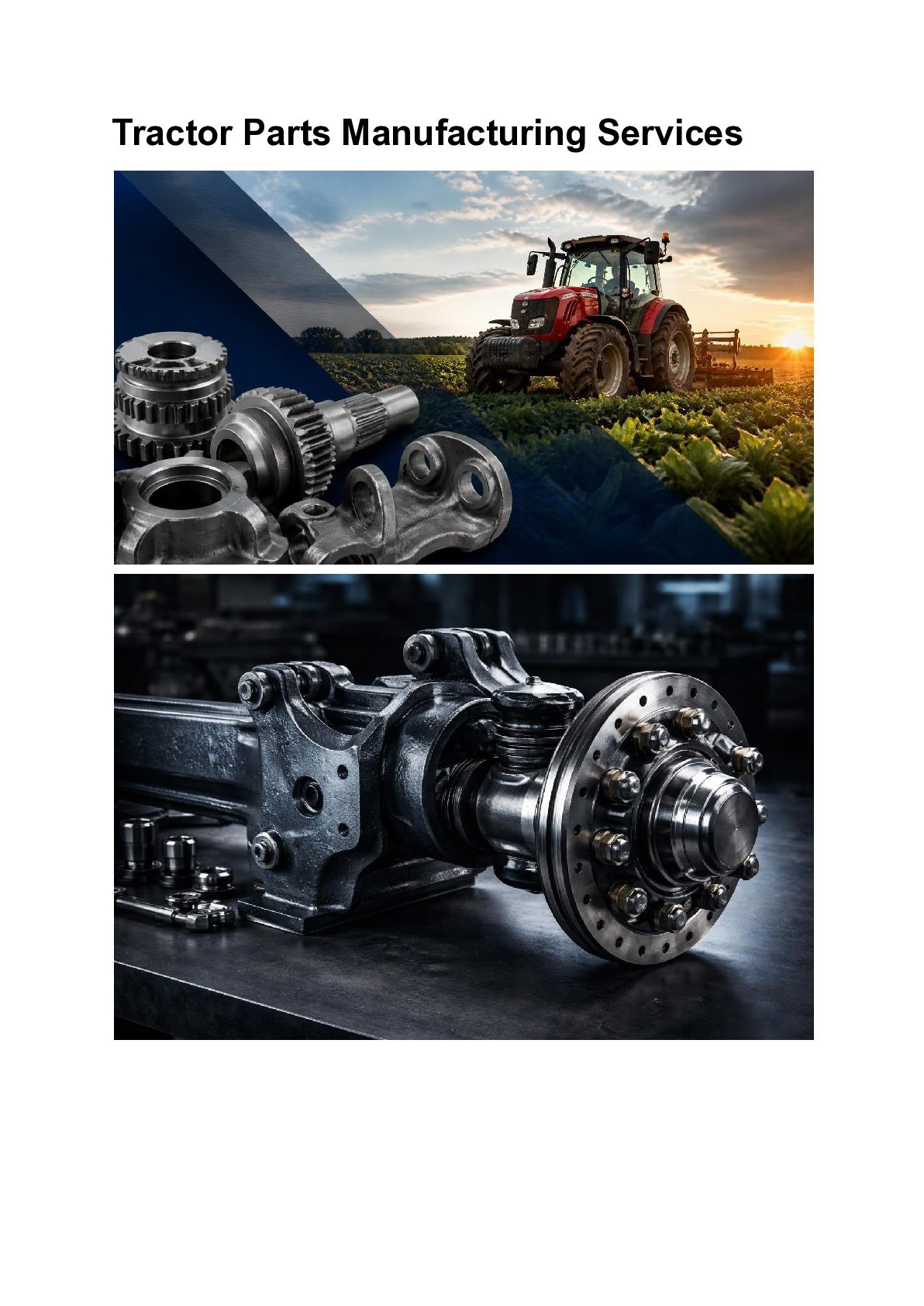
    supports connect the tractor engine and front axle assembly while carrying the load of the front section. These components require strong castings, correct mounting dimensions and accurately machined holes and surfaces.
  6. Chenab Engineering Works can manufacture front axle support components for

    tractor applications using suitable grey iron or ductile iron grades according to the required specification. Applications: •​ •​ •​ •​ Tractor front axle assemblies Front support and mounting systems Agricultural machinery chassis Replacement and aftermarket repairs 2. Front Wheel Hubs Front wheel hubs are important rotating components that connect the wheel assembly with the front axle. They require accurate machining of bores, bearing seats and mounting surfaces. The product range includes the Hub Front Wheel 240, designed for tractor applications requiring a durable and accurately machined wheel hub assembly. chenabengineering.com1 Key requirements: •​ •​ •​ •​ •​ Accurate bearing seating Correct wheel-mounting dimensions Suitable material strength Proper surface finish Consistent machining quality 3. Axle Housings Axle housings protect and support internal axle components while carrying operational loads from the tractor wheels and chassis. These parts may include: •​ •​ •​ •​ •​ Front axle housings Rear axle housings Differential housings Bearing housings Custom axle casings Axle housings can be supplied as cast and machined components according to drawings, samples or required tractor models. 4. Final Drive Tubes
  7. Final drive tubes are used in tractor drivetrain assemblies and

    must withstand continuous mechanical loads, vibration and field operating conditions. Chenab Engineering Works can support the manufacture of final drive tube components with: •​ •​ •​ •​ •​ •​ Machined mounting faces Accurate internal bores Correct flange dimensions Bearing and seal locations Drawing-based production Sample-based replacement manufacturing 5. Differential Cases Differential cases contain and support important drivetrain components. Their dimensional accuracy directly affects gear alignment, bearing fitment and the overall performance of the rear axle assembly. The company can manufacture: •​ •​ •​ •​ •​ Differential cases Differential covers Differential housings Bearing support sections Customized drivetrain castings These components can be cast and subsequently CNC-machined on critical faces, bores and mounting points. 6. Differential Plates Differential plates are used within tractor differential assemblies and require accurate thickness, hole positioning and surface flatness. They may be produced for: •​ •​ •​ •​ Differential assemblies Rear axle systems Gearbox and transmission applications Tractor replacement-part requirements 7. Diff-Lock Components Diff-lock components support improved tractor traction in difficult field conditions. These parts must be manufactured with accurate engagement features and suitable wear resistance.
  8. The product range may include: •​ •​ •​ •​ •​

    Diff-lock housings Diff-lock plates Locking components Engagement-related castings Customized differential parts 8. Hydraulic Lift Covers Hydraulic lift covers form part of the tractor hydraulic lifting system and are used in the operation of three-point linkage and agricultural implements. The Cap Lift Cover is one of the listed tractor products and can be supplied as a cast and precision-machined component for relevant tractor applications. chenabengineering.com1 Important manufacturing features may include: •​ •​ •​ •​ •​ •​ Hydraulic passage accuracy Correct mounting-hole position Flat mating surfaces Proper sealing areas Machined internal and external features Pressure and dimensional inspection 9. Hydraulic Lift Cylinders Hydraulic lift cylinders and related housings are used to transfer hydraulic pressure into lifting movement. The company can support manufacturing of: •​ •​ •​ •​ •​ Hydraulic cylinder bodies Lift-cylinder housings Cylinder covers Mounting components Related cast and machined hydraulic parts These components require suitable material selection, accurate bores and properly finished sealing areas. 10. Oil Sumps Oil sumps are used to contain and protect lubricating oil in tractor engines and mechanical assemblies. A properly manufactured oil sump should provide:
  9. •​ •​ •​ •​ •​ •​ Correct oil capacity Leak-resistant

    sealing surfaces Accurate mounting holes Suitable wall thickness Resistance to vibration Compatibility with the relevant tractor model Oil sump components may be manufactured according to samples, drawings or OEM specifications. 11. Tractor Pistons Tractor pistons operate under heat, pressure and repeated mechanical movement. Piston-related production requires careful control of dimensions, material properties and surface finish. Depending on the specific application, tractor piston products may include: •​ •​ •​ •​ •​ Hydraulic pistons Lift-system pistons Mechanical pistons Replacement piston components Custom piston-related parts Exact dimensions, material and fitment should be confirmed according to the tractor model and part number. 12. Tractor Pulleys Pulleys are used in tractor engine and mechanical drive systems. They require accurate rotation, correct groove geometry and suitable balance. Chenab Engineering Works can support the production of: •​ •​ •​ •​ •​ Engine pulleys Belt pulleys Drive pulleys Guide pulleys Custom cast and machined pulleys 13. Cooling Components Cooling components help maintain the operating temperature of tractor engines and related mechanical systems. The tractor-parts range may include cast or machined cooling-related components such as:
  10. •​ •​ •​ •​ •​ •​ Cooling housings Water-pump-related parts

    Fan and pulley components Cooling-system covers Mounting components Custom cooling parts The final product description should be matched with the exact product name and part number available in the company catalogue. 14. Adopter Plates The Adopter Plate is listed as a cast iron tractor component. It can be used as an adapter or mounting interface between tractor assemblies and related agricultural equipment. chenabengineering.com1 Adopter plates may require: •​ •​ •​ •​ •​ •​ Accurate mounting holes Flat machined surfaces Correct thickness Proper alignment High-strength casting CNC finishing on critical areas
  11. CNC Machining Services Overview CNC machining is one of the

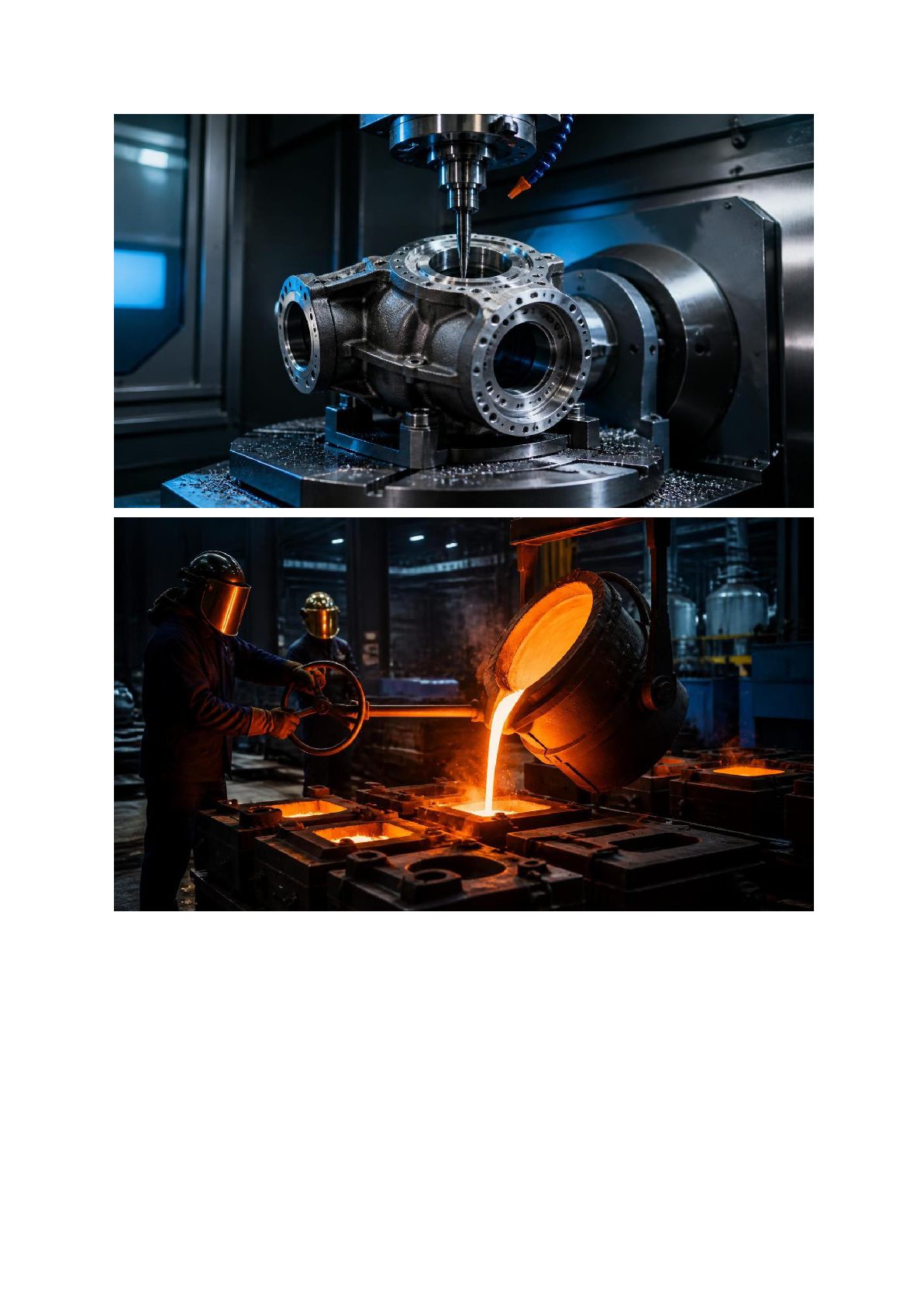
    most important manufacturing capabilities of Chenab Engineering Works. The company can provide CNC machining services for cast, forged, fabricated and pre-machined components. Computer Numerical Control machining allows manufacturers to produce components with controlled dimensions, repeatable accuracy and consistent quality. It is particularly useful for components that require precise holes, bores, threads, slots, profiles, mounting surfaces or complex geometries. Chenab Engineering Works can support CNC machining requirements from prototype and sample development to batch and production manufacturing. CNC Machining Page: https://chenabengineering.com/machining CNC Turning CNC turning is suitable for producing round and cylindrical components. It can be used for: •​ •​ •​ •​ •​ •​ •​ •​ •​ •​ •​ •​ Shafts Bushes Sleeves Pins Hubs Rollers Flanges Collars Spacers Threaded components Cylindrical housings Bearing-related parts CNC turning helps achieve repeatable diameters, accurate lengths, controlled threads and improved surface finish. CNC Milling CNC milling is used for components that require flat surfaces, slots, pockets, profiles, drilled holes and complex machined features. Typical CNC milling applications include:
  12. •​ •​ •​ •​ •​ •​ •​ •​ •​ •​

    Mounting brackets Machinery plates Housings Flanges Covers Gearbox components Structural parts Tooling components Custom industrial parts Multi-feature castings CNC milling can be applied to both small and large components, depending on the machine capacity and customer requirements. CNC Machining of Cast Components One of the key advantages of an integrated foundry and machining setup is the ability to cast and machine components within a coordinated production system. Chenab Engineering Works can support the following sequence: 1.​ Review of the customer drawing or sample 2.​ Material and casting requirement assessment 3.​ Pattern or tooling planning 4.​ Production of the casting 5.​ Removal of excess material and cleaning 6.​ Visual and dimensional inspection 7.​ CNC turning or milling 8.​ Drilling, boring or tapping 9.​ Surface finishing 10.​Final inspection and dispatch This approach can help customers reduce dependence on multiple suppliers and simplify production coordination. CNC Drilling, Boring and Tapping Precision drilling, boring and tapping operations can be used to produce: •​ •​ •​ •​ •​ •​ •​ •​ Accurate mounting holes Bearing bores Bolt holes Threaded holes Oil passages Alignment holes Pin holes Flange holes
  13. •​ Hydraulic and mechanical connection points These operations are essential

    for components that must fit accurately with other assemblies. CNC Profile and Contour Machining CNC machining can be used for parts with: •​ •​ •​ •​ •​ •​ •​ •​ Curved profiles Irregular shapes Complex edges Recesses Raised surfaces Internal pockets Special mounting features Custom contours Profile machining is particularly useful for machinery components that cannot be produced through simple turning or conventional milling. Prototype and Sample Development Chenab Engineering Works can support customers who need to convert an existing sample or concept into a production-ready component. The process may include: •​ •​ •​ •​ •​ •​ •​ •​ •​ Physical sample review Dimensional measurement Drawing preparation Material recommendation Manufacturing feasibility assessment Prototype production Trial machining Customer approval Batch production This service is useful for replacement parts, obsolete components and customized machinery development. OEM Production Support Original Equipment Manufacturers require consistent quality, production repeatability and reliable delivery. Chenab Engineering Works can support OEM customers by manufacturing components according to:
  14. •​ •​ •​ •​ •​ •​ •​ •​ Approved technical

    drawings CAD files Material specifications Inspection plans Sample approvals Packaging requirements Batch quantities Delivery schedules Production support can be arranged for prototypes, small batches, medium-volume production and recurring orders. CNC Machining Quality Benefits CNC machining offers several important benefits: •​ •​ •​ •​ •​ •​ •​ •​ •​ •​ Better dimensional repeatability Consistent component production Reduced manual machining errors Improved surface finish Faster production of repeat components Better control over complex features Easy production based on digital drawings Suitable for customized and OEM parts Improved interchangeability of components Reduced rework and material waste CNC Machining Applications CNC-machined components can be used in: •​ •​ •​ •​ •​ •​ •​ •​ •​ •​ •​ •​ •​ Tractors Agricultural machinery Bulldozers Construction equipment Industrial machines Pumps Valves Gearboxes Hydraulic systems Automotive systems Material-handling equipment Manufacturing plants General engineering applications
  15. Casting and Foundry Services Casting is an important part of

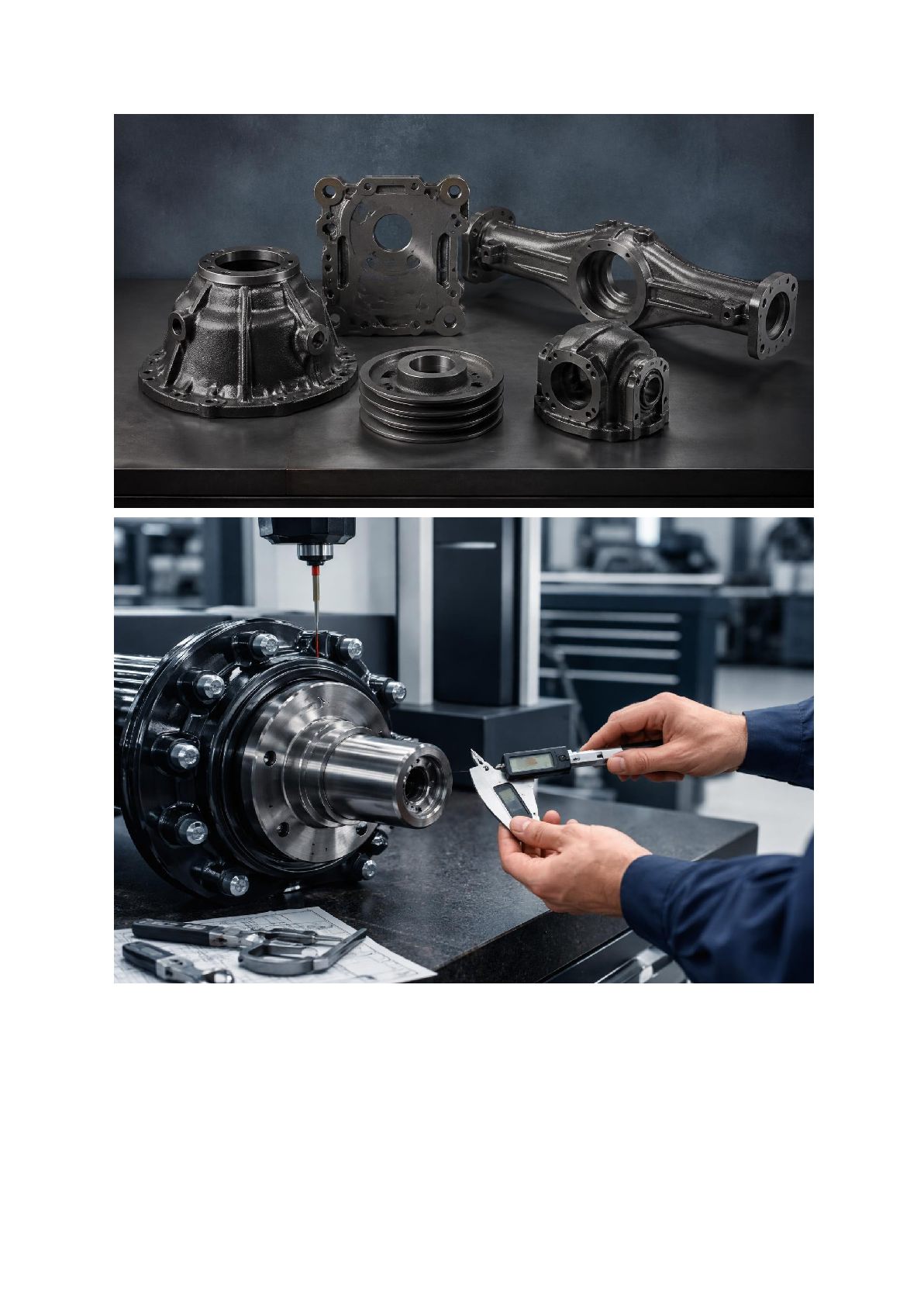
    Chenab Engineering Works’ manufacturing capabilities. Through foundry operations, the company can produce components in different ferrous materials according to the requirements of the product and its operating environment. Cast Iron Components Cast iron is commonly used for components that require: •​ •​ •​ •​ •​ •​ Good compressive strength Vibration absorption Wear resistance Dimensional stability Cost-effective production Good machinability Typical applications include machinery housings, bases, covers, brackets and industrial components. Ductile Iron Components Ductile iron can be used where higher strength and improved toughness are required compared with conventional cast iron. Potential applications include: •​ •​ •​ •​ •​ •​ •​ Hubs Housings Brackets Machine components Agricultural parts Heavy-duty mechanical components Structural castings Carbon Steel Castings Carbon steel castings can be considered for applications requiring strength, toughness and resistance to mechanical loads. They may be used for: •​ •​ •​ •​ Heavy machinery parts Structural components Industrial equipment Mechanical housings
  16. •​ Load-bearing components •​ Custom engineering parts Alloy Steel Components

    Alloy steel may be selected where the application requires enhanced strength, wear resistance, toughness or performance under demanding conditions. Material selection should be finalized according to: •​ •​ •​ •​ •​ •​ •​ Load requirements Operating temperature Wear conditions Impact exposure Corrosion environment Machining requirements Customer specifications Foundry Production Process A typical foundry production process includes: 1.​ Product drawing or sample review 2.​ Pattern and tooling preparation 3.​ Mould preparation 4.​ Material selection and charge preparation 5.​ Melting and chemical control 6.​ Pouring 7.​ Cooling and solidification 8.​ Shakeout and sand removal 9.​ Fettling and cleaning 10.​Visual inspection 11.​Heat treatment, if required 12.​Machining allowance review 13.​CNC or conventional machining 14.​Final inspection Heat Treatment Services Heat treatment can be used to improve the mechanical properties and service performance of metal components. Depending on the material and application, heat treatment may help improve:
  17. •​ •​ •​ •​ •​ •​ •​ Hardness Strength Toughness

    Wear resistance Dimensional stability Fatigue performance Machining characteristics Heat treatment requirements should be defined according to the material grade, component design, operating conditions and customer specification. Quality Assurance Quality assurance is an important part of the production process. Chenab Engineering Works can apply inspection and control procedures at different manufacturing stages. Incoming Material Inspection Materials may be checked for: •​ •​ •​ •​ •​ •​ •​ Material grade Heat or batch identification Chemical composition Visual condition Quantity Documentation Customer specification compliance In-Process Inspection During production, components can be monitored for: •​ •​ •​ •​ •​ •​ •​ •​ •​ Critical dimensions Machining allowances Surface condition Casting defects Hole position Thread quality Alignment Fitment Visual appearance Final Inspection
  18. Final inspection may include: •​ •​ •​ •​ •​ •​

    •​ •​ Dimensional verification Visual inspection Surface-finish review Thread and hole inspection Hardness testing, where required Material verification Functional or assembly checks Packaging inspection Inspection requirements can be customized according to the customer’s quality plan. Engineering and Product Development Chenab Engineering Works can support customers during the development of new products and replacement components. Drawing-Based Manufacturing Customers can provide: •​ •​ •​ •​ •​ •​ 2D engineering drawings 3D CAD models Technical specifications Material requirements Inspection criteria Product samples The engineering team can then review manufacturing feasibility, machining allowances and production requirements. Reverse Engineering For obsolete or unavailable components, reverse engineering can help recreate the part based on an existing sample. The process may include: •​ •​ •​ •​ •​ Physical sample inspection Measurement and dimensional mapping Material assessment Drawing preparation Manufacturing process development
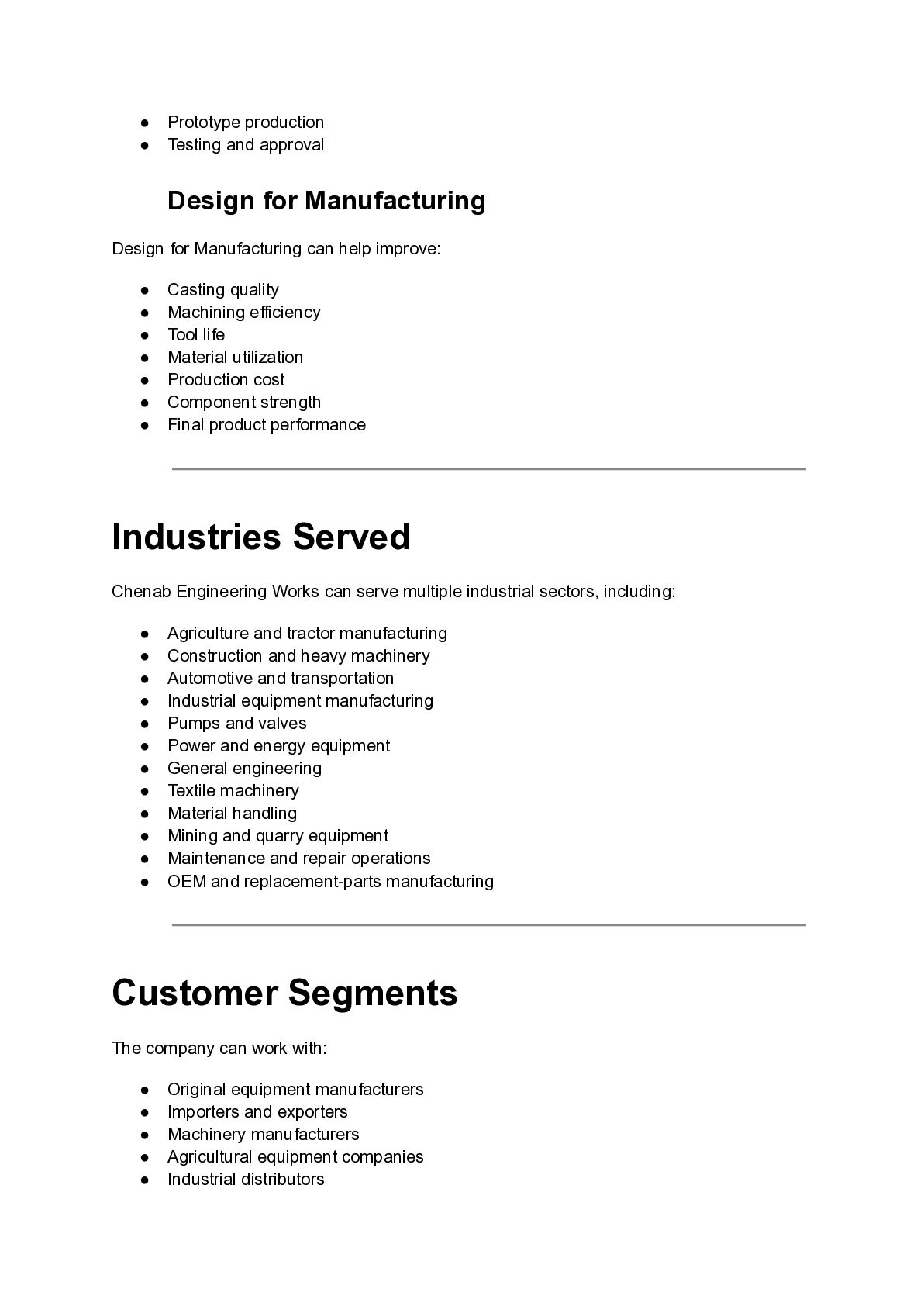
  19. •​ Prototype production •​ Testing and approval Design for Manufacturing

    Design for Manufacturing can help improve: •​ •​ •​ •​ •​ •​ •​ Casting quality Machining efficiency Tool life Material utilization Production cost Component strength Final product performance Industries Served Chenab Engineering Works can serve multiple industrial sectors, including: •​ •​ •​ •​ •​ •​ •​ •​ •​ •​ •​ •​ Agriculture and tractor manufacturing Construction and heavy machinery Automotive and transportation Industrial equipment manufacturing Pumps and valves Power and energy equipment General engineering Textile machinery Material handling Mining and quarry equipment Maintenance and repair operations OEM and replacement-parts manufacturing Customer Segments The company can work with: •​ •​ •​ •​ •​ Original equipment manufacturers Importers and exporters Machinery manufacturers Agricultural equipment companies Industrial distributors
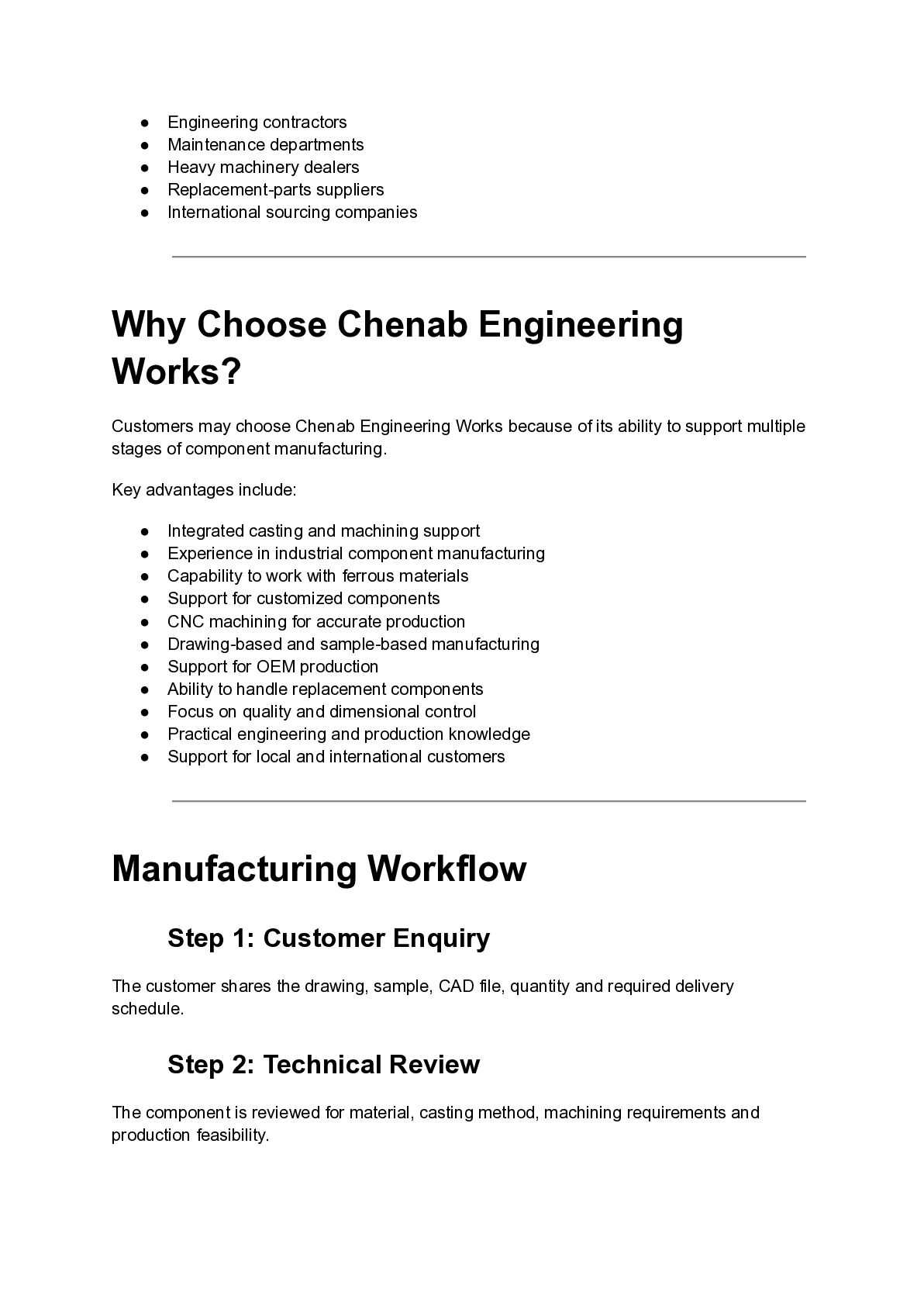
  20. •​ •​ •​ •​ •​ Engineering contractors Maintenance departments Heavy

    machinery dealers Replacement-parts suppliers International sourcing companies Why Choose Chenab Engineering Works? Customers may choose Chenab Engineering Works because of its ability to support multiple stages of component manufacturing. Key advantages include: •​ •​ •​ •​ •​ •​ •​ •​ •​ •​ •​ Integrated casting and machining support Experience in industrial component manufacturing Capability to work with ferrous materials Support for customized components CNC machining for accurate production Drawing-based and sample-based manufacturing Support for OEM production Ability to handle replacement components Focus on quality and dimensional control Practical engineering and production knowledge Support for local and international customers Manufacturing Workflow Step 1: Customer Enquiry The customer shares the drawing, sample, CAD file, quantity and required delivery schedule. Step 2: Technical Review The component is reviewed for material, casting method, machining requirements and production feasibility.
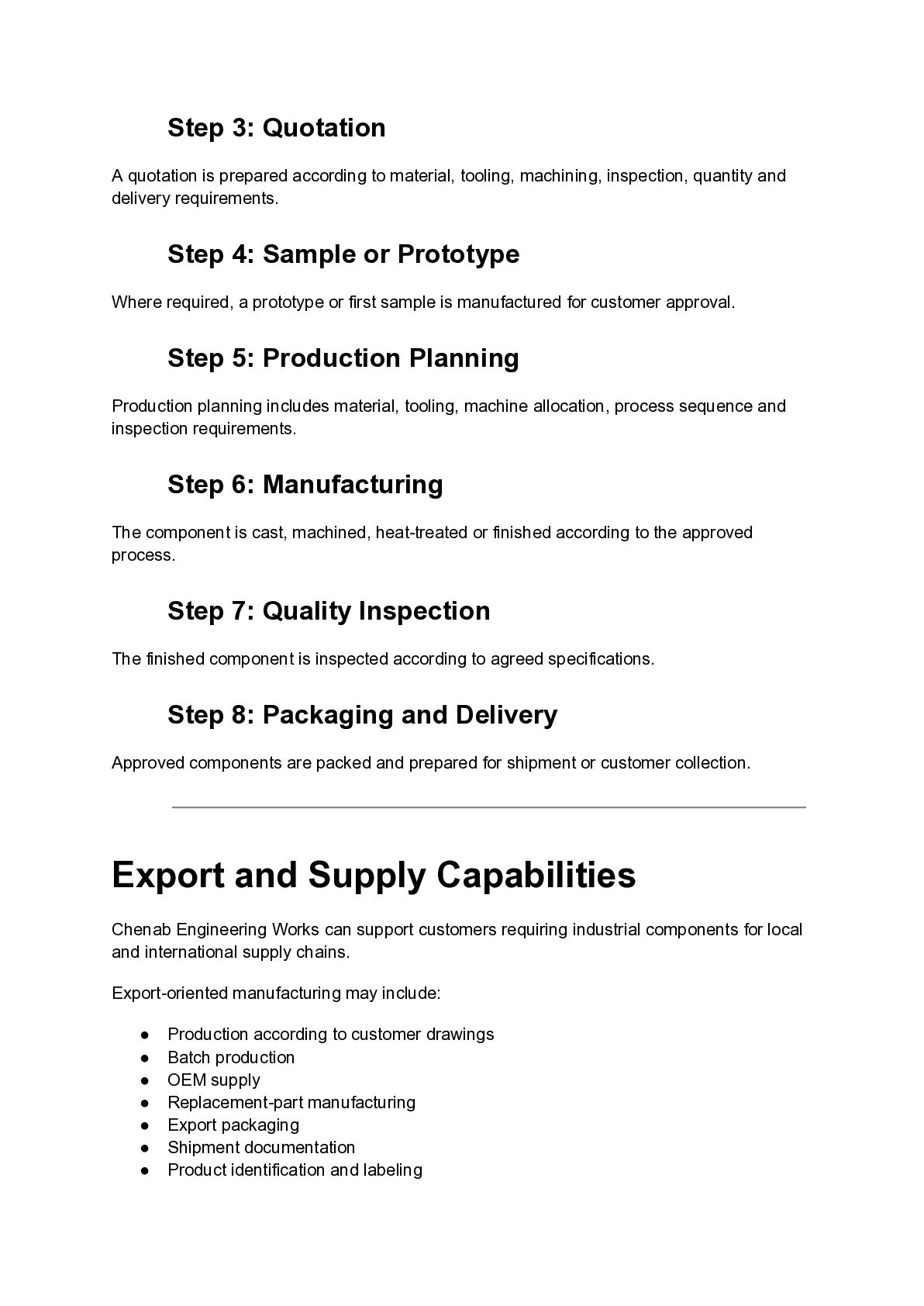
  21. Step 3: Quotation A quotation is prepared according to material,

    tooling, machining, inspection, quantity and delivery requirements. Step 4: Sample or Prototype Where required, a prototype or first sample is manufactured for customer approval. Step 5: Production Planning Production planning includes material, tooling, machine allocation, process sequence and inspection requirements. Step 6: Manufacturing The component is cast, machined, heat-treated or finished according to the approved process. Step 7: Quality Inspection The finished component is inspected according to agreed specifications. Step 8: Packaging and Delivery Approved components are packed and prepared for shipment or customer collection. Export and Supply Capabilities Chenab Engineering Works can support customers requiring industrial components for local and international supply chains. Export-oriented manufacturing may include: •​ •​ •​ •​ •​ •​ •​ Production according to customer drawings Batch production OEM supply Replacement-part manufacturing Export packaging Shipment documentation Product identification and labeling
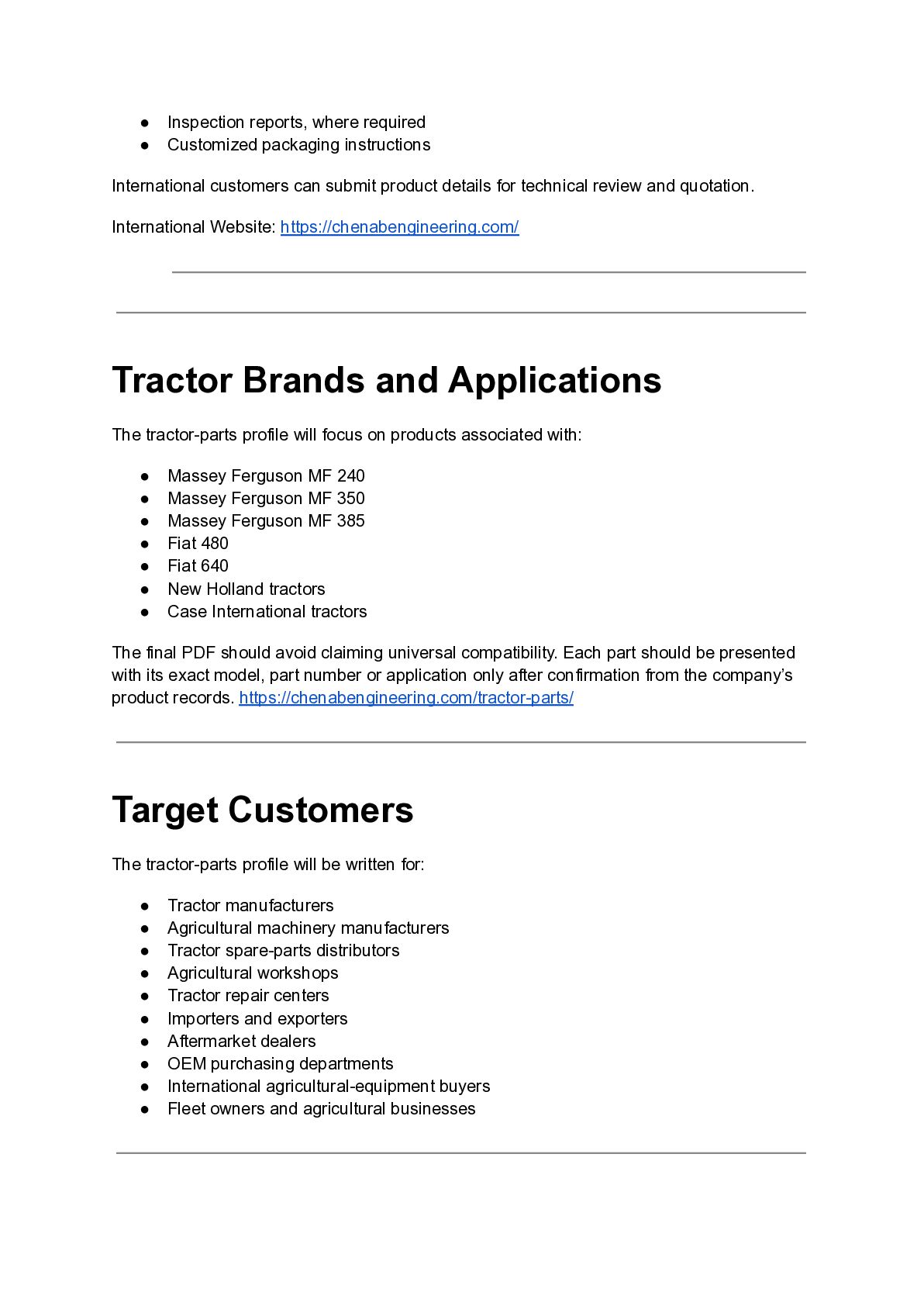
  22. •​ Inspection reports, where required •​ Customized packaging instructions International

    customers can submit product details for technical review and quotation. International Website: https://chenabengineering.com/ Tractor Brands and Applications The tractor-parts profile will focus on products associated with: •​ •​ •​ •​ •​ •​ •​ Massey Ferguson MF 240 Massey Ferguson MF 350 Massey Ferguson MF 385 Fiat 480 Fiat 640 New Holland tractors Case International tractors The final PDF should avoid claiming universal compatibility. Each part should be presented with its exact model, part number or application only after confirmation from the company’s product records. https://chenabengineering.com/tractor-parts/ Target Customers The tractor-parts profile will be written for: •​ •​ •​ •​ •​ •​ •​ •​ •​ •​ Tractor manufacturers Agricultural machinery manufacturers Tractor spare-parts distributors Agricultural workshops Tractor repair centers Importers and exporters Aftermarket dealers OEM purchasing departments International agricultural-equipment buyers Fleet owners and agricultural businesses