Upgrade to Pro — share decks privately, control downloads, hide ads and more …

AI Ethics

AI Ethics

AI is an integral part of our everyday life, having embedded itself in social media, business, government decisions and so much more. Only by adopting an ethical lens into AI applications can recognize the potential harms and thereby design and build systems that we can trust.

Avatar for SenguptaAnkita

SenguptaAnkita

April 15, 2022

More Decks by SenguptaAnkita

Other Decks in Technology

Transcript

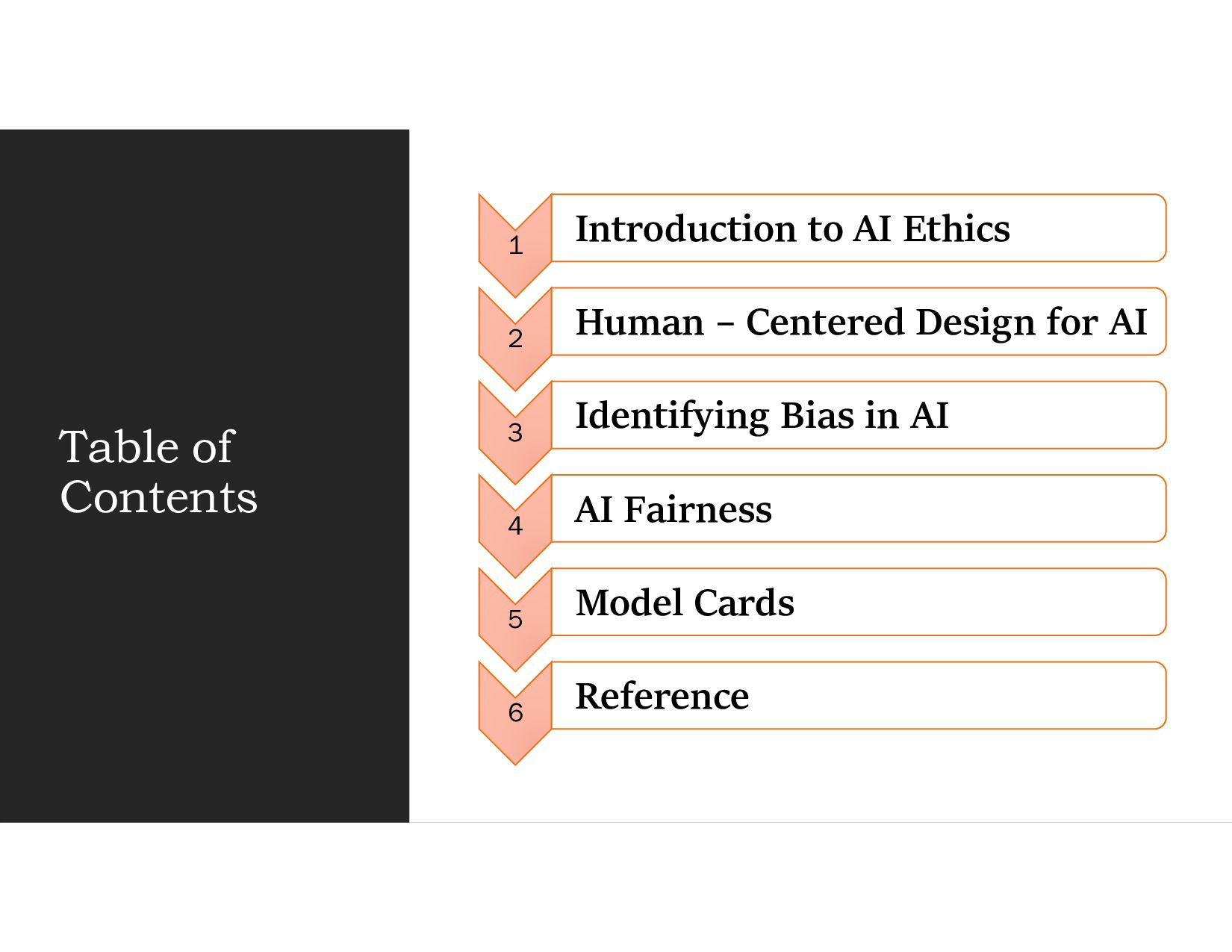
  1. Table of Contents 1 Introduction to AI Ethics 2 Human

    – Centered Design for AI 3 Identifying Bias in AI 4 AI Fairness 5 Model Cards 6 Reference
  2. Introduction to AI Ethics  AI has become an integral

    part of everyday life  It has embedded itself in social media, business, government decisions and so much more  Only by adopting an ethical lens into AI applications can we design and build systems that we can trust  In the following slides we shall learn how to design systems that fulfil the intended requirements, how AI can discriminate, how to quantify such bias and how to improve public accountability of AI models
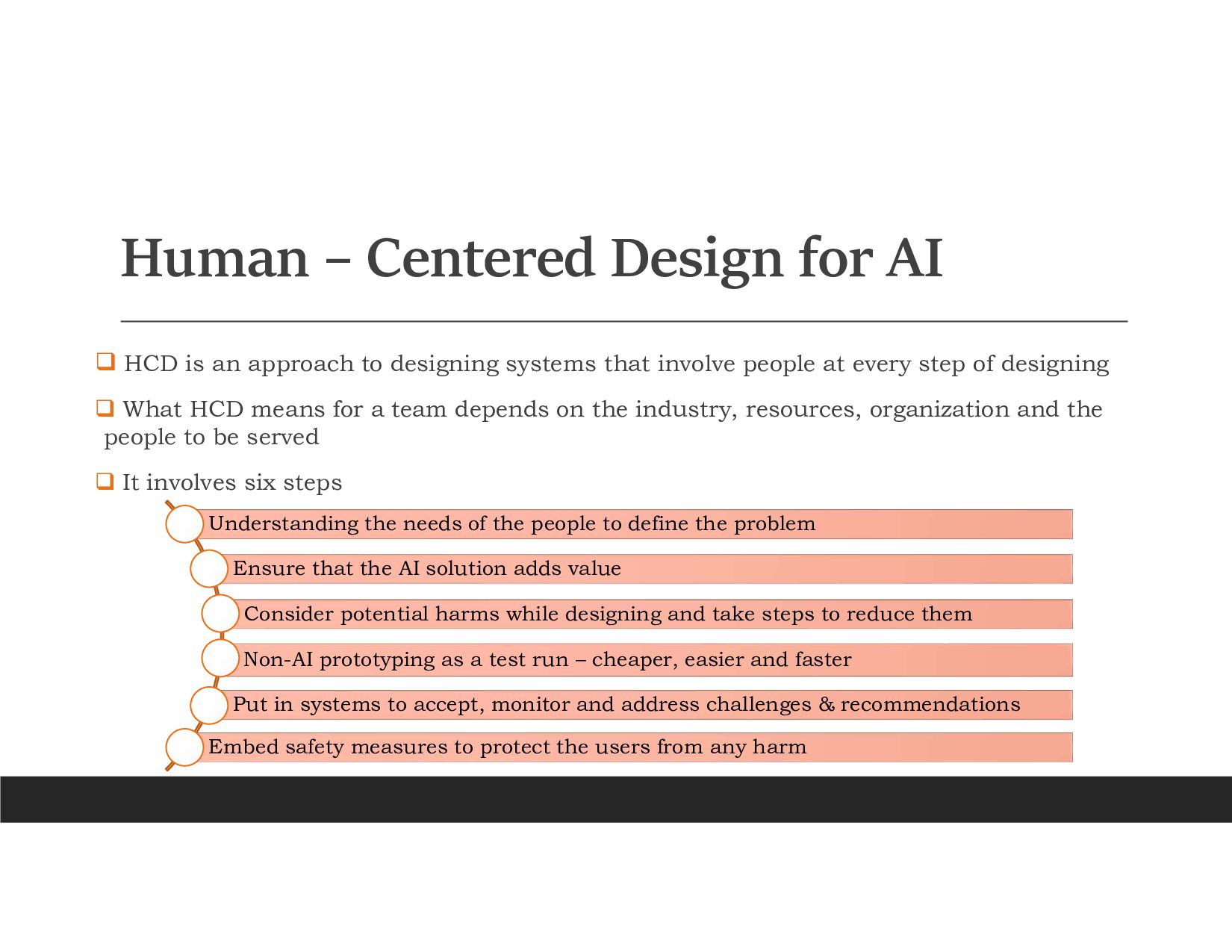
  3. Human – Centered Design for AI  HCD is an

    approach to designing systems that involve people at every step of designing  What HCD means for a team depends on the industry, resources, organization and the people to be served  It involves six steps Understanding the needs of the people to define the problem Ensure that the AI solution adds value Consider potential harms while designing and take steps to reduce them Non-AI prototyping as a test run – cheaper, easier and faster Put in systems to accept, monitor and address challenges & recommendations Embed safety measures to protect the users from any harm
  4. Ientifying Bias in AI  Machine Learning applications have displayed

    bias that have negatively affected certain groups of people  The dataset used to train ML models sometimes contain biased data which results in the system exhibiting the same bias when making decisions in practice Bias is not just in data but can be with the way ML model is defined or how users interpret the results from it  Being aware of the different types of bias can help in detection of the same in the ML models  There are six types of bias
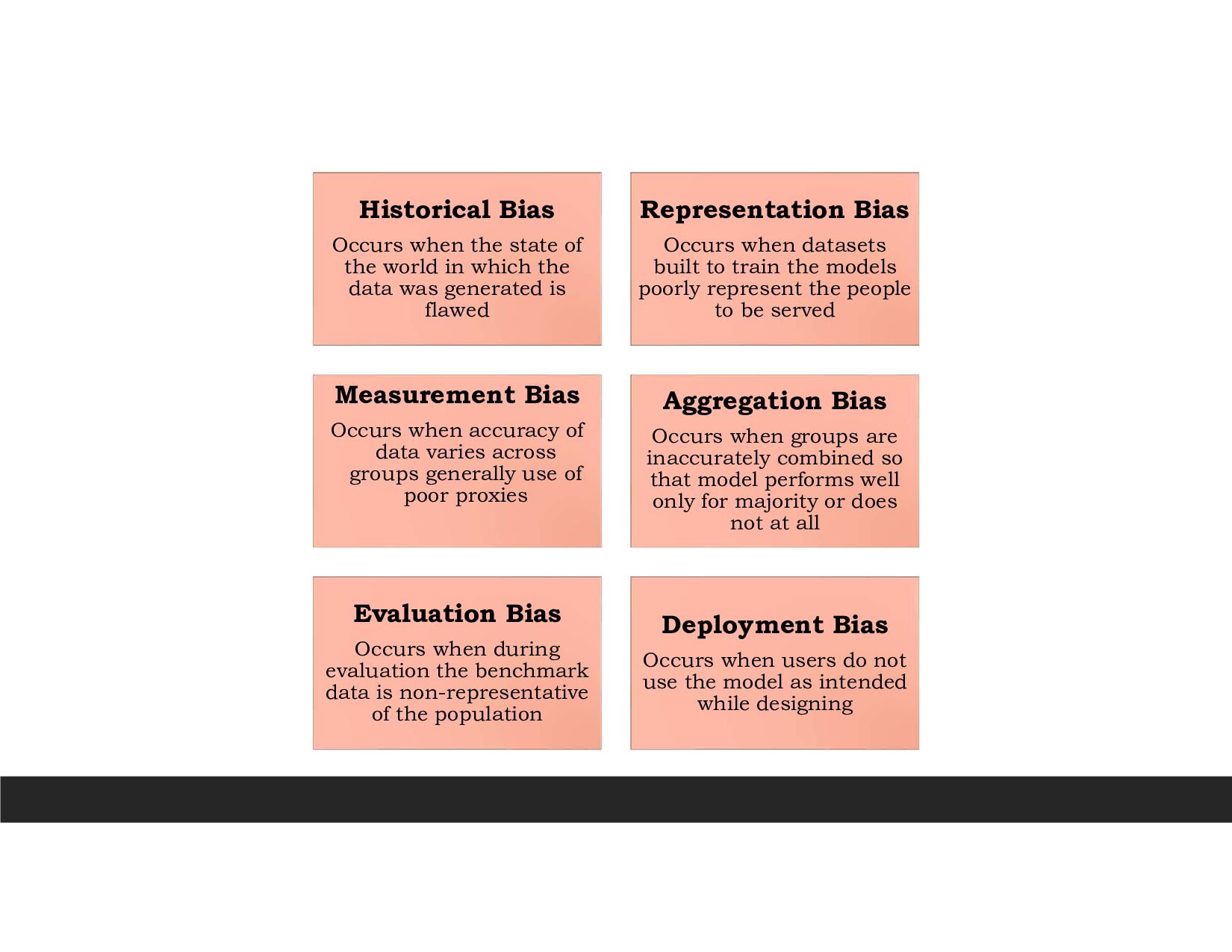
  5. Historical Bias Occurs when the state of the world in

    which the data was generated is flawed Representation Bias Occurs when datasets built to train the models poorly represent the people to be served Measurement Bias Occurs when accuracy of data varies across groups generally use of poor proxies Aggregation Bias Occurs when groups are inaccurately combined so that model performs well only for majority or does not at all Evaluation Bias Occurs when during evaluation the benchmark data is non-representative of the population Deployment Bias Occurs when users do not use the model as intended while designing
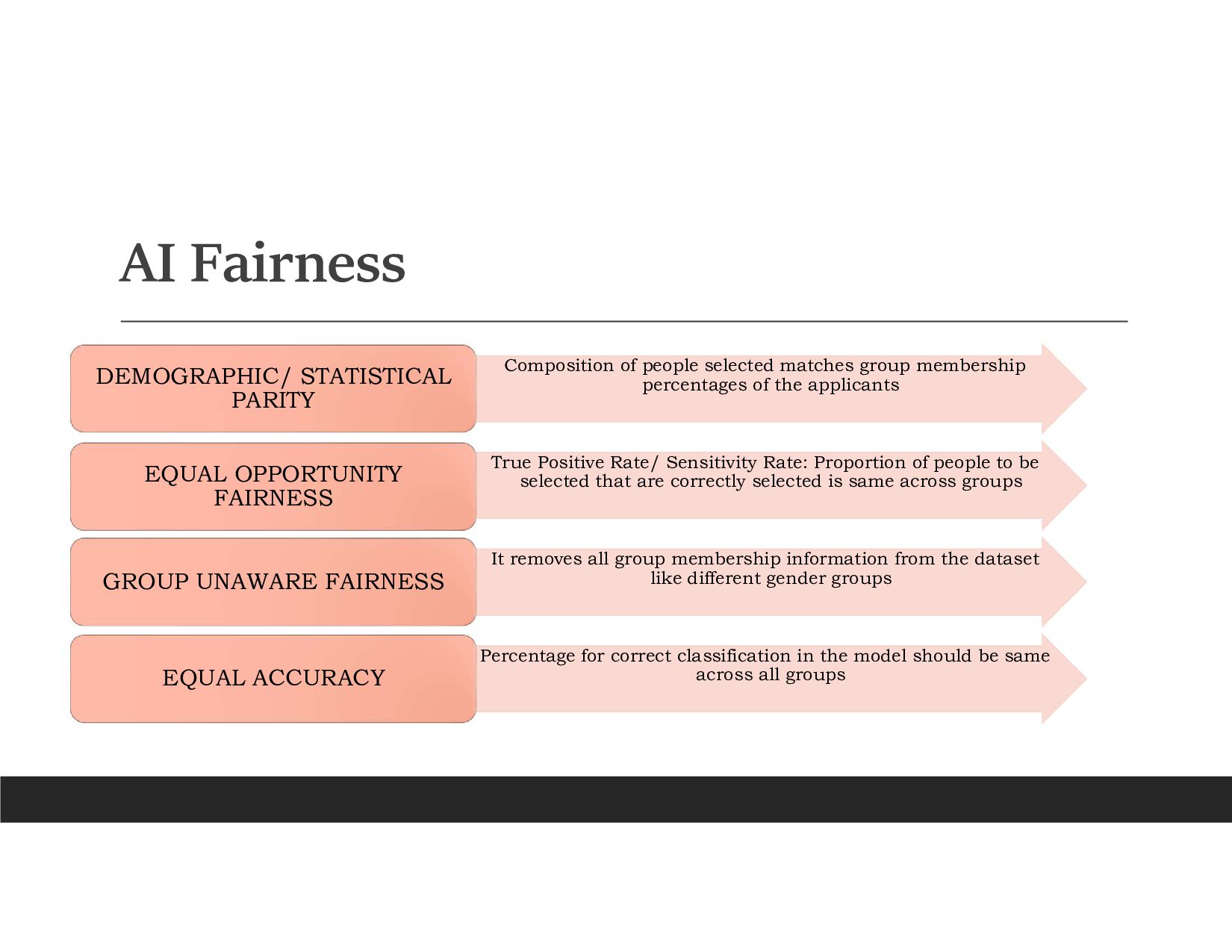
  6. AI Fairness Composition of people selected matches group membership percentages

    of the applicants DEMOGRAPHIC/ STATISTICAL PARITY True Positive Rate/ Sensitivity Rate: Proportion of people to be selected that are correctly selected is same across groups EQUAL OPPORTUNITY FAIRNESS It removes all group membership information from the dataset like different gender groups GROUP UNAWARE FAIRNESS Percentage for correct classification in the model should be same across all groups EQUAL ACCURACY
  7. Model Cards  Despite increasing use of AI, many people

    do not understand the workings of the system  Model Cards are one way to communicate key information about the model to the intended audience  Considering the audience, it should be easy to understand while communicating technical information Important to think about how to use model cards without revealing sensitive information
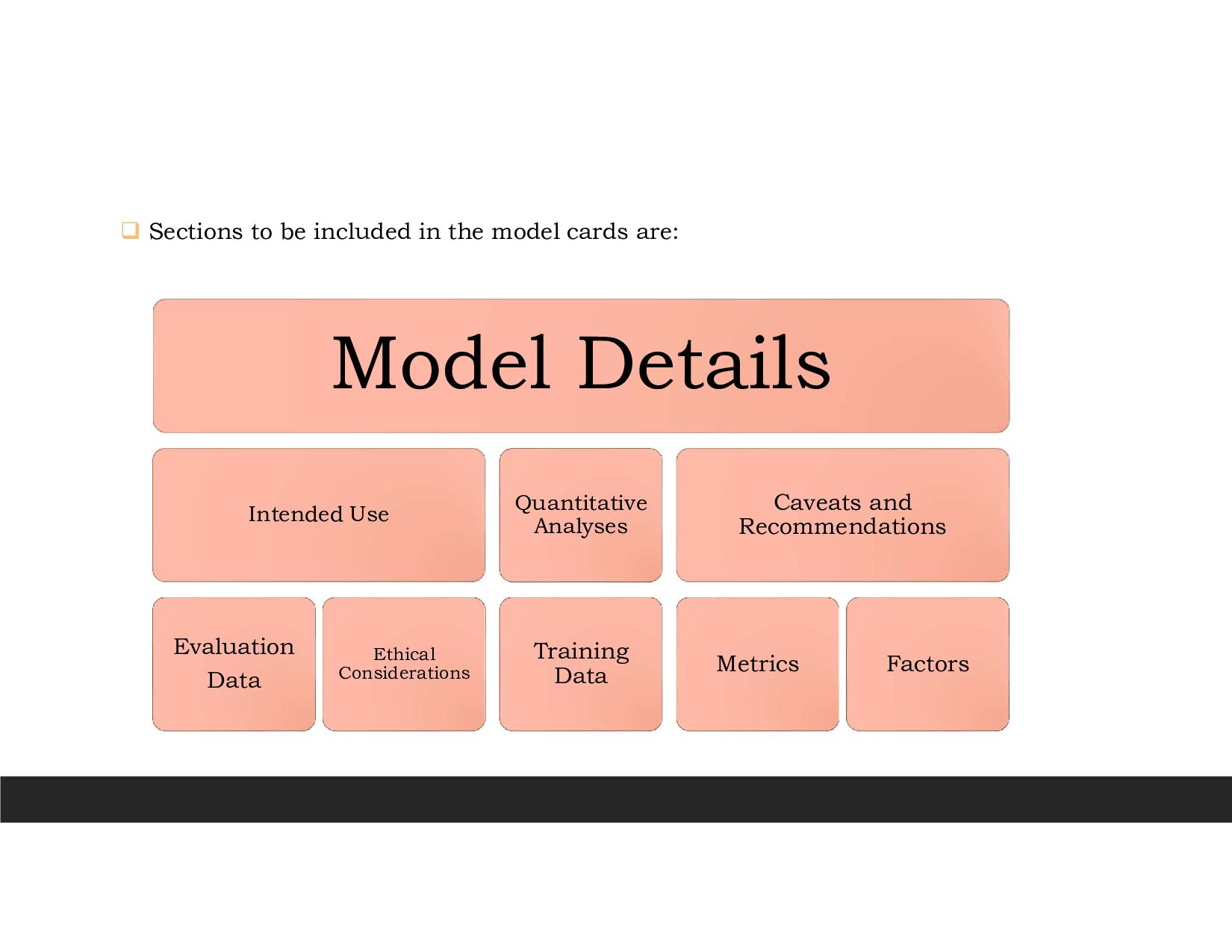
  8. Model Details Intended Use Evaluation Data Ethical Considerations Quantitative Analyses

    Training Data Caveats and Recommendations Metrics Factors  Sections to be included in the model cards are:
  9. Reference  Cook, A. & Shankar, V. Intro to AI

    Ethics. Kaggle Learn Course https://www.kaggle.com/code/var0101?cellIds=1&kernelSessionI d=79126198