Upgrade to Pro — share decks privately, control downloads, hide ads and more …

Sacred Plant Medicine Retreats in Peru: Ayahuas...

Sponsored · Ship Features Fearlessly Turn features on and off without deploys. Used by thousands of Ruby developers. →
Avatar for Perus Perus
July 16, 2025

Sacred Plant Medicine Retreats in Peru: Ayahuasca and San Pedro Experiences

Journey into the heart of Peru with sacred plant medicine retreats featuring Ayahuasca and San Pedro. Experience deep healing, spiritual awakening, and transformation guided by authentic shamans in the Amazon or Andes. These powerful ceremonies offer emotional release, inner clarity, and a profound connection to nature and spirit. Ideal for seekers of truth, healing, and personal growth.

Avatar for Perus

Perus

July 16, 2025

More Decks by Perus

Other Decks in Business

Transcript

  1. Sacred Plant Medicine Retreats in Peru: Ayahuasca and San Pedro

    Experiences This comprehensive guide exploresthe transformative world of plant medicineretreats inPeru,focusing onayahuasca ceremonies and San Pedro experiences. Perustands as the epicenter for authenticshamanic traditions, offering seekers from around the world an opportunity to connect with ancient Incan healing practices. Throughout this document, we'll examine what makes Peru's ayahuasca retreats unique, how to select the right retreat center, what to expect during ceremonies, and the cultural significance of these sacred plant medicines. Whether you're researching for personal healing, spiritual growth, or cultural understanding, this guide provides essential information about these profound traditional practices and their modern applications in retreat settings. https://perushamans.com/
  2. Understanding Ayahuasca: Peru's Sacred Plant Medicine Participants often experience purging

    through vomiting or diarrhea, which is considered a crucial part of the cleansing process, releasing physical and emotional toxins. The medicine typically induces vivid visions, emotional releases, and profound insights. Many report confronting personal traumas and receiving guidance about their life path. Many participants describe mystical experiences, encounters with spirit entities, and a deep sense of connection to nature, the universe, and their own higher consciousness. Amazonian tribes for healing, divination, and spiritual connection. This sacred brew is typically made from the Banisteriopsis caapi vine and the leaves of the Psychotria viridis shrub, though preparations may vary among different traditions. The combination creates a potent mixture containing DMT (dimethyltryptamine), a naturally occurring psychedelic compound that produces profound visionary experiences. Physical Effects Psychological Effects Spiritual Dimensions https://perushamans.com/
  3. Best Ayahuasca Retreats in Peru Peru hosts many of the

    world's most respected ayahuasca retreatcenters, particularly in regions like Iquitos, Pucallpa, and the Sacred Valley. These centers vary widely in their approach, facilities, and price points, catering to different needs and preferences. When selecting a retreat, safety, authenticity, and alignment with your personal intentions are paramount considerations. Reputable retreats maintain high safety standards, including health screenings, proper preparation guidance, and having medical support available. They should clearly communicate contraindications and require detailed medical history information. Look for centers with experienced shamans who have undergone traditional training and apprenticeship. Many respected retreats combine indigenous wisdom with Western integration support for a comprehensive experience. Facilities range from rustic jungle lodges to more comfortable retreat centers. Consider your comfort needs when choosing, as the physical environment significantly impacts your experience. Experienced Facilitators Accommodations & Setting https://perushamans.com/
  4. The Ayahuasca Experience in Peru Participating in anayahuascaceremony inPeruoffers a

    unique experience deeply rooted in indigenous traditions. Ceremonies typically begin after nightfall and may last 4-6 hours or longer. They are conducted in a maloca (ceremonial round house) or other dedicated space, with participants seated or lying on mats arranged in a circle. The shaman or curandero leads the ceremony, administering the medicine and guiding the experience through icaros (sacred songs), prayers, and energetic work. Most retreats require following a special dieta (dietary restrictions) for 1-2 weeks before the ceremony. This typically means avoiding: The ayahuasca journey unfolds in phases, typically beginning 30-45 minutes after drinking the brew: Salt, sugar, spices, and oils Red meat and pork Dairy products Fermented foods Alcohol and recreational drugs Initial effects: bodily sensations, heightened awareness .Purging phase: physical release through vomiting or diarrhea Visionary phase: internal imagery, insights, emotional processing Integration phase: as effects subside, processing experiences The morning after a ceremony, most retreats hold sharing circles where participants can discuss their experiences and receive guidance from facilitators. These integration sessions are invaluable for processing insights and translating them into meaningful life changes. Before the Ceremony During the Ceremony https://perushamans.com/
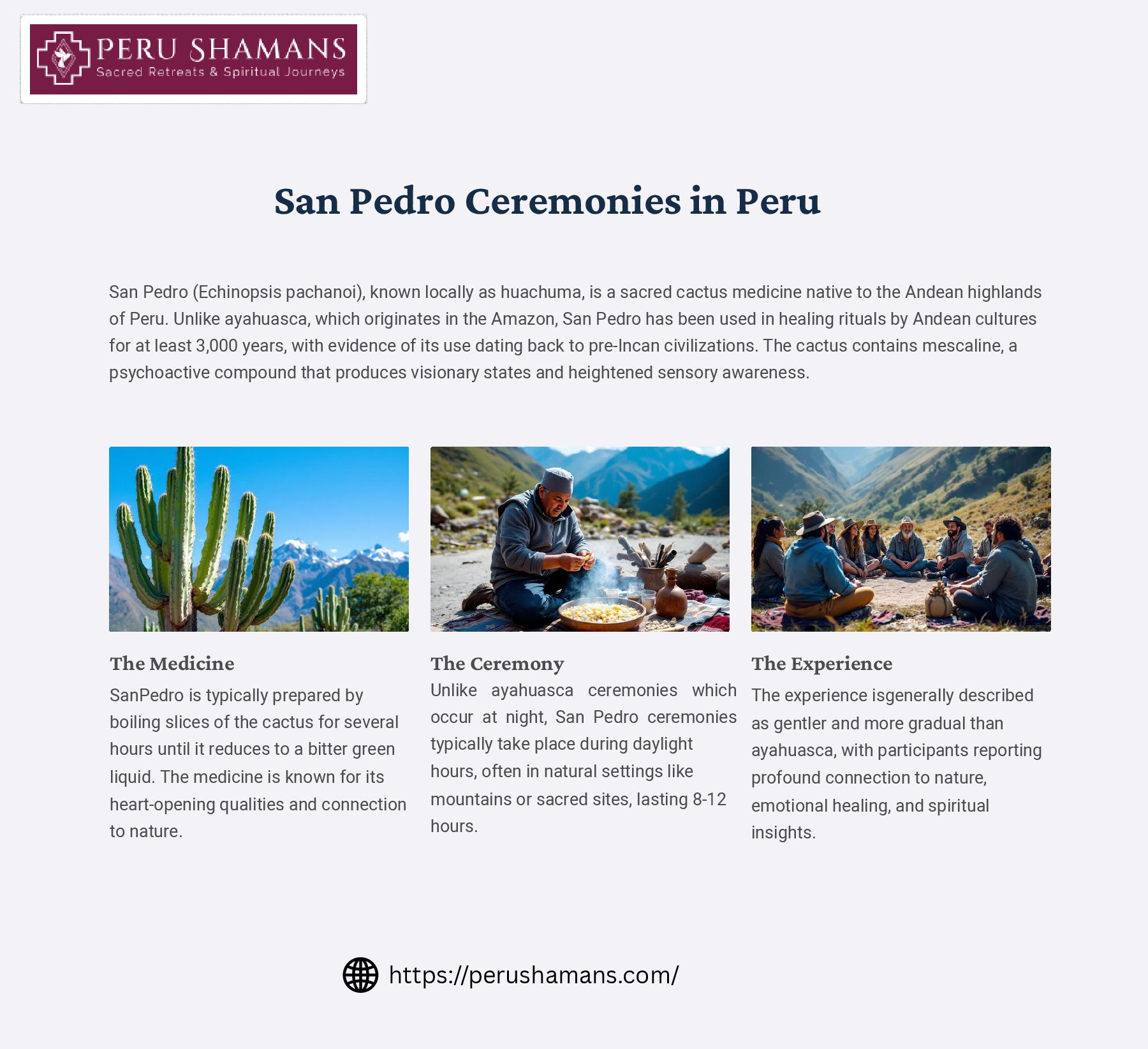
  5. San Pedro Ceremonies in Peru San Pedro (Echinopsis pachanoi), known

    locally as huachuma, is a sacred cactus medicine native to the Andean highlands of Peru. Unlike ayahuasca, which originates in the Amazon, San Pedro has been used in healing rituals by Andean cultures for at least 3,000 years, with evidence of its use dating back to pre-Incan civilizations. The cactus contains mescaline, a psychoactive compound that produces visionary states and heightened sensory awareness. The Medicine The Ceremony Unlike ayahuasca ceremonies which occur at night, San Pedro ceremonies typically take place during daylight hours, often in natural settings like mountains or sacred sites, lasting 8-12 hours. The Experience SanPedro is typically prepared by boiling slices of the cactus for several hours until it reduces to a bitter green liquid. The medicine is known for its heart-opening qualities and connection to nature. The experience isgenerally described as gentler and more gradual than ayahuasca, with participants reporting profound connection to nature, emotional healing, and spiritual insights. https://perushamans.com/
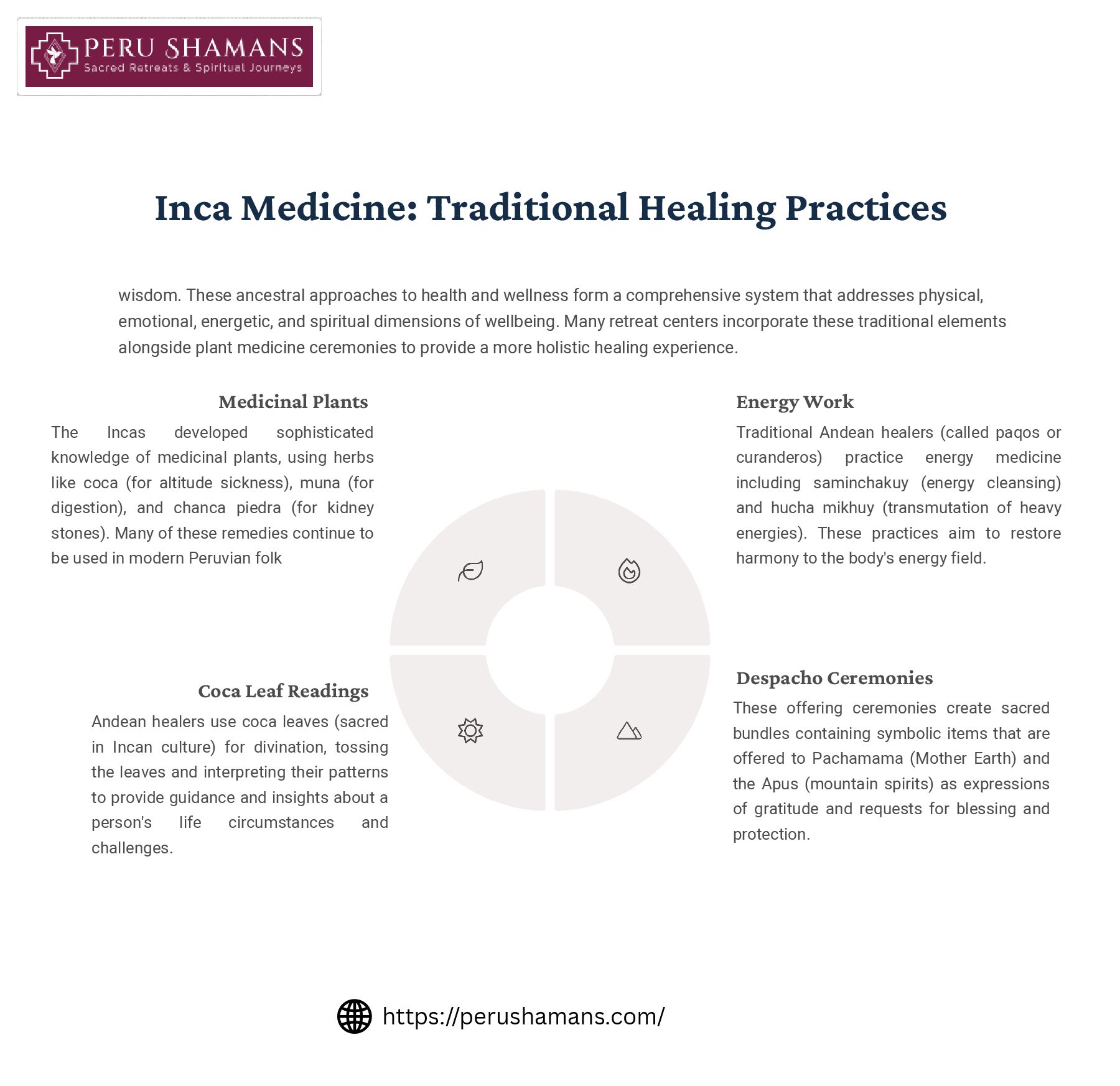
  6. Inca Medicine: Traditional Healing Practices wisdom. These ancestral approaches to

    health and wellness form a comprehensive system that addresses physical, emotional, energetic, and spiritual dimensions of wellbeing. Many retreat centers incorporate these traditional elements alongside plant medicine ceremonies to provide a more holistic healing experience. The Incas developed sophisticated knowledge of medicinal plants, using herbs like coca (for altitude sickness), muna (for digestion), and chanca piedra (for kidney stones). Many of these remedies continue to be used in modern Peruvian folk These offering ceremonies create sacred bundles containing symbolic items that are offered to Pachamama (Mother Earth) and the Apus (mountain spirits) as expressions of gratitude and requests for blessing and protection. Traditional Andean healers (called paqos or curanderos) practice energy medicine including saminchakuy (energy cleansing) and hucha mikhuy (transmutation of heavy energies). These practices aim to restore harmony to the body's energy field. Coca Leaf Readings Medicinal Plants Energy Work Despacho Ceremonies Andean healers use coca leaves (sacred in Incan culture) for divination, tossing the leaves and interpreting their patterns to provide guidance and insights about a person's life circumstances and challenges. https://perushamans.com/
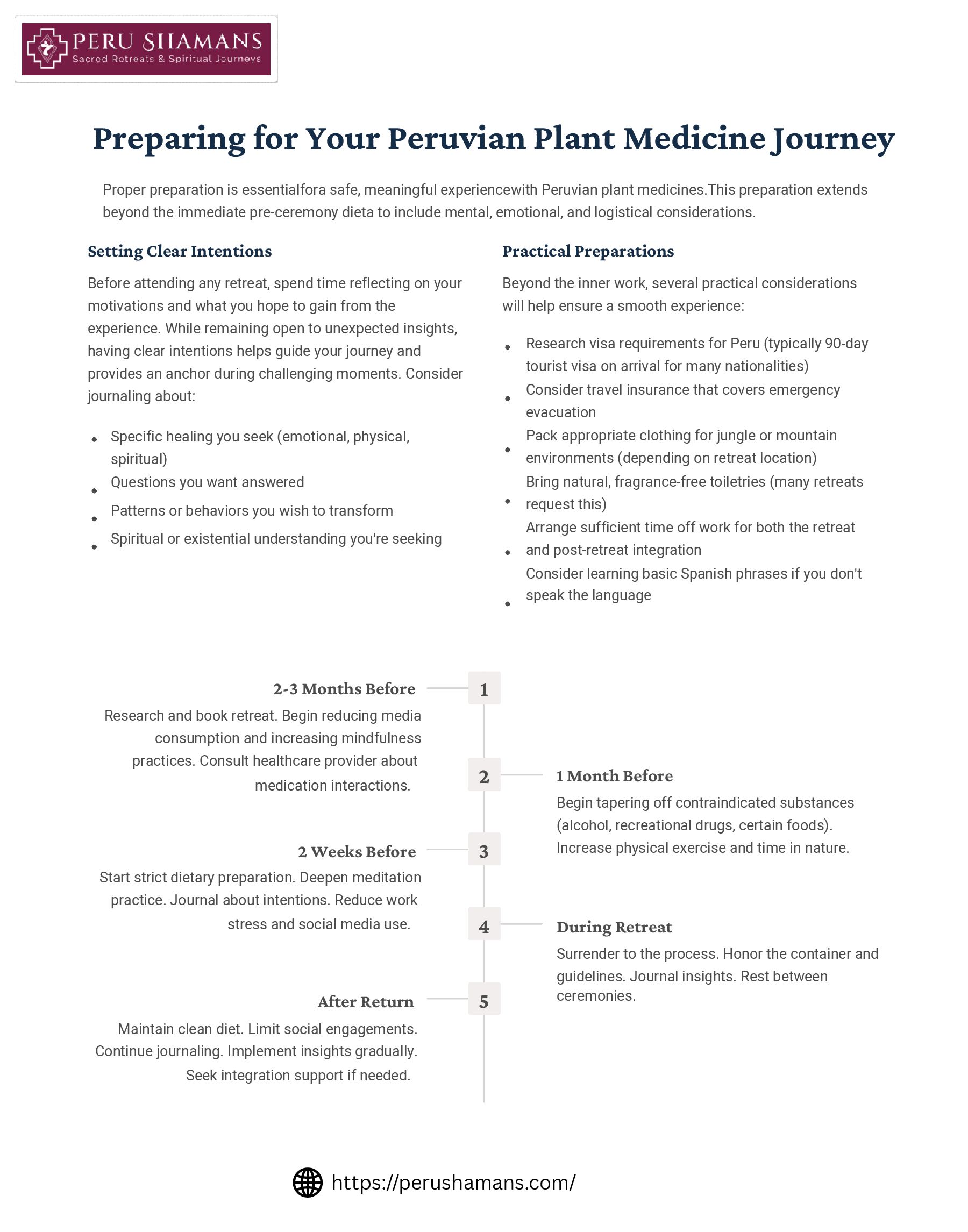
  7. Preparing for Your Peruvian Plant Medicine Journey Start strict dietary

    preparation. Deepen meditation practice. Journal about intentions. Reduce work stress and social media use. Research and book retreat. Begin reducing media consumption and increasing mindfulness practices. Consult healthcare provider about medication interactions. Before attending any retreat, spend time reflecting on your motivations and what you hope to gain from the experience. While remaining open to unexpected insights, having clear intentions helps guide your journey and provides an anchor during challenging moments. Consider journaling about: Specific healing you seek (emotional, physical, spiritual) Questions you want answered Patterns or behaviors you wish to transform Spiritual or existential understanding you're seeking Begin tapering off contraindicated substances (alcohol, recreational drugs, certain foods). Increase physical exercise and time in nature. Beyond the inner work, several practical considerations will help ensure a smooth experience: Research visa requirements for Peru (typically 90-day tourist visa on arrival for many nationalities) Consider travel insurance that covers emergency evacuation Pack appropriate clothing for jungle or mountain environments (depending on retreat location) Bring natural, fragrance-free toiletries (many retreats request this) Arrange sufficient time off work for both the retreat and post-retreat integration Consider learning basic Spanish phrases if you don't speak the language Proper preparation is essentialfora safe, meaningful experiencewith Peruvian plant medicines.This preparation extends beyond the immediate pre-ceremony dieta to include mental, emotional, and logistical considerations. Surrender to the process. Honor the container and guidelines. Journal insights. Rest between ceremonies. After Return Maintain clean diet. Limit social engagements. Continue journaling. Implement insights gradually. Seek integration support if needed. Setting Clear Intentions 2 Weeks Before 2-3 Months Before 1 Month Before Practical Preparations During Retreat 1 2 3 4 5 https://perushamans.com/