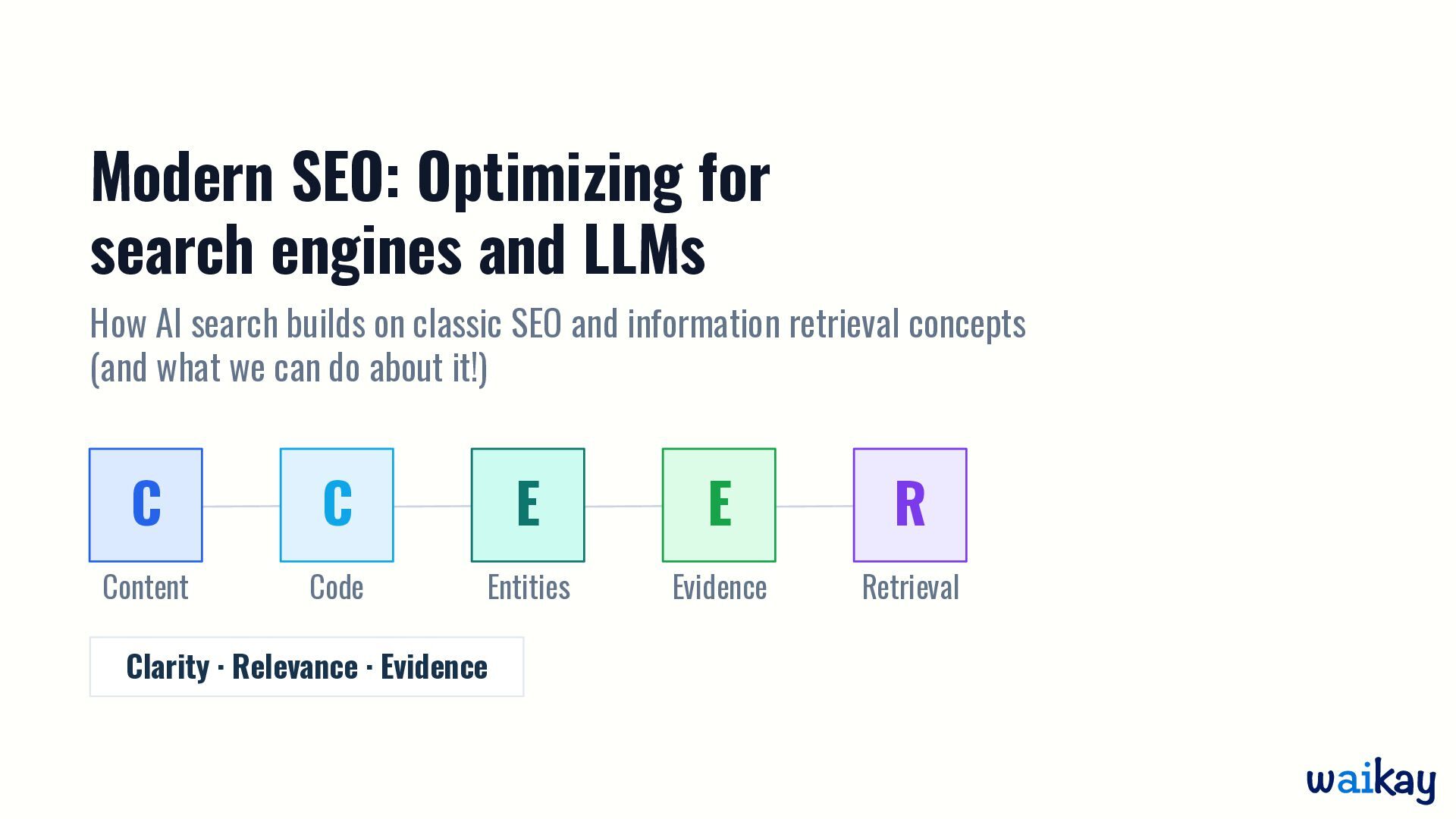
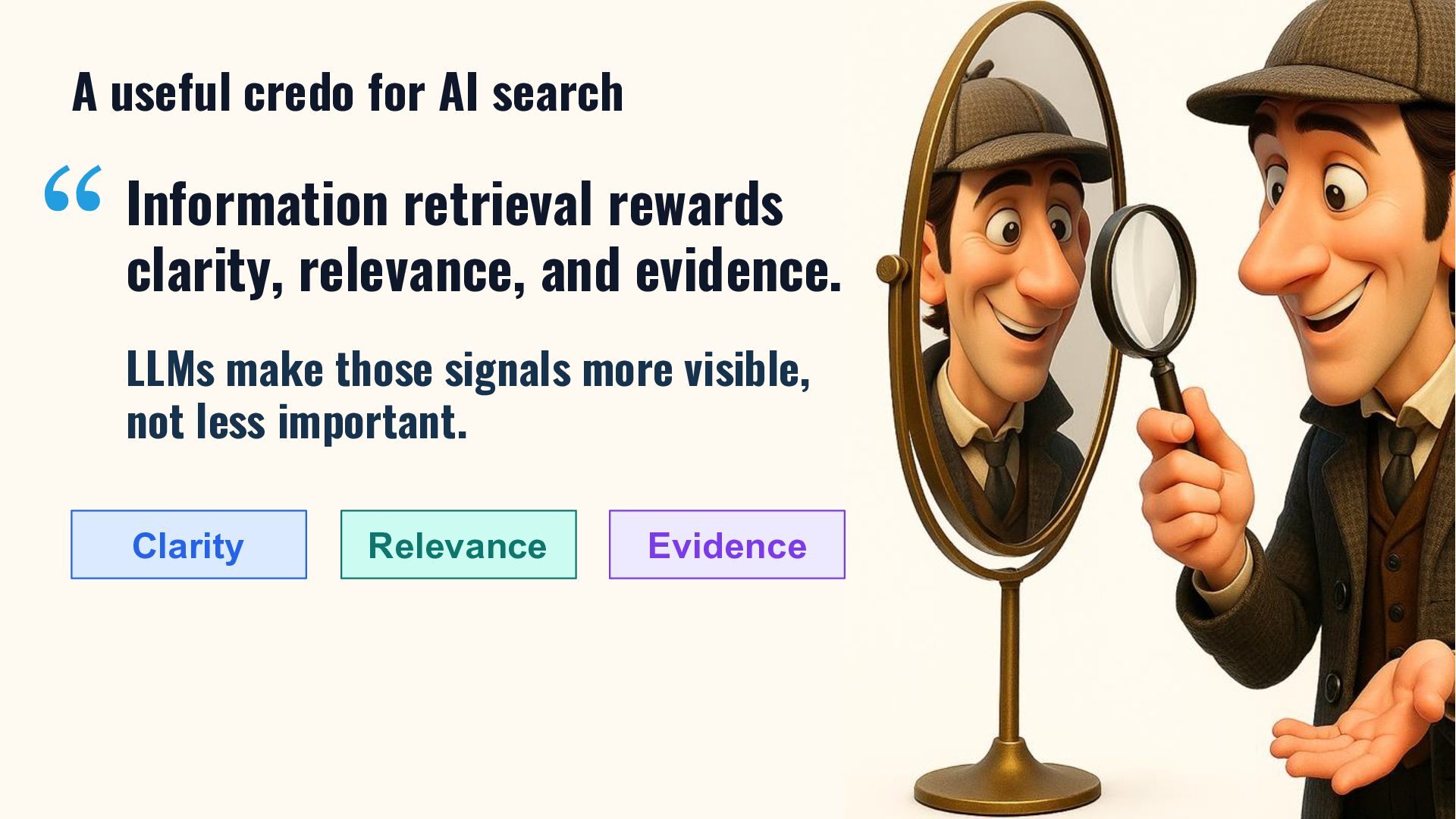
search builds on classic SEO and information retrieval concepts (and what we can do about it!) C Content C Code E Entities E Evidence R Retrieval Clarity · Relevance · Evidence
in the world. I’m talking about how you make that credibility legible to retrieval systems. For that I’m going to rely on one of the worlds most infamous detectives...
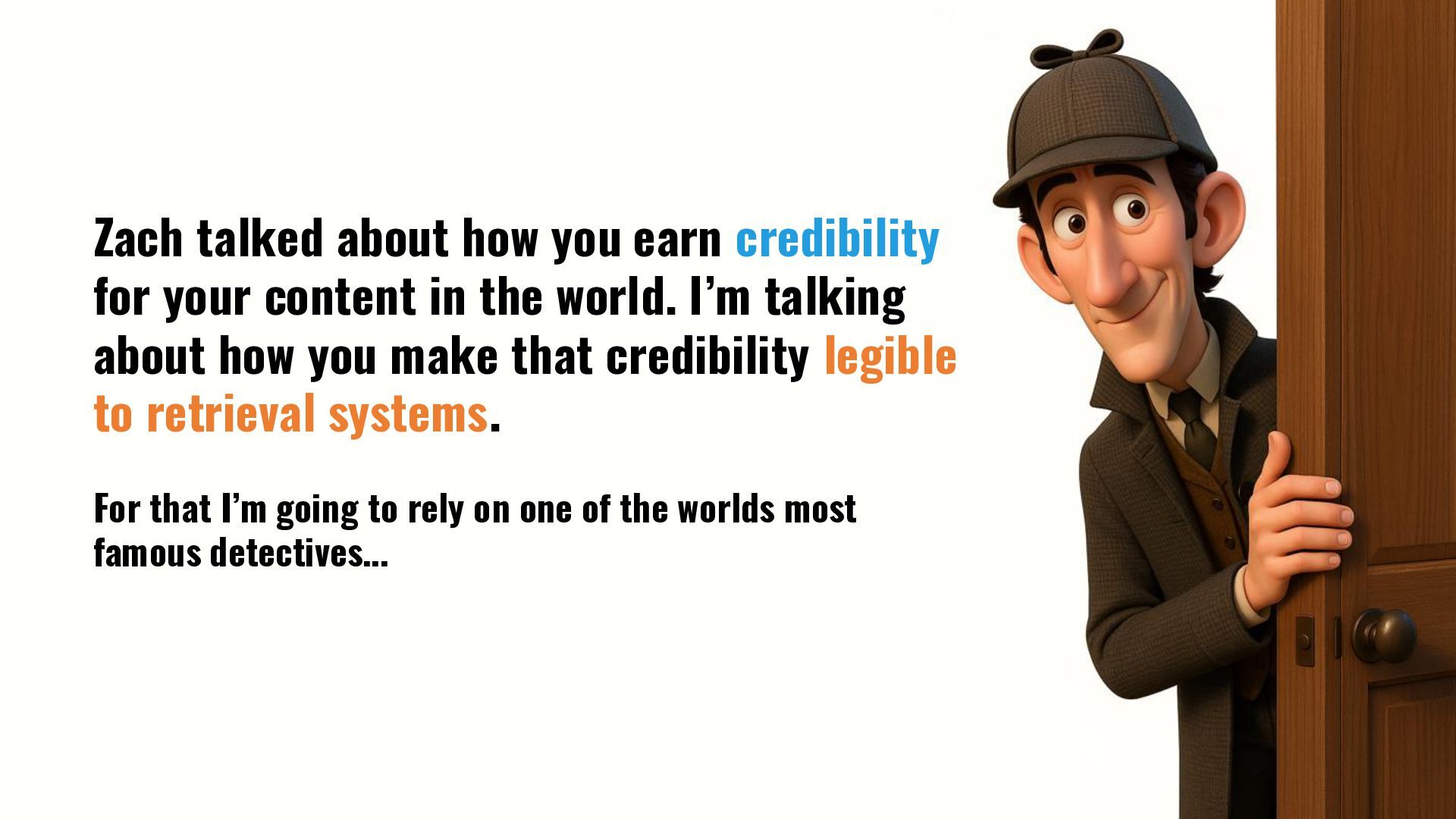
in the world. I’m talking about how you make that credibility legible to retrieval systems. For that I’m going to rely on one of the worlds most famous detectives...
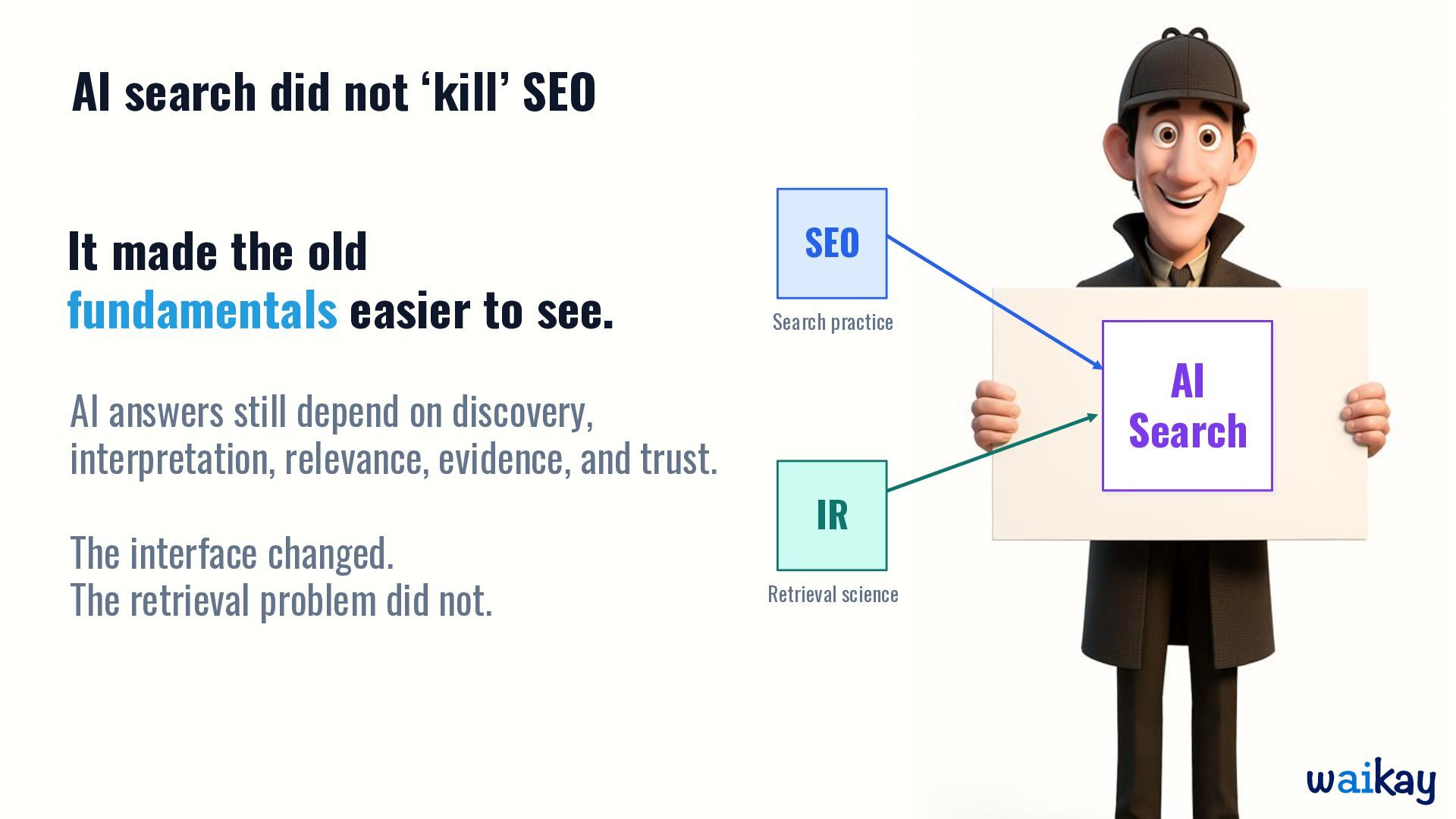
fundamentals easier to see. AI answers still depend on discovery, interpretation, relevance, evidence, and trust. The interface changed. The retrieval problem did not. SEO IR AI Search Search practice Retrieval science
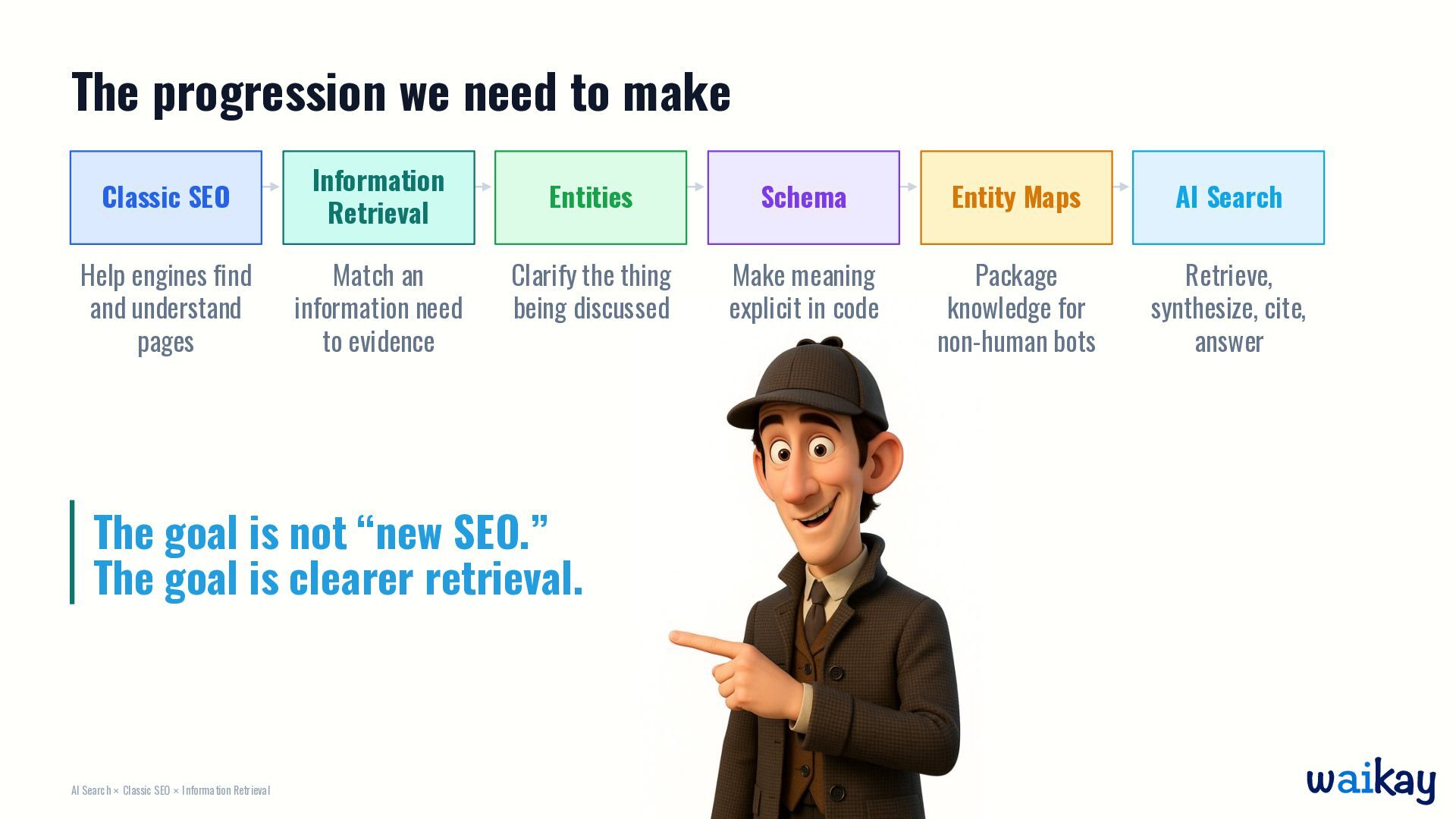
find and understand pages Information Retrieval Match an information need to evidence Entities Clarify the thing being discussed Schema Make meaning explicit in code Entity Maps Package knowledge for non-human bots AI Search Retrieve, synthesize, cite, answer The goal is not “new SEO.” The goal is clearer retrieval. AI Search × Classic SEO × Information Retrieval
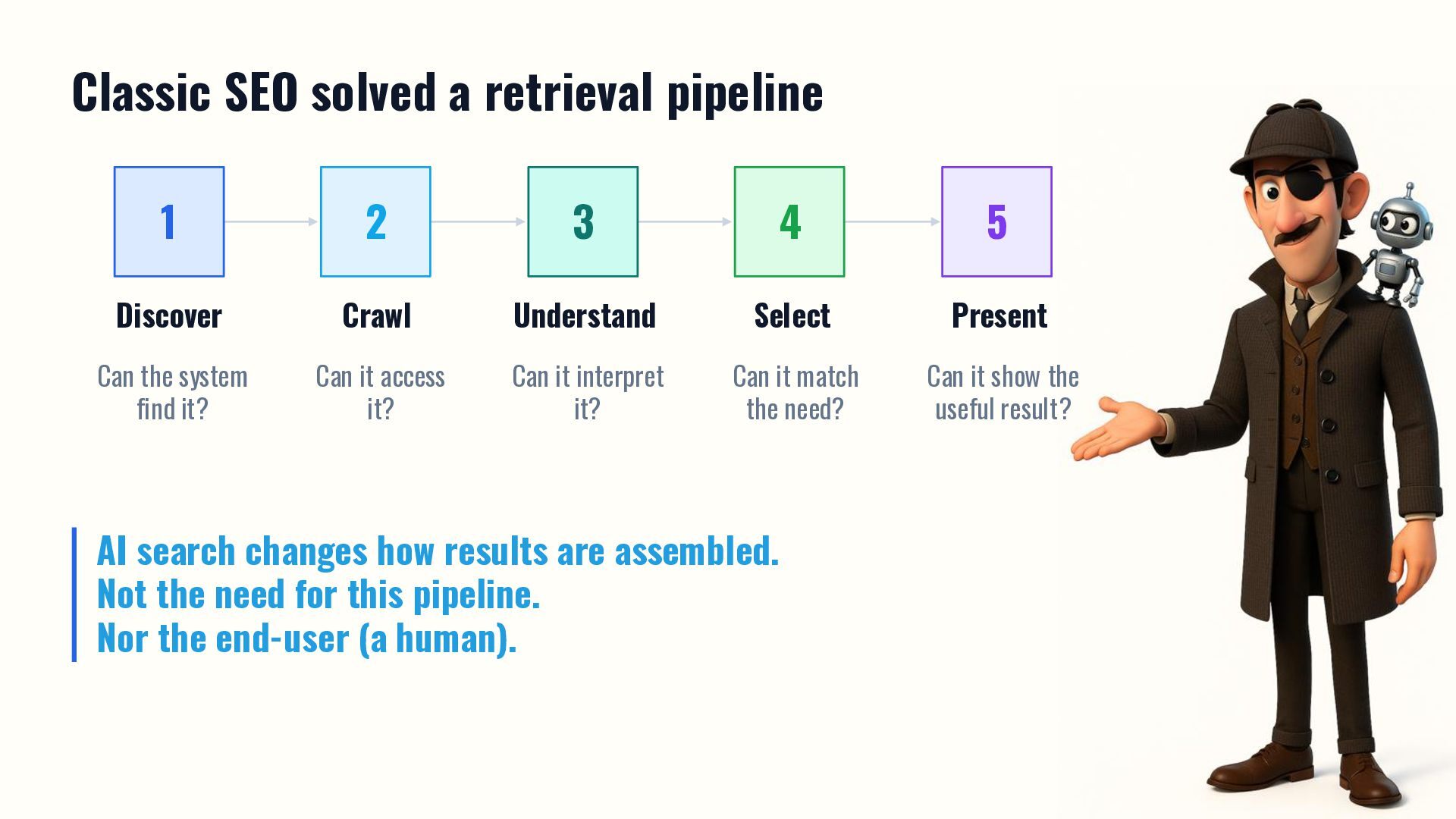
system find it? 2 Crawl Can it access it? 3 Understand Can it interpret it? 4 Select Can it match the need? 5 Present Can it show the useful result? AI search changes how results are assembled. Not the need for this pipeline. Nor the end-user (a human).
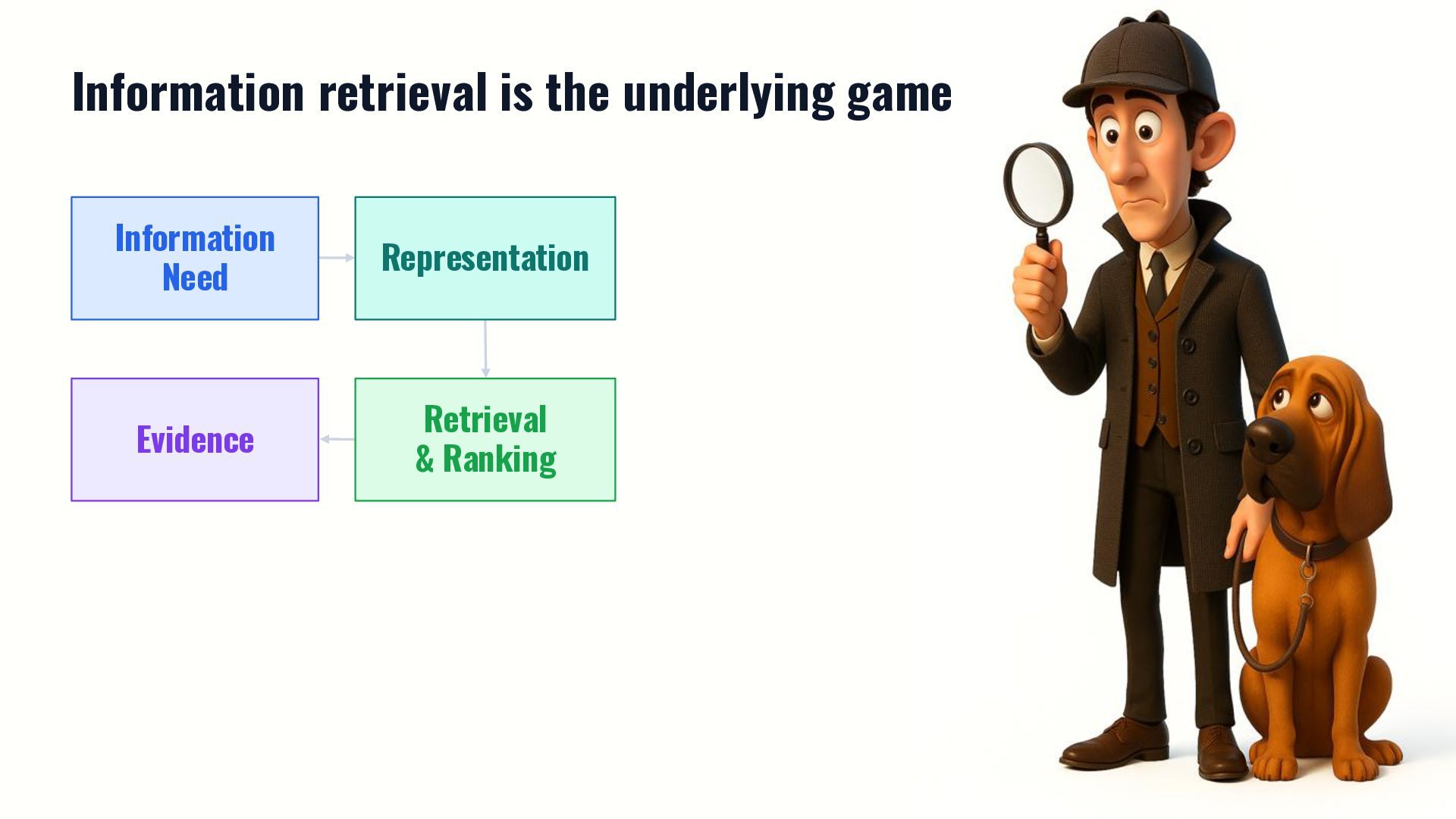
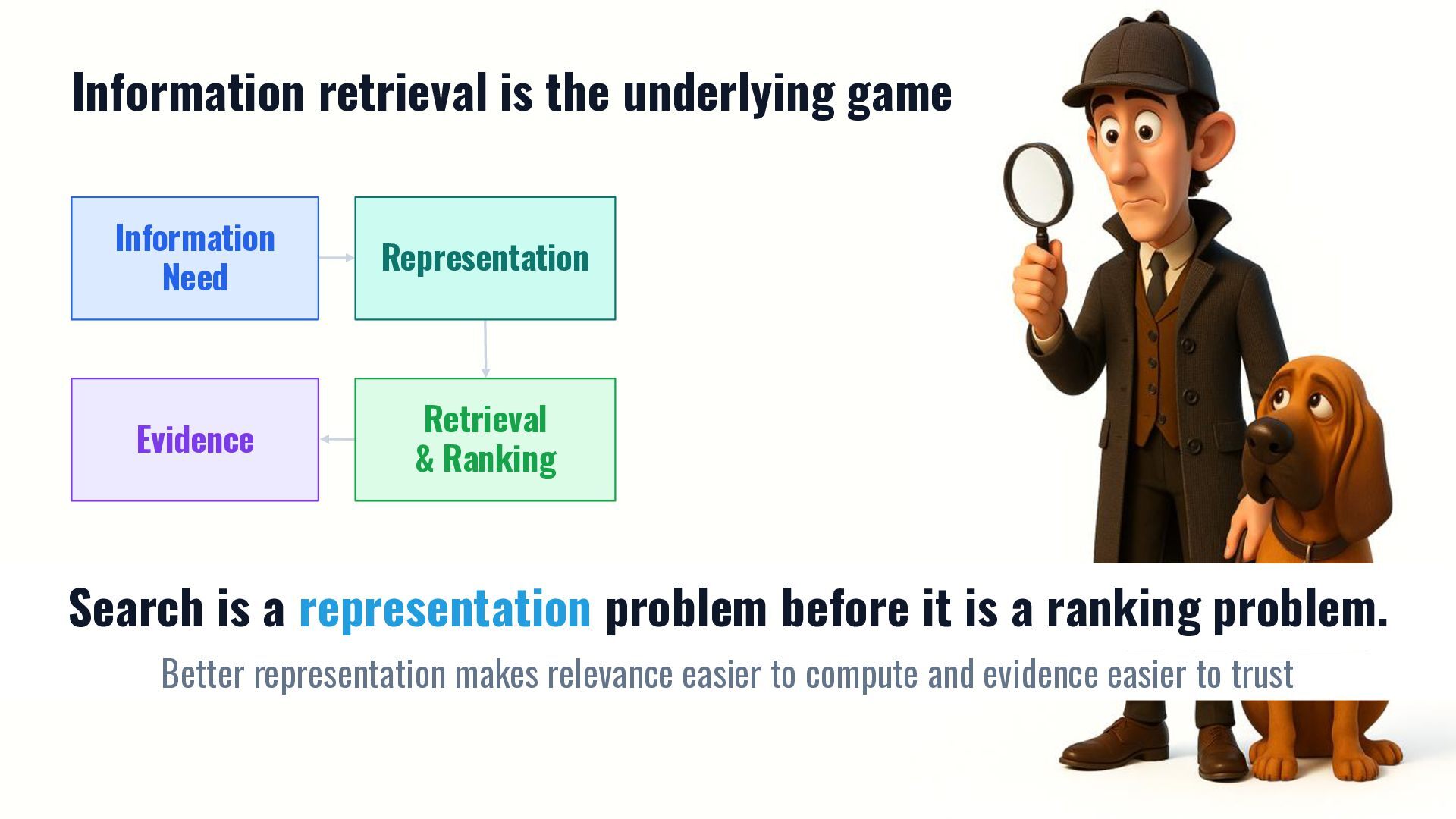
problem before it is a ranking problem. Better representation makes relevance easier to compute and evidence easier to trust Information Need Representation Retrieval & Ranking Evidence
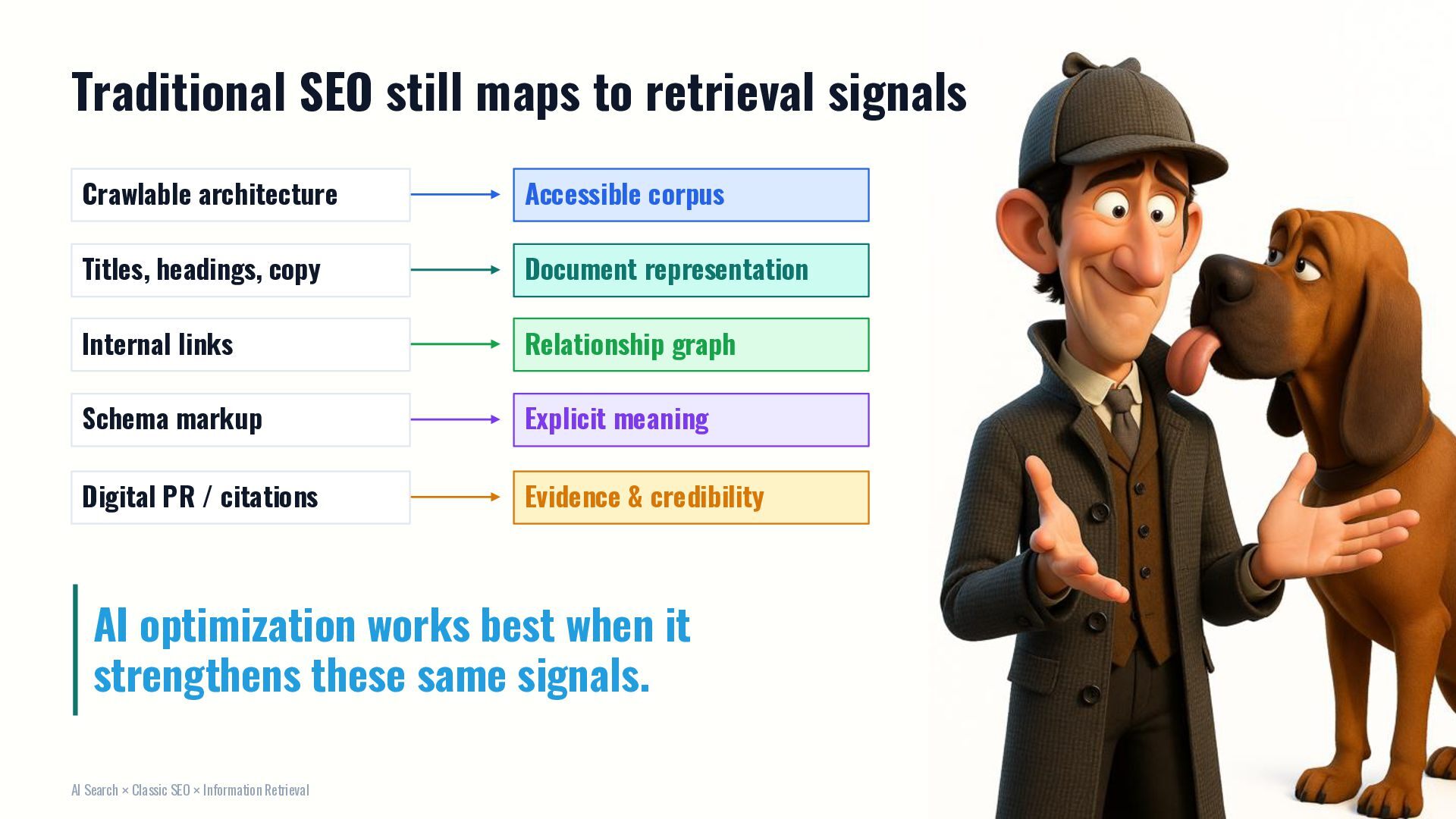
representation Relationship graph Explicit meaning Evidence & credibility AI optimization works best when it strengthens these same signals. AI Search × Classic SEO × Information Retrieval Crawlable architecture Titles, headings, copy Internal links Schema markup Digital PR / citations
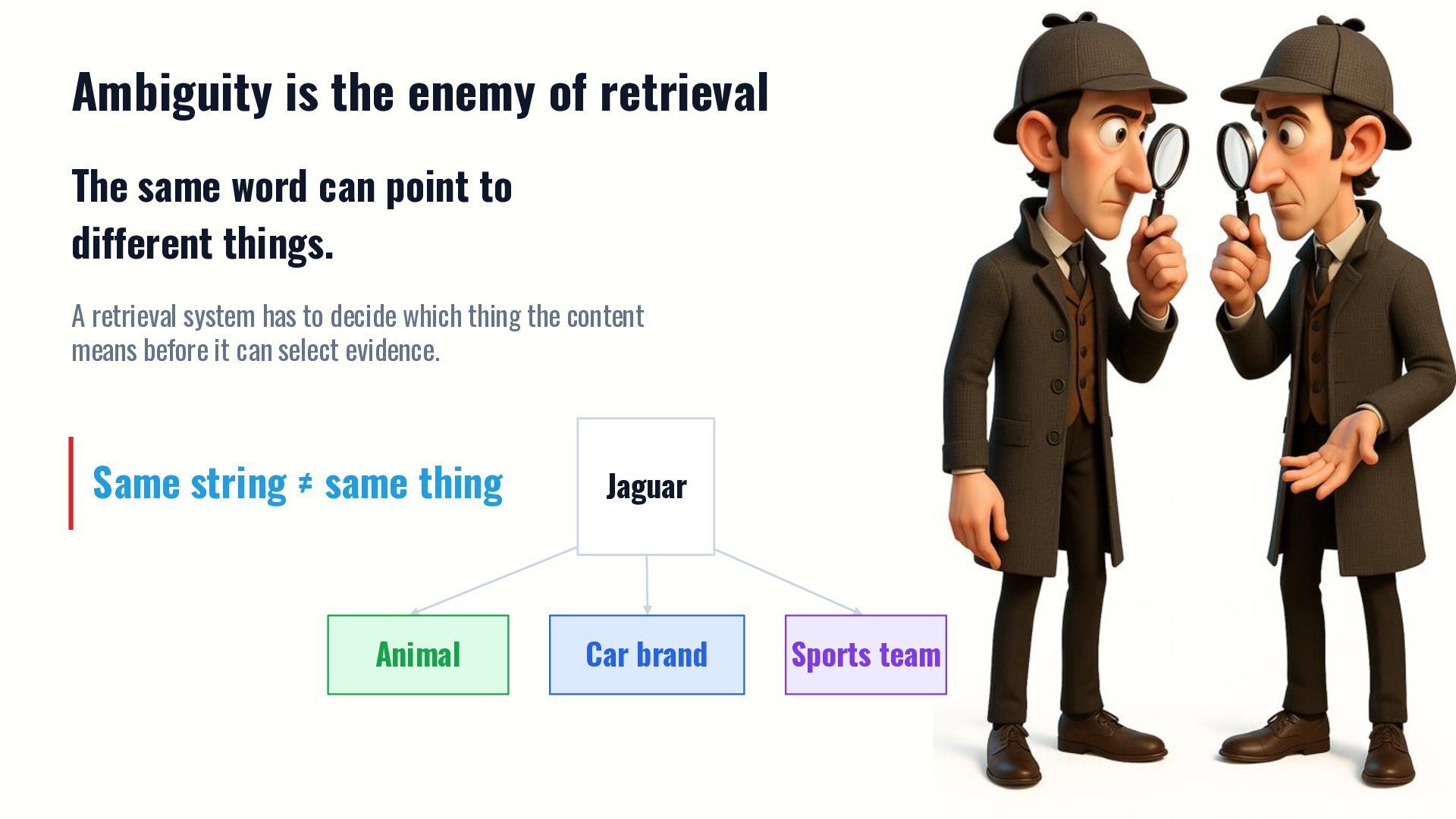
point to different things. A retrieval system has to decide which thing the content means before it can select evidence. Animal Car brand Sports team Same string ≠ same thing Jaguar
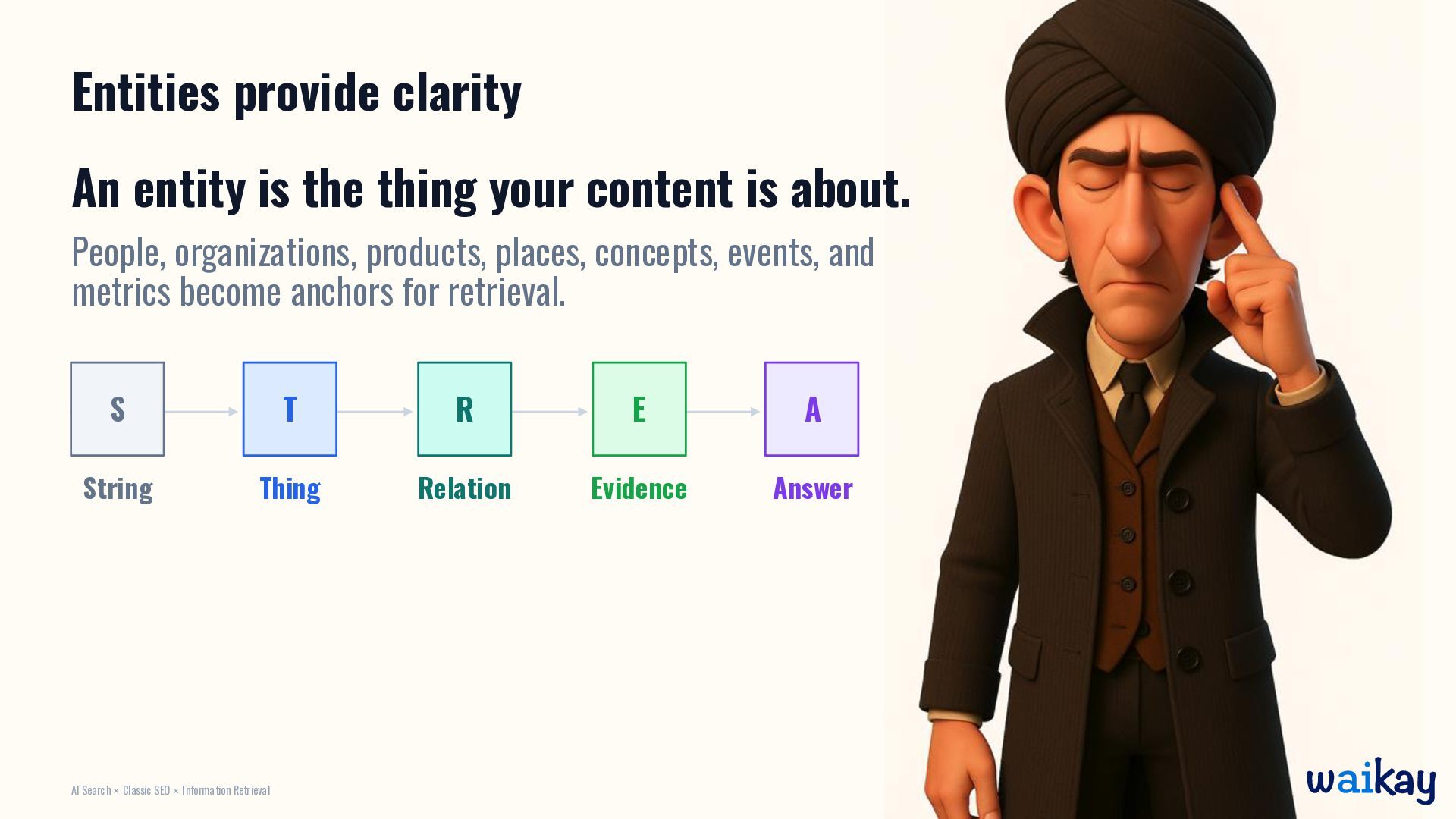
is about. People, organizations, products, places, concepts, events, and metrics become anchors for retrieval. S String T Thing R Relation E Evidence A Answer AI Search × Classic SEO × Information Retrieval
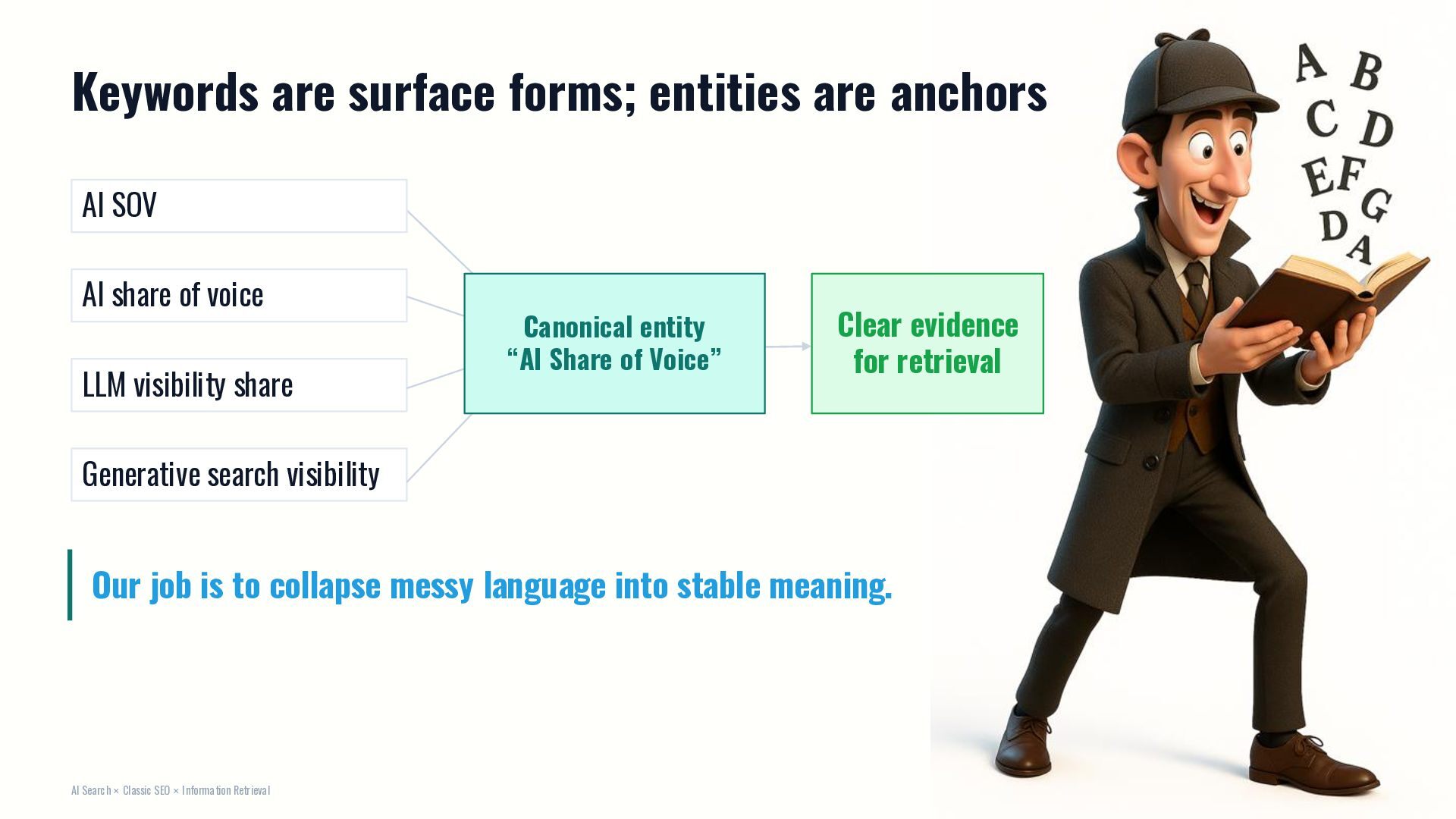
voice LLM visibility share Generative search visibility Canonical entity “AI Share of Voice” Clear evidence for retrieval Our job is to collapse messy language into stable meaning. AI Search × Classic SEO × Information Retrieval AI SOV
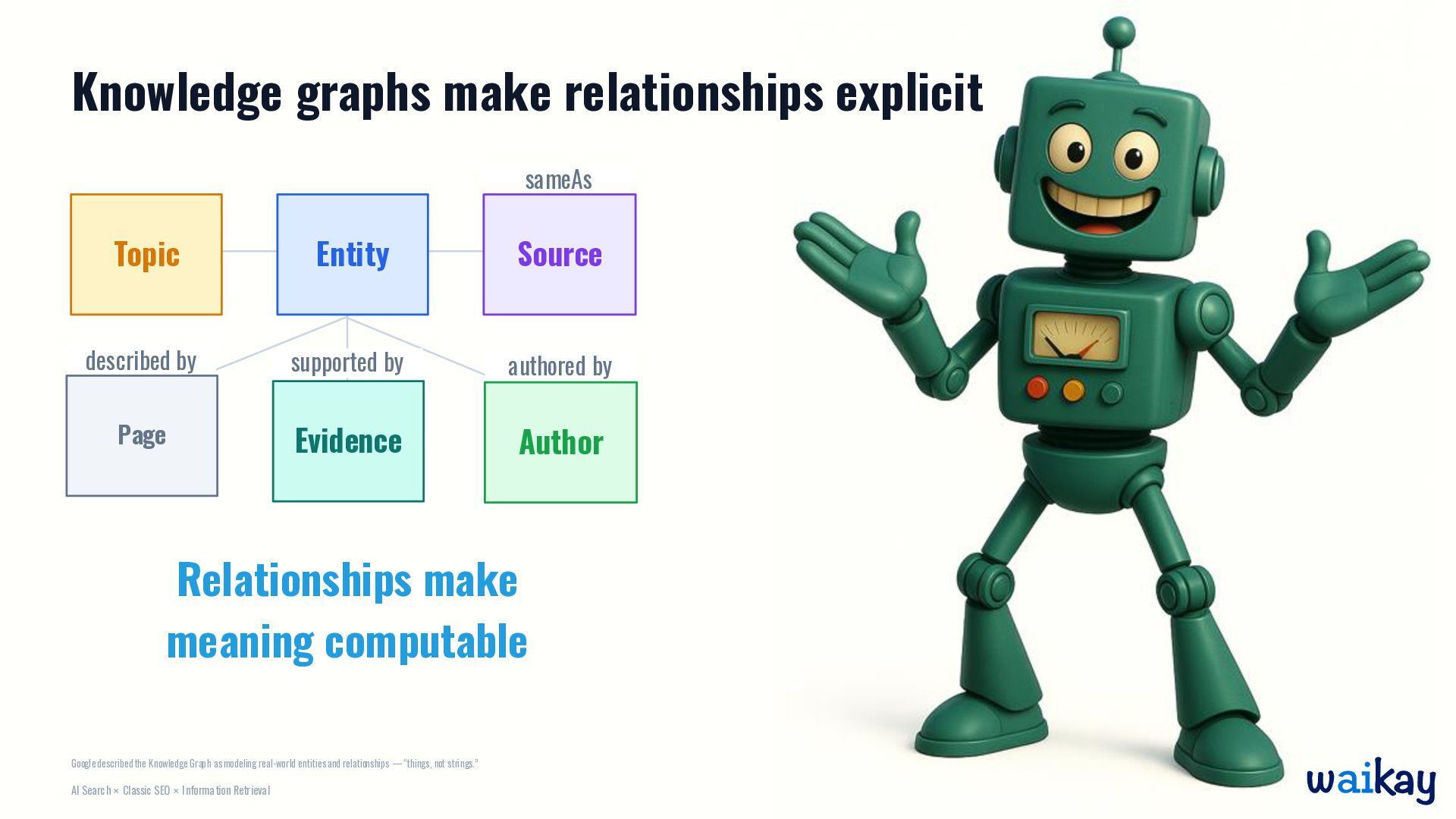
Relationships make meaning computable AI Search × Classic SEO × Information Retrieval Google described the Knowledge Graph as modeling real-world entities and relationships — “things, not strings.” described by Author Evidence Source Page Topic Entity
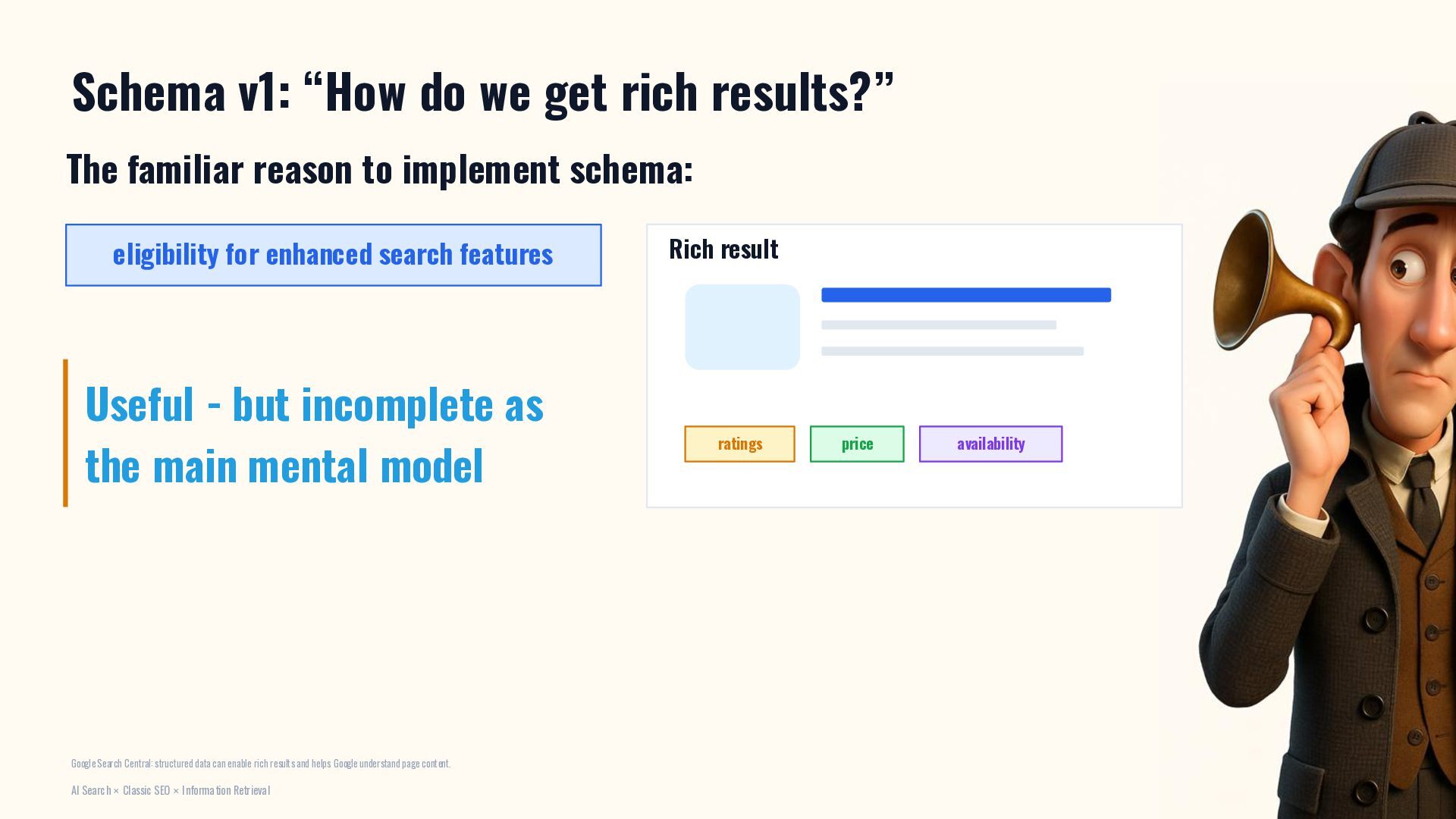
reason to implement schema: eligibility for enhanced search features Useful - but incomplete as the main mental model AI Search × Classic SEO × Information Retrieval Google Search Central: structured data can enable rich results and helps Google understand page content. Rich result ratings price availability
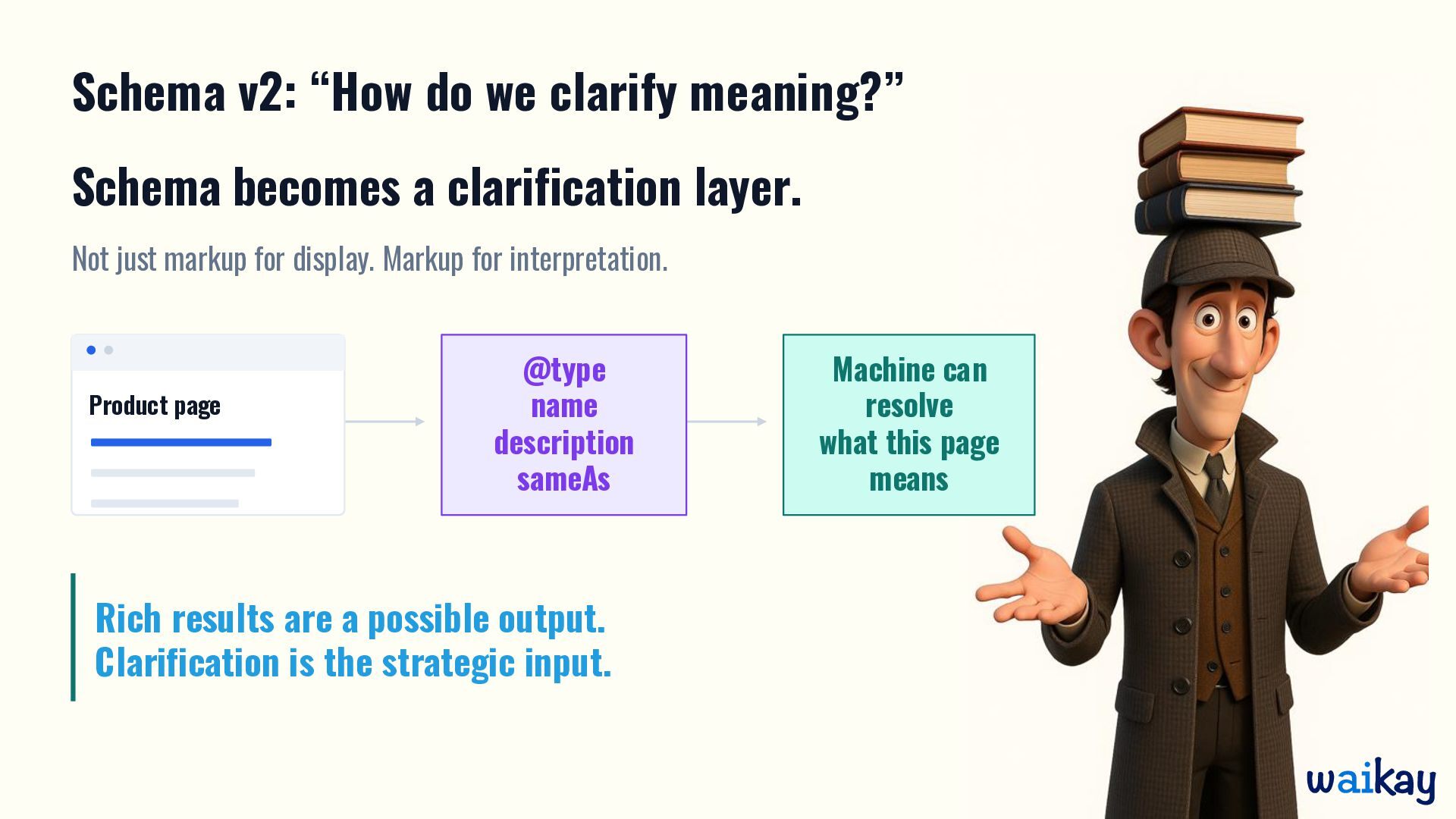
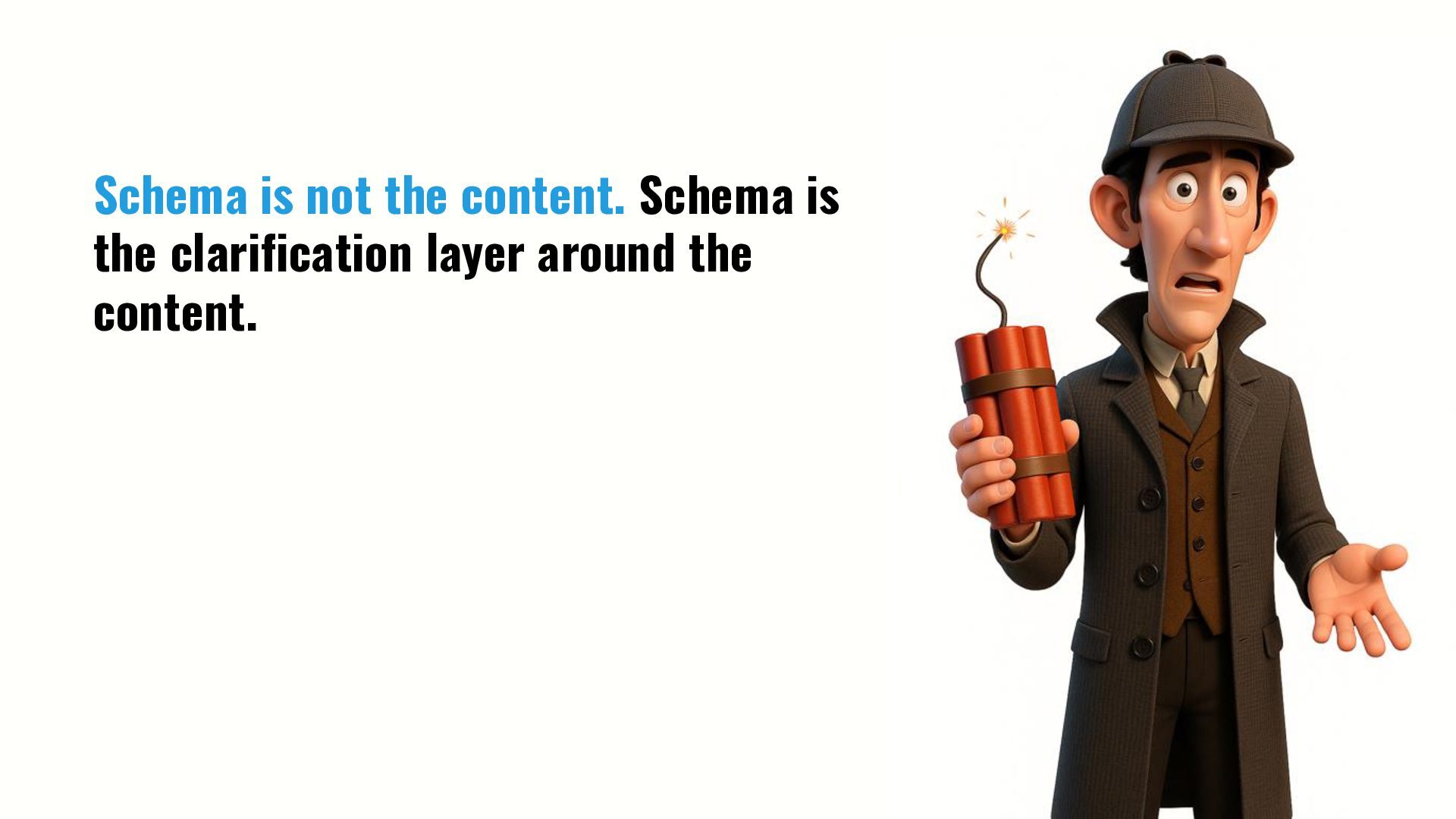
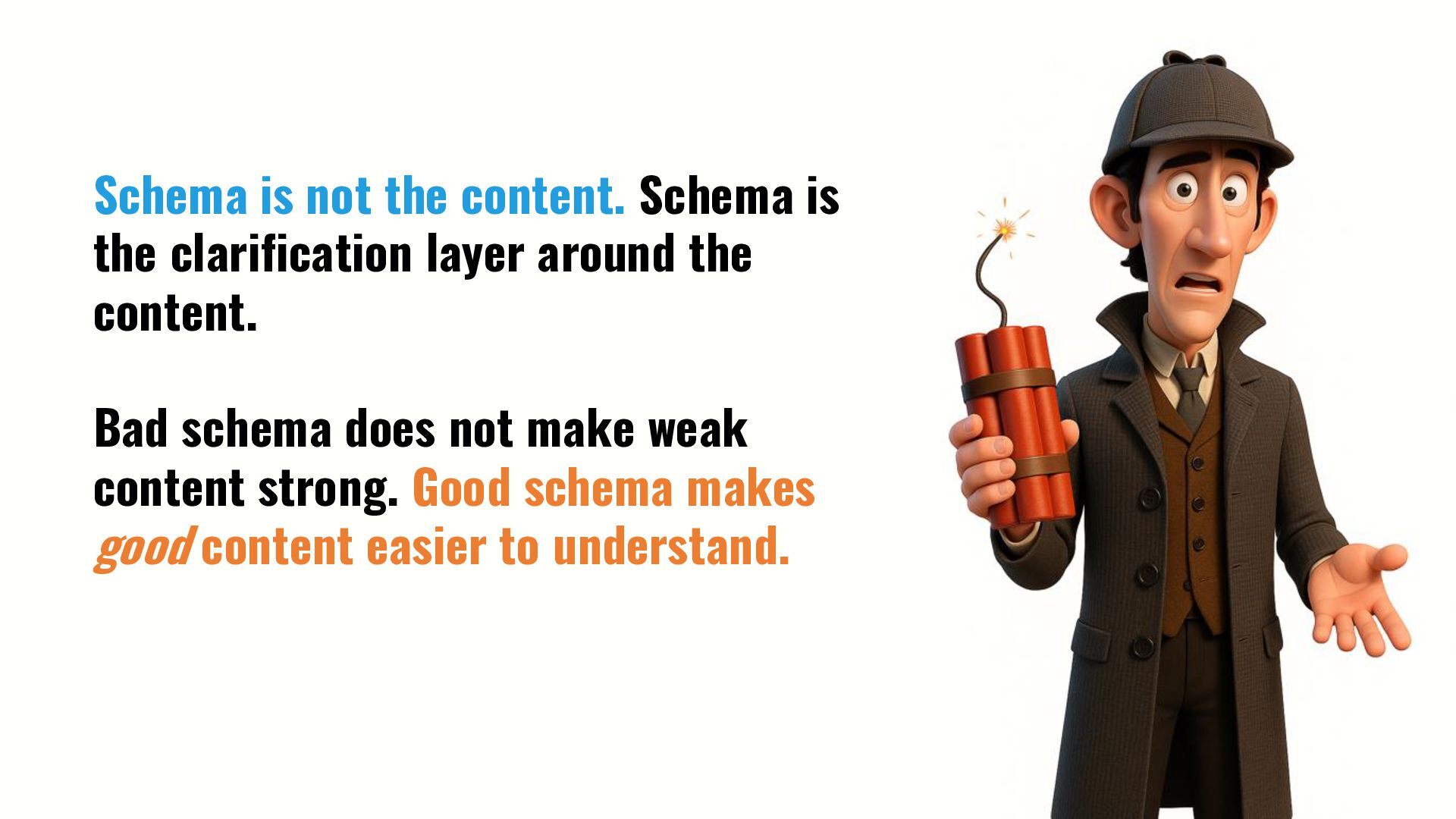
clarification layer. Not just markup for display. Markup for interpretation. Product page @type name description sameAs Machine can resolve what this page means Rich results are a possible output. Clarification is the strategic input.
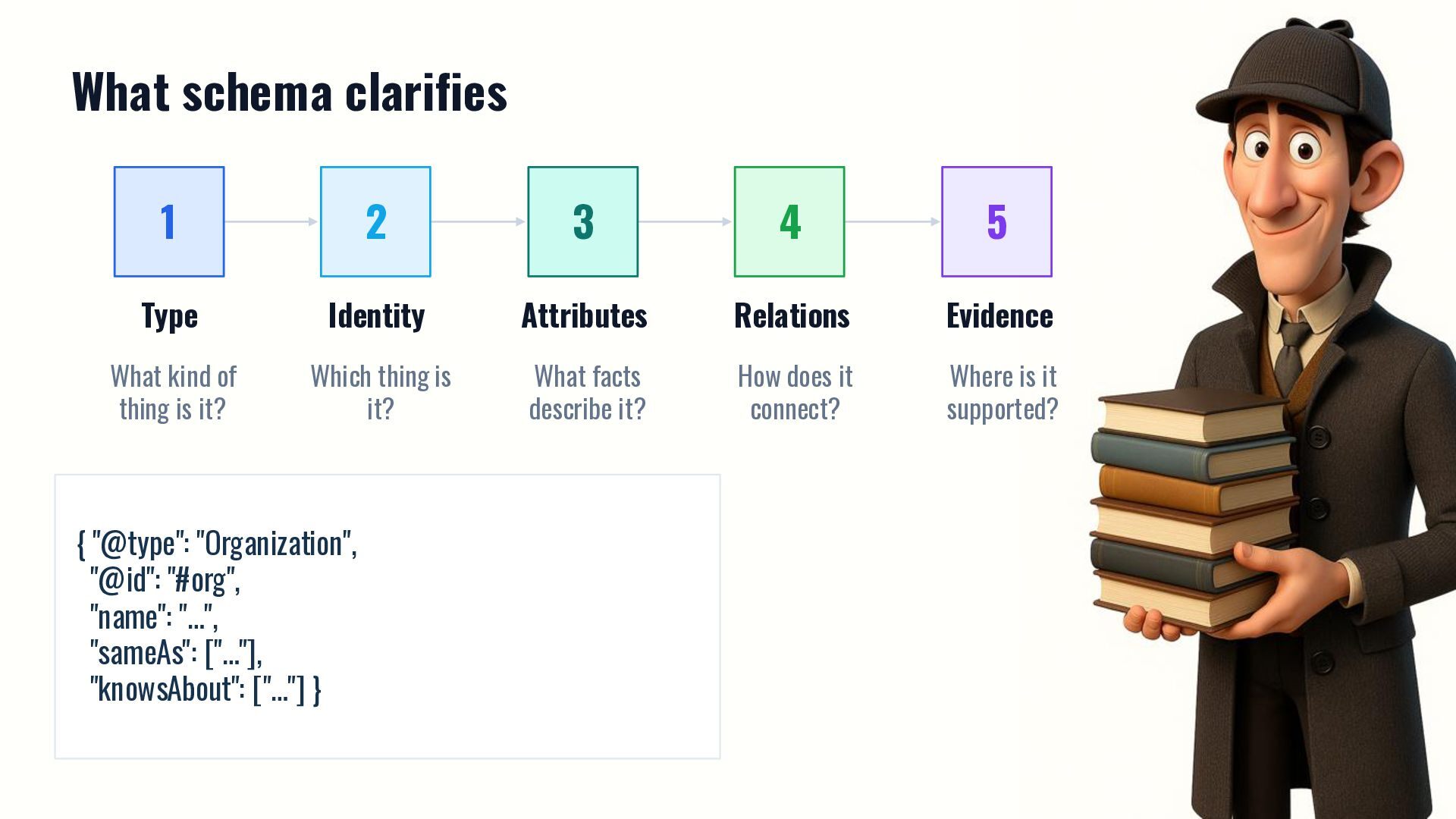
"sameAs": ["…"], "knowsAbout": ["…"] } 1 Type What kind of thing is it? 2 Identity Which thing is it? 3 Attributes What facts describe it? 4 Relations How does it connect? 5 Evidence Where is it supported?
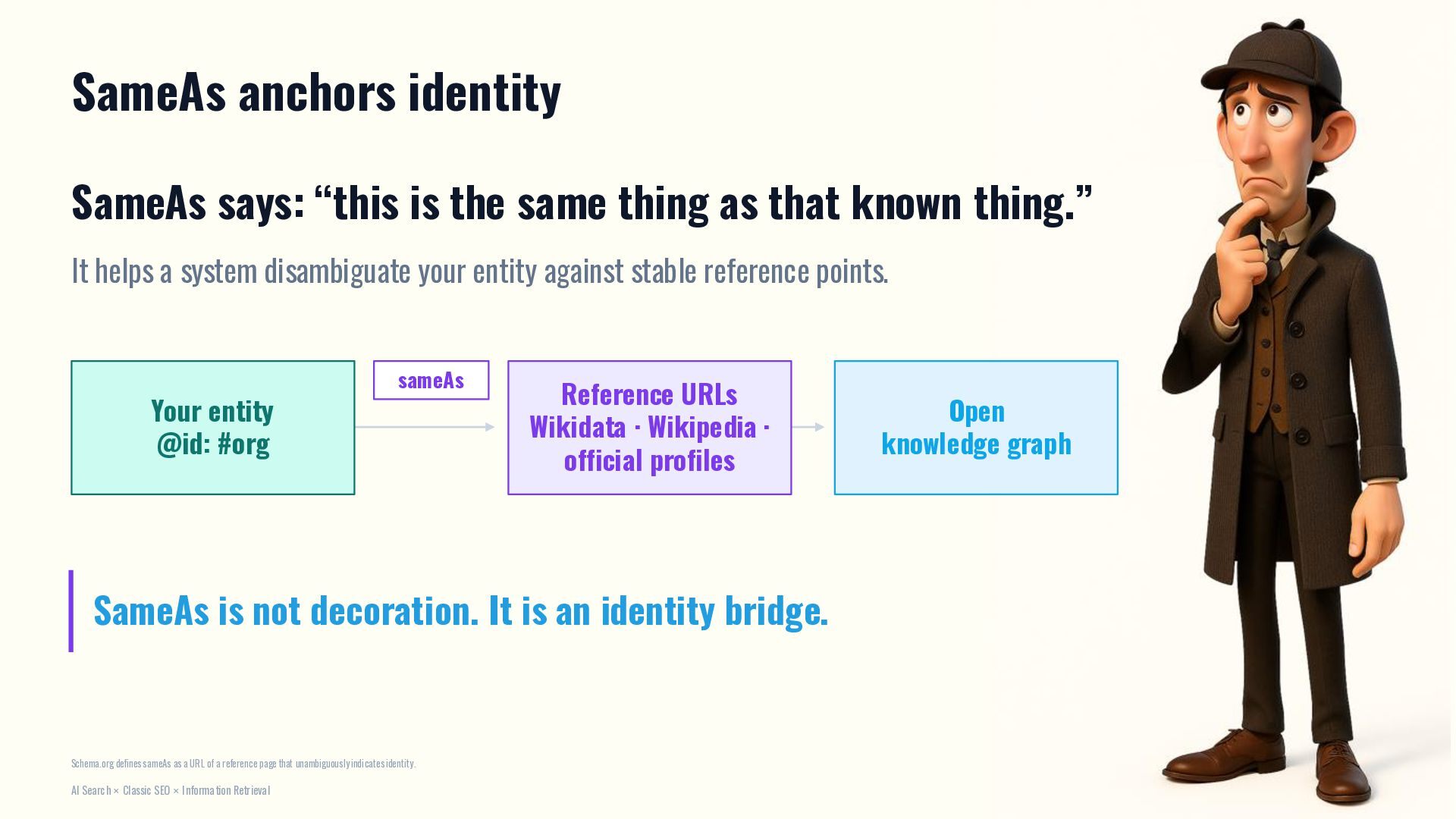
as that known thing.” It helps a system disambiguate your entity against stable reference points. Your entity @id: #org sameAs Reference URLs Wikidata · Wikipedia · official profiles Open knowledge graph SameAs is not decoration. It is an identity bridge. AI Search × Classic SEO × Information Retrieval Schema.org defines sameAs as a URL of a reference page that unambiguously indicates identity.
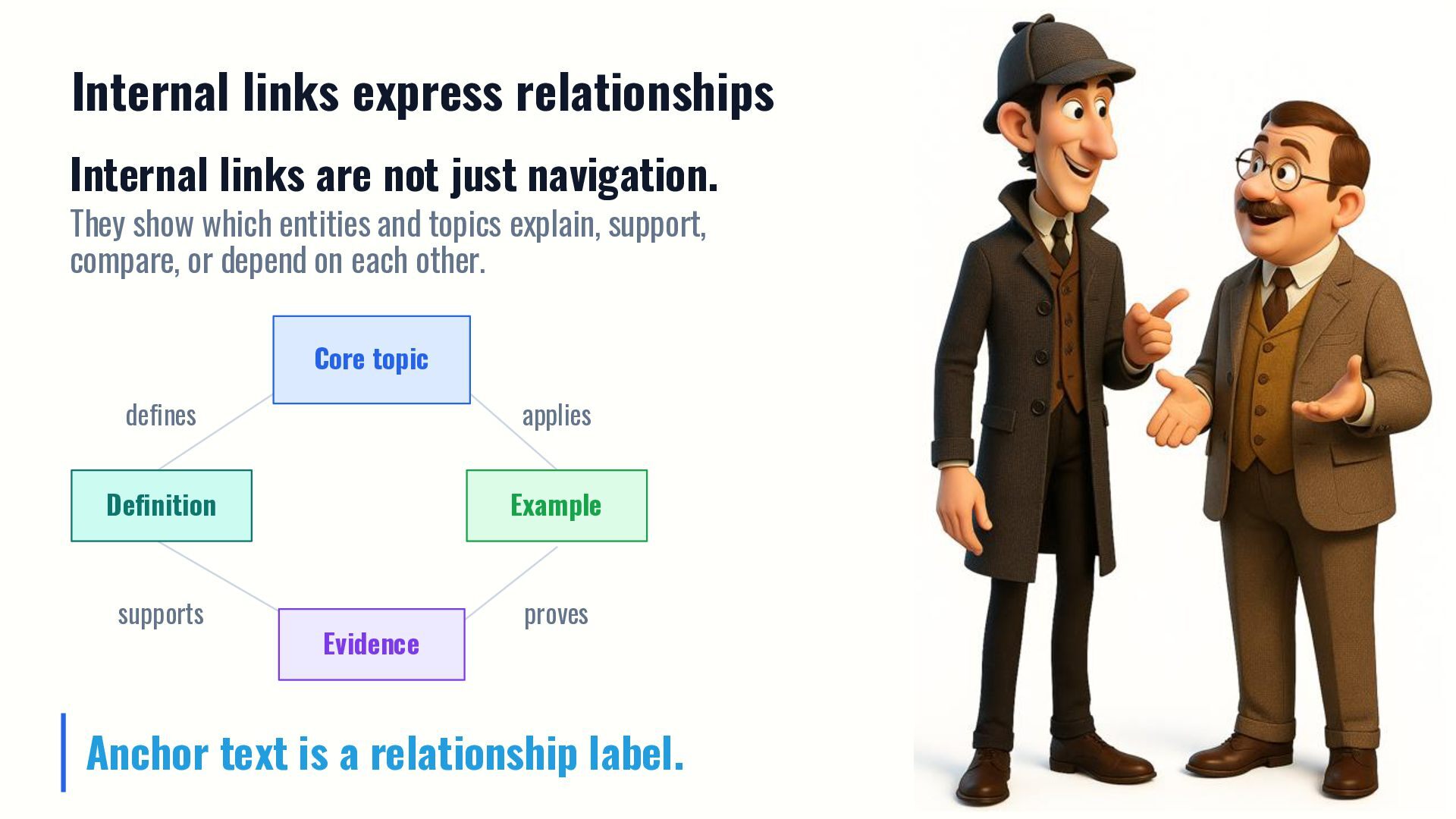
They show which entities and topics explain, support, compare, or depend on each other. Core topic Definition Example Evidence defines applies supports proves Anchor text is a relationship label.
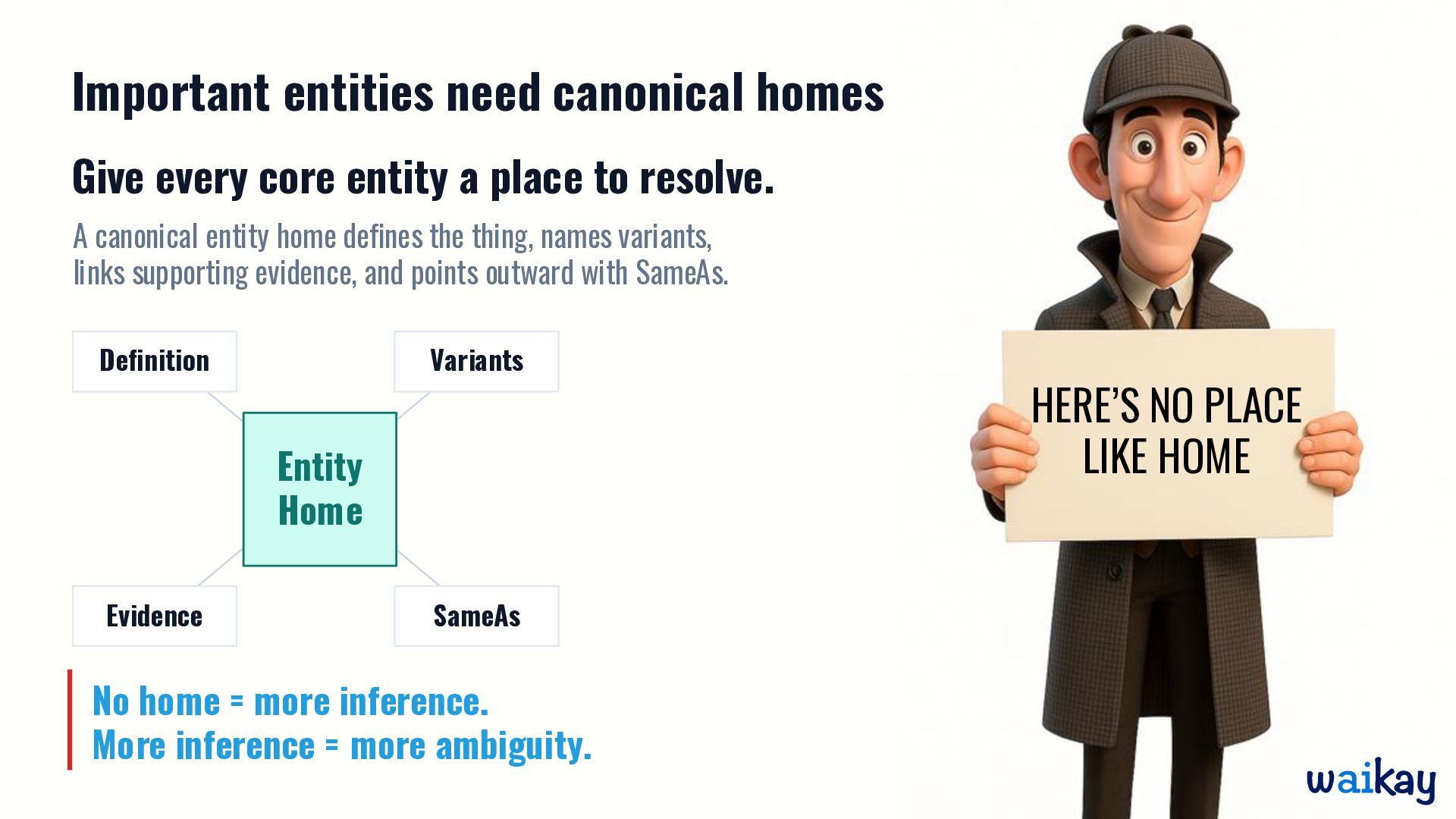
place to resolve. A canonical entity home defines the thing, names variants, links supporting evidence, and points outward with SameAs. Entity Home Definition Variants Evidence SameAs No home = more inference. More inference = more ambiguity. HERE’S NO PLACE LIKE HOME
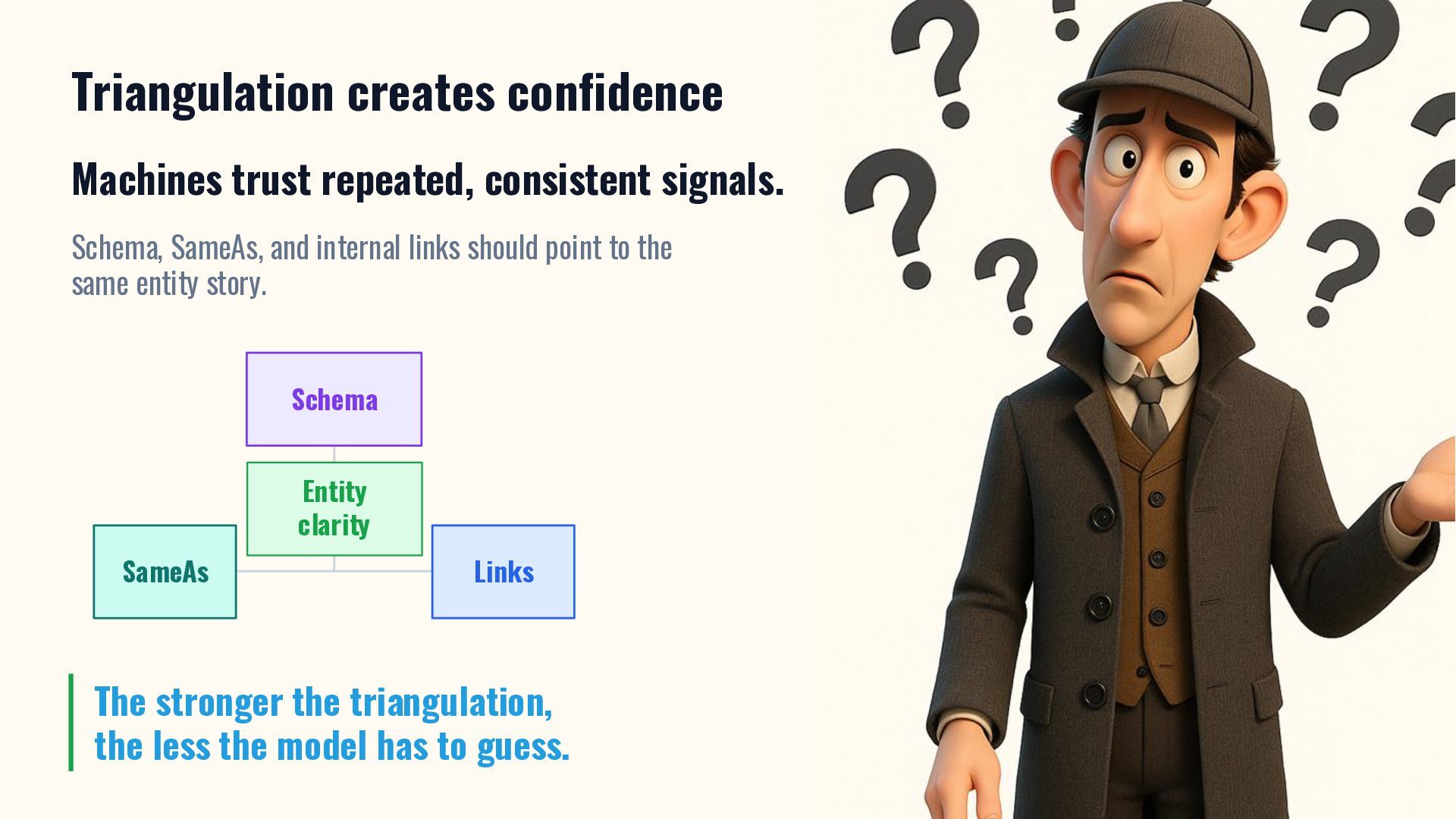
and internal links should point to the same entity story. Schema SameAs Links Entity clarity The stronger the triangulation, the less the model has to guess.
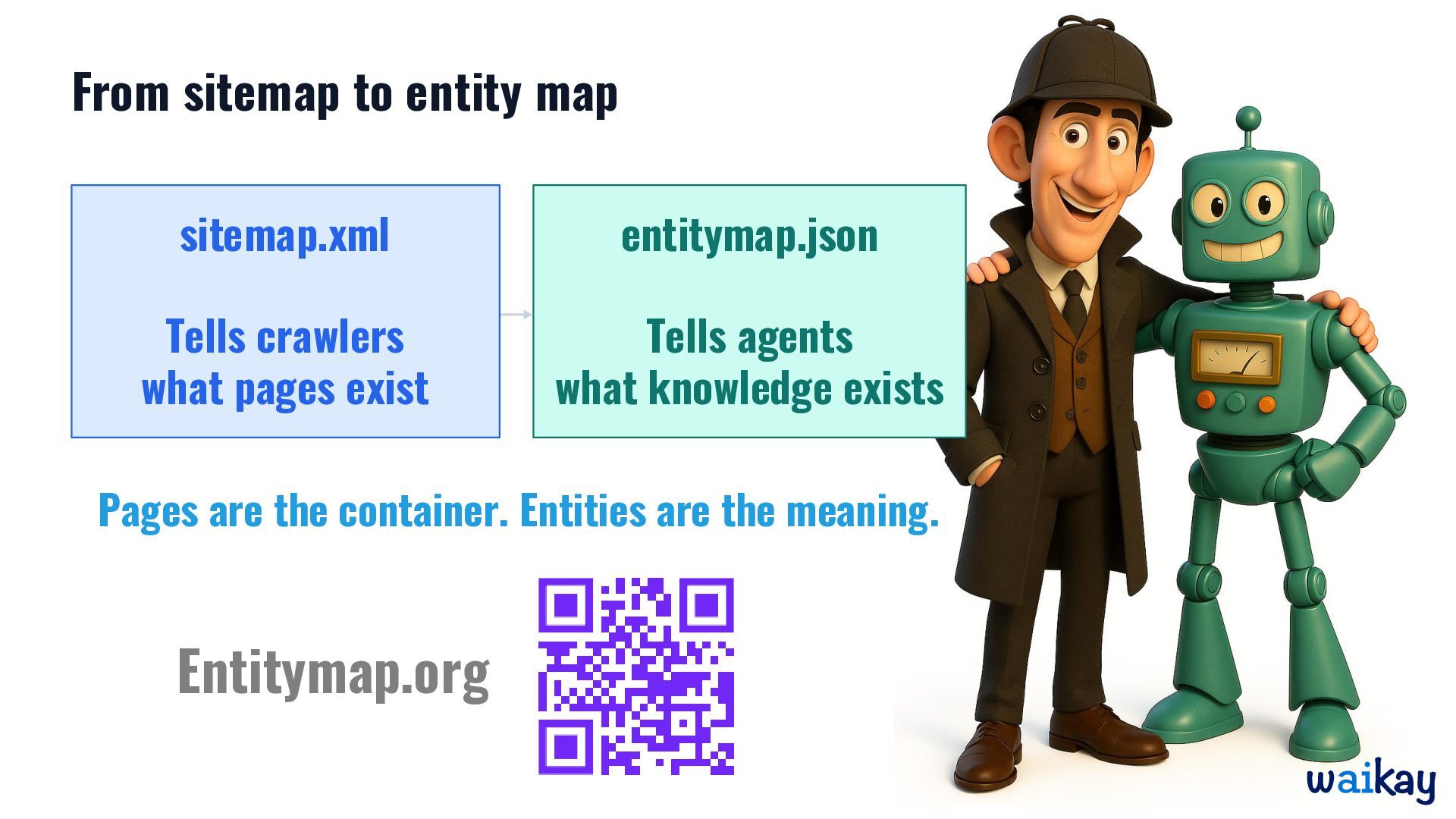
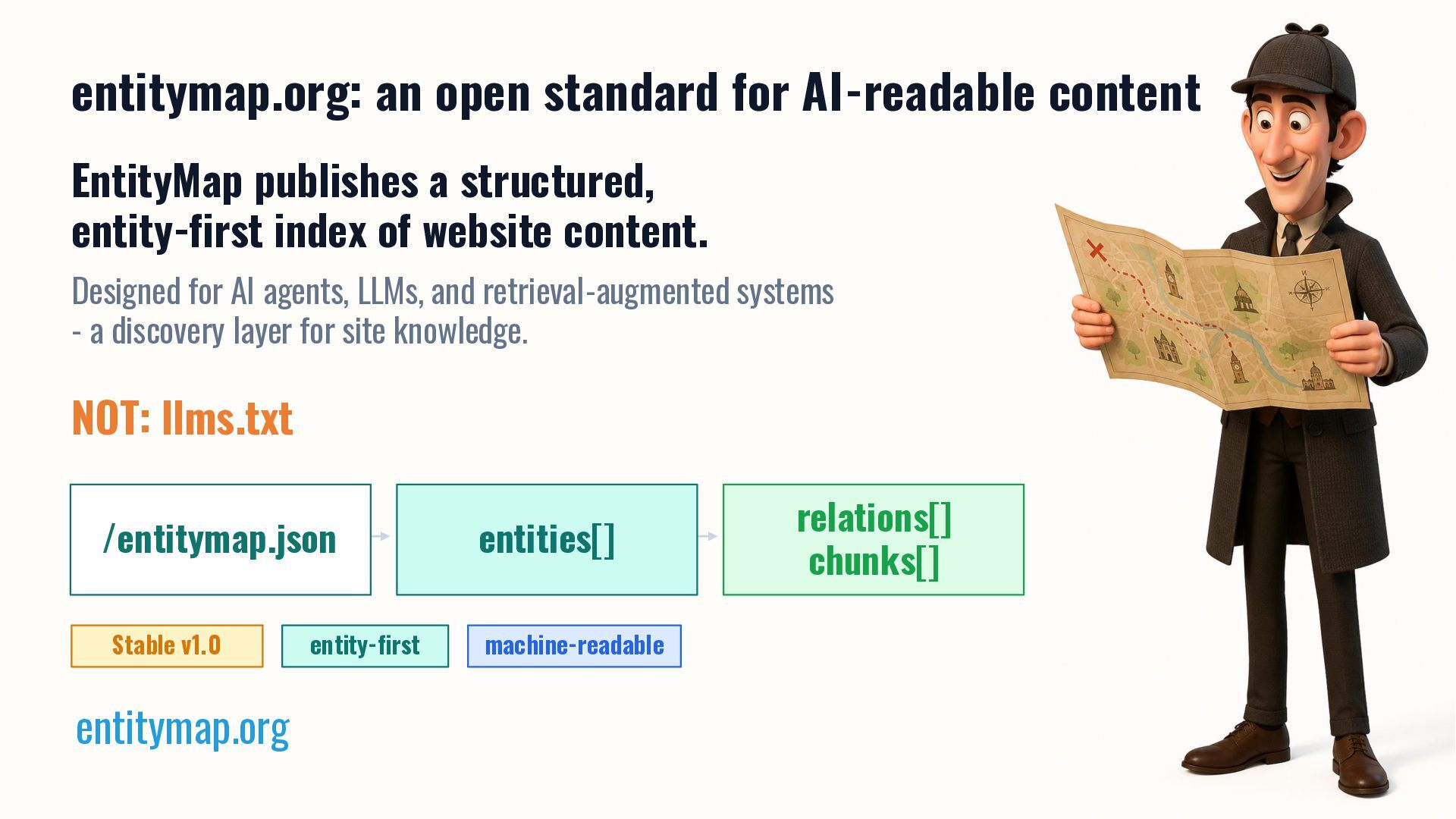
structured, entity-first index of website content. Designed for AI agents, LLMs, and retrieval-augmented systems - a discovery layer for site knowledge. Stable v1.0 entity-first machine-readable /entitymap.json entities[] relations[] chunks[] NOT: llms.txt entitymap.org
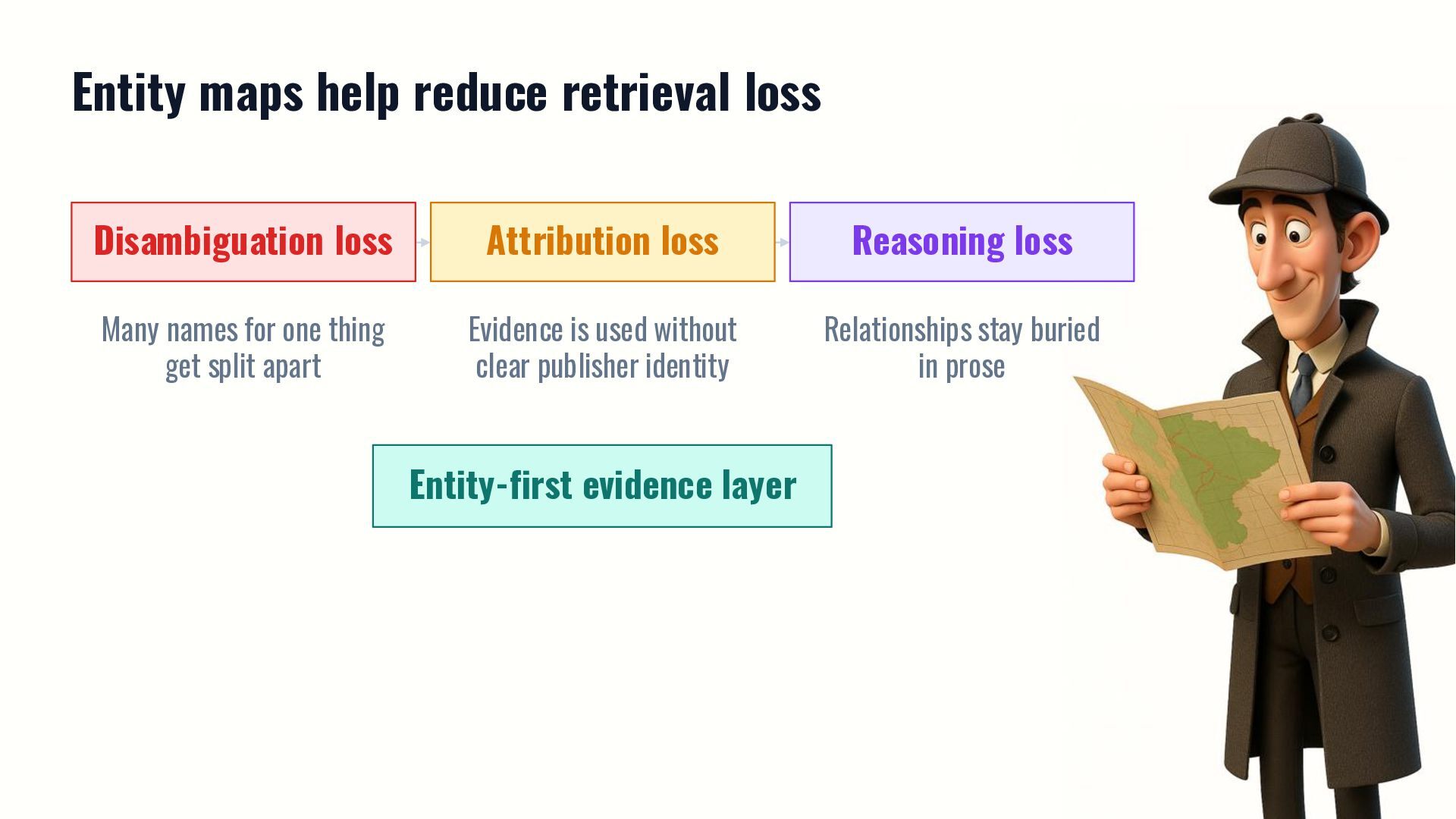
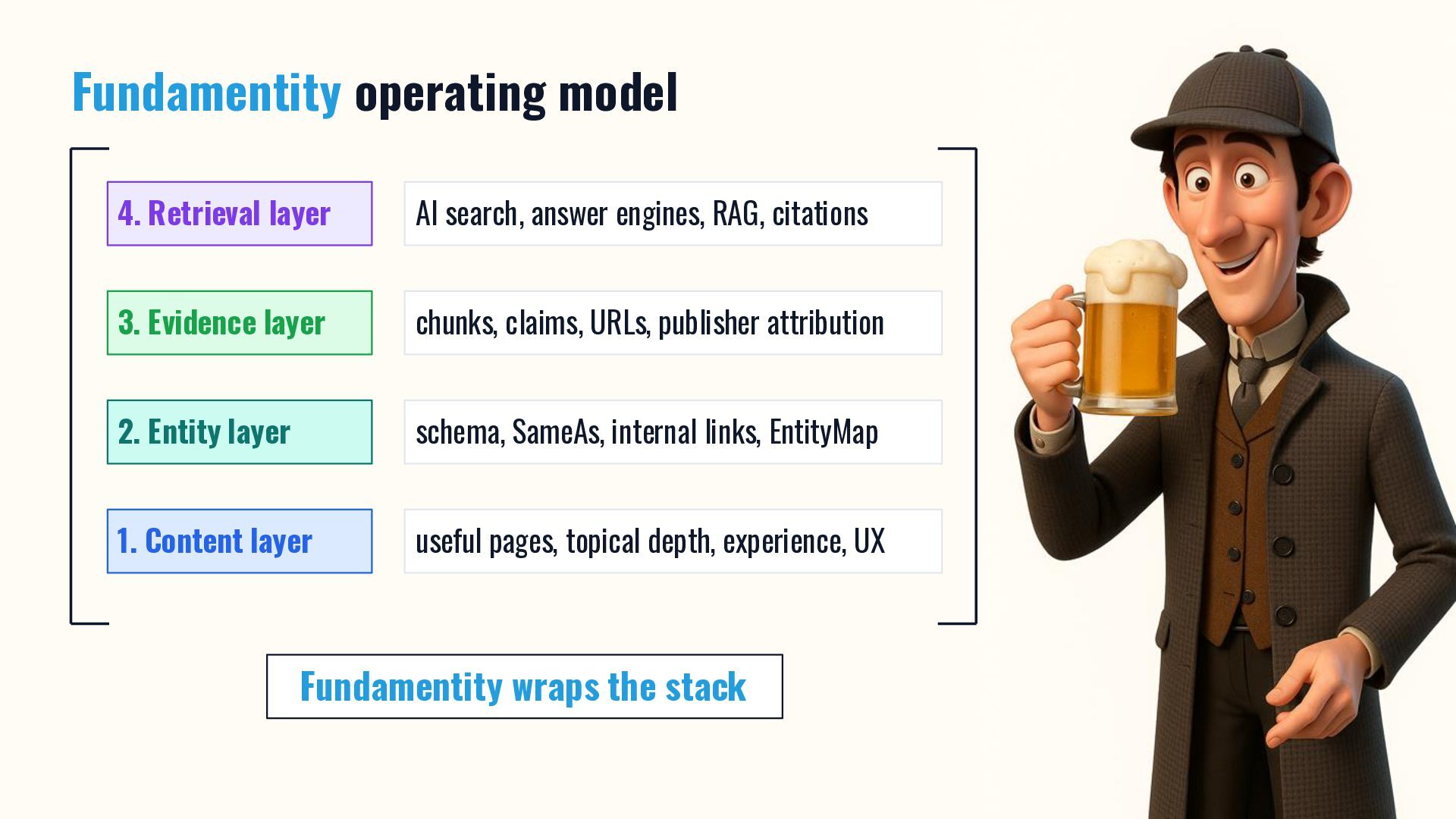
for one thing get split apart Attribution loss Evidence is used without clear publisher identity Reasoning loss Relationships stay buried in prose Entity-first evidence layer
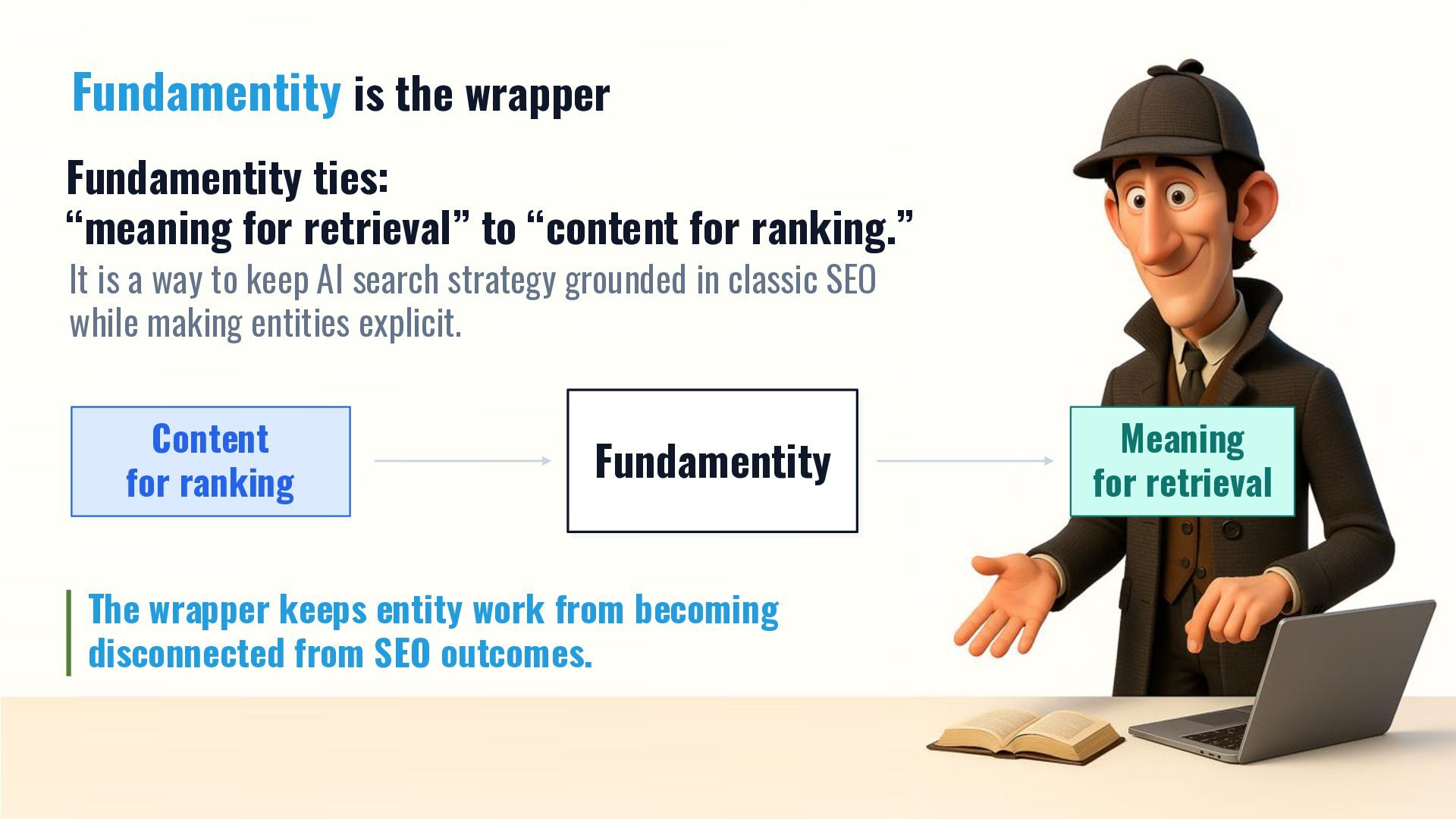
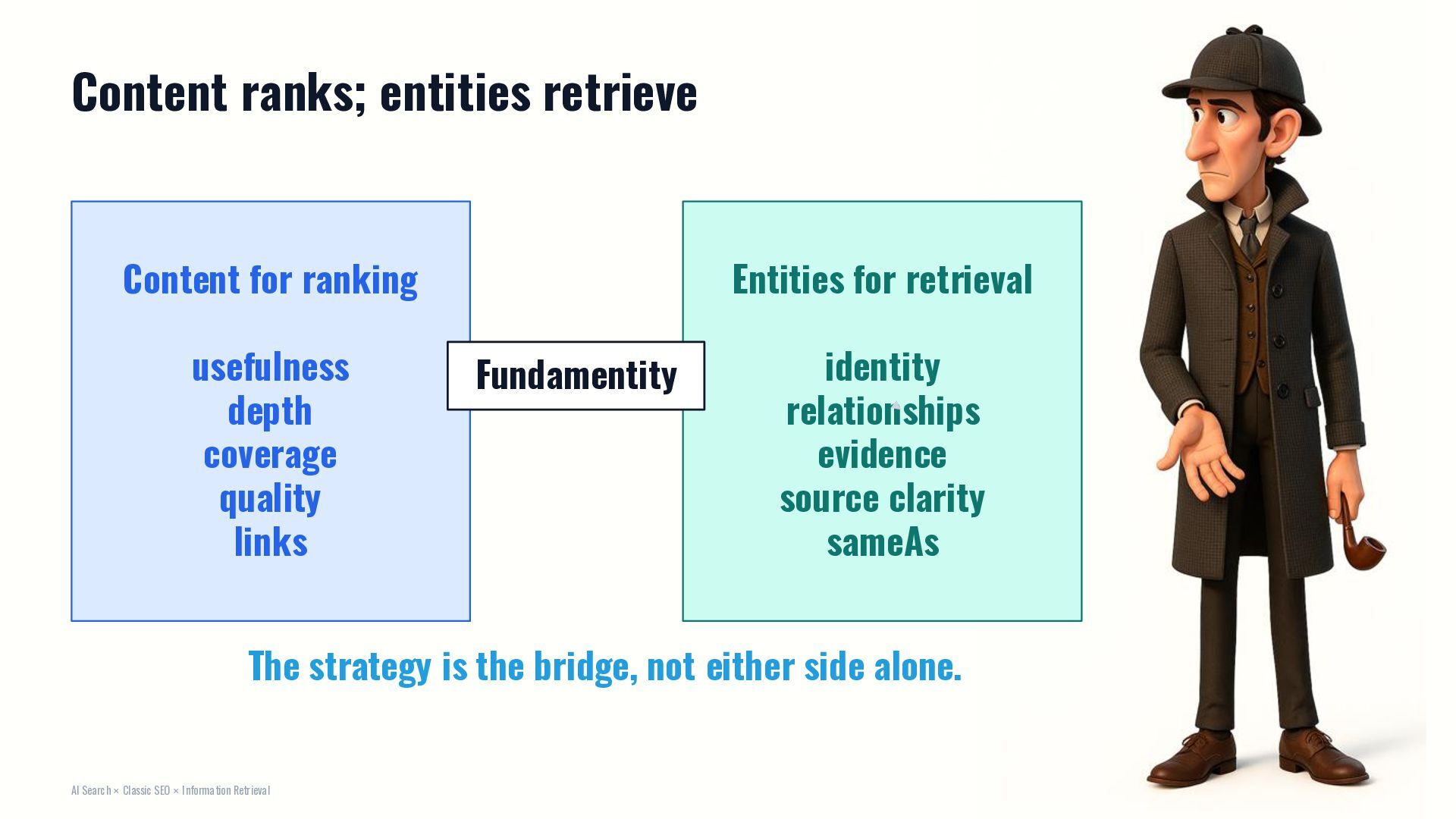
“content for ranking.” It is a way to keep AI search strategy grounded in classic SEO while making entities explicit. Content for ranking Fundamentity Meaning for retrieval The wrapper keeps entity work from becoming disconnected from SEO outcomes.
quality links Entities for retrieval identity relationships evidence source clarity sameAs Fundamentity The strategy is the bridge, not either side alone. AI Search × Classic SEO × Information Retrieval
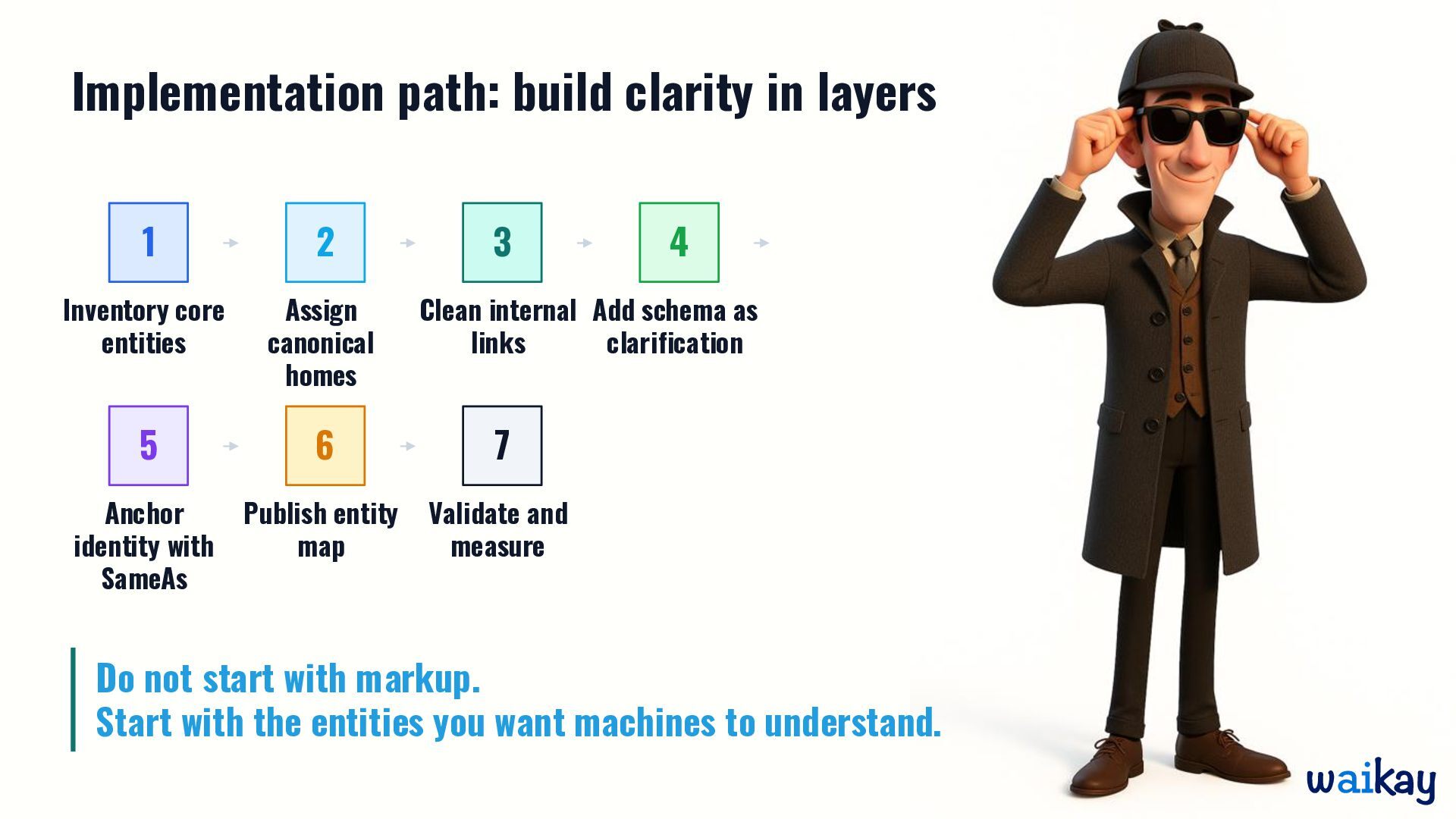
2 Assign canonical homes 3 Clean internal links 4 Add schema as clarification 5 Anchor identity with SameAs 6 Publish entity map 7 Validate and measure Do not start with markup. Start with the entities you want machines to understand.
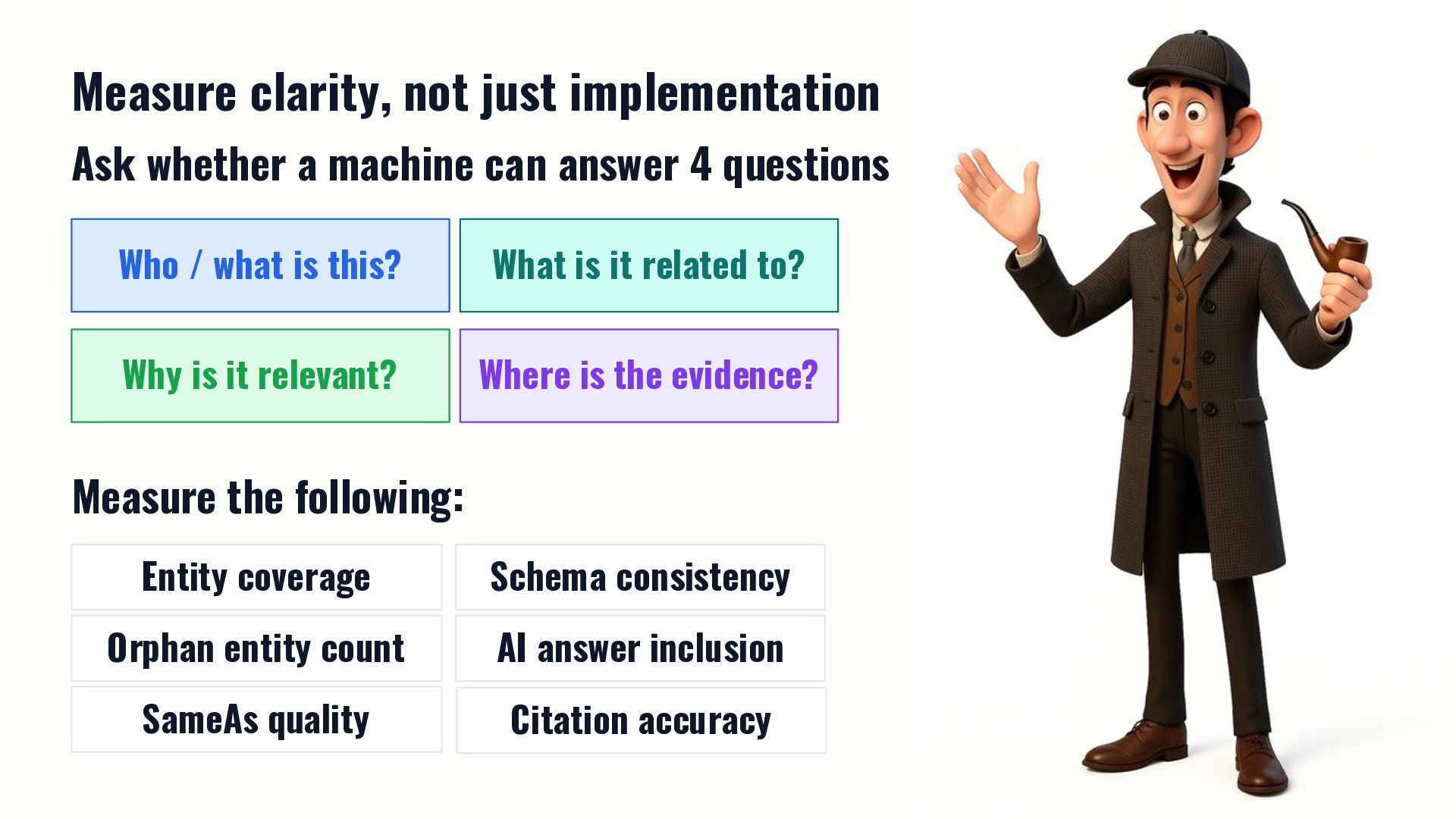
answer 4 questions Who / what is this? What is it related to? Why is it relevant? Where is the evidence? Entity coverage Schema consistency SameAs quality Orphan entity count AI answer inclusion Citation accuracy Measure the following:
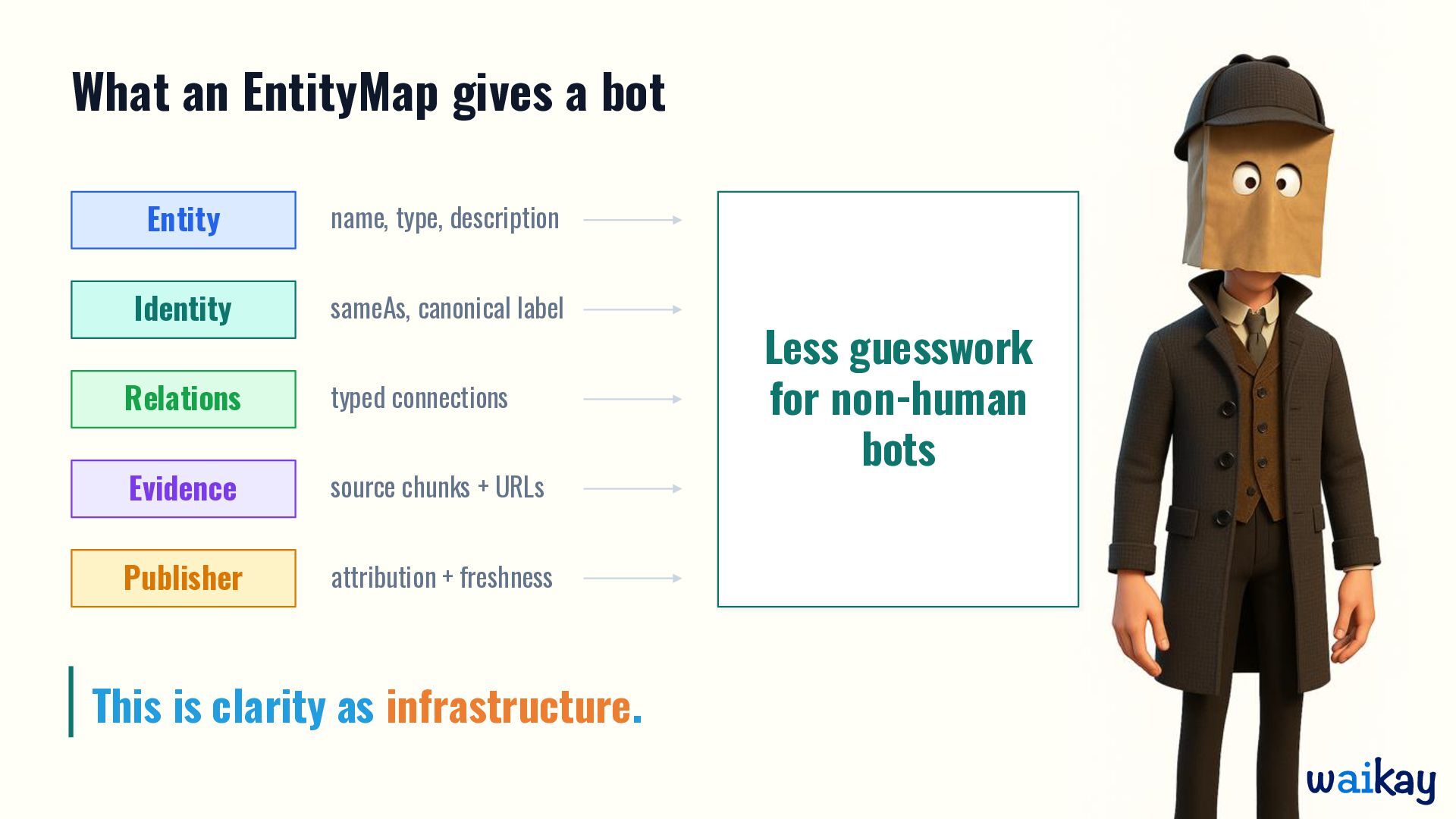
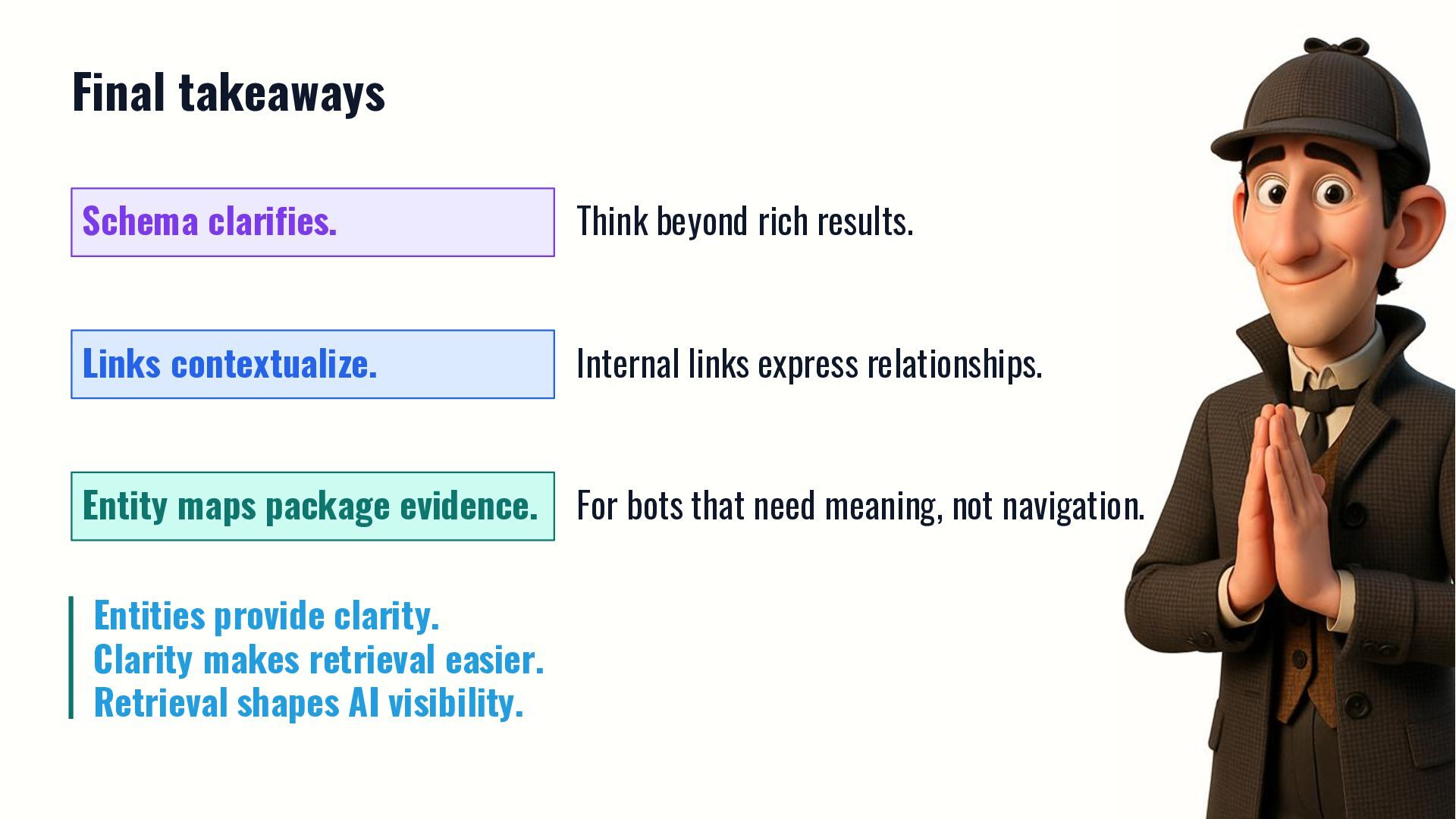
Internal links express relationships. Entity maps package evidence. For bots that need meaning, not navigation. Entities provide clarity. Clarity makes retrieval easier. Retrieval shapes AI visibility.
tools. They are a way to make context, relationships, and evidence easier for non-human systems to inspect (and understand) But don’t forget the humans ☺
tools. They are a way to make context, relationships, and evidence easier for non-human systems to inspect (and understand) But... don’t forget the humans ☺
tools. They are a way to make context, relationships, and evidence easier for non-human systems to inspect (and understand) But... don’t forget the humans ☺
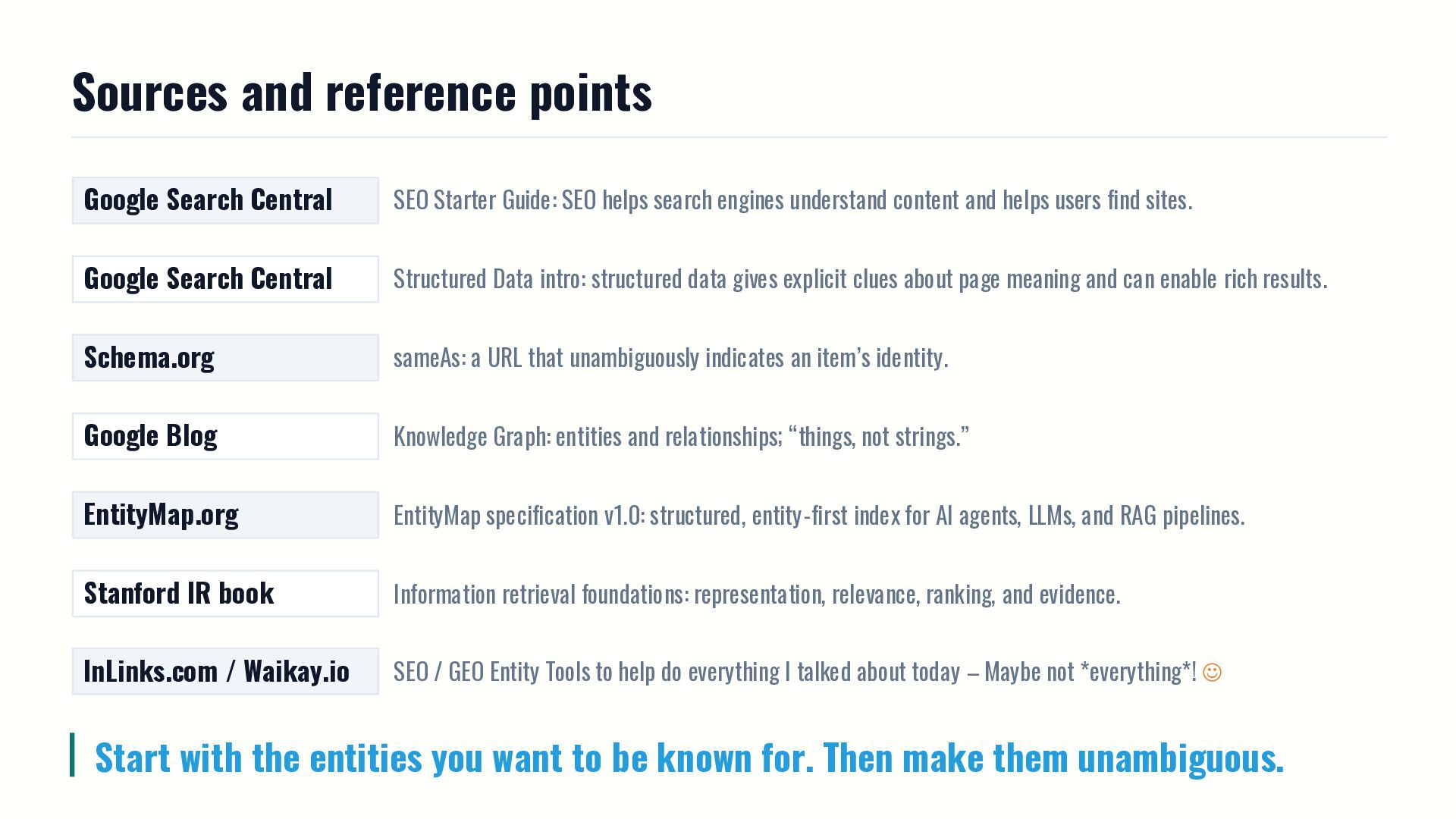
SEO helps search engines understand content and helps users find sites. Google Search Central Structured Data intro: structured data gives explicit clues about page meaning and can enable rich results. Schema.org sameAs: a URL that unambiguously indicates an item’s identity. Google Blog Knowledge Graph: entities and relationships; “things, not strings.” EntityMap.org EntityMap specification v1.0: structured, entity-first index for AI agents, LLMs, and RAG pipelines. Stanford IR book Information retrieval foundations: representation, relevance, ranking, and evidence. Start with the entities you want to be known for. Then make them unambiguous. InLinks.com / Waikay.io SEO / GEO Entity Tools to help do everything I talked about today – Maybe not *everything*! ☺


 simmonet
 tasky_ai
 dawnieando
 giuliapanozzo
 graydotco
 badams
 sophiebrannon
 decabbit
 whitworthseo
 speedyindexteam
 kizawa2020
 inesmontani
 aleyda
 aki_iinuma
 marktimemedia
 jnunemaker
 sabderemane
 lemiorhan
 sarafernandez
 bryan
bryan
 palkan
 caitiem20