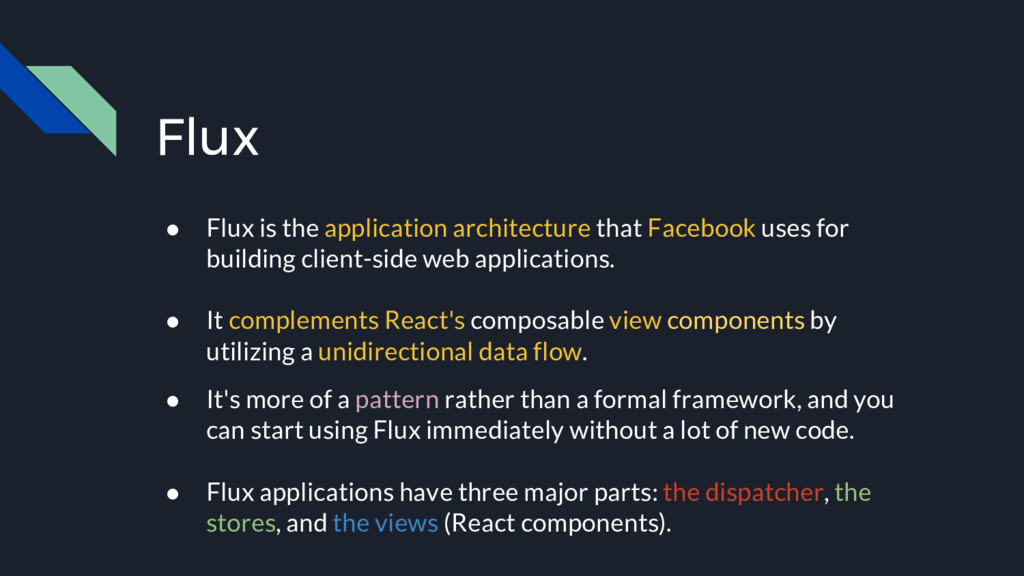
for building client-side web applications. • It complements React's composable view components by utilizing a unidirectional data flow. • It's more of a pattern rather than a formal framework, and you can start using Flux immediately without a lot of new code. • Flux applications have three major parts: the dispatcher, the stores, and the views (React components).
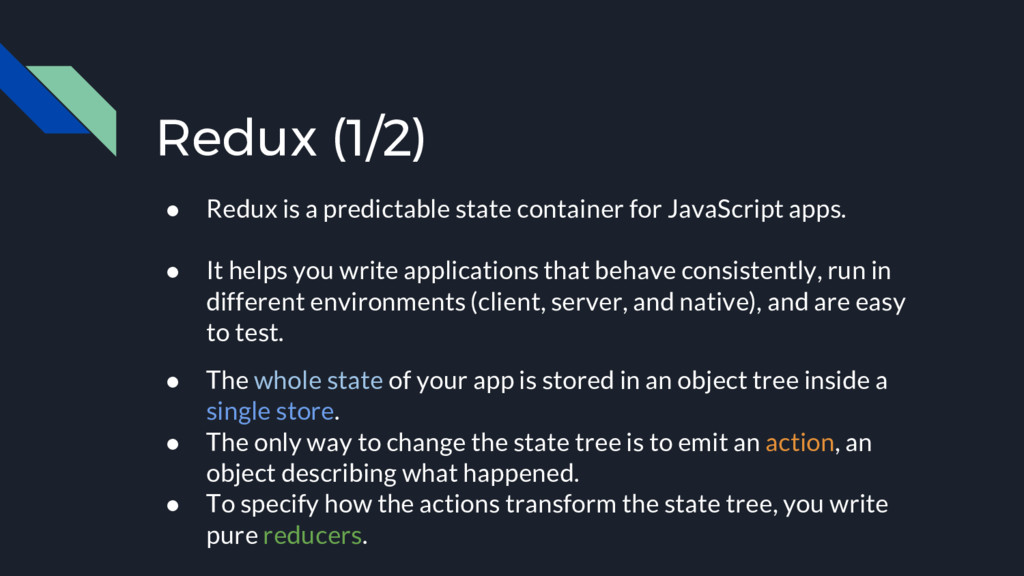
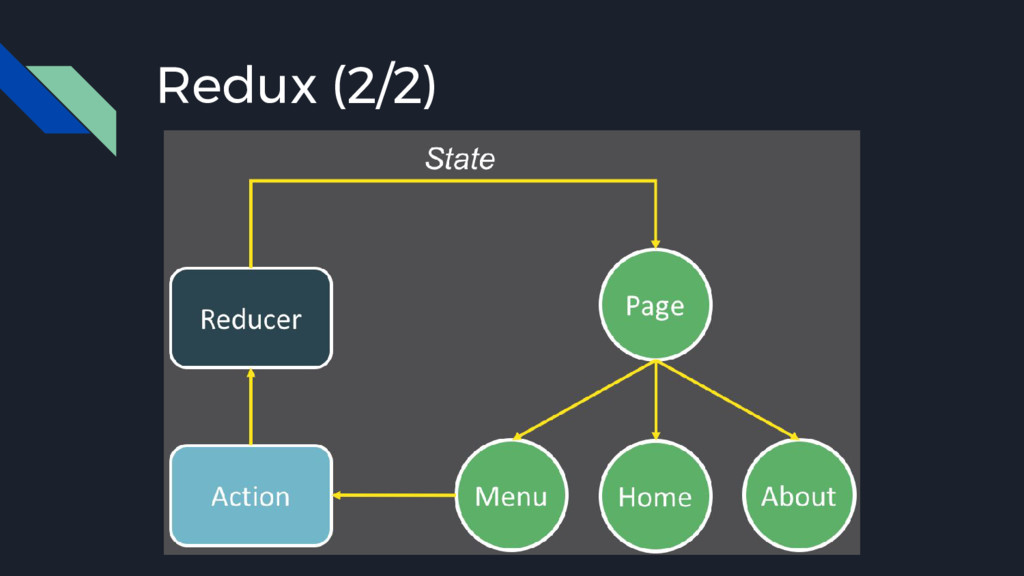
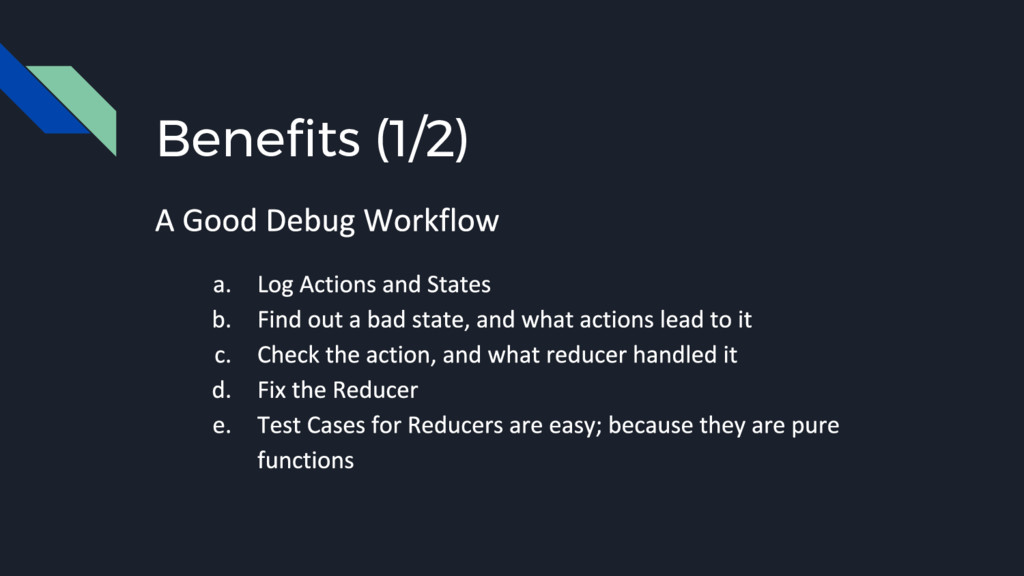
JavaScript apps. • It helps you write applications that behave consistently, run in different environments (client, server, and native), and are easy to test. • The whole state of your app is stored in an object tree inside a single store. • The only way to change the state tree is to emit an action, an object describing what happened. • To specify how the actions transform the state tree, you write pure reducers.
Redux library by Dan Abramov • ReduxKit stays as close as possible to Redux while bringing in Swift ways of doing things where appropriate. Aleksander Herforth Rendtslev - @arendtslev Karl Bowden - @karlbowden
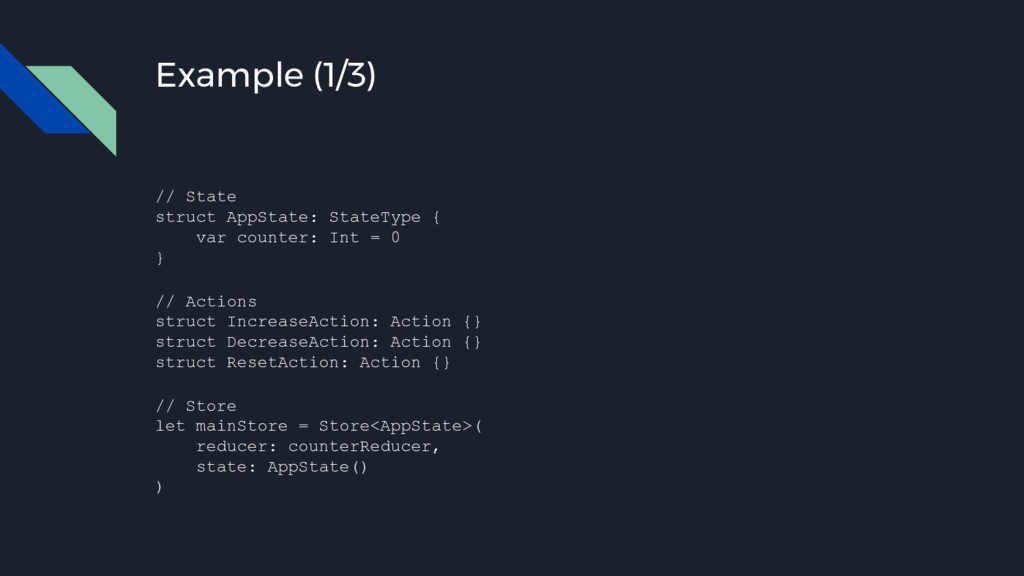
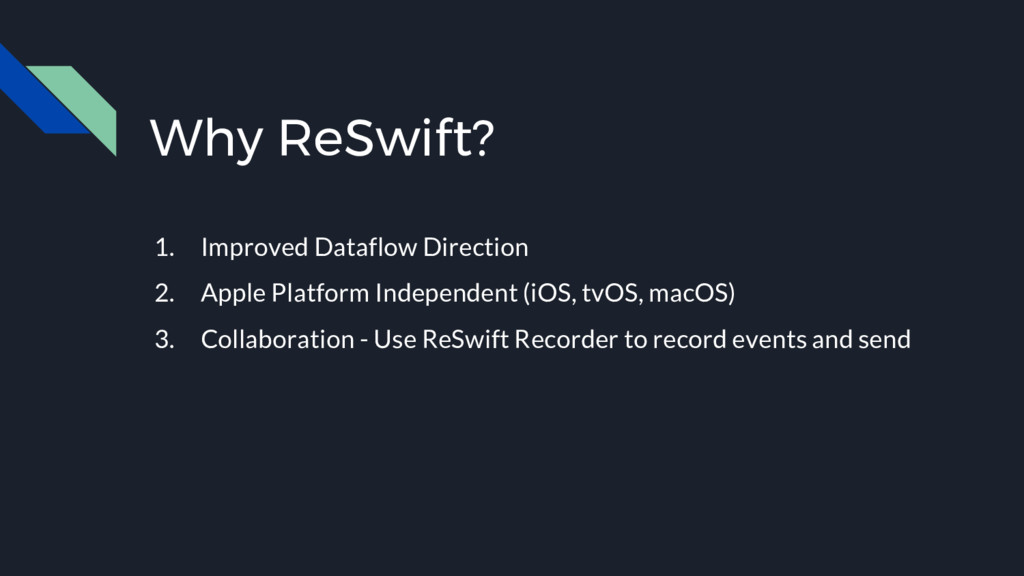
unidirectional data flow architecture in Swift. • It embraces a unidirectional data flow that only allows state mutations through declarative actions. Benjamin Encz - @benjaminencz
data flow architecture in Swift. https://github.com/ReSwift/ReSwift The ReSwift library is tiny - allowing users to dive into the code, understand every single line ReSwift helps you to separate three important concerns of your app's components:
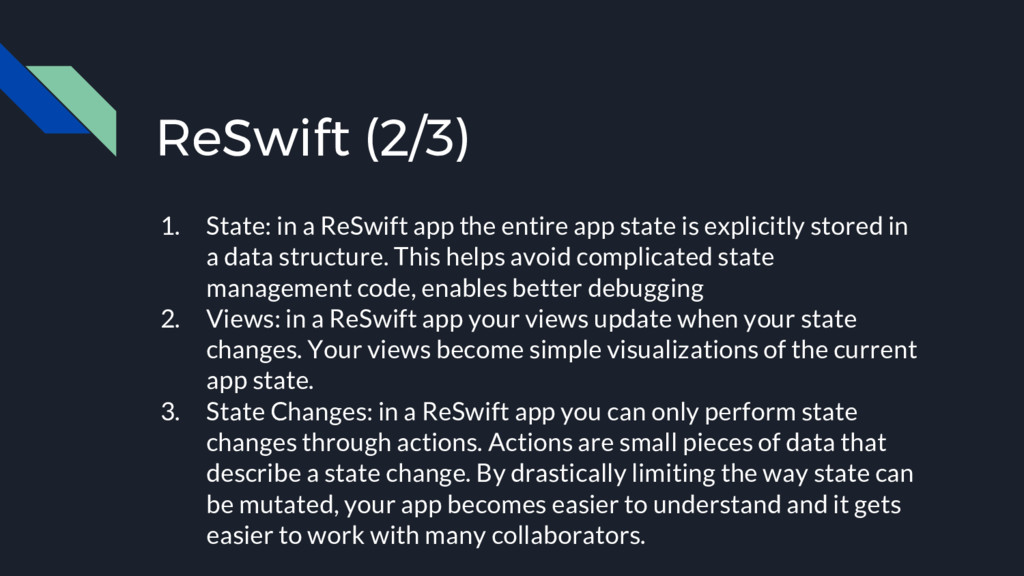
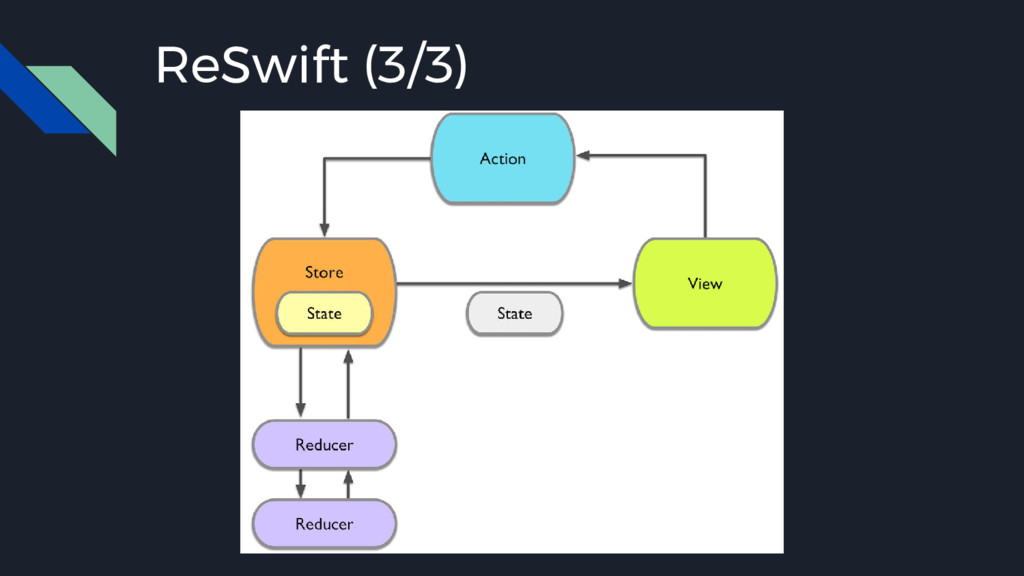
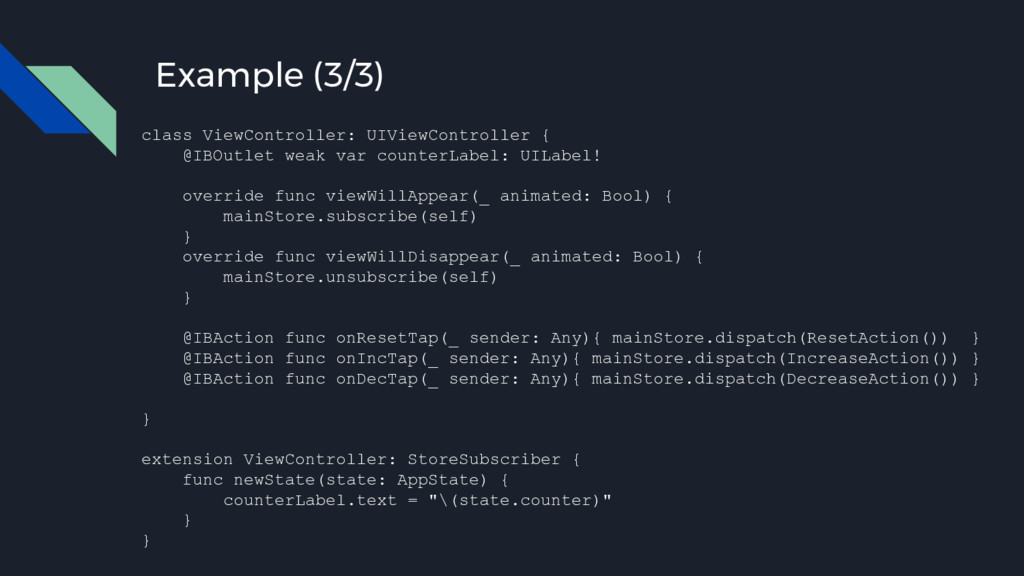
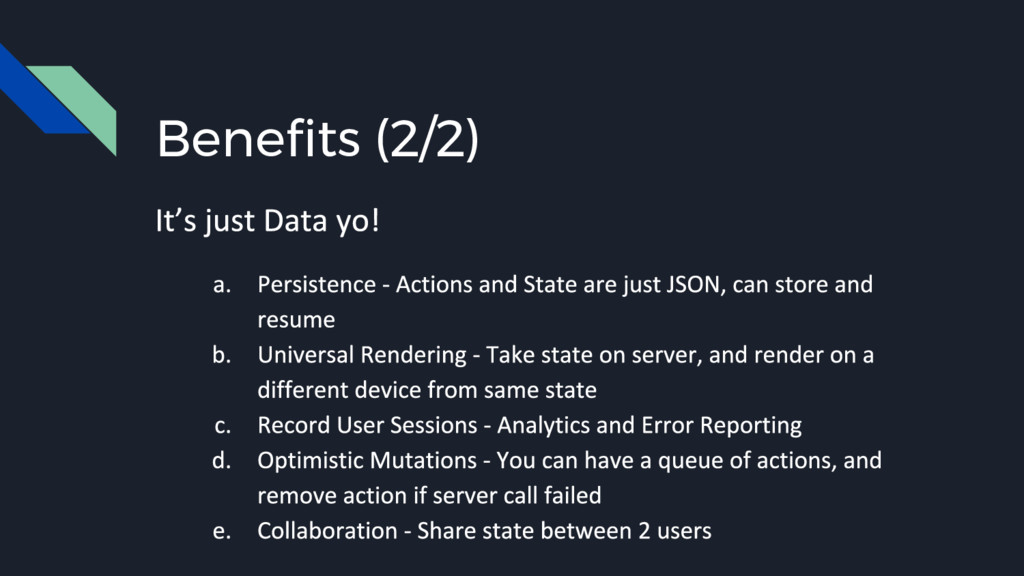
app state is explicitly stored in a data structure. This helps avoid complicated state management code, enables better debugging 2. Views: in a ReSwift app your views update when your state changes. Your views become simple visualizations of the current app state. 3. State Changes: in a ReSwift app you can only perform state changes through actions. Actions are small pieces of data that describe a state change. By drastically limiting the way state can be mutated, your app becomes easier to understand and it gets easier to work with many collaborators.
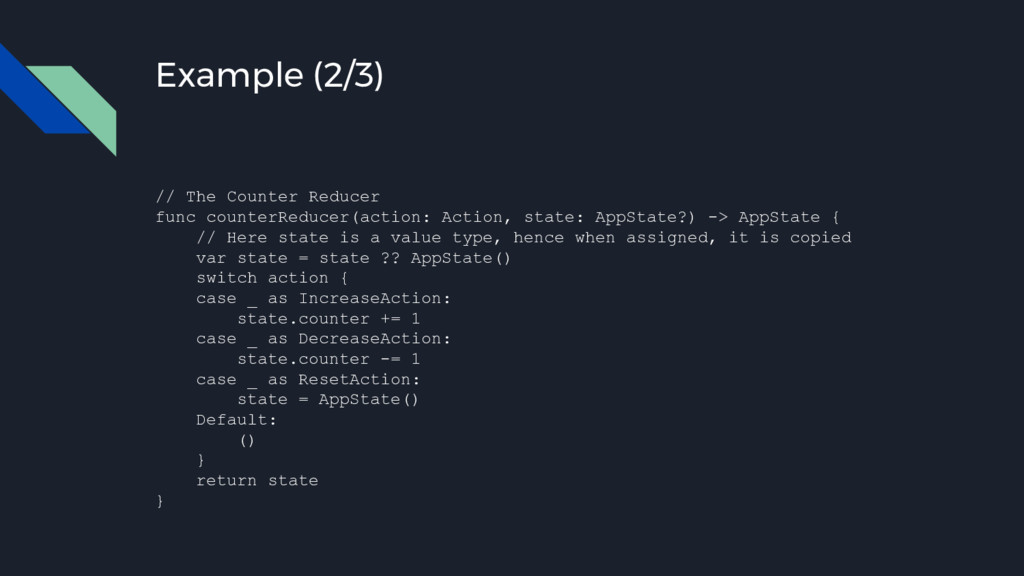
AppState?) -> AppState { // Here state is a value type, hence when assigned, it is copied var state = state ?? AppState() switch action { case _ as IncreaseAction: state.counter += 1 case _ as DecreaseAction: state.counter -= 1 case _ as ResetAction: state = AppState() Default: () } return state }

 SiteGround - Reliable hosting with speed, security, and support you can count on.


 swiftindia
 ueponx
 kmiya84377
 kizawa2020
.png) codatum
codatum
 torumakabe
 y0hgi
y0hgi
 sansantech
 y_sera15
 baseballyama
 kakakakakku
 maimyyym
 aoto
aoto
 codingconduct
 stephaniewalter
 speakerdeck
 tammyeverts
 asonas
 zakiyama
 thirion
 axbom
axbom
 greggifford
 tmiket
 badams
 jcasabona