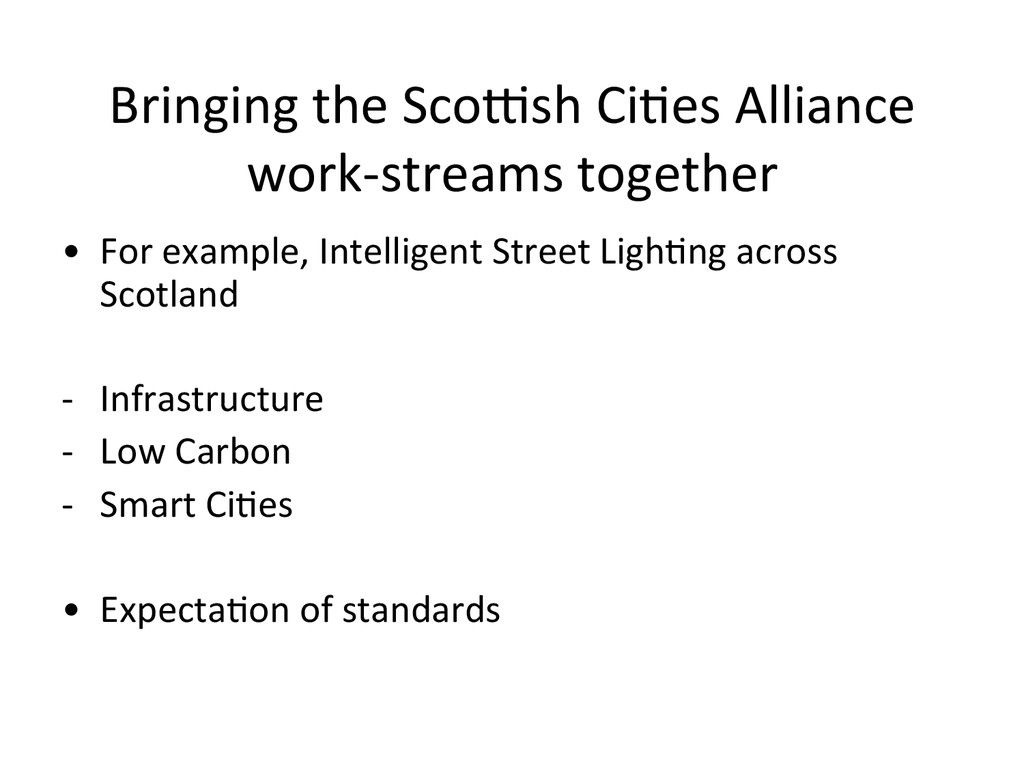
Sco$sh Ci*es Alliance? • Why collaborate? • City Investment Plans and City Deals • Smart Ci*es -‐ Smart Ci*es Readiness Self-‐Assessment -‐ The Plan -‐ Open Data ambi*ons • Bringing our Alliance work-‐streams together • Playing to Scotland’s advantage • Future City Glasgow
Agenda for Ci*es, December 2011 • Opera*onal Plan -‐ Infrastructure -‐ Low Carbon -‐ Smart Ci*es • Promo*ng Investment -‐ Provide a focal point for investors in ci*es -‐ Facilitate private and public sector investment -‐ Promote a consistent message about the benefits of inves*ng in Scotland’s ci*es
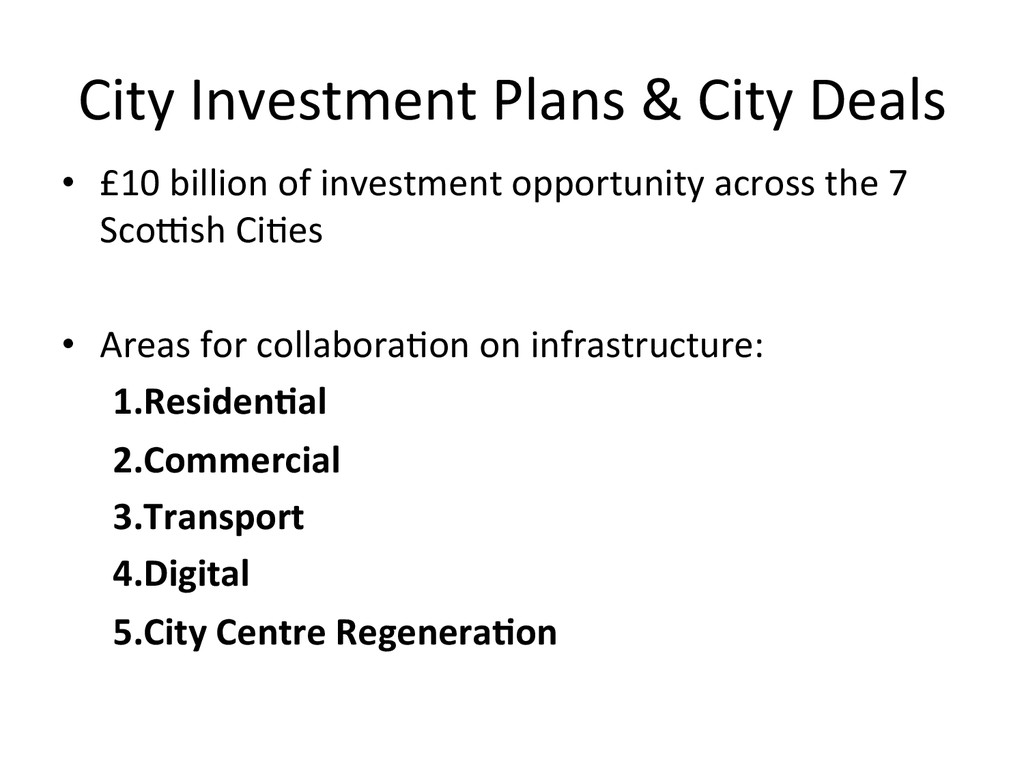
of investment opportunity across the 7 Sco$sh Ci*es • Areas for collabora*on on infrastructure: 1. Residen(al 2. Commercial 3. Transport 4. Digital 5. City Centre Regenera(on
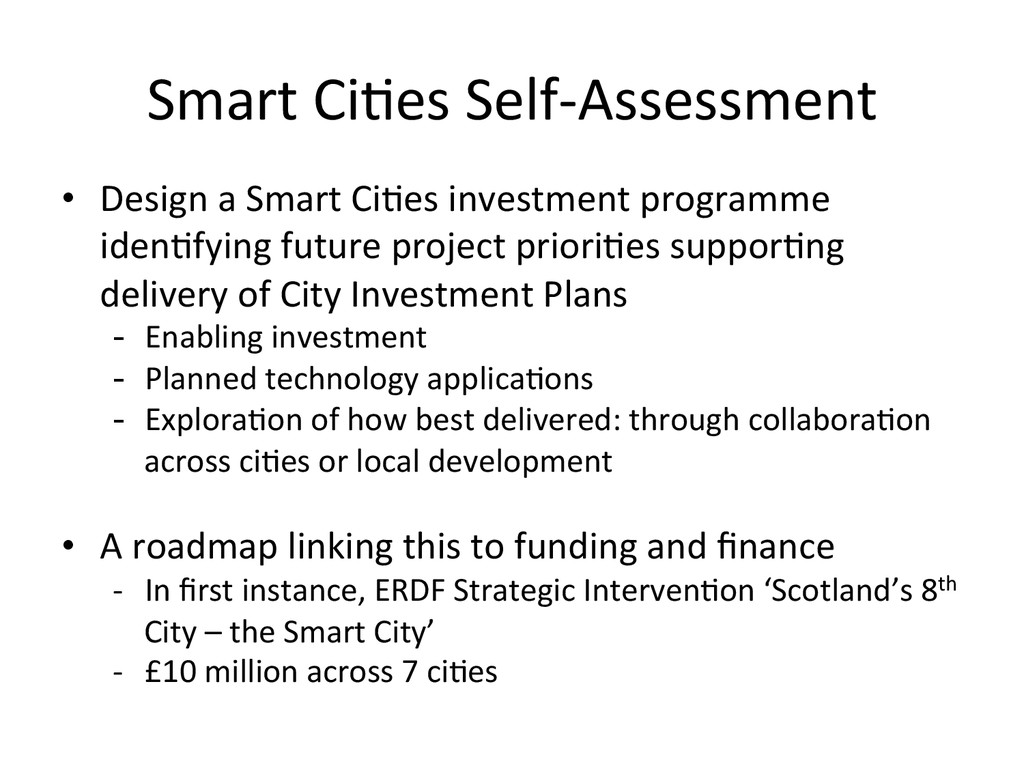
programme iden*fying future project priori*es suppor*ng delivery of City Investment Plans - Enabling investment - Planned technology applica*ons - Explora*on of how best delivered: through collabora*on across ci*es or local development • A roadmap linking this to funding and finance -‐ In first instance, ERDF Strategic Interven*on ‘Scotland’s 8th City – the Smart City’ -‐ £10 million across 7 ci*es
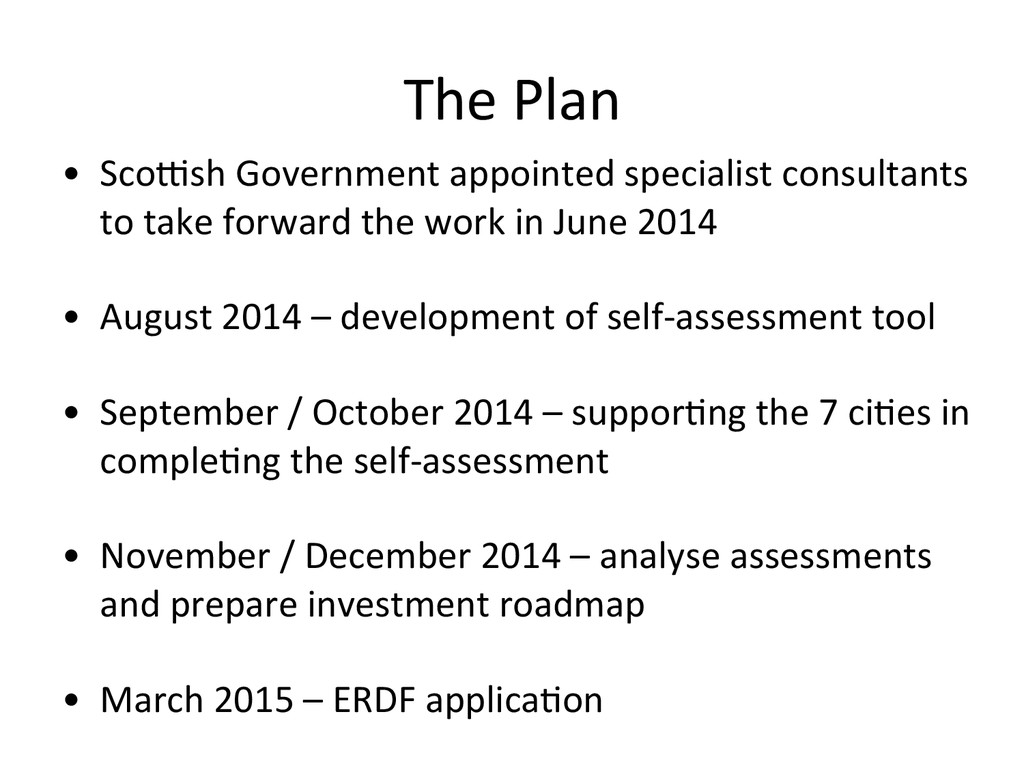
to take forward the work in June 2014 • August 2014 – development of self-‐assessment tool • September / October 2014 – suppor*ng the 7 ci*es in comple*ng the self-‐assessment • November / December 2014 – analyse assessments and prepare investment roadmap • March 2015 – ERDF applica*on
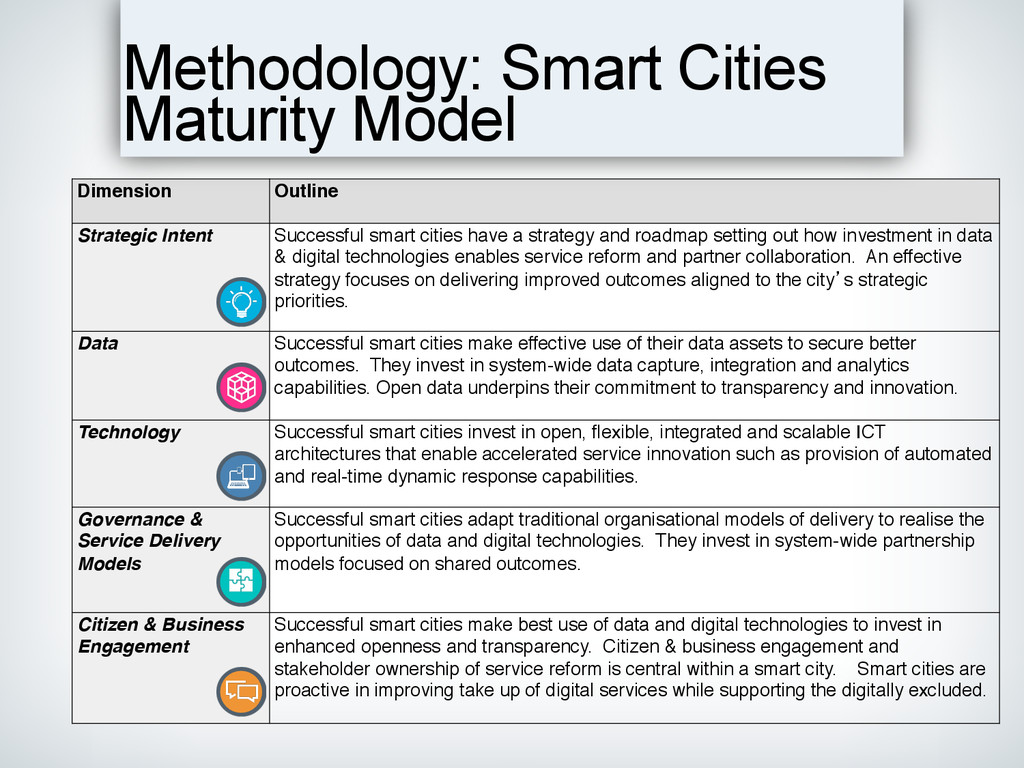
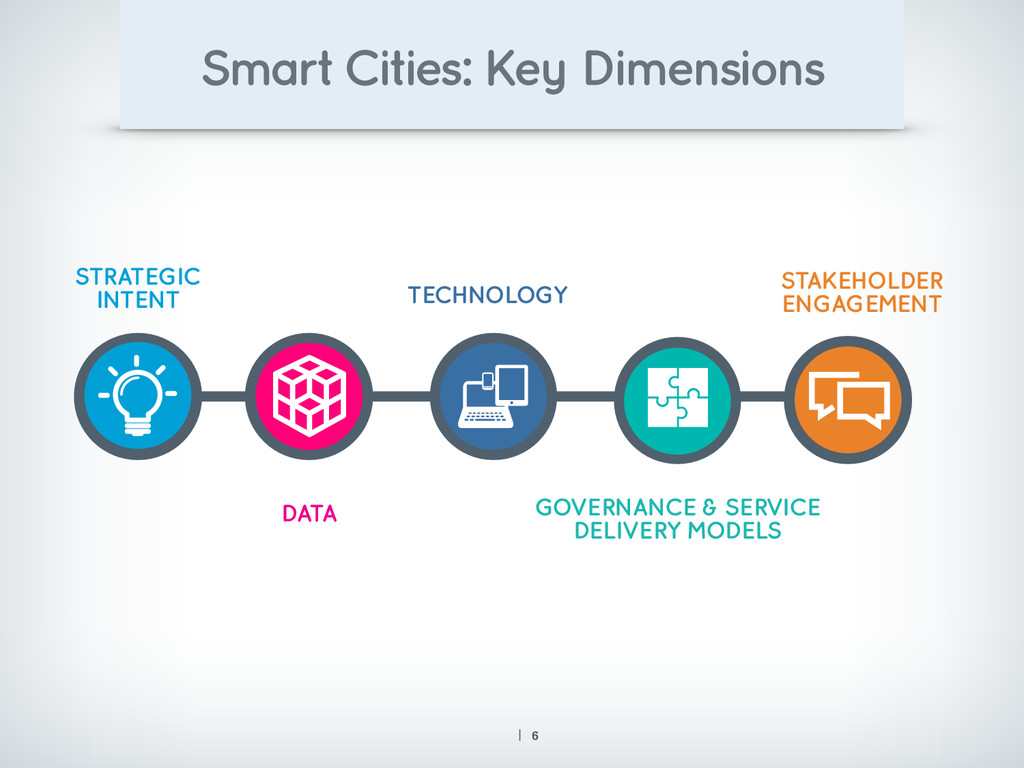
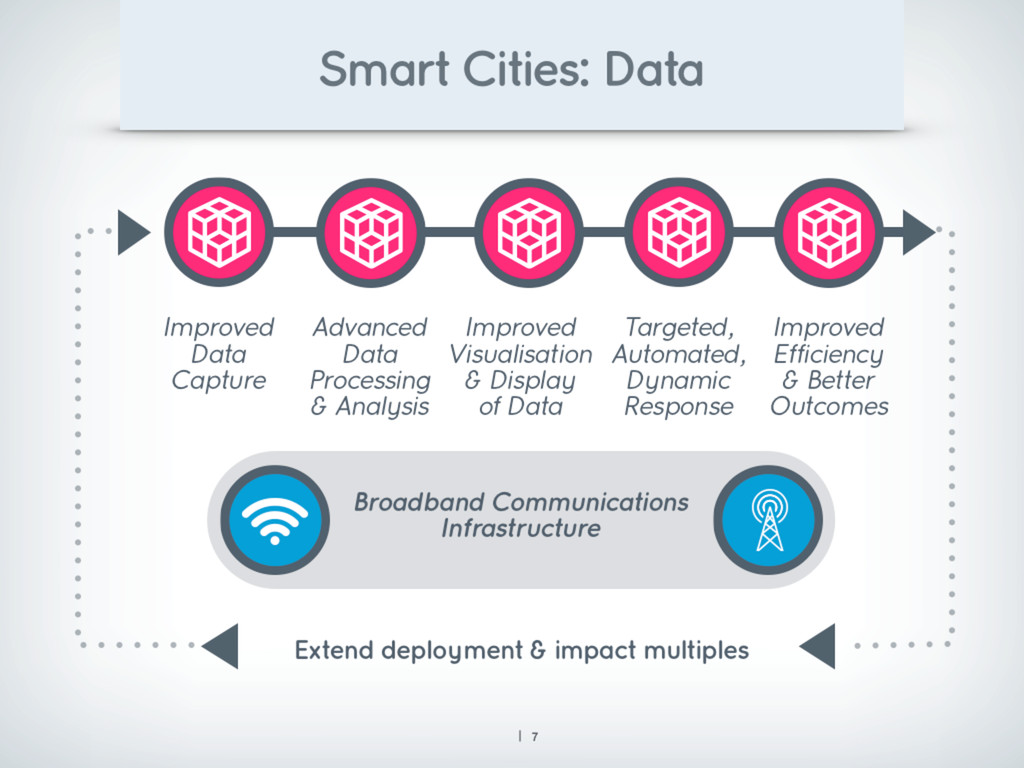
a strategy and roadmap setting out how investment in data & digital technologies enables service reform and partner collaboration. An effective strategy focuses on delivering improved outcomes aligned to the city’s strategic priorities." Data ! ! Successful smart cities make effective use of their data assets to secure better outcomes. They invest in system-wide data capture, integration and analytics capabilities. Open data underpins their commitment to transparency and innovation." " Technology ! ! Successful smart cities invest in open, flexible, integrated and scalable ICT architectures that enable accelerated service innovation such as provision of automated and real-time dynamic response capabilities." Governance & Service Delivery Models ! ! Successful smart cities adapt traditional organisational models of delivery to realise the opportunities of data and digital technologies. They invest in system-wide partnership models focused on shared outcomes." Citizen & Business Engagement ! ! Successful smart cities make best use of data and digital technologies to invest in enhanced openness and transparency. Citizen & business engagement and stakeholder ownership of service reform is central within a smart city. Smart cities are proactive in improving take up of digital services while supporting the digitally excluded." Methodology: Smart Cities Maturity Model
Open ‘System of Systems’ Smart City Status: Continuously adaptive city-wide ‘smart’ deployment Outcome: City-wide open ‘system of systems’ approach drives innovation that enhances city competitiveness City Mgt Status: Managed System Smart City Status: Technology and data enabled dynamic sense and response systems Outcome: Improved prediction, prevention and real-time response delivers improved outcomes Managed City Mgt Status: System Integration Smart City Status: Strategy led and outcome driven, enabled by system wide technology investment Outcome: Shared accountability for outcomes and joint system- wide investment programme Repeatable City Mgt Status: System Collaboration Smart City Status: Holistic system thinking and emergent sharing of data Outcome: Cross boundary partnerships emerging to focus on shared outcomes Ad Hoc City Mgt Status: Siloed Smart City Status: Operation focused digital and data driven service improvement Outcome: Capturing evidence and building business case Optimised Opportunistic 1 2 3 4 5
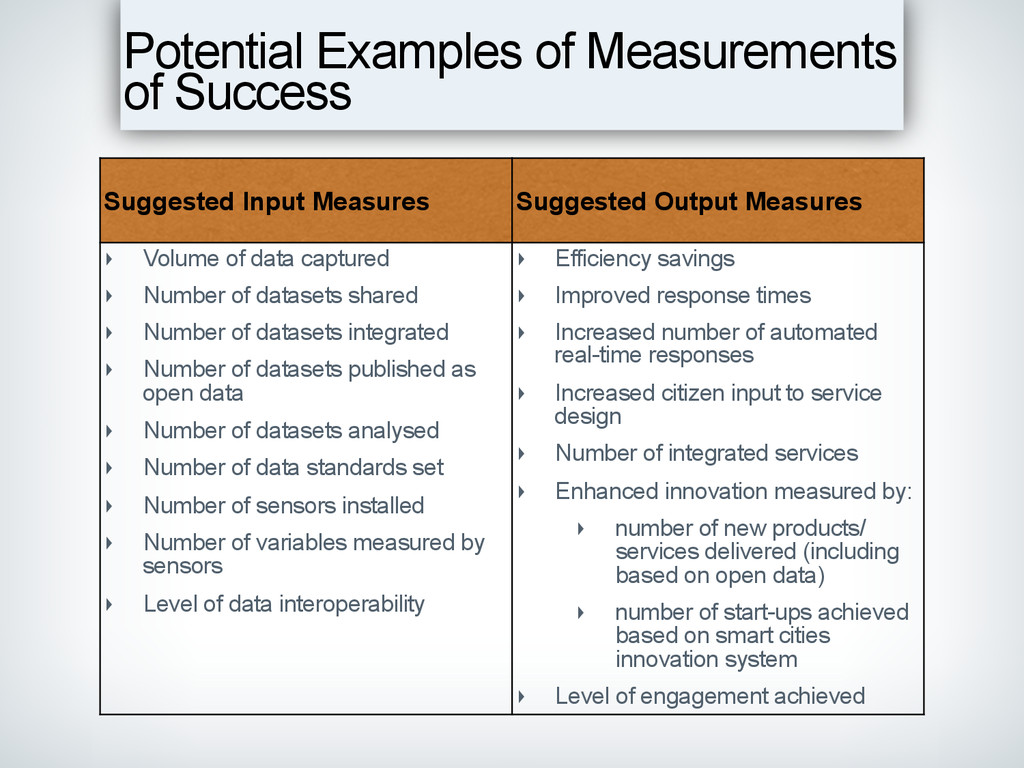
Output Measures ‣ Volume of data captured ‣ Number of datasets shared ‣ Number of datasets integrated ‣ Number of datasets published as open data ‣ Number of datasets analysed ‣ Number of data standards set ‣ Number of sensors installed ‣ Number of variables measured by sensors ‣ Level of data interoperability ‣ Efficiency savings ‣ Improved response times ‣ Increased number of automated real-time responses ‣ Increased citizen input to service design ‣ Number of integrated services ‣ Enhanced innovation measured by: ‣ number of new products/ services delivered (including based on open data) ‣ number of start-ups achieved based on smart cities innovation system ‣ Level of engagement achieved
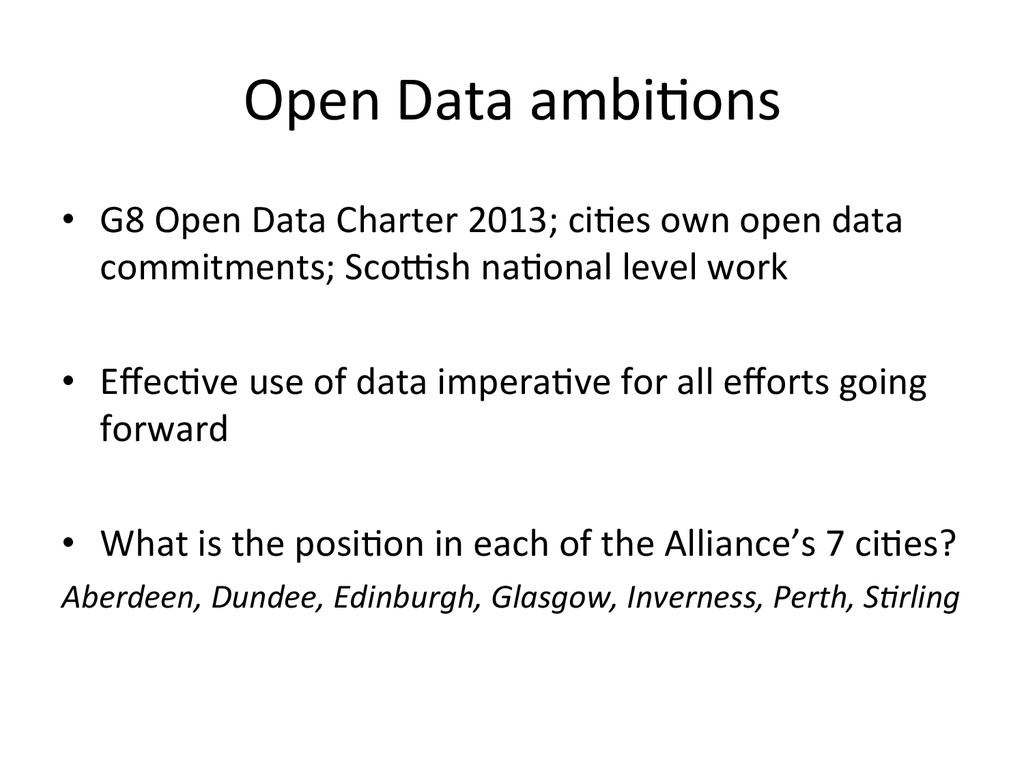
ci*es own open data commitments; Sco$sh na*onal level work • Effec*ve use of data impera*ve for all efforts going forward • What is the posi*on in each of the Alliance’s 7 ci*es? Aberdeen, Dundee, Edinburgh, Glasgow, Inverness, Perth, S2rling
alignment, collabora*on and inclusiveness • Allowing shared learning between Sco$sh ci*es – achieving scale, bigger market for roll out of solu*ons, increasing aerac*veness of Sco$sh ci*es as partners • Encourage concentra*on of funding at Sco$sh, UK and EU level around major, common priori*es • Investment planning process allows longer term, strategic mapping of appropriate opportuni*es against key projects and ambi*ons
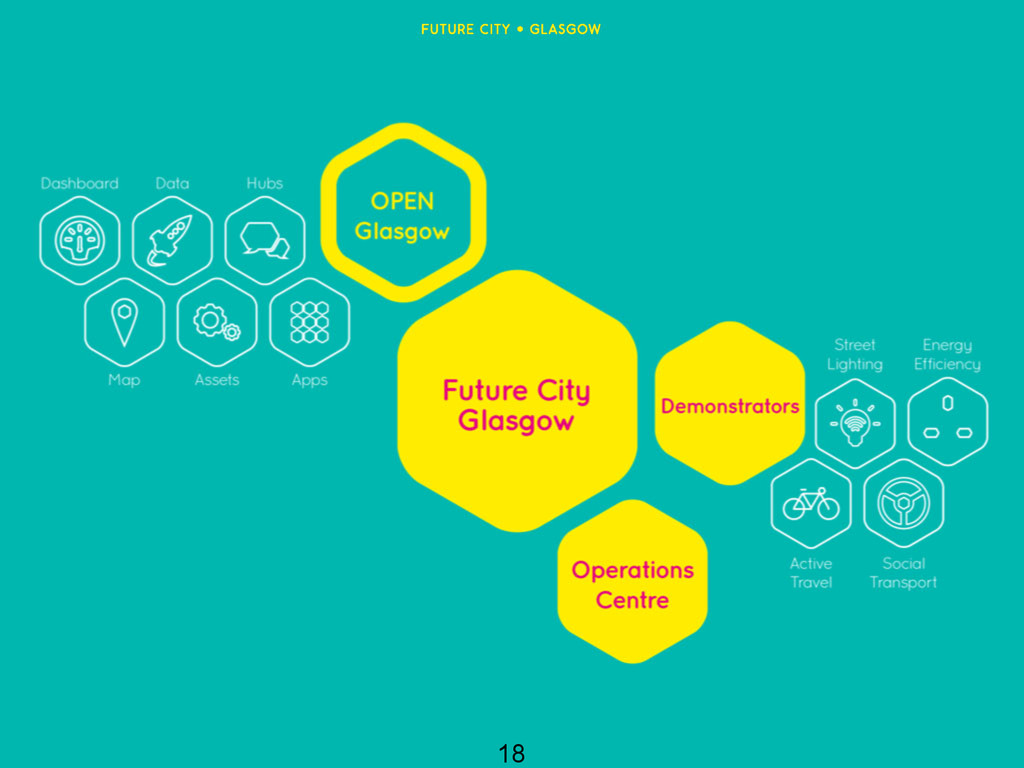
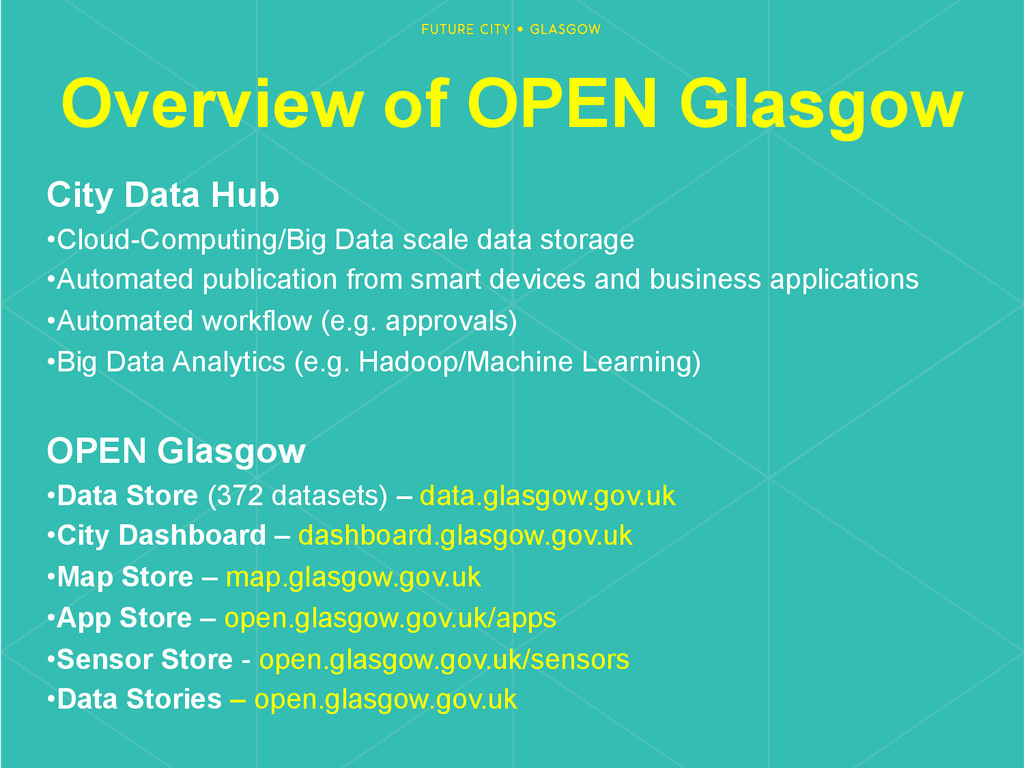
data storage • Automated publication from smart devices and business applications • Automated workflow (e.g. approvals) • Big Data Analytics (e.g. Hadoop/Machine Learning) OPEN Glasgow • Data Store (372 datasets) – data.glasgow.gov.uk • City Dashboard – dashboard.glasgow.gov.uk • Map Store – map.glasgow.gov.uk • App Store – open.glasgow.gov.uk/apps • Sensor Store - open.glasgow.gov.uk/sensors • Data Stories – open.glasgow.gov.uk
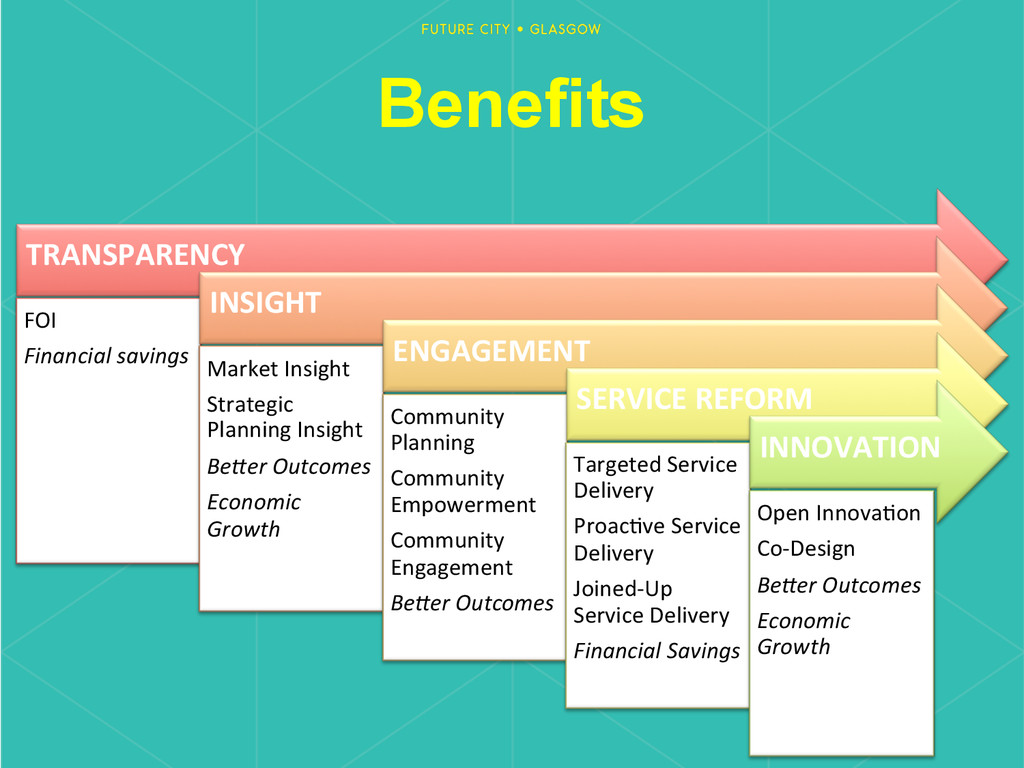
Market Insight Strategic Planning Insight BeKer Outcomes Economic Growth ENGAGEMENT Community Planning Community Empowerment Community Engagement BeKer Outcomes SERVICE REFORM Targeted Service Delivery Proac*ve Service Delivery Joined-‐Up Service Delivery Financial Savings INNOVATION Open Innova*on Co-‐Design BeKer Outcomes Economic Growth


 swirrl
 willnet
 tetsuya28
 odashi
 kakehashi
 carta_engineering
 glaforge
 codmoninc
 kizawa2020
 onk
onk
 akitoshiga
 gogutan
 mhrtech
 minecr
 axbom
axbom
 mclloyd
 davetheseo
 denniskardys
 addyosmani
 mkilby
 deanohume
 nmsamuel
 mayatellez
 tonyrice
 orderedlist