Upgrade to Pro
— share decks privately, control downloads, hide ads and more …
Speaker Deck
Features
Speaker Deck
PRO
Sign in
Sign up for free
Search
Search
Ruby: Dicas & Truques
Search
Nando Vieira
July 07, 2012
Technology
1.4k
20
Share
Ruby: Dicas & Truques
Nando Vieira
July 07, 2012
More Decks by Nando Vieira
See All by Nando Vieira
Permanecendo Relevante
fnando
9
1.5k
O que mudou no Rails 5
fnando
3
580
Porque usar PostgreSQL (Se você ainda não o faz)
fnando
25
3.1k
Criando aplicações web mais seguras
fnando
4
700
Criando aplicações mais fáceis de manter com Ruby on Rails
fnando
35
2.1k
Conhecendo Variants do Rails 4.1
fnando
11
600
JavaScript Funcional
fnando
36
1.8k
Segurança em Aplicações Web
fnando
31
3.1k
Segurança no Rails
fnando
20
970
Other Decks in Technology
See All in Technology
Unlocking the Apps
pimterry
0
160
AI Engineering Summit Tokyo 2026 AIの前に、やることがある 〜医療データ企業の4フェーズ〜
dtaniwaki
0
450
AI-DLCを活用した高品質・安全なAI駆動開発実践 / AI Driven Development
yoshidashingo
1
300
Platform engineering for developers, architects & the rest of us (AI agents)
danielbryantuk
0
170
AI フレンドリーなエラー監視を TypeScript で実現する
shinyaigeek
2
210
Java正規表現エンジン(NFA)の仕組みと パフォーマンスを維持するための最適化手法
takeuchi_132917
0
170
チームで実践する AI-DLC 思考の軌跡を残すチェックポイント設計
belongadmin
0
1.2k
エンジニアは生成AIと どのように向き合うべきか? ことばの意味という観点から
verypluming
3
320
JJUG CCC 2026 Spring AI時代の開発こそ標準化を武器に! ― 方式・プロセス・プラットフォームの標準化
s27watanabe
2
660
Databricks 月刊サービスアップデート 2026年05月号
tyosi1212
0
190
実装は速くなった、レビューはどうする? ― 自身のレビューをAIで再現させるサーヴァントエンジニアリングのすゝめ / Implementation got faster. So what about reviews? — An invitation to Servant Engineering: Recreating your own code reviews with AI
nrslib
2
690
GoとSIMDとWasmの今。
askua
3
450
Featured
See All Featured
Building an army of robots
kneath
306
46k
Navigating Team Friction
lara
192
16k
Prompt Engineering for Job Search
mfonobong
0
330
Hiding What from Whom? A Critical Review of the History of Programming languages for Music
tomoyanonymous
2
840
Ten Tips & Tricks for a 🌱 transition
stuffmc
0
120
Rails Girls Zürich Keynote
gr2m
96
14k
Data-driven link building: lessons from a $708K investment (BrightonSEO talk)
szymonslowik
1
1.1k
Believing is Seeing
oripsolob
1
140
What does AI have to do with Human Rights?
axbom
PRO
1
2.2k
Evolution of real-time – Irina Nazarova, EuRuKo, 2024
irinanazarova
9
1.4k
What Being in a Rock Band Can Teach Us About Real World SEO
427marketing
0
240
The Myth of the Modular Monolith - Day 2 Keynote - Rails World 2024
eileencodes
28
3.5k
Transcript
DICAS & TRUQUES RUBY Nando Vieira hellobits.com
@fnando
None
None
None
DICAS E TRUQUES CURIOSOS QUE PODEM SER ÚTEIS (OU NÃO)
NO DIA-A-DIA.
None
No Ruby, tudo é objeto (ou quase tudo).
Classes, módulos, números, strings, arrays, intervalos, símbolos, métodos, blocos, procs,
nil, booleanos, hashes, expressões regulares.
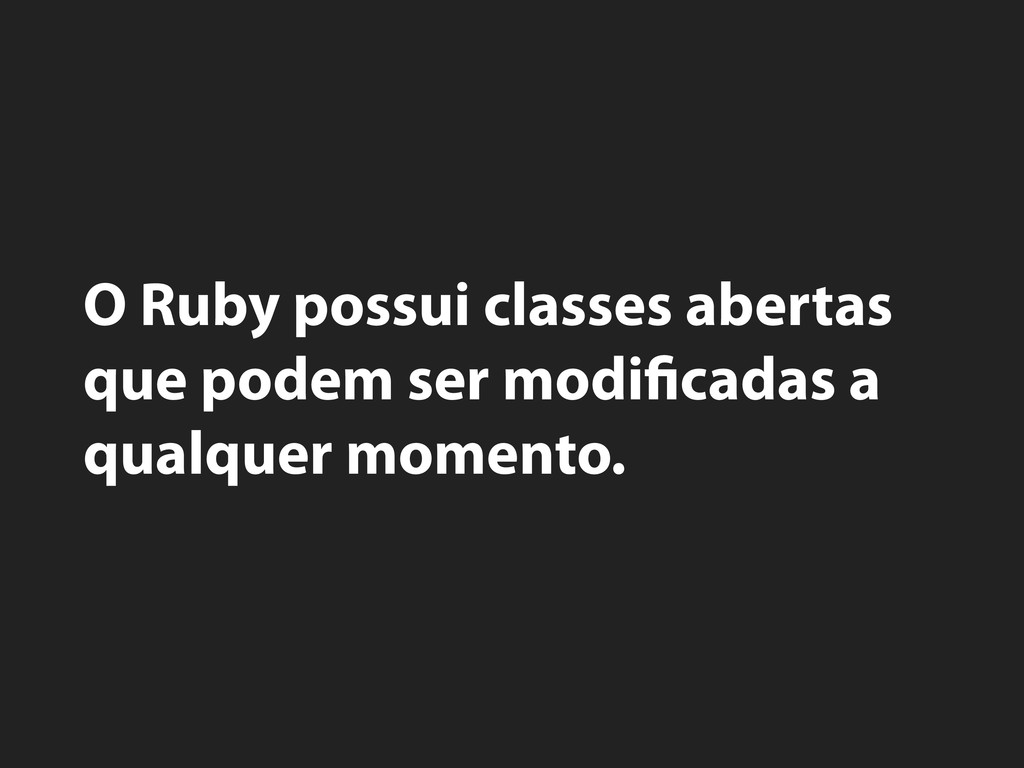
O Ruby possui classes abertas que podem ser modi cadas
a qualquer momento.
O Ruby é extremamente exível.
O Ruby é muito mais difícil do que as pessoas
assumem.
DUCK TYPING, PROTOCOLOS E CONTRATOS
O Duck Typing permite estabelecer interfaces com um contrato informal.
class SimpleLogger def initialize(storage = []) unless storage.is_a?(Array) raise "you
need to pass an array" end @storage = storage end def log(message) @storage << message end end
def initialize(storage = []) unless storage.is_a?(Array) raise "you need to
pass an array" end @storage = storage end
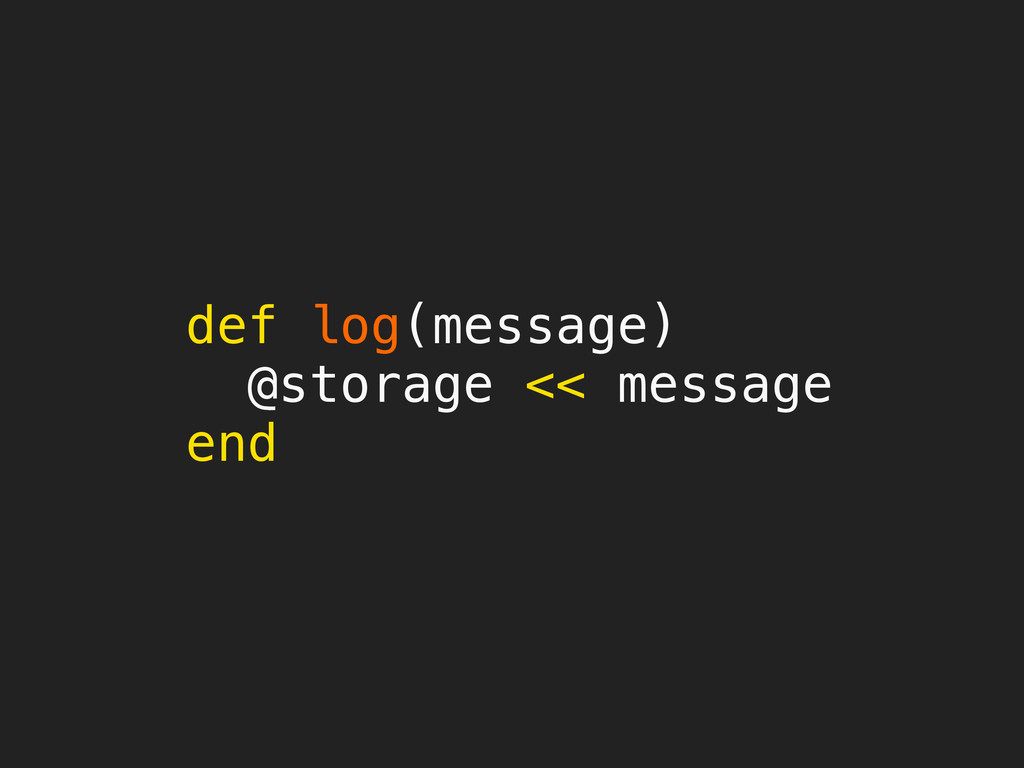
def log(message) @storage << message end
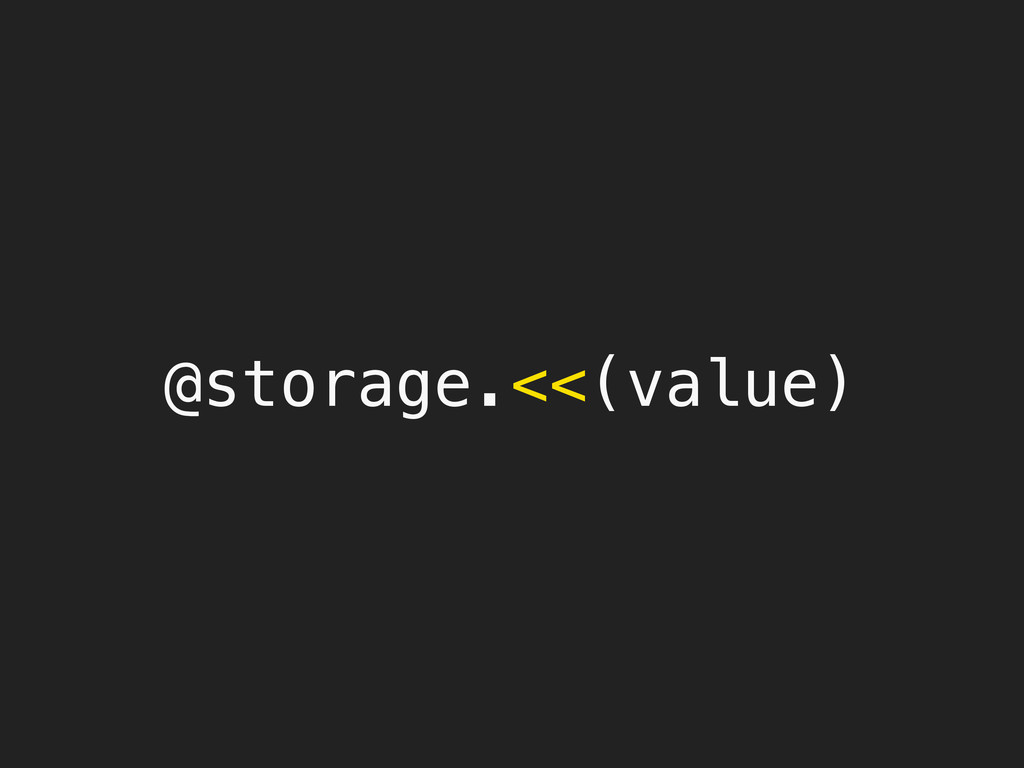
@storage.<<(value)
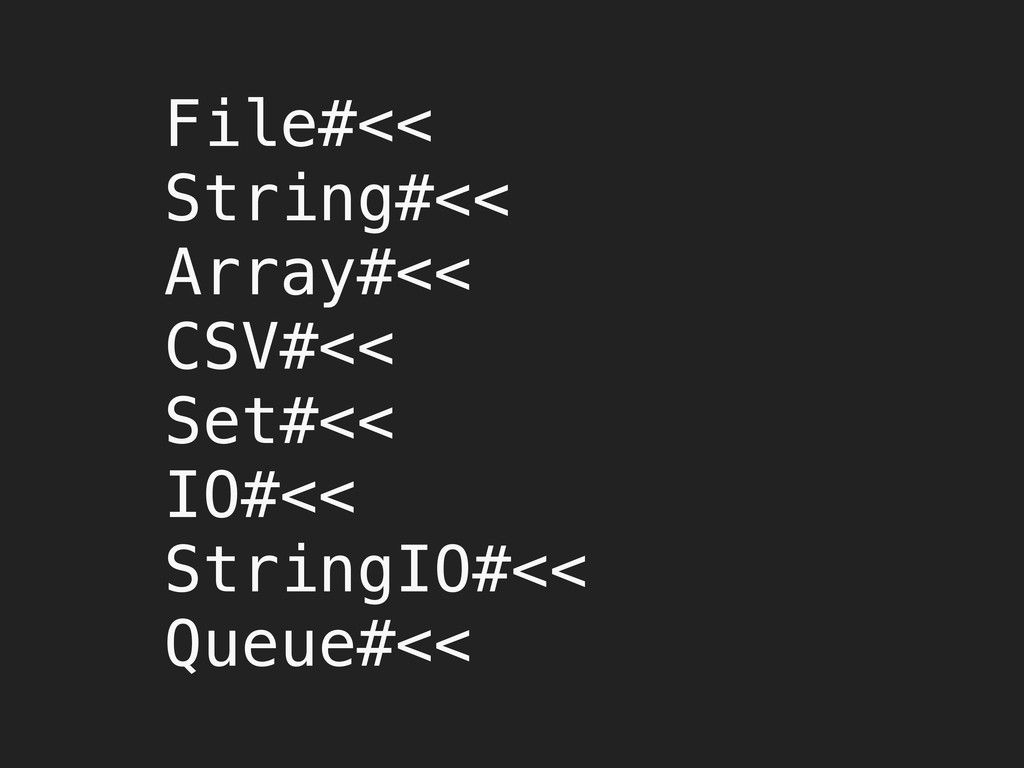
File#<< String#<< Array#<< CSV#<< Set#<< IO#<< StringIO#<< Queue#<<
class SimpleLogger def initialize(storage = []) @storage = storage end
def log(message) @storage << message end end
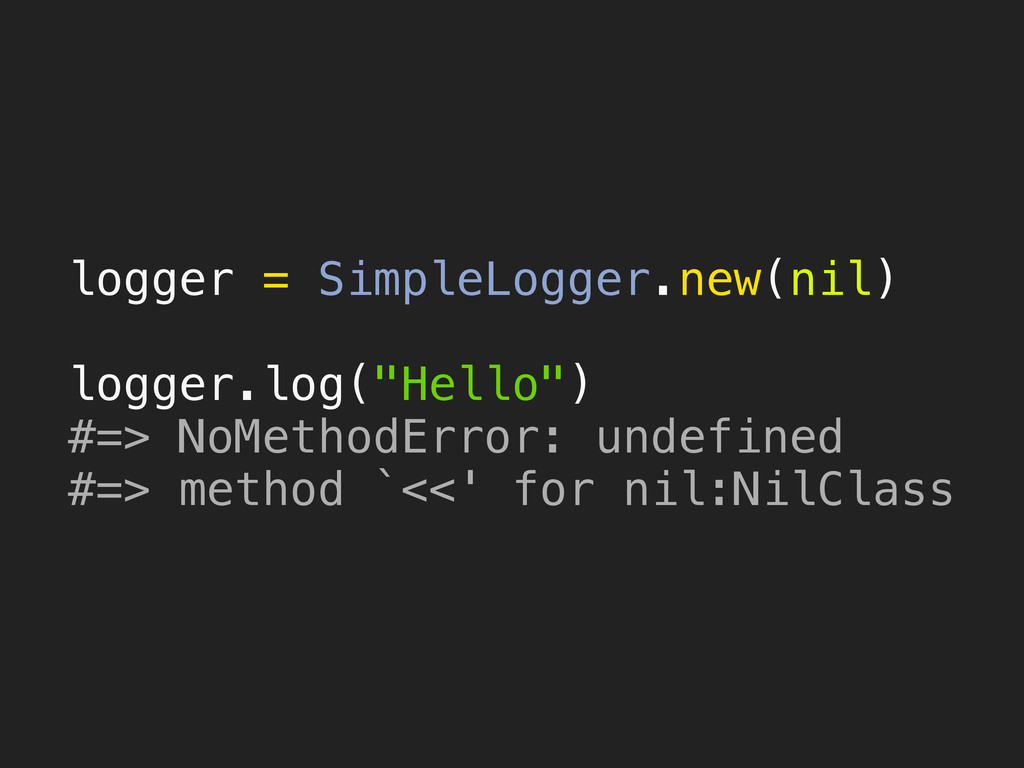
logger = SimpleLogger.new(nil) logger.log("Hello") #=> NoMethodError: undefined #=> method `<<'
for nil:NilClass
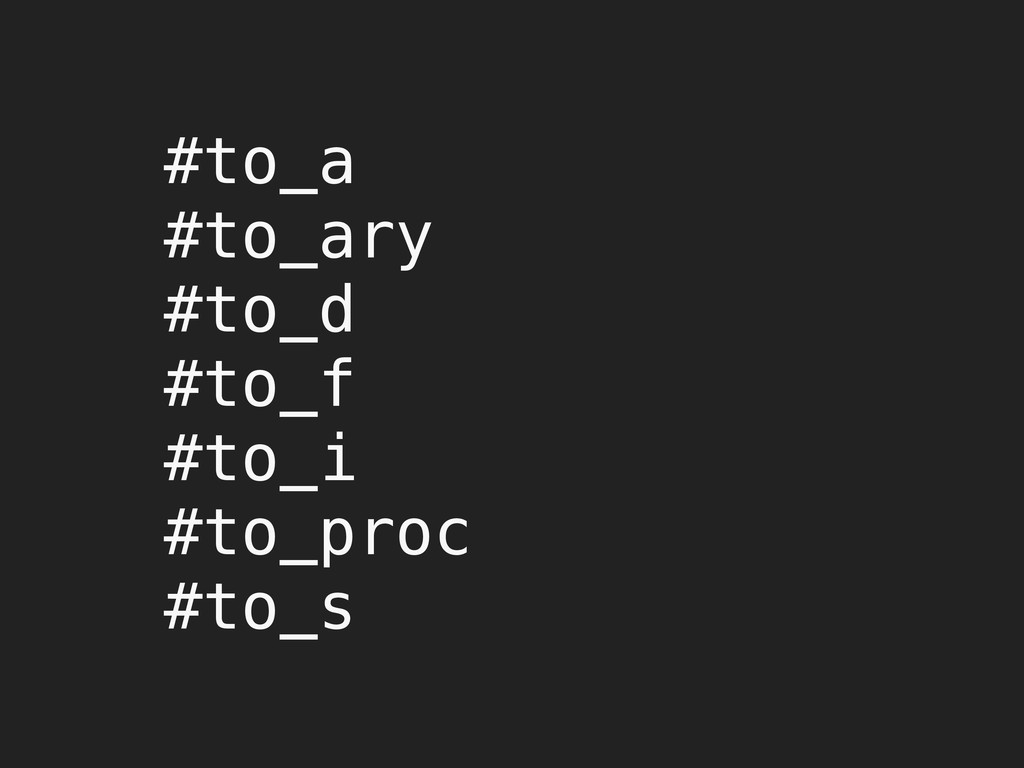
O Ruby leva o Duck Typing por toda a linguagem,
usando-o como protocolo de coersão.
#to_a #to_ary #to_d #to_f #to_i #to_proc #to_s
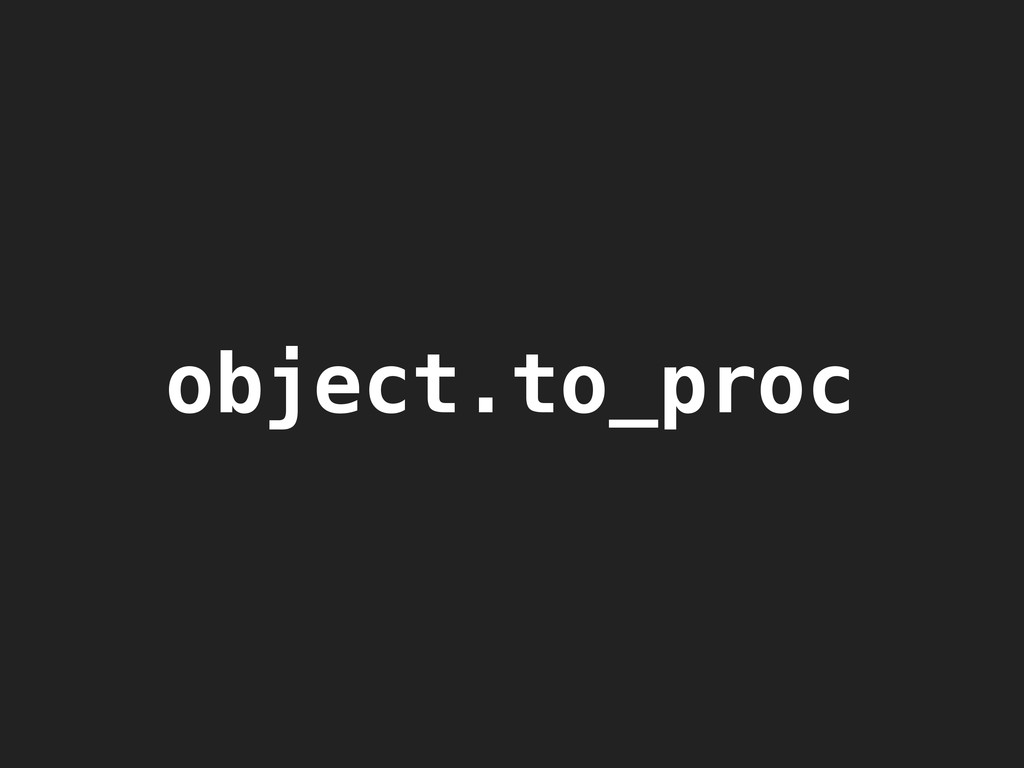
#to_proc
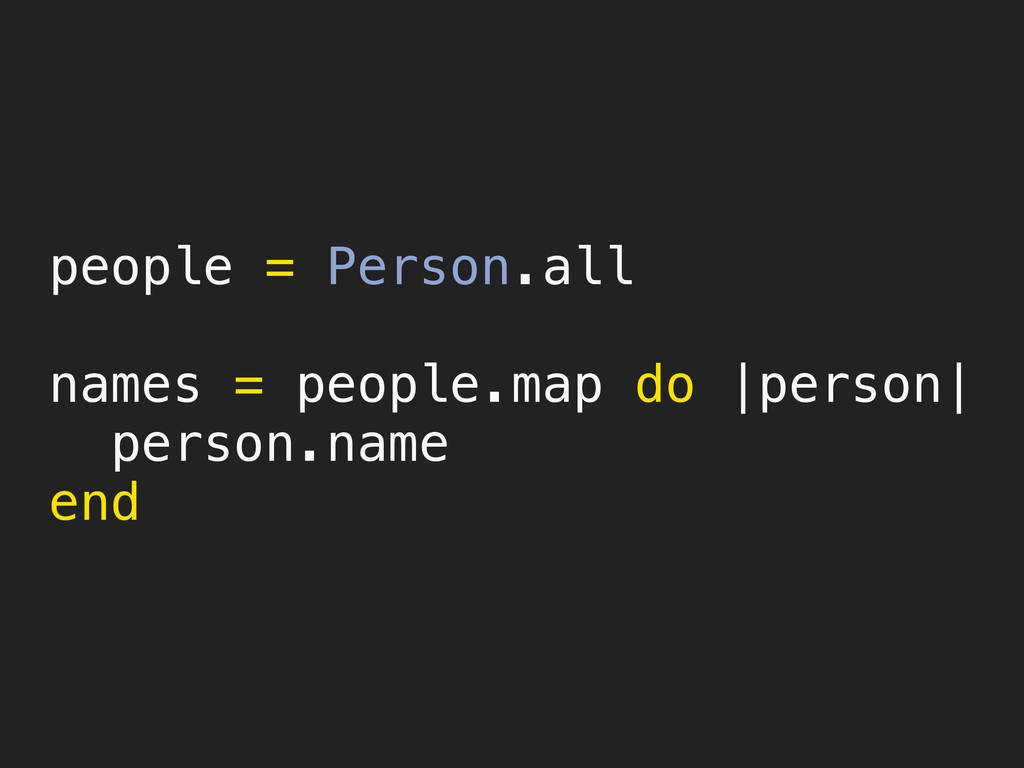
people = Person.all names = people.map do |person| person.name end
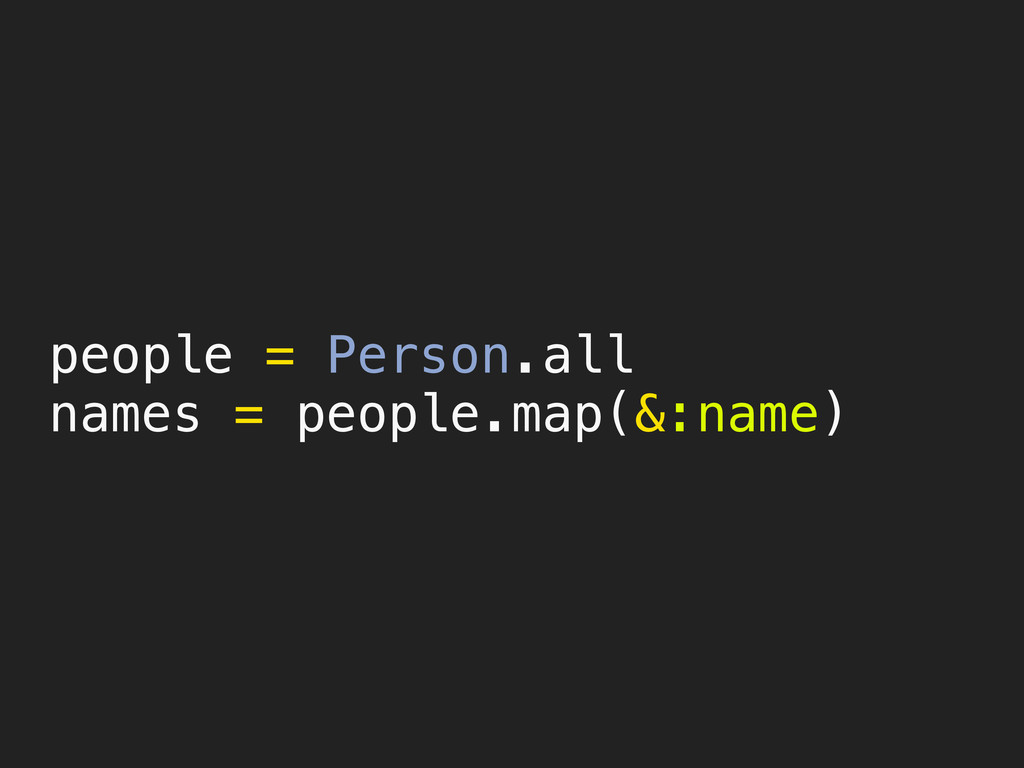
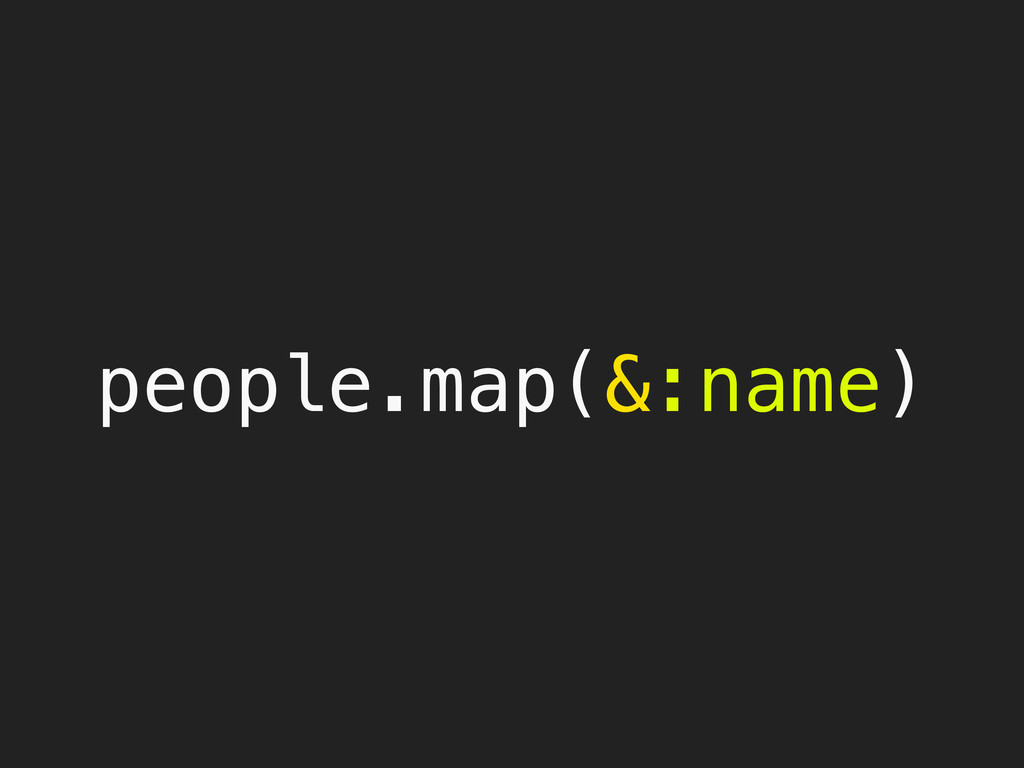
people = Person.all names = people.map(&:name)
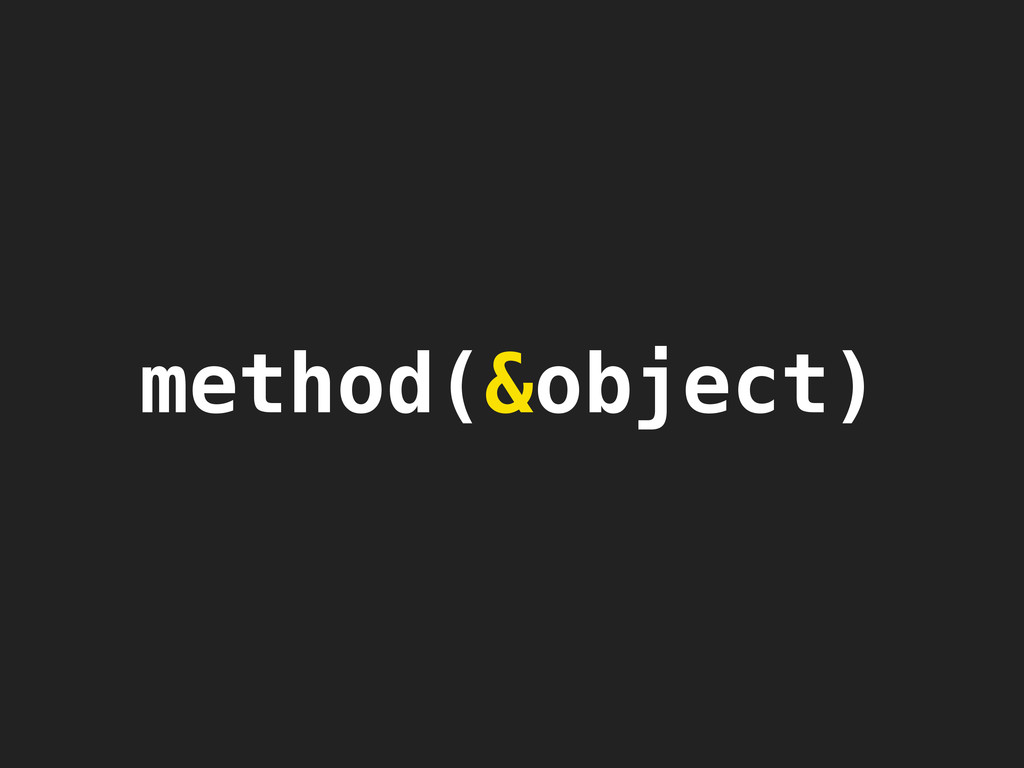
&Na assinatura do método, converte bloco em Proc.
&Na chamada do método, converte Proc em bloco.
method(&object)
object.to_proc
people.map(&:name)
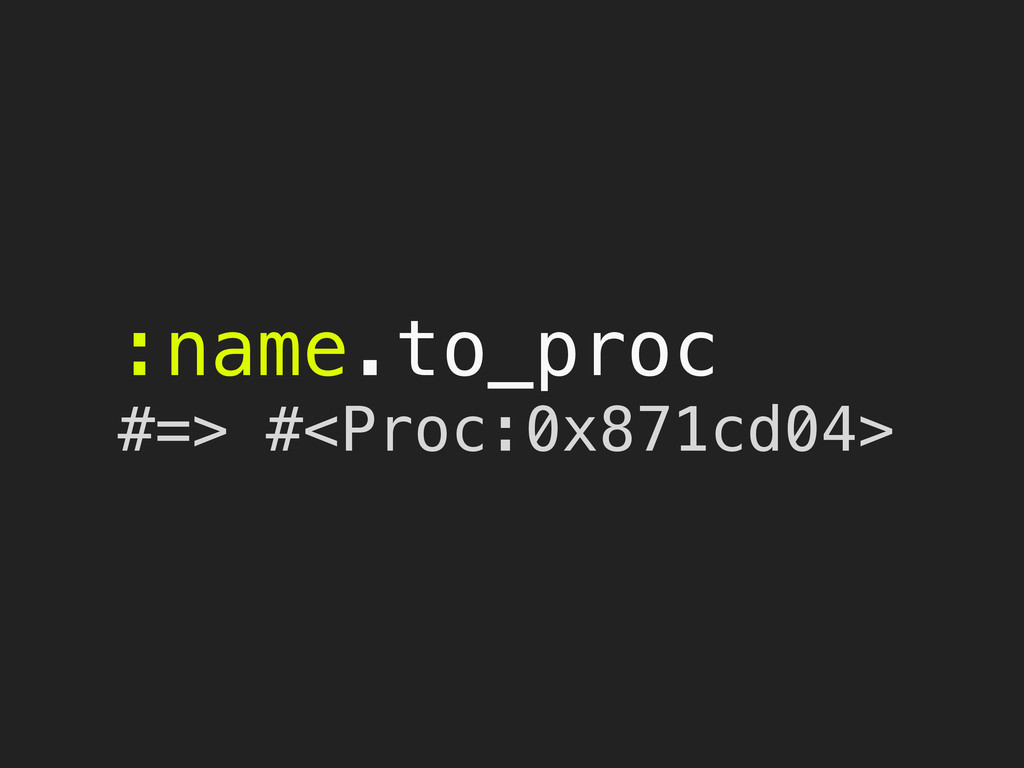
:name.to_proc #=> #<Proc:0x871cd04>
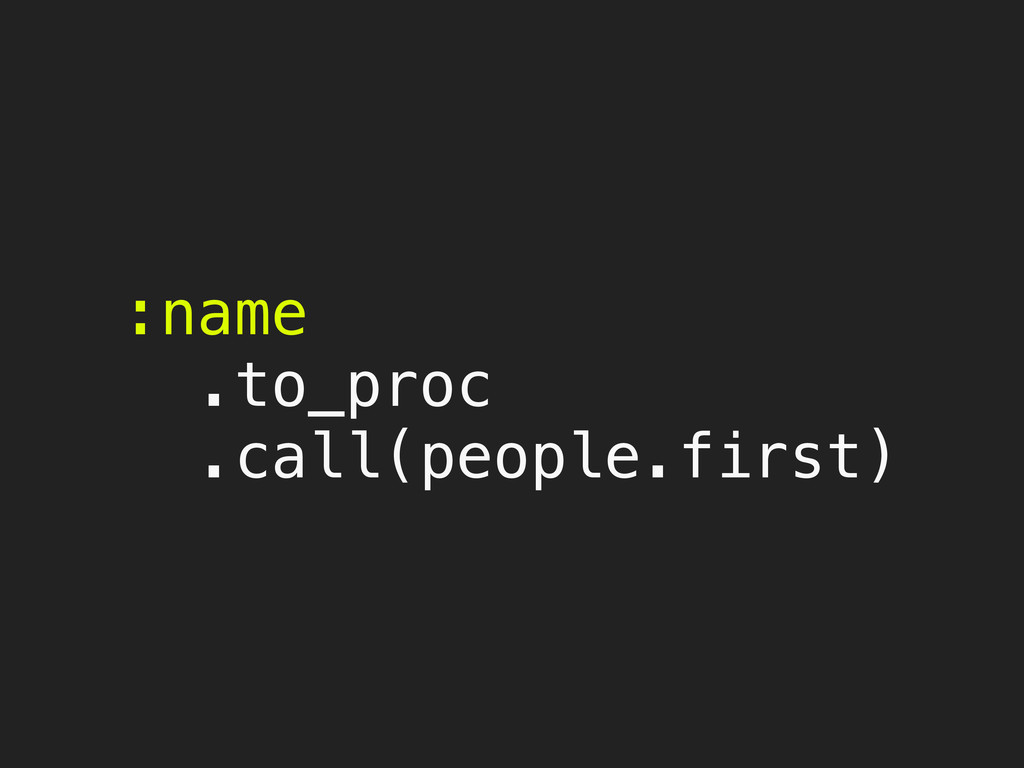
:name .to_proc .call(people.first)
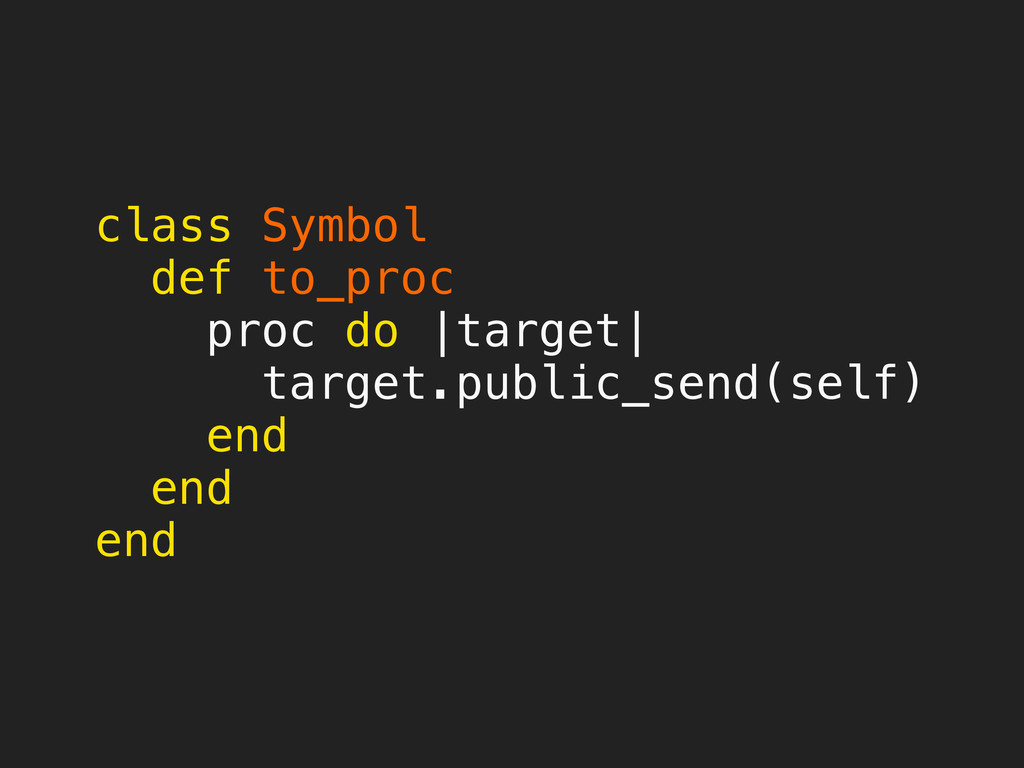
class Symbol def to_proc proc do |target| target.public_send(self) end end
end
PROCS & LAMBDAS
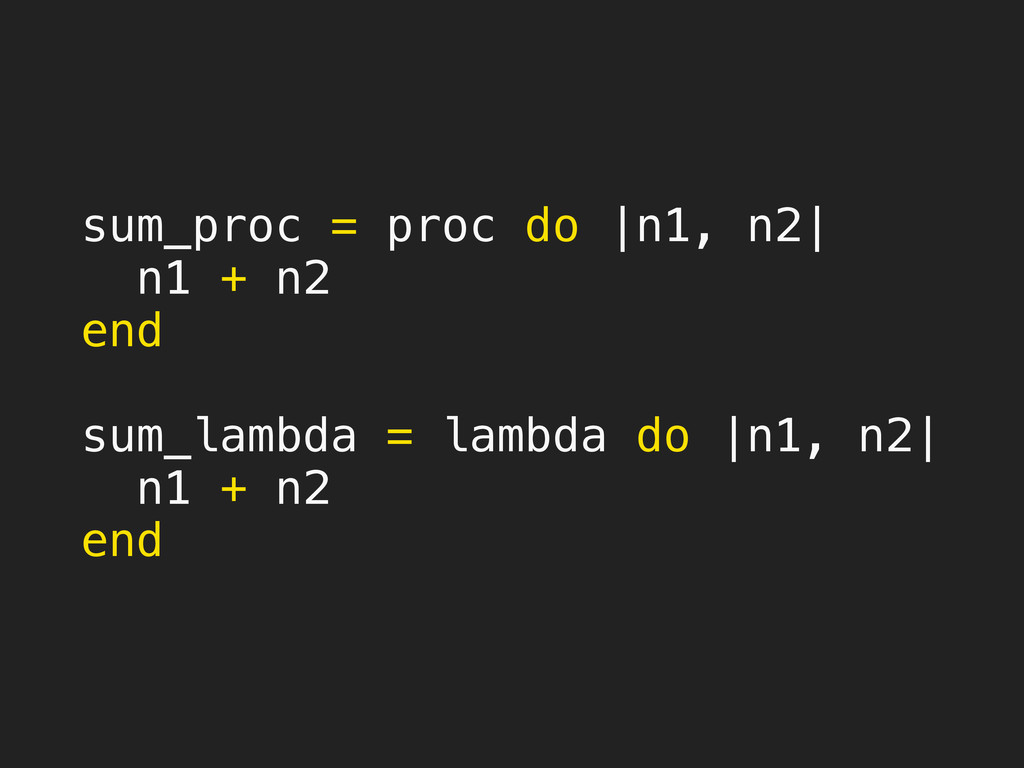
sum_proc = proc do |n1, n2| n1 + n2 end
sum_lambda = lambda do |n1, n2| n1 + n2 end
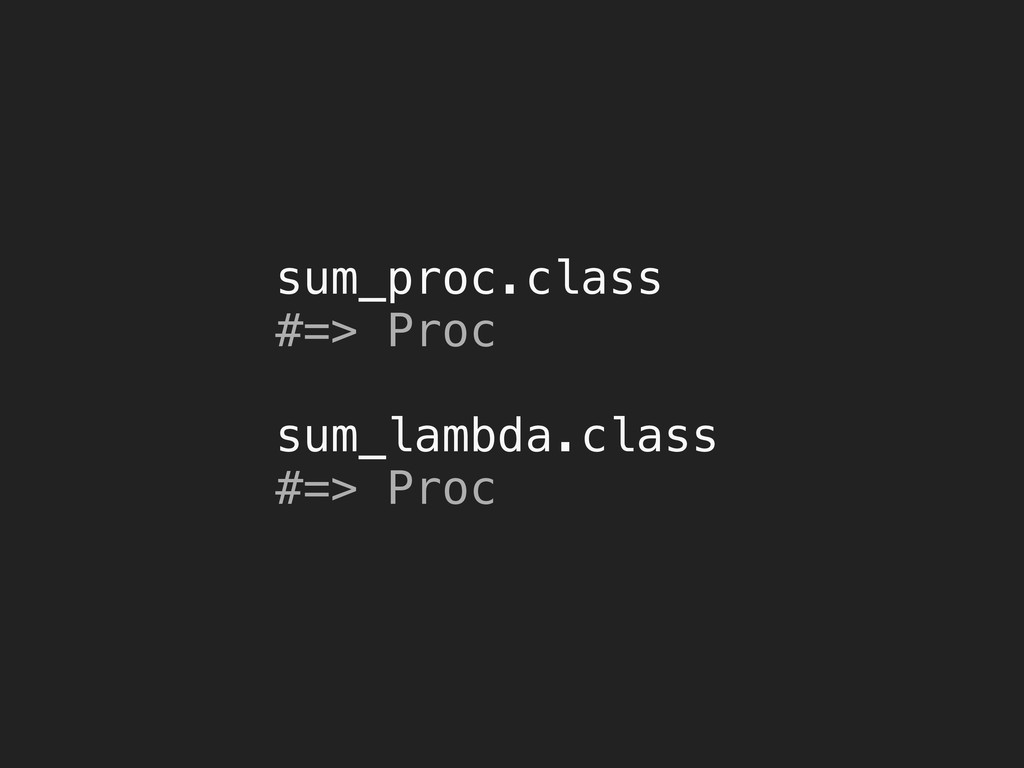
sum_proc.class #=> Proc sum_lambda.class #=> Proc
sum_proc.lambda? #=> false sum_lambda.lambda? #=> true
sum_proc.parameters #=> [[:opt, :n1], [:opt, :n2]] sum_lambda.parameters #=> [[:req, :n1],
[:req, :n2]]
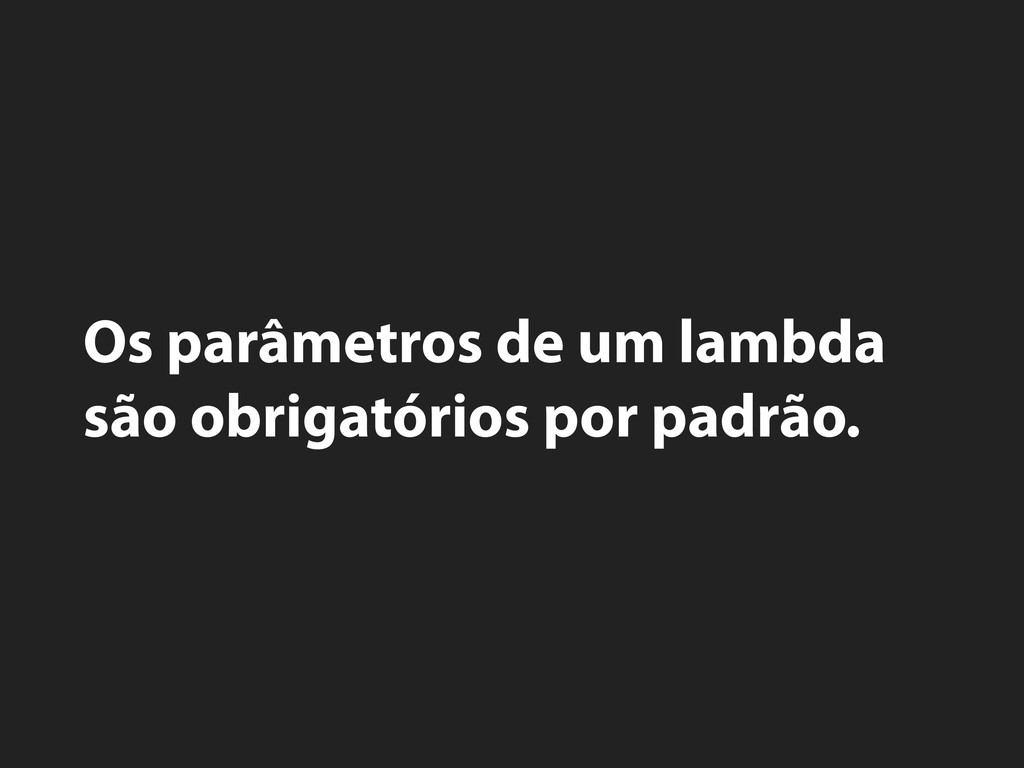
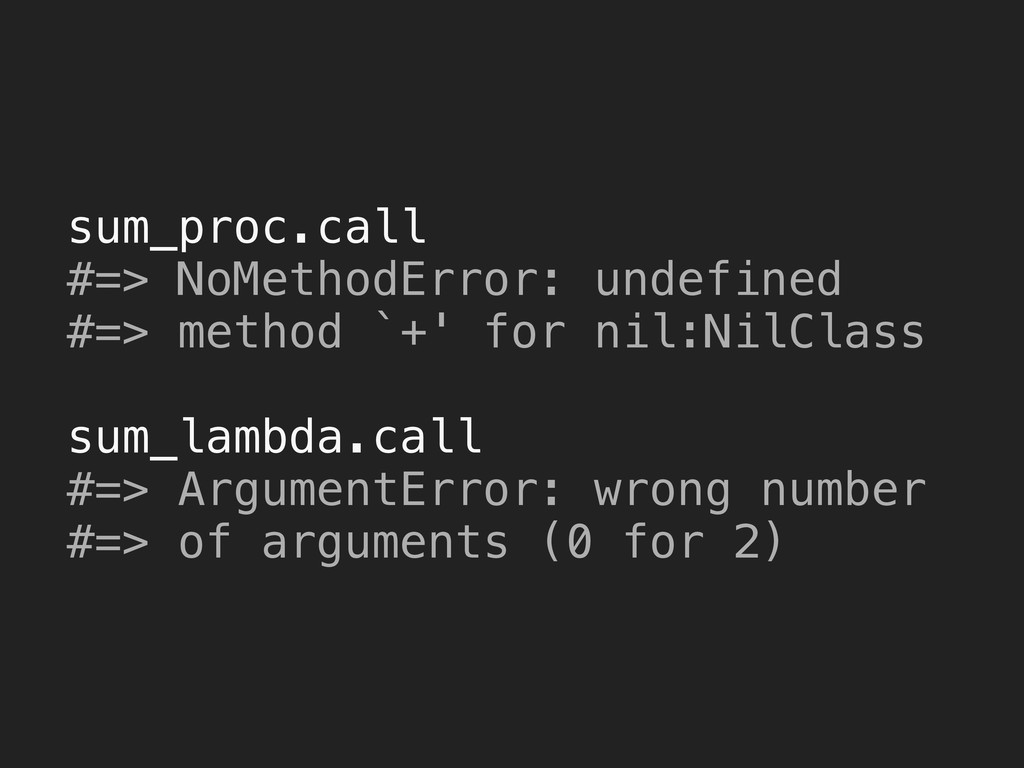
Os parâmetros de um lambda são obrigatórios por padrão.
sum_proc.call #=> NoMethodError: undefined #=> method `+' for nil:NilClass sum_lambda.call
#=> ArgumentError: wrong number #=> of arguments (0 for 2)
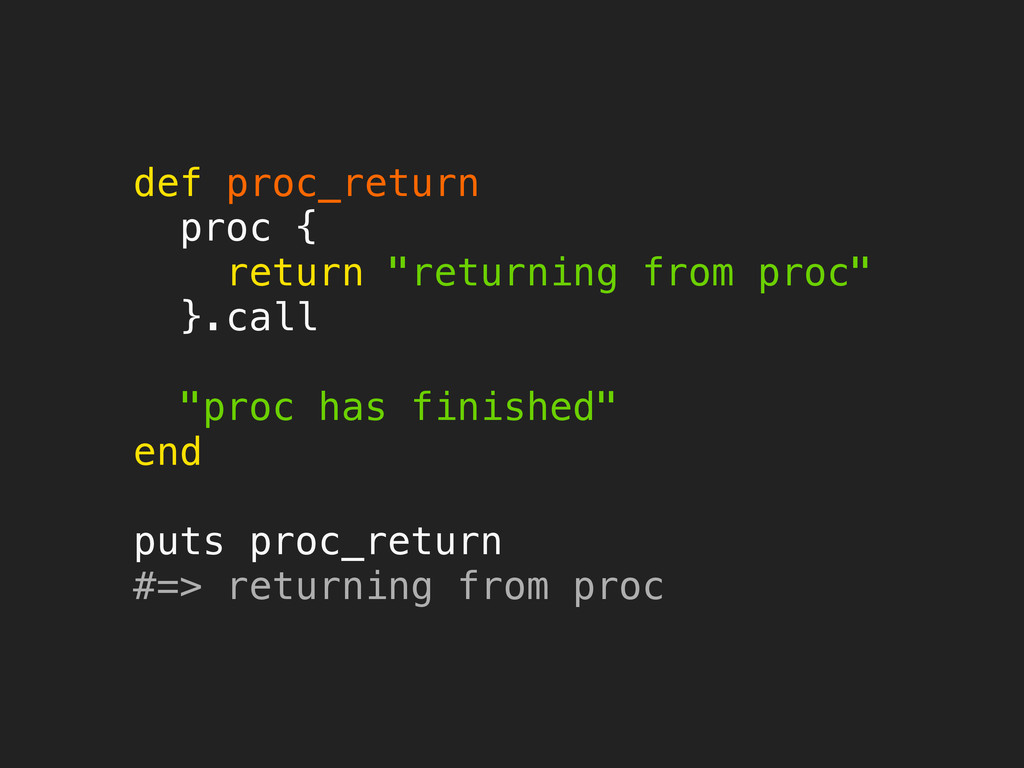
def proc_return proc { return "returning from proc" }.call "proc
has finished" end puts proc_return #=> returning from proc
O retorno da proc, na verdade, faz com que o
método pare de executar.
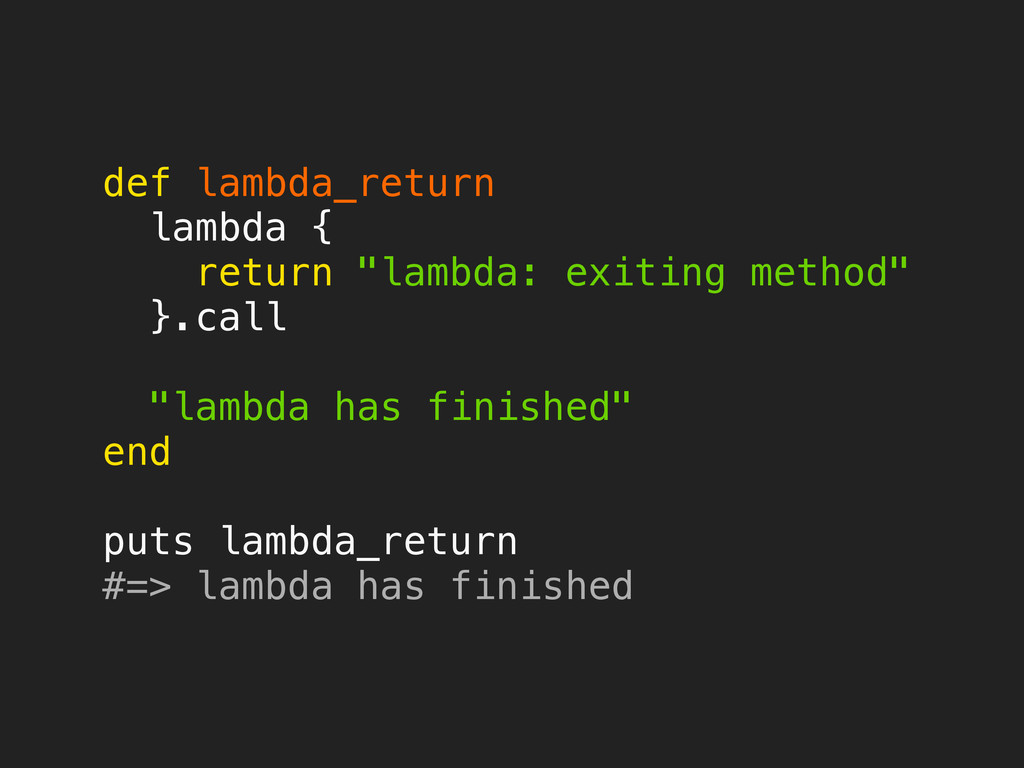
def lambda_return lambda { return "lambda: exiting method" }.call "lambda
has finished" end puts lambda_return #=> lambda has finished
O retorno do lambda é auto- contido e não afeta
o método.
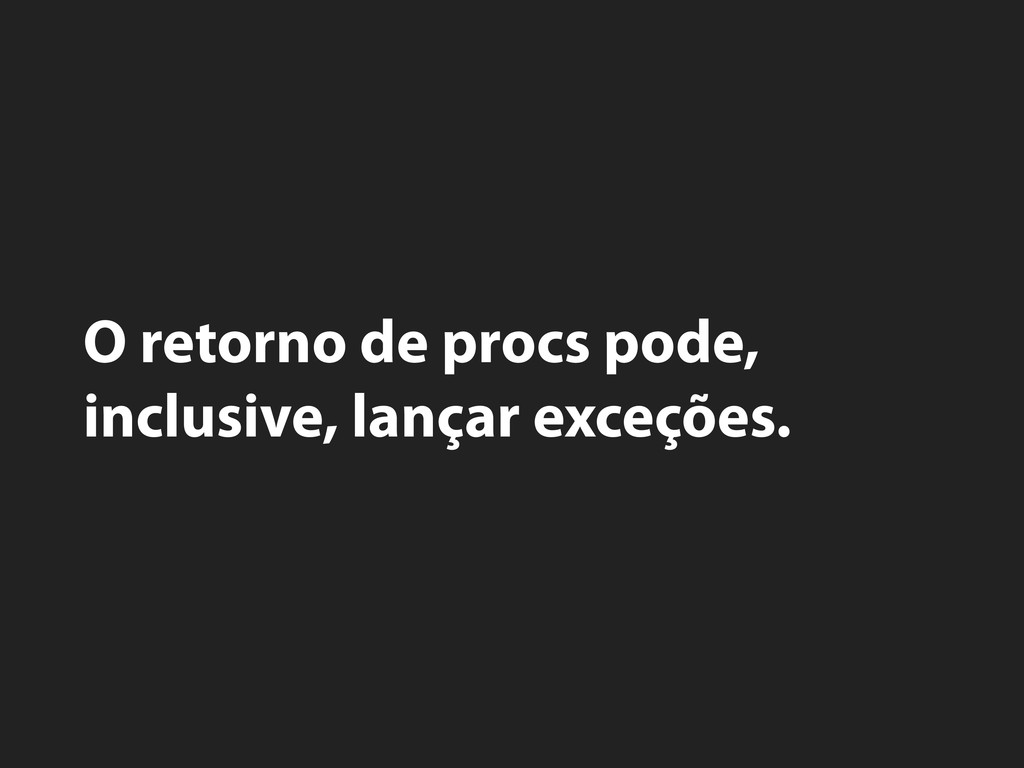
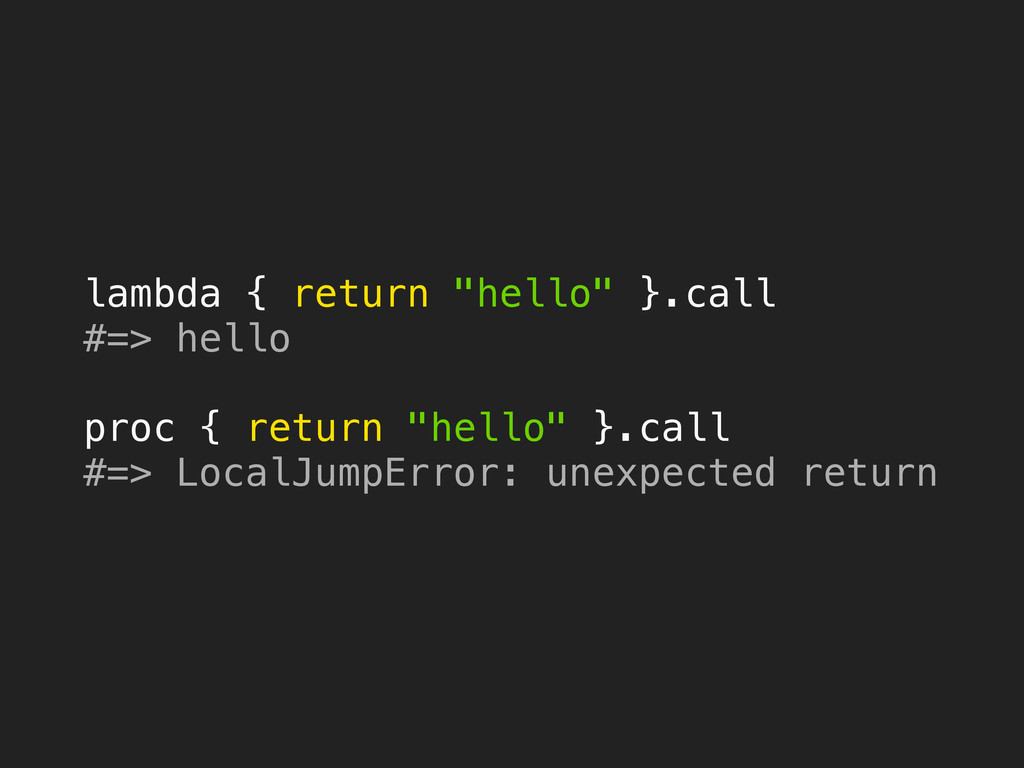
O retorno de procs pode, inclusive, lançar exceções.
lambda { return "hello" }.call #=> hello proc { return
"hello" }.call #=> LocalJumpError: unexpected return
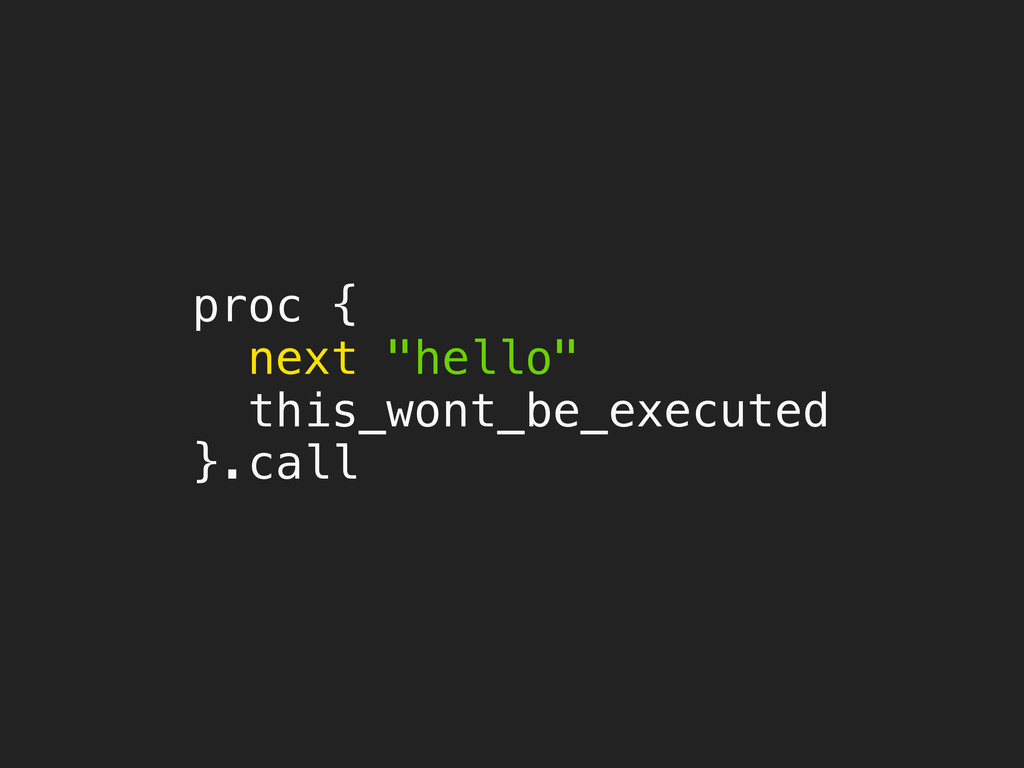
proc { next "hello" this_wont_be_executed }.call
CALLABLE OBJECTS
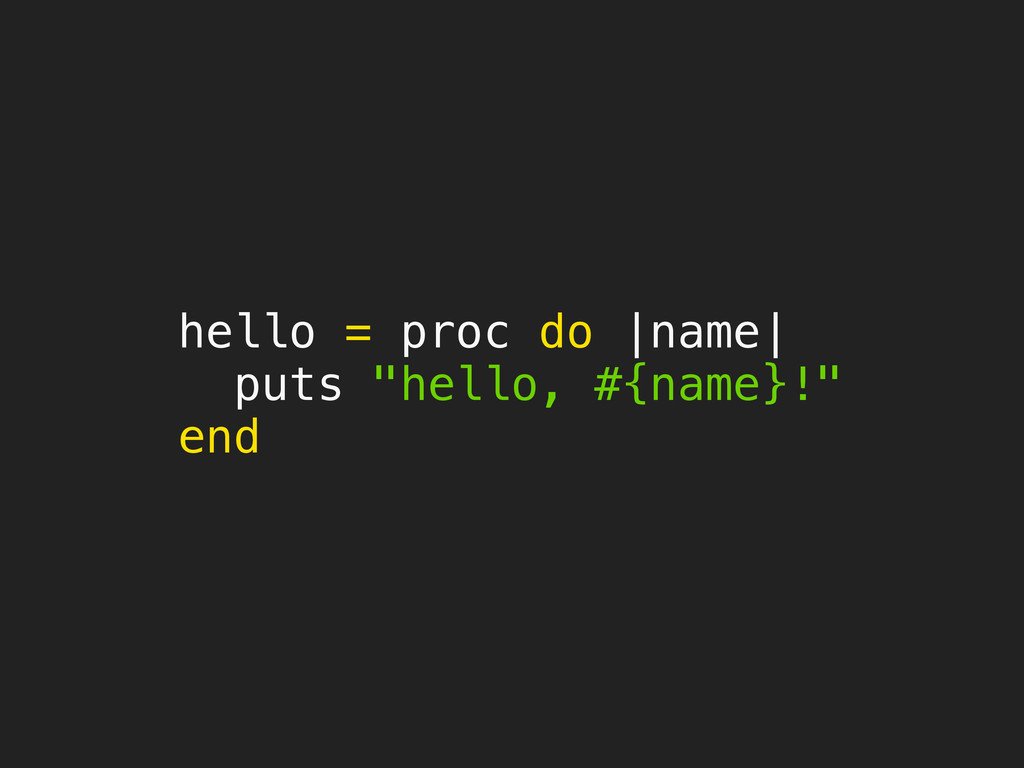
hello = proc do |name| puts "hello, #{name}!" end
hello.call("John")
hello["John"]
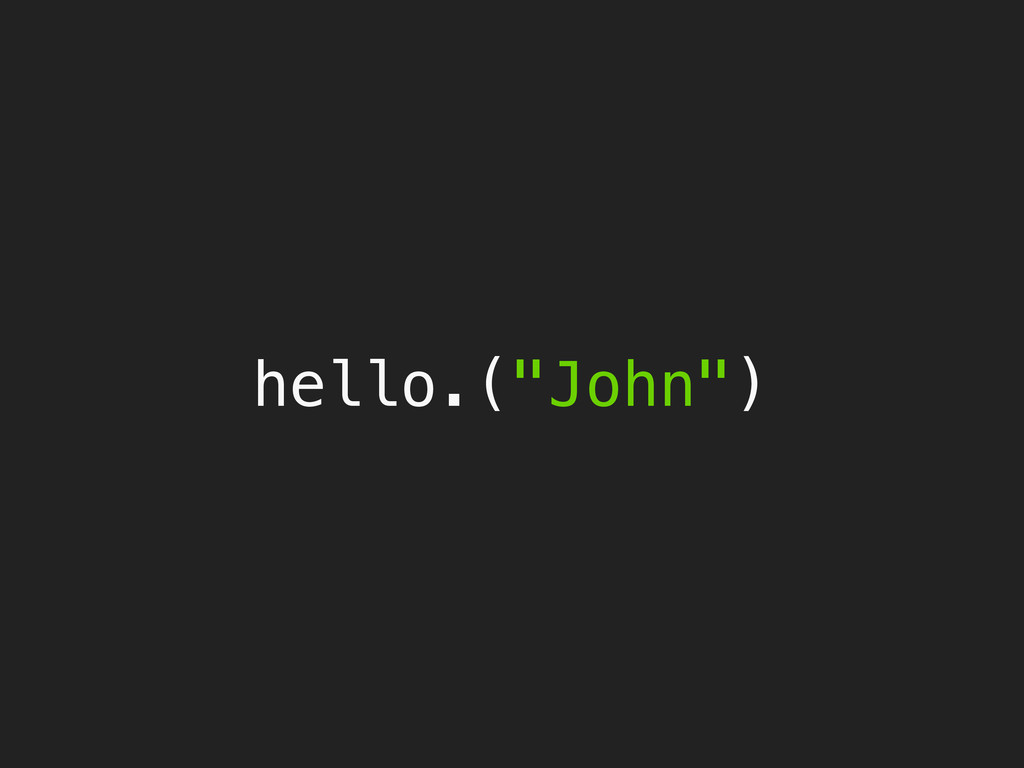
hello.("John")
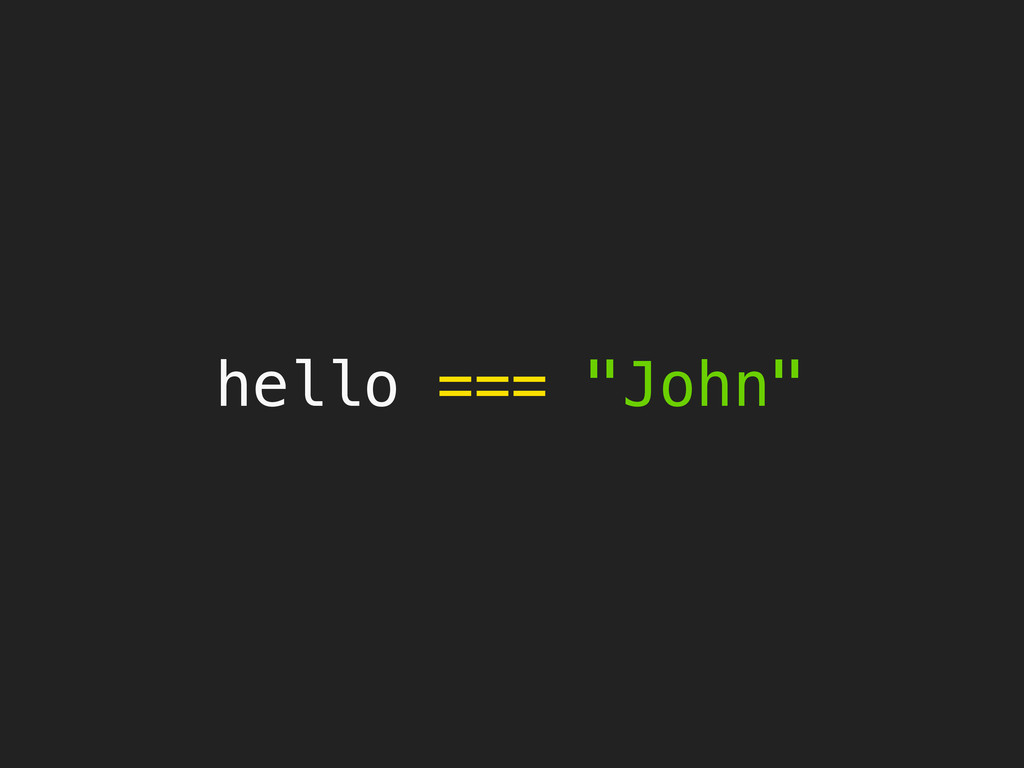
hello === "John"
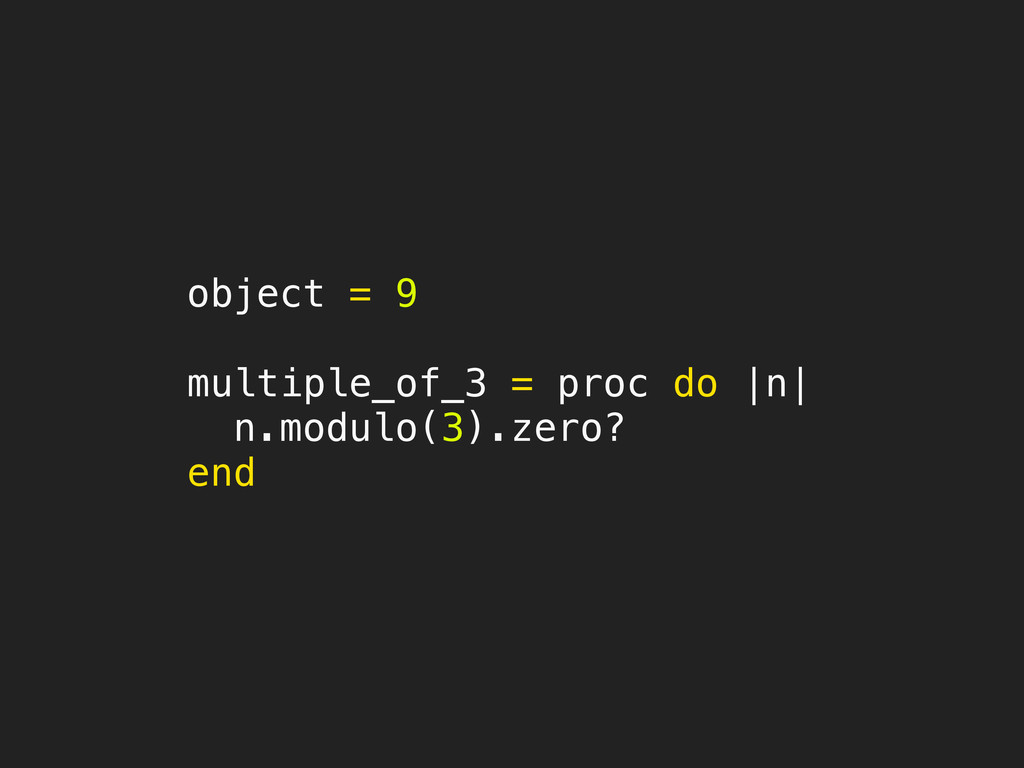
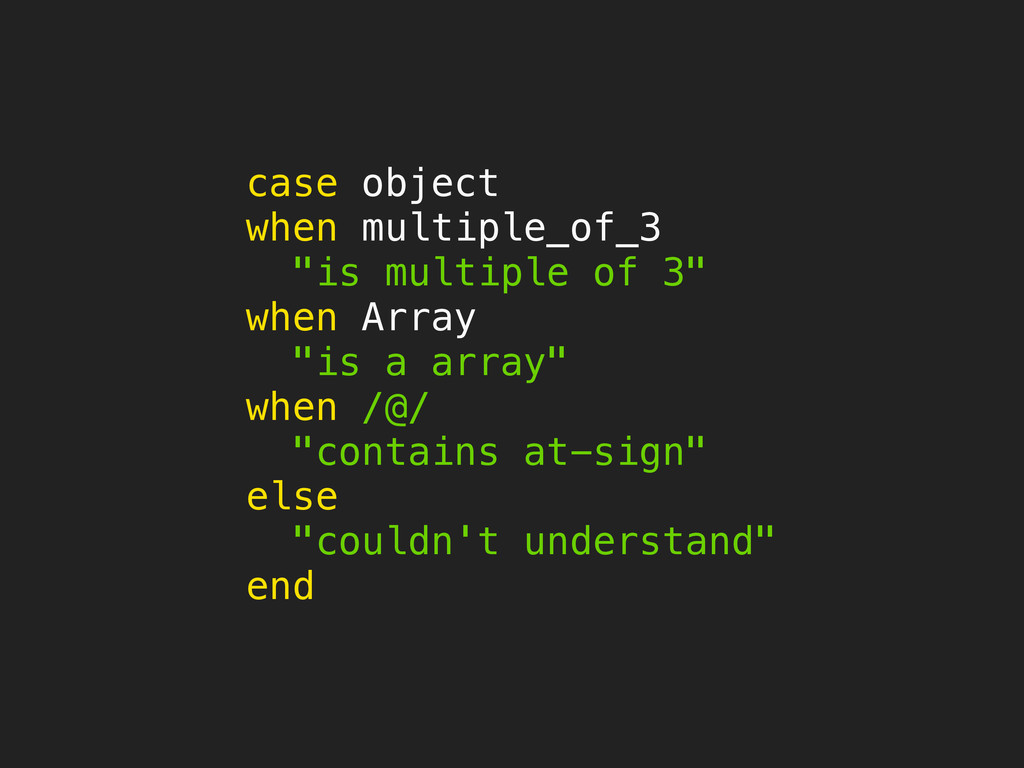
object = 9 multiple_of_3 = proc do |n| n.modulo(3).zero? end
case object when multiple_of_3 "is multiple of 3" when Array
"is a array" when /@/ "contains at-sign" else "couldn't understand" end
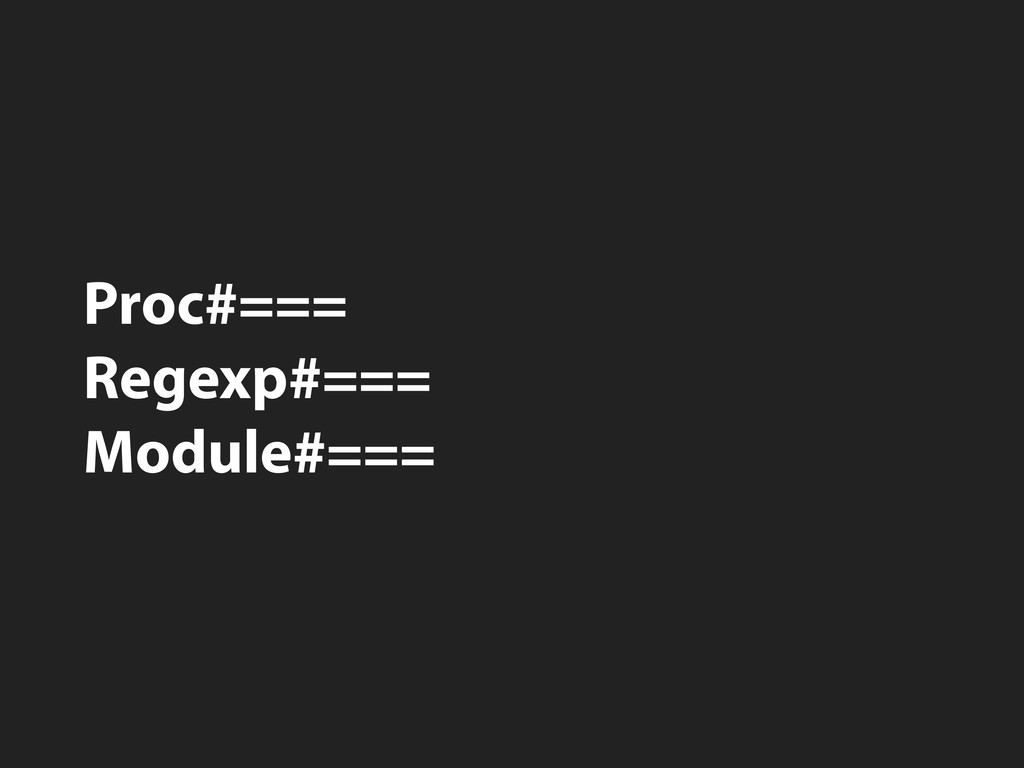
Proc#=== Regexp#=== Module#===
Array === [] #=> true multiple_of_3 === 9 #=> true
/@/ === "
[email protected]
" #=> true
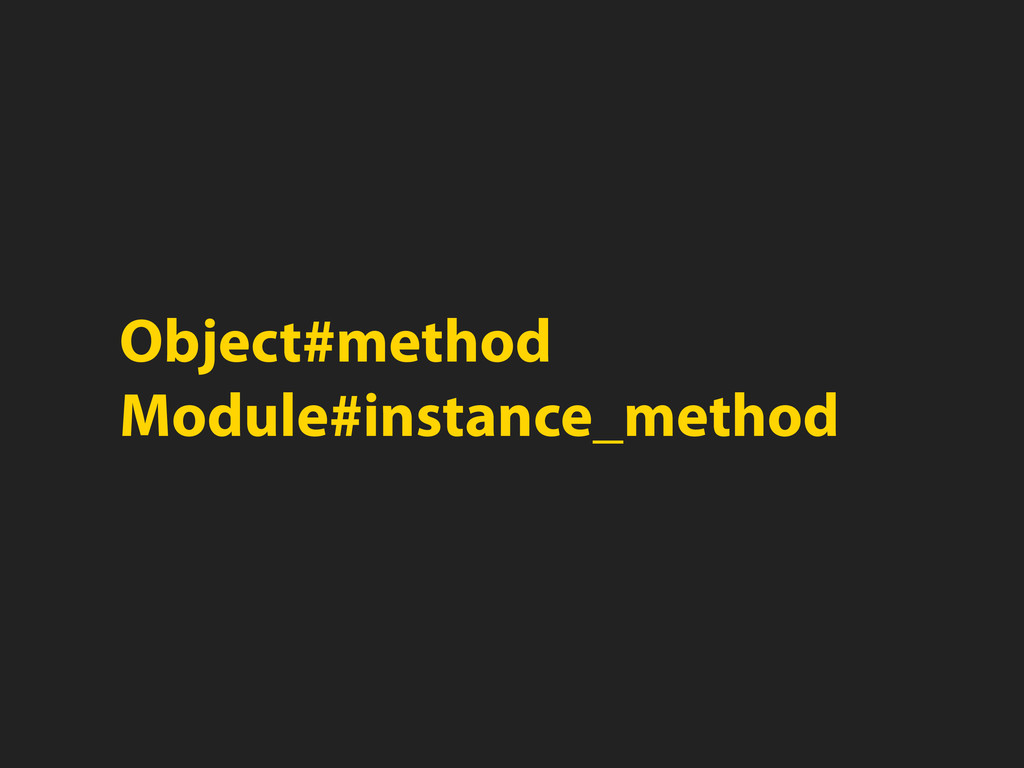
Object#method Module#instance_method
Métodos não são objetos de primeira classe.
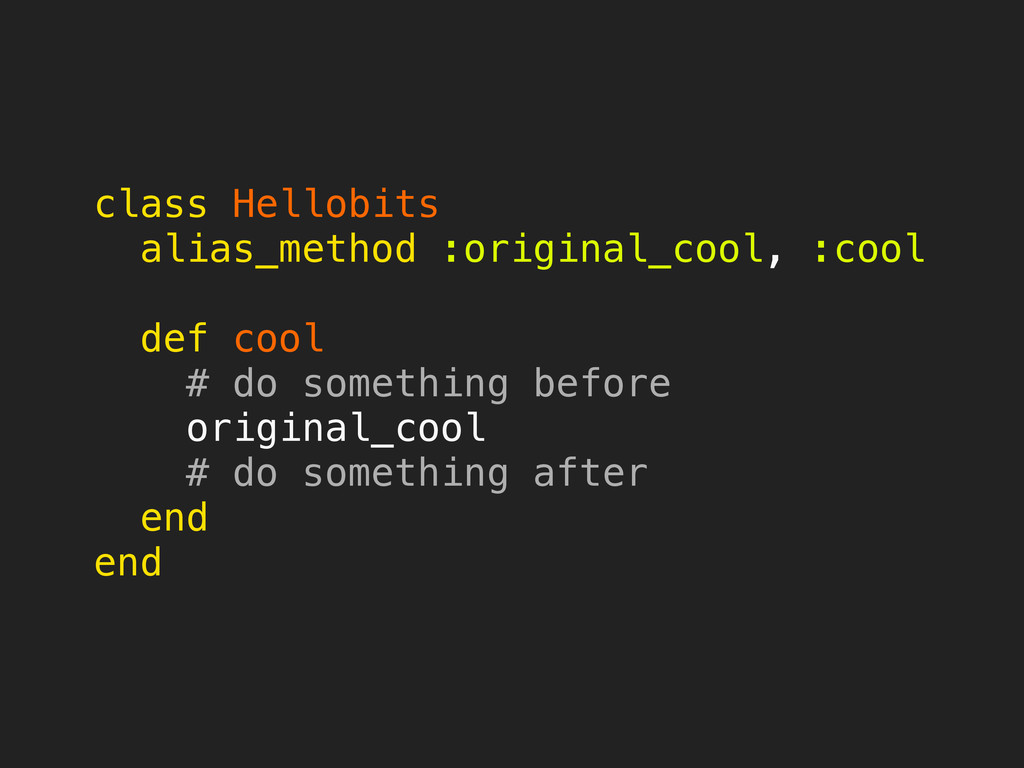
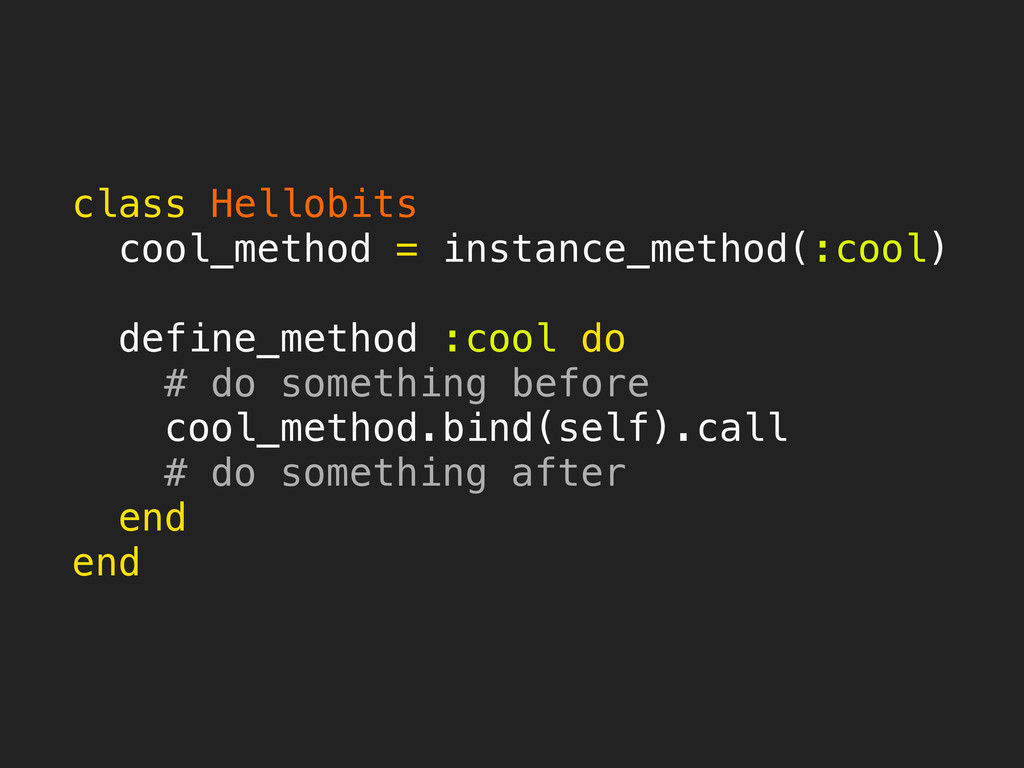
Estendendo métodos sem ter que criar uma nova classe.
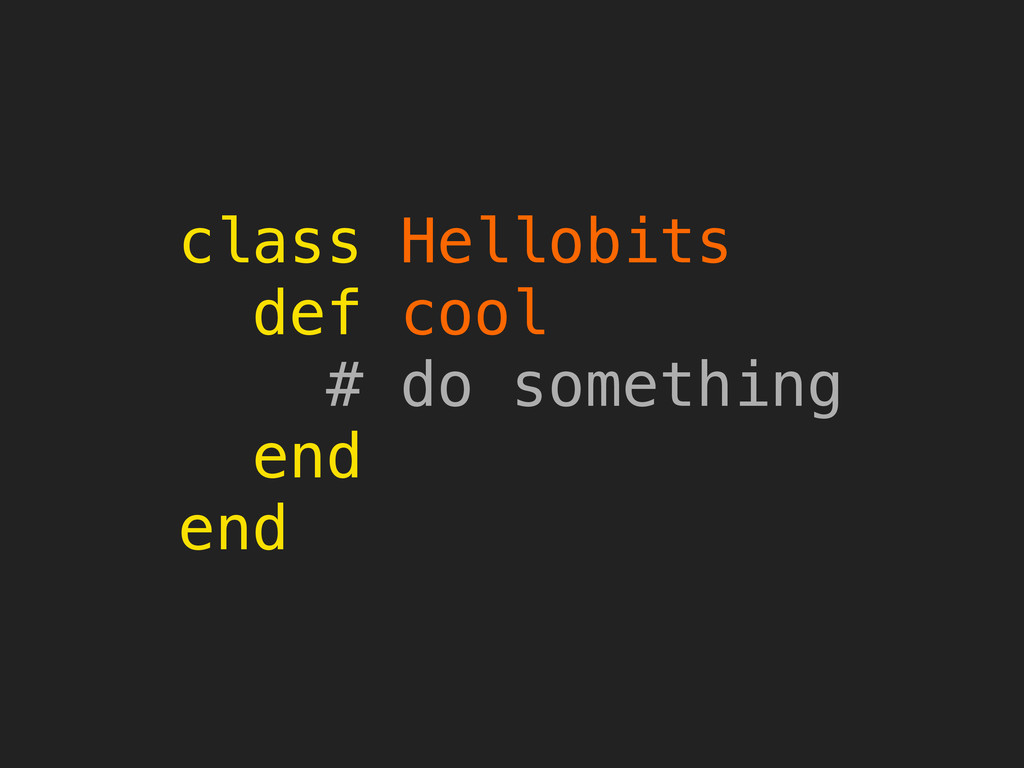
class Hellobits def cool # do something end end
class Hellobits alias_method :original_cool, :cool def cool # do something
before original_cool # do something after end end
class Hellobits cool_method = instance_method(:cool) define_method :cool do # do
something before cool_method.bind(self).call # do something after end end
SPLATTING
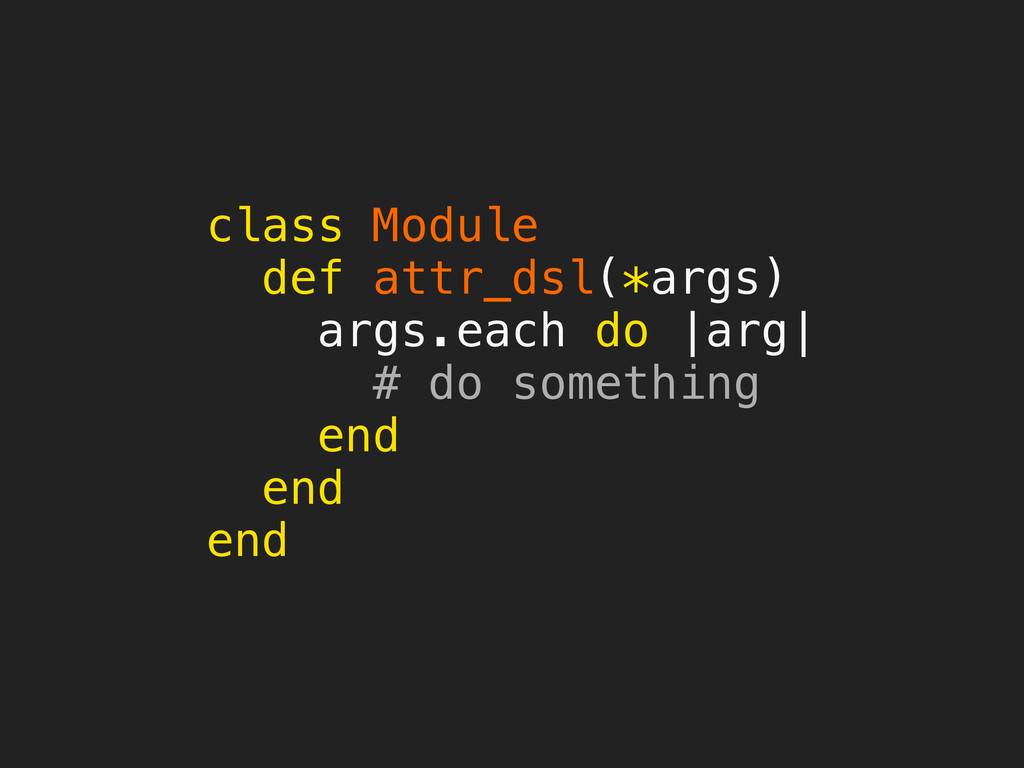
*args
class Module def attr_dsl(*args) args.each do |arg| # do something
end end end
class Settings names = %w[path size locale] attr_dsl *names end
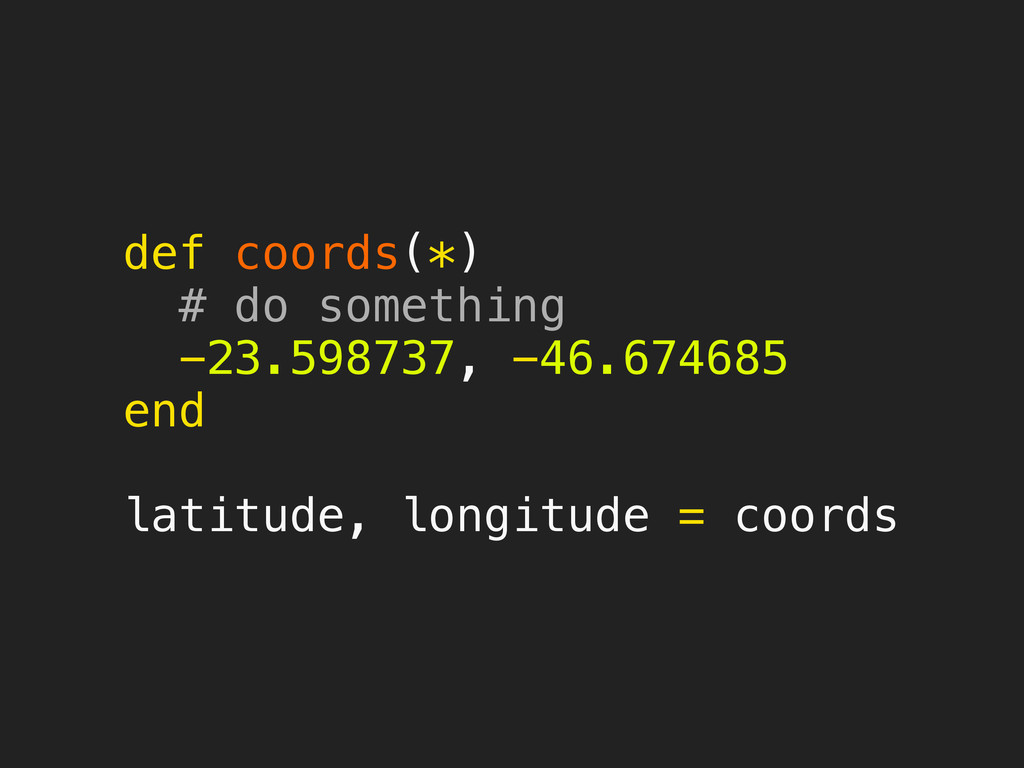
def coords(*) # do something -23.598737, -46.674685 end latitude, longitude
= coords
a, b, c, d = [1, 2, 3, 4]
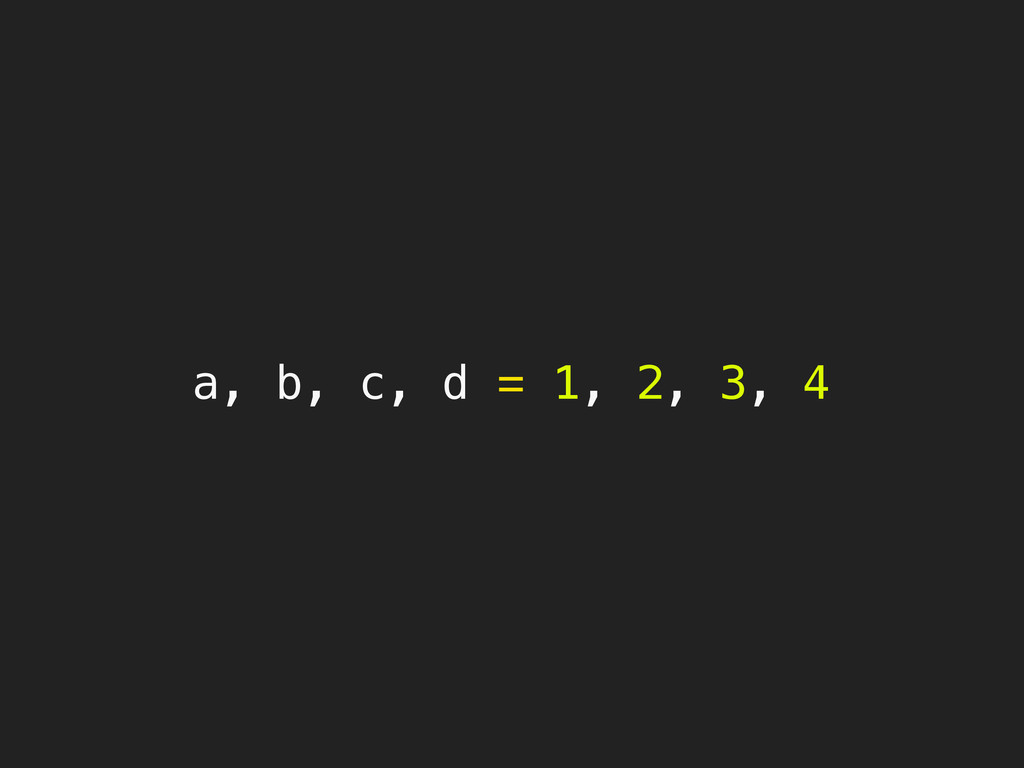
a, b, c, d = 1, 2, 3, 4
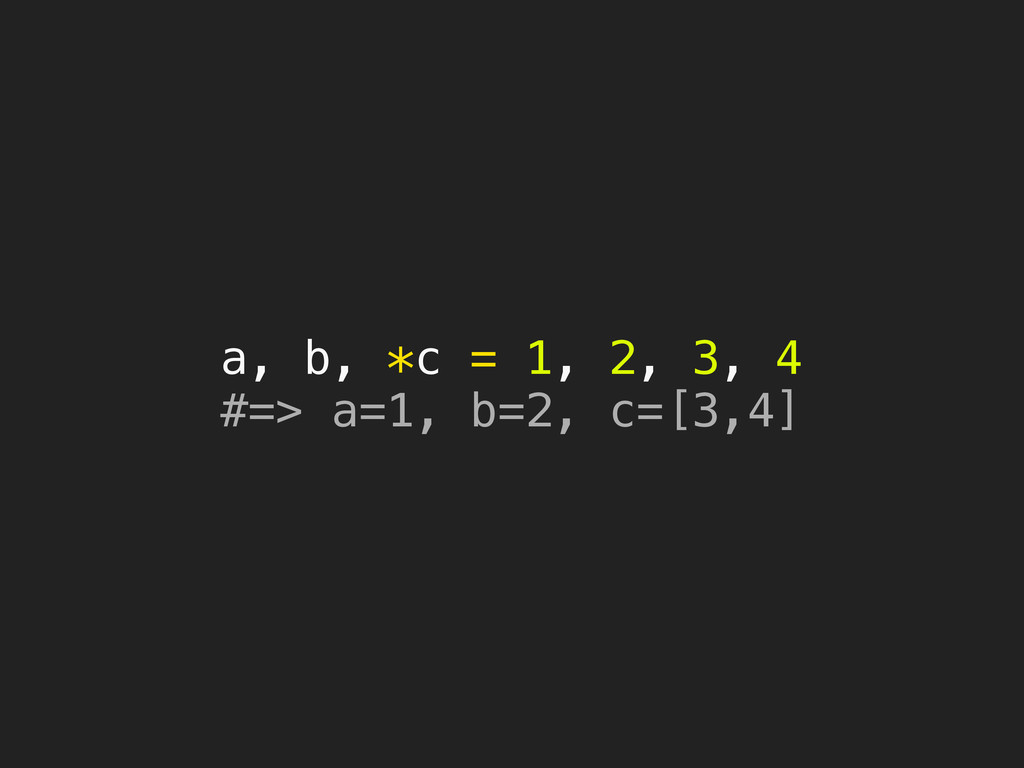
a, b, *c = 1, 2, 3, 4 #=> a=1,
b=2, c=[3,4]
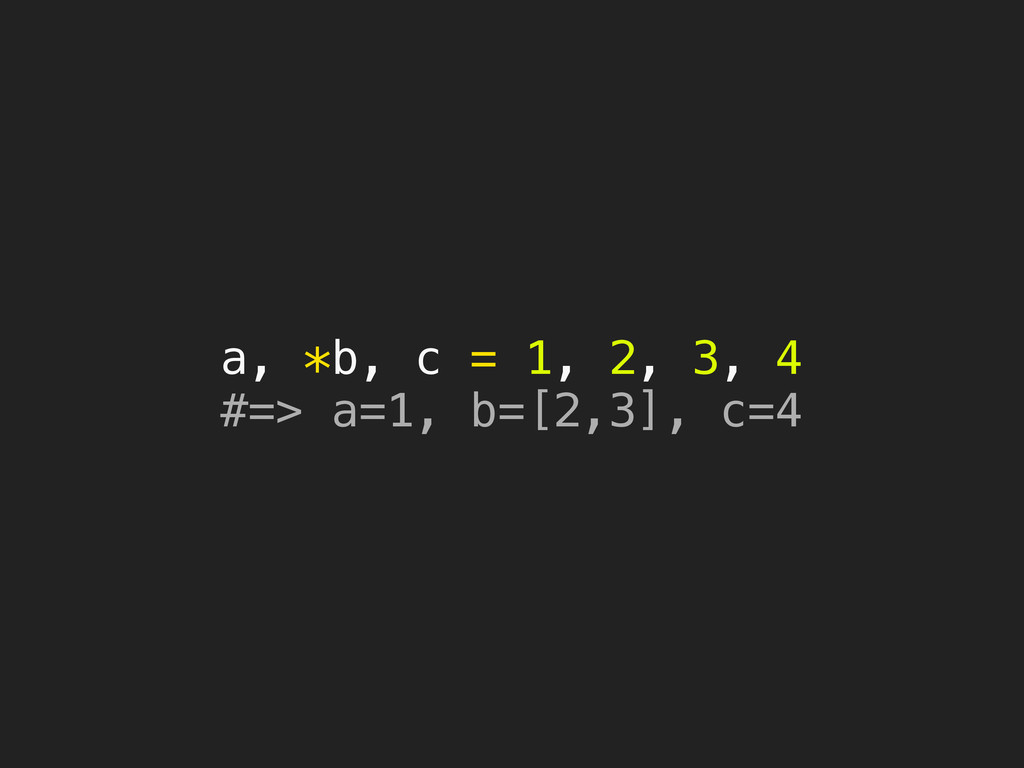
a, *b, c = 1, 2, 3, 4 #=> a=1,
b=[2,3], c=4
numbers = [1, 2, 3] more_numbers = [*numbers, 4, 5,
6] #=> [1, 2, 3, 4, 5, 6]
(1..10).to_a.sample [*1..10].sample
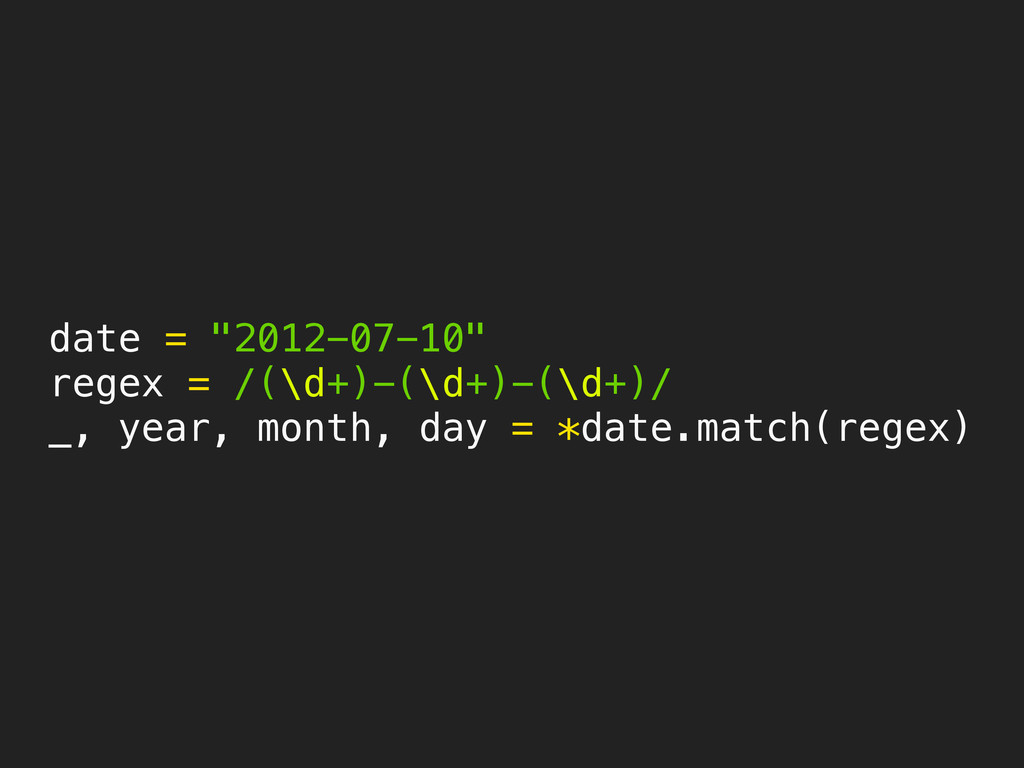
date = "2012-07-10" regex = /(\d+)-(\d+)-(\d+)/ _, year, month, day
= *date.match(regex)
class Sample def to_a [1, 2, 3] end end a,
b, c = *Sample.new
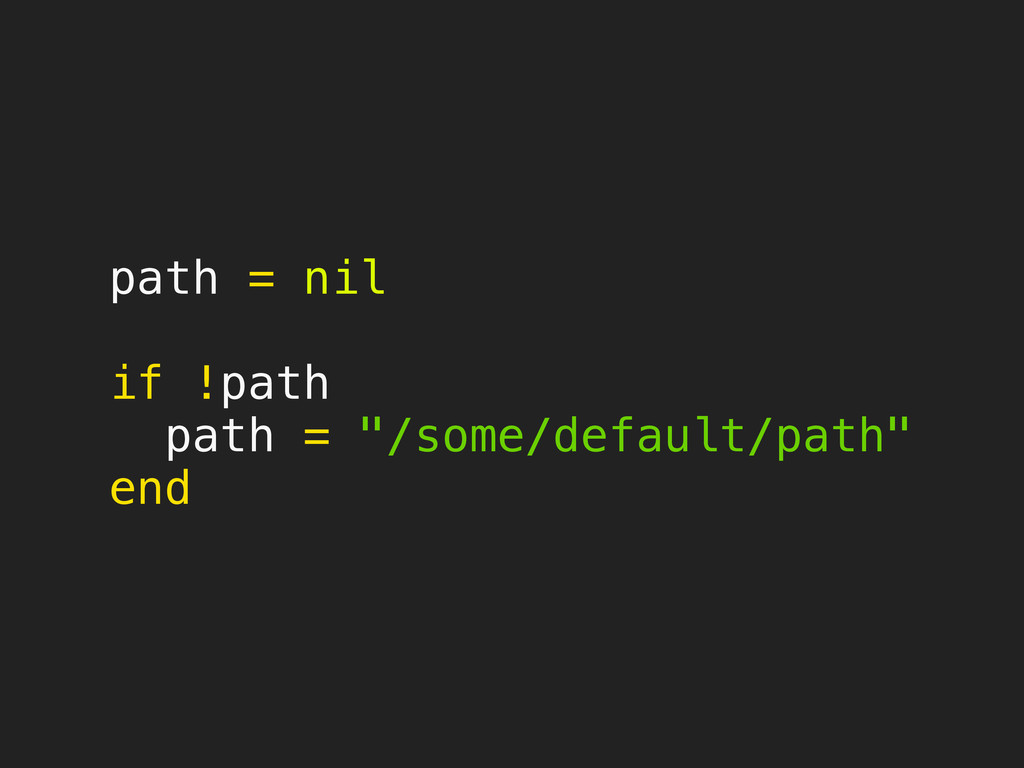
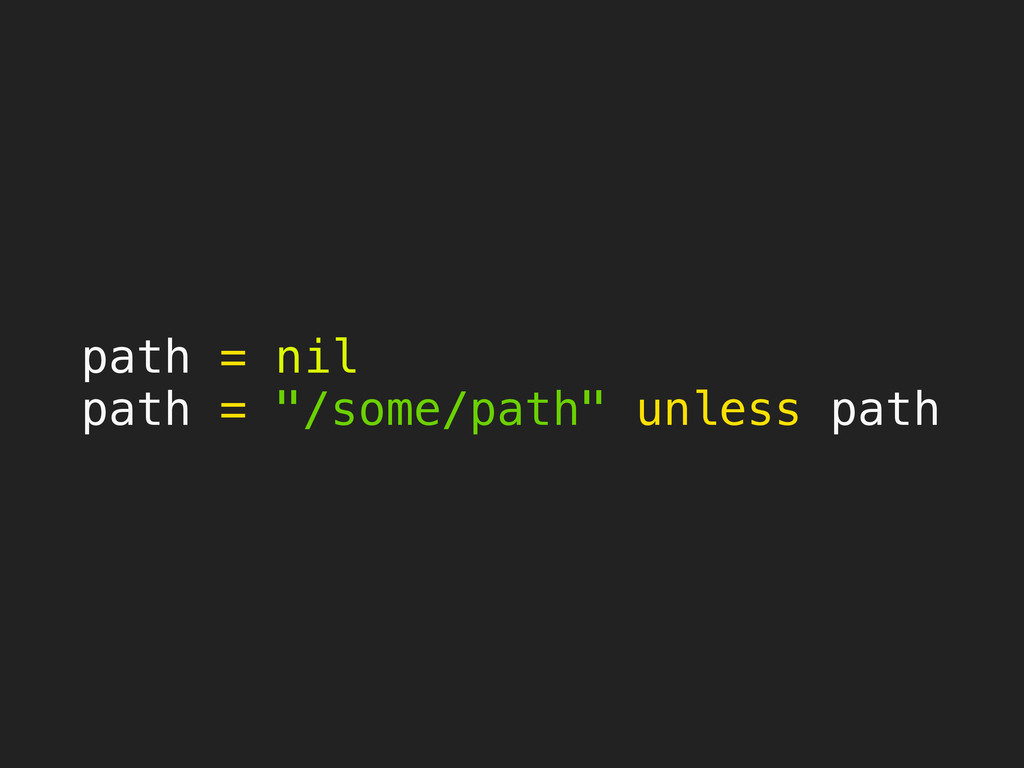
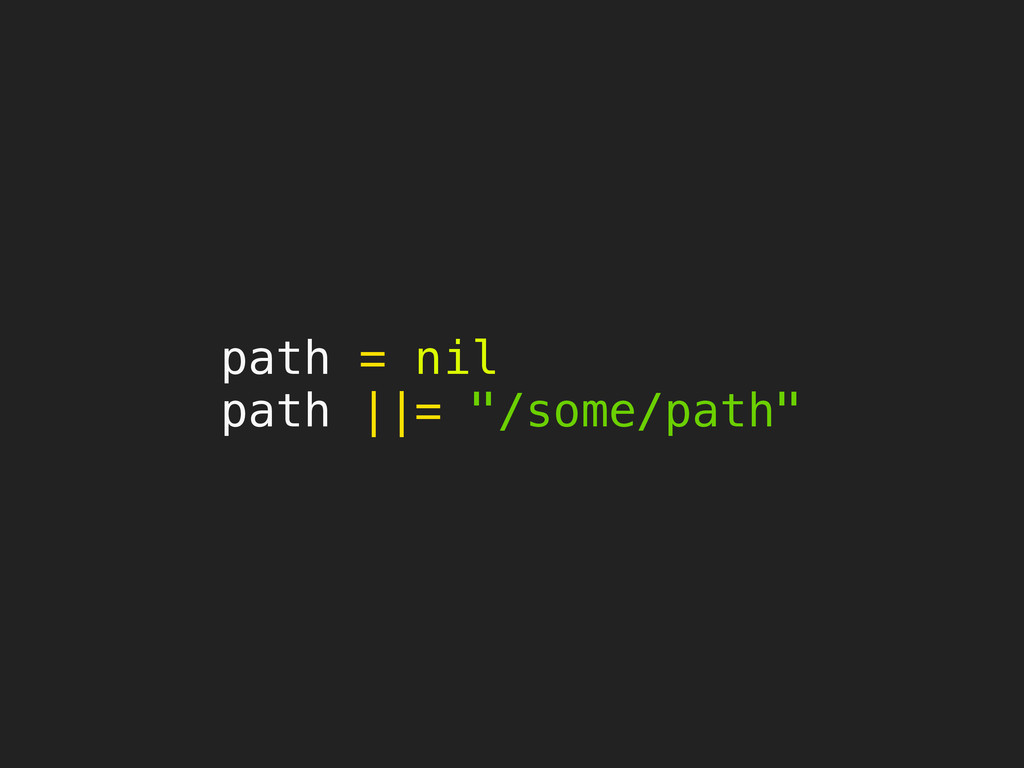
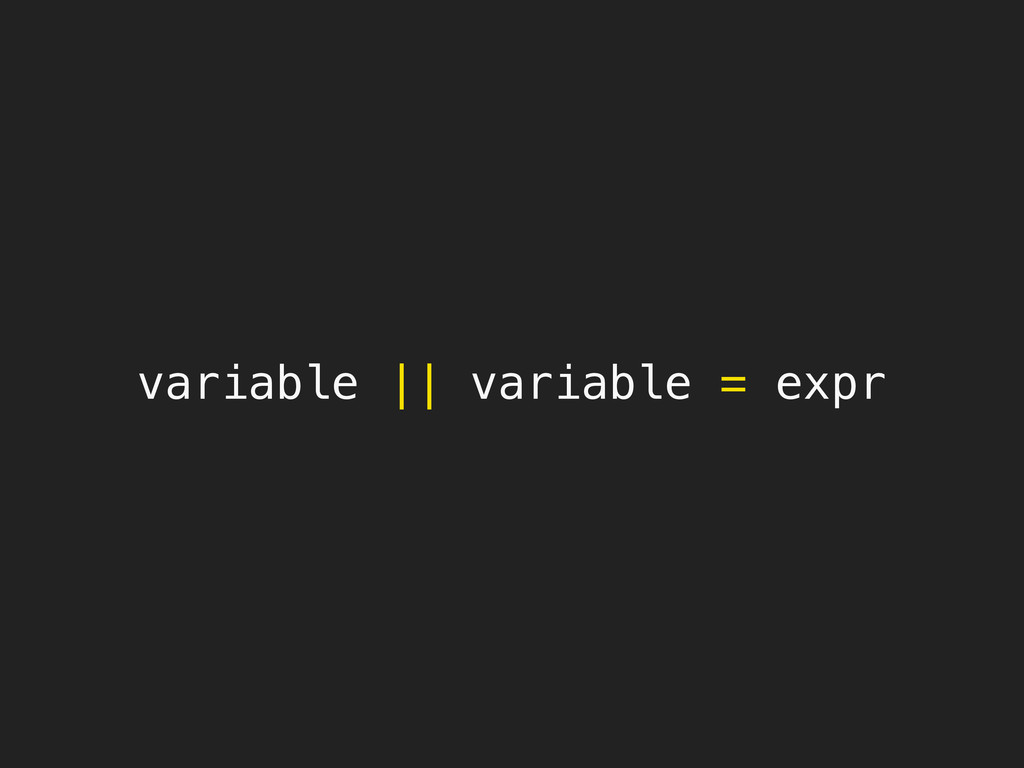
MAIS SOBRE ATRIBUIÇÕES
path = nil if !path path = "/some/default/path" end
path = nil path = "/some/path" unless path
path = nil path ||= "/some/path"
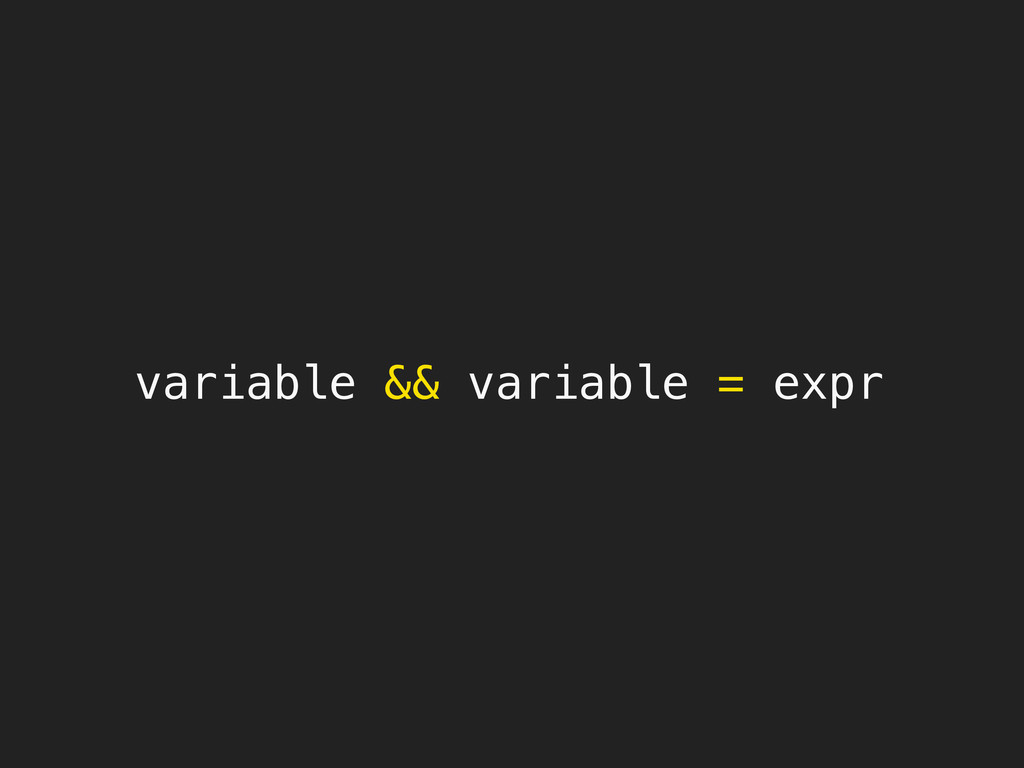
variable || variable = expr
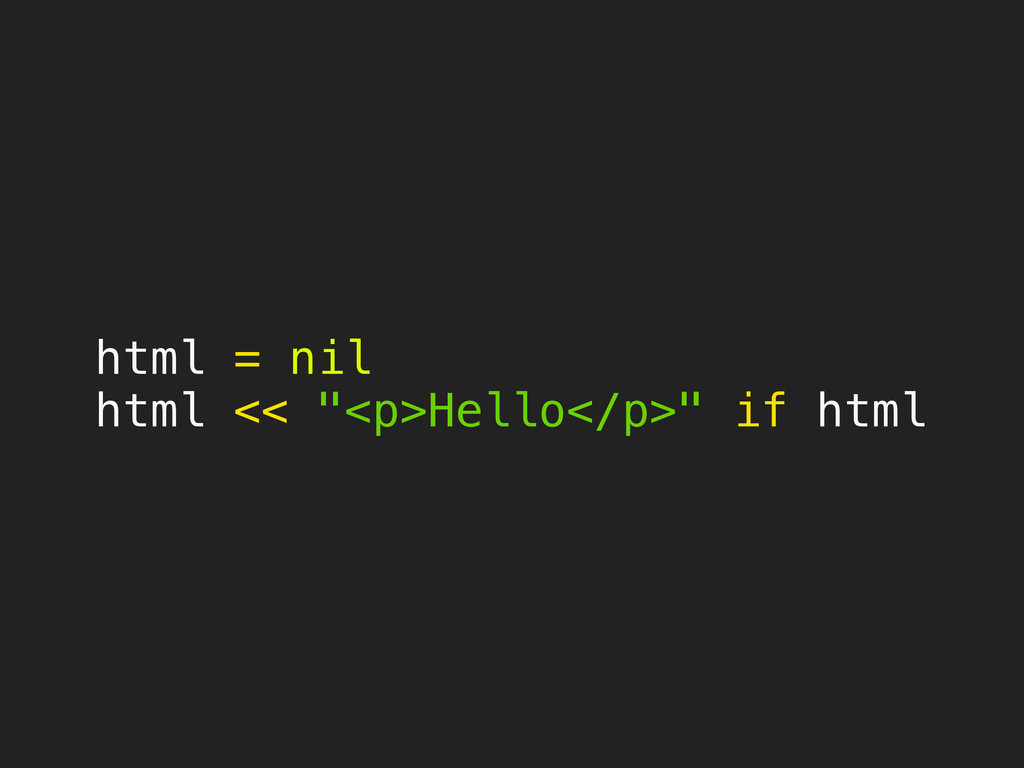
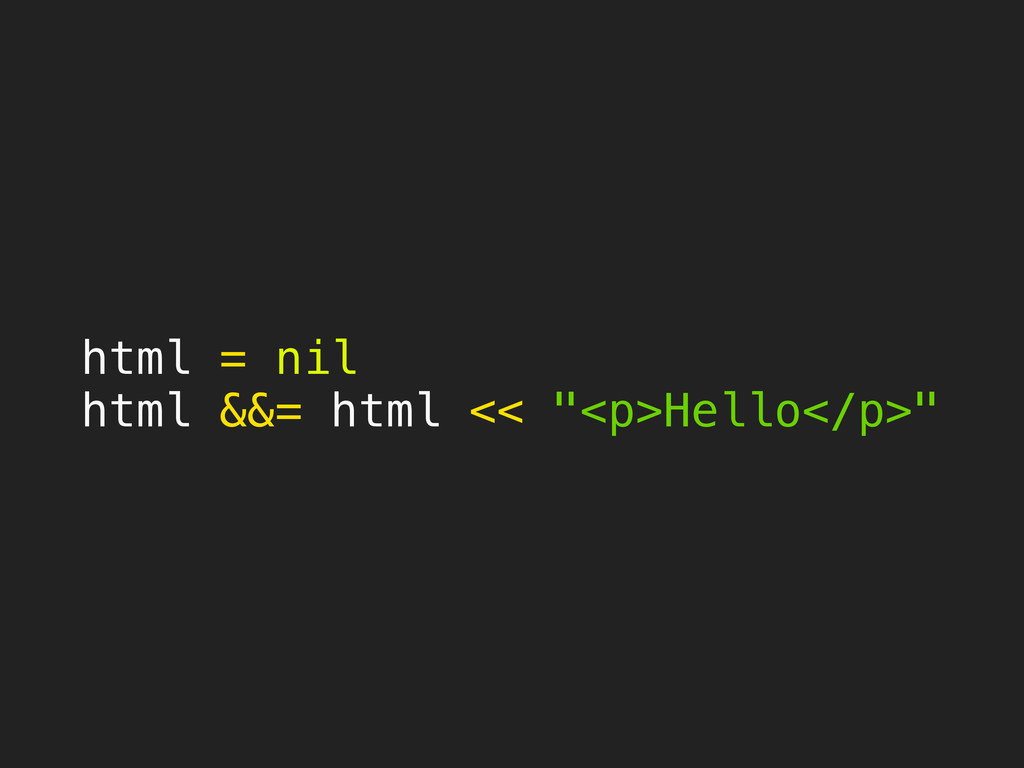
html = nil if html html << "<p>Hello</p>" end
html = nil html << "<p>Hello</p>" if html
html = nil html &&= html << "<p>Hello</p>"
variable && variable = expr
DE ONDE VEM ESSE MÉTODO
user = User.new user.methods #=> [:name, :age, ...]
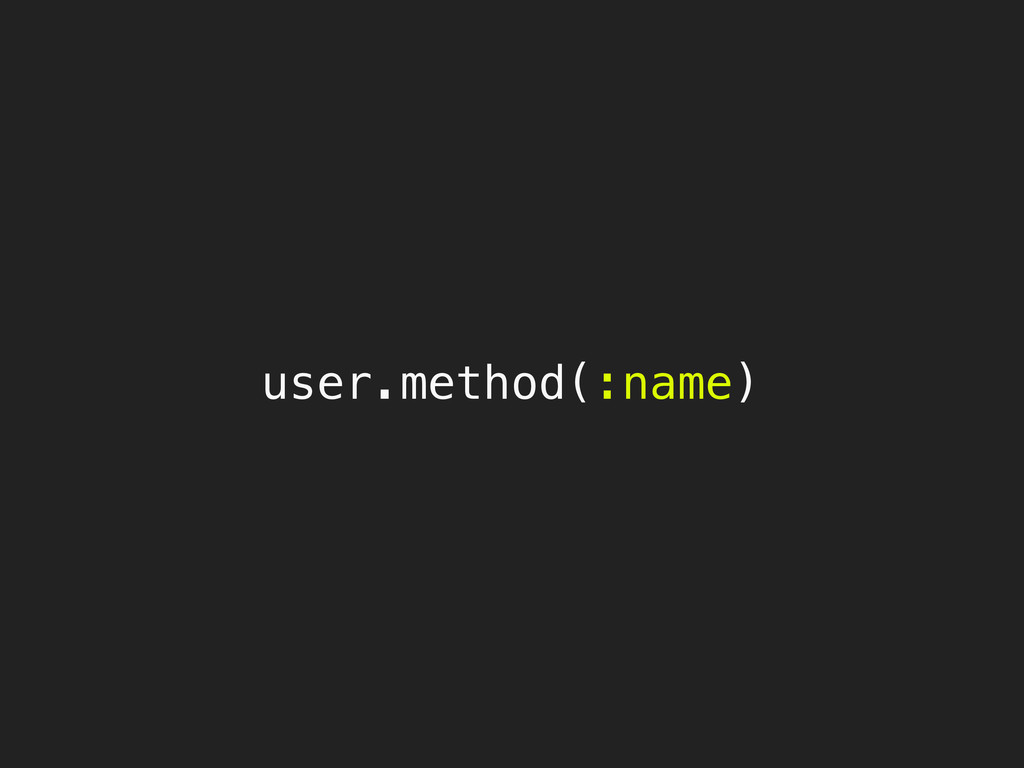
user.method(:name)
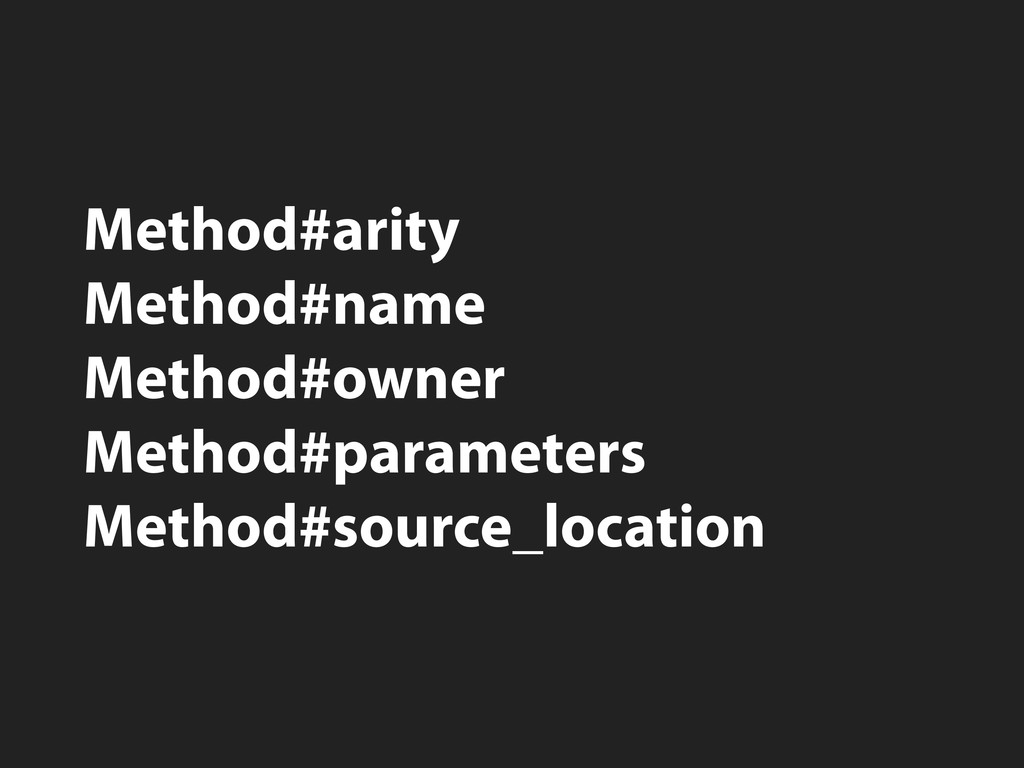
Method#arity Method#name Method#owner Method#parameters Method#source_location
user.method(:name) .source_location #=> ["/tmp/user.rb", 2]
EXPRESSÕES REGULARES
person = "John <
[email protected]
>" regex = /(.*?) <(.*?)>/ _, name,
email = *person.match(regex)
person[/(.*?) <(.*?)>/, 1] person[/(.*?) <(.*?)>/, 2]
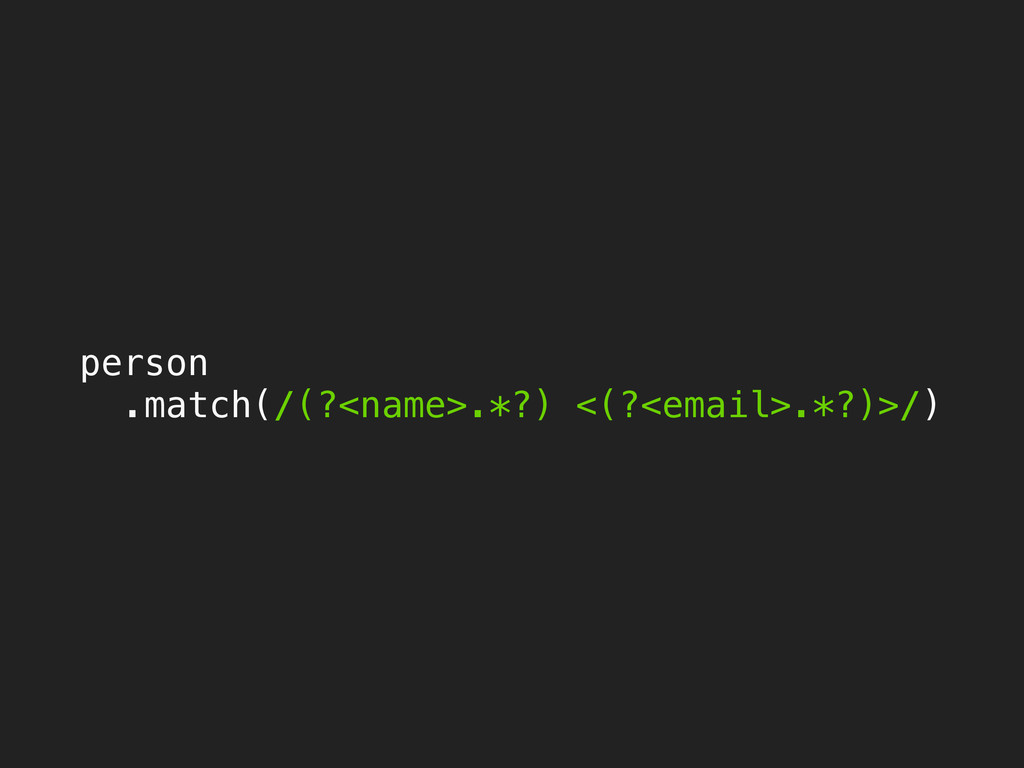
person .match(/(?<name>.*?) <(?<email>.*?)>/)
match.names #=> ["name", "email"] match.captures #=> ["John Doe", "
[email protected]
"] match[:name]
#=> "John Doe" match[:email] #=> "
[email protected]
"
ENUMERATORS
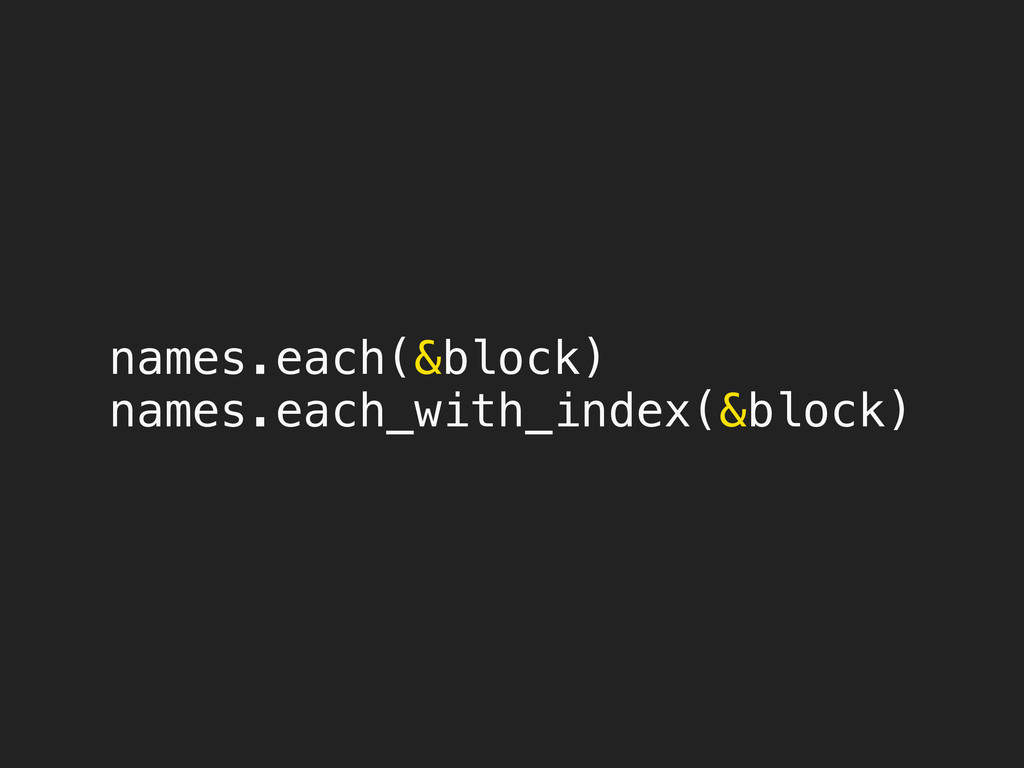
names.each(&block) names.each_with_index(&block)
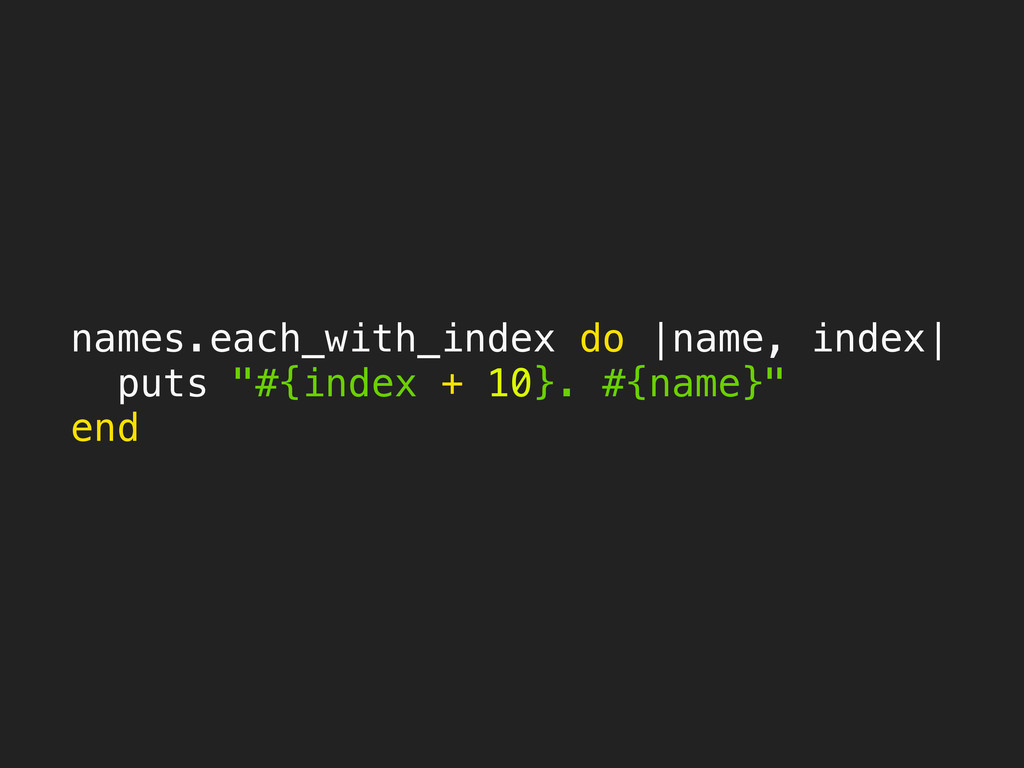
names.each_with_index do |name, index| puts "#{index + 10}. #{name}" end
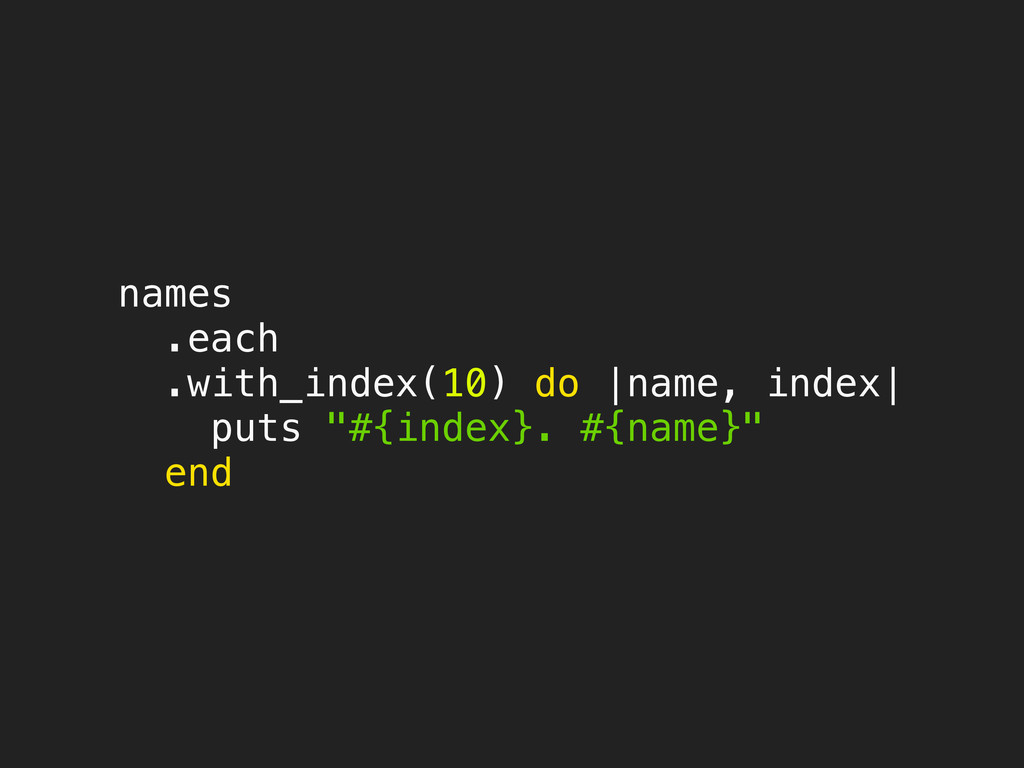
names .each .with_index(10) do |name, index| puts "#{index}. #{name}" end
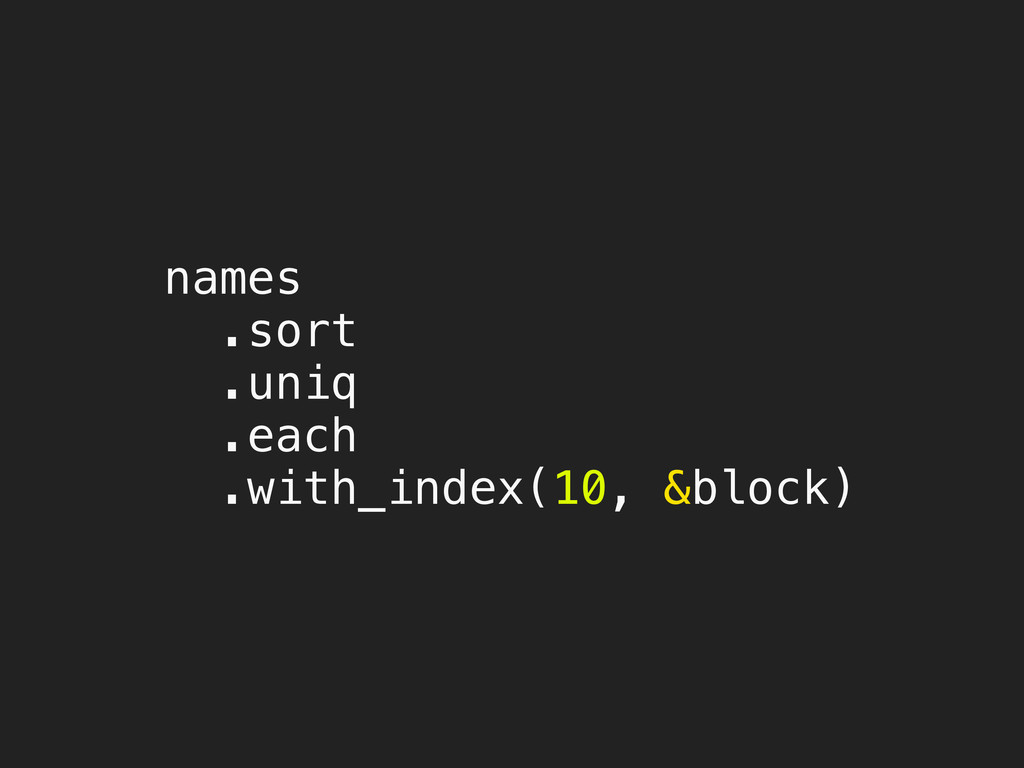
names .sort .uniq .each .with_index(10, &block)
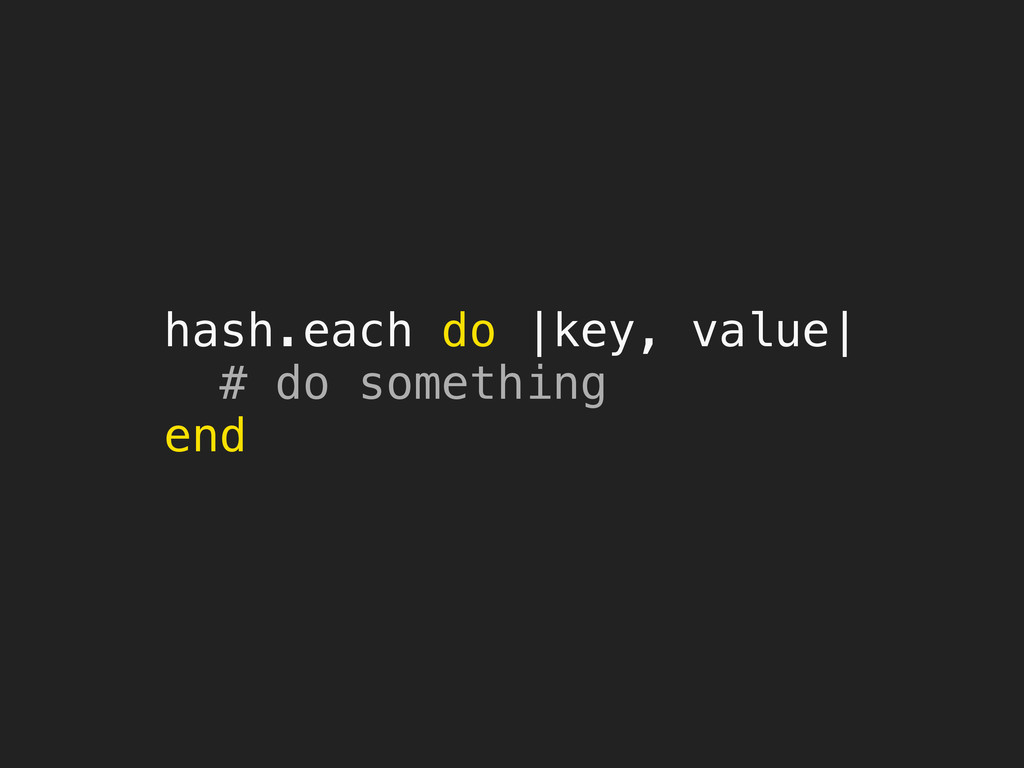
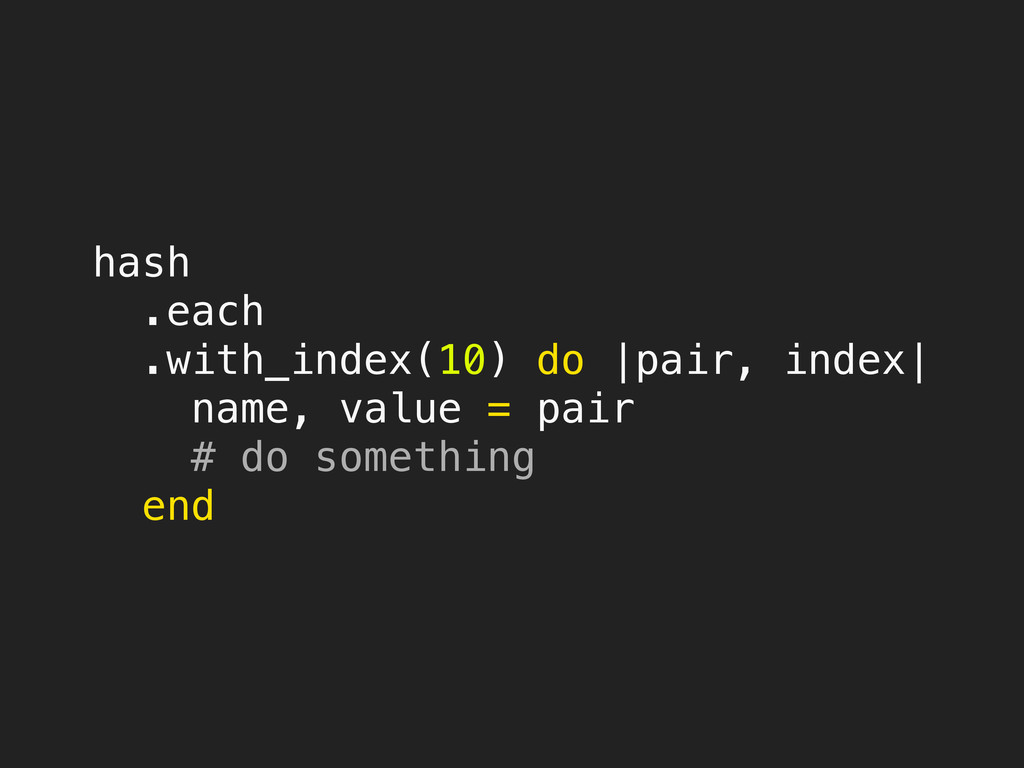
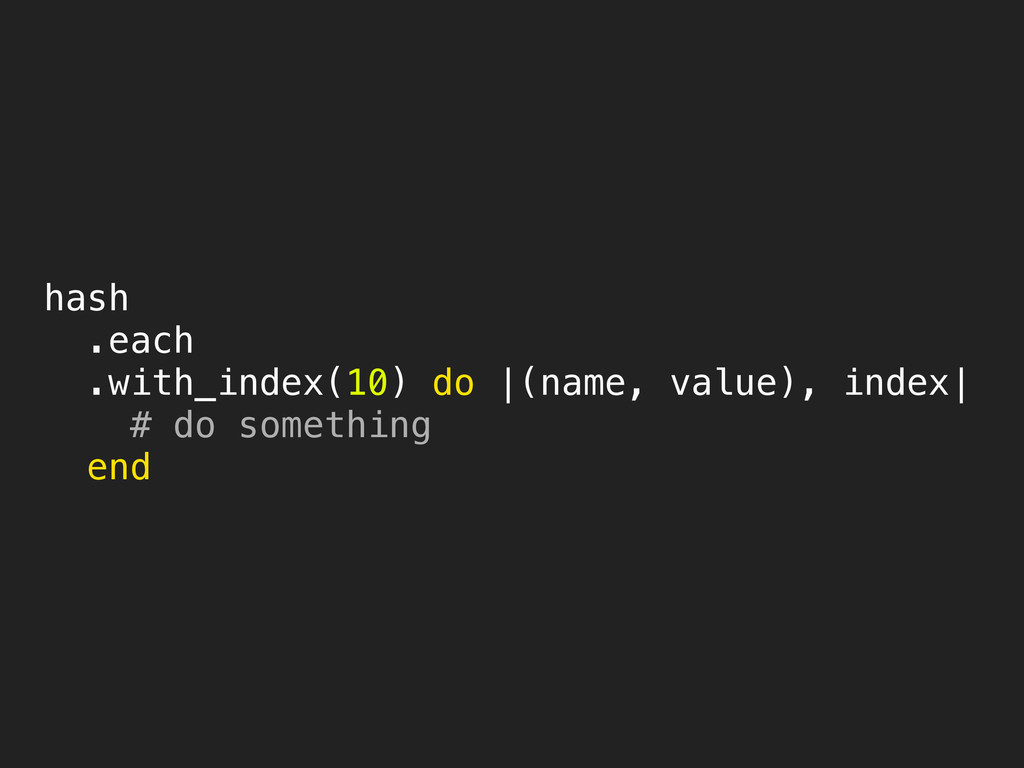
HASHES & ENUMERATORS
hash.each do |key, value| # do something end
hash .each .with_index(10) do |pair, index| name, value = pair
# do something end
hash .each .with_index(10) do |(name, value), index| # do something
end
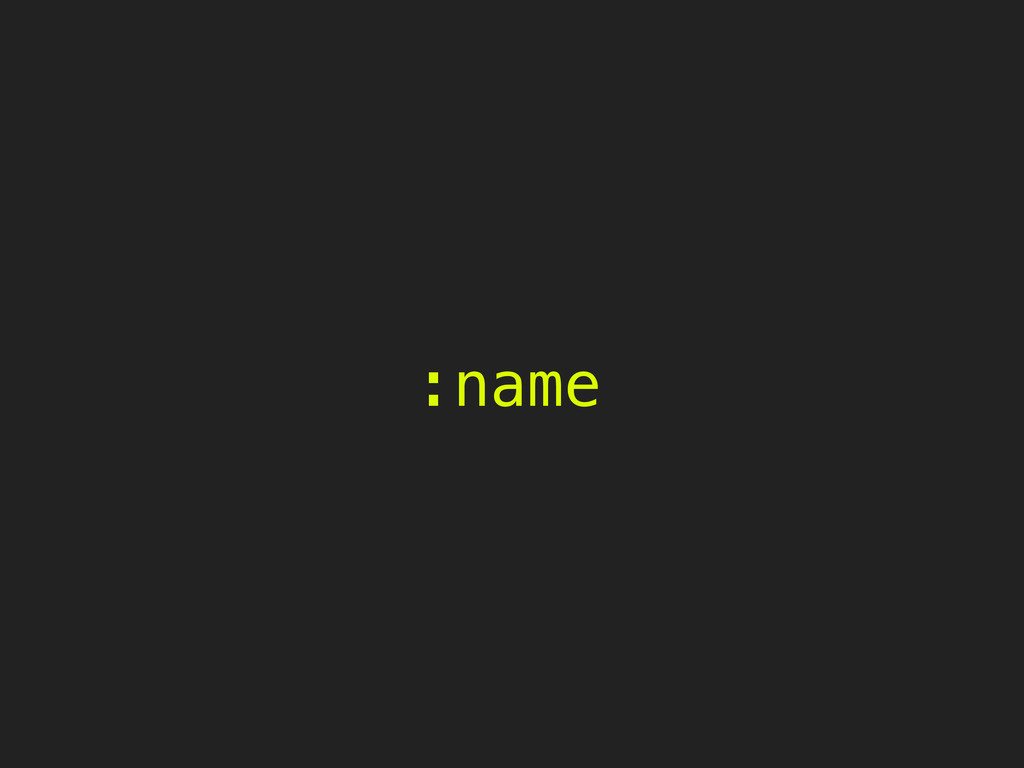
SYMBOLS
:name
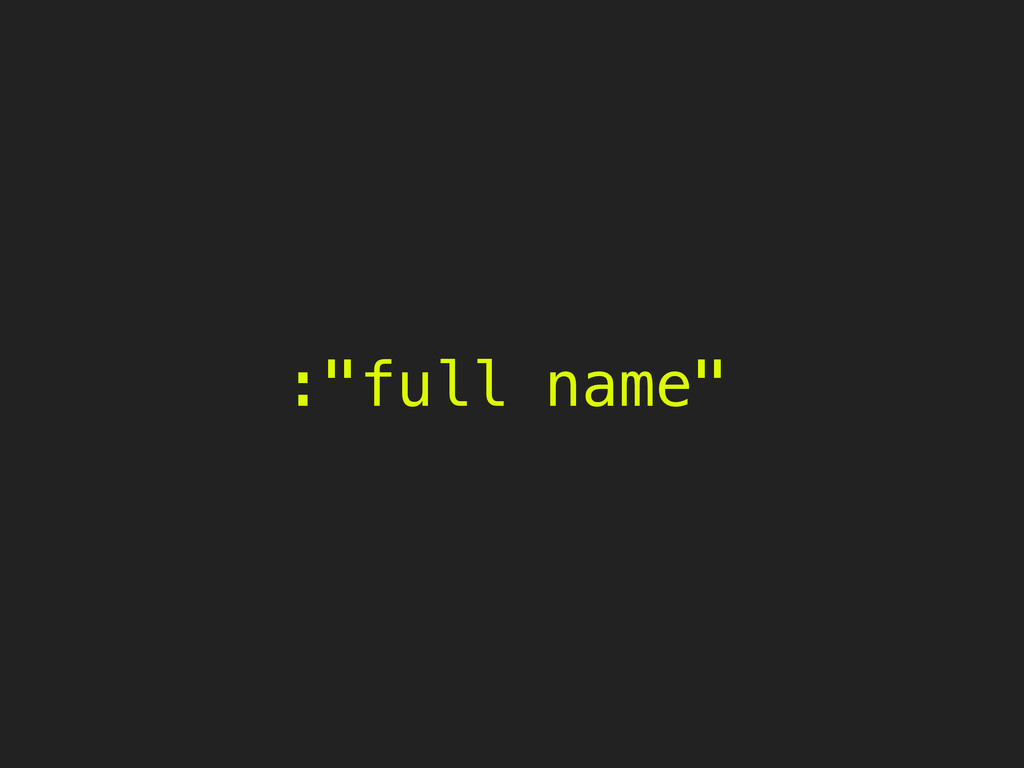
:"full name"
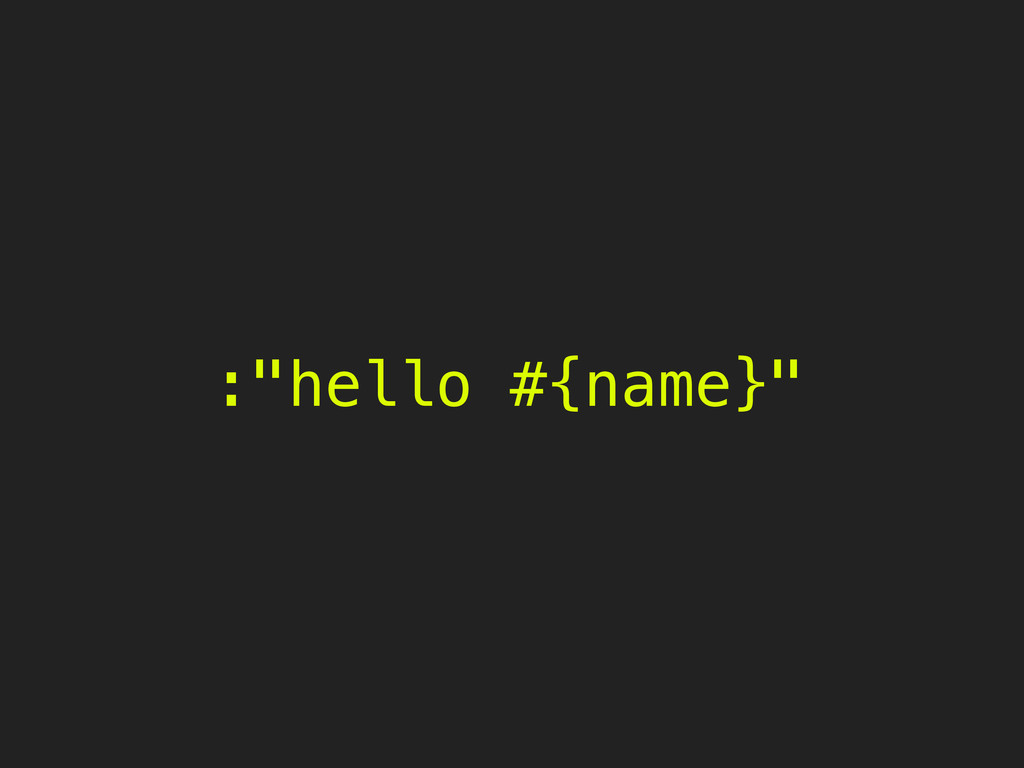
:"hello #{name}"
E PARA FINALIZAR...
O Ruby possui uma série de truques que podem ajudar
bastante.
Mais do que saber usar, você precisa saber quando usar.
Sintaxes exotéricas serão mais difíceis de entender.
Conheça Ruby. Todo o resto vem de graça.
OBRIGADO!


 fnando
 pimterry
 dtaniwaki
 yoshidashingo
 danielbryantuk
 shinyaigeek
 takeuchi_132917
 belongadmin
 verypluming
 s27watanabe
 tyosi1212
 nrslib
 askua
askua
 kneath
 lara
lara
 mfonobong
 tomoyanonymous
 stuffmc
 gr2m
gr2m
 szymonslowik
 oripsolob
 axbom
axbom
 irinanazarova
 427marketing
 eileencodes











![class SimpleLogger def initialize(storage = []) unless storage.is_a?(Array) raise "you](https://files.speakerdeck.com/presentations/4ff86d30f2f646000c0013c2/slide_14.jpg)
![def initialize(storage = []) unless storage.is_a?(Array) raise "you need to](https://files.speakerdeck.com/presentations/4ff86d30f2f646000c0013c2/slide_15.jpg)
![class SimpleLogger def initialize(storage = []) @storage = storage end](https://files.speakerdeck.com/presentations/4ff86d30f2f646000c0013c2/slide_19.jpg)






![sum_proc.parameters #=> [[:opt, :n1], [:opt, :n2]] sum_lambda.parameters #=> [[:req, :n1],](https://files.speakerdeck.com/presentations/4ff86d30f2f646000c0013c2/slide_38.jpg)



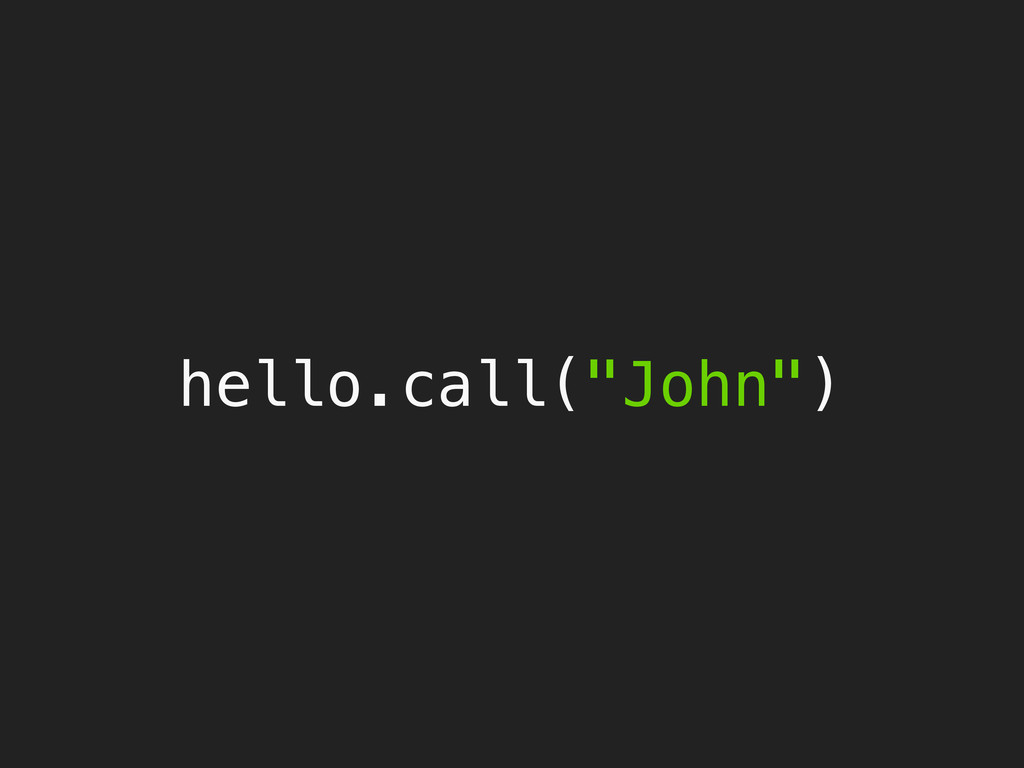
![hello["John"]](https://files.speakerdeck.com/presentations/4ff86d30f2f646000c0013c2/slide_51.jpg)
![Array === [] #=> true multiple_of_3 === 9 #=> true](https://files.speakerdeck.com/presentations/4ff86d30f2f646000c0013c2/slide_57.jpg)




![class Settings names = %w[path size locale] attr_dsl *names end](https://files.speakerdeck.com/presentations/4ff86d30f2f646000c0013c2/slide_67.jpg)
![a, b, c, d = [1, 2, 3, 4]](https://files.speakerdeck.com/presentations/4ff86d30f2f646000c0013c2/slide_69.jpg)
![numbers = [1, 2, 3] more_numbers = [*numbers, 4, 5,](https://files.speakerdeck.com/presentations/4ff86d30f2f646000c0013c2/slide_73.jpg)
![(1..10).to_a.sample [*1..10].sample](https://files.speakerdeck.com/presentations/4ff86d30f2f646000c0013c2/slide_74.jpg)
![class Sample def to_a [1, 2, 3] end end a,](https://files.speakerdeck.com/presentations/4ff86d30f2f646000c0013c2/slide_76.jpg)



![user = User.new user.methods #=> [:name, :age, ...]](https://files.speakerdeck.com/presentations/4ff86d30f2f646000c0013c2/slide_87.jpg)
![user.method(:name) .source_location #=> ["/tmp/user.rb", 2]](https://files.speakerdeck.com/presentations/4ff86d30f2f646000c0013c2/slide_90.jpg)

![person = "John <[email protected]>" regex = /(.*?) <(.*?)>/ _, name,](https://files.speakerdeck.com/presentations/4ff86d30f2f646000c0013c2/slide_92.jpg)
![person[/(.*?) <(.*?)>/, 1] person[/(.*?) <(.*?)>/, 2]](https://files.speakerdeck.com/presentations/4ff86d30f2f646000c0013c2/slide_93.jpg)
![match.names #=> ["name", "email"] match.captures #=> ["John Doe", "[email protected]"] match[:name]](https://files.speakerdeck.com/presentations/4ff86d30f2f646000c0013c2/slide_95.jpg)