This slide is a highlevel overview of Cybersecurity which talks about your attacker, malware and how to protect your Information system or Enterprise by using effective security and policy controls.
provide solution to protect any enterprise information systems to make it secure and hack free. To provide best practices which addresses secure interoperability, usability and privacy continues to be need of the hour. www.learnfact.in
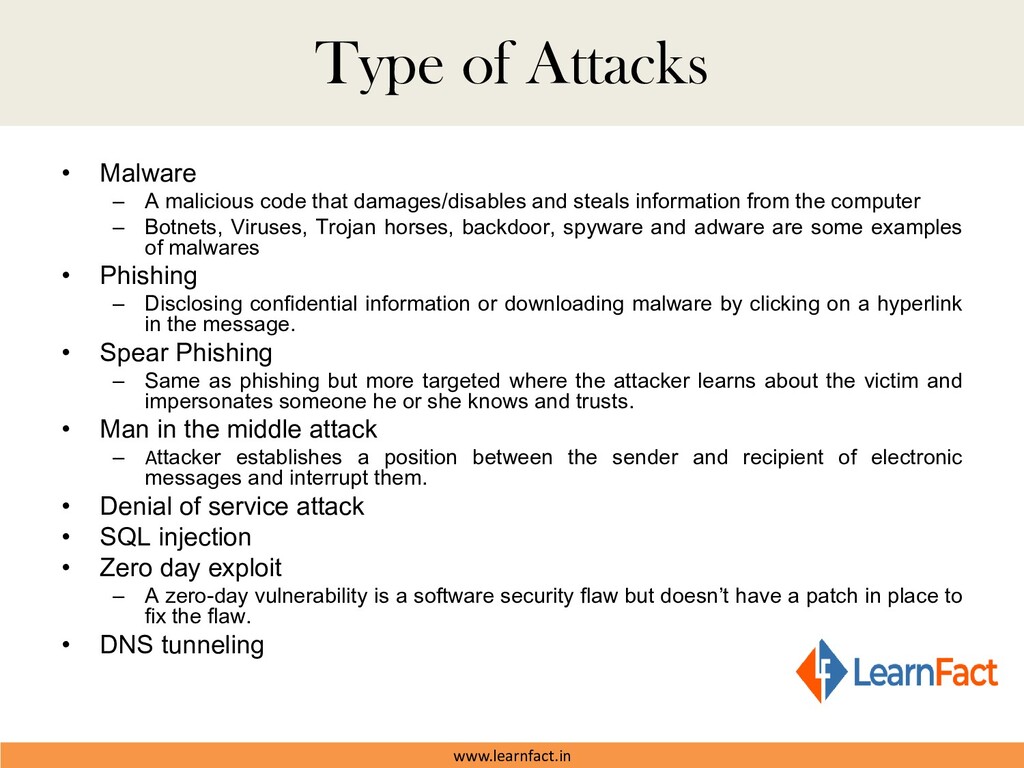
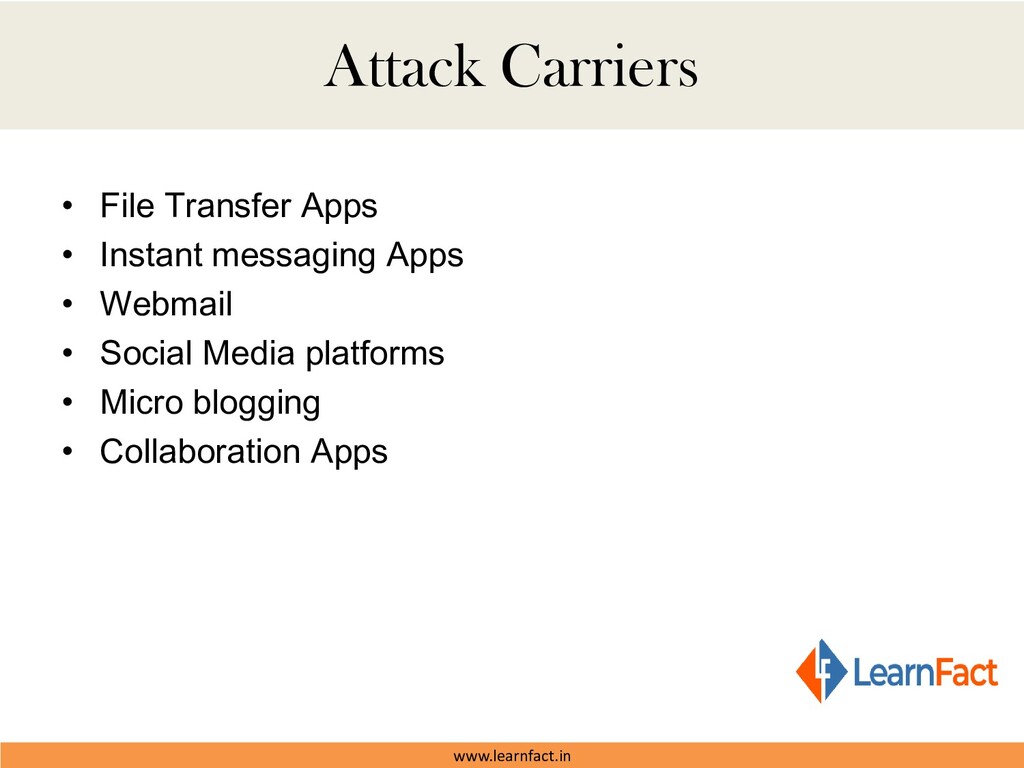
damages/disables and steals information from the computer – Botnets, Viruses, Trojan horses, backdoor, spyware and adware are some examples of malwares • Phishing – Disclosing confidential information or downloading malware by clicking on a hyperlink in the message. • Spear Phishing – Same as phishing but more targeted where the attacker learns about the victim and impersonates someone he or she knows and trusts. • Man in the middle attack – Attacker establishes a position between the sender and recipient of electronic messages and interrupt them. • Denial of service attack • SQL injection • Zero day exploit – A zero-day vulnerability is a software security flaw but doesn’t have a patch in place to fix the flaw. • DNS tunneling www.learnfact.in
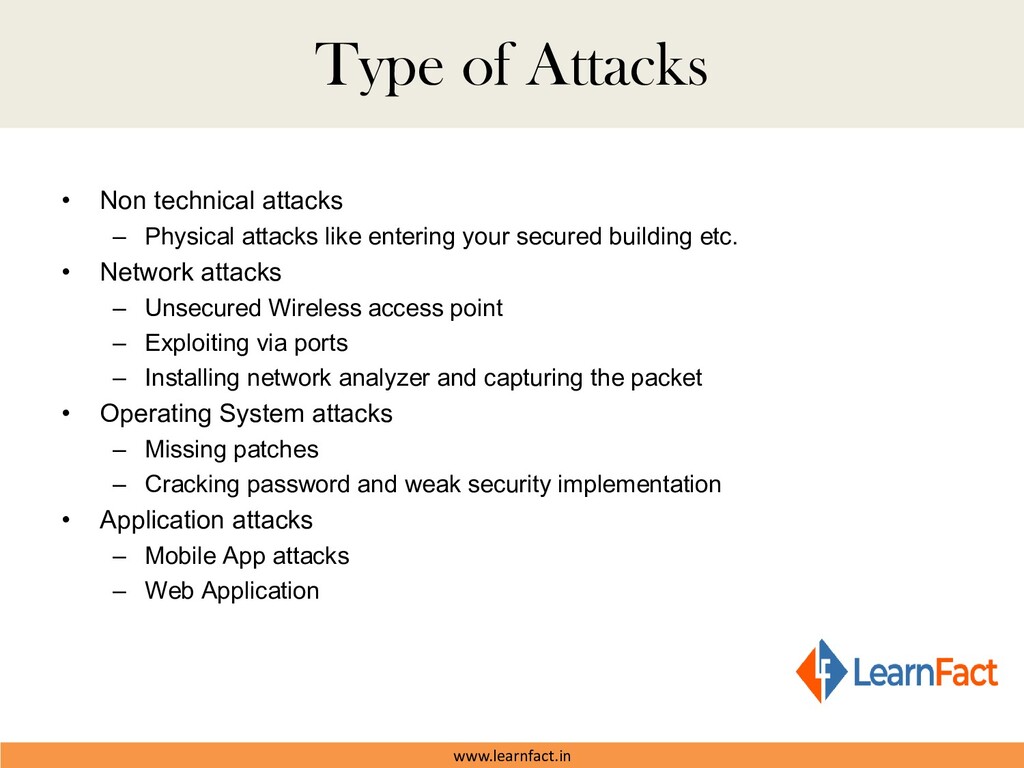
like entering your secured building etc. • Network attacks – Unsecured Wireless access point – Exploiting via ports – Installing network analyzer and capturing the packet • Operating System attacks – Missing patches – Cracking password and weak security implementation • Application attacks – Mobile App attacks – Web Application www.learnfact.in
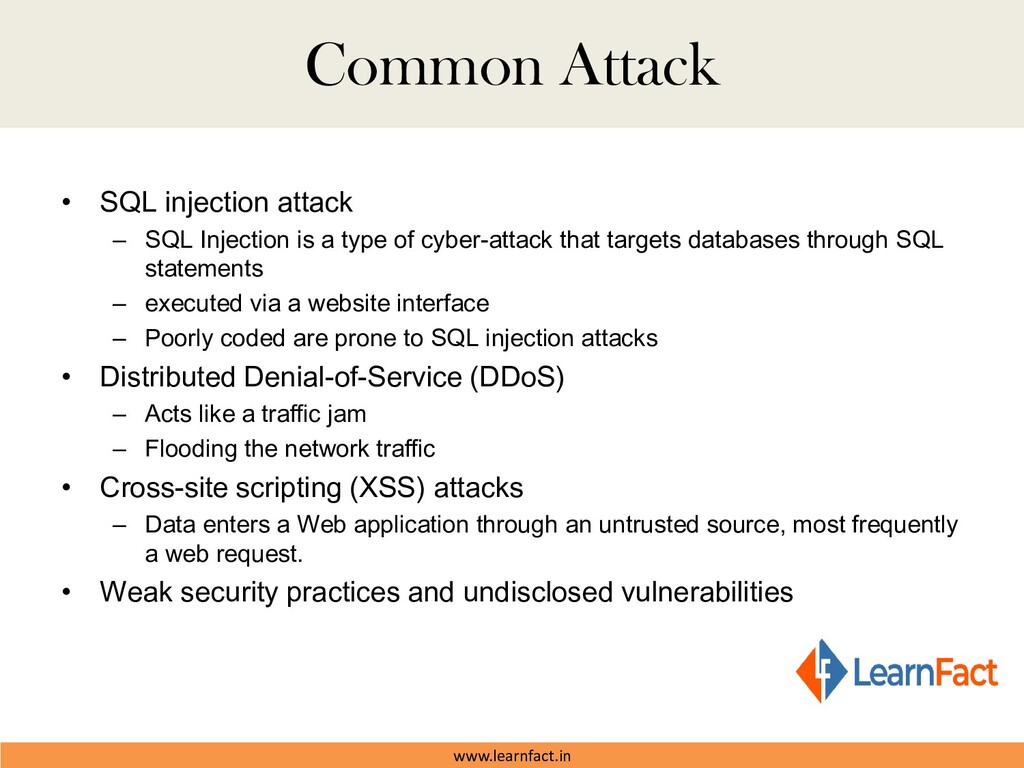
a type of cyber-attack that targets databases through SQL statements – executed via a website interface – Poorly coded are prone to SQL injection attacks • Distributed Denial-of-Service (DDoS) – Acts like a traffic jam – Flooding the network traffic • Cross-site scripting (XSS) attacks – Data enters a Web application through an untrusted source, most frequently a web request. • Weak security practices and undisclosed vulnerabilities www.learnfact.in
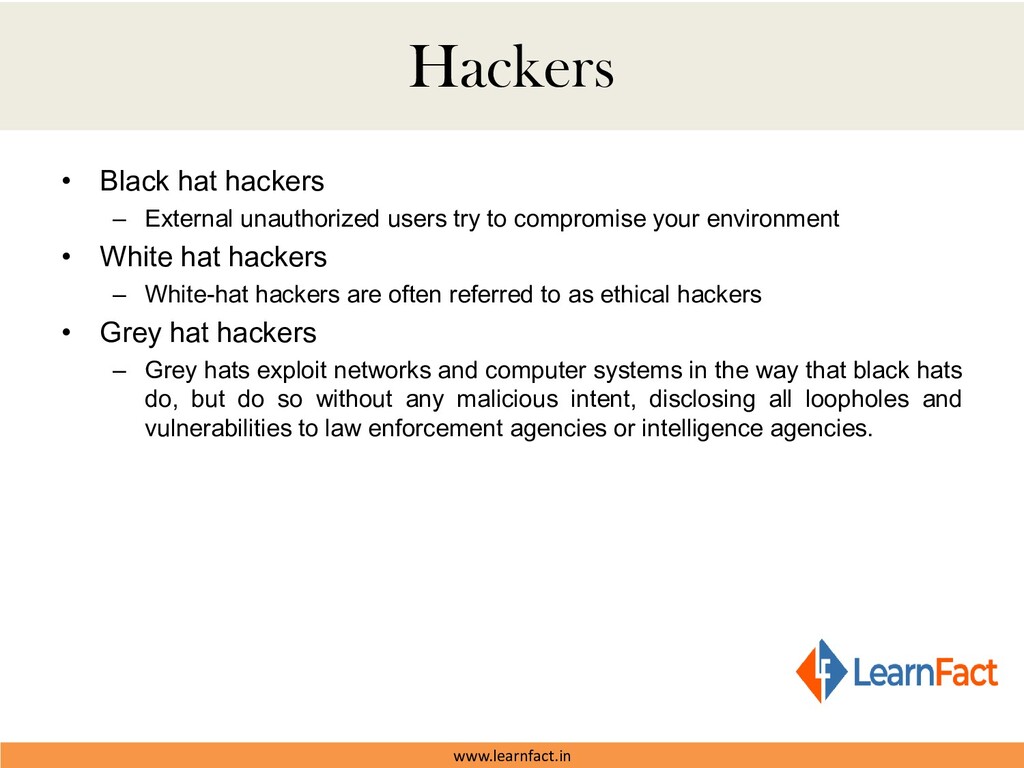
to compromise your environment • White hat hackers – White-hat hackers are often referred to as ethical hackers • Grey hat hackers – Grey hats exploit networks and computer systems in the way that black hats do, but do so without any malicious intent, disclosing all loopholes and vulnerabilities to law enforcement agencies or intelligence agencies. www.learnfact.in
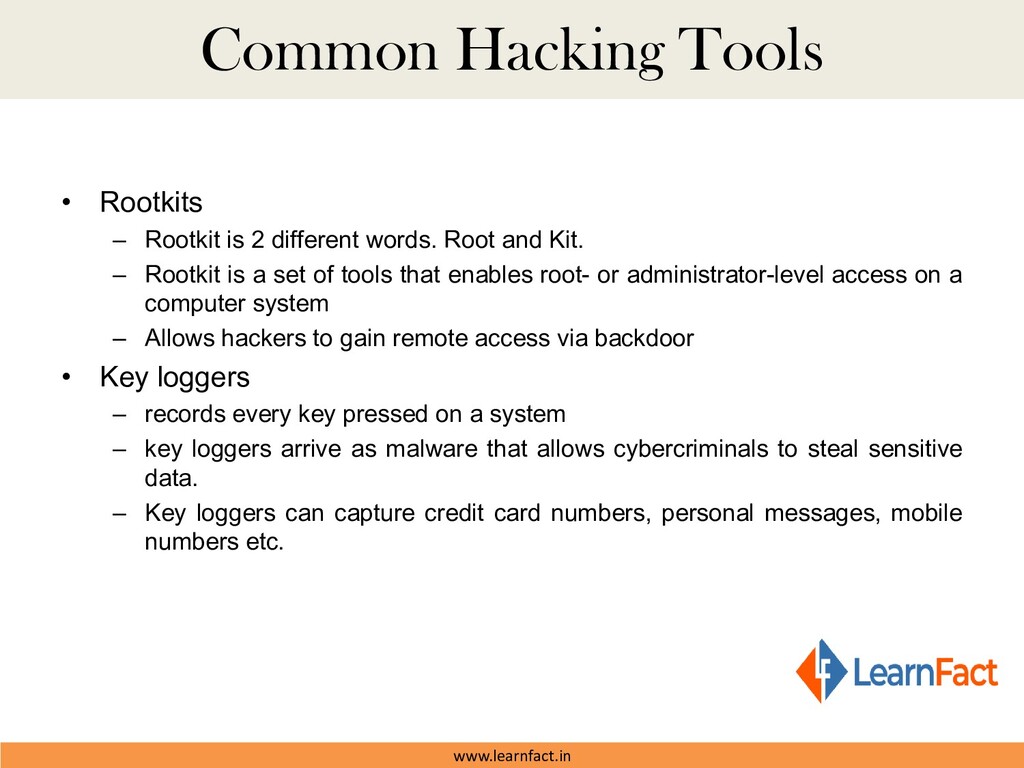
words. Root and Kit. – Rootkit is a set of tools that enables root- or administrator-level access on a computer system – Allows hackers to gain remote access via backdoor • Key loggers – records every key pressed on a system – key loggers arrive as malware that allows cybercriminals to steal sensitive data. – Key loggers can capture credit card numbers, personal messages, mobile numbers etc. www.learnfact.in
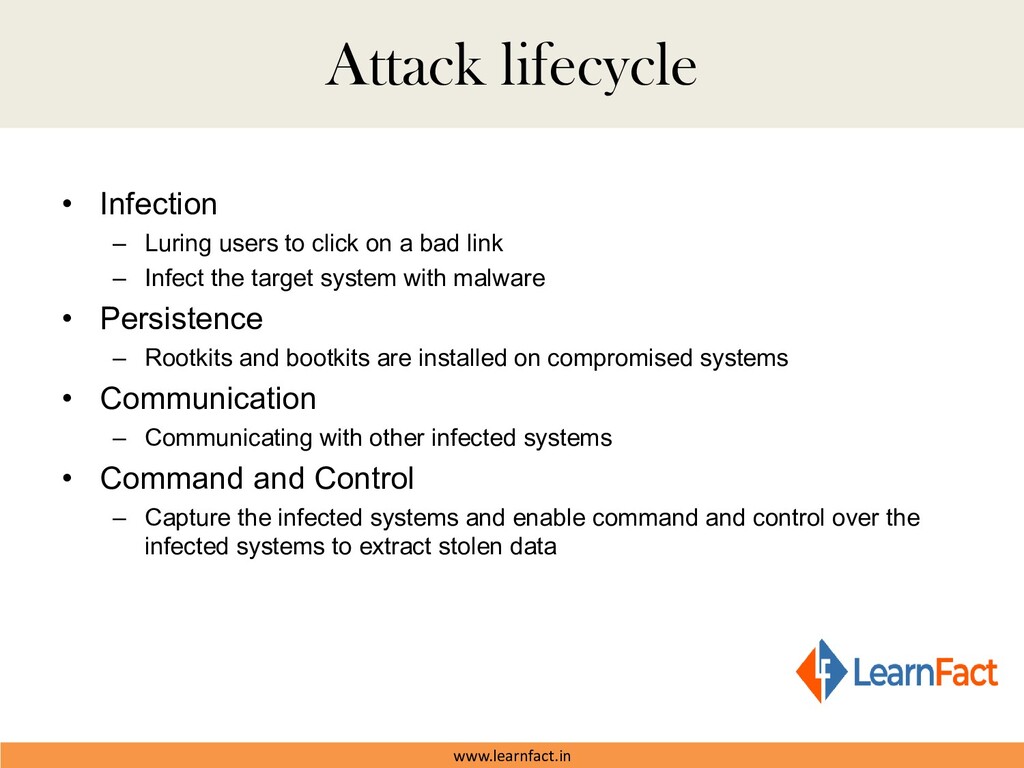
a bad link – Infect the target system with malware • Persistence – Rootkits and bootkits are installed on compromised systems • Communication – Communicating with other infected systems • Command and Control – Capture the infected systems and enable command and control over the infected systems to extract stolen data www.learnfact.in


 velayudhan
 yahonda
 gogutan
 taketakekaho
 nttcom
 pfn
 stomk
 makocchi
 yazm
 prog893
 ymotongpoo
 onk
 jonrohan
 gr2m
 kimpetersen
 greggifford
 sferik
 tmiket
 afnizarnur
 ryanjones
 frankvandijk
 watany
 aleyda
 marktimemedia