Upgrade to Pro — share decks privately, control downloads, hide ads and more …

Writing an opening that fits your story or your...

Writing an opening that fits your story or your style

This is a presentation I gave as part of an "Openings" workshop at the annual Sleuthfest convention in Florida. It discusses the different functions of a story's opening paragraphs, provides examples from classic mystery literature, and examines how each of those openings fit its story or its author's style.

Sleuthfest, writing, writing tips, writing openings, opening lines

#Sleuthfest #writing #writingtips #writingopenings #openinglines

Vincent H. O'Neil

October 22, 2026

Transcript

30 slides
  1. "Allow Me to Introduce . . ." Writing an opening

    that fits your story or your style
  2. What is an Opening? • The first sentence? • The

    first paragraph? • The first chapter? • A hook? • A description of the setting? • An introduction of the main character?
  3. Advice from the Web “The less said the better. Entice

    the reader to want to read on. I love openings where the reader is thrown into a moment in the character’s life without introduction or background.” “The key word is INVOLVE. Grab the reader's attention at once. Don't start off with a long scene-setting passage where nothing happens. There must be something in the first few lines that makes the reader want to reach into the story to find out what happens next.” “Usually a bit of dialogue or something that grabs at the reader, something funny or shocking (depending on the genre). There is also a lot to be said for introducing your main character quickly to get the reader involved. And get to the story from page one.”
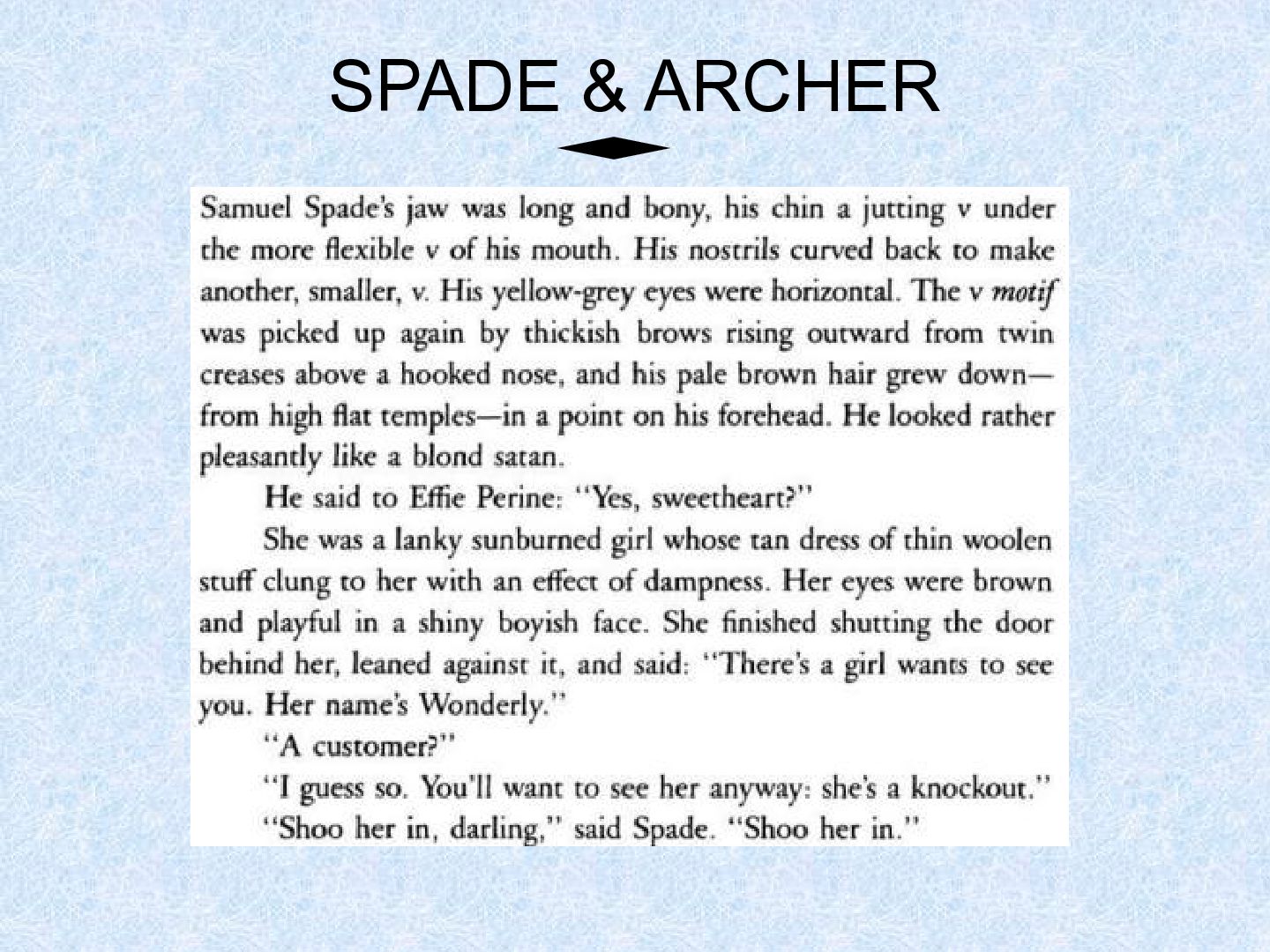
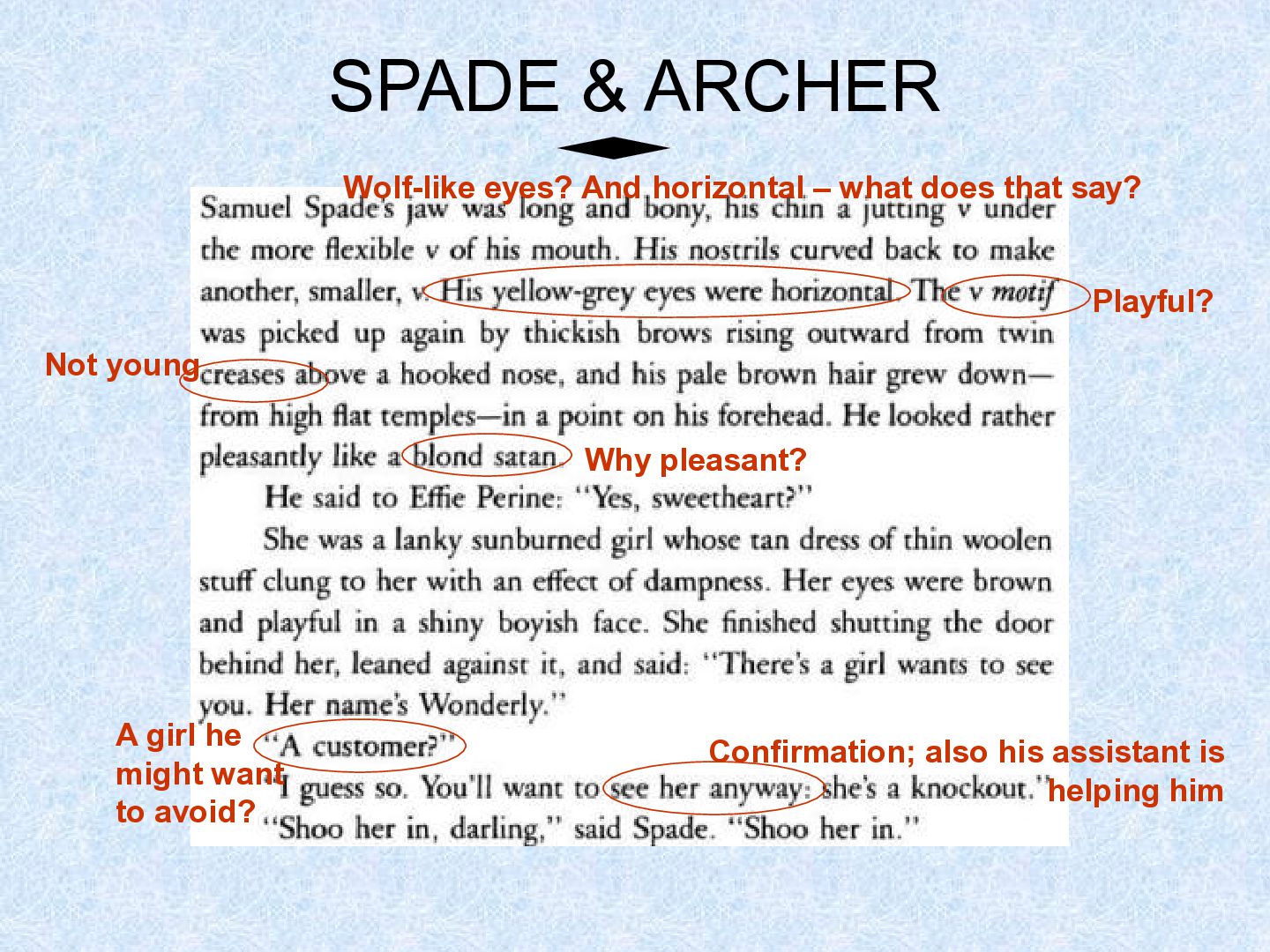
  4. SPADE & ARCHER Wolf-like eyes? And horizontal – what does

    that say? Playful? Not young Why pleasant? A girl he might want to avoid? Confirmation; also his assistant is helping him
  5. Advice from the Web 2 “A good opening is one

    that interests the reader, or asks a question. Okay: It was a wet Monday morning. Better: Why did it always rain when Cindy was in trouble? This is better. It tells the reader a number of things, and also raises a question: Why is Cindy in trouble?” “There is no formula for this. Write something that you, as a reader, would find intriguing or exciting. Think of yourself as a storyteller, rather than a 'writer', and imagine how you might get someone else interested if you were telling the story aloud.”
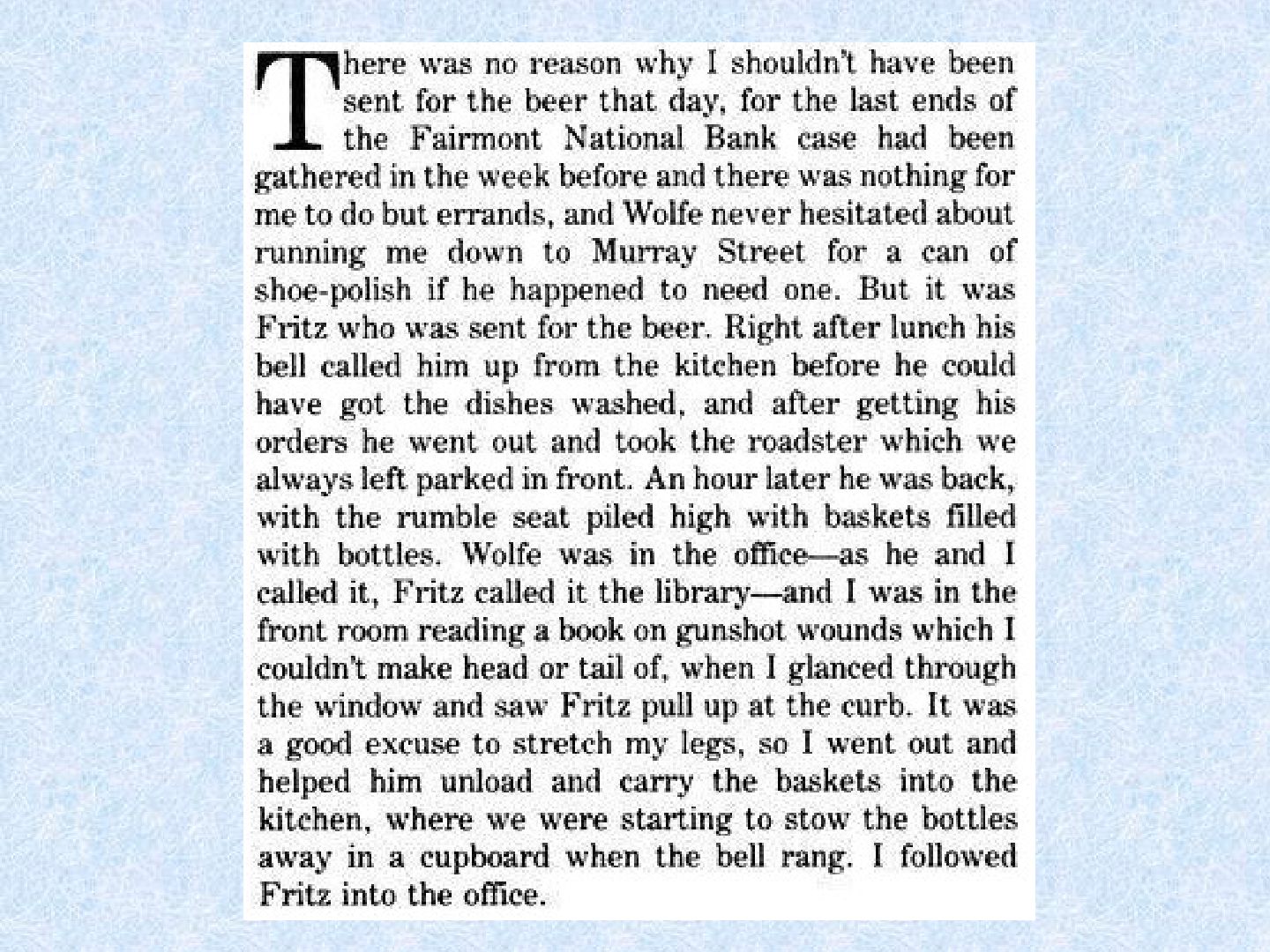
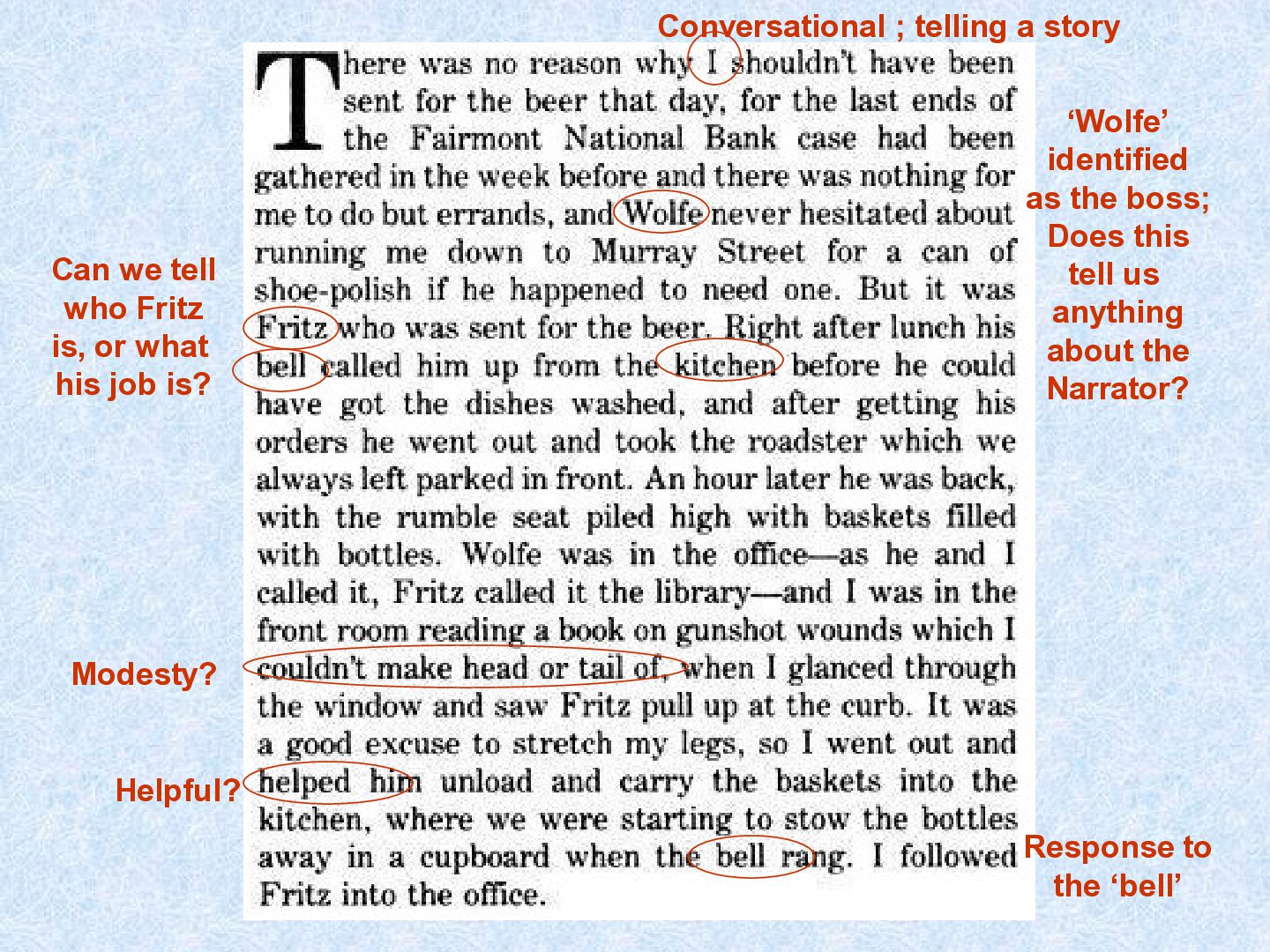
  6. Conversational ; telling a story Can we tell who Fritz

    is, or what his job is? ‘Wolfe’ identified as the boss; Does this tell us anything about the Narrator? Modesty? Helpful? Response to the ‘bell’
  7. Advice from the Web 3 “Does the opening convey the

    general tone of your writing? For example, if you’re funny throughout the book, does this opening paragraph portray the best of your humor?” “Does it set up a mystery the reader will spend the rest of the work trying to figure out?” “Does it show something about the central character, or someone important to the work? Remember that an opening paragraph will help your readers grow attached to your main character. If that person has a central flaw that leads to their downfall you may want to hint at this here too.”
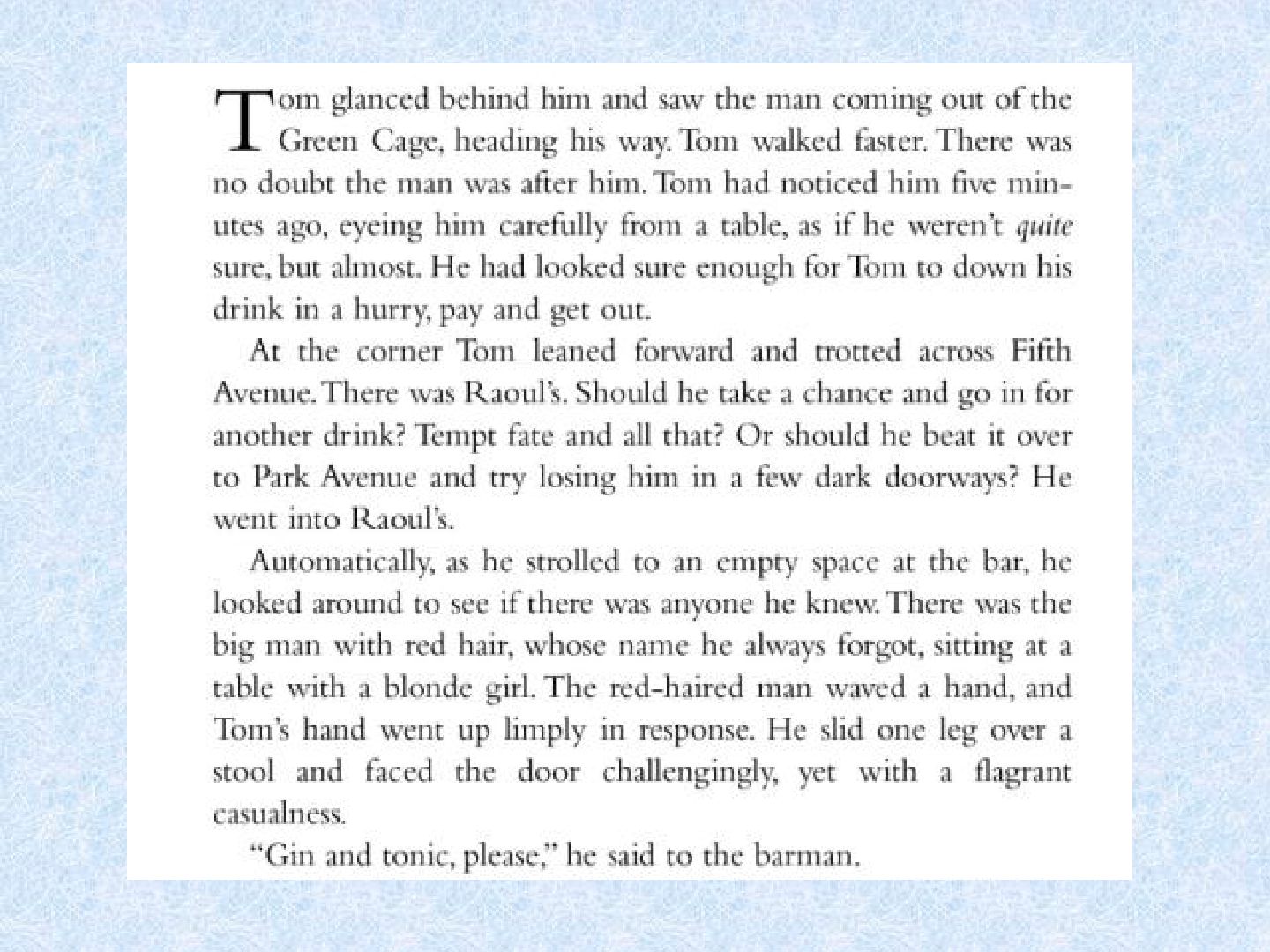
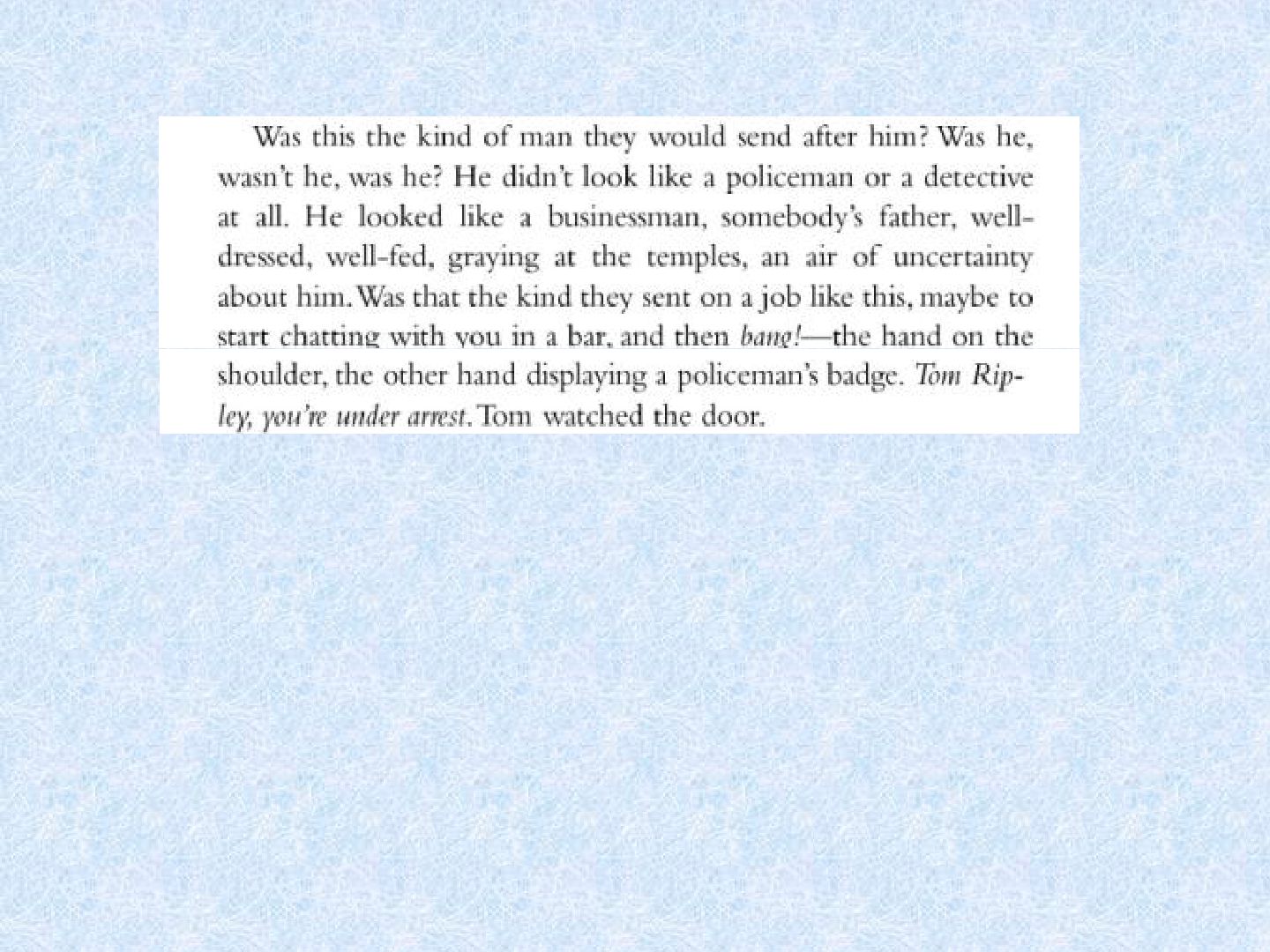
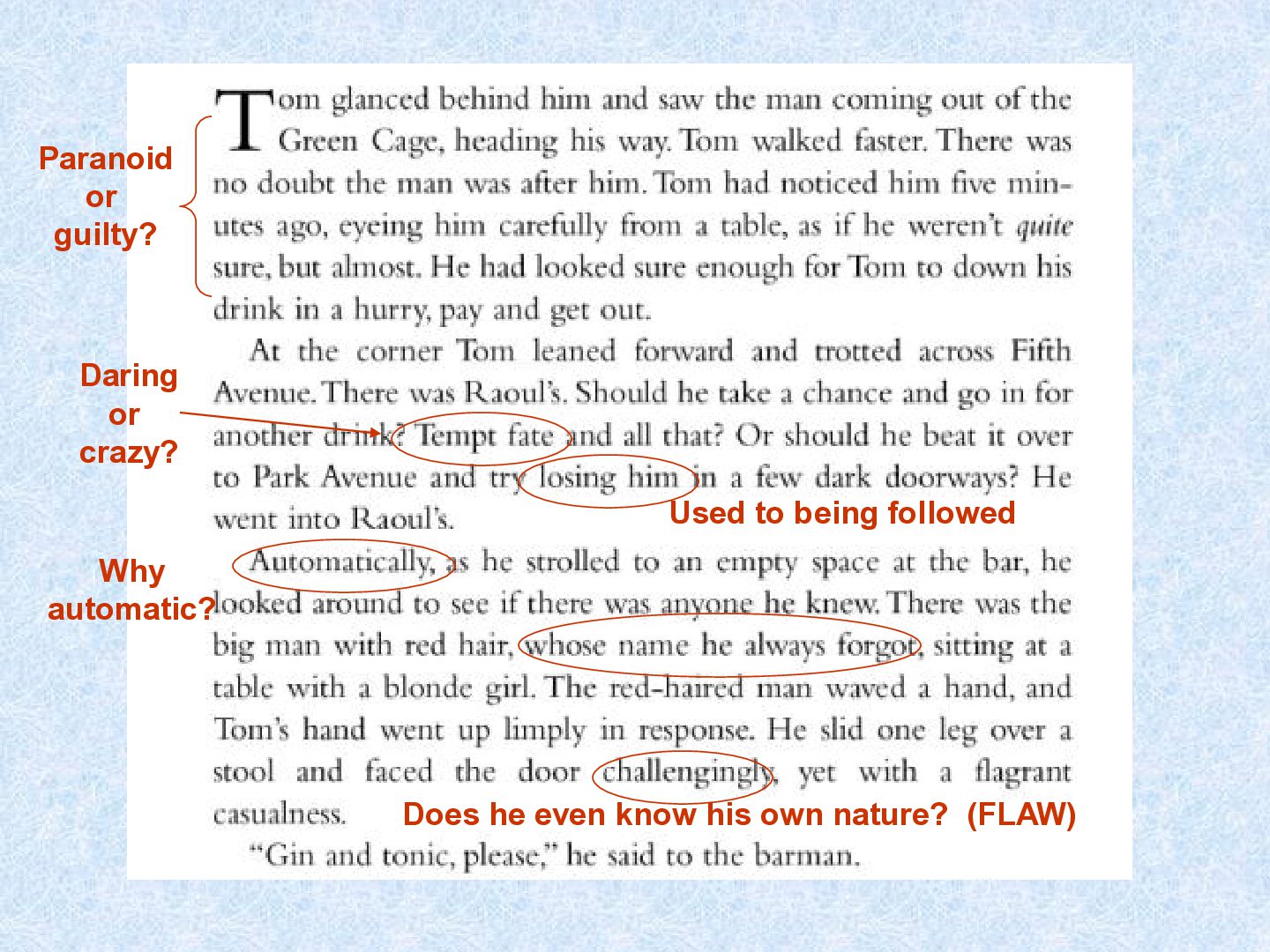
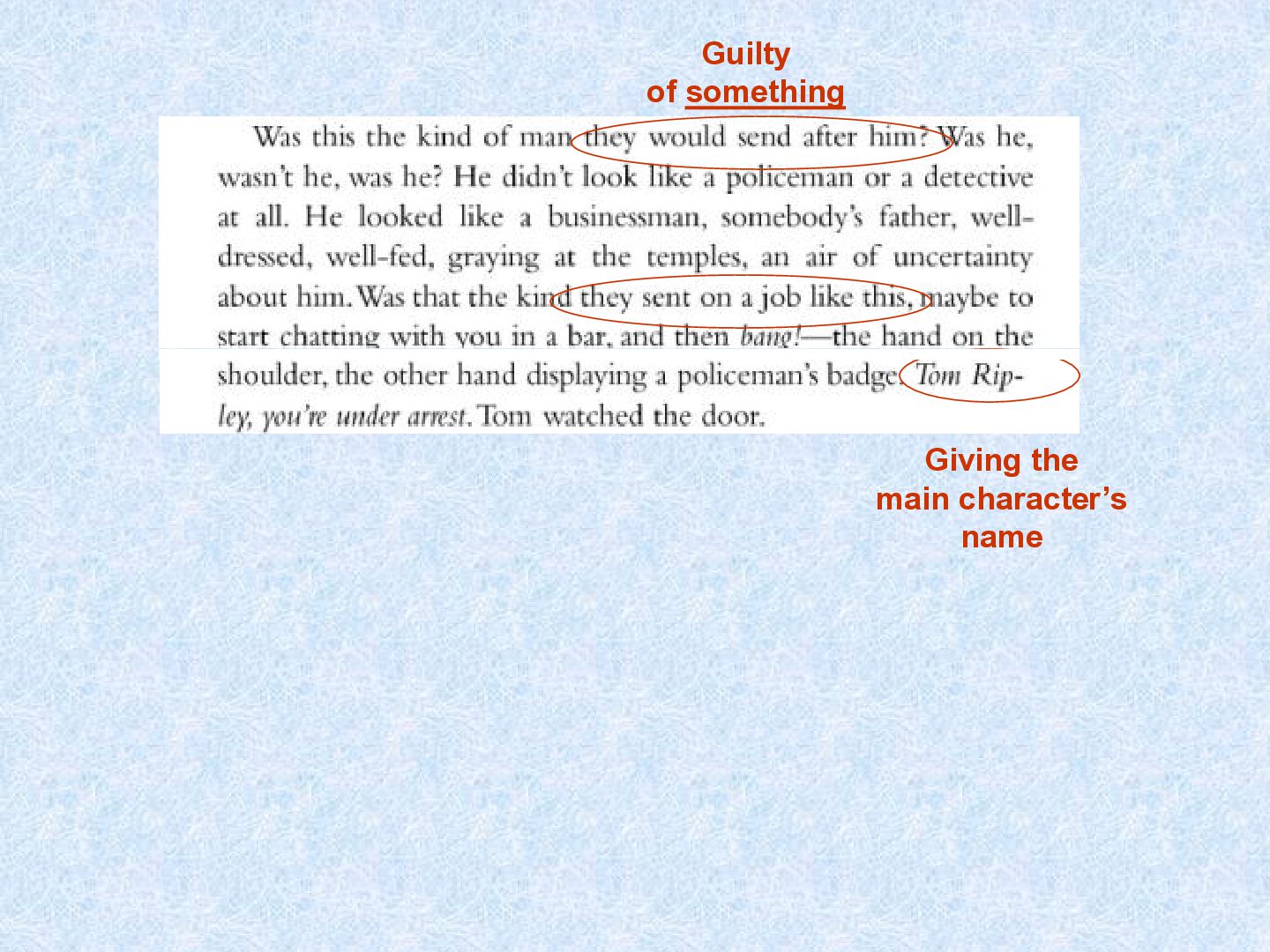
  8. Paranoid or guilty? Daring or crazy? Used to being followed

    Why automatic? Does he even know his own nature? (FLAW)
  9. Advice from the Web 4 “Does the opening paragraph set

    up the main point of view which the reader will connect with throughout the work? One book I worked on started with ‘the bad guys’. This was a problem, because the readers became attached to them, rather than to the good guy who was introduced later.” “Does it show and not tell? For example, at the start of ‘Moby Dick’ Ishmael is feeling sad, but he doesn’t say ‘I was sad’. He tells us of the ‘damp, drizzly November’ of his soul.”
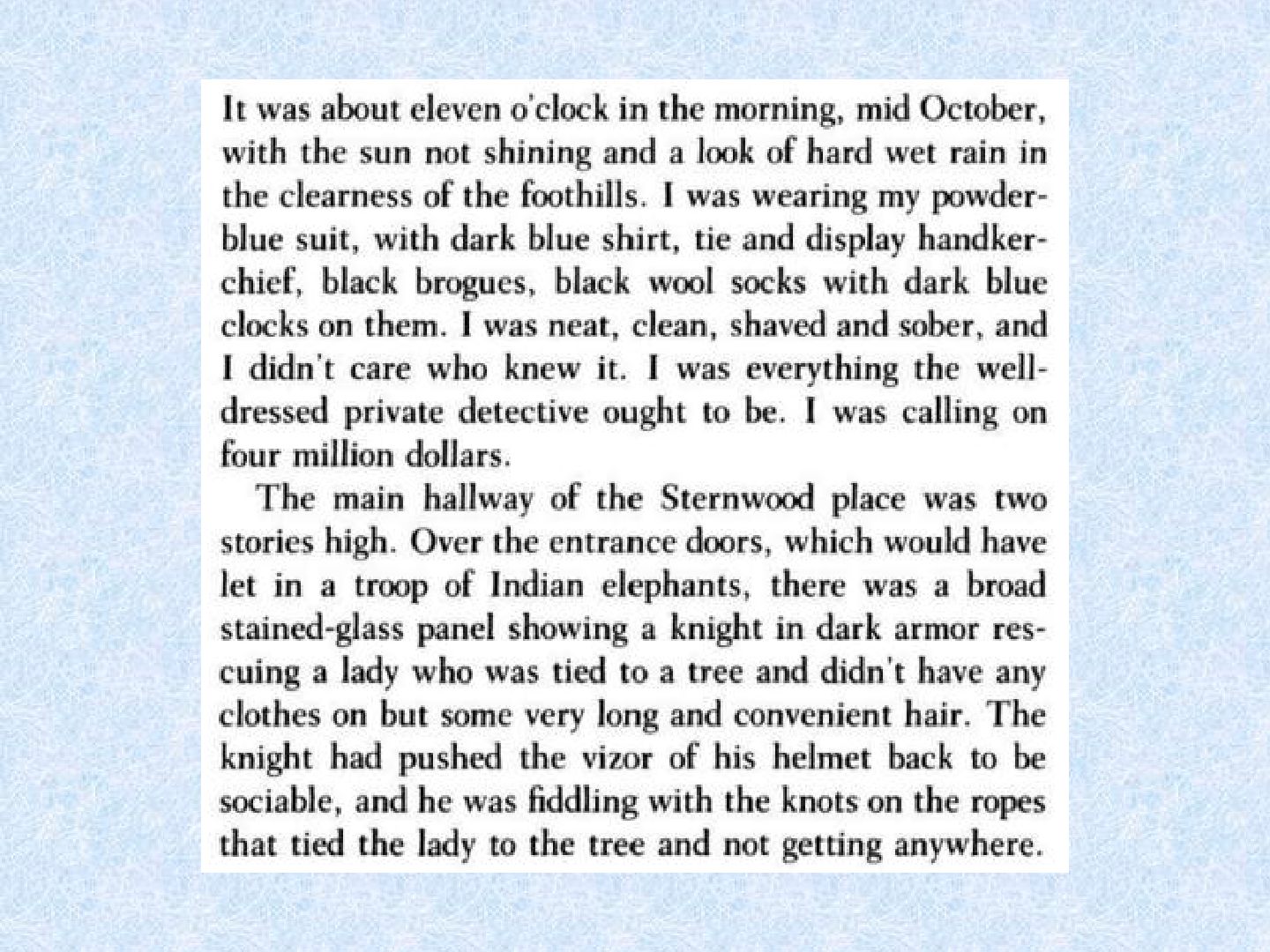
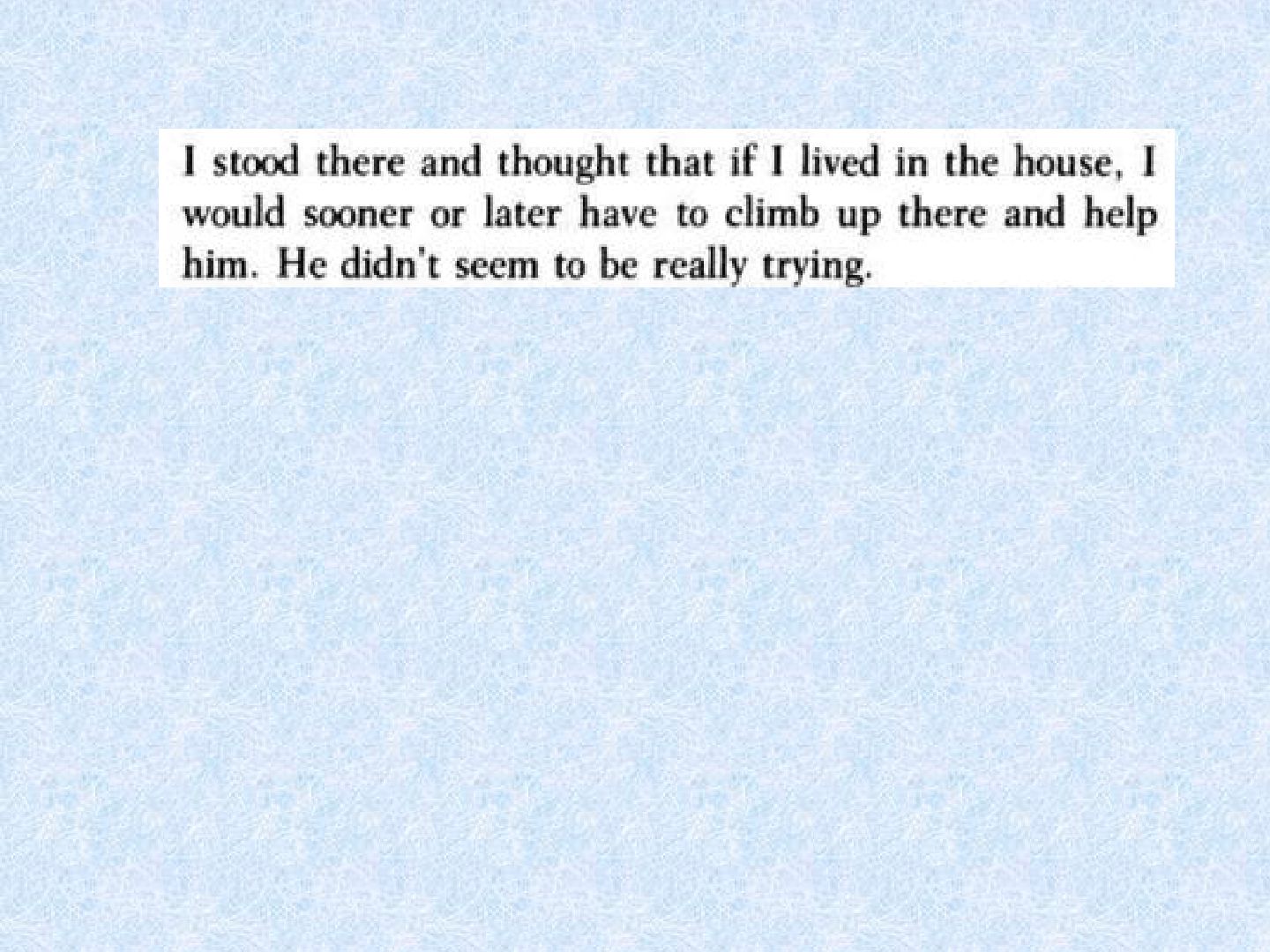
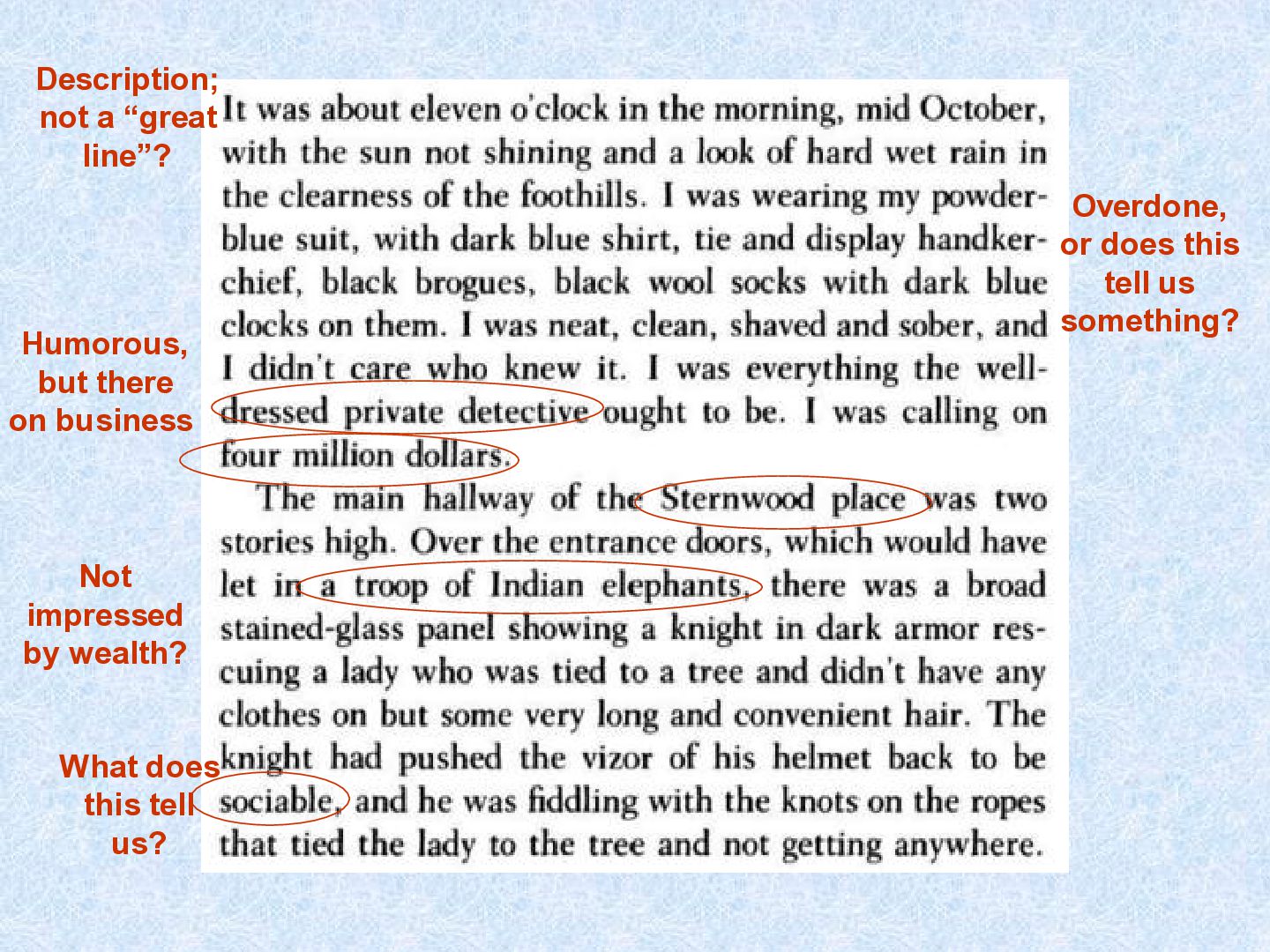
  10. Description; not a “great line”? Humorous, but there on business

    Not impressed by wealth? What does this tell us? Overdone, or does this tell us something?
  11. It was one of those sultry early September nights that

    can lull you into thinking summer will last forever. On Secaucus Road the scent of leaves and baked pavement mixed with the emissions of traffic and industry. Inside Snappers, nicotine and beer fumes and the barmaid’s Anais Anais made all the seasons smell the same, though in summer there was a tinge more sweat in the mix.
  12. Conclusions (maybe) Intriguing: Throw the reader into a moment in

    the character’s life without introduction or background Interesting: Start with dialogue or action, or something funny (or shocking) Entertaining: Imagine how you might get someone else interested if you were telling the story aloud
  13. Conclusions (maybe) 2 Tone: The opening should convey the manner

    in which the story is going to be told (funny, dark, etc.) Character: Starting with the main character will help the reader identify with that character. If that player has a flaw, perhaps indicate that early on Show: Finding ways to convey a feeling or a description without simply stating it can pull the reader in
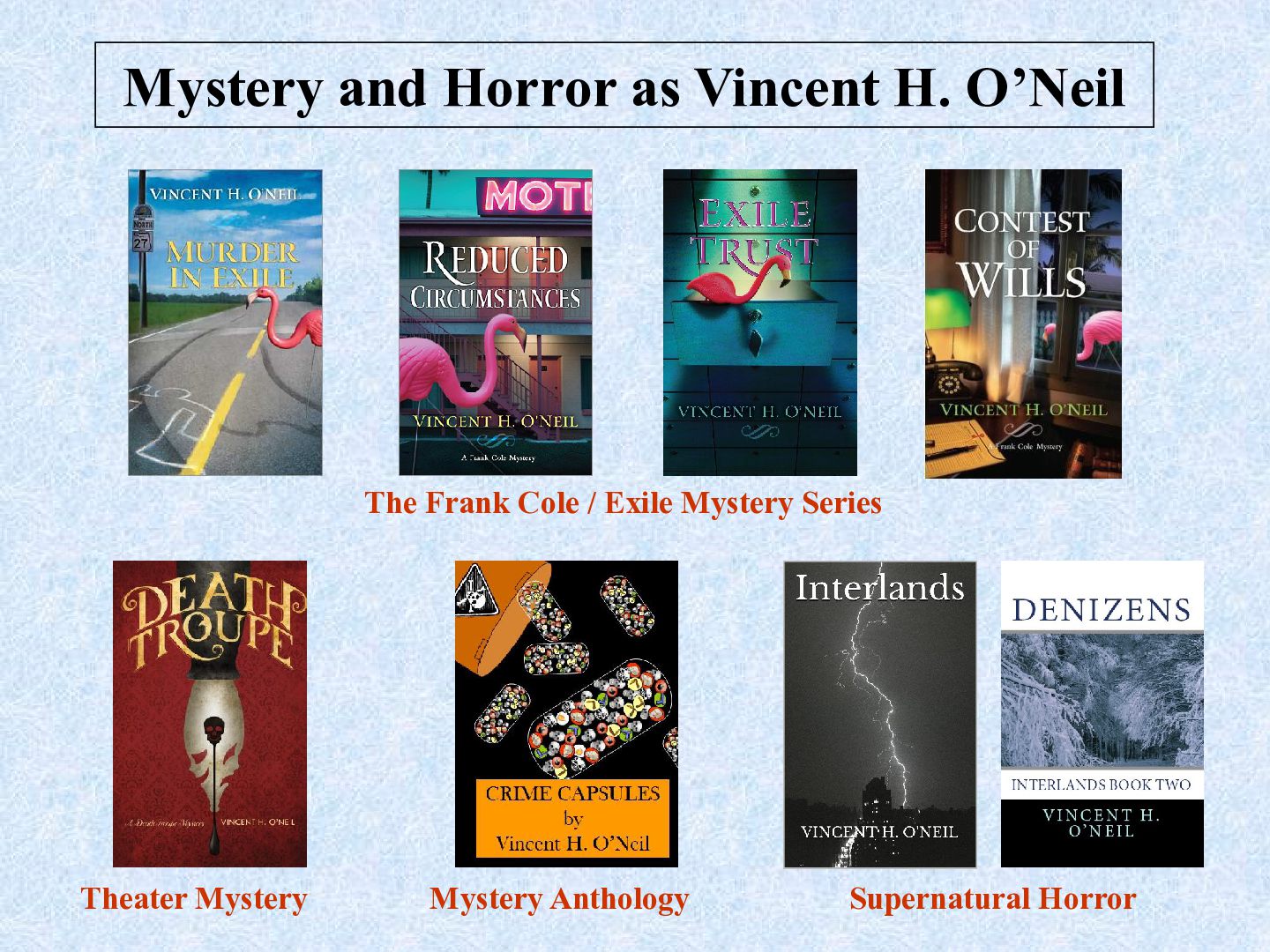
  14. Mystery and Horror as Vincent H. O’Neil The Frank Cole

    / Exile Mystery Series Theater Mystery Mystery Anthology Supernatural Horror

More Decks by Vincent H. O'Neil

Other Decks in Education