Upgrade to Pro — share decks privately, control downloads, hide ads and more …

Writing when you have no plan, no plot, and eve...

Writing when you have no plan, no plot, and even no point

In this presentation, learn how to jumpstart ideas for your writing, explore different plot options, and track your story from start to finish:

Get an idea by brainstorming or letting the research inspire you
Decide how you're going to get your idea across or tell your tale
Flesh it out using an outline, index cards, a spreadsheet, or whatever works for you
Follow the characters / events all the way through

Vincent H. O'Neil

October 22, 2026

Transcript

31 slides
  1. The Brute Force & Ignorance Approach Writing when you have

    no plan, no plot, and even no point Vincent H. O’Neil (aka Henry V. O’Neil) www.vincenthoneil.com
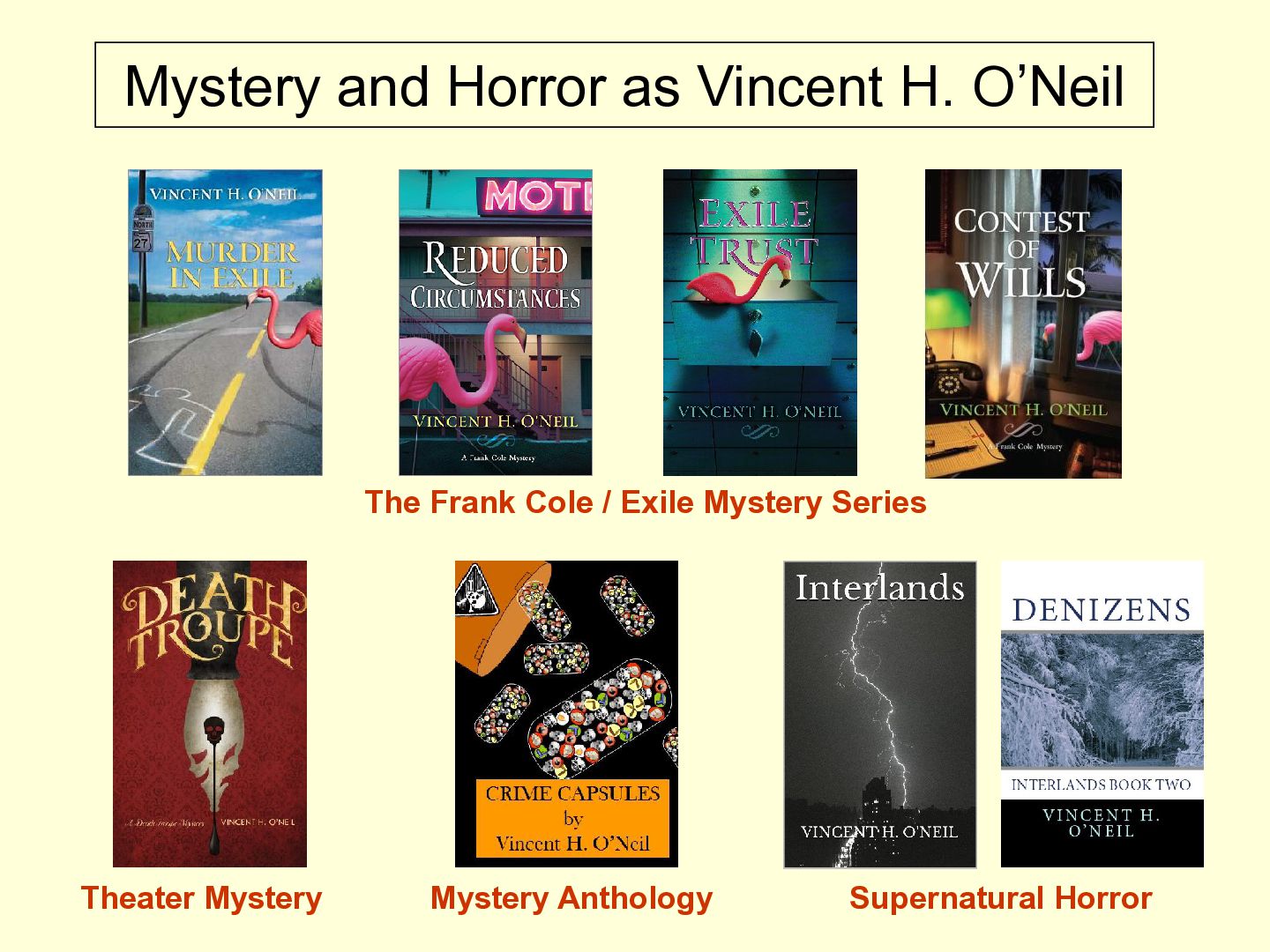
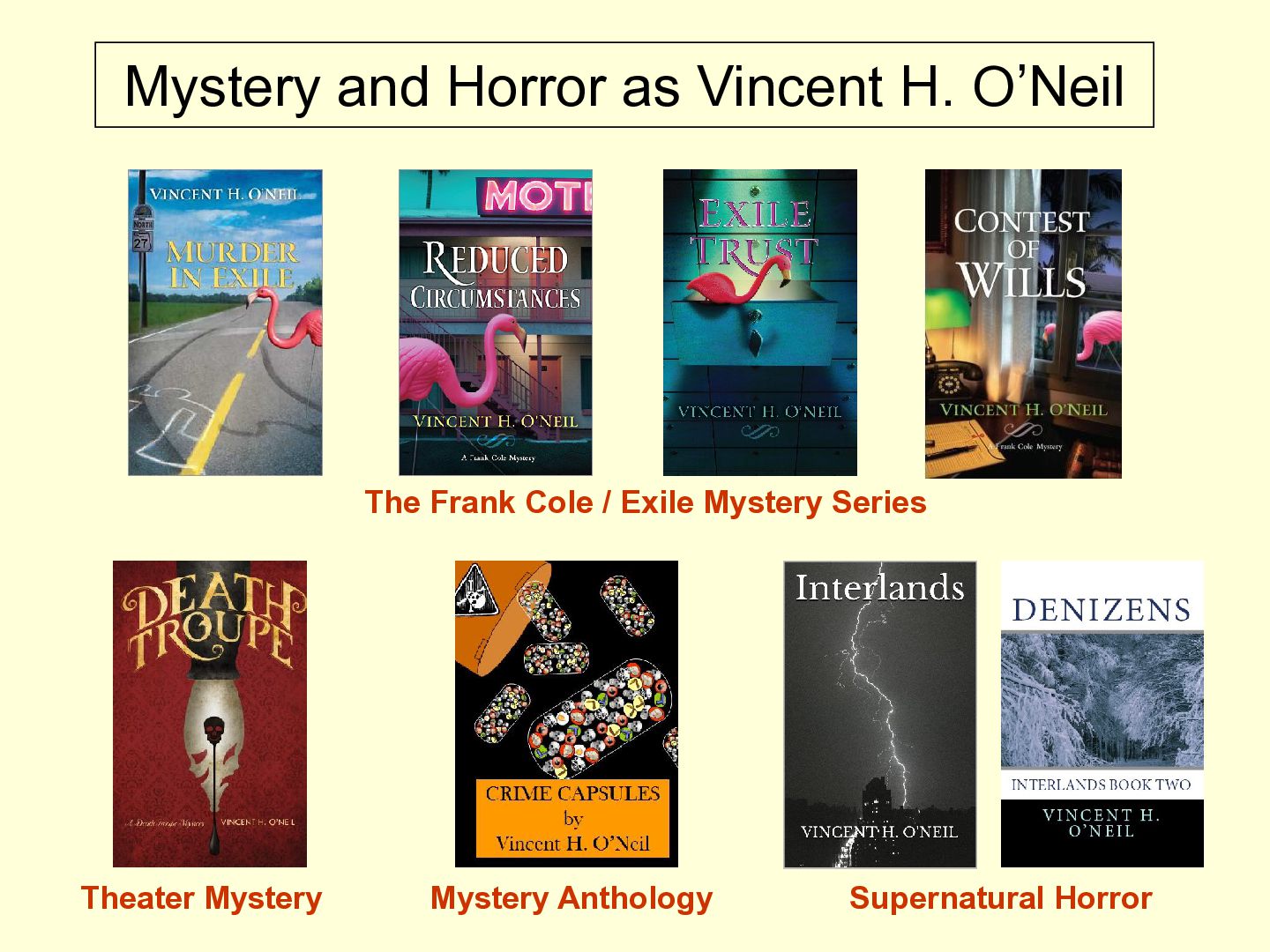
  2. Mystery and Horror as Vincent H. O’Neil The Frank Cole

    / Exile Mystery Series Theater Mystery Mystery Anthology Supernatural Horror
  3. OUTLINE • Introduction • Getting an idea • Developing the

    plan • Shaping the plot • Alternative techniques • Conclusion
  4. Introduction • It’s not often that we have absolutely no

    ideas—but it does happen • Sometimes we don’t feel motivated by any of the topics we’re considering • Sometimes we have an idea, but don’t know quite how to start
  5. Getting an Idea • This phase has the greatest potential

    and the fewest restrictions • This should be fun • Brainstorming – what comes to mind? • Brainstorm the brainstorming • Research as inspiration
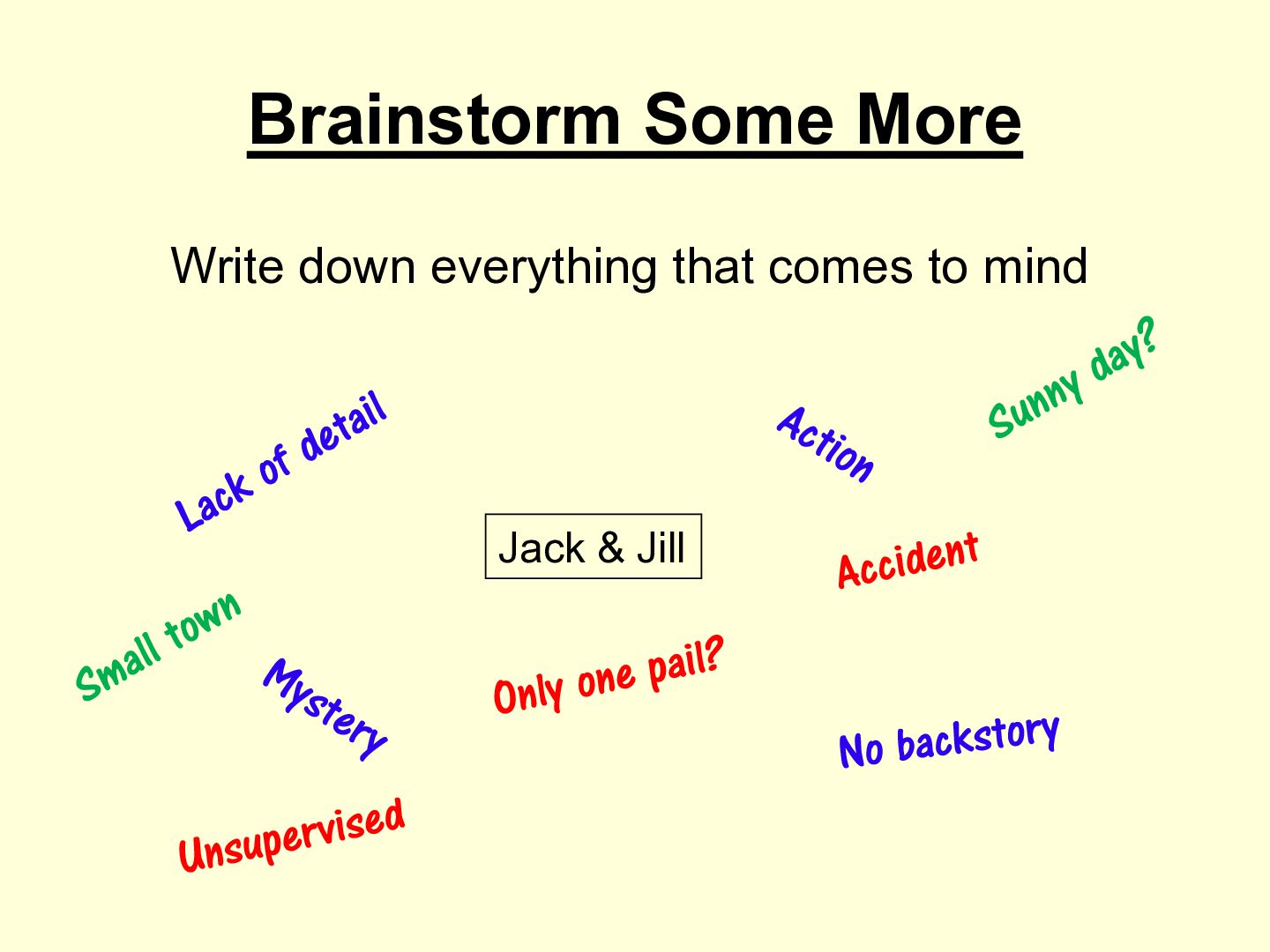
  6. Brainstorming • Even if you have a full-blown story in

    your head, ready to be written, take the time to brainstorm it • Brainstorming lets one good idea lead to another • It really pays off • It’s continuous
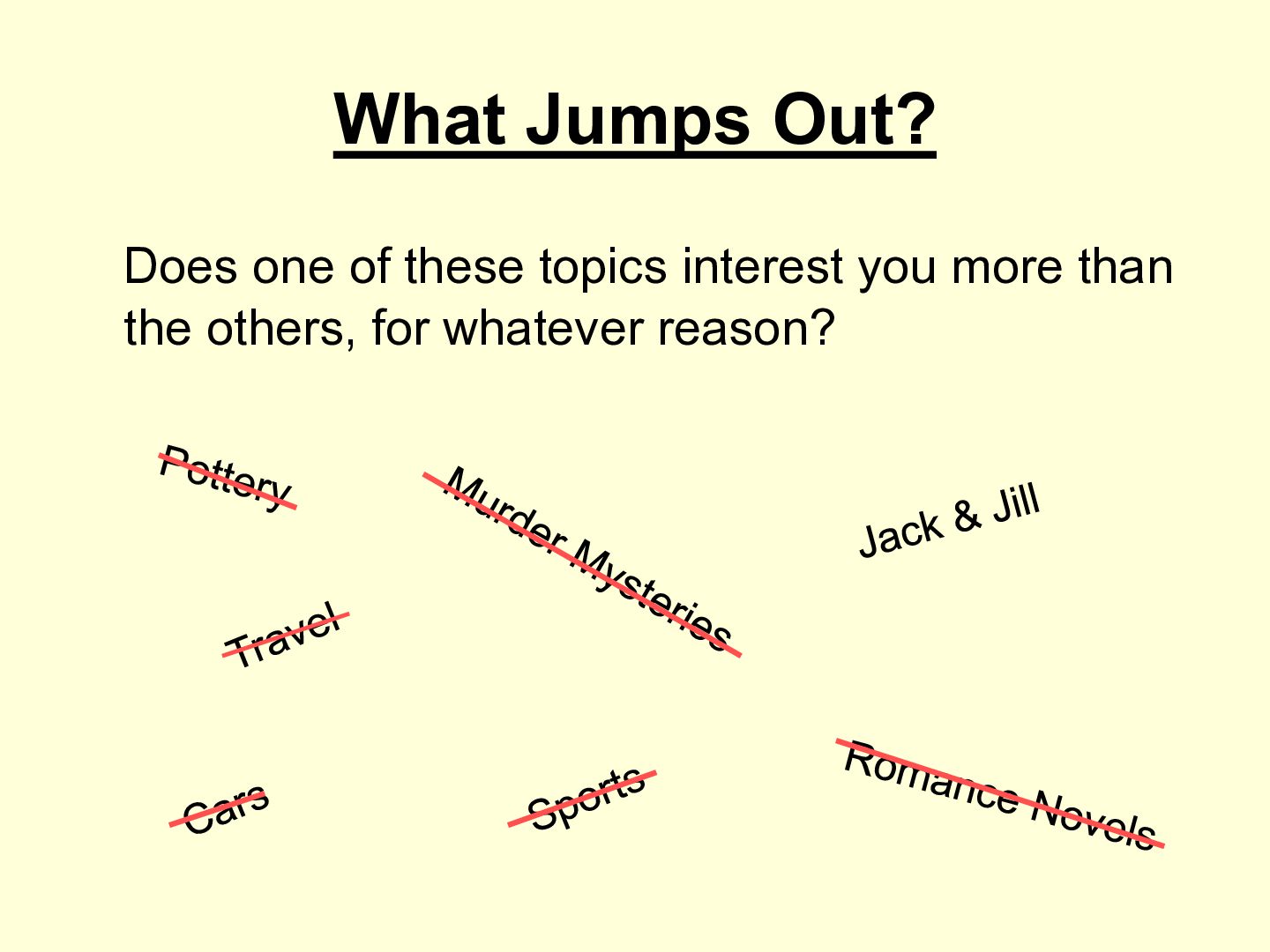
  7. What Jumps Out? Does one of these topics interest you

    more than the others, for whatever reason?
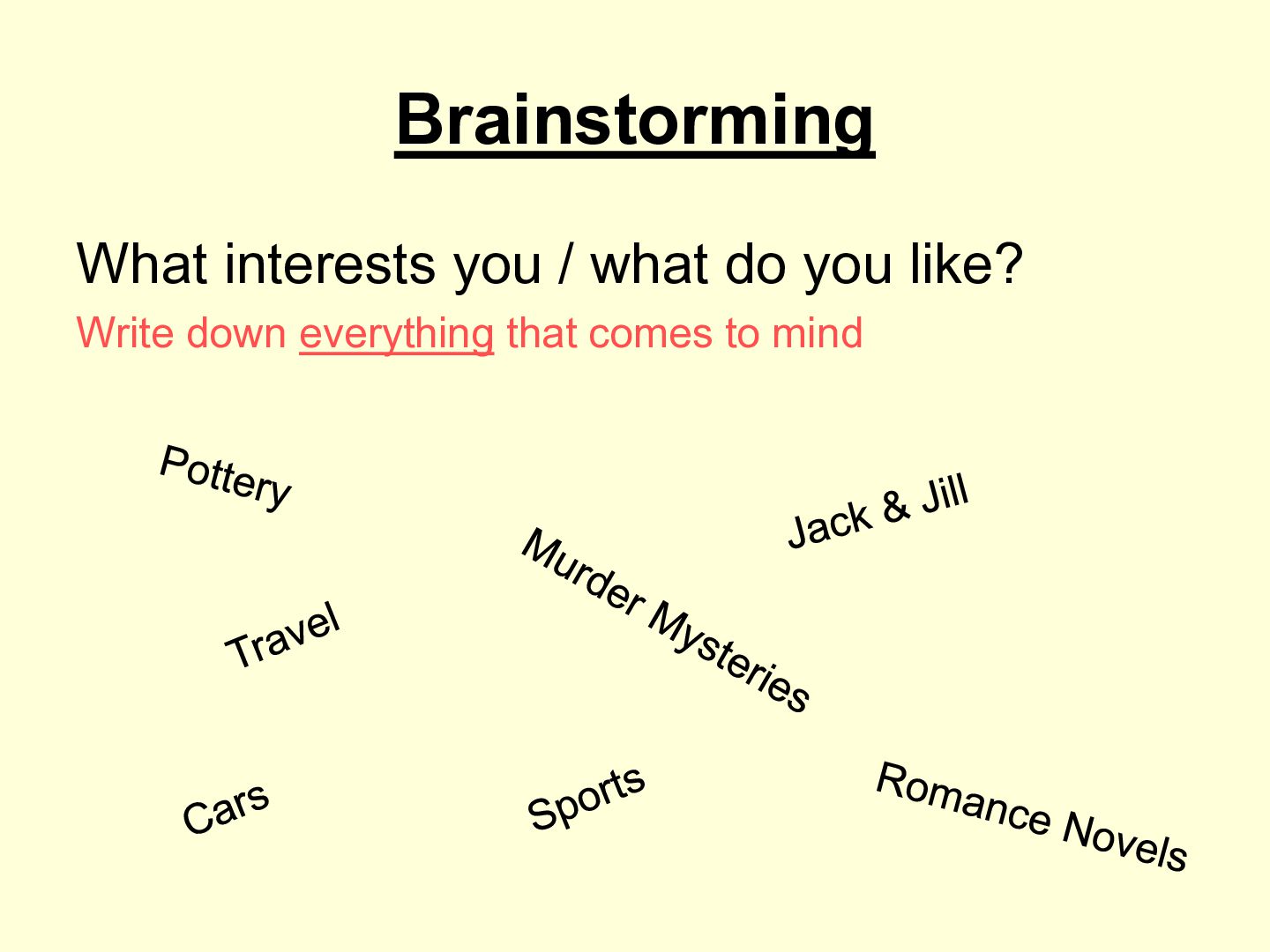
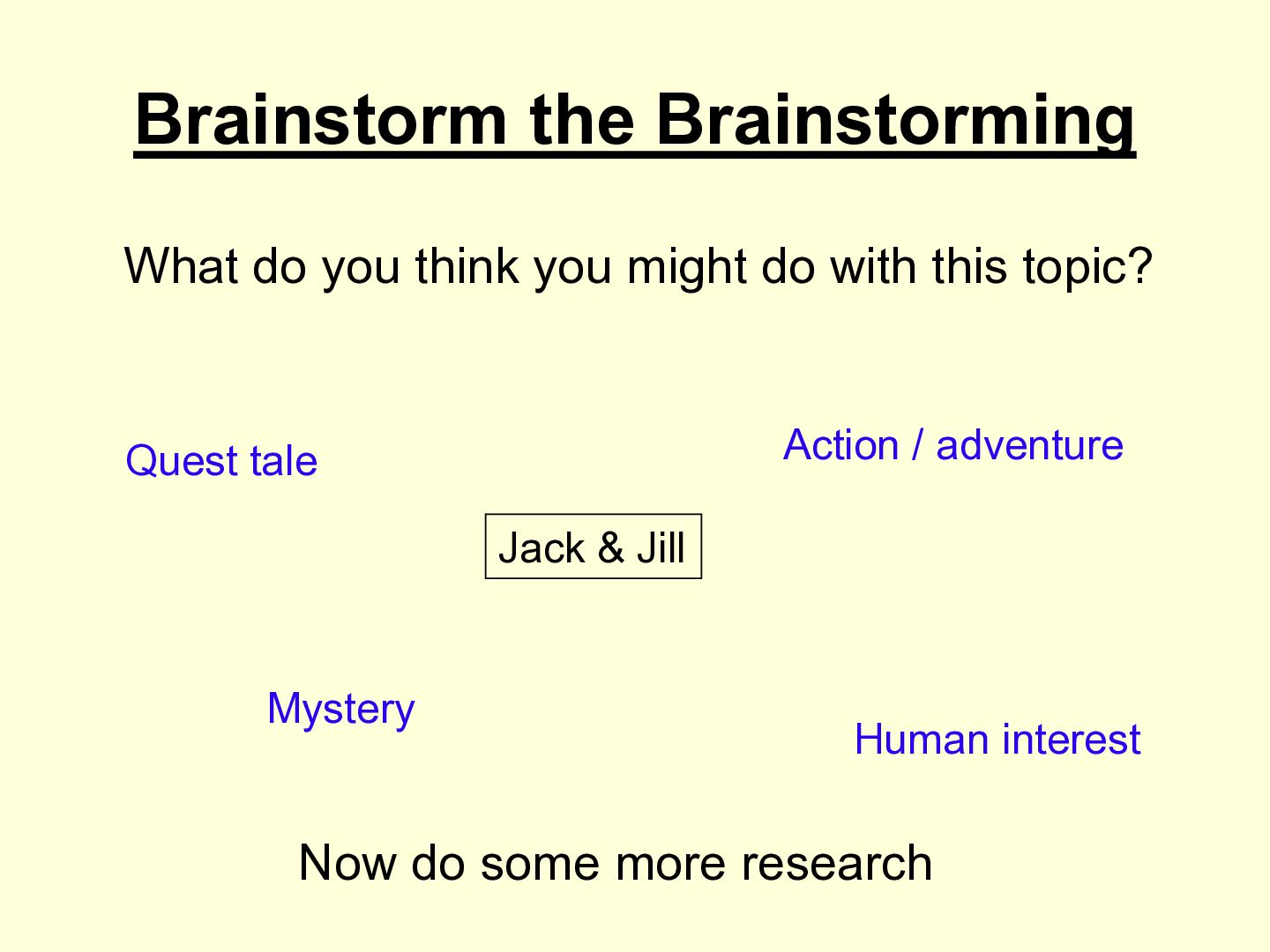
  8. Brainstorm the Brainstorming What do you think you might do

    with this topic? Action / adventure Quest tale Jack & Jill Mystery Human interest Now do some more research
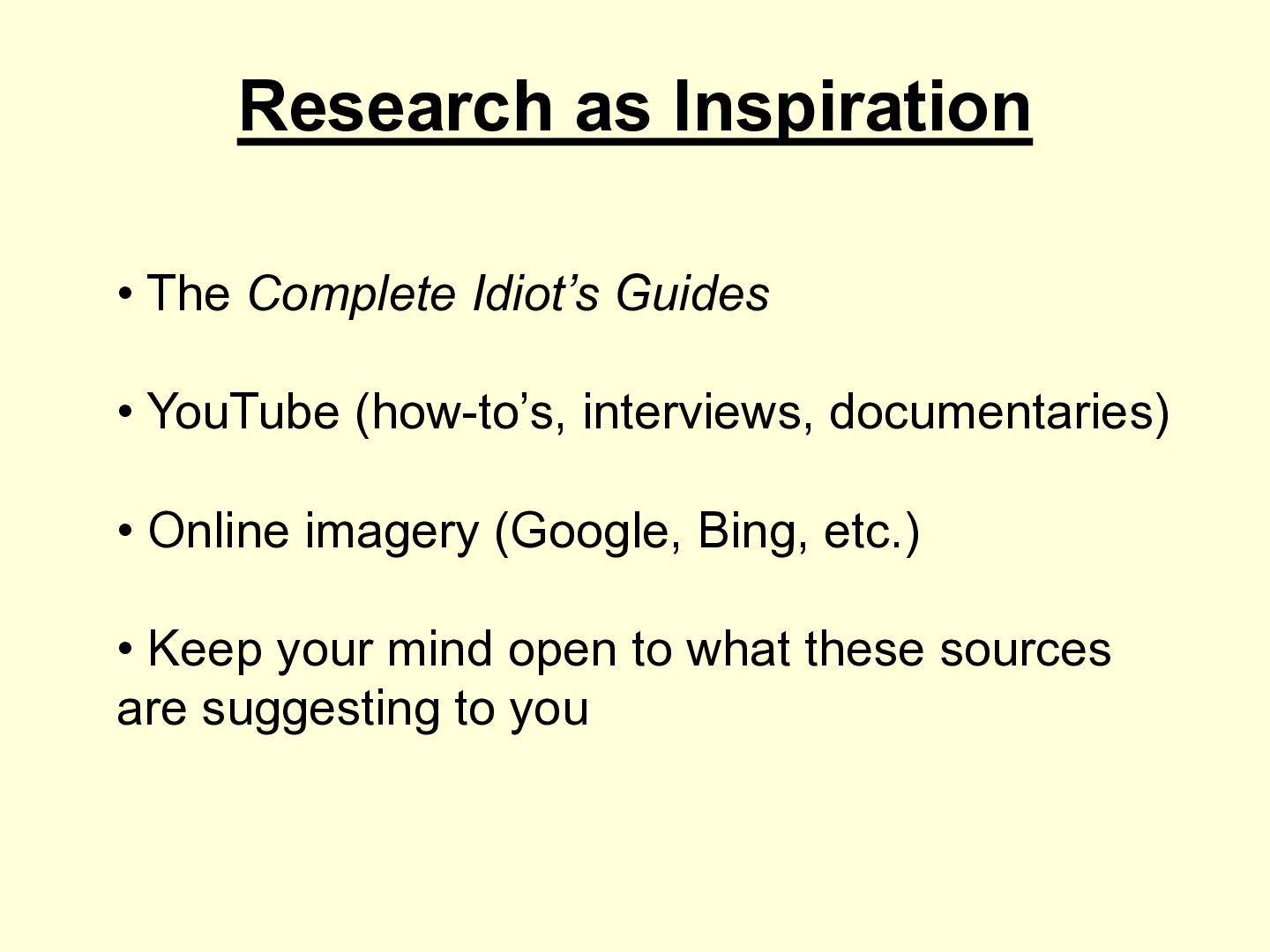
  9. Research as Inspiration • The Complete Idiot’s Guides • YouTube

    (how-to’s, interviews, documentaries) • Online imagery (Google, Bing, etc.) • Keep your mind open to what these sources are suggesting to you
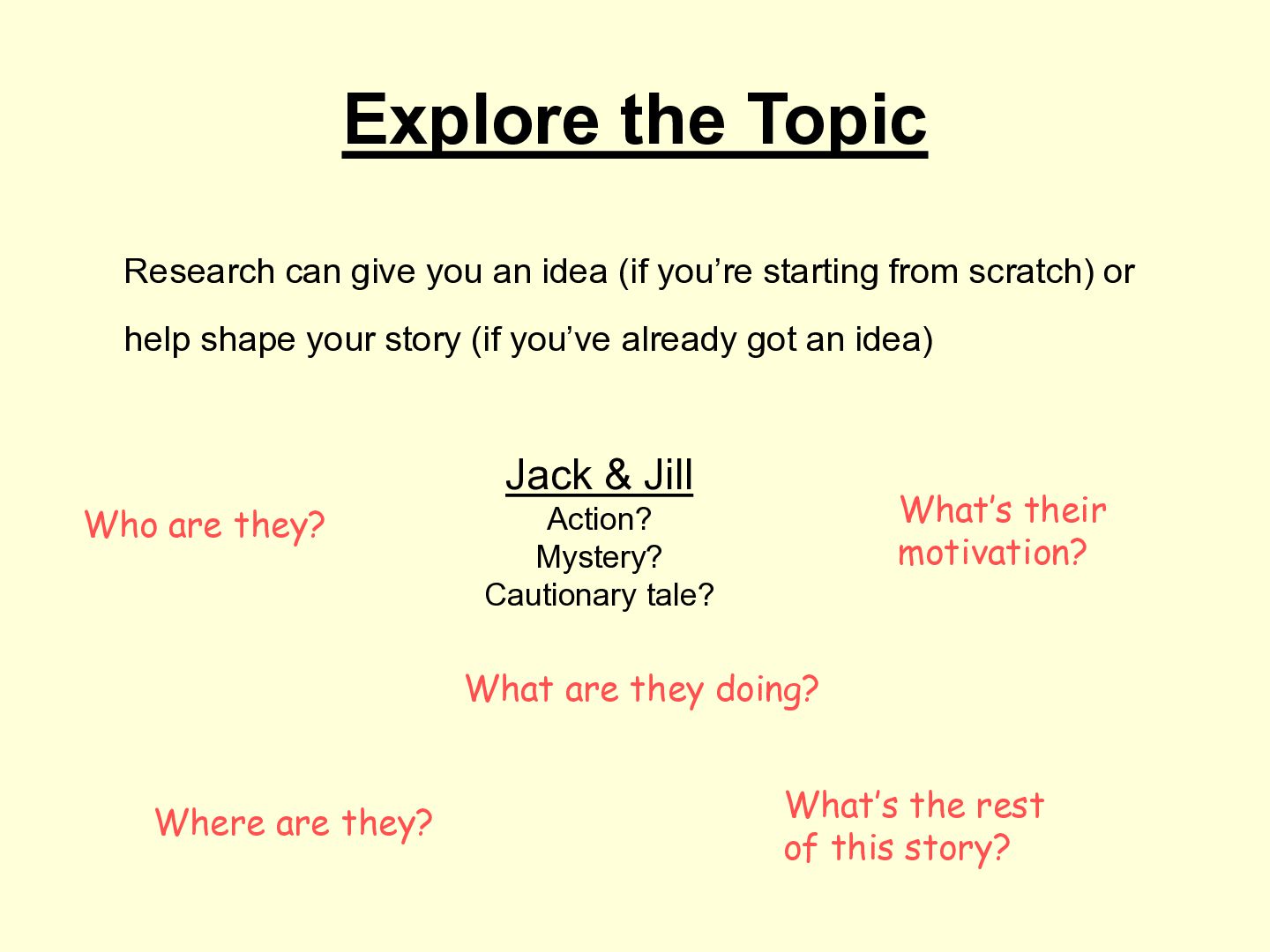
  10. Explore the Topic Research can give you an idea (if

    you’re starting from scratch) or help shape your story (if you’ve already got an idea) Who are they? Jack & Jill What’s their motivation? Action? Mystery? Cautionary tale? What are they doing? Where are they? What’s the rest of this story?
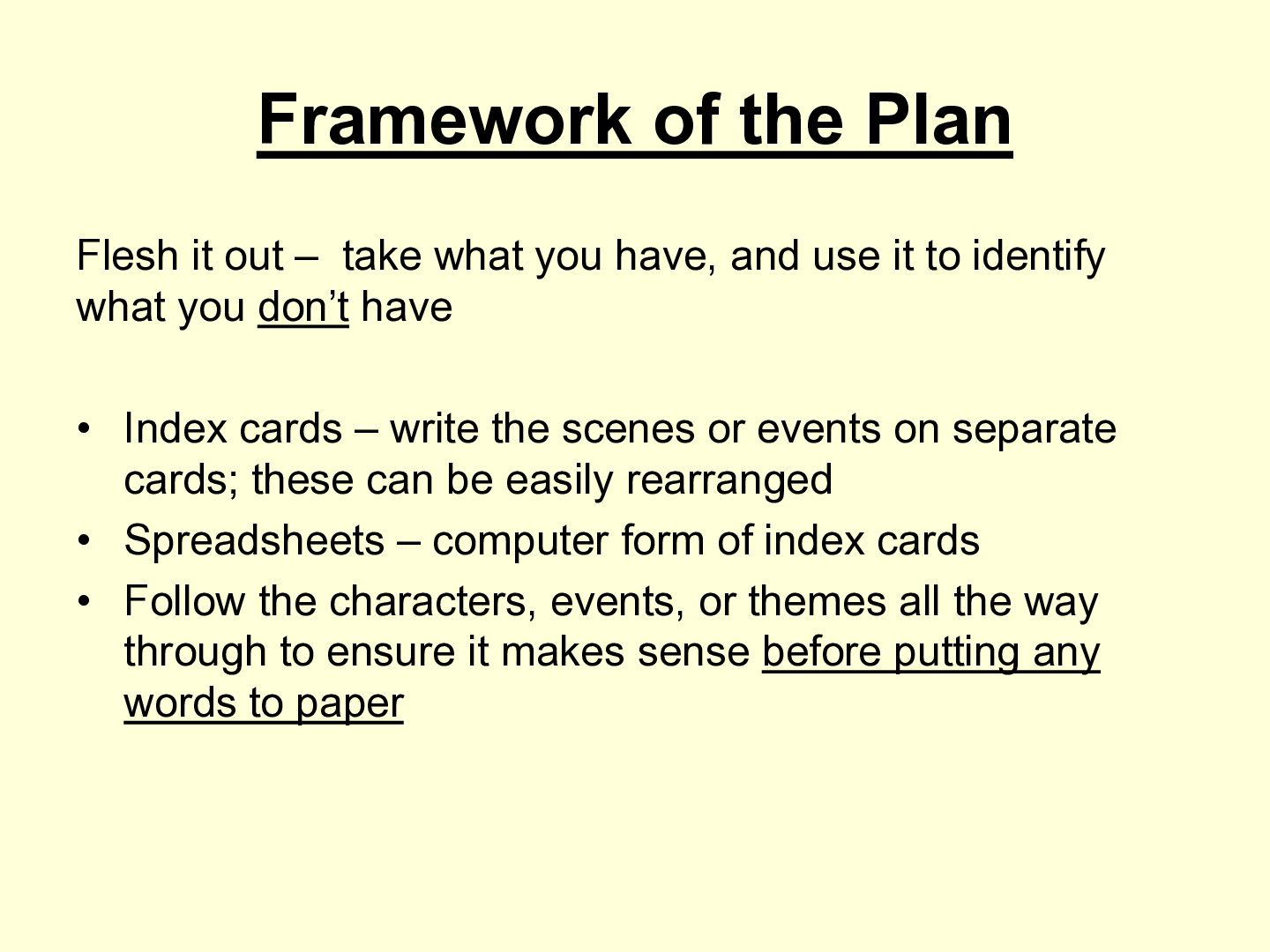
  11. Framework of the Plan Flesh it out – take what

    you have, and use it to identify what you don’t have • Index cards – write the scenes or events on separate cards; these can be easily rearranged • Spreadsheets – computer form of index cards • Follow the characters, events, or themes all the way through to ensure it makes sense before putting any words to paper
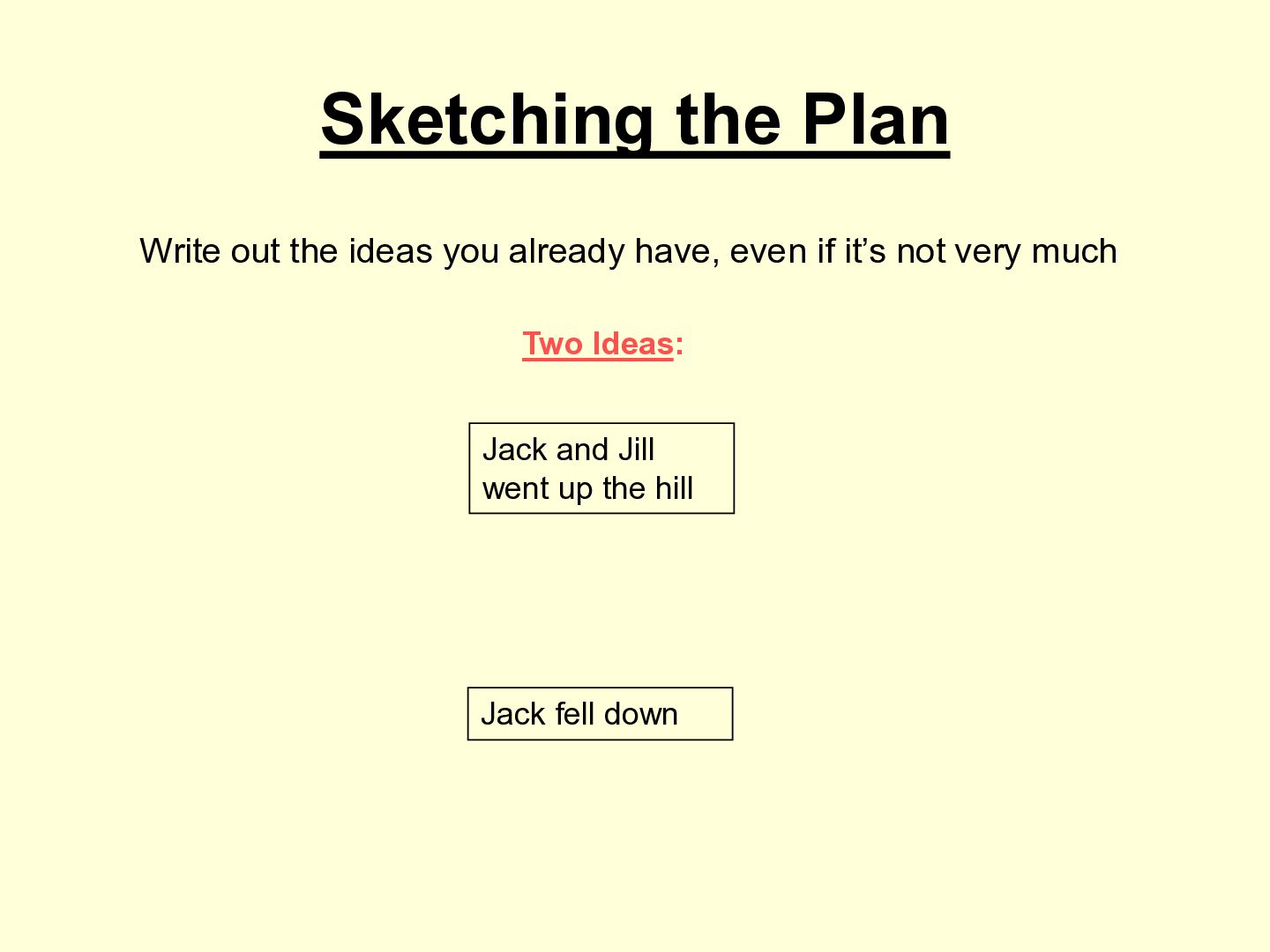
  12. Sketching the Plan Write out the ideas you already have,

    even if it’s not very much Two Ideas: Jack and Jill went up the hill Jack fell down
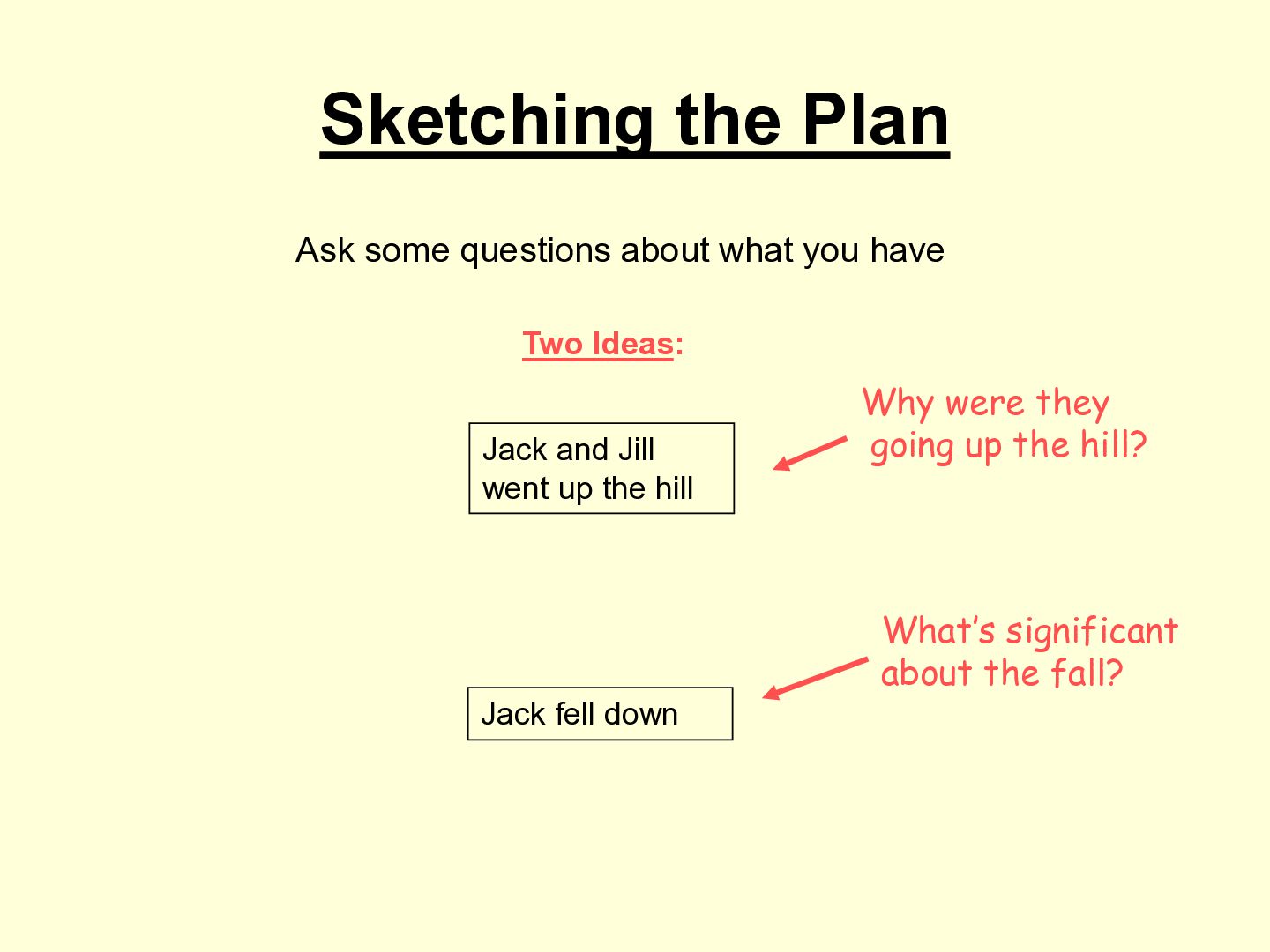
  13. Sketching the Plan Ask some questions about what you have

    Two Ideas: Jack and Jill went up the hill Why were they going up the hill? What’s significant about the fall? Jack fell down
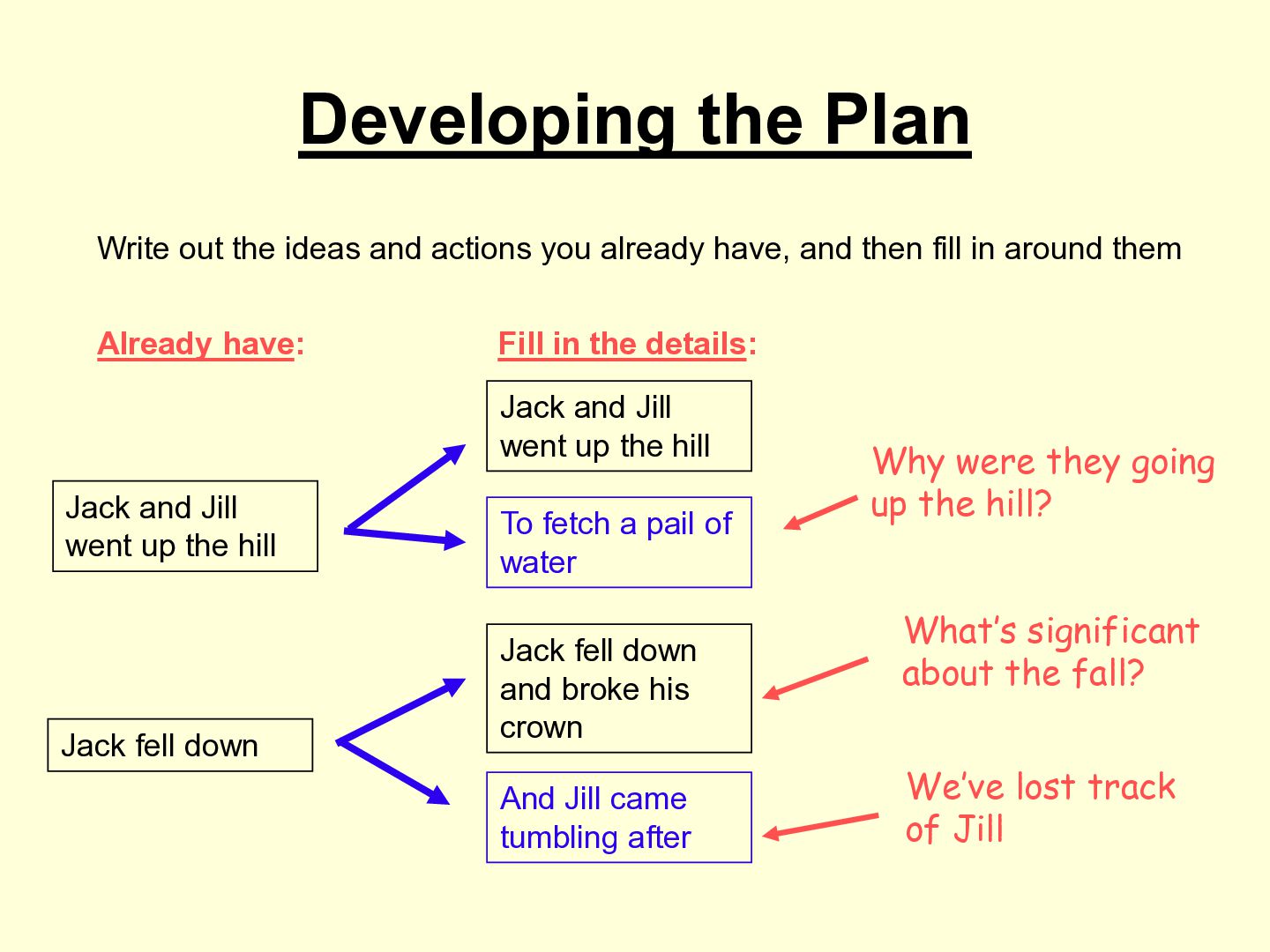
  14. Developing the Plan Write out the ideas and actions you

    already have, and then fill in around them Already have: Fill in the details: Jack and Jill went up the hill Jack and Jill went up the hill Jack fell down To fetch a pail of water Jack fell down and broke his crown And Jill came tumbling after Why were they going up the hill? What’s significant about the fall? We’ve lost track of Jill
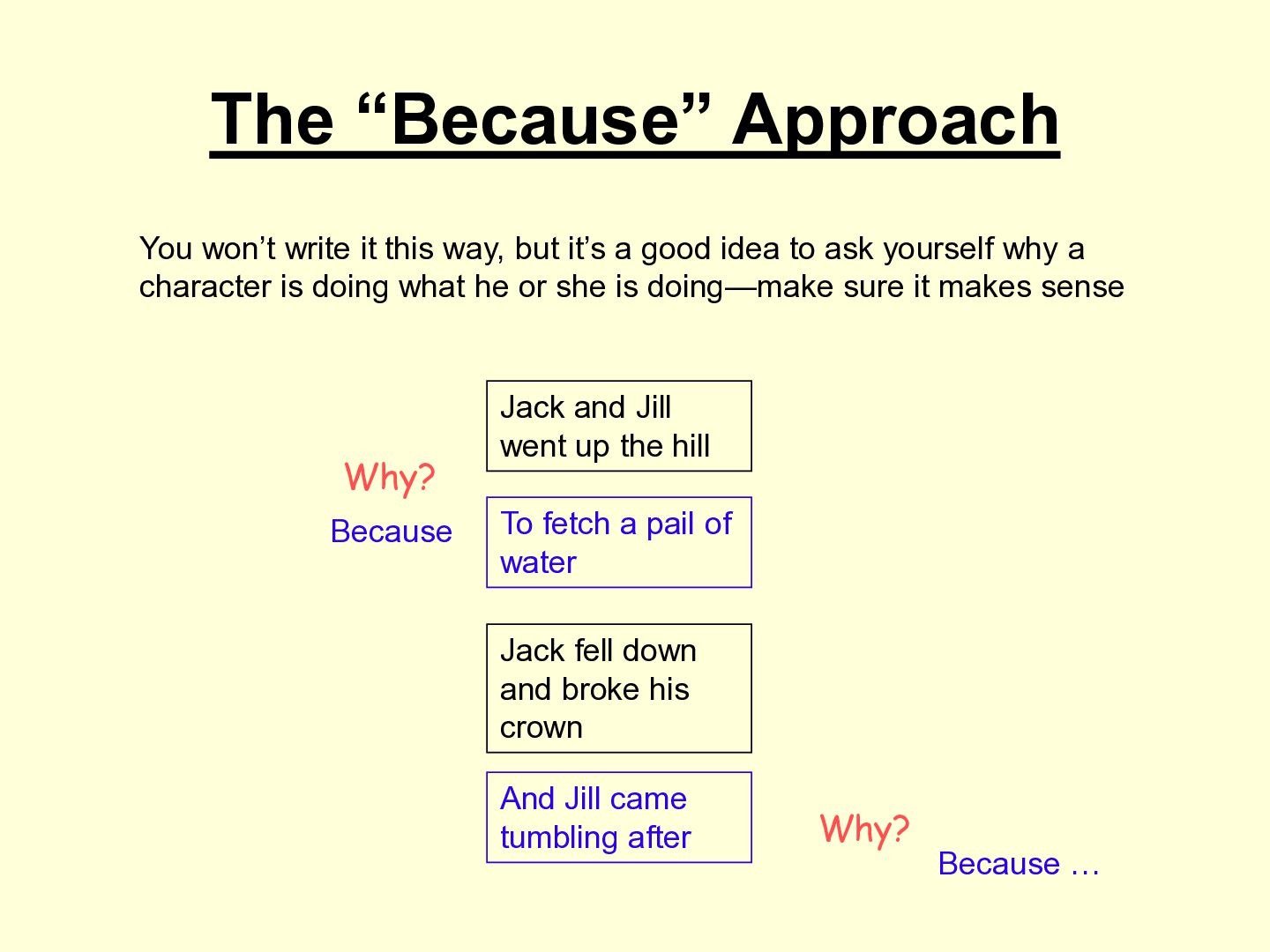
  15. The “Because” Approach You won’t write it this way, but

    it’s a good idea to ask yourself why a character is doing what he or she is doing—make sure it makes sense Why? Because Jack and Jill went up the hill To fetch a pail of water Jack fell down and broke his crown And Jill came tumbling after Why? Because …
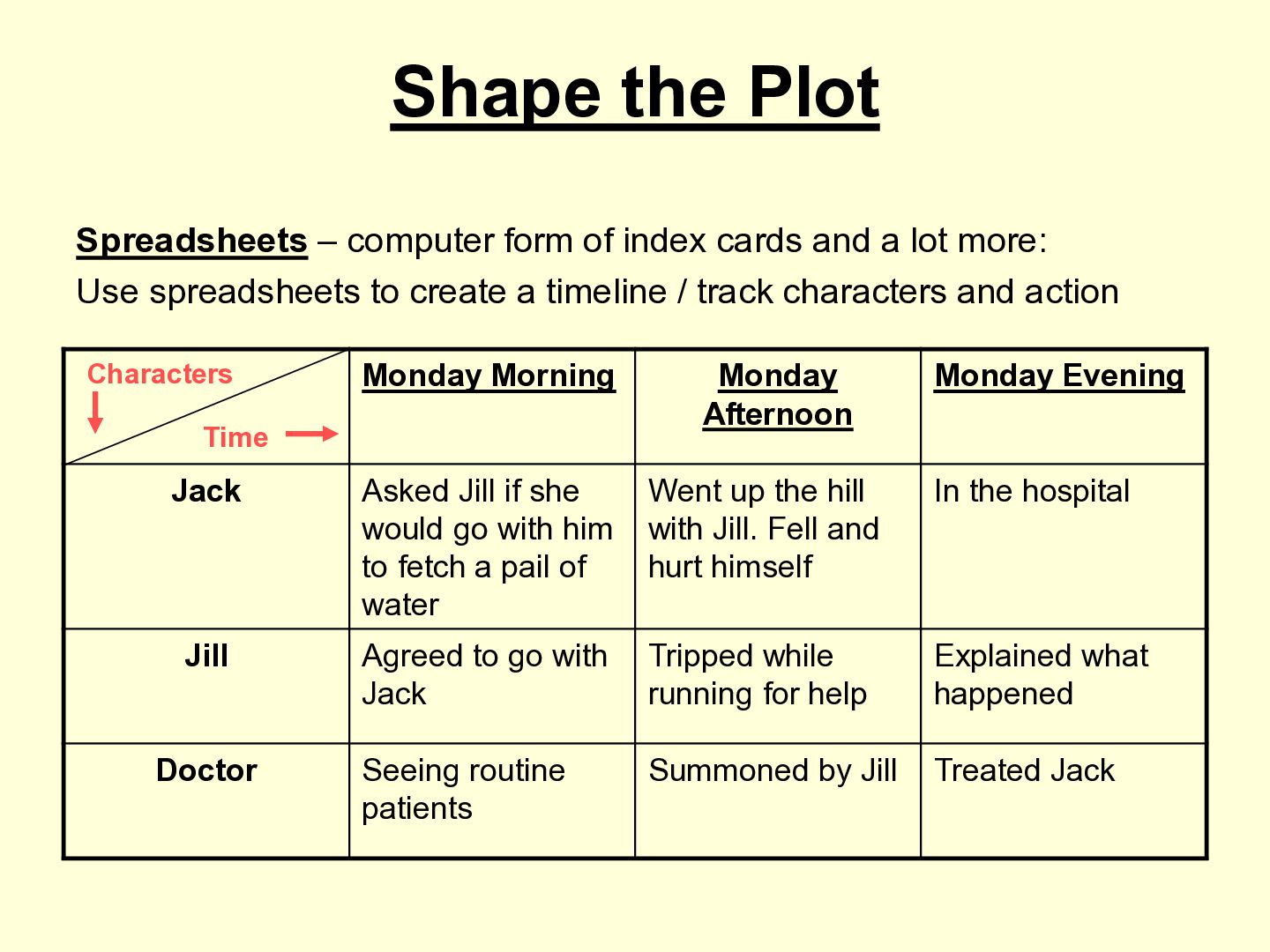
  16. Shape the Plot Spreadsheets – computer form of index cards

    and a lot more: Use spreadsheets to create a timeline / track characters and action Characters Monday Morning Monday Afternoon Jack Asked Jill if she would go with him to fetch a pail of water Went up the hill with Jill. Fell and hurt himself In the hospital Jill Agreed to go with Jack Tripped while running for help Explained what happened Doctor Seeing routine patients Summoned by Jill Treated Jack Time Monday Evening
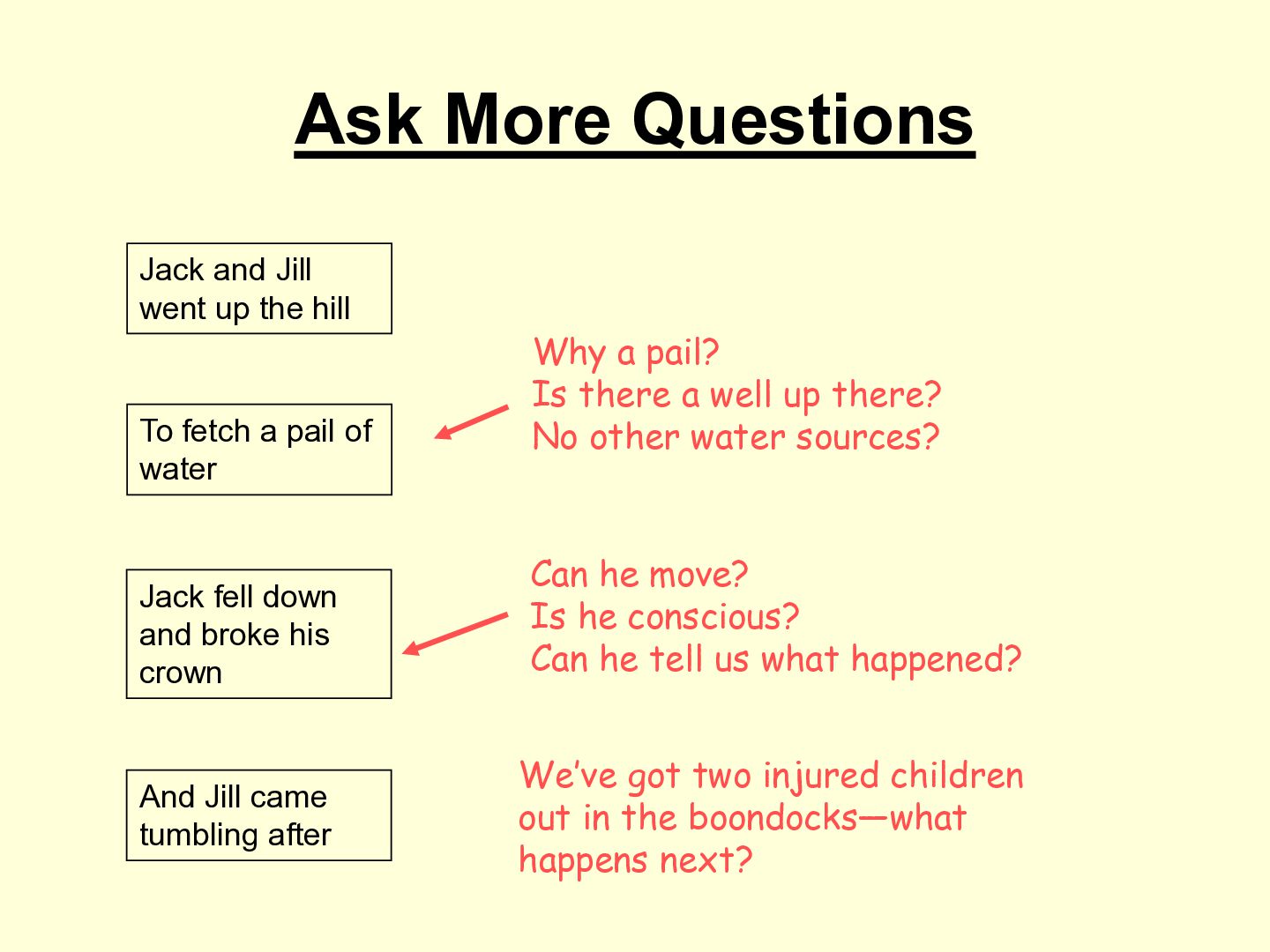
  17. Ask More Questions Jack and Jill went up the hill

    To fetch a pail of water Jack fell down and broke his crown And Jill came tumbling after Why a pail? Is there a well up there? No other water sources? Can he move? Is he conscious? Can he tell us what happened? We’ve got two injured children out in the boondocks—what happens next?
  18. Make It Your Own Add anything you like to the

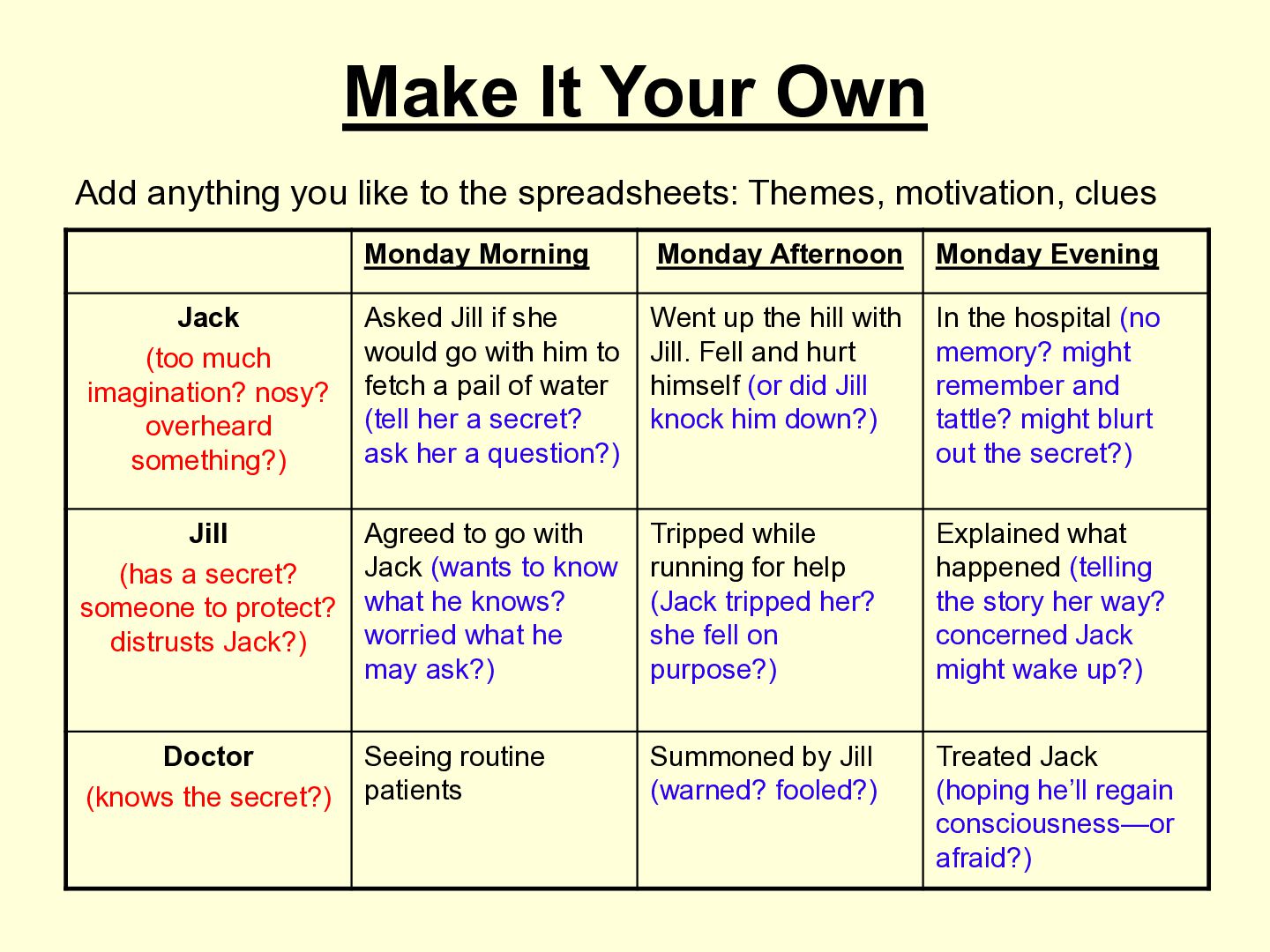
    spreadsheets: Themes, motivation, clues Monday Morning Monday Afternoon Monday Evening Jack (too much imagination? nosy? overheard something?) Asked Jill if she would go with him to fetch a pail of water (tell her a secret? ask her a question?) Went up the hill with Jill. Fell and hurt himself (or did Jill knock him down?) In the hospital (no memory? might remember and tattle? might blurt out the secret?) Jill (has a secret? someone to protect? distrusts Jack?) Agreed to go with Jack (wants to know what he knows? worried what he may ask?) Tripped while running for help (Jack tripped her? she fell on purpose?) Explained what happened (telling the story her way? concerned Jack might wake up?) Doctor (knows the secret?) Seeing routine patients Summoned by Jill (warned? fooled?) Treated Jack (hoping he’ll regain consciousness—or afraid?)
  19. See the Plot in Its Entirety Identify the high points

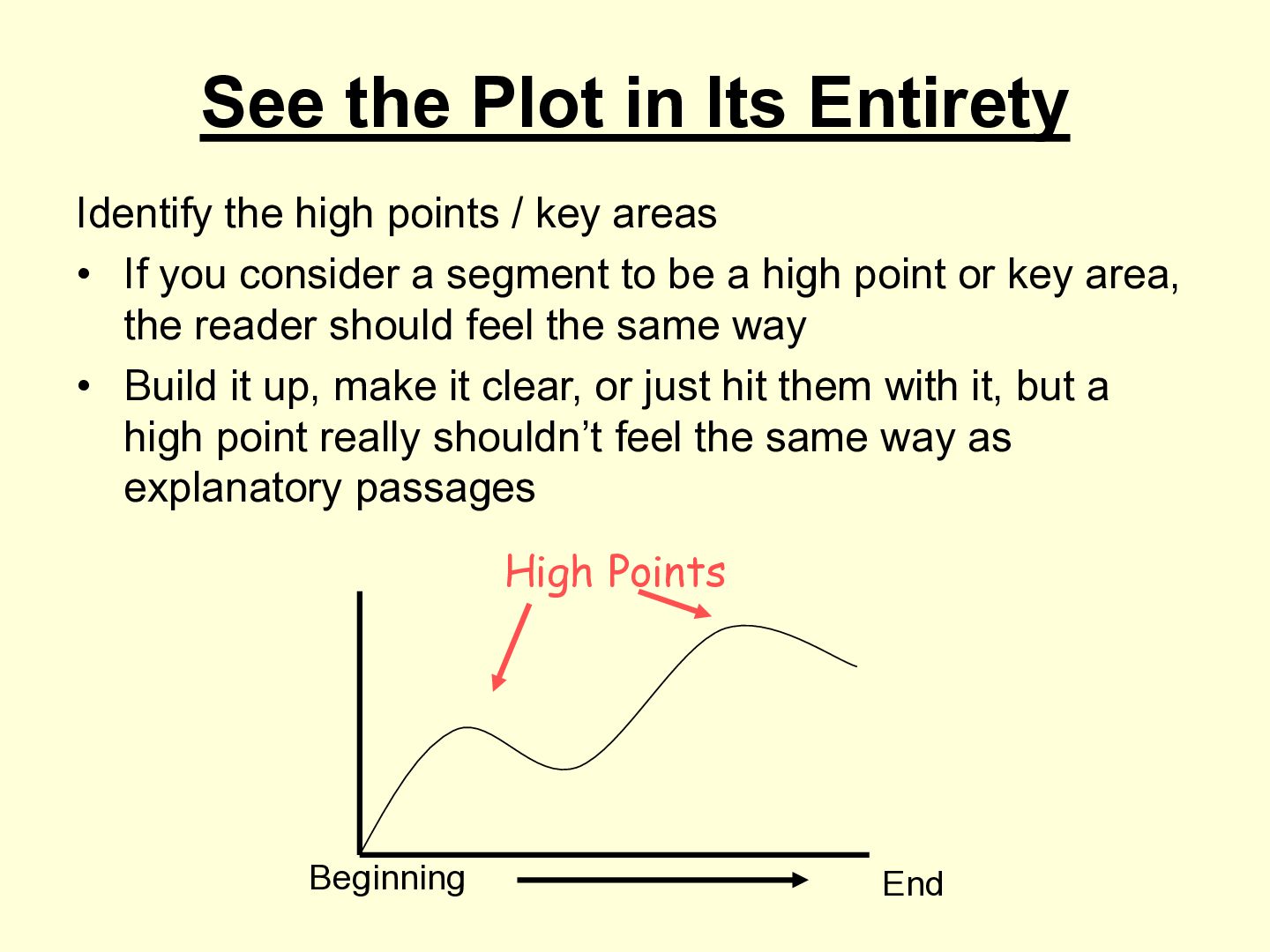
    / key areas • If you consider a segment to be a high point or key area, the reader should feel the same way • Build it up, make it clear, or just hit them with it, but a high point really shouldn’t feel the same way as explanatory passages High Points Beginning End
  20. Flip It – Start With the High Points If your

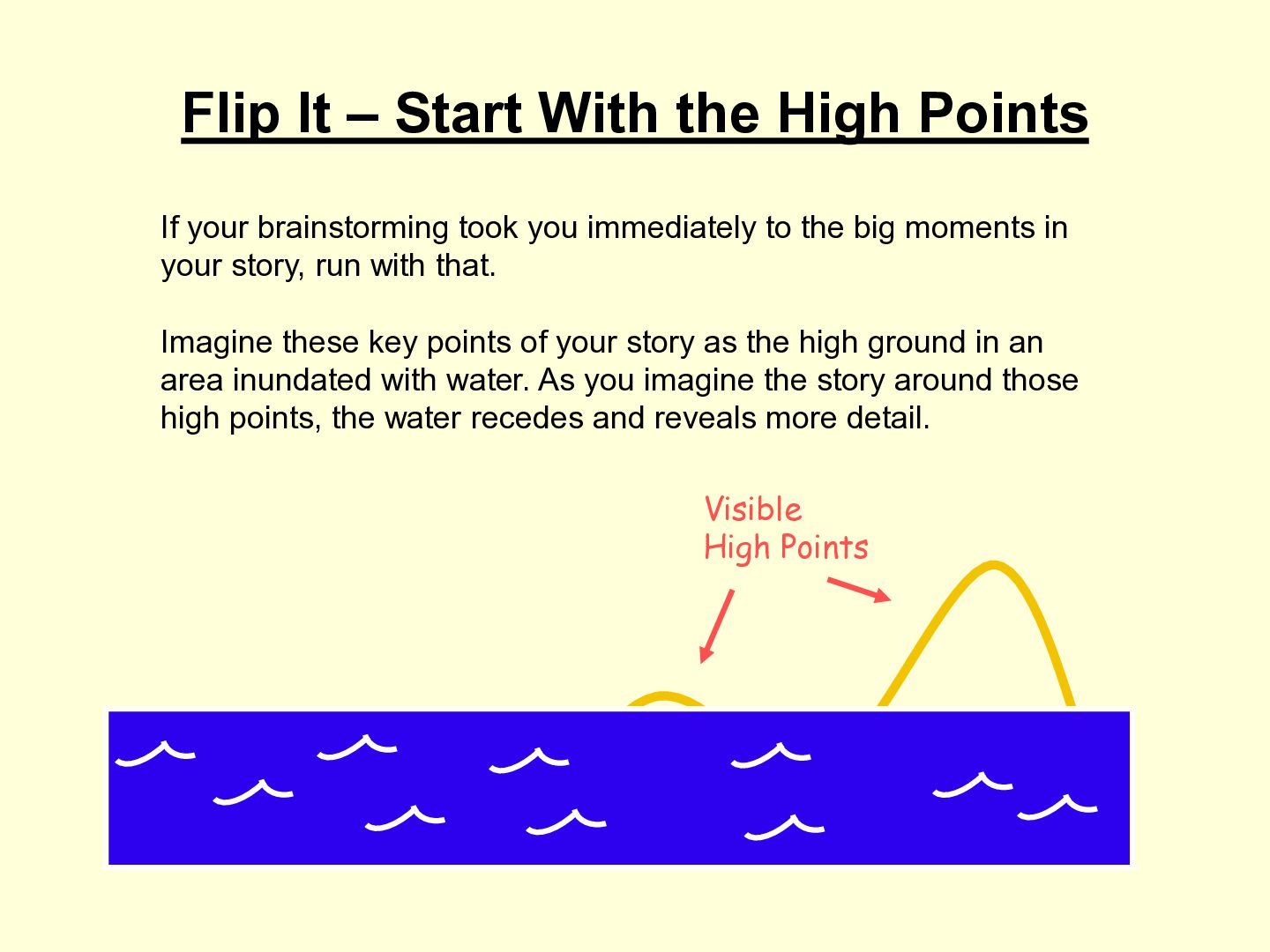
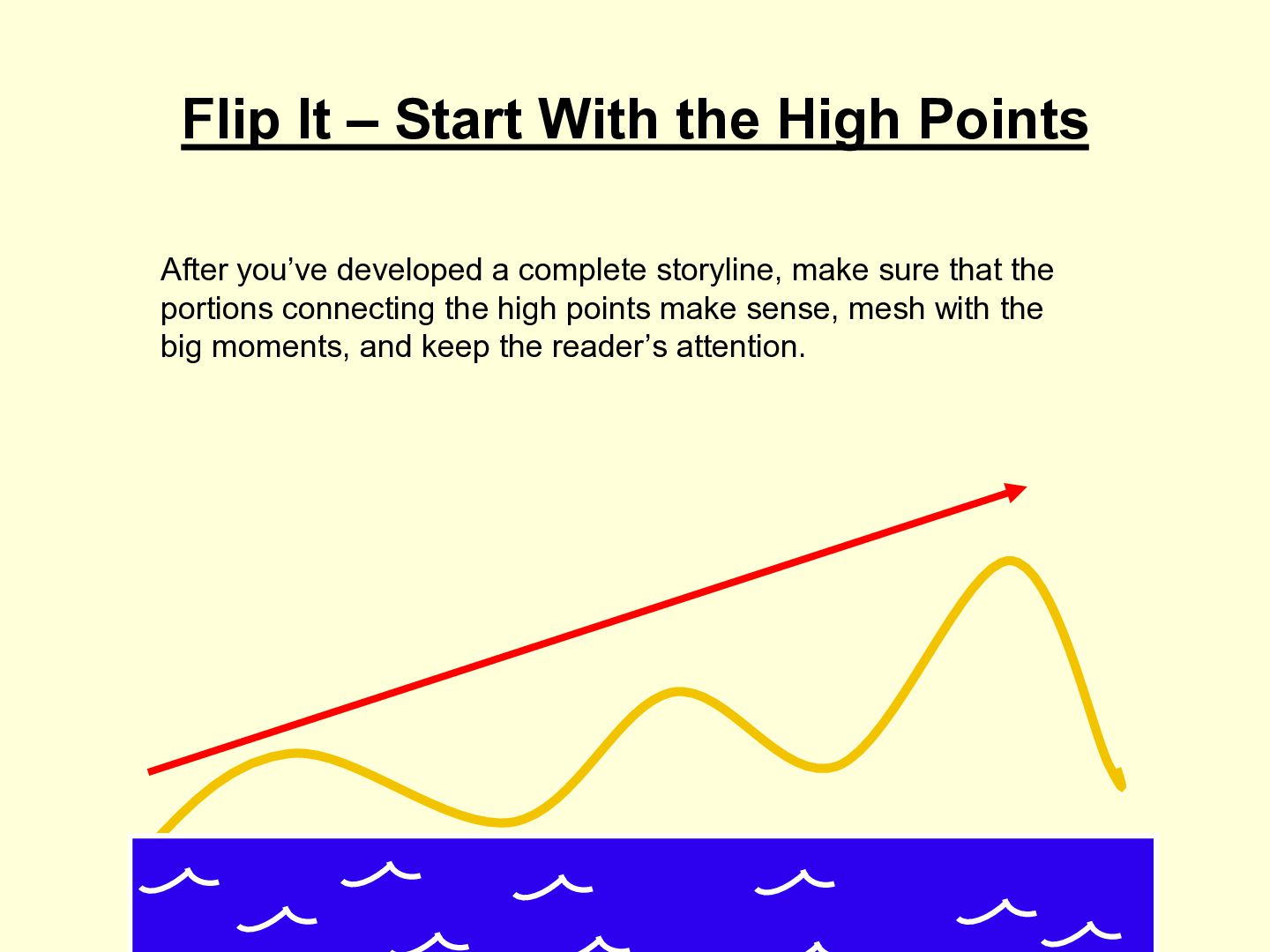
    brainstorming took you immediately to the big moments in your story, run with that. Imagine these key points of your story as the high ground in an area inundated with water. As you imagine the story around those high points, the water recedes and reveals more detail. Visible High Points
  21. Flip It – Start With the High Points As you

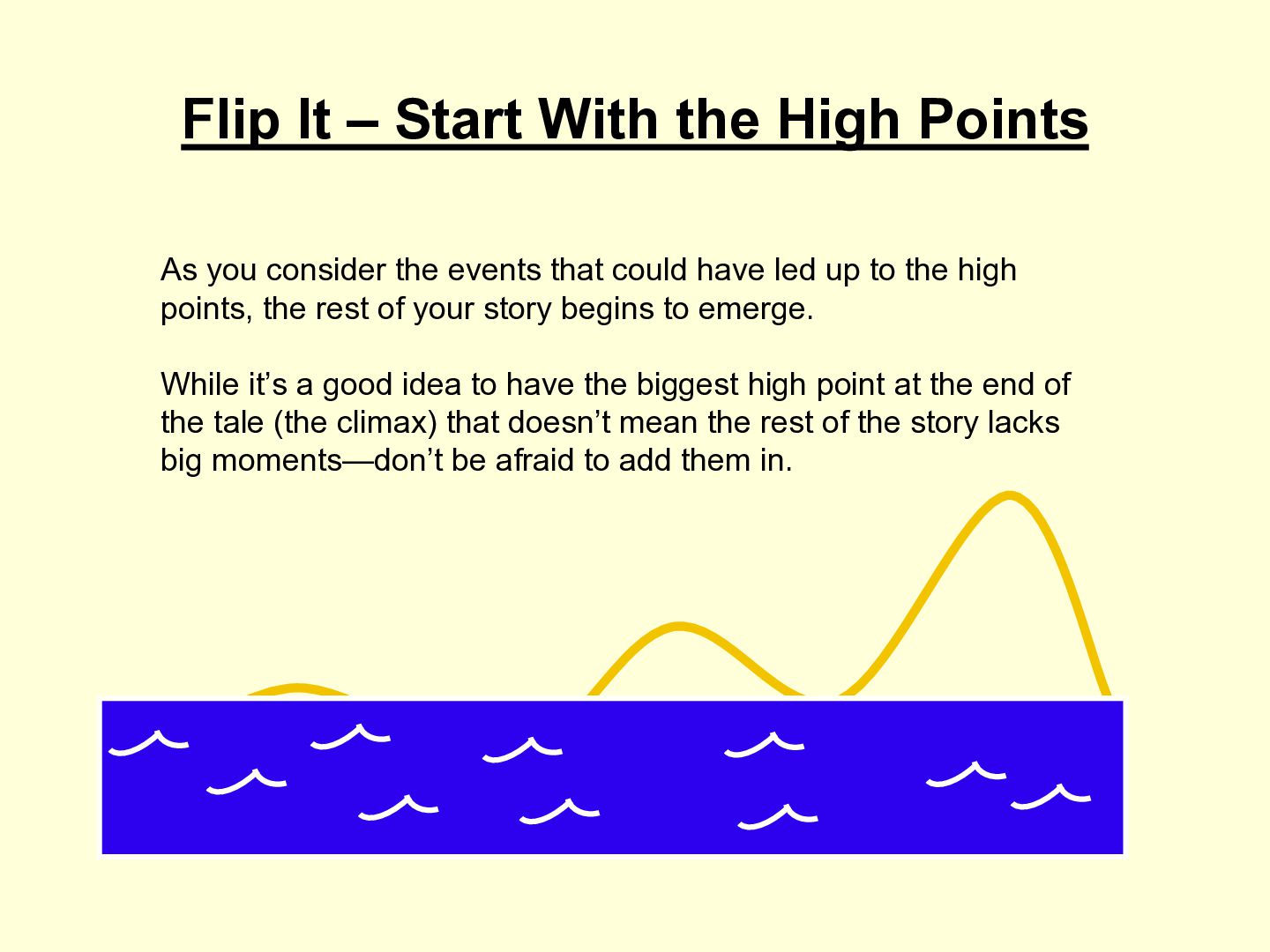
    consider the events that could have led up to the high points, the rest of your story begins to emerge. While it’s a good idea to have the biggest high point at the end of the tale (the climax) that doesn’t mean the rest of the story lacks big moments—don’t be afraid to add them in.
  22. Flip It – Start With the High Points After you’ve

    developed a complete storyline, make sure that the portions connecting the high points make sense, mesh with the big moments, and keep the reader’s attention.
  23. The Jump Start • If you’re really having trouble getting

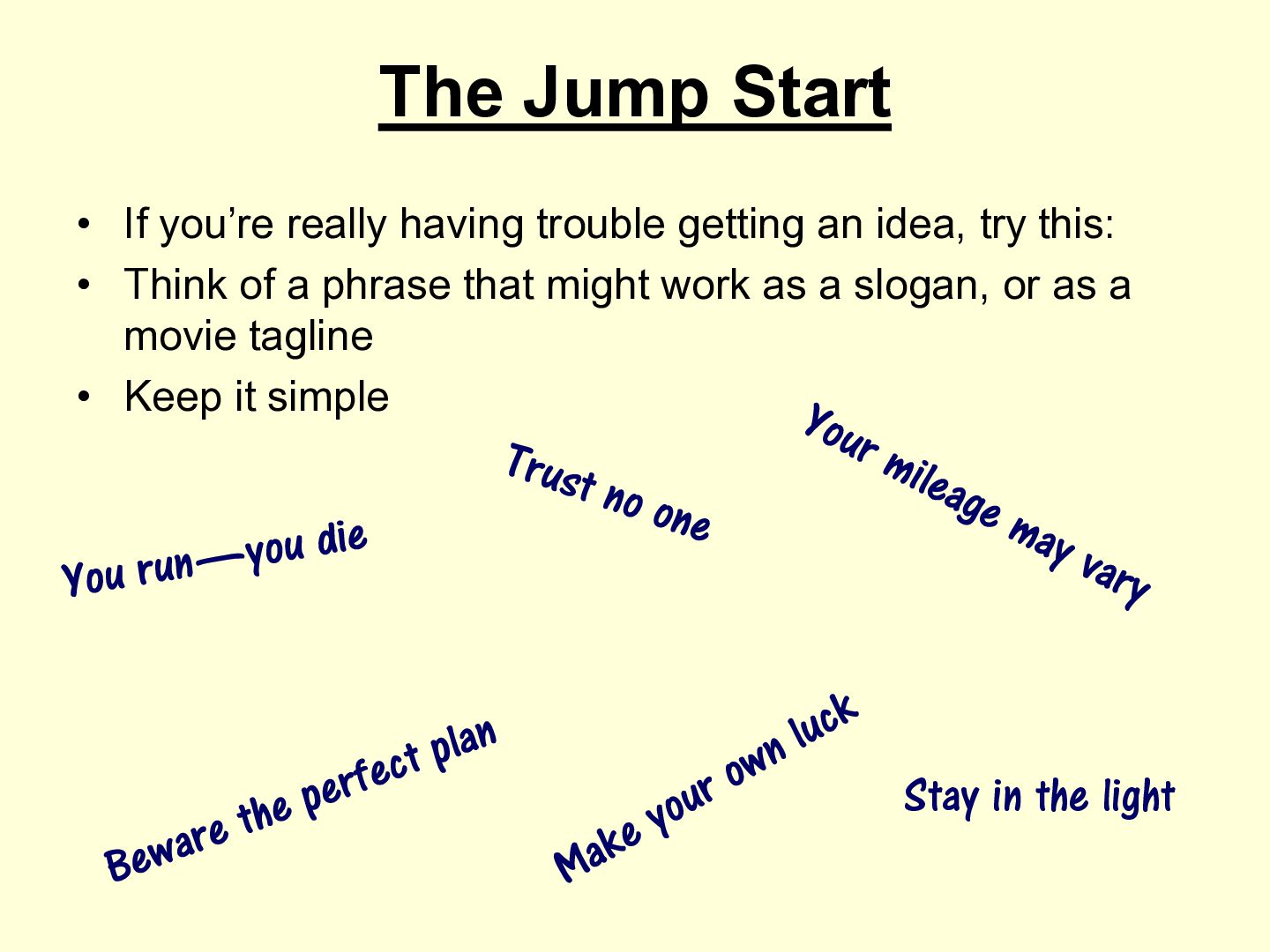
    an idea, try this: • Think of a phrase that might work as a slogan, or as a movie tagline • Keep it simple Stay in the light
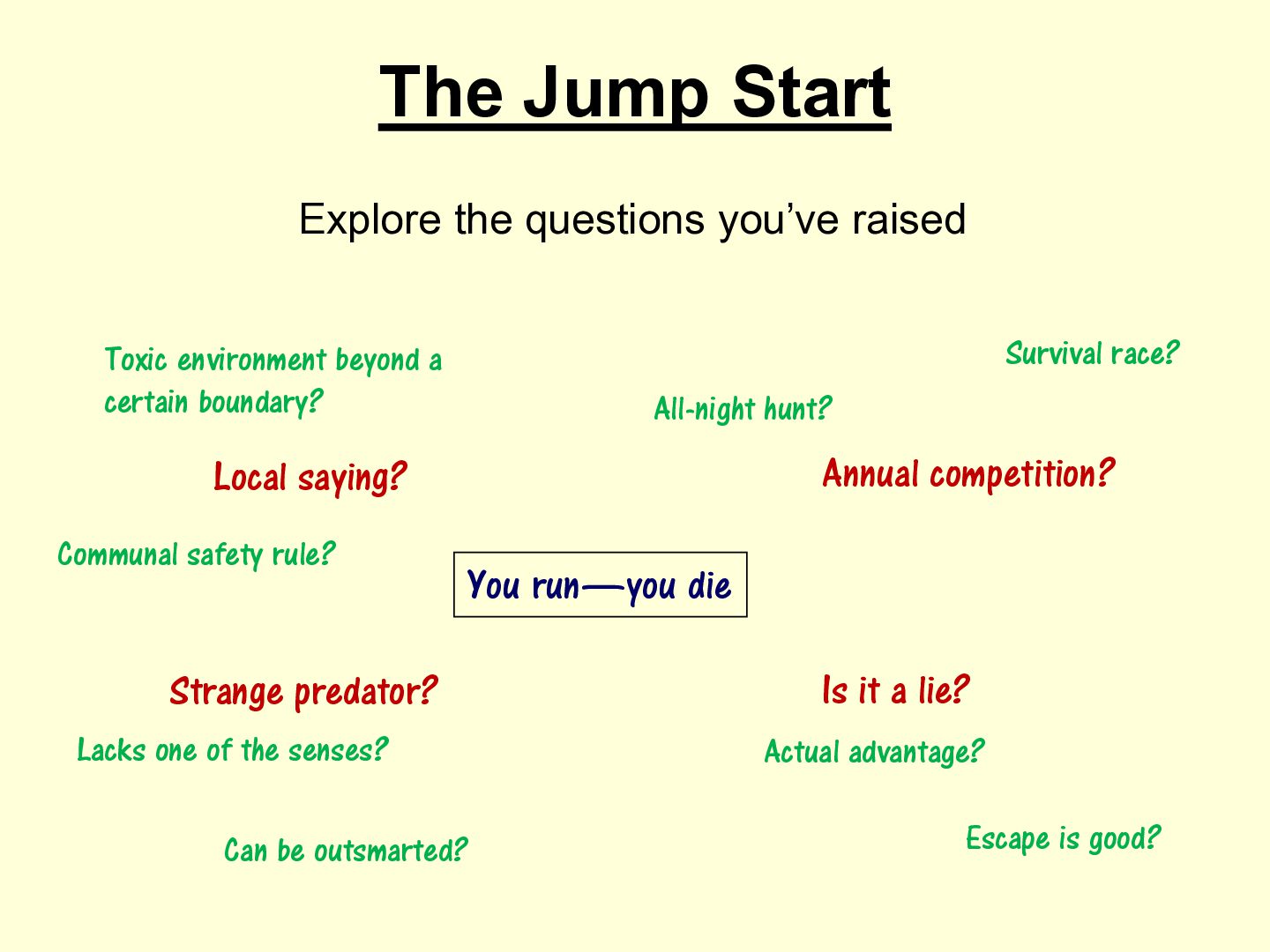
  24. The Jump Start Explore the questions you’ve raised Survival race?

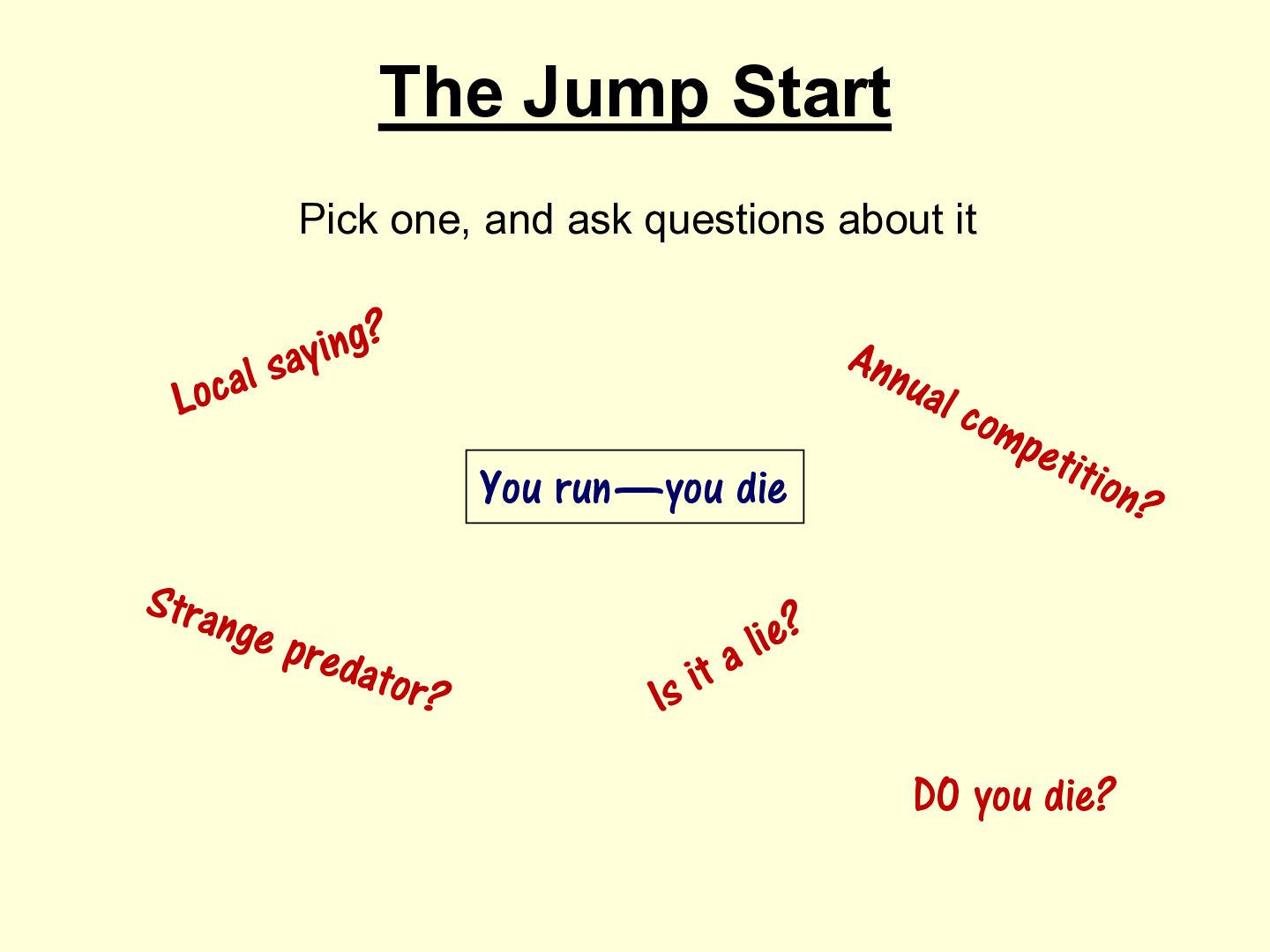
    Toxic environment beyond a certain boundary? All-night hunt? Annual competition? Local saying? Communal safety rule? You run—you die Strange predator? Lacks one of the senses? Can be outsmarted? Is it a lie? Actual advantage? Escape is good?
  25. Conclusion • Get an idea by brainstorming or letting the

    research inspire you • Decide how you are going to get your idea across or tell your tale • Flesh it out using an outline, index cards, a spreadsheet, or whatever works for you • Follow the characters / events all the way through
  26. Mystery and Horror as Vincent H. O’Neil The Frank Cole

    / Exile Mystery Series Theater Mystery Mystery Anthology Supernatural Horror

More Decks by Vincent H. O'Neil

Other Decks in Education