Optimizing Biotechnology paradigms of their Application for Agrifood systems Transformation in Africa Emmanuel Okogbenin Director for Program Development and Commercialization January 21, 2026
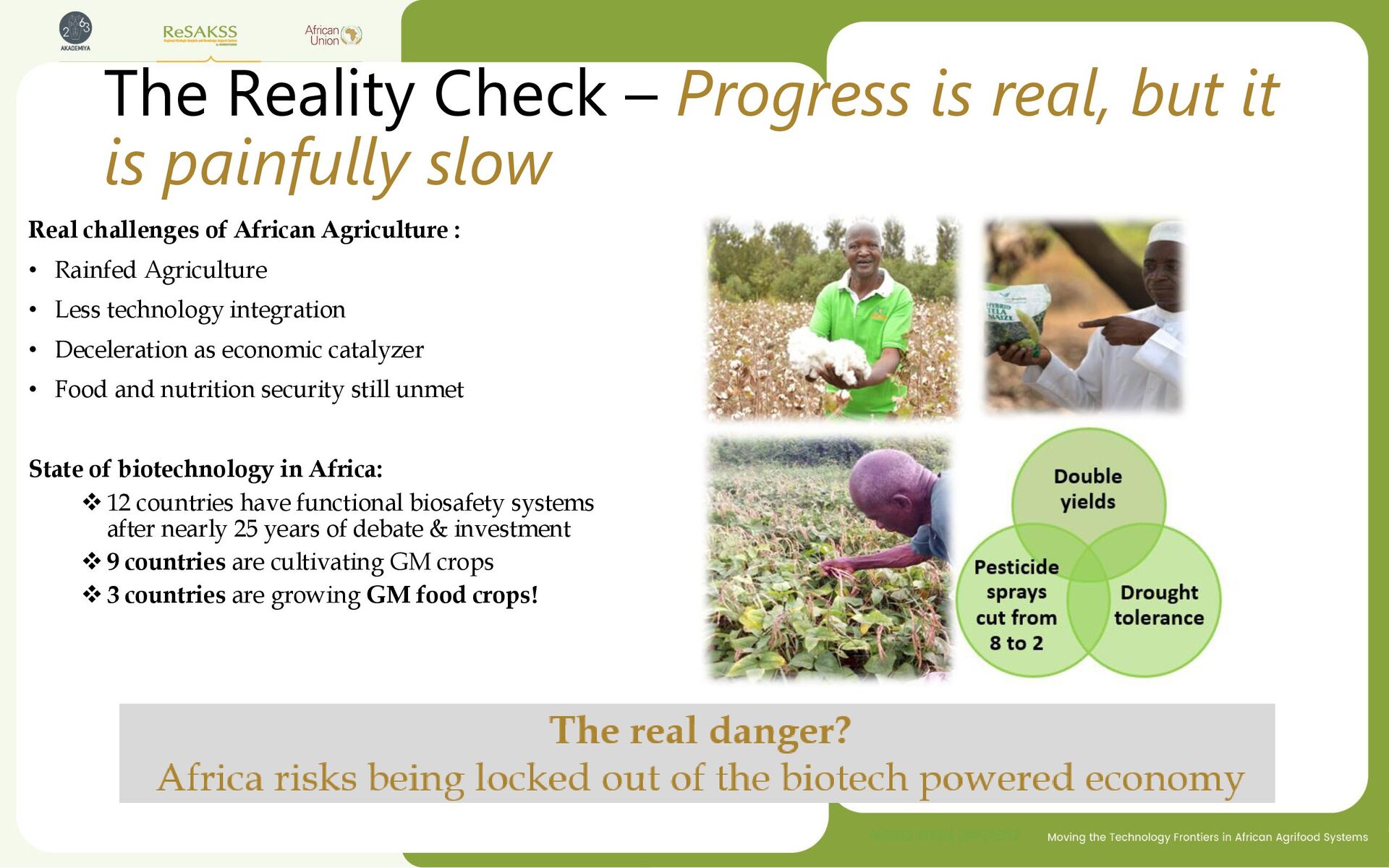
painfully slow Real challenges of African Agriculture : • Rainfed Agriculture • Less technology integration • Deceleration as economic catalyzer • Food and nutrition security still unmet State of biotechnology in Africa: ❖ 12 countries have functional biosafety systems after nearly 25 years of debate & investment ❖ 9 countries are cultivating GM crops ❖ 3 countries are growing GM food crops!
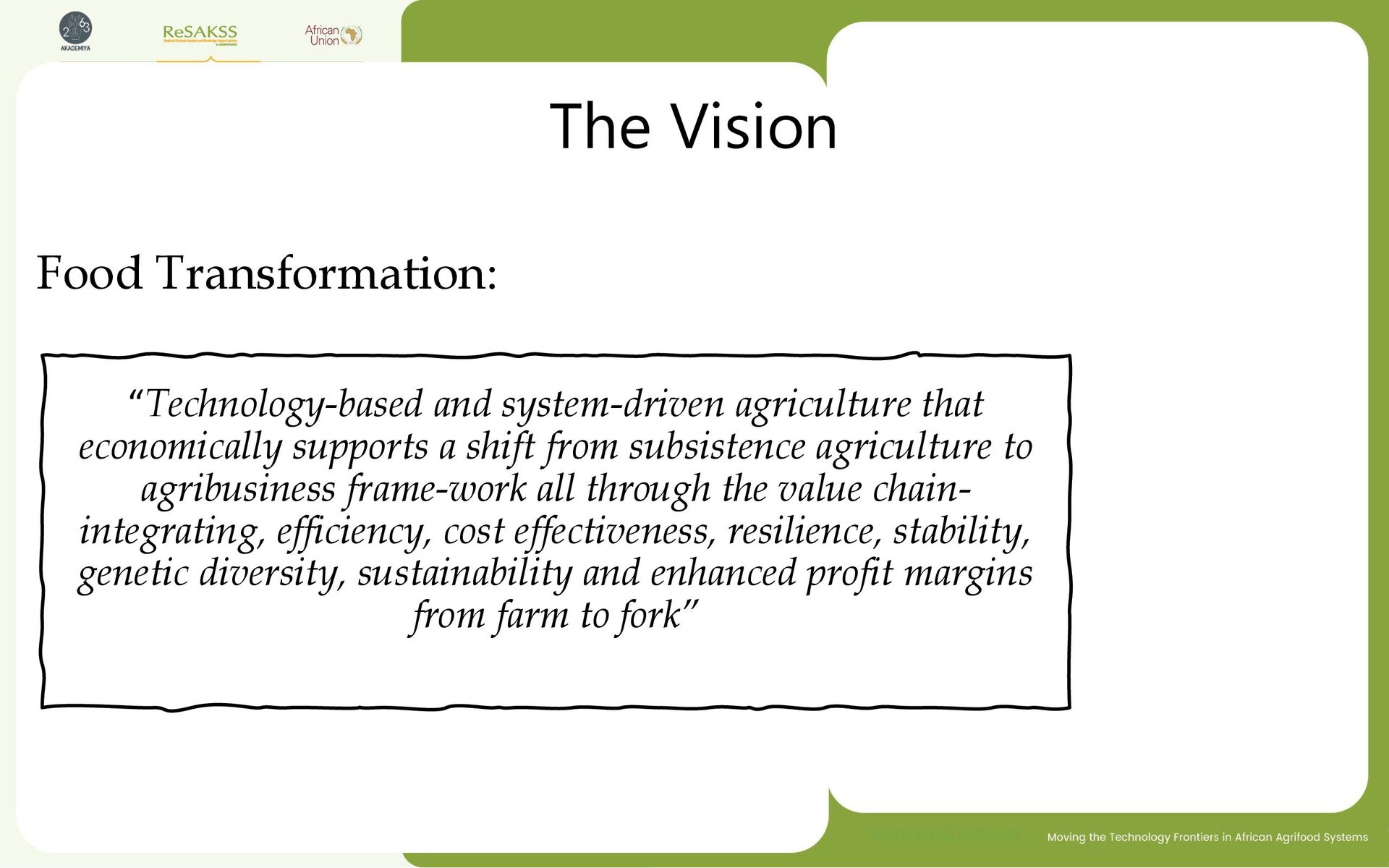
shift from subsistence agriculture to agribusiness frame-work all through the value chain- integrating, efficiency, cost effectiveness, resilience, stability, genetic diversity, sustainability and enhanced profit margins from farm to fork” Food Transformation:
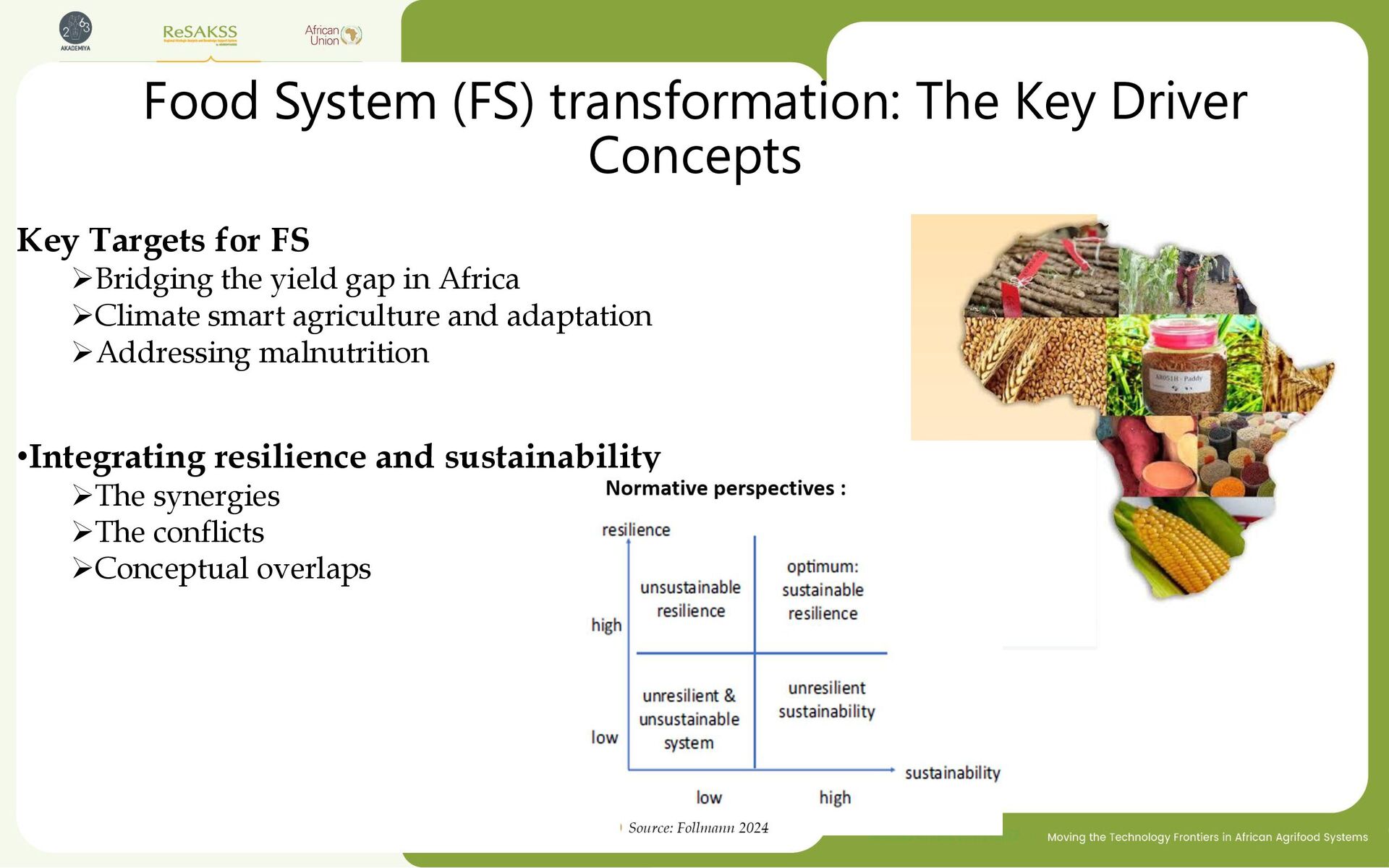
for FS ➢Bridging the yield gap in Africa ➢Climate smart agriculture and adaptation ➢Addressing malnutrition •Integrating resilience and sustainability ➢The synergies ➢The conflicts ➢Conceptual overlaps
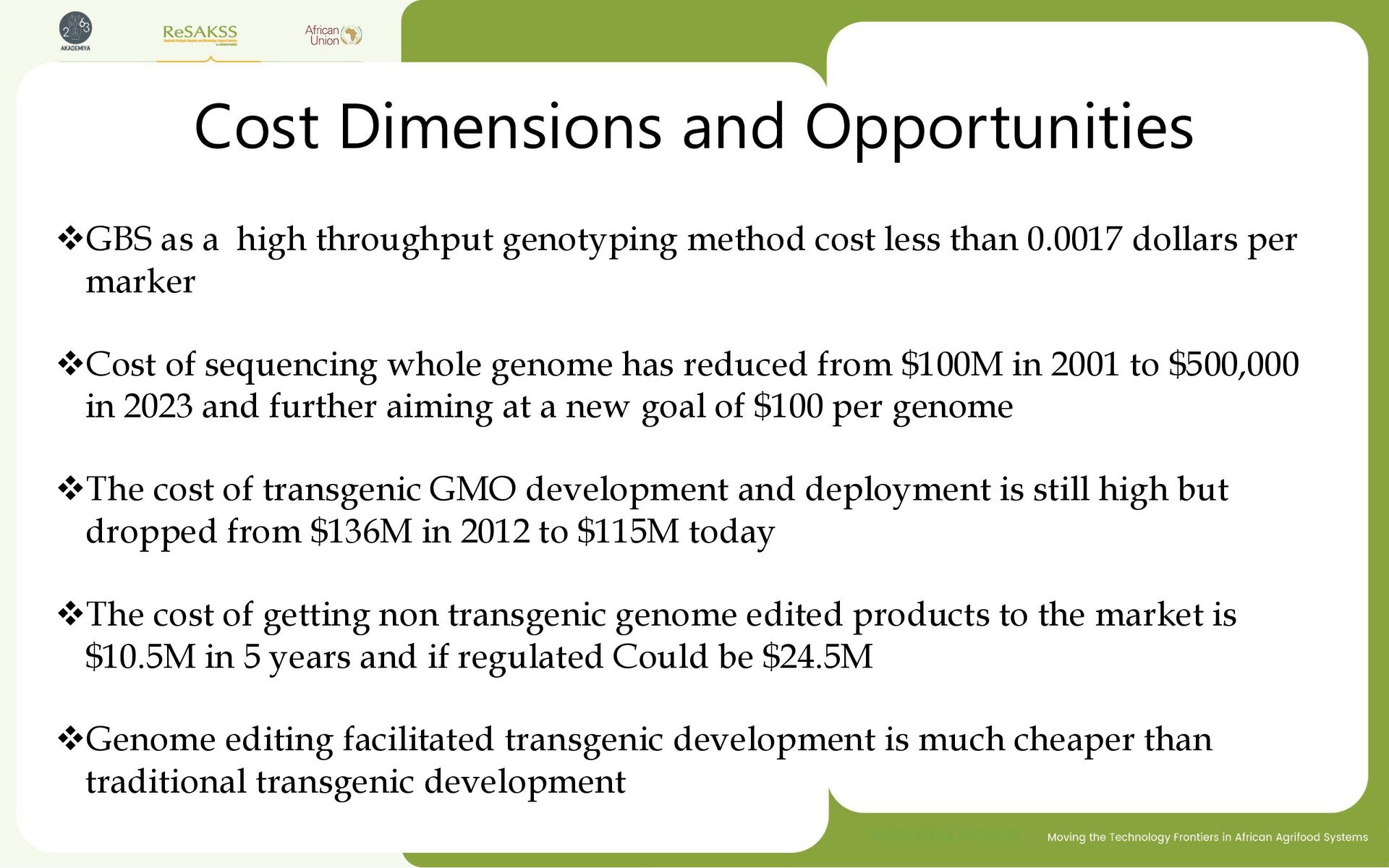
method cost less than 0.0017 dollars per marker ❖Cost of sequencing whole genome has reduced from $100M in 2001 to $500,000 in 2023 and further aiming at a new goal of $100 per genome ❖The cost of transgenic GMO development and deployment is still high but dropped from $136M in 2012 to $115M today ❖The cost of getting non transgenic genome edited products to the market is $10.5M in 5 years and if regulated Could be $24.5M ❖Genome editing facilitated transgenic development is much cheaper than traditional transgenic development
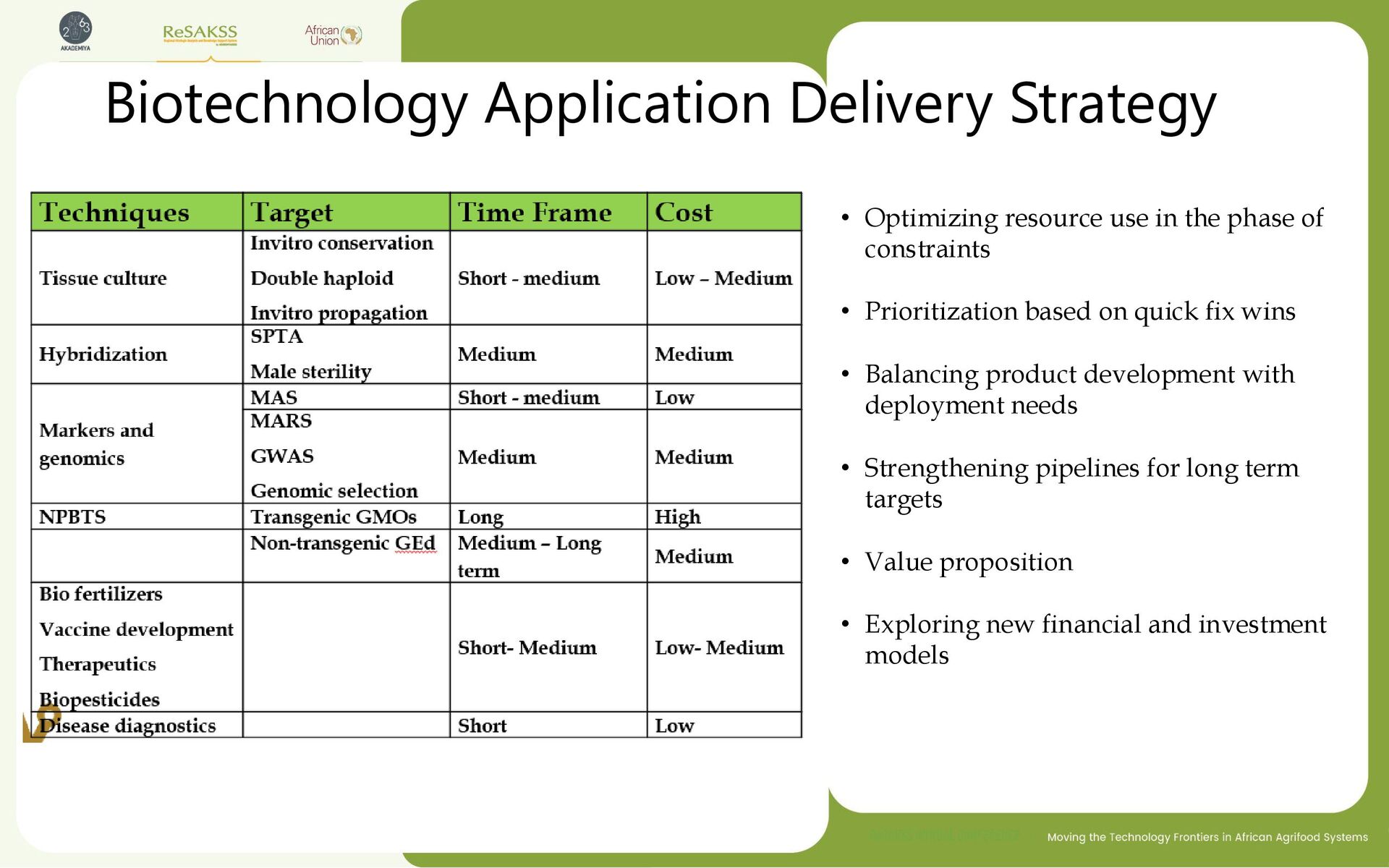
phase of constraints • Prioritization based on quick fix wins • Balancing product development with deployment needs • Strengthening pipelines for long term targets • Value proposition • Exploring new financial and investment models
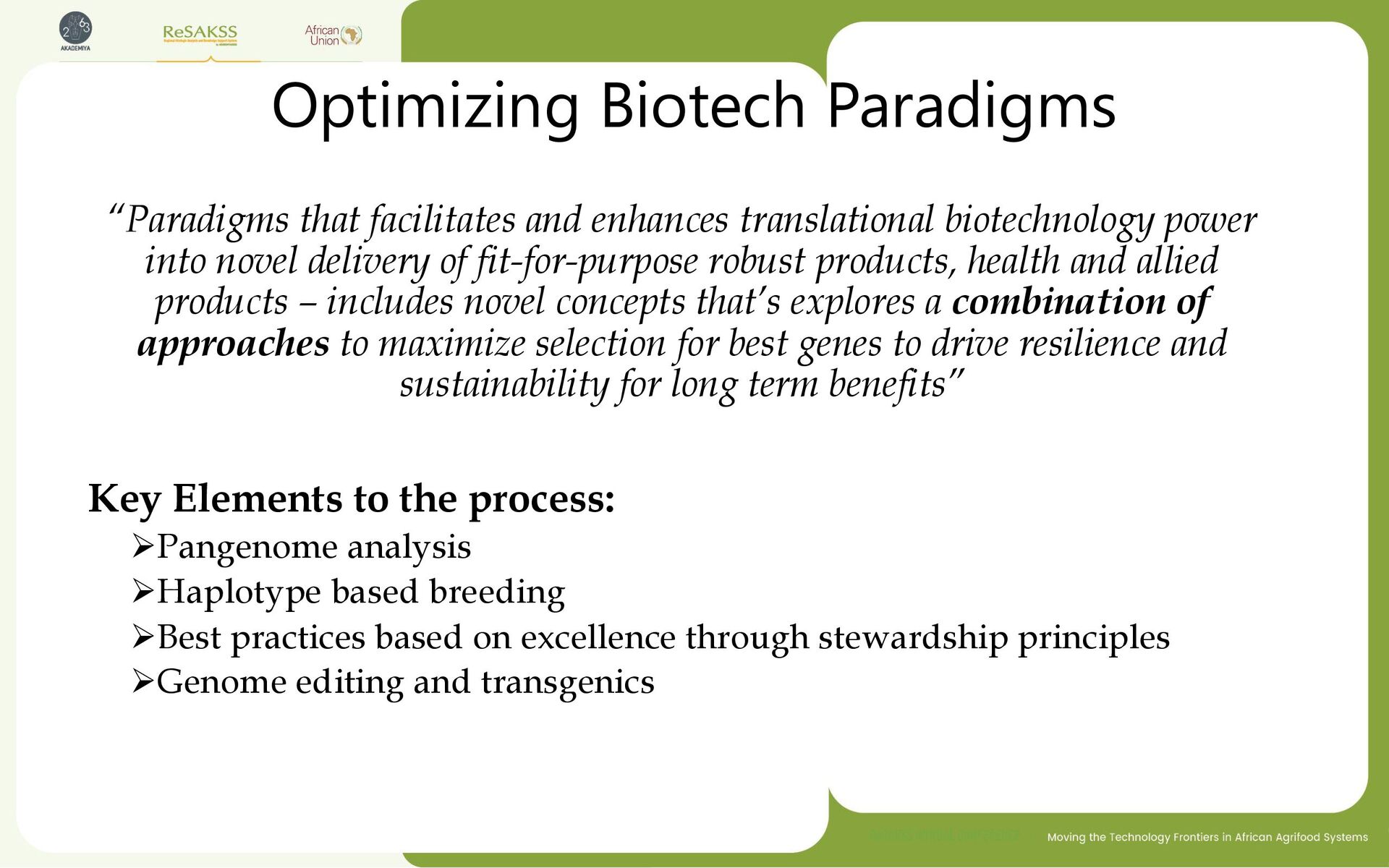
power into novel delivery of fit-for-purpose robust products, health and allied products – includes novel concepts that’s explores a combination of approaches to maximize selection for best genes to drive resilience and sustainability for long term benefits” Key Elements to the process: ➢Pangenome analysis ➢Haplotype based breeding ➢Best practices based on excellence through stewardship principles ➢Genome editing and transgenics
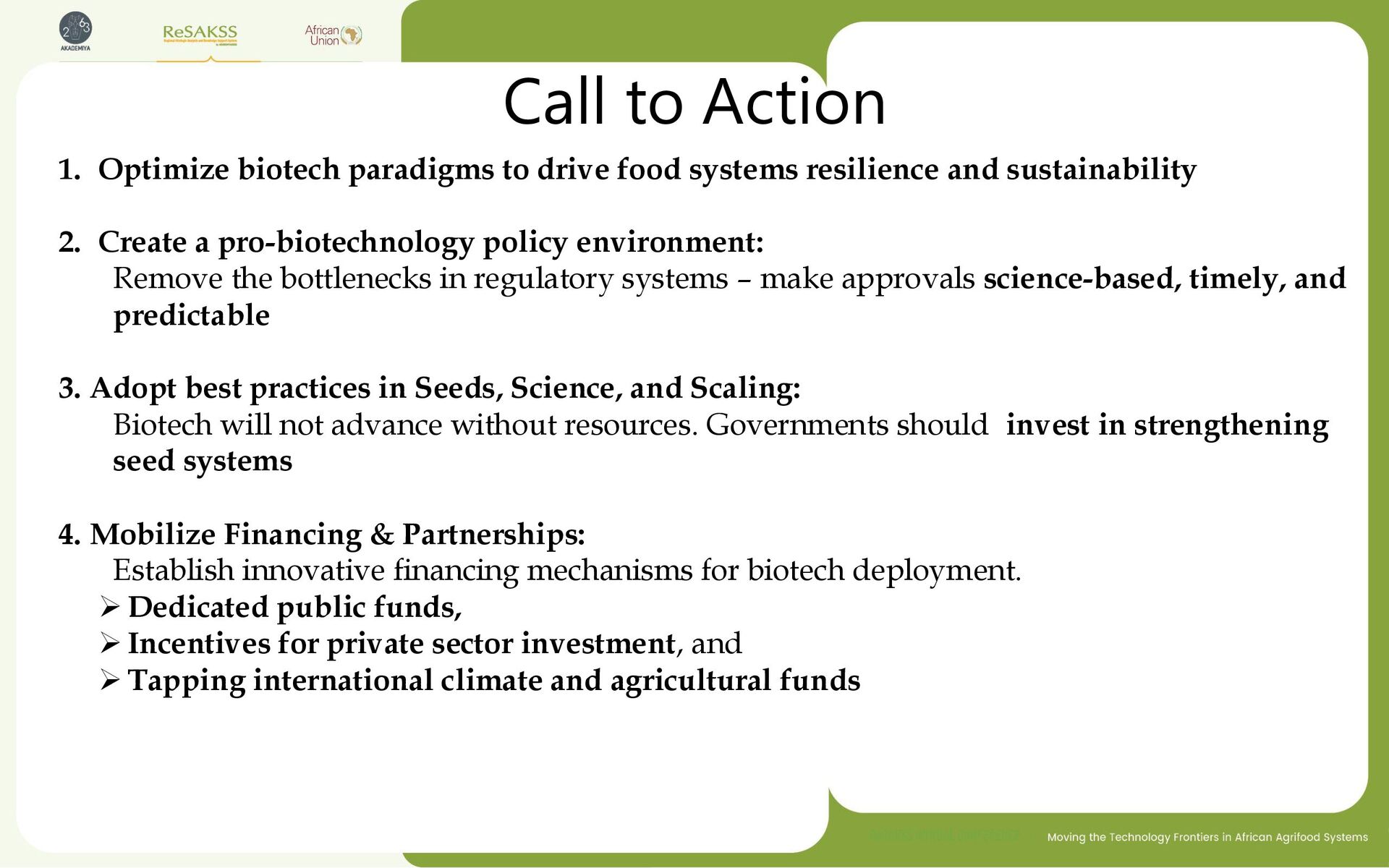
systems resilience and sustainability 2. Create a pro-biotechnology policy environment: Remove the bottlenecks in regulatory systems – make approvals science-based, timely, and predictable 3. Adopt best practices in Seeds, Science, and Scaling: Biotech will not advance without resources. Governments should invest in strengthening seed systems 4. Mobilize Financing & Partnerships: Establish innovative financing mechanisms for biotech deployment. ➢ Dedicated public funds, ➢ Incentives for private sector investment, and ➢ Tapping international climate and agricultural funds


 akademiya2063
 shibuiwilliam
 institutdelelevage
 rikkabotan7
.png) satai
satai
 yukiar
 junkashihara
 reokashiwa
 rfujii
 recsyslab
 kogoro
 koide3
 axbom
axbom
 greggifford
 marktimemedia
 chrislema
 jnunemaker
 tessaabrams
 skipperchong
 addyosmani
 katarinadahlin
 keathley