Upgrade to Pro — share decks privately, control downloads, hide ads and more …

Sample Collection, Preservation, Order of Draw ...

Sponsored · Your Podcast. Everywhere. Effortlessly. Share. Educate. Inspire. Entertain. You do you. We'll handle the rest. →

Sample Collection, Preservation, Order of Draw & Lab Safety | DMLT 1st Year

Complete presentation on Sample Collection, Preservation of Sample, Order of Draw and Laboratory Safety for DMLT 1st Year students.Topics Covered:Blood, Urine and Stool Collection TechniquesVacutainer Order of Draw (Yellow, Light Blue, Red, Green, Lavender, Grey)Sample Preservation Temperature and TimeBiomedical Waste Management & PPE SafetyLab Safety Rules for DMLT, BMLT, DOTT, CMS

Avatar for Er. Annu maurya

Er. Annu maurya

September 11, 2026

More Decks by Er. Annu maurya

Other Decks in Education

Transcript

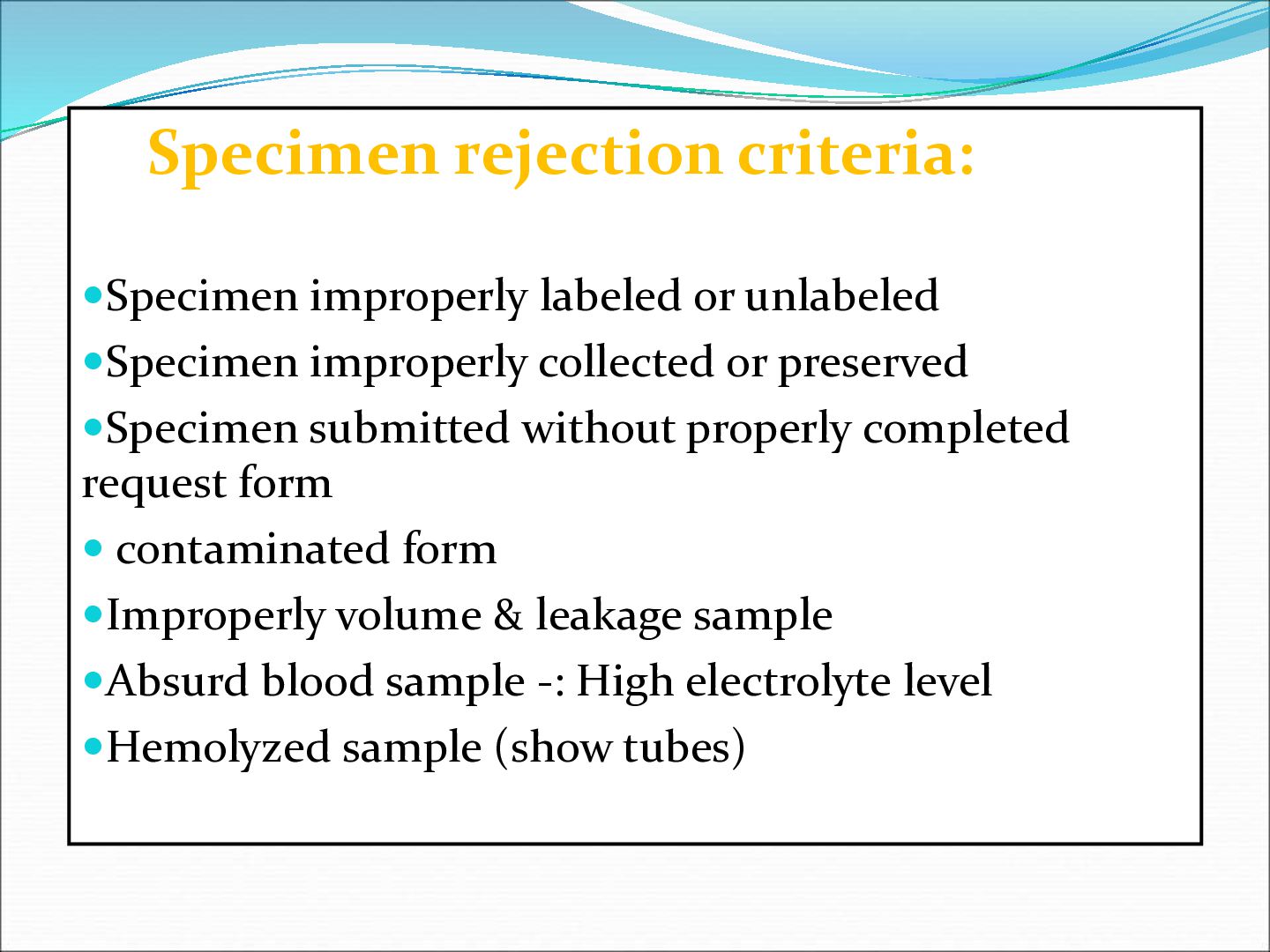
  1. Specimen rejection criteria: Specimen improperly labeled or unlabeled Specimen improperly

    collected or preserved Specimen submitted without properly completed request form  contaminated form Improperly volume & leakage sample Absurd blood sample -: High electrolyte level Hemolyzed sample (show tubes)
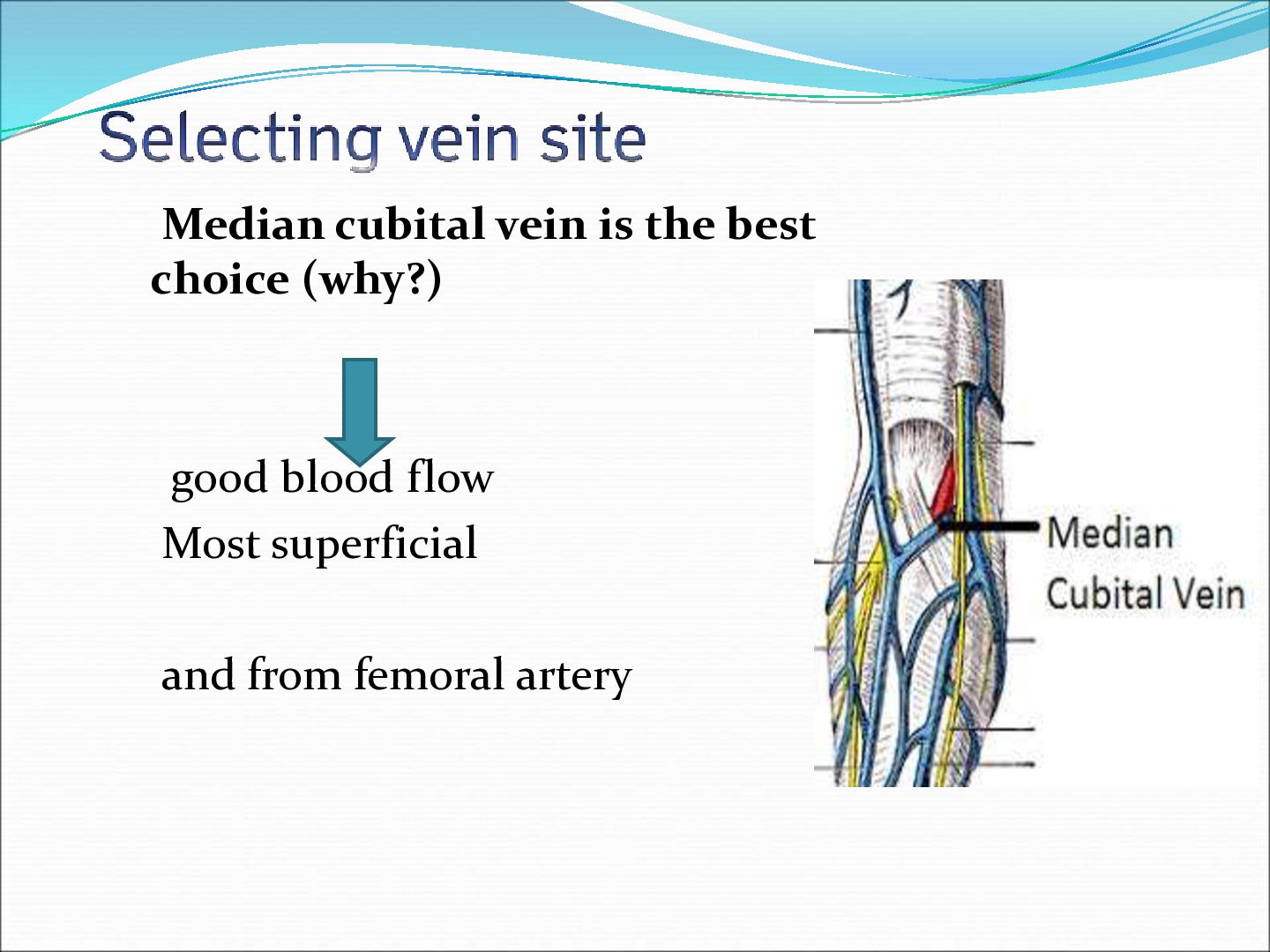
  2. Median cubital vein is the best choice (why?) good blood

    flow Most superficial and from femoral artery
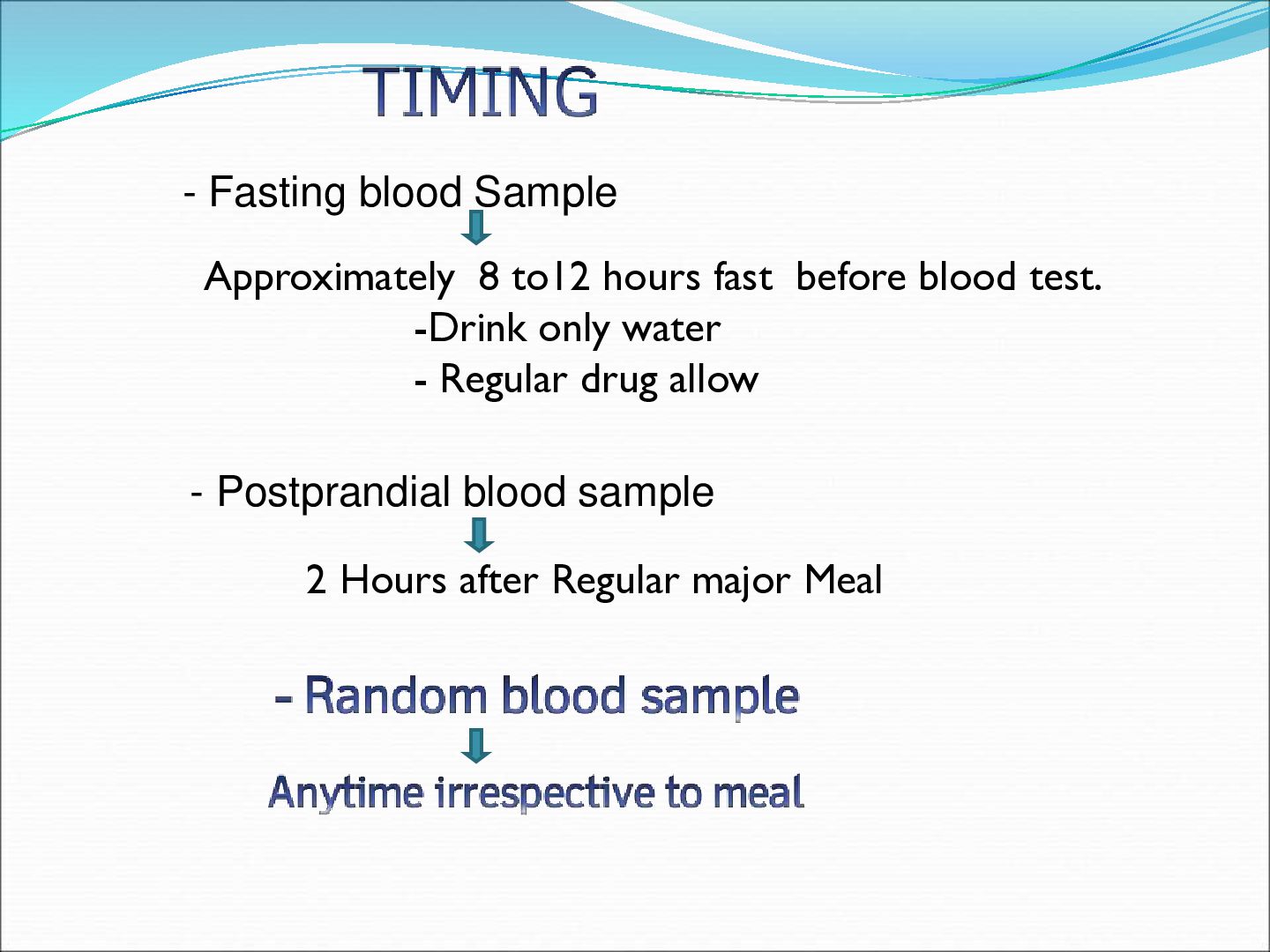
  3. - Fasting blood Sample Approximately 8 to12 hours fast before

    blood test. -Drink only water - Regular drug allow - Postprandial blood sample 2 Hours after Regular major Meal
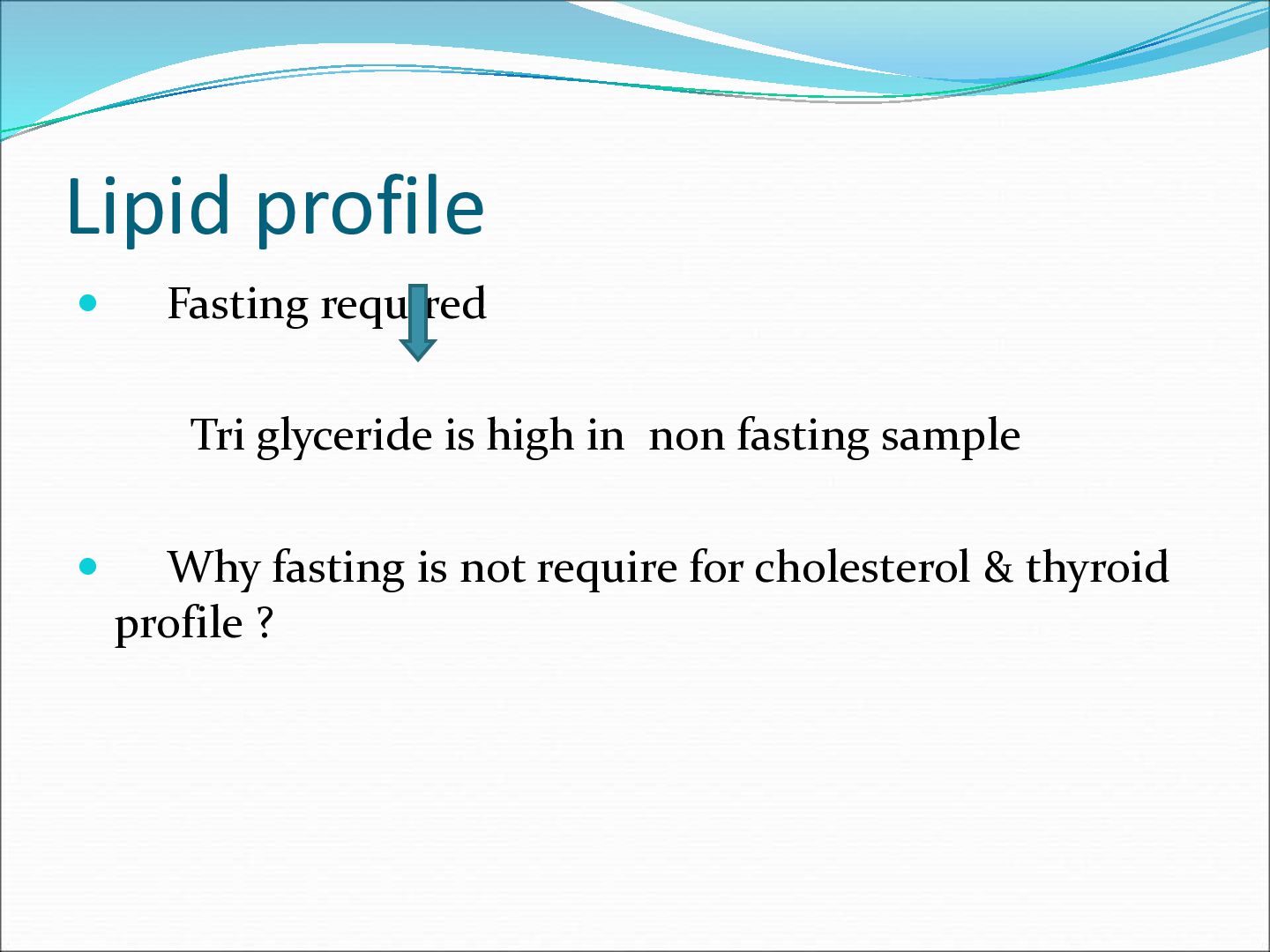
  4. Lipid profile  Fasting required Tri glyceride is high in

    non fasting sample  Why fasting is not require for cholesterol & thyroid profile ?
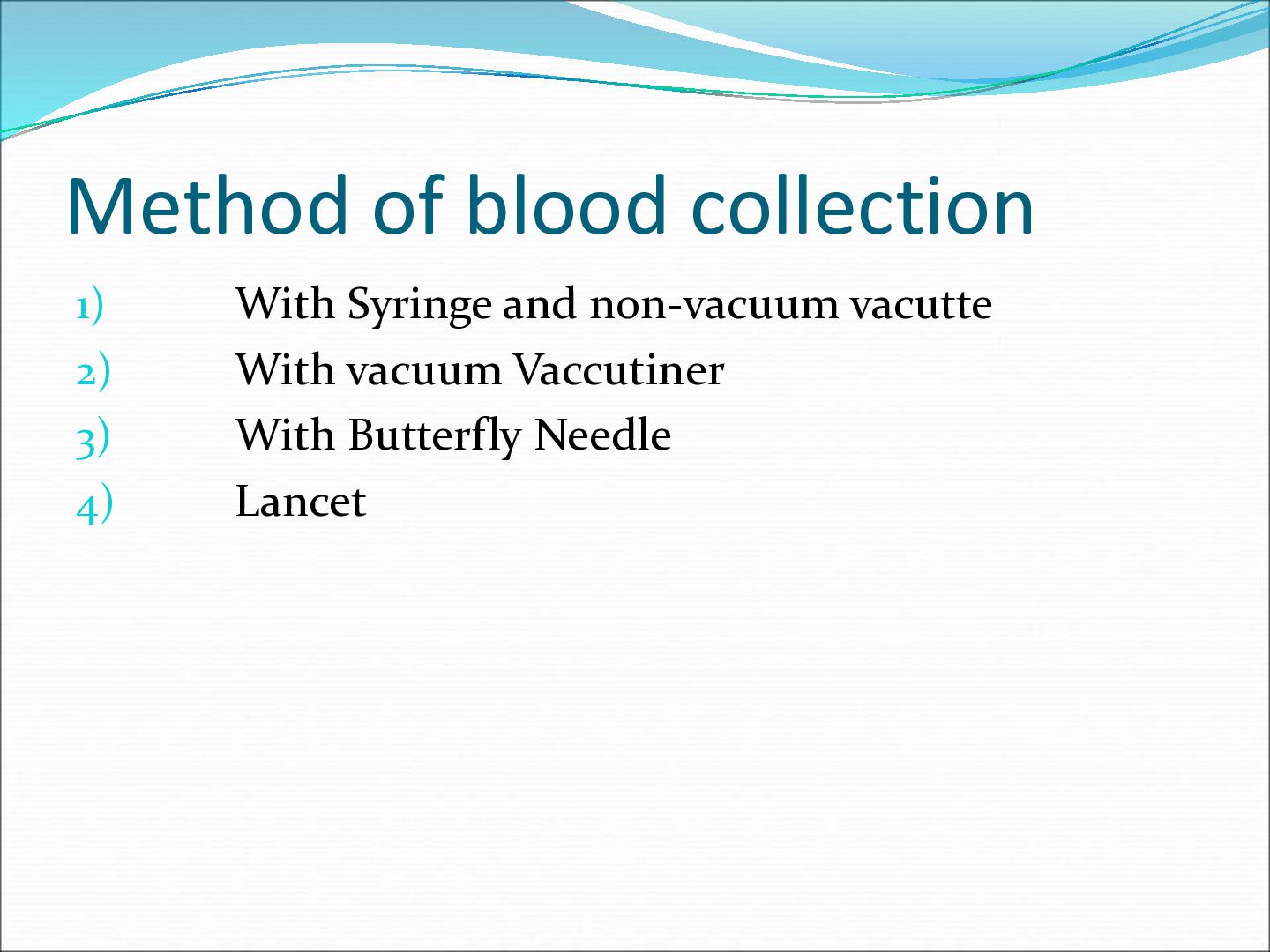
  5. Method of blood collection 1) 2) 3) 4) With Syringe

    and non-vacuum vacutte With vacuum Vaccutiner With Butterfly Needle Lancet
  6. 1) With Syringe and non-vacuum vacuette  Advantage:  Cheaper

     Not extra accessory requiry  Disadvantage:  Improper volume – especially when blood collection is require for cougulation profile  Haemolysis
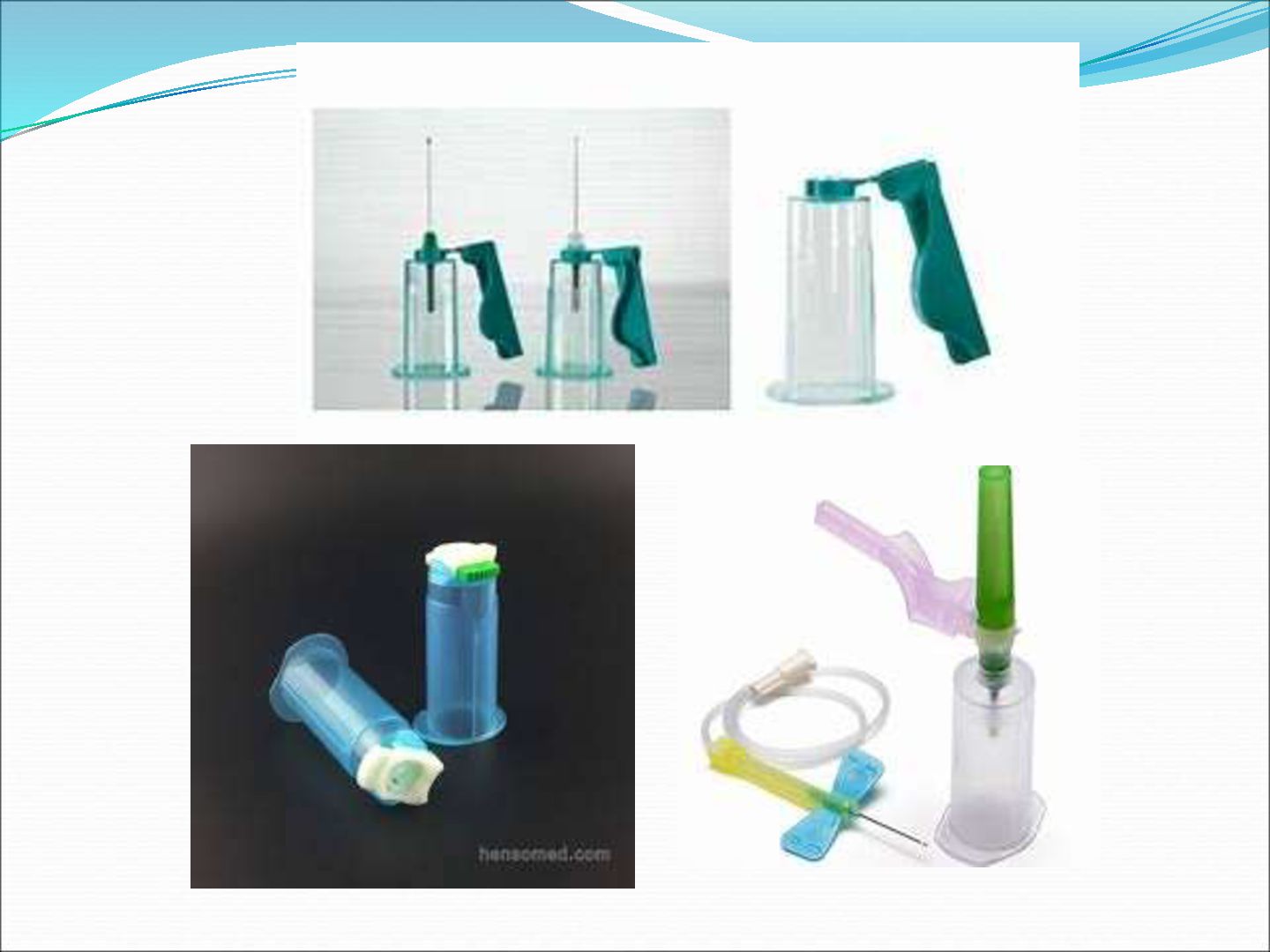
  7. 2) With vacuum Vaccutiner  Advantages:-  Maintain proper volume

    of blood Safe & Speedy Reducing the risk of haemolysis     Disadvantages:not suited for small veins.
  8. 3) With Butterfly needle  Disadvantages.  1) The risk

    of hemolysis  2) It is difficult to collect large quantity of blood as well as in multiple vacuette  Advantages:  Useful in infants & children
  9. Preanalytic Interference In Sample Haemolysis  Reddish discoloration of serum/plasma

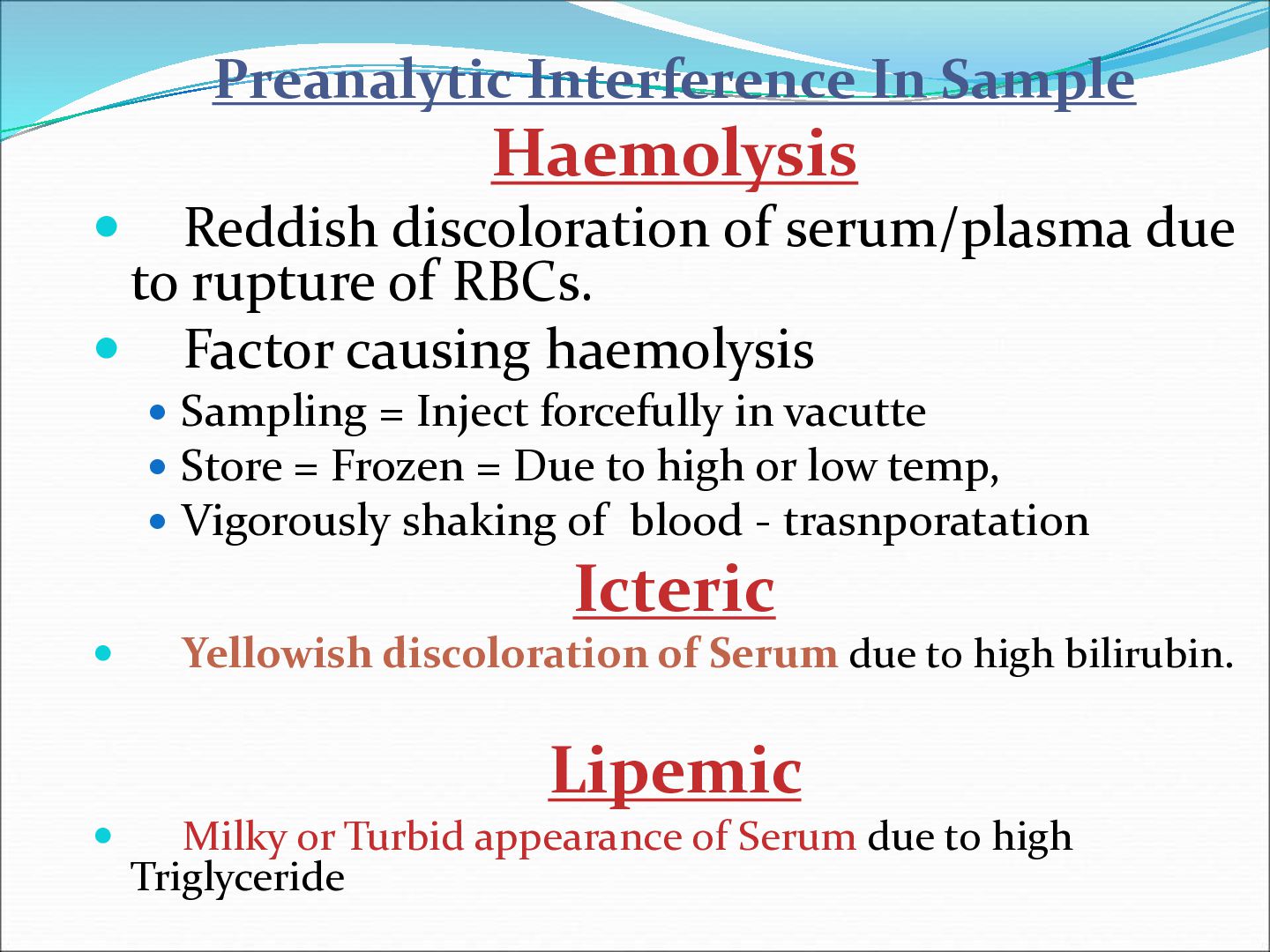
    due to rupture of RBCs.  Factor causing haemolysis  Sampling = Inject forcefully in vacutte  Store = Frozen = Due to high or low temp,  Vigorously shaking of blood - trasnporatation Icteric  Yellowish discoloration of Serum due to high bilirubin. Lipemic  Milky or Turbid appearance of Serum due to high Triglyceride
  10. CSF CSF collected in small amount  So, CSF is

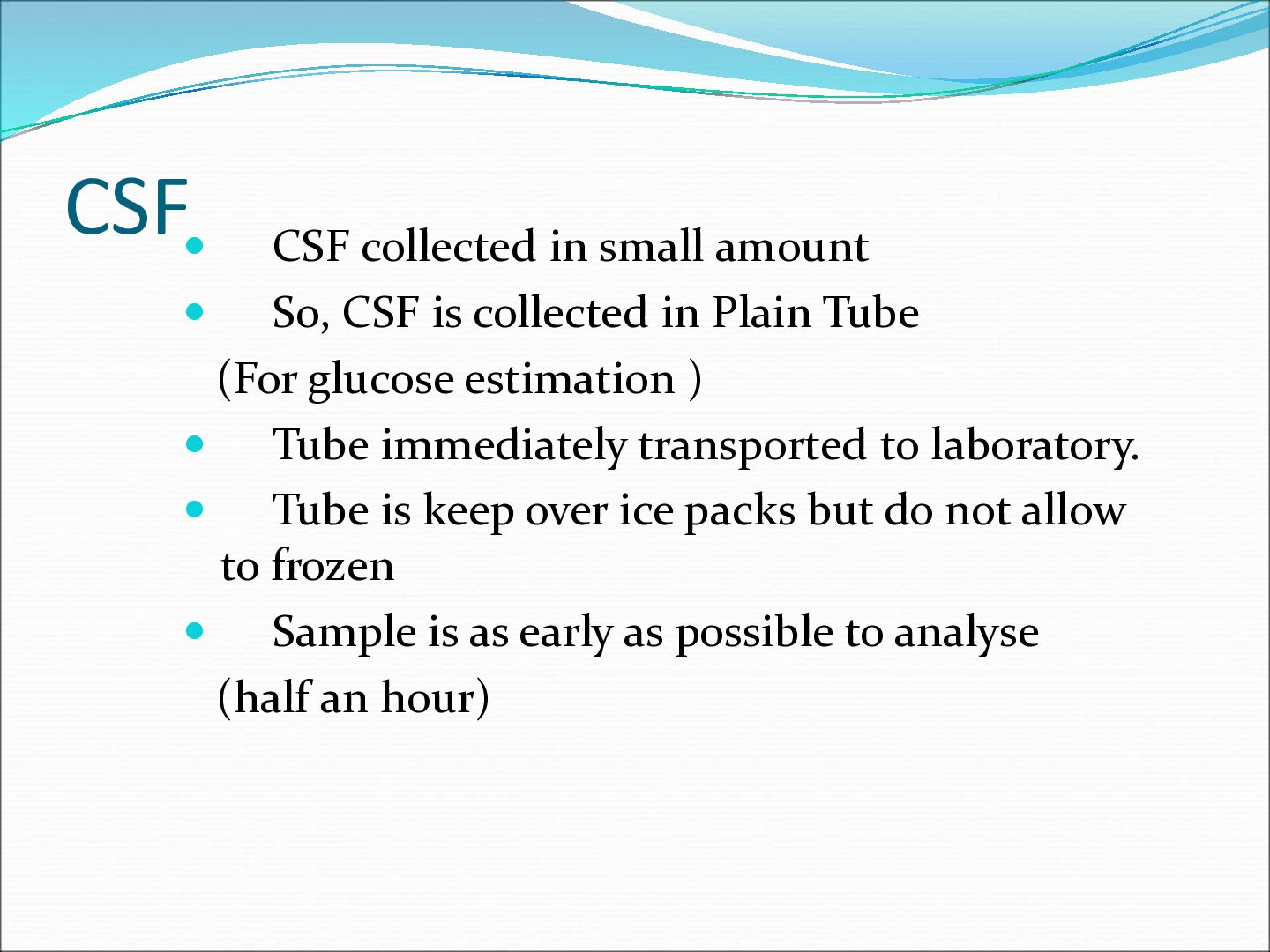
    collected in Plain Tube (For glucose estimation )  Tube immediately transported to laboratory.  Tube is keep over ice packs but do not allow to frozen  Sample is as early as possible to analyse (half an hour)
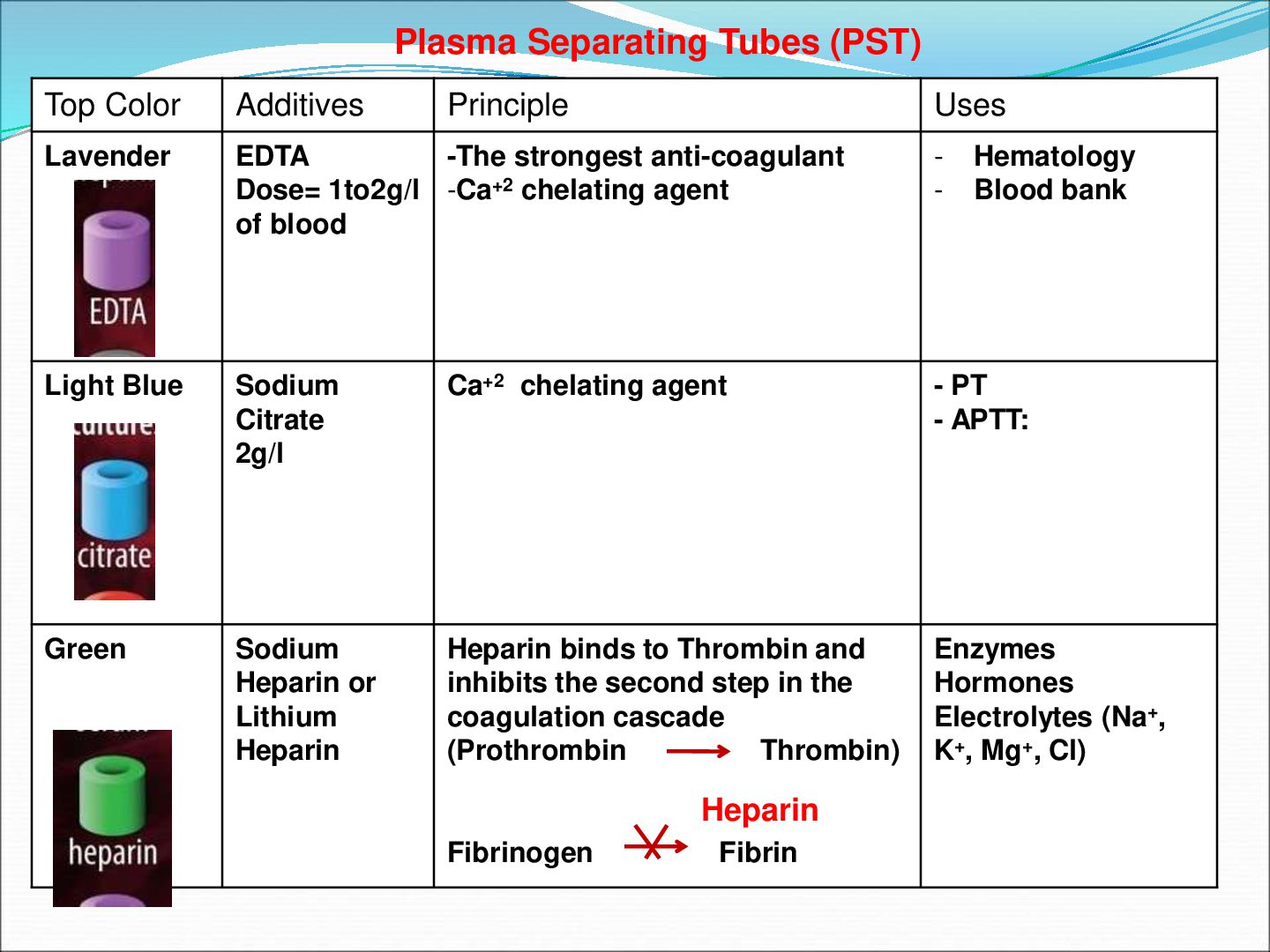
  11. Plasma Separating Tubes (PST) Top Color Additives Principle Uses Lavender

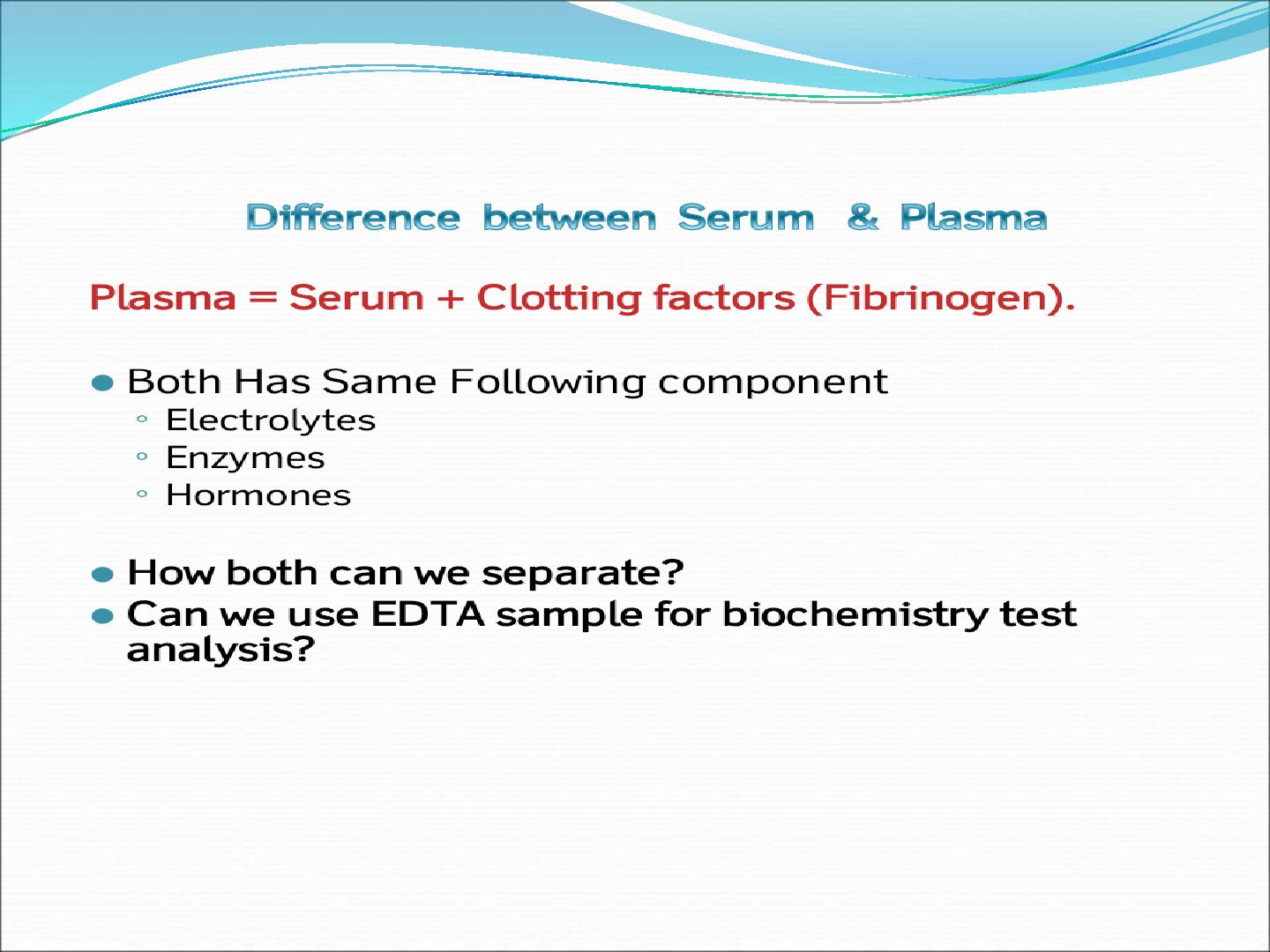
    EDTA -The strongest anti-coagulant Dose= 1to2g/l -Ca+2 chelating agent of blood Light Blue Sodium Citrate 2g/l Ca+2 chelating agent - PT - APTT: Green Sodium Heparin or Lithium Heparin Heparin binds to Thrombin and inhibits the second step in the coagulation cascade (Prothrombin Thrombin) Enzymes Hormones Electrolytes (Na+, K+, Mg+, Cl) Heparin Fibrinogen Fibrin - Hematology Blood bank
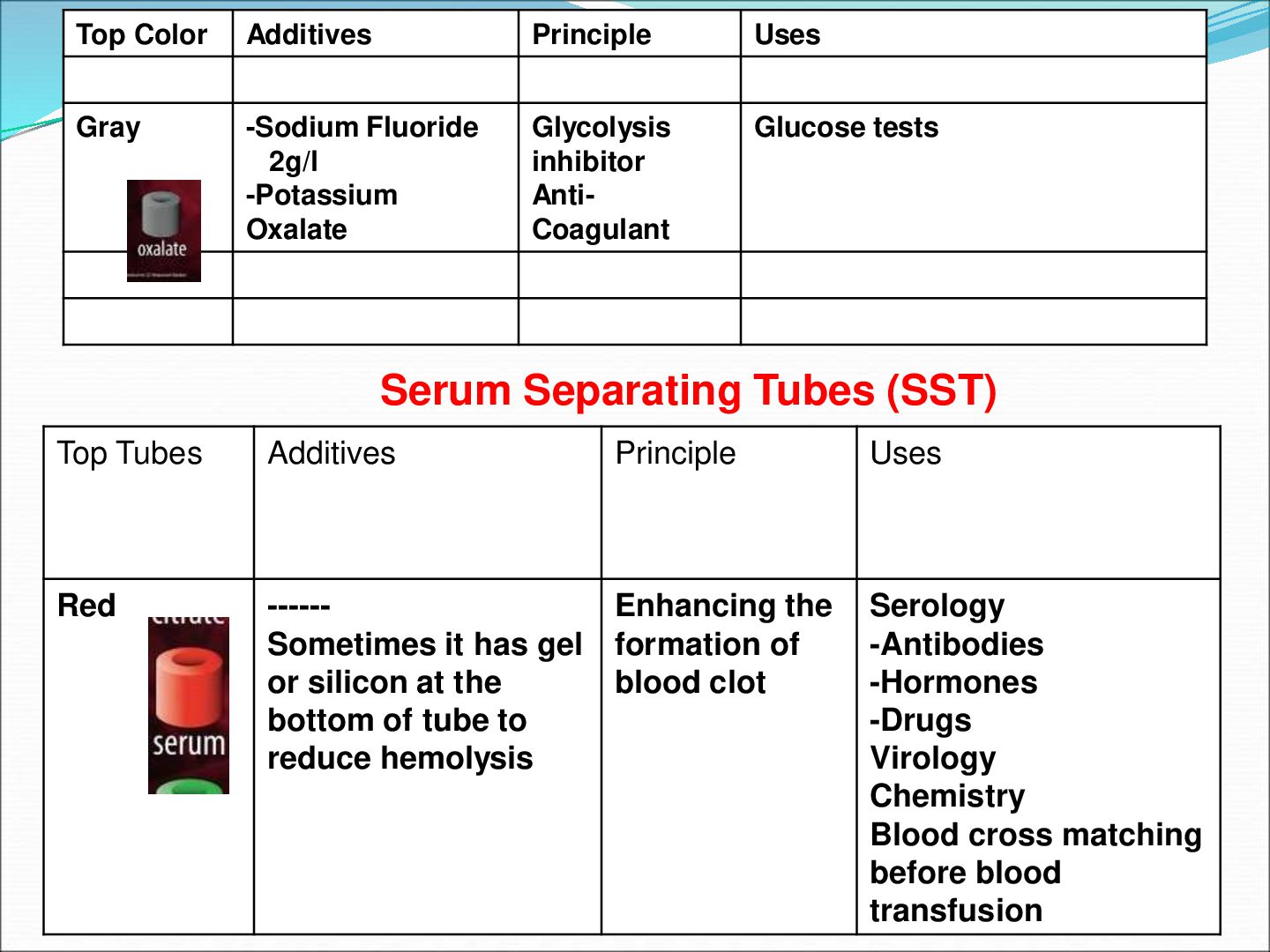
  12. Top Color Additives Principle Uses Gray -Sodium Fluoride 2g/l -Potassium

    Oxalate Glycolysis inhibitor AntiCoagulant Glucose tests Serum Separating Tubes (SST) Top Tubes Additives Principle Red -----Enhancing the Sometimes it has gel formation of or silicon at the blood clot bottom of tube to reduce hemolysis Uses Serology -Antibodies -Hormones -Drugs Virology Chemistry Blood cross matching before blood transfusion
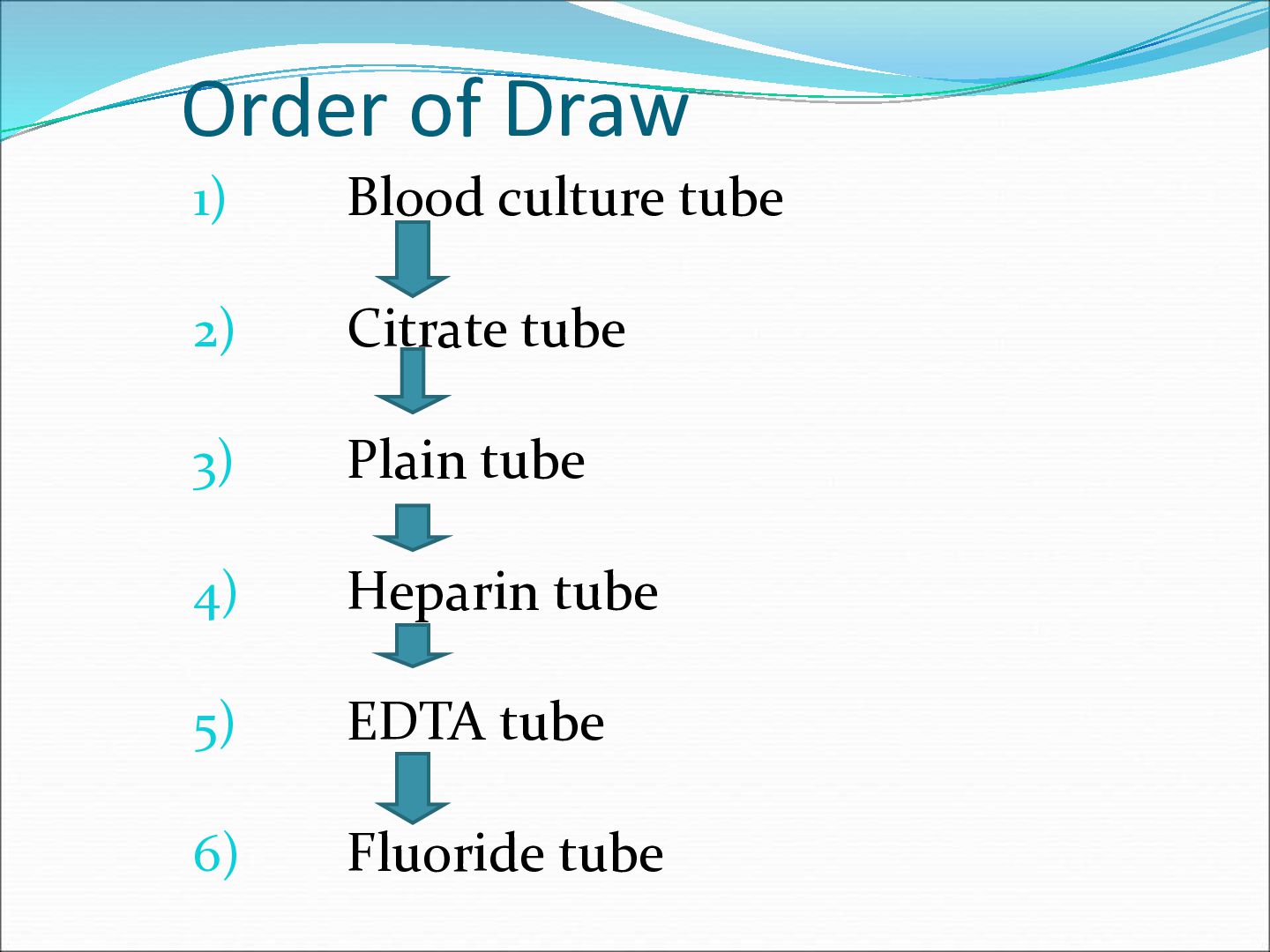
  13. Order of Draw 1) Blood culture tube 2) Citrate tube

    3) Plain tube 4) Heparin tube 5) EDTA tube 6) Fluoride tube
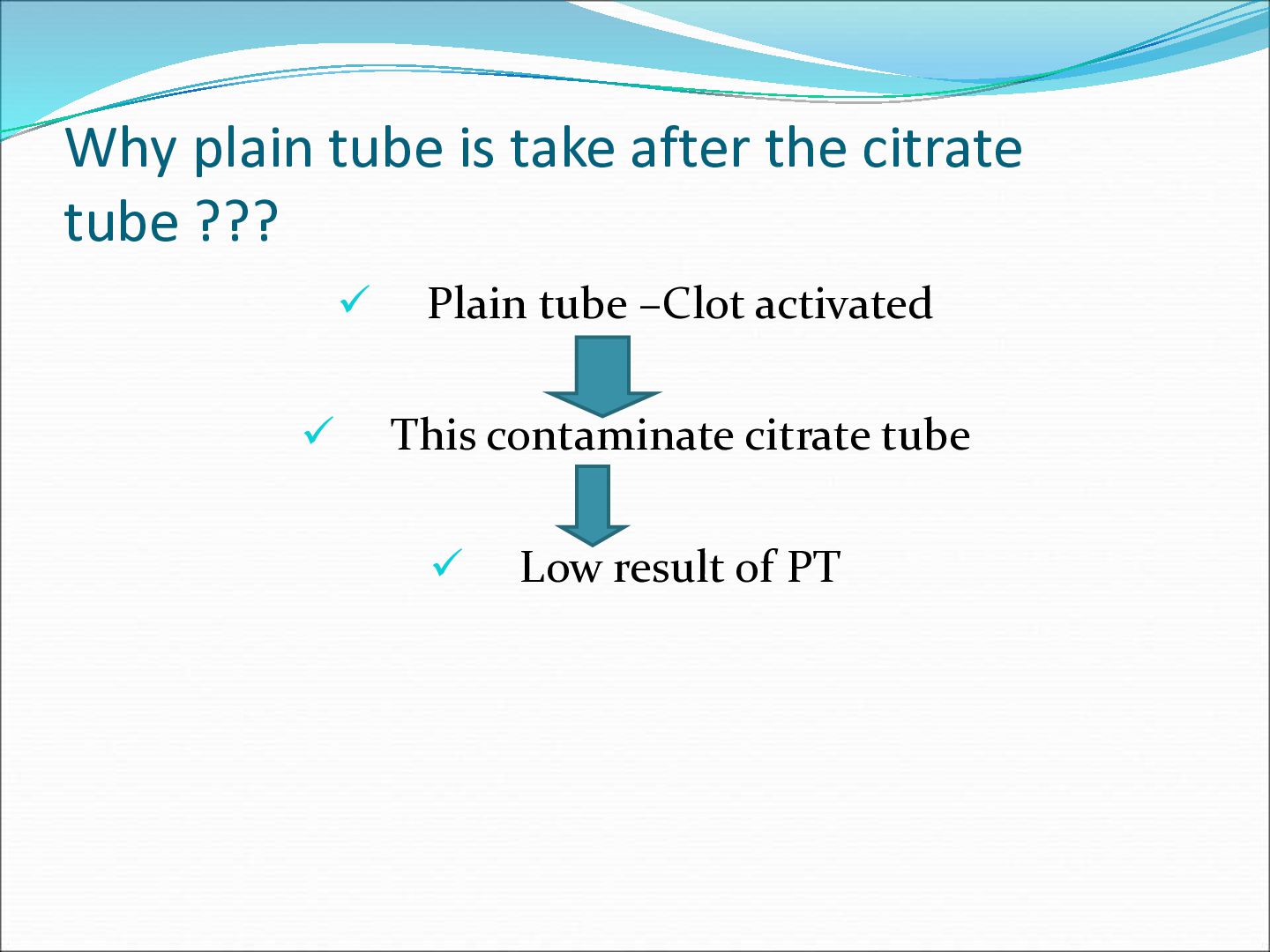
  14. Why plain tube is take after the citrate tube ???

      Plain tube –Clot activated This contaminate citrate tube  Low result of PT
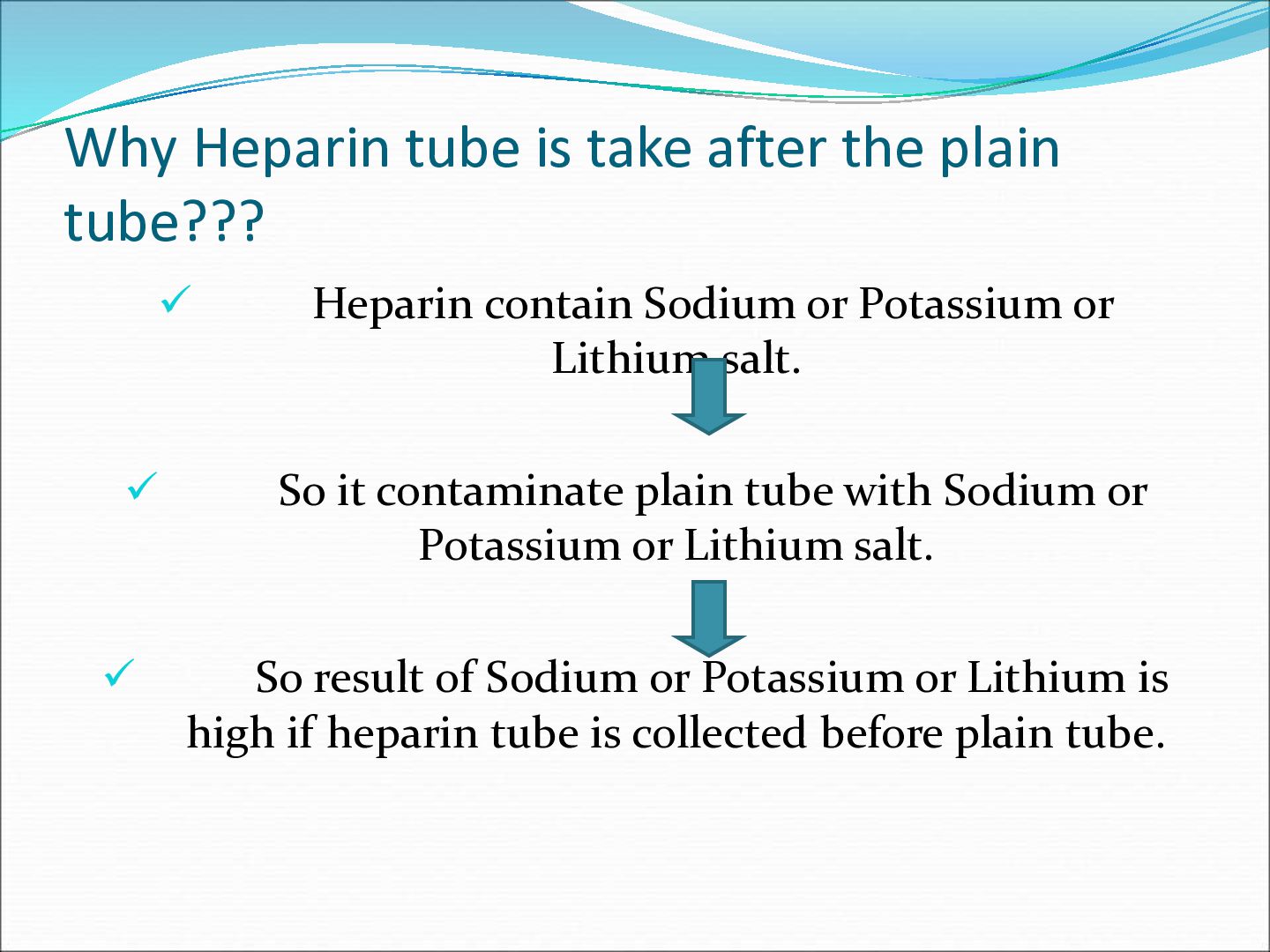
  15. Why Heparin tube is take after the plain tube??? 

    Heparin contain Sodium or Potassium or Lithium salt.  So it contaminate plain tube with Sodium or Potassium or Lithium salt.  So result of Sodium or Potassium or Lithium is high if heparin tube is collected before plain tube.
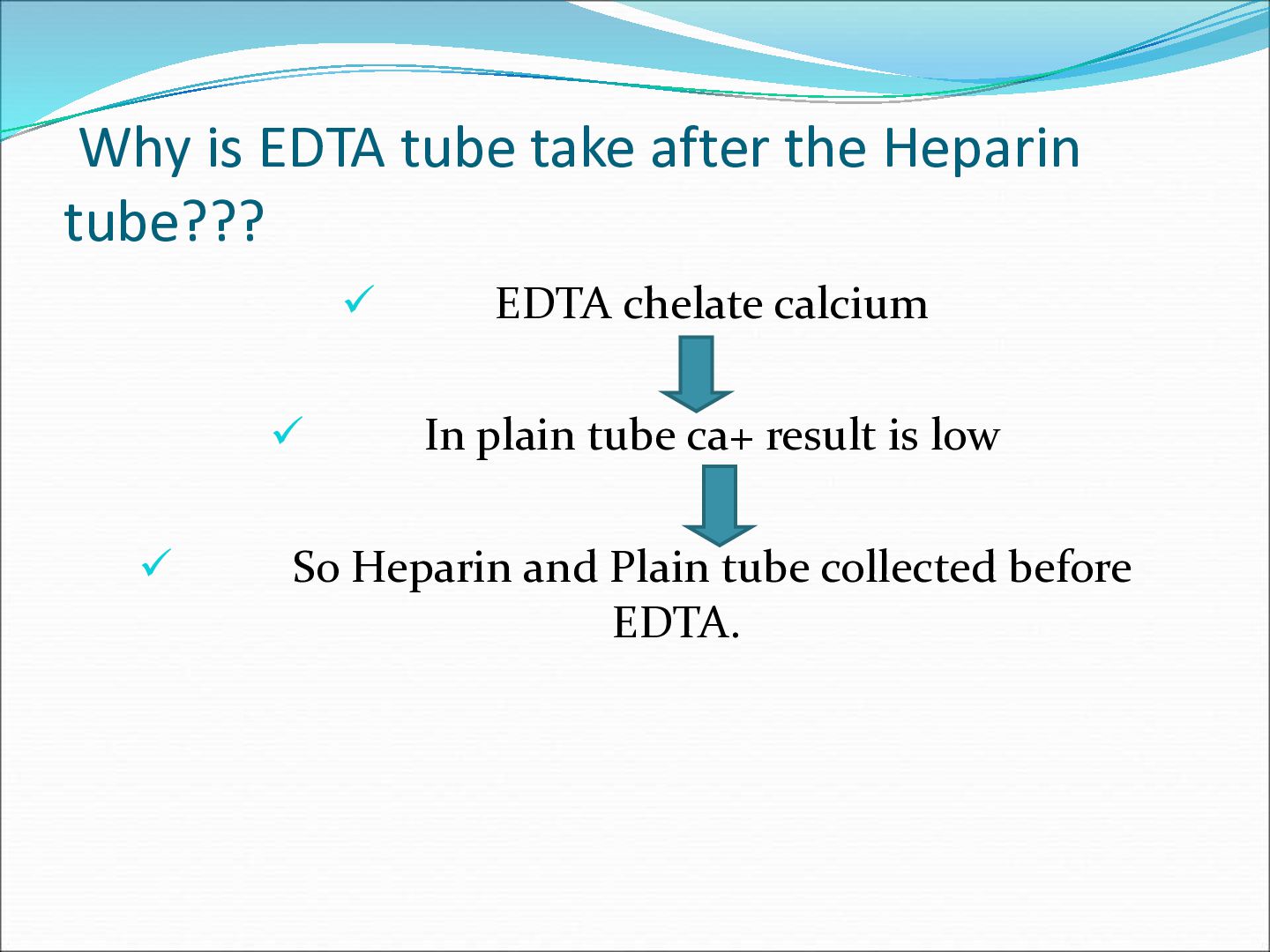
  16. Why is EDTA tube take after the Heparin tube??? 

      EDTA chelate calcium In plain tube ca+ result is low So Heparin and Plain tube collected before EDTA.
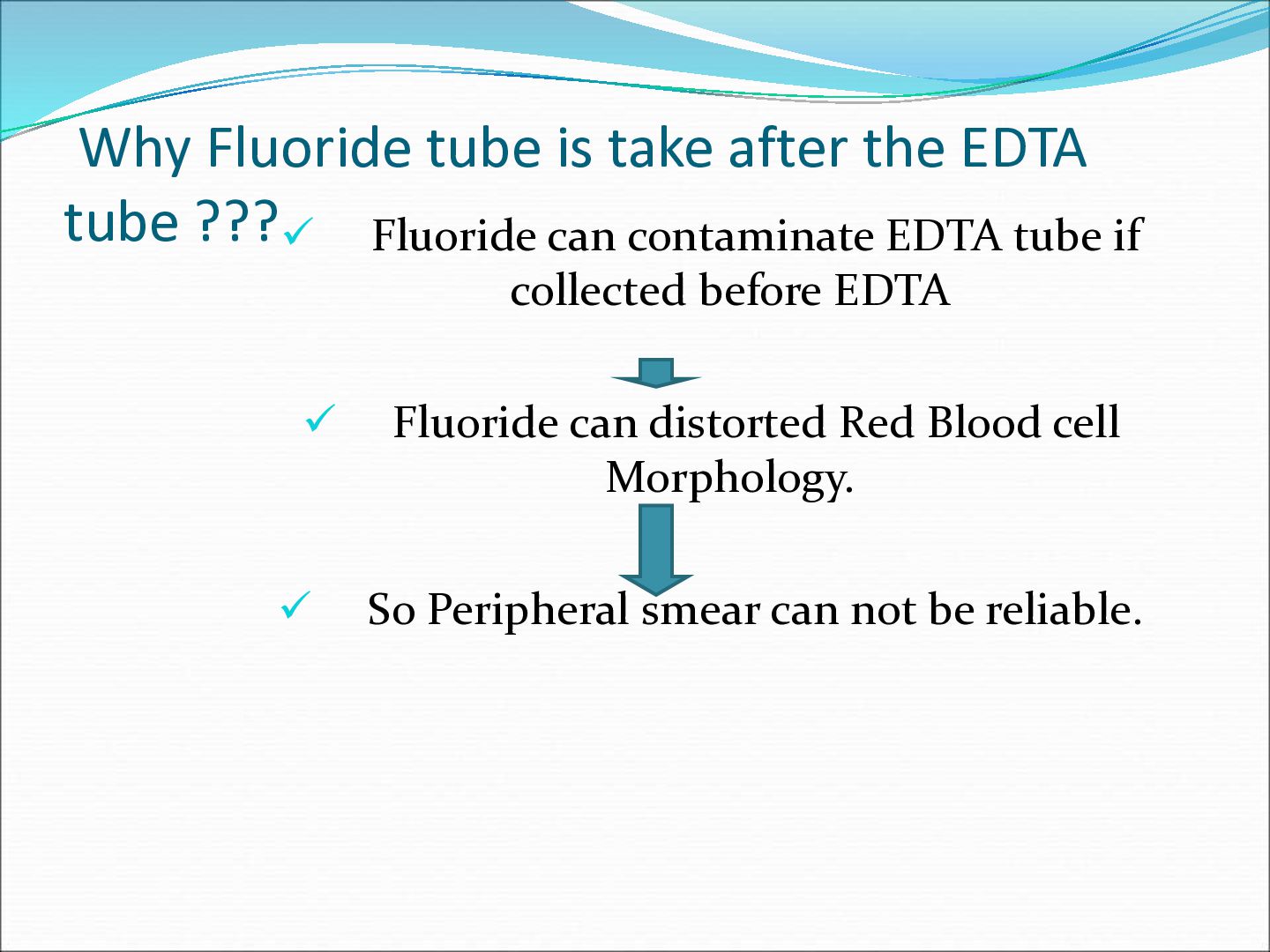
  17. Why Fluoride tube is take after the EDTA tube ???

    Fluoride can contaminate EDTA tube if collected before EDTA  Fluoride can distorted Red Blood cell Morphology.  So Peripheral smear can not be reliable.
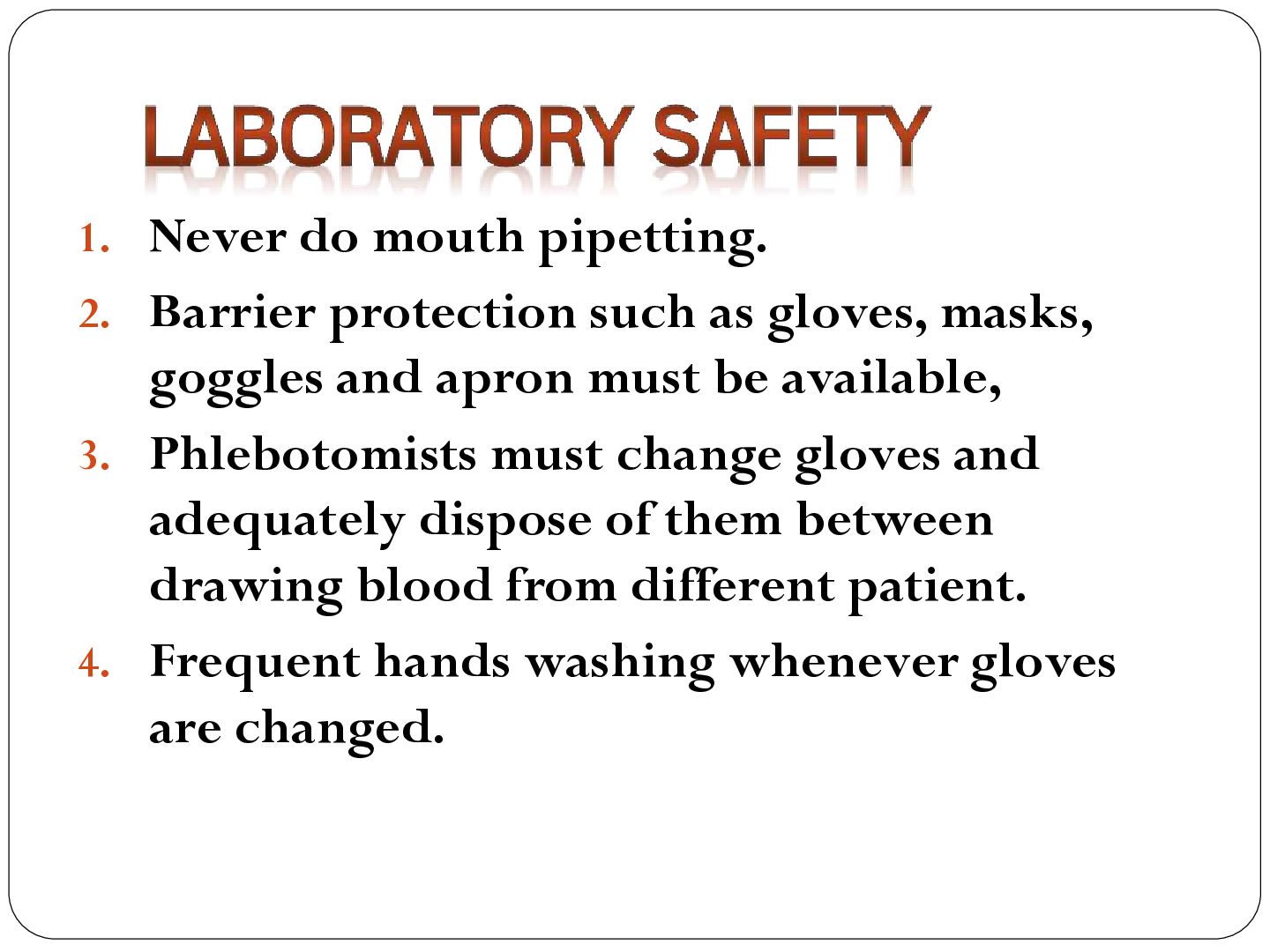
  18. 1. Never do mouth pipetting. 2. Barrier protection such as

    gloves, masks, goggles and apron must be available, 3. Phlebotomists must change gloves and adequately dispose of them between drawing blood from different patient. 4. Frequent hands washing whenever gloves are changed.
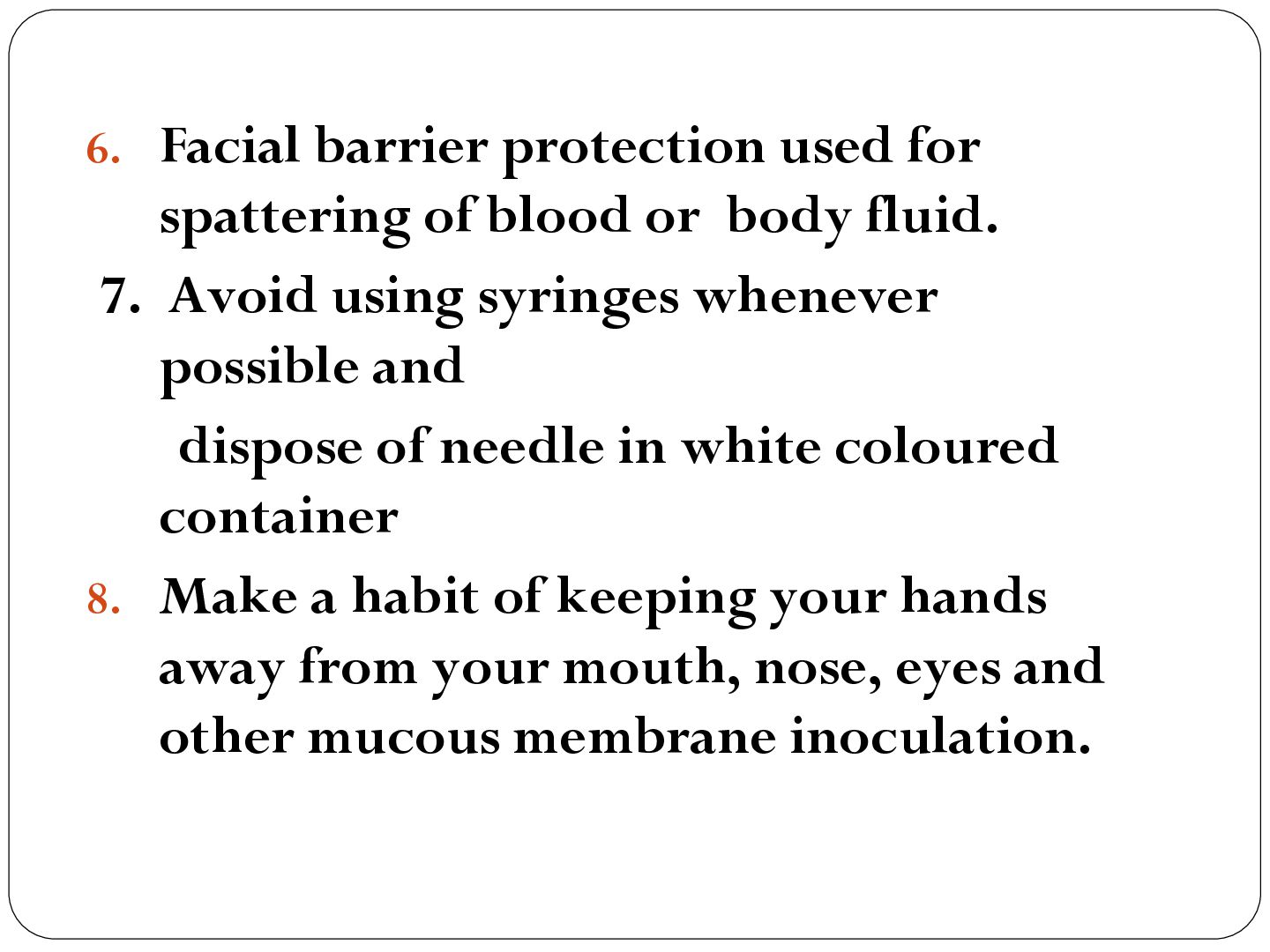
  19. 6. Facial barrier protection used for spattering of blood or

    body fluid. 7. Avoid using syringes whenever possible and dispose of needle in white coloured container 8. Make a habit of keeping your hands away from your mouth, nose, eyes and other mucous membrane inoculation.
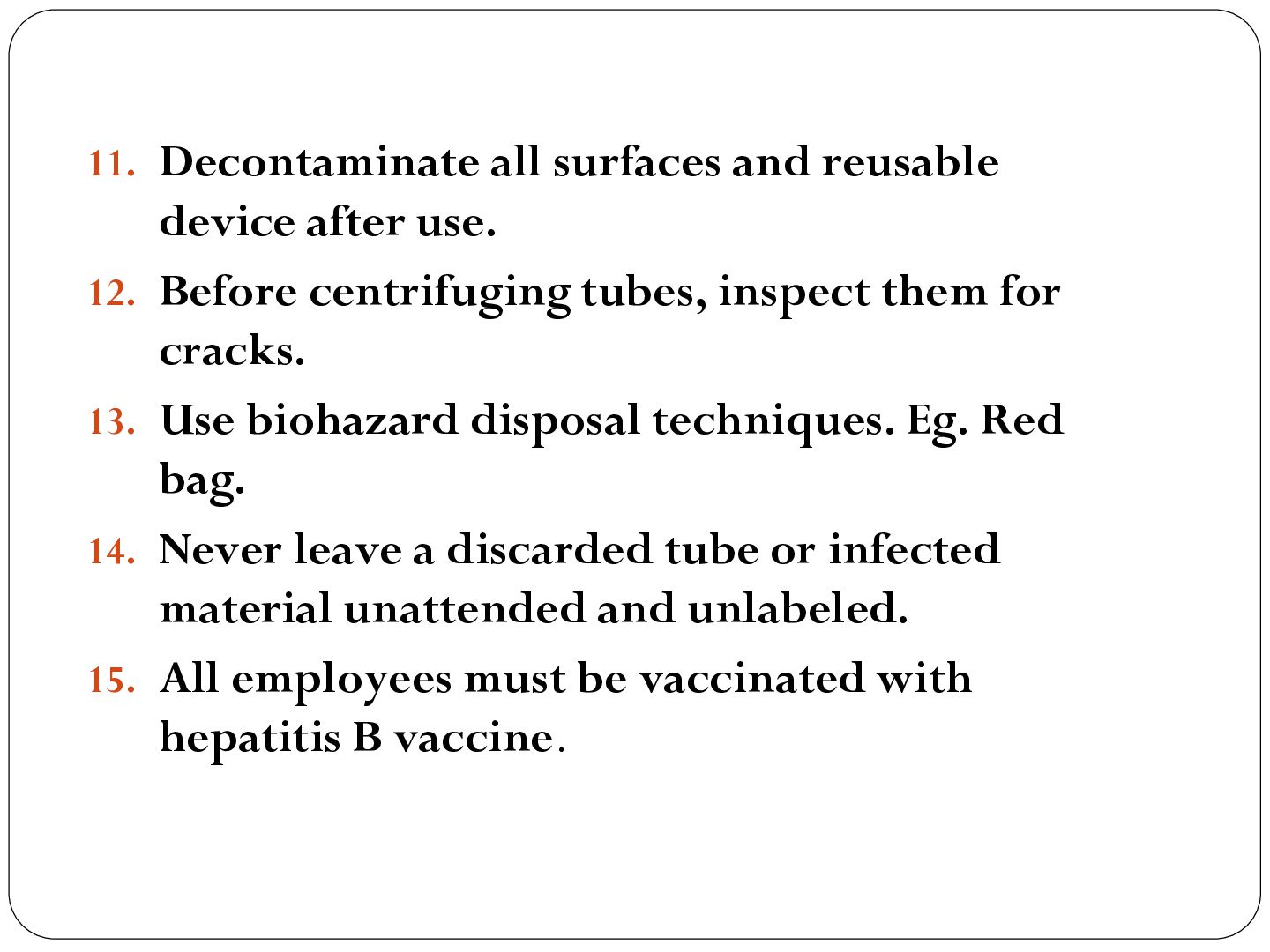
  20. 11. Decontaminate all surfaces and reusable device after use. 12.

    Before centrifuging tubes, inspect them for cracks. 13. Use biohazard disposal techniques. Eg. Red bag. 14. Never leave a discarded tube or infected material unattended and unlabeled. 15. All employees must be vaccinated with hepatitis B vaccine.