Share
Embed
Introduction to Medical Laboratory Technology (MLT) - DMLT 1st Year
Introduction to Medical Laboratory Technology (MLT) - Complete presentation for DMLT 1st Year paramedical students.This deck explains what is MLT, why it is called the backbone of healthcare, role of a lab technician, major branches like Hematology, Microbiology (Annu Ma'am), Biochemistry, lab safety rules, common instruments like Microscope and Centrifuge, and career scope after DMLT.Ideal for DMLT, BMLT, DOTT, DMRIT, CMS & DPT students. Covers fundamentals taught in 10 AM - 4 PM college timetable.Presented by DMLT 1st Year | Subject: Introduction to MLT
Er. Annu maurya
September 11, 2026
Transcript
23 slides
-
Introduction to MLT Medical Laboratory Technology (MLT) is a
vital healthcare profession focused on testing body fluids, tissues, and cells to help doctors diagnose, treat, and prevent diseases -
Aspects of MLT Role of Professionals: Medical Laboratory Technicians
(MLTs) operate lab equipment, collect or handle clinical specimens (like blood and urine), and ensure test accuracy under clinical supervisors. Core Disciplines: The field is split into major branches including Hematology (blood studies), Clinical Chemistry (chemical analysis of body fluids), Microbiology (detecting bacteria and parasites), Blood Banking/Immunohematology, and Pathology Importance: Lab results form the foundation for a majority of medical decisions, making MLT professionals essential pillars of modern medicine -
Education and Training Programs: Students can enter the field
through a diploma (like DMLT) or an undergraduate degree (like BSc in Medical Laboratory Technology). Eligibility: Standard entry requires passing high school (10+2) with core science subjects like Physics, Chemistry, and Biolog -
Definition of MLT Medical Laboratory Technology (MLT) is a
healthcare profession focused on analyzing body fluids, tissues, and cells to help doctors diagnose, treat, and prevent diseases -
Core meaning: MLT stands for Medical Laboratory Technology. It
combines science and clinical practice to perform laboratory tests on samples like blood, urine, stool, and sputum. Professional role: Trained technicians and technologists operate complex lab equipment, ensure quality control, and deliver precise data that doctors rely on for medical decisions -
Scope of MLT Diagnostic testing: Performing hematology, biochemistry, microbiology,
and pathology investigations. Specimen management: Collecting, labeling, and processing clinical samples safely. Equipment upkeep: Calibrating and standardizing laboratory tools and glassware. Career paths: Working in hospital labs, private diagnostic centers, blood banks, research facilities, and public health agencies -
Importance of MLT Guides treatment: Laboratory results drive over
70% of all medical and clinical decisions. Early detection: Tests find hidden diseases, infections, and chronic conditions before they become severe. Patient monitoring: Regular testing tracks the progress of ongoing treatments or chronic illnesses like diabetes. Public health: Labs spot disease outbreaks, ensure safe blood transfusions, and maintain safety standards -
Ethics of MLT professional They are the moral rules
and standards that guide laboratory professionals to provide safe, accurate, and honest patient care. -
Core Ethical Duties Duty to Patients: Put patient welfare
first. Protect patient privacy and keep test results strictly confidential. Ensure accurate and timely test processing to prevent harm. Duty to the Profession: Maintain high standards of practice and continuous learning. Practice only within your certified skill level and scope. Report unsafe or illegal actions by other workers. Duty to Society: Follow all local and national laws and health regulations. Report public health data honestly and fairly. Treat all people with equal respect regardless of background. -
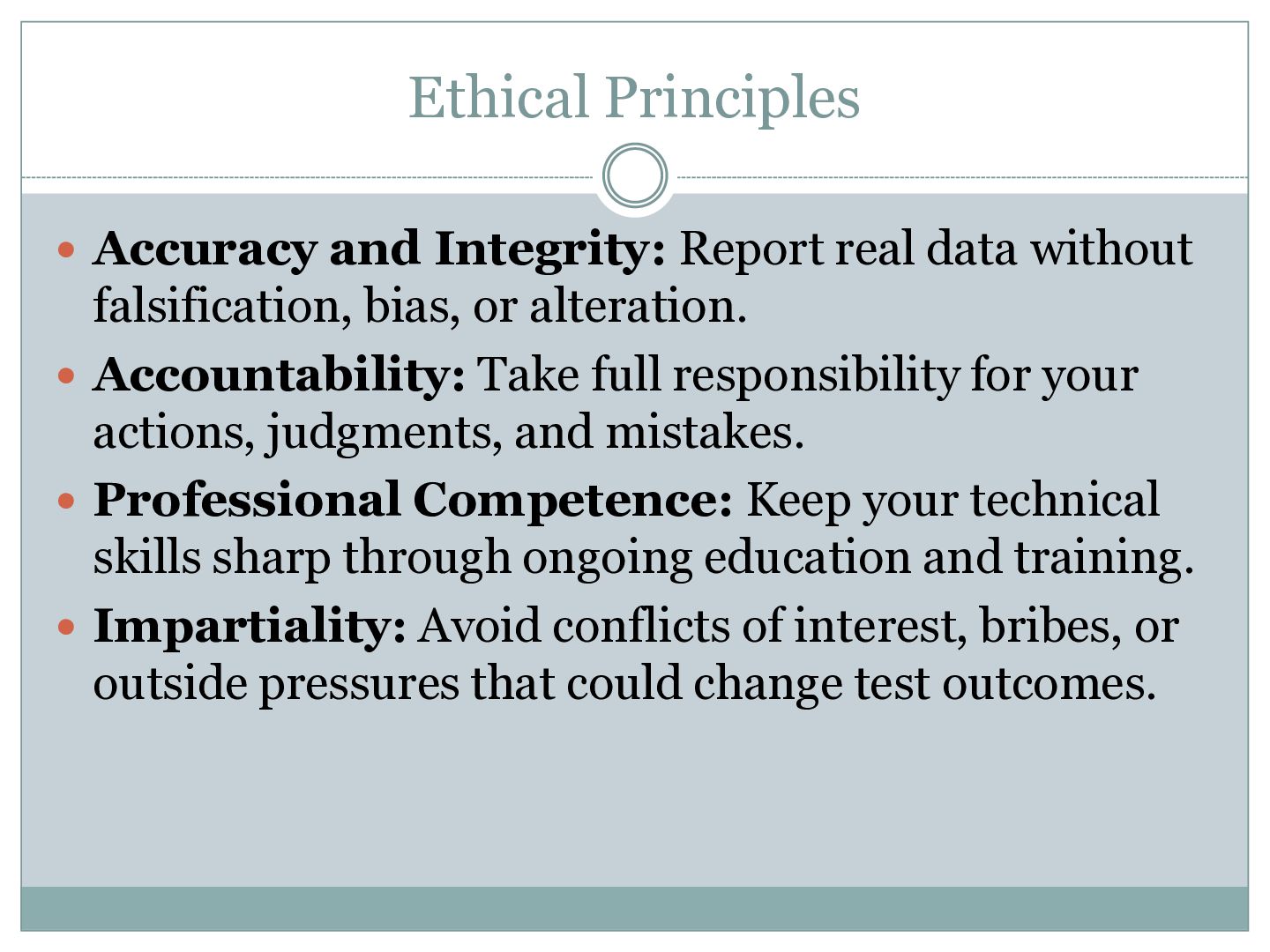
Ethical Principles Accuracy and Integrity: Report real data without
falsification, bias, or alteration. Accountability: Take full responsibility for your actions, judgments, and mistakes. Professional Competence: Keep your technical skills sharp through ongoing education and training. Impartiality: Avoid conflicts of interest, bribes, or outside pressures that could change test outcomes. -
responsibilities of mlt professional A Medical Laboratory Technology (MLT)
professional performs and manages diagnostic tests on patient samples to help doctors detect, treat, and prevent diseases -
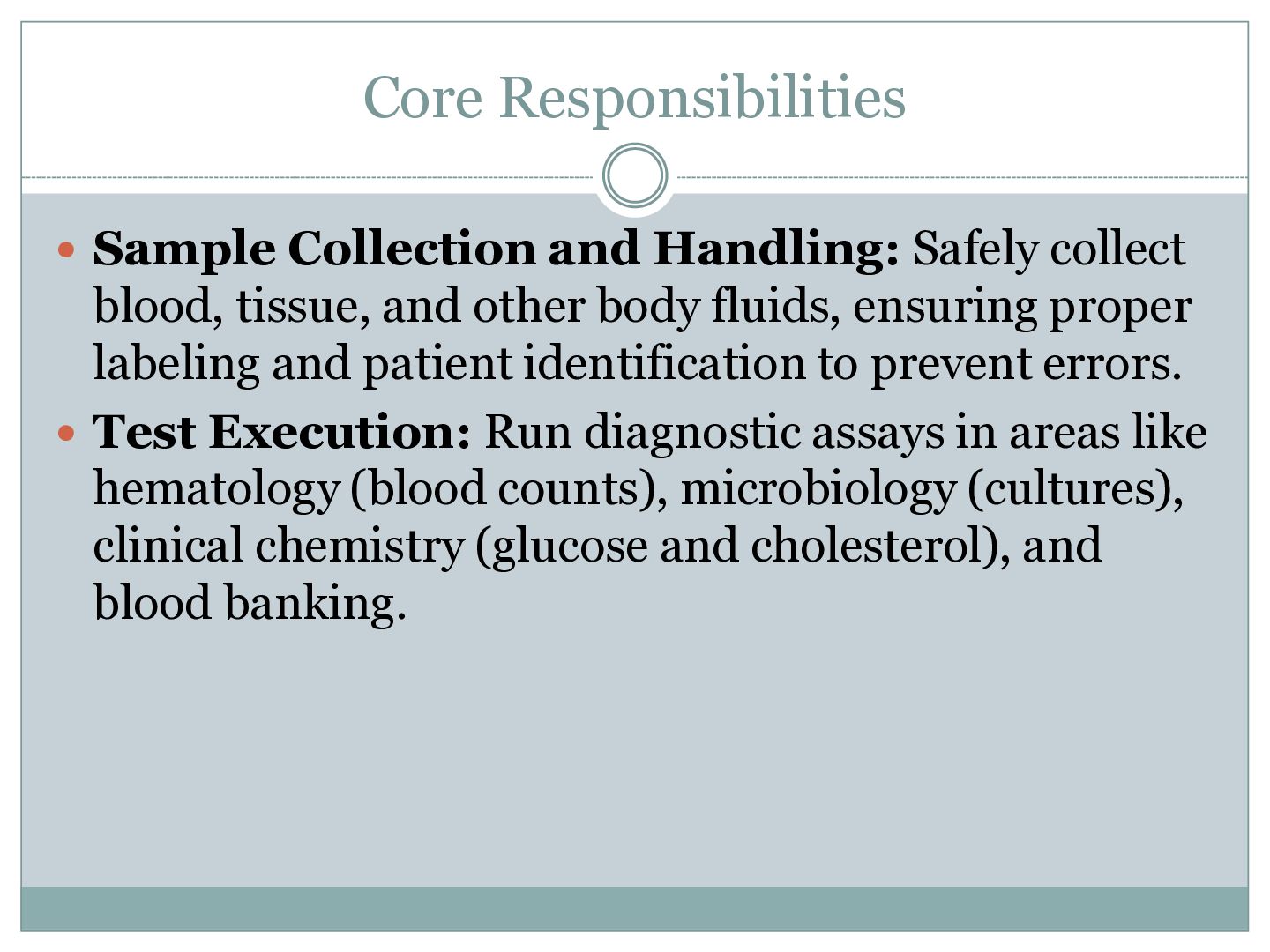
Core Responsibilities Sample Collection and Handling: Safely collect blood,
tissue, and other body fluids, ensuring proper labeling and patient identification to prevent errors. Test Execution: Run diagnostic assays in areas like hematology (blood counts), microbiology (cultures), clinical chemistry (glucose and cholesterol), and blood banking. -
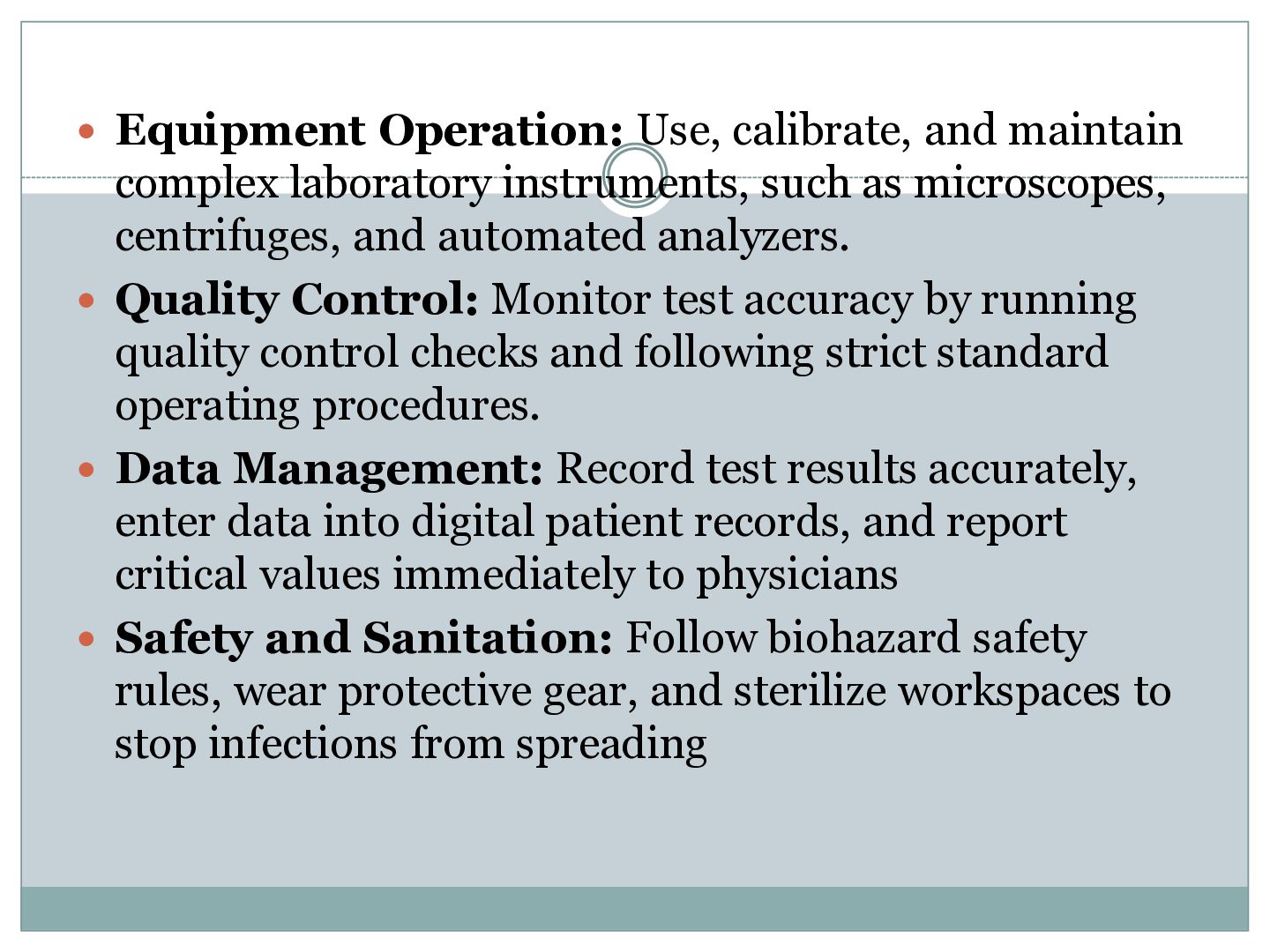
Equipment Operation: Use, calibrate, and maintain complex laboratory instruments,
such as microscopes, centrifuges, and automated analyzers. Quality Control: Monitor test accuracy by running quality control checks and following strict standard operating procedures. Data Management: Record test results accurately, enter data into digital patient records, and report critical values immediately to physicians Safety and Sanitation: Follow biohazard safety rules, wear protective gear, and sterilize workspaces to stop infections from spreading -
laboratory discipline Laboratory discipline is the deliberate, rule-following conduct
that staff and students must observe regarding dress codes, behavior, and safety protocols to prevent contamination, testing errors, and accidents -
Core Rules of Laboratory Discipline Personal Protective Equipment (PPE):
Always wear lab coats, safety goggles, gloves, and closed-toe shoes as a first line of defense. No Food or Drink: Never eat, drink, chew gum, or apply cosmetics inside the laboratory to avoid chemical or biological ingestion. -
Workspace Order: Keep work areas clean, organized, and free
of clutter or unnecessary personal items like backpacks. Chemical Handling and Disposal: Label all containers clearly, use fume hoods for volatile substances, and dispose of waste according to safety protocols rather than standard trash or drains. Responsible Behavior: Act seriously at all times, avoid distracting coworkers, and never run, horseplay, or perform unauthorized experiments -
Laboratory disciplines in hematology Focus: The study of blood,
blood-forming organs, and blood diseases. Complete Blood Count (CBC), bone marrow examination, and coagulation (clotting) studies. Purpose: Diagnoses conditions like anemia, leukemia, hemophilia, and clotting disorders. -
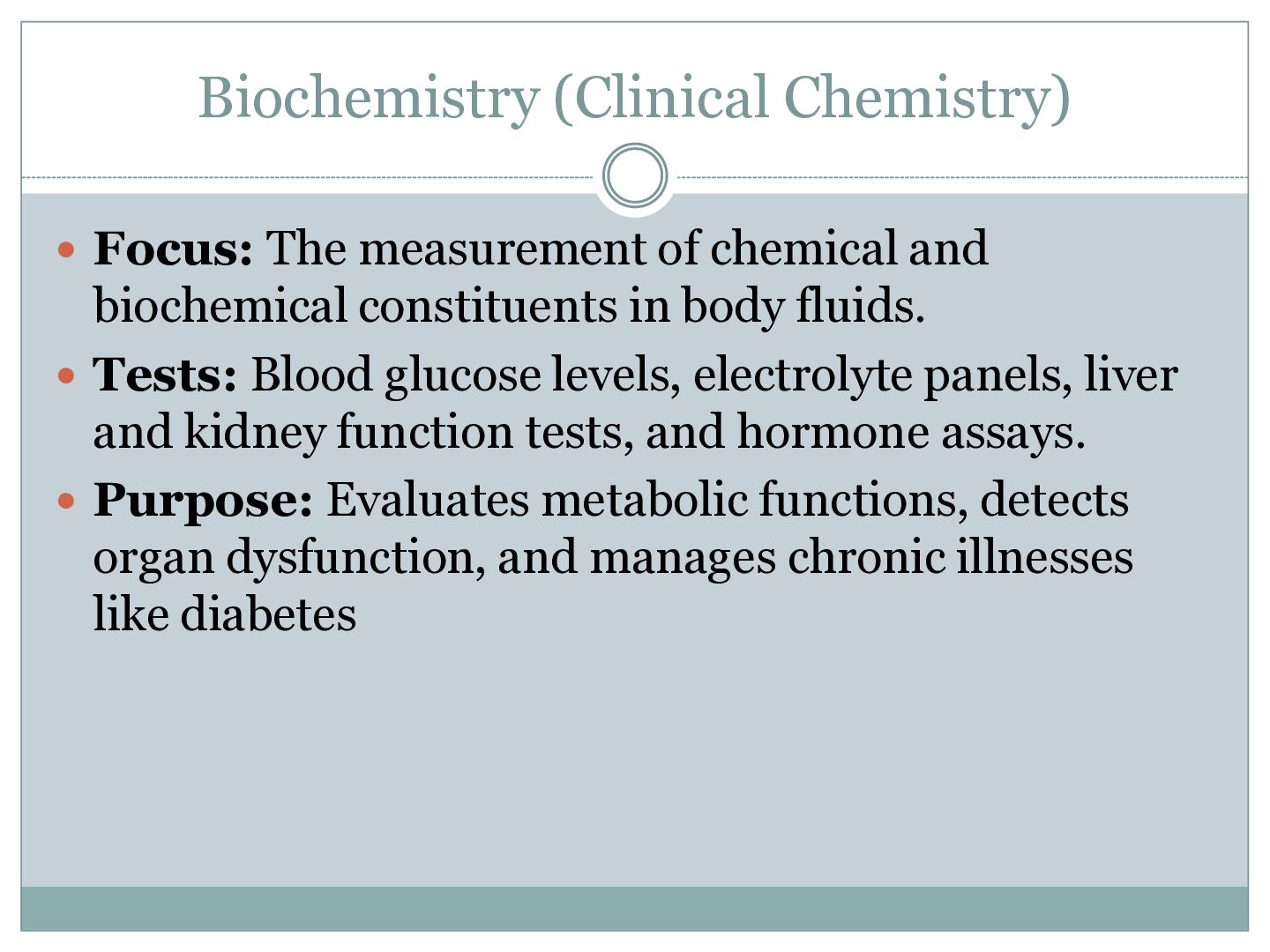
Biochemistry (Clinical Chemistry) Focus: The measurement of chemical and
biochemical constituents in body fluids. Tests: Blood glucose levels, electrolyte panels, liver and kidney function tests, and hormone assays. Purpose: Evaluates metabolic functions, detects organ dysfunction, and manages chronic illnesses like diabetes -
Microbiology Focus: The identification of infectious microorganisms, including bacteria,
viruses, fungi, and parasites. Tests: Cultures, Gram stains, sensitivity testing, and molecular pathogen detection. Purpose: Detects active infections and guides physicians in choosing the correct antimicrobial or antibiotic treatment -
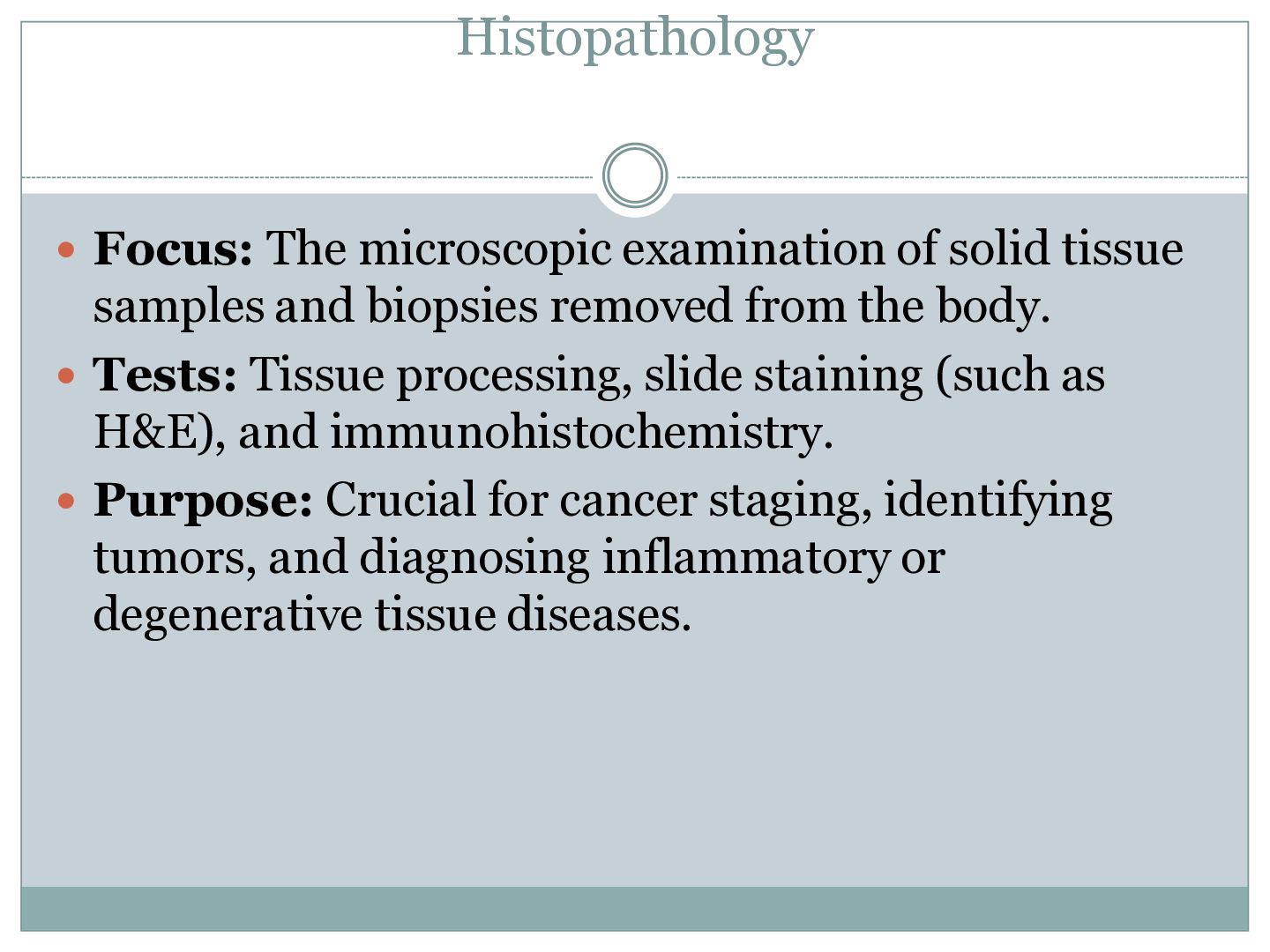
Histopathology Focus: The microscopic examination of solid tissue samples
and biopsies removed from the body. Tests: Tissue processing, slide staining (such as H&E), and immunohistochemistry. Purpose: Crucial for cancer staging, identifying tumors, and diagnosing inflammatory or degenerative tissue diseases. -
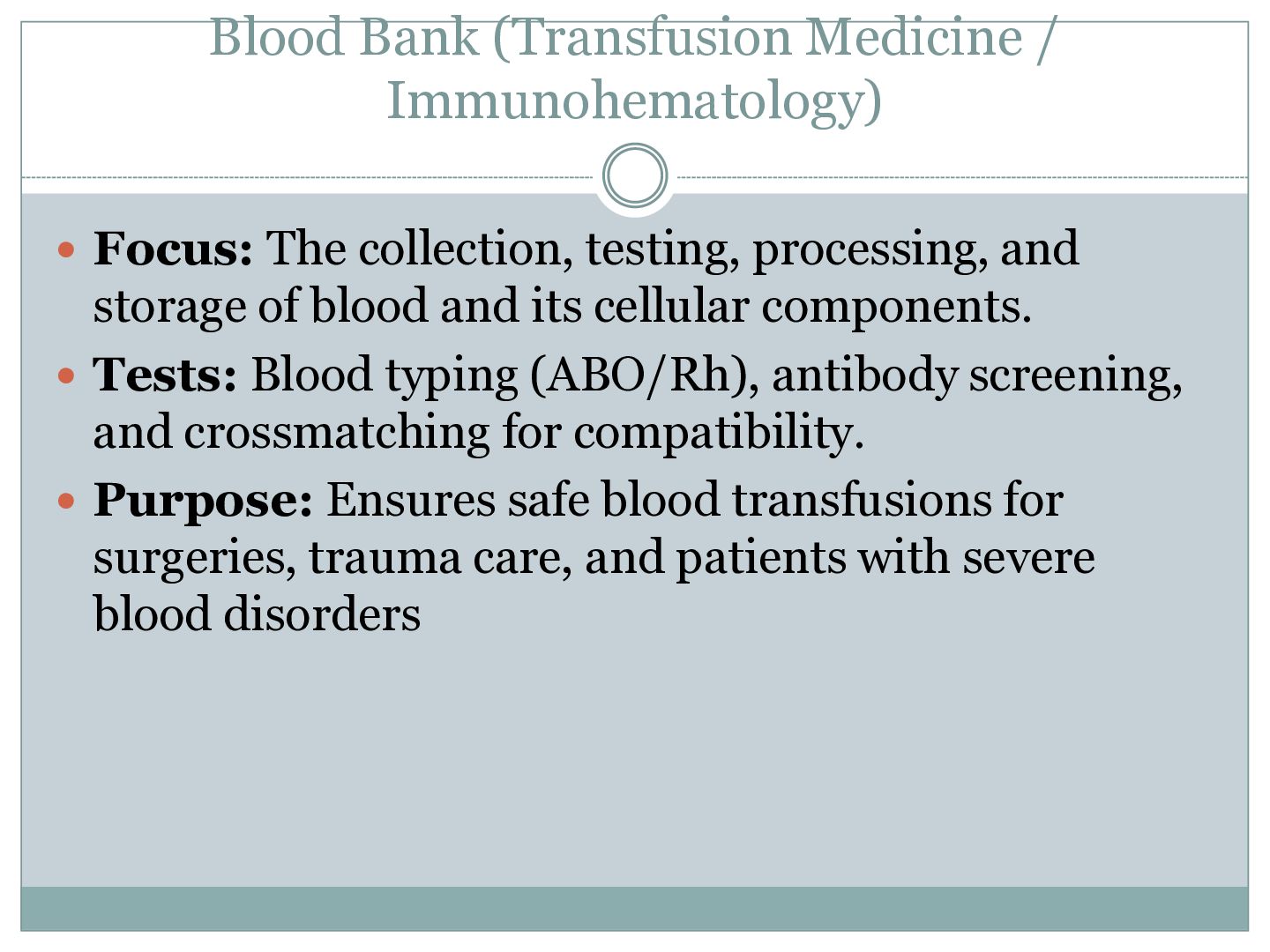
Blood Bank (Transfusion Medicine / Immunohematology) Focus: The collection,
testing, processing, and storage of blood and its cellular components. Tests: Blood typing (ABO/Rh), antibody screening, and crossmatching for compatibility. Purpose: Ensures safe blood transfusions for surgeries, trauma care, and patients with severe blood disorders