Upgrade to Pro — share decks privately, control downloads, hide ads and more …

Flutter A Complete Technical Overview

Flutter A Complete Technical Overview

Flutter is Google's powerful open-source SDK that enables
developers to build high-performance, natively compiled
apps for mobile, web, and desktop from a single Dart
codebase. Its three-layer architecture, rich widget system,
and developer-friendly features like Hot Reload make it
exceptionally efficient for rapid app development. With
flexible state management options and superior
performance over alternatives like React Native, Flutter is
built for scale. Trusted by global products like Google Pay
and the BMW App, it is a complete, future-ready
framework for modern cross-platform development

Avatar for digital marketer

digital marketer

May 14, 2026

Other Decks in Education

Transcript

  1. What is Flutter? Flutter is an open-source UI software development

    kit (SDK) created by Google. It allows developers to build natively compiled applications from a single codebase, targeting mobile, web, desktop, and embedded devices. First released in 2017, Flutter uses the Dart programming language and enables rapid app development while providing a rich set of customizable widgets for building beautiful user interfaces. Due to its growing demand in the tech industry, many institutes now offer specialized Flutter training courses in Kochi for aspiring app developers and IT professionals.
  2. Key Advantages Flutter offers a single codebase for multiple platforms,

    ensuring fast performance and rich customizable widgets.
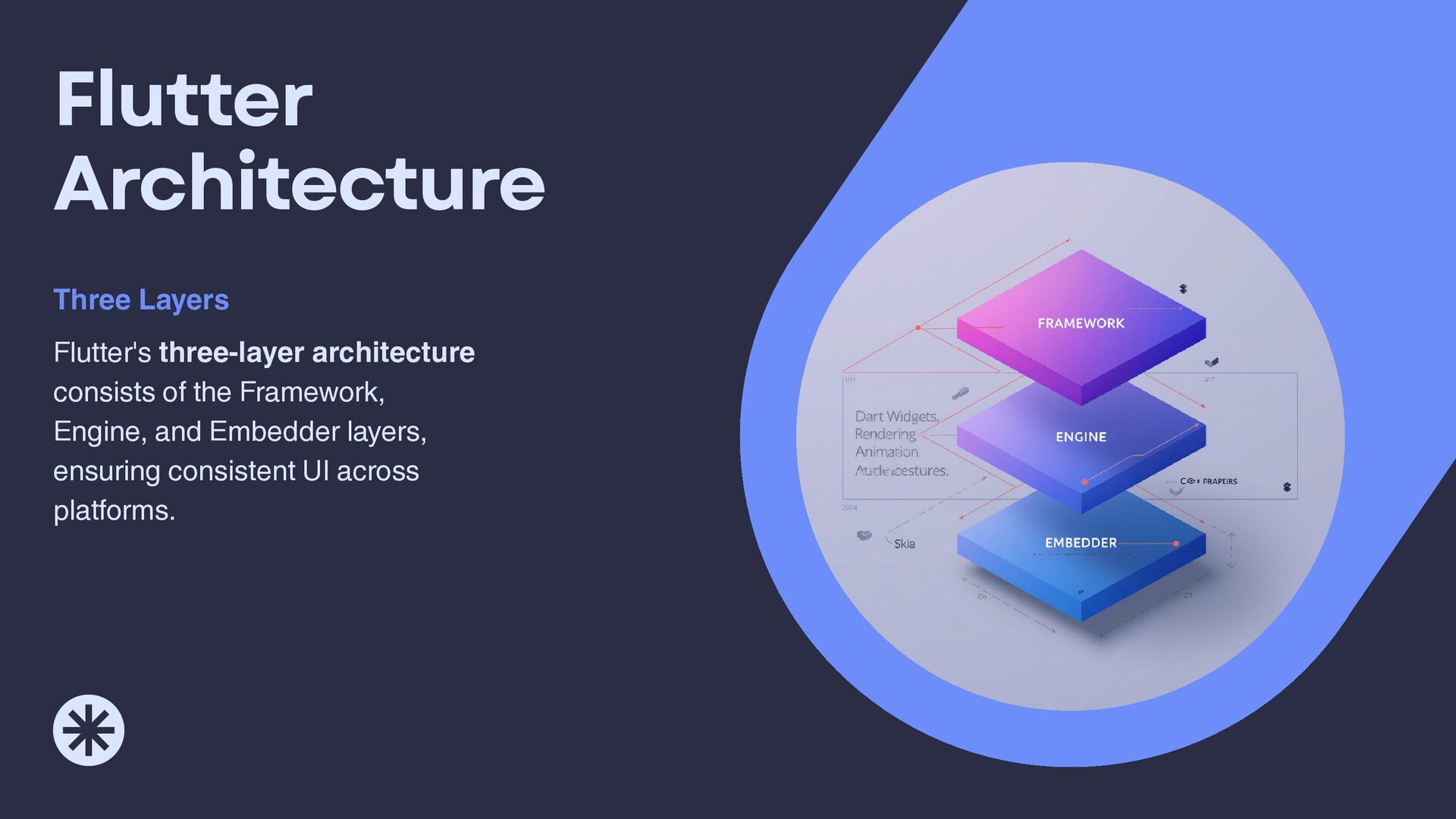
  3. Flutter Architecture Three Layers Flutter's three-layer architecture consists of the

    Framework, Engine, and Embedder layers, ensuring consistent UI across platforms.
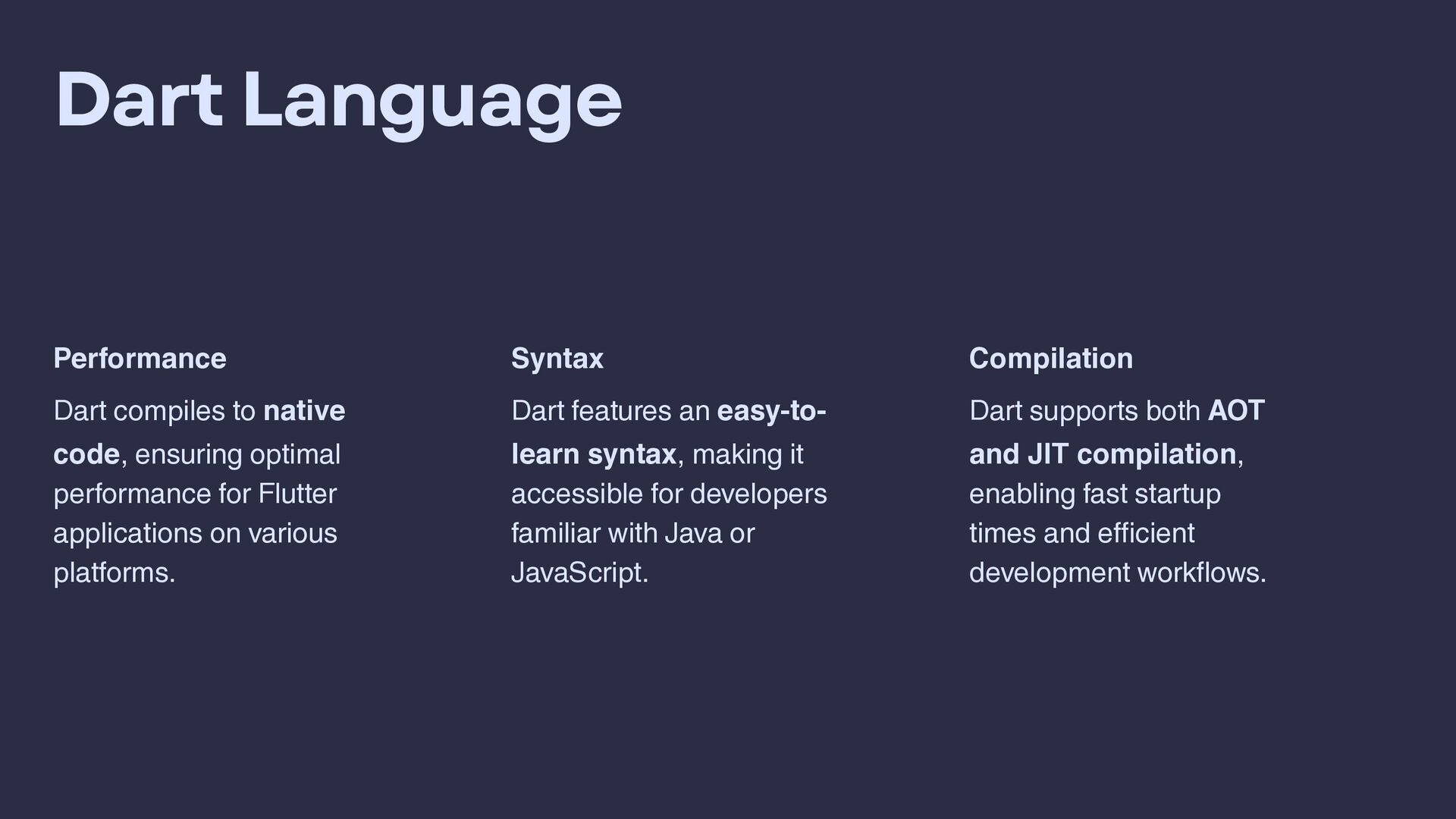
  4. Dart Language Performance Dart compiles to native code, ensuring optimal

    performance for Flutter applications on various platforms. Syntax Dart features an easy-to- learn syntax, making it accessible for developers familiar with Java or JavaScript. Compilation Dart supports both AOT and JIT compilation, enabling fast startup times and efficient development workflows.
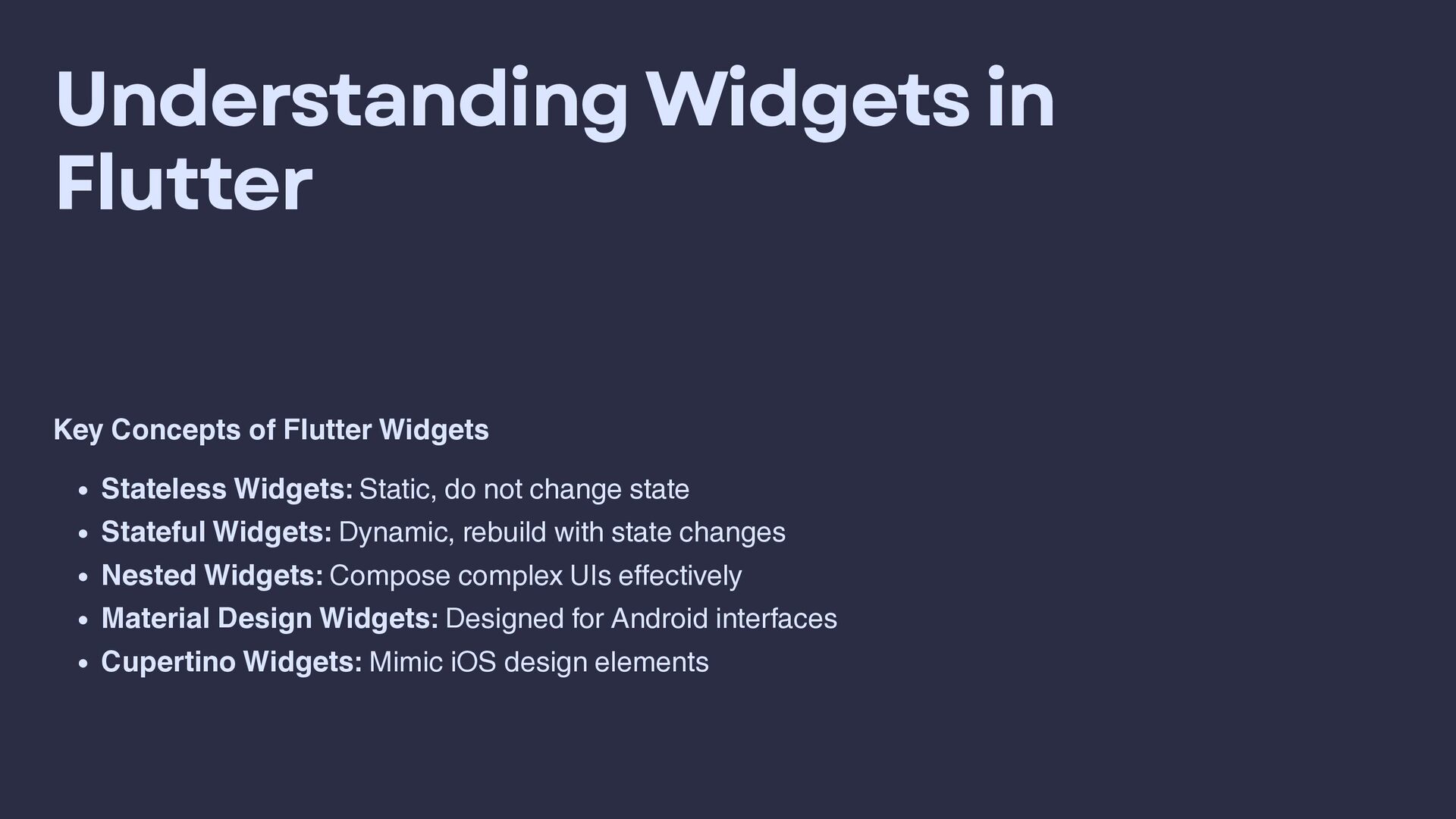
  5. Understanding Widgets in Flutter Stateless Widgets: Static, do not change

    state Stateful Widgets: Dynamic, rebuild with state changes Nested Widgets: Compose complex UIs effectively Material Design Widgets: Designed for Android interfaces Cupertino Widgets: Mimic iOS design elements Key Concepts of Flutter Widgets
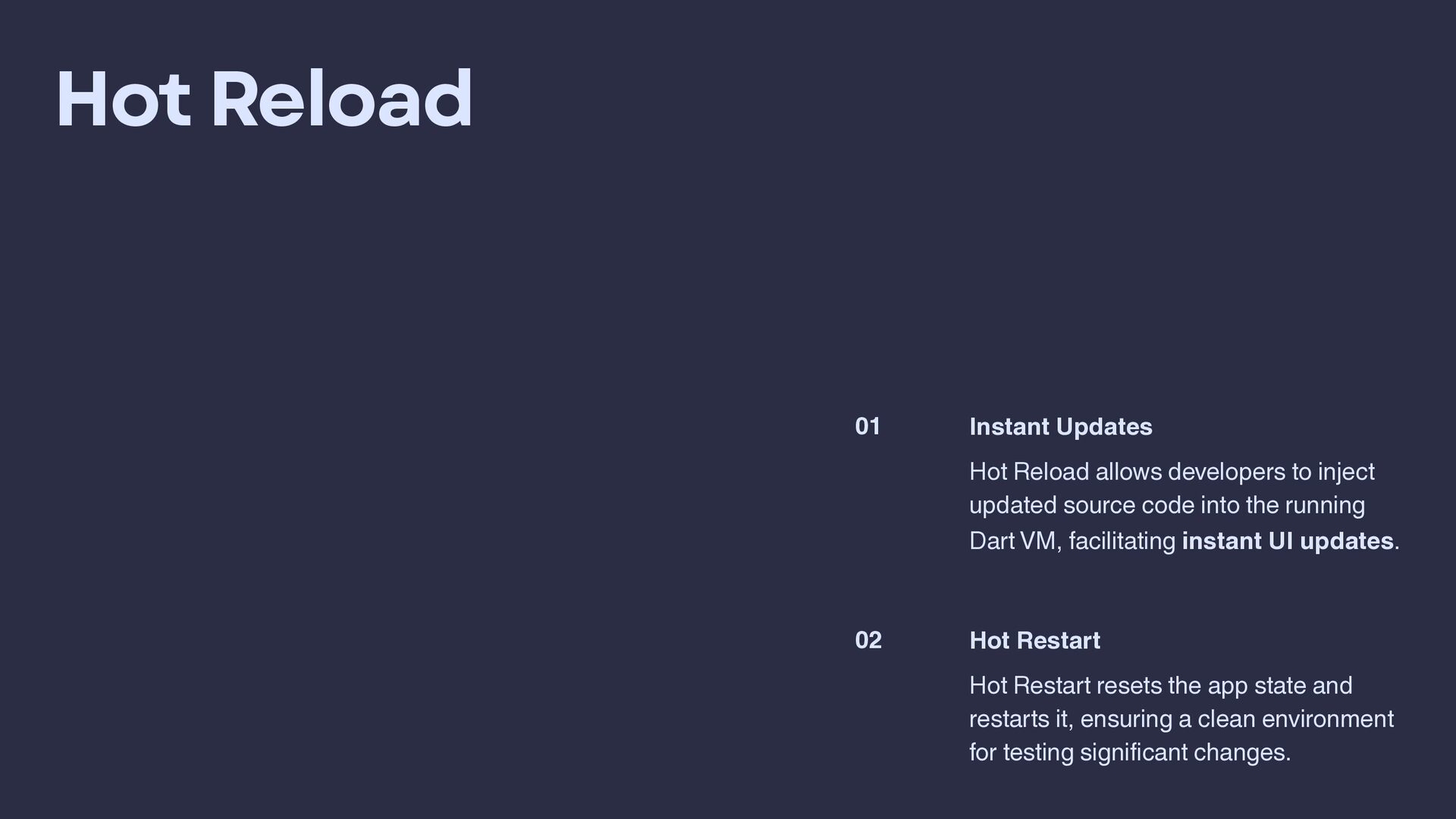
  6. Hot Reload Hot Restart Hot Restart resets the app state

    and restarts it, ensuring a clean environment for testing significant changes. 02 Instant Updates Hot Reload allows developers to inject updated source code into the running Dart VM, facilitating instant UI updates. 01
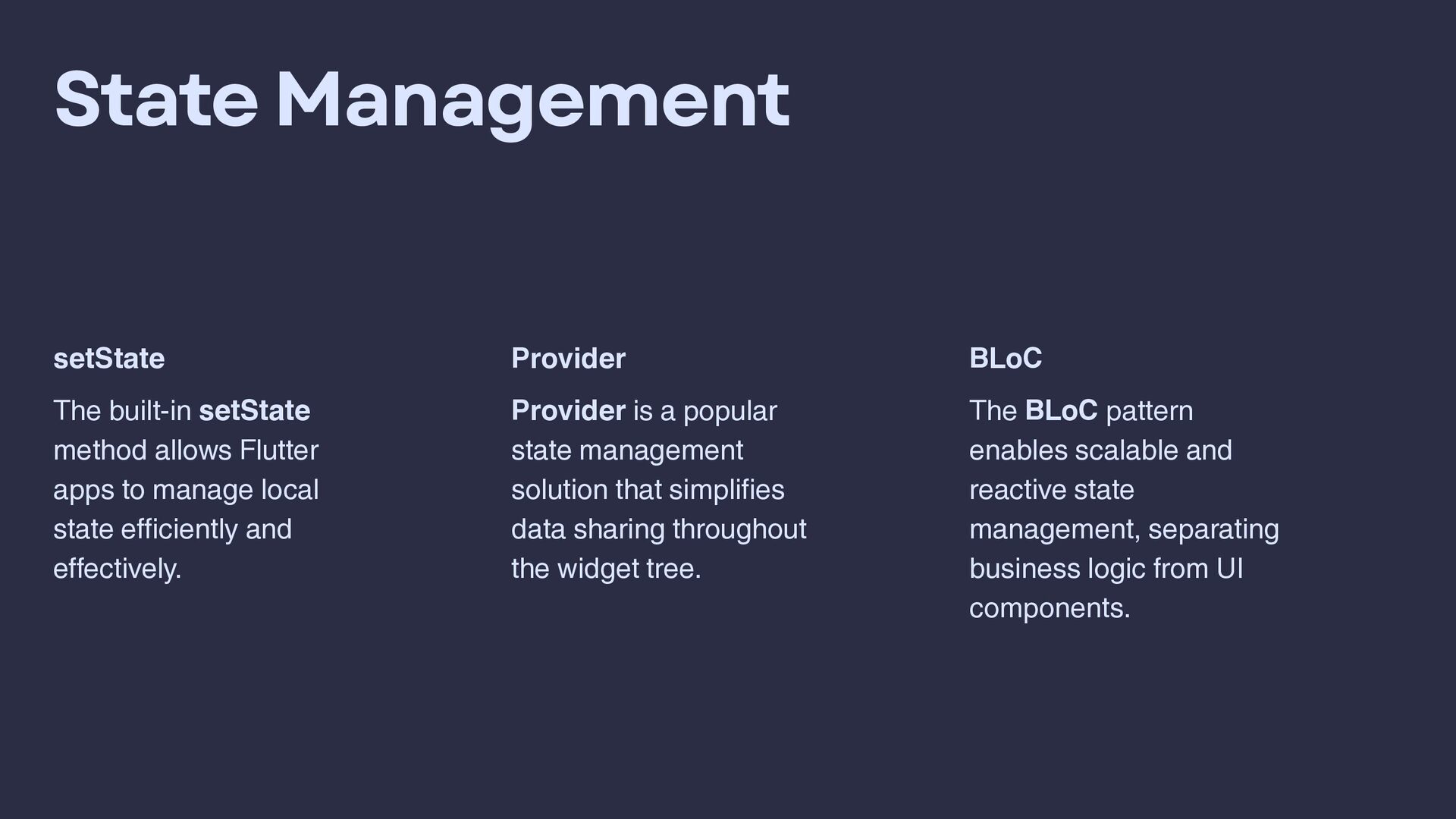
  7. State Management setState The built-in setState method allows Flutter apps

    to manage local state efficiently and effectively. Provider Provider is a popular state management solution that simplifies data sharing throughout the widget tree. BLoC The BLoC pattern enables scalable and reactive state management, separating business logic from UI components.
  8. Flutter vs. Other Frameworks Performance Flutter consistently renders its own

    UI, ensuring superior performance across platforms compared to alternatives like React Native. Development Speed With a single codebase and Hot Reload, Flutter accelerates development cycles faster than Xamarin and native solutions.
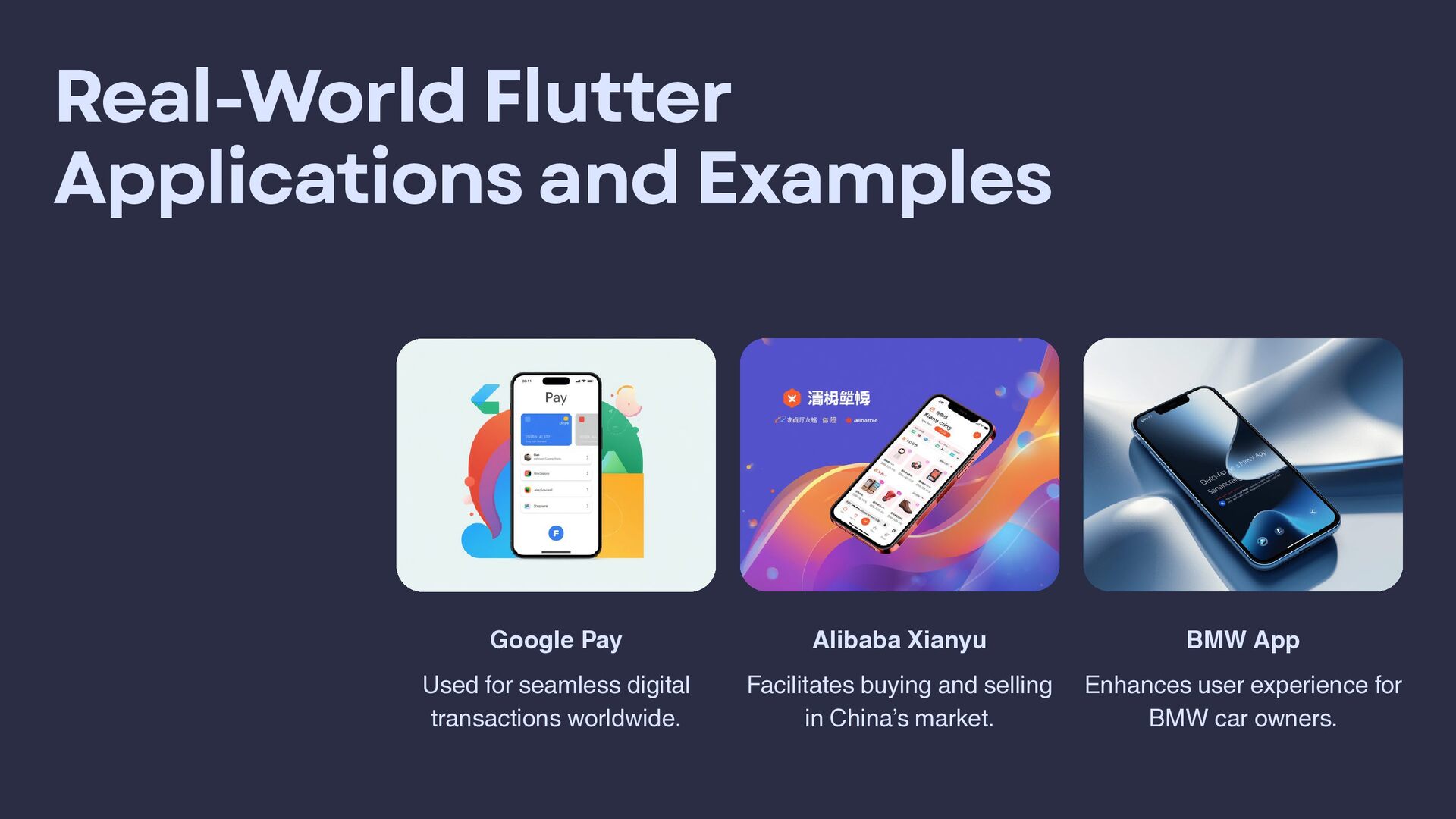
  9. Real-World Flutter Applications and Examples Google Pay Used for seamless

    digital transactions worldwide. Alibaba Xianyu Facilitates buying and selling in China’s market. BMW App Enhances user experience for BMW car owners.
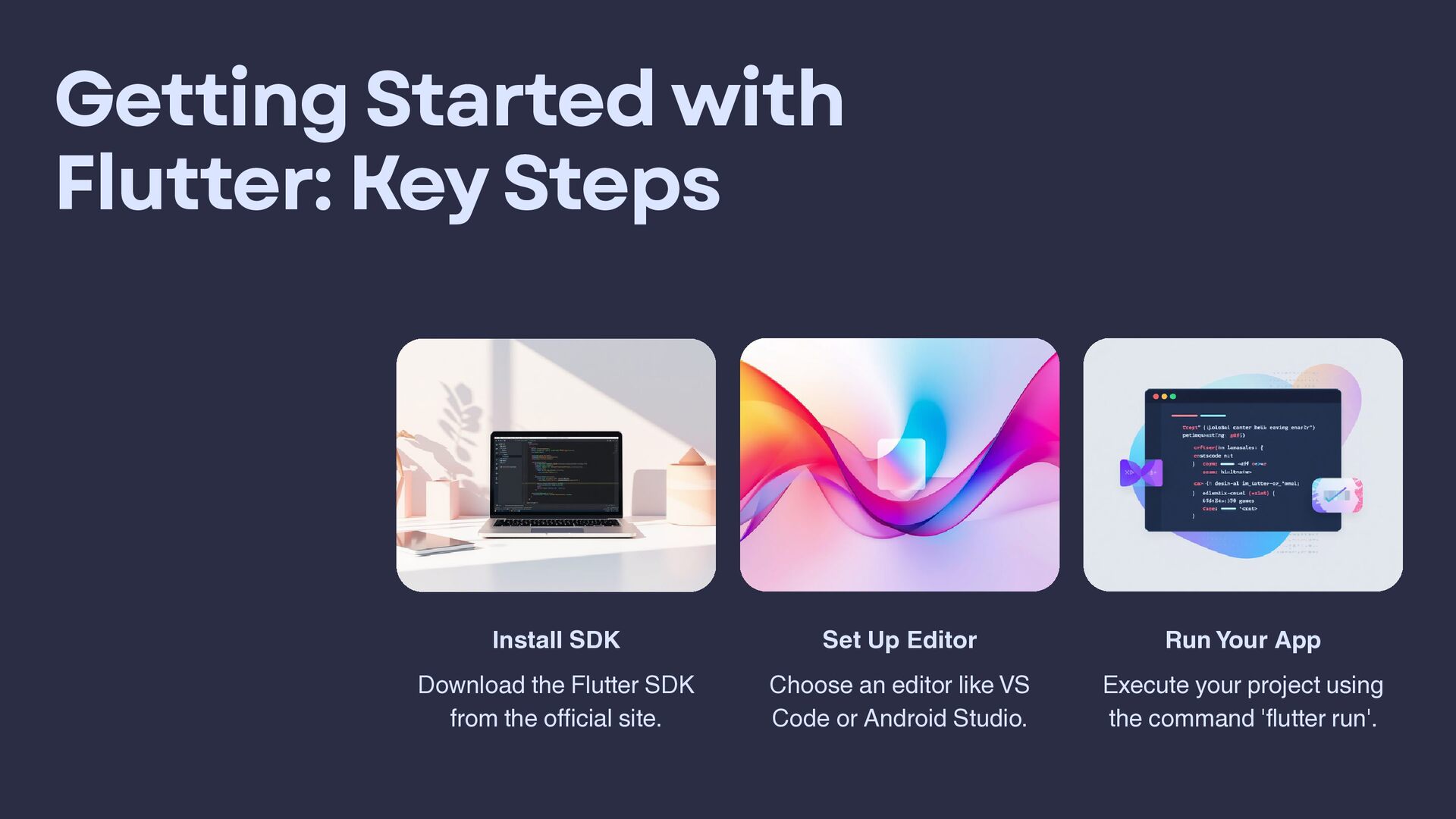
  10. Getting Started with Flutter: Key Steps Install SDK Download the

    Flutter SDK from the official site. Set Up Editor Choose an editor like VS Code or Android Studio. Run Your App Execute your project using the command 'flutter run'.
  11. Conclusion Flutter is Google's powerful open-source SDK that enables developers

    to build high-performance, natively compiled apps for mobile, web, and desktop from a single Dart codebase. Its three-layer architecture, rich widget system, and developer-friendly features like Hot Reload make it exceptionally efficient for rapid app development. With flexible state management options and superior performance over alternatives like React Native, Flutter is built for scale. Trusted by global products like Google Pay and the BMW App, it is a complete, future-ready framework for modern cross-platform development.